


15 Daily Energy Management Insights From Your Wellness Ring Dashboard
Managing your energy carefully during periods of high stress.
Managing your energy carefully during periods of high stress.
%402x.svg)
Have you ever ended a seemingly ordinary day feeling inexplicably drained, wondering where your energy vanished? Or powered through a packed schedule only to crash hard later, questioning your body’s unreliable signals? For generations, managing our daily energy was a guessing game—a fragile balance of caffeine, willpower, and hoping for the best. We operated on intuition, often mistaking anxiety for excitement, dehydration for hunger, and chronic stress for our "normal" state of being.
But what if you had a personal energy translator? A device that could decode your body’s subtle, silent language and present it on a clear, actionable dashboard? This is the transformative promise of the modern wellness ring. Moving far beyond simple step counting, these sophisticated wearables act as 24/7 biometrical interpreters, sitting at the nerve center of your physiology to provide a continuous stream of data on your readiness, resilience, and energy reserves.
Your wellness ring dashboard is more than a collection of graphs and numbers; it is a masterclass in self-awareness. It reveals the invisible architecture of your day—how your sleep actually restored you, how your body responds to different stressors, and the precise moments your fuel tanks dip or soar. This article unlocks 15 profound, daily energy management insights hidden within that dashboard. We will move from foundational metrics to advanced correlations, teaching you how to interpret the signals and, more importantly, how to act on them. You’ll learn to predict your energy peaks, architect recovery, and finally align your daily actions with your body’s authentic capacity, moving from reactive surviving to proactive thriving.
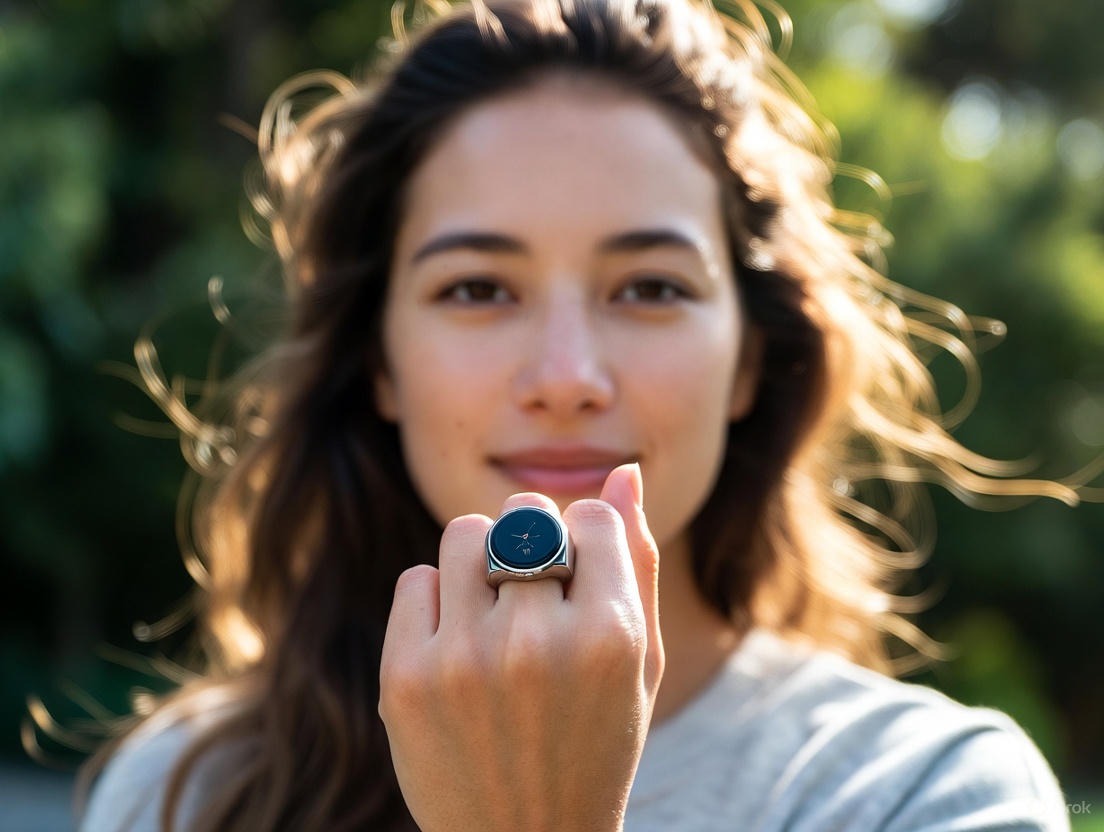
You wake up. You stretch. You mentally assess: "Do I feel rested?" This subjective morning check-in is flawed, clouded by lingering sleep inertia, yesterday’s mental baggage, or simply the dread of an early alarm. Your wellness ring cuts through this fog with objective, physiological truth. Your Morning Readiness Score or Body Battery level isn't an opinion; it's a data-driven verdict on your overnight recovery.
This score is a synthesized metric, a complex algorithm weighing several key factors:
The Daily Insight: Don't just glance at this number. Interrogate it. If your score is low, don't default to self-criticism ("I slept poorly again"). Instead, become a detective. Tap into the details.
This baseline dictates your entire day's energy budget. A 90% readiness score means you have a full, high-octane tank—a day for focused deep work, intense exercise, and ambitious social plans. A 65% score is a clear mandate for moderation: prioritize essential tasks, opt for a walk instead of a HIIT class, and schedule an early wind-down. By trusting this objective baseline over your subjective, often deceptive "feeling," you stop starting your day at a deficit. You learn to work with your body, not against it. For a deeper dive into what each specific metric means, our complete wellness ring data dictionary breaks down the science behind HRV, RHR, and more.
While your morning HRV snapshot is crucial, the real story unfolds in the trend. Plotting your nightly average HRV on a weekly or monthly graph reveals your body’s underlying resilience capacity—its ability to withstand and bounce back from stress. Think of it not as a daily weather report, but as the changing climate of your nervous system.
A steady or gently rising HRV trend is a sign of positive adaptation. It tells you your training regimen is effective, your stress management techniques are working, and your lifestyle supports recovery. Conversely, a sustained downward trend is a bright red warning light. It indicates chronic strain, where the accumulated stressors of life—work deadlines, emotional conflicts, overtraining, poor nutrition—are slowly depleting your systemic buffer.
The Daily Insight: Make a weekly ritual of reviewing your HRV trend. Don't panic over a single low night (that could be due to a late meal or a glass of wine). Look for the directional slope.
This insight transforms HRV from a curious data point into your personal resilience dashboard, allowing you to invest in your nervous system's health with the same precision you would your financial portfolio.
Throughout the day, your resting heart rate (or more accurately, your daytime heart rate while at rest) is a live feed of your physiological load. Unlike HRV, which reflects longer-term adaptation, RHR responds in near-real-time to immediate demands.
Your dashboard allows you to see this in action. Notice what happens after:
The Daily Insight: Use your live RHR as a grounding tool. When you feel frazzled or inexplicably tired, take a 60-second pause and check your dashboard. An elevated RHR is your body confirming, "Yes, we are under load right now." This awareness alone can be calming. It moves you from a state of confused frustration ("Why am I so stressed?") to empowered observation ("My body is showing a stress response. What do I need?").
Furthermore, tracking how long it takes for your RHR to return to baseline after a stressor is a direct measure of your recovery speed. By practicing calming techniques like box breathing after a stress spike, you can actually watch your RHR descend on the graph—a powerful, immediate feedback loop that teaches you how to actively down-regulate your nervous system. This practice is a key method in developing body awareness through smart ring tracking.
Fitness trackers have long celebrated calorie burn and active minutes. The wellness ring introduces a critical, game-changing counterpart: Recovery Metrics. The most advanced dashboards now present a symbiotic view: Activity Strain (or Exertion) on one side, and Sleep Score & Recovery Time on the other. This creates the fundamental equation of sustainable energy: Strain + Recovery = Net Energy Balance.
A day with high activity strain followed by high-quality, sufficient sleep is a profitable energy transaction. You invested effort and paid it back with deep restoration, leaving you stronger (a positive net balance). The danger lies in chronic imbalance:
The Daily Insight: Before you embark on a tough workout or a marathon workday, check your recovery metrics from the night before. Are you entering the day with a "recovery surplus" to spend? After a demanding day, let your required "recovery time" estimate guide your evening. If your ring suggests 36 hours of recovery, honor that by choosing gentle movement and extra sleep the next night, even if you "feel fine." This prevents the insidious creep of cumulative fatigue. This practice builds the body awareness skills that can prevent injury and illness by teaching you to respect your body's true need for repair, not just your mind's desire to push forward.
For millions, the post-lunch energy plunge is a daily inevitability. But with your wellness ring data, you can perform a physiological autopsy on this crash and identify its true cause. The dashboard provides clues that differentiate between several culprits:
The Daily Insight: Next time you hit the 2 PM wall, don't just reach for coffee. Open your dashboard first.
Armed with this cause, you can implement a targeted solution: a protein-rich lunch, a strategic 10-minute walk to gently boost circulation, a large glass of water, or a brief meditation to reset your nervous system. This turns a frustrating daily failure into a masterclass in personal energy engineering, honing your ability in understanding your body's daily energy patterns.
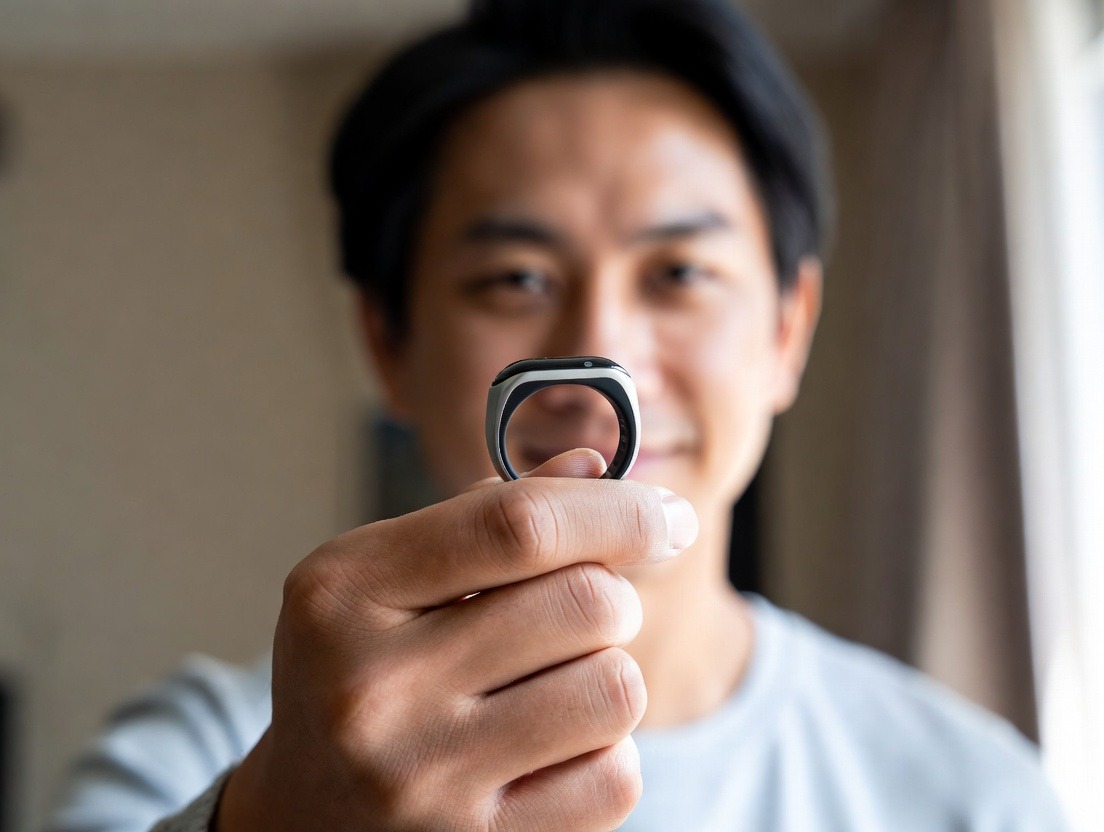
While core body temperature is tightly regulated, peripheral skin temperature—measured continuously by your ring—tells a fascinating story about blood flow, inflammation, and immune activity. Small, sustained deviations from your personal baseline are meaningful.
The Daily Insight: Enable temperature trend notifications if your app offers them. A multi-degree shift over a day is worth noting. It might prompt you to prioritize sleep, increase fluid intake, and dial back plans—potentially heading off a full-blown illness. For women, this data can illuminate the often-mysterious hormone-body connection and explain cyclical changes in energy, sleep, and recovery. It turns a vague feeling of being "off" or "coming down with something" into an actionable, early-warning system.
Breathing is the only autonomic function we can also control consciously, making it a powerful bridge between our mind and body. Your resting respiratory rate (RRR), measured in breaths per minute, is a profoundly sensitive metric.
The Daily Insight: Pay attention to this underrated metric. If you wake feeling unrefreshed, check your average nighttime respiratory rate. An elevated rate could explain why your sleep wasn't restorative, pointing you toward investigating sleep quality further. During the day, if you feel anxious, you can use your real-time breathing data (if available) or manually sync your breath to a calming rhythm while watching your heart rate drop—a concrete way to practice self-regulation. This direct feedback is essential for building body awareness habits using smart ring feedback and mastering the breath-body connection.
We often judge workouts by subjective soreness or calorie burn. Your wellness ring provides a more nuanced physiological report card on the true impact of your exercise.
Key data points to review post-session:
The Daily Insight: Use this data to move from random exertion to intelligent training. If your goal is to build fitness, you need to apply sufficient stress and then fully recover. The ring tells you when you've done enough and, critically, when you need to rest. It can also reveal hidden inefficiencies; for example, a high heart rate during a moderate run could indicate dehydration, lack of sleep, or starting your run too fast. This transforms exercise from a purely physical act into a data-informed practice of body awareness for improved athletic performance.
Introversion and extroversion are psychological spectrums, but their impact is physiological. Social interactions, especially large gatherings or emotionally charged conversations, demand cognitive and emotional labor, which registers as a stress load on your body.
Watch your dashboard after:
You may see a sustained elevation in stress levels, heart rate, and even a depressed HRV the following morning. This isn't "bad"—it's simply your body's honest report on the energy cost of connection.
The Daily Insight: There is no right or wrong response, only awareness. This data helps you plan and budget your social energy without guilt. If you know a big social weekend is coming, you can front-load recovery beforehand and schedule quiet time afterward. It validates the need for introverts to recharge in solitude and shows extroverts how their social fuel burns. Most importantly, it helps you distinguish between energizing and draining interactions on a physiological level, fine-tuning your emotional and somatic awareness.
That afternoon coffee might perk you up now, but how does it impact your sleep architecture 8 hours later? That evening glass of wine may help you relax, but at what cost to your deep sleep and next-day readiness? Your wellness ring provides the undeniable receipt.
The Daily Insight: Conduct your own n-of-1 experiments. On nights you have a drink or a late coffee, note the precise impact on your sleep graph and next-day readiness. The objective data often tells a starker story than your subjective feeling. This isn't about prescribing abstinence, but about informed choice. You might decide that a celebratory glass of wine is worth a 10% dip in readiness, but a random Tuesday night drink is not. It empowers you to consume consciously, understanding the true, delayed energy tax of these substances, which is a critical part of understanding your body's language of recovery.
Conventional wisdom says we're most productive in the morning. But your personal chronotype—your genetically influenced sleep-wake preference—dictates your unique energy waveform. Your dashboard, over time, will reveal your true personal peak.
Analyze your "Energy" or "Stress" graphs over a typical, well-recovered week. You will likely see a pattern:
The Daily Insight: Schedule your most demanding, creative, or important tasks during your personal prime time. Save administrative, low-cognitive tasks for your natural lulls. Fighting against your innate rhythm is like swimming upstream; it expends tremendous energy for little progress. By aligning your work with your biology, you accomplish more with less effort and frustration. This is the ultimate application of understanding your body's circadian signals for peak performance and personal harmony.
We’ve all experienced it: staring at a screen, reading the same sentence repeatedly, our thoughts adrift. This isn't laziness; it's a signal of depleted attentional resources. Conversely, those periods of effortless flow—where time disappears and work feels almost easy—represent peak mental energy alignment. While your wellness ring can’t read your thoughts, it provides a powerful proxy for your mental state through its measurements of autonomic nervous system activity.
Here’s the crucial insight: Different types of mental work create distinct physiological signatures.
The Daily Insight: Use your stress/energy graph as a mirror for your mental workload. Notice the physiological cost of different tasks.
By correlating your subjective experience of focus with objective data, you learn to catch frustration early, harness your flow states, and respect the natural rhythm of concentration and restoration. Your ring becomes a biofeedback tool, teaching you to exit inefficient mental struggle before it drains your entire energy reserve for the day.

After 30-60 days of consistent wear, your wellness ring’s greatest gift isn’t a single metric, but a pattern library. It begins to reveal, with uncanny clarity, the precise architecture of your personal "Perfect Day"—the sequence of actions, timing, and choices that lead to peak energy, deep sleep, and high readiness.
This blueprint emerges by comparing your best days (high readiness, great sleep, sustained energy) against your worst. You stop asking, "What should I do?" and start asking, "What did I do on my best days?"
The Composite of a "Perfect Day" often includes:
The Daily Insight: Don't just track data; curate it. Create tags or notes in your app for days with specific events: "Big Presentation," "Day at the Beach," "Rest Day," "Family Dinner." Then, use the trend comparison tools. Look at the aggregate sleep data for all your "Rest Days" versus your "Heavy Training Days." Compare the stress graphs of days you meditated versus days you didn't.
You will discover your non-negotiable pillars. Perhaps you find that your sleep score is 15% higher on days you finish dinner by 7 PM. Or that your afternoon energy is remarkably stable on days you take a 20-minute walk at noon. This process of reverse-engineering is the ultimate act of self-knowledge. It transforms vague wellness advice into a personalized, data-backed operating system. It is the practical application of trusting your body's wisdom, guided by evidence.
In the daily grind of life, a single bad night’s sleep or a stressful day can feel catastrophic. We fixate on the dip, the spike, the red number on the dashboard. This myopia can lead to anxiety about the data itself—"Why is my HRV low again today?!"—which ironically creates more stress, perpetuating the cycle.
The true power of longitudinal tracking is the ability to zoom out. Over weeks and months, the noisy daily and weekly fluctuations smooth into meaningful trends that tell the real story of your health trajectory. This macro view fosters resilience and intelligent patience.
The Daily Insight: Make it a ritual to review your long-term trends every Sunday or at the start of a new month. Celebrate the positive slopes—the gentle rise in your HRV average, the downward drift of your resting heart rate. These are the victories that matter most. View short-term setbacks as mere data points on a positive journey, not as failures. This detachment is critical for sustainable habit formation. It helps you understand your body's natural energy fluctuations and tension-release cycles as part of a larger, healthier pattern, reducing performance anxiety and fostering a compassionate, curious relationship with your own physiology.
Data is inert. Insight is valuable. But embodied wisdom—the automatic, intuitive application of learning—is the ultimate goal. The final and most important daily insight from your dashboard is not a number at all; it is the feedback loop you create between the data and your lived experience. This loop turns passive tracking into active transformation.
The cycle is simple but profound:
The Daily Insight: Your role is to be the scientist of your own life. The ring provides the lab equipment. For example:
This process bridges the gap between the digital data and your flesh-and-blood reality. Over time, you start to internalize the correlations. You begin to feel the early signs of a stress response before you check the graph. You develop an intuition for when you need to hydrate or move. The ring’s data becomes a validation tool for the body awareness skills you are actively developing. It confirms your hunches and corrects your misperceptions, accelerating your journey toward self-mastery.
This is where the technology disappears, and true wellness emerges. You are no longer a slave to the ring or the data; you have used it to become more fluent in your body's own language. The dashboard becomes less of a daily crutch and more of a periodic check-in—a trusted advisor confirming you’re still on the path you’ve mindfully chosen.
Before diving into the more nuanced behavioral insights, it is essential to establish a deep, working knowledge of the three core metrics that form the bedrock of your dashboard: Resting Heart Rate (RHR), Heart Rate Variability (HRV), and Sleep Architecture. These aren't just numbers; they are a continuous conversation from your autonomic nervous system. Learning their language is the first step toward true energy management.
Resting Heart Rate: The Engine’s Idle Speed
Think of your heart as your body's engine. Your RHR is its idle speed—the minimum number of beats per minute required to keep your systems running at rest. A well-tuned, efficient system (a fit cardiovascular system, a relaxed nervous system) has a lower idle speed. Chronic stress, dehydration, illness, overtraining, or poor recovery all force that idle speed higher. The daily insight here is to watch for relative changes from your personal baseline. A sudden, sustained increase of 5-7 bpm is a more meaningful signal than comparing your 58 bpm to someone else’s 62 bpm. It’s your body’s unambiguous early warning system, often flagging issues before you consciously feel them. This direct, visceral data is a powerful tool in learning the body's language for early illness detection.
Heart Rate Variability: The Rhythm of Resilience
If RHR is the idle speed, HRV is the quality of the engine's tuning. It measures the subtle, millisecond variations in time between each heartbeat. Contrary to intuition, higher HRV is better. It indicates a heart that is responsive and adaptable, governed by a balanced nervous system that can effortlessly shift between action (sympathetic) and rest (parasympathetic) modes. A low or dropping HRV signals a nervous system stuck in "fight-or-flight" or one that is simply exhausted and unable to vary its rhythm. It is the single best biometric correlate of your capacity to handle stress and recover from it. Observing your HRV teaches you about your interoceptive connection—your sense of the internal state of your body—in a way few other tools can.
Sleep Architecture: The Nightly Restoration Project
Sleep is not a monolithic state. Your dashboard breaks it down into stages—Light, Deep, and REM—each with a non-negotiable role in energy restoration.
The Synergy: These three metrics are deeply intertwined. A night of poor, shallow sleep will result in a higher morning RHR and a lower HRV. A day of high stress (lowering HRV) will make it harder to fall into deep, restorative sleep. By learning to read this triad as one interconnected system, you stop chasing isolated metrics and start supporting the entire ecosystem of your recovery.
The final 90 minutes before you fall asleep are arguably the most critical period for next-day energy management. This "pre-sleep window" sets the hormonal and neurological stage for the quality of your restoration. Your wellness ring can show you, with stark clarity, whether your evening habits are priming you for recovery or sabotaging it.
Key physiological shifts that should occur in this window, visible on your dashboard:
The Daily Insight: Use your live stress and heart rate graphs in the evening as a biofeedback monitor.
This turns vague advice like "have a good bedtime routine" into a precise, personalized protocol. You learn exactly which of your evening activities are allies for sleep and which are adversaries. By consciously engineering this pre-sleep window, you are directly investing in tomorrow's energy capital. This practice is a cornerstone of the body-awareness approach to stress management, as it allows you to actively down-regulate your nervous system at the day's close.
We often think of "activity" in terms of dedicated, sweaty workout blocks. However, your wellness ring reveals a profound truth: low-grade, consistent movement throughout the day—"movement snacks"—is a primary driver of sustained energy and metabolic health. Periods of prolonged sitting create physiological stagnation: circulation slows, metabolism becomes sluggish, and energy dips.
Your dashboard's "inactivity alerts" or simple observation of your heart rate flatlining at a low level for hours are cues to act. The goal is not to spike your heart rate dramatically, but to gently elevate it periodically.
The Energy-Boosting Mechanism of Movement Snacks:
The Daily Insight: Don't just close your inactivity alert notification. Observe the effect. After taking a 5-minute walk around the block or doing 3 minutes of desk-based stretches, check your stress and heart rate metrics 10-15 minutes later. You will often see a noticeable, sustained improvement—your stress level may be lower and your heart rate variability slightly improved. This creates a powerful positive feedback loop: the data shows you the immediate benefit, making you more likely to repeat the behavior. This turns movement from a chore into a proven energy management tool. It’s a practical way to enhance your proprioception and bodily awareness by reconnecting with gentle, mindful movement throughout the day.
You cannot directly track a glass of water or a salad on your wellness ring. But you can see their profound, indirect effects painted across your biometric canvas. Dehydration and poor food choices create physiological strain that manifests in clear, measurable ways.
The Hydration Signal:
Even mild dehydration (as little as 1-2% of body weight) forces your cardiovascular system to work harder.
The Nutrition Feedback:
Food is information. Your ring shows how your body "reads" that information.
The Daily Insight: Practice mindful correlation. For a week, make brief notes on your meals and hydration. Then, look for patterns in your afternoon energy levels, evening stress readings, and next-morning readiness scores. You might discover that your "3 PM slump" reliably follows a certain type of lunch, or that your sleep is notably better on nights you have a lighter, earlier dinner. This turns nutrition from a game of calorie counting into a practice of observing how food makes your system feel and function, as measured by your physiology. It is a powerful method for developing a nuanced understanding of hunger, fullness, and metabolic signals.
A common misconception is that wellness rings only measure "bad" stress. In reality, they measure autonomic arousal—the physiological activation of your nervous system. This arousal is agnostic; it can be triggered by anxiety, anger, excitement, joy, or intense focus. The ring measures the "intensity" of the experience, while you provide the "context" of the emotion.
This creates a powerful opportunity for emotional literacy. By tagging events or checking your timeline after different experiences, you can map your "emotional weather patterns."
The Daily Insight: Use your ring as an emotional mirror, not a judge. When you feel a strong emotion, note it. Later, review your stress and heart rate graph for that period.
This process builds a critical bridge between mind and body. It helps you recognize that emotions are not just mental abstractions; they are full-body events with real physiological costs and benefits. This is the essence of learning to understand the heart rate-emotion connection and developing sophisticated emotional somatic awareness.
Accumulating insights is only the first step. The transformative power of your wellness ring is realized when you synthesize these disparate data points into a cohesive, personalized Daily Energy Protocol. This isn't a rigid, one-size-fits-all schedule, but a flexible set of guidelines derived from your unique biometric patterns. It’s your body’s preferred user manual, written in the language of data.
Constructing Your Protocol:
Your protocol answers the question: "Based on what my data consistently shows, what does a day that sets me up for success look like?" It will have time-based anchors and condition-based rules.
Example Protocol Framework:
The Daily Insight: Your protocol is a living document. As your life changes or as you gather more data, you refine it. The goal is to move from deciding what to do every moment to trusting a system that you know works for your biology. This reduces decision fatigue—a massive, hidden energy drain—and creates a scaffolding for effortless healthful choices. It is the practical culmination of using smart ring feedback to build lasting body awareness habits.
Your body is not a static machine; it's a dynamic, adapting system. One of the most sophisticated insights you can glean from long-term ring data is the Adaptation Signal—observing how your baseline metrics shift in response to sustained lifestyle changes, training, or aging. This requires looking at trends over quarters and years, not days and weeks.
Positive Adaptation Examples:
Negative Adaptation & Stagnation:
The Daily Insight: Set quarterly "check-in" reminders to analyze your macro-trends. Use the comparison feature in your app to look at this quarter's averages versus last quarter's. Ask:
This long-view prevents you from being a slave to daily fluctuations and helps you make strategic life decisions. It provides objective evidence for what is or isn't working, allowing you to course-correct with authority. This deep, longitudinal awareness is key to bridging the gap between raw data and genuine body awareness.
Paradoxically, the ultimate goal of using a biometric tracker is to reach a point where you need to consult it less frequently. This is the journey from energy management (reactive, data-dependent) to energy mastery (proactive, intuitive). Mastery is when the external data has been so thoroughly internalized that your own perception becomes highly accurate.
The Signs You’re Nearing Mastery:
The Daily Insight: Give yourself "data-free" periods. Try a weekend where you wear the ring but don't check the app until Sunday night. Can you narrate your energy story based on feel alone? Then, use the data to see how accurate you were. This exercise strengthens your interoception—your internal sense of your body's state. The ring has done its job when its insights have become your instincts. It has successfully amplified your senses and validated your intuition, returning you to a state of connected self-trust, now backed by a deeper understanding.
The journey through these 15 insights is a journey toward fluency. Your wellness ring is a translator, converting the silent, complex dialect of your autonomic nervous system, your hormones, and your cells into a clear dashboard you can understand. It turns vague feelings of "burnout," "slumps," and "restlessness" into specific, addressable phenomena: low HRV trends, poor sleep architecture, delayed recovery.
This is not about biohacking for optimization's sake. It is about agency. It is about reclaiming the authority over your own energy and well-being. No longer are you at the mercy of unpredictable fatigue or mysterious crashes. You have a map. You have a guide. You can see the hidden currents that pull you off course and learn to navigate them.
Start with the foundational insights—your morning baseline, your HRV trend, your sleep architecture. Observe without judgment. Then, begin to experiment. Test how a walking meeting affects your post-meeting stress levels. Discover your true caffeine curfew. Engineer your perfect evening wind-down.
As you synthesize these learnings into a personal protocol, you move from being a passive passenger in your own body to becoming its skilled pilot. And finally, as the data becomes wisdom, you achieve a state of graceful mastery—where you listen to your body's whispers so attentively that you rarely need the ring's shout.
The promise of the modern wellness ring is not a life of perfect scores, but a life of profound connection. It offers a path back to yourself, paved with data and illuminated by insight. Your energy is your most precious resource. Now, you have the tools to understand it, manage it, and ultimately, to master it.
Having established a firm grasp on individual metrics and daily patterns, the true power of your wellness ring dashboard emerges when you begin to analyze compound insights—the complex interplay between two or more data streams that reveal a more nuanced story than any single metric could tell. This is where you move from observing symptoms to diagnosing systemic patterns. These advanced correlations are the key to unlocking hyper-personalized optimization and understanding the root causes of your energy fluctuations.
You may notice two nights with identical sleep durations (e.g., 7.5 hours) but vastly different Morning Readiness scores. The secret often lies in the correlation between your Heart Rate Variability (HRV) during sleep and the amount of Deep Sleep you obtain.
The Advanced Insight: Don't evaluate sleep in a vacuum. Always cross-reference your sleep stage breakdown with your nightly HRV graph. If you're getting 8 hours but feel unrefreshed, this correlation is your first clue. Low HRV + adequate deep sleep might point to unresolved emotional stress or an overly late, heavy meal. High HRV + low deep sleep could indicate a sleep environment issue (temperature, light, noise) or circadian misalignment preventing descent into deeper stages. Addressing the coupling between these two metrics is essential for improving sleep quality through refined body awareness.
Your daytime "stress" score and your nighttime skin temperature trend, when viewed together, become a powerful diagnostic duo for detecting systemic inflammation or the body's early immune response.
The Advanced Insight: When you feel "off" but can't pinpoint why, create a compound view. Look at your 3-day trend for Stress, RHR, and Temperature simultaneously. This triad is more informative than any one alone. A coordinated shift in all three is a strong signal from your body to prioritize rest, hydration, and immune support immediately. This ability to connect disparate signals is a masterclass in learning to understand your immune system's subtle language.
This is perhaps the most critical compound insight for athletes and anyone using exercise to build energy. It answers the question: "Was yesterday's workout effectively stressful, or destructively stressful?"
The Advanced Insight: The most important data point for your fitness journey is not your peak heart rate during the workout, but your HRV and RHR 48 hours after. Use your dashboard's trend view to plot your workout days and observe the 2-day recovery arc. This will reveal your personal recovery velocity and help you identify your optimal training frequency and volume. It transforms exercise from a pursuit of intensity to a practice of strategic recovery, a core tenet of a body-awareness approach to exercise and movement.
Your energy is not generated in a vacuum. It is profoundly modulated by environmental inputs—light, temperature, and timing. Your wellness ring data allows you to see the direct impact of these "zeitgebers" (time-givers) on your internal circadian rhythms, enabling you to hack your environment for better energy.
The single most powerful signal for your circadian rhythm is light, specifically blue-wavelength light entering your eyes. Your ring’s sleep and readiness data will show the consequences of mistimed light exposure.
The Daily Insight: Correlate your light habits with your sleep scores. Try a week of strict "no screens after 9 PM" and morning walks. Observe the impact on your Sleep Score, specifically looking for improvements in "sleep consistency" and "REM sleep." The data will provide tangible proof, motivating you to protect your light hygiene. This is a direct method of using external cues to strengthen your understanding of your body's circadian signals.
When you eat is as important as what you eat for energy regulation. Your metabolism has its own circadian rhythm, expecting fuel during daylight hours and a period of rest at night.
The Daily Insight: Experiment with moving your dinner earlier by just 30 minutes for a week. Check the impact on your "deep sleep" metric and your morning "resting heart rate." The data provides objective feedback, helping you find the meal timing that best supports your energy and sleep, rather than relying on generic diet advice. It deepens your awareness of the gut-brain axis and its role in daily energy.
Not all fatigue is physical. Your ring is exceptionally adept at measuring the physiological cost of cognitive and emotional labor—the hidden energy drains of modern life.
Deep, focused work is metabolically efficient. The chaotic juggling of tasks—constantly switching between email, messages, work documents, and meetings—is a hidden energy assassin. This "attention residue" leaves a clear signature.
The Advanced Insight: Tag your days in the app: "Deep Work Day" vs. "Reactionary Meeting Day." Compare the aggregate physiological cost. Use this data to advocate for and architect your schedule. Defend your focus blocks not just as a productivity tool, but as an energy preservation strategy. This objective evidence can help you reshape your work habits to support sustained mental energy, a key component of body awareness practices that reduce anxiety by minimizing the scrambler effect of modern work.
Persistent, looping negative thoughts are not just a mental burden; they are a full-body event. Worry and rumination activate the sympathetic nervous system just as a physical threat would.
The Daily Insight: When you catch yourself worrying, check your live stress graph. Acknowledge the physiological reality: "My body is still in fight-or-flight over this thought." Then, consciously intervene with a technique and watch the graph respond. This creates a powerful biofeedback loop that proves, in real-time, that you can control your physiological state through mental action. It is a profound tool for developing body awareness skills for chronic pain and stress management, as it directly addresses the mind-body feedback loops that perpetuate suffering.
Your Trusted Sleep Advocate: Sleep Foundation — https://www.sleepfoundation.org
Discover a digital archive of scholarly articles: NIH — https://www.ncbi.nlm.nih.gov/
39 million citations for biomedical literature :PubMed — https://pubmed.ncbi.nlm.nih.gov/
Experts at Harvard Health Publishing covering a variety of health topics — https://www.health.harvard.edu/blog/
Every life deserves world class care :Cleveland Clinic - https://my.clevelandclinic.org/health
Wearable technology and the future of predictive health monitoring :MIT Technology Review — https://www.technologyreview.com/
Dedicated to the well-being of all people and guided by science :World Health Organization — https://www.who.int/news-room/
Psychological science and knowledge to benefit society and improve lives. :APA — https://www.apa.org/monitor/
Cutting-edge insights on human longevity and peak performance:
Lifespan Research — https://www.lifespan.io/
Global authority on exercise physiology, sports performance, and human recovery:
American College of Sports Medicine — https://www.acsm.org/
Neuroscience-driven guidance for better focus, sleep, and mental clarity:
Stanford Human Performance Lab — https://humanperformance.stanford.edu/
Evidence-based psychology and mind–body wellness resources:
Mayo Clinic — https://www.mayoclinic.org/healthy-lifestyle/
Data-backed research on emotional wellbeing, stress biology, and resilience:
American Institute of Stress — https://www.stress.org/


