


15 Healthy Lifestyle Tips Your Wellness Ring Data Reveals You're Missing
Reveals gaps in your daily habits that your ring's data can objectively identify.
Reveals gaps in your daily habits that your ring's data can objectively identify.
%402x.svg)
For years, you’ve strived for a healthier life. You’ve counted steps, logged calories, and chased eight hours of sleep, trusting your willpower and best intentions to guide you. But what if your perception of your wellness is just that—a perception—and the unvarnished truth is being silently recorded on your finger? This is the paradigm shift ushered in by the modern wellness ring. This unassuming piece of wearable tech isn’t just another gadget; it’s a personal health oracle, translating the silent language of your physiology into actionable data. It moves you from guessing to knowing.
The most profound insight a wellness ring offers isn't a single metric, but the revelation of hidden gaps—the discrepancies between how you feel you live and how your body is actually experiencing your lifestyle. That "pretty good" sleep might be riddled with unseen disturbances. Your "stressful day" might have a physiological preamble that began at 3 AM. Your "energetic" workout might be pushing your body into a state of prolonged recovery.
This article delves into the fifteen most common, yet often invisible, lifestyle gaps that wellness ring data consistently exposes. We will move beyond the surface-level numbers and explore what your heart rate variability (HRV), resting heart rate (RHR), skin temperature, sleep stages, and activity data are whispering—and sometimes shouting—about your daily habits. This is not about achieving perfection; it’s about leveraging a continuous stream of biofeedback to make incremental, powerful adjustments. By the end, you will understand how to read the story your body is telling and craft a lifestyle that is not just imagined, but measurably, physiologically proven.

You glance at your wellness ring app, proud of the 10:30 PM timestamp from last night. "Eight hours in bed," you think. But the data tells a different, more nuanced story. The graph shows a restless first half of the night, a core body temperature that didn't drop efficiently, and a heart rate that remained elevated for hours after you turned out the light. The verdict? Your bedtime might be early, but your circadian rhythm is out of sync. This is the first and perhaps most critical gap wellness rings reveal: the difference between being in bed and being primed for sleep.
Your circadian rhythm is your body's internal 24-hour master clock, governing sleep-wake cycles, hormone release (like melatonin and cortisol), digestion, and even body temperature. A wellness ring tracks several proxies for this rhythm, most notably body temperature variability and sleep onset latency. When your circadian rhythm is aligned, your core temperature begins to drop in the evening, signaling melatonin production and preparing your systems for shutdown. A misaligned rhythm shows a delayed or blunted temperature drop.
What Your Ring Data Shows: Look for two key patterns. First, consistently elevated skin temperature at your intended sleep onset time. Second, a long period of "awake" or "light sleep" at the beginning of your sleep graph, indicating your body wasn't ready to transition into deep, restorative stages. Your heart rate might also stay stubbornly high for the first 90 minutes.
The Missing Lifestyle Link: You’re likely missing two key elements: consistent morning light exposure and evening darkness hygiene.
Actionable Fix: Do not just go to bed early. Anchor your rhythm at dawn. Spend 10-15 minutes outside without sunglasses in the morning. At night, implement a "sunset simulator" by dimming lights and using blue-light filters on devices 2 hours before bed. The data shift will be clear: you’ll see your body temperature begin its descent earlier and your sleep onset latency shrink. For a comprehensive framework to realign your entire evening, our science-backed nighttime routine for better sleep provides a detailed protocol based on chronobiology.
You've left the office, finished dinner, and are "relaxing" on the couch. Subjectively, you're unwinding. But your wellness ring is tracking your Heart Rate Variability (HRV) and resting heart rate (RHR), and the story is one of continued physiological arousal. HRV, the subtle variation in time between each heartbeat, is a gold-standard metric for your nervous system balance. High HRV indicates a resilient, adaptable system (parasympathetic, or "rest-and-digest" dominance). Low HRV signals a stressed, taxed system (sympathetic, or "fight-or-flight" dominance). The gap revealed here is between cognitive relaxation and autonomic nervous system recovery.
This phenomenon, often called "silent" or "perseverative" stress, is where your mind has moved on, but your body is still carrying the biochemical burden of the day's challenges. The wellness ring makes this invisible load starkly visible.
What Your Ring Data Shows: You'll notice your HRV remains suppressed and your RHR stays elevated well into the evening, often not recovering to true baseline until late at night or even the next morning. This creates a vicious cycle: poor nervous system recovery sabotages sleep quality, and poor sleep lowers next-day stress resilience. You might also see unexpected nighttime spikes in heart rate.
The Missing Lifestyle Link: You are missing a deliberate physiological "buffer zone" between daily stress and sleep. Passive activities like scrolling or watching intense TV are cognitively distracting but do not actively engage the parasympathetic nervous system to downregulate stress chemistry.
Actionable Fix: Create a deliberate 60-minute decompression ritual that targets the body, not just the mind. This is where data turns into behavior:
Monitor your ring data as you experiment. A successful routine will manifest as an earlier evening rebound in HRV and a steady decline in RHR in the hour before bed. For those with busy lives, building a realistic yet effective wind-down is key. Discover practical strategies in our guide on nighttime wellness for busy professionals: realistic routines. If anxiety is a particular driver of your silent stress, a tailored approach can be found in our piece on the nighttime wellness routine for anxious minds.
You might track your water intake in an app or aim for eight glasses a day, but your wellness ring provides a real-time, physiological audit of your hydration status. The link between hydration and cardiovascular metrics is direct and profound. Even mild dehydration (a loss of 1-2% of body water) increases blood viscosity, forcing your heart to work harder to pump blood and deliver oxygen. Your ring, by tracking resting heart rate (RHR) and heart rate variability (HRV), becomes a sensitive hydration monitor.
The gap here is between volumetric intake and physiological effect. You may be drinking fluid, but its timing, composition, and your body's electrolyte balance determine whether it's effectively hydrating your cells or just passing through.
What Your Ring Data Shows:
The Missing Lifestyle Link: You're likely missing strategic, electrolyte-conscious hydration, especially around exercise, caffeine/alcohol consumption, and upon waking. Chugging a large volume of plain water at once can lead to rapid excretion without proper cellular absorption.
Actionable Fix: Use your RHR as a daily hydration gauge.
By aligning your intake with your body's real-time needs as shown by your cardiovascular data, you move from generic water consumption to precision hydration.
You're dedicated. You hit the gym hard, log your miles, and feel the burn. But progress has stalled, or you feel perpetually fatigued. Your wellness ring’s recovery metrics—primarily HRV, RHR, and sleep quality—are likely flashing amber or red, revealing a critical gap: the disconnect between training stimulus and recovery capacity. Fitness is built not during the workout, but in the recovery period afterward. Ignoring recovery data is like driving a car with a broken gas gauge—you will eventually run out of fuel.
Overtraining syndrome and its milder cousin, under-recovery, are stealthy. They creep in as slightly worse performance, low-grade irritability, and disrupted sleep. Your ring quantifies this creep before you consciously recognize it.
What Your Ring Data Shows:
The Missing Lifestyle Link: You are missing active recovery protocols and nutrient timing for repair. Recovery isn't passive; it's a set of deliberate actions that facilitate adaptation.
Actionable Fix: Let your ring data dictate your training intensity, not just a pre-planned schedule.
You know caffeine can keep you awake and alcohol can make you drowsy. But your wellness ring reveals the more insidious truth: these substances don't just affect if you sleep; they profoundly degrade how you sleep. They create a gap between sleep quantity and sleep quality, ravaging the architecture of your sleep stages—the true determinant of restoration.
Caffeine, with a half-life of 5-6 hours, blocks adenosine receptors (the sleep-pressure chemical). Even if you fall asleep, it reduces the amount of deep (slow-wave) sleep, the stage critical for physical repair, immune function, and memory consolidation. Alcohol, a sedative, may help you fall asleep faster, but it metabolizes into aldehydes that fragment the second half of your sleep, annihilating REM (Rapid Eye Movement) sleep, which is essential for emotional processing, creativity, and cognitive function.
What Your Ring Data Shows:
The Missing Lifestyle Link: You are missing strategic consumption cut-off times based on your individual physiology, not generic rules. The "no caffeine after 2 PM" rule is useless if your sleep data shows it still affects you.
Actionable Fix: Conduct a self-experiment using your ring as a lab instrument.

This tip builds directly on Tip #1 (Circadian Rhythm). You've heard of a "digital curfew," but your wellness ring data quantifies its violation with cold, hard metrics. The gap here is between turning off screens and protecting your internal biochemistry from artificial light. It’s not just about avoiding mental stimulation; it's about preventing the physiological cascade that blue light triggers, which your ring detects via delayed sleep onset, reduced deep sleep, and elevated nighttime heart rate.
The mechanism is well-established: light in the ~460-480 nanometer range (the peak of blue light from LEDs and screens) is detected by intrinsically photosensitive retinal ganglion cells (ipRGCs) in your eyes. These cells directly signal to your brain's suprachiasmatic nucleus (SCN)—your circadian pacemaker—that it's daytime, suppressing melatonin production. Even a "quick check" of your phone at 11 PM can halt melatonin for up to 90 minutes.
What Your Ring Data Shows: On nights with heavy late-screen use, you will see:
The Missing Lifestyle Link: You are missing a comprehensive light hygiene protocol. This goes beyond device settings to include your entire home environment in the hours before bed.
Actionable Fix: Implement a tiered "Light Sunset":
The proof will be in your sleep data. You should see a more predictable, faster sleep onset and a more robust first deep sleep cycle. For a step-by-step plan that incorporates digital sunsetting into a broader evening context, our perfect nighttime wellness routine step-by-step guide offers a comprehensive framework.
You are what you eat, but when you eat dictates how well you sleep and recover. Your wellness ring, through nighttime heart rate, heart rate variability (HRV), and skin temperature, reveals the hidden metabolic cost of late-night eating. The gap is between caloric intake and digestive peace. Going to bed with a full stomach forces your body to prioritize digestion over restoration, splitting its resources and compromising both processes.
A large meal, especially one high in fat or protein, requires significant energy to digest (the thermic effect of food), raises core body temperature, and stimulates insulin and other metabolic activity. For quality sleep, your core temperature needs to drop. For recovery, resources should be allocated to repair, not digestion.
What Your Ring Data Shows:
The Missing Lifestyle Link: You are missing an effective "fasting window" before sleep. This isn't about intermittent fasting for weight loss per se, but about creating a metabolic quiet period for optimal sleep biology.
Actionable Fix: Use your ring data to find your ideal last-meal timing.
The goal is to see a calm, low, and stable heart rate line throughout the night and a higher HRV score in the morning, indicating your body spent the night in repair mode, not digestive overdrive.
You crush your 45-minute spin class or 5-mile run, then sit for 9 hours at a desk. Your fitness app shows a great workout, but your wellness ring, tracking all-day heart rate, HRV trends, and general movement, reveals a dangerous gap: the peril of "active sedentarism." This is the phenomenon where dedicated exercise does not offset the profound negative physiological impacts of prolonged sitting.
Sitting for long periods is linked to poor circulation, metabolic slowdown, stiff joints, and a depressed nervous system state. Your ring can detect this through an unnaturally flat, low heart rate line during work hours (showing lack of cardiovascular stimulation) and a general dampening of your body's natural rhythms.
What Your Ring Data Shows:
The Missing Lifestyle Link: You are missing consistent, low-grade movement throughout the day—the foundation of metabolic and musculoskeletal health.
Actionable Fix: Break sedentarism with micro-movements. The goal is to disrupt sitting every 30-45 minutes.
Watch how this changes your all-day heart rate graph from a flat line with one spike to a gentle, rhythmic wave. This constant, low-level activity improves circulation, lubricates joints, boosts metabolism, and can even improve your workout recovery scores by promoting better nutrient delivery and waste removal.
You've invested in a good mattress, but your wellness ring is sensing other environmental thieves of sleep. This data reveals the gap between a comfortable bedroom and a biologically optimized sleep cave. Key metrics like sleep restlessness (toss/turn count), sleep stages, and nighttime heart rate stability are exquisitely sensitive to temperature, light, and sound pollution.
The ideal sleep environment is cool, dark, and quiet. Even small deviations—a room that's 72°F instead of 65°F, or the faint glow of a power strip—can prevent your body from reaching its deepest, most restorative states.
What Your Ring Data Shows:
The Missing Lifestyle Link: You are missing quantitative optimization of your sleep environment. It's not about guesswork; it's about using data to diagnose and fix specific issues.
Actionable Fix: Conduct an environmental audit using your ring:
Treat your ring data as the report card for each change you make. The improvements will be specific and measurable, moving you from a dark room to a scientifically optimized sleep sanctuary.
We touched on morning light for circadian rhythm (Tip #1), but its impact goes far beyond timing. The quality and quantity of your daytime light exposure directly program the depth and stability of your sleep at night. Your wellness ring reveals this through metrics like deep sleep percentage and sleep continuity. The gap here is between being indoors during the day and getting sufficient light intensity to saturate your circadian photoreceptors.
Modern indoor lighting (typically 100-500 lux) is orders of magnitude dimmer than even an overcast day (1,000-5,000 lux), let alone a sunny one (10,000-100,000 lux). Your brain uses this intensity signal to calibrate the amplitude of your circadian rhythm—a strong, clear signal creates a robust rhythm with a steep drop into deep sleep at night. A weak signal creates a shallow, poorly defined rhythm.
What Your Ring Data Shows: A pattern of consistently low deep sleep (slow-wave sleep), even when sleep duration is adequate, can often be traced back to insufficient daytime light. You may also see more fragmented sleep in the second half of the night.
The Missing Lifestyle Link: You are missing deliberate, high-intensity daylight viewing as a non-negotiable part of your health regimen, akin to exercise or nutrition.
Actionable Fix: Prescribe yourself daylight.
After a week of committed daylight viewing, review your sleep stage data. The goal is to see a measurable increase in your average deep sleep percentage and a more solid, less fragmented sleep graph. This simple, free intervention, validated by your ring, can be one of the most powerful sleep upgrades you ever make.
You burn the candle at both ends during the week, promising yourself you'll "catch up" on the weekend. So, you sleep in on Saturday and Sunday, sometimes for hours later than your weekday wake-up. Your wellness ring tracks your sleep onset and wake times, and the data reveals a jarring weekly pattern: the phenomenon of "social jet lag." This is the gap between your socially dictated weekday schedule and your body's natural, or weekend, schedule, and it carries a physiological cost similar to traveling across time zones each week.
Shifting your sleep schedule by two or more hours on the weekend confuses your circadian rhythm. The Monday morning alarm feels brutal not just because it's Monday, but because your body is, physiologically, in a different time zone. This disrupts hormone cycles, metabolism, and can even impact Monday's productivity and mood.
What Your Ring Data Shows:
The Missing Lifestyle Link: You are missing sleep consistency as a pillar of health. The regularity of your sleep-wake time is as important as the duration for circadian health.
Actionable Fix: Prioritize a consistent wake-up time above all else.
By fixing your wake time, you give your body a stable framework. The craving to sleep in will diminish because your rhythm becomes stronger and more self-sustaining, leading to higher-quality sleep every night of the week. For more on building a routine that endures, explore our guide on how to build a nighttime routine that actually sticks.
In a culture that glorifies hustle, a low-energy day is often labeled as laziness or a lack of discipline. Your wellness ring, however, provides an objective defense for your physiology. The metrics of Heart Rate Variability (HRV), Resting Heart Rate (RHR), and sleep quality create a daily “Readiness Score” or “Recovery Index” that directly challenges this subjective guilt. The gap revealed here is between societal expectations of constant output and your body’s authentic, fluctuating need for restoration.
This data cuts through the noise of “I should be doing more” and replaces it with “My body is asking for this.” Ignoring these signals doesn’t make you more productive; it leads to a deeper recovery debt, increasing your risk of burnout, injury, or illness. The ring transforms rest from a guilty pleasure into a data-driven prescription.
What Your Ring Data Shows:
The Missing Lifestyle Link: You are missing the skill of listening to and honoring quantitative biofeedback over internalized pressure. You lack a structured system for responding to low-readiness data.
Actionable Fix: Implement a “Readiness-Responsive” daily plan.
By aligning your activity with your physiological readiness, you create a sustainable cycle. You train hard when your body can adapt, and you recover effectively so you can train hard again. This turns “laziness” into intelligent, strategic recovery that fuels long-term progress. For those struggling with persistent low readiness, examining your evening habits is crucial, as outlined in our guide to nighttime routine mistakes that ruin your sleep.
The 3 PM crash is almost a cultural cliché, met with a reflexive reach for caffeine or sugar. Your wellness ring’s heart rate and HRV data throughout the day can reveal the true origin of this slump: it’s often a sign of dysregulated blood sugar and/or nervous system fatigue, not merely a sleep deficit. The gap is between a symptomatic fix (caffeine) and a systemic solution (stabilizing energy metabolism).
A large, carbohydrate-heavy lunch can cause a rapid spike and subsequent crash in blood glucose. This crash triggers a stress response (releasing cortisol and adrenaline), which your ring detects as an elevated heart rate and a dip in HRV in the mid-afternoon, often accompanied by feelings of anxiety or irritability. Alternatively, a slump can simply be nervous system exhaustion from a morning of cognitive labor without breaks.
What Your Ring Data Shows:
The Missing Lifestyle Link: You are missing macronutrient balance at lunch and strategic afternoon rejuvenation practices that stabilize energy.
Actionable Fix: Redesign your afternoon using data as your guide.
Track your afternoon heart rate graph after implementing these changes. The goal is to see a smoother, more stable line, devoid of the dramatic spike and crash. Your subjective feeling of steady energy will be reflected in your objective physiology. This approach to energy management is a key habit shared by high performers; you can find more in our article on how successful people structure their nighttime routines, which often begins with managing their afternoon well.
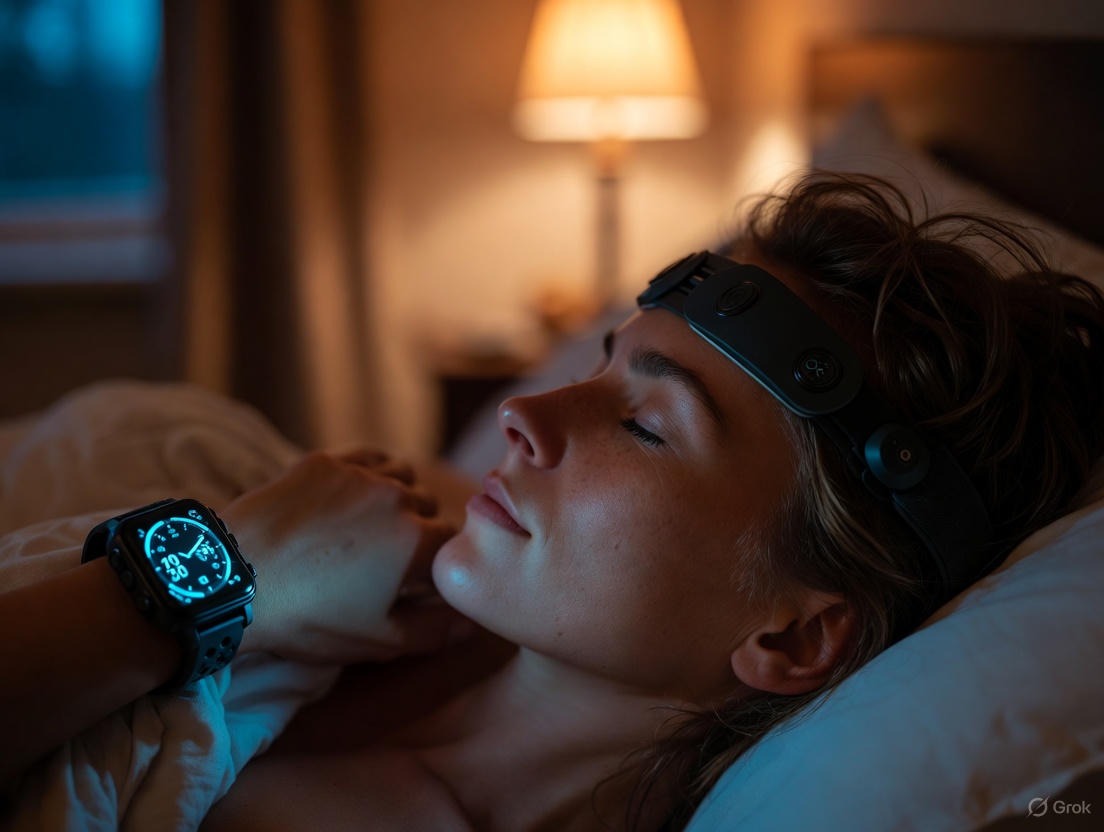
Napping often carries a stigma of unproductivity. Yet, your wellness ring data on sleep debt and HRV recovery can make a compelling case for the strategic “power nap.” The gap here is between pushing through fatigue and using a scientifically-timed reset to enhance afternoon performance and evening recovery. Not all naps are created equal, however, and the ring provides the parameters for the perfect, non-disruptive nap.
A short nap of 10-20 minutes can improve alertness, mood, and cognitive performance without entering deep sleep, thus avoiding sleep inertia (that groggy feeling). Your ring can help you identify when a nap is truly needed (e.g., after a night of poor sleep shown by low deep/REM percentages) and ensure it doesn’t interfere with your nighttime sleep drive.
What Your Ring Data Shows:
The Missing Lifestyle Link: You are missing a structured, time-limited nap protocol that serves as a tool for performance and recovery, not an unplanned crash.
Actionable Fix: Practice the art of the data-informed power nap.
Used correctly, a nap is not a sign of weakness but a biohack. It’s a way to pay back acute sleep debt before it compounds and ruins your next night. For those who struggle with grogginess at any time of day, understanding how to structure your evening is paramount, as discussed in our piece on how nighttime routines reduce morning grogginess.
You may carefully manage workout stress and nutritional stress, but your wellness ring is a neutral auditor of all stress—including the emotional and social kind. Arguments, work deadlines, financial worries, and even exciting life events register in your autonomic nervous system. The gap revealed is between psychological experience and physiological impact. Your ring doesn’t distinguish between the stress of a hard workout and the stress of a hard conversation; it simply shows the downstream effect on your HRV, RHR, and sleep.
This is perhaps the most profound revelation of continuous biometric tracking: it holds a mirror to your emotional life. A challenging day with your boss or a family conflict will often show up in your evening data long before you’ve consciously processed the event. It quantifies the concept of “carrying stress in your body.”
What Your Ring Data Shows:
The Missing Lifestyle Link: You are missing the practice of physiological emotion processing. Just as you cool down after a workout, you need techniques to “cool down” your nervous system after emotional stress.
Actionable Fix: Use your ring data to prompt emotional hygiene.
By treating emotional stress with the same respect as physical stress, you give your body the tools to process and release it. This prevents emotional events from becoming chronic physiological burdens, paving the way for better sleep, better recovery, and better health. For individuals who find their minds racing at night, a targeted approach can be found in our guide to the nighttime wellness routine for anxious minds.
Individually, each of these fifteen tips represents a tweak—a slight adjustment to timing, composition, or habit. The true power of the wellness ring, however, is not in revealing these gaps in isolation, but in illuminating how they interconnect to create your overall health landscape. This is the principle of the compound effect: small, smart changes, consistently applied and validated by data, lead to exponential improvements in well-being.
Think of your physiology as a complex symphony. Your ring is the audio engineer’s console, showing you that the violins (sleep) are flat, the brass (stress) is too loud, and the percussion (activity) is off-beat. Adjusting one section improves the piece, but harmonizing all sections creates a masterpiece. Fixing your digital sunset (Tip #6) improves sleep onset, which raises HRV (Tip #2), which improves workout recovery (Tip #4), which stabilizes afternoon energy (Tip #13), which reduces nighttime cravings (Tip #7). The virtuous cycle begins.
From Reactive to Predictive Living
Initially, you use your ring reactively: “My HRV is low today, so I’ll take it easy.” This is valuable. But the ultimate goal is to become predictive. You start to understand your unique patterns:
This predictive knowledge empowers you to make choices not just based on how you feel in the moment, but on how you want your physiology to look tomorrow morning. You move from being a passenger in your body to being its skilled pilot, with a full instrument panel at your disposal.
Building Your Personalized Health Blueprint
Your data is uniquely yours. The “perfect” bedtime, workout intensity, or meal timing is what works for your metrics. The journey involves:
The wellness ring demystifies the black box of your body. It turns the abstract pursuit of “health” into a tangible, manageable, and endlessly optimizable project. The fifteen gaps outlined here are your starting point—a diagnostic checklist provided by your own physiology. By closing them, you’re not just following tips; you’re engaging in a continuous conversation with the deepest, wisest part of yourself: your biology. And it’s a conversation that promises a longer, healthier, and more vibrantly lived life.
For the first few weeks with a wellness ring, the daily scores and graphs are captivating. You become a detective of your own life, connecting each spike and dip to a specific meal, workout, or stressful moment. But the true, transformative power of this technology lies not in the daily drama, but in the quiet story told by long-term trends. This is the sophisticated second act of data literacy: moving beyond reacting to yesterday’s score to understanding the seasonal, monthly, and yearly rhythms of your physiology. The gap exposed here is between micro-management and macro-understanding.
A single night of poor sleep is an event. A gradual, month-long creep in your resting heart rate is a trend—and it’s a far more important signal. Your ring’s longitudinal data reveals the slow-moving currents beneath the surface waves of daily life: the impact of chronic, low-grade stressors, the benefits of sustained habit change, and even your body’s innate cycles.
What Your Long-Term Data Reveals:
The Missing Lifestyle Link: You are missing a quarterly review of your health data. We perform reviews at work and for finances; our physiology deserves the same strategic oversight.
Actionable Fix: Schedule a Biometric Quarterly Review.
This long-view analysis liberates you from daily score anxiety and provides profound validation. Seeing a positive multi-month trend is the ultimate proof that your lifestyle changes are working at a cellular level.
Most advanced wellness rings synthesize raw data into a proprietary score with names like “Body Battery” (Garmin), “Readiness Score” (Oura, Whoop), or “Stress Resilience.” While daily use is straightforward (green=go, red=rest), this composite metric holds a deeper lesson about energy economics. The gap it reveals is between spending energy and investing it wisely. Your body’s capacity is not infinite; this score represents your available balance. Chronic overspending leads to debt (burnout, illness).
Think of it this way: Every stressor—physical, mental, emotional—is a withdrawal. Every period of genuine rest, recovery, and sleep is a deposit. Your readiness score is your current account balance. The goal isn’t to avoid all withdrawals (life is stressful), but to ensure your deposits consistently exceed them.
What This Score Reveals Beyond Daily Advice:
The Missing Lifestyle Link: You are missing a strategic energy budgeting practice. You wouldn’t run a business without a budget; don’t run your life without one.
Actionable Fix: Practice Energy Accounting.
By viewing your health through this economic lens, you move from being a passive consumer of energy to an active, wise steward of your most precious resource.
We addressed acute hydration in Tip #3, but the more common and insidious issue is chronic, low-grade dehydration. This isn’t about feeling parched; it’s about functioning consistently below your body’s optimal fluid balance. Your ring’s data, particularly heart rate variability (HRV) and resting heart rate (RHR), becomes a canary in the coal mine for this silent saboteur. The gap is between drinking to quench thirst and hydrating for optimal cellular function.
When you’re chronically under-hydrated, your blood volume decreases slightly, and your blood becomes more viscous. Your heart must work harder to maintain blood pressure and circulation, leading to a subtle but persistent elevation in cardiovascular strain. This doesn’t show up as a single bad day; it shows up as a suppressed baseline.
What The Long-Term Data Shows:
The Missing Lifestyle Link: You are missing hydration as a foundational practice, not a reactive one. It’s the baseline upon which all other health habits are built.
Actionable Fix: Implement Foundational Hydration.
Hydration isn’t glamorous, but it is fundamental. By using your ring to prove its systemic impact, you can finally give it the non-negotiable status it deserves in your daily routine.
You proudly hit the magic “8-hour” mark. But your wellness ring dissects that duration into its constituent parts: Light, Deep, and REM sleep. This breakdown reveals the critical concept of “junk sleep”—adequate time in bed composed of poor-quality, un-restorative sleep stages. The gap is monumental: the difference between checking the box on sleep duration and achieving the biological functions of sleep.
Each sleep stage has a non-negotiable job:
What Your Sleep Stage Data Reveals:
The Missing Lifestyle Link: You are optimizing for the wrong sleep metric. Duration is the container; stage quality is the contents.
Actionable Fix: Become a Connoisseur of Sleep Quality.
Chasing quality over mere quantity is the single most impactful shift you can make in your sleep journey. For a minimalist approach focused on these essentials, our guide on the minimal nighttime wellness routine: 5 essential steps cuts straight to the core habits that protect sleep architecture.
You diligently track your workouts, but your wellness ring’s all-day movement data (steps, active minutes, calorie burn) highlights a far more significant factor for long-term metabolic health: Non-Exercise Activity Thermogenesis (NEAT). This is the energy expended for everything that is not sleeping, eating, or sports-like exercise. It includes walking, fidgeting, standing, gardening—all the mundane movements of daily life. The gap revealed is between the intense, punctuated energy burn of exercise and the slow, steady burn of all-day movement.
Research indicates NEAT can vary by up to 2,000 calories per day between two similarly sized individuals. A person with high NEAT is constantly “stoking the metabolic furnace.” Your ring makes your NEAT level visible and quantifiable. A day with a great 1-hour workout but only 2,000 steps is a day of poor overall movement.
What Your Ring Data Shows:
The Missing Lifestyle Link: You are missing the critical importance of the 23 hours outside the gym. Exercise is a potent stimulus, but NEAT is the constant background rhythm of metabolic health.
Actionable Fix: Engineer NEAT into Your Life.
By elevating NEAT to a pillar of health equal to exercise, you create a metabolic environment that is constantly active, improving insulin sensitivity, circulation, and mood all day long.

This is one of the most common and humbling revelations for new ring users. Subjectively, you believe you are “a good sleeper.” You fall asleep quickly, rarely remember waking up, and don’t feel excessively tired. Then you review your ring data and see a heart rate that remains elevated for the first three hours of the night, a body temperature that never properly drops, and a sleep graph fragmented by numerous micro-awakenings you have no memory of. The gap exposed is the vast chasm between subjective sleep perception and objective sleep physiology.
This disconnect exists because sleep state misperception is common. Our memory of sleep is formed in the moments just before we lose consciousness and after we wake up. The many brief arousals throughout the night often don’t register in our conscious recall. Furthermore, we adapt to a certain level of poor sleep, accepting it as our “normal.” The ring shatters this illusion with impartial data.
What Your Ring Data Reveals About Your "Fine" Sleep:
The Missing Lifestyle Link: You are missing objective feedback on the one-third of your life you spend asleep. You’ve been flying blind.
Actionable Fix: Recalibrate Your Sleep Perception with Data.
This honest feedback loop is invaluable. It prevents you from dismissing fatigue as normal aging or stress and empowers you to seek true solutions. For many, the first step is examining and correcting common pitfalls, which are detailed in our article on nighttime routine mistakes that ruin your sleep.
You’ve learned that sleep is important, but your ring data precisely quantifies how the 60-90 minutes before you close your eyes directly determine the quality of the next 7-8 hours. This “wind-down” period is not a passive prelude; it’s an active physiological transition phase that your ring tracks through real-time dips in heart rate and rises in HRV. The gap revealed is between stopping activities and actively initiating the biological cascade of sleep.
A chaotic, stimulating pre-bed hour forces your body to slam the brakes on sympathetic activation, a process that is inefficient and incomplete. This results in the “silent stress” and elevated sleep latency discussed earlier. A deliberate wind-down, however, gently guides your nervous system from “fight-or-flight” to “rest-and-digest,” allowing sleep to begin smoothly and deeply the moment your head hits the pillow.
What Your Live Data During Wind-Down Shows:
The Missing Lifestyle Link: You are treating the wind-down as optional or non-existent, rather than as the most important performance ritual of your day.
Actionable Fix: Design a Personalized, Non-Negotiable Wind-Down Ritual.
A powerful wind-down has three phases:
Pro Tip: Use your ring’s relaxation or breathing guide feature during Phase 3 if it has one. You can literally watch your heart rate drop in real-time, providing immediate biofeedback that your ritual is working.
The impact of a consistent wind-down is profound and visible in your data: shorter sleep latency, higher deep sleep percentages in the first cycle, and a higher overall sleep score. For a diverse collection of short, effective ideas to build this ritual, explore our piece on nighttime wellness rituals that take less than 30 minutes.
We follow calendar seasons, but our bodies operate on their own internal seasons—cycles of energy, stress, recovery, and hormonal fluctuation. Your wellness ring’s long-term trend data is the key to identifying these personal seasons. The gap exposed is the rigid adherence to a static routine in the face of a dynamic physiology. What works in the energetic spring of your training cycle may not work in the necessary winter of your recovery.
Your data will show you periods of high resilience (high, stable HRV, low RHR) and periods of vulnerability (lower HRV, elevated RHR, poor sleep). Learning to adapt your lifestyle—your training, diet, social calendar, and sleep goals—to these internal seasons is the hallmark of a truly intelligent approach to health.
What Your Data Reveals About Your Internal Seasons:
The Missing Lifestyle Link: You are missing periodization for life. Athletes periodize training; high-performing individuals must periodize their entire lifestyle.
Actionable Fix: Create a Seasonal Playbook Based on Your Readiness Score.
By syncing your life’s demands with your body’s capacity, you avoid burnout and create sustainable, long-term progress. This adaptive approach is crucial for families as well, where collective rhythms matter; learn how to harmonize them in our resource on the family nighttime wellness routine for adults and kids.
This is the apex of wellness ring mastery. It’s not just about reading the data your ring provides, but about using its logging features to discover your unique, personal correlations. The ring provides the outcome metrics (HRV, RHR, Sleep Score); you provide the input variables (food, drink, stress, activity). Together, you can run powerful n=1 experiments. The ultimate gap this closes is between generalized health advice and your personal, proven formula for optimal performance.
You are a unique biochemical entity. The perfect bedtime, the ideal pre-workout meal, the impact of dairy or gluten—these are not universal truths. They are hypotheses to be tested on your single subject: you.
How to Conduct a Personal Correlation Experiment:
Examples of Powerful Personal Discoveries:
This process turns you from a passive recipient of health information into an active, empowered investigator. You stop wondering, “Does this work?” and start knowing, “This works for me.”
The Journey Ahead
Your wellness ring is more than a sleep tracker or a step counter. It is a continuous biofeedback device, a longitudinal research tool, and a personal health oracle. The fifteen initial tips are common gaps, but your journey will reveal gaps unique to you. By embracing the data—the daily scores, the long-term trends, and the personal correlations—you forge a powerful partnership with your own body. You learn its language, respect its signals, and make choices that are not based on trends or guesses, but on the undeniable truth written in your physiology. This is the future of personalized health: not a one-size-fits-all prescription, but a custom-fitted life, designed by you, for you, guided by the silent intelligence on your finger.
Your Trusted Sleep Advocate: Sleep Foundation — https://www.sleepfoundation.org
Discover a digital archive of scholarly articles: NIH — https://www.ncbi.nlm.nih.gov/
39 million citations for biomedical literature :PubMed — https://pubmed.ncbi.nlm.nih.gov/
Experts at Harvard Health Publishing covering a variety of health topics — https://www.health.harvard.edu/blog/
Every life deserves world class care :Cleveland Clinic - https://my.clevelandclinic.org/health
Wearable technology and the future of predictive health monitoring :MIT Technology Review — https://www.technologyreview.com/
Dedicated to the well-being of all people and guided by science :World Health Organization — https://www.who.int/news-room/
Psychological science and knowledge to benefit society and improve lives. :APA — https://www.apa.org/monitor/
Cutting-edge insights on human longevity and peak performance:
Lifespan Research — https://www.lifespan.io/
Global authority on exercise physiology, sports performance, and human recovery:
American College of Sports Medicine — https://www.acsm.org/
Neuroscience-driven guidance for better focus, sleep, and mental clarity:
Stanford Human Performance Lab — https://humanperformance.stanford.edu/
Evidence-based psychology and mind–body wellness resources:
Mayo Clinic — https://www.mayoclinic.org/healthy-lifestyle/
Data-backed research on emotional wellbeing, stress biology, and resilience:
American Institute of Stress — https://www.stress.org/


