


Activity Level Optimization: The Smart Ring Approach to Perfect Balance
A smart ring approach to finding the perfect balance of activity.
A smart ring approach to finding the perfect balance of activity.
%402x.svg)
In the relentless pursuit of better health, we’ve become a culture obsessed with extremes. We glorify the 5 a.m. gym sessions, the marathon training logs, and the 10,000-step streaks. Simultaneously, we burn the midnight oil, sacrificing sleep for productivity, mistaking stillness for laziness. This pendulum swing between overexertion and utter exhaustion isn't a path to vitality; it's a highway to burnout, injury, and a hidden kind of poor health that no single workout can fix.
We’ve been missing the critical variable: balance. Not as a vague, feel-good concept, but as a precise, physiological state where activity, recovery, stress, and rest exist in a harmonious, personalized rhythm. For decades, optimizing this balance was guesswork, reliant on how we "felt" in the morning—a notoriously unreliable metric. We either pushed through fatigue, risking overtraining, or we underestimated our capacity, leaving potential gains on the table.
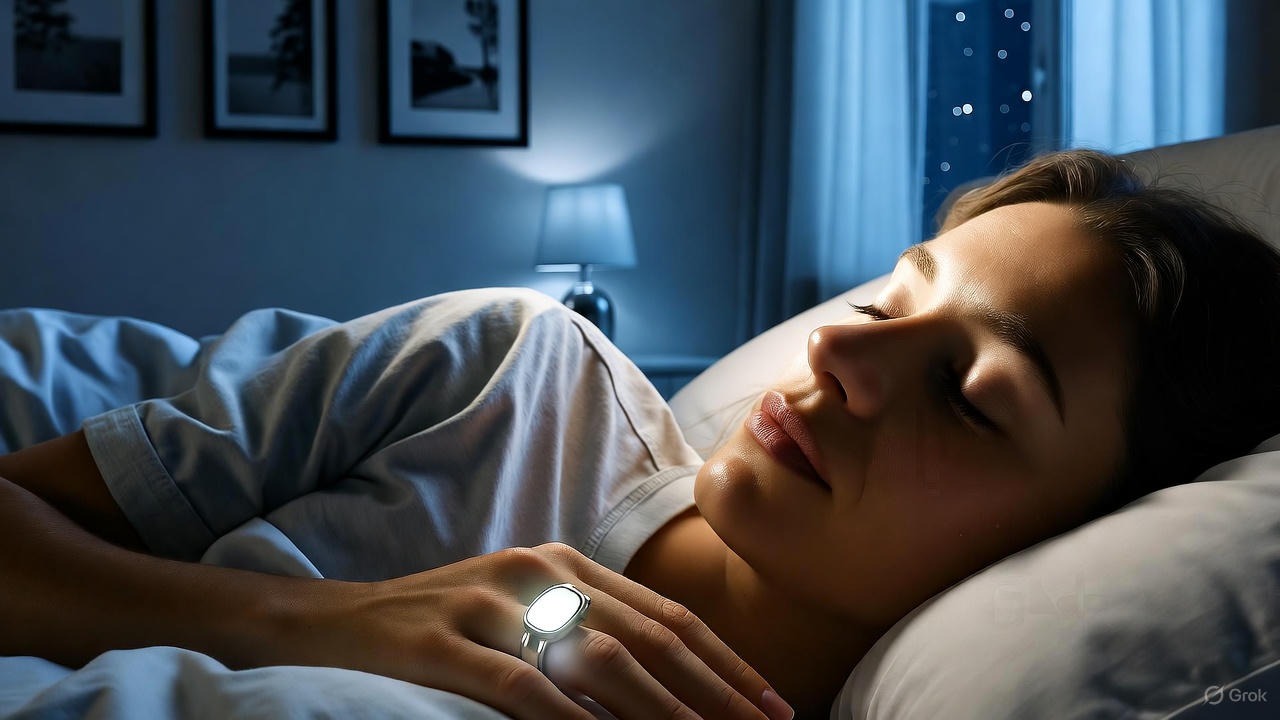
Enter the smart ring: a quiet revolution in personal biometrics. Sleek, unobtrusive, and worn 24/7, it has moved health monitoring from our wrists and pockets to our fingers—a location with unique access to rich, arterial blood flow for supremely accurate data. This isn't just another step counter. This is a continuous, nuanced interpreter of your body’s deepest signals.
Activity Level Optimization (ALO) is the sophisticated practice of using this continuous stream of biometric intelligence—heart rate variability (HRV), resting heart rate, sleep architecture, body temperature, and more—to precisely calibrate your daily exertion. It answers the only question that truly matters: What does my body need today?
Is today a day for an intense interval workout, a gentle yoga flow, or a focused recovery walk? Your smart ring doesn't just tell you; it shows you with cold, hard data derived from how your body actually recovered last night. It transforms health from a generic prescription into a personal, dynamic dialogue.
This article is your definitive guide to mastering that dialogue. We will deconstruct the science of balance, explore the unparalleled biometric capabilities of the modern smart ring, and provide a actionable framework for using this technology to achieve your peak state of sustainable energy, performance, and well-being. This is the end of boom-and-bust cycles. This is the beginning of perfectly tuned living.
The Modern Imbalance: Why “Harder” Isn’t Always “Better”
We live in a world that rewards visible effort. Sweat is the currency of dedication, and fatigue is often worn as a badge of honor. This mindset has spawned a global fitness industry worth over $100 billion, yet rates of chronic disease, stress, and burnout continue to climb. The paradox is glaring: we are more health-conscious than ever, yet fundamentally out of sync with our own physiology.
The root of this crisis is a universal misapplication of the fundamental biological principle of hormesis—the idea that a moderate stressor triggers a beneficial adaptive response. Exercise is a hormetic stress; it breaks down muscle so it rebuilds stronger. The critical, and often ignored, caveat is that the adaptation happens during recovery. Without adequate recovery, there is no adaptation—only accumulating damage. We have become experts at applying the stress and amateurs at honoring the recovery.
1. Chronic Overtraining (The "Always-On" Athlete): This isn't just for elite competitors. It's the office worker who does high-intensity interval training (HIIT) seven days a week on four hours of sleep. Symptoms are insidious: plateaued or declining performance, persistent heavy legs, elevated resting heart rate, irritability, frequent illness, and disrupted sleep. The body is screaming for rest, but the mindset says, "Push harder."
2. Under-Moving with High Stress (The "Active Couch Potato"): This may be the more prevalent modern malaise. An individual might get their 30-minute gym session in but then sit for 10 hours at a desk, consumed by mental stress. They are chronically stressed—cortisol is perpetually elevated—but physically under-stimulated in a meaningful way. This combination is a perfect storm for metabolic dysfunction, poor cardiovascular health, and low-grade systemic inflammation.
The common tool we've used to navigate this—the fitness tracker on the wrist—often inadvertently fuels the fire. Its primary currency is steps and active minutes, gamifying constant movement. It celebrates a 20,000-step day but is silent on whether that day followed a night of terrible sleep or preceded one. It provides output data but lacks the crucial input data about your body’s readiness to perform.
The consequence of this blind pursuit is a national state of dysregulation. Our nervous systems are stuck in a sympathetic ("fight-or-flight") dominant state. Our sleep is shallow and unrefreshing. We are either wired and tired or simply exhausted. We need a new compass, one that measures not just our movement, but our capacity for it. As explored in our discussion on how a wellness ring validates effective healthy aging tips, true wellness comes from aligning action with your body's actual state, not an arbitrary target.
The Biometric Revolution: What Your Finger Can Tell You That Your Wrist Can't
To optimize activity, we must first measure the right things, with the right tool, in the right place. The smart ring represents a paradigm shift in wearable technology, prioritizing clinical-grade biometric accuracy and holistic insight over mere notification and step-count convenience.
The science hinges on location. The finger, specifically the base of the finger, contains dense vascular beds with strong photoplethysmography (PPG) signals. PPG is the optical technique used to detect blood volume changes. Compared to the wrist—a bony, tendon-dense area with weaker blood flow—the finger provides a cleaner, stronger signal with less motion artifact. This is why medical pulse oximeters use the finger. This superior signal fidelity is the foundation for accurate 24/7 monitoring of:
The magic is in the synthesis. A smart ring like those developed by Oxyzen doesn't just report these metrics in isolation. Its algorithms create a composite picture of your Readiness or Recovery Score. This score, calculated each morning, synthesizes your night's sleep data, your HRV trend, your temperature deviation, and your RHR into a single, actionable number.
Imagine waking up and knowing, with data-backed confidence, that your body is only at 65% recovery despite getting eight hours of sleep. That intelligence fundamentally changes your decision-making. It tells you to swap the HIIT class for mobility work, to prioritize hydration and stress management, and to aim for an earlier bedtime. This is the core of Activity Level Optimization: letting internal biomarkers guide external behavior. This deep, data-driven approach is a cornerstone of science-backed healthy aging tips that actually work, moving beyond folklore to personalized physiology.
The most powerful lesson your wellness ring teaches is that your body is not a static machine. It is a dynamic, living system that changes—sometimes subtly, sometimes dramatically—over weeks, months, and decades. The "set it and forget it" fitness plan of your 20s can become a path to frustration, injury, or burnout in your 40s, 50s, and beyond. Your ring’s longitudinal data doesn’t just track daily readiness; it charts the very story of your biological aging, providing the clearest possible guide for how your activity must adapt to remain ideal at every chapter.
This understanding liberates you from comparison and outdated paradigms. The goal shifts from chasing the performance metrics of your past self to optimizing the health, function, and vitality of your present self. Let’s explore how the key biomarkers monitored by your ring naturally evolve, and what that means for recalibrating your movement.
The Biomarker Shift: Reading the Signals of Time
Activity Evolution: From Performance to Sustainability
The data-guided evolution of activity across decades isn’t about doing less; it’s about doing differently—with more intelligence, precision, and respect for recovery.
By allowing your ring’s long-term data to guide this evolution, you move from a culture of fitness focused on aesthetics and performance to one of athletic healthspan—extending the number of years you live with strength, energy, and independence. This is the ultimate promise of personalized data.
Foundational Pillar 1: Sleep as the Non-Negotiable Metric
If activity optimization is a vault, sleep is the combination lock. No amount of biohacking, supplementation, or perfect training can compensate for chronic sleep deprivation. Sleep is not downtime; it is an intensely active period of restoration, memory consolidation, metabolic regulation, and hormonal orchestration. Your smart ring transforms sleep from a subjective duration ("I got about 7 hours") into an objective, multi-dimensional quality score.
A sophisticated sleep analysis from a smart ring examines:
The ALO Connection: Your sleep data is the primary input for your next day's activity prescription. A night of high efficiency, balanced stages, and strong nighttime HRV equates to a green light for more strenuous activity. A night of poor efficiency, low deep sleep, and a elevated nighttime heart rate is a clear red flag, mandating a recovery-focused day.
For instance, you may plan a heavy leg day, but your ring reports you spent 40% less time in deep sleep than your baseline and had a elevated temperature. Pushing through with your original plan is now a high-risk, low-reward proposition. The smart, optimized choice is to defer. This principle of honoring sleep data is why sleep quality has become the foundation of healthy aging. It is the ultimate performance-enhancing drug, and your smart ring is the lab test that ensures you're taking the correct dose.
Foundational Pillar 2: Heart Rate Variability – Your Body’s Honest Messenger
While sleep sets the stage, Heart Rate Variability (HRV) is the lead actor in the recovery drama. To understand HRV, imagine the rhythm of a healthy heart is not a monotonous, robotic beep...beep...beep. It’s more like a skilled jazz drummer: beep…beep…beep…—the intervals are constantly, subtly changing. This variability is a sign of a healthy, responsive autonomic nervous system (ANS).
Your ANS has two branches: the sympathetic (gas pedal) and the parasympathetic (brake pedal). High HRV indicates a strong parasympathetic influence, meaning your body is in a state capable of rest, repair, and recovery. It has "headroom" to handle stress. Low HRV indicates sympathetic dominance—your system is stressed, fatigued, or fighting something, and is running near its limit.
The Critical Nuance: HRV is Highly Personal. There is no "good" or "bad" universal number. A value of 45 might be dangerously low for one person and a personal best for another. The power is in the trend. Your smart ring establishes your unique baseline and then shows daily deviations.
Using HRV for ALO:
By making daily decisions aligned with your HRV, you train with your nervous system, not against it. You build resilience by strategically applying stress only when your body has shown it is ready to absorb it. This responsive approach is a powerful tool for managing stress and its profound connection to long-term health.

While HRV is the nuanced communicator, Resting Heart Rate (RHR) and Skin Temperature are the steadfast guards, providing clear, unequivocal warnings.
Resting Heart Rate (RHR) is exactly what it sounds like: your heart rate when you are fully at rest, best measured during sleep or immediately upon waking. For most adults, a lower RHR indicates better cardiovascular fitness and efficient heart function. However, the daily fluctuation is the key for ALO.
Skin Temperature, measured continuously at the periphery, is a proxy for your body's inflammatory and thermoregulatory state.
These metrics work as a confirmation panel. If your HRV is low, an elevated RHR and temperature confirm a true "red light" recovery day. If your HRV is decent but RHR is high, it might point specifically to dehydration or a fleeting stressor. This triangulation of data eliminates guesswork and empowers you with diagnostic-grade insight into your state. Understanding these subtle signals is part of a larger strategy to fight cellular aging by addressing inflammation and systemic stress at their earliest stages.
Armed with an understanding of these pillars, we arrive at the practical core of Activity Level Optimization: the Daily Readiness Protocol. This is a systematic, five-minute morning routine where you consult your biometric data to set the activity plan for the day ahead. It replaces "working out" with "training smart."
Step 1: The Morning Check-In (Before Coffee, Before Your Phone)
Upon waking, open your smart ring's companion app (like the one you'd use with a ring from Oxyzen.shop). Review your key scores:
Step 2: Interpret the Composite Picture – The Traffic Light System
Step 3: Execute and Observe
Carry out your adjusted plan. At the end of the day, make brief notes on how you felt subjectively. Did the easy day feel refreshing? Did the hard day feel appropriately challenging? This subjective-objective feedback loop is where true wisdom develops.
This protocol moves you from a fixed, rigid schedule ("I lift Monday, Wednesday, Friday") to a fluid, responsive training plan that respects your body's dynamic reality. It is the essence of working with your biology, a principle that is central to preserving independence longer through intelligent health monitoring.
Activity Level Optimization isn't just about whether to train, but how to train with the intelligence your biomarkers provide. Different activities place different stresses on the body, and your readiness data can guide you to the optimal modality for the day.
On High-Readiness (Green) Days:
On Moderate-Readiness (Yellow) Days:
On Low-Readiness (Red) Days:
By matching the activity stressor to your recovery capacity, you ensure every movement has a purposeful, positive effect. This intelligent, phased approach to movement is a key component of healthy aging movement strategies for every decade, ensuring sustainability and injury prevention over a lifetime.
The Role of Non-Exercise Stress: Life’s Invisible Load
A critical, often overlooked, aspect of ALO is that your body does not differentiate between stress sources. A brutal workout, a tense deadline, a poor night's sleep with a newborn, a heated argument, or a hidden immune response to a virus—all are processed as stress, drawing from the same recovery resource pool.
This is where 24/7 wearables prove their immense value. You can live a seemingly "easy" day—no workout, desk-bound—yet wake up the next morning with a terrible recovery score. Without a smart ring, you'd be baffled. With it, you can connect the dots:
ALO in Practice: On a day packed with high mental stress, you should automatically default your physical activity plan to a Yellow or Red Light, regardless of what your training calendar says. The data will confirm this. By respecting the total stress load, you prevent the catastrophic pile-up that leads to burnout. Managing this holistic load is intrinsically linked to protecting cognitive function over time, as chronic stress is a primary enemy of brain health.
You cannot optimize what you do not measure, and you cannot measure effectively without a baseline. The first 30 days with a smart ring are not about making drastic changes, but about observation and discovery. This is your personalized audit period.
The Baseline Establishment Phase (Weeks 1-4):
This baseline is your North Star. It tells you what "normal" is for your unique physiology. From this foundation, you can begin to experiment intentionally: What happens if I add 15 minutes of meditation on high-stress days? What if I swap my evening workout for a morning one? How does my body respond to a deload week?
This process of creating a data-driven personal baseline is the first, most powerful step in taking control of your health narrative. It’s the practical application of using a smart ring to track healthy aging progress over time, turning abstract goals into tangible, trackable metrics.
With a solid baseline established, the real art of Activity Level Optimization begins. This is where you evolve from a passive observer of data to an active architect of your well-being, using the feedback loop to experiment, refine, and achieve goals that once seemed elusive. The smart ring transitions from a diagnostic tool to a daily coaching partner, guiding nuanced decisions that impact not just fitness, but overall life quality and longevity.
This section delves into the sophisticated applications of ALO, exploring how this dynamic approach can be tailored for specific goals, life stages, and the inevitable challenges of a busy, modern life. We move beyond the fundamentals into a realm of personalized strategy, where data illuminates the path to sustainable peak performance and resilience.
Periodization Reimagined: Dynamic Training Blocks Guided by Biomarkers
Traditional athletic periodization involves pre-planned cycles of loading (microcycles, mesocycles) designed to peak for an event. For the everyday individual, however, life rarely follows a perfect 12-week plan. Illness, work deadlines, family obligations, and travel constantly disrupt the best-laid schedules. Smart ring data allows us to move from rigid, calendar-based periodization to dynamic, biomarker-driven periodization.
How It Works:
Instead of deciding on Monday that this is a "loading week," you let your weekly readiness trends dictate the structure.
This fluid approach respects the body's non-linear response to stress. It turns a training plan from a brittle script into a resilient, responsive dialogue. This principle of listening to the body and adapting is a universal tenet, whether you're training for a marathon or simply aiming to maintain muscle mass after 60. The smart ring provides the objective voice in that conversation.
One of the most profound applications of continuous biometric monitoring is in understanding and harmonizing with our intrinsic hormonal rhythms. For women, the menstrual cycle imposes a powerful, predictable (though often individually variable) monthly rhythm on physiology, recovery, and performance. For men, while less cyclical, diurnal and age-related hormonal shifts are equally important to recognize.
ALO and the Menstrual Cycle:
The cycle's phases—follicular (post-period to ovulation) and luteal (post-ovulation to period)—create distinct physiological environments.
A smart ring, by tracking basal body temperature trends and correlating them with recovery metrics, can help a woman identify her own unique ovulation day and map her personal performance blueprint across her cycle. This is empowerment through data, turning a source of potential frustration into a strategic advantage. This nuanced understanding is a key part of healthy aging tips for women navigating hormonal changes, allowing for grace and intelligence through perimenopause and beyond.
ALO and Men’s Health:
For men, the focus is often on diurnal cortisol rhythms and the gradual, age-related decline of hormones like testosterone.
In both cases, the smart ring acts as an external endocrine feedback system, providing clues to the internal hormonal conversation and guiding activity to support, rather than disrupt, that delicate balance.
Nutritional Timing and Biomarker Feedback
You cannot out-train a poor diet, but you can significantly optimize your nutrition by aligning it with your activity and recovery status. The concept of "eat for the day you have, not the day you want" comes alive with ALO.
Fueling for the Green Light (Performance Days):
On high-readiness days, your body is primed to utilize nutrients efficiently for repair and growth.
Nourishing for the Yellow/Red Light (Recovery & Stress Days):
On days when your system is stressed, the goal shifts from performance to repair and reduction of inflammation.
Your smart ring provides the "why" for these nutritional shifts. Seeing a poor recovery score after a day of poor eating creates a powerful cause-and-effect learning moment. Conversely, noticing improved sleep and HRV after a day of clean, anti-inflammatory eating reinforces positive habits. This biofeedback loop turns nutrition from a set of rules into a responsive tool for managing your internal environment.

Activity Level Optimization isn't solely about physical exertion. Our brains consume roughly 20% of the body's energy and are profoundly affected by physiological states. A fatigued body houses a fatigued brain. The same biomarkers that guide physical training can be used to schedule demanding cognitive work.
Strategic Cognitive Scheduling:
By aligning cognitive demands with cognitive capacity, you work smarter, reduce mental fatigue, and produce higher-quality output. This approach is a direct investment in long-term brain health, a core component of any strategy to protect cognitive function as we age.
A perfect, routine life is a fantasy. The true test of any wellness system is its robustness in the face of real-world chaos. ALO provides a framework for navigating disruptions without derailing your health.
Travel and Jet Lag:
Travel is a massive stressor combining circadian disruption, dehydration, and physical immobility.
Managing Illness:
Your smart ring is an early-warning system. A rising temperature trend and elevated RHR often appear 1-2 days before full symptoms.
Social Engagements and Alcohol:
Social connection is vital for health, as highlighted in our resource on the social connection factor in healthy aging. However, late nights and alcohol are measurable recovery disruptors.
The most powerful aspect of 24/7 biometric tracking emerges over months and years. This longitudinal data becomes a priceless health record, revealing trends invisible in day-to-day fluctuations.
What Long-Term Data Reveals:
This is the frontier of preventive health. By tracking the inputs (sleep, stress, activity) and the outputs (HRV, RHR, temperature) continuously, you move from reacting to illness to actively building and protecting your healthspan—the number of years you live in good health. This is the ultimate promise of technology like the Oxyzen ring: to provide the insights needed to implement daily healthy aging tips with precision and personal relevance.
The potential depth of ALO can feel overwhelming. The key is to start with a "Minimal Viable Practice" (MVP) that is sustainable. The goal is consistency, not perfection.
The 5-Minute Daily MVP:
The One-Month Check-In:
Once a month, spend 15 minutes reviewing your longer trends. Answer three questions:
This MVP approach ensures the technology serves you, not the other way around. It creates a sustainable habit of listening to your body, which is the foundation of lifelong wellness. For more structured guidance and community insights, the Oxyzen blog is a continually updated resource for refining your practice.
Activity Level Optimization, powered by smart ring technology, is not the end point but a beginning. We are on the cusp of a deeper integration of biometrics, artificial intelligence, and personalized medicine.
Near-Future Advancements:
The core principle will remain: using objective, personalized physiological data to make smarter, more harmonious decisions about how we move, rest, and live. It is a shift from episodic, symptom-focused healthcare to continuous, optimization-focused well-being.
By embracing the smart ring approach to Activity Level Optimization, you are not just buying a device; you are investing in a lifelong partnership with your own biology. You are building a system for resilience, enabling you to meet life's demands—whether a physical challenge, a mental marathon, or the simple goal of aging vibrantly—with intelligence, grace, and perfect balance. This journey of personalized data is what allows you to start working on healthy aging at any age, with clarity and confidence.
We have established the science, the metrics, and the daily framework for Activity Level Optimization. Now, we bridge the gap between theory and tangible reality. How does this approach look across different lives, ages, and ambitions? How do we apply it to concrete goals, and how do we navigate the common pitfalls and misconceptions that arise?
This final portion of our exploration grounds the principles of ALO in the messy, beautiful reality of human experience. We will follow hypothetical but data-driven journeys, build specific protocols, and confront the ultimate question: how do we use data to live more humanely?
Profile: Sarah, 42, is a senior director in a tech firm. Her life is a cascade of back-to-back Zoom calls, cross-continental travel, and perpetual inbox anxiety. Her "fitness" consists of punishing 5 a.m. HIIT classes 5 days a week, fueled by caffeine and willpower. She is chronically exhausted, gets sick frequently, and feels her cognitive sharpness fading.
The ALO Intervention (First 90 Days):
The Takeaway: For the high-stress professional, ALO isn't about adding more to the plate; it's about strategic subtraction and intelligent timing. It turns health from a drain on productivity into its foundation. This journey mirrors the principles in our article on HRV monitoring for healthy aging goals, where managing stress becomes the primary lever for vitality.

Profile: Mark, 58, is a lifelong runner and cyclist. He still tries to maintain the mileage and intensity of his 40s, but he’s plagued by niggling injuries—plantar fasciitis, a persistent knee ache—and his times are slipping. His recovery feels slower, and he’s frustrated.
The ALO Intervention (First 90 Days):
The Takeaway: For the aging enthusiast, ALO provides the objective data to evolve one’s training gracefully. It replaces ego-driven volume with intelligence-driven quality, which is the cornerstone of healthy aging tips for the critical decade of the 50s. The goal shifts from peak performance to longevity of practice.
Profile: Lena, 34, is 6 months postpartum with her first child. She is desperate to "get her body back" but is grappling with sleeplessness, hormonal fluctuations, and a body that feels unfamiliar. Standard online workout plans feel overwhelming and misaligned.
The ALO Intervention (First 90 Days):
The Takeaway: ALO provides a non-judgmental, responsive framework for major life transitions. It replaces external, often unrealistic, standards with internal, compassionate guidance. This aligns with the philosophy that effective wellness tech, like that explored at Oxyzen, should meet you where you are.
Debunking ALO Myths: Data vs. Dogma
As with any paradigm shift, misconceptions arise. Let’s clarify the most common myths about Activity Level Optimization.
Myth 1: "The ring is making me lazy. It always tells me to rest."
Myth 2: "I should never work out if my score isn’t green."
Myth 3: "This is only for biohackers and athletes."
Myth 4: "You become a slave to the data and ignore how you feel."
Building Your Goal-Specific Protocol
Protocol for Sustainable Fat Loss:
The goal is to create a consistent, moderate calorie deficit without crashing metabolism or willpower.
Protocol for Marathon Training:
The goal is to build endurance without overtraining.
This is the heart of the matter. The endpoint of Activity Level Optimization is not a life dictated by a screen, but a life where technology has sharpened your innate self-knowledge to a razor's edge. It is the cultivation of data-informed intuition.
The Evolution of a User:
This journey is about reclaiming agency. The data doesn't tell you what to do; it tells you the likely consequences of your choices. You remain the decision-maker. This philosophical approach ensures that the technology, like the Oxyzen smart ring you can discover at our shop, remains a tool for human flourishing, not a replacement for human experience.
Activity Level Optimization is more than a method; it is a new literacy for the 21st century. It is the language of your autonomic nervous system, translated through the lens of a smart ring. It answers the ancient, fundamental human quest for balance—not as a static achievement, but as a dynamic, daily practice of attentive conversation with the self.
We have moved from understanding the crisis of modern imbalance to mastering the biomarkers that reveal it. We have built a daily protocol, applied it to real lives, tailored it to specific goals, and navigated the philosophical pitfalls. The path forward is clear:
This is not about optimizing for the sake of optimization. It is about optimizing for life—for more energy to play with your children, more resilience to handle work challenges, more vitality to pursue your passions decade after decade, and more peace in knowing you are actively caring for the only body you will ever have.
The perfect balance is not a destination you reach and inhabit. It is the graceful, informed, and responsive act of continually correcting your course, empowered by the silent, knowing companion on your finger. It is the art of living, measured and mastered.
Your Trusted Sleep Advocate (Sleep Foundation — https://www.sleepfoundation.org/)
Discover a digital archive of scholarly articles (NIH — https://www.ncbi.nlm.nih.gov/
39 million citations for biomedical literature (PubMed — https://pubmed.ncbi.nlm.nih.gov/)
experts at Harvard Health Publishing covering a variety of health topics — https://www.health.harvard.edu/blog/)
Every life deserves world class care (Cleveland Clinic -
https://my.clevelandclinic.org/health)
Wearable technology and the future of predictive health monitoring. (MIT Technology Review — https://www.technologyreview.com/)
Dedicated to the well-being of all people and guided by science (World Health Organization — https://www.who.int/news-room/)
Psychological science and knowledge to benefit society and improve lives. (APA — https://www.apa.org/monitor/)
Cutting-edge insights on human longevity and peak performance
(Lifespan Research — https://www.lifespan.io/)
Global authority on exercise physiology, sports performance, and human recovery
(American College of Sports Medicine — https://www.acsm.org/)
Neuroscience-driven guidance for better focus, sleep, and mental clarity
(Stanford Human Performance Lab — https://humanperformance.stanford.edu/)
Evidence-based psychology and mind–body wellness resources
(Mayo Clinic — https://www.mayoclinic.org/healthy-lifestyle/)
Data-backed research on emotional wellbeing, stress biology, and resilience
(American Institute of Stress — https://www.stress.org/)


