


The Beginner-Friendly Guide to Breakfast Timing Using Wellness Ring Insights
A beginner's guide to timing your breakfast based on insights from your wellness ring's metabolism-related data.
A beginner's guide to timing your breakfast based on insights from your wellness ring's metabolism-related data.
%402x.svg)
You’ve heard the adage since childhood: “Breakfast is the most important meal of the day.” But in our modern world of intermittent fasting, busy schedules, and personalized nutrition, the old rule feels increasingly outdated. Is a 7 a.m. meal right for a night owl? Should you eat before or after your morning workout? Does skipping breakfast doom your metabolism?
For decades, we’ve been guessing, following generic advice that often leads to energy crashes, digestive discomfort, and missed opportunities for optimal health. But what if you didn’t have to guess? What if you could receive a personalized, data-backed report each morning, telling you the precise window when your body is primed to receive fuel?
This is the new frontier of personalized wellness, powered not by old wives' tales, but by biometric intelligence. Enter the modern wellness ring—a sleek, unobtrusive piece of technology worn on your finger that tracks your body’s deepest rhythms while you sleep. It measures heart rate variability (HRV), resting heart rate, skin temperature, blood oxygen, and sleep stages, compiling a nightly report on your recovery and readiness.
This guide is your key to unlocking one of the most powerful, yet simple, applications of that data: finding your perfect breakfast time. We will move beyond one-size-fits-all dogma and into the realm of bio-individuality. By translating the insights from your wellness ring into actionable morning routines, you can align your first meal with your body’s true needs. The result? Sustained energy, better digestion, improved metabolic health, and a profound sense of harmony with your own physiology.
Forget rigid schedules. Your body is talking. It’s time to learn how to listen.
Before we dive into data and timing, we must understand the elegant biological symphony that unfolds each morning. Waking up isn’t just about opening your eyes; it’s a complex physiological transition from rest and repair to activity and alertness, governed by your circadian rhythm.
This internal 24-hour clock, located in the brain’s suprachiasmatic nucleus, orchestrates the release of hormones that prepare your body for the day. As dawn approaches, even before your alarm sounds, your body begins its shift. Cortisol, often mislabeled solely as the “stress hormone,” experiences a healthy, vital peak in the early morning. This cortisol awakening response (CAR) is essential—it boosts blood pressure, increases blood sugar for available energy, and sharpens mental focus, effectively turning your systems “on.”
Simultaneously, melatonin production ceases, and body temperature, which reached its nadir during deep sleep, begins its gradual rise. These signals tell your body it’s time to mobilize. Digestive enzymes start to stir, and your metabolism shifts gears from the conservative, repair-focused state of sleep to an active, energy-burning state.
This natural rhythm is your biological foundation for the day. Eating breakfast at the wrong point in this cascade can disrupt the harmony. A meal too early, while cortisol is still spiking and your system is in “mobilization mode,” can feel forced and lead to poor digestion. A meal too late, after the cortisol wave has passed, can leave you running on empty, prompting cravings, brain fog, and an overreliance on caffeine.
This is where your wellness ring becomes your interpreter. It doesn’t just know what time your alarm went off; it knows when your body truly awoke. By tracking the subtle shifts in heart rate, HRV, and temperature that mark the end of your sleep cycle and the beginning of your circadian morning, it can identify your personal “biological wake-up time.” This is the first and most critical insight for determining your breakfast window: your meal should sync with your internal rhythm, not just the clock on the wall.
For a deeper exploration of how morning rhythms set the tone for your entire day, particularly in managing stress, our guide on conducting a morning stress assessment offers a complementary framework for starting your day with intention.

So, how does this unassuming piece of jewelry on your finger glean such intimate knowledge of your inner state? Modern wellness rings are feats of miniaturized engineering, packing advanced sensors into a comfortable, continuous-wear design.
Unlike a smartwatch you charge daily and may remove for sleep, a ring’s form factor allows for consistent, uninterrupted data collection, especially during the critical overnight period. This is paramount, as the data informing your breakfast timing is harvested while you’re at rest.
The primary metrics your ring analyzes each night include:
Each morning, your ring’s companion app synthesizes these data points into a single, easy-to-understand score: your Readiness or Recovery Score. This number is the cornerstone of your day. A high score suggests your body has repaired itself effectively and is primed for challenge, including digesting a substantial meal. A low score is a flag that your resources are depleted; your body may benefit from a gentler, later, or more easily digestible breakfast to avoid adding stress.
Think of it this way: You wouldn’t pour high-octane fuel into a car engine that’s cold and choked. The wellness ring tells you when your metabolic “engine” is warmed up and ready for optimal fuel combustion.
With a foundational understanding of your circadian rhythm and your ring’s metrics, we arrive at the core principle of this guide: Your ideal breakfast time is not a fixed hour. It is a dynamic window determined by your body’s readiness each morning.
Your Readiness Score is the master key. Here’s how to interpret it to guide your first meal:
This dynamic approach represents a paradigm shift. It transforms breakfast from a rigid habit into a responsive dialogue. Some mornings you’ll be hungry at 7 a.m.; others, you’ll naturally prefer to wait until 10 a.m. Both are correct if they align with your biometrics. This method also provides context for days when you inexplicably crave different foods—your body is guiding you based on its real-time needs.
For those looking to understand the science behind these stress and recovery scores in greater detail, our complete guide to biomarker-based stress tracking delves into the methodologies and meaning of this data-driven approach to health.
Opening your wellness app each morning should be a quick, informative ritual, not a data science project. Let’s break down what to look for and how to synthesize the information into a breakfast decision in under two minutes.
Step 1: Check Your Primary Score. Glance at your overall Readiness or Recovery Score. This is your headline. High, medium, or low? This gives you the immediate, high-level directive.
Step 2: Investigate the Contributors. Tap into the score details. The app will show you which factors raised or lowered your score. Pay special attention to:
Step 3: Listen to Subjective Feelings. Before you get out of bed, take a 10-second personal inventory. Do you feel genuinely refreshed? Is there hunger? Or do you feel wired, anxious, or still foggy? Your subjective feeling should correlate with your objective data. If they conflict (e.g., high score but feeling tired), trust the data but proceed gently—your feelings may catch up.
Step 4: Make the Call. Synthesize the data:
This process becomes intuitive within weeks. You’ll start to notice patterns: “Ah, when my HRV dips below my average, I’m never hungry first thing,” or “After a night of great deep sleep, I wake up ravenous.”
To become truly adept at interpreting the nuances of your nervous system data, our resource on understanding HRV and stress numbers is an invaluable deep dive into what those specific figures mean for your daily state.
A high Readiness Score is an invitation to engage fully with your day. Your body is a well-tuned system, and breakfast acts as premium fuel to power your performance. On these mornings, timing and composition work hand-in-hand.
The Ideal Window: Aim to consume your breakfast within 60 to 90 minutes of waking. This window capitalizes on your natural cortisol curve and insulin sensitivity, which is often highest in the morning. Eating during this period helps regulate blood sugar for the entire day, sets a stable hormonal tone, and provides the amino acids and glucose needed for neurotransmitter production (like dopamine and acetylcholine), sharpening focus and mood.
What to Eat: Match your body’s robust state with a meal that sustains. The goal is balance to avoid a mid-morning crash.
Example Meal: A veggie omelet (protein/fat) with a side of sautéed spinach (fiber) and half an avocado (fat). Or, a bowl of full-fat Greek yogurt (protein) with mixed berries (carbs/fiber), chia seeds (fat/fiber), and a drizzle of honey.
Why This Works: On a high-readiness day, your digestive fire is strong. You can efficiently break down and utilize these macronutrients. The meal supports, rather than disrupts, your optimal state, leading to sustained physical and cognitive energy that can carry you through to a balanced lunch without cravings.
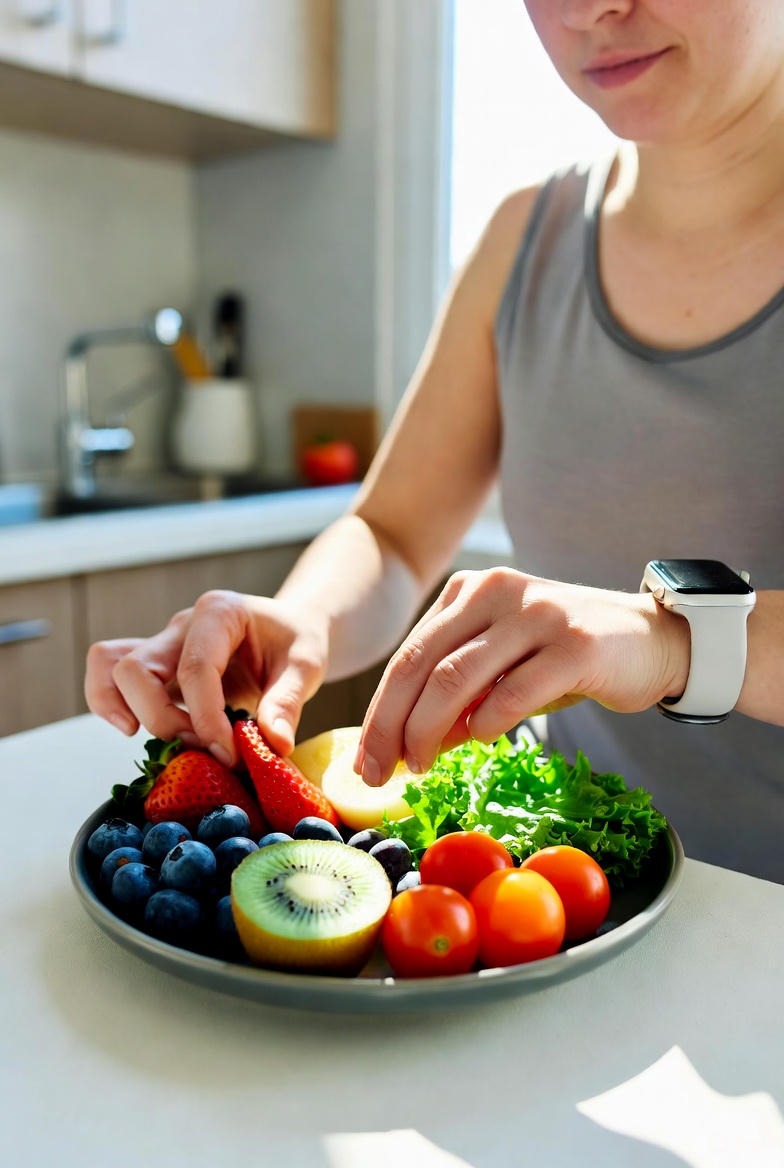
A moderate score indicates your body is functional but operating with slightly less resilience. The goal here is not to push, but to support—to gently nudge your systems into gear without overwhelming them. Breakfast becomes a tool for stabilization, not just fuel.
The Ideal Window: Extend your fast slightly longer. Consider eating between 90 minutes and 2.5 hours after waking. This allows extra time for your cortisol to settle and gives your digestive system a more gradual start. Listen closely to hunger cues; they may appear later and more subtly.
What to Eat: Prioritize ease of digestion and nutrient density. Lean towards lighter proteins and fats, and be mindful of fiber volume, which can be taxing on a stressed system.
Example Meal: A smoothie with collagen protein, a handful of spinach, half a banana, MCT oil, and almond milk. Or, a warm bowl of congee (rice porridge) with a soft-boiled egg and a sprinkle of green onions.
The Mindful Approach: Eat slowly and in a calm environment. The act of eating itself should be a parasympathetic (“rest-and-digest”) activity. On these mornings, it’s especially crucial to avoid eating while distracted, working, or on-the-go, as this can further engage the sympathetic nervous system and hinder digestion. This practice of mindful eating is a form of a micro-calm practice, turning your meal into an opportunity for nervous system regulation.
A low Readiness Score is a non-negotiable signal from your body: resources are low, stress is high, and the priority must shift from consumption to conservation and repair. On these days, the most powerful breakfast decision you can make is to delay it significantly or skip it altogether in its traditional form.
The Science of Strategic Fasting: When your body is in a sympathetic, stressed state, digestion becomes a lower priority. Diverting energy and blood flow to the gut to process a meal can exacerbate feelings of fatigue and inflammation. Extending your overnight fast allows your body to remain in a state focused on cellular cleanup (autophagy) and managing the existing stress load without new digestive demands.
How to Execute a "Gentle Fast":
Listening to True Hunger: This practice helps you distinguish between true, physiological hunger and habitual or emotional eating. On a low-readiness day, true hunger may not appear until late morning. Honoring that is an act of metabolic intelligence.
This approach is a cornerstone of using data for stress resilience. By not forcing food when your body is signaling stress, you begin to break the cycle of food-as-coping and build a more intuitive, respectful relationship with your body’s needs. For a broader look at the journey from a reactive to a resilient nervous system, our article on the neurological journey from reactive to resilient explores this transformative process.
While the Readiness Score is an excellent composite, digging into the individual biomarkers can provide even more nuanced guidance for your breakfast timing, especially on ambiguous "moderate" days.
1. Heart Rate Variability (HRV) – The Nervous System Barometer:
2. Resting Heart Rate (RHR) – The Strain Gauge:
3. Sleep Deep & REM – The Recovery Architects:
4. Body Temperature Trends – The Silent Signal:
Learning to cross-reference these markers turns you from a passive data viewer into an active health detective. You’ll start to see stories in the numbers: “High deep sleep but low HRV and elevated temp—maybe I’m fighting something off. I’ll fast.” This level of analysis is how you move from generic advice to truly personalized wisdom. For those who want to master this detective work, our expert framework on interpreting chronic stress data provides a structured way to understand long-term trends.
For those who exercise in the morning, the breakfast timing question becomes a trilemma: eat before, after, or skip entirely? Your wellness ring data is the perfect arbitrator for this daily decision.
Using Readiness to Guide Your Pre-Workout Fuel:
The Critical Post-Workout Window & Breakfast:
What you do after your workout is where breakfast truly comes into play, and your readiness data again dictates the approach.
The Ring as a Performance Coach: Over time, you can use your ring to gauge the impact of your fed vs. fasted workout decisions. Compare your post-exercise stress metrics and next-day readiness scores. You may find that fasted workouts on low-readiness days lead to better recovery than forcing down a pre-workout meal.
Theory is powerful, but seeing this system in action cements its practicality. Let’s walk through a hypothetical week for "Alex," who wears a wellness ring and is applying these principles.
This week demonstrates flexibility, responsiveness, and a departure from rigid routine. Alex’s breakfast time varied from 7:45 a.m. to 12:30 p.m., and the composition changed daily—all in intelligent response to biometric feedback. The result is not chaos, but a deeper harmony and more consistent energy levels by week’s end.
Adhering to your daily readiness score is powerful, but the true transformation occurs when you zoom out. The magic of continuous wearables isn't in the daily snapshot, but in the longitudinal view—the weeks, months, and seasons of data that reveal who you are underneath the noise of daily life. This is where you move from reacting to your body to truly understanding its fundamental design.
Your wellness ring app’s weekly and monthly trend views are treasure troves for optimizing breakfast timing in the long term. Look for recurring patterns:
This pattern analysis leads you to the most important self-discovery of all: your chronotype. Are you a natural early riser (a lion), a night owl (a wolf), or somewhere in between (a bear or dolphin, depending on the model)? Chronotype is genetically influenced and dictates your ideal schedule for sleep, activity, and—crucially—eating.
Your wellness ring data is the ultimate chronotype test. It doesn't ask you when you want to wake up; it shows you when your body actually achieves its best rest and when it naturally transitions to wakefulness. By tracking your "biological wake-up time" (the time your body temperature begins to rise and heart rate increases, signaling the end of sleep) over months, you'll see a clear pattern.
By aligning your breakfast window with your genetically-programmed chronotype, as revealed by your long-term data, you stop fighting your biology. You reduce social jetlag, improve metabolic health, and unlock a level of daily ease you didn't know was possible. This is the essence of personalized wellness: not changing who you are, but optimizing your life for it.
For a detailed exploration of how to use tracking to understand your unique stress and recovery patterns over time, our guide on creating a personal stress baseline provides the exact methodology for establishing your normal, a prerequisite for spotting meaningful trends.
We’ve focused intensely on when to eat. But what you eat is the other half of the equation, and it should be equally informed by your morning data. Your readiness state provides clear clues about what macronutrients your body needs most and what it can best process.
The High-Readiness, High-Performance Plate:
As discussed, this is the day for a balanced, nutrient-dense plate. Think of it as building a durable foundation. Beyond just balance, you can tailor it to your planned activity:
The Moderate-Readiness, Gentle-Nourishment Plate:
Here, the watchwords are warm, soft, and cooked. Your digestive fire is lower, so you want foods that are pre-digested, in a sense.
The Low-Readiness, Stress-Supportive "Plate" (Often a Cup or Bowl):
On these days, food is medicine, and the prescription is often liquid, anti-inflammatory, and gut-supportive.
A Special Note on Caffeine: Your readiness score is your best guide for caffeine timing and quantity.
Learning to match your meal to your metrics is the final step in closing the loop between data and daily action. It turns nutrition from a static plan into a dynamic, responsive dialogue.

No system is useful if it can't withstand real life. You’ll have early flights, late-night dinners with friends, and days where you simply want a stack of pancakes at your favorite diner, data be damned. The goal of this guide isn't to create a rigid, joyless prison of biometrics; it's to give you a tool for greater resilience, so you can enjoy life's deviations without completely derailing your health.
Managing Travel and Time Zones:
This is where your wellness ring shines as a jet-lag compass. Its tracking of your circadian markers (temperature, HRV) will clearly show your internal time, which lags behind or ahead of your new local time.
Social Mornings: Brunches and Family Breakfasts:
These are for connection and pleasure. The key is intentional deviation.
The "Data-Off" Day: It’s healthy and advisable to occasionally take a day where you don't check your scores. Go camping, have a digital detox weekend, or simply decide to eat when hungry without consulting the app. This prevents an obsessive relationship with the data. The habits and intuition you've built over weeks of practice will still guide you subconsciously. When you return to checking, you’ll often find your intuitive choices were closely aligned with what the data would have suggested.
The ultimate sign of mastery is when this system becomes an integrated, background tool—a part of your health literacy, not your daily obsession. It allows for flexibility, ensuring you live your life while your biometrics provide a gentle, informative backbeat.
As you embark on this journey, you’ll inevitably encounter mornings where the data seems to contradict how you feel, or where the metrics themselves send mixed signals. This is normal. Biometric data is a guide, not an oracle. Here’s how to navigate common discrepancies.
1. "I feel great, but my score is low."
This is a classic case of subjective energy overriding objective recovery. Possible reasons:
2. "I feel terrible, but my score is high."
Less common, but it happens.
3. Mixed Signals in the Data (e.g., High HRV but elevated RHR).
This indicates a nuanced state.
4. "My data is all over the place with no clear pattern."
This is common in the first 2-4 weeks. Your body is not a machine; it's influenced by countless variables.
Navigating these discrepancies is where you evolve from a follower of data to a partner with it. You learn its language, its quirks, and how to integrate its wisdom with your own lived experience. This balanced approach is critical for sustainable tracking, a topic explored in our piece on how to track stress without becoming obsessed with the numbers.
When you consistently align your first meal with your body’s true readiness, the benefits cascade through every subsequent hour, creating a positive feedback loop that amplifies wellness. This isn't just about breakfast; it's about setting a domino effect of healthy decisions in motion.
1. Stabilized Energy and Eliminated Crashes: By eating when your body can best metabolize fuel, you provide a steady stream of glucose to the brain and muscles. This eliminates the mid-morning energy crash that leads to desperate reaches for sugary snacks or a third cup of coffee. Your productivity and focus become sustained and reliable.
2. Enhanced Metabolic Health: Consistently eating in alignment with your circadian rhythm and insulin sensitivity improves your body's ability to regulate blood sugar. Over time, this can increase insulin sensitivity, support healthy cholesterol levels, and promote a balanced body composition. You’re training your metabolism for efficiency.
3. Improved Digestive Comfort: Forcing food when your digestive system isn't "awake" (low stomach acid, sluggish enzyme production) is a recipe for bloating, gas, and discomfort. By waiting for the green light from your readiness data, you eat when your digestive capacity is primed, leading to smoother, more comfortable digestion.
4. Reduction in Anxiety and Mental Chatter: The mid-morning blood sugar crash is not just physical; it's neurological. Hypoglycemia triggers the release of stress hormones like cortisol and adrenaline, which can manifest as anxiety, jitteriness, and irrational irritability. A stable metabolic foundation leads to a calmer, more resilient mental state.
5. Better Lunch and Dinner Choices: Starting your day in metabolic harmony creates momentum. When you’re not ravenous and craving-driven by lunchtime, you’re more likely to make a conscious, nourishing choice. This sets up a virtuous cycle where each meal supports the next, rather than scrambling to correct the imbalances of the previous one.
6. Deeper Self-Knowledge and Body Trust: This is perhaps the most profound effect. Over weeks and months of this practice, you rebuild a fractured connection with your body's signals. You learn to distinguish true, physiological hunger from emotional or habitual cravings. You begin to trust the subtle cues your body sends. The external data from the ring becomes a validation tool for an internal wisdom you are reactivating.
This holistic impact underscores that breakfast timing is a keystone habit. A small, data-informed adjustment at the start of your day has disproportionate power to reshape your health trajectory. It moves you from a state of reacting to symptoms (fatigue, cravings, brain fog) to proactively architecting your days for vitality.
For those interested in how foundational morning habits impact decision-making throughout the day, our article on calm mind and decision-making explores the cognitive benefits of starting your day from a regulated, stable state.
Your wellness ring provides a powerful physiological snapshot, but you are more than your HRV and temperature. For a truly holistic morning assessment, consider creating a simple "Morning Dashboard" that integrates three streams of data: Physiological (Ring), Psychological (Mood), and Behavioral (Habits). This 360-view takes your personal optimization to the next level.
1. The Physiological Pillar (Your Ring Data):
This is your objective baseline, as we've covered. Record your Readiness Score and its key contributors (HRV status, sleep quality). This tells you what state your body is in.
2. The Psychological Pillar (A Simple Mood/Energy Check):
Before you reach for your phone, ask yourself two or three simple questions and rate them on a scale of 1-5.
3. The Behavioral Pillar (Key Habit Tracking):
Did you engage in foundational health behaviors the previous day that you're tracking? A simple yes/no or duration note on:
Synthesizing Your Dashboard:
Now, you don't just have a number; you have a story.
You can track this in a simple notes app, a dedicated journal, or using the tagging feature in your ring's app. The act of integration itself is a mindfulness practice that cultivates a profound awareness of the interconnectedness of your body, mind, and habits. It turns daily tracking from a passive act of data collection into an active ritual of self-awareness.
This concludes the first portion of the comprehensive guide, having laid the essential foundation of understanding your body's rhythms, interpreting your ring's data, and applying it to create a dynamic, personalized breakfast practice. The subsequent sections will build on this to explore advanced pattern analysis, nutritional fine-tuning for specific goals, navigating dietary approaches (like intermittent fasting) with intelligence, and building a sustainable, lifelong practice of bio-hacked nourishment.
Your personalized breakfast timing, guided by your wellness ring, is a foundational lever for health. But once you’ve mastered the basic rhythm, you can pull this lever with more precision to support specific goals—whether that’s body composition change, athletic performance, or enhancing longevity. The data doesn't just tell you when to eat; it helps you strategize what and how much to eat to reach your targets.
If your goal is improving metabolic flexibility (your body's ability to switch between fuel sources) or managing weight, breakfast timing becomes a powerful tool for influencing insulin sensitivity and hunger hormones.
The Data-Driven Fasting Window: Your low-readiness mornings are natural, built-in opportunities for intermittent fasting (IF). The key difference is that it’s responsive, not arbitrary. Instead of forcing a 16-hour fast every day, you extend your fast only when your body signals it needs the recovery time (low readiness). This prevents the common pitfall of IF where people fast on high-stress days, exacerbating cortisol issues. On high-readiness mornings, you break your fast early with a balanced meal, which can boost metabolism and control cravings later.
Using the Ring to Gauge True "Fat-Burning" Mode: Many wearables estimate a "fasting" or "metabolic" state. On a morning following a strategic delay (low readiness), you might see your ring indicate you are in a "fat-burning" zone due to lower glucose availability. This is a positive metabolic state if you are well-recovered. If you attempt to exercise in this state on a moderate/high readiness day, it can be performance-enhancing. On a low-readiness day, it’s simply a reflection of your body’s need to conserve, not an optimal state for intense activity.
The Satiety Signal Monitor: Post-breakfast, pay attention to how your body feels and how your data trends later in the day. A breakfast perfectly aligned with your readiness should lead to:
For the active individual, breakfast is the first step in a daily recovery-and-fuel cycle. Your readiness score dictates whether the priority is refueling for today's performance or repairing from yesterday’s exertion.
The Readiness-Performance Connection:
Tracking the Impact: The real power comes in the feedback loop. After your workout, note how you felt. Then, check your readiness score the next morning. Did that high-intensity session on a high-readiness day lead to another high score (showing good adaptation)? Or did it tank your score (showing overreaching)? Did a gentle fasted walk on a low-readiness day slightly improve your next-day score? This turns every day into an experiment, teaching you exactly what your body needs to adapt and grow stronger. For a focused look at this for athletes, our guide on stress tracking for athletes and optimizing recovery offers a deeper dive.
Emerging research points to circadian alignment and metabolic stability as cornerstones of longevity. The goal here is to reduce lifelong inflammatory burden and support cellular repair processes like autophagy.
Syncing with Your Deepest Rhythms: The most profound longevity hack may be simply eating in sync with your chronotype, as revealed by your long-term ring data. Chronic misalignment (e.g., a night owl forcing 6 a.m. breakfasts) is a form of low-grade metabolic stress that accumulates over decades.
Supporting Nightly Autophagy: Your overnight fast is when cellular cleanup occurs. A later dinner (finishing 3-4 hours before bed) and a breakfast timed to your true biological morning (not an artificially early one) naturally create a 12-14 hour fasting window for many. Your ring’s sleep and recovery data validates this: when you maintain this pattern, do you see improvements in resting heart rate and HRV? These biomarkers are themselves linked to longevity.
The Anti-Inflammatory Breakfast: On days when your ring shows elevated skin temperature or a low score suggesting systemic stress, your breakfast choice directly impacts inflammatory pathways. Choosing foods rich in polyphenols (berries, dark chocolate), omega-3s, and spices (turmeric, ginger) while avoiding refined sugars and processed oils is an act of targeted, data-informed nourishment.
By aligning your first meal not just with your daily readiness, but with your overarching life goals, you transform eating from a routine into a strategic, daily investment in the future you want to build.

The decision of when to eat breakfast doesn't exist in a vacuum. It is the anchor point for your entire day's eating pattern, setting in motion a cascade that determines your lunch hunger, dinner timing, and ultimately, the quality of your sleep. By fixing your first meal intelligently, you create a self-regulating system for the rest of your nourishment.
The Natural Flow to Lunch: A breakfast consumed in alignment with true physiological hunger and metabolic readiness typically leads to a natural, gentle hunger reappearing 4-5 hours later. This contrasts sharply with the erratic hunger born of a sugary, mismatched breakfast, which can cause ravenous hunger just 2 hours later. This stability allows you to make a conscious, nutritious choice for lunch rather than a desperation-driven one.
Setting Your Dinner "Deadline": Perhaps the most significant downstream effect is on dinner timing. An early breakfast (say, 7:30 a.m.) following a high-readiness morning naturally leads to an earlier lunch (12:30 p.m.) and the possibility of an earlier dinner (6:30 p.m.). This creates a longer, unhurried fasting window before bed, which is a gift to your sleep and next-day readiness.
The "Domino Effect" in Practice: Let's trace two scenarios:
Your wellness ring allows you to see this domino effect clearly across days. A week of late dinners will show up as progressively poorer sleep scores and lower morning readiness, creating a vicious cycle. Conversely, a week of nailing your breakfast timing will often show a virtuous cycle of improving scores.
The Flexible Social Calendar: Understanding this domino effect empowers you to plan. If you have a late dinner planned for a social event, you can use your morning data to strategize. A high-readiness day might mean you enjoy a slightly later but still substantial breakfast, a light lunch, and then enjoy your dinner without overloading your system. A low-readiness day might mean a very light breakfast and lunch, giving your body plenty of fasting time to prepare for the later feast. This proactive shifting is the hallmark of a metabolically flexible, resilient system.
In essence, your breakfast time becomes the cornerstone of your daily eating architecture. Get it right, and the walls of lunch and dinner fall into place with ease. Get it wrong, and the entire structure feels shaky. The ring’s data provides the blueprint, showing you in real-time how the cornerstone is set each morning.
Your personalized breakfast timing framework is a meta-strategy; it works overlaid on virtually any dietary philosophy, from keto to vegan, from Mediterranean to low-FODMAP. The data doesn't tell you what to eat in a dogmatic sense, but it tells you when your body is best prepared to handle your chosen foods.
Intermittent Fasting (IF) and Time-Restricted Eating (TRE): As touched on, this approach becomes intelligent and responsive with ring data. Instead of picking a rigid 16:8 schedule, you let your readiness score guide your eating window length each day. Some days it might be 14 hours, others it might be 18. This is circadian-synced fasting, which is more sustainable and likely more beneficial than a fixed schedule that ignores your body's daily state. Your ring validates the approach: if your chosen IF pattern is right for you, you should see stable or improving HRV and sleep scores over time. If those metrics decline, the fasting window may be too long or poorly timed for your current stress load.
Low-Carb and Keto Diets: For those limiting carbohydrates, breakfast timing is crucial for managing energy and "keto flu" symptoms. On a high-readiness day, your body may transition into ketosis more smoothly, and a high-fat, moderate-protein breakfast will feel energizing. On a low-readiness day, however, the metabolic stress of adapting to fat-burning can compound existing stress. On these mornings, you might need to be less strict, perhaps incorporating a small amount of complex carbs (like half a sweet potato) with your eggs to ease the transition and support cortisol regulation.
Plant-Based and Vegan Diets: These diets can be higher in fiber and volume, which requires more digestive capacity. Your readiness score is an excellent guide for meal size and timing. A high score means your system can likely handle a large, fibrous smoothie bowl or tofu scramble with beans. A low score suggests a lighter approach: a protein shake made from pea or rice protein, a smaller portion of overnight oats, or even a simple nut butter on sprouted bread. The data helps you avoid the bloating and discomfort that can come from forcing a high-volume plant-based meal on a stressed digestive system.
Elimination Diets (e.g., Low-FODMAP, AIP): When you're using an elimination diet to identify food sensitivities, consistency in timing is key. By first establishing your ideal breakfast timing using your ring data during a baseline period, you create a stable variable. Then, when you reintroduce a suspect food (like gluten or dairy) at that optimal time, you can more clearly observe its effects on your afternoon energy, digestion, and crucially, your next morning's readiness score and HRV. A food sensitivity often shows up as increased inflammation, which can depress HRV and elevate resting heart rate the following night, giving you objective data to confirm subjective symptoms.
In all cases, the wellness ring acts as a neutral moderator. It doesn't favor one diet over another; it simply reports how your body is responding to the diet as you practice it. This removes ideology and replaces it with individual, empirical feedback.
To accelerate your learning curve and move from daily reactions to deep understanding, we introduce the concept of the Biometric Breakfast Journal. This is a simple practice of logging, just a few lines each day, that creates a rich dataset for personal insight. You can use a notes app, a physical journal, or a spreadsheet.
The Daily Log (Takes < 2 minutes):
The Weekly Review (10 minutes on a Sunday):
This is where insights spark. Look back over the week and ask:
Identifying Personal Food Responses: This journal is powerful for spotting subtle intolerances. You might see that on mornings you ate conventional eggs, your afternoon energy was a 2, but with pasture-raised eggs, it was a 4. Or that oatmeal on a moderate-readiness day led to bloating, but on a high-readiness day, it was fine. This is the granularity that generic diet plans can never provide.
Tracking Progress Toward Goals: Over months, your journal becomes a narrative of change. You can literally see your average readiness score climb as you refine your timing. You can see your "time to first hunger" extend as your metabolic health improves. This tangible evidence is a massive motivator, proving that your small, daily choices are adding up to significant change.
The journal completes the feedback loop. The ring provides the numbers, the journal provides the context, and you, the user, synthesize them into personal, actionable wisdom. It turns passive tracking into active self-experimentation. For a structured approach to combining quantitative data with qualitative experience, explore our framework for a stress-tracking journal that combines numbers with narrative.
One of the most underutilized superpowers of consumer wearables is their ability to create a detailed, longitudinal health record. When you walk into a doctor, nutritionist, or dietitian's office, you no longer have to rely on vague recollections: "I think I sleep okay," or "I'm tired in the afternoons sometimes." You have data. Presenting it effectively can transform your care.
Preparing for the Appointment:
Collaborating with a Nutritionist or Dietitian: This is where the data becomes golden. Share your Biometric Breakfast Journal. A skilled professional can help you see patterns you might miss:
A Note on Data Validity: Be prepared for a range of responses. Some progressive practitioners will embrace this data as valuable patient-reported evidence. Others may be skeptical of consumer device accuracy. You can calmly reference the known validity of optical HRV for trend analysis (it's excellent for tracking your own trends, even if the absolute number may differ from an ECG). Frame it as a tool for monitoring changes in your personal baseline, not for diagnosing clinical conditions. For guidance on this conversation, see our article on sharing stress-tracking data with your doctor effectively.
By becoming a prepared, data-informed partner in your healthcare, you elevate the conversation and empower your providers to help you more effectively. Your wellness ring and your thoughtful tracking become a bridge between everyday life and clinical insight.
Throughout this guide, we have equipped you with a technical framework: interpret scores, adjust timing, choose foods, track results. But underpinning all of this is a fundamental mindset shift that is essential for long-term success. This is the journey from being a slave to external schedules to becoming a conductor of your own biological symphony.
Embracing Dynamic Rhythms Over Static Rules: Our culture loves fixed rules: "Eat within an hour of waking." "Never skip breakfast." This guide asks you to let go of that black-and-white thinking. Some days, the most "right" action is to wait. Other days, it's to eat promptly. The rule is: Listen and respond to your body's data. This requires comfort with ambiguity and trust in a process rather than a prescription.
Cultivating Curiosity, Not Judgment: When you see a low readiness score, the old mindset might say, "I failed. I did something wrong." The new mindset asks, "What is my body telling me? Is it fighting an infection? Did I not recover from my workout? What can I learn?" This turns every data point, even the "bad" ones, into valuable information. There are no bad scores, only clear signals.
Seeing Food as Information and Nourishment, Not Just Fuel or Reward: When you eat in alignment with your readiness, food transcends its basic roles. It becomes a targeted signal to your metabolism, a source of information that either supports or disrupts your physiological state. A morning smoothie isn't just breakfast; it's a decision to provide antioxidants and protein to a recovered system. A late-morning bone broth isn't deprivation; it's a strategic choice to support gut health and reduce inflammation on a stressed day.
Building Resilience Through Responsiveness: Each day you practice this, you are not just optimizing a meal; you are training your nervous system and metabolism to be more resilient. You are teaching your body that it can trust you to provide what it needs, when it needs it. This reduces internal stress and creates a profound sense of somatic trust. You begin to feel like you are on the same team as your own body.
This mindset is the soil in which the seeds of data-driven practice grow into lasting health. It's what prevents this from becoming another short-lived biohacking fad and turns it into a sustainable, integrated way of living. For those looking to deepen this mindful, resilient approach to daily life, our resource on guided vs. unguided calm practices can help you find the right tools to cultivate the inner stillness that complements outer data.
The technology that powers your wellness ring is not static. It is advancing at a breathtaking pace, promising to make the insights we've discussed even more precise, predictive, and integrated. Understanding this horizon helps contextualize your practice today as the beginning of a much longer journey.
Beyond HRV: Multi-Modal Stress Scoring: Future devices and algorithms will move beyond HRV as a primary stress metric. They will synthesize data from galvanic skin response (GSR) for emotional arousal, continuous glucose monitoring (CGM) integration for metabolic stress, and even advanced motion analysis for tension. This will allow your device to differentiate between physical training stress, emotional anxiety, and dietary inflammation with far greater accuracy, offering even more nuanced breakfast guidance. To understand one of these emerging methods, you can read about the skin conductance method for stress tracking.
Predictive AI and Proactive Coaching: Instead of just telling you your readiness today, algorithms will analyze weeks of your data alongside your calendar, local weather, and even news trends to predict your readiness tomorrow or later this week. Your app might push a notification: "Based on your declining HRV trend and your big presentation tomorrow, we recommend a magnesium-rich dinner and a liquid breakfast tomorrow to optimize performance." Breakfast timing becomes part of a proactive health strategy.
True Closed-Loop Systems: Imagine a future where your ring communicates with other smart devices. It detects a night of poor sleep and low readiness, so it adjusts your smart lights for a gentler wake-up, tells your coffee machine to delay your brew by 90 minutes, and suggests a specific recipe to your smart kitchen display based on the nutrients your biomarkers indicate you need. Your breakfast environment actively conspires to support your biological state.
Deeper Health Integration: The ultimate goal is for this granular, continuous data to integrate seamlessly with electronic health records. Your doctor could see a year-long trend of your HRV dipping every spring, correlating it with allergy season, and prescribe a more targeted intervention. Your dietitian could see in real-time how a new dietary protocol affects your sleep and recovery metrics.
While we wait for this future, the principles in this guide remain constant: Use the best available data to align your actions with your body's true needs. The tools will get sharper, but the philosophy of listening, respecting, and intelligently responding to your own physiology is timeless. By starting this practice now, you're not just optimizing your breakfast; you're future-proofing your health literacy and becoming an active, informed participant in the coming revolution of personalized, predictive wellness.
Your Trusted Sleep Advocate: Sleep Foundation — https://www.sleepfoundation.org
Discover a digital archive of scholarly articles: NIH — https://www.ncbi.nlm.nih.gov/
39 million citations for biomedical literature :PubMed — https://pubmed.ncbi.nlm.nih.gov/
Experts at Harvard Health Publishing covering a variety of health topics — https://www.health.harvard.edu/blog/
Every life deserves world class care :Cleveland Clinic - https://my.clevelandclinic.org/health
Wearable technology and the future of predictive health monitoring :MIT Technology Review — https://www.technologyreview.com/
Dedicated to the well-being of all people and guided by science :World Health Organization — https://www.who.int/news-room/
Psychological science and knowledge to benefit society and improve lives. :APA — https://www.apa.org/monitor/
Cutting-edge insights on human longevity and peak performance:
Lifespan Research — https://www.lifespan.io/
Global authority on exercise physiology, sports performance, and human recovery:
American College of Sports Medicine — https://www.acsm.org/
Neuroscience-driven guidance for better focus, sleep, and mental clarity:
Stanford Human Performance Lab — https://humanperformance.stanford.edu/
Evidence-based psychology and mind–body wellness resources:
Mayo Clinic — https://www.mayoclinic.org/healthy-lifestyle/
Data-backed research on emotional wellbeing, stress biology, and resilience:
American Institute of Stress — https://www.stress.org/


