


The Health Tracking Features That Actually Change Behavior
Which tracking features actually lead to positive behavior change.
Which tracking features actually lead to positive behavior change.
%402x.svg)
We live in an age of unprecedented self-knowledge. On our wrists, fingers, and pockets reside devices that can measure our heartbeats, track our sleep cycles, count our steps, and even gauge our stress. The data flows in a constant stream—charts, graphs, notifications, and weekly summaries. Yet, a silent question echoes for millions of users: “So what?”.
We have more health information at our fingertips than any generation in history, but information alone is powerless. It does not, by its mere existence, make us healthier. The chasm between knowing and doing is where most wellness technology fails. It’s the gap between seeing a poor sleep score and actually achieving restorative rest; between a notification about elevated stress and implementing a technique to calm the nervous system; between a step count goal and cultivating a genuinely active lifestyle.
This is the critical frontier for modern health wearables: not just tracking, but translating. The ultimate metric for a device’s success shouldn't be its sensor accuracy in a lab (though that’s crucial), but its behavioral accuracy in real life. Does it nudge, guide, and empower you to make better choices, consistently, until those choices become unconscious habits?
The journey from passive data collection to active life transformation is where the true magic happens. It’s a journey guided not by more numbers, but by context, insight, and intelligent design. In this exploration, we will dissect the specific features, psychological principles, and technological frameworks that bridge this gap. We’ll move beyond the vanity metrics to the visceral changes, examining how the right data, presented in the right way, at the right time, can fundamentally alter our daily rhythms and long-term health.
The promise is no less than this: a partner in your well-being, an ally on your wrist (or finger), that helps you write a healthier story for yourself, one informed decision at a time. Let’s begin by understanding the foundational shift from data to behavior.
As we paint this picture of a data-empowered future, a critical and sobering counterpoint must be addressed: the digital divide in health. The benefits of advanced health tracking—personalized insights, better clinical communication, predictive alerts—are not equally accessible. They are currently gated by the cost of devices, the need for a modern smartphone and reliable internet, digital literacy, and the privilege of having the bandwidth to engage in sophisticated self-care.
This creates a risk of a two-tiered health system: one for the "data-rich" who can advocate for themselves with graphs and trends, and another for the "data-poor" who must rely on traditional, often overburdened, pathways. For chronic illness management, where outcomes are heavily influenced by daily self-management and early intervention, this disparity could exacerbate existing health inequalities.
The Cost Barrier: Premium smart rings, CGMs, and other devices represent a significant out-of-pocket expense, rarely covered by insurance for off-label or wellness use. This immediately puts them out of reach for lower-income individuals, who often bear a higher burden of chronic disease.
Technological Literacy and Design: Apps and platforms must be designed with inclusivity in mind—intuitive for all ages, accessible for those with disabilities (like vision impairment or dexterity issues), and available in multiple languages. Assuming a base level of tech-savviness excludes a vast population.
Data Interpretation as a Burden: The framework we’ve discussed requires time, cognitive energy, and a degree of health literacy. For someone working multiple jobs, caring for family, or dealing with severe "brain fog," the mental load of becoming a data analyst for their own body can be prohibitive.
Moving Toward Equity: Addressing this requires action from multiple fronts:
As consumers and advocates, we can support companies that demonstrate a commitment to ethical access and design. The goal must be to make this empowering technology a tool for leveling the health playing field, not widening the gap. The mission and values behind a brand can be a strong indicator of this commitment; you can learn more about one such perspective on our story and founding vision.

Adopting health tracking for chronic illness management is not a one-time setup; it’s a lifelong practice. Like any meaningful practice, it requires maintenance, occasional upgrades, and strategies to sustain motivation over years. This section is about the pragmatics of the long game—ensuring your system remains effective, accurate, and a helpful partner, not a burdensome chore.
Device Care and Sensor Integrity: Your ring is a precision instrument. To ensure data accuracy:
Navigating Software Updates and Platform Changes: The apps and algorithms behind your device will evolve.
When to Upgrade Your Hardware: Wearable tech advances quickly. Consider an upgrade when:
Sustaining Motivation: Avoiding Burnout: After the initial novelty wears off, tracking can feel like a chore. To sustain it:
This long-term, maintenance-focused mindset ensures your health tracking practice matures with you, adapting to your changing life and health needs, remaining a cornerstone of your management strategy for the long haul. For support with common long-term questions, our FAQ and support page is always available.
We’ve all been there. The initial thrill of a new device, the zeal to close all three activity rings, the fascination with seeing our sleep stages mapped out. For a week or two, we are model citizens of our own health data. Then, life intervenes. The novelty wears off. The 10,000-step notification becomes an annoyance to be dismissed, and the sleep score feels like a judgment rather than a tool. This phenomenon is so common it has a name: the “wearable abandonment cliff.” Studies suggest a significant percentage of users stop regularly using their fitness trackers within six months.
Why does this happen? The failure isn’t usually in the data quality, but in its presentation and our human psychology. Most early-generation tracking operated on a simple model: Collect -> Display -> Assume Motivation. This model ignores how humans actually form habits and sustain motivation.
The Limits of Raw Data:
Raw data is inert. A graph showing your heart rate variability (HRV) dipping over the past month is just a line on a screen. Without context, interpretation, and a clear connection to actionable cause and effect, it’s meaningless noise. It’s like being given a thermometer reading without knowing if you’re in an oven or a freezer. Our brains are wired to filter out irrelevant information, and without salient meaning, even the most precise biometric data becomes background static.
The Problem with Gamification & Leaderboards:
Early attempts to solve the motivation problem leaned heavily on gamification: points, badges, leaderboards. While these can spark short-term engagement (the dopamine hit of “winning”), they often foster extrinsic motivation—doing something for the reward, not for the inherent value of the activity. When the game loses its appeal, or you find yourself perpetually at the bottom of a leaderboard among super-athlete friends, motivation crumbles. True, lasting behavior change is fueled by intrinsic motivation: the internal desire to feel better, sleep more soundly, have more energy, and live longer.
The Key Psychological Principles for Effective Tracking:
For health data to become a catalyst for change, it must tap into proven behavioral science:
The evolution from basic tracking to behavior-changing technology is, at its core, an evolution from simple data-logging to becoming a context-aware behavioral coach. It’s the difference between a dashboard and a co-pilot. To explore how this technology has developed, from pedometers to today's advanced wearables, our article on the evolution of health tracking technology provides a fascinating deep dive.
The next sections will break down the specific features that embody this psychological savvy, starting with the most direct channel of influence: real-time, intelligent feedback.
If raw data on a dashboard is a post-mortem analysis, then intelligent real-time feedback is a live coach whispering in your ear during the game. This shift from retrospective reporting to concurrent guidance is perhaps the single most significant leap in making health tracking actionable. It transforms a passive monitor into an active participant in your day.
The concept of the "nudge," popularized by Nobel laureate Richard Thaler, is central here. A nudge is any aspect of choice architecture that alters people’s behavior in a predictable way without forbidding any options or significantly changing their economic incentives. In the context of a health wearable, a nudge is a timely, context-aware suggestion that makes the healthier choice the easier choice.
Beyond Simple Alerts: From “What” to “Why” and “How”
A basic alert tells you what is happening: “Your heart rate is elevated.” An intelligent nudge provides context and direction: “Your heart rate has been elevated for 20 minutes while you’ve been sedentary. This can be a sign of stress. Consider a one-minute breathing exercise?” This moves from alarming the user to empowering them.
Examples of behavior-changing real-time nudges include:
The Technology Enabling Smart Nudges:
This level of sophistication requires more than a sensor; it requires a sensor suite and an intelligent brain. It combines:
This creates a personalized learning cycle. The device learns your patterns, and you, in turn, learn about your body’s signals and effective responses. It’s a partnership. For a practical look at how this kind of feedback translates into daily habit formation, our guide on how wellness rings help build healthy habits offers concrete examples and user strategies.
The magic of the intelligent nudge lies in its subtlety and timeliness. It doesn’t demand a lifestyle overhaul; it suggests a minor, achievable correction in the present moment. By stacking these small wins, day after day, the path to lasting change is paved. Next, we’ll see how this real-time insight builds into a powerful longitudinal tool: personalized baselines and meaningful trends.

In a world obsessed with comparison—from social media to fitness leaderboards—the most profound motivational shift offered by advanced health tracking is the elimination of the external benchmark. The most relevant, actionable, and psychologically healthy comparison is not you vs. an Olympic athlete or you vs. your most active friend on social media. It’s you vs. you.
This is the power of personalized baselines. Instead of judging your metrics against population averages (which are often meaningless for an individual), sophisticated systems establish what is “normal” for you. Your resting heart rate, your HRV, your sleep duration, your body temperature—all of these have a unique range that constitutes your personal baseline of health.
Why Population Averages Can Be Misleading (and Demotivating):
Being told your sleep score of 72 is “fair” compared to a global average is unhelpful. What if your personal optimal score, where you feel most refreshed and energetic, is 75? A score of 72 is then a signal to investigate. Conversely, if your personal baseline is 68, a 72 is a cause for celebration! Personalized baselines turn generic scores into personally meaningful insights.
How Dynamic Baselines Work:
Your baseline isn’t a static number. It’s a dynamic range that adapts over time. A robust system continuously analyzes your data, accounting for:
From Data Points to Narrative: Identifying Meaningful Trends
With a stable baseline established, the device can now identify what matters: deviations that signify something important. This moves data from a series of isolated points to a coherent narrative about your body.
This self-referential framework is empowering. It turns the wearable into a mirror that reflects your unique biology, not a report card graded on a curve. To see how this principle of personalized monitoring is revolutionizing healthcare, explore our analysis of how health tracking technology has changed preventive medicine.
Understanding your unique rhythms is the foundation. The next step is using that understanding to set and achieve goals that are not just ambitious, but authentically aligned with your body’s capabilities and needs.
The arbitrary nature of the famed “10,000-step” goal—a figure born from a 1960s Japanese pedometer marketing campaign, not medical science—epitomizes the limitations of one-size-fits-all targets. While having a goal is better than having none, static, generic goals often lead to a boom-and-bust cycle of motivation. You either achieve them rigidly (sometimes to the point of obsession or injury) or you miss them and feel defeated.
The next generation of health tracking introduces adaptive, personalized goal-setting—a system that functions less like a fixed finish line and more like a running coach who adjusts the day’s training based on how you feel.
The Pitfalls of Static Goals:
Principles of Adaptive, Behavior-Focused Goal Setting:
Modern systems are moving towards goals that are:
The Role of the “Coach” in the App:
The interface becomes a coaching dashboard. Instead of just charts, you might see:
This adaptive approach keeps the user engaged in a collaborative process. The human sets the direction (“I want to improve my endurance”), and the intelligent system helps plot the course, adjusting for daily terrain and weather. For those beginning this journey, our resource on how to choose a wellness ring that supports different health goals is an excellent starting point.
Goals and coaching provide the structure for change. But to make that change stick, we need to understand the engine of habit formation itself—the neurological loops that our devices can help rewire.
For decades, sleep was the great black box of daily health. We knew it was important, but we only had subjective, fuzzy metrics: “I slept like a rock” or “I tossed and turned all night.” The advent of advanced sleep tracking has illuminated this nightly journey, providing an objective map of our sleep architecture—light, deep, REM sleep, and awakenings. Yet, again, a map is not a guide. Knowing you got only 45 minutes of deep sleep is frustrating if you don’t know how to increase it.
The most behavior-changing sleep features are those that move beyond the score and provide a clear, actionable path to better sleep hygiene—the set of practices that enable consistent, restorative sleep.
Decoding the Sleep Narrative:
A simple sleep score can feel like a grade. Advanced analytics tell a story:
This holistic approach transforms sleep from a passive state you hope for into an active pillar of health you can cultivate. It empowers you to become a scientist of your own sleep, experimenting with variables (caffeine timing, evening light, room temperature) and seeing the direct results in your data. For a comprehensive look at all factors influencing restorative sleep, our blog offers 50 healthy aging tips a smart ring helps implement daily, with sleep being a central pillar.
Mastering nightly recovery sets the stage for daily performance. One of the most significant performance indicators, rooted in both fitness and overall health, is a metric that has moved from the lab to our living rooms: cardiovascular fitness.
For years, VO2 Max—the maximum rate of oxygen your body can utilize during intense exercise—was a metric confined to sports science labs and elite athletes. It’s a powerful predictor of cardiovascular health and longevity. Today, advanced wearables provide a reliable estimate of this crucial metric, democratizing access to what is essentially a “fitness age” benchmark.
But simply displaying a VO2 Max number (e.g., 42 ml/kg/min) is another example of inert data for most users. The behavior change occurs when this metric is framed as a vital sign, tracked over time, and connected to clear actions for improvement.
VO2 Max as a Vital Sign, Not a Trophy:
Presenting VO2 Max as a dynamic, trainable marker of systemic health reframes its purpose. It’s not about being “better” than others; it’s about understanding the efficiency of your heart, lungs, and circulatory system. A rising trend is a powerful, intrinsic motivator—it means you are literally improving your body’s fundamental engine. Conversely, a declining trend can be an early, objective warning to reassess lifestyle or consult a doctor, long before symptoms appear.
Educational Framing for Behavior Change:
To make VO2 Max actionable, the best platforms will:
Beyond VO2 Max: A Holistic Fitness Dashboard:
A behavior-changing fitness platform integrates VO2 Max with other key metrics to provide a complete picture:
This integrated view turns a collection of fitness stats into a coherent training philosophy. It teaches the user the critical balance between stress and recovery, effort and rest. The device becomes a personal trainer and physiologist, helping you work smarter, not just harder. The science enabling these estimations is fascinating; learn more in our article on the science behind modern health tracking technology.
A healthy heart needs a resilient mind. The ability to manage our internal state—our stress and energy—is the next critical domain where real-time tracking is creating profound behavioral shifts.
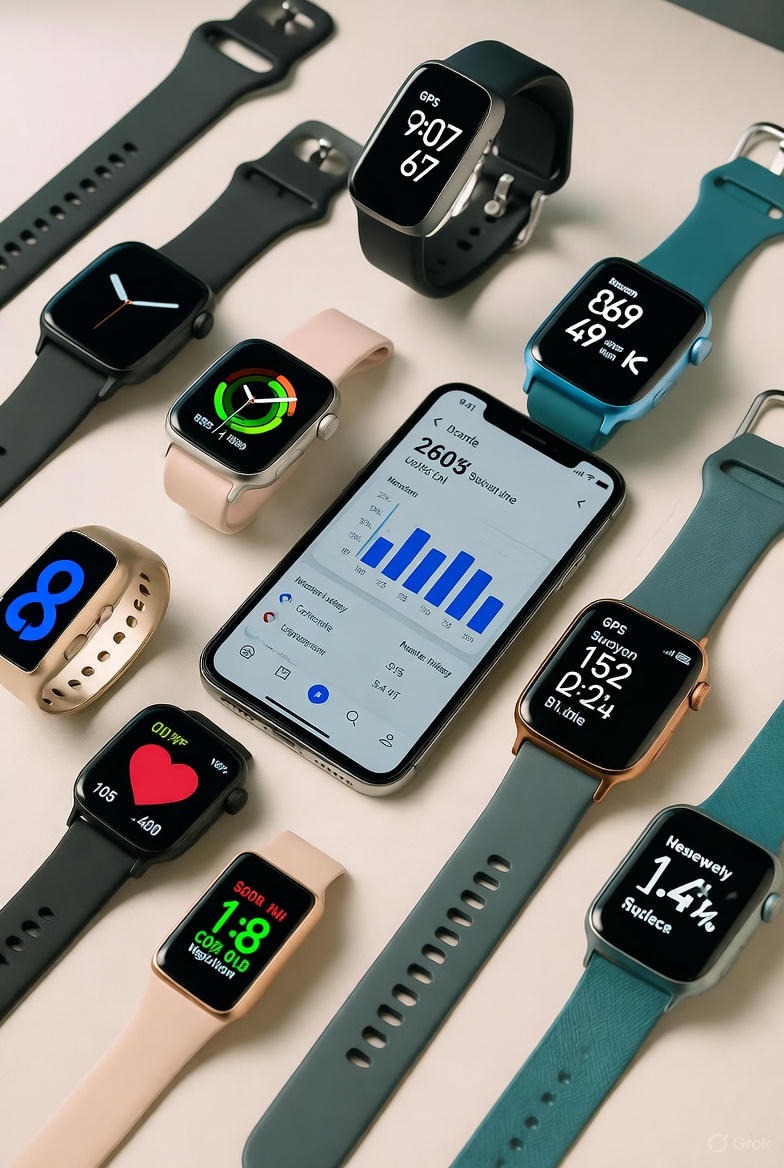
We often think of stress as a psychological event—a feeling of being overwhelmed, anxious, or pressured. But stress has a profound and immediate physiological signature: a spike in cortisol, a shift in autonomic nervous system balance (towards sympathetic “fight-or-flight”), a rise in heart rate, a drop in Heart Rate Variability (HRV), and often a change in skin temperature and electrodermal activity. Modern multi-sensor wearables can detect this signature in real time, giving us an objective readout of our internal state, often before we’re consciously aware of it.
This is revolutionary. It externalizes the internal. Instead of wondering, “Why do I feel so on edge?” you can check your device and see a physiological stress graph spiking, potentially correlated with a specific meeting, a type of work, or even a dietary trigger.
From Detection to Management: The Stress Resilience Loop:
The mere act of seeing your stress manifest as a tangible line on a graph can be grounding. It depersonalizes and de-stigmatizes the feeling. It’s not “you being weak”; it’s “your nervous system reacting.” This creates psychological space for a rational response. The most advanced systems close the loop by offering immediate, in-the-moment interventions:
Changing the Relationship with Stress:
This feature set fundamentally changes the user’s relationship with stress. It moves it from an abstract, overwhelming force to a measurable, manageable physiological process. It empowers users with agency. They learn their triggers, they validate the effectiveness of coping mechanisms (meditation, a walk, breathing), and they can track their progress in building a more resilient nervous system.
It turns the wearable into a mindfulness bell for the body, reminding you to check in, breathe, and respond rather than react. For those concerned about the data such intimate monitoring generates, we address all privacy considerations in our guide to wellness ring privacy settings and data security.
Understanding our stress and energy patterns is deeply personal. The final layer of behavior-changing technology is perhaps the most personal of all: harnessing the unique physiological cycles of the female body to optimize health, performance, and well-being.
For half the population, a critical layer of biological data has been conspicuously absent from mainstream health tracking: the menstrual cycle. Treating the female body as a constant, rather than the dynamic, cyclic system it is, leads to misinterpreted data, frustration, and missed opportunities for optimization. The integration of comprehensive female health tracking is not a niche feature; it’s a fundamental requirement for accurate and actionable health insights for women.
Cycle syncing—the practice of aligning diet, exercise, and lifestyle with the phases of the menstrual cycle—has moved from wellness circles into the scientific mainstream. Advanced wearables are now the perfect tool to implement this practice with precision and personalization, moving beyond calendar estimates to body-confirmed data.
How Tracking Validates and Personalizes the Cycle:
Instead of relying on self-reported period start dates and app predictions, sensors can detect the subtle physiological shifts that demarcate cycle phases:
Behavior-Changing Applications of Cycle-Aware Data:
When a wearable understands your cycle phase, it can transform its coaching to work with your biology, not against it:
This feature does more than provide data; it fosters body literacy and self-compassion. It helps women understand that fluctuations in energy, mood, performance, and sleep are not personal shortcomings, but part of a natural, intelligent biological rhythm. By syncing lifestyle to this rhythm, women can harness their natural power at each phase, reducing burnout and enhancing overall well-being. To see how these insights integrate into a holistic beginner's approach, our guide on how to make a wellness ring work perfectly for beginners incorporates cycle awareness as a key element.
All these profound insights—from sleep to stress, fitness to female health—generate immense personal value. But to create true, lasting behavior change, this value must be reflected back to the user in a way that fosters connection, support, and shared experience. This is the power of the final piece: community and shared accountability.
Data can inform, and algorithms can nudge, but humans are ultimately motivated by connection. The desire for relatedness—one of the core pillars of self-determination theory—is a potent, often untapped, force in health technology. When harnessed thoughtfully, community features transform the solitary journey of self-improvement into a shared experience, providing support, inspiration, and a powerful form of gentle accountability that pure self-tracking cannot replicate.
However, not all social features are created equal. Public leaderboards that showcase step counts can foster unhealthy competition and shame. The most effective community integrations are those that focus on support, shared experience, and positive reinforcement rather than ranking.
The Architecture of a Supportive Health Community:
A behavior-changing platform builds its social layer with intention, focusing on features that:
Accountability Partnerships:
The deepest level of social integration is the accountability partner. The platform can facilitate pairing with a friend to share specific, chosen metrics (like weekly exercise completion or bedtime consistency). A gentle notification—not shaming, but supportive—might say, “Your partner, Alex, just completed their morning workout. You’ve got this!” or “It’s 30 minutes until your shared bedtime goal. Time to start winding down.” This harnesses the power of mutual commitment and care.
The Psychological Safety of Opt-In Sociality:
Crucially, all these features must be opt-in and highly configurable. Privacy is paramount. The goal is to provide connection for those who seek it, not to force public exposure. This ensures the community space remains a psychologically safe environment for support, not a source of additional anxiety. For real-world examples of how users experience and benefit from this technology, our collection of real customer reviews and testimonials offers genuine social proof.
The community layer answers a fundamental human need: we are more likely to stick with difficult things when we don’t feel alone. It wraps the cold, hard data in the warmth of human encouragement. Yet, for all this technology to work seamlessly, it must not exist in a silo. It needs to communicate with the other digital tools that manage our lives.
The greatest behavior-changing feature might be one you never directly see: flawless integration. A health wearable that requires manual data entry, forces you to switch between five different apps, or cannot share its insights with your other digital tools creates friction—the mortal enemy of habit formation. Every extra step, every app switch, every moment of sync frustration is a point where motivation can leak away.
True behavior change technology operates as an invisible infrastructure. It works in the background, synthesizing information from across your digital life to provide context and automate actions, making the healthy choice the effortless, default choice.
The Pillars of Seamless Integration:
The Result: A Cohesive Personal Operating System
When integration is done well, the wearable ceases to be a distinct “device you use.” It becomes the central, sensing component of a personal operating system for well-being. It pulls levers in your digital and physical world to set the stage for health, proactively removing obstacles and creating opportunities. It’s the difference between a tool and an environment.
For practical advice on setting up these powerful connections, our guide on wellness ring integration with other health apps walks you through the steps to build your own ecosystem.
With the ecosystem humming in the background, the final and perhaps most delicate task remains: taking this stream of personal insights and translating it into a sustainable, positive relationship with one’s own body and data—avoiding the pitfalls of obsession and anxiety.

This is the paradox at the heart of the quantified self: the very tool designed to improve well-being can, if misused, become a source of significant stress, anxiety, and unhealthy obsession. This phenomenon has been called “orthosomnia” (an unhealthy preoccupation with achieving perfect sleep data) or more broadly, “wearable anxiety.” The blue light of a poor sleep score can feel more damaging than the poor sleep itself. A missed activity goal can spark feelings of failure. Constant biometric monitoring can make one hyper-aware of normal, harmless fluctuations, interpreting them as signs of illness.
Therefore, the most sophisticated behavior-change technology must include features and philosophies designed to prevent burnout and promote a balanced, healthy relationship with data. It must teach users not just to track, but to trust—both the technology and themselves.
Design Principles for Reducing Anxiety:
The Role of the Platform as a Guide:
The app itself should include resources on developing a healthy tracking mindset. Short articles, videos, or guided audio sessions on topics like:
This positions the brand not just as a data provider, but as a holistic wellness coach concerned with the user’s psychological relationship with self-improvement.
The Goal: From Dependence to Informed Intuition
The endgame of effective health tracking is not lifelong device dependency. It is to use the device as a temporary tutor. Over months or years, the user internalizes the lessons. They learn what good recovery feels like in their body, they recognize the physical signs of stress earlier, they intuit their optimal sleep window. The wearable becomes a periodic check-in tool—a system for audit and refinement—rather than a constant overseer. It empowers the user to eventually become their own best expert. For those navigating this balance, our FAQ section addresses common concerns about usage and mindset.
Having built a comprehensive framework for individual behavior change—from real-time nudges to ecosystem integration and psychological balance—we must now look forward. The sensors and algorithms of today are impressive, but they are merely the foundation for a future where health tracking becomes predictive, prescriptive, and even more seamlessly woven into the fabric of our lives.
We stand on the cusp of a new paradigm: a shift from reactive and descriptive tracking to predictive and prescriptive health intelligence. Today’s best devices tell you what happened (you slept poorly) and sometimes what to do about it now (try a wind-down routine). The next generation will tell you what is likely to happen and prescribe preventative actions to alter that future. This moves the focus from managing the present to architecting a healthier tomorrow.
The Predictive Power of Longitudinal Data:
The true value of continuous, multi-year biometric datasets is only beginning to be unlocked. By applying advanced machine learning to these massive, personalized timelines, patterns and predictors will emerge that are invisible to the human eye or shorter-term analysis.
Prescriptive AI and the Hyper-Personalized Plan:
Prediction is only half the equation. The next step is an AI-powered wellness assistant that synthesizes all your data—biometrics, calendar, goals, preferences, even genetic data (with consent)—to generate a truly dynamic, personalized health plan.
The Integration of New Sensing Modalities:
Future devices will look beyond the wrist and finger, incorporating non-invasive, continuous sensing of new biomarkers:
This future is not about more distracting notifications; it’s about less noise and more profound, timely signal. It’s about a system that knows you so well it can quietly arrange the pieces of your life to support your health goals before you even have to think about them. To glimpse what’s on the horizon, explore our speculative look at health tracking technology in 2025 and what’s possible.
As we conclude this portion of our exploration, we have journeyed from the psychology of motivation, through the key features that act as behavioral levers, to the invisible infrastructure and future potential of this technology. We have seen that the features that truly change behavior are those that transcend data delivery to offer context, coaching, connection, and ultimately, compassion—for our bodies and our journeys.
The final synthesis of all these elements is not just a product, but a partnership. It’s the promise of a tool that helps you write a healthier story, informed by data, guided by intelligence, and authored by you.
Your Trusted Sleep Advocate (Sleep Foundation — https://www.sleepfoundation.org/)
Discover a digital archive of scholarly articles (NIH — https://www.ncbi.nlm.nih.gov/
39 million citations for biomedical literature (PubMed — https://pubmed.ncbi.nlm.nih.gov/)
experts at Harvard Health Publishing covering a variety of health topics — https://www.health.harvard.edu/blog/)
Every life deserves world class care (Cleveland Clinic -
https://my.clevelandclinic.org/health)
Wearable technology and the future of predictive health monitoring. (MIT Technology Review — https://www.technologyreview.com/)
Dedicated to the well-being of all people and guided by science (World Health Organization — https://www.who.int/news-room/)
Psychological science and knowledge to benefit society and improve lives. (APA — https://www.apa.org/monitor/)
Cutting-edge insights on human longevity and peak performance
(Lifespan Research — https://www.lifespan.io/)
Global authority on exercise physiology, sports performance, and human recovery
(American College of Sports Medicine — https://www.acsm.org/)
Neuroscience-driven guidance for better focus, sleep, and mental clarity
(Stanford Human Performance Lab — https://humanperformance.stanford.edu/)
Evidence-based psychology and mind–body wellness resources
(Mayo Clinic — https://www.mayoclinic.org/healthy-lifestyle/)
Data-backed research on emotional wellbeing, stress biology, and resilience
(American Institute of Stress — https://www.stress.org/)


