


Wellness Ring Basics: Integration With Other Health Apps
Explains how wellness rings can share data with other health and fitness applications you may use.
Explains how wellness rings can share data with other health and fitness applications you may use.
%402x.svg)
In an age where data is the new currency of health, we find ourselves inundated with numbers. Steps counted, calories burned, hours slept, heartbeats per minute—a digital echo of our biological selves scattered across countless apps and devices. This fragmentation is the silent killer of actionable wellness insights. You might have a smartwatch for workouts, a meditation app for mindfulness, and a separate food diary, each operating in its own silo, offering a sliver of the picture but never the panoramic view of your health. Enter the wellness ring: a sleek, unobtrusive piece of technology designed not just to collect data, but to become the central hub of your personal health ecosystem.
This is the promise of true integration. A modern wellness ring goes beyond being a simple sleep and activity tracker. It is designed from the ground up to be connective tissue, a translator that harmonizes the symphony of your health data. It takes your Apple Health metrics, your Strava runs, your MyFitnessPal logs, your Calm meditation sessions, and weaves them into a single, coherent narrative about your well-being. This integration isn't a luxury; it’s the cornerstone of modern, personalized health management. It’s what transforms raw data into wisdom, and sporadic tracking into a sustainable lifestyle.
This guide is your deep dive into the world of wellness ring integration. We’ll move beyond the basics of what a ring tracks, and into the transformative power of how it connects. We will explore why this connectivity is non-negotiable, which apps create the most powerful synergies, and how to navigate the technical landscape to build your perfect, interconnected health dashboard. Whether you're a quantified-self enthusiast or someone just beginning their wellness journey, understanding this integration is the key to unlocking your ring’s full potential and, more importantly, your own.
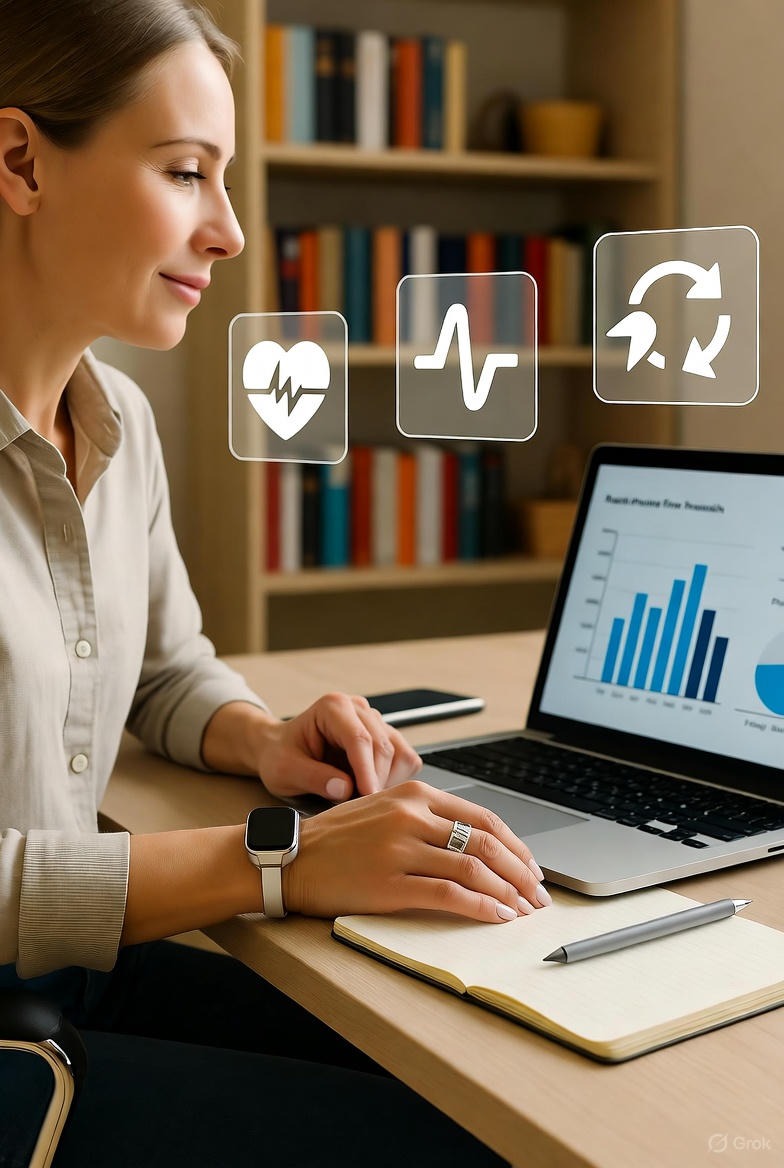
We live in the golden age of health technology, yet many of us feel no closer to understanding our own bodies. The problem isn't a lack of data; it's a lack of conversation between the data points. Think of your health as a complex, interconnected web. Your stress levels tonight directly impact your sleep architecture. The quality of that sleep dictates your energy for tomorrow's workout. The intensity of that workout influences your body’s need for recovery and nutrition. When each of these elements is tracked in a separate app, the critical connections are lost.
You might diligently log your food, only to see your weight plateau, not realizing your sleep-tracking app has been recording a steady decline in deep sleep—a key regulator of hunger hormones. You might push for a personal best on your running app, unaware that your resting heart rate, quietly elevated on your wellness ring for days, was signaling your body’s plea for rest. This data isolation leads to frustration, misguided efforts, and a sense of working against a mysterious system.
The human body does not operate in compartments. The endocrine, nervous, and immune systems are in constant dialogue. To manage our health effectively, our technology must mirror this biological reality. A standalone device, no matter how advanced, is like having a world-class expert in cardiology, another in nutrition, and another in sleep medicine, all in the same building but forbidden from speaking to each other. The diagnosis will always be incomplete.
This fragmentation creates what experts call "data fatigue"—the overwhelming feeling of managing multiple apps, each with its own dashboard, goals, and notifications, without a clear, unified direction. The promise of the modern wellness ring is to end this fatigue. By serving as a central aggregator and interpreter, it does the heavy lifting of correlation. It asks the critical "why" behind the "what." Why was my sleep score low last night? Was it the late caffeine, the stressful day captured by my HRV, or the intense evening workout? Integration provides the context, and context is the foundation of actionable insight and lasting change.
To appreciate the power of integration, we must first understand the unique and continuous data stream a premium wellness ring provides. Unlike a phone in your pocket or a watch on your wrist during a workout, a ring is worn 24/7. This constant, passive wear is its superpower, enabling it to capture a rich, uninterrupted physiological story.
At its foundation, a wellness ring tracks the familiar metrics: steps, active calories, and sleep duration. But it’s the deeper, autonomic nervous system (ANS) biomarkers that truly set it apart and create powerful integration points. The ANS governs your "rest and digest" (parasympathetic) and "fight or flight" (sympathetic) states, and a ring provides a direct, objective window into its balance.
The cornerstone of this is Heart Rate Variability (HRV). HRV is the subtle variation in time between each heartbeat. Contrary to intuition, a higher HRV generally indicates better fitness, resilience, and recovery. It’s your body’s readiness score. A consistently depressed HRV can be an early warning sign of overtraining, illness, or chronic stress. When integrated with workout data from Strava or Apple Fitness+, your ring can suggest whether you’re truly recovered enough for that high-intensity session.
Next is Resting Heart Rate (RHR). While simple in concept, its trends are profoundly informative. A creeping elevation in RHR over days can signal dehydration, insufficient recovery, or the onset of an illness. When viewed alongside sleep data, it tells a clearer story of your body’s stress and recovery state.
Body Temperature is another critical, continuously monitored metric. Basal body temperature trends can offer insights into menstrual cycle phases, metabolic changes, and even the earliest signs of fever or immune response. This data becomes exponentially more valuable when layered with lifestyle logs from other apps.
Finally, the most advanced rings measure Blood Oxygen Saturation (SpO2) overnight. Consistently low nocturnal SpO2 can be a key indicator of sleep-disordered breathing. This single metric, when its data is shared with a health app, can be the nudge someone needs to seek a professional sleep study.
It’s this 24/7 stream of ANS and biometric data—HRV, RHR, temperature, and SpO2—that forms the "ground truth" of your physiological state. When this stream converges with data from your other apps, magic happens. Your calorie-tracking app knows what you ate; your ring knows how your body is responding. Your workout app knows what you did; your ring knows if you’ve recovered enough to do it again. This is the essence of integrated health intelligence.
So, how does this technical symphony actually work? The wellness ring acts as a central hub through two primary technological pathways: direct API integrations and universal health data platforms. Understanding this helps you choose a ring and set up your ecosystem for seamless flow.
The first method is through direct Application Programming Interface (API) integrations. Think of an API as a secure, pre-arranged handshake between two apps. A wellness ring company might establish a direct partnership with, say, MyFitnessPal or Apple Health. This allows for a deeper, two-way exchange of specific data fields. You might grant permission for your ring to send your resting energy expenditure (calories burned at rest) to MyFitnessPal, which then uses that highly personalized figure to adjust your daily calorie budget more accurately than any generic formula. Or, your ring might import your logged weight from Apple Health to correlate it with your sleep and recovery metrics.
The second and more universal method is through aggregator platforms like Apple Health (iOS) and Google Fit (Android). These are operating-system-level frameworks designed to be the central repository for all your health data. Nearly every health and fitness app, including wellness ring apps, can read from and write to these platforms. This is the most powerful and flexible integration model for most users.
Here’s the workflow: Your wellness ring app writes all its rich data—sleep stages, HRV, RHR, temperature, SpO2—into Apple Health. Simultaneously, your running app writes your route and pace, your nutrition app writes your macros, and your mindfulness app writes your meditation minutes into the same Apple Health. Now, your wellness ring app can read all that aggregated data back. Its algorithms can then perform cross-correlation analysis: "Ah, on days when the user logged a meditation session in Calm, their nighttime HRV was 12% higher." Or, "The user's deep sleep percentage dropped 25% on nights following high-sodium meals logged in Lose It!"
This hub model empowers you. You are not locked into a single brand's "walled garden." You can mix and match the best apps for each aspect of your life, confident that your wellness ring can serve as the unifying interpreter. The ring’s companion app becomes the dashboard where these disparate data streams converge into personalized insights, readiness scores, and holistic trends that would be impossible to see otherwise. This transforms your phone from a collection of isolated apps into a truly intelligent health command center.
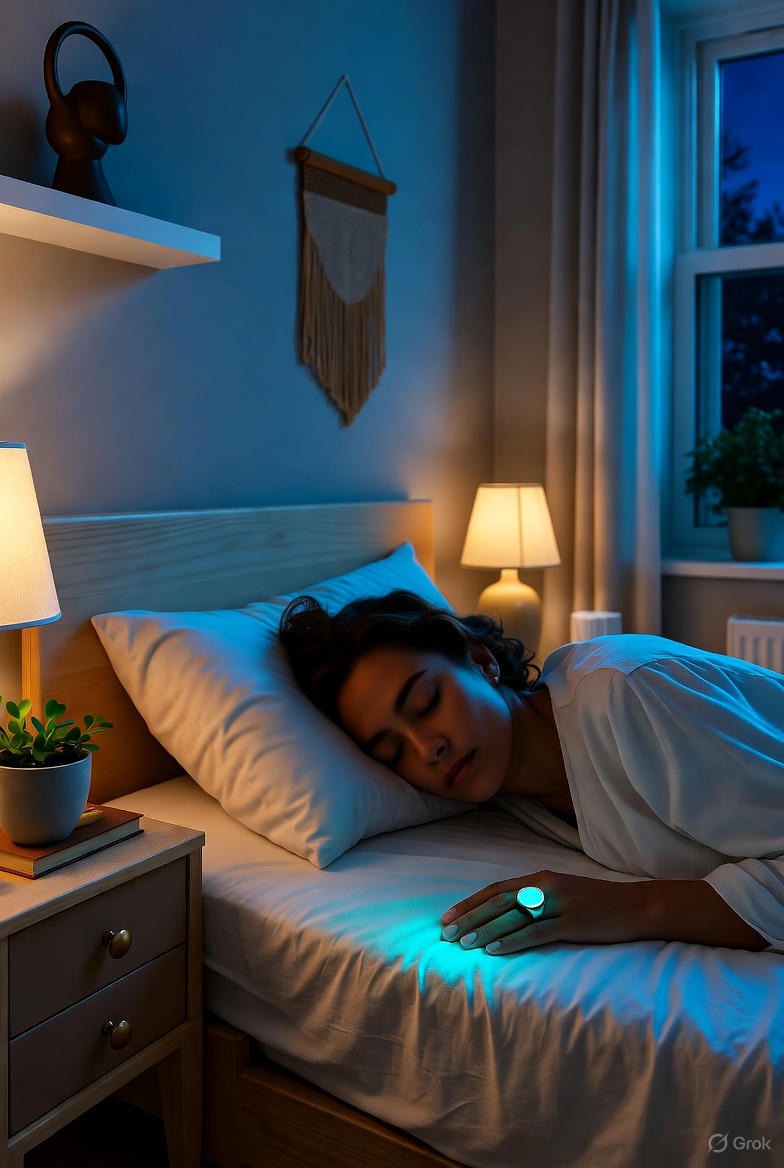
One of the most profound applications of integration lies in enhancing sleep and managing stress. A wellness ring provides the objective, physiological truth of your sleep quality and nervous system state. When paired with the subjective and behavioral tools of sleep and meditation apps, you create a powerful feedback loop for mastery.
Start with sleep data integration. Your ring meticulously tracks your sleep stages (light, deep, REM), sleep latency (time to fall asleep), wake-ups, and overall sleep score. Apps like Sleep Cycle, Pillow, or even Apple’s own Sleep schedule can import this data. But the real value is in the reverse. By integrating with a mindfulness app like Calm, Headspace, or Balance, you can experiment and measure. Use the app’s "Sleep Stories" or guided wind-down meditations for a week. Your ring will show you the objective impact: did your sleep latency decrease? Did your deep sleep or REM sleep increase? This moves you from guessing to knowing what truly works for your physiology.
For a deep dive into what your sleep scores mean, you can explore resources like our analysis of sleep score standards and what research says is healthy.
Furthermore, daytime stress management directly affects nighttime recovery. Your ring’s continuous HRV and stress score throughout the day are invaluable. Link this with a meditation app. Schedule a 5-minute breathing session in your mindfulness app when your ring sends a "high stress" notification. Over time, you can track the direct, quantifiable effect of your meditation practice on your autonomic nervous system balance. Does your afternoon HRV dip become less pronounced? Does your overall stress score trend downward? This turns abstract wellness practices into data-validated rituals.
The journey of improvement is also crucial. Seeing a single night's score is one thing; understanding your long-term trajectory is another. Tracking your progress over time can be incredibly motivating, as detailed in our article on the sleep score journey and tracking improvement over months.
Finally, it’s essential to view sleep not in isolation, but as the cornerstone of total recovery. The quality of your sleep directly impacts every other aspect of your health. To understand this holistic relationship, consider how your sleep score reflects total body recovery, influencing everything from muscle repair to cognitive function.
For the active individual, integration transforms exercise from a series of isolated events into a cohesive, intelligently managed training cycle. The goal shifts from "How hard did I work?" to "How well did I recover, and am I ready for the next stimulus?" This is where the wellness ring’s recovery metrics create a closed-loop system with your favorite fitness apps.
Workout Apps & Readiness Scores: Connect your ring to Strava, Garmin Connect, Apple Fitness+, or Peloton. After a sync, your ring’s app can display your morning readiness score—a composite of HRV, RHR, sleep, and temperature—right alongside your planned workout. A low readiness score might suggest swapping a high-intensity interval training (HIIT) session for a gentle yoga or recovery ride. Post-workout, the ring absorbs the strain. It can show you how long your HRV and RHR take to return to baseline, giving you a precise, personal measure of the workout’s physiological impact.
Calorie and Macro Management: Generic calorie estimates from wearables are notoriously inaccurate. By integrating with MyFitnessPal, Lose It!, or Cronometer, your ring can provide a far superior data point: your personal Resting Metabolic Rate (RMR) and total daily energy expenditure (TDEE), updated daily based on your actual physiology, not age/height/weight formulas. This allows your nutrition app to set a dynamic, highly accurate calorie budget. Furthermore, seeing how your macronutrient intake (carbs, protein, fat) correlates with your recovery scores and sleep quality adds a new dimension to nutritional planning. You might discover that a higher complex carb intake on training days leads to better sleep and faster recovery.
Recovery Tracking: Apps like TrainAsOne or Whoop are built on the principle of strain and recovery. A wellness ring can serve as a superior or complementary recovery sensor within these ecosystems. Sharing your ring’s HRV and sleep data with a AI-powered training app allows it to auto-adjust your training plan in real-time, truly personalizing your path to fitness and preventing overtraining.
This integration creates a virtuous cycle: Workout data informs your ring’s understanding of your strain. Your ring’s recovery data informs your decision on the next workout’s intensity. Nutrition data completes the picture of fuel and repair. Instead of managing three separate sets of advice, you receive one coherent recommendation: "You’re 85% recovered. Your energy expenditure yesterday was 2,800 calories. Consider a moderate 45-minute run today, and ensure you hit your protein target to fully replenish by tomorrow." This is the future of intelligent fitness.
Nutrition has long been the domain of subjective logging and one-size-fits-all formulas. Integration with a wellness ring brings an objective, physiological feedback mechanism to the table, evolving diet from simple calorie math to a nuanced dialogue with your metabolism.
The first breakthrough is in energy expenditure accuracy. As mentioned, when your ring shares its calculated RMR and activity-based expenditure with an app like MyFitnessPal or Cronometer, the guessing game ends. Your calorie target becomes a living number, adjusting based on your actual daily movement and metabolic health. This is crucial for anyone with body composition goals, whether losing fat or building muscle.
But the deeper magic lies in biometric correlation. A wellness ring allows you to move beyond "does this diet help me lose weight?" to "how does this way of eating make my body feel and function?" This is biofeedback-driven nutrition.
For example, you can conduct personal experiments:
This turns your nutrition log from a static diary into a dynamic investigatory tool. You’re no longer just tracking inputs; you’re tracking the systemic outputs and outcomes of those inputs on your nervous system and recovery. The ring answers the critical question: "Is this food working for my body's recovery and resilience, or against it?" This empowers you to craft a diet that supports not just a number on a scale, but sustained energy, optimal sleep, and lower physiological stress.

For women, the integration of a wellness ring with dedicated cycle-tracking apps is nothing short of revolutionary. It replaces guesswork and generic advice with a hyper-personalized, data-driven understanding of how the menstrual cycle influences—and is influenced by—every other aspect of health.
The core of this is basal body temperature (BBT) and resting heart rate (RHR). A premium wellness ring is the ideal BBT thermometer, as it automatically takes your temperature continuously throughout the night, eliminating user error from manual morning measurements. When this temperature data, along with RHR trends, is shared with apps like Clue, Flo, Natural Cycles, or Apple Health’s Cycle Tracking, the predictive power is immense.
These apps can use the subtle, ring-detected post-ovulation temperature shift to confirm ovulation has occurred, pinpoint the fertile window with greater accuracy, and map the entire cycle phase (follicular, ovulatory, luteal, menstrual) with objective data. But the integration goes far beyond fertility.
This is where cycle syncing becomes a data-informed practice. With your cycle phases clearly defined by biometrics, you can now observe how your body responds differently throughout the month:
This integration validates women’s lived experiences with hard data. It empowers them to tailor their fitness, nutrition, and recovery strategies in harmony with their innate biology, moving away from a rigid, 28-day-same-plan approach to one of fluid, self-aware adaptation. The ring provides the objective hormonal backdrop, making every other piece of integrated data more intelligible and actionable.
The frontier of health tech is moving firmly into mental and emotional well-being. Here, the integration between a wellness ring’s objective stress metrics and mindfulness apps’ subjective tools is creating a powerful new paradigm: the quantified, manageable mind.
At the heart of this is the continuous stress score. Derived primarily from heart rate variability (HRV) and heart rate data, this score is a real-time indicator of your autonomic nervous system’s balance. A high score doesn’t mean you feel stressed (you might be engrossed in a thrilling movie), but it indicates a high sympathetic ("fight or flight") load. The goal isn’t to eliminate this—stress is a natural response—but to manage its accumulation and promote recovery.
Integration with mindfulness apps like Calm, Headspace, Ten Percent Happier, or even Apple’s Mindfulness app creates a biofeedback training system.
Furthermore, this data can be shared with therapy or coaching apps like BetterHelp or Talkspace (with user consent, in anonymized forms). It provides a therapist with objective context: "The client reports high anxiety this week, and their physiological data shows a correlated, sustained elevation in stress score and lowered sleep quality." This can guide more effective, personalized therapeutic strategies.
This integration demystifies mental well-being. It allows you to see stress not as a purely psychological enemy, but as a physiological state that can be measured, understood, and skillfully managed. It bridges the gap between the mind and body, proving that practices which calm the mind have direct, measurable effects on the body’s core operating system. For those navigating the challenges of modern life, understanding the art of restful living in a fast-paced world is essential, and this integration provides the tools to master it.
The ultimate expression of integrated wellness is when your data doesn’t just inform you—it informs your environment. By connecting your wellness ring to smart home platforms like Apple HomeKit, Google Home, or Amazon Alexa, you can create an ambient ecosystem that proactively supports your health based on your real-time physiological state.
Imagine these automated, data-driven scenarios:
This extends to creating a sanctuary for rest. Your physical space has a profound impact on your ability to unwind. For inspiration on crafting such an environment, consider a room-by-room guide to how to create a restful home environment.
For the busy professional, these micro-adjustments are key. Small, automated shifts in your environment can facilitate micro-recovery throughout the day, preventing stress accumulation without requiring conscious effort.
This level of integration moves health management from a manual, phone-screen-centric task into the background of your life. Your environment becomes an intuitive partner in your well-being, responding to and supporting your body’s needs. It’s a step towards a truly seamless, holistic, and ambient wellness experience where technology serves you by fading into the fabric of your daily living.
With the "why" and the "what" established, let’s get practical. Setting up a seamless, integrated health ecosystem requires a bit of initial configuration, but the payoff is a lifetime of streamlined insight. Follow this step-by-step guide to build your connected wellness hub.
Step 1: Establish Your Foundation – Apple Health or Google Fit.
This is non-negotiable. On iPhone, open the Apple Health app. Tap your profile picture, then "Privacy." Ensure all categories (Mindfulness, Nutrition, Sleep, Heart, etc.) are turned on for data sharing. On Android, set up Google Fit as your central repository. This platform will be the "data bank" for all your apps.
Step 2: Configure Your Wellness Ring App.
Open your ring’s companion app (e.g., Oura, Circular, Ultrahuman). Dive into the settings, looking for "Connections," "Integrations," "Apps & Services," or "Health Connect." You will typically find two types of permissions:
Step 3: Connect Your Primary Health & Fitness Apps.
Now, configure your other major apps to share data with your central hub.
Step 4: Configure for Smart Home (Optional).
If you use Apple HomeKit, ensure your ring app (if supported) and your smart devices (lights, thermostat) are added to the Home app. Explore automation creation based on time, or if your ring app supports shortcuts, you can create powerful "if this, then that" rules.
Step 5: Audit, Refine, and Explore.
Give the system 1-2 weeks to collect data. Then, explore your wellness ring app’s "Discover" or "Insights" tab. It should now be showing correlations: "Your deep sleep was higher on days you meditated," or "Your recovery score tends to be lower when your workout duration exceeds 60 minutes." Use these insights to refine your habits.
Pro-Tip: Privacy First. Only grant permissions to apps you trust. Review these connections every few months. The goal is a streamlined flow of data to serve you, not a leak of personal information. A well-configured ecosystem feels invisible, working quietly in the background to make your path to wellness clearer, more personalized, and ultimately, more successful.
The true genius of a connected health ecosystem isn't in its daily notifications or single-point insights—it’s in the long-term narrative it weaves. Over weeks, months, and seasons, the integration of your wellness ring data with your other health apps uncovers deep, life-changing patterns that are invisible in the day-to-day noise. This is where isolated data points coalesce into profound personal wisdom.
Consider the story of Alex, a mid-level manager. For years, he experienced an annual "winter slump"—low energy, weight gain, and irritability each February. He blamed it on the weather and shorter days. When he began using a wellness ring integrated with his nutrition, fitness, and light-tracking apps, a clear three-year pattern emerged. The data didn't just show a winter slump; it revealed the specific cascade: His December holiday travel and diet (logged in MyFitnessPal) led to a 5-pound weight gain. This extra weight correlated with a measurable increase in sleep disturbances and snoring (shown by elevated nighttime heart rate and lower SpO2 on his ring). The poor sleep, in turn, drove down his January HRV and recovery scores, making his new-year workout resolutions unsustainable, leading to frustration and inactivity by February. The root cause wasn't just "winter," but a predictable cycle of diet-induced sleep disruption that sabotaged his fitness and mood.
This is the power of longitudinal, integrated data. It moves you from reactive symptom management to proactive systems management. You can identify your personal triggers and levers with scientific precision. Does your menstrual cycle app show you’re in the luteal phase? Your historical data can predict that your stress score will be 15% more reactive, so you can proactively schedule lighter workdays. Did you just complete a six-week marathon training block on Strava? Your integrated recovery metrics will show you exactly how long your body typically needs to return to baseline, informing your off-season plan.
This long-view analysis is the cornerstone of a sustainable philosophy. It helps you shift from a mindset of constant hustle to one of intelligent balance, embracing the restful living philosophy of less hustle and more health.
To build this narrative, consistently review your ring app’s weekly and monthly reports. Look for correlations that span multiple data sources. The most valuable insights are often the subtle, slow-moving trends—the gradual creep in resting heart rate, the slow seasonal shift in your average sleep duration, or the way your body’s response to alcohol or caffeine changes as your fitness improves. This is your biological biography, and reading it empowers you to write the next, healthier chapter.

As we enthusiastically connect our most intimate physiological data—our sleep, our heart rhythms, our menstrual cycles—across multiple platforms, a critical question emerges: How do we navigate the privacy paradox? We seek deeper insights by sharing data, but we must protect our most sensitive information. Understanding the data flow and your controls is not just technical; it's an essential part of modern wellness literacy.
First, recognize the data chain. When you enable an integration, data typically flows like this: Your wellness ring sensor collects raw data → it is processed in the ring’s companion app on your phone → with your permission, that app writes specific data points (e.g., "Sleep Analysis: 7 hours") to a central aggregator like Apple Health → another app, like a mindfulness app, requests permission to read that sleep data from Apple Health. At each arrow, you have a consent gate.
Key Privacy Safeguards to Implement:
The goal is informed sharing. You wouldn't give a casual acquaintance your full medical history. Similarly, don't grant every app full access to your health data hub. Be selective, be granular, and be periodic in your reviews. The integrated ecosystem is powerful because it respects your control; using that control wisely is how you reap the benefits while safeguarding your digital self. In a world that often feels wired and tired, knowing how to avoid common pitfalls is key. Be aware of restful living mistakes that can keep you wired and tired despite your best efforts with technology.
Even the most elegantly designed systems can hiccup. When your wellness ring stops talking to Apple Health, or your morning meditation isn't reflected in your daily readiness score, it breaks the magic of integration. Before frustration sets in, methodically work through this troubleshooting checklist. Most issues are simple to resolve.
The Universal First Step: The Refresh Ritual.
If Data Isn’t Syncing To Your Central Hub (Apple Health/Google Fit):
If Data Isn’t Flowing From Your Hub to Your Ring App (Missing workout/meditation data):
If Data Appears Inconsistent or "Wrong":
When All Else Fails:
Patience and systematic checking are key. A well-synced ecosystem should require minimal daily maintenance, acting as a silent, reliable partner in your health journey. When it works seamlessly, it provides the clarity needed to balance productivity with restful living, ensuring your drive for achievement doesn't come at the cost of your well-being.
We are standing on the brink of the next revolution in personal health technology. Today's integration is about correlation—showing you that "A" and "B" happened together. Tomorrow's integration, powered by advanced artificial intelligence (AI) and machine learning, will be about causation, prediction, and hyper-personalization. Your connected ecosystem will evolve from a dashboard into a proactive health co-pilot.
The Predictive Health Avatar:
Imagine a digital twin—a "Health Avatar"—built from your years of integrated data: every heartbeat from your ring, every meal logged, every workout completed, every menstrual cycle, every stress score. This avatar won't just track; it will simulate. AI models will use it to run forecasts. "Based on your current recovery score, projected work stress from your calendar, and your planned workouts, there's an 82% probability you'll be susceptible to a cold in 4 days. Recommendation: Prioritize 8.5 hours of sleep tonight and consider postponing your intense interval session."
Context-Aware, Cross-Platform AI:
Future AI won't live solely in your ring app. It will operate across the integrated ecosystem. It might analyze your Gmail calendar (with permission) to see a week of back-to-back meetings, cross-reference that with your historical stress data, and automatically suggest to your smart home system to initiate a "focus and calm" lighting scene 30 minutes before each meeting. It could see you've logged a poor night's sleep in your ring data and automatically adjust the difficulty of your planned workout on your Peloton or adjust your daily calorie goal in MyFitnessPal.
Diagnostic Partnerships and Early Detection:
With user consent, anonymized, aggregated data from millions of integrated ecosystems will become one of the most powerful public health tools ever conceived. Researchers will discover subtle, pre-symptomatic biomarkers for conditions like Lyme disease, flu, or even metabolic disorders by spotting anomalous patterns across ring data, activity logs, and self-reported symptoms. Your individual system might one day receive an anonymous, privacy-safe alert: "A pattern in your recent temperature and heart rate variability resembles early signatures observed in [condition X]. Consider consulting a healthcare provider and monitoring these specific metrics."
Seamless Healthcare Handoff:
The ultimate integration is with your actual healthcare team. Standards like FHIR (Fast Healthcare Interoperability Resources) are already enabling this. In the near future, you might securely share a "health data snapshot"—a 90-day view of your integrated ring, activity, and glucose data (from a connected CGM)—directly into your electronic health record before your annual physical, giving your doctor a rich, objective narrative rather than relying on "how have you been sleeping?"
This future hinges on the robust, privacy-first integration we are building today. Each connected app, each synced data point, is training your personal model. It necessitates a shift in thinking: we are not just collecting data for today's score, but contributing to a lifelong, learning model of our unique biology. The goal is a wellness experience that is less about manual tracking and more about receiving intuitively right, predictive guidance that helps you live better, with less effort. This future is built on the foundation of rest, as understanding the science behind why downtime matters is critical to designing AI that truly promotes human well-being.
Theory is powerful, but lived experience is transformative. Let's move beyond the hypothetical and examine real-world vignettes that illustrate how the synergy between a wellness ring and other apps has catalyzed profound change. These stories highlight the unique, personalized insights that only a connected ecosystem can provide.
Case Study 1: The "Healthy" Executive with Hidden Fatigue
*Sarah, 42, a finance director, considered herself healthy. She ate well, exercised 5 days a week with a personal trainer (logged in Apple Fitness), and meditated using Headspace. Yet, she was constantly battling afternoon crashes and irritability. Her ring was integrated with all her apps. Over a month, a glaring pattern emerged in her ring’s monthly report: her HRV was crashing every Thursday afternoon and staying low through Sunday. Cross-referencing this with her calendar and nutrition app revealed the cause. Every Wednesday was her "client dinner" night, where she logged 2-3 glasses of wine and rich food. The data showed this single weekly event was destroying her sleep quality (low HRV, high nighttime heart rate), leaving her physiologically drained for the next three days, despite her consistent workouts and meditation. The insight wasn't "drink less" (she knew that), but the quantified impact of that drink on her entire system. She experimented with swapping wine for sparkling water at one dinner. The following Thursday, her HRV remained stable, her energy was sustained, and her weekend mood improved dramatically. The integration gave her the cause-and-effect proof to make a sustainable change.*
Case Study 2: The Athlete Plagued by Inconsistent Performance
*Marcus, 28, an amateur triathlete, used Strava religiously but couldn't understand why some training days felt fantastic and others were a slog. He synced his wellness ring with Strava and his Whoop recovery app. The integrated view was revelatory. His performance on the bike or run didn't correlate strongly with his sleep duration alone. Instead, it had a near-perfect correlation with his ring’s body temperature trend relative to his personal baseline. On mornings when his temperature was elevated (even by 0.3°C), his perceived exertion was high and power output low, regardless of sleep. This often preceded a mild illness. He learned that a rising temperature was his body's earliest signal to dial back intensity. By using his ring’s temperature data to modify his pre-planned Strava workouts, he avoided overtraining, stayed healthier, and saw more consistent performance gains.*
Case Study 3: Managing Perimenopause with Data, Not Guesswork
*Linda, 51, was navigating the turbulent waters of perimenopause. Hot flashes, sleep disruption, and anxiety were her new norm. Her doctor's advice was vague. She started using a wellness ring integrated with the menopausal health app Stardust. The ring provided objective data on her sleep disturbances and nocturnal temperature spikes. The app helped her track subjective symptoms and offered tailored content. Together, they revealed a pattern: her most severe hot flashes and sleep disruptions occurred in the 3-4 days after she consumed sugar and alcohol, a combination she enjoyed on weekends. Seeing the direct line from weekend treats to weekday misery in hard data gave her the agency to experiment. She eliminated weekend sugar and swapped wine for a non-alcoholic alternative. The frequency and intensity of her symptoms decreased by over 60% according to her tracked data. She took this personalized report to her doctor, leading to a more informed, productive conversation about further treatment options.*
These cases underscore a common theme: integration provides contextual, causal clarity. It turns nebulous feelings of "being off" into specific, addressable chains of events. It empowers individuals to become expert detectives in their own health, moving from generalized advice to personalized, data-validated protocols. For parents in particular, who often put their own wellness last, this kind of clear insight is invaluable for finding peace in the chaos.
With an understanding of the potential, the next step is curation. You don't need to connect every app under the sun. The goal is to build a lean, powerful "stack" of applications that address your unique health goals and feed each other meaningful data. Here is a curated guide, organized by primary objective, to help you assemble your perfect ecosystem.
For The Holistic Health Optimizer:
For The Athlete Focused on Performance & Recovery:
For Women & Hormonal Health:
For The Stress-Prone Professional:
Start Simple. Choose one goal-based stack to implement. Get those integrations working flawlessly for a month. Observe the insights. Then, consider adding one more layer. The most effective ecosystem is one you understand and use consistently, not the one with the most apps. Remember, the ultimate aim is to support a fundamental mindset shift from constant doing to intentional being, and your tech stack should facilitate that, not complicate it.
This is the most critical, and most often missed, step. The pinnacle of a connected health ecosystem is not a beautiful graph or a high score—it's a tangible, positive change in your lived experience. The data must leave the screen and inform your actions in the physical world. Integration provides the "what" and the "why"; your job is to execute the "how" in your daily life.
From Notification to Actionable Ritual:
When your ring app pings you with "High stress detected. Consider a breathing exercise," don't dismiss it. That is the system working. Pause for 90 seconds. Do a box breath (inhale 4, hold 4, exhale 6). This closes the loop. The same goes for "Poor recovery score—prioritize rest." That might mean literally canceling your evening plans to take a bath and read a book, turning the insight into a restorative evening ritual that prepares you for sleep.
Informing Conversations with Professionals:
Your integrated data is a powerful communication tool. Instead of telling your doctor, "I'm tired all the time," you can say, "Over the last three months, my wearable data shows my resting heart rate has increased by 8 beats per minute, my deep sleep has decreased by 25%, and this correlates with a period of high work stress I logged. What should we investigate?" This objective data leads to more efficient, targeted healthcare.
Designing Your Lifestyle Around Your Patterns:
Use your long-term trends to architect your week. If your data consistently shows you sleep poorly on Sunday nights (the "Sunday Scaries" effect), design a Sunday routine that counters it. Make it a screen-free, nature-filled day. If your energy peaks between 10 AM and 12 PM, protect that time for your most demanding cognitive work. Let the data guide your schedule, not the other way around.
Creating Environmental Cues:
Your smart home integrations are a form of behavioral design. Let the data-triggered dim lights be your non-negotiable cue to start winding down. Let the sunrise alarm be your cue to get up and hydrate. The integration builds fences around your desired behaviors, making the right choice the easy, automatic choice.
The Ultimate Goal: Embodied Wisdom
The final stage is when the external data begins to train your internal senses. After months of seeing how certain foods affect your sleep score, you start to feel the connection intuitively. After correlating frantic, shallow breathing with a high stress score, you become more attuned to your own breath in moments of tension. The technology becomes a teacher, and eventually, you internalize the lessons. The ring and its integrations become less about constant checking and more about occasional calibration—a tool to check in, not a crutch to lean on.
This is the promise fulfilled: technology that doesn't alienate us from our bodies, but helps us listen to them more keenly. It empowers us to make choices that align with our deep physiology, leading to a life that is not just longer, but fuller, more energized, and more resilient. And as we've seen, one of the most powerful, data-backed ways to cultivate this resilience is by embracing the restorative power of the natural world, understanding how nature supports restful living.
We have journeyed from the frustrating silos of isolated health data to the empowering clarity of a fully integrated ecosystem. We've seen how a wellness ring moves beyond a simple tracker to become the central interpreter of your physiological story, connecting the dots between sleep, fitness, nutrition, stress, and your environment. The integration with other health apps is not a minor feature; it is the very mechanism that transforms raw biometrics into actionable, personalized health intelligence.
You now understand the core biometrics a ring provides—the HRV, RHR, temperature, and SpO2 that form your body's "ground truth." You've seen the technical pathways, from direct APIs to universal hubs like Apple Health, that make this connectivity possible. We've explored transformative synergies across sleep, fitness, nutrition, women's health, and mental wellness, and looked ahead to a future where AI uses this integrated data to predict and guide.
The path forward is clear. It begins with intention. Choose your primary health goal. Assemble your lean, curated stack of apps. Meticulously configure the permissions, using central hubs as your privacy firewall. Commit to observing not just daily scores, but the long-term trends and patterns that reveal your unique biology.
Then, take the most important step: let the data inform your real-world behavior. Let it guide your evening wind-down, your workout intensity, your food choices, and your conversations with healthcare providers. Use it to design a lifestyle that respects your body's innate rhythms and needs.
This is the beginning of a more informed, more intentional relationship with your health. The technology is here, not as a master, but as a profoundly capable ally. Your wellness ring and its connected ecosystem are ready to help you listen to the subtle language of your body, so you can write the next chapter of your health story with confidence and clarity. The journey to integrated well-being starts now.
As we embrace the world of integrated health data, a healthy dose of skepticism is not only wise but necessary. The allure of numbers can be seductive, leading us to trust them blindly or, conversely, to become so overwhelmed by them that we freeze—a state known as "analysis paralysis." The goal of integration is empowerment, not anxiety or obsession. This section is your guide to being a discerning, confident user of your connected health ecosystem.
The Core Principle: Trends Over Absolute Numbers
No single metric from your wellness ring or any connected app is a perfect, clinical-grade measurement. Your ring’s SpO2 sensor is not a medical pulse oximeter, and its calorie burn is an estimate. The power lies not in the absolute precision of a single point, but in the direction and magnitude of change over time. A one-night dip in HRV is meaningless noise. A consistent 20% decline in your 7-day average HRV, however, is a meaningful signal worthy of attention. Focus on the trajectory, not the daily snapshot.
How to Validate Your Ring's Data with "Real World" Checks:
Navigating Conflicting Data Between Apps:
You may see your ring report 420 active calories burned, while your Apple Watch reports 380 for the same walk. Which is right? Likely, neither is perfectly accurate, and that's okay. Remember:
Avoiding Analysis Paralysis: The 80/20 Rule for Health Data
The Pareto Principle applies brilliantly here: 80% of your actionable insights will come from 20% of your data. Don't try to optimize every metric every day. Instead:
The most important sensor in your ecosystem is you. Your subjective feeling of energy, mood, and vitality is the ultimate validation metric. The technology's job is to provide clues and context for those feelings. When used with this balanced perspective, your integrated stack becomes a powerful tool for self-knowledge, free from the tyranny of chasing perfect numbers. For those prone to overthinking, learning to balance productivity with restful living is a crucial skill that applies directly to managing your health data.
Humans are inherently social creatures, and our wellness journeys are no exception. One of the powerful, yet delicate, aspects of app integration is the community feature. Platforms like Strava, Apple Fitness+, and even some wellness ring apps themselves allow you to share data, join groups, and participate in challenges. Used wisely, this can be a tremendous source of motivation and accountability. Used poorly, it can lead to unhealthy comparison and derail your personal goals.
The Benefits of Connected Community:
The Pitfalls of Comparison: "The Strava Paradox"
The dark side of community is what we’ll call "The Strava Paradox." This is the phenomenon where you complete a satisfying run, only to feel deflated after seeing a friend ran faster or farther. This shifts your focus from internal validation (how your body felt, your personal progress) to external validation (beating someone else's metrics). This is counterproductive to holistic wellness, which is about tuning into your body's unique needs, not matching someone else's output.
Your body's data is not comparable currency. Your friend’s HRV of 75 ms and your HRV of 45 ms do not mean they are "healthier." Age, genetics, fitness modality, and even time of measurement create massive variation. Comparing absolute numbers is meaningless and often demoralizing.
Best Practices for Healthy Social Sharing:
Community features, when integrated thoughtfully, can combat the isolation sometimes felt in a solo pursuit of health. They remind us we’re not alone. The key is to let community lift you up, not measure you up. This aligns with the core tenet of the restful living philosophy of less hustle and more health, where your worth is not tied to your output.
The proliferation of wearable technology has not gone unnoticed by the medical community. Doctors, physical therapists, dietitians, and mental health professionals are increasingly encountering patients like you, who arrive with months or years of integrated health data. Understanding the clinician's perspective can help you prepare this data to facilitate better, more efficient care rather than confusion.
The Emerging Professional Stance: Cautious Interest.
Most forward-thinking clinicians view this trend positively, but with important caveats. They see it as a potential treasure trove of real-world, longitudinal data that is impossible to capture in a 15-minute office visit. However, they are trained to rely on validated, clinical-grade equipment and are (rightfully) skeptical of consumer device accuracy for diagnostic purposes.
How to Present Your Data for Maximum Impact:
Walking into an appointment and dumping 90 days of raw graphs on your doctor will not be helpful. Your job is to synthesize and narrate.
Where Integrated Data is Shining in Clinical Settings:
The Professional's Caveats:
Clinicians will (and should) remind you:
By becoming a prepared, synthesized reporter of your own data, you transition from a passive patient to an active partner in your care. You provide your clinician with a richer, more continuous picture of your health, enabling more personalized and proactive management. This partnership is a form of high-level self-care, moving you from simply tracking problems to actively collaborating on solutions, which is a cornerstone of managing chronic stress and preventing burnout.
Building your ideal integrated health stack often comes with a recurring financial cost beyond the initial purchase of the ring itself. Wellness apps increasingly operate on a "freemium" or subscription model, and understanding this landscape is key to building a sustainable, cost-effective ecosystem without falling into subscription creep.
The Lay of the Land: Common Subscription Tiers
Conducting a Value Audit: Is It Worth It?
Every 6-12 months, conduct a "value audit" of your subscriptions.
Strategies for a Cost-Effective Stack:
The Non-Monetary Cost: Attention & Cognitive Load
Finally, consider the cost of your attention. Each app subscription is an invitation to engage, to check in, to process more information. There is a point of diminishing returns where adding more apps creates noise, not signal. A simpler, well-understood stack of 2-3 integrated apps is almost always more valuable than a complex, expensive web of 10 apps you barely use.
Invest in the connections that give you clear, actionable returns for your health and your wallet. The goal is to spend money to save or enhance your most valuable asset: your vitality. And remember, some of the most powerful wellness practices are completely free, as explored in our guide to restful living on a budget with zero-cost wellness tips.
You're convinced of the "why," and you understand the "what." Now, let's tackle the "how" with a concrete, manageable plan. This 30-day challenge is designed to help you build your integrated ecosystem without overwhelm, focusing on establishing connections, observing patterns, and taking one actionable step.
Week 1: Foundation & Connection
Week 2: Observation & Baseline
Week 3: Experimentation & Correlation
Week 4: Insight & Habit Formation
This 30-day cycle transforms integration from a technical setup task into a lived, personal science experiment. It builds competence and confidence, proving that you are in charge of the technology, not the other way around. To ensure this new habit sticks, anchoring it to an existing routine is powerful, much like building a restful living morning routine to start your day right.
While we've focused on major fitness, nutrition, and mindfulness apps, the true creativity of integration lies in connecting with niche platforms. These surprising synergies can unlock highly specialized insights and automate wellness in clever ways. Here are some innovative integrations to consider as you advance in your journey.
1. Hydration & Climate Integration:
2. Audio Environment & Stress:
3. Glucose Monitoring (For Non-Diabetics):
4. Chronotype & Scheduling:
5. Air Quality & Respiratory Recovery:
These niche integrations demonstrate that the ecosystem's boundaries are limited only by the availability of data and a bit of imagination. They move wellness from a set of siloed practices into a deeply interconnected, context-aware system that responds to your body, your environment, and your life. It’s about creating a personal environment that supports calm, as explored in our piece on designing restful living spaces for calm and restoration.
As we delegate more of our personal health narrative to algorithms and interconnected platforms, we must pause to consider the ethical framework that governs this exchange. Using an integrated wellness system isn't just a technical or personal choice; it's a participation in a broader digital ecosystem with implications for privacy, autonomy, and even our relationship with our own bodies.
The Question of Data Ownership:
When your ring collects your HRV and shares it with Apple Health, who owns that data point? Legally, in most jurisdictions, you do. But practically, you grant licenses. It is critical to read the privacy policies of your core apps (your ring, your major fitness app). Understand:
The Illusion of Informed Consent:
We all click "Agree" without reading lengthy terms of service. This is the modern dilemma. To be more informed:
The "Quantified Self" vs. "Qualified Life" Paradox:
This is the core ethical tension for the user. Are we using data to enhance our lived experience, or are we subtly outsourcing the authority of our own bodily feelings to a device? When you feel tired but your ring says you're "ready to perform," whom do you trust? The ethical use of this technology demands that we keep the "Qualified Life"—the richness of feeling, intuition, and unmeasured experience—as the ultimate metric. The numbers should be in service of a life well-lived, not the other way around.
Promoting Digital Wellness Within Wellness Tech:
Ironically, the very devices meant to improve our wellness can contribute to digital addiction and anxiety. Ethical design—and ethical use—includes:
Advocating for Ethical Design:
As consumers, we can support companies that demonstrate ethical practices: those that use strong encryption, allow full data export (so you can take your history with you), are transparent about their algorithms, and design their apps to encourage breaks from screens.
Using a wellness ring and its integrated ecosystem is a profound exercise in self-knowledge. Navigating it with an ethical compass ensures that this knowledge empowers you without compromising your privacy, your autonomy, or your simple, unquantified humanity. It's about finding that essential balance, ensuring that in our pursuit of better health, we don't lose sight of the quiet, unhurried essence of the restful living mindset of shifting from doing to being.
Knowledge is power, but action is transformation. This final section is your practical toolkit to move from reader to architect of your own integrated health ecosystem. Use this blueprint to plan, execute, and refine your connected wellness strategy.
Part 1: The Discovery Worksheet (Answer for yourself)
Part 2: The Integration Checklist
Part 3: The Quarterly Review Questions (Set a calendar reminder for every 3 months)
Your Blueprint is a Living Document
This is not a one-time setup. It's a living system that evolves with your goals, your lifestyle, and the technology itself. Revisit this blueprint quarterly. Tweak it. Simplify it. The most sophisticated system is the one that feels effortless and enlightening, not burdensome.
By completing this blueprint, you have done more than just connect some apps. You have taken conscious ownership of your health technology. You have defined your own success metrics. You have built a framework for lifelong learning about your unique biology. This is the ultimate promise of the integrated wellness ring: not just a smarter device, but a wiser you.
Your Connected Journey Awaits
You now possess a comprehensive map of the territory—from the basic principles to the advanced ethical considerations. You understand the power of connecting your sleep, stress, activity, and nutrition into a single, intelligent narrative. The path forward is one of curiosity, personal experimentation, and mindful engagement. Start with your 30-day challenge. Build your blueprint. Listen to the data, but trust your lived experience above all. Your wellness ring and its connected ecosystem are now ready, not to define your health, but to illuminate it, empowering you to live with greater vitality, balance, and insight. The integration is complete; your journey is just beginning.
Your Trusted Sleep Advocate: Sleep Foundation — https://www.sleepfoundation.org
Discover a digital archive of scholarly articles: NIH — https://www.ncbi.nlm.nih.gov/
39 million citations for biomedical literature :PubMed — https://pubmed.ncbi.nlm.nih.gov/
Experts at Harvard Health Publishing covering a variety of health topics — https://www.health.harvard.edu/blog/
Every life deserves world class care :Cleveland Clinic - https://my.clevelandclinic.org/health
Wearable technology and the future of predictive health monitoring :MIT Technology Review — https://www.technologyreview.com/
Dedicated to the well-being of all people and guided by science :World Health Organization — https://www.who.int/news-room/
Psychological science and knowledge to benefit society and improve lives. :APA — https://www.apa.org/monitor/
Cutting-edge insights on human longevity and peak performance:
Lifespan Research — https://www.lifespan.io/
Global authority on exercise physiology, sports performance, and human recovery:
American College of Sports Medicine — https://www.acsm.org/
Neuroscience-driven guidance for better focus, sleep, and mental clarity:
Stanford Human Performance Lab — https://humanperformance.stanford.edu/
Evidence-based psychology and mind–body wellness resources:
Mayo Clinic — https://www.mayoclinic.org/healthy-lifestyle/
Data-backed research on emotional wellbeing, stress biology, and resilience:
American Institute of Stress — https://www.stress.org/


