


Health Tracking Technology: From Hospitals to Your Finger
Chronicles how medical-grade monitoring technology has been miniaturized for personal, at-home use.
Chronicles how medical-grade monitoring technology has been miniaturized for personal, at-home use.
%402x.svg)
Imagine a world where your most vital health insights are gleaned not in a sterile clinic, but seamlessly from your morning coffee ritual. Where the silent, continuous monitoring once reserved for intensive care units now whispers data from a device you barely notice on your finger. This is not science fiction; it’s the unfolding reality of health tracking technology. We are living through a profound democratization of medical-grade data, a journey that has moved from the hospital’s central nursing station to the smartphone in your pocket, and now, to the elegant smart ring on your hand. This evolution represents more than a change in location—it’s a fundamental shift in philosophy, from reactive, episodic care to proactive, personalized wellness. In this deep exploration, we’ll trace the incredible arc of this technology, understanding how the tools that once kept critically ill patients alive are now empowering everyday individuals to optimize their health, prevent disease, and truly understand their bodies.
The significance of this shift cannot be overstated. For decades, our health was a mystery punctuated by occasional snapshots: the annual physical, the blood pressure reading at the pharmacy, the frantic ER visit. The data was sparse, out of context, and often captured only when something was already wrong. Today, continuous biometric monitoring provides a rich, cinematic narrative of our physiology. It reveals how our body responds to stress, nutrition, exercise, and, crucially, sleep. This river of data unlocks the power of prevention, moving the focus from treating illness to cultivating enduring vitality. The ultimate expression of this intimate, always-on tracking is the modern smart ring—a discreet powerhouse of sensors that offers a 24/7 window into your wellbeing, embodying the culmination of a technological revolution that started in the most critical of hospital wards.

To appreciate the sophistication on our wrists and fingers today, we must first travel back to the birthplace of continuous physiological monitoring: the Intensive Care Unit (ICU). The mid-20th century saw the convergence of wartime medical advances and burgeoning electronics, giving rise to the first centralized patient monitoring systems. These were behemoths—racks of oscilloscopes, galvanometers, and paper chart recorders that tracked a handful of life-or-death metrics: electrocardiogram (ECG) for heart rhythm, blood pressure (often via invasive arterial lines), respiration rate, and later, blood oxygen saturation.
The driving principle was central surveillance. Nurses could observe multiple patients from a single station, with alarms sounding for any dangerous deviation. This was monitoring in its purest, most critical form: raw, immediate, and focused solely on preventing death. The technology was expensive, complex, and tethered the patient to the bed with a spider’s web of wires and cables. There was no concept of “wellness” or “optimization”; the goal was sheer survival, and the data was used for acute, real-time clinical intervention, not long-term trend analysis.
Yet, within these clunky machines lay the seeds of everything to come. The fundamental biomarkers they tracked—heart rate, rhythm, blood oxygen—are the same cornerstone metrics in today’s consumer wearables. The engineers and doctors of that era solved the initial, profound challenges of capturing clean biological signals amidst electrical noise, of transforming the body’s analog whispers into digital data. They established the gold-standard protocols for measuring these vitals, protocols that consumer device manufacturers still strive to approximate. This era established a crucial truth: that continuous, multiparameter monitoring saves lives. It proved that when you watch the body closely enough, you can foresee and forestall catastrophe—a principle that would eventually migrate from the hospital to the home.
The journey from the ICU to the consumer’s home was impossible without a parallel revolution in microelectronics. The transition began in the 1970s and 80s with the advent of the microprocessor and the dramatic miniaturization of sensors. The room-sized monitoring console began to fracture into individual, bedside units. Then, pioneering companies took the bold step of untethering the patient, developing the first ambulatory monitors.
The Holter monitor, invented in the 1960s but becoming more practical in subsequent decades, was a landmark. It was a portable tape recorder that a patient could wear for 24-48 hours to capture a continuous ECG outside the hospital. It was the first real hint that critical health monitoring could be mobile. While the data was still recorded for later analysis by a cardiologist (not real-time), it broke the physical and psychological link between being monitored and being bedridden.
This miniaturization wave was fueled by advancements in battery technology, low-power circuitry, and solid-state sensors. Pulse oximetry, which required bulky, tabletop units in the 1980s, saw the development of the first portable fingertip clip by the 1990s. Each component shrank: photodiodes became microscopic, accelerometers evolved from mechanical gyroscopes to MEMS (Micro-Electro-Mechanical Systems) chips smaller than a grain of rice, and processors became both incredibly powerful and incredibly frugal with energy.
This technological condensation is the unsung hero of the wellness revolution. It allowed the essential sensing functions to escape the hospital and enter the clinic, the ambulance, and finally, the pharmacy shelf. The first mainstream consumer health devices—the wristwatch heart rate monitor, the home blood pressure cuff, the fingertip pulse ox—were all direct descendants of this miniaturization. They were single-purpose, often cumbersome by today’s standards, but they represented a monumental shift: for the first time, individuals could capture meaningful, if episodic, health data on their own terms, without a doctor’s order.
If miniaturization provided the how, then the cultural shift towards fitness and quantified-self provided the why. The early 2000s saw the dawn of the modern fitness tracker, pioneered by companies like Fitbit. These devices were not medical; they were motivational. They focused on step counts, a crude proxy for activity, and simple calorie estimates. But their impact was seismic. They introduced millions of people to the concept of daily biometric tracking, gamifying movement and creating a new social currency around “closing your rings” or “hitting 10,000 steps.”
This era transformed health data from a clinical obligation into a lifestyle accessory. The wrist became the default canvas for this data-driven self-awareness. Trackers evolved rapidly, adding optical heart rate sensors, GPS for run tracking, and basic sleep stage detection (often based solely on movement). The smartphone acted as the perfect companion, providing a beautiful dashboard for this data, enabling social sharing, and creating an entire ecosystem of health and fitness apps.
However, this boom also revealed significant limitations. The wrist, while convenient, is a notoriously challenging location for sensor accuracy. Optical heart rate readings could be thrown off by arm movement (a phenomenon known as “motion artifact”). Sleep tracking, based largely on accelerometers, could often confuse lying still watching TV with actual sleep. The focus was also predominantly on output—calories burned, steps taken, active minutes—rather than on the body’s internal state of recovery and readiness.
Yet, the fitness tracker boom achieved something far more important than technical perfection: it created massive consumer awareness and appetite for biometric data. It made tracking your health not just normal, but desirable. It paved the way for the next evolution, where the questions shifted from “How active was I?” to “How well is my body recovering from that activity?” and “What is my baseline for true health?” This set the stage for devices that would look beyond fitness to holistic wellness, seeking more reliable data from a better location on the body.
As wrist-based devices faced inherent accuracy and form-factor challenges, a new contender emerged from an ancient piece of jewelry: the ring. The smart ring represents a paradigm shift in wearable design philosophy. It moves away from the screen-centric, notification-buzzing model of the smartwatch towards a philosophy of silent, continuous, and supremely accurate biometric capture. The finger, specifically the base of the finger, offers unique advantages that the wrist simply cannot match.
Vascular access is superior. The capillaries and blood vessels in the finger are richer and closer to the surface than in the wrist, allowing optical sensors like photoplethysmography (PPG) to get a cleaner, stronger signal for heart rate, heart rate variability (HRV), and blood oxygen saturation (SpO2). The finger is also less prone to motion artifacts during key periods of tracking—especially sleep. While your wrist flails about on the pillow, your finger remains relatively still, yielding dramatically more accurate sleep stage data. This makes the smart ring an unparalleled tool for understanding nocturnal recovery, a cornerstone of holistic health.
Furthermore, the form factor encourages 24/7 wear. A smart ring is lightweight, unobtrusive, and doesn’t require charging every day (most last a week or more). It doesn’t buzz with distractions; it simply observes. This allows for the collection of a pristine, continuous dataset that reflects your true baseline, unaffected by the “device off the wrist” gaps common with smartwatches. For a deep dive into how this superior data translates into understanding your nocturnal recovery, our analysis of how your sleep score reflects total body recovery explores the critical connections.
The smart ring is the natural culmination of the trends we’ve seen: the medical-grade imperative for accurate vitals from the ICU, the miniaturization that made wearability possible, and the consumer demand for holistic wellness data born from the fitness tracker era. It discreetly houses an array of sensors—advanced PPG, a 3D accelerometer, a temperature sensor—to paint the most complete picture of your autonomic nervous system and overall health status, all from a device you might forget you’re wearing.
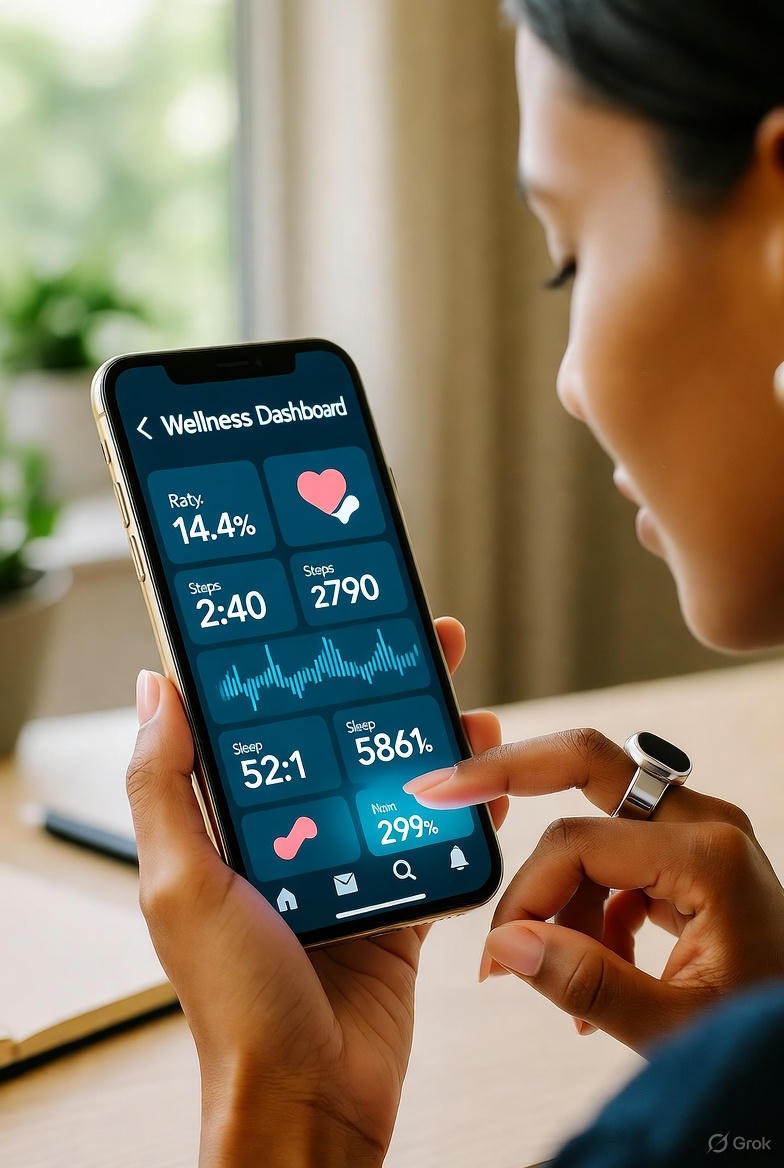
The magic of a modern health-tracking smart ring lies not in its jewelry-grade titanium, but in its ability to decode the subtle language of your body. It translates raw sensor data into actionable insights through a suite of core biometrics. Understanding what these metrics mean is key to moving from passive data collection to active self-knowledge.
Heart Rate (HR): The foundational vital sign. Beyond just beats per minute, your resting heart rate (RHR) is a powerful indicator of cardiovascular fitness and overall stress load. A downward trend in RHR over time typically indicates improving fitness, while an unexplained spike can be an early signal of illness, dehydration, or excessive stress.
Heart Rate Variability (HRV): This is the star metric of physiological resilience. HRV measures the subtle variations in time between each heartbeat. Contrary to intuition, a higher HRV is generally better—it indicates a flexible, responsive autonomic nervous system that can smoothly switch between stress (sympathetic) and recovery (parasympathetic) modes. A low or dropping HRV is a clear flag that your body is under strain, whether from physical overtraining, emotional stress, or impending illness. It’s your body’s most honest whisper for needing rest.
Blood Oxygen Saturation (SpO2): This measures the percentage of oxygen-carrying hemoglobin in your blood. While consistently low SpO2 requires medical attention, nighttime tracking can reveal episodes of SpO2 dips, which may be indicative of sleep-disordered breathing. Monitoring this trend offers profound insights into sleep quality and respiratory health.
Skin Temperature: Continuous basal body temperature tracking, especially nocturnal, reveals subtle patterns. A sustained elevation can precede symptomatic illness, while circadian rhythm dips and rises are tied to sleep-wake cycles. For women, it’s a cornerstone of natural cycle tracking.
Respiratory Rate: The number of breaths per minute, often derived from the rhythmic patterns in the heart rate or PPG signal. An elevated resting respiratory rate, particularly during sleep, can be a sign of physical or psychological stress.
Together, these metrics form a multidimensional picture. Your ring isn’t just counting steps; it’s listening to the conversation between your heart and your brain, gauging your internal balance, and assessing your readiness for the day ahead. This is the language of true wellness, far beyond simple activity counting.
For most of human history, sleep was a black box. We knew we needed it, but its internal architecture was a mystery. Wearable technology, and smart rings in particular, have thrown open the doors to this nocturnal realm, making the invisible visible. This is arguably the most transformative application of personal health tracking, as sleep is the non-negotiable foundation of mental, physical, and emotional health.
Modern devices use a combination of accelerometer data (movement) and precise PPG heart rate/HRV data to algorithmically distinguish between sleep stages: Light, Deep, and REM sleep. Each stage plays a distinct role: Deep sleep is for physical restoration and immune function, REM sleep is for memory consolidation and emotional processing, and Light sleep acts as a bridge. By tracking duration and proportion, you get a first-ever report card on your night’s restoration.
But the insights go far deeper. By analyzing nocturnal HRV and heart rate trends, the ring can quantify sleep quality beyond just staging. It can detect periods of disturbance, measure overall sleep stability, and provide a composite Sleep Score—a single, powerful number that encapsulates the restorative power of your night. To understand what that number truly means and how it stacks up against clinical research, our guide to sleep score standards and what research says is healthy provides essential context.
This data is revolutionary because it moves sleep from a subjective feeling (“I slept okay”) to an objective measurement. You can see the direct impact of an evening coffee, a late workout, a stressful day at work, or a relaxing wind-down routine on your deep sleep percentage. You can identify if you’re chronically short on REM, which might explain brain fog. This empowers truly personalized sleep hygiene. By tracking these metrics over time, the journey of improvement becomes clear and motivating. Seeing your sleep score journey and tracking improvement over months turns abstract goals into a tangible, data-driven path to better rest.
A raw stream of heartbeats and motion data is meaningless noise. The true genius—and value—of modern health wearables lies in the sophisticated algorithms that transform this data into personalized insight. These algorithms are the secret sauce, built on vast datasets and physiological research, and they perform two critical functions: pattern recognition and personal baselining.
First, they clean and interpret the signal. They use machine learning to filter out motion artifact, identify sleep stages with increasing accuracy, and derive complex metrics like HRV from the raw heart rate data. They look for correlations and patterns that would be impossible for a human to spot in a spreadsheet—like the subtle link between a late meal and a dip in deep sleep two hours later.
Second, and more importantly, they learn you. This is the breakthrough of modern platforms. Instead of comparing your metrics to a generic population average (which is often misleading), the system establishes your own personal baseline over a period of typically 2-4 weeks. It learns what your normal resting heart rate is, what your typical HRV range is, and how your body responds to stress and recovery.
All future data is then contextualized against this personal baseline. The system isn’t just telling you your HRV is 45 ms; it’s telling you that your HRV is 15% below your personal rolling average, which is a significant deviation suggesting your body is under strain. This is the shift from health tracking to health sensing. It’s predictive and personal. An elevated resting heart rate and depressed HRV might alert you to a coming cold 24 hours before you feel a sore throat. A consistently depressed sleep score, despite adequate time in bed, becomes a clear signal to investigate factors like stress or environment. The algorithm acts as a 24/7 personal health analyst, flagging what’s meaningful for you specifically.
Building on the foundation of personal baselines, the most advanced wellness platforms synthesize multiple data streams into simple, actionable daily metrics: Stress Scores and Readiness or Recovery Scores. These are the ultimate translation of complex physiology into user-friendly guidance, effectively telling you your body’s daily “budget.”
A Stress Score typically uses a combination of HRV, heart rate, and sometimes skin temperature to quantify your nervous system’s sympathetic (fight-or-flight) load throughout the day. It’s not just measuring emotional stress, but allostatic load—the cumulative physiological cost of everything from work deadlines and tough workouts to poor sleep and inflammatory foods. Watching this score in real-time can be an exercise in profound self-awareness. You might see it spike during your commute, calm during a walk in nature, or remain elevated for hours after a difficult conversation. This biofeedback allows you to connect internal states with external triggers and, crucially, to take micro-actions to down-regulate, like practicing a minute of paced breathing.
The Readiness Score (sometimes called Recovery Score) is usually a morning metric. It synthesizes last night’s sleep data, your nocturnal HRV, resting heart rate, sleep balance, and sometimes previous day’s activity and stress to answer one critical question: What is my body’s capacity to handle stress and perform today? A high score suggests you’re well-recovered and can tackle intense training or demanding cognitive work. A low score is a clear recommendation from your own physiology to prioritize recovery—to choose a gentle walk over a HIIT class, to manage your schedule lightly, to focus on hydration and nutrition.
These scores operationalize the data. They move from “my HRV is low” to “My body is telling me to take it easy today.” They help you align your actions with your actual physiological state, preventing overtraining, burnout, and illness. This is the essence of true restful living—not as passive inactivity, but as the intelligent, data-informed balance between doing and recovering. For those struggling to find this balance in a hectic world, exploring the art of restful living in a fast-paced world offers a foundational philosophy, while understanding how to balance productivity with restful living provides practical strategies.
The most profound promise of continuous, passive biometric monitoring lies in its potential as a silent guardian—a system capable of detecting deviations that signal significant health events long before symptoms become obvious. This is where the line between wellness gadget and preventive health tool begins to blur in remarkable ways.
We’ve already seen glimpses of this potential. Users of devices with continuous atrial fibrillation (AFib) detection have had potentially life-strokes averted when their watch alerted them to an irregular heart rhythm they couldn’t feel. This is a direct, dramatic extension of the Holter monitor principle into daily life. But the predictive horizon extends much further.
Research and real-world data are beginning to show patterns. Sustained, unexplained elevations in resting heart rate and decreases in HRV can be precursors to infections like the common cold or even COVID-19. Subtle, persistent increases in nocturnal skin temperature can also flag inflammatory processes. Changes in respiratory rate patterns during sleep can point towards emerging respiratory or cardiovascular issues. By establishing a deeply understood personal baseline, these small shifts become highly visible red flags.
The smart ring, with its superior nocturnal data fidelity, is uniquely positioned for this guardian role. While you sleep, your body is in its most unmodulated, honest state, free from the noise of conscious activity. It’s during these hours that early physiological whispers of imbalance are clearest. A platform that tracks these core vitals night after night builds the most sensitive possible baseline from which to detect anomalies.
This shifts the healthcare model from reactive to pre-emptive. Instead of visiting the doctor when you “feel sick,” you might get a notification suggesting rest and hydration because your biomarkers indicate your body is fighting something. You could be prompted to check your blood pressure because your nocturnal pulse wave patterns have changed. This is the frontier of digital health: not just tracking fitness, but creating an early-warning system for your most valuable asset—your health.

Data alone is sterile. Its true power is unleashed only when it escapes the app and influences your daily decisions in the real world. This is the stage of practical integration, where biometric insights become the compass for lifestyle, environment, and habit formation. The most successful users of health technology are those who learn to have a conversation with their data.
Nutrition & Timing: You might discover that a meal within three hours of bedtime consistently truncates your deep sleep. Or that alcohol, while it may help you fall asleep, devastates your HRV and REM sleep. This evidence empowers you to experiment and optimize—perhaps shifting dinner earlier or choosing a different evening beverage.
Exercise & Recovery: Your Readiness Score dictates not just if you train, but how. A low score might guide you to a yoga session or a walk instead of heavy weights. Post-workout, you can see if your chosen recovery protocol (contrast shower, foam rolling, protein shake) actually moves your HRV back toward baseline faster. This turns training from a rigid schedule into a dynamic dialogue with your body.
Stress Management: Seeing a real-time Stress Score climb during a work meeting makes the abstract concrete. It prompts immediate, evidence-based action: a two-minute breathing exercise, a walk around the block, or five minutes of mindfulness. Over time, you learn which of your chosen de-stressing techniques (meditation, nature, reading) most effectively lower your physiological stress load, as verified by your biometrics.
Environmental Optimization: Your sleep data is the ultimate auditor of your bedroom environment. You can run experiments: Does wearing a sleep mask improve your sleep score? Does lowering the thermostat by two degrees increase deep sleep? Does using a white noise machine reduce nighttime disturbances? The data provides clear feedback, allowing you to design a restful home environment room-by-room based on what your physiology actually needs, not just on generic advice.
This integration fosters a powerful feedback loop. You make a change, you see the result in your data. This reinforces positive habits and creates a deep, intrinsic motivation to live in greater harmony with your body’s needs. It’s the cornerstone of a sustainable, restful living lifestyle. For those starting this journey, exploring 15 restful living habits that transform your energy is an excellent primer, and learning about the restful living morning routine to start your day right can build a positive daily framework.
The smart ring on the market today is just the opening chapter. The form factor is a perfect platform for the next wave of biosensing technologies, promising to peel back even deeper layers of our physiological state. Research labs and forward-thinking companies are actively developing sensors that could soon turn the ring into a comprehensive, clinical-grade health dashboard.
Continuous Core Body Temperature: Beyond skin temperature, new sensor arrays and algorithms aim to non-invasively estimate core body temperature trends. This could revolutionize fertility tracking, illness prediction, and metabolic health monitoring with unprecedented convenience.
Non-Invasive Blood Glucose Trends: While a direct, clinical-grade reading without a needle remains a holy grail, several approaches using advanced spectroscopy (like Raman or NIR spectroscopy) are in development. A ring that could provide trend data on glucose fluctuations would be transformative for metabolic health, pre-diabetes management, and nutrition optimization for millions.
Advanced Hydration & Electrolyte Status: By analyzing the electrical properties of the skin (bioimpedance) at multiple frequencies, a device could estimate fluid balance and electrolyte levels, providing crucial insights for athletes, those in hot climates, or individuals prone to dehydration.
Blood Pressure Trends: While cuffless, calibration-free blood pressure remains a significant challenge, some methods using Pulse Transit Time (PTT)—the time it takes a pulse wave to travel between two points—show promise for tracking relative changes in blood pressure from a personal baseline.
Stress Hormone Biomarkers: The future may see the integration of microfluidic channels that can analyze biomarkers like cortisol from minute amounts of sweat (secreted on the palm side of the finger). This would provide a direct, chemical window into stress response.
The integration of these sensors will further blur the line between consumer wellness and medical monitoring. The ring of the future could provide a holistic panel of data that today would require a blood draw, a urine test, and a visit to a clinic. It will empower individuals with an even richer, more nuanced understanding of their health, making personalized prevention not just a concept, but an everyday, wearable reality. This continuous stream of deeper data will only heighten the importance of the restful living philosophy, as we learn to interpret and act upon these complex signals. For a scientific grounding in why this balance is so crucial, the science behind restful living and why downtime matters offers essential insights.
The true transformative potential of health tracking technology extends far beyond the silo of individual benefit. When anonymized and aggregated, the continuous, real-world data from millions of devices creates a living, breathing map of human health at a population scale—a resource previously unimaginable to epidemiologists and public health officials. This shift from sparse, survey-based data to dense, passive biometric data streams is poised to revolutionize how we understand and manage community health.
Consider the traditional model: health trends are spotted weeks or months after the fact, relying on lagging indicators like hospital admissions, prescription sales, or voluntary symptom reports. Now, imagine a scenario where a subtle, synchronized rise in resting heart rate and a drop in average sleep duration is detected across a specific city ZIP code over a 48-hour period. This anomalous physiological signature could serve as a pre-symptomatic, real-time alert for a brewing outbreak of influenza or an environmental stressor like poor air quality. Researchers are already exploring this concept, using wearable data to predict flu trends more accurately and faster than the CDC’s established surveillance methods.
This big data ocean also holds the key to personalized medicine on a grand scale. By analyzing patterns across vast, diverse populations, algorithms can identify what “normal” truly looks like for different ages, genders, ethnicities, and health conditions. They can discover previously unknown correlations—perhaps linking specific HRV patterns to resilience against certain mental health challenges, or identifying nocturnal SpO2 trends that are predictive of metabolic health issues years before diagnosis. This is research conducted in the wild, capturing the nuance of daily life that sterile lab conditions can never replicate. For individuals, this means future health recommendations won't be based on a generic 40-year-old male, but on a cohort that matches your precise biometric phenotype and lifestyle.
However, this powerful future rests on a foundation of robust privacy, security, and ethical data governance. The trust that allows this ecosystem to exist is fragile. Users must have absolute clarity and control over how their data is used, who benefits from its insights, and how it is protected. The industry that succeeds will be the one that treats this biometric data not as a commodity to be sold, but as a sacred trust to be stewarded for the collective good, with transparency and user agency at its core.
The smart ring does not exist in a vacuum. Its ultimate utility is realized when it becomes the central, authenticating biometric hub in a wider ecosystem of connected wellness. This is the vision of the seamlessly integrated health-aware environment, where your physiological state gently modulates the world around you to support your wellbeing.
The Smart Home Symphony: Imagine your ring detecting the first signs of deep sleep as you drift off, signaling your smart lights to complete a gradual fade to darkness and your thermostat to dip to your ideal sleeping temperature. Upon sensing your elevated morning heart rate and movement, it could trigger a gentle, simulated sunrise with your lights and start your coffee maker. If your stress score spikes while you work in your home office, the ambient lighting could automatically shift to a calmer hue, and your smart speaker might suggest a brief mindfulness exercise. This is about designing restful living spaces for calm and restoration, where technology acts as an intuitive partner in crafting your environment.
Fitness and Coaching Synergy: Your ring’s Readiness Score can automatically sync to your fitness apps and smart gym equipment. A low score could prompt your Peloton to recommend a “Recovery Ride” instead of a Power Zone Max class. Your personal trainer, with your permission, could view your weekly strain and recovery balance to tailor your program dynamically, preventing overtraining. The ring provides the ground truth of your body’s response, making all other fitness tools smarter and more responsive.
Clinical Connectivity and Remote Patient Monitoring (RPM): This is where the journey from the hospital to your finger comes full circle. With user consent, de-identified or specific biometric streams can be shared securely with healthcare providers. For patients with hypertension, congestive heart failure, or COPD, continuous trends in HRV, resting heart rate, SpO2, and respiratory rate offer clinicians a powerful window into their status between visits. A concerning trend can trigger a timely telehealth check-in, potentially preventing an ER admission. For post-operative patients, monitoring recovery at home becomes quantifiable and safe. The ring becomes a lightweight, dignified tool for high-fidelity remote care.
This interconnected future turns the smart ring from a data source into a command center for holistic health. It ensures the insights it generates don’t just live in an app, but actively shape your physical and digital environments, your fitness regimen, and even your medical care, creating a truly responsive and supportive ecosystem for thriving.
With great data comes great responsibility—the responsibility to interpret it wisely. The flood of metrics, scores, and alerts can, paradoxically, become a new source of anxiety, a condition sometimes called “orthosomnia” (the unhealthy preoccupation with perfect sleep data) or more broadly, “wearable anxiety.” The critical next step in this journey is cultivating a healthy, empowered relationship with your own numbers.
The first principle is to trend over truth on any single day. No single night’s sleep score or day’s readiness metric is a definitive verdict on your health. Biometrics are inherently variable, influenced by a myriad of transient factors. The power is in the pattern over weeks and months. A low recovery day is not a failure; it’s a valuable data point from your body requesting rest. It’s crucial to avoid turning health optimization into a punitive daily report card.
Second, context is king. The algorithm provides the “what,” but you are the expert on the “why.” Your job is to be a detective. If your HRV is plummeting, you cross-reference your lifestyle log: Was it that intense workout? The difficult conversation with your boss? The extra glass of wine? The poor sleep two nights in a row? This detective work builds self-knowledge. You learn your unique stressors and recoverers. This process is at the heart of intelligent self-care and prevents you from becoming a slave to a number without understanding its origin.
Finally, know the limits. Consumer wearables are phenomenal wellness and prevention tools, but they are not medical devices. A low SpO2 reading on your ring should prompt a confirmatory check with a medical-grade pulse oximeter and potentially a call to your doctor, not a self-diagnosis. They are designed for detecting trends and deviations from your normal, not for diagnosing disease. Using them as a partner in your health journey, while maintaining a clear line for when to seek professional clinical evaluation, is the balanced path. For those finding this balance difficult, understanding common restful living mistakes that keep you wired and tired can help identify behaviors that might be skewing your data and your perception of it.
As we willingly adorn ourselves with sensors that record our most intimate biological rhythms, we enter a new frontier of data privacy. The data generated isn’t just about how many steps you took; it’s a continuous readout of your autonomic nervous system, a fingerprint of your physiological emotional responses, and a timeline of your vulnerabilities. The question of who owns, controls, and benefits from this data is the most critical ethical challenge of the wearable health revolution.
Biometric Data as Unique Identifier: Unlike a password or credit card number, your heartbeat pattern, your sleep architecture, and your HRV trends are fundamentally you. They cannot be changed if compromised. This makes the security protocols of the companies that collect this data paramount. Encryption must be end-to-end, and storage must be anonymized and aggregated wherever possible to dissociate the sensitive data from your personal identity.
The Business Model Dilemma: How a wearable company makes money dictates its relationship with your data. A model based primarily on hardware sales aligns interests better with user privacy—you buy the ring, you own your data. A model that relies on selling aggregated insights, advertising, or subscription services for advanced analytics creates more complex incentives. Transparency from companies about their data practices, expressed in clear, simple language—not buried in a terms-of-service novel—is non-negotiable.
User Sovereignty and Portability: True ownership means you should have the right to access your raw data, to download it, to share it selectively with whomever you choose (a doctor, a coach, a researcher), and to have it completely deleted from a company’s servers upon request. Frameworks like HIPAA in the U.S. provide some protection when data is shared with covered entities (like your doctor), but the rules are murkier in the direct-to-consumer wellness space. Advocating for and supporting companies that prioritize user data sovereignty is a powerful consumer choice.
This new paradigm demands a new kind of literacy—biometric data literacy. It requires us to ask hard questions before we wear a device: Where does my data go? How is it used? Who can access it? What are my rights? The future of this transformative technology depends on building it upon a foundation of ironclad trust, where the user is not the product, but the privileged owner of their own physiological story.

For all their consumer popularity, health wearables and smart rings largely exist in a parallel universe to traditional, clinic-based healthcare. The doctor rarely sees your sleep score, and your readiness metric isn’t in your Electronic Health Record (EHR). Bridging this gap is essential to realizing the full preventive potential of this technology and moving towards a truly collaborative model of care.
The Current Disconnect: The primary barrier is clinical validation and information overload. A physician, bound by medical-legal responsibility, cannot act on data from a device not cleared as a medical tool. Furthermore, a raw stream of months of heart rate data is clinically useless; it’s noise. What clinicians need are curated insights and actionable summaries. The industry’s challenge is to develop standardized, clinically-relevant reports that highlight significant trends and deviations—for example, a two-page “Physician’s Summary” showing a 30-day trend of rising resting heart rate alongside declining sleep efficiency, with flags for nights of significant SpO2 dips.
The Proactive Patient Paradigm: The immediate opportunity lies with empowered patients. You can bring your data to your annual physical or specialist appointment as a conversation starter. Instead of saying “I feel tired,” you can say, “My wearable data shows my average sleep score has been 20% below my baseline for three months, and my resting heart rate has trended up by 8 BPM. Can we explore possible causes?” This transforms you from a passive recipient of care to an engaged, data-literate partner. This mindset is a core component of the restful living philosophy of shifting from doing to being—from just experiencing fatigue to investigating its physiological roots.
The Future of Integrated Care: Forward-thinking healthcare systems and insurers are beginning to pilot programs that provide validated devices to patients with chronic conditions like diabetes, hypertension, or heart failure. The goal is to reduce costly hospital readmissions through better at-home monitoring. In this model, the data flows seamlessly into a clinician’s dashboard, with alert thresholds set for intervention. This is the logical endpoint: your everyday wellness device acting as a sentinel for your chronic disease management, endorsed and monitored by your care team.
Closing this loop will be a slow process of validation, standardization, and changing clinical workflows. But the payoff is a healthcare system that is less about fixing breaks and more about maintaining wellness, where continuous, real-world data empowers both the individual and the professional to make smarter, earlier decisions.
In a fascinating paradox, the most advanced health technology can lead us back to the most ancient of wisdoms: listening to our bodies. For generations, we’ve been culturally conditioned to override bodily signals—to push through fatigue, ignore hunger cues, and numb stress with distraction. Wearables, at their best, don’t replace this internal sense; they recalibrate and validate it.
Biofeedback and Re-learning Sensation: Many people have lost the ability to connect the feeling of “stress” with its physiological correlate. When you see your stress score climb in real-time during a tense meeting, and then watch it fall as you take five deep breaths, you are undergoing powerful operant conditioning. You are learning, viscerally, what stress feels like in your body and that you have agency to modulate it. Over time, you may no longer need to check the app; you’ll recognize the sensation and automatically engage your breathing technique. The technology becomes a training wheel for innate body awareness. This is a practical application of how restful living reduces chronic stress and burnout, using data as a guide to rebuild a healthier relationship with your own nervous system.
From External Motivation to Intrinsic Understanding: Early fitness trackers relied on external gamification (badges, social competition). The evolution to readiness and recovery scores fosters intrinsic motivation—the desire to feel in balance, to honor your body’s needs, to perform optimally because you understand your own rhythms. The goal shifts from “burning 500 calories” to “achieving a state of recovered readiness that allows me to be fully present and energetic for my family and work.”
Preventing Digital Hypochondria: This renewed body awareness is also the antidote to data anxiety. As you become more attuned, you start to feel the differences that the data confirms. You wake up feeling refreshed and note your high sleep score. You feel run down and see your HRV is low. This correlation builds trust—both in your own perceptions and in the data as a reflection of them, not an external judge. You use the data to explain your feelings, not to dictate them.
The pinnacle of using this technology is reaching a point where it becomes occasional reference, not a constant crutch. It serves as a check-in system, a discovery tool for new correlations, and a guardrail during times of high stress or training. But your primary guide becomes your own honed, validated, and trusted sense of self—a self that you have come to understand in unprecedented depth through the silent partnership with the device on your finger.
With a market burgeoning with options—smartwatches, fitness bands, smart rings, even smart clothing—selecting the right health-tracking device is crucial for sustainable, long-term adoption. The best device is not the one with the most features, but the one you will wear consistently and whose insights you will actually use. This choice hinges on understanding your personal goals, lifestyle, and aesthetic preferences.
The Form Factor Decision: Ring vs. Wrist vs. Other
Key Selection Criteria:
Ultimately, the right device seamlessly integrates into your life, becoming a background partner in your health journey. It should reduce friction, not create it. For those seeking a tool specifically for mastering recovery and sustainable energy, the discreet, data-rich smart ring is often the definitive choice, embodying the principle that the best technology is the kind you forget you’re using, even as it works tirelessly to help you remember what your body needs.
As we stand at the convergence of miniaturized sensors, powerful algorithms, and a growing cultural hunger for wellbeing, the long-term vision comes into focus. This is not merely a story of cooler gadgets; it is the blueprint for a systemic shift from a sick-care system to a true health-care system, built on a foundation of personal empowerment and prevention.
Democratizing Health Literacy: Continuous biometrics act as a universal translator for the body’s language. They make abstract concepts like “autonomic nervous system balance,” “circadian rhythm,” and “physiological stress” tangible and personal. Over time, this fosters a population that is more literate in the fundamentals of their own biology. People will understand why prioritizing restful living improves sleep quality naturally, not as a hack, but as a biological imperative. They will see the direct line between evening habits and morning readiness, creating powerful incentives for sustainable lifestyle change.
Redefining the Doctor-Patient Relationship: In this future, the annual physical is transformed. Instead of a snapshot, your clinician reviews a year of continuous trend data—your sleep stability, stress response patterns, activity-recovery balance, and biomarker trends. The conversation shifts from “How are you feeling?” to “I can see from your data that your recovery resilience dipped in Q3; let’s correlate that with your life events and lab work to build a strategy.” The clinician becomes a data interpreter and strategy co-pilot for your long-term health span, not just a fixer of acute problems.
A New Social Determinant of Health: Data Access: We must be vigilant that this empowering technology does not become a new vector for inequality. The vision only holds if access to reliable, insightful health tracking is broad and equitable. This means affordable options, integration into employer wellness and public health programs, and designs that serve diverse populations. The goal is to close the awareness gap, not widen the health gap with a digital divide.
The end game is a culture where each individual is the CEO of their own health, equipped with real-time dashboards and predictive insights. Where communities can spot and mitigate health threats collectively and proactively. Where the healthcare system’s resources are freed to focus on complex care because the fundamentals of maintenance are expertly managed by empowered individuals. The humble smart ring, and the technology it represents, is a key that unlocks this future—a future where health is not a periodic destination, but a continuous, conscious, and optimized journey.
At the heart of all this data—the sleep scores, HRV readings, and readiness metrics—lies a single, fundamental biological principle: adaptation occurs during recovery, not stress. This is the cornerstone of exercise physiology, neurobiology, and systems theory. We stress the body (through exercise, cognitive work, emotional labor), and it is during the subsequent period of rest that it rebuilds stronger, more resilient, and more efficient. Health tracking technology has made this invisible process visible, quantifying what was once a vague notion of "rest."
The Physiology of Supercompensation: After a workout, your muscle fibers have micro-tears, your glycogen stores are depleted, and your nervous system is fatigued. It's during sleep and true rest that human growth hormone is released, protein synthesis repairs tissue, and energy stores are replenished—a process called supercompensation. Your wearable shows this as a dip in HRV and an elevated resting heart rate post-exertion, followed by a gradual return to and often a "supercompensatory" overshoot above your baseline if recovery is adequate. Ignoring this data and training again in the deficit phase leads to overtraining, injury, and immune suppression.
Neural Pruning and Cognitive Restoration: The brain follows the same rule. Focused cognitive work creates metabolic waste and neural fatigue. Sleep, particularly deep NREM sleep, is when the brain's glymphatic system flushes out toxins like beta-amyloid. REM sleep is when neural connections from the day are pruned and strengthened, solidifying learning and emotional processing. A consistently low sleep score isn't just about tiredness; it's an indicator of impaired metabolic cleanup and memory consolidation. For a deeper understanding of this critical biological process, the science behind restful living explains why this downtime matters for both body and mind.
The Modern Recovery Deficit: Our culture has glorified the "hustle" and demonized idleness. Yet, biologically, we are not machines. Continuous output without input leads to system failure—burnout. Wearables provide the irrefutable evidence our bodies need to counter this cultural narrative. They show that a "lazy" day after a stressful project is not unproductive; it's essential for restoring autonomic balance and cognitive capacity. This is the essence of moving from a mindset of constant doing to one that values strategic renewal, embracing the restful living philosophy of less hustle, more health.
By quantifying recovery, smart rings and advanced wearables force us to reckon with this non-negotiable biological truth. They turn rest from a guilty pleasure into a measured, optimized component of high performance and long-term health. They prove that the path to greater capacity is not through relentless strain, but through the intelligent rhythm of stress and surrender.
One of the most liberating insights from long-term health tracking is the dismissal of the universal ideal. The data makes it abundantly clear: there is no single "perfect" HRV number, sleep duration, or readiness score that everyone should hit. Your physiology is as unique as your fingerprint, and the true power of tracking lies in discovering your own optimal ranges.
Genetic and Biological Blueprints: Your baseline HRV is heavily influenced by age, genetics, and overall cardiac health. A 25-year-old endurance athlete might have an average HRV of 80ms, while a healthy, fit 50-year-old might have an average of 40ms. Both can be equally "healthy" within their own context. Comparing your absolute numbers to someone else's is not just meaningless—it can be actively demoralizing and misleading.
Lifestyle Phenotype: Beyond genetics, your life shapes your numbers. A night-shift nurse will have a radically different circadian temperature rhythm than a school teacher. A parent of young children will have different sleep fragmentation patterns than a single person. Your device learns your unique "phenotype"—the expression of your biology within your specific life context. The goal isn't to force your data into a generic ideal, but to optimize within the framework of your own life to feel and function at your best.
The Principle of Dynamic Baselines: Your personal baseline isn't static either. It shifts with age, changes in fitness, and major life phases (e.g., pregnancy, menopause, a new training block). A good platform will show you your range (e.g., "Your typical HRV is between 32 and 48ms") rather than a single line. A value within your range is normal for you. A value outside of it, especially if sustained, is a meaningful signal worth investigating.
This understanding is crucial for avoiding anxiety and using the technology effectively. The question shifts from "Is my score good?" to "Is my score normal for me right now?" and "What moves my score within my own range?" This personalized frame is empowering. It allows a new mother to track her recovery without comparing to her pre-baby data, or an older adult to focus on stability and trends rather than the numbers they had at 25. It makes health tracking a personal journey of self-discovery, not a competition.
While health is deeply personal, it is also powerfully social. We are influenced by the habits and norms of our communities. The next evolution of health wearables moves beyond the individual dashboard to foster positive, supportive social connections that enhance accountability and motivation in a healthy, non-competitive way.
Positive Peer Support: Imagine a private group—a close circle of friends, a family, or a fitness team—that opts to share certain anonymized wellness trends. You're not comparing daily scores, but you might see that your entire friend group's collective sleep duration dipped during a stressful work week, sparking a conversation about setting better boundaries. Or a walking challenge based on readiness-adjusted goals (where steps are encouraged only if your recovery score supports it) could promote smarter, more sustainable activity. This shifts the social dynamic from "who got the most steps" to "how well are we all supporting our recovery?"
Community Benchmarking (Anonymized): At a macro level, users can opt-in to contribute anonymized data to see how their trends compare with aggregated, similar cohorts (e.g., "People of your age and activity level in your timezone"). This can provide helpful context. Seeing that your sleep latency is significantly higher than your cohort's average might motivate you to experiment with restful living evening rituals that prepare you for sleep. This is benchmarking for self-improvement, not competition.
Shared Journeys for Specific Goals: For people managing similar health conditions or goals (e.g., training for a first marathon, managing stress through meditation), connected platforms can create a sense of shared journey. Sharing strategies that improved a metric, or offering support when someone's data shows a struggle, builds a community of collective wisdom. This is especially powerful for habits that benefit from social reinforcement, like maintaining a consistent wind-down routine or getting morning sunlight.
The key to a healthy social dimension is opt-in, control, and positive framing. It must never feel like surveillance or shaming. When done well, it harnesses our innate social nature to create environments where healthy choices are normalized, supported, and celebrated, making the path to wellbeing feel less solitary and more like a shared human endeavor.
As this technology shapes the future of health, we must confront its ethical horizons with clear eyes. The algorithms that interpret our data, the design of the devices, and their market availability carry the risk of exacerbating existing health disparities if not thoughtfully addressed.
Algorithmic Bias: AI algorithms are trained on datasets. If the initial training data for a sleep staging algorithm is predominantly from young, male, healthy populations, it may be less accurate for women, older adults, or people with certain health conditions. If a stress score model is built without cultural context for different expressions of physiological arousal, it could misread norms. Continual auditing of algorithms for bias across genders, ethnicities, ages, and body types is an ethical imperative for the industry. Diversity in training data is not a buzzword; it's a requirement for clinical-grade utility.
The Digital Determinant of Health: Access to insightful health technology currently correlates strongly with socioeconomic status. This creates a "digital determinant of health"—where the wealthy gain predictive insights and preventive advantages, while others are left with only reactive, symptom-based care. Bridging this gap requires innovative thinking: subsidy programs, integration into public health initiatives, employer-sponsored wellness plans, and the development of reliable, lower-cost options. The goal must be to democratize this preventive power.
Informed Consent and Psychological Impact: Users must truly understand what they are consenting to. Beyond data privacy, there's the matter of psychological impact. Is a user, perhaps prone to health anxiety, prepared for the potential stress of constant monitoring? Companies have a responsibility to design experiences that educate and empower without inducing fear. Features like "rest mode" or the ability to hide certain metrics temporarily can help users maintain a healthy relationship with their data.
Navigating these ethical waters is as important as the technological breakthroughs. The promise of this technology—a fairer, more proactive, and personalized health future—can only be realized if it is built and distributed with equity, accountability, and profound respect for human diversity at its core.
We have traversed the entire arc: from hospital machines to fingertip sensors, from episodic data to continuous streams, from reactive care to proactive empowerment. The destination of this journey is not a state of cyborg optimization, but something more profoundly human: a life of restful living. This is the synthesis of cutting-edge technology and timeless wisdom—using data not to drive relentless productivity, but to reclaim our natural rhythms of exertion and ease.
Restful living, as illuminated by biometric data, is the practice of aligning your daily choices with your body's objective needs for recovery. It's understanding that true productivity, creativity, and health emerge from a foundation of deep restoration. It is the antithesis of burnout culture. For those looking to begin this integration, exploring restful living for busy professionals through micro-recovery throughout the day offers a practical starting point.
Your smart ring becomes the compass for this lifestyle. It tells you when to push and when to pull back. It validates the importance of practices humans have intuitively known for millennia but that modern life has bulldozed: the sanctity of sleep, the restorative power of nature, the need for true leisure, and the wisdom of listening to the body's subtle signals. For instance, the data underscores why getting outside more supports restful living by regulating circadian rhythms and lowering stress hormones.
This is a holistic approach. It's about creating a restful home environment that supports sleep, crafting morning and evening rituals that bookend your day with calm, and finding peace even in demanding life stages, like restful living for parents finding peace in the chaos. It proves that this philosophy is accessible to all, including through zero-cost wellness tips for restful living on a budget.
The technology, therefore, does not replace intuition; it refines it. It gives you the evidence to defend your rest, to prioritize your long-term vitality over short-term output, and to build a life where health is not an occasional goal, but the continuous context for everything you do.
The story of health tracking technology is, ultimately, a story of agency. It is the story of taking the most critical information about our own existence—once locked away in hospital machines and interpreted only by experts—and placing it directly into our own hands. The journey from the ICU to your finger is a journey of democratization, of illumination, and of profound personal empowerment.
We began with life-or-death monitoring in sterile rooms and followed the path of miniaturization that untethered us. We witnessed the fitness tracker boom that made data desirable and the rise of the smart ring that made it accurate and unobtrusive. We decoded the biometric language of HRV, SpO2, and sleep stages, and saw how algorithms turn noise into personalized insight. We explored how this data can integrate with our homes, our doctors, and our communities, and we confronted the critical ethical frameworks needed to guide this powerful tool.
The throughline is clear: we are moving from a paradigm of episodic, symptom-driven care to one of continuous, data-informed flourishing. The smart ring on your finger is more than a piece of tech; it is a lens that brings the invisible processes of your life into focus. It allows you to write a new narrative for your health—one based on prevention, understanding, and the intelligent balance of effort and ease.
This is not about achieving a perfect score. It is about engaging in a conscious, compassionate dialogue with your own body. It is about having the information to make choices that align with your deepest wellbeing. The future of health is not something that happens to you in a doctor's office once a year. It is the story you live and shape every day, with every breath, every heartbeat, and every night of rest—now heard, measured, and understood as never before. The power to author that story is now, quietly and continuously, at your fingertips.
Your Trusted Sleep Advocate: Sleep Foundation — https://www.sleepfoundation.org
Discover a digital archive of scholarly articles: NIH — https://www.ncbi.nlm.nih.gov/
39 million citations for biomedical literature :PubMed — https://pubmed.ncbi.nlm.nih.gov/
Experts at Harvard Health Publishing covering a variety of health topics — https://www.health.harvard.edu/blog/
Every life deserves world class care :Cleveland Clinic - https://my.clevelandclinic.org/health
Wearable technology and the future of predictive health monitoring :MIT Technology Review — https://www.technologyreview.com/
Dedicated to the well-being of all people and guided by science :World Health Organization — https://www.who.int/news-room/
Psychological science and knowledge to benefit society and improve lives. :APA — https://www.apa.org/monitor/
Cutting-edge insights on human longevity and peak performance:
Lifespan Research — https://www.lifespan.io/
Global authority on exercise physiology, sports performance, and human recovery:
American College of Sports Medicine — https://www.acsm.org/
Neuroscience-driven guidance for better focus, sleep, and mental clarity:
Stanford Human Performance Lab — https://humanperformance.stanford.edu/
Evidence-based psychology and mind–body wellness resources:
Mayo Clinic — https://www.mayoclinic.org/healthy-lifestyle/
Data-backed research on emotional wellbeing, stress biology, and resilience:
American Institute of Stress — https://www.stress.org/


