


HRV Tracking Made Easy With Automated Baseline Calculations
The comfort of smart rings enabling 24/7 HRV monitoring.
The comfort of smart rings enabling 24/7 HRV monitoring.
%402x.svg)
In the quiet hours before dawn, as the world sleeps, a sophisticated conversation is taking place inside your body. It’s not conducted with words, but with the subtle, millisecond variations between each beat of your heart. This silent language is Heart Rate Variability (HRV), and for decades, understanding it required the mind of a cardiologist and the patience of a saint. It was a metric trapped in labs, a confusing number that seemed to contradict intuition—a higher variation, it turns out, signals a healthier, more resilient nervous system.
Today, that profound conversation is being translated in real-time, on your wrist or finger, by devices like the Oxyzen smart ring. But with translation comes a new challenge: context. A single HRV number is like hearing one word from a complex symphony. Is today’s 45 ms good? Was yesterday’s 65 ms better? The true power of HRV isn’t in the snapshot; it’s in the trend. It’s in knowing your unique, personal baseline—the stable rhythm from which all deviations speak.
This is where the old paradigm of tracking fails and a new era of intelligent health insight begins. Manual calculations, guesswork, and one-size-fits-all charts are obsolete. The frontier of personal wellness is automated baseline calculation—a seamless, behind-the-scenes technology that learns your body’s unique language, establishes your personal norm, and instantly highlights what’s meaningful. It turns chaotic data into a clear, actionable story about your stress, recovery, and overall readiness.
This article is your deep dive into that revolution. We will demystify HRV from its biological roots to its modern application, but our core mission is to explore the transformative leap of automated baselines. We'll uncover why this feature is the missing link between simply tracking data and genuinely understanding your body, making advanced health insight accessible, personal, and profoundly easy for everyone.
To appreciate the breakthrough of automated baselines, we must first understand the magnificent signal they are designed to interpret. Heart Rate Variability is not about your heart rate itself—the number of beats per minute. It is about the time interval between those beats, specifically the R-R intervals measured in milliseconds. If your heart beat like a monotonous metronome at exactly 60 beats per minute (1000 ms between each beat), your HRV would be zero. But a healthy heart does something far more sophisticated: it dances.
This dance is conducted by your autonomic nervous system (ANS), the dual-channel autopilot that regulates your involuntary bodily functions. The ANS has two primary branches engaged in a constant, dynamic tug-of-war:
HRV is the quantitative expression of this tug-of-war. A high HRV indicates a robust, adaptable system where the PNS has strong influence and your body can smoothly transition between stress and recovery. It’s a sign of good cardiovascular health, fitness, and resilience. A low HRV suggests your SNS is dominant—your body is under strain, which could be from physical overtraining, chronic psychological stress, illness, or poor sleep.
Think of it like a seasoned driver navigating a winding road. They don’t slam the gas or brake; they make countless micro-adjustments to maintain control and speed. HRV is the measurement of those micro-adjustments in your heart. A driver who can make smooth, frequent adjustments (high HRV) is in better control than one who can only stomp on one pedal at a time (low HRV).
The implications are vast. Research links higher HRV to:
For a deeper exploration of how biometric tracking devices capture this and other vital data, our article on how sleep trackers actually work provides a comprehensive technological breakdown.
Yet, for all its power, HRV is notoriously personal and variable. This leads us to the central problem that has, until now, limited its utility for the everyday individual.
You wake up, check your smart ring app, and see your HRV is 52 ms. The immediate question arises: Is that good?
The instinct is to compare it to a friend’s number, a population average, or a chart you found online. This is the most common—and most critical—mistake in interpreting HRV. There is no universal "good" HRV score. What’s stellar for one person could be a warning sign for another.
Consider two fictional individuals:
If Sam compared their 45 ms to Alex’s 95 ms, they might feel discouraged, despite being perfectly healthy for their own physiology. Conversely, if Alex’s HRV dropped to 50 ms, it would be a massive red flag indicating severe fatigue or illness, while for Sam, it might be a normal day.
This is the HRV Baseline Problem. Your HRV is influenced by a constellation of fixed and variable factors:
Your personal baseline is the stable, central tendency of your HRV amidst these influences—your body’s unique "set point" of resilience under normal conditions. Without knowing this baseline, a daily HRV reading is an isolated data point floating in space, devoid of context. A 10% drop from your baseline is profoundly meaningful, whether your baseline is 40 or 100. A single number, on its own, is not.
Traditionally, establishing this baseline required weeks of consistent manual tracking, charting, and calculation to find an average, all while your life—and thus your data—was in constant flux. It was a tedious, error-prone process that few had the time or expertise to complete. This barrier is what kept HRV in the realm of biohackers and elite athletes, leaving everyday wellness seekers with more data but no clearer understanding.
The solution, and the core of modern HRV utility, lies in letting technology solve this problem for you.
Automated baseline calculation is the intelligent, algorithmic heart of a modern biometric tracking system. It is the feature that transforms a raw data stream into personalized insight. In essence, it is software that continuously analyzes your historical HRV data (typically over a rolling 2- to 8-week period) to statistically determine your normal range.
Think of it as a brilliant personal statistician working tirelessly in the background of your app. It doesn't just calculate a simple average. A sophisticated system will:
This automation solves the core dilemmas of HRV tracking:
This technology is what makes devices like the Oxyzen smart ring not just trackers, but true health companions. To see how this integrates into a full picture of nightly recovery, you can explore our guide on what your deep sleep numbers should look like.
With a stable, personalized baseline established, the symphony of your nervous system suddenly becomes comprehensible. The daily, weekly, and monthly fluctuations in your HRV are no longer random noise—they are clear, meaningful signals. Automated baselines act as the filter that separates the signal from the noise, translating data into actionable wisdom.
Here’s how this translation works in practice:
1. Detecting Acute Stress and Recovery Needs:
Your baseline creates a "recovery zone." When you wake up with an HRV significantly above your baseline, it’s a strong indicator that your body is well-recovered and resilient. It’s a green light for intense training, important meetings, or demanding creative work. When your HRV dips 15-20% or more below your baseline, it’s a clear red flag. Your body is signaling accumulated stress—which could be physical (from a hard workout two days prior), psychological, or immunological. This is your cue to prioritize rest, opt for a gentle walk instead of a HIIT session, and focus on recovery habits. This direct feedback loop helps you align your daily actions with your body’s actual capacity, preventing burnout and injury.
2. Validating Lifestyle Interventions:
One of the most empowering aspects of automated baselines is the ability to run personal experiments. Because the system tracks trends relative to your norm, you can see the tangible impact of your choices.
3. Providing Early Warning Signs:
Perhaps the most valuable function is early detection. A sustained downward drift in your HRV baseline, over a week or more, can be an early warning of overtraining, creeping chronic stress, or the onset of illness—often before you consciously feel symptoms. This “check engine” light for your body gives you the chance to intervene early: dial back intensity, double down on sleep, manage stressors, and support your immune system. It turns reactive healthcare into proactive self-care.
This journey from raw data to personal wisdom is the promise of modern biometrics. It’s not about obsessing over scores; it’s about building a dialogue with your physiology. For those curious about building other foundational wellness habits, our Sleep Tracking 101 guide for beginners is an excellent starting point.
If automated baselines are the brain of HRV interpretation, then consistent, high-quality data collection is the nervous system that feeds it. And for HRV, the undisputed best time to collect this data is during sleep. While daytime spot-check measurements or guided breathing assessments have their place, nightly, sleep-based HRV is considered the gold standard for establishing your true baseline. Here’s why:
1. The Controlled Environment: During sleep, the external “noise” is minimized. You are (ideally) not eating, moving, thinking, or being emotionally stimulated. Your body is in a controlled, resting state, which allows for a purer measurement of your autonomic nervous system’s intrinsic rhythm, free from the chaos of daily life.
2. Long-Term Averaging: A single night’s reading is valuable, but the real power for baselines comes from the average across the night. Devices like the Oxyzen ring take thousands of measurements throughout your sleep phases. This creates a massively robust data point that smooths out any momentary fluctuations, providing a highly reliable snapshot of your systemic recovery state.
3. Circadian Rhythm Integration: Your HRV follows a natural circadian pattern. It typically peaks during deep sleep (when parasympathetic activity is highest) and is lower during REM and wakefulness. A full night’s tracking captures this entire cycle, giving a complete picture rather than a moment-in-time sample that could be high or low depending on when you took it.
4. Elimination of User Error: Sleep tracking is passive. You don’t have to remember to take a measurement, sit still, or follow a breathing pacer. The device works automatically, ensuring consistent, uninterrupted data collection night after night. This consistency is absolutely critical for an algorithm to establish an accurate, evolving baseline.
Wearable rings are uniquely suited for this task. Worn on the finger, they have excellent vascular access for precise photoplethysmography (PPG) sensor readings, and their form factor ensures consistent skin contact and placement throughout the night, unlike wrist-based devices that can shift. This superior data fidelity is the fuel for sophisticated baseline calculations.
Understanding the critical link between sleep and recovery naturally leads to questions about the different stages of rest. For a detailed breakdown, you can read about the difference between deep sleep and REM sleep and why both matter.
An isolated HRV deviation is informative, but it becomes exponentially more powerful when fused with other key biometrics. This is the next level of intelligent health insight: data fusion. Advanced platforms don’t just show you parallel streams of data (HRV here, sleep there, activity over there); they synthesize them into a unified, holistic picture of your readiness.
This is exemplified by systems that generate a Daily Readiness or Recovery Score. At Oxyzen, our algorithm is designed to do precisely this. It uses your automated HRV baseline as the central pillar, but then layers on complementary data to create a robust, multi-dimensional assessment:
The algorithm weights these inputs, with HRV typically holding significant importance, to produce a single, easy-to-grasp score (e.g., 85 out of 100). This score is accompanied by clear, context-rich commentary: “High Readiness – Your body is well-recovered. HRV is stable and sleep was restorative. A great day for a challenging workout.” Or, “Lower Recovery – HRV is below your baseline and sleep was light. Consider a gentler day with a focus on hydration and an early bedtime.”
This synthesis is the ultimate user-friendly output of automated baseline technology. It does the heavy lifting of interpretation for you, moving from “HRV is 5 ms down” to a holistic, practical recommendation for your day. It turns complex biometrics into simple, actionable wisdom. To discover how our community uses these insights, you can browse real user testimonials and experiences.
The theory of automated baselines is compelling, but its true value is realized in daily life. Let’s explore concrete scenarios where this technology transitions from a nice-to-have feature to a transformative tool for health, performance, and longevity.
For the Fitness Enthusiast & Athlete:
For the Professional Navigating High Stress:
For Anyone on a Health Optimization Journey:
In each case, the automated baseline is the silent, objective coach in the background, making advanced physiological insight accessible and practical. For answers to common questions about using such technology, our comprehensive FAQ page is always available.

The sophistication of the algorithm depends on the quality and consistency of the data it receives. To ensure your automated baseline is as accurate and reflective of your true physiology as possible, a few user practices are essential. Think of this as a partnership: the technology provides the brilliant analysis, and you provide the clean signal.
1. The Primacy of Consistent Wear:
This is the non-negotiable rule. Your device must be worn every night. The baseline algorithm needs a continuous stream of data to establish a pattern and recognize true deviations. Gaps in data create “blind spots” and can force the system to reset or make less confident calculations. Make charging your device part of your daily routine (e.g., during your morning shower) so it’s always ready for the night.
2. Patience During the Initial Learning Phase:
When you first start using a device with automated baselines, allow a minimum of two weeks—ideally four—for your baseline to establish itself. The system needs time to gather enough data points to filter out anomalies and calculate your true personal range. Resist the urge to over-interpret daily numbers during this phase. The focus should be on consistent wear and letting the system learn.
3. The Mindset of Observation, Not Obsession:
The goal is to cultivate a mindful awareness of your body’s signals, not to create anxiety over daily fluctuations. Do not chase a higher number at all costs. Instead, use the trends as feedback. A low score isn’t a “failure”; it’s valuable information asking you, “What’s going on? Do I need rest?”
4. Context is King: Use the Journaling Feature:
All advanced systems allow you to log daily activities (training, illness, alcohol, stress, menstrual cycle). Use this feature. Tagging a night of poor sleep and low HRV with “late work dinner + 2 glasses of wine” cements the cause-and-effect in your mind and helps the algorithm understand context over time. This turns data into a personal health diary.
5. Trust the Trend, Not the Daily Drip:
A single day’s low HRV is rarely cause for concern. Life happens. Look for patterns: a cluster of low scores, a sustained downward drift in your 7-day average, or a readiness score that remains low for several days despite “normal” behavior. These trends are the meaningful signals.
By following these practices, you become an active participant in your health tracking, ensuring the automated insights you receive are grounded in reality. This foundational knowledge empowers you to build better habits, which you can explore further in our guide on the deep sleep formula involving temperature, timing, and habits.
As with any powerful technology, misconceptions can arise. Clarifying what automated baselines are not is crucial for setting realistic expectations and using the tool effectively.
Myth 1: “A higher baseline is always the goal.”
Reality: While a rising baseline over months can indicate improving fitness and resilience, the primary goal is stability and responsiveness. A stable baseline that shows appropriate dips after legitimate stress (a hard workout, a mentally taxing day) and bounces back quickly is the sign of a healthy, adaptive system. Forcing your number ever upward is not the point; understanding its language is.
Myth 2: “The algorithm is instant and perfect from day one.”
Reality: The system requires a “learning period” of consistent data. Its confidence and accuracy improve over time. Early readings should be taken with a grain of salt, and major life changes (starting a new intense training block, having a baby) will require the baseline time to recalibrate to your new normal.
Myth 3: “It’s a medical diagnostic tool.”
Reality: This is critical. Automated HRV baselines from consumer wearables are for lifestyle insight and wellness optimization, not medical diagnosis. They can alert you to meaningful changes in your physiology, which you can then discuss with a healthcare professional. They are not FDA-cleared to detect, diagnose, or treat any disease. If you have a sustained, unexplained drop in HRV accompanied by symptoms, see a doctor—don’t just rely on the app.
Myth 4: “I should make daily decisions based solely on my HRV score.”
Reality: HRV is a powerful guide, not an absolute dictator. There will be days your score is low but you have a non-negotiable commitment or feel subjectively fine. The wisdom lies in balancing the objective data with subjective feeling. Use a low score as a prompt to be more mindful—to hydrate better, manage stress, and prioritize sleep that night—not necessarily as a command to cancel your entire day.
Myth 5: “All baselines are created equal.”
Reality: The sophistication of the calculation matters. A simple 7-day average is not the same as a proprietary algorithm that filters outliers, uses weighted rolling windows, and integrates other biometrics. The quality of the sensor data (like that from a form-fitting ring vs. a loose wrist device) also fundamentally impacts baseline accuracy.
Understanding these boundaries ensures you harness the power of automated baselines without falling into the traps of data obsession or misinterpretation. It remains a tool for empowerment, not anxiety. For more perspectives on the value and limits of tracking, our honest analysis on whether sleep tracking is worth it delves into related considerations.
We live in a world obsessed with benchmarks. We compare salaries, test scores, and marathon finish times. When it comes to health, we instinctively turn to population averages: blood pressure should be below 120/80, BMI between 18.5 and 24.9, resting heart rate between 60-100 bpm. These ranges are useful for broad public health guidelines, but they are shockingly poor tools for managing individual wellness. They ignore the fundamental truth of human biology: we are all unique.
Your automated HRV baseline is the antithesis of this one-size-fits-all approach. It is not a benchmark you are measured against; it is a benchmark that is created for you, by you. This personal benchmark is arguably the most powerful and dynamic health metric you can own because it is a living, breathing reflection of your current reality, not an abstract ideal.
The Static vs. The Dynamic:
Traditional health metrics are often static snapshots. You get a cholesterol test, and the number is compared to a universal range. Your baseline, however, is dynamic and responsive. It shifts upward as you become more fit and resilient. It dips temporarily when life applies pressure. This dynamism isn’t a flaw—it’s the feature. It tells the ongoing story of your life’s impact on your biology.
From Reactive to Proactive Healthcare:
Conventional medicine often operates in a reactive paradigm: you feel symptoms, you get tested, you receive a diagnosis, you are treated. Your HRV baseline empowers a proactive paradigm. A sustained downward trend in your baseline can serve as an early-warning system, signaling systemic strain weeks or even months before it manifests as a specific symptom like insomnia, persistent fatigue, or anxiety. It shifts the focus from treating illness to preserving and optimizing health.
The Ultimate Biofeedback Loop:
This personal benchmark closes the loop between action and outcome with unprecedented clarity. When you see your baseline gently rise after a month of consistent sleep and managed stress, you receive direct, positive reinforcement. This biofeedback is more motivating than any scale weight or vague feeling of “wellness,” because it’s quantifiable, personal, and tied directly to your nervous system—the master regulator of your health.
In essence, your personalized baseline transforms health from a destination defined by external standards into a responsive, personalized journey. It gives you a true north that is yours alone. This concept of personalized health intelligence is core to the Oxyzen mission and vision, which aims to make this level of self-understanding accessible to all.
While the user experience is elegantly simple—a clear range and a daily comparison—the engineering powering it is remarkably sophisticated. It’s valuable to understand, at a high level, the "how" behind the "what." This isn't a simple average; it's a multi-stage process designed for accuracy, resilience, and personal relevance.
Stage 1: Data Acquisition & Cleaning – Finding the True Signal.
The process begins with the raw data stream from the wearable's sensors, typically measuring HRV during sleep. This raw data is noisy. It can contain artifacts from brief awakenings, movement, poor sensor contact, or even arrhythmias like premature ventricular contractions (PVCs). The first job of the algorithm is artifact correction and filtering. Advanced algorithms use pattern recognition and statistical methods to identify and remove or correct these invalid data points. Only "clean" R-R intervals are used for HRV calculation, ensuring the input is of the highest possible quality.
Stage 2: The Rolling Window & The Learning Phase.
The system doesn’t use your entire history forever. It uses a rolling time window, most commonly between 14 and 60 days. This means it’s always looking at your most recent ~4-8 weeks of data. This serves two purposes:
When you first start, the algorithm enters a learning phase. It needs to fill this rolling window with enough data to be statistically confident. During this time, it may use a shorter window or display your baseline with less confidence (e.g., "Establishing Baseline...").
Stage 3: Statistical Modeling – Beyond the Average.
This is where the magic happens. A simple arithmetic mean (average) is vulnerable to outliers—a single terrible night of sleep after an illness could skew your "normal" range downward for weeks. Sophisticated systems use more robust statistical methods:
Stage 4: Integration & Synthesis – The Readiness Score Engine.
Finally, this purified, personalized HRV baseline is fed into a larger synthesis engine. Here, it is combined with other processed biometrics—your personal resting heart rate baseline, sleep quality metrics, temperature deviation—each weighted according to its predictive value for overall recovery. The output is your integrated Daily Readiness Score.
This entire complex process happens silently, in the cloud or on your device, every single night. You see only the clear, clean result: a personalized context for your health. For those interested in the technological journey that makes this possible, the Oxyzen story of innovation delves into the development of these intelligent systems.
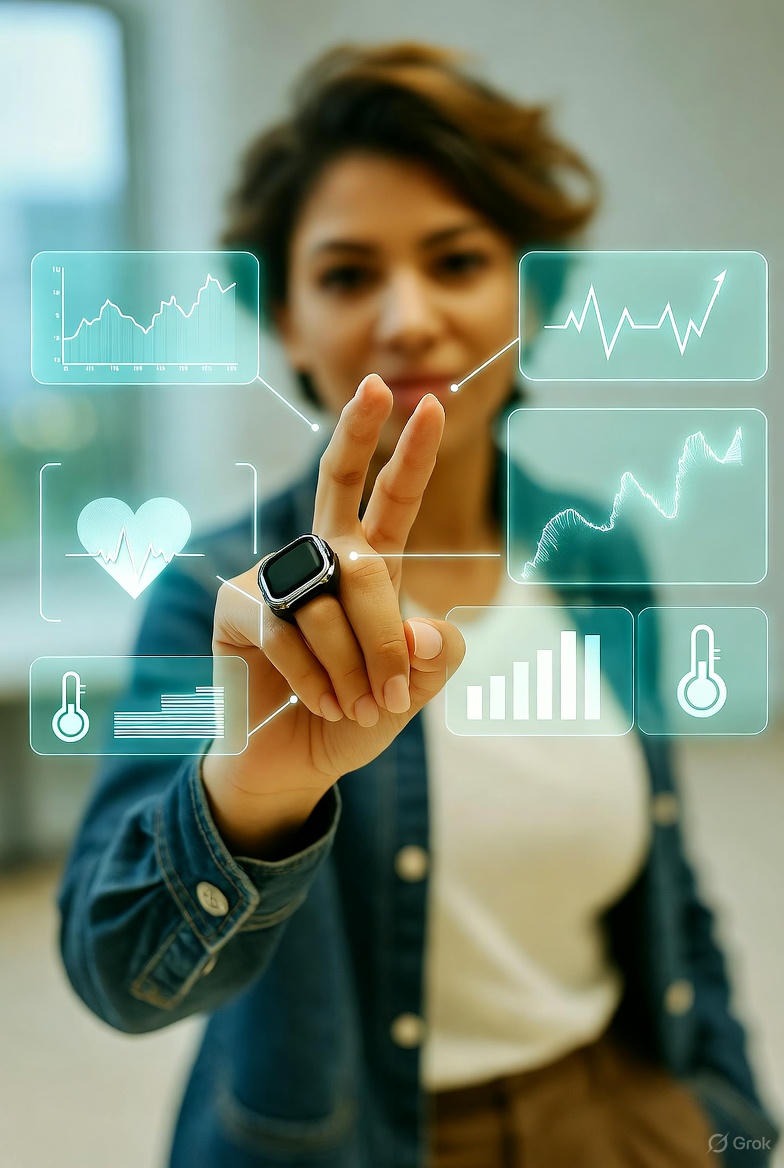
The conversation around HRV has been dominated by athletes, but its implications for cognitive function, emotional stability, and mental performance are equally profound. Your brain is the most energy-hungry organ in your body, and it is exquisitely sensitive to the state of your autonomic nervous system. Your HRV baseline is, in many ways, a proxy for your brain's operating capacity.
The Brain-Body Connection:
The prefrontal cortex (PFC)—the seat of executive functions like focus, decision-making, impulse control, and complex thought—has a high density of connections to the autonomic nervous system. When the SNS (stress system) is dominant (low HRV), neural resources are diverted away from the PFC to support more primal survival functions. This impairs executive function, a state often called "brain fog" or "hijacked amygdala." Conversely, when PNS activity is strong (high HRV), the PFC is well-resourced and online. You think clearly, regulate emotions effectively, and access creativity.
HRV as a Predictor of Cognitive Readiness:
Just as an athlete uses HRV to predict physical readiness for training, anyone can use it to gauge cognitive readiness for demanding mental work.
Building Emotional Resilience:
Emotional resilience is the ability to adapt to stress and adversity without becoming overwhelmed. HRV provides a physiological correlate for this trait. Individuals with higher resting HRV generally:
By using your baseline to guide lifestyle choices that improve HRV (sleep, mindfulness, breathwork), you are not just training your body; you are literally training your nervous system to be more emotionally resilient. You are strengthening the physiological foundation of mental well-being.
Practical Application for Professionals:
Imagine a lawyer reviewing a critical brief, a software architect designing a complex system, or a teacher managing a classroom. Their performance hinges on cognitive clarity and emotional regulation. An automated HRV baseline gives them an objective, pre-conscious insight into their operating system each morning. It allows for cognitive periodization—scheduling the most demanding intellectual work on high-readiness days and protecting low-readiness days from unnecessary strain. This isn't about coddling; it's about the strategic deployment of your most valuable asset: your focused mind.
This expansion of HRV's utility from the gym to the boardroom and the home is where its true democratization lies. It becomes a tool not just for physical optimization, but for thriving in all aspects of a demanding modern life. For further reading on optimizing your mind's performance, our blog features numerous articles on wellness science.
Once you are comfortable with daily scores relative to your baseline, a deeper layer of insight awaits in the patterns over time. Advanced interpretation involves looking at the shape of your data: the trends, the depth of dips, and the speed of recovery. This is where you move from a weather report (today's forecast) to climate science (understanding the long-term patterns).
1. The Direction of the Trend Line:
Look at your 7-day or 30-day rolling average line on your app's trend graph.
2. Reactivity: The Depth and Cause of Dips:
Not all dips are created equal. Assess:
3. Recovery Speed: The Most Telling Metric of All:
This is the crown jewel of HRV interpretation. How quickly does your HRV bounce back to baseline after a dip?
Putting It All Together – A Case Study:
Imagine two people after the same hard workout.
Learning to read these patterns transforms you from a passive data consumer to an active health strategist. You begin to understand not just your current state, but your capacity and your resilience. For athletes specifically, this kind of analysis is crucial; learn more in our guide to deep sleep optimization for athletic recovery.
Data without action is just trivia. The ultimate value of your automated HRV baseline is its power to inform and optimize a comprehensive, personalized wellness protocol. It acts as the central feedback mechanism, telling you what's working and what's not. Here’s how to build your lifestyle around this insight.
1. Sleep as the Non-Negotiable Foundation:
Your baseline will make the critical importance of sleep undeniably clear. Use it to hone your sleep hygiene:
2. Intelligent Nutrition and Hydration:
Use your HRV responses to guide dietary choices.
3. Strategic Movement and Training:
Let your readiness score be your coach.
4. Conscious Stress Management:
This is where HRV feedback is golden for mental wellness.
5. The Art of Periodization and Deloading:
Instead of guessing, use a downward trend in your baseline or a string of low-readiness scores to proactively schedule a deload week—a week of reduced training volume (40-60% less) or active rest. Observe as your baseline rebounds, proving the super-compensation principle: you grow stronger during the recovery, not the stress.
By weaving these strands together—informed by your personal HRV benchmark—you create a self-reinforcing cycle of wellness. Your actions improve your data, and your positive data motivates your actions. To begin building your own protocol, a great starting point is Oxyzen's shop for the tools that enable this journey.
The automated HRV baseline is not the end of the journey; it is a foundational prototype for the future of health. It represents a paradigm shift from episodic, clinical measurement to continuous, ambient, personalized biomarker tracking. The trajectory of this technology points toward an increasingly sophisticated and integrated future.
1. Multi-Biomarker Baselines and Composite Indices:
The next evolution is the establishment of automated baselines for a wider array of biomarkers, all synthesized into hyper-personalized health indices. Imagine systems that establish your personal baselines for:
An algorithm would then weigh these alongside HRV and RHR to create a "Biological Age" or "Vitality Index" that is truly personal and dynamic, changing far more rapidly than chronological age.
2. Predictive Analytics and Proactive Nudges:
With enough longitudinal data, machine learning models will move from descriptive ("your HRV is low") to predictive ("based on your current data trajectory, you have a 70% likelihood of developing a head cold in 48 hours"). The app could then provide proactive, personalized nudges: "Your recovery metrics suggest elevated immune activity. Consider increasing your sleep target tonight, boosting vitamin C intake, and postponing your intense workout."
3. Seamless Integration with Digital Healthcare Ecosystems:
The future lies in secure, patient-controlled data sharing. Your anonymized, aggregated biomarker trends could be shared with your physician via a digital health platform, providing them with a rich, continuous dataset far more informative than an annual check-up. This enables true collaborative care, where the patient is an informed partner and the doctor has context for clinical decisions.
4. Behavioral Adaptation and Closed-Loop Systems:
Advanced systems could learn what interventions work best for you to improve specific metrics. If it detects a stress-induced HRV dip, it might prompt you with a 5-minute guided breathing exercise that has historically been effective for your recovery, or suggest an earlier bedtime based on your sleep data. This moves from generic recommendations to a closed-loop system that learns and adapts to your personal biology and preferences.
5. Democratization of Deep Health Insight:
Ultimately, this trajectory is about democratization. The kind of physiological insight that was once available only to astronauts and elite athletes is becoming accessible to everyone. Automated baselines are the key that unlocks this, removing the barrier of complex interpretation. The goal is a future where every individual has a deep, data-informed understanding of their unique body, empowering them to make choices that maximize their healthspan, performance, and well-being.
This future is being built today by companies committed to this vision. To learn more about one company's approach to this future, you can explore the broader Oxyzen platform. As this technology evolves, the relationship we have with our own health will be transformed from one of mystery and reaction to one of knowledge, partnership, and proactive empowerment.
To move from theory to tangible results, let’s examine how automated HRV baselines translate into real-world performance gains and injury prevention. These case studies illustrate the profound impact of personalized data on training outcomes.
Case Study 1: The Overtrained Marathoner
Sarah, a 38-year-old amateur marathoner, was three weeks into an intense 16-week training plan. She felt fatigued but pushed through, believing “no pain, no gain.” Her Oxyzen ring, however, told a different story. Over 10 days, her HRV trend line showed a consistent 15% drop below her established baseline, and her resting heart rate crept up by 5 bpm. Her readiness scores were persistently in the “low recovery” zone. Despite feeling “tough,” the data was clear: she was on the brink of overtraining syndrome.
Case Study 2: The Team Sport Athlete Managing Load
James, a collegiate soccer player, used his smart ring data during preseason. The coaching staff tracked team-wide readiness metrics. James showed a strong, stable HRV baseline and high readiness scores after intense field sessions, indicating excellent recovery capacity. However, a teammate, Mark, consistently showed low HRV recovery after high-impact drills.
Case Study 3: The Strength Athlete Peaking for Competition
Ana, a competitive powerlifter, struggled with knowing how to taper effectively before a meet. She would often feel “flat” or overly anxious. Using her automated HRV baseline, she implemented a data-driven taper. As she reduced training volume over the final 10 days, she watched her HRV baseline climb steadily—an objective sign her nervous system was recovering and supercompensating.
These cases highlight a central theme: automated baselines externalize intuition. They provide an objective check against the pervasive “push through it” mentality, enabling smarter, healthier, and ultimately more successful training. For athletes focused on the critical recovery that happens overnight, understanding the brain-boosting connection between deep sleep and memory is also a key performance factor.
The modern workplace is a primary source of chronic stress, a known suppressant of HRV. Forward-thinking organizations are now recognizing that employee well-being is not a perk but a strategic imperative for sustained productivity, innovation, and retention. Automated HRV tracking, positioned as a personal empowerment tool, is emerging as a cornerstone of the corporate wellness revolution.
From Presenteeism to Performance:
Burnout is characterized by emotional exhaustion, cynicism, and reduced professional efficacy. Physiologically, it is often preceded by a state of autonomic imbalance—chronically low HRV. By providing employees with personal access to this metric (through company-sponsored wellness programs offering devices like Oxyzen rings), organizations can help individuals spot the early warning signs of chronic strain long before clinical burnout sets in.
Implementing an Ethical, Opt-In Program:
The key is ethical implementation. Data must be private, owned by the employee, and used for self-insight only. A successful program involves:
The ROI of a Resilient Workforce:
The organizational benefits are quantifiable:
A Day in the Life of a Data-Informed Employee:
Imagine a project manager, Leo. He checks his Oxyzen app each morning. On a high-readiness day, he tackles his most complex problem-solving tasks and leads key client meetings. On a day his score is low (after a poor night’s sleep due to a sick child), he uses that insight to structure his day differently: he delegates a demanding analytical task, schedules lighter administrative work, takes a walking lunch break, and commits to an early bedtime. He manages his energy strategically, preventing a bad day from spiraling into a bad week.
This shift represents a move from measuring mere activity (hours logged) to cultivating capacity (sustainable performance). It empowers employees to become the CEOs of their own health and productivity. For organizations looking to build such a culture, sharing Oxyzen's company mission and values can align wellness initiatives with a shared vision of human-centric technology.

One of the most compelling aspects of continuous HRV monitoring is its ability to act as a canary in the coal mine for subclinical health issues—problems that haven’t yet produced obvious symptoms but are creating systemic strain. A depressed or declining HRV baseline can be the first whisper of a problem, prompting earlier investigation and intervention.
1. Uncovering Overtraining and Relative Energy Deficiency (RED-S):
In athletes, a stubbornly low HRV baseline despite adequate sleep can be a sign of Relative Energy Deficiency in Sport (RED-S), where energy intake is insufficient for the energy expended. This state impairs hormonal, metabolic, and immune function. HRV provides an objective, non-invasive marker that, alongside other symptoms, can lead to crucial adjustments in nutrition and training load before more serious consequences like stress fractures or amenorrhea occur.
2. Signaling Immune System Activation:
Your body mounts an immune response long before you feel a sore throat or fever. This response is metabolically costly and diverts resources, creating physiological stress that suppresses HRV. It’s common to see HRV plummet 24-48 hours before the onset of cold or flu symptoms. Observing an unexplained, significant drop in your baseline can be your cue to double down on rest, hydration, and immune support, potentially mitigating the severity or duration of the illness.
3. Highlighting Metabolic and Cardiovascular Strain:
Chronic low HRV is a known risk factor for and correlate of metabolic syndrome, insulin resistance, and hypertension. While a wearable is not a diagnostic tool, a persistently low baseline—especially when coupled with other risk factors—can be the motivation someone needs to seek a professional medical evaluation for blood pressure, fasting glucose, or lipid panels. It turns abstract future risk into a present, trackable metric that can be improved through lifestyle change.
4. Revealing the Impact of Hidden Emotional Stress:
Sometimes, we underestimate or suppress our psychological stress. The body, however, keeps the score. A lingering low HRV baseline without a clear physical cause (like poor sleep or hard training) can be a powerful mirror, reflecting underlying anxiety, chronic worry, or emotional burden you may have normalized. This data can be the catalyst to seek therapy, start a meditation practice, or address a stressful life situation.
Important Disclaimers and Next Steps:
It is vital to reiterate: an HRV trend is a signal for awareness, not a diagnosis. It should prompt curiosity and action, not self-diagnosis or panic. The appropriate action is almost always to:
This proactive, data-informed approach to health shifts the paradigm from crisis management to system monitoring. For more on how tracking intersects with measurable health outcomes, our analysis of sleep tracking accuracy and its capabilities provides relevant context.
In the pantheon of health data, where does HRV stand? To understand its unique value, it’s helpful to compare it to other commonly tracked metrics. This comparison reveals why HRV, especially with an automated baseline, is often considered a superior marker of systemic resilience and adaptive capacity.
Metric
What It Measures
Strengths
Limitations
HRV's Advantage
Resting Heart Rate (RHR)
Beats per minute at rest.
Simple, easy to measure. Good general indicator of cardiovascular fitness.
Slow to change. Can be influenced by hydration, caffeine. Lacks nuance.
More Sensitive & Predictive. HRV can change dramatically in response to stress or fatigue while RHR remains stable, giving earlier warning. It reflects nervous system balance, not just cardiovascular output.
Sleep Duration
Total time asleep.
Crucial for health. Easy to understand and track.
A Quantity Metric, Not Quality. Does not reveal sleep architecture (light/deep/REM) or restorative value.
Acts as a Quality Report Card. You can sleep 8 hours but have poor, fragmented sleep, resulting in low HRV. HRV validates the restorative power of your sleep.
Step Count / Activity Minutes
Volume of movement.
Great for motivating general activity and reducing sedentarism.
Does not measure intensity or recovery. Can encourage over-activity without regard for recovery needs.
Guides Recovery. HRV tells you if your activity level is appropriate for your current state. It helps balance activity with necessary rest.
Body Weight / BMI
Mass relative to height.
Useful population-level indicator of certain health risks.
Poor individual health marker. Doesn't distinguish muscle from fat, ignores fitness, metabolism, and cardiovascular health.
Measures Functional Physiology. HRV directly assesses the operational health of your central regulatory system (ANS), which is more relevant to daily function and resilience than weight.
Blood Pressure
Force of blood against artery walls.
Critical diagnostic for cardiovascular disease risk.
Episodic & Stress-Sensitive. A single reading can be skewed by "white coat syndrome." Requires a cuff.
Continuous & Dynamic. Provides a 24/7 stream of data on the nervous system that regulates blood pressure, offering context long before BP might become chronically elevated.
Vo2 Max
Maximum oxygen uptake during exercise.
Gold standard metric of aerobic fitness and endurance capacity.
Requires maximal exertion test. Stressful to measure. Changes slowly. Reflects a peak capacity, not daily readiness.
Measures Daily Readiness. HRV reflects your ability to recover from stress and perform on any given day, which is often more practical than knowing your ultimate peak capacity.
The Synergistic Picture:
The key insight is not that HRV is the "best" metric, but that it is the most integrative. It is the nervous system's summary report, influenced by all the others. Poor sleep, overtraining, emotional stress, and metabolic issues all converge to lower HRV. Therefore, when used in tandem with other metrics, HRV becomes the unifying interpreter:
This is why platforms that synthesize these inputs into a single readiness score are so powerful. They leverage the unique strengths of each metric to paint a complete picture. To explore how this synthesis works in practice, you can discover the Oxyzen system and its integrated approach.
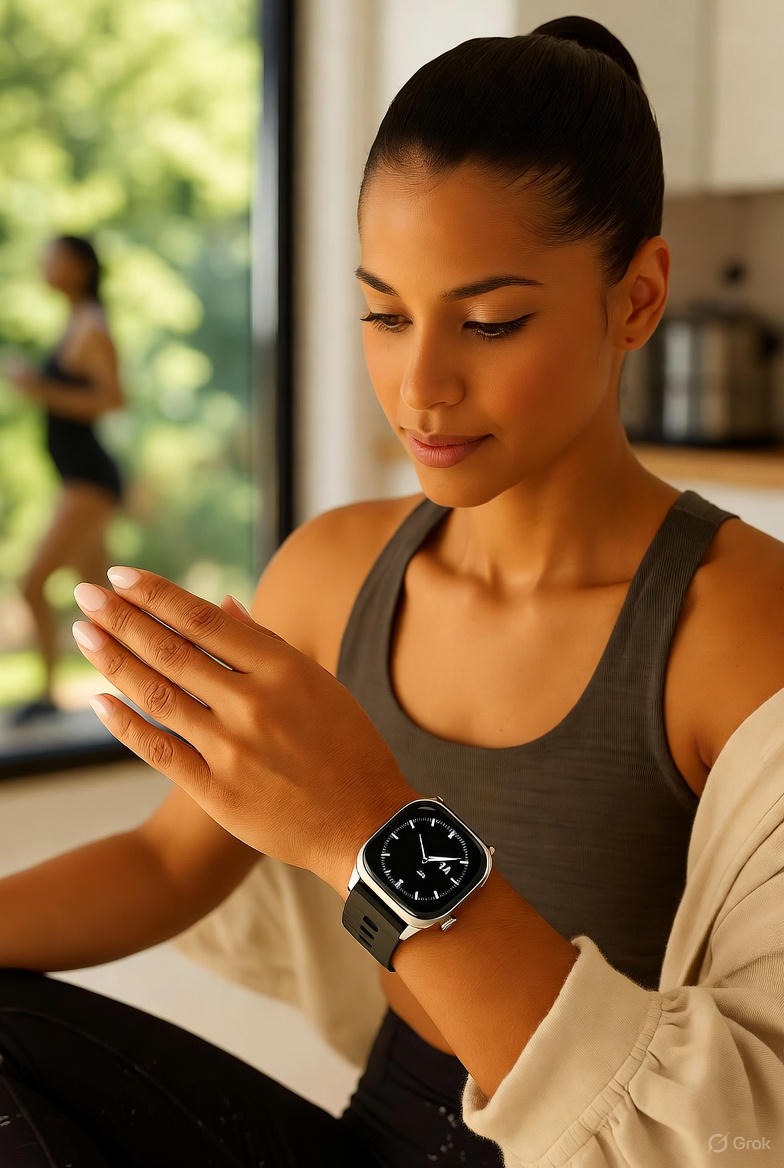
As HRV enters the mainstream, misinformation inevitably follows. Clearing up these myths is essential for using the metric effectively and avoiding unnecessary anxiety or misguided efforts.
Myth 1: “HRV is just a fancier version of heart rate.”
Debunked: This is the most fundamental misconception. Heart rate is about quantity (how many beats). HRV is about timing and pattern (the subtle variations between beats). They are related but offer distinctly different information. You can have two people with an identical RHR of 60 bpm: one could have a high, healthy HRV, and the other a low, stressed HRV.
Myth 2: “You need a chest strap for accurate HRV measurement.”
Debunked: While chest strap ECG is the clinical gold standard for instantaneous HRV (like during a stress test), for nightly, resting HRV averages, modern optical PPG sensors in high-quality wearables are exceptionally accurate. The key is consistency and placement. A ring worn on the finger provides a stable, vascular-rich location that often yields cleaner nocturnal data than a wrist-based device, which can suffer from motion artifact. For 24/7 trend tracking and baseline establishment, these devices are more than sufficient.
Myth 3: “If my HRV is low, I’m unhealthy.”
Debunked: A single low reading is meaningless. A low trend or a reading significantly below your personal baseline is a signal, not a verdict. It asks, “What’s going on?” not declares you unhealthy. Context is everything: a low reading after a hard workout, a poor night's sleep, or during illness is expected and normal.
Myth 4: “Breathing apps that raise HRV instantly are fixing my health.”
Debunked: Slow-paced breathing exercises (like coherent breathing at 5-6 breaths per minute) can cause a temporary, acute increase in HRV by stimulating the vagus nerve. This is an excellent tool for stress management and real-time regulation. However, it does not instantly repair underlying chronic issues. It’s like using an inhaler for asthma—it provides immediate relief but doesn’t cure the condition. Long-term baseline improvement requires addressing lifestyle fundamentals: sleep, chronic stress, fitness, and nutrition.
Myth 5: “Women have lower HRV than men, so their data isn’t as good.”
Debunked: On average, age-matched women may have slightly lower absolute HRV values than men. This is a population-level statistical difference, not a value judgment. The power of the automated personal baseline renders this comparison completely irrelevant. A woman’s health is tracked against her own baseline and range. The cyclical fluctuations of her HRV across her menstrual cycle provide more nuanced information, not less valuable data.
Myth 6: “More data always leads to better health.”
Debunked: This is a critical caveat. Data is a tool, not a goal. Obsessive checking, anxiety over daily fluctuations, and using the data to punish yourself (“I only scored 70 today, I failed”) is counterproductive and can actually lower your HRV through stress! The healthy approach is one of curious, non-judgmental observation, looking at trends over time, and using insights to make positive, sustainable choices.
By understanding what HRV is and, just as importantly, what it is not, you can harness its power without falling prey to common pitfalls. For answers to more specific, technical questions, our detailed FAQ resource is always available.
As we embrace a future where our most intimate physiological data is continuously collected and analyzed, urgent ethical questions arise. The convenience and insight of automated HRV tracking come with a profound responsibility—for both the user and the technology provider.
The Core Principle: User Sovereignty Over Data
The foundational ethic must be individual ownership and control. Your biometric data—the story of your stress, sleep, and recovery—is among your most personal information. Ethical companies enshrine this principle by:
The Workplace Wellness Dilemma:
As discussed, corporate wellness programs are a growing application. The ethical line is bright: data must be for employee empowerment only. Programs must be opt-in, with data visible only to the employee. “Wellness scores” should never be tied to performance reviews, compensation, or insurance premiums. The goal is to build a culture of health, not a culture of surveillance.
The Insurance and Healthcare Frontier:
The potential for HRV and other continuous biomarkers to improve health outcomes is immense. In the future, one could imagine insurers offering discounts for participation in wellness programs that use this data, similar to safe-driving discounts for telematics. This must be handled with extreme caution to avoid discrimination against those who cannot afford wearables, have naturally low HRV due to health conditions, or simply choose not to participate. The principle must be carrot over stick—rewarding engagement, not penalizing biology.
Long-Term Data as a Health Asset:
Imagine a future where your decades-long HRV record is as valuable as your genome. It could predict your risk for age-related diseases, guide personalized medicine, and document the impact of major life events. This creates a duty for companies to be stewards of this data for the long term, ensuring its security and portability, so you can take your health history with you throughout your life.
As a User, Your Responsibilities:
The promise of this technology is a future of unprecedented self-knowledge and health empowerment. That promise can only be realized if it is built on a foundation of trust, transparency, and unwavering respect for individual privacy. This commitment to ethical innovation is part of the core story behind brands like Oxyzen.
Your Trusted Sleep Advocate (Sleep Foundation — https://www.sleepfoundation.org/)
Discover a digital archive of scholarly articles (NIH — https://www.ncbi.nlm.nih.gov/
39 million citations for biomedical literature (PubMed — https://pubmed.ncbi.nlm.nih.gov/)
experts at Harvard Health Publishing covering a variety of health topics — https://www.health.harvard.edu/blog/)
Every life deserves world class care (Cleveland Clinic -
https://my.clevelandclinic.org/health)
Wearable technology and the future of predictive health monitoring. (MIT Technology Review — https://www.technologyreview.com/)
Dedicated to the well-being of all people and guided by science (World Health Organization — https://www.who.int/news-room/)
Psychological science and knowledge to benefit society and improve lives. (APA — https://www.apa.org/monitor/)
Cutting-edge insights on human longevity and peak performance
(Lifespan Research — https://www.lifespan.io/)
Global authority on exercise physiology, sports performance, and human recovery
(American College of Sports Medicine — https://www.acsm.org/)
Neuroscience-driven guidance for better focus, sleep, and mental clarity
(Stanford Human Performance Lab — https://humanperformance.stanford.edu/)
Evidence-based psychology and mind–body wellness resources
(Mayo Clinic — https://www.mayoclinic.org/healthy-lifestyle/)
Data-backed research on emotional wellbeing, stress biology, and resilience
(American Institute of Stress — https://www.stress.org/)


