


Longevity Essentials: Why Recovery Matters More Than Exercise
Why recovery is more important for longevity than intense exercise.
Why recovery is more important for longevity than intense exercise.
%402x.svg)
In the modern pursuit of vitality, a single, punishing narrative has dominated for decades: more is more. If exercise is good, then extreme exercise must be better. If pushing hard yields results, then pushing to the brink of collapse must yield superhuman results. We’ve worshipped at the altar of sweat, strain, and grit, filling our schedules with high-intensity interval training, marathon running, and grueling strength sessions. The fitness industry, worth hundreds of billions, fuels this fire, promising that the key to a longer, healthier life lies in the next workout, the next personal best, the next burn.
But what if our fundamental blueprint for longevity is flawed? What if, in our relentless drive to move more, we are actively undermining the very biological processes that grant us resilience, youthfulness, and years of high-quality life? A quiet revolution is unfolding in the realms of physiology, neuroscience, and aging science. It posits a radical, yet profoundly simple, idea: The stimulus of exercise is merely the question you ask of your body. True adaptation—the strengthening, repairing, and rejuvenating that leads to longevity—is the answer. And that answer only comes during recovery.
Recovery is not passive; it is the active, essential, and often neglected half of the adaptation equation. It’s the silent, systemic work of cellular repair, hormonal rebalancing, neural restoration, and metabolic resetting. While exercise breaks you down, recovery builds you back up, stronger and more resilient than before. To ignore recovery is to constantly withdraw from your physiological bank account without ever making a deposit—a sure path to bankruptcy in the form of burnout, injury, accelerated aging, and chronic illness.
This article is a deep exploration into the core pillar of longevity that our culture has forgotten. We will dismantle the "more is more" myth and illuminate why, for anyone seeking not just a longer life, but a life brimming with energy, cognitive clarity, and physical freedom, mastering recovery is non-negotiable. It’s time to shift from a mindset of relentless doing to one of strategic, intelligent being. The future of your health depends not on how hard you can go, but on how well you can recover. Welcome to the new foundation of longevity.
The Modern Fitness Paradox: How Over-Exercise Accelerates Aging
We live in an era of unprecedented fitness awareness, yet simultaneously, an epidemic of fatigue, burnout, and unexplained plateaus. The paradox is stark: gym memberships are soaring, wearable tech tracks our every step and heartbeat, and social media glorifies extreme physical transformations. Yet, rates of stress-related illness, hormonal dysfunction, sleep disorders, and chronic inflammation remain stubbornly high. This disconnect points to a critical misunderstanding of human biology. The modern fitness paradigm often mistakes the signal for the response.
Exercise, in its essence, is a controlled stressor—a hormetic trigger. It challenges your homeostasis, creating micro-tears in muscle fibers, depleting energy stores, and elevating stress hormones like cortisol. This is a necessary disturbance. However, the benefit—increased muscle mass, improved cardiovascular efficiency, enhanced mitochondrial function—does not occur during the workout. It occurs in the hours and days after, provided the body is given the right conditions to repair and overcompensate.
When we chronically over-exercise without adequate recovery, we transform this beneficial hormetic stress into a chronic, toxic stress load. The body is perpetually stuck in a sympathetic "fight-or-flight" state. Cortisol, designed for short bursts, remains elevated, leading to catabolism (muscle breakdown), fat storage (particularly visceral fat), and suppression of the immune system. Inflammation, a useful acute response to injury, becomes systemic and low-grade, corroding tissues and creating an internal environment ripe for nearly every age-related disease, from atherosclerosis to neurodegeneration.
Consider the athlete who trains through fatigue, or the executive who pounds the pavement every day despite poor sleep. They are not building resilience; they are accumulating a physiological debt. Key biomarkers of aging tell the story:
The narrative of "no pain, no gain" has been tragically oversimplified. The real gains are made not in the pain, but in the profound peace that must follow it. To learn how to listen to your body's recovery needs and move beyond this paradox, exploring tools that provide personalized insights is key. For a deeper understanding of how modern technology can guide this balance, our blog offers extensive resources, such as our article on how health tracking technology enables personalized wellness.
The Physiology of Repair: What Actually Happens When You Rest
To truly champion recovery, we must first appreciate the magnificent, complex symphony of repair it orchestrates. When you finally cease exertion and enter a state of genuine rest, your body shifts from a state of energy expenditure to one of renewal and fortification. This is not downtime; it is peak construction time.
The Nervous System Recalibrates
The autonomic nervous system, which governs involuntary functions, has two primary branches: the sympathetic (gas pedal) and parasympathetic (brake). Exercise heavily engages the sympathetic system. Recovery, particularly high-quality sleep and deep relaxation, activates the parasympathetic nervous system. This "rest and digest" state lowers heart rate and blood pressure, diverts energy to digestion and repair, and allows the body to focus on internal maintenance. It is the physiological prerequisite for all other repair processes.
Cellular and Molecular Reconstruction
At the microscopic level, the magic unfolds:
Metabolic and Cognitive Reset
This intricate repair work is not a luxury; it is the very mechanism through which exercise confers its benefits. Without it, the workout is merely a destructive event. The sophistication of these processes highlights why guessing at your recovery status is ineffective. Modern tools, like advanced smart rings, can offer a window into this internal repair shop by tracking physiological signals like heart rate variability, skin temperature, and sleep stages. For those new to this concept, a great starting point is our guide on wellness ring basics for beginners, which explains how these devices translate complex data into actionable insights.
If recovery is the king of longevity, then sleep is its throne. There is no single more potent, irreplaceable recovery tool available to us. Sleep is an active, dynamic, and highly ordered physiological process essential for survival. To chronically undersleep in the name of productivity or fitness is to systematically dismantle your health from the inside out.
Sleep Architecture and Systemic Repair
Sleep progresses in cycles of approximately 90 minutes, each containing stages of light sleep, deep sleep (slow-wave sleep), and REM (rapid eye movement) sleep. Each stage has a distinct repair role:
The Catastrophic Cost of Sleep Debt
The research is unequivocal. Chronic sleep deprivation (consistently less than 7 hours per night for most adults) is linked to:
Beyond Duration: The Critical Role of Sleep Quality
It's not just about the hours in bed. Sleep quality—characterized by high sleep efficiency, sufficient deep and REM sleep, and minimal disruptions—is paramount. Factors like blue light exposure before bed, an irregular sleep schedule, alcohol consumption, stress, and an uncomfortable sleep environment can all fragment sleep and rob you of its most restorative stages.
Optimizing sleep is the single highest-impact action you can take for your recovery and longevity. It requires treating sleep not as a passive default, but as a skill to be cultivated and a priority to be protected. For practical, daily strategies on improving this pillar of health, alongside how technology can assist, our curated list of 50 healthy aging tips a smart ring helps implement daily provides a comprehensive roadmap.
Longevity is not just about the health of your muscles or heart; it is fundamentally about the health of your nervous system. The autonomic nervous system (ANS) is your body's master control panel, regulating thousands of functions without your conscious input. Its balance—or lack thereof—dictates your capacity for recovery, resilience, and ultimately, your biological age.
The Sympathetic-Parasympathetic Seesaw
As mentioned, the ANS has two primary modes:
The modern world, with its constant digital notifications, work pressures, and even our self-imposed rigorous fitness schedules, chronically tips the scale toward sympathetic dominance. We live in a state of low-grade "fight-or-flight," which relentlessly inhibits recovery.
Heart Rate Variability: The Window to Your ANS
Heart Rate Variability (HRV) has emerged as one of the most powerful, non-invasive biomarkers for assessing ANS balance and recovery capacity. Contrary to what one might think, a healthy heart does not beat with the monotonous regularity of a metronome. The time interval between heartbeats varies slightly. Higher HRV (greater variability between beats) generally indicates strong parasympathetic activity and good adaptability—your body can shift smoothly between stress and relaxation. Low HRV suggests sympathetic dominance, fatigue, or overtraining, signaling that your system is under strain and recovery is compromised.
Cultivating Parasympathetic Tone for Longevity
The goal for longevity is not to eliminate stress (which is impossible and undesirable) but to develop a responsive, resilient nervous system that can mount a strong stress response when needed and then efficiently return to a state of calm. This is known as high "vagal tone," referring to the activity of the vagus nerve, the main conduit of the PNS.
Strategies to enhance parasympathetic tone and improve HRV include:
Monitoring HRV can provide an objective, daily readout of your nervous system's state, helping you decide whether to push hard or prioritize rest. This is where a device worn continuously, like a smart ring from Oxyzen.shop, becomes invaluable, as it can track overnight HRV—considered the gold-standard measurement—giving you a clear picture of your recovery readiness each morning.
Nutrition for Recovery: Fueling the Rebuilding Process
You cannot construct a resilient, rejuvenated body from subpar materials. Nutrition provides the literal building blocks—amino acids, fatty acids, vitamins, minerals, and phytonutrients—that the repair processes described earlier depend on. Viewing food solely as fuel for workouts is a critical error; its more vital role is as the raw material for the reconstruction that happens after.
The Anabolic Window and Nutrient Timing
While the concept of a narrow 30-minute "anabolic window" post-workout has been somewhat exaggerated, nutrient timing does matter for optimizing recovery, especially for those training intensely.
Anti-Inflammatory and Pro-Repair Foods
Since controlled inflammation is part of exercise, and uncontrolled inflammation is its enemy, your diet should support the resolution of inflammation.
Hydration and Electrolytes: The Silent Catalysts
Water is the medium in which every biochemical reaction of recovery takes place. Dehydration, even mild, impairs blood flow (slowing nutrient delivery and waste removal), increases perceived effort, and hinders thermoregulation and joint lubrication. Electrolytes—sodium, potassium, magnesium, calcium—are lost through sweat and are critical for nerve function, muscle contraction, and maintaining fluid balance. Replenishing them, especially after prolonged or sweaty exercise, is a non-negotiable part of the recovery equation.
Nutrition is deeply personal, and what fuels optimal recovery for one person may differ for another based on genetics, activity type, and gut health. For more personalized guidance on tailoring your habits to your body's unique signals, our blog features a wealth of articles on integrating data from wearables with daily wellness practices.

The term "recovery" often conjures images of complete stillness—lying on a couch, motionless. However, strategic, low-intensity movement is one of the most powerful tools to enhance recovery, not hinder it. This is known as active recovery. It stands in stark contrast to passive rest and plays a distinct and vital role in the longevity toolkit.
The Physiology of Active Recovery
Gentle movement serves as a "flush" for the musculoskeletal system. It increases blood flow and lymphatic circulation without imposing significant new stress. This enhanced circulation delivers fresh oxygen and nutrients to fatigued muscles while more efficiently clearing metabolic byproducts like lactate and inflammatory cytokines. Activities like walking, light cycling, swimming, or gentle yoga can significantly reduce Delayed Onset Muscle Soreness (DOMS) and improve the perception of recovery.
Mobility: The Forgotten Component of Resilience
Mobility—the ability to move a joint actively through its full range of motion with control—is often sacrificed at the altar of strength and cardio. However, it is a cornerstone of functional longevity. Poor mobility creates compensatory movement patterns, leading to joint wear and tear, chronic pain, and injury. It restricts your ability to move freely and enjoy life as you age.
The Role of Mind-Body Practices
Practices like Tai Chi, Qigong, and certain forms of yoga are the pinnacle of active recovery for longevity. They uniquely combine gentle movement with focused breathwork and meditative awareness. This triad simultaneously addresses physical mobility, nervous system regulation (parasympathetic activation), and mental stress reduction. They are not just exercises; they are practices in embodied resilience, teaching you to move with ease and awareness—a skill that pays dividends for decades.
Integrating active recovery and dedicated mobility work into your weekly schedule is not a sign of weakness, but of sophisticated, long-term planning. It ensures that the body you are building through exercise remains supple, pain-free, and capable of handling the diverse movements of a vibrant life. For insights on how to track the impact of different activity types on your overall recovery metrics, our article on wellness ring basics for activity and movement tracking offers valuable perspective.
Perhaps the most significant barrier to prioritizing recovery is not physical, but psychological. In a culture that glorifies busyness and productivity, rest is often framed as laziness, a luxury, or a sign of weakness. This creates a deep-seated "guilt complex" around taking time to recover. To truly master recovery, we must first dismantle these mental barriers and reframe our relationship with rest.
The Cultural Stigma of Rest
From a young age, we are rewarded for doing, achieving, and pushing through. "Hustle culture" permeates our professional and even personal lives. This mindset spills over into fitness, where skipping a workout feels like a moral failure and taking a rest day is anxiety-inducing. This constant "performance identity" keeps the nervous system on high alert and prevents us from listening to the body's true needs for repair.
Reframing Recovery as Productive Work
The cognitive shift required is fundamental: Recovery is not the absence of work; it is the essential work of becoming stronger. Every elite athlete and coach understands this. They periodize their training with deliberate recovery weeks because they know performance declines without it. We must adopt the same mindset for the "sport" of longevity.
Practical Steps to Cultivate a Recovery Mindset
By embracing the psychology of rest, you move from a state of constant striving to one of intelligent rhythm—a dance between stress and recovery that is the true heartbeat of a long, vibrant life.
Our biology does not exist in a vacuum. It is in constant conversation with our environment. The spaces we inhabit—our homes, our bedrooms, our workplaces—profoundly influence our nervous system and capacity for recovery. To master recovery, we must become architects of our surroundings, intentionally designing them to support, rather than sabotage, our physiological need for rest and repair.
The Sanctuary of Sleep
The bedroom should be a temple dedicated to recovery. Key optimizations include:
The Daily Rhythm of Light
Our circadian rhythm—the master 24-hour internal clock governing sleep, hormone release, and metabolism—is primarily set by light exposure.
The Social and Emotional Environment
Our relationships and social interactions are a core part of our "environment." Chronic conflict, loneliness, and a lack of social support are massive psychological stressors that inhibit recovery. Conversely, safe, supportive, and loving connections are potent activators of the parasympathetic nervous system. Cultivating a positive social environment is as crucial as optimizing your bedroom.
Nature as the Ultimate Recovery Tool
"Biophilia"—the human tendency to seek connections with nature—has profound recovery benefits. Spending time in natural environments (forest bathing, walking in a park, by water) has been shown to lower cortisol, reduce heart rate, improve mood, and enhance feelings of restoration. It is a full-sensory immersion in a parasympathetic state.
By taking conscious control of these environmental levers, you create a world that consistently nudges your biology toward recovery. It turns the constant battle against stress into a more harmonious flow, where your surroundings actively work in your favor. For more ideas on creating a holistic wellness environment, our about us page shares the foundational philosophy behind building a lifestyle oriented towards sustainable health.
In our quest to optimize recovery, we face a fundamental challenge: the human body is a black box. Its internal signals are complex, subtle, and often misinterpreted by our conscious minds. We might "feel fine" while our nervous system is screaming in distress, or we might feel fatigued when our body is actually primed for a strong performance. This is where modern wearable technology transitions from a simple step-counter to an essential biofeedback tool for longevity.
From Guessing to Knowing: The Power of Physiological Monitoring
Advanced wellness wearables, particularly those worn on the finger like smart rings, provide a continuous, objective stream of data directly related to recovery status. Key metrics include:
Personalized Recovery Readiness Scores
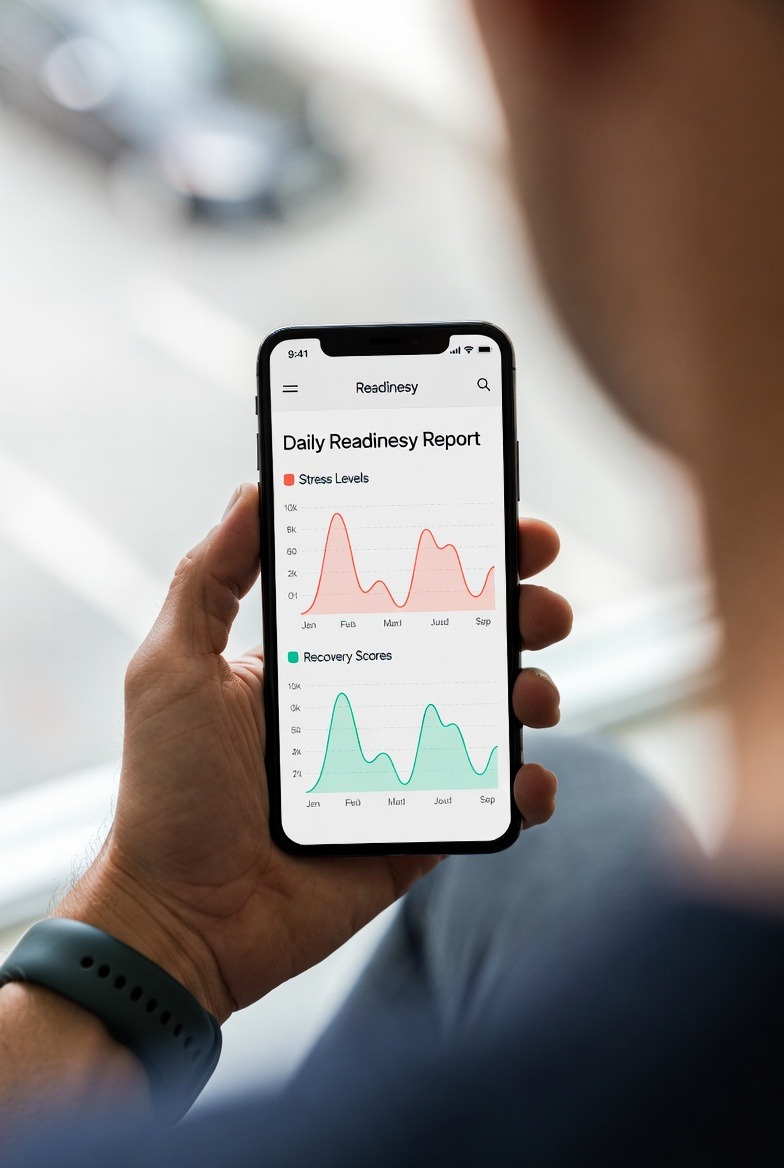
The real magic lies not in individual metrics, but in their synthesis. Leading platforms analyze trends in HRV, RHR, sleep, and temperature to generate a daily "Readiness" or "Recovery" score. This score answers the critical question: "Based on your body's physiological state today, should you prioritize stress (intense exercise, heavy cognitive work) or recovery?"
This moves you from a rigid, calendar-based training schedule ("I always do legs on Monday") to a flexible, responsive, biology-based approach ("My score is low today, so I'll swap my interval run for a walk and an early night").
Avoiding Analysis Paralysis and Finding Balance
The goal of this technology is not to create a neurotic obsession with data, but to cultivate a deeper, more intuitive connection with your body. It's a tool for education and validation. Over time, you begin to correlate how certain behaviors—a late meal, an intense argument, two glasses of wine, a perfect day of nutrition and relaxation—affect your metrics. This feedback loop allows you to make smarter, more informed daily choices that compound into massive long-term longevity benefits.
To explore the full potential of this technology and understand the science behind the sensors, we invite you to read about the science behind modern health tracking technology. The journey to mastering recovery begins with listening, and today, we have more sophisticated ears than ever before.
The journey into the heart of recovery has revealed a landscape far richer and more essential than mere rest. We’ve moved beyond the cultural obsession with exertion and begun to map the intricate, active processes that rebuild us, stronger and more resilient. We’ve seen how sleep, nervous system balance, nutrition, and our very environment form the bedrock of this work. Now, equipped with a new mindset and guided by data, we must explore the practices that elevate recovery from a passive state to a mastered art. This is where the principles of longevity are forged into daily, actionable disciplines.
Once the foundational pillars of sleep, nutrition, and stress management are firmly in place, we can explore advanced modalities that act as potent catalysts for the repair process. These techniques are not mere biohacking fads; they are tools that leverage fundamental physiological principles to accelerate clearance, reduce inflammation, and enhance systemic resilience. Think of them as high-efficiency filters and turbochargers for your body's innate recovery machinery.
The Power of Heat and Cold Exposure
Thermogenesis—exposing the body to extreme temperatures—is a profound hormetic stressor that, when applied correctly, triggers powerful adaptive recovery responses.
The Emerging Science of Photobiomodulation
Often called "red light therapy," this technique uses specific wavelengths of low-level light (red and near-infrared) to penetrate the skin and interact with the mitochondria in our cells. The primary chromophore, cytochrome c oxidase in the mitochondrial respiratory chain, absorbs this light. This interaction is believed to enhance adenosine triphosphate (ATP) production—the fundamental currency of cellular energy. The downstream effects include reduced inflammation, accelerated tissue repair and wound healing, improved skin health, and modulation of circadian rhythms. It’s a non-invasive way to "recharge" your cells' batteries directly.
Compression and Percussive Therapy
The Practice of "Deloading" and True Rest Weeks
Perhaps the most psychologically challenging yet physiologically critical advanced technique is the planned, systematic reduction in training stress, known as a "deload" week. Every 4-8 weeks (depending on intensity), you intentionally reduce training volume (weight, reps, distance) by 40-60% or switch to entirely different, playful movement patterns. This is not a week off; it is a week of active adaptation, where the body finally gets the uninterrupted signal and resources to fully cement the gains from the previous training block. Ignoring this need leads to the plateau and regression of the overtraining syndrome. It is the ultimate practice of discipline: the discipline to not train hard.
Integrating even one or two of these advanced techniques can dramatically improve your recovery quality. For those curious about how technology can help quantify the impact of these interventions—like seeing how an ice bath affects your overnight HRV or how a sauna session influences your sleep depth—exploring the capabilities of a continuous health monitor is enlightening. Discover how devices from Oxyzen.shop are designed to provide this exact kind of actionable feedback, turning experimentation into knowledge.
The concept of periodization—structuring training into distinct phases with specific goals—is a staple of athletic coaching. Yet, its most powerful application may be for the non-athlete seeking lifelong vitality. When we shift the goal from peak performance this season to optimal function for decades, our approach to exercise must transform. It becomes less about constant progression and more about intelligent, rhythmic variation that respects the body’s need for recovery and prevents the ravages of chronic, repetitive stress.
From Linear Progression to Undulating Cycles
The "add 5 pounds every week" linear model is a recipe for eventual breakdown. A longevity-focused model embraces undulation—varying intensity and volume not just weekly (microcycles), but across months (mesocycles) and years (macrocycles).
The Super-Compensation Wave for Lifelong Adaptation
The graph of lifelong fitness should not be a constantly ascending line, but a series of waves. Each training phase creates a "dip" of fatigue (the stimulus). The subsequent recovery or "skill" phase allows for super-compensation—the rebound to a higher level of fitness than before. The wave then begins again from a new, slightly elevated baseline. This wave pattern prevents the stagnation and overuse injuries that come from monotonous, always-intense training.
Listening to Life’s Macrocycle
A true longevity plan also factors in life stress. A demanding work project, family obligations, or emotional strain are physiological loads every bit as real as a heavy squat. Your training must be flexible enough to accommodate these. This is where the data from your recovery guide (like HRV trends) becomes indispensable. It provides the objective rationale to pull back during stressful life periods—not as a failure, but as a strategic decision to protect your health capital. This philosophy is at the core of building sustainable habits, a topic explored in depth in our article on how wellness rings help build healthy habits.
The Goal: Resilience, Not Records
The ultimate metric shifts. It’s no longer your one-rep max or 5K time (though those can be fun benchmarks). The primary metrics become: How quickly do I recover? How stable is my mood and energy? How free am I from pain and injury? How well do I sleep? These are the true indicators of a system being strengthened, not eroded, by your practice.
By adopting periodization for life, you move from being a hamster on a wheel to a sailor skillfully riding the waves of stress and recovery, using both to propel you forward on your journey toward a long, capable, and vibrant life.

Human beings are not designed to recover in isolation. We are a profoundly social species, and our nervous systems are wired to co-regulate—to find calm and safety in the presence of others. The lonely, self-optimizing biohacker in a sterile apartment may have perfect biomarkers but miss a quintessential ingredient for longevity: the healing power of connection. Recovery is not just a biological process; it is a social and emotional one.
The Physiology of Safe Connection
When we engage in positive social interaction—shared laughter, a deep conversation, a hug from a loved one—our bodies release a cascade of neurochemicals that promote recovery. Oxytocin (the "bonding hormone") reduces cortisol, lowers blood pressure, and increases pain thresholds. Endorphins provide a sense of well-being. Simply being in the presence of someone with whom we feel safe can shift our autonomic state from sympathetic to parasympathetic dominance. This is why a comforting touch or a friend’s empathetic listening can feel so physically restorative.
The Dangers of Loneliness and Chronic Conflict
Conversely, social isolation and chronic relational conflict are among the most potent chronic stressors a human can experience. Loneliness has been linked to increased inflammation, impaired immune function, poorer sleep, and a mortality risk comparable to smoking 15 cigarettes a day. A stressful relationship keeps the body in a perpetual state of defensive alert, directly inhibiting repair processes. Cultivating a positive social environment is therefore not a "soft" wellness practice; it is a critical component of your recovery infrastructure.
Building a Recovery-Supportive Community
The Role of Practitioners: Coaches, Therapists, and Bodyworkers
Professional support structures are a vital part of the social fabric of recovery. A wise coach helps you periodize and honors your need for rest. A therapist provides a safe container for emotional processing. A skilled massage therapist or physical practitioner uses touch to downregulate the nervous system and address physical holding patterns. These are not indulgences; they are investments in your human infrastructure.
By weaving a strong social fabric, you create an external recovery system that supports your internal one. This holistic view of health is central to our mission at Oxyzen, as detailed on our our story page, where we share our vision for technology that supports, rather than replaces, human-centric wellness.
The most perfectly designed recovery protocol is useless if the mind remains in a state of chaos, criticism, and relentless activity. Our thoughts, beliefs, and attentional patterns directly govern our physiology through the brain-body connection. Therefore, cultivating a mindset conducive to recovery—and practicing mindfulness to disentangle from unhelpful thought patterns—is the final, master-level skill. It is the software that runs all the hardware of sleep, nutrition, and exercise.
The Destructive Mindset of "Not Enough"
The drive to over-exercise often springs from a deep-seated mindset of scarcity and lack: "I am not fit enough, strong enough, lean enough." This mindset creates a perpetual state of psychological stress, keeping cortisol elevated and the sympathetic nervous system engaged. It turns every rest day into a battle with guilt and every workout into a punishment. Recovery becomes impossible because the mind refuses to grant permission for true rest.
Cultivating a Mindset of "Enough" and Trust
The recovery mindset is one of abundance and trust. It says: "My body is wise. The stimulus has been applied. Now, I trust the process of adaptation. My worth is not tied to my productivity or my physique." This shift allows the nervous system to relax. It reframes recovery as the active, intelligent, and necessary phase of growth. Practices like gratitude journaling can directly cultivate this by shifting focus from what’s lacking to what’s already present and supportive.
Mindfulness as a Direct Neurological Intervention
Mindfulness—the non-judgmental awareness of the present moment—is a direct tool for downregulating the stress response. It works by:
Practical Mindfulness Tools for Recovery
When the mind is at peace, the body can truly repair. This internal work ensures that your external efforts are not being sabotaged by an unseen, self-generated storm. For those seeking to deepen this practice and understand how it integrates with data-driven wellness, our FAQ addresses common questions on blending technology with mindful, intuitive self-care.
Integrating Recovery into a Demanding Life
Understanding the theory of recovery is one thing. Implementing it amidst the relentless demands of a career, family, and social obligations is the real challenge. The key is to abandon the pursuit of a "perfect" recovery routine and instead embrace the art of strategic integration. Recovery must become woven into the fabric of your day, not an added burden to schedule.
The Micro-Recovery Concept: Snacking on Rest
You don’t need a two-hour spa session to benefit. Micro-recoveries are 1-5 minute practices that cumulatively have a massive impact on your nervous system throughout the day.
Prioritization and the Art of the "No"
Integrating recovery requires ruthless prioritization. It means assessing your energy as a finite budget. Saying "yes" to a late-night social event or an extra project is, physiologically, saying "no" to deep sleep and cellular repair. You must become comfortable declining non-essential drains on your recovery capital. Frame it not as selfishness, but as stewardship of the energy you need to show up fully for your true priorities.
Blending Recovery with Existing Activities
Using Technology as an Ally, Not a Tyrant
Set your wearable device to give you gentle, positive nudges, not punitive alerts. A vibration reminder to move after an hour of sitting is helpful. Use the readiness score to plan your day’s demands. If your score is low, can you tackle administrative tasks instead of creative deep work? Can you schedule a walking one-on-one instead of a high-stakes presentation? For more ideas on seamlessly integrating these principles, our guide on wellness ring basics for supporting different health goals provides practical frameworks.
Forgiveness and Flexibility
Some days, the best-laid plans will fall apart. A sick child, a work emergency, or just sheer exhaustion will happen. On these days, recovery might look like ordering a healthy meal instead of cooking, doing 5 minutes of breathing instead of a 30-minute yoga session, or going to bed at 8 PM. The integrated approach is flexible. It’s about direction, not perfection—consistently nudging the needle toward more recovery, not achieving an idealized standard every single day.
In a fitness culture obsessed with outward metrics—weight on a scale, inches lost, pounds lifted—shifting to a recovery-centric model requires a new dashboard. How do you know it’s working if you’re not constantly chasing a new personal record? The metrics of longevity are more subtle, more holistic, and ultimately, more meaningful. They tell the story of a system becoming more resilient, adaptable, and vital over decades, not just a physique changing over weeks.
Subjective Metrics: The Inner Dashboard
Your subjective experience is primary data. Track these in a simple journal or notes app:
Objective Biomarkers: Beyond the Wearable
While wearables provide fantastic daily trends, deeper dives with blood work can offer powerful validation. Key longevity biomarkers to discuss with your doctor include:
The Ultimate Long-Term Metric: Healthspan
The grand, overarching metric is healthspan—the number of years you live in good health, free from serious chronic disease and disability. This is the true return on investment for a recovery-focused life. While you can’t measure it daily, every choice that supports recovery is a deposit into your healthspan account. You are investing in future freedom, independence, and vitality.
Using Your Wearable for Trend Analysis, Not Daily Judgment
Avoid the trap of obsessing over a single day’s low HRV or poor sleep score. The power of this technology lies in spotting trends over weeks and months. Is your average HRV trending upward over the last quarter? That’s a major win, indicating improved autonomic resilience. Are you consistently getting more deep sleep than you were six months ago? Celebrate that. For a deeper look at the accuracy and capabilities of this technology, you can explore our article on the accuracy revolution in health tracking technology.
By tracking this new set of metrics, you redefine success. Success is no longer a number on a bar or a scale. It is waking up with energy, moving through your day with ease, handling stress with grace, and knowing you are building a body that will carry you with strength and joy for all the years to come.
We have navigated the profound shift in mindset, from valuing exertion above all to recognizing the indispensable, active role of recovery. We've explored the physiological foundations, the daily practices, and the integration strategies that transform this understanding into a lived reality. Now, we arrive at the culmination of this journey. Here, we address the inevitable challenges, gaze into the future of personalized health, and synthesize everything into a coherent, actionable blueprint. This final section is about cementing recovery not as a phase, but as the enduring cornerstone of a long, vibrant, and resilient life.
Even with the most elegant recovery-focused plan, progress is not linear. You will encounter plateaus—periods where subjective and objective metrics seem stagnant. You will face setbacks: illness, injury, periods of intense life stress, or simply falling off the consistency wagon. The default cultural response is to do more—train harder, restrict calories further, push through the fatigue. The recovery-first response is the antithesis of this: it is a strategy of intelligent retreat, compassionate inquiry, and adaptive recalibration.
Reinterpreting the Plateau
A plateau is not a sign of failure; it is a signal. Your body is communicating that the current balance of stress and recovery has reached an equilibrium. The old strategy of "more stress" will only deepen the rut. The recovery-first approach asks different questions:
The Strategic Reset Protocol for Setbacks
When injury, illness, or burnout strikes, the instinct is often frustration and haste to "get back." The recovery-first model provides a structured, phased approach:
Cultivating Self-Compassion as a Recovery Tool
Setbacks often trigger self-criticism, which itself is a potent stressor that inhibits recovery. Learning to meet yourself with kindness—"This is a difficult moment, and it’s okay to rest"—is a neurological intervention. It downregulates the threat response and allows the healing processes to operate optimally. This mindset is perhaps the most advanced recovery technique of all.
For more support and answers to common questions during challenging phases, our comprehensive FAQ is a valuable resource, offering guidance on everything from interpreting data dips to adjusting your approach.
We stand at the frontier of a revolution in personal health. The future of recovery is moving from generalized advice and reactive care to a world of hyper-personalized, predictive, and proactive wellness. This is where the convergence of continuous biometric monitoring, artificial intelligence, and a deep understanding of systems biology will fundamentally change how we approach longevity.
From Wearables to "Wearable Labs"
The next generation of health tracking will go far beyond heart rate and steps. We are moving towards non-invasive, continuous monitoring of core biomarkers:
This transforms a wearable from a fitness tracker into a continuous, personal health dashboard, offering a dynamic picture of your internal recovery landscape. The implications for how this technology integrates into clinical care are profound, as explored in our article on health tracking technology in hospitals.
AI as Your Personal Recovery Coach
Artificial intelligence will be the engine that makes sense of this massive, multivariate data stream. Imagine an AI that:
The Integration of Epigenetics and Microbiome Data
The ultimate personalization will come from layering continuous biometric data with your unique biological blueprint. Understanding your epigenetic age (and how your lifestyle influences it) and the state of your gut microbiome will allow for interventions—from specific nutrients to prebiotics and stress-reduction techniques—tailored to your individual biology to optimize recovery and slow biological aging. For a glimpse into what's on the horizon, consider reading about health tracking technology in 2025 and beyond.
This future is not about technology for its own sake. It is about using technology to restore a more intimate, accurate, and responsive relationship with our own bodies, empowering each of us to become the foremost expert on our own path to longevity.
We have deconstructed the monolithic idea of "exercise more" and rebuilt a multifaceted, dynamic model where recovery is the central, governing principle. Now, it is time to synthesize these components into a coherent, living blueprint—a flexible framework you can adapt for the rest of your life. This is not a rigid prescription, but a set of guiding priorities and practices.
The Four Core Recovery Pillars (The Non-Negotiables)
Your daily and weekly choices should consciously support these pillars. They are the foundation upon which everything else is built.
The Recovery-First Decision Matrix
When faced with any health or lifestyle decision—from a new training program to a social invitation—run it through this filter:
If an activity consistently detracts from your pillars, it is costing you longevity capital, no matter how "healthy" it appears on the surface.
Building Your Support Ecosystem
Map out your personal recovery ecosystem:
The Iterative Process: Assess, Adjust, Adapt
Your blueprint is a living document. Every month, take a holistic review:
For those ready to take the next step and equip themselves with a tool designed for this exact purpose, the journey begins at the Oxyzen.shop, where technology meets this holistic philosophy.
We began by challenging a deeply ingrained cultural belief: that the path to a long, healthy life is paved with relentless effort and sweat. We have journeyed through the science and the practice to arrive at a more profound, more sustainable, and ultimately more powerful truth: True strength is not measured by how much stress you can endure, but by how efficiently you can recover from it.
Longevity is not a sprint; it is an ultra-marathon. The winners are not those who run the fastest early on, but those who master the art of pacing, fueling, and self-care over the grueling, beautiful distance. They understand that the race is won in the aid stations, not just on the road.
Recovery is the silent, intelligent work of life extension. It is the daily practice of listening to the whispers of your body so you never have to hear it scream. It is the courage to rest when the world says push, to nourish when the world says restrict, and to connect when the world says achieve in isolation.
By placing recovery at the center of your health philosophy, you are not opting out of a vibrant life. You are opting in—to more years of vitality, more decades of mental clarity, more moments of physical freedom and joy. You are investing in a future where you are not merely alive, but fully living.
The call to action is clear, yet gentle. Start by honoring one pillar tonight. Perhaps it’s committing to a digital sunset for better sleep. Maybe it’s taking five minutes for deep breathing instead of scrolling. Begin to observe. Begin to listen. Let the data and your own felt sense guide you from a culture of exhaustion to a personal practice of renewal.
Your longevity story is being written daily, in the choices between stress and recovery. Choose recovery. It is the most essential, radical, and life-affirming choice you can make.
Ready to begin your personalized journey? Explore our complete library of resources and in-depth guides on the Oxyzen blog to continue your education. And when you're ready to transform insight into daily practice, discover the tool designed to be your guide at Oxyzen.shop.
Your Trusted Sleep Advocate (Sleep Foundation — https://www.sleepfoundation.org/)
Discover a digital archive of scholarly articles (NIH — https://www.ncbi.nlm.nih.gov/
39 million citations for biomedical literature (PubMed — https://pubmed.ncbi.nlm.nih.gov/)
experts at Harvard Health Publishing covering a variety of health topics — https://www.health.harvard.edu/blog/)
Every life deserves world class care (Cleveland Clinic -
https://my.clevelandclinic.org/health)
Wearable technology and the future of predictive health monitoring. (MIT Technology Review — https://www.technologyreview.com/)
Dedicated to the well-being of all people and guided by science (World Health Organization — https://www.who.int/news-room/)
Psychological science and knowledge to benefit society and improve lives. (APA — https://www.apa.org/monitor/)
Cutting-edge insights on human longevity and peak performance
(Lifespan Research — https://www.lifespan.io/)
Global authority on exercise physiology, sports performance, and human recovery
(American College of Sports Medicine — https://www.acsm.org/)
Neuroscience-driven guidance for better focus, sleep, and mental clarity
(Stanford Human Performance Lab — https://humanperformance.stanford.edu/)
Evidence-based psychology and mind–body wellness resources
(Mayo Clinic — https://www.mayoclinic.org/healthy-lifestyle/)
Data-backed research on emotional wellbeing, stress biology, and resilience
(American Institute of Stress — https://www.stress.org/)


