


The Accuracy Revolution in Health Tracking Technology
Discusses the significant improvements in the accuracy of consumer health tracking devices in recent years.
Discusses the significant improvements in the accuracy of consumer health tracking devices in recent years.
%402x.svg)
For decades, the promise of quantifying our health has been a tantalizing mirage on the horizon. From the first pedometers that jostled on our hips to the wrist-bound heart rate monitors of the early fitness craze, we've been told that data holds the key to a better, healthier life. We counted steps, logged calories, and stared at sleep graphs, often with a nagging question: Can I really trust these numbers?
The answer, for much of consumer technology’s history, was a qualified "not really." Data was often inconsistent, easily skewed by motion, and provided a surface-level glimpse that rarely translated into actionable, clinical-grade insight. We were tracking, but we weren't truly understanding. The relationship was one-way: we gave our time and activity, and received often-inscrutable metrics in return. This era of estimation is now decisively over.
Welcome to the Accuracy Revolution in health tracking technology. This is not merely an incremental upgrade in sensor resolution or battery life. It is a foundational paradigm shift, driven by a convergence of biomedical engineering, advanced sensor fusion, artificial intelligence, and a new generation of form factors—most notably, the rise of the smart ring. We are moving from convenient guestimates to reliable, validated measurements; from isolated data points to a continuous, holistic health narrative; from passive observation to proactive, personalized guidance.
This revolution is transforming health technology from a gadget of curiosity into a legitimate tool for wellness management. It’s enabling a future where your wearable doesn’t just tell you what happened last night, but can explain why you feel fatigued and suggest a data-backed path to restoration. The implications are profound, touching everything from personal sleep optimization and stress management to remote patient monitoring and preventive healthcare. The age of guesswork is fading. The age of precision wellness has begun.

To appreciate the seismic shift of the Accuracy Revolution, we must first understand the journey. Health tracking did not begin with Bluetooth and apps; it began with a simple, mechanical obsession: counting.
The genesis lies in the 15th-century da Vinci sketches for a device to measure distance, evolving into the first commercial pedometers in the 1960s. These were crude tools, often glorified swing-arm mechanisms that translated hip movement into "steps" with laughable inaccuracy. A bumpy car ride could inflate your daily count, while a slow walk might not register at all. Yet, they introduced a powerful concept: the quantization of daily activity. The 1980s and 90s saw the rise of the heart rate monitor chest strap, borrowed from athletic training. This was our first real-time glimpse into a vital sign, but it was obtrusive, uncomfortable for all-day wear, and solely focused on cardiovascular strain during exercise.
The true inflection point arrived in the late 2000s with the smartphone and the accelerometer. Suddenly, everyone carried a powerful sensor array. Early apps and basic wristbands used this single accelerometer to estimate steps, categorize activity (as "active minutes"), and very coarsely guess at sleep based on nighttime lack of movement. This was the era of the "educated guess." The data was directionally interesting—you could see if you were more active today than yesterday—but it was plagued by false positives and a complete lack of physiological depth. A device couldn't distinguish between typing vigorously and taking a walk, nor could it understand the quality of your sleep, only its presumed duration.
The limitations were glaring:
This period created a "data-rich, information-poor" environment. Users were presented with charts and graphs but lacked the clinical-grade accuracy and integrative analysis needed to make truly informed decisions about their health. The stage was set for a revolution. The demand was no longer for more data, but for better, more meaningful, and ultimately, more accurate data. The next leap would require a fundamental rethinking of sensor technology, device placement, and data intelligence.
In a world awash with wellness trends and quick fixes, it’s easy to dismiss the minutiae of sensor accuracy as an engineering concern for gadget enthusiasts. But the leap from approximate data to accurate measurement is what transforms a health tracker from a digital novelty into a cornerstone of personal empowerment. Accuracy isn't about bragging rights for tech specs; it's the foundational pillar that makes every subsequent insight, recommendation, and health outcome possible.
Consider the critical difference accuracy makes in two core areas: sleep and recovery.
Sleep Tracking: Guessing vs. Knowing
An old-generation tracker using only motion might see you lying still at 11 PM and log "sleep." It might miss the 45 minutes you spent awake, anxious, staring at the ceiling. It has no way of detecting the micro-arousals, the shifts between light, deep, and REM sleep stages, or the subtle nocturnal heart rate variability that signifies nervous system recovery. You wake up feeling exhausted, but your device reports a "solid" 8 hours. This discrepancy breeds distrust and renders the tool useless.
Now, imagine a device with validated sleep staging accuracy. It uses a combination of photoplethysmography (PPG) to measure heart rate and pulse rate variability, accelerometry for body movement, and perhaps skin temperature—all processed by an algorithm trained on thousands of hours of clinical polysomnography. It correctly identifies your prolonged sleep latency, your fragmented deep sleep, and your insufficient REM. This isn't just data; it's a diagnosis of the problem. It moves you from "I'm tired" to "My sleep architecture is disrupted, and my recovery is poor." This precise understanding is the first, non-negotiable step toward real improvement, whether that involves adjusting your schedule, exploring sleep score standards to understand what research says is healthy, or addressing environmental factors.
The Recovery Imperative
Recovery is not simply the absence of activity; it's an active, physiological process where the body repairs, rebuilds, and strengthens. Inaccurate data here is not just unhelpful—it can be counterproductive. An inflated "readiness score" based on poor data might encourage you to push through a high-intensity workout when your body is actually in a state of sympathetic overtrain, increasing injury risk and hindering progress.
Accurate recovery metrics, derived from precise measurements of Heart Rate Variability (HRV), resting heart rate, respiratory rate, and skin temperature, provide a true window into your autonomic nervous system. They can signal impending illness, chronic stress, or incomplete recovery from prior exertion. This allows for intelligent daily adaptation: when to push, when to pull back, and when to prioritize genuine rest. This philosophy of listening to your body's precise signals is at the heart of the restful living philosophy of less hustle and more health. Without accuracy, this dialogue is just noise.
Ultimately, accuracy builds trust. When a device’s readings consistently align with your subjective feeling—when it flags a poor sleep night that indeed left you drained, or a high-stress day you physically felt—it transitions from a tracker on your body to a trusted advisor for your life. It enables a shift from reactive healthcare ("I feel sick, I'll see a doctor") to proactive, continuous wellness management ("My data shows a trend that, if unaddressed, could lead to a problem"). This is the profound promise of the Accuracy Revolution: turning data curiosity into actionable, life-improving health insight.
The leap to clinical-grade accuracy in consumer wearables wasn't achieved by simply making a better pedometer. It required dismantling the old, single-sensor approach and building a new paradigm from the ground up. This new architecture rests on two interdependent technological pillars: Multi-Modal Sensor Fusion and Advanced Artificial Intelligence. Together, they create a system far greater than the sum of its parts.
Pillar 1: Multi-Modal Sensor Fusion – A Symphony of Signals
The human body communicates its state through a complex language of parallel signals. To understand it, you must listen to multiple channels at once. Sensor fusion is the practice of simultaneously capturing and correlating disparate physiological data streams to cancel out noise and reveal the true signal.
A state-of-the-art health tracker today doesn't rely on one sensor; it employs a suite of them:
The magic of fusion happens in the correlation. For example, a slight elevation in resting heart rate combined with a dip in HRV and a raised skin temperature provides a much stronger, more confident indicator of potential illness or systemic stress than any one metric alone. Similarly, using movement data to validate and correct optical heart rate readings during exercise dramatically improves accuracy. This multi-pronged approach mimics the diagnostic process of a skilled physician, who never relies on a single symptom.
Pillar 2: Advanced AI & Biomarker Algorithms – The Interpreter
Raw, fused sensor data is a torrent of numbers. The role of artificial intelligence—specifically, machine learning models and deep neural networks—is to interpret this torrent, extract meaningful patterns, and translate them into human-understandable biomarkers and health scores.
These algorithms are trained on massive, anonymized datasets where wearable sensor data is paired with ground-truth measurements from clinical-grade equipment. By analyzing millions of hours of sensor data alongside corresponding ECG readouts, polysomnography sleep stages, and lab test results, the AI learns to recognize the unique sensor "signature" of deep sleep, atrial fibrillation, a stress response, or a fever.
This goes far beyond simple threshold alerts. Modern AI can:
The combination of sensor fusion and AI creates a virtuous cycle. More accurate sensor input leads to better-trained AI models, which in turn can extract more nuanced insights from the sensor data, driving a continuous improvement in the value delivered to the user. This technological core is what powers the modern accuracy standard, enabling devices to move from reporting simple metrics to providing a coherent, personalized health narrative.

In the quest for accuracy, the "where" is just as critical as the "what." For years, the wrist dominated wearable design, largely due to the cultural precedent of the watch. However, the emergence of the smart ring as a serious health-tracking platform has highlighted a crucial truth: for continuous, precise physiological monitoring, form factor is a fundamental feature, not just an aesthetic choice. The smart ring leverages unique anatomical advantages that directly address the core limitations of wrist-worn devices.
1. The Optimal Vascular Window:
The base of the finger, particularly the palmar digital arteries, offers a superior vascular site compared to the wrist. The tissue is thinner, blood vessels are closer to the surface, and there is less variability in bone structure and tendon interference. This provides a stronger, cleaner PPG signal for measuring heart rate, HRV, and SpO2 with less power and less susceptibility to motion noise. It’s akin to having a clearer window into your circulatory system.
2. Reduced Motion Artifact:
During the day, fingers generally experience less complex, high-acceleration movement than the wrist (which is constantly typing, gesturing, and rotating). At night, the hand is naturally stiller. This inherent stability drastically reduces the "motion artifact"—the primary source of error for optical sensors—leading to more reliable 24/7 data, especially for sleep and recovery metrics where subtle signal fidelity is paramount.
3. Continuous Wearability & Consistent Data:
A ring is less obtrusive than a watch. People are more likely to wear it 24/7, including during sleep, sports, and showers (with appropriate waterproofing). This eliminates data gaps and creates a truly continuous dataset. Consistency in sensor placement is also higher; a ring sits on a specific finger in a specific orientation, whereas a watch can slide up and down the wrist, affecting sensor contact and data consistency.
4. Proximity to Core Temperature Trends:
While not a measure of core body temperature, the temperature at the finger’s blood perfusion point is a highly sensitive indicator of peripheral vasodilation and constriction, which are tightly regulated by the circadian system and the hypothalamus. This makes it an excellent site for tracking circadian rhythm shifts, predicting ovulation, and detecting the early thermal changes associated with illness onset or metabolic shifts.
5. Psychological & Practical Neutrality:
A smart ring carries less social and practical baggage than a smartwatch. It doesn’t buzz with notifications, demand screen interaction, or become a distraction. This design philosophy aligns it purely with the mission of background health sensing, fostering a "set-and-forget" relationship that reduces user burden and focuses on the insight, not the interface. This seamless integration supports restful living for busy professionals through micro-recovery by providing data without adding digital noise.
The smart ring isn't a rejection of the wrist, but a specialization for a different purpose. While a smartwatch excels as a multi-function computer and fitness companion, the smart ring is optimized to be a dedicated, medical-grade health biosensor. It exemplifies how the Accuracy Revolution isn't just about better components on an old blueprint; it's about re-engineering the entire system—down to where it sits on your body—to serve the paramount goal of trustworthy data.
The marketing landscape for health tech is often a minefield of superlatives: "medical-grade," "hospital-accurate," "clinically validated." In the Accuracy Revolution, these terms must move from empty buzzwords to verifiable, transparent standards. For consumers and professionals alike, the critical question is no longer "What sensors does it have?" but "How do you know it works?" The answer lies in the rigorous, often unseen, world of clinical validation.
Validation is the process of testing a device's measurements against a universally accepted "gold standard" in a controlled setting. This scientific diligence is what separates confident insight from clever estimation.
Key Validation Benchmarks:
The Importance of Third-Party & Published Research:
The most credible validation comes from independent, third-party academic or research institutions, with studies published in peer-reviewed scientific journals. This removes commercial bias and subjects the methodology and results to expert scrutiny. When a company openly shares these white papers or study links, it demonstrates a commitment to transparency and evidence-based design.
This shift towards clinical-grade validation represents a maturation of the entire industry. It builds a bridge of trust between consumer technology and the healthcare ecosystem. For the user, it means the insights guiding daily decisions—when to rest, how hard to train, whether to monitor a symptom—are backed by real science. It transforms the device from a wellness accessory into a potentially powerful tool for preventive health, enabling patterns to be identified long before they manifest as clinical issues. In an era of data overload, validated accuracy is the filter that turns noise into knowledge.
The first wave of wearables mastered the fundamentals: steps, distance, crude sleep, and heart rate. The Accuracy Revolution, powered by sophisticated sensor fusion and AI, is now unlocking a deeper tier of physiological insight: a new generation of biomarkers that offer a more nuanced, systemic view of health. These aren't just more metrics; they are windows into your autonomic nervous system, metabolic state, and long-term resilience.
1. Heart Rate Variability (HRV): The Gold Standard for Recovery & Stress
Once a tool solely for elite athletes and clinical research, HRV has become a cornerstone of modern health tracking. It measures the subtle, millisecond variations in the time intervals between consecutive heartbeats. Contrary to intuition, a higher, more variable HRV generally indicates a healthier, more resilient autonomic nervous system—specifically, a strong parasympathetic ("rest-and-digest") tone.
2. Nocturnal Respiratory Rate: The Silent Vital Sign
Your breathing rate at night is a profoundly informative yet underappreciated biomarker. It's tightly regulated by the brainstem and is remarkably stable in healthy adults during sleep. Deviations can be early warning signs.
3. Skin Temperature Trends: The Circadian Compass
Continuous wrist or finger temperature sensing isn't about telling you if you have a fever (though it can hint at one). It's about tracking the delicate circadian rhythm of your peripheral temperature, which drops as you fall asleep and rises toward morning.
4. Electrodermal Activity (EDA) & Stress Response
EDA measures the skin's electrical conductivity, which increases slightly when you sweat—even imperceptibly—due to sympathetic nervous system arousal.
5. Pulse Rate Variability & PPG Waveform Analysis
Beyond just the timing between beats (HRV), advanced analysis of the PPG waveform itself—the shape of the blood volume pulse—holds promise. Researchers are exploring its potential to infer blood pressure trends, arterial stiffness, and other vascular health markers.
This new biomarker suite moves health tracking from describing behavior (you moved for 30 minutes) to diagnosing state (your nervous system is stressed, your recovery is incomplete, your circadian rhythm is off). It creates a holistic dashboard of your body's internal environment, enabling truly personalized and proactive health management. This depth of understanding naturally complements a lifestyle geared towards restful living, using simple daily habits for deeper calm.
In the early days of health tracking, we were all judged by the same arbitrary standards: "10,000 steps," "8 hours of sleep," a resting heart rate "below 70." The Accuracy Revolution dismantles this one-size-fits-all approach with a simple, profound principle: The most important comparison for your health data is not to a population average, but to your own personal baseline.
Your body is not a statistic. Your normal HRV, skin temperature, and respiratory rate are as unique as your fingerprint. What constitutes a "high" or "low" reading for you may be perfectly normal for someone else. The true power of continuous, accurate tracking lies in its ability to establish and learn this personal fingerprint over time, turning abstract numbers into personally meaningful signals.
How Personal Baselines Are Established:
Advanced algorithms in modern devices don't just collect data; they analyze it longitudinally. Over a period of several weeks, they observe your body's rhythms across different contexts—workdays, weekends, periods of exercise, and rest. They calculate:
These become your personal, dynamic baselines. The system isn't looking for you to hit a generic target; it's looking for significant deviations from your normal.
Why This is a Game-Changer:
This shift from absolute to relative measurement is perhaps the most user-centric aspect of the Accuracy Revolution. It acknowledges biological individuality and turns the wearable into a tool for self-discovery. The goal is no longer to fit a mold, but to understand and optimize your own unique physiology, creating a feedback loop where data informs lifestyle, and lifestyle improvements are reflected back in the data. This foundational understanding of your own rhythms is essential for anyone seeking to balance productivity with restful living.
Raw, accurate data—even personalized baselines—is only potential energy. The final, crucial step in the Accuracy Revolution is converting this data into kinetic energy for positive change. This is the domain of intelligent software platforms and integrated coaching: the layer that provides context, interpretation, and actionable guidance. It's the difference between having a detailed weather report and having a navigator who suggests the best route based on the forecast.
The Limits of the Data Dump:
Early health apps were often "data graveyards"—endless scrolls of charts, graphs, and numbers without synthesis or direction. Users were left with the burden of being their own data scientist, a task for which most lack the time, expertise, or context. This led to analysis paralysis or simple disengagement.
Modern Intelligence: Synthesis and Contextualization
Today's leading platforms use AI not just for sensing, but for sense-making. They perform critical functions:
The Human-in-the-Loop Future:
The most advanced systems are beginning to blend this AI-driven guidance with access to human coaches or integration with healthcare providers. The AI handles the continuous monitoring and pattern detection, flagging significant deviations or trends. A human coach or clinician can then interpret this within the broader context of your life, goals, and medical history, providing nuanced, empathetic support. This hybrid model promises to make personalized health coaching more scalable and data-informed than ever before.
Ultimately, intelligent software is the translator and guide. It takes the language of photons, acceleration, and millivolts spoken by the sensors and translates it into the language of daily choices, habits, and well-being. It ensures that the revolution in measurement accuracy fulfills its ultimate promise: not just to inform, but to inspire and empower lasting change.
The Accuracy Revolution collects the most intimate data imaginable: the rhythm of your heart as you dream, the flush of stress on your skin, the subtle fever of an oncoming illness. This depth of insight comes with a profound responsibility. As health technology weaves itself into the fabric of our daily lives, the questions of privacy, security, and data ownership move from the fine print to the forefront. Trust in the technology is inextricably linked to trust in its custodianship of our data.
The Sensitivity of Biomarker Data:
This new generation of data is not like a step count. It can reveal:
The Pillars of Responsible Data Stewardship:
Leading companies in the Accuracy Revolution are (or should be) building their platforms on several non-negotiable principles:
The Future: User-Sovereign Health Data
The horizon points toward even greater user sovereignty. Concepts like personal health data vaults—secure, individual-owned digital lockers where all your health data from various devices and providers is stored—could put you in complete control. You could grant temporary, permissioned access to a new doctor, a coach, or a research study, revoking it at any time.
For the conscious consumer, evaluating a health technology company's privacy and security practices is as important as evaluating its sensor accuracy. A platform that champions restful living and calm should embody those principles in its digital architecture—creating a secure, non-invasive, and trustworthy environment for your most personal information. The true promise of the Accuracy Revolution can only be realized in an ecosystem where technological empowerment is perfectly balanced with ethical responsibility and unwavering respect for the individual.
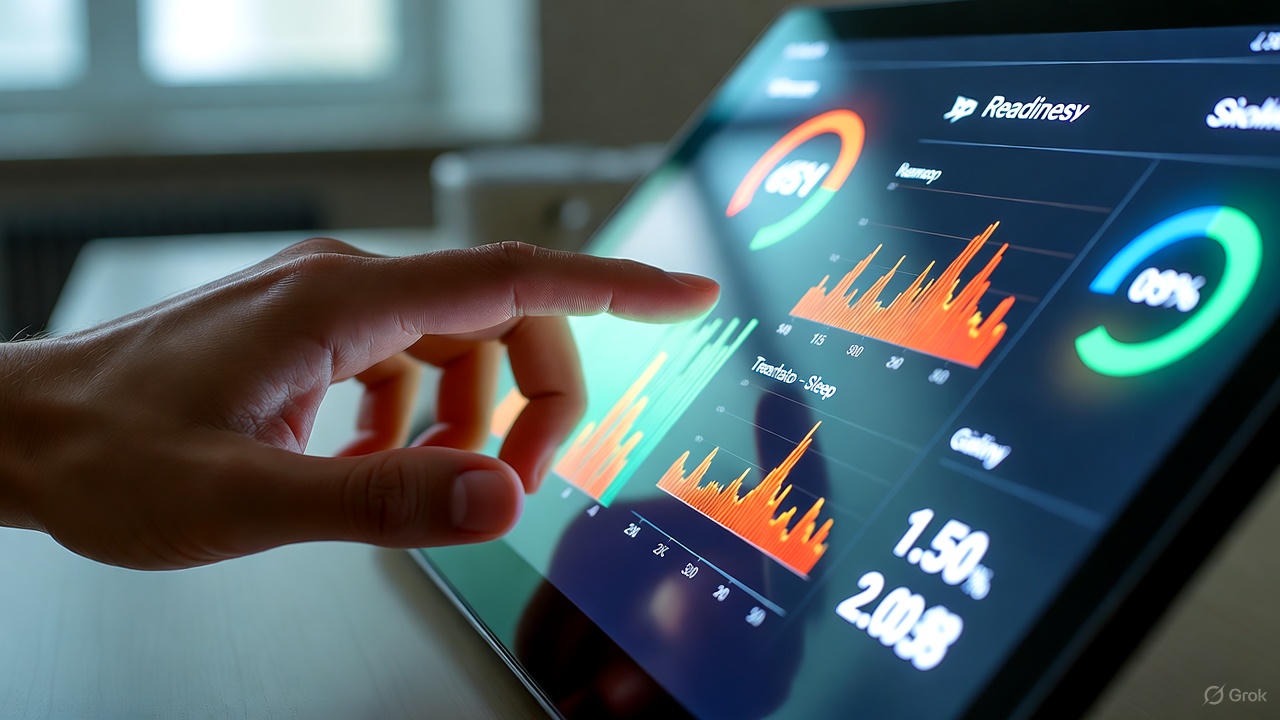
The ultimate promise of the Accuracy Revolution is not just better sleep scores or more precise workout data. It is the potential to fundamentally reshape our healthcare model from a reactive, symptom-based system to a proactive, prevention-oriented paradigm. This shift, often called "P4 Medicine" (Predictive, Preventive, Personalized, Participatory), is being catalyzed by the continuous, precise, and personal data streams now flowing from advanced wearables and smart rings.
The Reactive Healthcare Trap
Traditional medicine often operates like a fire department: we wait for the blaze (a symptom or acute illness) to erupt, then scramble to put it out. This approach, while critical for emergencies, is inefficient, expensive, and often comes too late for optimal outcomes. Chronic conditions like hypertension, type 2 diabetes, and cardiovascular disease develop silently over years; by the time they are diagnosed, significant physiological damage may already be done.
Continuous Monitoring as the First Line of Defense
Imagine a world where your primary care physician doesn't just see a snapshot of your health during an annual physical, but has access to a continuous, longitudinal report of your key physiological trends. This is the preventative power of accurate health tracking:
The Role of the Physician in a Data-Rich World
This future doesn't replace doctors; it augments them. The physician's role evolves from being the sole keeper of diagnostic information to being an interpreter and guide in a partnership with an informed, data-empowered patient. The "doctor's visit" of the future might begin with a review of the patient's 90-day biomarker trends, highlighting areas of concern or improvement, allowing the conversation to focus on root causes and personalized lifestyle prescriptions rather than just symptom description.
Population Health and Research
On a macro scale, the anonymized, aggregated data from millions of users creates an unprecedented resource for medical research. Scientists can study how real-world lifestyle factors influence health outcomes on a scale never before possible, potentially uncovering new risk factors, validating interventions, and personalizing public health recommendations. This data can answer questions like: What sleep patterns are most protective against cognitive decline? How does shift work truly impact metabolic health across different genotypes?
The path forward requires building robust bridges between consumer health technology and the clinical ecosystem. This involves establishing data standards, ensuring interoperability with Electronic Health Records (EHRs), and, most importantly, conducting rigorous clinical trials to demonstrate that using these devices for preventative monitoring actually improves health outcomes and reduces costs. The Accuracy Revolution provides the tools. The healthcare revolution will be in how we wield them to move from fixing sickness to fostering enduring wellness.
The Accuracy Revolution is not the work of a single company, but a dynamic and competitive race involving tech giants, agile startups, and traditional medical device manufacturers. Each brings a different philosophy, strength, and target audience to the table, driving innovation forward at a breakneck pace. Understanding this landscape helps illuminate where the technology is today and where it's heading tomorrow.
1. The Smart Ring Specialists: Optimizing for Precision
This category is defined by companies focusing exclusively on the ring form factor, betting on its physiological advantages for 24/7 health sensing.
2. The Smartwatch Titans: The Power of the Ecosystem
Apple, Google (via Fitbit), and Samsung dominate the wrist. Their strategy is not just health tracking but creating a comprehensive digital hub on your wrist.
3. The Medical Device Incumbents: Validation First
Companies like Withings (ScanWatch, which has FDA/CE clearance for ECG and Afib detection) and Garmin (with its extensive focus on athletic performance and advanced training metrics like HRV Status and Morning Report) operate at the intersection of consumer and medical-grade. Their products often feel more like tools than lifestyle gadgets, with a strong emphasis on validated data and actionable insights for specific user groups (cardiac patients, endurance athletes).
4. The Emerging Disruptors: Specialized & Niche
This includes companies targeting very specific use cases with novel technology. For example, Apollo Neuro focuses not on sensing but on delivering therapeutic haptic vibrations to improve stress resilience and sleep, representing a shift from "tracking" to "treating." Others are exploring non-optical sensing, like NuraLogix which uses a smartphone camera for contactless blood pressure estimation.
The Battlegrounds of the Future:
The competition will be won on several fronts:
This vibrant competition is enormously beneficial for consumers. It accelerates innovation, improves accuracy, and expands choice. Whether you prioritize medical-grade validation, athletic performance, holistic wellness, or seamless tech integration, there is a player in the Accuracy Revolution racing to meet your needs. The ultimate winner, however, will be the user, as the entire industry is forced to elevate its standards in the pursuit of truth in data.
A health tracker in isolation is powerful. A health tracker that speaks fluently with the other intelligent systems in your life is transformative. The next frontier of the Accuracy Revolution lies in interoperability—the seamless, bidirectional flow of data between your wearable, your home, your apps, and your healthcare providers. This creates a "connected body" within a "connected environment," enabling a level of automated, context-aware health optimization that was previously the realm of science fiction.
The Home as a Health Sanctuary:
Imagine your smart ring detecting the first signs of your body winding down for sleep—a drop in heart rate and a cooling skin temperature. Instead of just logging this, it communicates with your smart home system via IFTTT or native integrations:
Fitness and Nutrition: Closing the Loop
Health data becomes exponentially more valuable when correlated with other lifestyle logs.
The Healthcare Integration Frontier (The "Holy Grail"):
The most significant, yet most challenging, integration is with the formal healthcare system.
The Challenge: Standards and Fragmentation
The main obstacle to this connected future is the lack of universal data standards and the "walled gardens" created by some tech companies. Initiatives like Apple's HealthKit and Google's Health Connect are trying to be neutral brokers, allowing different apps and devices to share data with user permission. The ideal future is an open, user-centric framework where you own your data and can choose which services have access to it, for how long, and for what purpose.
When your wearable, your home, your apps, and your doctor are all informed by the same stream of accurate, continuous physiological data, health management ceases to be a series of discrete tasks and becomes an ambient, intelligent, and deeply personal support system. This is the full expression of the Accuracy Revolution: not just a better sensor, but a smarter, more responsive world built around your well-being.

The Accuracy Revolution faces a critical, human-centered challenge: user skepticism. After years of inconsistent data, unfulfilled promises, and “garbage in, garbage out” experiences with earlier wearables, many consumers have developed a justified cynicism. For this revolution to reach its full potential, technology must not only be accurate but must prove its trustworthiness in transparent, user-centric ways. Building this bridge of confidence is as much a design and communication challenge as it is an engineering one.
The Roots of Skepticism:
User distrust typically stems from several key experiences:
Strategies for Building Trust Through Transparency:
Leading companies in the new era are adopting strategies to demystify their data and earn user confidence.
The Role of Community and Longitudinal Data:
Trust also builds over time. When a user sees that the device’s data consistently correlates with life events—a poor sleep score after a night of drinking, a dip in HRV during a stressful work week, an improved recovery score after a vacation—the device earns its place as a reliable mirror. Furthermore, robust user communities where people share experiences and compare notes on data patterns can provide social proof and collective learning, helping individuals discover restful living habits that transform energy based on shared, data-backed experiences.
Ultimately, overcoming skepticism is about fostering a collaborative relationship between human and machine. The device must position itself not as an infallible oracle, but as a sophisticated tool that provides a unique, data-driven perspective to be integrated with the user’s own self-awareness. By prioritizing transparency, education, and humility, the Accuracy Revolution can convert skeptics into empowered partners in their own health journey.
As health tracking technology achieves unprecedented accuracy and influence, it steps firmly into the realm of ethics. The data we collect and the algorithms we build are not neutral; they reflect the biases, priorities, and blind spots of their creators. The Accuracy Revolution, therefore, carries a profound responsibility to ensure its benefits are distributed justly and its tools are designed with equity and ethical foresight. Ignoring these implications risks creating a new "health data divide" that exacerbates existing inequalities.
Algorithmic Bias: The Danger of Homogeneous Datasets
The AI models that interpret sensor data are only as good as the data on which they are trained. If the vast majority of training data comes from young, healthy, male, affluent, and light-skinned individuals, the algorithms will be less accurate for everyone else.
The Accessibility and Data Divide:
The most advanced health tech is often expensive. High-precision smart rings and watches represent a significant financial investment, creating a scenario where the tools for proactive, preventative health are accessible primarily to the wealthy.
Data for Profit vs. Data for Good:
The business model behind the data is a central ethical question. User health data is immensely valuable for advertising, insurance underwriting, and research. The line between service and exploitation is thin.
The Path Forward: Proactive Ethical Design
The industry must move from reacting to ethical scandals to proactively embedding ethical principles into its design process. This includes:
The goal of the Accuracy Revolution should be to elevate the health of all of humanity, not just a privileged subset. By confronting issues of bias, accessibility, and data ownership head-on, the industry can ensure that this powerful technology becomes a force for equity, empowerment, and universal well-being, helping everyone learn how nature supports restful living and holistic health, regardless of their background.
Peering beyond the next product cycle or software update, the logical endpoint of the Accuracy Revolution is a world where health technology becomes invisible, predictive, and seamlessly integrated into the fabric of our existence. It’s a shift from tracking past states to anticipating future needs, from generalized advice to hyper-personalized prescription, and from conscious self-quantification to ambient wellness support. This long-term vision paints a picture of a fundamentally different relationship with our own health.
The Invisible Guardian:
The ideal health sensor will disappear. Future devices will be even smaller, more comfortable, and more passively powered (through kinetic energy or advanced bio-batteries). They may be embedded in everyday objects—earbuds that measure core temperature, a necklace that monitors ECG, clothing with woven sensor fibers, or even a discreet skin patch. The goal is zero cognitive load and 100% compliance, removing the final barrier to continuous, lifelong data collection.
From Descriptive to Predictive Analytics:
Today’s best devices are descriptive and sometimes diagnostic ("You had poor sleep because your heart rate was elevated"). The future is predictive.
The Dynamic, Personalized Health Interface:
Your health platform will become a dynamic, adaptive coach that doesn’t just report on yesterday but scripts a better tomorrow.
Democratized, Decentralized Healthcare:
In this vision, the traditional annual physical is replaced by continuous, remote monitoring managed by a hybrid human-AI care team. Specialist referrals could be triggered automatically by persistent data anomalies. Clinical trials could recruit perfect candidate cohorts based on real-world, continuously monitored physiology, accelerating medical research.
This future is not without its perils—it demands ironclad privacy, vigilant governance against bias, and careful management of the human-technology relationship to avoid overdependence or anxiety. Yet, its potential is staggering: a world where healthcare is not something you access only when sick, but a continuous, supportive, and deeply personal partnership focused on sustaining your highest possible state of vitality. The Accuracy Revolution is laying the sensor and data foundation for this future. The next chapters will be written in algorithms, ethical frameworks, and, most importantly, in the improved lives of millions.
Your Trusted Sleep Advocate: Sleep Foundation — https://www.sleepfoundation.org
Discover a digital archive of scholarly articles: NIH — https://www.ncbi.nlm.nih.gov/
39 million citations for biomedical literature :PubMed — https://pubmed.ncbi.nlm.nih.gov/
Experts at Harvard Health Publishing covering a variety of health topics — https://www.health.harvard.edu/blog/
Every life deserves world class care :Cleveland Clinic - https://my.clevelandclinic.org/health
Wearable technology and the future of predictive health monitoring :MIT Technology Review — https://www.technologyreview.com/
Dedicated to the well-being of all people and guided by science :World Health Organization — https://www.who.int/news-room/
Psychological science and knowledge to benefit society and improve lives. :APA — https://www.apa.org/monitor/
Cutting-edge insights on human longevity and peak performance:
Lifespan Research — https://www.lifespan.io/
Global authority on exercise physiology, sports performance, and human recovery:
American College of Sports Medicine — https://www.acsm.org/
Neuroscience-driven guidance for better focus, sleep, and mental clarity:
Stanford Human Performance Lab — https://humanperformance.stanford.edu/
Evidence-based psychology and mind–body wellness resources:
Mayo Clinic — https://www.mayoclinic.org/healthy-lifestyle/
Data-backed research on emotional wellbeing, stress biology, and resilience:
American Institute of Stress — https://www.stress.org/


