


Productivity and Health Balance for Night Owls: What Your Wellness Ring Shows
Productivity and health advice for night owls, based on what their unique ring data shows.
Productivity and health advice for night owls, based on what their unique ring data shows.
%402x.svg)
For generations, society has operated on a simple, sun-aligned principle: early to bed, early to rise. But what if your most lucid thoughts arrive under moonlight? What if your creative peak pulses at 2 AM, and the 9-to-5 schedule feels like a constant, draining battle against your own biology? You are a night owl—and you’re not alone. An estimated 20-30% of the population has a genetically influenced chronotype that favors later sleep and wake times.
The conflict isn’t just social; it’s a profound health and productivity mismatch. Night owls forced into an early bird world face a higher risk of metabolic syndrome, cardiovascular issues, depression, and chronic sleep deprivation. But the era of simply suffering through the morning alarm is over. We now have access to a powerful ally worn on your finger: the modern wellness smart ring.
This device does more than count steps; it is a continuous, intimate biometrical observer. It deciphers your unique physiological language—heart rate variability (HRV), skin temperature, sleep architecture, and stress biomarkers—to reveal what your night-owl body truly needs. This isn’t about "fixing" you to fit a schedule. It’s about leveraging data to architect a lifestyle where your nocturnal edge becomes a sustainable superpower. This article will guide you through interpreting the nuanced data from your wellness ring, translating raw numbers into actionable strategies for protecting your health and maximizing your productivity, all on your own biological time.

Before we dive into the data, we must dismantle a pervasive myth: being a night owl is a choice, a lack of discipline, or a bad habit. Modern science confirms it is fundamentally a biological predisposition. Your chronotype—your natural inclination for sleep and wake times—is orchestrated by your suprachiasmatic nucleus (SCN), the master clock in your brain. This clock is set by a complex interplay of genetics, light exposure, and hormonal cascades.
For night owls, this internal clock runs on a longer, delayed cycle. The evening surge of melatonin, the sleep-signaling hormone, happens later. The morning cortisol awakening response is blunted and delayed. Your core body temperature minimum, which typically promotes deep sleep, occurs later in the night. This isn't a malfunction; it's a variation. Historically, groups with mixed chronotypes likely had a survival advantage, with "night watches" naturally covered by those alert in the dark hours.
However, the modern world is brutal to this biology. Mandatory early starts force night owls into a state of permanent social jetlag—a constant misalignment between your social clock and your biological clock. The wellness ring captures the physiological cost of this misalignment. You might see a consistently elevated resting heart rate in the morning, poor HRV recovery overnight, and fragmented sleep even when you get your full 8 hours, because they aren't the right 8 hours for your rhythm.
Understanding this is the first step to self-compassion and effective strategy. Your goal isn't to become a morning person, but to create an ecosystem where your night-owl biology can thrive without sacrificing long-term health. The data from your ring becomes the objective proof of what your body is experiencing, moving you from feeling "lazy" to making empowered, evidence-based adjustments. For a deeper look at how to establish your personal biological baseline, our guide on creating a personal stress baseline for accurate tracking is an essential next step.
A wellness ring is a silent sentinel, gathering data while you work, sleep, and live. For the night owl, certain metrics take on critical significance. Let’s translate them.
Heart Rate Variability (HRV): Your Resilience Score. HRV is the time variation between your heartbeats, and it’s a gold-standard metric for autonomic nervous system balance. A higher HRV generally indicates better stress resilience and recovery. Night owls often see a telling pattern: HRV may remain low in the early morning (indicating high stress on the system when forced awake) and then climb to its peak in the late evening, precisely when you feel most alert and "yourself." This data validates your rhythm. A consistently low HRV, however, is a red flag for chronic stress, regardless of chronotype. To fully understand this crucial number, explore our detailed resource on HRV and stress: understanding heart rate variability numbers.
Sleep Stages and Timing: It’s not just "hours in bed." Your ring analyzes light, deep, and REM sleep. Night owls may struggle to get sufficient deep sleep in the early part of the night (when their biology isn't ready for it) and may experience a compression or delay of REM sleep, vital for memory and creativity. The ring can show you if your "full" sleep is actually restorative, or if its architecture is disrupted by an unnatural schedule.
Skin Temperature and Readiness: Nocturnal skin temperature fluctuations are closely tied to sleep quality and circadian rhythm. A delayed temperature drop aligns with a delayed sleep onset. Your ring tracks this micro-trend, helping you identify your true, natural bedtime window versus when you're forcing yourself to bed.
Resting Heart Rate (RHR) Trend: Your RHR naturally dips during sleep. A night owl with a 2 AM bedtime will see their lowest RHR at 10 AM, not 5 AM. If your RHR is elevated during your sleep window, it’s a sign of physiological stress—you might be trying to sleep when your body is primed for activity.
Stress Biomarkers & Recovery: Advanced rings use HRV, RHR, and temperature to estimate physiological stress levels. The night owl’s graph should logically show higher stress in the early morning (when battling the world) and lower stress during their peak evening hours. If the stress line is perpetually high, it signals a need for intervention. For a comprehensive breakdown of these markers, our complete guide to biomarker-based stress tracking offers an expert-level analysis.
By learning this language, you stop guessing and start knowing. You can see the exact impact of a late-night work sprint, an early morning meeting, or a weekend sleep-in on your nervous system.
This is the night owl's dream: to structure work during their natural peak cognitive hours. The data doesn't lie—your focus, creativity, and problem-solving abilities soar when the world is quiet. Your wellness ring can help you pinpoint this window with precision. Look for the daily period where your stress metrics are low, your heart rate is steady, and your body temperature suggests alertness. This is your biological "power zone."
However, an unmanaged night-owl schedule poses a major risk: the blurring of boundaries. When your productive zone extends into the early hours, the transition to rest can vanish. You might finish a intense work session and immediately try to sleep, but your mind and body are still buzzing with sympathetic (fight-or-flight) activation. This is where your ring’s recovery metrics become crucial.
You must learn to defend your wind-down. Just because you can work until 3 AM doesn’t mean you should jump straight into bed. Your ring will show poor sleep onset and low HRV recovery if you do. The key is to create a deliberate, data-informed "shutdown ritual" that begins 60-90 minutes before your target bedtime. Use your ring to experiment: on nights you implement a wind-down routine (dim lights, no screens, calm activity), how does your sleep latency and deep sleep percentage compare to nights you don’t?
True productivity is sustainable. It’s about aligning deep work with your peak hours while rigorously protecting your recovery period. Your ring provides the feedback loop to master this balance, ensuring your nocturnal productivity doesn’t come at the cost of next-day exhaustion or long-term health. For those struggling to transition from work brain to rest brain, our exploration of evening calm practices for transitioning from work to rest provides practical, data-friendly techniques.

Let’s address the unavoidable reality: most night owls cannot completely avoid morning commitments. Whether it’s a weekly meeting, school drop-off, or a doctor’s appointment, the 8 AM world will intrude. The goal is not to enjoy these mornings, but to survive them with minimal physiological damage. Your wellness ring is your strategy lab.
First, analyze the impact. The morning after an early alarm, check your metrics. How was your sleep efficiency? What was your waking HRV and stress score? This quantifies the cost, making it real.
Next, experiment with light strategy. Light is the most powerful circadian resetter. For a night owl, morning bright light exposure (ideally natural sunlight within 30 minutes of waking) is non-negotiable. It signals to your delayed SCN that the day has begun, helping to slightly advance your clock over time. Use your ring to track if consistent morning light improves your subjective energy and, over weeks, your ability to fall asleep slightly earlier.
Fuel strategically. Your cortisol rhythm is delayed, so a heavy breakfast first thing may feel repulsive. Your ring’s stress response might spike after eating too early. Consider a light, protein-focused meal and hydrate well. Notice if caffeine before 10 AM causes a jittery stress spike on your graph or ruins your later sleep. Let the data guide your timing.
Prioritize recovery after the assault. If you have an early morning, guard the following night fiercely. Your ring data will likely show you need extra sleep duration or higher sleep quality to repay that "sleep debt" and re-regulate your stress systems. This might mean saying no to evening plans to protect your circadian repair time. Observing your stress recovery score and what it means for your health after such disruptions is key to intelligent scheduling.
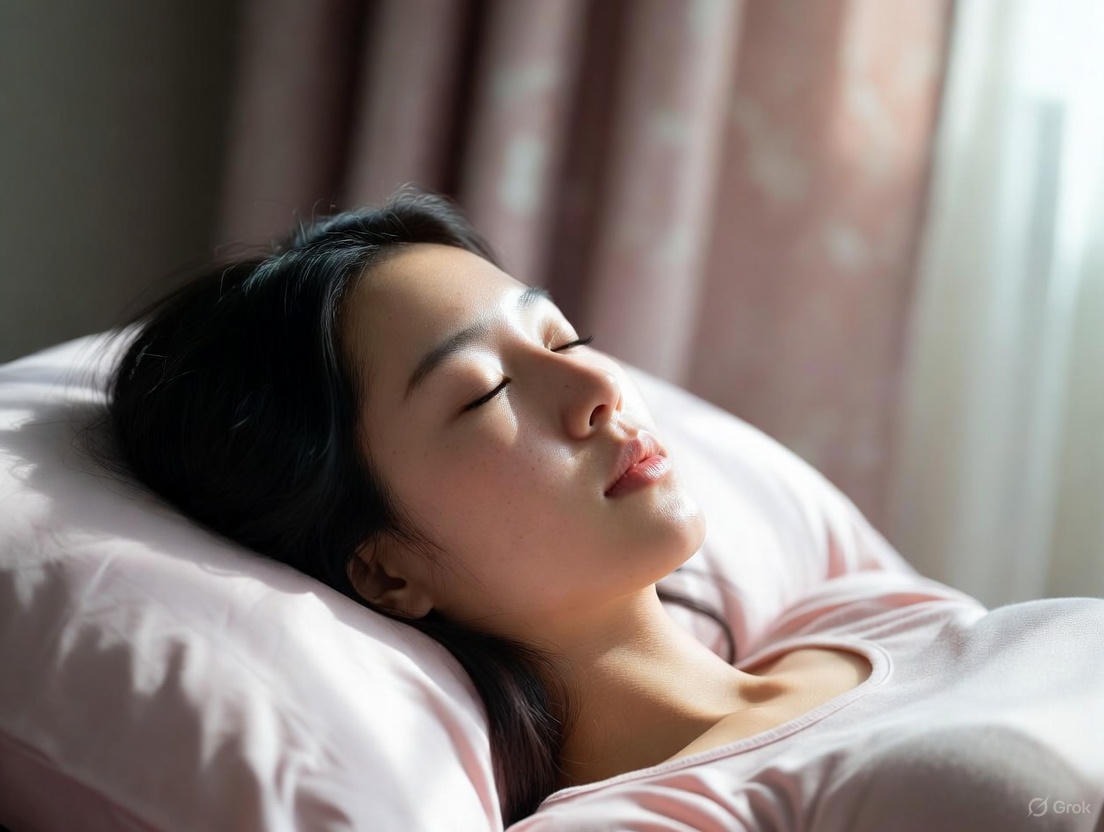
Society obsesses over sleep duration ("Get 8 hours!"). For night owls, timing and quality are far more consequential. You can be in bed for 9 hours but if it's from 1 AM to 10 AM in a noisy, light-polluted environment, your ring will likely reveal poor sleep efficiency, insufficient deep sleep, and unresolved physiological stress.
Your mission is to engineer the perfect sleep environment and consistency for your unique schedule.
Darkness is your sacred shield. Melatonin, your sleep hormone, is exquisitely sensitive to light. Even small amounts of blue light from devices can suppress it. Since your natural melatonin onset is later and more fragile, you must be militant. Use blackout curtains, consider a sleep mask, and eliminate all electronic light sources in the bedroom. Your ring’s sleep score will thank you.
Temperature regulation follows your delayed rhythm. Your core body temperature needs to drop to initiate sleep. This drop happens later for you. You can support it by taking a warm bath or shower 60-90 minutes before bed; the subsequent cooldown mimics the natural drop. Your ring’s skin temperature data can help you find the ideal bedroom thermostat setting for your rhythm.
Consistency, even on weekends. The biggest temptation for a night owl is the "social jetlag" weekend—sleeping in until 2 PM. While some catch-up is beneficial, a drastic shift creates a physiological Monday morning hangover worse than any party. Use your ring to find a compromise. Maybe you allow yourself to sleep until 11 AM instead of 9 AM, but not until 3 PM. The data will show how different weekend schedules affect your Monday readiness metrics. For shift workers and those with highly irregular schedules, managing this is a science in itself, detailed in our article on stress tracking for shift workers managing irregular schedules.
Your digestive system, insulin sensitivity, and metabolism are all governed by circadian rhythms. For night owls, eating on an early bird schedule can feel wrong because, biologically, it is. Your ring’s stress and HRV data can reveal how meal timing affects you.
The Misaligned Breakfast. A large, carb-heavy breakfast at 7 AM, when your cortisol is still low and your system is in a semi-nocturnal state, can cause a glucose spike and a corresponding stress response. Your ring may show elevated stress markers for hours after. Experiment with pushing your first meal later, or making it very light and easy to digest, and observe the data.
The Prime Dinner Time. Your metabolic efficiency is likely higher in the evening. However, eating a huge meal right before bed can elevate nighttime skin temperature and RHR, impairing sleep quality. Use your ring to find your goldilocks zone: eating your largest meal a few hours before your natural bedtime, allowing for digestion before sleep onset.
Late-Night Fuel. If you are active and working late, you will need sustenance. The key is choosing foods that won’t trigger inflammation or a stress response. Observe how different late-night snacks (e.g., nuts vs. sugary snacks) affect your overnight HRV and morning readiness score. This turns nutrition into a personalized experiment.
Hydration and Caffeine. Dehydration is a silent stressor. Your ring’s baseline stress levels may be lower on days you are well-hydrated. Caffeine has a half-life of 6-8 hours; for a night owl with a 2 AM bedtime, that means no coffee after 6 PM. Your sleep latency data will provide brutal honesty on your personal caffeine cutoff time. Tracking how these daily choices aggregate is where insight emerges; learn how to conduct a weekly stress report to review your data effectively.

Forcing a 6 AM gym session can be a recipe for misery and injury for a night owl. Your body temperature and hormone profiles aren't primed for peak performance at dawn. Your wellness ring can help you find the ideal movement window.
Listen to Your Body Temperature. Athletic performance correlates with higher core body temperature. As a night owl, your temperature peaks later in the day. Your ring’s temperature trend can show you when your body is naturally "warmed up" and ready for intense exercise—likely late afternoon or evening.
HRV as a Guide to Train or Recover. Check your morning HRV (even if your "morning" is 11 AM). If it’s significantly lower than your baseline, it’s a sign your nervous system is stressed and may need a recovery day (gentle yoga, walking) instead of high-intensity training. Pushing through on a low HRV day can lead to overtraining and injury.
The Evening Workout Dilemma. A common concern is that evening exercise will disrupt sleep. For early birds, this is often true. For night owls, a vigorous workout ending 2-3 hours before your natural bedtime may be perfectly aligned with your energy curve and actually improve sleep quality by helping your body temperature rise and then fall. Let your ring’s sleep data be the judge. Does a 9 PM workout ruin your 1 AM bedtime, or does it lead to faster sleep onset and more deep sleep?
The Power of Non-Exercise Movement. Consistent, low-grade movement throughout your active hours (walking, stretching) can help regulate circadian rhythms and manage stress. Your ring’s activity tracker and stress metric correlation can show how a day with more passive movement compares to a sedentary day.
The night owl’s mind can be both a palace of creativity and a prison of rumination. The quiet hours can amplify focus, but they can also amplify anxiety and loneliness when the rest of the world is asleep. This makes diligent tracking of mental and emotional well-being non-negotiable.
Your wellness ring provides objective, physiological correlates to your subjective state. You might feel fine during a late-night worry spiral, but your ring will show a spiking stress graph, elevated resting heart rate, and plummeting HRV. This data serves as a crucial, non-judgmental reality check. It can help you differentiate between productive flow (characterized by steady, moderate biometrics) and anxious striving (characterized by erratic, high-stress biometrics).
Identifying Triggers in the Quiet Hours. Use the journaling feature in your ring’s app (or a separate notebook) alongside the data. When you see an unexplained stress spike at 1 AM, note what you were thinking about or doing. Over time, patterns emerge. You may find that checking news or social media late at night is a major stress trigger, or that unstructured time leads to anxiety, while focused creative work induces calm.
The Importance of Connection. Social rhythms are powerful circadian cues. Night owls risk isolation. Schedule virtual co-working sessions with other night owls, or late-evening calls with friends in other time zones. Notice if days with meaningful social interaction, even if digital, show better recovery metrics than days spent in solitude.
When to Seek Help. If your ring consistently shows chronically high stress, terrible sleep scores, and low HRV despite your best efforts to align your life, it may be a sign of an underlying mood disorder exacerbated by circadian misalignment. This biometric evidence can be a powerful tool in a conversation with a therapist or doctor who understands chronobiology. Understanding the relationship between sleep data and stress levels is a critical piece of this puzzle.
For the night owl, technology is a double-edged sword. It enables flexible work and global connection, but its blue light and endless engagement are kryptonite to a delayed circadian rhythm. You must become a master of tech hygiene, using your ring data to enforce boundaries.
Blue Light: The Primary Adversary. The evidence in your data will be clear: nights with high screen time before bed correlate with longer sleep latency and less REM sleep. Since your melatonin production is already tenuous, you cannot afford this leak. Implement systemic solutions: blue light filters (like f.lux or Night Shift) that start at sundown, not bedtime. Consider orange-tinted glasses for evening screen use. Make your bedroom a device-free tomb.
Notifications as Stress Events. Each ping is a micro-stressor, causing a tiny cortisol bump. For a night owl working in the evening, these interruptions fracture focus and induce low-grade anxiety. Use your ring’s stress graph in real-time: enable "Do Not Disturb" for a 3-hour work block and watch your stress line stay steady. Notice the spikes when notifications are on. This data makes a compelling case for aggressive notification management.
The Data Feedback Loop. This is the meta-use of your wellness ring: let it govern your tech use. Set a rule: if your 7-day average sleep score drops below a certain point, you institute a stricter digital curfew. If your daytime stress scores are high, you delete the most addictive social media app for a week and observe the effect. Use technology to audit technology. For a deeper dive into managing digital stressors, especially relevant for remote workers, our resource on stress tracking for remote workers preventing digital burnout offers targeted strategies.
Now, we synthesize the data into action. This is not a rigid prescription, but a framework for building your personalized Night Owl Protocol. Your ring is the compass for this journey.
Phase 1: The Baseline Audit (2 Weeks). Live your normal life. Don’t change anything. Just wear your ring consistently and observe. Export the data or take screenshots. Establish your true averages: What’s your natural sleep onset and wake time on free days? What’s your average HRV? When does your stress typically peak and trough? This is your biological truth.
Phase 2: The Single-Variable Experiment (1-2 Weeks Each). Now, change one thing at a time and measure the effect.
Phase 3: Synthesis and Protocol Design. Analyze which experiments yielded the most positive changes in your core metrics (Sleep Score, HRV, Stress Recovery). Integrate these wins into a daily routine. This becomes Version 1.0 of your Personal Night Owl Protocol. It might look like: "Wake at 10 AM, light exposure by 10:15, first meal at 12 PM, deep work block 4 PM-12 AM, digital curfew & wind-down at 12 AM, target bedtime 1 AM."
Phase 4: Maintenance and Iteration. Life happens. Your protocol will need flexibility. Use your ring’s weekly and monthly trends to stay on track. If you see a metric backsliding, revisit your experiments. Your protocol is a living document, optimized by continuous biometric feedback. To move from raw data to true wisdom in this process, consider the expert framework for interpreting chronic stress from numbers to insight.
Finally, your personal data journey has a broader purpose: advocacy. The "wellness" and "productivity" industries are saturated with morning-centric dogma. By understanding your own biology and demonstrating—through your own improved health metrics and output—that a different model works, you become an agent of change.
Use your data to have informed conversations with employers about flexible core hours or asynchronous work. Show how your productivity metrics (if tracked) coincide with your biological peak hours. Frame it not as a preference, but as a physiological necessity for sustainable high performance.
Share your journey (anonymized data is powerful) to normalize chronodiversity. The goal is a world where "early bird" and "night owl" are seen as neutral biological variations, like eye color, not moral attributes. A world where schedules can be flexible enough to allow everyone to contribute at their best, healthiest times.
Your wellness ring is more than a personal gadget; it is the key to unlocking this self-knowledge and the evidence to back it up. For the night owl, it transforms a lifetime of feeling out-of-sync into a journey of empowered, data-driven alignment. The night holds no inherent danger to productivity or health—only misunderstanding. It’s time to let your data illuminate the path forward.
Daily and weekly data is crucial for tactical adjustments, but the true power of continuous wearables unfolds over months and seasons. For the night owl, whose rhythm is constantly pressured by a diurnal world, spotting macro-trends is essential for preventing burnout and understanding your body's deeper cycles.
The Quarterly Audit. Every three months, step back from daily scores and examine trends. Is your average HRV on a slow, upward trajectory, indicating improved resilience? Or is it gradually declining, signaling accumulating stress despite your daily protocol? Has your natural sleep onset, as detected on free days, stabilized, or is it drifting later? Your ring’s long-term graphs provide this bird’s-eye view. A creeping later bedtime might suggest you’ve succumbed to "revenge bedtime procrastination," while a stabilizing trend indicates successful routine entrainment.
Seasonal Sensitivity. Many night owls report their tendencies intensify in winter, with later wake times and greater difficulty with morning obligations. Is this reflected in your data? You might see lower average HRV and higher resting heart rate in December compared to June. This isn’t a failure; it’s a chronobiological response to reduced daylight. Recognizing this pattern allows for compassionate seasonal adjustments—perhaps using a dawn simulator light box in the winter months and tracking its impact on your morning readiness scores. This moves you from fighting the seasons to flowing with them.
Lifecycle and Age-Related Shifts. Chronotypes are not static. While genetically set, they evolve over a lifespan. The night owl tendency is strongest in adolescence and young adulthood and often moderates slightly with age. Your multi-year wearable data becomes a unique longitudinal study of your chronotype aging. Noticing a natural, gentle advance in your peak evening energy over years can inform long-term career and lifestyle planning. For a sophisticated approach to reviewing this aggregated data, our guide on aggregate view: monthly and yearly stress trend analysis provides the methodology.
Correlating with Lifelogs. The most powerful insights come from correlating biometric trends with your personal lifelog. Use the journal feature in your app to tag significant events: starting a new project, a period of travel, a stressful family event, a vacation. Months later, you can scroll your HRV or sleep graph to those dates and see the exact physiological impact. You might discover that creative projects, though demanding, elevate your metrics, while administrative chaos drains them. This turns your life into a series of evidence-based experiments on what truly nourishes or depletes your unique system.
At this stage, you graduate from looking at metrics in isolation to analyzing their dynamic interplay. For the night owl, three biomarkers form a critical triad: Sleep Quality, Physiological Stress, and Cognitive Performance (which can be subjectively logged or inferred from activity/work output). Your ring provides the first two objectively; you supply the third.
The Sleep-Stress Feedback Loop. Poor sleep (short duration, low efficiency, lack of deep sleep) leads to elevated next-day physiological stress, as seen in higher resting heart rate and lower HRV. This daytime stress, in turn, makes it harder to wind down and achieve quality sleep the next night, especially for a night owl whose wind-down window is already delicate. Your ring data can vividly chart this vicious cycle. The breakthrough is using the data to break it. If you see a day of high stress, you can proactively implement a superior wind-down ritual that evening, using your ring to confirm it improved sleep, which then lowers next-day stress.
The Performance Correlation. This is where you become a scientist of your own output. For one week, rate your subjective focus, creativity, and productivity on a 1-10 scale each evening. Now, lay that over your ring’s data for the corresponding previous night’s sleep and that day’s stress graph. The correlations will be illuminating. You will likely find that your best work days are preceded by nights with strong deep sleep and followed by a stress graph that shows calm, sustained focus (low, stable stress) during your work blocks, not a chaotic spike. This evidence powerfully argues for protecting sleep as a non-negotiable performance enhancer, not an inconvenience.
Identifying Your Recovery Signatures. Not all recovery looks the same. For some, a great recovery night is marked by very high deep sleep. For others, it’s a massive spike in HRV. For a night owl, your ideal recovery signature might occur most reliably on weekend nights when you follow your natural rhythm without an alarm. Identify your personal signature. Then, when you have a critical project during your peak hours, you can prioritize the habits that lead to that signature the night before, ensuring you operate at your cognitive best. Diving into the science behind wearable stress tracking technology can give you greater appreciation for how these correlations are measured.
Armed with long-term trends and an understanding of biomarker correlations, you can now move from patchwork fixes to designing your ideal day—a template that aligns external demands with internal biology as closely as possible. This is not a rigid schedule, but a flow state framework.
The Biological Zones of Your Day (Based on a sample 1 PM-9 AM sleep cycle):
Your template will vary. The key is to use your ring’s data to define the approximate boundaries of these zones for you, and then structure your commitments within them as ruthlessly as possible.
Your ideal template will inevitably clash with external expectations. The next skill is strategic negotiation, using your self-knowledge and, when appropriate, your data as a tool.
Reframing the Ask. Instead of "I don’t like morning meetings," the communication becomes: "To ensure I bring my full focus and energy to our collaboration, could we schedule after 12 PM? My peak cognitive hours are in the afternoon and evening, and I’ll be much more prepared and present." This frames it as a commitment to quality, not a personal preference.
The Strategic Compromise. You cannot win every battle. Use your data to choose your compromises wisely. If you must attend a weekly 9 AM meeting, use your ring to track its impact. Then, build recovery into your schedule. Perhaps you block the two hours after that meeting as "low cognitive load" time, knowing your biometrics will be subpar. You’ve turned a loss into a managed cost.
Data-Informed Advocacy (For the Bold). In progressive, performance-oriented environments, you might share anonymized, high-level insights. A chart showing your productivity output (e.g., code commits, writing word count, sales closed) superimposed over your time of day, correlated with stable stress metrics during your peak zone, is a powerful business case for flexibility. It demonstrates you are managing a high-performance system, not shirking.
Creating Chrono-Diverse Teams. If you have influence, advocate for team structures that respect different rhythms. The early bird can handle the 8 AM client call; the night owl can draft the proposal due the next day. This creates a 24-hour team rhythm without burning anyone out. Your personal success with a data-informed protocol makes you a credible advocate for this modern approach to work. This level of advocacy requires deep confidence in your own data interpretation; building that skill is outlined in how to interpret your stress tracking data like a pro.
As we deepen our reliance on biometrics, we must confront a potential pitfall: quantification anxiety. The very tool meant to reduce stress can become a source of it. Seeing a "poor" readiness score can create a nocebo effect, ruining your day before it starts. For the night owl, who may already grapple with feeling "out of sync," this risk is heightened.
Adopt a Range-Based, Not Point-Based, Mindset. Your body is not a machine. Daily fluctuations of 10-15% in HRV or a 10-point change in sleep score are normal. Look at your data in weekly bands or 30-day rolling averages. Is the general trend positive? That’s success. Obsessing over a single bad night is like a farmer panicking over one day of rain.
Practice Data Detoxes. Schedule regular periods—a weekend, a vacation—where you wear the ring for collection but do not check the app. Live by feel. Reconnect with your subjective sense of energy and mood. Then, after the period, review the data. This breaks the compulsive daily check-in and reminds you that the data is in service to your lived experience, not the other way around.
Question the Score. Most wellness scores are proprietary algorithms weighting various metrics. If you consistently feel great with a "low" readiness score, question the algorithm’s assumptions—it might be biased toward early riser patterns. Use the raw metrics (HRV, RHR, temp) and your own subjective feeling as the ultimate arbiters. For a balanced perspective on this modern dilemma, read our thoughts on how to track stress without becoming obsessed with the numbers.
Focus on Behavioral Inputs, Not Biometric Outputs. You cannot directly control your HRV. You can control whether you take a walk, drink water, or start your wind-down on time. Shift your daily goals from "achieve an 85 sleep score" to "complete my 60-minute wind-down ritual." The scores will follow over time, and you reclaim agency.
One of the greatest challenges for a night owl is travel—both across time zones and social travel like weekends away or family visits. These events can completely disrupt your hard-won rhythm. Your ring becomes an essential guide for navigating disruption and recovering efficiently.
Westward is Your Friend. Traveling west, where you gain time, is generally easier for night owls, as it aligns with your natural tendency to delay. Your ring data will likely show less disturbance. Traveling east is the true challenge. In the days before an eastward trip, you can use light therapy in the morning to gently advance your clock, and your ring can monitor if this intervention is working by tracking sleep onset.
The "Anchor Sleep" Strategy. For short trips (2-3 days), sometimes it’s less stressful to stay largely on your home time zone, especially if working remotely. Use your ring to protect a core 4-5 hour sleep block that aligns with your natural night, even if it means being out of sync locally. You’ll return home with less jetlag.
Social Travel and Family Visits. This is often more taxing than business travel. The pressure to conform to family meal times and activities can be intense. Use your data strategically. If you see a scheduled week at your parents' (early-to-bed, early-to-rise) house, prepare. In the weeks prior, use light and meal timing to gently shift your rhythm as much as is comfortably possible, using your ring to track incremental progress. During the visit, negotiate for one sacred element—perhaps you join for breakfast at 8, but you excuse yourself for a 20-minute "walk" (which is really a bright light session) afterward.
The Recovery Protocol. Any disruption will show in your data. Upon returning home, immediately re-institute your perfect wind-down ritual and sleep environment. Your ring will show you how many nights it takes for your HRV and sleep architecture to return to baseline. This number is valuable for planning; don’t schedule a critical deep work project the day after a red-eye flight. For more on maintaining core practices while on the move, see how to maintain calm mind practices during travel.
Your wearable generates a wealth of data that can be immensely valuable in a clinical setting. However, most healthcare systems are not yet equipped to ingest or interpret this continuous stream. It falls on you to be an informed translator.
Preparing for the Appointment. Don’t show up with 6 months of raw graphs. Synthesize. Create a one-page summary: "Over the past 90 days, my average resting heart rate has been X, but it spikes to Y on days with early meetings. My nightly HRV is consistently Z, which is below the population average for my age, suggesting chronic stress. My natural sleep onset, when free, is 2 AM." This gives a provider actionable, high-level insight into your circadian struggle.
Focus on Symptoms, Supported by Data. Lead with how you feel: "Doctor, I struggle with profound fatigue and brain fog in the mornings, but I’m wide awake at night." Then, present your data as evidence: "My wearable data supports this, showing poor sleep efficiency before 1 AM and my lowest stress levels after 8 PM." This frames the data as corroborating your lived experience, not replacing it.
Investigating Specific Issues. If you’re exploring issues like insomnia, adrenal fatigue, or mood disorders, your long-term data is gold. You can show the direct impact of a new medication on your sleep architecture or HRV. You can demonstrate if your reported "low energy" is correlated with objectively poor sleep or high stress. This moves the conversation from subjective description to objective pattern analysis. For effective communication strategies, review our guide on how to share stress tracking data with your doctor effectively.
Finding a Chrono-Informed Practitioner. Seek out healthcare providers—functional medicine doctors, certain psychiatrists, sleep specialists—who understand chronobiology. Your data-driven approach will resonate with them, and they can help you interpret it through a clinical lens, potentially ordering complementary tests like cortisol saliva panels to correlate with your ring’s stress metrics.
Sustaining a night-owl-friendly life requires more than willpower; it requires an engineered ecosystem. Your wellness ring is the central monitor, but it should be supported by complementary tools and social connections.
The Tech Stack for Nocturnals:
The Physical Environment:
The Social Community: This is the most critical element. Isolation is a key risk.
The current generation of wellness rings is revolutionary, but it is only the beginning. For the night owl, future developments promise even more precise and empowering tools.
Circadian Rhythm Biomarkers. Future devices may directly measure circadian phase through sweat-based biomarkers like melatonin or cortisol metabolites, giving you a precise "body time" readout each day, not an inference from sleep.
Predictive AI and Proactive Coaching. Algorithms will evolve from describing your past to predicting your future. Your ring might alert you: "Based on your current stress load and sleep deficit, your peak cognitive window tomorrow will be 7 PM to 11 PM. Schedule your important work then." Or, "Your data suggests a high probability of sleep disruption tonight. Consider taking a magnesium supplement and starting wind-down 15 minutes earlier."
Integrated Environmental Sensing. Rings or paired devices may monitor ambient light, noise, and temperature in your environment, automatically suggesting adjustments or syncing with your smart home to create the optimal conditions for your current zone (e.g., lowering lights as you enter your wind-down period).
Personalized Nutrient Timing. Coupled with continuous glucose monitoring (CGM), future systems could advise on the ideal type and timing of food to stabilize energy throughout your unique day, preventing the late-night crashes that plague night owls.
The Democratization of Chronobiology. As this data becomes richer and interfaces more intuitive, the broader culture will have to acknowledge the spectrum of human chronotypes. The night owl’s data will be part of a larger movement toward truly personalized health, shifting societal norms from a one-size-fits-all schedule to a flexible, performance-based understanding of time. Staying abreast of the accuracy debate in consumer stress tracking will help you navigate these evolving technologies as a savvy user.
This journey culminates not in a perfect graph, but in a transformed relationship with time, self, and potential. Your wellness ring is the mirror that showed you your true reflection, unclouded by societal judgment. The process moves through stages:
The goal is to reach a state where you consult your data less frequently because its lessons have been internalized. You know how you feel when aligned, and you have the tools to return to that state. Your productivity is no longer a frantic race against a mismatched clock, but a rhythmic flow that emerges from deep well-being.
You are not broken. You are a chronobiological variant navigating a world set to a different tempo. Your wellness ring provides the evidence, the language, and the feedback loop to not only survive in that world but to redesign your corner of it. By honoring your night-owl biology, you protect your health, unlock sustainable productivity, and claim the right to live and work in a way that feels authentically, powerfully you. The night is not for hiding; it's for creating. Let your data be the compass that guides you through its fertile darkness.
Your wellness ring is the diagnostic center, but resilience is built through daily practices—your behavioral "prescription" informed by the data. This toolkit consists of non-negotiable habits that fortify your system against inevitable disruptions.
The Non-Sleep Deep Rest (NSDR) Protocol. For the night owl, the gap between the end of the standard workday (5 PM) and your biological deep work zone can be a vulnerable period for procrastination or stress buildup. A 10-20 minute NSDR practice, such as a guided Yoga Nidra or a somatic breathing exercise, during this "liminal" time (e.g., 6 PM) can act as a powerful system reset. It lowers cortisol, improves HRV, and prepares your nervous system for sustained evening focus. Your ring will likely show a distinct drop in stress metrics post-NSDR. This practice is more effective than a nap, which can interfere with your delayed sleep drive.
The Two-Hour Buffer Rule. One of the most potent rules you can instill is this: No stimulating input begins within two hours of your target bedtime, and no work ends within one hour of it. This creates a protected psychological and physiological corridor into sleep. The first hour post-work is for closing loops—tidying your workspace, writing tomorrow’s three priorities. The second hour is for your wind-down ritual. Your sleep latency data will provide undeniable proof of this rule’s efficacy.
Strategic Caffeine and Light Anchors. Use these powerful zeitgebers ("time-givers") with military precision. Caffeine only during the first third of your waking day (e.g., between 11 AM and 5 PM for a 10 AM riser). Bright light exposure immediately upon waking (a 10,000-lux lamp if it's dark out) and avoidance of blue-spectrum light after your wind-down begins. Your ring’s sleep and stress data will help you fine-tune these timings to the minute.
The Weekly Rhythm Audit. Every Sunday, a 15-minute review of your weekly ring data and calendar. Look at your average sleep score, HRV trend, and identify the low points. Then, look at the upcoming week’s calendar. Where are the threats to your rhythm (early meetings, social events)? Proactively schedule your resilience practices around them. Block your deep work zones first, then your wind-down times. This proactive defense is the hallmark of mastery. To elevate this audit from numbers to meaningful insight, adopt a framework for turning your weekly stress report into effective review.
Theory is powerful, but concrete examples illuminate the path. Let’s examine how different night owls might structure their lives, informed by their ring data.
The Remote Tech Developer (Sleep: 2 AM - 10 AM).
The Creative Writer & Parent (Sleep: 1 AM - 8 AM).
The Emergency Room Nurse on Rotating Shifts.
A stable night-owl rhythm is a beautiful construct, but life is dynamic. Major transitions threaten to dismantle your hard-won protocol. Here’s how to use your data as an anchor through the storm.
Parenthood with a Newborn. This is the great circadian resetter for everyone, but night owls often have a surprising, temporary advantage. The 2 AM feeding aligns with your wakefulness. The challenge is the fragmentation of sleep. Use your ring not to obsess over total sleep (it will be low), but to track sleep quality during your core sleep blocks when your partner takes over. Negotiate shifts: you take the late night/early morning, they take the evening. Your data can help you identify when you are approaching dangerous exhaustion levels (chronically low HRV, spiking resting heart rate) and need to call in reinforcements.
Career Advancement into Leadership. Leadership often comes with an expectation of early presence. This is a critical juncture. You can use the credibility and productivity you’ve built as an individual contributor to redefine leadership presence. Lead by outcomes, not face time. Schedule your critical strategic thinking for your peak hours and protect that time. Use your 1:1 meetings in your "ramp-up" zone (late morning/early afternoon). Your calm, focused demeanor in evening communications can become a hallmark of your steady leadership.
Aging and the Shifting Chronotype. As mentioned, your night-owl tendency may moderate. Your multi-year data becomes invaluable here. If you notice a natural, gentle drift toward earlier sleepiness over years (e.g., falling asleep at 12:30 AM instead of 2 AM), lean into it. Gradually adjust your template. Fighting this natural aging process is as futile as fighting your original chronotype. Let the data guide a graceful evolution of your rhythm.
Ultimately, this journey forces a profound redefinition of two core concepts: productivity and health, as seen through the lens of your unique biology.
Productivity Reimagined: In a night-owl-aligned life, productivity is not about hours logged or early mornings conquered. It is about output per aligned hour. It’s the quality of work produced in a state of flow, with low physiological cost. It is sustainable, creative, and deep. Your metric of success shifts from "I woke up at 5 AM" to "I protected my deep work zone and produced a breakthrough idea." It’s about contribution, not conformity. This clarity of mind is a direct result of a calm nervous system, a topic explored in how a calm mind leads to clarity in decision-making.
Health Redefined: Health is no longer just the absence of disease or the ability to force yourself through a mismatched schedule. For the night owl, health is circadian integrity. It is the harmony between your internal clock and your external life. It is evidenced by a strong, resilient HRV, restorative sleep architecture on your own timing, and a stress graph that shows recovery, not just reactivity. It is the feeling of being in sync with yourself. This is a deeper, more holistic definition that your wearable data makes visible and attainable.
The Ethics of Self-Knowledge: With this data comes responsibility. It is the responsibility to stop glorifying burnout and hustle culture. It is the responsibility to model a different way of working and living—one based on biological respect, sustainability, and depth. Your journey, shared appropriately, becomes a quiet act of leadership, showing others that there is another way.
Knowledge without action is theory. Here is a condensed, action-oriented 90-day plan to cement your transformation.
Days 1-30: Foundation & Baseline.
Days 31-60: Experimentation & Protocol Draft.
Days 61-90: Integration & Systems-Building.
The story of the night owl in the modern world is, at its heart, a story of reclaiming agency. For too long, you may have felt like a square peg being hammered into a round hole, blaming yourself for the misfit. The wellness ring and the data it provides are the tools that stop the hammer. They give you the objective evidence to say: This is my shape.
This is not about achieving perfect biometric scores. It is about achieving alignment. It is about looking at the graph of your day and seeing the gentle, confident rhythm of your own biology reflected back at you—a low stress score during your deep work, a smooth decline into sleep, a heart rate variability that speaks of resilience built on self-respect.
Your nocturnal nature is not a bug in the system; it is a feature of human diversity. In a complex world that operates 24/7, the night owl’s ability to hold vigil, to provide deep thought, to create in the quiet hours, is not just a personal preference—it is a societal asset. By using data to protect your health and optimize your productivity on your own terms, you are not just helping yourself. You are preserving a vital way of being, a different kind of intelligence that thrives in the stillness.
So, let your ring be your guide, but let your lived experience—the creativity that flows at midnight, the clarity that arrives when the world sleeps—be your ultimate proof. You have the right to your own time. You have the right to health defined by your own rhythm. Now, you have the knowledge and the tools to claim it.
Your Trusted Sleep Advocate: Sleep Foundation — https://www.sleepfoundation.org
Discover a digital archive of scholarly articles: NIH — https://www.ncbi.nlm.nih.gov/
39 million citations for biomedical literature :PubMed — https://pubmed.ncbi.nlm.nih.gov/
Experts at Harvard Health Publishing covering a variety of health topics — https://www.health.harvard.edu/blog/
Every life deserves world class care :Cleveland Clinic - https://my.clevelandclinic.org/health
Wearable technology and the future of predictive health monitoring :MIT Technology Review — https://www.technologyreview.com/
Dedicated to the well-being of all people and guided by science :World Health Organization — https://www.who.int/news-room/
Psychological science and knowledge to benefit society and improve lives. :APA — https://www.apa.org/monitor/
Cutting-edge insights on human longevity and peak performance:
Lifespan Research — https://www.lifespan.io/
Global authority on exercise physiology, sports performance, and human recovery:
American College of Sports Medicine — https://www.acsm.org/
Neuroscience-driven guidance for better focus, sleep, and mental clarity:
Stanford Human Performance Lab — https://humanperformance.stanford.edu/
Evidence-based psychology and mind–body wellness resources:
Mayo Clinic — https://www.mayoclinic.org/healthy-lifestyle/
Data-backed research on emotional wellbeing, stress biology, and resilience:
American Institute of Stress — https://www.stress.org/


