


The Active Living Assessment: Where You Are and Where to Go
Provides a self-assessment to evaluate your current activity level and set future goals.
Provides a self-assessment to evaluate your current activity level and set future goals.
%402x.svg)
You wake up. The alarm feels too early, but the day demands your energy. You pour coffee, scan your schedule, and mentally prepare for the tasks ahead. You consider yourself an active person—you move, you work, you live. But what does “active” truly mean in the context of your whole life? Is it just steps counted, workouts logged, or calories burned? Or is it something far more profound—a state of being where your physical movement, mental clarity, emotional resilience, and restorative sleep are in a harmonious, self-reinforcing cycle?
For too long, our culture has equated “activity” with sheer physical output, often measured in fragmented, unreliable ways. We’ve chased metrics without understanding their origin or their destination. We feel busy, yet not necessarily vital. We are in motion, but are we progressing toward a state of sustained, vibrant wellness? This gap between motion and meaningful vitality is where the journey of this article begins.
Welcome to The Active Living Assessment. This is not a quiz with a simple score. It is a foundational framework—a comprehensive, multi-dimensional audit of your current state of active living. It’s designed to move you from a vague sense of “I should do more” to a crystal-clear, data-informed roadmap for “Here’s exactly how to thrive.” We will dissect the nine core pillars that constitute a truly active, healthy life. We’ll explore not just where you stand today, but more importantly, illuminate the personalized path to where you can—and deserve—to go.
This process leverages the latest in personal biometrics, behavioral science, and holistic health principles. In an age where wearable technology can now be as discreet and elegant as a ring on your finger, continuous, accurate insight into your body’s signals is no longer science fiction. Devices like the Oxyzen smart ring are pioneering this shift, moving health tracking from your wrist to your finger to provide medical-grade data on your sleep, activity, and readiness without intruding on your life. This data becomes the compass for your Active Living Assessment.
So, let’s begin. Take a deep breath. Set aside assumptions. We’re going to build your blueprint for a life not just lived, but actively, joyfully, and optimally experienced.
We live in a world obsessed with the 10,000-step goal. It’s etched into the default settings of every fitness tracker, a round number that has achieved mythical status. But where did it come from? Surprisingly, it originates not from extensive physiological research, but from a 1960s Japanese marketing campaign for a pedometer called “manpo-kei,” which literally translates to “10,000-step meter.” It was a catchy slogan, not a scientific prescription.
This single-metric mindset is dangerously reductive. Chasing steps can lead to “empty” activity—pacing your living room late at night to hit a target, while ignoring other critical signals from your body. It tells you nothing about the quality of your movement (was it a brisk walk or a leisurely stroll?), the intensity (did it elevate your heart rate?), or the context (are you recovered enough from yesterday’s workout to push hard today?).
A truly active life is a symphony, not a solo. The step count is just one instrument in the orchestra. Focusing on it alone is like judging a symphony solely by the volume of the drums. You miss the harmony of the strings, the melody of the woodwinds, the crucial rests and crescendos.
The New Multidimensional Dashboard
Modern wellness technology has evolved to understand this complexity. Instead of a single number, your assessment should consider a dashboard of interconnected metrics:
The danger of the single metric is that it can lead to overtraining, injury, and burnout. You might hit 12,000 steps on a day when your recovery score is critically low, forcing your body deeper into stress. The Active Living Assessment starts by dismantling this myth. We must learn to listen to the chorus of data, not just the loudest voice. Your first task is to audit your own mindset: Have you been fixated on one number? It’s time to broaden your perspective. As you’ll discover on the Oxyzen blog, understanding the full spectrum of your biometrics is the first step toward intelligent, sustainable progress.
With the myth of the single metric dispelled, we now turn to building a true understanding of your unique movement patterns. This is your Movement Signature—the objective, quantitative profile of how your body interacts with physical activity. It’s the bedrock of your Active Living Assessment.
Your Movement Signature consists of three primary, measurable dimensions:
1. Daily Non-Exercise Activity Thermogenesis (NEAT):
This is the energy you expend for everything that is not sleeping, eating, or sports-like exercise. It includes walking to your car, typing, gardening, fidgeting, and standing. For many, NEAT accounts for the largest variable in daily calorie expenditure. Assessing your NEAT involves looking at:
2. Formal Exercise: Type, Intensity, and Consistency.
This is your structured training. The assessment here is qualitative and quantitative:
3. Functional Movement & Mobility.
This is the quality of your movement. Can you touch your toes? Perform a deep squat with proper form? Raise your arms overhead without back arching? This pillar is often neglected but is critical for injury prevention and long-term vitality. It’s about maintaining the body’s capacity for life’s physical demands.
Gathering Your Data
To quantify this pillar, you need a reliable observation period. If you use a wearable device like a smart ring from Oxyzen, you can automatically track heart-rate-based activity, steps, and calories. If not, a simple week-long journal can be revealing: log your daily steps, exercise sessions (type and perceived intensity), and note any prolonged sedentary periods.
The Story Your Signature Tells
A balanced Movement Signature might show: 8,000 daily steps (high NEAT), three weekly strength sessions and two cardio sessions (varied, consistent exercise), and a daily 10-minute mobility routine.
An imbalanced signature might show: 15,000 daily steps (from a physically demanding job), zero structured strength training (high risk of muscular imbalance), and poor shoulder mobility from constant desk work.
This pillar isn’t about judgment; it’s about establishing a baseline. Where does your signature currently fall? The data you collect here becomes the raw material for the personalized roadmap we will build. Understanding your movement is the first concrete step out of abstraction and into actionable insight.
If movement is the gas pedal of active living, recovery is the brake system, the suspension, and the mechanic all in one. You cannot drive a car at high performance by only pressing the accelerator; you must also skillfully brake, navigate bumps, and service the engine. In human terms, adaptation and improvement do not happen during the stress of exercise; they occur during the recovery that follows. This pillar is arguably the most neglected and misunderstood component of vitality.
Sleep is the cornerstone of recovery, but recovery encompasses more than just shut-eye. It is your body’s entire repair, recharge, and rebalancing process.
The Multilayered Science of Sleep Tracking
To assess your recovery, we must first measure it accurately. This is where technology has revolutionized our understanding. Gone are the days of guessing sleep quality. Modern devices use a combination of sensors:
Together, these metrics paint a detailed picture of your sleep architecture—the cyclical journey through light sleep, deep sleep, and REM sleep. Each stage has a non-negotiable role. For a deep dive into how this technology functions, our article on how sleep trackers actually work breaks down the science in accessible terms.
Key Recovery Metrics to Assess:
Beyond Sleep: Active Recovery
Your recovery engine also includes:
Your Recovery Assessment:
For one week, prioritize gathering this data. If you have a tracker, review your sleep scores, deep sleep duration, and morning readiness metrics. If not, keep a simple log: note your bedtime, wake time, estimated hours slept, and a subjective score (1-5) for how restored you feel each morning. Also, track your non-sleep recovery habits.
The goal here is to connect the dots. Do you feel crushed after a workout? Look at your previous night’s deep sleep. Are you struggling to make progress? Your recovery metrics will likely show a body perpetually playing catch-up. A high-performing active life is built on a foundation of superb recovery. You can have the best training plan in the world, but without the recovery engine to support it, you will eventually break down. This pillar ensures you are building to last.
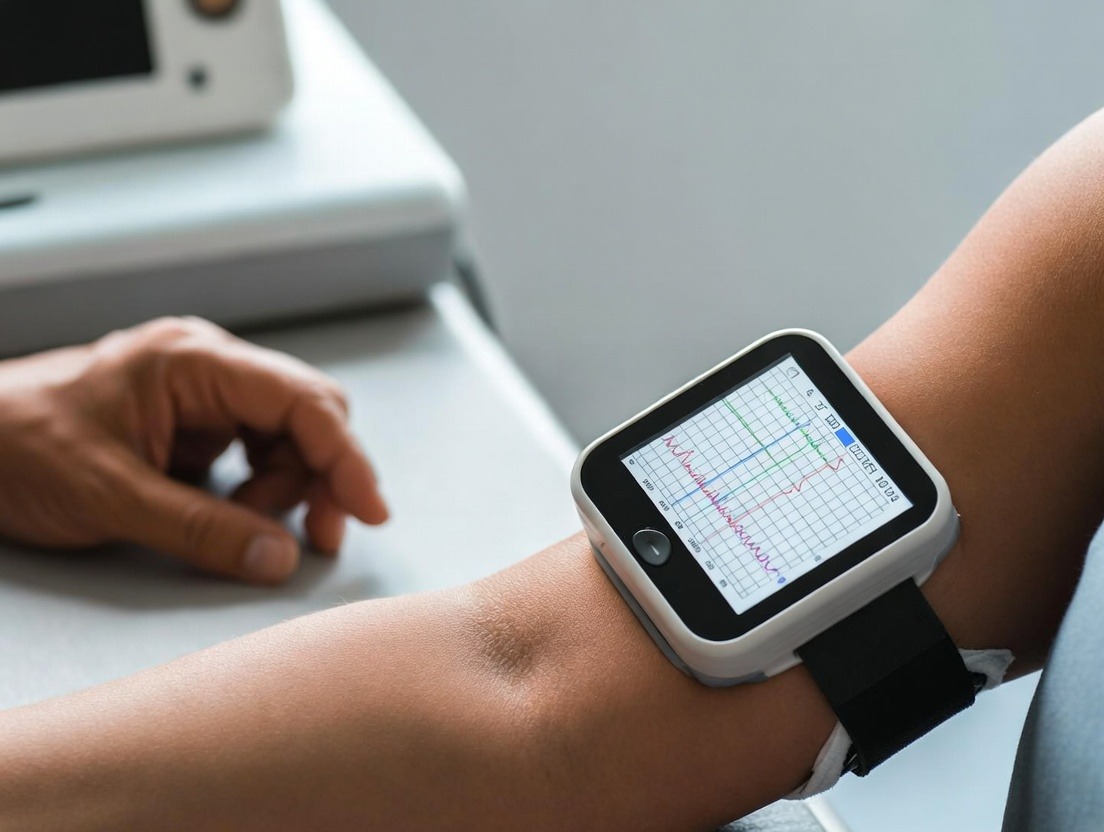
Your body is not a simple machine that runs at a constant rate. It is a symphony of biological processes conducted by a master clock, following a roughly 24-hour cycle known as your circadian rhythm. This rhythm governs not just sleep and wakefulness, but also hormone release (cortisol, melatonin, growth hormone), body temperature, digestion, metabolism, and even gene expression. To live actively is to live in sync with this rhythm. Fighting it is a guaranteed path to fatigue, poor performance, and long-term health risks.
Your Active Living Assessment must account for how well your daily habits are aligned with your innate biology.
The Core Components of Circadian Health:
Assessing Your Circadian Alignment:
Ask yourself these diagnostic questions:
The Consequences of Misalignment:
When you live against your rhythm, you experience:
Leveraging Technology for Rhythm Optimization:
Advanced wearables are now incorporating circadian tracking. By monitoring 24/7 skin temperature trends and heart rate patterns, devices can provide insights into the stability of your rhythm. They can highlight if late-night eating is causing a temperature spike when it should be falling, or if a week of poor morning light is flattening your daily physiological amplitude.
Aligning with your circadian rhythm is a force multiplier for every other pillar. It makes sleep more restorative, workouts more potent, and mental focus sharper. It is the invisible framework upon which an active life is hung. To explore specific strategies for syncing your habits with your biology, our Deep Sleep Formula article details the critical role of temperature and timing. This isn’t about rigid rules; it’s about creating a daily flow that works with your body, not against it.
Pillar 4: The Fuel Matrix – Nutrition as Information, Not Just Calories
You cannot assess an active life without examining its fuel source. Nutrition for active living transcends simplistic calorie counting. It is about understanding food as information—signals that instruct your cells to build, repair, energize, or inflame. The quality, timing, and composition of your diet directly power your Movement Signature, repair your Recovery Engine, and sync with your Internal Rhythm.
The Multidimensional Nutritional Audit:
Conducting Your Fuel Matrix Assessment:
For one week, practice mindful observation (tracking can be helpful here, but awareness is the goal):
The goal is to shift from seeing food as merely a source of calories or a moral choice (“good” vs. “bad”) to viewing it as strategic information. Are you sending your body signals of abundance and support, enabling it to train hard and recover fully? Or are you sending signals of scarcity and stress, forcing it into conservation mode? Your Fuel Matrix is the logistical backbone of your active life. For example, specific dietary choices can directly influence your recovery quality, as explored in our guide to foods that increase deep sleep naturally. Optimizing this pillar ensures you have the raw materials to execute on every other part of your assessment.
Active living is not a purely physical pursuit. Your mind is the control room for your body. Chronic mental and emotional stress activates the sympathetic nervous system (“fight or flight”), releasing cortisol and catecholamines that, over time, directly degrade physical performance, sabotage recovery, disrupt metabolism, and fragment sleep. Therefore, assessing your psychological fitness and its impact on your physiology is non-negotiable.
This pillar bridges the intangible world of thoughts and emotions with the tangible data from your body. It answers the question: Is your mind empowering or undermining your physical vitality?
Quantifying the Invisible: How Stress Manifests in Data
You cannot manage what you cannot measure. While feeling “stressed” is subjective, its physiological footprint is concrete:
Assessing Your Psychological Load:
Beyond biometrics, conduct a subjective audit:
Building the Bridge: From Awareness to Action
The power of this pillar lies in using objective data to validate subjective feelings and vice-versa. You might feel fine, but if your HRV has been trending down for a week and your sleep is light, your body is waving a red flag. Conversely, you might feel stressed, but seeing a solid HRV and good sleep data can reassure you that your body is handling the load effectively.
This awareness allows for intelligent adaptation:
Devices like the Oxyzen smart ring excel here by providing that daily, objective check-in on your nervous system state. It turns the vague concept of “stress” into a manageable metric. You can learn more about how this data translates into daily decisions on the Oxyzen FAQ page. By actively managing the mind-body bridge, you ensure that your psychological state becomes a catalyst for physical performance, not an anchor holding you back. True fitness is not just the strength of your muscles, but the resilience of your nervous system.
Your willpower and motivation are finite resources. Relying on them alone to sustain an active lifestyle is a recipe for failure. The secret of highly vital people is not superhuman discipline; it’s intelligent environmental design. They shape their physical and digital surroundings to make the healthy choice the easy, automatic, and often irresistible choice. This pillar assesses how your environment is currently set up—is it a catalyst for vitality or a constant source of friction?
We will audit three key environments: your home, your workplace, and your digital ecosystem.
1. The Home Environment: Your Primary Habitat
2. The Work Environment: Where You Spend Your Days
3. The Digital Environment: Your Attention’s Landscape
This is the modern frontier of environmental design. Your phone and computer are not neutral tools; they are engineered to capture and hold your attention, often at the expense of your health.
Conducting Your Environmental Audit:
Spend a day as a detective in your own life. Note every point of friction:
The philosophy is simple: Don’t fight your environment; redesign it. Add friction to bad habits (e.g., put the TV remote in a drawer) and reduce friction for good habits (e.g., lay out your workout clothes the night before). When your environment is aligned with your active living goals, willpower becomes a bonus, not a prerequisite.
With a comprehensive assessment of your current state across six pillars, you now have a detailed map of “Where You Are.” The critical next step is to chart the course to “Where to Go.” This requires a Progress Compass—a clear set of meaningful, personalized goals and the correct metrics to track your journey toward them. Without this, you will drift, subject to every new trend or piece of advice, and have no way to measure true improvement.
This pillar is about moving from vague desires (“I want to be healthier”) to specific, measurable, actionable targets.
The Hierarchy of Goals: From Vision to Action
Selecting Your Key Performance Indicators (KPIs):
Not all metrics are created equal for every goal. Your Progress Compass must link goals to the right KPIs.
The Power of Trend Over Snapshot:
A single day’s data is just weather. A week or month of data reveals the climate. Your Progress Compass relies on trend analysis. Did your average deep sleep increase over the last 30 days? Is your RHR on a slow, downward trajectory? This long-view perspective protects you from overreacting to one bad night’s sleep or a single high-stress day.
Technology as Your First Mate:
A sophisticated wellness device acts as the instrument panel for your Compass. It automatically logs and trends your KPIs, saving you the mental burden of manual tracking. By reviewing your weekly report from a device like the Oxyzen smart ring, you can see at a glance if your process goals are translating into outcome-level changes. This creates a powerful feedback loop: your actions → measurable results → informed adjustments → continued progress.
Setting your Progress Compass transforms your Active Living Assessment from a static report into a dynamic journey. It provides direction, motivation, and, most importantly, a clear way to know you’re winning. For inspiration on setting specific sleep-related goals, our blog offers a guide on the ideal deep sleep duration by age. Remember, a goal without a plan is just a wish. This pillar is where the plan takes shape.
Pillar 8: The Adaptation Engine – Learning to Listen and Pivot
No plan survives first contact with reality. Life is unpredictable: work deadlines explode, children get sick, travel disrupts routines, motivation wanes. A rigid adherence to a plan in the face of life’s chaos is a path to frustration and failure. Therefore, the mark of a truly sustainable active life is not perfect consistency, but adaptive resilience—the ability to listen to your body’s signals, interpret your data with wisdom, and intelligently pivot your approach without abandoning your goals. This is your Adaptation Engine.
The Art of Biofeedback-Informed Decision Making
Your body is giving you feedback 24/7. The Adaptation Engine teaches you to hear it and respond. This is where the data from all previous pillars becomes actionable in real-time.
Scenario-Based Adaptation:
The Role of Subjectivity: The Feel vs. The Numbers
Your biometric data is objective, but it must be interpreted through the lens of your subjective feel. Sometimes you need to “override” the data with self-awareness.
The Adaptation Engine thrives on this dialogue between objective metrics and subjective experience.
Building Your Adaptive Toolkit:
Have pre-planned “pivot” options for common scenarios:
By developing this engine, you break the boom-bust cycle. You learn that progress is not linear but cyclical and responsive. You move from being a slave to a plan to being the skilled pilot of your own vitality, able to navigate headwinds and capitalize on tailwinds. This skill is what separates short-term effort from lifelong transformation. For real-world examples of how others have successfully adapted their routines, the Oxyzen testimonials page offers insightful stories. The ultimate goal is to become your own best coach, using data as your guide, not your dictator.
Pillar 9: The Sustainability Blueprint – Integrating for the Long Haul
We arrive at the capstone pillar. All the assessment, optimization, and adaptation lead to this single, most important question: Is this sustainable? Can the active life you are designing be maintained not for 8 or 12 weeks, but for 8 or 12 years? The Sustainability Blueprint is about moving from a demanding “program” you “do” to a seamless, integrated “lifestyle” you “live.” It’s the difference between white-knuckling your way through a diet and effortlessly preferring nourishing foods.
This pillar focuses on integration, enjoyment, identity, and social connection—the psychological and social glue that holds everything together for the long term.
1. Integration Over Addition:
The biggest sustainability killer is treating healthy habits as extra tasks piled onto an already full life. The goal is to weave them into the fabric of your existing life.
2. The Primacy of Enjoyment:
You will not sustain what you hate. The “best” workout is the one you enjoy enough to do consistently. The “perfect” diet is the one full of foods you find satisfying and delicious. Your assessment must include a joy audit:
3. Identity Shift: “I Am” vs. “I Do”:
This is the deepest level of sustainability. It’s the shift from behavior to identity.
4. The Social and Community Dimension:
Humans are social creatures. Active living is far more sustainable and enjoyable when shared.
Your Sustainability Audit:
Look at the active living plan taking shape from the previous eight pillars and ask:
A tool that supports sustainability is one that fits effortlessly into your life, providing insight without intrusion. The design philosophy behind devices like the Oxyzen ring centers on this seamless integration, allowing you to gather the crucial data for your assessment without adding another bulky device to charge or remember. You can learn more about this approach on our About Us page.
The Sustainability Blueprint ensures that the active life you are assessing and building is not a fleeting project, but a permanent upgrade to your human experience. It’s about creating a life so rich in vitality, connection, and joy that you wouldn’t want to go back to the old way, even if you could.

With the nine foundational pillars thoroughly assessed, you now possess something rare and powerful: a complete, honest, and multi-dimensional diagnosis of your current state of active living. You’ve moved beyond guesswork. You have data on your movement, insights into your recovery, an understanding of your rhythms, and clarity on the environmental and psychological factors shaping your days. This is the map of “Where You Are.”
But a map alone is not a journey. The true transformation begins now, in the act of synthesis and strategic planning. The following sections are dedicated to building your bridge from insight to action, from assessment to achievement. We will synthesize your pillar data into a coherent picture, prioritize your interventions, and construct a personalized, phased action plan designed for real-world success and unparalleled sustainability. This is where we chart the course to “Where to Go.”
Data points in isolation are like individual puzzle pieces—interesting shapes, but without a clear image. The magic, and the true power of your Active Living Assessment, happens when you connect them. Synthesis is the process of looking for the patterns, correlations, and root causes that link your pillar metrics together. It transforms raw data into a meaningful narrative about your body and your life.
How to Conduct Your Synthesis:
Gather your notes, logs, or app data from your pillar assessments. Look for the following types of connections over a typical week or a challenging period:
Identifying Your Leverage Points:
Through synthesis, you will discover leverage points—areas where a small, targeted change in one pillar creates disproportionate positive ripple effects across others.
Your synthesis is complete when you can articulate 2-3 core “storylines” that explain the dominant patterns in your active living data. These storylines, not isolated bad numbers, become the targets for your action plan. For instance, if your synthesis reveals a storyline of “chronic low-grade sleep debt sabotaging my energy,” a resource like our guide on the silent signs of deep sleep deprivation can provide deeper context for your plan.
Armed with your synthesized storylines, you might feel a surge of motivation to fix everything at once. Resist this urge. Overwhelm is the enemy of execution. The next critical step is ruthless prioritization. You will not overhaul nine pillars simultaneously. You will start with one or two foundational changes that offer the highest likelihood of success and the broadest positive impact.
The Prioritization Matrix:
Evaluate your synthesis findings using two axes:
Plot your potential action items on this matrix. Your primary focus should be the “High Impact, High Ease” quadrant—the quick wins that build momentum.
The Rule of One to Three:
For your first 4-6 week action phase, select:
Why This Works:
Choosing Your Primary Focus:
Often, the most impactful starting point lies at the intersection of your worst-performing pillar and your highest-leverage storyline. If your synthesis revealed that poor sleep is a root cause of multiple issues, and improving sleep feels achievable (e.g., by setting a consistent bedtime), that becomes the obvious primary focus. If your environment is the biggest barrier, then a single environmental redesign project (e.g., creating a dedicated workout corner) might be your launchpad.
Remember, this is a marathon, not a sprint. The goal of Phase 1 is not perfection, but proof of concept—proving to yourself that you can observe, plan, and execute a positive change. You can always reach out with questions about how to best prioritize your specific data patterns. The art of prioritization ensures you start strong, setting the stage for compound growth over time.
Now we move from theory to concrete architecture. Your Phase 1 Action Plan is the detailed, tactical blueprint for implementing your chosen primary focus and secondary supports. We will build it using the principles of behavioral design, making your desired actions obvious, attractive, easy, and satisfying (a framework inspired by James Clear’s “Atomic Habits”).
Step 1: Define Your Keystone Habit with Surgical Precision.
Vague: “Sleep better.”
Precise (SMART Process Goal): “I will be in bed with lights out by 10:30 PM, aiming for 7.5 hours of sleep opportunity, at least 5 nights per week (Sunday-Thursday).”
Step 2: Apply Behavioral Design.
Step 3: Integrate Secondary Support Habits.
Your secondary habits should directly enable your primary habit.
Step 4: Define Your Success Metrics & Review Schedule.
Step 5: Plan for Friction (Using Your Adaptation Engine).
Anticipate obstacles using your knowledge from Pillar 8.
This detailed, behaviorally-designed plan turns an aspiration into a system. It acknowledges the complexity of human psychology and builds scaffolding for success. By starting with a keystone habit like sleep, you are not just improving one metric; you are upgrading the foundational platform upon which all other active living pillars depend. For those whose primary focus is sleep, exploring the science of what happens to your body during deep sleep can provide powerful extra motivation to stick to the plan.
A perfect plan is worthless without execution. The next 30 days are your implementation sprint—a dedicated period of focused action, conscious monitoring, and gentle refinement. The goal is not flawless adherence, but consistent learning and progress.
The Mindset for the Sprint:
Adopt the mindset of a curious scientist, not a harsh judge. You are running an experiment on yourself: “If I implement this sleep system, what changes will I observe in my data and my life?” This removes the emotional weight of “success” or “failure” and replaces it with neutral observation.
The Daily Practice:
The Weekly Review (The Crucial Ritual):
Every weekend, conduct a formal 15-minute review:
The Role of Technology in Monitoring:
A seamless monitoring tool is invaluable here. A device that automatically tracks your sleep and physiological metrics eliminates guesswork and provides objective feedback. Seeing a graph of your resting heart rate steadily decline over the month is a profoundly motivating reward for your behavioral efforts. It turns an intangible feeling of “better rest” into a visual proof of progress. The Oxyzen smart ring, worn continuously, is designed to provide this exact kind of frictionless, elegant monitoring, becoming a silent partner in your sprint.
Navigating Setbacks:
You will have off-nights. The key is to prevent a single off-night from becoming an off-week. Use your Adaptation Engine (Pillar 8). If you miss your bedtime, the next instruction in your plan should be: “Forgive myself immediately. Get back to the system at the very next opportunity (tonight).” The sprint is about overall trajectory, not perfect points on the graph.
By the end of 30 days, you will have more than data; you will have lived experience. You will have proven that you can identify a target, design a system, execute it, and measure the results. This confidence and competence are the real trophies of Phase 1, and they form the unshakable foundation for the next level of your active living journey.

After successfully navigating your 30-day implementation sprint, you have a solid, automated keystone habit and a working self-experimentation framework. Now, it’s time to strategically expand. Phase 2 is about integrating your second-highest priority from your prioritization matrix, layering it onto your now-stable foundation without overwhelming your system.
This phase operates on the principle of habit stacking and synergistic integration. You are not starting from scratch; you are building upon a platform of existing success.
Identifying Your Phase 2 Focus:
Revisit your synthesis and prioritization. With your primary storyline (e.g., poor sleep) now being actively addressed, what is the next biggest bottleneck or opportunity?
The Integration Strategy: Habit Stacking
Habit stacking, coined by S.J. Scott, involves anchoring a new habit to an existing one using the formula: “After [CURRENT HABIT], I will [NEW HABIT].”
This method leverages the neural pathway of an established routine, making the new behavior much easier to adopt.
Creating Synergy with Phase 1:
The best Phase 2 habits will create a positive feedback loop with your Phase 1 success.
Executing Phase 2:
The duration of Phase 2 is typically another 3-4 weeks. The goal is to achieve a similar level of automation and stability with this second layer of habits. By the end, you will have two core behavioral systems running—a primary keystone and a secondary support stack—working in harmony. This layered, sequential approach is the antithesis of chaotic self-improvement; it is the methodical construction of a personal operating system for vitality. For many, optimizing movement is a key Phase 2 goal, and understanding the difference between deep and REM sleep can help tailor activity timing for better recovery.
Active living is not a set-it-and-forget-it program. Your life changes, your goals evolve, and your body adapts. To avoid plateaus and ensure continual alignment with your North Star, you must institutionalize a Quarterly Review. This is a dedicated 60-90 minute session every 3 months to zoom out, assess your holistic progress, and strategically pivot your plan for the next quarter.
This process transforms your journey from a linear path into an adaptive cycle of planning, execution, and review.
The Quarterly Review Agenda:
Part A: Reflect & Celebrate (Look Back)
Part B: Reassess & Recalibrate (Look Around)
Part C: Plan & Pivot (Look Forward)
The Power of the Pivot:
The pivot is not a sign of failure; it is a sign of intelligence. It means you are listening to the data and the feedback from your life. Perhaps your initial goal was weight loss, but after improving sleep and nutrition, your new data reveals that building strength is now the key to unlocking further metabolic health. You pivot your training accordingly.
This quarterly rhythm creates a sustainable cycle of growth. It prevents boredom, combats plateaus, and ensures your active living plan is a living document that grows with you. It is the embodiment of the Adaptation Engine at a strategic level. For inspiration during these reviews, reading real user experiences and testimonials can provide fresh ideas and reinforce the community aspect of the wellness journey.
Once your foundational habits are solid and you are engaged in the quarterly review cycle, you enter the realm of advanced optimization. This is for the individual who has mastered the basics and is now looking to fine-tune performance, break through specific plateaus, or achieve highly targeted goals (e.g., athletic performance, competitive fitness, managing a specific health metric).
At this stage, the granularity and accuracy of your biometric data become paramount. Guesswork is replaced by precision.
Areas for Advanced Optimization:
1. Sleep Staging & Circadian Fine-Tuning:
2. Workout Load & Recovery Balancing:
3. Nutritional Biofeedback:
4. Stress & Resilience Building:
The Tool Requirement:
Advanced optimization requires a tool capable of providing medical-grade, precise data. The sensor fusion in a device like the Oxyzen ring—combining PPG, accelerometry, and temperature—is designed for this level of insight. It moves beyond simple tracking to providing a clinical-grade personal biomarker panel that you can use for daily fine-tuning. You can explore the technology behind this precision to understand its capabilities.
This stage is not necessary for everyone, but for those seeking every legitimate edge in their pursuit of optimal vitality, it represents the cutting edge of personalized wellness. It turns your active living plan into a dynamic, algorithm-like process, constantly tuned by the most direct source of truth: your own physiology.
No journey of transformation is a straight line upward. Plateaus—periods where progress stalls despite consistent effort—and setbacks—temporary declines due to illness, life events, or injury—are not only normal; they are expected. The difference between those who ultimately succeed and those who give up lies in their protocol for navigating these challenges. This is your Resiliency Protocol.
Part 1: Diagnosing a Plateau (Is It Really a Plateau?)
First, ensure it’s a true plateau and not just normal fluctuation.
If it’s a True Plateau: The INVESTIGATE Framework
Part 2: Managing a Setback (The Compassionate Pivot)
Setbacks are different—they are involuntary declines.
The Mental Reframe:
View plateaus and setbacks as data-rich feedback, not failures. A plateau tells you your current formula has exhausted its effectiveness and needs a tweak. A setback reveals your current limits or life’s unpredictability. Both are essential information for the long-term sustainability of your active life. They force you to develop wisdom, patience, and self-compassion—qualities far more valuable than any single fitness metric. For those navigating sleep-related plateaus, our article on how to get more deep sleep tonight offers fresh, actionable strategies to break through.
By having a pre-planned protocol, you take the panic and emotion out of these inevitable phases. You move from reacting in frustration to responding with strategy, ensuring that every challenge ultimately strengthens your commitment and deepens your understanding of your unique path to vitality.
You have assessed, planned, executed, and optimized. You’ve built systems, weathered plateaus, and established a rhythm of quarterly renewal. Your active living plan is no longer an external program; it is becoming an integrated part of your life. Now, we ascend to the final, most rewarding dimension: ensuring this way of living is not just for a season, but for a lifetime. This final section explores the art of long-term sustainability, the power of community, the horizon of emerging technology, and how to weave everything together into a lasting legacy of vitality.
The ultimate goal of the Active Living Assessment is not a 90-day transformation. It is the integration of vitality into your identity so seamlessly that the question shifts from “How do I find motivation?” to “How could I live any other way?” This is the Long Game, played not with the intensity of a sprinter, but with the patience, wisdom, and adaptability of a master gardener tending a lifelong landscape.
Principles for the Long Game:
1. Embrace Seasonality:
Your active life will and should have seasons, just like nature. There will be seasons of intense training for a goal, seasons of gentle maintenance, seasons of focused recovery, and seasons where family or career necessarily take the forefront. The key is to consciously name these seasons and adjust your “Active Living Plan” accordingly.
2. Cultivate a Portfolio of Activities:
Relying on a single form of movement is a risk factor for both physical overuse and mental boredom. For the long game, cultivate a diverse portfolio:
3. Shift from Goals to Systems to Identity:
Recall the hierarchy from Pillar 7. For the long game, the focus gently ascends:
4. Practice Graceful Aging:
The Active Living Assessment is not static. Your movement signature, recovery needs, and nutritional requirements will evolve over decades. The long game requires attunement to these changes.
Playing the Long Game means letting go of short-term extremes and embracing the powerful compound interest of small, sustainable actions practiced over decades. It’s the quiet confidence that comes from knowing you have a framework—your Active Living Assessment—that can guide you through every season of life.
Human beings are profoundly social creatures. While the Active Living Assessment is a personal framework, its power is multiplied exponentially when connected to community. Attempting sustained change in isolation is like trying to heat a house with a single match. Community provides the shared fuel, warmth, and shelter that makes the fire sustainable.
The Roles Community Plays:
1. Accountability & Consistency:
This is the most recognized benefit. A running club that meets every Saturday, a gym buddy expecting you, or an online challenge group creates positive social pressure. You show up not just for yourself, but for others. This external structure can be the crucial bridge until internal habits become automatic.
2. Shared Knowledge & Problem-Solving:
No one has all the answers. A community is a collective brain trust. Struggling with a sleep plateau? Someone in your community has likely faced it and can offer a tip. Unsure how to modify a workout with a minor injury? The collective experience of a group is invaluable. This turns your journey from a solo expedition into a collaborative exploration. Browsing the Oxyzen blog is one way to tap into a broader community of knowledge on topics like the brain-boosting connection between deep sleep and memory.
3. Normalization & Support:
When you’re surrounded by others who prioritize sleep, mindful eating, and movement, these behaviors cease to be “weird” or “extreme.” They become normal. This social normalization reduces the psychological friction of maintaining your habits. Furthermore, a supportive community provides encouragement during setbacks and celebrates your wins, reinforcing positive behavior.
4. The Power of Shared Experience & Joy:
Activity shared is often joy multiplied. The camaraderie of a tough hike, the shared focus of a yoga class, or the friendly competition of a sports league injects fun and connection into the process. This emotional reward is a powerful, sustainable motivator that far outweighs any abstract health metric.
Building Your Vitality Community:
A Note on Social Contagion:
Health behaviors are socially contagious. By embodying your active living plan, you unconsciously give permission and inspiration to those in your sphere—your partner, your children, your friends. Your personal journey becomes a positive ripple effect. This is perhaps the most profound impact of community: you become both a beneficiary and a contributor to the collective vitality of your social world.
The Active Living Assessment framework is built on the premise of knowing yourself through data. That data landscape is evolving at a breathtaking pace. While today’s smart rings represent a leap forward in continuous, unobtrusive monitoring, they are merely the current point on an exponential curve. Looking ahead allows us to see where personalized wellness is going, turning our assessment from a snapshot into a dynamic, predictive, and deeply integrated life-management system.
The Emerging Frontiers:
1. Multi-Omics Integration:
The future moves beyond physiological signals (heart rate, movement, temperature) to include biochemical data. Imagine a device that non-invasively tracks key biomarkers:
2. Advanced AI and Predictive Analytics:
Today’s devices describe the past and present. Tomorrow’s will predict and prescribe.
3. True Interoperability and the Centralized Health Dashboard:
The future is connected, not siloed. Your smart ring data will seamlessly integrate with:
4. Emotional and Cognitive State Detection:
Advances in sensor fidelity and AI may allow for the inference of emotional states through micro-variations in heart rate patterns (heart rate variability spectrum), voice analysis (if integrated with a phone), or even subtle facial muscle micro-expressions (via future wearable cameras). This would bring Pillar 5 (Mind-Body Bridge) into ultra-high definition, allowing for real-time stress intervention prompts.
The Human in the Loop:
This future is not about technology replacing human intuition or the doctor-patient relationship. It’s about augmenting human insight with an unprecedented depth of personal, contextual data. The role of frameworks like the Active Living Assessment will become even more crucial—they will be the human-centered lens through which we interpret this flood of data, ensuring it serves our values and our holistic vision of a life well-lived. The story and vision of pioneering companies in this space are centered on this human-augmentation philosophy.
Embracing this future-minded perspective keeps your assessment dynamic. It encourages you to see your current tools not as endpoints, but as gateways to an ever-deepening understanding of your unique biology, empowering you to be the informed CEO of your own health for decades to come.
We began with a simple, powerful question: “Where are you, and where do you want to go?” We end by recognizing that this is not a question you answer once, but a guiding refrain for a lifetime. The Active Living Assessment is your framework for engaging with that refrain thoughtfully, systematically, and compassionately.
The Synthesis of the Journey:
Let’s revisit the core progression one final time:
This is not a linear checklist, but a cyclical practice. You will continually loop through these stages, each time with greater wisdom, better data, and a clearer sense of self.
The Ultimate Metric: Vitality in Action
Beyond any sleep score, resting heart rate, or personal record, the ultimate metric of your Active Living Assessment is the quality of your lived experience. It is:
Your legacy of active living is written in these moments. It’s in the hike you said “yes” to, the patience you had with your child after a good night’s sleep, the joy of movement for its own sake, and the example you set for others simply by living vibrantly.
A Final Invitation:
The door to this journey is always open. Whether you are just beginning to gather your first pieces of data with a new wellness tracker, or you are years into optimizing your rhythms, the framework adapts with you. It is a companion for the curious, a map for the motivated, and a source of wisdom for the wise.
Return to your assessment quarterly. Revisit your North Star annually. Never stop asking, with kindness and courage, “Where am I, and where do I want to go?” The path of active living is the path of becoming more fully, vibrantly, and resiliently yourself. There is no final destination, only the ever-unfolding, rewarding journey.
Thank you for undertaking this assessment. Your most active, vital life awaits—not as a distant fantasy, but as the next, informed, intentional step you are now equipped to take.
Your Trusted Sleep Advocate (Sleep Foundation — https://www.sleepfoundation.org/)
Discover a digital archive of scholarly articles (NIH — https://www.ncbi.nlm.nih.gov/
39 million citations for biomedical literature (PubMed — https://pubmed.ncbi.nlm.nih.gov/)
experts at Harvard Health Publishing covering a variety of health topics — https://www.health.harvard.edu/blog/)
Every life deserves world class care (Cleveland Clinic -
https://my.clevelandclinic.org/health)
Wearable technology and the future of predictive health monitoring. (MIT Technology Review — https://www.technologyreview.com/)
Dedicated to the well-being of all people and guided by science (World Health Organization — https://www.who.int/news-room/)
Psychological science and knowledge to benefit society and improve lives. (APA — https://www.apa.org/monitor/)
Cutting-edge insights on human longevity and peak performance
(Lifespan Research — https://www.lifespan.io/)
Global authority on exercise physiology, sports performance, and human recovery
(American College of Sports Medicine — https://www.acsm.org/)
Neuroscience-driven guidance for better focus, sleep, and mental clarity
(Stanford Human Performance Lab — https://humanperformance.stanford.edu/)
Evidence-based psychology and mind–body wellness resources
(Mayo Clinic — https://www.mayoclinic.org/healthy-lifestyle/)
Data-backed research on emotional wellbeing, stress biology, and resilience
(American Institute of Stress — https://www.stress.org/)


