


The Complete Beginner-Friendly Guide to Strength Training and Ring Recovery Data
A complete beginner's guide to strength training and recovery data.
A complete beginner's guide to strength training and recovery data.
%402x.svg)
In a world obsessed with hustle and optimizing output, we've forgotten a fundamental truth: you cannot build a strong, resilient body—or life—without first learning to listen to it. For decades, strength training advice has been delivered as a one-size-fits-all prescription: follow this program, hit these sets and reps, push through the pain. But what if the most critical piece of your fitness journey wasn't the weight you lifted, but the silent data your body whispered in recovery? What if you had a guide, worn on your finger, translating those whispers into a clear blueprint for sustainable growth?
Welcome to the new era of intelligent strength. This guide is your gateway to merging the timeless principles of building muscle and fortitude with the cutting-edge, personalized insights from a wellness smart ring. No more guesswork. No more grinding yourself into the ground. This is about working with your body’s unique rhythms to achieve results faster, prevent burnout and injury, and forge a sustainable, lifelong practice of strength. Whether you're stepping into a gym for the first time or are a seasoned lifter stuck on a plateau, the fusion of foundational knowledge and precise biometric feedback is your ultimate advantage.
Let's begin by shifting your mindset. Strength isn't just about the hour you spend under the barbell. It's about the 23 hours of recovery that follow. It's about how well you sleep, how your nervous system rebounds, and how your body adapts to the stress you've placed upon it. Your smart ring is the lens that brings this crucial recovery phase into sharp focus. By understanding metrics like Heart Rate Variability (HRV), resting heart rate, sleep architecture, and body temperature, you move from training blind to training with intention. You'll learn when to push for a personal record, when to prioritize mobility, and when true strength is built—in the quiet moments of repair. This is your complete, beginner-friendly map to that journey.
You've likely heard the gym mantra: "Strength is built in the kitchen and in bed." While nutrition and sleep are indeed pillars, this adage misses a crucial technological evolution. Today, we can quantify recovery. We can move beyond vague feelings of being "tired" or "sore" to objective, physiological data that tells us exactly how prepared our body is for stress. For the beginner, this is revolutionary. It replaces intimidation with information.
Think of your body as a complex bank account. Every strength training session is a substantial withdrawal of energy, creating microscopic tears in muscle fibers, depleting glycogen stores, and stressing your central nervous system. The deposits into this account are sleep, nutrition, hydration, and managed stress. If you continuously make withdrawals without sufficient deposits, you end up bankrupt—overtrained, injured, and burned out. Traditional training has you guessing your account balance. A wellness smart ring gives you a real-time financial statement.
The cornerstone of this statement is Heart Rate Variability (HRV). In simple terms, HRV is the variation in time between each heartbeat. It's controlled by your autonomic nervous system (ANS), which has two main branches: the sympathetic ("fight or flight") and the parasympathetic ("rest and digest"). A higher HRV typically indicates a stronger, more resilient parasympathetic response, meaning your body is in a good state to recover and adapt. A lower-than-normal HRV suggests your system is under stress—from training, life, illness, or poor sleep—and may need more rest.
For a strength training beginner, tracking HRV via your ring is like having a personal coach who can read your nervous system. Waking up to a high HRV score? That's your body giving you the green light for a challenging session. See a sustained dip? That's a yellow light, advising you to dial back intensity, focus on technique with lighter weights, or take an active recovery day. This feedback loop prevents the classic beginner mistake of overdoing it in the first weeks of enthusiasm, which often leads to quitting.
But HRV isn't alone. Your ring synthesizes it with other key metrics:
Ignoring this data is like building a house without a foundation. You might see progress for a while, but eventually, the structure will become unstable. By starting your strength journey with a tool that prioritizes recovery metrics, you build habits that support longevity from day one. You’re not just lifting weights; you’re cultivating a responsive, data-informed relationship with your body’s needs. To understand how this data-driven approach applies beyond the gym, consider how it can transform your entire daily rhythm, as explored in our guide on achieving elite productivity through health optimization with your smart ring.

Let's clear the air. Strength training is not synonymous with bodybuilding. You are not required to grunt loudly, become "bulky," or spend two hours in a dungeon-like gym. This pervasive stereotype is a significant barrier for many beginners, especially women. In reality, strength training is a spectrum of practices with one common goal: to make your musculoskeletal system more capable and resilient.
What is Strength Training? At its core, it's any physical activity that makes your muscles work against a force or resistance. This resistance can be:
The physiological benefits extend far beyond aesthetics:
For the complete beginner, the goal is neuromuscular adaptation. Your first 4-8 weeks are less about huge muscle growth and more about your brain learning to efficiently recruit muscle fibers to perform movements. This is why technique is paramount. It's also where your ring data becomes a perfect partner. On days when your recovery score is low, you can focus intently on perfecting your form with minimal weight—turning a "low-energy" day into a highly productive skill-building session.
The beauty of starting now is that you have a personalized recovery guide on your finger. You don't have to emulate the person lifting the heaviest weights. Your journey is dictated by your body's feedback. This personalized approach ensures you build a positive, sustainable relationship with strength from the outset, avoiding the burnout that derails so many. This principle of listening to your body's signals is a cornerstone of sustainable achievement, a topic explored in depth in our guide to sustainable high performance.
Your wellness ring is a biomechanical lab on your finger. It uses sensors (like photoplethysmography (PPG) for heart rate, an accelerometer for movement, and a temperature sensor) to collect data passively, day and night. For strength training, this nocturnal data is pure gold—it's when your body does its most important repair work. Let's translate the key metrics into your strength training context.
1. Heart Rate Variability (HRV): The Nervous System Barometer
As mentioned, HRV is your top-tier metric for gauging recovery. Think of it as your body's "readiness to perform" score.
2. Resting Heart Rate (RHR): The Efficiency Gauge
Your RHR is how many times your heart beats per minute when you are completely at rest (best measured first thing in the morning). A well-conditioned cardiovascular system is more efficient, resulting in a lower RHR.
3. Sleep Score & Architecture: The Foundation of Growth
Sleep is non-negotiable for strength. During Deep Sleep (Slow-Wave Sleep), blood flow to muscles increases, tissue growth and repair occur, and human growth hormone is released. REM Sleep is crucial for cognitive recovery and motor skill consolidation—your brain "practices" the movements you learned.
4. Body Temperature: The Silent Alarm
Your core body temperature follows a circadian rhythm. A smart ring tracks your peripheral temperature trends overnight.
5. The Composite Readiness Score
Most ring apps synthesize these metrics into a single score (like Oura's "Readiness," Whoop's "Recovery," etc.). This is your daily directive.
By understanding these metrics, you stop training in a vacuum. Every rep is now part of a dialogue with your body.
You can't manage what you don't measure. Before you touch a weight, your first mission is to establish a biometric baseline. This typically takes 2-4 weeks of consistent ring wear, particularly during sleep. During this period, avoid starting a formal strength program. Live your normal life—this allows the ring's algorithm to understand your unique rhythms.
Steps to Establish Your Baseline:
This baseline is your personal North Star. It removes comparison—your friend's HRV of 80 ms is irrelevant if your baseline is 40 ms. What matters is your trends. Is your HRV 10% above baseline today? Great! Is it 20% below for three days running? Time to investigate.
Simultaneously, Define Your "Why":
While collecting data, get clear on your strength training goals. Be specific. "Get stronger" is vague. "Perform 10 perfect push-ups," "Squat my bodyweight for 5 reps," "Deadlift 100 pounds with perfect form," or "Feel confident and resilient carrying groceries" are powerful, measurable goals. Your "why" will fuel your motivation on tough days.
Prepare Your Mindset: Understand that progress is not linear. Some weeks you'll feel unstoppable; others will feel like a slog. Your ring data will help you understand why and adjust accordingly, preventing frustration. This mindset is the bedrock of a sustainable practice, much like the approach needed for preventing productivity burnout through data-aware habits.
Every human movement, in the gym or in life, is a variation of a few fundamental patterns. Mastering these is like learning the alphabet before you write a novel. They are safe, efficient, and build functional strength that translates directly to real-world activities. For beginners, focusing on these patterns ensures you build a balanced, injury-resistant physique.
Here are the six foundational movement patterns you will learn:
1. The Squat (Hinge at Knees and Hips)
2. The Hinge (Hinge Primarily at Hips)
3. The Push (Upper Body)
4. The Pull (Upper Body)
5. The Lunge (Unilateral - One Leg at a Time)
6. The Carry (Loaded Carry)
Your initial weeks of training should revolve around learning and perfecting these patterns with minimal or no weight. Your ring data guides the pace. On high-readiness days, you can cautiously add load. On lower-readiness days, you perform "form rehearsals"—focusing intently on the mind-muscle connection and perfect technique. This ensures every session, regardless of intensity, moves you forward. Learning to schedule demanding skill work like this based on your body's readiness is a skill that applies to cognitive tasks as well, as discussed in our guide on work timing based on ring metrics.
With your baseline established and movement patterns understood, it's time to build a simple, effective plan. Forget complicated splits for now. As a beginner, you can make excellent progress with a full-body routine performed 2-3 times per week, with at least one day of rest between sessions. This frequency allows for ample practice of the movements and sufficient recovery—which your ring will now help you manage intelligently.
Key Programming Principles:
Sample Beginner Full-Body Template (Perform 2-3x/Week):
How Your Ring Informs Your Weekly Execution:
This is where static programs become dynamic and personal.
This flexible, data-informed approach is the antithesis of "no pain, no gain." It's "smart effort, maximum gain." You're not being lazy on yellow days; you're being strategic, investing in long-term progress by respecting your body's current state. This philosophy of strategic adaptation is central to maintaining both productivity and health during high-pressure periods.
You cannot out-train a poor diet, and you cannot recover optimally without proper fuel. For beginners, nutrition doesn't need to be overly complex. Think in terms of supporting your training and recovery goals, not restrictive dieting.
The Macronutrient Pillars:
Hydration: Water is involved in every metabolic process. Even mild dehydration can impair strength, power, and cognitive focus during your session. Your ring's temperature and HRV data can be subtly influenced by hydration status.
The Ring's Role in Nutritional Insight:
While rings don't track calories, they provide powerful indirect feedback:
Beginner Nutrition Action Steps:
As you begin training, two sensations will become familiar: muscle soreness and fatigue. It's vital to distinguish between them, and your ring data provides the crucial context.
Delayed Onset Muscle Soreness (DOMS):
Fatigue/Overtraining Signals:
The Beginner's Mindset Shift: Instead of asking "Do I feel like training today?", you learn to ask "What is my body's capacity for training today?" Your feelings can be unreliable, influenced by mood or motivation. Your biometric data is an objective report on your physiological state. Learning to trust this data, especially when it tells you to rest, is a superpower. It builds resilience not by constantly pushing, but by strategically balancing stress and recovery. This skill of interpreting bodily signals for strategic decision-making is equally valuable outside the gym, as highlighted in our guide on decision-making quality based on ring metrics.
This is a concept most beginners never hear about, but it's the secret weapon of all successful long-term athletes. A deload is a planned, periodic reduction in training volume (weight, sets, reps) or intensity to allow for full physiological and psychological recovery. It's not a step backward; it's a strategic reload.
Why Deload? Continuously applying progressive overload without breaks leads to accumulated fatigue, stagnation (plateaus), and eventually, regression or injury. A deload resets your system, reduces joint stress, and often leads to a "rebound" effect where you come back stronger.
When to Deload? There are two approaches:
Implementing a Ring-Guided Deload:
For a beginner, incorporating the concept of a deload from the start prevents the "crash and burn" cycle. It teaches you that recovery is an active, planned part of the process, not a sign of weakness. This principle of strategic rest for maximum output is a universal law of performance, explored in the context of work in our guide to strategic rest for maximum output.
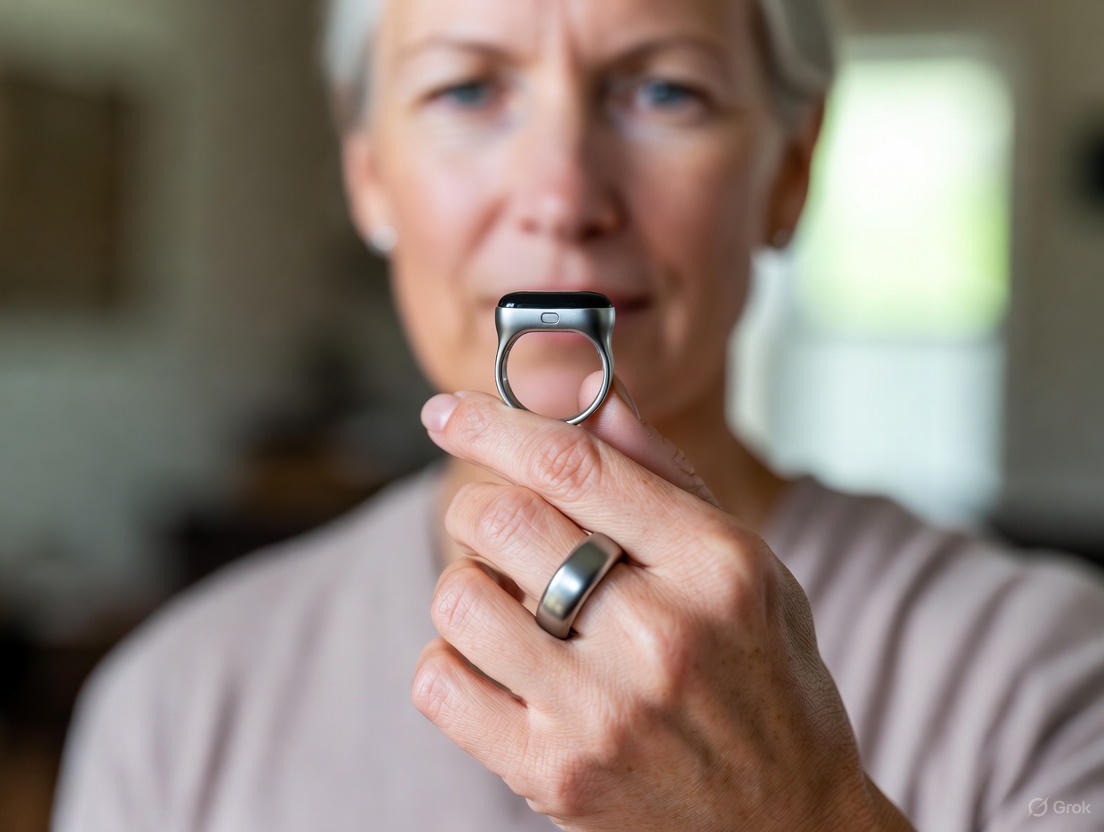
Your strength is forged in the 23 hours you're outside the gym. Your smart ring illuminates how daily habits either support or sabotage your recovery and performance.
Stress Management: Psychological stress activates the same sympathetic nervous system ("fight or flight") as physical stress. A brutal work deadline can lower your HRV just like a brutal squat session. Your ring makes this invisible stress visible.
Alcohol and Sleep: Even one or two drinks can significantly suppress REM sleep, the phase crucial for cognitive recovery and motor learning. You might sleep 8 hours but wake with a low Sleep Score and feel groggy. Your ring provides objective evidence of this trade-off, empowering you to make informed choices, especially on nights before planned training.
Caffeine Timing: Caffeine has a long half-life. Consuming it too late in the day can delay sleep onset and reduce sleep quality, impacting next-day recovery. If you see a correlation between late coffee and poor sleep scores, experiment with a caffeine curfew.
Non-Exercise Activity Thermogenesis (NEAT): This is the energy you burn from all daily movement not part of exercise—walking, fidgeting, standing. On full rest days or deload weeks, maintaining a high NEAT (e.g., taking walks) can aid recovery by promoting blood flow without adding systemic stress. Your ring's activity tracker can help you ensure you're not completely sedentary on off days.
By observing how these lifestyle factors move your biometric needles, you cultivate a holistic approach to strength. You become the architect of an entire ecosystem conducive to growth, where the gym session is just one important event in a well-orchestrated 24-hour performance cycle. This holistic integration is the ultimate goal, creating a seamless productivity-health synergy using your smart ring as a performance coach.
Every strength journey eventually meets a plateau—a frustrating period where, despite consistent effort, the weight on the bar refuses to increase, reps stagnate, and motivation wanes. For the beginner, this often happens after the initial 3-6 months of "newbie gains," where progress comes easily. The traditional response is often to "work harder," leading to more volume, more frequency, and ultimately, more fatigue. This is a trap. Your smart ring provides the intelligence to navigate plateaus not with brute force, but with strategic finesse.
A plateau isn't a sign of failure; it's a signal. It's your body's way of saying the current stressor (your training program) is no longer novel enough to provoke adaptation. It has adapted. Now, you need a new stimulus.
First, Rule Out Poor Recovery. Before you change your program, investigate your recovery metrics. A plateau is often not a training problem but a recovery deficit.
If Recovery is Solid: The Strategic Pivot. Assuming your ring data shows green lights across the board, your plateau is a true training adaptation plateau. Here’s how to use your data to guide strategic changes:
The data-literate lifter sees a plateau not as a wall, but as a crossroads with multiple signs. Your ring tells you which path—better recovery, strategic intensification, or intelligent variation—is most appropriate right now. This responsive approach prevents the classic cycle of overreaching, injury, and quitting. Learning to pivot based on feedback is a skill that applies to all complex endeavors, much like the need for morning routine flexibility based on ring data when life intervenes.
Once you’ve mastered the basics of sleep, nutrition, and deloading, you can explore advanced recovery modalities. These are tools to enhance your body's repair processes, and your smart ring is the perfect device to measure their true effectiveness for you. What works for an influencer might not move your biometric needles.
1. Heat Therapy (Sauna, Hot Baths):
2. Cold Exposure (Cold Plunges, Showers):
3. Compression Garments, Massage, and Mobility:
4. Nutritional Timing & Supplements:
The principle here is scientific self-experimentation. Your ring is the lab instrument. Introduce one new recovery modality at a time, maintain it for 2-3 weeks, and observe the trends in your core metrics. This transforms recovery from a guessing game into an optimized, personal protocol. This data-driven experimentation mindset is key to unlocking all aspects of performance, from physical recovery to creative work under optimal conditions.
"Should I do cardio?" is a perennial question in strength circles. The fear is that cardio will "kill gains" by interfering with recovery or burning hard-earned muscle. The reality is more nuanced: appropriate cardiovascular training supports overall health, aids recovery via improved circulation, and enhances work capacity, allowing you to handle more training volume. The key is intelligent integration, and your recovery metrics are the arbitrator.
The Interference Effect & Recovery Debt: High volumes of intense, prolonged cardio (like long-distance running) concurrent with heavy strength training can indeed create a recovery conflict, especially if calories and protein are not sufficient. This manifests in your ring data as suppressed HRV, elevated RHR, and poor sleep.
The Smart Ring Strategy for Cardio Integration:
In essence, don't fear cardio. Fear unmanaged fatigue. Your smart ring quantifies that fatigue, allowing you to add cardiovascular work in a precise, supportive manner that complements your strength goals rather than competing with them. This balanced, systemic approach is essential for the performance longevity that turns fitness into a lifelong endeavor.
"Periodization" sounds complex, but for the beginner thinking long-term, it's simply the planned manipulation of training variables (volume, intensity, exercise selection) over time to maximize progress and minimize injury risk. Think of it as having a map for your entire year, rather than wandering aimlessly week-to-week. Your smart ring transforms this from a theoretical plan on paper to a dynamic, responsive journey.
The Basic Macrocycle (Annual Plan):
Making It Dynamic with Ring Data:
A paper plan assumes you recover perfectly according to schedule. Life doesn't work that way. Your ring allows for autoregulated periodization.
This creates a fluid, intelligent training year. You have a plan for direction, but you use real-time biometric feedback to navigate the terrain, avoiding storms (overtraining) and capitalizing on clear skies (high readiness). This dynamic planning model is remarkably similar to the approach needed for recovery-based productivity planning in a knowledge work context.
Adopting a smart ring requires a subtle but profound mindset shift. Traditional gym culture often prizes ego: lifting the heaviest weight, training the hardest, "no days off." The data-informed approach cultivates something different: intelligence, patience, and a systems-thinking mindset. You are managing an ecosystem—your body—and the ring provides the dashboard.
1. Surrendering to the Score: It can be humbling to see a red "Low Readiness" score when you feel mentally pumped to train. The shift is learning to trust the objective physiology over the subjective emotion. That "pump" might be caffeine or anxiety, not true biological readiness. Honoring the red score builds discipline of a higher order—the discipline to rest.
2. Detaching Self-Worth from Performance: On a low-readiness day, your performance in the gym will be subpar. If your self-worth is tied to the numbers on the bar, this is devastating. The ring helps you reframe: "Today is not a day to perform; it's a day to practice, maintain, or recover." Your value isn't in today's squat weight; it's in your consistent, intelligent management of the entire process. This detachment is vital for mental health and longevity, a lesson that parallels the need to separate self-worth from output in professional life, as discussed in productivity health for entrepreneurs.
3. Embracing the Long View: Ring data visualizes trends—the 7-day, 30-day, 90-day graphs. This trains your brain to think in cycles and trends, not daily wins and losses. A single bad night's sleep is a blip. A downward trend in HRV is a meaningful pattern to address. This long-view perspective is antidote to the quick-fix fitness culture.
4. Becoming a Student of Yourself: The most exciting shift is the transition from following generic advice to becoming the world's leading expert on your own body. You run experiments: "How does eating late affect MY sleep?" "How does alcohol impact MY HRV?" "What type of workout boosts MY mood and metrics?" This is empowering. It turns fitness from an external chore into an internal exploration.
This mindset is the ultimate unlock. The ring is just a tool. The transformation happens when you use its data to cultivate patience, trust, and curiosity about your own potential. This is the foundation of a sustainable, lifelong practice, akin to building the work-life balance you deserve through conscious, data-aware choices.

As you live with your ring and your training program, you’ll begin to see patterns. Here’s a troubleshooting guide for common scenarios a beginner might encounter.
Pattern 1: Consistently Low Sleep Score Despite 8 Hours in Bed.
Pattern 2: HRV is Always Low, Even on Rest Days.
Pattern 3: Great Recovery Metrics But No Strength Progress.
Pattern 4: Sudden Spike in RHR and Drop in HRV.
By learning to diagnose these patterns, you become your own best coach. The data removes mystery and provides actionable clues.
While your smart ring is a powerful personal tool, human connection remains irreplaceable. Strength training can be a solitary pursuit, and the journey is long. Building a support system accelerates progress and makes it more enjoyable.
1. Finding Your Community:
2. Considering a Coach:
A knowledgeable coach provides program design, technique correction, and motivation. A modern, effective coach will welcome your ring data.
3. The Role of Consistency (Revealed by Data):
Consistency is the ultimate force multiplier. Your ring makes consistency sustainable by preventing burnout. It’s not about being perfect every day; it’s about showing up in the right way for what your body needs. The ring’s long-term trend graphs are the visual proof of your consistency. Seeing your HRV baseline slowly rise over 6 months, or your resting heart rate slowly fall, is incredibly motivating. It’s tangible proof that the system is working.
Your support system and your smart ring work in tandem: the ring provides the internal feedback, and your community provides the external encouragement and shared wisdom. Together, they create an environment where consistent, intelligent effort thrives. This holistic support model is critical for success in any demanding pursuit, much like the strategies used by high performers for ring-based protocols.
We are at the dawn of a revolution in personal fitness. The fusion of biometric wearables and strength training is just beginning. As a beginner adopting this now, you are ahead of the curve. Let’s glimpse the near future your ring is paving the way for.
1. Predictive Analytics and AI Coaching: Future algorithms won't just tell you your current readiness; they will predict it. Using your historical data, sleep, calendar, and even weather, your app might say: "Based on your current recovery trend and your scheduled 10-hour workday tomorrow, we recommend a mobility-focused session today instead of lower-body strength." This moves from reactive to proactive guidance.
2. More Specific Biomarkers: Future rings may incorporate sensors for metrics like blood oxygen saturation (SpO2) trends, glucose monitoring (via non-invasive means), or even markers of local muscle inflammation, giving an even clearer picture of recovery from specific workouts.
3. Seamless Ecosystem Integration: Your ring data will automatically sync with your training app, which then auto-adjusts your workout for the day. Your nutrition app could suggest meal plans based on your recovery score and training load. Your smart home might adjust the temperature for optimal sleep based on your circadian rhythm data.
4. Democratizing Advanced Insights: What was once only available to elite athletes with teams of physiologists is now in the palm (or on the finger) of every enthusiast. This levels the playing field and puts the power of self-knowledge into the hands of the individual.
Your journey today is the foundation for this intelligent future. By learning to interpret your HRV, sleep, and RHR now, you’re building the literacy to harness even more sophisticated data tomorrow. You're not just building a stronger body; you're cultivating a relationship with technology that augments your human potential. This forward-looking approach is what defines a modern, optimized life, integrating health data for strategic planning in all domains.
Knowledge is power, but execution is everything. This 30-day protocol merges the educational pillars of this guide into a practical, day-by-day blueprint. It’s designed to establish non-negotiable habits, build your movement foundation, and create a synergistic relationship with your ring data from the very first week.
Phase 1: Days 1-14 – The Observation & Skill Acquisition Phase
Phase 2: Days 15-30 – The Integration & Progressive Practice Phase
This protocol prioritizes learning and adaptation over intensity. It builds the neural pathways for movement and the behavioral pathways for data-informed decision making. By Day 30, checking your ring and adjusting accordingly will start to feel like second nature. This foundational period is as crucial for fitness as a proper morning routine is for daily success, which is why a dedicated morning routine optimization guide can be so transformative.
Q: My ring says I’m ready to train (Green score), but I feel tired and unmotivated. What should I do?
A: This is a classic mind-body disconnect. Your physiology is primed, but your psychology isn't. Use the green score as permission to start, not necessarily to go all-out. Commit to a 10-minute warm-up. Often, movement begets motivation. If after 10 minutes you still feel off, pivot to a lighter, maintenance session. The green score means your body can handle work, but it doesn’t mandate a maximal effort. Listening to nuanced feelings within the context of good data is a skill that applies to energy management for productivity as well.
Q: Can I still train if I didn’t wear my ring overnight?
A: Yes, but you’re flying partially blind. Use subjective measures: How did you sleep? What’s your resting heart rate (manually check)? How’s your energy? When in doubt, err on the side of a lighter, technique-focused session. The ring is a powerful tool, but it’s not an absolute oracle. Your own awareness is still primary.
Q: How do I distinguish between good soreness (DOMS) and pain from injury?
A: DOMS is diffuse, muscular, and feels like a dull ache or stiffness that peaks 24-72 hours post-workout. It’s symmetrical (both legs are sore) and improves with light movement. Injury pain is acute, sharp, or shooting. It’s often localized to a joint, tendon, or specific muscle spot. It worsens with movement or load. Your ring can help: DOMS from a sensible workout likely won’t crash your HRV. Pain from a brewing injury, which creates inflammation and stress, might. If you suspect injury, stop the aggravating movement and seek professional advice.
Q: My recovery metrics are terrible, but I have a scheduled workout with a partner. Should I cancel?
A: This is a great test of your commitment to the process. Communicate! Tell your partner, "My recovery data is in the gutter today, so I’m going to have to take it light. Would you mind spotting me for some lighter technique work, or would you prefer to reschedule?" A good training partner will understand. This also protects you from ego-lifting when your body isn’t prepared.
Q: Is there a "best time of day" to train according to ring data?
A: It’s highly individual, but your data can find it. Look for patterns: Do workouts after 7 PM disrupt your sleep score? Do morning workouts feel great but correspond with an afternoon energy crash? Your ring tracks your 24-hour rhythm. The "best time" is when you consistently have high readiness, and the workout doesn’t negatively impact your subsequent sleep or recovery metrics. For many, this is late morning or early afternoon. This pursuit of optimal timing mirrors the search for peak focus time using wellness ring HRV.
Q: How long does it take to see changes in my ring data from strength training?
A: Acute changes (a dip in HRV post-hard workout) can be seen overnight. Meaningful, positive adaptations to your baseline (a slowly rising HRV trend, a lower resting heart rate) take 4-8 weeks of consistent training and recovery. This is a marathon, not a sprint. Trust the process and watch the long-term trends.
You have journeyed from understanding why recovery is your foundation, through the mechanics of movement, into the deep integration of biometric feedback, and all the way to a practical launch plan. This is more than a guide to getting stronger; it’s a manual for building a conscious, responsive, and resilient partnership with your physical self.
The old paradigm of strength was linear, brutal, and often short-lived. It was defined by force, often ignoring feedback until it screamed in the form of pain or burnout. The new paradigm, which you now hold the keys to, is cyclical, intelligent, and sustainable. It is a dialogue. You provide a stimulus (training), and your body—through the eloquent language of heart rate variability, sleep architecture, and temperature—provides a detailed response. You learn to speak its language, and in doing so, you become its ally, not its adversary.
Your smart ring is the translator in this dialogue. It turns the subtle whispers of your autonomic nervous system into clear, actionable insights. It empowers you to replace guesswork with guidance, and dogma with data. It teaches you that true strength is not demonstrated by how hard you can push on a single day, but by how wisely you can balance stress and recovery over months and years.
As you move forward, remember this: the numbers are not the goal. The goal is the vitality, confidence, and capability that the numbers help you cultivate. Don’t become a slave to a nightly HRV score. Instead, let it liberate you from the anxiety of not knowing. Use it to build trust in your body’s signals. Use it to celebrate the quiet victories—a week of solid sleep, a rising readiness trend, the effortless execution of a movement that once felt awkward.
You are no longer a beginner following a generic map. You are an explorer with a compass. The terrain of your strength journey is uniquely yours, with its own peaks, valleys, and optimal paths. Your ring is that compass, pointing you toward recovery, guiding you away from injury, and always orienting you toward long-term, sustainable growth.
Now, the last rep is yours. Put on the ring. Review your baseline. Practice your squat. Listen, adjust, and grow. Your lifetime of strength begins not with a roar, but with a conscious, data-informed breath. Let’s begin.
Your Trusted Sleep Advocate: Sleep Foundation — https://www.sleepfoundation.org
Discover a digital archive of scholarly articles: NIH — https://www.ncbi.nlm.nih.gov/
39 million citations for biomedical literature :PubMed — https://pubmed.ncbi.nlm.nih.gov/
Experts at Harvard Health Publishing covering a variety of health topics — https://www.health.harvard.edu/blog/
Every life deserves world class care :Cleveland Clinic - https://my.clevelandclinic.org/health
Wearable technology and the future of predictive health monitoring :MIT Technology Review — https://www.technologyreview.com/
Dedicated to the well-being of all people and guided by science :World Health Organization — https://www.who.int/news-room/
Psychological science and knowledge to benefit society and improve lives. :APA — https://www.apa.org/monitor/
Cutting-edge insights on human longevity and peak performance:
Lifespan Research — https://www.lifespan.io/
Global authority on exercise physiology, sports performance, and human recovery:
American College of Sports Medicine — https://www.acsm.org/
Neuroscience-driven guidance for better focus, sleep, and mental clarity:
Stanford Human Performance Lab — https://humanperformance.stanford.edu/
Evidence-based psychology and mind–body wellness resources:
Mayo Clinic — https://www.mayoclinic.org/healthy-lifestyle/
Data-backed research on emotional wellbeing, stress biology, and resilience:
American Institute of Stress — https://www.stress.org/


