


The Complete Beginner-Friendly Guide to Work Timing Based on Ring Metrics
A complete beginner's guide to timing your work tasks based on your biometric rhythms from your ring.
A complete beginner's guide to timing your work tasks based on your biometric rhythms from your ring.
%402x.svg)
Imagine starting your workday not when the clock strikes nine, but when your body is biologically primed for peak focus. Picture taking a break not because your calendar reminds you, but because your nervous system signals a genuine need for recovery. Envision scheduling your most demanding creative work not for an arbitrary afternoon slot, but for the precise window your unique physiology guarantees heightened cognitive fluency.
This is not a futuristic fantasy. This is the new reality of work, made possible by the data streaming from a device on your finger. The era of generic, one-size-fits-all schedules is ending, replaced by a personalized, metric-driven approach to productivity. Welcome to the revolution of bio-time, where your smart ring’s continuous stream of physiological data becomes the ultimate guide to structuring your day for unparalleled performance, sustainable energy, and profound well-being.
For decades, we’ve been slaves to the clock, ignoring the far more sophisticated chronometer inside us: our circadian rhythm. We’ve fought through post-lunch slumps, wasted our morning clarity on low-value tasks, and burned the midnight oil when our brains were pleading for sleep. The cost has been staggering—burnout, chronic stress, diminished creativity, and stifled potential.
A smart ring like Oura, Whoop, or Circular changes everything. It moves the conversation from “What time is it?” to “What state am I in?” By measuring your heart rate variability (HRV), resting heart rate (RHR), body temperature, and sleep architecture, it translates the silent language of your autonomic nervous system into an actionable daily blueprint. This guide will decode that blueprint. We will move from simply tracking metrics to acting on them, transforming raw data into a personalized work timing strategy that aligns your most important tasks with your body’s natural strengths. This is your first step toward working with your biology, not against it.

Before we can orchestrate our day, we must understand the instruments in our personal orchestra. Your smart ring provides a dashboard of key biomarkers, each telling a vital story about your readiness to perform.
Heart Rate Variability (HRV): Your Readiness Compass
HRV is the single most important metric for daily work timing. It measures the subtle variations in time between each heartbeat, governed by your autonomic nervous system. A higher HRV (relative to your baseline) indicates strong parasympathetic (“rest and digest”) tone and resilience. Your body is recovered, adaptable, and ready for stress. A lower HRV signals a dominance of the sympathetic (“fight or flight”) system—you’re fatigued, stressed, or potentially fighting off an illness. For work, a high HRV day is for strategic thinking, complex problem-solving, and important meetings. A low HRV day calls for administrative tasks, deep work in familiar areas, and scheduled recovery. Think of HRV as your body’s non-negotiable readiness score for the cognitive challenges ahead.
Resting Heart Rate (RHR): Your Basal Stress Gauge
While you sleep, your RHR reveals your body’s baseline level of stress and inflammation. A lower RHR (again, relative to your personal norm) typically indicates good cardiovascular fitness and recovery. A elevated RHR, especially upon waking, is a red flag. It can mean physical strain from overtraining, high mental stress, dehydration, or the onset of sickness. An elevated RHR in the morning is a clear signal to pivot your work plan: avoid high-stakes presentations or intense negotiation. Instead, focus on gentle, structured tasks. It’s your body’s way of saying, “Proceed with caution today.”
Sleep Metrics: The Foundation of Everything
You cannot outsmart a sleep deficit. Your ring’s sleep data—total sleep, sleep stages (deep, light, REM), timing, and consistency—is the bedrock of your next-day performance. Deep sleep is critical for physical restoration and memory consolidation. REM sleep is where emotional processing and creativity flourish. A night rich in both sets the stage for a balanced day of execution and innovation. As explored in our deep dive on sleep pattern assessment and understanding your numbers, learning to interpret these stages is the first step to leveraging them. Furthermore, consistency in your sleep schedule, as debated in weekend sleep pattern strategy: to shift or not, is arguably more important for stable work energy than the perfect bedtime.
Body Temperature: Your Circadian Thermostat
Your core body temperature follows a precise 24-hour rhythm, dipping at night to initiate sleep and rising in the morning to promote alertness. A smart ring tracks this distal temperature, identifying deviations. A higher-than-usual nighttime temperature often correlates with poor sleep quality, meaning your next day will start on a compromised foundation. It can also indicate your body is fighting something. Monitoring this trend helps you anticipate lower-energy days before you even feel them, allowing for proactive schedule adjustments.
Activity & Recovery Balance: The Stress Equation
Your ring tracks your active calorie burn and movement, but its genius lies in balancing this with recovery. It’s not about how much you do, but how well you recover from what you do. A day of back-to-back meetings, constant mental juggling, and high cognitive load is a form of stress that your ring interprets similarly to a hard workout. If your activity strain is high but your recovery scores (HRV, RHR, sleep) are low, you’re in a deficit. This is a critical signal to insert deliberate recovery—a true lunch break, a walking meeting, an earlier log-off—into your workday before pushing further.
Your workday doesn’t start when you open your laptop; it starts the moment you wake up. And the quality of that awakening is determined by the night before. Your morning ring data is a direct report card on your sleep and provides an irreplaceable framework for your first work blocks.
The Morning Readiness Score: Your Personalized Briefing
Most rings synthesize your data into a single “Readiness” or “Recovery” score. Don’t just glance at it; interrogate it. A score above 85%? You’ve been given a green light. This is the day to attack your biggest, scariest project—the proposal, the code architecture, the new business pitch. Schedule your most cognitively demanding work for your personal peak hours (which we’ll identify later). A score between 70-85% is a yellow light—steady state. Plan for focused, important work but avoid marathon sessions or emotionally draining tasks. A score below 70% is a red light for high performance. This is not a day for pushing hard. It’s a day for maintenance: clearing emails, organizing files, attending routine meetings, and, most importantly, prioritizing behaviors that will aid recovery for tomorrow.
Tailoring Your First 90 Minutes Based on Sleep Stages
Look beyond the composite score to your sleep architecture:
The Critical Practice: The Non-Negotiable Morning Review
Make this your ritual: Before checking email or social media, review your ring data. Spend 2 minutes asking: “What is my body telling me about my capacity today?” Then, adjust your first 3 hours of work accordingly. This simple act of listening and adapting is the cornerstone of bio-time productivity. It transforms you from a passive recipient of a pre-set schedule into an active architect of your day, building it on the stable foundation of your physiological reality.
We all intuitively know we have times of day when focus comes easily and times when it’s a struggle. Your smart ring moves you from intuition to precision, helping you pinpoint your personal, daily Peak Performance Window (PPW).
The Role of Body Temperature and HRV in Daily Rhythm
Your PPW is tightly linked to your circadian rhythm, visible in your data. As your core body temperature rises from its early morning nadir, cognitive function, reaction time, and working memory improve. This rise typically peaks in the late morning for most people, creating a natural window of high alertness. Concurrently, monitor your daytime HRV trends (some rings provide this via on-demand measurements or daytime averages). While HRV is highest at night, a stable or relatively higher daytime HRV correlates with better stress resilience and focus during that period.
How to Discover Your Unique Pattern
You are not “most people.” To find your true PPW, conduct a self-audit over two weeks:
The “Protected Zone” Strategy
Once identified, your PPW—which might be 10 AM to 12 PM, or 2 PM to 4 PM—becomes sacred. This is your Protected Zone. Block it on your calendar with a non-negotiable label like “Deep Work” or “Project Symphony.” This is when you do the work that requires intense concentration, learning, and creation. No meetings, no email, no social media. Defend this zone fiercely. It’s your daily opportunity to produce your most valuable output, guided by the certainty of your biological data, not just hope.
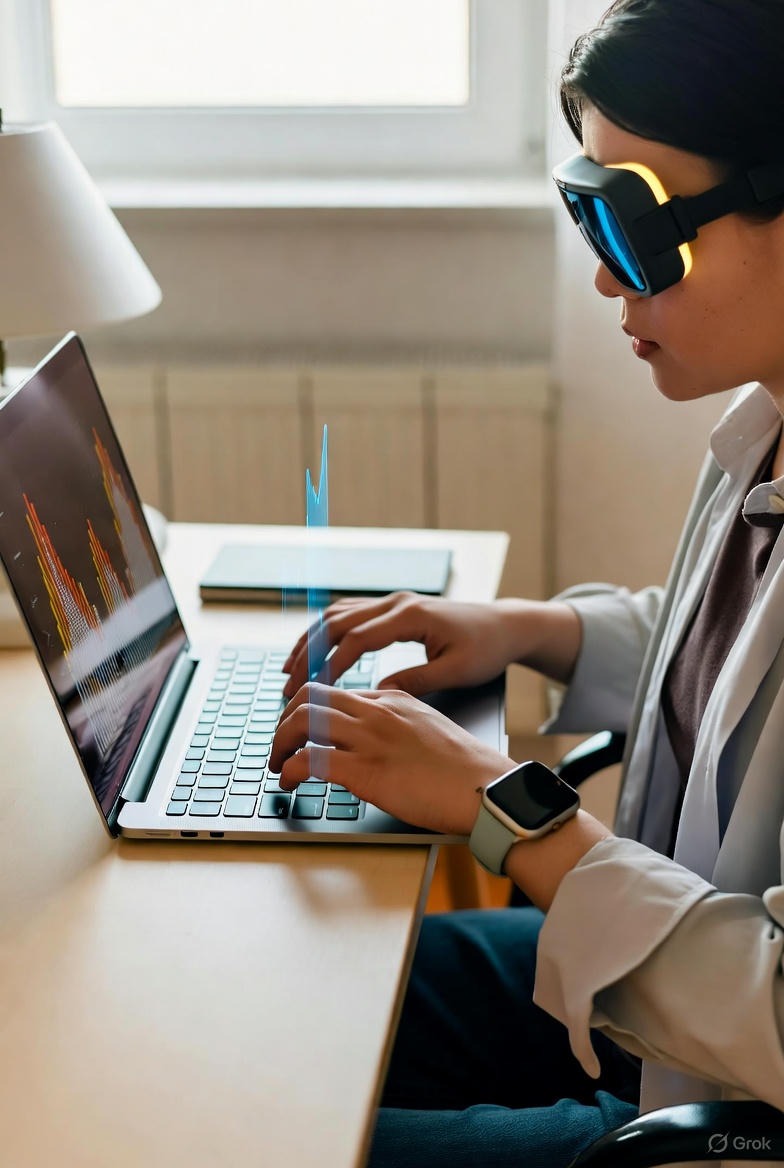
With an understanding of your metrics and your PPW, the next step is masterful task alignment. This is the art of placing the right type of cognitive work into the right biological slot.
High-Focus, Analytical Work (The “Green Light” Tasks)
Creative, Ideation, and Brainstorming Work
Administrative and Low-Cognitive Work (The “Maintenance” Tasks)
Communication, Meetings, and Social Collaboration
The most productive people aren’t those who work longest without stopping; they are those who strategically interrupt work with high-quality recovery. Your ring provides live feedback on when you need a break, making your recovery proactive, not reactive.
Listening to Your Live Stress Signals
During a focused work session, your sympathetic nervous system is engaged—heart rate may rise, HRV may dip. This is normal. The problem arises when this state is sustained without a parasympathetic reset. If you feel stuck, irritable, or foggy, don’t just push through. Take a one-minute “ring check.” Some devices allow an on-the-spot HRV or stress measurement. A consistently high stress score or a plummeting HRV trend is a direct order from your nervous system to disengage.
The Perfect Break Formula: What to Do and For How Long
A bio-effective break is about changing your physiological state.
Scheduled vs. Responsive Breaks: Building a Hybrid System
The post-lunch dip is a well-known circadian phenomenon, but its severity and timing are personal. Your ring data helps you not just survive it, but strategically manage it.
Predicting the Dip with Circadian Data
Your core body temperature has a natural, minor drop in the early to mid-afternoon (typically 1-3 PM for day-sleepers). This is a biological signal for rest, not a personal failing. On days with poor sleep or high morning stress (low HRV), this dip will feel more profound. Use your morning readiness score to anticipate the slump’s intensity. A low score means you should proactively clear your schedule of demanding work for that window.
Strategic Countermeasures: Light, Movement, and Nutrition
Reframing the Slump: Is It a Problem or an Opportunity?
What if the afternoon dip isn’t your enemy, but a feature to be used? This period of lower analytical power can be ideal for different kinds of work. It’s a perfect time for:
By planning for it, you remove its power to derail your day. You stop fighting your biology and start flowing with it.
Meetings are the notorious disruptors of focused work timing. By applying ring logic, you can schedule them to minimize their physiological cost and maximize their effectiveness.
The High Cost of Poorly Timed Meetings
Scheduling a demanding, decision-heavy meeting during your PPW is a catastrophic waste of biological capital. It’s using your premium cognitive fuel for a often inefficient group activity. Similarly, back-to-back video calls are a form of sustained sympathetic stress, draining HRV and leaving you exhausted. Your ring will show this as elevated stress scores and a depressed evening recovery metric.
Ideal Meeting Timing Based on Your Metrics
The “Meeting Recovery” Protocol
After any meeting longer than 30 minutes, especially a video call, institute a mandatory 5-10 minute buffer. Use this time not for more work, but for a micro-recovery ritual: stand up, look away from screens, hydrate, do some breathwork. This allows your nervous system to reset before diving into the next task, preventing the cumulative drain that defines most modern workdays.

Your work timing strategy doesn’t end when you close your laptop. The final hours of your day are a critical preparatory phase for tomorrow’s performance. Your evening ring data (body temperature drop, rising HRV) provides feedback on how well you’re executing this transition.
Creating a Physiologically Intelligent Shutdown Ritual
A hard stop is better than a slow fade. Define a specific end time and ritual:
How Your Evening Activity Affects Next-Day Ring Metrics
What you do in the evening directly writes the report card your ring will give you in the morning.
Using Data to Refine Your Routine
Check your ring’s sleep graph in the morning. Are you seeing a lot of wakefulness or restless sleep in the first few hours? You may have gone to bed before your body was ready (body temperature hadn’t dropped enough). Are you getting sufficient deep sleep? If not, review evening stress and alcohol intake. This feedback loop allows you to continuously refine your wind-down for better sleep and, consequently, better work days. For a comprehensive system, our complete 90-day sleep improvement guide offers a structured approach to mastering this cycle.
Inevitably, you will have low-readiness days. The goal is not to avoid them (impossible), but to navigate them with wisdom so they become restorative valleys, not destructive crashes.
The Pivot Plan: Immediate Schedule Adjustments
Upon seeing a low score (let’s say, below 70%), immediately execute a “Plan B” day:
The Mindset Shift: Redefining Productivity
On a low-readiness day, productivity is not about output volume. It is about essential maintenance and strategic recovery. Completing a backlog of administrative tasks, having a necessary but low-key conversation, or simply preserving energy to fight off an oncoming cold is productive work. It’s the work that keeps the system functioning. Embrace it.
Recovery-Focused Activities That Still Move the Needle
By having a deliberate plan for low-capacity days, you eliminate guilt and decision fatigue. You know exactly what to do, turning a potential wasted day into a strategically valuable one.
The true power of ring data unfolds over weeks and months. The daily score is a tactical tool; long-term trends are your strategic intelligence.
Identifying Your Personal Cycles
Through consistent tracking, you may discover:
Using Trend Data for Proactive Planning
This is where you graduate from reactive to proactive work timing.
Correlating Work Output with Physiological Data
Keep a simple journal: At the end of each week, note your key accomplishments and challenges. Then, look back at your weekly readiness averages and sleep consistency. Over time, you will build an irrefutable, personal case study proving that your best work—your most innovative ideas, your cleanest code, your most persuasive presentations—is inextricably linked to periods of high physiological readiness. This knowledge transforms self-care from an indulgence into a non-negotiable professional requirement.
The final step is to make this system frictionless by integrating bio-time principles into the digital tools you already use.
Block Scheduling Based on Your Bio-Template
Create a weekly calendar template that reflects your ideal biological rhythm:
Dynamic Adjustments Based on Morning Data
Each morning, after your data review, spend 5 minutes adjusting today’s instance of the template.
The Philosophy of a Flexible, Data-Informed Structure
This is not about creating another rigid system to fail at. It is about creating a flexible, intelligent structure that serves you. The template provides the default, optimal rhythm. The daily data provides the necessary deviations. This combination of structure and flexibility, guided by objective biomarkers, is the key to sustainable high performance.
By this point, you are no longer working blindly. You are a conductor, with a live feed from every section of your physiological orchestra. You know when the strings (your focus) are tuned, when the brass (your energy) is ready to sound, and when the whole ensemble needs a moment of silence to recover. You are ready to make music with your work.
The classic 9-to-5 schedule is a relic of an industrial age, yet it remains the default framework for a knowledge-based workforce composed of profoundly different chronotypes. Forcing a night owl into a morning stand-up is as physiologically mismatched as asking an early bird to deliver their best work at midnight. And for the shift worker, the challenge is even greater, battling a rotating schedule that wages war on their circadian rhythm. This is where a smart ring transitions from a productivity tool to an essential survival guide. It provides the objective data to not only survive but thrive within your non-standard schedule, allowing you to craft a work timing strategy that honors your biology rather than defying it.
Your chronotype—your genetically predisposed inclination for sleeping and being active at certain times—isn’t a preference; it’s a physiological reality governed by your “clock gene” expression. A smart ring doesn’t judge this reality; it illuminates it. By tracking when your body temperature naturally reaches its minimum (a reliable marker of circadian phase), your sleep timing consistency, and your daily HRV patterns, your ring can help you confirm your chronotype and, most importantly, design a work life that aligns with it. For the estimated 20-30% of people who are true night owls or early birds, and the millions working night shifts, this alignment is the key to unlocking health, well-being, and sustainable performance. We’ll move beyond generic advice and into a data-driven framework for customizing your entire life rhythm.
You might feel like a night owl, but your body’s data tells the true story. Self-assessment quizzes are helpful, but your smart ring provides biological proof.
The Golden Metric: Temperature Minimum (Tmin)
The most reliable objective marker of your circadian phase is the timing of your core body temperature minimum. For a typical day-sleeper, this nadir occurs around 4-5 AM. A true night owl’s Tmin might be pushed to 6-8 AM, while an early bird’s might occur at 2-4 AM. Your ring tracks your distal temperature continuously. By reviewing weeks of data, you can identify your personal, consistent low point. How to find it: Look at your sleep temperature graphs over a period of stable, free sleep (like a vacation or weekend without major alarms). The lowest point, typically in the second half of your sleep, is your probable Tmin. This single data point is more valuable than any quiz score.
Sleep Timing Consistency (or Lack Thereof)
Your natural sleep onset and wake-up times on days without social or work obligations are pure chronotype signals. Does your ring show you consistently falling asleep past 1 AM and waking past 9 AM when free? That’s a strong night owl signature. Are you asleep by 9:30 PM and awake by 5:30 AM without an alarm? That’s a classic early bird. The struggle emerges on work days, where your ring will show a stark discrepancy—a phenomenon known as social jetlag, where your biological clock is out of sync with your social clock. The size of this gap, measurable in hours by your ring, directly correlates with cumulative fatigue, higher caffeine dependence, and impaired cognitive function.
Daily HRV and RHR Patterns
Your autonomic nervous system follows a circadian rhythm too. An early bird will often see their HRV begin to drop and RHR begin to rise earlier in the evening, signaling an earlier biological wind-down. A night owl’s HRV may stay elevated later into the night, with their RHR remaining lower, indicating their body is still in an “active phase” when society expects them to be asleep. Tracking these patterns over time adds another layer of confirmation to your chronotype profile.
Accepting Your Design
The first, and most critical, step is using this data to move from frustration to acceptance. Fighting your chronotype is a losing battle that drains resilience. The goal is not to turn a night owl into a morning person, but to structure their work to capture their natural peak, which may be from 12 PM to 8 PM. The data from your ring provides the justification and the blueprint to have informed conversations with employers or to design your freelance schedule with biological authority.

For the night owl, the standard workday begins in their biological night and ends as they’re hitting their stride. This is a profound mismatch, but not an insurmountable one. With strategic planning and ring data as your advocate, you can redesign your day to salvage performance and protect your health.
The Strategic “Slow Start” Morning
Your morning on a workday is akin to a day-sleeper being woken at 3 AM. Accept that your cognitive capacity from 8-11 AM is severely limited.
Redefining Your “Morning” and Peak Period
Shift your mental model. Your productive “morning” starts late. Your true Peak Performance Window (PPW) as a night owl is likely between 12 PM and 5 PM.
The Critical Evening Wind-Down Challenge
The night owl’s greatest peril is the natural alertness that extends past societal bedtime. To get adequate sleep before a morning alarm, you must deliberately engineer a wind-down.
The early bird often thrives in the traditional work structure but faces a different challenge: maintaining energy and focus as the afternoon wears on and their biological rhythm dips earlier than others. Their strategy is about front-loading and intelligent energy conservation.
Capitalizing on the Dawn Advantage
Your PPW is bright and early. This is a tremendous, often underutilized, asset.
Managing the Early Afternoon Precipice
The early bird’s post-lunch slump often hits harder and earlier. Your ring will likely show a more pronounced dip in recovery metrics or a higher stress score in the early afternoon (1-3 PM).
Designing a Sustainable Evening
Your energy will wane earlier. Honor this instead of fighting it with stimulants.
Shift work is a physiological stressor on par with chronic jet lag. It disrupts sleep, digestion, mood, and long-term health. A smart ring becomes not a luxury, but a critical piece of safety equipment, providing real-time feedback to navigate this challenging terrain and mitigate its worst effects.
Understanding the Specific Strain
The ring quantifies what your body feels:
Strategies Based on Shift Type
For Night Shifts (e.g., 10 PM – 6 AM):
For Rotating Shifts:
Using Metrics for Health Preservation
Armed with the objective data from your ring, you move from making requests based on preference to proposing changes based on biological necessity and performance optimization. This is a powerful shift in any negotiation for flexibility.
Building Your “Biological Case for Flexibility”
Collect 4-6 weeks of consistent ring data alongside a simple log of your work output and energy levels.
Proposing Specific, Trial-Based Arrangements
The Language of Data-Driven Negotiation
Your ring data transforms you from an employee with a preference to an expert on your own human performance system. This is a compelling, modern, and professional position from which to negotiate.
Light is the primary “zeitgeber” (time-giver) for your circadian rhythm. Controlling your light exposure is the most potent, non-pharmacological tool you have to gently nudge your chronotype or stabilize it against the demands of shift work.
The Science of Melanopsin
Specialized cells in your eyes contain melanopsin, a photopigment exquisitely sensitive to blue-wavelength light (~480 nanometers). When this light hits your retina, it sends a direct signal to your brain’s suprachiasmatic nucleus (SCN)—your master clock—suppressing melatonin and signaling “WAKE.”
Strategic Light Exposure for Schedule Shifting
Creating a Personalized Light Protocol
When you eat is almost as important as what you eat for circadian alignment. Your digestive system, liver, and metabolic processes have their own circadian clocks, which can be disrupted by mistimed eating, exacerbating the strain of an off-peak schedule.
Circadian Rhythm of Metabolism
Your body is primed to process food most efficiently during your biological daytime. Insulin sensitivity is higher earlier in your wake period. Eating large meals late in your biological night (e.g., a night owl’s late-night snack or a shift worker’s heavy meal before daytime sleep) can lead to poor glucose control, disrupted sleep, and weight gain.
Eating Guidelines by Schedule
Using Your Ring to Gauge Impact
Your ring provides direct feedback on how meal timing affects you.
Exercise is a potent circadian signal and stressor. When you schedule it relative to your work and chronotype can determine whether it fuels your day or drains your reserves.
Exercise as a Circadian Signal
Morning exercise, particularly in natural light, can help advance your clock (good for night owls wanting to adapt). Evening exercise, especially intense training, can elevate core body temperature and delay sleep onset—problematic for early birds but potentially useful for night owls needing to be alert later.
Data-Driven Recommendations
The Ring as Your Recovery Coach
Your readiness score is the ultimate guide. On a low-readiness day, swap a planned high-intensity interval training (HIIT) session for gentle mobility work, yoga, or a walk. This respects your body’s need for recovery and prevents digging a deeper hole. The ring removes ego from the equation, providing an objective “green light” or “red light” for workout intensity.
Your ideal work timing doesn’t exist in a vacuum. It intersects with the rhythms of partners, family, and friends. Differing chronotypes can be a source of conflict (“You’re never awake for movie night!” / “You’re grumpy every morning!”) or an opportunity for intentional connection.
Communicating Your Biological Reality
Use your ring data to explain, not excuse. Show your partner your graphs: “See how my temperature doesn’t drop until 11 PM? That’s why I struggle to fall asleep earlier. It’s not that I don’t want to come to bed.” Or, “My readiness score is always below 40 before 9 AM; that’s why I’m not conversational at breakfast.”
Creating Rituals That Work for Both
The Importance of Solo Recovery Time
For the shift worker or the extreme chronotype, scheduled, guilt-free solo time is essential. This is not anti-social; it’s pro-social sustainability. Communicate: “My data shows I need Saturday morning to myself to recover from the week. I’ll be recharged and fully present for our plans in the afternoon.” Protecting this time prevents resentment and burnout, making the time you do spend together higher quality. For strategies on navigating these social pressures, consider the insights in how social obligations conflict with sleep patterns.
The journey with chronotype and shift work is a long-term one. It involves a balance between gentle adaptation where possible and radical acceptance where it is not.
The Limits of “Flipping” Your Chronotype
You cannot fundamentally change your genetic chronotype. A true night owl will never become a perky 5 AM riser without significant, sustained cost. The goal of using light, meal timing, and exercise is to create a manageable phase shift of 1-2 hours to reduce social jetlag, not to reinvent yourself.
Prioritizing Consistency Above All
Whether you’re a night owl on a 9-5 or a shift worker on a rotation, consistency within your current schedule is your greatest ally. Going to bed and waking at the same time every day—even on your days off—is the single most stabilizing thing you can do. Your ring data will prove this: consistent sleep times yield higher HRV, lower RHR, and better readiness scores, even if the times are “non-standard.” The debate on consistency is fleshed out in weekend sleep pattern strategy: to shift or not.
Redefining Success
Success is not becoming a morning person. Success is:
Your smart ring is the compass for this journey. It takes the abstract struggle of being out of sync and turns it into a concrete, manageable set of variables you can observe and influence. You are no longer at war with time; you are learning its unique language in your own body, and crafting a masterpiece of a life within its rhythm.
Peak performance is an ecosystem, not a single factor. Your meticulously crafted work schedule, informed by ring metrics, exists within a dynamic landscape of nutrition and physical activity. These are not separate levers to pull; they are interwoven systems that amplify or undermine each other. What you eat and when you move directly writes the data your ring reports the next morning, which in turn dictates your work timing strategy for the day. Mastering this synergy is the difference between a fragile schedule that collapses under stress and a resilient system that adapts and thrives. This is where we move from managing time to orchestrating physiology.
Think of your body as a high-performance engine. Your work timing is the race strategy—when to push, when to coast, when to pit. Your nutrition is the fuel—its quality and timing determine power output and engine wear. Your exercise is both the tuning and the wear-and-tear—it builds capacity but also requires repair. Your smart ring is the onboard telemetry, giving you real-time data on engine temperature (body temp), oil pressure (HRV), and RPM (RHR). Ignoring one system while optimizing another leads to breakdown. This section will provide the integrated playbook to make them all sing in harmony.
Food is more than calories; it is information. Every meal sends instructions to your metabolism, hormones, and circadian system. Eating at the wrong biological time or choosing foods that spike and crash your blood sugar is like pouring the wrong fuel into your engine during a race—it will sputter and fail just when you need power.
The Circadian Rhythm of Digestion
Your body is primed to digest and metabolize food most efficiently during the active phase of your circadian cycle. Insulin sensitivity—your cells’ responsiveness to the hormone that ushers glucose out of the blood—is highest in your biological morning and declines throughout the day. Eating a large, carbohydrate-heavy meal late in your biological evening (which for a night owl could be midnight, for a day worker is dinnertime) forces your metabolism to work against its natural rhythm, leading to poorer glucose control, inflammation, and sleep disruption. Your ring will show this as elevated nighttime heart rate and reduced HRV.
The Ideal Work-Day Eating Pattern
Using Ring Data to Identify Food Triggers
Your ring provides objective feedback on how food affects your recovery, which is a proxy for next-day work capacity.
Exercise is a potent, double-edged sword. It is a keystone habit for health and cognitive function, but it is also a physiological stressor that demands recovery. The timing, type, and intensity of your movement must be strategically placed within your work timing framework to serve as fuel, not sabotage.
Exercise as a Cognitive Primer and Stressor
Strategic Exercise Timing Based on Work Schedule
Letting Recovery Metrics Be Your Guide
This is the golden rule: Let your morning readiness score dictate your evening workout intensity. A green score means you have the resilience to absorb a challenging workout. A yellow or red score means your body is asking for recovery; honor it with gentle movement or rest. Adhering to this principle prevents the common trap of overtraining, which manifests as chronically elevated RHR, suppressed HRV, poor sleep, and ultimately, diminished work performance. The intricate dance between movement and rest is explored further in our guide on how exercise timing influences sleep patterns.
These two ubiquitous substances have profound, data-visible effects on your physiology. Used strategically, they can be tools. Used indiscriminately, they are the wrecking balls of your carefully built bio-timing structure.
Caffeine: The Strategic Performance Tool
Caffeine works by blocking adenosine, a neurotransmitter that promotes sleepiness. However, its timing and dosage are critical.
Alcohol: The Performance Saboteur
Alcohol is a sedative, but it is not a sleep aid. It devastates sleep architecture.
Dehydration is a stealthy thief of cognitive function. A fluid loss of just 1-2% of body weight can impair concentration, alertness, and short-term memory. While your smart ring doesn’t directly measure hydration, its metrics are acutely sensitive to it.
How Dehydration Manifests in Your Ring Data
Creating a Hydration Protocol for Focus
The siesta was onto something. A strategically timed nap is not a sign of laziness; it’s a potent, data-validated tool for cognitive rebooting and bridging energy gaps in your work timing.
The Science of the Power Nap
A short nap (10-20 minutes) primarily boosts alertness, reaction time, and mood by clearing adenosine from the brain without entering deep sleep, thus avoiding sleep inertia (that groggy feeling). A longer nap (60-90 minutes) allows you to complete a full sleep cycle, including deep and REM sleep, which enhances memory consolidation and creative problem-solving.
When and How to Nap Based on Your Schedule
Napping Protocol for Optimal Results
All the biohacking in the world is ineffective if your mind is a torrent of anxiety and distraction. Chronic mental stress keeps your sympathetic nervous system engaged, suppressing HRV, elevating RHR, and directly undermining your ring metrics and work capacity. Mindfulness and deliberate stress management are the software that allows your physiological hardware to function optimally.
The Direct Link Between Mental State and Ring Metrics
A stressful work meeting, an anxious train of thought, or even compulsive email checking can trigger a “fight-or-flight” response. Your ring can detect this as an acute spike in heart rate and a dip in HRV during an on-the-spot measurement. Chronic, unresolved stress leads to the same pattern seen in overtraining: a suppressed HRV baseline and elevated RHR.
Integrating Micro-Practices into Your Work Timing
Using Biofeedback from Your Ring
Some rings offer guided breathing sessions with real-time HRV feedback. This is a form of biofeedback training. By doing a 5-minute breathing exercise and watching your HRV rise on the screen, you are learning to consciously control your autonomic state. This skill is directly transferable to work: before a big presentation, a minute of paced breathing can lower your heart rate and improve cognitive access.
Business travel and jet lag represent the ultimate test of your work timing system. You are forcibly yanking your circadian rhythm from its moorings and expecting performance in a new environment. A smart ring is your indispensable co-pilot for this chaotic journey.
The Strategy for Eastward vs. Westward Travel
The "Arrival Protocol" for Critical Work Trips
If you have important work (a presentation, negotiation) within 1-2 days of arrival, you need an aggressive protocol:
Maintaining a "Home Base" Rhythm
For frequent short-hop travel (e.g., same time zone or 1-2 hour difference), it can be less disruptive to maintain your home sleep/wake times if the trip is short (1-2 nights). Your ring will help you decide what’s less taxing for your body.
Now we synthesize everything into a single, living document: your Personalized Bio-Time Protocol. This is not a rigid set of rules, but a dynamic guide informed by your ongoing ring data.
Step 1: The Baseline Assessment (4 Weeks)
Step 2: Draft Your Ideal Day Template
Create a 24-hour template based on your findings and goals:
Step 3: The Daily Adjustment Loop
This is the critical habit:
Step 4: The Quarterly Review
Every 3 months, review your long-term trends. Has your average HRV improved? Is your sleep more consistent? Adjust your protocol and goals accordingly. This turns your health and performance into a continuous, data-informed improvement project. For a structured approach to this review, our sleep improvement tracking: measuring what matters guide offers a perfect framework.
The true potential of bio-time productivity is unlocked when it moves from an individual practice to a team or organizational culture. As a leader, you have the opportunity to build a team that is not just clock-synchronous, but performance-synchronized.
The Principles of a Bio-Time Aware Team
Using Data to Optimize Team Rhythms
Leading by Example
As a leader, model the behavior. Block your own deep work time visibly on your calendar. Respect others' focus blocks by not sending instant messages and scheduling meetings within core hours. Talk openly about using your own ring data to take a recovery afternoon after a big push. This gives your team permission to do the same, building a resilient, high-performing, and sustainable team culture. This cultural shift is at the heart of the modern sleep pattern revolution: flexible work for better rest.
After the initial gains from implementing a bio-time strategy, you may hit a plateau. Your metrics stop improving, or you feel your schedule becoming stale. This is normal. The system is designed for continuous refinement.
Common Plateaus and Solutions
The Concept of "Seasons" in Your Work Life
Your bio-time protocol is not static for 50 years. It has seasons.
Knowing When to Seek Deeper Insight
If you’ve been consistent for 6+ months and still struggle with chronically poor sleep, low HRV, or debilitating fatigue despite good habits, your ring data is a powerful tool for a healthcare professional. Bring your long-term trends to a doctor or sleep specialist. Showing months of elevated RHR or suppressed HRV provides objective evidence that can lead to more targeted investigations (e.g., for sleep apnea, thyroid issues, etc.).
We are on the cusp of a new era where the reactive "readiness score" evolves into a predictive "performance forecast." The convergence of smart ring data, artificial intelligence, and digital calendars will transform personal productivity.
From Reactive to Predictive
Future algorithms won't just tell you how you recovered from yesterday; they will forecast your cognitive capacity for tomorrow and the next week based on sleep, stress, and activity trends. Imagine your calendar app suggesting, "Based on your current sleep debt and planned workouts, your peak focus window on Thursday will be 10 AM-12 PM. Would you like to move your strategic review there?"
Seamless System Integration
The true power lies in closed-loop systems:
The Ethical and Personal Framework
As this technology advances, the core principle remains: Data serves humanity, not the other way around. The goal is enhanced agency, freedom, and fulfillment—not optimization for optimization’s sake. Your ring data should empower you to craft a meaningful work life, not become another source of anxiety or a score to gamify at the expense of joy.
We began this guide with a vision: to stop being a slave to the clock and start being a conductor of your own biological symphony. You now have the sheet music—the understanding of HRV, RHR, sleep stages, and circadian rhythms. You have the instrument—your smart ring, providing real-time feedback from your physiology. And you have the technique—the strategies for aligning work, diet, movement, and recovery into a cohesive, personalized performance system.
This is not about squeezing more hours out of the day. It is about investing your hours with supreme intelligence. It’s about recognizing that your most valuable professional asset is not your time, but the quality of your energy within that time. By honoring your unique rhythm, you unlock not only higher productivity but also greater resilience, creativity, and well-being.
The journey is iterative, compassionate, and uniquely yours. Some days you will execute your protocol perfectly and feel the flow. Other days, life will intervene, and your metrics will reflect the beautiful, messy reality of being human. On those days, your ring’s most important message is not a score, but a reminder to listen, to adapt, and to be kind to the biological creature that does the work.
Start tonight. Not with a radical overhaul, but with a single, data-informed decision. Review your ring’s sleep advice. Choose one element of your wind-down to improve. Observe the result in tomorrow’s data. This is how mastery is built: one mindful adjustment at a time, guided by the unwavering truth of your own body’s signals. You have the guide. You have the technology. Now, go and design your time.
Your Trusted Sleep Advocate: Sleep Foundation — https://www.sleepfoundation.org
Discover a digital archive of scholarly articles: NIH — https://www.ncbi.nlm.nih.gov/
39 million citations for biomedical literature :PubMed — https://pubmed.ncbi.nlm.nih.gov/
Experts at Harvard Health Publishing covering a variety of health topics — https://www.health.harvard.edu/blog/
Every life deserves world class care :Cleveland Clinic - https://my.clevelandclinic.org/health
Wearable technology and the future of predictive health monitoring :MIT Technology Review — https://www.technologyreview.com/
Dedicated to the well-being of all people and guided by science :World Health Organization — https://www.who.int/news-room/
Psychological science and knowledge to benefit society and improve lives. :APA — https://www.apa.org/monitor/
Cutting-edge insights on human longevity and peak performance:
Lifespan Research — https://www.lifespan.io/
Global authority on exercise physiology, sports performance, and human recovery:
American College of Sports Medicine — https://www.acsm.org/
Neuroscience-driven guidance for better focus, sleep, and mental clarity:
Stanford Human Performance Lab — https://humanperformance.stanford.edu/
Evidence-based psychology and mind–body wellness resources:
Mayo Clinic — https://www.mayoclinic.org/healthy-lifestyle/
Data-backed research on emotional wellbeing, stress biology, and resilience:
American Institute of Stress — https://www.stress.org/


