


The Beginner-Friendly Guide to Energy Management: Smart Ring Productivity Insights
A beginner's guide to managing your energy reserves for optimal output, informed by your ring.
A beginner's guide to managing your energy reserves for optimal output, informed by your ring.
%402x.svg)
You know that feeling. It’s 2:37 PM. Your lunch is digesting, the morning’s momentum has vanished, and a dense fog of lethargy has settled over your brain. You stare at the screen, willing yourself to focus, but your energy account is flashing “insufficient funds.” You reach for another coffee, knowing it’s a short-term loan with crushing interest. This isn’t just an afternoon slump; it’s a systemic failure of your personal energy economy.
For decades, we’ve obsessed over time management. We’ve color-coded calendars, adopted productivity systems, and tried to cram more tasks into every waking hour. But what if we’ve been optimizing the wrong variable? Time is finite and inflexible—everyone gets the same 24 hours. Energy, however, is renewable, expandable, and deeply personal. It’s the currency of performance, the fuel for creativity, and the foundation of well-being. Managing your energy, not just your time, is the ultimate productivity hack.
Yet, how do you manage something so intangible? You can’t see your energy reserves. You can’t measure your stress buffer. You can’t quantify your recovery rate. At least, you couldn’t—until now. Welcome to the era of the smart ring, a silent, continuous bio-sensor that unlocks the black box of your body’s inner workings. This isn’t just another wearable; it’s a personal energy auditor, giving you an objective, data-rich narrative of your vitality.
This guide is your map to a new frontier: using objective biometric data from a smart ring to master your personal energy, transforming you from a victim of daily drain to an architect of sustainable performance. We’ll move from theory to practice, from confusion to clarity, and from burnout to balance. Let’s begin.

We live in a culture that glorifies “hustle.” Burning the candle at both ends is worn as a badge of honor. We trade sleep for screen time, swap real meals for convenient calories, and silence our body’s signals with stimulants. The result? A society of the chronically depleted, running on fumes and willpower alone. Time management asks, “How can I do more in this hour?” Energy management asks a more profound question: “In what state am I during this hour, and how can I ensure I have the capacity to do what matters?”
Think of yourself not as a schedule, but as a high-performance vehicle. Time management is the GPS—it tells you the route. Energy management is the dashboard—it shows your fuel level, engine temperature, oil pressure, and battery charge. You wouldn’t try to win a race while ignoring every warning light on your dash, yet we do this with our bodies every single day. We push through fatigue, ignore stress, and override recovery signals until the system fails, manifesting as burnout, illness, or chronic underperformance.
Energy management recognizes that human capacity is multidimensional. The seminal work in this field, The Power of Full Engagement by Jim Loehr and Tony Schwartz, identifies four key energy sources:
Traditional productivity tools only engage the mental dimension. A smart ring, however, provides the foundational data for the physical dimension and powerful proxies for the emotional and mental ones. It measures the inputs and outputs of your physical energy system: how well you recharge (sleep), how you expend energy (activity, stress), and how resilient your system is (heart rate variability, or HRV). This data is the Rosetta Stone for translating your body’s cryptic signals into an actionable plan.
The shift from time-centric to energy-centric living is not a luxury; it’s a necessity for thriving in the 21st century. By understanding your unique energy rhythms, you can strategically align your most demanding tasks with your peak capacity, schedule recovery before you crash, and build sustainable habits that compound over time. It’s the difference between white-knuckling your way through the day and flowing through it with purposeful vitality. The first step out of the time-management trap is to start measuring what truly matters.
Forget clunky wristbands or phones that live in another room. The smart ring represents a paradigm shift in personal biometrics. Worn on your finger—a location rich with capillaries and consistently close to the body’s core—it provides a surprisingly accurate and unobtrusive window into your physiology. But how does this sleek piece of tech transform into a personal energy consultant?
At its heart are a series of miniature sensors working in concert:
The magic isn’t in the raw data collection, but in the sophisticated algorithms that interpret it. While you sleep, the ring isn’t just counting minutes. It’s analyzing:
Upon waking, the ring’s app synthesizes this nocturnal data—your body’s repair cycle—into a single, digestible score: your Readiness or Recovery Score. This isn’t a random number. It’s a personalized assessment of your battery charge for the day ahead. A high score suggests you’re primed for challenge; a low score is a clear recommendation for moderation and recovery. It’s your body’s morning briefing, delivered before you even check your email.
Throughout the day, the ring silently tracks your activity, stress responses (via HRV dips), and calories burned. Come evening, it begins its most important job again: monitoring the descent into sleep and guiding the recharge. This continuous, 24/7 loop of measurement creates a feedback system that is impossible to replicate through self-observation alone. Our perception of our energy is famously flawed, biased by caffeine, mood, and expectations. The smart ring offers objective truth—a trusted, data-driven coach that helps you see yourself clearly, so you can make smarter decisions for your energy, health, and productivity.

Opening your smart ring app for the first time can feel like staring at the cockpit of a spaceship. Numbers, graphs, and terms like “HRV” and “REM latency” flash before you. Don’t be intimidated. This dashboard is your new control panel. Let’s translate the three most critical gauges for energy management.
Heart Rate Variability (HRV): The Stress & Resilience Barometer
If you only learn one metric, make it HRV. Contrary to what the name implies, it’s not about how much your heart rate changes during exercise. HRV measures the microscopic variations in the milliseconds between each heartbeat. A healthy, resilient nervous system has a high, variable HRV—like a skilled drummer playing a complex, adaptable rhythm. A stressed, fatigued, or unhealthy system has a low, monotonous HRV—a metronome stuck on a single beat.
Resting Heart Rate (RHR): The Metabolic & Fitness Indicator
Your RHR is the number of times your heart beats per minute while you are completely at rest (optimally measured during deep sleep). It’s a beautifully simple metric with profound implications.
Sleep Score: The Recovery & Performance Forecast
This composite score is the summary of your night’s restoration. Different apps use different algorithms, but they generally factor in:
Your Sleep Score is the direct report on your energy “deposit” last night. A high score means you made a full contribution to your energy reserves. A low score means you’re starting the day with a deficit. By correlating your Sleep Score with your subjective feeling upon waking, you begin to trust the data. You might learn that you need 7.5 hours, not 7, to score above 85. Or that alcohol, even one drink, devastates your deep sleep, tanking your score and next-day readiness. For a deep dive into what each component means, our Sleep Pattern Assessment: Understanding Your Numbers guide breaks it all down.
Mastering your dashboard is about pattern recognition, not daily obsession. You’re looking for trends, connections, and cause-and-effect relationships. Does a poor Sleep Score predict a low HRV the next day? Does a stressful work meeting show up as a noticeable HRV dip? This is the foundation of energy intelligence.
Data points in isolation are just numbers. Their power is unlocked only when you establish a personal baseline—your own unique “normal.” This is the most crucial, and often skipped, step for beginners. Jumping to conclusions based on a single day’s data is like trying to understand the climate by looking at one day’s weather. You need to observe the patterns over time.
For the first 2-4 weeks, your primary job is not to change anything, but to become a curious, non-judgmental observer. Wear your ring consistently (especially at night), and let it collect data on your current, unaltered life. This establishes your foundational metrics:
During this observation phase, pair the objective data with brief subjective notes in the app’s journal feature. A simple note like “late dinner,” “hard workout,” “argument with partner,” or “drank wine” can reveal powerful correlations. You might discover:
This process of data journaling transforms anonymous metrics into your personal story. It moves you from “My HRV is low” to “My body shows signs of stress when I skip my lunch break and work straight through.” That second statement is actionable.
Establishing a true baseline also helps you filter out “noise” from “signal.” Everyone has off days. A single low HRV reading might be a blip. But a three-day downward trend in both HRV and Sleep Score, paired with a rising RHR? That’s a strong signal from your body that you are under-recovering and need to intervene. This principle of tracking trends is essential, as highlighted in our article on how to Measure Sleep Improvement Progress Effectively.
By the end of this baseline period, you will have achieved the first major milestone in energy management: self-awareness. You’re no longer guessing how you “should” feel. You have a data-backed profile of how you actually function. This objective mirror is often illuminating, sometimes humbling, and always empowering. It’s the solid ground from which all positive change is built.
In our productivity-obsessed world, sleep is often viewed as a negotiable commodity—downtime that cuts into precious doing-time. Smart ring data shatters this myth with brutal, beautiful clarity. Sleep is not a passive state; it is the most active and critical investment in your energy capital. It is when your body repairs tissues, consolidates memories, processes emotions, clears metabolic waste from the brain, and regulates hormones that govern hunger, stress, and growth.
Your smart ring quantifies this investment. Every night, it delivers a performance review of your body’s repair shop. Ignoring a chronically low Sleep Score is the financial equivalent of ignoring a negative cash flow—it’s unsustainable and will lead to bankruptcy (in this case, burnout or illness).
The data reveals several non-negotiable truths:
This transforms sleep from an afterthought to the cornerstone of your energy strategy. Optimizing sleep becomes the highest-leverage activity for improving everything else: focus, mood, willpower, metabolic health, and immune function. It’s the foundation upon which all other energy management habits are built. If your sleep is broken, your energy system is fundamentally compromised. For those struggling to find a rhythm, a Gradual Sleep Improvement Approach vs. Quick Fixes may offer a sustainable path forward.
Therefore, the first mission in your energy management journey is to become a dedicated steward of your sleep. Use your ring’s data not to provoke anxiety, but to guide gentle, evidence-based experiments. What one small change could move your Sleep Score from a 72 to a 77 this week? This focus on recovery-first planning flips the traditional productivity script. Instead of asking “How can I do more?” you start by asking “How can I recover better, so I can do what matters well?”
Your morning alarm sounds. In the pre-data era, you’d groggily assess your state with a subjective, “Ugh, I’m tired,” or a hopeful, “I feel okay.” Now, you open your app and receive a objective report: a Readiness Score of 88. Or 62. This number is your strategic directive for the day. It answers the vital question: “What is my body capable of today?”
Think of your Readiness Score as your daily energy budget. A high score (typically >80-85, relative to your baseline) means you have a large, flexible budget. You can “spend” energy on demanding cognitive work, intense workouts, important social engagements, or learning new skills. Your system is resilient and can handle the withdrawal.
A low score (<70) means your budget is tight. Your body is signaling that it’s in a state of recovery, fighting stress, or potentially an oncoming illness. This is not a day for aggressive spending. It’s a day for conservation, gentle “deposits,” and maintenance tasks. Forcing a high-intensity day on a low readiness budget is like trying to run a marathon on an empty tank—you might start, but you will break down.
Here’s how to operationalize your score:
On a HIGH Readiness Day:
On a LOW Readiness Day:
On a MODERATE Readiness Day:
This dynamic approach is the antithesis of a rigid, color-blocked calendar. It’s responsive, respectful, and radically efficient. It prevents you from wasting your peak days on trivial tasks and from torpedoing your recovery by overexerting on low days. By aligning your demands with your capacity, you dramatically reduce the boom-bust cycle and achieve more sustainable, high-quality output over time. This is the core of data-driven energy management.
We all intuitively know we have highs and lows during the day. The post-lunch dip is almost universal. But your personal energy rhythm—your ultradian rhythm—is as unique as your fingerprint. A smart ring helps you move beyond intuition and map your rhythm with precision, allowing you to schedule tasks in harmony with your biology, not in conflict with it.
Your prime time is that 2-3 hour window where your energy, focus, and creativity converge at their peak. For most people, this is in the morning (making “morning person” a biological reality, not just a preference). For a significant minority—the “night owls”—it arrives later. The key is to stop fighting your chronotype and start designing your day around it.
How to Discover Your Prime Time with Your Smart Ring:
Once Identified, Architect Your Day Around Your Prime Time:
By aligning your task type with your energy level, you achieve a state of cognitive fitness. You’re using the right fuel for the engine’s current phase. The result is that work takes less effort, produces higher quality output, and leaves you with more residual energy at the end of the day. It turns the daily grind into a rhythmic dance with your own biology.
Stress isn’t just major life events—a bad performance review, a move, a breakup. It’s the constant, low-grade hum of modern life: the frantic commute, the overflowing inbox, the contentious work call, the decision fatigue from choosing what to have for lunch, the blue light from screens, even the subconscious vigilance of constant news alerts. This is micro-stress, and it’s the silent killer of daily energy.
Your conscious mind may adapt and tune out these irritants, but your autonomic nervous system does not. It reacts to every perceived demand. This is where your smart ring becomes a revolutionary tool: a micro-stress auditor. It detects the physiological signatures of stress—a dip in HRV, a spike in heart rate, a rise in skin temperature—that you may have completely overlooked.
Conducting Your Own Micro-Stress Audit:
This audit reveals your unique energy drains. These are the small, repeatable activities and contexts that systematically deplete your reserves without providing any value. They are the leaks in your energy bucket.
Common Hidden Drains a Smart Ring Can Uncover:
Armed with this data, you can move from passive victim to active architect. You can’t eliminate all stress, but you can strategically manage it. You can buffer a known stressful meeting with 5 minutes of box breathing beforehand. You can turn off notifications during your prime time. You can choose a walk instead of a scroll during your break. This is precision energy management—plugging the leaks so your bucket fills faster and stays fuller longer. For a deeper look at how our social lives can impact this, consider reading about How Social Obligations Conflict with Sleep Patterns.

The fitness world is obsessed with outputs: steps, active minutes, calories burned, VO2 max. While these are valuable for general health, the energy-centric view reframes movement through a different lens: What type and timing of movement generates sustainable energy for my life and work?
Your smart ring’s activity data is a tool for strategic energy modulation, not just fitness tracking. The goal is to use movement to regulate your system—to boost energy when needed, to dissipate stress, and to promote recovery—not just to hit an arbitrary calorie target.
1. Movement for Energy Generation (The Boost):
2. Movement for Stress Dissipation (The Release):
3. Movement for Recovery & Restoration (The Replenishment):
The Critical Factor: Timing
When you move is as important as how you move. A smart ring helps you see the impact of timing. A vigorous workout too late in the evening may raise your core temperature and heart rate, delaying sleep onset and reducing sleep quality. Your ring’s sleep data will show this. Conversely, morning or afternoon exercise often correlates with better subsequent sleep. Discover more on this in How Exercise Timing Influences Sleep Patterns.
By shifting from “How many calories did I burn?” to “How did this movement affect my energy and recovery?” you turn activity from a chore into a precise tool for managing your human performance system.
You are what you eat, and your smart ring is the witness. While it can’t scan your meals, the impact of your nutritional choices is written clearly in the language of your physiology: in your resting heart rate, your heart rate variability, your sleep architecture, and even your skin temperature. Learning to read these signals turns nutrition from a confusing set of rules into a personalized feedback system.
Here are the most common biometric signatures of nutritional choices:
1. The Late-Night Meal Effect:
2. The Sugar & Refined Carb Rollercoaster:
3. Dehydration’s Subtle Toll:
4. Alcohol’s Deceptive Impact:
How to Use This: Conduct a Food Journal Experiment.
For one week, log your meals and snacks (simply note “large pasta dinner at 8 PM” or “oatmeal with nuts at 8 AM”). Don’t change your habits—just observe. Then, look for correlations. Does a high-sugar lunch predict a 3 PM energy crash on your graph? Does a light, early dinner correlate with a higher Sleep Score?
This process removes dogma and guesswork. It answers the question, “What does food do to me?” not just “What is in the food?” You move from following generic nutrition advice to creating your own, data-backed fueling protocol for optimal energy.
You now have the knowledge: the philosophy of energy management, the technology of the smart ring, and the meaning behind the key metrics. You’ve observed your baseline and identified your personal patterns, drains, and prime time. Now, we synthesize this into action. The goal is not a dramatic life overhaul that lasts three days. It’s to build a Personal Energy Protocol (PEP)—a set of small, sustainable, data-informed habits that compound over time to radically elevate your baseline energy and resilience.
The principle is “Observe, Experiment, Integrate.” Use your ring to measure the effect of every tiny change.
Start with Your Foundation: Sleep.
Choose ONE lever to pull for two weeks.
Tame Your Day: Manage Micro-Stress.
Based on your audit, choose ONE key energy drain to address.
Fuel and Move Strategically.
Align nutrition and movement with your energy goals.
The Golden Rule: Change One Thing at a Time.
Your body is a complex system. If you change your bedtime, your workout intensity, and your diet all in the same week, you won’t know what’s causing the effect (good or bad). Isolate variables. Test for at least 5-7 days to account for natural daily fluctuations.
Create Your Protocol Document.
This is a living document—notes in your phone or a notebook. It should contain:
This protocol isn’t about rigidity; it’s about creating a default framework that supports high energy, so you don’t have to decide when you’re depleted. It’s your personalized operating system, fine-tuned by your own biometric data. The compound effect of these small, correct adjustments over months is nothing short of transformative: higher sustainable energy, clearer thinking, better mood, and a profound sense of agency over your own health and performance. The journey to mastering your energy is a lifelong practice, and you now have the most powerful tool imaginable to guide you.
In a culture that equates busyness with worth, recovery is often seen as laziness. We feel guilty for taking a break, for napping, for sitting quietly. Our smart rings, however, present an irrefutable counter-argument: Strategic recovery is not the absence of productivity; it is the mechanism that makes high performance possible. It’s the essential white space in the music, the rest between sets at the gym, the exhale after the inhale. Without it, everything falls apart.
Your biometric data makes this abstract concept concrete. When you see your HRV climb after a meditation session, or your Sleep Score soar after a day where you prioritized rest, you are witnessing your body’s capacity for supercompensation—the process where it doesn’t just recover to its previous baseline, but adapts and grows stronger in response to stress, provided adequate recovery is given. This is true for muscles after exercise, and it’s equally true for your nervous system after cognitive or emotional stress.
The Ring Reveals Two Critical Types of Recovery:
1. Passive Recovery (Macro):
This is the big, non-negotiable repair shift: sleep. Your ring’s nightly report is the quality control for this process. It shows you whether your body had the time and conditions (deep sleep for physical repair, REM sleep for mental/emotional processing) to fully restore itself. Chronic sleep deprivation is like running a factory 24/7 without ever stopping for maintenance. Breakdown is inevitable. A commitment to high-quality sleep is the foundational act of productive recovery. For those navigating chronic disruptions, such as parents, specific strategies are needed, which we cover in Sleep Improvement for Parents: Rest Despite Disruptions.
2. Active Recovery (Micro):
These are the small, deliberate pauses woven throughout your day that prevent systemic overload. They are the “pressure release valves” for your nervous system. Your ring’s daytime stress or energy graph is the perfect tool to measure their effectiveness.
The recovery paradox is this: by scheduling and honoring these periods of “doing nothing,” you dramatically increase the quality and output of the periods when you are “doing something.” You enter tasks with a full tank, not on fumes. You respond to challenges from a state of resilience, not reactivity. The data proves that the person who works an intense 6 hours with disciplined recovery breaks will outperform, out-create, and out-innovate the person who grinds mindlessly for 10 hours straight. Recovery isn’t lost time; it’s the investment that yields compound interest in all other domains of your life.
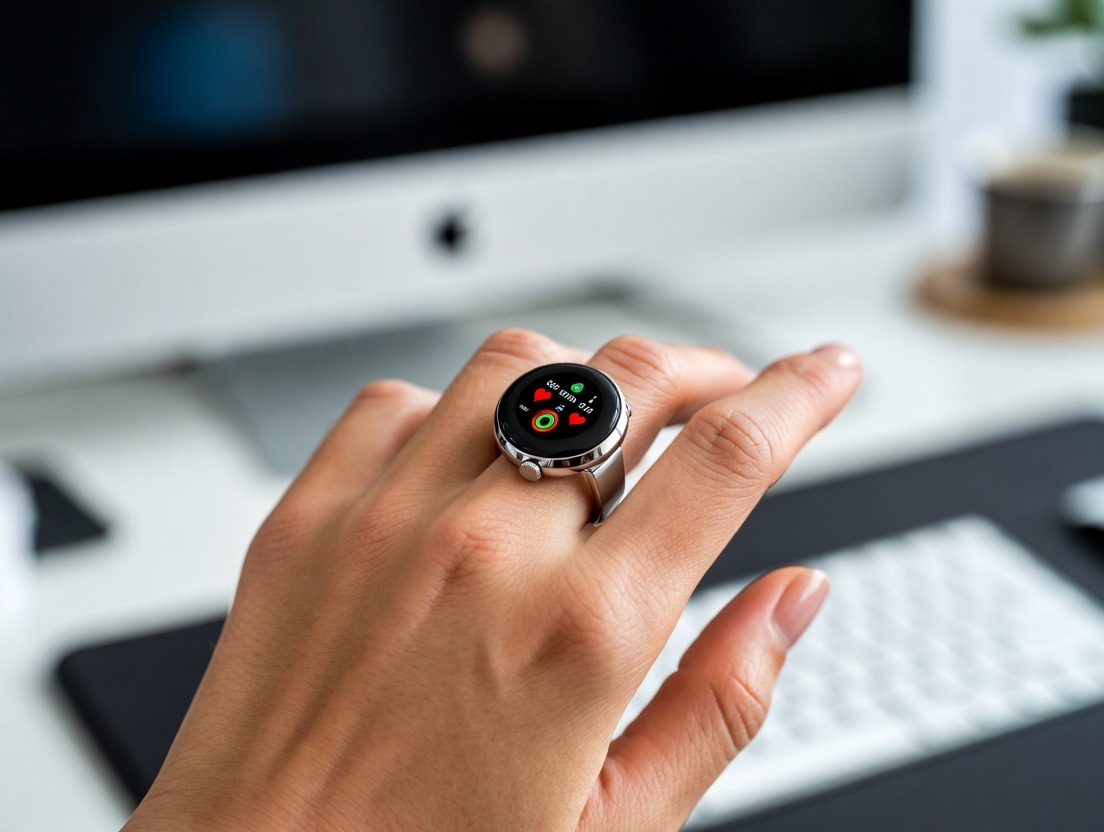
We’ve established that a daily dip in HRV can signal acute stress or poor recovery. But the true power of HRV as a metric is revealed not in daily fluctuations, but in long-term trends. Your rolling 7-day or 30-day average HRV is the single best biometric indicator of your overall resilience and adaptive capacity—your body’s “stress buffer.”
Think of your HRV trend line as the climate, while the daily readings are the weather. A stormy day (low HRV) is normal. A changing climate (a sustained downward trend) is a critical signal. Monitoring this trend allows you to move from reactive energy management (“I’m burned out, I need a vacation”) to proactive resilience building (“My baseline is dropping, I need to adjust my lifestyle now”).
How to Interpret Long-Term HRV Trends:
Building Resilience with HRV Data:
Use your long-term trend to guide your training and life planning.
By elevating your view from daily scores to long-term trends, you transform your smart ring from a burnout alarm into a resilience architect. It empowers you to make proactive, strategic adjustments to your life long before you hit a wall, fostering a state of sustainable high performance that can endure for years, not just weeks.
Your energy is not generated in a vacuum. It is in a constant dialogue with your environment. The light, sound, temperature, and even the air quality of your spaces act as invisible levers on your nervous system. Your smart ring can detect the physiological fallout of a poor environment, turning abstract concepts like “a calming space” into measurable outcomes.
1. Light: The Master Zeitgeber
Light is the primary signal that tells your brain what time it is. Disrupt this signal, and you disrupt your energy.
2. Temperature: The Sleep Catalyst
Your body needs to drop its core temperature by about 1-2 degrees Fahrenheit to initiate and maintain sleep.
3. Noise & Chaos: The Silent Stressors
Erratic, uncontrollable noise (traffic, construction, a noisy household) triggers a low-grade stress response, keeping your nervous system on alert even during rest.
4. Clutter & Visual Noise:
A disorganized, cluttered workspace or living area can subconsciously increase cognitive load and anxiety, making focused work harder and relaxation less complete.
Conduct an Environmental Audit:
For one week, make one environmental change at a time and note the biometric impact.
This process empowers you to become an architect of your own energy ecosystem. You stop blaming your “low energy” on vague factors and start engineering your surroundings to support your biology. By optimizing these four pillars—light, temperature, noise, and order—you create a sanctuary that actively charges your battery, rather than draining it.
Human beings are social creatures, and our connections are a powerful source of energy—both positive and negative. A supportive conversation can leave us feeling energized and uplifted, while a conflict-ridden interaction can drain us for hours. This “social energy” is not just metaphorical; it has a direct biometric signature that your smart ring can detect.
Your social interactions trigger complex neurochemical cascades. Positive connections can release oxytocin (the “bonding” hormone) and dopamine, promoting feelings of safety and reward. Stressful social interactions spike cortisol and adrenaline, activating the fight-or-flight response. Your ring, by tracking HRV and heart rate, is effectively measuring the net physiological effect of your social world.
How to Track Your Social Energy Budget:
Conducting a Social Energy Audit:
For two weeks, pair your social calendar with your biometric data.
Applying the Insights for Better Energy Management:
Understanding social energy accounting liberates you from guilt. It’s not about labeling people “good” or “bad”; it’s about recognizing the objective physiological impact of different interactions so you can manage your exposure and recovery intelligently. It allows you to be more present and generous in the right contexts, because you’re not perpetually running on social empty. For many, the conflict between social life and rest is a major challenge, a topic explored in How Social Obligations Conflict with Sleep Patterns.
Caffeine is the world’s most popular performance-enhancing drug. It works—blocking adenosine receptors in the brain to ward off fatigue and increase alertness. But it’s a double-edged sword. Used poorly, it creates a cycle of artificial energy, disrupted recovery, and dependency that ultimately undermines your natural energy systems. Your smart ring cuts through the noise, showing you the true cost of your cup.
How Caffeine Shows Up in Your Biometrics:
Using Your Ring to Optimize Caffeine Use:
Experiment 1: The Timing Audit.
Experiment 2: The Dependency Detox.
Experiment 3: Strategic Use for Performance.
The smart ring transforms caffeine from a habitual ritual into a measured, strategic intervention. It answers the critical questions: Is this helping or hurting my overall energy system? What is the true cost of this afternoon pick-me-up? By aligning your caffeine use with your biometric data, you harness its benefits while avoiding its pitfalls, moving from dependency to empowered, intentional use. This is a key component in reducing reliance on stimulants, as discussed in How Sleep Improvement Reduces Caffeine Need.
Travel is one of the ultimate energy system disruptors. It throws your circadian rhythm—your body’s internal 24-hour clock—into chaos through changing time zones, sleep deprivation, dehydration, and altered routines. For the frequent traveler, chronic jet lag is a professional hazard that degrades performance, mood, and health. Your smart ring becomes an indispensable co-pilot, providing an objective map of the disruption and a clear path to resynchronization.
How Travel Shows Up in Your Data:
A Smart Ring Protocol for Travel:
Phase 1: Pre-Flight Preparation (The Shift)
Phase 2: In-Transit Execution (The Damage Control)
Phase 3: Post-Arrival Recovery (The Reset)
By using your ring to track this process, you move from feeling like a victim of jet lag (“I just feel terrible”) to being an active manager of circadian resynchronization (“My data shows my deep sleep is shifting earlier; I’m two days from being fully adapted”). This objective feedback reduces travel anxiety and allows you to make smarter decisions to accelerate recovery, turning a week of dysfunction into a 2-3 day adjustment period.
For centuries, contemplative practices like meditation and breathwork were seen as purely subjective, spiritual pursuits. Modern biometrics reveals a stunning truth: these practices are direct, potent tools for manipulating your autonomic nervous system in real-time. Your smart ring provides the live feedback, proving that what happens in the mind directly, and measurably, shapes the body.
The Physiology of Calm:
When you feel stressed, your sympathetic nervous system (“fight-or-flight”) dominates: heart rate rises, breath quickens, and HRV lowers. Meditation and coherent breathing (like box breathing or 4-7-8 breathing) actively stimulate the parasympathetic nervous system (“rest-and-digest”). The shift is not abstract; it’s quantifiable.
How to Use Your Ring as a Biofeedback Tool:
The Real-Time Experiment:
This is powerful for two reasons:
Long-Term Impacts on Baseline Metrics:
Consistent practice doesn’t just create acute shifts; it can remodel your baseline.
Creating a Data-Informed Practice:
By closing the mind-body feedback loop with your smart ring, you demystify ancient wisdom with modern science. You move from hoping meditation works to knowing exactly how and when it works for you. This transforms it from an optional wellness activity into a non-negotiable performance skill—as essential as hydration or sleep for managing your personal energy economy.
Data overload is a real risk. The beginner’s phase of constant app-checking and journaling is necessary for awareness, but it’s not sustainable long-term. The ultimate goal is to internalize the insights and build automated habits—routines so ingrained they run on autopilot, consistently supporting your energy without requiring daily decision fatigue. Your smart ring shifts from being a dashboard you constantly monitor to a periodic audit tool that confirms your systems are working.
The Habit-Forming Framework (Using Data):
1. Identify a Keystone Habit:
Look at your data and find the one change that would have the greatest ripple effect. For most people, this is sleep timing. The data is clear: a consistent bedtime is the bedrock of circadian health, which influences everything from daytime energy to hunger hormones.
2. Create “Energy Rituals” Not Rules:
Rules are brittle and feel restrictive. Rituals are engaging and identity-based (“I am someone who prepares for a high-energy day”).
3. Use Your Data for Habit Stacking:
Habit stacking links a new habit to an existing one. Use your biometric patterns as the trigger.
4. Schedule Quarterly “Energy Audits”:
You don’t need to analyze data daily forever. Once habits are established, switch to a maintenance mode.
The Evolution of Your Relationship with the Ring:
This journey from data-driven insight to automated living is the path to true freedom. You are no longer managing your energy; you have designed a life that inherently generates and protects it. The smart ring becomes not a crutch, but a compass—used occasionally to ensure you’re still heading in the direction of vitality and sustainable performance. For those ready to systematize this approach, a structured plan like our Complete 90-Day Sleep Improvement Guide can provide the perfect framework.
Your Trusted Sleep Advocate: Sleep Foundation — https://www.sleepfoundation.org
Discover a digital archive of scholarly articles: NIH — https://www.ncbi.nlm.nih.gov/
39 million citations for biomedical literature :PubMed — https://pubmed.ncbi.nlm.nih.gov/
Experts at Harvard Health Publishing covering a variety of health topics — https://www.health.harvard.edu/blog/
Every life deserves world class care :Cleveland Clinic - https://my.clevelandclinic.org/health
Wearable technology and the future of predictive health monitoring :MIT Technology Review — https://www.technologyreview.com/
Dedicated to the well-being of all people and guided by science :World Health Organization — https://www.who.int/news-room/
Psychological science and knowledge to benefit society and improve lives. :APA — https://www.apa.org/monitor/
Cutting-edge insights on human longevity and peak performance:
Lifespan Research — https://www.lifespan.io/
Global authority on exercise physiology, sports performance, and human recovery:
American College of Sports Medicine — https://www.acsm.org/
Neuroscience-driven guidance for better focus, sleep, and mental clarity:
Stanford Human Performance Lab — https://humanperformance.stanford.edu/
Evidence-based psychology and mind–body wellness resources:
Mayo Clinic — https://www.mayoclinic.org/healthy-lifestyle/
Data-backed research on emotional wellbeing, stress biology, and resilience:
American Institute of Stress — https://www.stress.org/


