


Travel Wellness Tips: How Your Smart Ring Guides Activity in New Cities
Guiding activity in new cities with a smart ring.
Guiding activity in new cities with a smart ring.
%402x.svg)
The suitcase is packed, the itinerary is set, and that familiar pre-trip excitement is buzzing in your veins. Whether you're jetting off for a long-awaited vacation, embarking on a business trip, or visiting family for the holidays, travel represents a beautiful disruption to our daily routines. It's an opportunity to see the world through fresh eyes, taste new flavors, and create memories that outlast any photograph. But for all its magic, travel also presents a unique challenge to our physical well-being and internal biological harmony.
We've all experienced the paradox of returning from a trip feeling like we desperately need another vacation to recover from the first one. That groggy, disoriented sensation isn't just in your head—it's the cumulative effect of disrupted circadian rhythms, dehydration from recycled cabin air, unusual sleep surfaces, and the sheer physical exertion of navigating unfamiliar terrain. The very activities that make travel rewarding—walking endlessly through museum corridors, dancing at a rooftop bar in a new city, hiking to that viewpoint you saw on Instagram—can push our bodies into states of fatigue we don't fully recognize until we're collapsed on the hotel bed at 7 PM.
This is where the convergence of wearable technology and mindful exploration changes everything. Welcome to the era of the smart ring—a discreet, powerful wellness companion that fits on your finger and holds the key to traveling smarter, not just harder. Unlike the smartwatches of the past that screamed for attention on your wrist, the smart ring works silently, continuously collecting data about your heart rate variability, sleep quality, body temperature, and activity levels. It doesn't just count your steps; it interprets your body's story and tells you whether you're writing an adventure novel or a tragedy of exhaustion.
In this comprehensive guide, we're going to explore how your smart ring transforms from a simple health tracker into your ultimate travel wellness guide. We'll dive deep into the science of how new environments affect your body, and more importantly, how the data streaming from your finger can help you make real-time decisions that preserve your energy, enhance your experiences, and ensure you return home feeling as vibrant as when you left.
The modern traveler faces a paradox: we have more access to information about our destinations than ever before, yet we often remain completely ignorant about what's happening inside our own bodies as we explore them. Your smart ring bridges that gap. It becomes the liaison between your internal world and the external adventure, offering insights that allow you to push boundaries without breaking them. Think of it as a check-engine light for your human vehicle—one that alerts you when you're running on fumes long before you sputter to a halt in the middle of a foreign city.
As we embark on this journey through travel wellness, we'll cover everything from the moment you step into the airport to the late-night conversations in hotel lobbies. We'll discuss how to use your ring's data to combat jet lag naturally, how to interpret your recovery score when you're tempted to skip sleep for one more city experience, and how to balance the desire for exploration with the body's fundamental need for restoration. The goal isn't to turn you into a wellness-obsessed traveler who stares at metrics instead of monuments. Rather, it's to empower you with the awareness that allows you to be fully present—because when your body feels good, your mind is free to absorb every beautiful detail of your journey.
So, before you zip your suitcase or confirm your Uber to the airport, let's take a deep dive into the art and science of traveling well. Your smart ring is about to become your most valuable travel accessory—one that doesn't just track where you've been, but helps you become the healthiest, most energetic version of yourself while you're getting there.
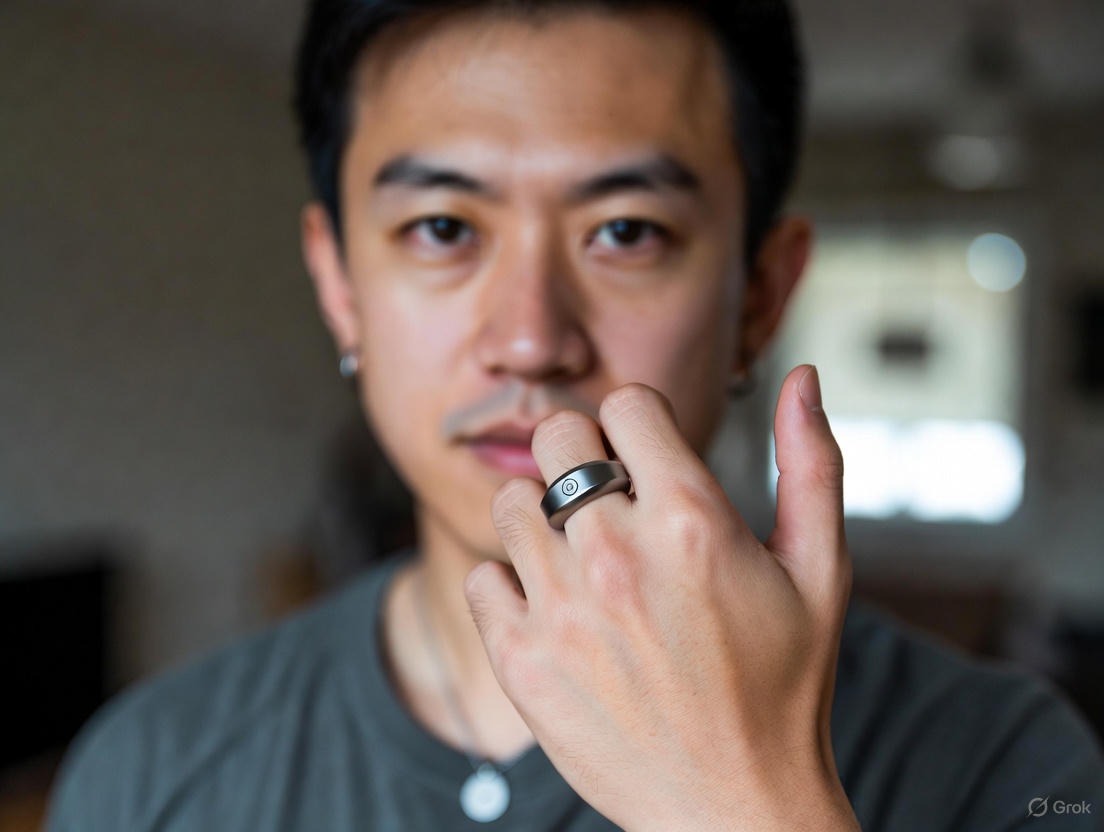
Before we can leverage technology to optimize travel wellness, we must first understand the enemy we're fighting. Travel, particularly long-distance travel, is fundamentally a physiological assault. It's not that travel is bad for you—far from it—but the act of moving your body through space, time zones, and atmospheric conditions triggers a cascade of biological responses that your smart ring is exquisitely designed to detect.
Let's start with the most obvious disruptor: the airplane cabin. Commercial aircraft are pressurized to simulate an altitude of approximately 6,000 to 8,000 feet above sea level. At this pressure, the partial pressure of oxygen in your blood drops significantly. Your body responds by increasing your heart rate to pump more oxygen to your tissues. This is why you might notice your smart ring recording elevated heart rate readings during a flight, even though you're sitting still. Your cardiovascular system is working overtime in an environment that mimics mild hypoxia.
Simultaneously, the humidity inside a plane cabin hovers around 10-20 percent—drier than most deserts on Earth. Your respiratory system lines itself with mucous membranes that rely on moisture to trap pathogens and particulates. When these membranes dry out, your first line of immune defense weakens. This is why so many travelers report getting sick after flights; it's not just the recycled air, but the dehydration of your body's natural filtration system. Your smart ring may not directly measure humidity exposure, but it will track the downstream effects: changes in heart rate variability (HRV) that indicate stress on your autonomic nervous system, and potentially elevated resting heart rates as your body compensates for fluid loss.
Then there's the matter of immobility. Blood pooling in your lower extremities, reduced venous return to the heart, and the increased risk of deep vein thrombosis are well-documented consequences of prolonged sitting. When you finally stand up after a five-hour flight, your cardiovascular system has to readjust rapidly, often causing dizziness or lightheadedness. Your smart ring captures these moments as activity spikes or abrupt heart rate changes, painting a picture of how your body responds to the transition from stillness to movement.
But perhaps the most profound disruption is to your circadian rhythm—the internal biological clock that governs everything from hormone release to body temperature to cognitive performance. When you cross time zones, you're essentially asking your body to operate on a schedule that contradicts its deeply ingrained programming. Your master clock, located in the suprachiasmatic nucleus of your brain, relies on external cues like light and darkness to synchronize peripheral clocks in your organs, muscles, and tissues. When you land in a destination where noon feels like midnight to your cells, every system in your body experiences confusion.
This circadian misalignment manifests in ways your smart ring tracks with remarkable precision. Your body temperature, which typically drops at night to initiate sleep and rises in the morning to promote wakefulness, becomes erratic. Your HRV, which should follow a predictable pattern based on your sleep-wake cycle, shows chaotic fluctuations. Your sleep stages fragment—less deep sleep, less REM, more wakefulness after sleep onset. The ring doesn't just tell you that you slept poorly; it quantifies exactly how poorly and identifies which stages of sleep suffered most.
Consider also the psychological dimension of transit. Airports are designed as liminal spaces—transitional zones where normal rules suspend and sensory overload reigns. The constant announcements, fluorescent lighting, crowds of strangers, and the underlying anxiety of making connections all activate your sympathetic nervous system—the fight-or-flight response. Cortisol, your primary stress hormone, elevates. Your muscles tense. Your digestion slows as blood diverts to your limbs for imagined threats. Your smart ring reads this as decreased HRV and potentially elevated stress scores, even if you feel like you're handling everything calmly.
What's fascinating is how individual these responses are. Some travelers experience dramatic drops in HRV during flights, while others show remarkable resilience. Some see their resting heart rate climb steadily throughout a journey; others maintain baseline levels until they try to sleep in a new time zone. Your smart ring creates a personalized map of your travel stress response, allowing you to see patterns across multiple trips. Perhaps you always struggle more on eastward flights than westward ones, or maybe your body handles red-eyes better than early morning departures. This data becomes the foundation for building travel strategies that work for your unique physiology.
Understanding this physiological disruption isn't meant to scare you away from travel. Rather, it's about developing respect for what your body accomplishes every time you board a plane. The human body is remarkably adaptable—it just needs time and support to make the necessary adjustments. Your smart ring acts as your guide through this adaptation process, showing you in real-time how your choices affect your internal balance. When you understand that the fatigue you feel isn't weakness but a measurable biological response to environmental stress, you can respond with compassion rather than frustration. You can make decisions that support your body rather than fight against it.
The journey toward travel wellness doesn't begin when you step onto the plane—it begins days or even weeks before, in the quiet moments when you're reviewing your smart ring data at home. Your baseline metrics are the canvas upon which your travel story will be painted. Without understanding where you're starting from, you cannot accurately interpret the changes that travel induces.
In the week leading up to your trip, pay close attention to your ring's core metrics: HRV, resting heart rate, sleep score, and recovery index. These numbers represent your body's current state of readiness and resilience. A traveler with consistently high HRV and excellent sleep scores enters the journey with a buffer against stress. Someone whose metrics already show signs of accumulated fatigue or poor recovery is more vulnerable to the disruptions ahead.
HRV deserves particular attention because it reflects the balance between your sympathetic and parasympathetic nervous systems. Think of it as the flexibility of your autonomic nervous system—the ability to switch between high-alert states and deep relaxation. High HRV indicates a resilient system that can handle challenges and recover efficiently. Low HRV suggests your body is already under strain, operating in a more rigid, sympathetic-dominant state. If your pre-travel HRV is trending downward, this is your ring's way of suggesting you need extra rest and gentle care before you add the stress of travel.
Resting heart rate offers complementary information. A resting heart rate that's several beats per minute above your normal range can signal dehydration, insufficient sleep, or the early stages of illness. Traveling when your resting heart rate is already elevated is like driving a car with the engine warning light on—you might make it to your destination, but you're increasing the risk of breakdown. Consider postponing non-essential trips or, if travel is unavoidable, planning a deliberately low-key itinerary that prioritizes rest over exploration.
Your sleep score from the week before travel predicts your resilience during the journey. Sleep is when your body performs most of its maintenance work—clearing metabolic waste from the brain, repairing tissues, consolidating memories, and regulating hormones. Entering travel with a sleep debt means your body starts the journey already behind on maintenance. The disruptions of travel will compound this debt rather than simply creating new challenges. If your ring shows consistently low sleep scores, prioritize catching up on rest before you depart, even if it means scaling back on pre-trip preparations.
One often-overlooked metric is body temperature trends. Your ring tracks temperature variations that can signal ovulation, illness onset, or simply circadian disruption. Knowing your typical temperature pattern helps you distinguish between a normal response to new environments and a potential fever that requires medical attention. If your temperature starts climbing before departure, consider whether you're genuinely getting sick or whether factors like alcohol, late nights, or hormonal changes explain the variation.
Beyond individual metrics, pay attention to the relationships between them. How does your HRV respond after high-exertion days? How quickly does your resting heart rate return to baseline after stress? These patterns reveal your recovery capacity—the speed at which your body bounces back from challenges. Travel involves repeated challenges stacked closely together. Understanding your typical recovery timeline helps you pace activities appropriately. If you know you need two easy days to recover from one intense day at home, you'll plan your travel itinerary with similar recovery windows built in.
This pre-travel analysis also offers an opportunity for intentional preparation. If your metrics show room for improvement, you can implement targeted interventions before departure. Perhaps you increase hydration, prioritize earlier bedtimes, or incorporate gentle movement like walking and stretching. You might explore how natural energy boosters through proper recovery ring-monitored rest can elevate your baseline before the journey begins. The goal isn't perfection—it's optimization. You're giving your body the best possible starting point for the adventure ahead.
Some travelers find it helpful to create a travel readiness score based on their ring data—a composite metric that combines HRV trends, sleep quality, and resting heart rate. When this score is high, they feel confident tackling ambitious itineraries. When it's moderate, they build in flexibility. When it's low, they treat the trip as a restorative experience rather than an adventure. This personalized approach transforms your ring from a passive data collector into an active decision-making tool.
Remember that preparation isn't just about physical metrics. Mental and emotional readiness matter equally. Travel involves uncertainty, unexpected changes, and moments of frustration. If your baseline stress levels are already elevated due to work or personal circumstances, the additional stress of travel may push you beyond your coping capacity. Your ring's stress score, derived from HRV and movement patterns, offers insight into this dimension. Use it honestly. If the week before travel shows chronic stress elevation, consider how you might simplify your plans or build in extra缓冲.
The beauty of starting your travel wellness journey before departure is that it establishes a relationship with your data that continues throughout the trip. You're not just reacting to what happens—you're proactively setting conditions for success. When you finally board that plane, you carry not only your luggage but also a deep understanding of your body's current state and needs. This awareness becomes the foundation for every wellness decision you'll make in the hours and days ahead.
The airport terminal represents the first test of your travel wellness commitment. Here, in this liminal space between home and destination, countless decisions await—each one capable of either supporting your body's needs or adding to the cumulative stress of transit. Your smart ring becomes your guide through this gauntlet, offering real-time feedback that helps you make choices aligned with your well-being.
Let's start with hydration, perhaps the single most important factor in airport wellness. As we've established, air travel desiccates the body. The dry cabin air pulls moisture from your tissues with every breath. By the time you reach your gate, you may already be mildly dehydrated. Your smart ring can't measure hydration directly, but it tracks metrics influenced by fluid balance—heart rate, HRV, and body temperature. A rising heart rate without corresponding exertion may signal dehydration. Use this as your cue to prioritize water over coffee, alcohol, or sugary drinks.
The challenge is that airports are designed to tempt you away from water. Cafés display colorful cocktails. Coffee shops promise the alertness you think you need. Soda machines offer carbonated sweetness. None of these support your body's hydration needs. Alcohol acts as a diuretic, increasing fluid loss. Caffeine constricts blood vessels and can contribute to dehydration. Sugar creates inflammation and energy fluctuations. Your ring won't judge your choices, but it will reflect their consequences in your metrics. Consider setting a hydration goal for your airport time—perhaps finishing one full water bottle before boarding and filling it again for the flight.
Movement presents another opportunity for wellness optimization. Airport terminals are essentially long corridors designed for efficient passenger flow, but they can also serve as your pre-flight movement practice. Instead of taking the moving walkways or shuttle trains, consider walking the full distance to your gate. Instead of sitting at the gate once you arrive, take a lap around the terminal. Your ring tracks these steps and activity minutes, but more importantly, it captures the physiological benefits—improved circulation, reduced blood pooling, and the metabolic engagement that comes from standing and walking rather than sitting.
The challenge is balancing movement with the risk of arriving at your gate sweaty and uncomfortable. This is where strategic timing comes in. Walk early in your airport experience, while you have plenty of time before boarding. Use the restroom afterward to freshen up and adjust your clothing. If you're concerned about appearing disheveled for a business meeting immediately upon arrival, pack a change of clothes in your carry-on or choose walking routes that don't involve heavy exertion. The goal isn't to exhaust yourself but to keep your body engaged and your circulation active.
Stress management in airports deserves its own category of attention. The security checkpoint, with its removal of shoes, unpacking of liquids, and exposure of personal items to strangers, activates stress responses in even seasoned travelers. Your ring's stress score will likely spike during this process. The key is not to prevent this spike—that's largely outside your control—but to manage your recovery afterward. Once you're through security, find a quiet corner, take several deep breaths, and allow your nervous system to recalibrate. Watch your ring's stress score gradually decrease as evidence that your recovery strategies are working.
Eating well in airports has traditionally required Herculean effort, but the landscape is slowly improving. Many terminals now offer fresh options—bowl restaurants with vegetables and lean proteins, smoothie bars with actual fruit, and markets selling nuts, fresh fruit, and yogurt. Your smart ring can guide your choices indirectly by reminding you of your body's needs. If your ring shows elevated heart rate or low HRV, your body may benefit from anti-inflammatory foods rich in omega-3s and antioxidants. If your energy metrics are flagging, protein-rich options can provide sustained fuel without the crash of simple carbohydrates.
Perhaps the most underrated airport wellness practice is simply allowing yourself to arrive early. The rush to the gate—the frantic energy of worrying about missing your flight—activates your sympathetic nervous system and drains mental energy you'll need later. When you arrive at the airport with buffer time, you transform the experience from a stressor into an opportunity. You can walk deliberately, eat mindfully, hydrate thoroughly, and arrive at your gate calm and centered. Your ring will reflect this in more stable HRV and lower stress scores throughout the boarding process.
As you settle into your seat on the plane, take a moment to check your ring's metrics from the airport experience. How did your heart rate respond to the security line? Did walking the terminal improve your HRV? Did that pre-flight coffee affect your stress score? These observations build your personal knowledge base for future travel. Over time, you'll develop an airport routine that consistently supports your well-being—a series of choices that prepare your body for the flight ahead rather than depleting resources you'll need upon arrival.
For travelers interested in deeper exploration of how environmental factors affect energy, our guide to fresh air as an energy source offers insights applicable even in the carefully controlled environment of airport terminals. The principles of oxygen exchange, circulation, and environmental influence on energy apply whether you're in a forest or waiting at Gate B17.
The aircraft cabin, with its rows of cramped seats and recirculated air, presents perhaps the greatest challenge to your travel wellness. Here, you're confined for hours in an environment that actively works against your body's natural functioning. Yet with intentional strategies guided by your smart ring's feedback, you can emerge from even long-haul flights feeling remarkably preserved.
Let's address the elephant in the cabin: sleep. Conventional wisdom suggests you should sleep on the plane to arrive rested, but this advice oversimplifies the complexity of in-flight rest. The quality of sleep you achieve in an airplane seat differs fundamentally from sleep in your bed. The angle is wrong, the noise is constant, the cabin pressure alters your breathing, and the dry air irritates your airways. Your smart ring will show this reality in stark terms—fragmented sleep stages, minimal deep sleep, and often no REM sleep at all.
Instead of pursuing sleep that may not come, consider a more nuanced approach. If your destination is in a time zone where you'll need to stay awake upon arrival, use the flight to rest without forcing sleep. Close your eyes, practice deep breathing, listen to calming audio, and allow your body to enter a state of deep relaxation even if consciousness persists. Your ring will register this as rest, reflected in reduced heart rate and increased HRV compared to active wakefulness. This restful state, while not sleep, still provides recovery value and reduces the fatigue you'll feel upon landing.
For those who can sleep on planes, positioning matters tremendously. Window seats offer a surface to lean against and control over the window shade. Neck pillows, when properly positioned, support the cervical spine and prevent the head-dropping that disrupts sleep. Eye masks block the cabin lighting that suppresses melatonin production. Noise-canceling headphones reduce the ambient drone that keeps your nervous system vigilant. Your ring can't prescribe these tools, but it will validate their effectiveness through improved sleep metrics when you use them.
Hydration during flight requires constant attention. The dry cabin air pulls moisture from your respiratory system with every exhale. Your blood becomes slightly thicker, your heart works slightly harder, and your cognitive function slightly dims. Set an alarm on your phone or watch to drink water every hour. If your ring tracks hydration through sweat analysis or offers hydration reminders, heed them. Avoid alcohol entirely during flight—its dehydrating effects compound the cabin's dryness, and its impact on sleep quality undermines any rest you might achieve.
Movement in the confined space of an airplane seat requires creativity. Ankle rotations, knee lifts, shoulder rolls, and neck stretches can be performed without leaving your seat. When the seatbelt sign allows, stand and walk the aisle—even a brief stroll improves circulation and reduces the risk of blood clots. Your ring tracks these movements as activity, but more importantly, it captures the physiological shift that occurs when you break up prolonged sitting. Watch your heart rate variability improve after movement breaks as evidence of your body's appreciation.
Nutrition on planes presents another challenge. Airline meals, when offered, tend toward high sodium content that promotes fluid retention and bloating. The reduced cabin pressure dulls your taste buds, making food seem bland and encouraging over-seasoning with salt. If you can bring your own snacks—nuts, seeds, fruit, protein bars—you control the nutritional content. Focus on foods that support stable blood sugar and provide sustained energy rather than the quick spike and crash of refined carbohydrates.
The timing of in-flight activities matters for circadian adaptation. If you're traveling eastward and need to advance your internal clock for an earlier bedtime, expose yourself to bright light during the latter part of your flight. If you're traveling westward and need to delay your clock, seek darkness or wear blue-blocking glasses. Your ring tracks body temperature, which follows circadian patterns—notice how temperature responds to light exposure and use this feedback to adjust your strategies.
Perhaps most importantly, monitor your ring's metrics during flight to understand your individual response patterns. Some travelers see HRV plummet within the first hour; others maintain baseline levels throughout. Some experience dramatic heart rate elevation; others remain stable. These patterns reveal your personal vulnerabilities and strengths. If you notice your HRV consistently dropping during flights, you might explore adaptogens and ring recovery as a pre-flight preparation strategy. If your resting heart rate climbs, you might prioritize even more aggressive hydration and movement.
The window seat offers one additional wellness opportunity: viewing the horizon during sunrise or sunset. These moments of natural light exposure at altitude provide powerful circadian cues. The orange light of sunset signals melatonin production to begin; the blue light of sunrise suppresses melatonin and promotes alertness. If your flight timing aligns with these natural transitions, position yourself to receive the light. Your ring will eventually show the benefits in more rapid circadian adaptation after landing.
As the plane begins its descent, take stock of your in-flight choices. How much water did you drink? How many times did you move? Did you rest effectively? This reflection builds awareness that improves with each flight. Over time, you develop an in-flight routine that consistently supports your well-being—a personalized protocol that emerges from paying attention to your body's responses as captured by your ring.
For travelers interested in how small interventions compound over time, our article on how your wellness ring shows natural energy boosters compound over time offers perspective relevant to the cumulative effects of in-flight choices.

You've landed. The airport welcomes you with unfamiliar signs, different languages, and air that smells like somewhere else. The first 24 hours in a new destination determine much of what follows. This is when your body begins the complex process of circadian realignment, and your smart ring serves as both guide and witness to this adaptation.
The most powerful tool for circadian reset is light—specifically, the timing and intensity of light exposure. Upon landing in a new time zone, seek bright light during the hours when your destination's locals are awake and active. If you arrived in the morning, get outside. If you arrived in the afternoon, find sunlight. If you arrived after dark, avoid bright light and prepare for sleep. Your ring's body temperature tracking will gradually show the shift as your internal clock aligns with the new environment.
The temptation upon arrival is to crash—to collapse on the hotel bed and surrender to exhaustion. Resist this if your arrival time is before early evening. Instead, engage in gentle activity that signals wakefulness to your body. A walk around the neighborhood serves multiple purposes: light exposure, movement, orientation to your new surroundings, and the psychological boost of exploration. Your ring will register this activity and show its effects on your heart rate and HRV, confirming that gentle movement supports rather than depletes you.
Napping presents a critical decision point. A short nap of 20-30 minutes can restore alertness without disrupting nighttime sleep. A longer nap that enters deep sleep stages can confuse your circadian system and make nighttime sleep elusive. Your ring's sleep staging capability helps here—if you choose to nap, check afterward to see whether you entered deep sleep. If your nap included deep sleep stages, consider shortening future naps or avoiding them entirely until your circadian system stabilizes.
Hydration remains paramount in the first 24 hours. Flight dehydration doesn't resolve immediately upon landing. Continue drinking water throughout your first day, and notice how your ring's metrics respond. Heart rate typically decreases as hydration improves. HRV often increases. If you're consuming alcohol in celebration of your arrival, balance each drink with equal water and observe how alcohol affects your sleep quality when your ring shows your sleep stages the next morning.
Meal timing serves as a circadian cue. Your digestive system operates on its own clock, releasing enzymes and preparing for food at predictable times based on your habitual meal schedule. Eating according to local mealtimes helps reset this peripheral clock. If you arrive and it's breakfast time locally, eat breakfast even if your body thinks it's the middle of the night. If it's dinner time, eat dinner. Your body will gradually adjust, and your ring's temperature patterns will reflect this shift.
The hotel environment requires immediate optimization for sleep. Darkness matters enormously for melatonin production. Check your room for light leaks—the glow of electronics, light under the door, streetlights through curtains. Address these with whatever means available: unplug devices, use the clothes hanger to block the door gap, hang towels over windows. Temperature also affects sleep quality; most people sleep best in slightly cool environments. Adjust the thermostat if possible, and notice how your ring's sleep score responds to different room temperatures.
Exercise in the first 24 hours requires careful consideration. Intense workouts stress the body and elevate cortisol, potentially interfering with circadian adaptation. Gentle movement—walking, stretching, easy yoga—supports circulation and provides light exposure without adding stress. Your ring's recovery score offers guidance here. If your score is high upon arrival, you have more capacity for activity. If it's low, prioritize gentle movement and rest. Learn more about fatigue prevention tips through strategic rest days and ring guidance to inform your first-day decisions.
Social engagement in the first 24 hours presents both opportunity and challenge. Connecting with travel companions, meeting locals, or attending planned activities provides the psychological nourishment that travel offers. Yet social interaction also requires energy and can delay the rest your body needs. Use your ring's energy and stress metrics to gauge your capacity. If your HRV is low and stress score high, consider opting out of ambitious social plans in favor of quiet restoration. If your metrics are robust, engage fully while staying attuned to your limits.
Perhaps the most valuable practice in the first 24 hours is simply observing your ring's data without judgment. Your metrics will likely look different from baseline—lower HRV, higher resting heart rate, fragmented sleep if you slept at all. This isn't failure; it's the normal response to significant environmental change. The data becomes useful not as a grade but as information that guides your choices. When you see HRV dropping, you know to rest. When you see heart rate rising, you know to hydrate. When you see poor sleep, you know to prioritize sleep hygiene the following night.
As your first day in the new destination draws to a close, prepare for sleep with intention. Dim lights an hour before bed. Avoid screens or use blue-blocking glasses. Consider a warm shower or bath—the subsequent drop in body temperature promotes sleep onset. Your ring will track your temperature throughout the night, showing the gradual decline that should occur and alerting you if patterns deviate from healthy sleep.
The first 24 hours set the tone for your entire travel experience. When you support your body's circadian realignment through intentional choices guided by your ring's feedback, you accelerate adaptation and preserve energy for the experiences that matter. You arrive not just at your destination but in a state of readiness to receive everything it offers.
Cities reveal themselves to those who walk them. The pace of foot travel allows for discovery that wheels obscure—the hidden courtyard, the street musician, the café with perfect people-watching. Yet city walking, when pursued with tourist ambition, can accumulate fatigue that undermines everything you hoped to experience. Your smart ring transforms urban exploration from a guessing game of energy management into a precisely calibrated adventure.
The first principle of sustained walking energy is understanding your baseline capacity. At home, you likely have a sense of how many steps you comfortably cover in a day. Travel multiplies this by the excitement of new surroundings, the pressure to see everything, and the simple fact that walking is often the most efficient way to navigate. Your ring tracks step count and active minutes, but more importantly, it shows how your body responds to increased load. Pay attention to heart rate trends throughout walking days. When your heart rate remains elevated even during pauses, your body is signaling accumulating fatigue.
Pacing strategies for city exploration borrow from endurance athletics: start conservatively, monitor effort, and build in recovery. The temptation upon arriving at a famous landmark is to attack it—to climb every tower, explore every gallery, photograph every angle. This approach works for the first site but often leads to collapse by late afternoon. Instead, consider alternating intensive exploration with gentle periods. After climbing the cathedral tower, sit in the square for twenty minutes and simply observe. After touring the museum, find a park bench and let your eyes rest on green space.
Your ring's activity tracking becomes most valuable when you use it to identify your personal fatigue thresholds. Some travelers can comfortably walk 25,000 steps daily for multiple days. Others hit diminishing returns at 15,000. The number itself matters less than your response to it. If you notice HRV dropping significantly after high-step days, or resting heart rate remaining elevated the following morning, you've exceeded your sustainable capacity for multiple days. Adjust future days accordingly, perhaps planning a lighter day after each intensive walking day.
Footwear decisions significantly impact walking endurance, and your ring can indirectly validate your choices. When you wear supportive, well-cushioned shoes, your gait remains stable and your body absorbs shock efficiently. When you prioritize style over support, your compensation patterns change—you may walk differently, recruit different muscles, and accumulate micro-stress that shows up in overnight recovery metrics. If you notice poor recovery after days when you wore certain shoes, reconsider your footwear strategy for future travel.
The rhythm of exploration days benefits from strategic breaks. Research on attention and memory suggests that we absorb more when we alternate focused engagement with rest. After an hour of intensive museum viewing, your ability to appreciate art diminishes even if your legs feel fine. Your ring can't measure aesthetic appreciation, but it tracks the physiological correlates of mental fatigue—heart rate patterns, HRV changes, and stress scores. When you notice these metrics trending unfavorably, take it as permission to rest even if your itinerary suggests pushing forward.
Hydration during walking days requires more attention than at home because you're losing fluid through sweat and respiration while often having limited access to water. Carry a reusable bottle and fill it whenever possible. Notice how your ring's metrics respond to dehydration—slightly elevated heart rate, reduced HRV, perhaps increased body temperature. These signals precede the subjective sensation of thirst, allowing you to hydrate proactively rather than reactively.
Nutrition for walking days differs from restaurant meals. The energy demands of sustained walking require steady fuel rather than the feast-or-famine pattern of scheduled meals. Portable snacks—nuts, fruit, energy bars—provide glucose for your muscles and brain without the energy crash of high-sugar options. Your ring's energy metrics throughout the day show the effects of different fuel choices. When you eat protein and complex carbohydrates, you'll likely see more stable energy than when you rely on pastries and coffee.
Sun exposure on walking days presents both opportunity and risk. Light exposure supports circadian alignment, but excessive sun causes dehydration, overheating, and energy drain. Your ring tracks temperature and may show elevation during prolonged sun exposure. Use this data to guide your balance—seek morning sun for circadian benefits, avoid midday intensity, and find shade when your temperature climbs. A hat and sunscreen aren't tracked by your ring but protect the skin that your ring can't see.
The psychological dimension of city exploration interacts with physiological metrics in fascinating ways. Excitement elevates heart rate and reduces perceived effort, potentially leading you to overexert before you feel tired. Your ring's objective data provides reality check against subjective experience. When your heart rate says you're working hard even though you feel energized, trust the data and moderate your pace. The energy you preserve now becomes available for evening experiences.
As walking days accumulate, pay attention to trends across multiple days rather than judging each day in isolation. A single 20,000-step day followed by good recovery may be sustainable. Four consecutive 20,000-step days with declining HRV signals accumulating fatigue that will eventually demand rest. Your ring's long-term trends reveal these patterns, helping you make decisions about when to push and when to pull back. For deeper insight into how activity and rest balance affects your metrics, explore how your wellness ring helps you balance activity and prevent fatigue.
The goal of paced city exploration isn't to minimize activity but to maximize sustainable engagement. When you walk within your capacity, you remain present for the entire experience rather than fading in the final hours. You remember more, appreciate more, and return to your accommodation with energy remaining for evening reflection and connection. Your smart ring makes this sustainable pacing possible by revealing the relationship between your activity and your body's response—a relationship you can learn to optimize with each passing day.
Food ranks among travel's greatest pleasures. The tastes of a new place—the street food in Bangkok, the pasta in Rome, the tacos in Mexico City—become memories you carry forever. Yet dining out while traveling presents challenges to your wellness metrics that your smart ring will faithfully record. The key is not to avoid these pleasures but to navigate them intentionally, understanding how different choices affect your body's functioning.
Let's start with the obvious: restaurant food differs from home cooking in predictable ways. Portions tend to be larger. Salt content runs higher. Fats and sugars feature more prominently. These aren't moral failings but culinary realities—food that tastes exceptional often includes ingredients that challenge your body's processing capacity. Your ring won't judge your choices, but it will reflect their consequences in overnight heart rate, HRV, and temperature patterns.
The timing of meals matters enormously for circadian alignment. When you eat, you signal to your peripheral clocks—the circadian oscillators in your liver, pancreas, and digestive tract—about the current time. Eating late at night tells these clocks that nighttime is feeding time, conflicting with the master clock's signal that night is for fasting. Your ring tracks body temperature, which normally drops in preparation for sleep. Late meals delay this temperature drop and may reduce sleep quality. If you must eat late, keep portions moderate and avoid heavy, fatty foods that require extended digestion.
Alcohol presents perhaps the greatest challenge to travel wellness metrics. A glass of wine with dinner, a cocktail at a rooftop bar, a beer while watching the local team—these experiences belong to travel's richness. Yet alcohol's effects on sleep physiology are well-documented and clearly visible in your ring's data. Alcohol reduces REM sleep, increases sleep fragmentation, and elevates nighttime heart rate. The morning after drinking, your HRV will likely be lower and your resting heart rate higher than baseline.
This doesn't mean abstinence is the only path. Rather, it means making informed decisions. If tomorrow includes a challenging hike or important business presentation, perhaps tonight's alcohol consumption adjusts accordingly. If you're in a recovery phase with low HRV, perhaps you choose one drink instead of three. Your ring's data removes the guesswork, showing you exactly how alcohol affects your unique physiology. Over time, you develop personal guidelines—maybe red wine affects you less than cocktails, or maybe sparkling water with lime satisfies the social ritual without the metabolic cost.
Caffeine timing also influences travel wellness. Afternoon coffee that seems harmless at home becomes problematic when combined with circadian disruption and variable sleep schedules. Caffeine's half-life of several hours means afternoon consumption still affects sleep onset and quality at night. Your ring's sleep staging reveals these effects clearly. If you notice difficulty falling asleep or reduced deep sleep after afternoon caffeine, adjust your timing accordingly. Morning caffeine, consumed upon waking, supports alertness without significantly impairing subsequent sleep for most people.
The composition of meals affects your overnight metrics in ways your ring reveals. High-carbohydrate meals, particularly refined carbs, can cause blood sugar fluctuations that disturb sleep. High-fat meals delay gastric emptying and may increase nighttime acid reflux. High-protein meals generally support stable blood sugar and sustained energy. Notice how your overnight heart rate and HRV respond to different meal compositions. You might discover that pasta dinners consistently reduce your sleep quality while grilled fish and vegetables support restorative rest.
Portion size matters independently of composition. Large meals require significant digestive work, diverting blood flow to your digestive system and potentially raising your core temperature. Your ring tracks temperature throughout the night, and you may notice elevation following large dinners. This temperature elevation can delay sleep onset and reduce deep sleep. Consider whether multiple smaller meals or sharing plates might serve you better than the American-style oversized entree.
Hydration with meals requires balance. Drinking water with food aids digestion and supports overall hydration, but excessive fluid close to bedtime increases nighttime urination that fragments sleep. Your ring's sleep staging will show these disruptions as wakefulness after sleep onset. If you notice this pattern, front-load your hydration earlier in the day and taper fluid intake in the hours before bed.
The social dimension of dining interacts with physiological metrics in complex ways. Enjoyable conversation with travel companions reduces stress and may improve HRV. Stressful interactions do the opposite. Your ring's stress score throughout dinner reveals these effects. If you notice stress elevation during meals, consider whether the company, the environment, or the conversation contributes. Travel sometimes involves navigating complex social dynamics, and awareness of their physiological impact helps you make choices that protect your well-being.
Food timing relative to exercise matters for both performance and recovery. If you walked extensively before dinner, your body needs fuel for repair. Eating soon after activity supports glycogen replenishment and muscle recovery. If you're dining after a rest day, your energy needs differ. Your ring's activity tracking informs these decisions, showing you when you've earned the extra calories and when lighter fare better serves your current state.
For travelers interested in deeper understanding of how nutrition affects energy metrics, our guide to natural energy boosters through gut health and what your wellness ring reflects offers insights applicable to dining choices anywhere in the world.
The goal of intentional dining isn't perfection—it's awareness. When you understand how different foods, timing, and portions affect your metrics, you make choices aligned with your priorities. Some nights, the local specialty matters more than optimal sleep, and you accept the metabolic cost. Other nights, you prioritize recovery and choose accordingly. Your ring doesn't enforce rules; it provides information that supports your values. This freedom, grounded in data, represents the mature integration of wellness technology into the rich experience of travel.
The hotel room presents a paradox of sleep environment. It offers a bed, privacy, and freedom from home distractions, yet it lacks everything familiar about your sleep setup. The mattress differs, the pillows have different loft, the sheets carry unfamiliar texture, and the ambient sounds belong to somewhere else. Your smart ring becomes your laboratory for optimizing this foreign environment, helping you create conditions that support restorative sleep despite unfamiliarity.
Let's begin with the bed itself. Hotel mattresses range from cloud-soft to board-firm, and your body responds accordingly. If you wake with back pain or stiffness, your ring's movement tracking during sleep will show increased restlessness—more position changes, more wakefulness. This information helps you advocate for yourself. Many hotels offer pillow menus or mattress toppers upon request. If your first night shows poor sleep quality with excessive movement, ask about alternatives for subsequent nights. Your ring's data provides objective justification for these requests.
Pillows deserve particular attention. Neck alignment during sleep affects everything from breathing to muscle tension. Too high, and your neck bends forward, potentially restricting airways. Too low, and your neck bends backward, straining cervical muscles. Your ring can't measure neck angle, but it tracks snoring if you have that feature, and it monitors heart rate patterns that might indicate sleep apnea events. If you notice snoring or heart rate irregularities that don't occur at home, pillow height may contribute. Experiment with folding pillows, using two pillows, or requesting different options.
Room temperature significantly impacts sleep quality. Most people sleep best in slightly cool environments—around 65-68 degrees Fahrenheit (18-20 Celsius). Hotel rooms often run warm, particularly if you can't control the thermostat independently. Your ring tracks body temperature throughout the night, and you may notice elevation in warm rooms. This temperature elevation reduces deep sleep and increases wakefulness. If you can't adjust the room temperature, consider sleeping with minimal covers, using the ceiling fan, or requesting a portable fan from housekeeping.
Light exposure in hotel rooms varies dramatically. Blackout curtains, when effective, block the external light that would otherwise suppress melatonin. But many hotel rooms harbor internal light sources—the glow of the TV standby light, the digital display on the alarm clock, the light under the door from the hallway. Your ring can't measure light, but it tracks the circadian effects of light exposure. If your sleep onset consistently delays despite reasonable bedtime, light may be the culprit. Cover all light sources with whatever materials available—a towel over the clock, a shirt over the TV, a pillow against the door.
Sound presents another variable. Hotel corridors transmit noise from other guests—suitcase wheels, conversations, doors slamming. Street noise penetrates windows in urban locations. Your ring's sleep staging shows the micro-awakenings these sounds cause, even if you don't remember them upon waking. White noise machines or apps mask these intermittent sounds with consistent background noise. If you forgot your white noise app, the hotel bathroom fan may serve the same purpose. Notice whether nights with white noise show better sleep continuity than silent nights.
Humidity affects sleep quality through respiratory comfort. Dry air irritates nasal passages and throats, potentially causing snoring or awakening. Many hotel rooms, particularly in arid climates or with aggressive air conditioning, become extremely dry. Your ring can't measure humidity directly, but it tracks breathing rate and heart rate patterns. If you notice elevated breathing rate or heart rate during sleep, consider adding moisture. Running a hot shower and leaving the bathroom door open adds humidity. Some travelers travel with small portable humidifiers for this purpose.
Pre-sleep routines bridge the gap between home and hotel. At home, you likely have a sequence—brush teeth, wash face, read, meditate—that signals sleep readiness. In hotels, this routine often compresses or disappears entirely. Your ring's sleep latency metric (time to fall asleep) reveals the consequences. If you consistently take longer to fall asleep in hotels, consider reconstructing your home routine as closely as possible. Pack your usual pillow spray, read from a physical book rather than a screen, and maintain the same sequence of activities.
The timing of hotel sleep relative to home habits matters for circadian adaptation. If you're crossing time zones, your body wants to sleep at home times regardless of local clocks. Your ring's temperature tracking shows this conflict—your core temperature may not drop at local bedtime, and may rise during local night. This data helps you make decisions about sleep aids. Melatonin, taken at appropriate times, can support circadian realignment. Caffeine avoidance in the hours before local bedtime supports natural sleep pressure.
Morning light exposure in the hotel room deserves attention. Upon waking, seek bright light as quickly as possible to signal circadian morning. If your room lacks natural light, consider spending your first minutes near a window or stepping outside briefly. Your ring's temperature begins rising upon waking, and light exposure accelerates this process. The sooner your temperature rises, the sooner your body fully engages with the day.
For travelers interested in comprehensive sleep optimization strategies, our guide to sleep-based fatigue prevention with ring-optimized approaches offers protocols applicable to hotel environments.
The hotel room, for all its strangeness, can become a sanctuary of recovery when you systematically address its variables. Your smart ring reveals which variables matter most for your unique physiology. Perhaps temperature consistently affects your sleep while noise barely registers. Perhaps light matters more than sound. This personalized knowledge accumulates across trips, building a travel sleep protocol that works specifically for you. With each night's data, you refine your approach, gradually approaching the goal of waking in unfamiliar places feeling as restored as in your own bed.

Travel rarely happens in isolation. You're likely exploring with partners, friends, family, or colleagues—each with their own energy patterns, sleep needs, and activity preferences. These group dynamics create what sleep scientists call "social jet lag"—the misalignment between your biological clock and the social schedule imposed by group activities. Your smart ring becomes your advocate in navigating these dynamics, providing objective data that supports your needs without requiring you to become the difficult traveler.
The fundamental challenge of group travel lies in divergent chronotypes. Morning people naturally wake early, peak in the morning, and fade by evening. Night owls thrive in afternoon and evening, struggle with early starts, and recover with late mornings. When these types travel together, someone always sacrifices their natural rhythm. Your ring's data reveals which chronotype you are through temperature patterns, sleep timing, and energy metrics. Understanding your type helps you negotiate group schedules that respect everyone's needs.
Group meal timing presents particular challenges for circadian alignment. Early dinners that suit morning types may occur before night owls feel hungry. Late dinners that night owls prefer may disrupt morning types' sleep preparation. Your ring's sleep quality metrics reveal the consequences of eating against your chronotype. If you consistently sleep poorly after late dinners, you have objective data to support requesting earlier meals. If early dinners leave you hungry and restless, your data supports the opposite request.
Activity pacing in groups often defaults to the most energetic member. The person who wants to see everything sets the pace, and others follow until they crash. Your ring's real-time metrics help you recognize when you're exceeding sustainable limits, even if group momentum encourages continuation. A quick glance at elevated heart rate or declining HRV provides permission to step back. "I need to rest for a bit" becomes a statement of self-awareness rather than a confession of weakness.
Group sleep schedules create similar challenges. The late-night socializing that extends into morning hours may suit some travelers while devastating others' sleep quality. Your ring's morning report—showing hours slept, sleep stages, and recovery score—provides objective evidence of how late nights affect you. Sharing this information with travel companions, without blame or judgment, helps them understand your needs. "I love staying up with you all, but my body really needs more sleep than I'm getting. Would it work to turn in earlier tomorrow?"
Nap negotiations in groups require diplomacy. If your ring shows accumulating fatigue and dropping HRV, a nap may be the difference between enjoying evening activities and collapsing through them. Yet naps disrupt group momentum and may inconvenience companions. Propose splitting the group—some continue exploring while you rest, meeting up later. Your ring's data justifies this request without making it about personal preference. "My recovery score is really low today, and I know from experience that a short nap will let me fully enjoy tonight. Would you mind if I rest for an hour while you check out that market?"
Alcohol decisions in groups carry social weight. When everyone orders cocktails, ordering water requires explanation. Your ring's morning-after metrics provide internal justification for moderation, even if you don't share them publicly. When you wake with excellent HRV and high recovery while companions groan about poor sleep, you have private validation of your choices. Over time, this internal reinforcement makes moderation easier, regardless of group behavior.
The phenomenon of "togetherness fatigue" deserves recognition. Constant social interaction, even with people you love, drains mental and emotional resources. Your ring's stress score may remain elevated throughout group travel, not from conflict but from continuous social engagement. This data helps you recognize when you need solo time. Schedule intentional alone moments—a solo walk, time in your room with a book, a solitary café visit—and watch your stress score decrease as evidence of their value.
Group travel sometimes involves conflict, and conflict activates stress responses visible in your ring. Heart rate elevates, HRV drops, stress score climbs. This physiological data reminds you that conflict isn't just unpleasant but biologically costly. When you notice these metrics during disagreements, you have additional motivation to resolve conflicts quickly or disengage from unproductive arguments. Your body's response tells you what your conscious mind may resist: this interaction is costing more than it's worth.
For travelers navigating the complex dynamics of group expeditions, our article on fatigue prevention through social awareness and ring stress data offers strategies for preserving energy while maintaining relationships.
The ultimate goal of navigating group dynamics with ring data isn't to privilege your needs above others but to advocate for yourself effectively. When you understand your physiological responses objectively, you can make requests grounded in data rather than preference. "I need rest" carries different weight than "I don't feel like walking anymore." The data doesn't make you inflexible—it makes you informed. And informed travelers can negotiate group experiences that work for everyone, maximizing collective enjoyment while respecting individual limits.
Travel promises transformation—the expansion of perspective that comes from encountering different ways of living, thinking, and being. Yet cultural immersion demands energy. Learning new navigation systems, communicating across language barriers, interpreting unfamiliar social cues—these cognitive loads accumulate throughout the day in ways your smart ring faithfully records. Understanding this drain helps you preserve reserves for the experiences that matter most.
Consider the cognitive load of navigating an unfamiliar city. At home, you move through space automatically, your brain allocating minimal attention to wayfinding. In a new city, every turn requires conscious processing. Street signs in foreign languages, different traffic patterns, public transportation systems with unique rules—all demand mental resources that at home remain available for other tasks. Your ring's stress score may remain elevated throughout exploration days, not from emotional stress but from continuous cognitive demand.
Language immersion amplifies this load. If you're traveling where your native language isn't spoken, every interaction requires translation—decoding others' speech, formulating responses, monitoring comprehension. This continuous mental effort, even when enjoyable, taxes the same resources required for emotional regulation, memory formation, and energy management. Your ring's HRV may show this as reduced variability, reflecting the sympathetic activation of sustained cognitive effort.
Social customs in new cultures require conscious attention. What counts as polite eye contact? How close should you stand? When is it appropriate to tip? These questions, unasked at home, demand mental processing abroad. Each interaction carries uncertainty, and uncertainty activates stress responses. Your ring tracks this activation even when you're unaware of it, showing elevated heart rate or reduced HRV during social situations that feel effortless on the surface.
The novelty that makes travel rewarding also makes it exhausting. Your brain evolved to notice novelty—new stimuli demand attention because they might signal opportunity or threat. In a new environment, everything is novel. Your brain remains in heightened alert mode, processing far more information than at home. This heightened state, while essential for learning and adaptation, consumes energy at an accelerated rate. Your ring's energy metrics throughout the day reveal this consumption, even when you feel engaged rather than stressed.
Decision fatigue compounds these cognitive loads. At home, many decisions are automated—what to eat for breakfast, which route to work, when to exercise. Abroad, everything requires choice. Where should we eat? Which museum today? Should we buy tickets in advance? Each decision depletes mental resources slightly, and the accumulation by evening leaves fewer resources for enjoyment. Your ring may show this as declining HRV throughout the day, even when physical activity remains moderate.
The antidote to cognitive overload isn't avoiding immersion—it's structuring immersion intentionally. Alternate high-novelty experiences with familiar comforts. After a morning navigating a foreign market, eat lunch at a familiar chain restaurant where ordering requires no translation. After an afternoon of intensive museum viewing, return to your hotel for quiet rest before evening activities. These familiarity islands provide recovery periods that reset your cognitive reserves.
Sensory breaks become essential during cultural immersion. New cities bombard you with unfamiliar sounds, smells, and sights. This sensory load, while part of travel's richness, eventually overwhelms processing capacity. Your ring's stress score may climb steadily through sensory-intensive experiences. When you notice this pattern, seek sensory rest—close your eyes in a quiet park, use noise-canceling headphones during transit, spend an hour in your hotel room with minimal stimulation. These breaks restore processing capacity for continued immersion.
The emotional dimension of cultural immersion interacts with cognitive load. Encounters with poverty, different value systems, or historical trauma can evoke complex emotional responses that demand processing. Your ring's stress score may elevate during these encounters, and its recovery patterns show how well you're integrating the experience. If stress remains elevated long after the encounter, you may need additional processing—journaling, conversation with companions, or simply time to sit with your feelings.
For travelers interested in the relationship between mental states and energy, our guide to purpose and passion as natural energy sources offers perspective on how meaningful engagement affects your metrics differently than passive consumption.
The goal of managing cognitive load during cultural immersion isn't to minimize exposure but to maximize sustainable engagement. When you understand that your brain has limited processing capacity, you can allocate that capacity intentionally. You choose which experiences deserve full attention and which you can experience more casually. You build in recovery periods that restore capacity for the experiences that matter most. Your smart ring makes visible the invisible costs of cultural engagement, helping you invest your mental energy where it yields the greatest return in understanding, connection, and transformation.
The journey home receives far less attention than the journey out, yet its demands on your body rival those of departure. You face another flight, another circadian disruption, another transition between environments. And you face them while potentially depleted from your travels, with fewer reserves to draw upon. Your smart ring becomes essential for navigating this return transition, helping you preserve the benefits of your trip while recovering from its costs.
Let's acknowledge the obvious: returning home often feels anticlimactic. The excitement of departure, the richness of immersion—these give way to laundry, email backlog, and the mild depression of vacation ending. This emotional shift has physiological correlates. Your ring may show lower HRV, higher stress scores, and disrupted sleep during the first days home, reflecting the psychological and biological costs of transition.
The return flight repeats all the challenges of outbound travel—dehydration, immobility, circadian disruption—but with your body potentially in a depleted state. After days or weeks of increased activity, altered sleep, and different nutrition, your reserves sit lower than at departure. Your ring's recovery score before the return flight tells you how much capacity remains. If it's low, plan extra recovery time after arrival. If it's high, you have more flexibility.
Re-entry circadian disruption often proves more challenging than initial adaptation. When you arrive at your destination, you expect to feel off. When you return home, you expect to feel normal immediately. This expectation gap compounds the frustration of disrupted sleep and daytime fatigue. Your ring's temperature and HRV patterns show the gradual realignment to home time, providing objective evidence that recovery takes time even when you're "home."
The unpacking and resetting period demands energy you may not have. Suitcases need emptying, laundry needs washing, mail needs sorting, work needs catching up. Your ring's activity tracking shows the physical demands of this reset. Your stress score reveals its psychological costs. If your metrics show depletion, consider spreading these tasks across multiple days rather than attacking them immediately. The suitcase will still be there tomorrow.
Social re-entry presents its own challenges. Friends and family want to hear about your trip, and you want to share. Yet recounting experiences requires energy and emotional engagement. Your ring's stress score may rise during these conversations, not because they're unpleasant but because they demand resources. Notice this pattern and honor it. Share what you can, but don't feel obligated to relive every moment immediately. The stories will keep.
Work re-entry deserves particular care. Email inboxes accumulated during absence, projects that continued without you, colleagues who need updates—all demand attention. Yet your cognitive capacity may remain reduced during circadian realignment. Your ring's energy metrics throughout the workday reveal this limitation. If you notice early fatigue or difficulty concentrating, recognize it as biological reality rather than personal failing. Prioritize essential tasks and let others wait.
The temptation upon returning home is to resume normal routines immediately—exercise class, social obligations, full work schedule. Your ring's readiness scores argue for gradual re-entry. If your HRV remains below baseline, if your resting heart rate stays elevated, if your sleep scores haven't normalized, your body needs continued accommodation. Build in recovery days before full schedule resumption. The world will wait.
Reflection on your travel data after returning home transforms future trips. Review how your metrics responded to different destinations, activities, and choices. Did beach vacations recover you more than city trips? Did certain time zones disrupt you less? Did specific hotels support better sleep? This analysis builds your personal travel knowledge base, informing future planning. For deeper insight into how your ring tracks cumulative patterns, explore how your wellness ring shows fatigue accumulation over time.
Gratitude practice upon return may seem tangential to wellness, yet research suggests it supports recovery. Taking time to appreciate what your trip gave you—experiences, memories, perspectives—activates parasympathetic nervous system responses that aid restoration. Your ring's HRV may increase during genuine gratitude practice, providing physiological confirmation of its benefits. Consider a brief gratitude journaling session as part of your re-entry routine.
The return home marks not the end of your travel wellness journey but its integration phase. You carry home not just souvenirs and photographs but physiological data that reveals how travel affects your unique body. This knowledge accumulates across trips, gradually building your expertise in traveling well. Each journey teaches you something about your needs, your limits, and your capacities. Your smart ring records these lessons, making them available for every future adventure.
As you settle back into home rhythms, take time to honor what your body accomplished. It adapted to new environments, processed countless novel stimuli, maintained function despite disrupted sleep, and delivered you safely through experiences that expanded your world. The fatigue you feel isn't failure—it's the cost of growth. And with your ring's guidance, you'll recover, integrate, and prepare for the next journey with greater wisdom than before.
The intersection of travel and wellness technology opens possibilities our grandparents couldn't imagine. They traveled with paper maps, intuition, and the hope that their bodies would cooperate. We travel with continuous physiological feedback, personalized insights, and the ability to make real-time adjustments that preserve our energy and enhance our experiences. Your smart ring doesn't replace the art of travel—it deepens it, revealing the invisible dialogue between your body and the world.
As you plan your next adventure, remember that the goal isn't perfect metrics. It's not about maintaining home baseline HRV throughout your trip or never experiencing travel fatigue. The goal is awareness—the ability to sense how your body responds to new environments and to make choices aligned with your values. Some nights, you'll prioritize the local experience over optimal sleep, and your ring will faithfully record the cost. Other nights, you'll prioritize recovery, and your ring will show the benefit. Both choices are valid when made consciously.
Your smart ring holds the potential to transform you from a passenger in your own body to an active participant in your well-being. It offers data, but you provide wisdom. It tracks metrics, but you supply meaning. Together, you and your ring navigate the beautiful complexity of exploring new places while honoring the body that makes exploration possible.
So wear your ring as you wander. Check its insights when you feel uncertain. Trust its data when your intuition conflicts with group momentum. And most importantly, return home not just with photographs and memories, but with deeper understanding of how you travel well—knowledge that will serve every journey still to come.
Your Trusted Sleep Advocate: Sleep Foundation — https://www.sleepfoundation.org
Discover a digital archive of scholarly articles: NIH — https://www.ncbi.nlm.nih.gov/
39 million citations for biomedical literature :PubMed — https://pubmed.ncbi.nlm.nih.gov/
Experts at Harvard Health Publishing covering a variety of health topics — https://www.health.harvard.edu/blog/
Every life deserves world class care :Cleveland Clinic - https://my.clevelandclinic.org/health
Wearable technology and the future of predictive health monitoring :MIT Technology Review — https://www.technologyreview.com/
Dedicated to the well-being of all people and guided by science :World Health Organization — https://www.who.int/news-room/
Psychological science and knowledge to benefit society and improve lives. :APA — https://www.apa.org/monitor/
Cutting-edge insights on human longevity and peak performance:
Lifespan Research — https://www.lifespan.io/
Global authority on exercise physiology, sports performance, and human recovery:
American College of Sports Medicine — https://www.acsm.org/
Neuroscience-driven guidance for better focus, sleep, and mental clarity:
Stanford Human Performance Lab — https://humanperformance.stanford.edu/
Evidence-based psychology and mind–body wellness resources:
Mayo Clinic — https://www.mayoclinic.org/healthy-lifestyle/
Data-backed research on emotional wellbeing, stress biology, and resilience:
American Institute of Stress — https://www.stress.org/


