


How to Use Your Wellness Ring's Daily Insights to Build Unbreakable Habits
A guide to using your ring's daily insights to reinforce and solidify positive health habits.
A guide to using your ring's daily insights to reinforce and solidify positive health habits.
%402x.svg)
In the quiet moments of your morning, as you sip your coffee and glance at your phone, a simple notification holds more power than you might realize. It’s your wellness ring, delivering its daily report: a tapestry of data woven from your sleep, heart, and movement. For many, these insights are fascinating curiosities—a numerical snapshot of yesterday. But what if you could transform that data from a passive report card into an active blueprint for profound, lasting change?
The journey from intention to ingrained habit is where most wellness goals falter. We start with enthusiasm, but life’s chaos, waning motivation, and invisible progress often derail us. This is where your wellness ring ceases to be just a tracker and becomes your most trusted coach. It provides the objective, personalized, and continuous feedback loop that the human brain desperately needs to build what we call "unbreakable" habits—behaviors so seamlessly integrated into your identity that skipping them feels unnatural.
This article is your master guide to decoding that daily data stream and architecting a lifestyle that sustains itself. We will move beyond simply reading your stats to engineering your environment, mindset, and routines around them. The goal is not perfection, but progression; not a rigid system, but a resilient one. By the end, you will understand how to leverage every metric—from Heart Rate Variability (HRV) and sleep stages to resting heart rate and activity scores—to create compound habits that build upon each other, forging a version of yourself that is healthier, more energized, and fundamentally more in tune with your own biology.
Let’s begin the transformation.

Before we dive into the specific data points, a fundamental cognitive reframe is essential. Most people approach wearable data with a "judgment mindset." A poor sleep score feels like a failure. A low readiness score becomes a source of guilt. This mindset is not only counterproductive—it’s a direct roadblock to building lasting habits.
Your wellness ring is not a judge; it is a diagnostician and a guide. Every data point is a clue, not a verdict. The core mindset for success is one of curious experimentation. Think of yourself as a scientist and your life as the laboratory. Your ring provides the measurements. Your daily choices are the variables you adjust. An "unbreakable" habit is simply the most successful, repeatable experiment.
This shift does three powerful things:
For example, instead of seeing a low Sleep Score and thinking "I'm terrible at sleep," the builder thinks: "My deep sleep was lower than usual last night. My experiment for tonight: test turning off all screens 90 minutes before bed instead of 60 and observe the result tomorrow." This is the foundational layer. All the technical strategies that follow depend on this perspective of empowered, data-informed curiosity. To deepen this foundational understanding of how sleep impacts everything, consider exploring the connection between sleep health and mental wellness, which underscores why this data is so critical.
Your Daily Readiness Score (or similarly named "Recovery," "Body Battery," etc.) is arguably the most important single metric on your dashboard. It is your ring’s holistic assessment of your body’s capacity to handle stress, effort, and challenge for the coming day. It synthesizes data from your sleep, your nervous system (via HRV), your resting heart rate, and sometimes even your body temperature.
Ignoring this score is like trying to drive a car without looking at the fuel gauge. You might get moving, but you won’t get far before you sputter out. To build unbreakable habits, you must learn to let this score dictate the type of effort you exert.
High Readiness (75-100): The Green Zone for Growth
This is your signal for habit installation and intensification. Your body is recovered, resilient, and primed for adaptation.
Moderate Readiness (50-74): The Yellow Zone for Maintenance
Your body is managing. You’re not fully recovered, but you’re not depleted. This is the zone for habit consistency and gentle progression.
Low Readiness (Below 50): The Red Zone for Recovery
This is a direct message from your nervous system: "Prioritize restoration." Ignoring this is the fastest way to burn out and break a habit streak. This day is for habit flexibility and strategic rest.
By letting your readiness score guide your daily effort, you build the ultimate habit: intelligent self-regulation. This prevents overtraining, under-recovering, and the eventual abandonment of your goals.
Sleep is the cornerstone of every wellness habit. Poor sleep sabotages willpower, increases cravings, clouds judgment, and tanks energy. Your wellness ring’s sleep data—Sleep Score, duration, sleep stages (light, deep, REM), and disturbances—is the granular blueprint for optimizing this foundational pillar.
To build unbreakable daily habits, you must first engineer unbreakable sleep habits. This isn't about chasing a perfect score every night; it's about identifying consistent, fixable patterns.
1. Start with Timing (Sleep Duration & Consistency):
Your ring shows you not just how long you sleep, but when. The most powerful habit you can build is a consistent bedtime and wake time, even on weekends. This regulates your circadian rhythm, making falling asleep and waking up easier. If your data shows you’re averaging 6 hours but need 7.5, don’t jump to adding 90 minutes overnight. Experiment: "This week, I will move my bedtime 15 minutes earlier each night until I hit my target."
2. Diagnose Quality with Sleep Stages:
3. Investigate the "Why" Behind Disturbances:
Your ring logs periods of restlessness and awake time. Use this as a detective tool.
By treating your sleep data as a nightly report card on your daily choices, you create a direct feedback loop. That late-night scrolling session, that extra glass of wine, that skipped workout—they all leave a quantifiable signature in your sleep architecture. This objective feedback is what makes new, better pre-sleep habits stick.
While sleep and activity are observable, Heart Rate Variability (HRV) and Resting Heart Rate (RHR) are the whispers of your autonomic nervous system (ANS). Learning this language is your superpower for habit sustainability.
Heart Rate Variability: The Ultimate Stress Gauge
HRV is the tiny, millisecond variation in time between your heartbeats. A higher, rising HRV generally indicates a more resilient, recovered, and adaptable nervous system (dominance of the "rest-and-digest" parasympathetic branch). A lower, dropping HRV indicates your body is under stress—be it physical, mental, emotional, or immune-related.
For habit building, HRV is your early-warning system and your validation tool.
Resting Heart Rate: The Engine's Idle Speed
Your RHR is how fast your heart needs to beat to keep you alive at rest. A lower RHR typically indicates better cardiovascular fitness and efficient autonomic function. A sudden increase in your RHR (by 5-7+ BPM from your baseline) can be a sign of dehydration, illness, excessive fatigue, or high stress.
The Habit Integration:
Your wellness ring tracks active calories, steps, and structured exercise. The common mistake is to silo "exercise" as a 60-minute block and be sedentary the other 23 hours. Unbreakable habits are built by weaving movement into the fabric of your day—creating a movement culture.
Reframe Your Goals:
Use Your Ring to Nail the "Workout Sweet Spot":
Your activity data post-workout is gold. Did that intense workout:
This creates a self-correcting fitness routine. You’re no longer following a generic plan; you’re following a plan dynamically adjusted by your body’s signals. This prevents burnout and injury—the two great destroyers of exercise habits.

The morning review of your data is planning. The midday check-in is tactical execution. This 2-minute habit is what separates those who have data from those who use data to build unbreakable days.
At lunchtime or mid-afternoon, pull up your ring’s live data or the app.
The Real-Time Habit Intervention:
Based on your check-in, you deploy a mini-habit to course-correct.
This practice builds habit awareness and agency. You stop being a passenger in your day and become the pilot, making small, data-informed adjustments that keep you aligned with your broader wellness goals. This skill of real-time troubleshooting is invaluable, and you can apply similar logic to troubleshoot common sleep health problems.
Habits are not just about willpower; they are a product of the environment that cues them. Your wellness data reveals how your current environment is helping or hindering you. Now, you can redesign it.
The Sleep Environment Audit:
Your sleep disturbance data points to environmental flaws.
The Workday Environment Audit:
Your continuous stress graph shows peaks during specific times or tasks.
The Nutrition Cue Audit:
While rings don’t track food, your data reacts to it.
By using data to see the invisible friction points in your surroundings, you can engineer an environment that makes the good habits the easy, default choice, and the bad habits more difficult. This is the architecture of an unbreakable system.
Daily data is tactical. Weekly data is strategic. One of the most powerful habits you can institute is a 20-minute weekly review (Sunday evening works well). This is where you look for the correlations that daily noise obscures.
Your Weekly Review Process:
This weekly habit transforms random data points into a compelling, personal story of cause and effect. It provides the "why" behind your daily actions, making them feel intentional and meaningful. This review is where you see how your smaller habits support your bigger wellness goals.
Humans are social creatures, and habits are contagious. Many wellness ring apps have social or team features. This isn’t just for competition; it’s a potent tool for accountability and shared learning.
Building an Unbreakable Habit Tribe:
This social layer adds a dimension of positive peer pressure and mutual support. When a habit is witnessed and celebrated by others, its roots grow deeper. It also provides a source of new experiment ideas—you can learn from what worked for your friends.
The pinnacle of habit formation is when a behavior becomes part of your identity. You’re not a person who "is trying to sleep better"; you are a person who prioritizes recovery. You’re not "on a workout plan"; you are an active person. Your consistent wellness ring data is the mirror that reflects this new identity back to you until you fully believe it.
The Identity Reinforcement Loop:
Your data provides the incontrovertible evidence for Step 3. When your inner critic whispers, "You’re not really a morning person," you can counter with, "My data shows I get my most productive work done and have my lowest stress scores before noon on the days I wake up at 6:30. The evidence says I am becoming one."
This is the ultimate goal: to use the objective feedback from your wellness ring not just to change your actions, but to solidify the story you tell about yourself. The habits become unbreakable because they are no longer chores—they are expressions of who you are. This journey requires patience with yourself, which is why embracing the sleep health learning curve is such a vital part of the process.

You’ve mastered the art of reacting to your daily readiness score and sleep data. Now, let’s ascend to the next level: proactive habit architecture. This is where you stop playing defense with your data and start designing offense. The principle is habit layering—stacking small, data-informed behaviors so they trigger and reinforce one another, creating a compound effect that is far greater than the sum of its parts.
Your wellness ring provides the perfect framework for this through its interconnected metrics. A change in one area ripples through all others. The advanced user doesn't just see a low sleep score; they see a cascade of missed opportunities and engineers a layered solution.
The Layering Protocol:
Example: The "Evening Wind-Down" Layer
The next morning, you don’t just check your Sleep Score. You review your stress graph from 9-10 PM to see if your yoga and journaling created a visible dip. You connect the action to the internal state. Over time, this chain becomes automatic. The feeling of finishing yoga cues the journaling. The act of closing the journal cues putting the phone away. You’ve built a ritual, not a checklist.
This method applies to morning routines, workday resets, and pre-workout preparation. By layering habits that target specific, measurable inputs on your ring, you create a robust system that withstands the chaos of daily life because it’s built on linked, contextual behaviors. For foundational ideas on what to include in such routines, the simple sleep health formula everyone can follow is an excellent resource.
Setbacks are not the enemy of unbreakable habits; they are the necessary stress that makes them stronger—if you have the right framework. The all-or-nothing mindset shatters in the face of a bad night’s sleep or a missed workout. The data-informed, experimental mindset uses the setback as the most valuable data point of all.
Implement the "Setback Protocol":
Step 1: Diagnose, Don’t Dramatize.
Your sleep score is a 45. Instead of "My week is ruined," you calmly investigate.
Step 2: Trace the Root Cause with Curiosity.
Use your other data and journal to connect dots. "My stress graph was elevated from 3 PM onward because of a difficult meeting. I then had two glasses of wine with dinner, which my data has shown before lowers my deep sleep. The combination led to a perfect storm."
Step 3: Prescribe the Correct "Medicine" (The Recovery Experiment).
Based on the diagnosis, your habit for the day is intelligent recovery.
Step 4: Recalibrate Your Baseline.
An unbreakable system is adaptive. After a true setback (like illness or travel), your physiological baseline may have shifted. Don’t expect to immediately jump back to your previous workout intensity or sleep scores. Use your ring’s data as your new guide. Let your readiness score dictate your re-entry pace. This might mean your "workout" for the first week back is half the duration and weight. This patience prevents re-injury and the frustration that leads to quitting.
By having a protocol for setbacks, you remove their emotional power. A bad data day becomes a fascinating case study that makes your overall habit system smarter and more resilient. You learn your unique triggers and vulnerabilities, allowing you to anticipate and navigate them better in the future. This is how you build habits that are truly anti-fragile—they gain from disorder. This principle is key for long-term success, as outlined in our piece on the long-term benefits of investing in sleep health.
The daily and weekly view is for tactics and strategy. The monthly and seasonal view is for wisdom and mastery. This is where you step back from the trees and see the forest of your life. Your wellness ring’s long-term trends reveal the macro-patterns that daily noise obscures.
Conducting a Monthly Review:
The Quarterly Habit Audit:
Every three months, use this longitudinal data to ask bigger questions:
This long-view analysis provides the ultimate motivation: the proof of progress over time. It turns the journey from a grind into a fascinating autobiography of your own body. You are writing the story with your choices, and your ring is providing the objective narration.
Wellness rings don’t (yet) track calories or macros directly. However, the astute user learns to infer nutritional insights from the physiological data they do track. Your body’s response to food is written in the language of heart rate, HRV, and sleep.
Become a Dietary Detective:
Creating a Food-Mood-Data Journal:
Pair your ring’s data with a simple notes app entry. After a day of unusual eating (highly processed foods, a big celebration meal, or a day of exceptional clean eating), note it. The next morning, correlate it with your data. Over time, you will build a powerful, personalized guide to how different foods and eating patterns actually make you feel and perform, moving beyond generic diet advice to a truly customized nutrition framework.
Your ring’s continuous stress monitor (often displayed as a "body battery" drain or a direct stress graph) is a real-time window into your nervous system’s reaction to the world. It measures the sympathetic ("fight-or-flight") activation. This is not a badge of shame; it’s a training tool. You can’t eliminate stress, but you can dramatically improve your stress recovery rate—how quickly you return to baseline after a stressor.
The Stress Recovery Workout:
This transforms your relationship with stress. You move from being a victim of it to being an active participant in managing your response. Your ring provides the biofeedback that proves your mental training is working on a physical level.
An unbreakable habit system is not rigid; it’s rhythmic. It syncs with the natural and imposed cycles of your life instead of fighting them. Your data over time will reveal how you respond to these cycles, allowing you to create playbooks for each.
The Work Project Cycle:
The Travel Cycle:
The Social Cycle:
By creating these situational playbooks, you never have to start from zero or feel like you’ve "fallen off the wagon." You’re simply executing a different chapter of your personalized wellness manual. This adaptive approach is crucial for different stages of life, as discussed in sleep health for different age groups.
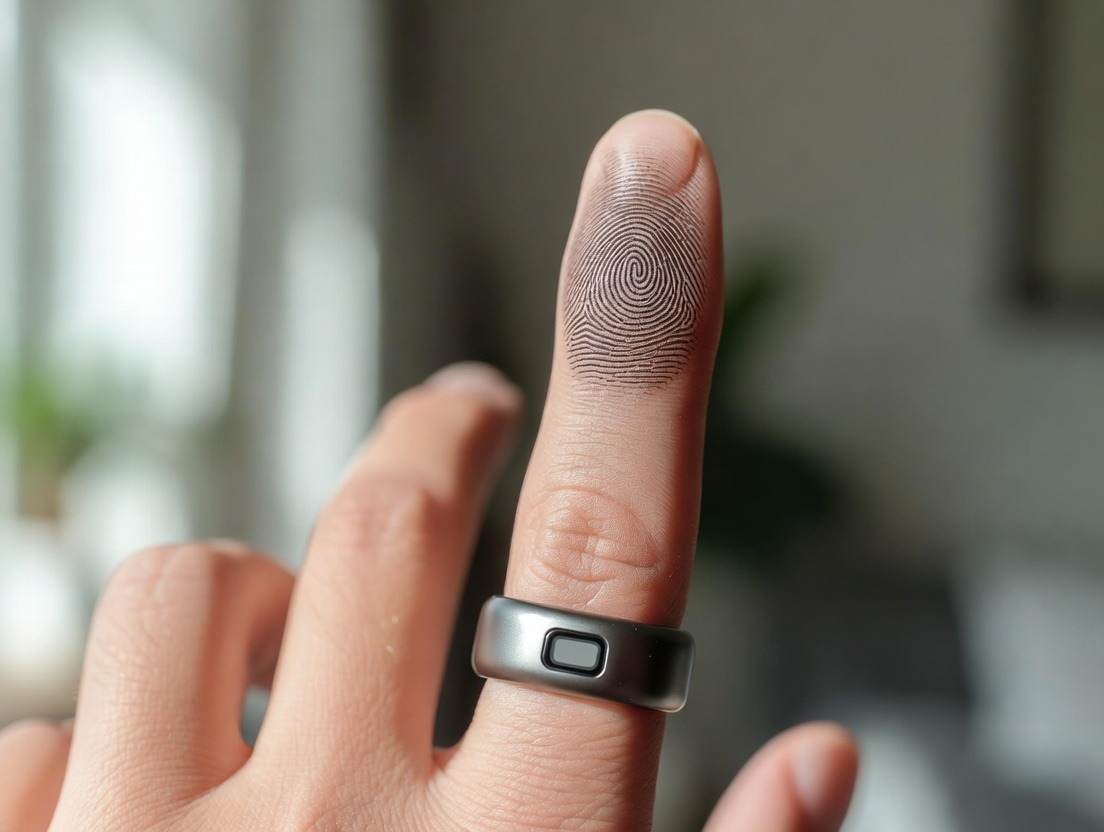
Your wellness ring is the central hub of your quantitative self, but it reaches its full potential when integrated with other apps and devices. This creates a holistic data ecosystem that automates insights and simplifies habit execution.
Strategic Integrations:
This technological symbiosis reduces friction and decision fatigue. It allows your ring’s insights to quietly orchestrate your environment, making the right choice the automated choice.
With great data comes great responsibility. The final step in mastery is learning what to ignore and how to interpret your data through the lens of your lived experience—not in isolation.
Common Data Pitfalls to Avoid:
Cultivating Data Wisdom:
The ultimate habit is the meta-habit of synthesis. Each morning, after reviewing your data, ask yourself two questions:
When the data and your intuition align, act with conviction. When they conflict, proceed with caution and choose self-compassion. This balance prevents data from becoming a source of anxiety and instead keeps it in its proper role: a trusted advisor in your journey toward an unbreakable, well-lived life. This journey is deeply personal, and creating your personal sleep health plan is the ultimate act of self-expertise.
You have designed layered habits and built resilience. Now, we reach the stage where the system you've built begins to run itself. This is the realm of habit automation—where the cues, routines, and rewards become so ingrained that they require minimal conscious willpower. Your wellness ring's data transitions from being a daily directive to a periodic system check, like the dashboard of a finely tuned, self-driving vehicle.
The principle here is decision fatigue reduction. Every choice you don't have to make is mental energy preserved for creativity, problem-solving, and enjoyment. Your data has revealed your optimal patterns; now, you encode them into your lifestyle's operating system.
Strategies for Automation:
By automating the infrastructure of your habits, you free your conscious mind to live within the healthy framework you've built. The habits are no longer tasks; they are the boundaries of your playground. This level of automation ensures consistency even when motivation is at zero, which is the true mark of an unbreakable system. For those starting out, automating small wins is key, and our guide on sleep health for beginners avoiding information overload emphasizes starting simple.
While your journey is personal, it need not be solitary. The final piece of social accountability moves beyond friendly competition into the realm of shared insight and guided interpretation. This is where habits are cemented through explanation and mentorship.
Building a Data-Literate Inner Circle:
Form a small group (2-4 people) who also use wellness trackers. The goal is not comparison, but collective intelligence.
When to Consider a Data-Savvy Coach:
A professional (like a functional medicine practitioner, integrative health coach, or sports physiologist) who understands biometric data can help you leap over plateaus.
This external layer turns your self-experimentation into guided discovery. It accelerates progress and adds a layer of accountability that is both professional and supportive. Explaining your data goals to others also reinforces your own understanding and commitment, a principle explored in how to explain sleep health to friends and family.
Your initial goal may have been to "build better habits" or "get more energy." As you master this, your ring's purpose evolves. It becomes your personal, lifelong early-warning system for health and performance. This is the shift from optimization to prevention.
Detecting Subtle Deviations:
You know your baselines so intimately that a subtle, multi-day shift becomes noticeable long before you feel symptoms.
Tracking Long-Term Health Trajectories:
Over years, this data becomes an invaluable health record. It can:
This transforms your wellness from a project into a permanent, mindful practice of self-preservation. The habit is no longer a 30-day challenge; it's a lifetime of attentive self-care, guided by a constant, gentle stream of biological feedback. Understanding these long-term patterns is part of understanding the relationship between sleep health and chronic disease.
This is the culmination. We arrive at a point where the language of "habits" itself begins to feel too mechanical. You are no longer building unbreakable habits; you are living a habitually well life. The identity shift is complete. The data from your ring is no longer a motivator; it is a affirmation, a occasional tuning fork confirming the harmony of your daily existence.
Signs of Embodyment:
At this stage, the wellness ring is like a master painter's favorite brush—an essential, trusted tool that becomes an extension of the artist. It helped you create the masterpiece of your daily life, and now it sits quietly in your hand, ready for the subtle touches that maintain it.
The final, perhaps most beautiful, outcome of this journey is the ripple effect. When you stabilize your fundamental physiology—sleep, recovery, nervous system balance—the benefits cascade into every corner of your life in unexpected ways. Your ring's data can start to show you these second-order effects.
The Cognitive Ripple:
With consistently high sleep and readiness scores, you may notice that your work performance metrics improve. You solve problems faster. Your creativity in hobbies increases. Your ability to learn and retain new information is enhanced. The habit of protecting sleep wasn't just about rest; it was about upgrading your brain's hardware for everything else.
The Emotional Ripple:
A balanced nervous system (evidenced by a strong, stable HRV) creates a wider "window of tolerance" for stress. You find yourself less reactive in traffic, more patient with loved ones, and more resilient in the face of bad news. The mindfulness drills you tracked on your stress graph have fundamentally rewired your emotional responses. This directly supports your mental wellness, creating a positive feedback loop.
The Relational Ripple:
When you are well-rested and emotionally regulated, you show up as a better partner, parent, friend, and colleague. You have more energy to give. Your relationships deepen. Your social connectedness—a key pillar of longevity—improves. This isn't tracked directly by your ring, but the foundational habits that led to it were.
The Inspirational Ripple:
Without preaching, your consistent, balanced energy becomes noticeable. People ask you your secret. You become a quiet example of what is possible. By sharing your process—the curious, data-informed experimentation—rather than just your results, you inspire others to start their own journey without feeling the pressure of your outcomes.
Your journey from data observer to lifestyle architect is complete. You have moved from building habits to inhabiting a wellness-centric identity. But mastery is not a summit you plant a flag on; it is a high-altitude plateau that requires skillful navigation. The winds of life—aging, shifting priorities, new technologies—will always blow. The final stage of expertise is not about reaching a peak, but about learning to sustain the ascent indefinitely, using your hard-won wisdom and your ring’s insights to adapt to whatever lies ahead.
This stage is characterized by effortless effort. The daily decisions are largely automated, the data is a reassuring confirmation rather than a daily directive, and your health feels like a stable foundation, not a constant project. The work now is preventative maintenance, nuanced refinement, and future-proofing your system against complacency and change.
In the early days, progress was visible in leaps: a sleep score jumping from 65 to 80, an HRV climbing 10 points in a month. On the mastery plateau, progress is invisible. It is the absence of decline. It is maintaining that 85 average sleep score for six straight months despite work stress. It is seeing your HRV hold steady through the winter months, a season that once always brought a dip.
This can feel psychologically challenging. We are wired for achievement, for visible growth. A flat line on your annual trend can seem like stagnation. Here, you must perform a crucial cognitive reframe:
Your plateau is your prize.
A sustained plateau at a high level is the biometric signature of homeostatic resilience—your body's ability to maintain internal stability despite external fluctuations. This is the ultimate goal. The habit now is to celebrate consistency. Your weekly review shifts from "How can I improve?" to "What did I do to maintain this excellence?" and "Where are the tiny cracks where I can apply a small sealant?"
For example, you might notice that while your average sleep score is holding at 86, the variance (the difference between your best and worst nights) has increased slightly. This is your new, granular focus. Your experiment becomes: "What one behavior can I adjust to reduce weekly variance?" Perhaps it's being stricter with caffeine cut-off time on weekends. The goal isn't a higher score, but a more robust, predictable system.
Paradoxically, a sign of true mastery is knowing when not to look at the data. Unwavering data obsession can itself become a source of stress, severing you from the intuitive connection you've worked so hard to build.
Implement "Data Sabbaticals":
Schedule a weekend, or even a full week, where you wear your ring (to maintain the baseline data stream) but you do not open the app. You rely entirely on your cultivated interoception—your felt sense of energy, recovery, and need.
When you re-engage with the data afterwards, you perform a fascinating audit: How well did your subjective feelings align with the objective metrics? This exercise powerfully reinforces your internal guidance system and breaks any subtle dependency on the device. It proves to yourself that the habits are yours, not the ring's.
Ignore the "Outlier" Day:
Mastery means understanding the noise-versus-signal ratio so well that a single poor score—caused by a one-off event like travel, a celebration, or illness—doesn’t trigger a full system review. You note it, understand its cause, and let it go without launching a new experiment. You trust the system to self-correct because you've built it to be resilient.
Your body is not a static machine. The benchmarks for optimal health at 30 are different from those at 50 or 70. Your ring’s data provides the most personalized map possible for navigating this lifelong change. The masterful user doesn't fight these changes; they collaborate with them.
Anticipating and Adapting to Age-Related Shifts:
Your ring allows you to navigate aging not with fear of decline, but with the curiosity of a scientist documenting a fascinating, personal longitudinal study. You become the author of your own healthy aging protocol.
Technology never stands still. New sensors, new biomarkers, and new analytical models are on the horizon. The master user is not loyal to a device, but to the principle of bio-informed living. Your current ring has taught you the foundational language; future devices will simply expand the vocabulary.
How to Integrate Future Advancements Wisely:
By holding your current practice lightly, you remain open to beneficial innovation without becoming a distracted early adopter chasing every new metric. You adopt technology that serves your enduring philosophy.
Over years and decades, the data accumulating in your app is more than personal trivia; it is a quantitative autobiography of your body. This legacy has profound value, both for you and potentially for those you love.
For Your Future Self:
This data is an unparalleled diagnostic tool. If you ever face a health challenge, being able to show your doctor a 5-year trend of your resting heart rate, sleep stability, and HRV provides context no single office visit can capture. You can pinpoint precisely when a deviation began, offering crucial clues. You become the most informed participant in your own healthcare.
For Your Family (A Conceptual Framework):
While privacy is paramount, the model you create is a legacy. By living a life where data informs self-care, you demonstrate to children, partners, and friends a proactive, scientifically-literate approach to health. You teach them not to fear numbers, but to engage with them as guides. You normalize talking about sleep, recovery, and managing stress. This cultural shift within your circle may be your most significant impact—inspiring a preventive, rather than purely reactive, approach to well-being in others.
We end where the sustained practice lives: in a simple, recurring ritual that ties everything together. For the master, this is not a long review, but a short reconciliation.
The 10-Minute Mastery Check (Every Sunday Evening):
This ritual is the keystone habit of mastery. It is mindful, efficient, respectful of your time, and perpetually oriented towards gentle refinement and deep appreciation. It ensures you remain the pilot, with the ring as your instrument panel, and not the other way around.
You began this journey seeking unbreakable habits. You end it having discovered something far greater: unbreakable self-trust.
The ring on your finger is a piece of technology, a marvel of modern sensors and algorithms. But the true transformation happened in the space between the data point and your decision. It happened in the quiet moments of choosing the walk over the scroll, the early night over the extra episode, the deep breath over the reactive comment—because your data had taught you the true cost and value of each.
You no longer need to wonder what a good life feels like in your body. You have a daily record. You no longer have to guess what works for you; you have a personal evidence base. The anxiety of "am I doing this right?" has been replaced by the quiet confidence of "I know what my body needs today."
This is the ultimate insight your wellness ring provides: that the most powerful technology for building an unbreakable life was never on your finger. It was within you all along—your capacity for attention, for change, for self-compassion. The ring simply helped you listen.
So continue to wear it. Continue to glance at your readiness in the morning. Continue your experiments. But do so with the lightness of a master who knows the map is not the territory. The territory is your lived, vibrant, resilient life—a life not just tracked, but truly felt. And that is the most unbreakable habit of all.
We began with a simple notification and a desire to build habits that stick. We have traveled through decoding data, shifting mindsets, layering behaviors, navigating setbacks, integrating technology, and ultimately moving towards a state of embodied wellness.
The profound lesson is this: Your wellness ring's ultimate purpose is to become less necessary. Its true success is measured by how well it trains you to become the expert of your own body and life. The numbers are a means to an end. The end is a life lived with more vitality, presence, resilience, and joy.
The unbreakable habit is not the 7 AM workout or the 10 PM bedtime. The unbreakable habit is the continuous, loving dialogue between your conscious choices and your body's intelligent feedback. Your ring is the translator in that dialogue. As you become fluent in the language of your own physiology, you need the translator less and less. You begin to feel your HRV in your sense of calm. You sense your sleep quality in your morning alertness. You know your readiness in your hunger for the day's challenges.
You have not just built unbreakable habits. You have cultivated a science-informed, data-validated, but deeply intuitive way of being. You are no longer tracking your life. You are living it, fully, with every insight serving not as a taskmaster, but as a trusted guide on the lifelong path of well-being. This is the point where the journey truly begins, armed not just with a device, but with the self-knowledge to thrive.
Your Next Step: Look at your ring's app not as a report, but as the opening lines of today's chapter in your ongoing story of health. What small experiment will you run? What gentle adjustment will you make? The power to build the life you want is, and always has been, on your finger—and in your hands.
Your Trusted Sleep Advocate: Sleep Foundation — https://www.sleepfoundation.org
Discover a digital archive of scholarly articles: NIH — https://www.ncbi.nlm.nih.gov/
39 million citations for biomedical literature :PubMed — https://pubmed.ncbi.nlm.nih.gov/
Experts at Harvard Health Publishing covering a variety of health topics — https://www.health.harvard.edu/blog/
Every life deserves world class care :Cleveland Clinic - https://my.clevelandclinic.org/health
Wearable technology and the future of predictive health monitoring :MIT Technology Review — https://www.technologyreview.com/
Dedicated to the well-being of all people and guided by science :World Health Organization — https://www.who.int/news-room/
Psychological science and knowledge to benefit society and improve lives. :APA — https://www.apa.org/monitor/
Cutting-edge insights on human longevity and peak performance:
Lifespan Research — https://www.lifespan.io/
Global authority on exercise physiology, sports performance, and human recovery:
American College of Sports Medicine — https://www.acsm.org/
Neuroscience-driven guidance for better focus, sleep, and mental clarity:
Stanford Human Performance Lab — https://humanperformance.stanford.edu/
Evidence-based psychology and mind–body wellness resources:
Mayo Clinic — https://www.mayoclinic.org/healthy-lifestyle/
Data-backed research on emotional wellbeing, stress biology, and resilience:
American Institute of Stress — https://www.stress.org/


