


How Wellness Ring Basics Enable Preventive Health Monitoring
Describes how continuous monitoring can help identify potential health issues early, emphasizing prevention.
Describes how continuous monitoring can help identify potential health issues early, emphasizing prevention.
%402x.svg)
Imagine having a personal health guardian, one that never sleeps, silently gathering the subtle whispers of your body 24/7. It doesn’t require you to poke, prick, or remember a thing. It simply observes, learns, and gently nudges you when something is drifting off course. This is no longer the realm of science fiction; it’s the reality made possible by the unassuming, yet revolutionary, wellness ring.
For generations, healthcare has been predominantly reactive. We feel a symptom—persistent fatigue, a nagging pain, a concerning flutter—and we seek a diagnosis. This model, while crucial, often places us on the back foot, addressing illness after it has taken root. But what if we could shift the paradigm? What if we could move from reactive treatment to proactive prevention? The foundational promise of the modern wellness ring lies in this very shift. By harnessing a suite of sophisticated sensors worn in the most natural place—on your finger—these devices unlock a continuous, objective stream of physiological data, transforming fleeting feelings into tangible, actionable insights.
This article is your deep dive into how the core mechanics of a wellness ring—its fundamental technology and basic data outputs—form the critical infrastructure for a new era of personalized, preventive health. We will move beyond the marketing buzzwords and explore the profound science and strategy that turn simple metrics into a powerful early-warning system. This is not just about counting steps; it’s about understanding the intricate symphony of your autonomic nervous system, your cellular recovery, and your body’s resilience. It’s about learning the unique language of your own biology so you can take empowered, precise action to protect your most valuable asset: your long-term well-being.

The journey to the wellness ring began with a single, simple metric: movement. Pedometers, and later wrist-worn fitness trackers, democratized the concept of self-quantification. For the first time, people could see a numerical representation of their daily activity, sparking a global fascination with "closing the rings" or hitting 10,000 steps. This was a monumental first step (pun intended) in fostering body awareness.
However, this approach had a fundamental limitation. It was overwhelmingly output-focused, measuring what we do to our bodies, with little insight into how our bodies were responding and recovering. A high step count could mask underlying fatigue, poor sleep, or elevated stress. The data was a one-way street, offering encouragement for exertion but no guidance on the equally critical need for restoration.
The next evolutionary leap came with heart rate monitoring. Seeing your pulse during a workout added a layer of intensity measurement. But again, this was largely confined to episodic moments—the workout itself. The true breakthrough arrived with the ability to measure Heart Rate Variability (HRV). HRV, the subtle variation in time between each heartbeat, is a non-invasive window into the balance of your autonomic nervous system (ANS). A higher HRV typically indicates a resilient, adaptable system where the "rest-and-digest" (parasympathetic) branch is strong. A lower HRV can signal that the "fight-or-flight" (sympathetic) branch is dominant due to stress, illness, or inadequate recovery.
This shift marked the transition from fitness tracking to wellness monitoring. The focus expanded from isolated workouts to the 24-hour cycle of strain and recovery. Devices began to capture data during the most informative period: sleep. When you are still, your body is engaged in the essential work of repair, and the noise of voluntary movement is stripped away, leaving a clearer signal of your physiological state.
The wrist, however, presents challenges for certain optical bio-sensors. It is a site of significant movement and, due to bone structure, can be less optimal for consistent blood flow measurement (photoplethysmography or PPG). This is where the finger emerges as a superior location. The finger has dense capillary beds and arteries closer to the surface, providing a stronger, cleaner PPG signal for heart rate, HRV, and blood oxygen saturation (SpO2). A ring is also less prone to motion artifacts during sleep and less likely to be removed, enabling truly continuous, high-fidelity data collection.
Thus, the wellness ring represents the convergence of three key advancements: 1) the recognition of recovery as paramount, 2) the scientific validation of metrics like HRV as systemic health indicators, and 3) the selection of an optimal form factor for precise, passive monitoring. It is a device designed not just to log your workouts, but to listen to your body’s quiet whispers around the clock, building the foundational dataset for true preventive insight.
To understand how a wellness ring enables prevention, we must first become fluent in the language it speaks. These are not abstract numbers; they are vital signs of your daily resilience. Let’s decode the core physiological metrics that form the backbone of any advanced wellness ring’s analysis.
1. Resting Heart Rate (RHR): Your resting heart rate is exactly what it sounds like—the number of times your heart beats per minute while you are fully at rest. While a "normal" range is typically 60-100 bpm, a lower RHR within a fit individual’s range often indicates greater cardiovascular efficiency and aerobic fitness. Crucially, your ring tracks your personal baseline and its trends. A sustained elevation of 5-10 bpm above your normal baseline can be one of the earliest and most sensitive signs of your body fighting something off, whether it's oncoming illness, dehydration, excessive stress, or inadequate recovery from training.
2. Heart Rate Variability (HRV): If RHR is the drumbeat, HRV is the nuanced rhythm between the beats. It is the millisecond variation between successive heartbeats, controlled by the constant tug-of-war between your sympathetic (stress) and parasympathetic (recovery) nervous systems. A higher, stable HRV suggests a body that is resilient, adaptable, and well-recovered. A sudden or prolonged dip in your HRV is a clear flag from your ANS that it is under strain. Your ring uses nighttime HRV readings, when external stimuli are minimized, to establish your most accurate baseline and track daily deviations that signal accumulated stress or recovery needs.
3. Sleep Architecture & Quality: Sleep is the cornerstone of preventive health, and your ring goes far beyond simple duration tracking. By analyzing movement and heart rate patterns, it estimates the different stages of sleep:
* Light Sleep: The transition phase, important for memory consolidation and mental recovery.
* Deep Sleep (Slow-Wave Sleep): The physically restorative phase where tissue repair, muscle growth, and immune system strengthening occur. This is non-negotiable for physical recovery.
* REM Sleep: The mentally restorative phase, crucial for cognitive function, emotional processing, and memory.
A healthy balance of these stages is key. Disruptions, such as insufficient deep sleep or fragmented REM, can be early indicators of stress, poor lifestyle habits, or underlying health issues. For a deeper understanding of what constitutes optimal sleep, you can explore how sleep score standards are defined by scientific research.
4. Respiratory Rate: The number of breaths you take per minute, often measured during sleep. While easy to overlook, this is a fundamental vital sign. An elevated nighttime respiratory rate can be a subtle sign of respiratory distress, anxiety, or metabolic strain long before you consciously notice any shortness of breath.
5. Skin Temperature & Blood Oxygen (SpO2): Continuous tracking of peripheral skin temperature trends can reveal shifts associated with menstrual cycles, the onset of fever, or changes in circulation. Nocturnal blood oxygen saturation (SpO2) monitoring can help identify periods of shallow breathing or potential sleep-disordered breathing events, which are critical for long-term cardiovascular and metabolic health.
Individually, each of these metrics tells a story. But the true preventive power is unlocked when they are synthesized. Your ring’s algorithm acts like a master interpreter, cross-referencing a dip in HRV with a rise in RHR, a spike in nighttime skin temperature, and a drop in deep sleep. This confluence of data points transforms a "feeling a bit off" into a quantified, objective alert that your body is actively managing a stressor. This is the essence of the early-warning system. It allows you to act before a minor stressor cascades into a full-blown illness or injury, empowering you with the ultimate preventive tool: knowledge.
The most common mistake new users make when looking at wellness ring data is comparing their numbers to generic population averages or, worse, to a friend’s data. This misses the entire point. The pinnacle of personalized preventive health is not an absolute number; it is your personal trend line. This is the concept of the baseline—your unique, dynamic health fingerprint.
A wellness ring doesn't simply tell you your HRV is 50 ms today. It tells you that your HRV is 50 ms, which is 12% below your 90-day rolling baseline average of 57 ms. That is the transformative insight. Your baseline is established over weeks of continuous wear, accounting for your individual physiology, genetics, lifestyle, and normal cycles. It answers the most important question: What is normal for me?
Establishing this baseline requires consistent wear, especially during sleep, for a minimum of 2-4 weeks. During this period, the ring’s algorithms learn your rhythms: your typical sleep duration, your average RHR, your HRV range, and how you respond to a typical workday versus a rest day. It notes the natural fluctuations—perhaps a slight dip in HRV and rise in RHR in the days before your menstrual cycle, or a predictable improvement in sleep quality on weekends.
Once this fingerprint is established, the ring becomes exquisitely sensitive to deviations. It’s looking for signals that fall outside your normal range of variation. These deviations are the cornerstone of prevention:
The power of the personal baseline transforms health from a static goal into a dynamic, ongoing conversation with your body. It moves you away from chasing arbitrary, one-size-fits-all targets and toward cultivating your own unique state of balance and resilience. Your ring becomes the objective narrator of that story, highlighting the chapters where your body is thriving and gently underlining the paragraphs where it’s asking for a bit more support.
Raw physiological data—heartbeats, movement, temperature—is just noise without interpretation. The genius of a modern wellness ring lies in its sophisticated algorithms, which act as expert translators, converting billions of data points into a simple, actionable readiness score or health report. This is where data becomes insight and insight enables prevention.
These algorithms are built on a foundation of clinical research and physiological modeling. Engineers and scientists train them on vast datasets to recognize specific patterns that correlate with known states. For example, they learn the precise combination of increased heart rate, decreased HRV, and elevated skin temperature that statistically predicts the onset of an illness like the common cold. They identify the sleep stage signatures from heart rate and movement patterns. They model how the body responds to different types of stress—physical, mental, emotional, and immunological.
A primary output of this algorithmic analysis is often called a Readiness Score, Recovery Score, or Body Battery. This single, composite number is the distillation of all your core metrics against your personal baseline. It answers the fundamental preventive question: "Based on how my body recovered last night and my recent strain, how capable am I of taking on stress today?"
Here’s a simplified look at what the algorithm might weigh:
When the algorithm detects a severe negative deviation—a readiness score that plummets despite adequate sleep, for instance—it can trigger an early warning alert. This isn't a diagnosis; it’s a probabilistic nudge. The alert might say, "Your body is showing signs of strain. Consider prioritizing rest." This is the pivotal moment of prevention. Instead of pushing through fatigue and potentially getting sick or injured, you are given permission and evidence to pull back.
Furthermore, these algorithms enable trend analysis. They can surface patterns invisible to the naked eye: that your readiness consistently drops on Mondays (pointing to weekend overexertion or Sunday night anxiety), that your deep sleep decreases when you have alcohol after 8 PM, or that your HRV starts to decline two days into a high-pressure work project.
This layer of intelligent interpretation is what separates a simple data logger from a true health guardian. It does the heavy lifting of pattern recognition, so you don't have to be a data scientist. It delivers the "so what?" behind the numbers, providing clear, timely guidance to steer your daily choices in a healthier direction, intercepting problems long before they manifest as symptoms.

In the architecture of preventive health, sleep is not just a pillar; it is the bedrock upon which all other pillars rest. You cannot out-exercise, out-supplement, or out-diet chronic sleep deprivation. It undermines immune function, hormone regulation, cognitive performance, and emotional resilience. Therefore, a wellness ring’s most critical monitoring window is the 7-9 hours you are (hopefully) asleep.
Advanced sleep tracking moves far beyond "you slept for 7.5 hours." It provides a detailed analysis of sleep architecture, breaking down the night into the cyclical stages of light, deep, and REM sleep. Each stage has a distinct physiological signature that the ring’s sensors and algorithms can identify:
By quantifying your sleep architecture, the ring highlights potential issues. Perhaps you’re getting 8 hours in bed, but only 45 minutes of deep sleep. This insight shifts your focus from mere duration to sleep quality optimization. It empowers you to experiment with lifestyle changes and observe their direct impact: Does cutting off caffeine after 2 PM increase your deep sleep? Does a restful living evening ritual improve your sleep latency? Does reducing blue light exposure decrease nighttime awakenings?
Furthermore, the ring can monitor for potential sleep-disordered breathing. By tracking blood oxygen saturation (SpO2) and respiratory rate overnight, it can identify repeated, minor dips in oxygen levels (hypopneas) that might suggest sleep apnea or other breathing issues. While not a medical diagnostic tool, persistent, significant deviations in these metrics can provide the crucial impetus to seek a professional sleep study—a profoundly preventive action for long-term cardiovascular and metabolic health.
In essence, the ring transforms sleep from a mysterious, passive state into a measurable, manageable component of your health strategy. By ensuring this foundation is solid, you dramatically increase your body’s capacity to handle stress, fight off pathogens, and maintain metabolic equilibrium, making high-quality sleep the single most effective preventive medicine you can "take" every night.
The modern world delivers a constant, low-grade drip of stressors—work deadlines, financial pressures, social obligations, digital noise. While our bodies are equipped to handle acute stress, this chronic, unresolved strain keeps our sympathetic nervous system (the "fight-or-flight" response) subtly engaged, wearing down our resilience. This chronic stress is a silent precursor to a host of issues: burnout, anxiety, hypertension, and a weakened immune system. A wellness ring’s ability to monitor your autonomic nervous system (ANS) balance in real-time is a game-changer for preventive stress management.
The primary metric for this is Heart Rate Variability (HRV), but in a more dynamic context than just the overnight average. During the day, your HRV fluctuates moment-to-moment. Advanced rings can use brief, periodic measurements (often prompted by staying still for a minute or two) to estimate your current stress or recovery state. A low HRV reading during a quiet moment at your desk is a direct signal that your body is still in a sympathetically-driven, stressed state, even if your mind feels calm.
Some devices take this further by providing a continuous stress monitoring feature throughout the day. By analyzing the pattern of your heart rate—its intervals and dynamics—the algorithm can infer when your body is showing signs of sympathetic activation. It’s not measuring emotional stress per se, but the physiological response to any stressor, be it a difficult conversation, a traffic jam, or digesting a heavy meal.
This objective feedback creates a powerful biofeedback loop:
This process trains you to become an expert in your own nervous system regulation. It moves stress management from a theoretical concept ("I should meditate more") to a precise, real-time skill ("My body is showing stress signs; I will take three deep breaths now"). Over time, this practice can recalibrate your baseline, increasing your overall HRV and resilience. For busy professionals, integrating these micro-recovery habits throughout the day is a foundational strategy for sustainable performance.
By making the invisible visible, the wellness ring helps you intercept the cumulative damage of chronic stress. It allows you to discharge sympathetic activation before it becomes ingrained, protecting your long-term mental and physical health. This isn't about eliminating stress—an impossible goal—but about improving your recovery capacity and preventing the downstream effects of a perpetually taxed nervous system.
In the old paradigm of fitness, the rule was simple: more is better. Push harder, go longer, no days off. This "no pain, no gain" mentality, while effective for short-term goals, often leads to overtraining, injury, and burnout—the antithesis of preventive health. The wellness ring introduces a smarter, more sustainable model: readiness-based training.
This model creates a dynamic feedback loop between daily exertion and your body’s capacity to handle it. It asks a revolutionary question: "What is my body prepared for today?" instead of "What does my workout calendar say?"
Here’s how it works in practice:
This approach respects the fundamental biological principle of supercompensation. Growth and adaptation don’t happen during the stress of a workout; they occur during the recovery period afterward. If you never allow for full recovery, you never reach the supercompensation phase, stagnating or even regressing.
Beyond the readiness score, the ring provides objective data on your activity strain. It doesn’t just count steps; it estimates the physiological cost of your day by measuring heart rate elevation and duration above your resting baseline. This creates a more holistic picture of "exercise" that includes chasing your kids, a long walk with the dog, or an active job—all of which contribute to your total daily load.
The preventive power here is immense. It:
The ring becomes your personal coach, one that has direct access to your body’s internal state. It guides you to work with your physiology, not against it, turning exercise from a potential source of strain into a precisely dosed tool for building resilient health.
The ultimate goal of preventive monitoring is not to create a perfect sleep score or an impeccable HRV graph in a vacuum. It is to understand how your daily life—your choices, habits, and environment—directly influences your physiological state. This is where wellness rings transition from a fitness device to a holistic lifestyle discovery tool through the power of correlation.
Most companion apps include a feature for logging daily behaviors, often called "Lifestyle Factors" or "Tags." You can manually (or sometimes automatically) tag days with entries like:
Over weeks and months, the app’s algorithms then perform a behind-the-scenes analysis, comparing these tags against your key physiological metrics. It surfaces personalized insights with statements like:
This is personalized, n=1 experimental science. It moves you from generic health advice ("alcohol disrupts sleep") to quantified, personal truth ("For me, two glasses of wine reduces my deep sleep by 30 minutes"). This evidence is incredibly motivating for behavior change. It’s one thing to know something is theoretically bad for you; it’s another to see its concrete, negative impact on your own body’s recovery dashboard.
This correlation engine allows you to experiment intelligently. Curious if a new supplement helps? Log it and watch your readiness scores over two weeks. Want to optimize your home for better rest? After making changes to your bedroom environment, you can observe their direct effect on your sleep architecture. The concept of designing spaces for wellness is explored in depth in how to create a restful home environment room-by-room.
Furthermore, this data can reveal hidden stressors or positive influences you hadn’t considered. You might discover that your weekly team meeting consistently spikes your stress score, prompting you to develop a pre-meet calming ritual. Or you might find that a weekend hike in the woods gives your HRV a boost that lasts for two days, providing concrete evidence for the benefits of how nature supports restful living.
By connecting the dots between lived experience and physiological outcome, the wellness ring empowers you to become the architect of your own health. It turns daily choices into informed experiments, guiding you to build a lifestyle that systematically supports your resilience and prevents the slow accumulation of negative effects from suboptimal habits.
While daily and weekly insights are invaluable for immediate course-correction, the most profound preventive potential of a wellness ring is unlocked over months and years. This longitudinal dataset becomes a unique health journal, documenting not just your fitness, but your body’s changing response to age, life stages, and long-term habit changes. It shifts the focus from managing today’s readiness to steering your long-term health trajectory.
Think of your multi-year ring data as a personal biomarker timeline. It can reveal patterns and trends that are impossible to see in the daily noise:
This long-term view is critical for preventing chronic lifestyle diseases. Small, negative trends—a creeping average RHR, a slowly declining sleep efficiency, a gradual reduction in activity strain—are the early warning signs of a trajectory towards metabolic syndrome, cardiovascular risk, or declining cognitive function. Catching these trends over a 12-month period gives you a multi-year head start to make impactful changes, well before any clinical markers like blood pressure or cholesterol might become problematic.
Your ring data becomes a partnership with your future self. It allows you to look back and understand what worked, and look forward to make predictions and set informed goals. It provides the ultimate motivation: concrete evidence that the daily choices you make are collectively writing the story of your long-term vitality, enabling you to actively shape a healthier future.
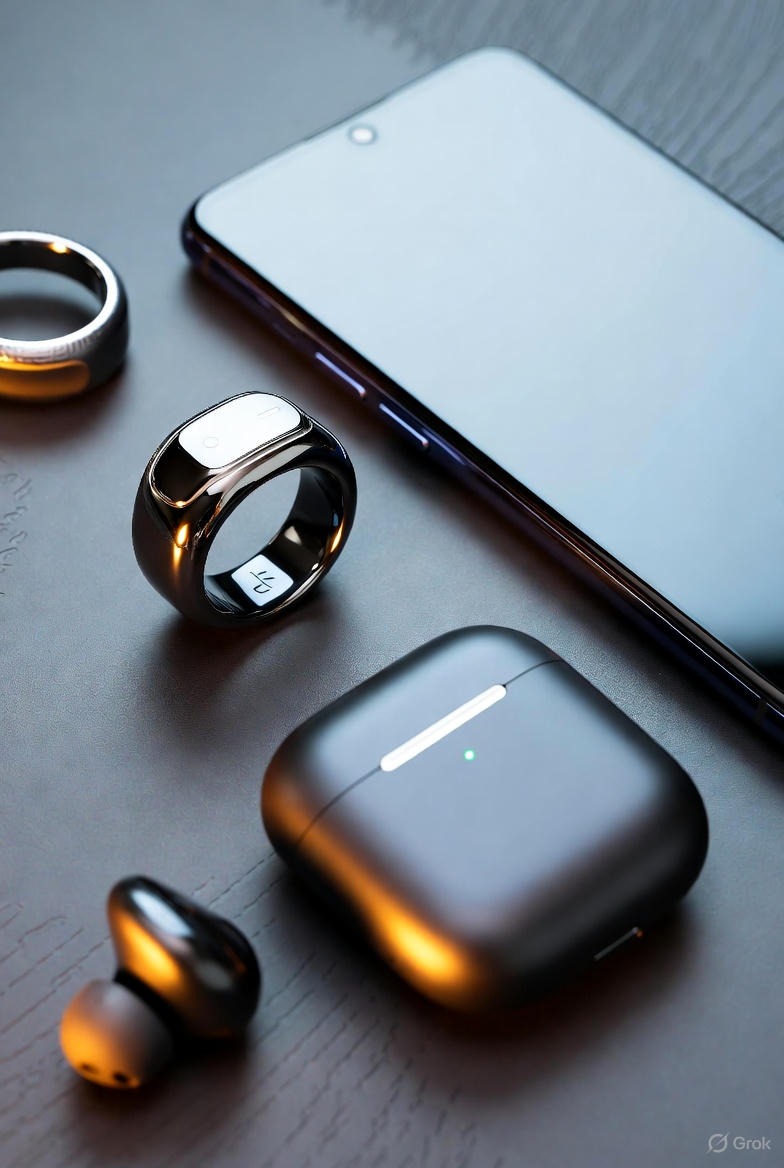
A wellness ring is a powerful standalone tool, but its preventive potential multiplies exponentially when its data is integrated into your broader personal health ecosystem. No single device can provide a complete picture, but when its continuous, real-world data is combined with other health snapshots, it creates a multidimensional understanding of your well-being that is greater than the sum of its parts.
Syncing with Fitness Apps & Devices: Most rings seamlessly sync with platforms like Apple Health, Google Fit, Strava, and TrainingPeaks. This creates a unified activity record. Your ring’s readiness score can inform your workout plan in Strava. The detailed sleep and recovery data enriches your Apple Health profile, giving a more complete context to your daily step count or mindful minutes. For athletes, this integration allows coaches to prescribe training based not just on planned periodization, but on real-time physiological readiness.
Informing Conversations with Healthcare Providers: This is arguably the most impactful integration. Imagine walking into your doctor’s or dietitian’s office not just with subjective descriptions ("I’ve been tired"), but with objective data trends.
* "Over the past three months, my resting heart rate has trended up by 7 bpm, and my deep sleep has decreased by 15%, despite no change in my routine."
* "My data shows a strong correlation between days I feel bloated and a 20% increase in my nighttime respiratory rate."
* "Since starting this new medication, my heart rate variability has been consistently lower than my baseline."
This data provides healthcare professionals with a rich, continuous dataset from your normal life, complementing the single-point-in-time tests they run in the clinic. It can help them identify patterns, ask better questions, and make more personalized recommendations. It turns the annual check-up into an ongoing dialogue based on shared, objective information. It is crucial to note that a wellness ring is not a medical device and its data should not be used for self-diagnosis. However, it is an exceptional tool for health observation and reporting, empowering you to be a proactive, informed partner in your own care.
Combining with Periodic Testing: Ring data provides the "how" and "when," while lab tests provide the "what." You can correlate a period of low HRV and high RHR with a blood test showing elevated cortisol or inflammatory markers. You can see how improving your sleep scores over six months correlates with improved HbA1c or cholesterol levels at your next physical. This feedback loop validates the ring’s insights and demonstrates the tangible, systemic benefits of your lifestyle changes.
The Future of Integration: The horizon points toward even deeper integration. Imagine a future where your ring data can be securely shared (with your consent) with a digital health platform that also includes your genetic data, microbiome analysis, and continuous glucose monitoring (CGM) information. An AI could then analyze this massive, multimodal dataset to provide hyper-personalized, predictive insights: "Based on your current recovery deficit, sleep pattern, and genetic predisposition, you have a 65% higher probability of catching the office cold this week. Suggested action: Increase sleep by 45 minutes nightly for the next 3 days and consider these specific immune-supporting nutrients."
By acting as a central, continuous data hub, the wellness ring becomes the connective tissue in your preventive health strategy, linking daily behavior, fitness endeavors, and professional healthcare into a coherent, actionable whole.
The journey from passive patient to proactive health guardian is not merely a technological shift; it is a profound psychological one. A wellness ring, by its very nature of providing constant feedback, fundamentally alters our relationship with our own bodies and health choices. It cultivates a mindset of personal accountability, moving health from an abstract concept to a tangible, daily practice. This psychological transformation is arguably as important as the data itself for enabling lasting preventive habits.
At its core, continuous monitoring leverages the powerful principles of feedback loops and quantified self-awareness. When we receive immediate, objective data on the consequences of our actions, several key psychological mechanisms are activated:
However, this new relationship with data requires a healthy mindset to be truly preventive, not punitive. The danger lies in data obsession or performance anxiety, where the numbers become a source of stress rather than liberation. A high score can lead to pride, but a low score must not lead to shame. The key is to view the data not as a judgment, but as a neutral report card—a source of information, not identity.
Developing this mindset involves:
This accountable, data-informed mindset is the engine that drives preventive action. It transforms the ring from a passive tracker into an active partner in a daily dialogue about health. It empowers you to take ownership, make informed trade-offs, and build a life where healthy choices are not seen as deprivations, but as intelligent investments in your most valuable asset. For those struggling to find this balance, exploring the broader restful living philosophy of less hustle and more health can provide a crucial framework for sustainable wellness.
The most potent application of preventive monitoring lies in its silent, ceaseless vigilance. Unlike a doctor's visit or a lab test—snapshots in time—a wellness ring provides a continuous physiological narrative. This allows it to detect subtle, subclinical disturbances: deviations from your normal state that haven't yet manifested as clear symptoms you would act upon, but indicate your body is actively managing a stressor.
This is the frontier of true early intervention. Consider these scenarios made visible by round-the-clock monitoring:
This capability turns the wellness ring into a sentinel for system stability. It is constantly answering the question: "Is my internal environment in a state of balance (homeostasis), or is it under strain (allostatic load)?" By alerting you to increases in allostatic load before they tip into dysfunction, it enables the most powerful form of medicine: pre-emptive rest and support.
This silent monitoring is particularly valuable for managing chronic conditions or identifying personal triggers. Someone with migraines might discover a consistent physiological pattern (e.g., a specific sleep stage disruption coupled with a temperature change) 12 hours before an attack, enabling early intervention. Someone managing anxiety might see their real-time stress score rise, prompting them to use a breathing app to downregulate their nervous system before they consciously feel anxious.
In essence, the ring gives you a sixth sense for your internal state. It extends your perception beyond conscious feelings into the autonomic realm, allowing you to care for your body with a precision and timeliness that was previously impossible. This is the heart of modern prevention: not waiting for the alarm to blare, but noticing the quiet warning light and taking action while there’s still time.
Data and insights are meaningless without action. The final, crucial step in the preventive health loop is translating the information from your wellness ring into a personalized, dynamic action plan. This moves you from observation to intervention, creating a closed-loop system where monitoring directly informs behavior, which in turn improves future metrics.
Your ring data provides the framework to build this plan across several key health domains:
1. The Sleep Optimization Protocol:
Your sleep breakdown is a blueprint for improvement. Instead of guessing, you can target specific deficiencies.
2. The Stress Resilience Strategy:
Use your daily stress graph and HRV trends to build a personalized stress-defense toolkit.
3. The Dynamic Training Schedule:
Let your readiness score dictate your workout intensity, not a pre-printed calendar.
4. The Lifestyle Experiment Log:
Formalize the process of correlation. When you want to test a change, make it a structured 2-4 week experiment.
5. The Long-Term Health Goal Alignment:
Link your ring trends to broader health objectives.
The key to a successful preventive action plan is iteration and patience. You implement a change, observe the data for 2-4 weeks, then adjust. It’s a process of becoming your own best health strategist. The ring provides the objective feedback to know what’s working and what isn’t, removing the guesswork and allowing you to invest your time and energy into the interventions that yield the highest return for your unique biology. This is the ultimate empowerment: moving from generic health advice to a bespoke, living plan that evolves with you.
The foundational principles of wellness ring monitoring apply universally, but their most powerful applications are often highly personalized. By tailoring the data and insights to specific life stages, professions, and health goals, the ring transitions from a general health tool to a specialized ally. Here, we explore how different populations can leverage this technology for targeted prevention.
For anyone engaged in systematic training, the line between productive strain and detrimental overreaching is perilously thin. A wellness ring acts as an objective coach, shifting training from guesswork to guided precision.
The modern knowledge worker faces a marathon of cognitive load, decision fatigue, and constant connectivity. Burnout—a state of emotional, physical, and mental exhaustion—is a pervasive occupational hazard. A wellness ring provides the early-warning system and the tools to prevent it.
The relentless, on-call nature of parenting or caregiving creates a unique form of chronic strain characterized by sleep disruption, erratic schedules, and emotional labor. A ring helps caregivers practice sustainable self-preservation, which is not selfish but essential for providing effective care.
For individuals managing conditions like hypertension, anxiety disorders, migraines, or metabolic syndrome, or for those focused on healthspan extension, the ring serves as a daily feedback mechanism for lifestyle medicine.

A wellness ring provides a powerful, continuous stream of autonomic and metabolic data. However, the full picture of human health is multivariate. When ring data is combined with other point-in-time or continuous metrics, it creates a synergistic, multi-layered understanding that is profoundly more insightful for prevention.
This combination is perhaps the most revealing for understanding metabolic health and energy dynamics. A CGM measures interstitial glucose levels every few minutes, showing how your body responds to food, stress, sleep, and exercise.
While rings and CGMs provide dynamic, real-world data, traditional blood tests offer a deep, systemic snapshot. Used together, they are complementary.
The forward trajectory is towards integrated platforms that securely unify data from wearables (ring, CGM, smart scale), genetic profiles (like SNP data from 23andMe), microbiome analyses, and lab results. Advanced AI could then analyze this multimodal dataset to:
This synergistic future moves us from siloed data points to a holistic, predictive model of individual health, where the wellness ring serves as the always-on, foundational layer of physiological sensing.
As with any powerful technology, it is crucial to approach wellness rings with clear-eyed awareness of their limitations and the ethical considerations they raise. Responsible use maximizes benefit while minimizing potential harm.
By approaching wellness ring technology with both enthusiasm for its potential and sober respect for its limits, we can harness it as a tool for genuine empowerment. It is a lens through which to better understand ourselves, not a judge of our worth or a substitute for professional care or lived experience. Used wisely, it can be a cornerstone of a thoughtful, proactive, and balanced approach to lifelong health.
We stand at the precipice of a revolution in preventive healthcare, driven by continuous biometrics, artificial intelligence, and a shift towards personalized, predictive models. The wellness ring, as a ubiquitous and comfortable form factor, is poised to be a central player in this new paradigm. Let’s explore the emerging trends that will define the next decade of preventive health monitoring.
Current ring analytics are largely descriptive (what happened) and diagnostic (why it might have happened, based on correlations). The next leap is to predictive analytics. By applying machine learning to longitudinal, multi-modal datasets (ring data, CGM, lifestyle logs, genetics), algorithms will be able to forecast individual health trajectories with increasing accuracy.
Future health ecosystems will move beyond passive dashboards to active, ambient support systems.
Wellness rings will fundamentally change the patient-provider relationship, facilitating a more collaborative, data-informed, and continuous model of care.
The future of prevention is not a one-size-fits-all pamphlet; it is a dynamic, AI-powered, personally-tuned system of which you are the central operator. The humble wellness ring, by providing the essential, continuous stream of physiological truth, will be the foundational sensor in this new world of empowered, predictive, and profoundly personalized health.
We have journeyed through the foundational mechanics of how a wellness ring transforms from a piece of wearable technology into a cornerstone of a modern preventive health strategy. From understanding the evolution of tracking and the science behind core metrics like HRV, to establishing personal baselines and leveraging algorithms for early warnings, we’ve seen how this unassuming device provides a continuous, objective dialogue with our deepest physiology.
The power lies in the synthesis: it’s not one metric, but the confluence of sleep, stress, activity, and recovery data that paints the true picture of systemic resilience. This data empowers a new psychology of accountability, fosters the detection of subclinical issues, and, most importantly, provides the evidence needed to build a personalized, dynamic action plan.
This portion has laid the essential groundwork. We have explored the how and the why of the basics. In the next portion of this comprehensive guide, we will build upon this foundation to explore advanced applications. We will delve into specific population use cases (athletes, parents, executives, those managing chronic conditions), examine the integration of ring data with other biometrics like glucose monitoring, navigate the important limitations and ethical considerations of this technology, and look toward the future of predictive health analytics. The journey from reactive healthcare to empowered, proactive wellness is just beginning.
Your Trusted Sleep Advocate: Sleep Foundation — https://www.sleepfoundation.org
Discover a digital archive of scholarly articles: NIH — https://www.ncbi.nlm.nih.gov/
39 million citations for biomedical literature :PubMed — https://pubmed.ncbi.nlm.nih.gov/
Experts at Harvard Health Publishing covering a variety of health topics — https://www.health.harvard.edu/blog/
Every life deserves world class care :Cleveland Clinic - https://my.clevelandclinic.org/health
Wearable technology and the future of predictive health monitoring :MIT Technology Review — https://www.technologyreview.com/
Dedicated to the well-being of all people and guided by science :World Health Organization — https://www.who.int/news-room/
Psychological science and knowledge to benefit society and improve lives. :APA — https://www.apa.org/monitor/
Cutting-edge insights on human longevity and peak performance:
Lifespan Research — https://www.lifespan.io/
Global authority on exercise physiology, sports performance, and human recovery:
American College of Sports Medicine — https://www.acsm.org/
Neuroscience-driven guidance for better focus, sleep, and mental clarity:
Stanford Human Performance Lab — https://humanperformance.stanford.edu/
Evidence-based psychology and mind–body wellness resources:
Mayo Clinic — https://www.mayoclinic.org/healthy-lifestyle/
Data-backed research on emotional wellbeing, stress biology, and resilience:
American Institute of Stress — https://www.stress.org/


