


How Your Wellness Ring Proves Morning Routines Compound Over Time
Shows how the compounding benefits of a good morning routine are evident in long-term ring data trends.
Shows how the compounding benefits of a good morning routine are evident in long-term ring data trends.
%402x.svg)
You swipe away the alarm, bleary-eyed, and glance at your wrist. But instead of a watch, a sleek band of titanium or ceramic greets you. With a tap, your wellness ring’s companion app illuminates your phone screen, not with notifications, but with a quiet report: Sleep Score: 92 | Recovery: Optimal | Readiness: High. The data suggests a choice: hit snooze and begin the day at a deficit, or rise and invest in the compound interest of your own potential.
For decades, the concept of a morning routine has been wrapped in mystique and anecdote—the domain of CEOs, athletes, and artists. We’re told to wake at 5 AM, meditate for an hour, journal, and drink celery juice. But for most, this becomes a short-lived, guilt-inducing experiment. Why? Because without proof, behavior change is built on sand. Motivation wanes. The "why" gets lost.
Enter the modern wellness ring. This unassuming piece of wearable technology is more than a sleep tracker; it is a personal biometrical auditor, a quantifier of cause and effect, and the ultimate accountability partner for the most important financial portfolio you manage: your holistic health. It transforms the abstract, feel-good philosophy of "good mornings" into a tangible, data-driven science.
This article will explore a revolutionary premise: Your morning routine is not a series of isolated tasks, but the fundamental input in a lifelong compounding algorithm of wellbeing. And your wellness ring is the ledger that proves it. We will move beyond simplistic life-hacking to understand the physiological, neurological, and psychological mechanisms that make the first hours of your day a leverage point for exponential returns. We’ll decode the data points—Heart Rate Variability (HRV), resting heart rate, sleep stages, body temperature—and translate them into a clear narrative of how yesterday’s routine influenced today’s readiness, and how today’s choices will determine your capacity for tomorrow.
Forget willpower. We are building a system, backed by the cold, hard evidence resting on your finger. Let’s begin by understanding the most powerful force in the universe, one that governs money, knowledge, and, as we shall see, your very vitality.
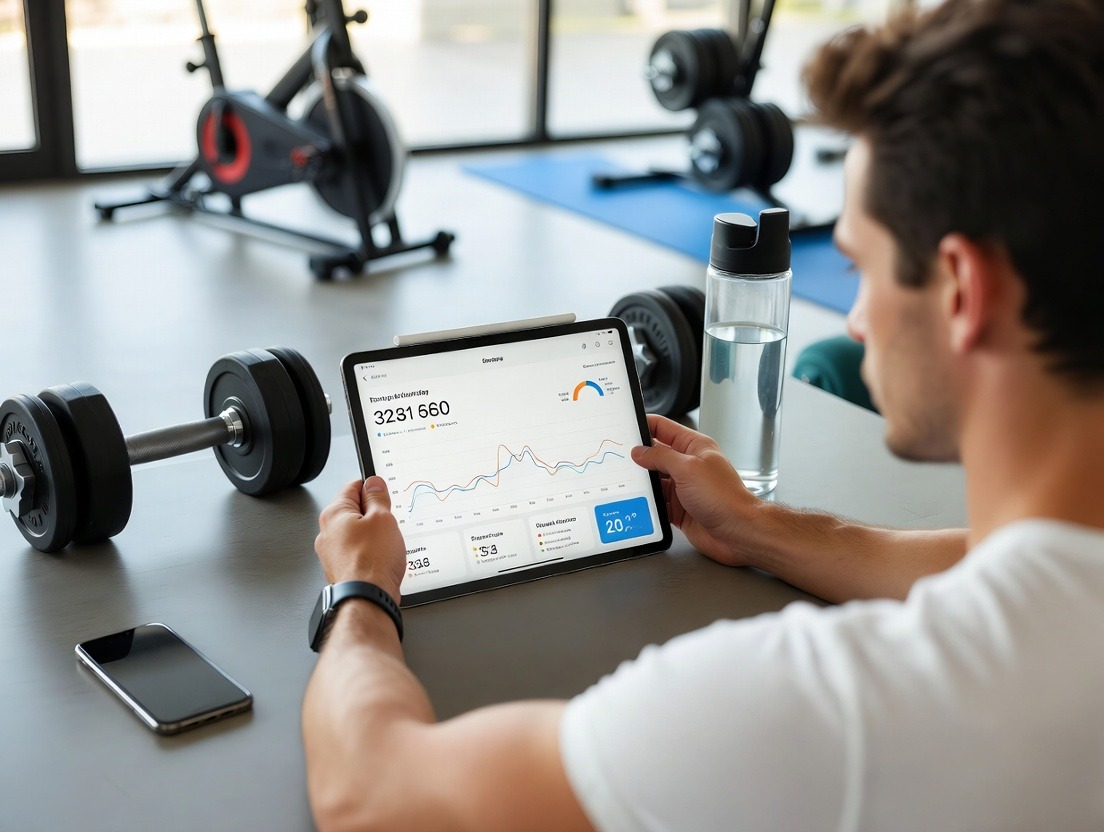
We are instinctively drawn to the dramatic: the lottery win, the viral post, the overnight success. Yet the most profound force shaping our lives operates not with fanfare, but with silent, relentless consistency. It is the principle of compounding. In finance, it’s the “eighth wonder of the world,” where interest earns interest, and small, regular investments snowball into fortunes over decades. In nature, it’s a single cell dividing, a rivulet carving a canyon, a daily walk strengthening bones imperceptibly until, years later, they resist fracture.
Compounding is the mathematical reality that small, smart choices + consistency + time = radical difference. The challenge with personal wellbeing has always been the “invisible” timeline. Eating a salad today doesn’t make you instantly lean. Meditating for ten minutes doesn’t bestow instant enlightenment. We lack the feedback loop to see the microscopic gain, so we abandon the process.
Your wellness ring makes the invisible visible. It provides the daily “statement” for your health portfolio. Think of your baseline metrics—your HRV, your deep sleep minutes, your resting heart rate—as your principal health capital. Every action is either a deposit or a withdrawal.
The magic—or the tragedy—of compounding is that these deposits and withdrawals are never neutral. A single withdrawal may be insignificant, but a pattern of them earns negative interest, degrading your baseline capital faster than you realize. Conversely, a pattern of deposits earns positive interest, elevating your baseline so that every subsequent healthy action yields a larger return.
Your ring tracks this compounding in real-time. That “Readiness Score” that seems to plateau and then suddenly jump after a week of good habits? That’s compound interest posting. The slow, steady climb of your average HRV over three months? That’s your autonomic nervous system’s resilience capital growing. The ring removes the guesswork and reveals the truth: there are no neutral days. Every morning, you are either moving marginally closer to a future of vibrant energy, resilience, and clarity, or you are accruing debt in your biological systems that will eventually demand payment with interest—in the form of burnout, illness, or chronic fatigue.
Understanding this law is the first step. The next is to identify the specific, high-impact “deposits” that yield the highest compound returns. This begins not when you wake up, but hours before, in the silent laboratory of the night.
The most critical component of your morning routine happens before you open your eyes. You cannot compound from a deficit. A morning of brilliant habits built upon a foundation of poor sleep is like investing a dollar while simultaneously lighting ten on fire. The net gain is negative. Your sleep data is the pre-market analysis for your day, and your wellness ring is the most accurate analyst you could hire.
Sleep is not a monolithic state of unconsciousness. It’s a structured, cyclical symphony of restoration. Your ring tracks these cycles—light sleep, deep sleep, and REM sleep—each playing a distinct role in preparing your physiological and psychological “capital” for the day ahead.
Your ring provides more than stage analysis. Two metrics are paramount in setting your daily rate:
When you wake and check your ring’s data, you are not just looking at a score. You are reading your biological “interest rate” statement. A high Sleep Score and Recovery Score mean you have a high rate—your deposits (your morning routine actions) will yield greater returns. A low score means your rate is low, perhaps even negative. The smart move isn’t to push harder with an intense workout or a demanding schedule; it’s to make strategic, restorative deposits to rebuild your capital. This might mean prioritizing gentle movement, nutrition for inflammation reduction, or stress relief techniques that work in under five minutes.
Armed with this precise intelligence, you can now craft a morning routine that is not generic, but bespoke—tailored to your body’s actual needs today.
The transition from sleep to wakefulness is a neurologically delicate event. How you navigate it sets the hormonal and emotional tone for hours. The old model—a jarring alarm, immediately checking email and news—is a recipe for launching your sympathetic nervous system into overdrive, initiating a stress cascade that can take hours to recover from. This is a massive withdrawal from your compound interest account before you’ve even made a single deposit.
Your wellness ring offers a gentler, smarter alternative. Many devices feature silent, haptic alarms that vibrate on your wrist, coaxing you from sleep in harmony with your sleep cycle (during a period of light sleep), minimizing sleep inertia—that groggy feeling. This is the first intentional deposit: respecting your biology.
From that moment, you have a five-minute window of high neuroplasticity—your brain is transitioning and is highly receptive to programming. What you do here is akin to setting the dials on your internal control panel.
The Data-Informed Pause: Before you even sit up, take 60 seconds. Open your wellness app. Observe your scores without judgment. This act of self-observation, of “checking your financial statement,” is a profound metacognitive practice. It creates a space between stimulus (waking) and reaction (rushing). It anchors you in objective data about your state, not the world’s chaos.
Strategic First Actions: Based on your data, choose one of these foundational deposits:
This intentional start is a micro-deposit with macro-compounding effects. It trains your nervous system for agency rather than reactivity. Over time, this daily practice doesn’t just improve your mornings; it physically reshapes your brain’s neural pathways and your body’s stress response, a concept explored in depth in understanding the physiology of stress relief techniques. You are literally building a more resilient system, day by day.

With your nervous system intentionally engaged, it’s time to deliver the two most powerful, research-backed biochemical signals to your body: water and light. These are not “tips”; they are fundamental physiological commands that activate your compound interest engine.
Hydration: The Internal Flush
After 6-9 hours of sleep, you are in a state of mild dehydration. This thickens blood, stresses the kidneys, and impairs cellular function and cognitive performance. Your first glass of water is not just quenching thirst; it’s triggering a cascade of essential processes:
Your wellness ring can provide indirect feedback here. Chronic low-grade dehydration can manifest as elevated resting heart rate and lower HRV over time. By making a large glass of water (perhaps with a pinch of sea salt for electrolytes) your unwavering first ritual, you are making a daily deposit into your metabolic and cognitive capital accounts.
Light: The Master Zeitgeber
Light is the primary “zeitgeber” (time-giver) for your circadian rhythm, the 24-hour internal clock governing every hormone, from cortisol to melatonin. The quality, quantity, and timing of light exposure in the morning are perhaps the single greatest lever for compounding daily energy and long-term health.
The compounding effect is profound. Consistent morning light anchors your circadian rhythm. A stable rhythm leads to more predictable, high-quality sleep. Better sleep raises HRV and recovery. Higher recovery allows for more effective stress management and decision-making throughout the day, which further improves sleep. The virtuous cycle spins faster, and your ring’s multi-week trend lines will show it: earlier, more stable sleep times, improved sleep consistency scores, and a higher average readiness.
This biochemical one-two punch—hydration and light—takes less than ten minutes but lays the non-negotiable foundation upon which all other compound habits are built. It signals to your 37 trillion cells: “The day has begun. Operate at peak efficiency.”
The cultural narrative around morning exercise is often extreme: grueling hour-long sessions or nothing. This all-or-nothing mindset breaks the chain of compounding. Your wellness ring reframes movement not as a punishing obligation, but as a measurable, essential nutrient for your nervous system—a dosage to be tailored daily.
The goal of morning movement is not necessarily to build fitness (though that is a long-term benefit) but to signal wakefulness, enhance circulation, and elevate mood. It’s about making a strategic deposit into your energy and emotional accounts for the day.
Using Your Data to Dose Your Movement:
The Compound Benefits of Consistent, Smart Movement:
Your ring tracks the tangible outcomes of this consistency. You’ll see your resting heart rate gradually decline. You’ll notice your heart rate recovers faster after exertion. You may even see improvements in your sleep architecture as your body’s need for deep physical repair is elegantly met. Movement becomes not a calendar event you dread, but a daily, data-informed nutrient you self-prescribe, with the compounding returns visible in your very own biometric trends.
If movement invests in your physical capital, mindfulness is the direct deposit into your mental and emotional capital. In the context of compounding, mindfulness is the practice of reducing “mental fees and taxes”—the drag of anxiety, rumination, and distraction that erodes your daily performance returns. Your morning routine is the ideal time to train this muscle, setting a filter of clarity for the day’s information stream.
Mindfulness, in its essence, is the meta-skill of observing your thoughts and feelings without being hijacked by them. A morning practice, even for 5-10 minutes, creates a “circuit breaker” in the brain’s habitual reactive pathways.
How Your Wellness Ring Validates the Practice:
The connection between mindfulness and physiology is direct and measurable. A consistent practice should influence:
Your ring provides the objective proof that this “soft” practice has “hard” biological effects. Seeing a correlation between your meditation streak and an upward HRV trend is a powerful motivator—it turns an abstract concept into a concrete return on investment.
Beyond Formal Meditation: The Focus Ritual
Your morning is also the time to define your cognitive priorities before the world defines them for you. This is an act of proactive focus. A simple ritual:
This combination—mindfulness to calm the noise, and focused intention to direct your energy—creates immense compound interest. Each day you practice, you strengthen neural pathways for calm and concentration. Over months and years, this doesn’t just make you more productive; it fundamentally alters your relationship with stress and your capacity for deep work, forming a cornerstone of any strategy to build mental wellness resilience for future challenges.
Breaking your fast is the moment you supply the raw materials for your day’s biochemical processes. A morning meal chosen by whim or convenience is a speculative investment. One chosen with intention, informed by how you feel and what your body has done, is a strategic capital allocation. The goal of morning nutrition in the compounding model is not dogma, but stability: to provide steady, clean energy that avoids the boom-bust cycles that crash your focus and mood by mid-morning.
Your wellness ring provides critical post-meal feedback that few other tools can. Pay attention to how different breakfasts affect these metrics in the 1-3 hours that follow:
Principles of a Compound-Interest Breakfast:
The compounding effect of consistent, stable fueling is immense. Stable blood sugar leads to stable mood and energy. This reduces impulsive decision-making (both with food and other choices). It improves willpower and cognitive endurance. Over years, it directly impacts metabolic health, inflammation levels, and even epigenetic expression. Your ring helps you connect the dots, turning nutrition from a confusing set of rules into a personal experiment in sustained energy. For those navigating specific physiological challenges, such as the link between mental wellness and chronic pain, discovering anti-inflammatory nutritional strategies becomes a critical part of the compounding equation.
A single day’s data is a data point. A week’s data is a trend. A month’s data is a story. The true power of your wellness ring as a compounding tool is unlocked not in daily glances, but in a dedicated, weekly review. This is when you step back from the micro-deposits and withdrawals to analyze your overall portfolio performance. It’s where you move from being a participant to being the strategic CEO of your own wellbeing.
Set aside 20-30 minutes each week (Sunday evening is ideal) to do a “Wellness ROI Review.”
What to Analyze in Your Weekly Review:
Turning Insight into Action:
The review is useless without a change to process. Based on your analysis:
This weekly ritual is the compounding accelerant. It closes the feedback loop, ensuring your daily actions are constantly being refined for maximum return. It transforms random effort into a systematic process of self-optimization, a practical method to measure mental wellness progress over time with tangible data.
No compounding journey is a straight line upward. There will be withdrawals. A stressful life event, a week of travel, an illness, a simple lapse in motivation—these are not failures; they are volatility in the market of you. The critical difference between those who see their long-term trend line rise and those who flatline is their response to these downturns. This is where resilience pays a dividend.
Your wellness ring is your most honest companion during these times. It will reflect the downturn clearly in your data. The goal is not to ignore this data or feel shame, but to use it as a diagnostic tool for a gentle, intelligent recovery.
The Anti-Fragile Response Framework:
This framework builds what Nassim Taleb calls “anti-fragility”—the quality of systems that gain from volatility. By learning from dips and practicing compassionate recovery, you don’t just return to baseline; you often return slightly stronger, with new awareness. You’ve stress-tested your system and learned how to support it. This resilience is a compound interest of its own, paying dividends every time life inevitably throws a curveball, helping you navigate loss healthily or manage periods of intense pressure.
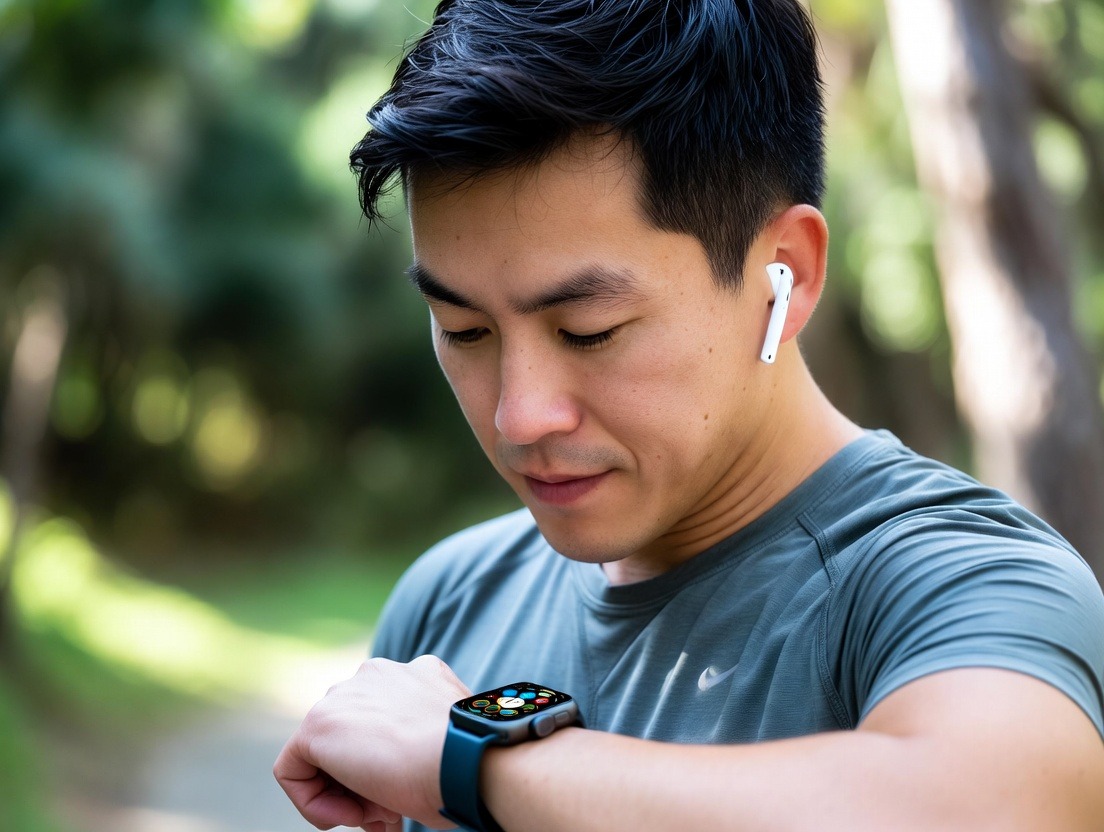
Financial compound interest is boring for the first year. The gains are microscopic. But around year three, the line on the graph begins to bend upward noticeably. The same is true for your wellbeing portfolio. The daily deposits of your morning routine may feel insignificant for weeks. But commit to a 90-day cycle of data-informed practice, and you will witness the bend in the curve.
What to Expect at the 90-Day Mark (With Consistent Practice):
Your wellness ring’s long-term trend graphs are the proof. This is where you move from faith to fact. You can literally scroll back and see the line of your HRV trending upward, the variability in your sleep duration decreasing, the peaks and valleys of your readiness scores smoothing into a higher, more stable plateau.
This 90-day arc is a complete micro-cycle of transformation. It proves the model works. It provides the incontrovertible evidence needed to fuel the next 90 days, and the next. The morning routine is no longer a chore list; it is your daily investment session in the most valuable asset you will ever own. The returns are not just more energy tomorrow, but a fundamentally upgraded human experience for all your tomorrows.
Ninety days proves the concept. Six months transforms your life. This is the inflection point in the compounding curve where the accumulated interest from your daily deposits begins to generate noticeable, self-sustaining momentum. The practices you once had to diligently track and force become as automatic as brushing your teeth. More importantly, they cease to be something you do and start to become part of who you are.
This shift from external behavior to internal identity is the holy grail of lasting change. Your wellness ring is the mirror reflecting this transformation. At the six-month mark, you’re not just looking at better numbers; you’re interacting with a new version of yourself, validated by data.
The Data Tells a New Story:
Identity-Level Shifts:
The language you use changes. It’s no longer “I’m trying to meditate,” but “I’m someone who values a calm start.” It’s not “I have to work out,” but “I’m an active person who moves my body.” This identity layer is the ultimate compounding engine. When actions are tied to self-concept, they require far less willpower. Skipping them creates cognitive dissonance (“This isn’t who I am”), making it easier to maintain the chain.
Your wellness ring supports this by providing an objective identity anchor. You are, demonstrably, a person with a high HRV. You are, provably, a good sleeper. This data-backed identity is incredibly resistant to the old, negative self-narratives. The ring becomes not just a tracker, but a testament.
At the end of one full year of data-informed morning routines, you possess something invaluable: your own longitudinal health study. The annual review is not a casual glance; it’s a formal audit of your wellbeing portfolio. This is where you move from observing trends to calculating your actual ROI on the investment of your time and attention.
Conducting Your Annual Wellness Audit:
This annual audit provides the ultimate motivation: proof of progress. It transforms wellbeing from a vague hope into a managed asset with a clear performance history. It allows you to set goals not based on generic advice, but on your own proven trajectory, helping you create mental wellness goals that are actually achievable. You are now the expert on you.
The compounding returns of a disciplined morning routine do not stay confined to your own body and mind. They ripple outward, influencing every interaction and domain of your life. This is the social and professional dividend of your private investment. Your elevated baseline becomes a rising tide that lifts all boats around you.
In Relationships:
When you start the day centered, hydrated, and emotionally regulated, you show up differently for others.
In Work and Creativity:
This is where the compound interest pays direct career dividends.
Your wellness ring can even track this indirectly. You might notice your “stress” tags decrease during work hours as you become more adept at managing pressure. The stability of your daily scores becomes a foundation for professional excellence and richer relationships. The morning, once a private struggle, becomes your secret source of social and professional leverage.
After a year of foundational practice, your relationship with your wellness ring evolves. It moves from a passive recorder to an active biofeedback tool. Biofeedback is the process of using real-time physiological data to consciously influence that very physiology. Your ring, especially with features like live HRV or breath-coherence guides, turns your morning routine into a masterclass in self-regulation.
Practical Biofeedback Integrations:
This level of optimization creates a hyper-efficient feedback loop. You are no longer guessing what works; you are seeing it in the moment. It accelerates the compounding process by ensuring every action is as effective as possible, fine-tuning your personal “operating system” for peak performance and resilience.

Now, expand the timeline. We are no longer talking about months or a year, but a decade. This is where the true, life-altering power of compounding reveals itself. A daily 1% improvement compounds to become not 365% better, but over 37 times better over a year. Over a decade, the difference is not linear; it is exponential and transformative.
Consider two potential futures:
The Decadal Dividends:
Your wellness ring is the time machine that makes this long game visible. Its long-term datasets are the charts of your thriving future. The morning routine stops being a “self-improvement hack” and becomes a sacred, non-negotiable covenant with your future self—a daily brick in the building of a legacy of vitality.
The final, and perhaps most beautiful, stage of this compounding journey is when your personal abundance begins to overflow into the world. When your cup is not just full, but running over, you have energy, compassion, and clarity to contribute in ways that are meaningful and sustainable. Your morning routine becomes the foundation not just for a successful life, but for a contributive life.
This state of “overflow” is only possible from a foundation of deep resilience. You cannot sustainably pour from an empty cup. The compounded capital you’ve built—physical energy, emotional stability, mental clarity—becomes the resource that fuels your contribution.
How Compounded Wellbeing Fuels Contribution:
In this stage, the wellness ring may recede into the background. The habits are so ingrained, the identity so solid, that you may only check in periodically for tune-ups. The device has done its ultimate job: it has taught you to become the expert, the guardian, and the compassionate investor in your own human potential. The compounding loop is complete. The private discipline of the morning has, through the relentless mathematics of small gains, amplified into a public life of greater purpose, connection, and impact.
Even the most elegant compounding engine can be crippled by a small, persistent leak. In the realm of personal wellbeing, these are the subtle, often overlooked habits and environmental factors that silently withdraw from your capital account, negating the hard-earned gains of your morning routine. Your wellness ring’s true forensic power lies in its ability to detect these leaks. It’s not just about celebrating the green scores; it’s about investigating the red ones to find the hidden culprits.
Common Compounding Leaks & The Data That Exposes Them:
The Neutralization Protocol:
Detection is only half the battle. Your morning routine must evolve to include evening priming to plug these leaks.
By systematically identifying and plugging these leaks, you protect your nightly recovery—the period where the actual compounding math happens. You ensure your daily deposits aren’t being siphoned away, allowing the interest to accumulate unimpeded.
Isolated habits add. Connected habits multiply. The true exponential power of a morning routine emerges not from performing discrete tasks, but from designing them to work in synergistic sequence. This creates a “multiplier effect,” where the outcome of the whole is far greater than the sum of its parts. Your wellness ring helps you identify and optimize these powerful synergies.
The Classic Synergy Stack: Movement + Mindfulness + Fuel
How Your Ring Validates the Stack:
You will likely see a more significant positive impact on your afternoon HRV and stress resilience on days you execute this full stack versus days you do only one or two components. The readiness score for the following day may also be higher, indicating superior recovery and adaptation.
Designing Your Own Synergy Stack:
Use your ring’s data to experiment.
The goal is to chain your habits so that each one naturally cues and enhances the next, creating a frictionless flow that yields a compounded return far greater than any single habit could provide.
All biological systems adapt. The morning routine that gave you fantastic results for three months may suddenly feel stale, and your metrics may plateau. This is not failure; it’s a sign of success—your body has mastered the current stimulus. The principle of “progressive overload” applies to wellbeing just as it does to strength training. To continue compounding, you must intelligently vary the stimulus.
Signs of a Plateau (via Your Wellness Ring):
Strategic Pivots to Reignite Compounding:
The Role of Your Ring: It is your guide through these experiments. After each pivot (give it at least two weeks), analyze the data. Did the new activity improve, degrade, or have no effect on your recovery and readiness metrics? This turns plateau-busting from guesswork into a data-driven science of self-optimization.
One of the most profound compounding effects of using a wellness ring is often the least discussed: the rewiring of your interoception—your sense of the internal state of your body. Most of us are horrifically disconnected from our bodies. We ignore hunger until we’re ravenous, miss early signs of stress until we’re overwhelmed, and push through fatigue until we collapse.
Your ring acts as a real-time interoceptive training device. It gives you an objective, external measure of an internal state.
How the Feedback Loop Works:
This loop—feeling, checking, acting, observing, feeling—repeated hundreds of times, creates a learning cycle. Over months, you begin to internalize the gauge. You start to feel when your HRV is likely low. You develop a bodily awareness of your stress state before it becomes overwhelming. The ring’s data trains your own internal sensing apparatus.
This refined interoception is a superpower. It allows you to manage your energy and emotions proactively. You become the pilot of your own biology, not a passenger subject to its mysterious storms. This is the ultimate form of building mental wellness resilience—it’s not just about having techniques, but about having the precise self-awareness to know exactly when and which one to use.
Your morning routine doesn’t happen in a vacuum. It unfolds within physical spaces—your bedroom, your kitchen, your meditation corner. These environments can either act as catalysts for your compounding habits or as friction points that drain your willpower before the day begins. The principle of “choice architecture” states that by designing your environment wisely, you make the desired behavior the easiest, most automatic path. Your wellness ring data can reveal which environmental tweaks yield the biggest returns.
Key Areas for Environmental Engineering:
Your ring helps you A/B test these changes. Try a week with the phone in the bedroom and a week with it outside. Compare your sleep scores and morning readiness. The data will provide undeniable evidence of what works, turning your home into a lab for compounded wellbeing. This attention to your surroundings acknowledges the powerful environmental factors in mental wellness.
While the morning routine is often a solitary practice, its power can be dramatically amplified by social dynamics. This is the social compound effect: when your individual growth is accelerated and reinforced by connection, accountability, and shared purpose. Your wellness ring can transform from a private tool into a social object that facilitates this.
Strategies for Harnessing the Social Compound Effect:
The social layer adds a dimension of meaning and connection to the data. It transforms the pursuit from a purely self-focused optimization into a relational one, where your growth inspires others and their support fuels yours. The interest compounds not just within you, but between you and your community.
A compounding model must be robust enough to withstand life’s major transitions. What works in your carefree twenties may not suffice in the sleepless infancy of your first child, the hormonal shifts of perimenopause, or the increased recovery needs of your sixties. The genius of a data-informed approach is that it allows your routine to evolve gracefully with you, ensuring you continue to make deposits even when the “account” itself is undergoing structural changes.
Parenthood & Sleep Disruption:
Hormonal Transitions (Puberty, Pregnancy, Menopause):
Aging & Changing Recovery Needs:
In each stage, the ring provides the objective ground truth. It tells you what your body needs now, allowing your morning routine to be a flexible, responsive tool for thriving through all of life’s chapters, not just the convenient ones.
In our zeal for data and optimization, we must pause at a crucial juncture: not everything that compounds is quantifiable. Your wellness ring is a powerful lens, but it is not the entire landscape. The deepest benefits of a consistent morning practice often live in the qualitative, subjective, and spiritual realms. Lasting wellbeing requires that we honor both the data and the mystery.
What Your Ring Can’t Measure (But Your Soul Feels):
The Balanced Approach:
Use your ring as your baseline builder and guardrail. It ensures you get the fundamentals right: enough recovery, managed stress, good fuel. This creates the stable, resilient platform from which these unmeasurable qualities can emerge. You cannot access deep silence if you are sleep-deprived and anxious. You cannot hear your intuition if your mind is a cacophony of notifications and to-dos.
Think of it this way: the quantified data (sleep, HRV, RHR) builds the vessel—a strong, seaworthy ship. The qualitative experiences (peace, joy, meaning, intuition) are the wind in the sails and the destination on the horizon. You need both. The ring expertly helps you build the vessel so you can safely and reliably catch the wind.
We have traversed the theory, the science, the data, and the philosophy. Now, we arrive at the synthesis: building your own, unique, evolving Personal Compounding Protocol (PCP). This is not a static checklist but a dynamic, living system informed by your data, your goals, and your life context.
Step 1: The Baseline Assessment (Week 0)
For one week, live normally but wear your ring consistently. Do not try to change anything. At the end of the week, conduct your first review. Document your averages: Sleep Duration & Score, HRV, RHR, and subjective energy/mood notes. This is your “financial statement” starting point.
Step 2: The Non-Negotiable Trinity (The First Deposits)
Identify the three highest-impact, lowest-friction habits that directly influence your ring’s core metrics. For most, this is:
Step 3: Layer in Your First Synergy Stack
Based on your data and interests, add one connected sequence. For example:
Step 4: Implement the Weekly Review & Plug Leaks
Instituted your weekly audit. During these reviews, actively look for one “leak” to plug in the coming week (e.g., afternoon caffeine, late meals). Use the data to motivate the fix.
Step 5: Quarterly Pivot & Evolution
Every 3 months, conduct a deep audit. Have you plateaued? Are you bored? Choose one element of your routine to change or intensify. This could be the type of movement, the style of meditation, or introducing a hormetic stressor like cold exposure.
Step 6: Annual Integration & Vision Setting
At each year’s end, conduct your full annual audit. Celebrate the bend in the curve. Set a qualitative theme or intention for the next year (e.g., “The Year of Resilience,” “The Year of Creative Energy”) and adjust your PCP to support that broader life goal, perhaps integrating strategies for long-term 10-year investment in your wellness.
Your Personal Compounding Protocol is yours alone. It is governed by your ring’s data, guided by your curiosity, and destined to evolve as you do. It is the practical engine that turns the profound truth of compounding from a concept into your lived reality, day after compounding day.
Your Trusted Sleep Advocate: Sleep Foundation — https://www.sleepfoundation.org
Discover a digital archive of scholarly articles: NIH — https://www.ncbi.nlm.nih.gov/
39 million citations for biomedical literature :PubMed — https://pubmed.ncbi.nlm.nih.gov/
Experts at Harvard Health Publishing covering a variety of health topics — https://www.health.harvard.edu/blog/
Every life deserves world class care :Cleveland Clinic - https://my.clevelandclinic.org/health
Wearable technology and the future of predictive health monitoring :MIT Technology Review — https://www.technologyreview.com/
Dedicated to the well-being of all people and guided by science :World Health Organization — https://www.who.int/news-room/
Psychological science and knowledge to benefit society and improve lives. :APA — https://www.apa.org/monitor/
Cutting-edge insights on human longevity and peak performance:
Lifespan Research — https://www.lifespan.io/
Global authority on exercise physiology, sports performance, and human recovery:
American College of Sports Medicine — https://www.acsm.org/
Neuroscience-driven guidance for better focus, sleep, and mental clarity:
Stanford Human Performance Lab — https://humanperformance.stanford.edu/
Evidence-based psychology and mind–body wellness resources:
Mayo Clinic — https://www.mayoclinic.org/healthy-lifestyle/
Data-backed research on emotional wellbeing, stress biology, and resilience:
American Institute of Stress — https://www.stress.org/


