


The Beginner-Friendly Guide to Morning Routine Optimization Using Your Smart Ring
A beginner's guide to creating a morning routine that is informed by the data your ring collected overnight.
A beginner's guide to creating a morning routine that is informed by the data your ring collected overnight.
%402x.svg)
For generations, the morning routine has been a sacred, yet enigmatic, pillar of human potential. From Benjamin Franklin’s famous early rising to the modern-day "5 AM Club," we’ve been told that how we start our day dictates its trajectory. But for most of us, this advice has felt like guesswork. We stumble out of bed, groggily reach for coffee, and hope for the best, wondering if our chosen rituals of meditation, hydration, or exercise are actually moving the needle.
What if you could stop guessing and start knowing? What if you could see, in clear, quantifiable data, exactly how your 7 a.m. meditation impacted your focus at 11 a.m., or how that 6 a.m. jog influenced your mood and resilience to afternoon stress? This is no longer a futuristic fantasy—it’s the reality made possible by a simple, silent companion on your finger: the smart ring.
Welcome to a new era of intentional living. This guide is not about forcing you into a rigid, one-size-fits-all schedule. It’s about empowering you, a beginner, to use your smart ring’s deep biological intelligence to craft a morning routine that is uniquely, perfectly tailored to your body, your nervous system, and your life. We’ll move beyond generic advice and into the realm of personalized, data-driven optimization. By understanding the signals your body sends overnight and in those first crucial hours, you can transform your morning from a chaotic launch into a precision-engineered, restorative ritual that sets you up for a calmer, more focused, and more resilient day.
Let’s begin this journey from reactive to resilient, using the most personal piece of wearable technology as your guide.
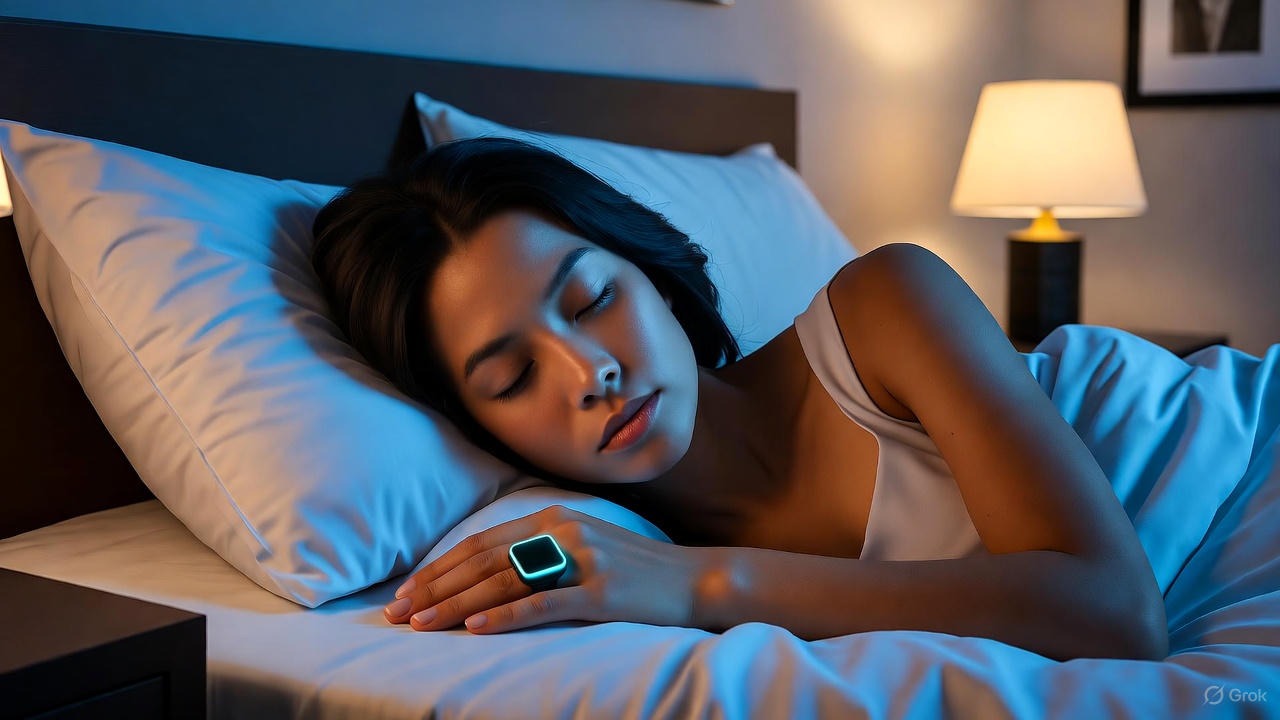
Before you can optimize your morning, you must first learn to listen. Your body has been communicating all night long, compiling a detailed "report card" on your sleep and recovery. This is where your smart ring transitions from a piece of jewelry to your most trusted personal biometrist. While you were asleep, its sensors were quietly tracking a symphony of physiological data. Waking up and blindly launching into a routine without consulting this data is like starting a road trip without checking the fuel gauge or the map.
Your smart ring’s morning dashboard is rich with insight, but three core metrics are your foundational keys to a better day: Sleep Score, Heart Rate Variability (HRV), and Resting Heart Rate (RHR).
Your Sleep Score is a holistic grade for the night. It’s not just about duration; it’s a sophisticated algorithm weighing the balance of deep sleep (physical restoration), REM sleep (mental and emotional processing), light sleep, and wakefulness. A high score suggests your body and mind had sufficient time for their essential repair work. A lower score is your first clue that today might require more gentleness and intention. Perhaps you need to prioritize calming activities or ensure you hydrate more thoroughly.
Heart Rate Variability (HRV) is arguably the most powerful metric for assessing your readiness. It measures the subtle variations in time between each heartbeat. Contrary to what you might think, a higher HRV is better—it indicates a resilient, adaptable nervous system that can smoothly shift between effort (sympathetic "fight or flight") and recovery (parasympathetic "rest and digest"). A strong, high HRV reading upon waking is a green light. It suggests your body is recovered and primed for challenge, exercise, or deep work. A suppressed HRV is a clear, physiological yellow or red light, signaling that your system is fatigued, stressed, or potentially fighting off illness. On these days, optimization means scaling back and prioritizing restoration. To fully grasp what your numbers mean, consider exploring our resource on HRV and stress: understanding heart rate variability numbers.
Your Resting Heart Rate (RHR) is the steady, quiet drumbeat of your cardiovascular system at complete ease. A lower RHR typically indicates better cardiovascular fitness and efficient heart function. Noticeable spikes in your morning RHR can be early warnings. They often point to dehydration, lingering stress from the previous day, an oncoming illness, or poor recovery from intense exercise. It’s your body’s way of saying, "We’re working harder than we should be at rest."
Actionable Step for Beginners: For your first week, make this your only task: Look before you leap. Each morning, before you even sit up in bed, open your smart ring’s app. Don’t judge the numbers, just observe them. Note your Sleep Score, HRV, and RHR. Then, jot down a single word for how you feel: "rushed," "groggy," "calm," "energized." Over just a few days, you’ll start to see the undeniable correlations. You’ll learn that a low HRV and high RHR consistently align with that feeling of dragging yourself through the day. This awareness is the first and most critical step in optimization: moving from being a passenger in your body to becoming its informed pilot.
Armed with your overnight data, we now confront one of the most damaging myths of productivity culture: the universal "early bird" ideal. The truth is, your optimal wake-up time is not a moral virtue; it’s a biological predisposition known as your chronotype. This is your body’s innate timing for sleep and wakefulness, influenced by genetics, age, and other factors. Forcing a night owl to wake at 5 a.m. is like asking someone to perform at their peak in the middle of the night—it’s a recipe for chronic sleep debt and poor recovery, something your smart ring will painfully and clearly reflect in consistently low readiness scores.
So, how do you find your chronotype without a genetics test? Your smart ring is your perfect observational tool. By tracking your sleep patterns over several weeks, you’ll see clear trends.
Optimizing Your Wake-Up Call: Your mission is not to change your chronotype but to align your alarm with its natural rhythm. Use your ring’s sleep trend data to identify your body’s preferred bedtime and wake-up window. Then, employ the ring’s most gentle feature: the smart alarm. Instead of a jarring buzzer at a fixed time, set the smart alarm for a 20-30 minute window. The ring will use movement and heart rate data to wake you during a period of light sleep, the phase when arousal is easiest. Waking from light sleep feels profoundly different than being torn from deep sleep—you feel more refreshed, less groggy (that’s "sleep inertia"), and start your day on a note of biological harmony. This simple act of alignment is a foundational optimization that pays dividends in mood, energy, and cognitive function all day long.

You’ve woken up aligned with your chronotype. Now, the age-old question: What do you put in your body? The wellness world is full of conflicting dogma—lemon water, intermittent fasting, high-protein breakfasts. Your smart ring cuts through the noise by showing you the impact, not just the theory. It turns abstract nutrition advice into personal, verifiable science.
Your body’s hydration status is shockingly visible in your biometrics. Dehydration causes a cascade of measurable effects: your blood volume drops, forcing your heart to work harder, raising your Resting Heart Rate. It also stresses your nervous system, which can lower your Heart Rate Variability. Therefore, if you see an unexpected spike in your morning RHR or a dip in HRV, your very first intervention should be drinking 12-16 ounces of water—not coffee. Wait 20-30 minutes, then check your metrics. You may be surprised to see them begin to normalize, a direct, visible feedback loop on the power of H2O.
When it comes to breakfast, the "what" and "when" are highly individual. Your ring helps you experiment intelligently.
This process transforms eating from a routine into a responsive dialogue. You’re no longer following a blanket rule; you’re conducting personalized nutrition experiments with clear, physiological results. For a deeper understanding of how these daily choices accumulate into your stress profile, our guide on creating a personal stress baseline for accurate tracking is an essential next step.
The morning exercise debate is fierce: yoga vs. running, weights vs. walking. The optimal choice, however, isn’t in a fitness magazine—it’s in your morning readiness metrics. Your smart ring provides the crucial context to answer: Is today a day for challenging my body, or for nurturing it?
This is the principle of stress adaptation. Exercise is a beneficial, acute stressor (eustress). We apply a load (a run, a workout), and our body adapts, becoming stronger and more resilient—but only if we are sufficiently recovered to handle that load. Applying a heavy stressor to an already-stressed, under-recovered system leads to injury, burnout, and chronic fatigue.
Here’s your simple, data-driven framework:
Beginner’s Action Plan: For the next two weeks, let your readiness score dictate your movement. On green days, push yourself. On yellow days, take it steady. On red days, prioritize true recovery without guilt. Observe how this intelligent variation not only prevents burnout but actually leads to better performance on your green days and a greater sense of harmony with your body. This approach is a cornerstone of intelligent training, and you can learn more about its application for athletes in our article on stress tracking for athletes: optimizing training and recovery.
Perhaps the most profound application of your smart ring is in the silent, inner world of your mind. Meditation and mindfulness are no longer abstract practices; with a smart ring, they become tangible, trackable skills with direct feedback. You can literally see your mind grow calmer.
Traditional meditation can be frustrating for beginners. You sit, your mind races, and you wonder, "Am I doing this right?" Your smart ring provides the objective answer by tracking the primary physiological signature of a calm state: an increase in Heart Rate Variability (HRV) and a decrease in Heart Rate (HR). This shift indicates your nervous system is moving into the restorative, parasympathetic-dominant state.
Here’s how to use your ring to build a powerful morning calm practice:
This biofeedback loop is transformative. It turns meditation from a vague "should-do" into a rewarding skill-building exercise. You get positive reinforcement not just from a subjective feeling, but from hard data proving you are positively altering your own biology. On high-stress days, this practice becomes an essential tool to manually downshift your nervous system before the day begins.

Your eyes are not just for seeing—they are the master regulators of your internal clock, your circadian rhythm. The specific type of light they absorb in the morning sends a direct signal to your brain’s suprachiasmatic nucleus (SCN), triggering a hormonal cascade that governs your energy, mood, and sleep propensity for the next 24 hours. Optimizing morning light is one of the most powerful, free tools you have, and your smart ring helps you verify its effects.
The Goal: Get bright, outdoor light (ideally sunlight) into your eyes within 30-60 minutes of waking.
The Science: Morning sunlight, rich in blue wavelengths, suppresses melatonin (the sleep hormone) and boosts cortisol (your natural wake-up alertness signal) at the appropriate time. This sets a strong, clean circadian rhythm, leading to better energy throughout the day and easier sleep initiation at night.
How Your Smart Ring Tracks This: You won’t find a "light exposure" metric, but you will see the profound downstream effects.
Practical Application with Your Ring:
By harnessing morning light, you are using nature’s most potent signal to align your biology. Your smart ring provides the proof, showing you the tangible improvements in sleep architecture and daily resilience that this simple practice creates.
In our hyper-connected world, the most common—and most damaging—morning habit is the "data dump": grabbing your phone and plunging into emails, news, and social media within moments of waking. This habit hijacks your attention, spikes cortisol unnecessarily, and sets your mind in a reactive, scattered state before you’ve even had a chance to center yourself. Your smart ring, ironically, is the perfect tool to help you break this cycle and practice better digital hygiene.
The goal is to create a buffer of at least 60 minutes between waking and engaging with demanding digital content. This protects the fragile, creative, and intentional state of your morning mind.
How Your Ring Informs This Practice:
Check your stress or recovery graph on days where you immediately check your phone. You will likely see a distinct upward spike in stress or a dip in recovery score during that period. Compare this to a morning where you delay digital intake. The physiological difference can be stark. The phone-induced spike is a sympathetic nervous system response to informational overload—your body is reacting to work demands, social comparisons, or negative news as if they are immediate physical threats.
Building a Phone-Free First Hour:
This practice isn’t about Luddism; it’s about sequencing. You are choosing to let your biological data (from your ring) set your agenda before you let the world’s data (from your phone) do it. You start the day proactively, from a place of centered awareness, rather than reactively, from a place of stress. For those whose work demands early attention, learning to track workplace stress without employer surveillance can provide strategies for maintaining these boundaries.
At this point, you have a toolkit of powerful levers to pull: hydration, nutrition, movement, mindfulness, light, and digital hygiene. But optimization is not about perfectly executing all seven every single day. That path leads to overwhelm and abandonment. True, sustainable optimization is about intelligent consistency—showing up regularly and using your data to make smart adjustments. This is where the concept of a personal baseline becomes your most valuable asset.
Your baseline is your unique, physiological fingerprint of "normal." It’s what your metrics look like when you are living in a way that is sustainable for you. No two baselines are alike. Your friend’s HRV of 70 might be their low, while your HRV of 50 might be your high and healthy norm.
How to Establish Your Baseline with Your Smart Ring:
Using Your Baseline to Optimize:
Now, when you implement a new habit—say, a 10-minute morning meditation—you don’t judge it by one day. You track it over 2-3 weeks and ask: Did this habit raise my average baseline? Did my average HRV trend upward? Did my average Sleep Score improve? This long-term, trend-based view is what separates data-driven wellness from neurotic self-tracking.
Consistency is what allows the subtle benefits of good habits to compound and become visible in your biometrics. Skipping your morning light once won’t ruin you, just as doing it once won’t transform you. It’s the repeated, daily signal that reshapes your circadian biology. Your smart ring rewards consistency with clearer trends and more reliable insights, moving you from obsessing over daily numbers to trusting and guiding your long-term trajectory.
Theory is powerful, but implementation is everything. Let’s translate everything you’ve learned into a flexible, dynamic, and personalized Morning Protocol Blueprint. This is not a rigid schedule, but a flow of intention, guided by your daily readiness data.
Step 1: The Daily Check-In (Minutes 0-5)
Step 2: The Foundational Trio (Minutes 5-25)
These are non-negotiable for almost every day, but their emphasis can shift.
Step 3: The Adaptive Choice (Minutes 25-60)
This is where you personalize based on your data.
Step 4: The Protected Buffer (The First 60+ Minutes)
The Golden Rule: This protocol is a servant, not a master. If you wake up late or your child needs you, you can collapse it into its core: Check data, drink water, get light, take three conscious breaths. Even a 5-minute version, done with intention, is a victory.
As you implement your personalized morning protocol, the final step is learning to track your progress wisely. The danger for any beginner with a biometric device is metric myopia—becoming overly fixated on the daily ups and downs, leading to anxiety or discouragement. Your smart ring’s true power is not in the daily point, but in the long-term trajectory. The goal is to use data for insight, not for self-judgment.
What to Track Weekly:
Key Milestones to Celebrate (That Your Ring Can Show):
Remember, the numbers are a compass, not the destination. The destination is how you feel: more energy, calmer reactions, better focus, and deeper sleep. Let the data guide your adjustments, but let your lived experience be the ultimate measure of success. To master this analytical approach, our framework on moving from numbers to insight: an expert framework for interpreting chronic stress is an invaluable resource.
Moving Forward: You now have the knowledge and the framework to transform your mornings from a chaotic beginning into a sacred, science-backed launchpad for your day. This is a journey of self-discovery, guided by the most intimate source of truth available: your own body. In the next portion of this guide, we will delve deeper into advanced integration—exploring how your optimized morning influences your workday productivity, your evening wind-down, and your long-term health outcomes, continuing to use your smart ring as the unifying thread in your journey toward holistic well-being.
Your morning routine is the launch sequence, but the true mission is a successful, resilient day. The data-informed habits you've cultivated in those first hours don't exist in a vacuum; they create a powerful ripple effect that influences your cognitive performance, emotional regulation, and stress resilience until you close your eyes at night. This section is about making that connection explicit and actionable. By understanding how your morning biometrics and choices predict and shape your afternoon, you can learn to course-correct in real-time, turning your entire day into an optimized, responsive flow.
Think of your morning readiness score (that combination of HRV, RHR, and sleep) as your biological starting capital for the day. A "Green" morning means you begin with a full tank of adaptive energy. A "Red" morning means your reserves are already low, requiring careful expenditure. Your smart ring's continuous tracking throughout the day acts as your fuel gauge, showing you in real-time how your choices—meetings, meals, work sprints, commutes—are drawing from or replenishing that tank.
The Critical Link: Morning HRV and Afternoon Performance
Research consistently shows that a higher morning Heart Rate Variability is predictive of better cognitive function, emotional control, and stress management later in the day. It's your buffer against irritability, distraction, and overwhelm. When you see a high morning HRV, you can trust your capacity for deep work and complex social interactions. When it's low, your smart ring is giving you a pre-emptive warning: your neurological "brakes" are weaker. This means you're more likely to react hastily, procrastinate on difficult tasks, or feel overwhelmed by normal demands. The advanced move is to heed this warning. On low-HRV days, schedule your most demanding cognitive work for mid-morning (if possible) when your natural cortisol rhythm provides a slight boost, and use the afternoon for administrative, routine tasks that require less executive function.
Tracking the Stress Curve: Identifying Your Personal Energy Peaks and Valleys
Open your smart ring app and look at a typical day's stress/recovery graph. You'll likely see a pattern—a climb out of the deep recovery of sleep, a period of activity, perhaps a post-lunch dip, and an evening decline. Your goal isn't a flat line (that's impossible and undesirable), but a healthy, rhythmic wave without catastrophic spikes or prolonged troughs.
Use your morning to set the amplitude of this wave. A calm, intentional morning—even just 10 minutes of breathwork after checking your data—can lower the starting point of your daily stress climb, creating a gentler slope. Compare two days in your app: one where you checked email immediately upon waking, and one where you followed your light-hydration-mindfulness trio. The difference in the stress graph's launch trajectory is often the clearest visual proof of your morning routine's power. For a deep dive into interpreting these daily patterns, our guide on interpret your stress tracking data like a pro offers advanced analytical frameworks.
This understanding transforms your day from a series of reactions to a managed energy portfolio. You become the proactive steward of your own nervous system.
This is where wearable technology transcends tracking and becomes a true intervention tool. Many advanced smart rings now offer configurable alerts based on live physiological data. These aren't notifications from the outside world; they are signals from your inner world, and learning to respond to them is the pinnacle of bio-aware living.
The two most powerful alerts for daily optimization are Sustained Stress Alerts and Activity/Inactivity Nudges.
The Sustained Stress Alert: Your Body's "Check Engine" Light
You can typically set a threshold (e.g., 30 minutes) for which your ring will notify you if your stress levels remain elevated. This is invaluable. We often become cognitively absorbed in a stressful task—a tight deadline, a difficult conversation, scrolling through bad news—and lose somatic awareness. Our shoulders are at our ears, our breathing is shallow, but we're mentally "in it." The alert vibrates on your finger, a private, gentle tap from your autonomic nervous system saying, "Hey, we've been in 'fight or flight' for a while. Let's reset."
Your Action Protocol for a Stress Alert:
This turns chronic, draining stress into manageable, acute episodes that you can actively mitigate. Over time, you'll start to recognize the physical sensations that precede these alerts, cultivating the priceless skill of interoceptive awareness.
The Activity Nudge: Breaking the Sedentary Spiral
For those with desk-bound jobs, inactivity is a silent saboteur of afternoon energy and evening sleep. A gentle reminder to move every hour is good, but a smart ring nudge is better because it's based on your personal data. Some devices learn your patterns and can notify you during periods of unusual inactivity. Getting up and moving for just 2-3 minutes—walking, stretching, climbing a flight of stairs—boosts circulation, clears metabolic waste from muscles, and can provide a cognitive refresh more effective than another cup of coffee.
By obeying these biometric alerts, you create a dynamic, responsive dialogue with your body throughout the day. You're no longer waiting until 5 p.m. to realize you're exhausted and wired; you're making micro-adjustments that keep your system in a more balanced, sustainable zone. This practice is a cornerstone of preventing digital burnout for remote workers.
The post-lunch energy dip is a near-universal experience, rooted in our circadian biology. But its severity and duration are not fixed. They are directly influenced by your morning choices and can be expertly managed with afternoon tactics informed by your ring's data.
First, Diagnose the Cause with Your Data.
Before you reach for sugar or caffeine, open your app. Your ring can help you distinguish between different types of "slump":
Prescribe the Solution Based on the Diagnosis.
By using your ring to move from a generic "I'm tired" to a specific diagnosis, you can apply a targeted, effective intervention. This turns the afternoon from a productivity graveyard into a manageable phase that you can navigate with grace and agency. For a comprehensive look at the interplay between your daily rhythms and stress, the article on the relationship between sleep data and stress levels provides essential context.
The circle of optimization is closed at night. The quality of your sleep tonight is arguably the most significant outcome of your entire day—and it is profoundly shaped by the choices you made from the moment you woke up. Your smart ring provides the indisputable evidence of this connection, creating a powerful feedback loop that reinforces positive habits.
The Direct Lines of Influence:
Creating an Intentional Evening Bridge:
Your evening wind-down should consciously respond to the day your ring has recorded. This is the concept of a data-informed evening.
By viewing your day as a continuous loop where morning begets evening and evening begets morning, you stop optimizing in isolated silos. You start cultivating a holistic rhythm where each phase supports the next, with your smart ring as the objective record-keeper, showing you the tangible links in this chain of well-being. For a dedicated exploration of this transitional phase, our guide on evening calm practices: transitioning from work to rest offers a perfect complement to your morning routine.
The daily and weekly views are for tactics and adjustments. The monthly and yearly trend analysis is for strategy and profound insight. This is where you move from being a daily practitioner to becoming the architect of your own long-term health. The patterns that emerge over 90 days or a year tell stories that daily numbers cannot—stories about seasonal affects, the impact of life changes, and the true efficacy of your lifestyle shifts.
How to Conduct a Quarterly Review with Your Smart Ring Data:
This long-term view is liberating. It helps you forgive a bad week because you can see it as a small dip in a generally positive trend. It provides undeniable motivation when you see the line of your health slowly but surely trending upward due to your consistent efforts. It turns abstract concepts like "wellness" into a concrete, visualized journey. To become adept at this kind of analysis, our piece on the aggregate view: monthly & yearly stress trend analysis is an excellent next step.

Every optimization journey hits snags. The excitement of early progress wanes, life gets busy, or you simply stop seeing improvement. This is normal. Your smart ring is not just a success-meter; it's your diagnostic tool for overcoming these very plateaus.
Roadblock 1: "My data is all over the place. I can't see a pattern."
Roadblock 2: "My Sleep Score and HRV have stopped improving."
Roadblock 3: "I'm getting obsessed with the numbers. It's causing anxiety."
By using your ring to diagnose the roadblock itself, you maintain agency. The data becomes a map for getting unstuck, ensuring that your journey of optimization is adaptive, resilient, and sustainable for the long term.
Your smart ring is a powerhouse of autonomic and recovery data, but it is not a medical device. Its ultimate power is often realized when its insights are combined with other data streams and shared with healthcare professionals. This creates a holistic picture of your health that is greater than the sum of its parts.
Creating a Composite Health Dashboard:
Sharing Data with Your Doctor or Coach:
Your ring's trend data is a goldmine for any professional helping you with stress, sleep, fitness, or chronic conditions. A simple printout of a 3-month HRV/Sleep graph is far more informative than saying "I feel tired."
By making your ring data part of a larger conversation about your health, you elevate yourself from a passive patient to an engaged, data-empowered partner in your own care. This is particularly valuable for managing long-term health, as explored in stress tracking for chronic illness: monitoring disease impact.
We stand at the beginning of a revolution in personal wellness. The smart ring on your finger is an early prototype of a future where our environments and routines will adapt to us in real-time, based on a continuous stream of physiological data. The morning routine of tomorrow will be dynamically generated, not statically prescribed.
Emerging Trends Your Smart Ring is Pioneering:
Your Role in This Future:
You are not just a consumer in this future; you are its co-creator. By engaging deeply with your data now—experimenting, correlating, and adjusting—you are training yourself to be fluent in the language of your own biology. You are building the critical skill of data literacy for self-care. This literacy will allow you to wisely adopt new technologies, discern useful insights from noise, and maintain a healthy balance between quantitative tracking and qualitative living.
The goal is not a life dictated by a device, but a life informed by it—a life where technology serves to deepen your self-knowledge, amplify your intentionality, and free up your cognitive and emotional energy for what truly matters. Your morning routine, optimized through the silent guidance of your smart ring, is the daily practice ground for this empowered, aware, and resilient way of being.
The principles of a data-informed morning are universal, but the application is not. A one-size-fits-all approach crumbles against the realities of parenthood, shift work, global travel, or athletic training. This is where your smart ring transcends from a general wellness tool to an indispensable life-adaptation device. By using its objective data as your anchor, you can build a morning routine that flexes and adapts to your unique circumstances, rather than adding another layer of rigidity and potential failure.
Core Mindset Shift: In specialized scenarios, the goal is not to perfectly execute the "ideal" 60-minute protocol. The goal is to identify the one or two highest-leverage, non-negotiable habits that your biometric data confirms are essential for your stability, and defend them with creativity. Your ring’s data will show you what truly moves the needle for you, even when life is chaotic.
If you work nights or rotating shifts, you are living in a state of chronic jet lag imposed by societal demands. The public health data is stark: shift work disrupts sleep, increases stress, and elevates long-term health risks. Your mission is not to "fix" this—the schedule is often non-negotiable—but to manage the disruption and protect your resilience. Your smart ring is your essential ally in this fight.
Understanding Your Unique Data Signature:
A shift worker’s biometrics will look fundamentally different. Your "morning" is after a night shift, and your body’s natural cortisol spike is trying to wake you when you need to sleep. Your ring data will likely show:
Your Shift-Work Optimization Protocol:
For parents of young children, the very concept of a "morning routine" can feel like a cruel joke. Sleep is fragmented and unpredictable. Uninterrupted time is a myth. Here, optimization is not about adding; it’s about intelligent reduction and integration. Your smart ring’s primary job is to help you manage your own depleted recovery and prevent burnout, making you a more present and resilient caregiver.
Reframing the "Morning": Your "morning routine" may be a collection of 2-5 minute micro-habits scattered across two hours, executed amid feeding, dressing, and managing meltdowns. That’s okay. Data helps you prioritize.
Your Parent/Caregiver Optimization Protocol:
Travel, especially across time zones, is a brutal stress test for your circadian rhythm and nervous system. Jet lag is not just feeling tired; it’s a state of internal desynchronization where your organs are in different time zones. Your smart ring provides the roadmap for faster, smoother adaptation.
Pre-Flight Preparation (The Proactive Phase):
In-Flight & Arrival Day Strategy (The Active Phase):
Post-Trip Recovery (The Reset Phase):
By using your ring to navigate travel, you move from being a passive victim of jet lag to an active manager of your circadian adaptation. For a comprehensive guide on maintaining your practices on the go, see how to maintain calm mind practices during travel.
For those who train seriously, the morning readiness score is the most important piece of data you will see all day. It answers the critical question: Can I absorb and benefit from today’s planned training, or will it break me down? This turns training from a pre-planned schedule into a dynamic, responsive dialogue between coach and athlete—where your body is the coach.
The Athlete’s Morning Check-List:
Your Data-Driven Training Decision Matrix:
Advanced Application: Tracking the Training Effect.
Your analysis shouldn’t end in the morning. Post-workout, your ring continues to provide value.
This approach, known as autoregulation, is used by elite athletes worldwide. Your smart ring brings this methodology to the everyday enthusiast, ensuring your fitness journey is effective, efficient, and sustainable. Dive deeper into this with stress tracking for athletes: optimizing training and recovery.
If you manage a chronic health condition (e.g., autoimmune disease, anxiety disorders, chronic fatigue, Long COVID) or are in a period of intense life stress (grief, career change), your morning biometrics are less about optimization for performance and more about essential monitoring for stability and pacing. Your ring becomes a medical-grade diary of your nervous system’s capacity.
Key Mindset: On these journeys, the goal of a morning routine is damage control and intelligent energy allocation. A "good" morning is one where you accurately assess your limits and respect them.
Your Protocol for Fragile Systems:
In this context, the smart ring is a tool of empowerment and advocacy. It provides the hard data to communicate your experience, make informed decisions, and navigate the precarious path of chronic illness or recovery with slightly more grace and foresight. Understanding the broader connection is key, as detailed in stress tracking and inflammation: understanding the connection.
For those whose morning routine is centered on prayer, meditation, mantra, or other spiritual practices, the introduction of a technological device might seem antithetical. However, the intersection can be deeply harmonious. The ring does not measure grace, connection, or divine presence. What it can measure is the physiological vessel through which those experiences are received: your nervous system. A calm, regulated, resilient body is often a more receptive container for spiritual experience.
Using Data to Deepen Practice, Not Replace It:
Avoiding the Pitfall: The key is to never let the data become the goal. The number is not the experience. Use it as feedback, not as a scorecard. If one day your practice feels profound but your HRV didn’t budge, trust the feeling. The data is a servant to your journey, offering a unique lens on the mind-body-spirit connection that was previously invisible.
Now, let’s synthesize everything into a living document: your Personalized Morning Algorithm. This is a dynamic "if-then" flowchart that you create, based on your self-experimentation and ring data, that tells you exactly what to do each morning based on the signals you receive.
Step 1: Define Your Inputs (The "If" Statements)
These are the data points you check upon waking.
Step 2: Define Your Levers (The "Then" Actions)
These are the habit modules you can mix and match.
Step 3: Create Your Algorithm (The Combination)
Here is a simplified example:
IF Readiness = GREEN AND Calendar = Heavy:
IF Readiness = YELLOW AND Feel = <3 (Low mood):
IF Readiness = RED OR Feel = (High pain):
Step 4: Test and Iterate
Live with this algorithm for two weeks. At the end of each day, jot down: Did this sequence work? How was my energy at 11 a.m. and 3 p.m.? Check your daily stress graph. Then, tweak. Maybe on Yellow days, you discover that movement before calm mind works better. Update your algorithm. This document becomes your personal owner’s manual.
By creating this, you externalize the decision-making process. You don’t have to think when you’re groggy; you just follow the protocol you scientifically designed for yourself. It’s the ultimate application of self-knowledge, powered by your smart ring.
Adopting a data-driven morning life doesn’t happen in a vacuum. You may face questions from partners, family, or friends, or internal resistance from your own mind. Being prepared for these hurdles is part of the journey.
"Aren't you becoming obsessed/robotic?"
Partner/Family Disruption:
Internal Resistance & "Falling Off the Wagon":
The goal is integration, not perfection. Your smart ring is there to guide you back to center, not to judge you for leaving it.
Your Trusted Sleep Advocate: Sleep Foundation — https://www.sleepfoundation.org
Discover a digital archive of scholarly articles: NIH — https://www.ncbi.nlm.nih.gov/
39 million citations for biomedical literature :PubMed — https://pubmed.ncbi.nlm.nih.gov/
Experts at Harvard Health Publishing covering a variety of health topics — https://www.health.harvard.edu/blog/
Every life deserves world class care :Cleveland Clinic - https://my.clevelandclinic.org/health
Wearable technology and the future of predictive health monitoring :MIT Technology Review — https://www.technologyreview.com/
Dedicated to the well-being of all people and guided by science :World Health Organization — https://www.who.int/news-room/
Psychological science and knowledge to benefit society and improve lives. :APA — https://www.apa.org/monitor/
Cutting-edge insights on human longevity and peak performance:
Lifespan Research — https://www.lifespan.io/
Global authority on exercise physiology, sports performance, and human recovery:
American College of Sports Medicine — https://www.acsm.org/
Neuroscience-driven guidance for better focus, sleep, and mental clarity:
Stanford Human Performance Lab — https://humanperformance.stanford.edu/
Evidence-based psychology and mind–body wellness resources:
Mayo Clinic — https://www.mayoclinic.org/healthy-lifestyle/
Data-backed research on emotional wellbeing, stress biology, and resilience:
American Institute of Stress — https://www.stress.org/


