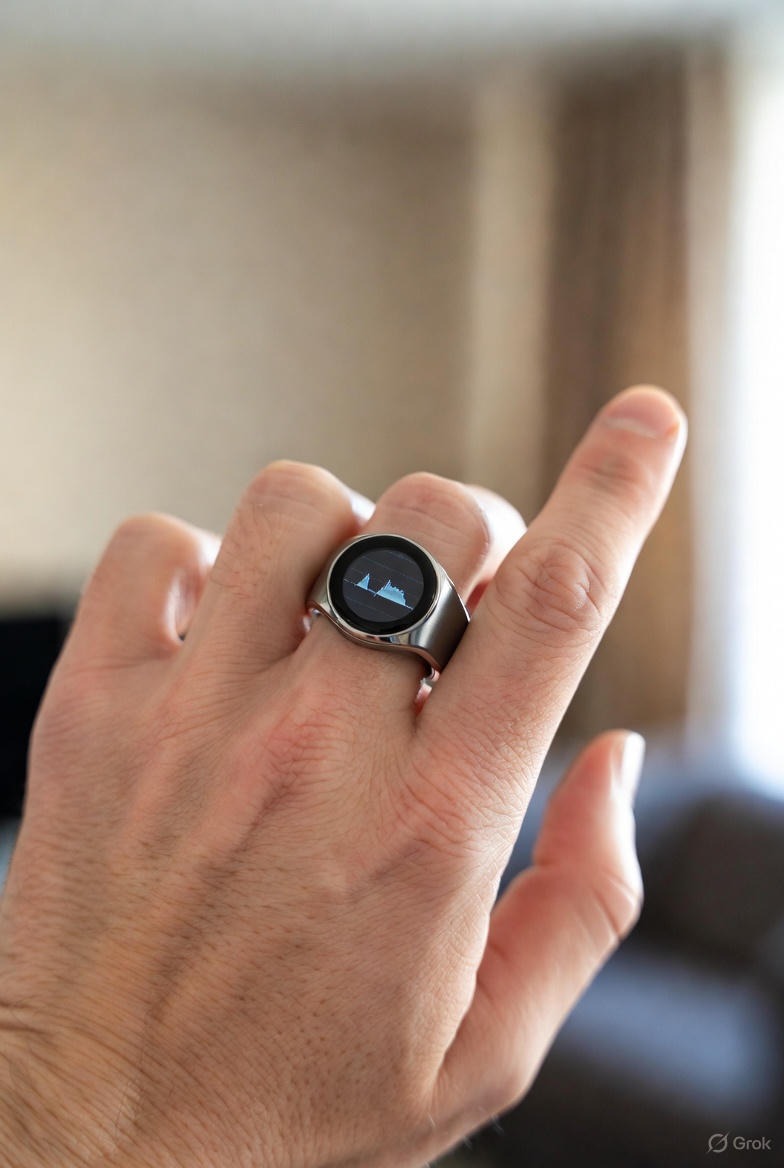
The Beginner-Friendly Guide to Multitasking Reality: Ring-Based Evidence
A beginner's guide to the reality of multitasking, with evidence from your ring's stress and focus metrics.
The Beginner-Friendly Guide to Multitasking Reality: Ring-Based Evidence
You wake up. The first sensation isn’t your alarm; it’s the gentle vibration of your smart ring. Not an alert, but a nudge—a soft pulse reminding you to breathe for sixty seconds before you reach for your phone. As you inhale, the ring’s tiny sensors record the steadying of your heart. You then proceed to simultaneously brew coffee, skim headlines, mentally outline your day, and reply to a late-night text, all before the kettle boils.
This is modern multitasking. Not the mythical "doing two things at once" of productivity lore, but a complex, often chaotic dance of mental and physical demands that defines our reality. We praise it as a skill, curse it as a source of stress, and struggle to measure its true cost on our bodies and minds. Until now, our understanding has been purely anecdotal—a fog of feeling "drained" or "scattered."
But what if you could see the biological ledger? What if you had direct, continuous evidence of how your nervous system actually responds to juggling emails, conversations, deadlines, and life? This is the new frontier of wearable technology, and it sits not on your wrist, but on your finger.
Welcome to a beginner-friendly guide that moves beyond life-hacks and productivity platitudes. This is about leveraging the precise, personal data from the most intimate wearable—the smart ring—to map the hidden terrain of your multitasking life. We’re not just talking about time management; we’re talking about autonomic management. By examining the ring-based evidence—heart rate variability, body temperature, sleep continuity, and activity—we can finally separate multitasking myth from physiological reality. This guide will equip you with the framework to transform from a reactive juggler into a strategic conductor of your own energy, using the unblinking, objective truth recorded on your finger. Let’s begin by uncovering what your body has been trying to tell you all along.
What Is "Multitasking Reality" and Why Does It Need Measuring?
We throw the word "multitasking" around as if it’s a single, definable skill. In reality, it’s a spectrum of cognitive maneuvers. There’s task-switching—the rapid, serial toggling between writing a report and checking Slack. There’s dual-tasking—walking while talking on the phone. And then there’s the background hum of chronic partial attention—the state of perpetual readiness for interruption that defines our digital lives.
This collective experience is your "Multitasking Reality." It’s not just what you do; it’s the unique physiological and psychological environment created by the demands on your attention. For decades, we’ve measured its output (tasks completed) but ignored its internal cost. The result? A global mismatch where we feel busy yet unproductive, connected yet depleted, and are often blindsided by burnout.
The human brain, evolutionarily designed for focused, sequential tasks, pays a price for this constant fragmentation. Neuroscientists call it the "switch-cost effect": each shift of attention consumes glucose and oxygen, releases stress hormones, and introduces errors. You might feel you’re being efficient, but your nervous system is running a series of expensive sprints. Subjectively, you feel stress. Objectively, this manifests in biomarkers—signals like a depressed Heart Rate Variability (HRV), elevated resting heart rate, disturbed sleep architecture, and altered body temperature rhythms.
This is why measurement is non-negotiable. Your perception of "handling it well" can be profoundly disconnected from your body’s reality. You might power through an afternoon of back-to-back video calls and feel fine, only to wonder why you’re irritable, craving sugar, or can’t fall asleep later. The cost was levied, but the statement was hidden. A smart ring acts as a real-time auditor, translating the invisible physiological tax of your multitasking reality into clear, actionable data. It moves the conversation from "I feel stressed" to "My data shows my nervous system was in a heightened state of sympathetic arousal for 3.2 hours today, triggered primarily by task-switching after my 11 AM meeting."
This objective evidence is liberating. It removes guilt, self-judgment, and guesswork. It allows you to see patterns: maybe your "productivity" mornings are actually putting you in a biological hole for the rest of the day. Perhaps that "calm" evening scroll is preventing your nervous system from downshifting. To understand this evidence, we must first look at the sophisticated device that makes it all possible.
The Smart Ring: Your Unobtrusive Window into the Autonomic Nervous System
Forget clunky wristbands or screens that demand your attention. The smart ring represents a paradigm shift in wearables by prioritizing discretion, comfort, and a direct connection to your autonomic nervous system (ANS). Worn on your finger—a location rich with capillary blood flow—it employs photoplethysmography (PPG) sensors to detect subtle, pulse-by-pulse changes in blood volume. This is the gateway to a wealth of data.
The primary treasure is Heart Rate Variability (HRV), the single most insightful metric for gauging your body’s stress response and recovery capacity. HRV measures the millisecond variations between heartbeats. A higher, more variable HRV typically indicates a resilient, adaptable ANS that can smoothly toggle between the "gas pedal" (sympathetic "fight or flight") and the "brake" (parasympathetic "rest and digest"). A low, less variable HRV suggests a system stuck in a stressed or fatigued state. When you multitask, the sympathetic nervous system engages, reducing HRV. The ring tracks this dip and subsequent recovery in real-time, giving you a direct readout of your multitasking toll.
Beyond HRV, advanced rings track:
Resting Heart Rate (RHR): A foundational metric that creeps up with sustained stress or poor recovery.
Skin Temperature: Nocturnal deviations from your personal baseline can signal inflammation, illness onset, or stress-induced dysregulation.
Sleep Stages & Continuity: The ultimate report card for your day. How well and how long you sleep—particularly the amount of deep and REM sleep—directly reflects your nervous system’s ability to recover from daily demands, including multitasking.
Activity & Movement: Passive tracking of steps and active minutes, helping correlate physical exertion with physiological recovery.
The ring’s genius lies in its 24/7 operation and form factor. You sleep with it. You shower with it. You forget it’s there, and that’s the point. It gathers data across the entire circadian rhythm, during work and rest, providing a holistic picture no smartwatch you charge nightly can match. This continuous stream creates your personal biomarker baseline. With this established, the ring doesn't just show daily numbers; it reveals meaningful deviations—the true signal in the noise of your health data.
Reading the Ledger: How Multitasking Manifests in Your Biomarker Data
So, you’re wearing the ring and data is flowing in. What does multitasking actually look like in this stream of numbers? The evidence rarely shows up as a single, spiking metric. Instead, it’s a pattern, a signature written across multiple biomarkers throughout the day and night.
The Acute Signature (During the Act):
HRV Dip: As you enter a period of intense task-switching or cognitive overload—say, managing a work crisis while coordinating family logistics—watch your live HRV (if available) or your post-activity readiness score. A sharp, sustained dip is your nervous system’s direct response to the perceived demand.
Elevated Resting Heart Rate: Your heart may beat 5-15 BPM faster than your true baseline while you’re seated and working, a clear sign of sympathetic arousal.
Increased Skin Conductance: While not all rings measure this, some detect subtle sweat gland activity (galvanic skin response), a classic fight-or-flight signal.
The Chronic Signature (The Aftermath & Cost): This is where the hidden cost is tallied. You may finish work and "relax," but your biomarkers tell a different story.
Slowed HRV Recovery: After a multitasking-heavy day, your HRV doesn’t bounce back to its normal evening level. It remains suppressed, indicating your system is still under tension.
Disrupted Sleep Architecture: This is the biggest tell. You might sleep for 8 hours, but the ring shows:
Prolonged Sleep Onset Latency: It takes you much longer to fall asleep—your mind is still "on."
Reduced Deep & REM Sleep: Your body prioritizes light, fragmented sleep over the restorative stages crucial for memory consolidation and hormonal repair.
Increased Nighttime Wakes: You experience micro-awakenings, often correlated with a spike in heart rate.
Elevated Nighttime Skin Temperature: Stress-induced inflammation or dysregulation can alter your core temperature rhythm, disturbing sleep quality.
Elevated Morning Resting Heart Rate: You wake up with a heart rate closer to your stressed daytime level than your true rested baseline.
Connecting these dots transforms abstract stress into a tangible cause-and-effect chain. For example, the data might reveal: *"The 2-hour hyper-collaborative virtual workshop at 3 PM caused my deepest HRV dip of the day. My sleep data shows it took me 47 minutes to fall asleep (vs. my average of 12), and I got only 48 minutes of deep sleep (vs. my average of 90)."* This is actionable, ring-based evidence.
Beyond Busywork: Identifying Your Personal Multitasking Triggers
Armed with the ability to read your biomarker ledger, the next step is detective work. Not all multitasking is created equal. The goal is to move from "multitasking is bad" to identifying which specific patterns are most costly for you.
Your ring data, especially when paired with simple journaling, allows you to spot your unique triggers. These often fall into categories:
Digital Context-Switching: This is the classic inbox + report + message ping-pong. Look for HRV dips correlated with periods of high digital communication. Is it the endless Slack/Teams scroll? Is it the anxiety of an unanswered email chain? The data will show if this diffuse, digital multitasking is a primary stressor.
Cognitive-Load Multitasking: Juggling complex, unrelated cognitive tasks. Example: preparing a financial analysis while intermittently drafting a creative presentation. This high-level switching may create deeper, longer-lasting biomarker disturbances than simpler tasks.
Emotional Labor Multitasking: Managing your own work while simultaneously managing the emotions or demands of others (a team member, a client, a family member). This can be particularly draining and may show a strong correlation with suppressed evening HRV and poor sleep.
Environmental Multitasking: Working in a noisy, open-plan office or a busy home environment. The constant low-grade effort to filter distractions is a form of continuous multitasking that can keep your nervous system subtly but persistently engaged.
How to Run Your Own Trigger Analysis: For one week, make brief notes in your phone or planner every 2-3 hours: *"10-12 PM: Deep work on project Alpha, minimal interruptions. 2-4 PM: Back-to-back Zoom calls with decision-making."* Then, review your daily biomarker trends. Most ring apps provide a daily timeline or "stress" score graph.
Look for Correlations: Does your "stress" graph spike precisely during your noted multitasking blocks?
Compare Days: Contrast a meeting-heavy day with a focused-work day. What’s the difference in your afternoon HRV, evening calm, and sleep score?
Identify the "Worst Offenders": Which specific meetings, tasks, or times of day consistently align with the largest biomarker disruptions?
This process moves you from vague awareness to precise insight. You’ll stop saying "Work is stressful" and start saying "Weekly planning meetings trigger a stress response that takes me 90 minutes to recover from, based on my HRV data." This specificity is power. For a structured approach to this kind of self-discovery, our article on how to track stress triggers with pattern recognition offers a proven framework.
The Recovery Gap: Why You're Not Recharging (And How to See It)
Here lies the most critical insight for the modern multitasker: the damage is often done not in the chaos itself, but in the failed recovery afterward. We sprint through our days and then attempt to "rest" with activities that keep our nervous systems in a state of low-grade alert—scrolling social media, watching suspenseful TV, having surface-level but draining conversations, or even lying in bed ruminating.
Your smart ring is the ultimate lie detector for pseudo-recovery. It quantifies the Recovery Gap: the difference between your subjective feeling of "winding down" and your body’s actual physiological state of relaxation.
How the Ring Exposes the Gap:
Evening HRV Should Rise, Not Just Stabilize: A healthy nervous system begins a parasympathetic shift in the evening. Your HRV should show a clear upward trend in the hours before bed. If it’s flat or continues to dip, you are not effectively disengaging. That evening scroll through work emails or the news? It’s likely keeping you sympathetically engaged.
The Pre-Sleep Heart Rate Tell: Your resting heart rate should descend to its nightly low in the 60-90 minutes before bed. If it remains elevated, your body is still in a state of readiness, not preparation for repair.
Sleep Data is the Final Verdict: You cannot cheat sleep. The quality of your sleep is the definitive measure of whether you closed the recovery gap. A night of fragmented, light-dominant sleep after a "chill" evening is your ring’s clear report: your recovery activities failed.
Common Recovery Gap Activities (The Usual Suspects):
Digital Leisure: The blue light and engaging content of TVs, phones, and tablets are neurological stimulants, not depressants.
Late-Alcohol or Heavy Meals: These force your body into digestive labor, raising heart rate and disrupting sleep cycles.
Venting or High-Conflict Conversation: Re-hashing the day’s stress keeps the emotional and physiological experience active.
"Productive" Hobbies: Turning your hobby into a performance metric or a side-hustle can negate its restorative benefit.
Closing the recovery gap is the single most effective way to build resilience against multitasking demands. It’s about active, intentional down-regulation. For practical techniques designed to bridge this gap, explore our guide on evening calm practices for transitioning from work to rest. The goal is to align your evening actions with the biomarker outcome you seek: a smooth, timely descent into restorative sleep.
Strategic Singletasking: Using Data to Build Focused Blocks
Once you’ve identified your costly triggers and are working to close your recovery gap, you can proactively redesign your day. This is where we move from passive tracking to active optimization. The goal isn’t to eliminate multitasking (an impossible feat in modern life) but to contain it, buffer it, and prioritize its opposite: deliberate, deep focus, or "singletasking."
Your ring data provides the empirical justification and the blueprint for this redesign.
Step 1: Find Your Biological Prime Time. Review your weekly data. Is there a time of day when your morning readiness score is consistently highest, or your resting heart rate is naturally lowest? For many, this is the 2-4 hours after fully waking. This is your Prime Focus Window. This is not the time for checking email or sitting in status meetings. This is sacred time for your most demanding, cognitively intensive work. Use your ring’s daytime stress graph to defend this time; you’ll see the proof that focused work here creates less physiological strain than the same work done later.
Step 2: Schedule "Switch-Blocks," Not Constant Switching. Instead of reacting to interruptions all day, batch your communication and administrative tasks into designated, time-bound "Switch-Blocks"—perhaps 30-45 minutes mid-morning and mid-afternoon. Your data will likely show that a concentrated period of switching, while stressful, has a cleaner, more recoverable biomarker signature (a single dip and recovery) than the chronic, low-grade stress of being perpetually "on."
Step 3: Implement Data-Driven Buffers. After a known high-stress activity (a big presentation, a difficult conversation, a switch-block), schedule a 15-25 minute buffer. Do not fill it. Use it for true physiological recovery: a walk without your phone, deep breathing, looking out a window. Check your ring’s recovery metrics afterward. Does your HRV begin to climb back? Does your heart rate settle? This tangible feedback will reinforce the habit. You are literally watching your nervous system reset.
Step 4: Respect the Transition Ritual. Your commute, even if it’s a walk from your home office to your living room, is a critical threshold. Use a 5-10 minute ritual to signal the end of "work mode." This could be shutting down your computer, reviewing your accomplishments, and doing a short breathing exercise. The goal is to initiate the parasympathetic shift before you engage with your personal life. This directly closes the recovery gap. To build a personalized ritual, our resource on micro-calm practices for finding peace in everyday moments is filled with ideas.
By using your biomarker data to strategically structure focused blocks, you move from being a victim of your day’s demands to being an architect of your own cognitive and physiological flow.
The Sleep-Multitasking Loop: How Tomorrow's Focus Is Decided Tonight
The relationship between multitasking and sleep is not a one-way street of "stress ruins sleep." It’s a vicious, self-reinforcing cycle—a loop that can only be broken with evidence.
The Downward Spiral:
A day of high cognitive load and task-switching elevates sympathetic tone and cortisol.
This biochemical and neurological activation makes it difficult to initiate and maintain deep, restorative sleep.
Poor sleep—specifically, reduced deep (NREM) and REM sleep—impairs prefrontal cortex function the next day.
A compromised prefrontal cortex means reduced executive function: worse focus, impaired emotional regulation, poorer decision-making, and a significantly lowered threshold for distraction.
You become more reactive, less strategic, and default to inefficient, stressful multitasking patterns.
This leads back to point 1, and the loop tightens.
Your smart ring illuminates every link in this chain. It shows the high stress scores of the day, the prolonged sleep onset and reduced deep sleep of the night, and the low "readiness" or "recovery" score the following morning. It provides the missing proof that your "bad focus day" wasn't a moral failing; it was a physiological inevitability given the prior 24-hour cycle.
Breaking the Loop with Evidence: The loop is broken by intervening at any point. The ring tells you where to intervene most effectively.
If your sleep is consistently poor despite "calm" evenings: The issue may be unresolved daytime stress. Your intervention should focus on strategic recovery buffers and transition rituals earlier in the day.
If your daytime stress is high despite "good" sleep: Look at sleep quality, not just duration. You may need more deep sleep. Your intervention should focus on sleep hygiene—cooling the room, absolute darkness, and perhaps adjusting the timing of your last meal or exercise based on what your temperature and resting heart rate data suggest.
If your morning readiness is perpetually low: This is the loop in full swing. You need a dual intervention: protect your sleep and ruthlessly prioritize strategic singletasking the next day to avoid overloading a compromised system.
Understanding this loop is fundamental to managing your multitasking reality. For a detailed analysis of how these two pillars of health interact, delve into our article on the relationship between sleep data and stress levels. Mastering this connection turns sleep from a passive state into an active tool for cognitive performance.
Calm as a Cognitive Strategy: Measured Practices for Mental Clarity
In the context of multitasking, "calm" is often dismissed as a luxury or a vague wellness goal. Through the lens of biomarker data, calm is recast as a non-negotiable cognitive strategy. It is the deliberate, practiced down-regulation of the nervous system to restore executive function. It’s maintenance for your brain’s operating system.
Your smart ring allows you to move beyond generic meditation apps and find the type and duration of calm practice that delivers measurable, physiological results for you.
Measuring the Effectiveness of a Calm Practice: Don't just meditate for 10 minutes and hope it worked. Use your ring to verify.
Take a Before Snapshot: Sit quietly for one minute before starting. Note how you feel, or simply look at your live heart rate on the app if available.
Practice: Engage in your chosen method (focused breathing, guided meditation, mindful walk).
Review the After Data: Check the "stress" or "HRV" graph for the period during and 10-15 minutes after your practice. What do you see?
A Positive Result: A noticeable dip in your stress graph, a lowering of your heart rate, or a rise in your HRV. This is objective proof of a parasympathetic shift.
A Neutral/Negative Result: A flat or even elevated stress graph. This doesn't mean you failed! It means that particular practice, at that time, in that way, didn't trigger the desired physiological response for you. It’s data, not judgment.
Using Data to Find Your Practice:
If your stress graph is chronically high: You may need more somatic (body-based) practices initially, like deep, slow diaphragmatic breathing or gentle yoga, to directly influence the nervous system.
If you struggle with focus during practice: A short, guided meditation may provide the necessary structure. To decide, read our comparison of guided vs. unguided calm practices.
If you have no time: The data proves that even 60-90 seconds of focused breathing can create a measurable dip. This is the foundation of a micro-practice strategy.
By treating calm as a measurable skill, you build a toolkit of verified techniques. Before a high-focus block, a 3-minute breathing exercise that you know lowers your heart rate by 8 BPM is a powerful cognitive warm-up. After a stressful meeting, a 5-minute mindfulness walk that you know boosts your HRV is an effective system reset. You stop guessing and start engineering your mental state.
The Long-Term Trend: From Chronic Stress to Sustainable Resilience
The true power of ring-based evidence isn't in daily hacks, but in the long-term narrative it reveals. Over weeks and months, your data aggregates into a story about your trajectory. Are you trending toward chronic dysregulation and burnout, or toward greater resilience and adaptability?
Reading the Long-Term Trends:
The Warning Story (Toward Burnout):
HRV Trend: A gradual, downward slope in your weekly average HRV.
Resting Heart Rate Trend: A gradual, upward creep in your weekly average RHR.
Sleep Trend: Decreasing sleep duration or quality scores, with more frequent "poor sleep" flags.
Recovery Scores: Consistently low "readiness" or "recovery" scores, even after weekends. This pattern indicates your system is not getting enough meaningful recovery to offset the cumulative load. It’s the biomarker precursor to exhaustion, illness, and decreased performance. To understand this critical transition, our article on moving from reactive to resilient: the neurological journey of developing calm explores the science behind this shift.
The Resilience Story (Sustainable Adaptation):
HRV Trend: A stable or gently rising weekly average, with deeper but shorter dips during stress and faster, more complete recoveries.
Resting Heart Rate Trend: A stable or gently lowering weekly average.
Sleep Trend: Stable, high-quality sleep that acts as a reliable reset.
Recovery Scores: Generally high scores that correlate well with your subjective feeling of readiness. This pattern shows a system that experiences stress (which is normal) but has the capacity to handle it and return to baseline efficiently. This is the foundation of sustainable high performance.
Using Trends for Course Correction: Don’t wait for burnout. A monthly review of your trends is your most powerful strategic tool.
Set aside 20 minutes each month to look at your ring app’s monthly or weekly aggregate view.
Ask: What is the overall direction? Are the lines for HRV, RHR, and Sleep moving in a favorable direction?
Correlate with life events: Did a new project start when your HRV began to trend down? Did a new evening routine precede an improvement in sleep scores?
Make one small adjustment: Based on the trend, choose one intervention. If HRV is down, maybe you need to protect one more night of sleep per week. If RHR is up, maybe you need to incorporate a daily 10-minute walk. Our guide on how to interpret your stress tracking data like a pro provides a framework for this analysis.
This long-view turns the ring from a daily reporter into a strategic advisor, guiding you toward a lifestyle that supports focus and well-being over the long haul.
The Social Synchrony Factor: How People Drain or Restore Your Energy (And How to Track It)
Multitasking isn’t limited to screens and tasks. A profound, often overlooked dimension is social multitasking—the cognitive and emotional labor of managing multiple relationships, conversations, and social cues, often while doing something else. The Tuesday morning stand-up call where you’re also planning dinner. The family text thread buzzing during a work presentation. The evening where you’re physically with loved ones but mentally reviewing your to-do list.
These interactions are not neutral. Every social exchange carries a physiological cost or credit. Your smart ring, by capturing the immediate aftermath of social engagement, can help you distinguish between energizing synchrony and depleting dissonance.
How Social Interactions Appear in Your Biomarker Data:
The Drain Signature: After a conversation or meeting that felt tense, conflict-avoidant, or emotionally taxing, look for:
A suppressed HRV for 60+ minutes post-interaction.
An elevated resting heart rate that doesn’t settle.
A corresponding dip in your "body battery" or readiness score. This is your nervous system signaling that the interaction was perceived as a threat or a high-cost expenditure. It’s social multitasking with a high biological tax.
The Restoration Signature: After a conversation that felt easy, connecting, and supportive, you may see:
A quick return to baseline or even a slight boost in HRV.
A calming, descending heart rate.
An improved sense of "recovery" in your metrics. This is synchrony—a state of social safety that activates the parasympathetic nervous system and can be more restorative than solitude.
Applying the Evidence to Your Social Landscape: Use your ring data to conduct a social audit over a few weeks.
Tag Your Interactions: Make a simple note after key social blocks: "Lunch with Jane," "Weekly sync with marketing team," "Evening call with parents."
Review the Correlation: Check your stress graph for the hour following each. Does a specific colleague's name consistently appear next to a stress spike? Does time with a certain friend correlate with a calming trend?
Identify the Patterns: Are one-on-one conversations less taxing than group settings? Are video calls more draining than in-person meetings for you? The data is objective; it bypasses your social narratives and tells you what your body experiences.
This evidence empowers you to be strategic with your social energy—a critical component of your multitasking reality. You can schedule rejuvenating interactions after high-stress work blocks, or buffer draining but necessary conversations with recovery time. For those in relationships, this data can transform dynamic discussions. Learn how in our guide to stress tracking for couples: monitoring relationship health.
Environmental Design for Focus: Using Biomarkers to Optimize Your Spaces
Your multitasking reality is not lived in a vacuum. It unfolds in physical spaces—a home office, a coffee shop, an open-plan floor, a kitchen. These environments are not passive backdrops; they are active participants in your cognitive load, constantly sending signals to your nervous system. Noise, clutter, lighting, and even temperature can act as constant, low-grade tasks demanding your attention.
Your smart ring provides the feedback to design environments that support focus, rather than fracture it.
The Environmental Stressors Your Ring Can Detect:
Acoustic Chaos: Intermittent, uncontrollable noise (construction, loud conversations, traffic) is a notorious focus-killer. It triggers the orienting reflex, forcing micro-shifts of attention. Your ring may show a higher average stress score or more frequent small HRV dips during work periods in noisy environments compared to quiet ones.
Visual Noise & Clutter: A disordered visual field competes for cognitive resources. Your brain is subtly working to filter and ignore. This sustained, low-level effort can manifest as a slightly elevated resting heart rate or a suppressed HRV over a long work period.
Thermal Discomfort: Being too warm can induce lethargy; being too cold can create tension. Both force your body to use energy for thermoregulation. Nighttime temperature deviations, tracked via skin temperature, are a direct sleep disruptor, but daytime discomfort also has a cost.
Digital Proximity: The mere presence of a smartphone, even face-down, has been shown to reduce cognitive capacity. Your ring can’t measure this directly, but it can measure the cumulative effect of a day working with versus without the phone in easy reach.
Conducting an Environmental Audit with Your Ring:
Test One Variable at a Time: Work from a tidy desk for two days, then a cluttered one for two. Compare your average afternoon stress scores and sleep data.
Compare Locations: Work from a library vs. a busy cafe. Note the difference in your biomarker stability. Does your graph look like a calm meadow or a jagged mountain range?
Experiment with "Deep Work" Conditions: Use noise-cancelling headphones with white noise for a full morning. Does your stress graph show fewer micro-dips? Does your post-work recovery happen faster?
Optimize for Sleep: Your nighttime skin temperature data is a direct guide. Is your room cool enough? Do late snacks cause a temperature spike and a restless sleep graph?
The goal is to create cues for concentration. Just as your ring gives you a nudge to recover, you can design your environment to give you continuous, subtle nudges toward focus. A clear desk, controlled sound, and optimal lighting tell your nervous system, "This is a place for one thing at a time." For individuals working from home—where work and personal life multitasking collide—this design is crucial. Find strategies in our article on stress tracking for remote workers: preventing digital burnout.
The Fuel Factor: How Nutrition Multitasking Impacts Your Brain and Body
We often commit one of the most common acts of multitasking: eating while working. Scrolling emails over lunch, gulping coffee during a call, snacking while drafting a report. This "nutrition multitasking" has a dual cost: it impairs both digestion and cognition. Your body cannot optimally process fuel while in a stressed state, and your brain cannot focus deeply while managing the task of eating.
Your ring’s data, particularly around glucose management (indirectly through HRV and heart rate) and sleep, can reveal the impact of your fueling habits on your multitasking capacity.
The Physiology of "Desk Dining": When you eat in a sympathetically dominant (stressed) state, blood flow is directed away from the digestive system and toward the muscles and brain. This leads to inefficient digestion, potential bloating, and blood sugar spikes and crashes. The subsequent crash—a drop in glucose—directly impairs prefrontal cortex function, making you more impulsive, distractible, and prone to errors… leading to more stressful, fragmented work.
Ring-Based Evidence of Poor Fuel Timing & Quality:
Post-Lunch Crash, Quantified: A large, carbohydrate-heavy meal eaten quickly at your desk can lead to a significant dip in HRV and a rise in resting heart rate 60-90 minutes later, coinciding with the classic 2 PM slump. Your stress graph will show a major dip, not from mental work, but from digestive labor.
Stimulant Dependency: That third coffee during an afternoon slump? Check your heart rate. If it’s already elevated from stress, caffeine adds a cardiovascular load. Your sleep data will show the consequence: prolonged sleep onset and reduced deep sleep due to caffeine’s long half-life.
Evening Eating & Sleep Disruption: A late, heavy meal forces your body to digest overnight. Your ring’s skin temperature and resting heart rate data will likely show elevated levels during the first half of your sleep, and your deep sleep portion will be truncated.
Using Data to Build Smarter Fueling Habits:
Practice Singular Eating: For one week, commit to taking a 20-minute lunch break away from all screens. Just eat. Afterwards, note your energy and check your ring’s stress graph for the subsequent hours. Does the post-lunch crash diminish?
Correlate Caffeine with Sleep: Note your last coffee time and compare it to your sleep onset latency (the time it takes to fall asleep) over a week. Your data will give you a personal cutoff time.
Test the Protein vs. Carb Breakfast: Try two different breakfasts on similar workday mornings. Does a high-protein, healthy-fat breakfast lead to more stable stress/energy scores throughout the morning compared to a sugary cereal or toast?
Hydrate for HRV: Dehydration thickens blood and increases heart rate. Notice if days with higher water intake correlate with a slightly higher HRV or better recovery scores.
By making your fueling habits singular and intentional, you stop multitasking your metabolism. You give your body the calm state it needs to properly convert food into sustained energy, which in turn provides the stable biochemical foundation your brain needs for focused work. For a deeper look at how stress and a key bodily system are linked, explore the connection between stress tracking and gut health via the vagus nerve.
Digital Minimalism, Backed by Biomarkers: A Data-Driven Detox
Digital multitasking is the core of the problem. Our devices are engineered to fragment attention. A digital detox is a popular prescription, but willpower-based approaches often fail because the cost feels abstract. Ring-based evidence makes the cost concrete, providing a compelling, personal reason to change your digital habits.
This isn’t about rejecting technology; it’s about intentional engagement versus compulsive reaction. Your data shows you the difference.
How Digital Multitasking Shows Up in the Data:
The Notification Spike: Feel a buzz, glance at your phone, see a stressful email. This micro-event can cause an immediate, measurable spike in heart rate and a dip in HRV. Over dozens of times a day, this creates a jagged, high-stress biomarker profile.
The Doomscroll Drip: Passive, endless scrolling through social media or news creates a state of chronic partial attention and often induces low-grade anxiety. This may manifest as a sustained, moderate elevation in your stress score throughout the evening, preventing the necessary wind-down.
The Tab Tax: Having 25 browser tabs open represents 25 unfinished cognitive tasks. The mental weight of this can suppress your HRV baseline, as your brain subconsciously tracks these "open loops."
A Measured Approach to Digital Minimalism:
Establish Your Baseline: For 3 days, use your phone and computer as you normally would. Note your average daily stress score and your sleep scores.
Run a Focused Experiment:
Turn Off Non-Essential Notifications: For 48 hours, disable all social, news, and even email push notifications. Check these apps intentionally 2-3 times per day.
Single-Tab Sprints: For one morning, use a browser extension to limit yourself to 3 open tabs. Work in 45-minute sprints.
Phone-Free First Hour & Last Hour: Keep your phone out of the bedroom and away for the first and last hour of your day.
Measure the Difference: Compare your biomarker data during the experiment to your baseline.
Is your daytime stress graph smoother, with fewer sharp spikes?
Does your evening stress score drop more rapidly?
Do your sleep scores improve?
Adopt What Works: Let the data guide your new defaults. If turning off notifications lowered your average stress by 15%, that’s a permanent change. If the phone-free last hour improved your sleep onset by 20 minutes, that’s a new ritual.
The evidence turns digital minimalism from a moralistic "should" into a practical, self-interested "because." You’re not depriving yourself; you’re choosing a lower-stress, higher-focus physiological state. For those who worry about missing out, this data-driven method provides clear feedback on what you’re gaining: calmer days and more restorative nights. To start small, our piece on micro-calm practices for finding peace in everyday moments offers digital disconnection techniques that pair perfectly with this audit.
The Rhythm of Rest: Scheduling Downtime Like a Critical Meeting
In a culture of busyness, rest is treated as an optional leftover—what you do when everything else is done. Ring-based evidence proves this is backwards. Rest is not the absence of work; it is an active, generative state essential for cognitive repair, memory consolidation, and emotional regulation. Without scheduled, protected rest, your ability to multitask effectively plummets.
Your data shows that recovery doesn’t happen automatically. You must create the conditions for it, with the same intentionality you apply to a work project.
What "Ineffective Rest" Looks Like in Data:
The Weekend Rebound Crash: You work at high intensity all week, suppressing recovery. On Saturday, you crash—sleeping in late but feeling groggy. Your ring shows long sleep duration but poor sleep quality (low deep/REM), and your HRV on Sunday morning is still low. You haven’t recovered; you’ve collapsed.
The "Restful" Hobby That Stresses: If your hobby has performance metrics, social pressure, or a steep learning curve, it may not be restorative. A Saturday afternoon spent in a high-stakes competitive game or a frustrating DIY project could show a stress graph identical to a workday.
The Non-Restful "Rest Day": A day with no work but also no structure, filled with errands, chores, and indecision, can be physiologically chaotic. Your stress graph may show constant, small spikes, never achieving a prolonged, low-stress plateau.
Designing Your Circadian Rhythm with Data:
Identify Your Natural Ultradian Rhythms: The human brain cycles through ~90-minute periods of higher and lower alertness. Look at your daytime stress/energy graph. Do you see natural dips roughly every 90 minutes? These are your body’s signals for a micro-break.
Schedule "Recovery Micro-Blocks": Place a 5-10 minute break after every 90 minutes of focused work. Use this time for true non-stimulation: gaze out a window, stretch, breathe. Afterwards, see if your next work block starts with a lower stress level.
Protect Your "Recovery Prime Time": Just as you have a biological prime time for focus, you have one for recovery. For most, this is the 60-90 minutes before bed. Use your data to defend this period fiercely. If late screen time disrupts your sleep, this block becomes screen-free. If reading calms you, it becomes reading time. Our guide on evening calm practices for transitioning work to rest is built for this.
Plan Your Week in Recovery Blocks: When planning your week, first block out:
Sleep (non-negotiable, based on your needed duration).
Post-work transition ritual.
One longer recovery block on Wednesday (e.g., a 90-minute walk, a yoga class).
A real weekend Sabbath—a 24-hour period where you engage only in activities that your historical data shows are truly restorative.
By scheduling downtime with the rigor of a CEO, you ensure your nervous system gets the resources it needs to perform. You stop waiting to be exhausted and start proactively building resilience. This rhythmic approach is the ultimate antidote to the chaotic, reactive nature of multitasking. To understand the score that quantifies this, read about the stress recovery score and what it means for your health.
The Mind-Muscle Connection: Physical Activity as a Cognitive Reset, Not Another Task
In the frenzy of multitasking, exercise often becomes just another item on the to-do list—another source of pressure to perform, optimize, and log. This turns a potential recovery tool into another stressor. Your ring data helps reframe physical activity by revealing its true purpose: not as another task to be multitasked, but as the ultimate cognitive and physiological reset.
The type, timing, and intensity of movement have dramatically different effects on your nervous system. A heart-pounding HIIT session during a lunch break may be energizing for one person but could sabotage another's afternoon focus and evening recovery. Your biomarkers tell the real story.
Decoding Movement with Biomarkers:
Overreaching vs. Optimizing: A well-timed, moderate workout should produce a temporary stress response (elevated heart rate, lowered HRV during the activity) followed by a supercompensation effect—a rise in HRV and improved recovery scores hours later. If your post-exercise recovery is slow, your HRV is still suppressed the next morning, and your sleep is poor, you’ve likely overreached. The workout added to your stress load instead of relieving it.
Movement as a Focus Primer: For many, light to moderate movement (a brisk 20-minute walk, gentle cycling) before a focused work block can elevate mood, increase blood flow to the brain, and lower resting heart rate baseline. Check your data: does a pre-work walk correlate with a more stable stress graph during your subsequent deep work?
Movement as a Stress Flusher: After a period of intense cognitive multitasking, deliberate movement can help "metabolize" the stress hormones circulating in your system. A post-work walk, some light stretching, or even a few minutes of dancing can facilitate the shift from sympathetic to parasympathetic dominance. Look for a faster return to baseline HRV on days you do this versus days you go straight from screen to couch.
Building Your Personalized Movement Protocol:
Test Intensity & Timing: For one week, schedule different types of exercise at different times. Try a morning yoga session, a lunchtime walk, and an evening weight session. Note not just how you feel, but what your ring reports:
How did your afternoon stress scores look after each?
How was your sleep on each of those nights?
What was your next-morning readiness score?
Embrace "Non-Exercise" Activity: Your ring tracks all-day movement. Notice the difference between a day with frequent, small movement breaks (walking to get water, stretching) and a day of prolonged sitting. Which pattern yields a lower average resting heart rate and a better sleep score?
Listen to Your Recovery Score: Let your morning readiness or recovery score guide your exercise intensity for the day. A low score is your body’s request for gentle movement (walking, mobility) or complete rest, not another punishing workout. A high score is permission to go harder.
By using your data to align movement with your body's needs, you stop multitasking your fitness. Exercise becomes a precise tool for managing your multitasking reality—a way to clear the cognitive static and reset your nervous system for the next challenge. For athletes and active individuals, this precision is key. Learn more in our dedicated piece on stress tracking for athletes: optimizing training and recovery.
Decision Fatigue and the Biomarker Barometer: Choosing When to Choose
Every decision—from what to wear to which strategic initiative to prioritize—depletes a finite pool of cognitive resources. This is decision fatigue. By late afternoon, after hundreds of micro-decisions, your willpower and judgment erode. You become more impulsive, more distractible, and more likely to default to easy, often unhealthy, choices (including the choice to multitask chaotically).
Your smart ring can serve as a biomarker barometer for your decision-making capacity, alerting you to the point of depletion before your choices deteriorate.
How Decision Fatigue Manifests in Data:
The Progressive Drain: On a day filled with back-to-back meetings (each requiring social decisions) and constant task prioritization, you may see a steady, stair-step decline in your HRV or a steady climb in your stress score from morning to late afternoon. This is the physiological signature of resource depletion.
Poor Evening Choices: Decision fatigue often leads to poor choices about recovery: ordering junk food instead of cooking, mindless scrolling instead of reading, staying up too late. These choices then reflect in poor sleep data, creating a negative cycle for the next day.
Reduced Resilience: When decision-fatigued, small stressors provoke larger biomarker reactions. A minor frustration at 4 PM might cause a heart rate spike twice as large as the same frustration would at 10 AM.
Strategies to Preserve Decision-Making Energy (Backed by Data):
Routinize the Inconsequential: Use your morning high-focus time to eliminate trivial decisions for the rest of the day. Have a work uniform, a standard healthy breakfast and lunch, and a fixed morning routine. This conserves cognitive energy for what matters. Track the effect: do days with strong morning routines lead to more stable afternoon stress scores?
Schedule High-Stakes Decisions Early: Place meetings requiring tough calls, creative brainstorming, or complex analysis squarely in your biological prime time, as identified by your ring. Your data shows this is when your prefrontal cortex has the most resources.
Implement a "Decision Curfew": Set a time in the late afternoon after which you make no more consequential decisions. Defer non-urgent choices until the next morning. Notice if implementing this curfew reduces your evening stress level and improves your sleep onset.
Use Your Biomarker Barometer: When you see your stress score climbing and your HRV dipping steadily through the afternoon, recognize it as a flag for decision fatigue. That is the moment to stop making choices and instead initiate a recovery ritual—a walk, a cup of tea, a few minutes of quiet. This is using data to practice proactive self-care, not reactive collapse.
By treating your decision-making capacity as a precious, measurable resource, you can design your day to protect it. This directly reduces the impulse toward chaotic, low-value multitasking that flourishes when your executive function is depleted. For a deeper look at how stillness supports clarity, explore calm mind and decision-making: clarity through stillness.
The Validation Loop: How Objective Data Transforms Self-Perception
One of the most profound psychological impacts of wearing a smart ring is the breaking of the self-doubt loop. For many, especially high-achievers, the internal narrative is harsh: "I should be able to handle more," "Why am I so tired?" "I must be lazy." This narrative is often disconnected from physiological reality.
Ring-based evidence replaces subjective guilt with objective insight, creating a powerful validation loop: Your lived experience is confirmed by measurable biology.
How the Validation Loop Works:
The "I'm Just Lazy" Myth: You feel exhausted after a day of meetings, despite having no "real work" to show for it. You might chastise yourself for low productivity. Then you check your data and see your stress graph was in the red for 5 hours straight, your HRV was chronically suppressed, and your body was in a prolonged state of sympathetic arousal. The data validates that social and emotional labor is real, taxing work. You weren't lazy; your nervous system was running a marathon.
The "I Can't Handle This" Fear: During a particularly demanding life phase (a big project, a family event), you feel on edge and fear you're crumbling. Your ring data shows your HRV is lower and your resting heart rate is higher than baseline—a clear sign of elevated load. This isn't a character flaw; it's a normal physiological response. The validation allows you to respond with compassion and strategic support (more rest, better nutrition) rather than panic.
The "This Helps/This Hurts" Clarifier: You're unsure if your new meditation app is working, or if that evening tea ritual is helping. The data provides a clear yes or no. Seeing your HRV rise after a practice validates its effectiveness, reinforcing the habit. Seeing no change encourages you to try something else, without self-judgment.
Cultivating Self-Compassion Through Data: This validation is the foundation of sustainable performance. It allows you to:
Advocate for Your Needs: With data in hand, you can confidently set boundaries. "I need to block my mornings for focused work" becomes a biological imperative, not a personal preference.
Celebrate Real Recovery: A high readiness score after a true rest day becomes a victory, countering the cultural guilt around "doing nothing."
Develop Bodily Trust: Over time, you learn to correlate subtle bodily sensations with biomarker shifts. You begin to feel the early signs of sympathetic activation or parasympathetic calm, and you trust those signals.
This shift from self-criticism to curious self-observation is perhaps the greatest gift of ring-based evidence. It fosters a partnership with your body, where you work with your physiology, not against it. For those beginning this journey, our guide on how to start tracking your stress today: a beginner's step-by-step is designed to build this positive, evidence-based relationship from day one.
From Reactive to Proactive: Using Data to Predict and Prevent Overload
Most people manage their energy reactively: they push until they crash, then recover. Smart ring data enables a proactive, predictive model of health and performance. By recognizing patterns, you can see overload coming days in advance and adjust course before you hit a wall.
This predictive power comes from observing trends and deviations, not just daily numbers.
The Predictive Patterns:
The Burnout Trajectory: As discussed, a sustained, multi-week trend of declining HRV, rising RHR, and deteriorating sleep is the clearest early-warning system for burnout. This trend often starts long before you consciously feel "burned out."
The Illness Precursor: A sudden, unexplained elevation in resting heart rate or skin temperature overnight, coupled with a drop in HRV, can signal your body is fighting something off—often 24-48 hours before symptoms appear.
The Recovery Debt Signal: If your recovery score remains low for 2-3 days in a row, despite adequate sleep duration, it’s a signal you have a cumulative recovery debt. Your system needs more than just sleep; it may need lighter days, more calm practices, or nutritional support.
Building Your Proactive Protocol:
Establish a Weekly Review Ritual: Every Sunday, spend 10 minutes looking at your weekly trends in your ring app. Don't get lost in daily noise. Look at the lines for HRV, Sleep Score, and Resting Heart Rate. What is their direction?
Set Personal "Tripwire" Alerts: Based on your established baseline, define your personal warning signs. For example:
*"If my 7-day average HRV drops by more than 10% from my baseline, I will cancel one non-essential social event this week and add two extra meditation sessions."*
*"If my resting heart rate is 5+ BPM above my baseline for three mornings in a row, I will prioritize hydration, electrolytes, and an extra 30 minutes of sleep for two nights."*
Plan Your Week Based on Readiness: On Monday morning, check your readiness/recovery score. Let it influence your plan.
High Score: Green light. Schedule your most demanding, focused work and intense workouts.
Low Score: Yellow light. Plan for administrative tasks, meetings, lighter movement, and an early night. Protect your energy.
Use Data for Life Transitions: When facing a known high-stress period (a product launch, a move, a wedding), you can proactively increase your recovery investments in advance, using your data to ensure you enter the period from a position of strength, not deficit.
This predictive approach transforms you from a passenger to a pilot of your own health. You’re no longer surprised by fatigue or illness; you see them on the horizon and adjust your flight path. For a comprehensive framework on interpreting these long-term patterns, especially concerning chronic stress, review our expert resource on turning numbers to insight: an expert framework for interpreting chronic stress.
The Integration Challenge: Living the Data Without Becoming the Data
A legitimate concern with any form of biometric tracking is obsession—becoming so fixated on the numbers that you increase your anxiety, creating a paradox where the tool for reducing stress becomes a source of it. The goal is integration, not fixation. You want the data to inform your life, not define it.
Signs of Unhealthy Data Fixation:
Checking your app dozens of times a day and feeling anxiety with every fluctuation.
Making punitive lifestyle choices because of a "bad" number (e.g., forcing a workout when exhausted because your activity ring isn't closed).
Ignoring your body's clear subjective signals (like feeling great) because the data says you "should" be tired.
Social withdrawal or excessive rigidity because it might "hurt your scores."
Principles for Healthy Integration:
Data as a Guide, Not a Gospel: Your ring provides one stream of truth—a physiological one. It must be integrated with your subjective truth (how you feel) and your practical truth (what your life requires). If you feel wonderful but your HRV is low, ask curious questions (am I getting sick? dehydrated?), but don't automatically assume the data is the ultimate reality.
Designate "Data-Free" Times: Choose specific times when you will not check your app. The evening wind-down period and the first hour of the morning are prime candidates. Let your body lead during these sensitive transition times.
Focus on Trends, Not Dots: Train yourself to care about the weekly or monthly trend line, not the single data point from this afternoon. One low HRV reading is noise. A week of declining HRV is a signal.
Use the "So What?" Test: Whenever you see a data point that causes concern, ask: "So what? What is a wise, compassionate action I can take based on this?" If the answer is "worry more," let it go. If the answer is "drink a glass of water and take three deep breaths," then do that and move on.
The ring is a tool for increasing interoceptive awareness—your ability to perceive the internal state of your body. The end goal is to eventually use the data to calibrate your own internal senses, so you rely less on the ring and more on your own cultivated bodily wisdom. For a thoughtful discussion on maintaining this balance, read our article on how to track stress without becoming obsessed with the numbers.
Building Your Personal Multitasking Philosophy: A Data-Informed Manifesto
After weeks and months of collecting ring-based evidence, you arrive at a point of synthesis. You are no longer following generic productivity advice. You have conducted a profound personal experiment, and the results allow you to draft your own Personal Multitasking Philosophy—a set of principles and rules that honor your unique physiological design.
This manifesto is your anchor, your decision-making framework when life gets chaotic.
Elements of Your Personal Philosophy:
My Non-Negotiables (The Foundation): These are the daily and weekly practices your data has proven are essential for your resilience. *Example: "Based on my data, I need 7.5 hours of sleep, a 10-minute morning calm practice, and a phone-free last hour before bed. These are non-negotiable, as deviations consistently degrade my focus and mood."*
My Energy Red Flags (The Early Warnings): The specific biomarker patterns that tell you you're off track. Example: "When my resting heart rate is above 58 for two mornings in a row, and my deep sleep is under an hour, I am in a recovery deficit. I will decline evening commitments and prioritize gentle movement and hydration."
My Focus Formula (The Optimal Conditions): The specific environment and timing for your best work. *Example: "My deepest focus occurs between 9 AM and 12 PM in a quiet space with noise-cancelling headphones. I will defend this block from meetings and communications. My data shows multitasking in this block reduces my output quality by an estimated 40%."*
My Recovery Menu (The Reset Toolkit): A short list of activities that your data confirms are truly restorative for you. *Example: "When I need to recover, the following work (in order of efficacy per my data): a 20-minute walk in nature, a 10-minute guided body scan meditation, or 30 minutes of reading fiction. Scrolling social media or watching intense TV does not aid recovery."*
My Permission Slips (The Compassionate Exceptions): Acknowledgment that life happens. Example: "During major life events (travel, family visits, deadlines), my biomarkers will be dysregulated. This is normal and temporary. My goal is not perfect scores, but to return to my foundation as soon as possible after the event passes."
Writing and Using Your Manifesto: Take an hour to write this down. Keep it somewhere accessible. Use it to:
Plan your ideal week.
Make quick decisions that align with your biology.
Communicate your needs to partners, family, and colleagues with clarity and confidence, backed by your personal evidence.
This manifesto is the culmination of your journey from a reactive multitasker to a sovereign conductor of your energy. It represents the marriage of technology and self-knowledge, creating a life that is not just productive, but sustainable and fulfilling. For inspiration on how to sustain this practice over the long term, see our guide on how to deepen your calm mind practice after the first year.
The Future of Focus: Where Ring-Based Evidence Is Taking Us Next
The journey with a smart ring is just the beginning. The technology and our understanding of how to use it are evolving rapidly. The future of managing our multitasking reality lies in even more personalized, predictive, and integrated insights.
Emerging Frontiers in Ring-Based Evidence:
Advanced Biomarker Integration: Future devices may continuously monitor biomarkers like blood glucose trends, cortisol patterns (through sweat), or lactate levels, providing a even richer picture of how cognitive load affects metabolic health. Imagine knowing that your decision-fatigued afternoon slump correlates with a glucose crash, prompting a personalized nutritional suggestion.
Context-Aware AI Coaching: The ring of the future won't just collect data; it will interpret it in real-time context. By integrating with your calendar, it could predict, *"Your stress score typically rises 35% during meetings with this client. Would you like to do a 2-minute breathing exercise beforehand?"* Or, after detecting poor sleep, it could suggest, *"Your data indicates your sleep was disrupted. Consider a lighter workout today and prioritize a 20-minute afternoon walk instead."*
Nervous System Training Games: We could see the development of apps that use real-time HRV feedback for biofeedback training, turning the regulation of your nervous system into an interactive game. You could literally "play" your way to a calmer, more focused state.
Organizational Health Analytics (With User Consent): In forward-thinking workplaces, anonymized, aggregate ring data could help companies design healthier work cultures—identifying meeting fatigue patterns, optimal focus times for the team, and the impact of company policies on collective stress and recovery. This moves workplace wellness from fruit baskets and seminars to data-driven systemic change.
Your Role in This Future: As an early adopter of this technology, you are not just a consumer. You are a pioneer in a new form of self-knowledge. The data you collect and the patterns you discover contribute to a broader understanding of human performance in the digital age. By sharing your insights (anonymously) and demanding ethical, user-centric design from companies, you help shape a future where technology truly serves our well-being, helping us master our multitasking reality instead of being mastered by it.
The ultimate goal is a world where our external tools are so seamlessly aligned with our internal biology that the very concept of "multitasking" evolves. We move from fragmentation to integrated flow, where work, rest, and connection happen in their right rhythm, guided by the gentle, undeniable evidence from within.



%402x.svg)