


Healthy Lifestyle Tips for New Parents: Using Your Smart Ring Despite Sleep Deprivation
Practical health tips for new parents, using ring data even with inconsistent sleep schedules.
Practical health tips for new parents, using ring data even with inconsistent sleep schedules.
%402x.svg)
The first cry. The first swaddle. The first bleary-eyed 3 AM feeding. Welcome to parenthood, where love and exhaustion blend into a potent new reality. In these early, hazy days and weeks, your own health and wellness can feel like a distant memory, a luxury sacrificed at the altar of your newborn’s needs. You’re told to “sleep when the baby sleeps,” but your mind races. You’re advised to eat well, but one hand is permanently occupied. You’re running a marathon on a sleep deficit so profound that basic self-awareness evaporates.
But what if you had a silent, always-on wellness ally on your finger? Enter the smart ring—a sleek, unobtrusive piece of technology designed to cut through the fog of new parenthood with hard data and gentle guidance. This isn’t about adding another item to your to-do list or feeling pressured to “optimize” your already heroic efforts. It’s about harnessing precise, personalized insights to make informed micro-choices that sustain you through this beautiful, demanding chapter.
This guide is for you, the new parent navigating the unpredictable terrain of infant care. We’ll explore how your smart ring can become your most trusted tool for managing energy, understanding your new sleep architecture, regulating your nervous system, and finding slivers of recovery amidst the beautiful chaos. Let’s move beyond simply surviving and discover how to thrive, one data point and one gentle nudge at a time.
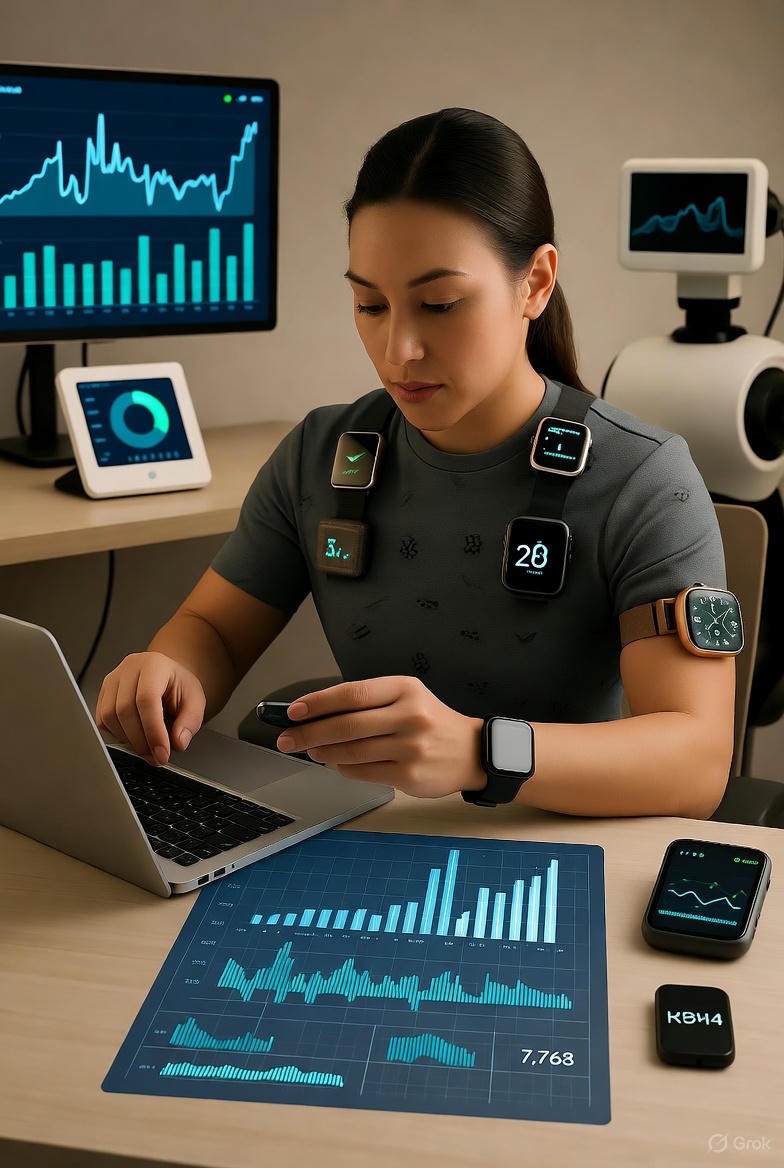
Becoming a parent triggers a profound identity shift, one where your personal metrics—hours slept, meals eaten, moments of calm—suddenly seem irrelevant compared to the weight chart, feeding schedule, and diaper count of your tiny new charge. This creates a wellness paradox: at the exact moment your physical and mental resources are being stretched thinner than ever, your capacity to actively monitor and nurture them plummets to near zero.
You’re operating in a constant state of reaction. The baby cries, you respond. The baby sleeps, you scramble. In this reactive mode, your own body’s signals become background noise. That creeping headache? Probably dehydration. That wave of irrational irritability? Likely a blood sugar crash or a cortisol spike. That feeling of being utterly wired yet exhausted at 2 AM? A classic sign of a dysregulated sleep-wake cycle. Without data, these sensations are just more symptoms to endure in the fog of fatigue.
This is where passive, continuous biometric tracking shines. A smart ring requires no activation, no charging multiple times a day, no conscious engagement. It simply observes what you can’t: your heart rate variability (HRV)—a key indicator of your nervous system’s resilience; your resting heart rate (RHR)—which can subtly elevate with stress or illness; your skin temperature—a clue into hormonal fluctuations or the onset of infection; and your sleep stages—even during those short, fragmented bursts. It collects the objective story your weary mind can’t narrate.
Consider Sarah, a new mother of twins. She felt she was “coping” until her Oxyzen smart ring data showed a steady, week-long climb in her resting heart rate and a plummet in her HRV. The data didn’t judge; it simply presented a trend. It was the objective nudge she needed to recognize that her “coping” was actually a slow burn of systemic stress. With this insight, she could proactively ask her partner for a four-hour block of uninterrupted sleep on the weekend, a decision she would have otherwise felt was “selfish.” The data gave her permission to prioritize recovery.
The goal here is not to create a spreadsheet of parental performance. It’s to translate the invisible labor of your body into a visible, understandable language. When you see a tangible metric dip, it’s not a failure; it’s a piece of intelligence. It tells you, “Today might be a day for the slow-cooker meal, not the elaborate recipe,” or “Perhaps this is the afternoon to accept that friend’s offer to hold the baby while you simply sit in silence.” Your smart ring becomes the objective witness to your effort, helping you shift from helplessly enduring your depletion to strategically managing your energy reserves.
For new parents, the cultural obsession with “8 hours of uninterrupted sleep” becomes a cruel joke. Chasing that ideal leads only to frustration and a sense of failure. The first step to using your smart ring effectively is to radically redefine what “good sleep” means in this season of life. We must move from a model of monolithic sleep to one of sleep architecture—the structure and quality of the sleep you do get, however fragmented.
Your smart ring’s primary gift is breaking your night into actionable data: time spent in Light, Deep, and REM (Rapid Eye Movement) sleep, along with periods of wakefulness. For a parent up every 2-3 hours, total sleep time is a meaningless aggregate. The real insights lie in the composition.
How to Use This Data:
Instead of lamenting “I only got 5 broken hours,” you can analyze: “My deep sleep was actually within normal range last night because I crashed hard after the 9 PM feed. But my REM is severely lacking.” This reframes the problem. The solution might not be more sleep, but protecting the quality of the sleep you get.
This is where strategic napping, guided by your readiness score upon waking, becomes a science. If your ring shows poor sleep with low recovery, a planned 90-minute nap (a full sleep cycle) when your partner is home might be the priority. If your data shows you managed decent deep sleep but woke feeling groggy (likely REM deficit), a 20-minute power nap might be more effective to avoid sleep inertia.
Furthermore, understanding your personal sleep architecture empowers you to make peace with wake-ups. Seeing on your app that the 2 AM wake-up was followed by a solid block of deep sleep can reduce the anxiety and anger that often accompanies being jarred awake. The data transforms an unpredictable night from a series of personal failures into a manageable, if challenging, physiological process. For more on understanding the signals your body sends at night, you might find value in exploring how nighttime routines signal your body it's time to sleep.
Pre-baby, your fitness tracker might have been a motivator to hit 10,000 steps or close your exercise ring. Post-baby, that same mindset can be dangerously depleting. The “activity” goal now needs a complete rebrand. You are constantly active: rocking, bouncing, swaying, carrying, diaper-changing, and pacing the halls. Adding a formal workout on top of that, driven by a generic step goal, can push you into a state of chronic stress and hinder recovery.
The paradigm must shift from activity tracking to energy budgeting. Your smart ring provides the core metrics for this: Readiness Score (or Recovery Score) and Heart Rate Variability (HRV).
Practical Application for the New Parent:
This approach turns your smart ring from a taskmaster into a compassionate advisor. It helps you spend your finite energy currency wisely, ensuring you have enough in the tank not just for the baby, but for your partner, yourself, and the unexpected challenges of the day.
When a two-hour nap is a fantasy, the concept of recovery must be radically downsized. This is where the science of micro-recoveries—short, deliberate acts of nervous system regulation—becomes a survival skill. Your smart ring is the perfect tool to both guide and validate these practices.
The goal of a micro-recovery is not to fall asleep (though that’s a bonus), but to shift your nervous system from a stressed sympathetic state (“fight-or-flight”) toward a restorative parasympathetic state (“rest-and-digest”). Even a 5-minute shift can lower cortisol, reduce your perceived stress, and improve your mental clarity.
How Your Smart Ring Can Guide Micro-Recoveries:
Examples of Data-Informed Micro-Recoveries:
These practices accumulate. Six 5-minute micro-recoveries throughout the day equal 30 minutes of dedicated nervous system reset—a game-changer for parental resilience. For those struggling to unwind, learning the nighttime wellness routine that changed my sleep forever offers principles that can be adapted into these mini-sessions.
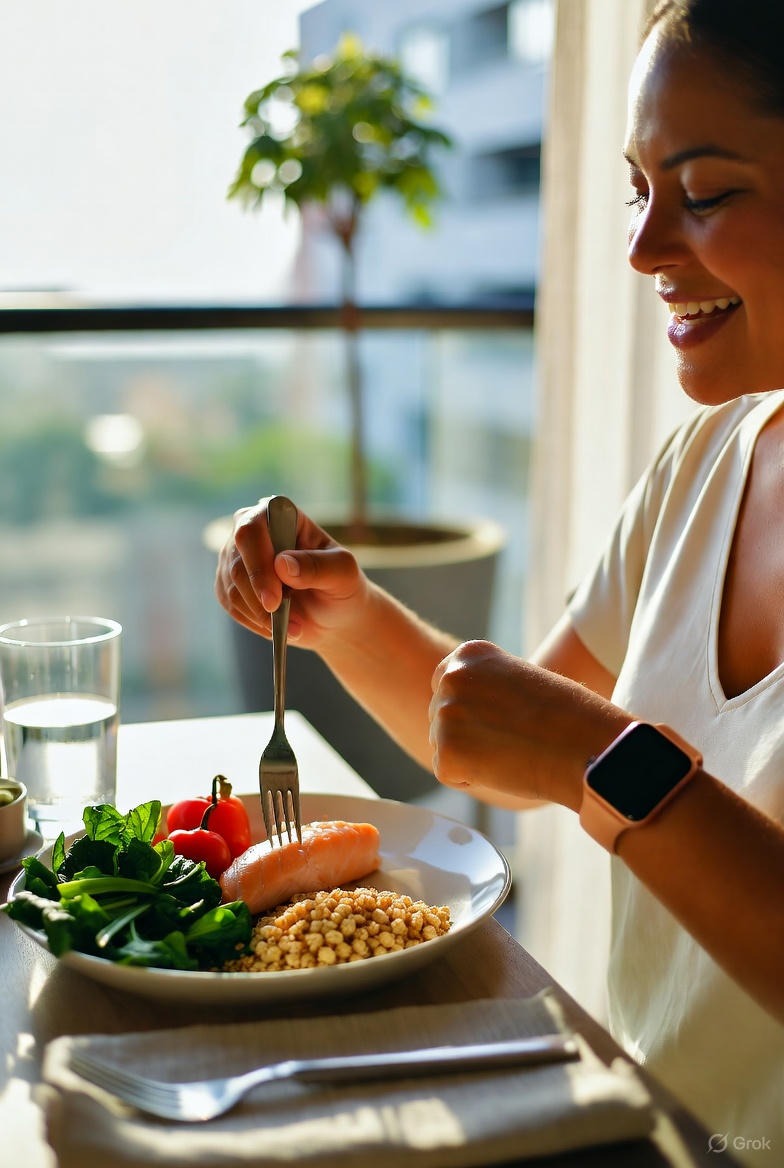
Nutrition for new parents often degenerates into whatever can be eaten with one hand, standing up, in under 60 seconds. While perfect meals are off the table, strategic fueling is non-negotiable. Your smart ring provides indirect but powerful clues about your nutritional and hydration status, helping you make better choices even in the chaos.
Listen to What Your Metrics Are Telling You:
Actionable, Ring-Informed Nutrition Strategies:
Remember, the goal is not culinary excellence. It’s using your body’s data to make the connection between what you put in it and how you feel and perform. When you see that a day of proper hydration and protein correlates with a better sleep score despite the same number of wake-ups, it provides powerful motivation to keep a water bottle and healthy snacks within arm’s reach. For inspiration on building foundational habits, explore our list of nighttime routine essentials you really need.
“Am I just tired, or am I actually not okay?” This is a hauntingly common question for new parents. The line between normal adjustment and concerning anxiety or depression can be blurry, especially when severe sleep deprivation mimics the symptoms of mood disorders. Your smart ring offers an objective layer of insight here, serving not as a diagnostic tool, but as a correlation engine between your physiology and your psychology.
Key Metrics to Observe in Tandem with Your Mood:
How to Use This Correlation Proactively:
This practice builds interoceptive awareness—your ability to perceive the signals from within your own body. Over time, you may start to feel a dip in HRV coming on as a sense of brittleness, allowing you to intervene before you snap. The ring trains you to become your own best observer.
Parenting is a team sport, but in the exhaustion tunnel, it can easily become a blame game. “I’m more tired.” “You got more sleep.” A smart ring on each partner’s finger transforms this dynamic from subjective competition to objective coordination. It turns wellness into a shared project with clear data for equitable resource management.
Implementing a “Data-Driven Duty Roster”:
Building Empathy Through Data:
It’s one thing to hear your partner say they’re tired. It’s another to see the graph of their heart rate variability flatline after a difficult night with a colicky baby. This visual can dissolve defensiveness and foster a “how can we solve this together?” mentality. The data depersonalizes the fatigue; it’s not your partner’s failure, it’s a system problem you can address as a team.
Furthermore, you can run experiments: “If I take the baby for a two-hour walk on Saturday morning so you can sleep, how much does your readiness score improve?” This turns care into a measurable, rewarding intervention. By syncing your data, you build a family wellness dashboard, ensuring the caregivers’ vital signs remain stable enough to provide the best care for your newborn.
The transition from parental leave back to work—whether after weeks or months—is a monumental shift that stresses every system: sleep, schedule, identity, and logistics. Your smart ring, already calibrated to your new-parent baseline, becomes an indispensable compass during this disorienting time.
Pre-Transition Preparation (The “Data Baseline”):
In the weeks before returning, pay close attention to your metrics. Establish a rough understanding: What does your readiness score look like after a “good” home day? What’s your average resting heart rate during a calm afternoon? This is your “stay-at-home parent” baseline. It will be crucial for comparison.
The First Weeks Back: Observation, Not Judgment
Your only goal here is to collect data without panic. Expect everything to be worse: sleep scores will drop, RHR may rise, HRV may dip. This is normal. The goal is to see by how much and identify the biggest pain points.
Strategic Adjustments Informed by Data:
This period is about reintegration. Your smart ring provides the feedback loop to see what’s working and what’s breaking. It removes the guesswork from an intensely demanding life change, allowing you to make precise, supportive adjustments to your new routine.
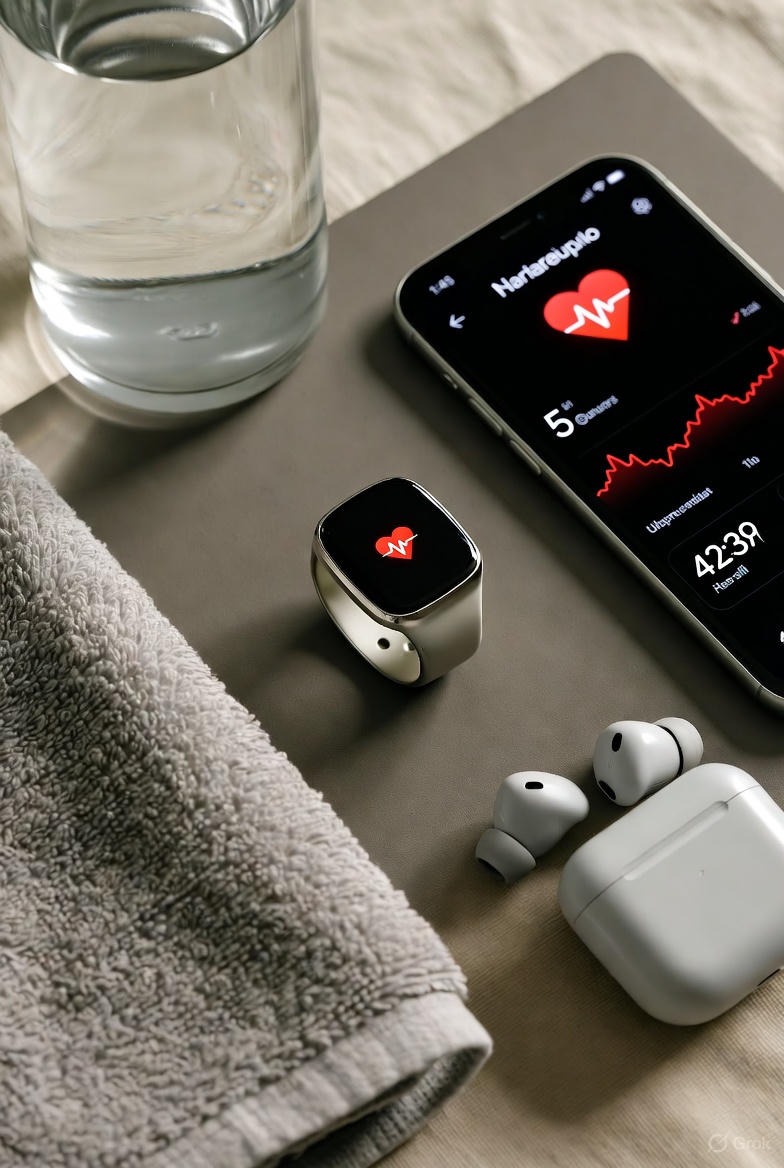
A new parent’s immune system is often running on empty. Between sleep deprivation, nutritional gaps, and the constant exposure to new germs (from pediatrician visits, playgroups, or older siblings in daycare), the risk of getting sick is high. And parent sick days? They simply don’t exist. Your smart ring’s continuous monitoring can serve as an early warning system, alerting you to subtle physiological shifts that often precede full-blown illness.
Key Predictive Metrics to Watch Like a Hawk:
Creating Your Personal “Pre-Illness Protocol”:
When you see two or more of these metrics deviate from your norm for 24-48 hours, it’s time to activate your pre-illness protocol. This isn’t about taking medication; it’s about aggressive rest and support.
By acting on these early warnings, you might be able to shorten the duration of an illness or even prevent it from taking hold fully. In a world where you cannot afford to be bedridden, this predictive capability is not a luxury; it’s a critical component of your family’s operational plan. The ring helps you care for yourself with the same proactive vigilance you apply to your baby’s slightest sniffle.
In the pre-baby world, wellness goals were clear: run a faster 5K, lose 10 pounds, meditate for 20 minutes daily. Post-baby, these goals can feel laughably irrelevant and set you up for failure. The key to sustained well-being is to scrap the old playbook and set goals that are informed by, and celebratory of, your current reality as reflected in your smart ring data.
Redefining “Success” with Data:
How to Track and Celebrate Micro-Wins:
Your smart ring app is a log of your resilience. Scrolling back through weeks of data, you’ll see the story of adaptation: the brutal first weeks, the gradual plateau, the moments of setback and recovery. This long view is profoundly empowering. It shows you not that you are failing at your old life, but that you are successfully navigating a profoundly new one. For more on measuring progress, learn how to track whether your nighttime routine is working.
The modern parent’s home can feel like a mission control center: baby monitors with video and vitals, feeding timer apps, sound machines, smart lights. The risk is tech overload—too many apps, too many alerts, too much data. The opportunity is integration. Your smart ring shouldn’t be another silo of information; it should be the hub for your biometrics, providing context to everything else.
Creating a Connected Wellness Ecosystem:
The Principle of Unified Insight:
The goal is to move from scattered data points to a unified story: “The baby had a rough night (per the monitor log), which led to 40% less deep sleep for me (per my ring), which resulted in a low readiness score today, which is why I’m prioritizing simple meals and canceling our playdate.” This holistic view reduces decision fatigue. You’re not reacting to each piece of data in isolation; you’re reading the interconnected narrative of your family’s well-being.
By positioning your smart ring as the central source of truth for your physiology, you create a balanced tech ecosystem. The baby’s tech cares for the baby. Your ring cares for you. And together, they provide the insights needed for the whole family to not just survive, but to find moments of peace and connection in the beautiful, demanding journey of new parenthood.
Data without interpretation is just noise. For the overwhelmed parent, a screen full of graphs can feel like another language to learn. The true power of your smart ring lies in translating this biometric data into a simple, actionable Personal Dashboard. This isn't about adding complexity; it's about creating a single, glanceable source of truth that guides your daily decisions.
The Three Core Dashboard Metrics for Parents:
Every morning, instead of getting lost in the app, focus on just three key outputs. Think of them as your daily weather report for your body:
How to Operationalize Your Dashboard:
Create a simple mental or physical checklist based on your scores:
By checking just these three metrics each morning, you make data-driven choices in under 60 seconds. This turns the smart ring from a complex device into an intuitive co-pilot for your day.
The elusive “sleep when the baby sleeps” is often impossible due to adrenaline, a racing mind, or simply too much to do. However, a strategic power nap can be more restorative than an hour of fitful, anxious “trying” to sleep. Your smart ring provides the perfect framework to master this skill.
The Two Power Nap Protocols:
Timing Your Nap Using Your Readiness Score:
This approach turns napping from a guilty, hit-or-miss gamble into a targeted, skill-based recovery tool with verifiable results.
Your core body temperature and the temperature of your sleeping environment are inextricably linked to sleep quality. For new parents, whose sleep is already fractured, optimizing this one factor can make the difference between falling back asleep swiftly or staring at the ceiling for an hour. Your smart ring’s skin temperature sensor provides the clues.
Understanding the Temperature-Sleep Cycle:
Your body needs to drop its core temperature by about 1-2 degrees Fahrenheit to initiate and maintain sleep. This is why a cool room (typically 65-68°F or 18-20°C) is recommended. Your ring tracks the trend in your skin temperature, which follows this core temperature drop.
Actionable Insights from Your Temperature Data:
Creating a Data-Informed Sleep Cave:
Use a month of temperature and sleep quality data to experiment.
By treating your sleep environment as a laboratory, you can find the precise conditions that help your particular body grab the most restorative sleep possible in shorter, broken chunks. This isn't about perfection; it's about incremental, data-verified gains that compound over time.
The concept of “working out” morphs completely after having a baby. Instead of structured gym sessions, movement becomes integrated and functional. Your smart ring’s heart rate zone tracking is the perfect tool to ensure this movement is supportive, not depleting. The goal shifts from burning calories to regulating your nervous system and building sustainable energy.
Why Heart Rate Zones Matter for Recovery:
Applying Zone Data to Your Daily Life:
By focusing on heart rate zones, you honor the principle that in the postpartum period, all movement should be in service of recovery and resilience, not additional breakdown. Your ring provides the objective feedback to keep your activity truly restorative.

The default setting for many wellness devices is to bombard you with alerts: “Move!”, “Breathe!”, “You’re stressed!” For a sleep-deprived parent, these pings can feel like nagging, adding to cognitive load rather than alleviating it. The key is to curate your notifications so your ring serves as a gentle guide, not a digital taskmaster.
A Parent’s Notification Blueprint:
TURN ON:
TURN OFF:
The “Do Not Disturb” Syncing:
Sync your ring’s notification settings with your phone’s “Do Not Disturb” schedule. During your designated sleep window (even if it's from 9 PM to 6 AM with interruptions), the ring should be silent. The data will still be collected, but you won’t be disturbed by its commentary. This ensures the technology supports your rest, not disrupts it. For a deeper dive on this balance, our guide on nighttime routine and technology: what to use and avoid is essential reading.
By taking control of the alerts, you ensure the smart ring is a silent partner during your most vulnerable times and a source of insightful, scheduled reflection during your calm moments.
In the day-to-day trenches of early parenthood, it’s impossible to see progress. You feel stuck in a loop of fatigue. This is where the historical view in your smart ring app becomes a powerful tool for hope and perspective. Scrolling back through weeks and months of data reveals not your failures, but your profound adaptation.
What to Look for in Your Historical Data:
The Psychological Power of the Timeline:
This long view transforms your relationship with a bad day. Instead of “I’m falling apart,” you can think, “This is a dip in the data, just like the one in Week 6, and I recovered from that.” It provides objective evidence of your resilience. You can literally see your strength documented over time.
Share this view with your partner. Say, “Look at this graph from the last four months. See how we’ve slowly improved even though it doesn’t feel like it?” This shared perspective can be a powerful antidote to the feeling of being stuck. The data tells the true story: you are not just surviving; you are adapting, learning, and growing stronger in a new and demanding landscape.
The ultimate goal of using a smart ring isn’t to live by its metrics, but to internalize its lessons and eventually rely on your own honed intuition. The data should inform a broader, more compassionate parenting philosophy—one that extends the same grace to yourself that you offer your child.
The Core Principles of a Data-Informed Parenting Mindset:
Modeling Self-Care as a Core Value:
By visibly using your data to take a rest, to choose a healthy snack, or to ask for help, you are modeling self-awareness and self-care for your family. You are demonstrating that health is a valued, monitored, and nurtured part of life. This sets a powerful example that will benefit your child far into the future.
The smart ring, in this light, becomes more than a wellness device. It’s a training tool for a more mindful, resilient, and compassionate approach to the marathon of parenthood. It helps you build the internal infrastructure to not only care for your child but to remain yourself in the process.
Even with the best intentions, interpreting smart ring data in the whirlwind of new parenthood can lead to confusion or misinterpretation. Here are solutions to common dilemmas.
Dilemma 1: “My sleep score is terrible every night. It’s just depressing.”
Dilemma 2: “My activity is always in the red/low because I can’t work out.”
Dilemma 3: “The data says I’m ‘stressed’ all the time. No kidding.”
Dilemma 4: “My readiness score is low every single day. What’s the point?”
Dilemma 5: “I forgot to wear my ring for two days. I ruined my data.”
Navigating these dilemmas is part of the process. It teaches you to use the tool flexibly and intelligently, ensuring it remains a servant to your well-being, not a source of additional anxiety.
The habits and awareness you cultivate using your smart ring in infancy lay a critical foundation for the ever-evolving challenges of parenthood. The principles of energy budgeting, micro-recoveries, and data-informed intuition don’t become obsolete when your child starts sleeping through the night; they evolve with you.
Preparing for the Toddler Energy Tsunami:
Infancy is physically exhausting; toddlerhood is mentally and emotionally depleting. The constant vigilance, negotiation, and emotional regulation required are immense. Your established practice of checking your readiness score will tell you which days you have the patience for the park playdate and which days you need the quiet sanctuary of home. Your understanding of HRV will help you recognize when you’re emotionally frayed and need to deploy a calming technique before reacting to a tantrum.
Modeling Lifelong Wellness for Your Child:
As your child grows, they will see you honoring your body’s signals. You might say, “Mummy’s watch says her body needs a quiet time right now, so let’s read a book,” demonstrating that self-care is a normal, spoken-about part of family life. This teaches emotional intelligence and bodily awareness from an early age.
A Tool for All of Life’s Transitions:
The skills you learn—observing trends, responding to cues, prioritizing recovery—are transferable to any life stress: career changes, family illness, personal goals. You are building a foundational literacy in your own well-being. The smart ring is the training wheels for this literacy; eventually, the awareness becomes second nature.
By embracing this technology and mindset now, you are not just getting through the newborn phase. You are building the resilient, adaptable, and self-aware framework you will need to be a present, patient, and healthy parent for the entire journey ahead. You are investing in the core asset that makes everything else possible: you.
The transition to parenthood is a seismic shift, often accompanied by a undercurrent of anxiety that ranges from mild worry to overwhelming panic. This "high-alert" state, evolutionarily designed to keep your newborn safe, can become a maladaptive loop, draining joy and energy. Your smart ring provides something crucial for the anxious new parent: objective ground truth. When your mind is spinning catastrophic scenarios, your body's data can offer a stabilizing, factual counterpoint.
Separating Mental Anxiety from Physiological Arousal:
Anxiety often feels like a monolithic storm. Your ring's data helps you deconstruct it. Is your elevated heart rate and low HRV being driven by:
The "Check the Data, Challenge the Thought" Protocol:
When you feel an anxiety spiral beginning:
Creating a "Calm Baseline" Snapshot:
On a rare, genuinely calm day—perhaps when the baby is content and you've had a good moment—open your app and take a mental snapshot of your metrics. See what your heart rate and HRV look like when you feel at peace. Later, during anxious moments, recall that snapshot. It serves as tangible proof that calm is a state your body can and does achieve, even now. It's not a distant memory from your pre-baby life; it's a recent, data-verified reality.
Using Breathwork with Real-Time Feedback:
This is one of the most powerful applications. Engage your ring's guided breathing function when anxiety hits. As you follow the pacer, watch your heart rate line fall in real-time. This creates a powerful, immediate feedback loop. You learn, viscerally, that you have agency. Your breath is a direct dial to your nervous system. This builds self-efficacy, the antidote to helplessness that fuels anxiety. For structured guidance, the principles in the nighttime routine that reduces next-day anxiety can be adapted into these acute moments.
By using your ring this way, you transform it from a passive tracker into an active anxiety-regulation tool. It helps you move from being hijacked by anxiety to witnessing and managing it, a critical skill for the long-term emotional health of both you and your family.
Nutritional needs post-partum are unique, especially for lactating parents, but the fog of fatigue makes mindful eating nearly impossible. Generic advice ("eat healthy!") is useless. Your smart ring's data provides personalized clues to what your body specifically needs for milk production, tissue repair, and stable energy.
Connecting the Dots: Cravings, Crashes, and Biomarkers:
The Lactation-Energy Equation:
Producing milk is metabolically expensive, burning an estimated 300-500 extra calories per day. Your smart ring’s "active burn" (from movement) plus your basal metabolic rate (BMR) doesn't account for this. Therefore, never use your ring's calorie expenditure estimate to restrict intake. In fact, a persistently low readiness score may simply mean you are in a significant energy deficit. The data supports eating to satiety with nutrient-dense foods. If your recovery score improves after a week of consciously adding an extra nutrient-dense snack (like a handful of nuts and a piece of fruit), you have your answer.
Practical, Data-Informed Food Hacks:
Your ring helps shift nutrition from a morality play ("good" vs. "bad" food) to a functional, engineering challenge: What fuel does my body require today to perform the miraculous tasks of healing and nurturing? The data provides the clues to solve that equation effectively.
Newborns are born without a mature circadian rhythm; they develop it over the first months through exposure to light/dark cycles and consistent routines. Your own rhythm is shattered. The path to better sleep for both of you lies not in fighting this, but in gently guiding your biology back toward synchronization, using light as your primary tool. Your smart ring’s sleep and activity data is the scorecard for this process.
The Foundational Pillar: Morning Light.
Within 30-60 minutes of waking (whether that's at 5 AM or 7 AM), get yourself and your baby exposure to bright, natural light for even 10 minutes. This could be a walk outside or sitting by a sunny window.
Track the Impact: After a week of committed morning light, check your sleep data. Do you see a slight improvement in sleep latency (time to fall asleep) or a more regular sleep/wake time? That’s synchronization beginning.
The Evening Wind-Down: Dimming the Lights.
Just as critical is reducing blue and bright light exposure 60-90 minutes before your target bedtime. This supports your body’s natural melatonin rise.
Your Ring as a Chronotype Guide:
Your natural chronotype (night owl vs. morning lark) still exists beneath the exhaustion. Your data may reveal it. Do you get your best deep sleep before midnight? Or do you fall back asleep easiest after the 4 AM feed? This can help you and your partner divide nights strategically. The night owl takes the later shift; the morning lark takes the early morning. This respects your individual biology within the shared challenge. For parents working non-traditional hours, the strategies in nighttime routine for shift workers: sleep when you can are invaluable for circadian management.
By consciously managing light with the goal of rhythm synchronization, you use an ancient biological lever. Your smart ring provides the feedback to prove it’s working, turning the abstract concept of "sleep hygiene" into a tangible, data-validated practice that benefits the whole family.
Parenthood can be isolating. Yet, connection is not a luxury; it's a biological need that directly impacts your physiological state. Your smart ring can reveal the profound impact—both positive and negative—of your social interactions, providing a data-backed reason to cultivate your village.
The Physiology of Connection:
Positive, supportive social interaction can lower cortisol, boost oxytocin (the "bonding" and "calming" hormone), and improve heart rate variability. In short, it signals safety to your nervous system. Your ring can capture this: you might see a slight, temporary boost in HRV or a lowering of resting heart rate after a genuinely uplifting video call with a close friend.
The Physiology of "Draining" Encounters:
Conversely, interactions that feel taxing—whether with a critical family member, a friend who monologues without listening, or even a well-meaning but intrusive visitor—can trigger a stress response. You may see your stress graph spike during or after the encounter, or notice your nighttime resting heart rate is higher.
Data-Driven Social Planning:
The Partner Connection Loop:
This is vital. Schedule "connection points" that aren't just about logistics. After the baby is down, spend 10 minutes together without phones. Check your ring data afterward. Did your stress levels drop? Did you sync into a calmer state together? This turns relationship care into a shared, measurable wellness practice, reinforcing the teamwork essential for survival. The concept of how couples can share a nighttime wellness routine extends to these tiny, intentional connection moments.
By viewing social health through a biometric lens, you validate your need for supportive community and learn to structure interactions in a way that truly sustains you, making you a more present and patient parent.
This is the most advanced, and perhaps most important, lesson. The ultimate goal of using a smart ring is to internalize its insights so you no longer need to check it obsessively. The data should sharpen your innate bodily intuition, not replace it. There comes a time to put the dashboard away and simply live in your body.
Signs You’re Ready to Dial Back the Data Focus:
The "Data Sabbath" Practice:
Consider instituting a weekly "data Sabbath"—perhaps one weekend day where you don't check your app at all. You wear the ring, it collects information, but you practice relying solely on your honed senses. The next day, you can review, not to judge, but to see how well your intuition matched the objective metrics. This builds trust in yourself.
When Data Becomes a Source of Stress:
If you find yourself feeling anxious about "ruining" your sleep score or obsessed with optimizing a metric, it’s time to step back. The tool is meant to reduce anxiety, not create it. Hide the app from your home screen for a week. Let the ring be a silent collector. Return to it later with a curious, not a compulsive, mindset.
The Ring as a Periodic Check-In, Not a Constant Companion:
As you move out of the acute survival phase of early infancy, your relationship with the device can mature. It becomes like a quarterly financial review. You use it for a focused week here and there to check on trends, to troubleshoot a specific issue (e.g., a sleep regression, a return to work), or to train for a new goal. But it no longer runs your daily life.
This transition marks the success of the tool. It has taught you the language of your body. You have graduated from needing constant translation. You now possess a deeper, data-informed wisdom that allows you to navigate the challenges of parenting with greater confidence and self-compassion, trusting the profound intelligence of your own lived experience.
Once you have mastered the basics of sleep, nutrition, and light, you can explore advanced, highly efficient techniques to boost resilience. These are "force multipliers" for parental recovery, and your smart ring is the perfect device to measure their potent effects.
1. The Strategic Cold Plunge (or Shower):
Cold exposure is a powerful hormetic stressor—a small, acute dose of stress that trains your nervous system to be more resilient to the chronic, dull stress of sleep deprivation.
2. Structured Breathwork for Energy and Calm:
Move beyond simple calming breaths. Two powerful techniques:
3. "Nervous System Toning" with HRV Biofeedback:
Use your ring's guided breathing app as a training gym for your autonomic nervous system. The goal is to increase the amplitude between your inhale (heart rate speeds up) and exhale (heart rate slows down)—this is high HRV in action.
These advanced techniques turn minutes into monumental recovery gains. They empower you with the knowledge that you can actively change your physiological state, moving you from passive victim of fatigue to active architect of your resilience. For those inspired by global practices, exploring nighttime wellness rituals from around the world can offer further advanced techniques to adapt.
The journey of using a smart ring through the crucible of new parenthood does more than get you through the day. It fundamentally reshapes your relationship with your health, laying the groundwork for a vibrant, intentional long-term wellness vision that extends far beyond the baby years.
From Crisis Management to Proactive Sovereignty:
You move from a reactive stance ("I'm sick, I must rest") to a proactive one ("My data shows I'm vulnerable; I'll rest to prevent getting sick"). This sense of agency over your health is a priceless lifelong gift. You learn that you are not at the mercy of your circumstances; you have levers to pull.
Building a Personal Health Baseline:
The data you collect during this intense time becomes a unique baseline. Years from now, if you face another major life stressor (a career change, caring for aging parents), you'll have a reference point for how your body responds to extreme demand and, more importantly, what specific strategies helped you recover. This is personalized medicine.
Modeling a New Health Paradigm for Your Family:
You are raising children in a data-rich world. By using this technology thoughtfully—not obsessively—you model a balanced, inquisitive approach to self-care. You show that it's wise to listen to your body, that technology can be a servant to well-being, and that taking care of yourself is the foundation for taking care of others.
The Data-Informed "Future You":
Imagine setting health goals at 40, 50, or 60 with a deep, data-backed understanding of your personal rhythms, stress responses, and recovery needs. The insights gleaned during parenthood—your true sleep needs, your optimal activity zones, the foods that fuel you best—become the bedrock of a healthspan plan that is uniquely and powerfully yours.
The smart ring journey through early parenthood is not just about surviving midnight feeds. It's an accelerated masterclass in human performance under pressure. The lessons learned, the intuition honed, and the resilience built create not just a healthier parent today, but a wiser, more empowered human for all the chapters to come. You emerge not just with a child, but with a profound and lasting literacy in the language of your own vitality.
Your Trusted Sleep Advocate: Sleep Foundation — https://www.sleepfoundation.org
Discover a digital archive of scholarly articles: NIH — https://www.ncbi.nlm.nih.gov/
39 million citations for biomedical literature :PubMed — https://pubmed.ncbi.nlm.nih.gov/
Experts at Harvard Health Publishing covering a variety of health topics — https://www.health.harvard.edu/blog/
Every life deserves world class care :Cleveland Clinic - https://my.clevelandclinic.org/health
Wearable technology and the future of predictive health monitoring :MIT Technology Review — https://www.technologyreview.com/
Dedicated to the well-being of all people and guided by science :World Health Organization — https://www.who.int/news-room/
Psychological science and knowledge to benefit society and improve lives. :APA — https://www.apa.org/monitor/
Cutting-edge insights on human longevity and peak performance:
Lifespan Research — https://www.lifespan.io/
Global authority on exercise physiology, sports performance, and human recovery:
American College of Sports Medicine — https://www.acsm.org/
Neuroscience-driven guidance for better focus, sleep, and mental clarity:
Stanford Human Performance Lab — https://humanperformance.stanford.edu/
Evidence-based psychology and mind–body wellness resources:
Mayo Clinic — https://www.mayoclinic.org/healthy-lifestyle/
Data-backed research on emotional wellbeing, stress biology, and resilience:
American Institute of Stress — https://www.stress.org/


