


HRV Tracking Made Easy With Context-Aware Smart Ring Algorithms
The effortless approach: smart rings track HRV while you live your life.
The effortless approach: smart rings track HRV while you live your life.
%402x.svg)
For years, Heart Rate Variability (HRV) has languished as a geeky metric, a number buried in the advanced menus of fitness trackers, understood by elite athletes and biohackers but shrouded in mystery for everyone else. You’ve likely seen the graph—a jagged, chaotic line that looks like a seismograph reading—and wondered what it could possibly tell you about your health beyond your heart just… beating. The promise was immense: a window into your nervous system, a crystal ball for stress, recovery, and overall resilience. Yet, for most, the reality was frustrating. You’d wake up, check your HRV score, see a low number, and be left with a single, paralyzing question: Why?
Was it the poor sleep? The intense workout yesterday? The argument with your partner? The glass of wine? The looming work deadline? In a vacuum, the number was just a data point, not a diagnosis. It told you what but never why. This gap between raw data and actionable insight is where the old era of wellness tracking ended and a new one begins.
Enter the context-aware smart ring. This isn’t just another wearable; it’s a paradigm shift. By moving from the wrist to the finger, it unlocks a continuous, clinical-grade stream of physiological data. But its true genius lies not in the sensor, but in the brain behind it. Sophisticated algorithms now cross-reference your HRV with a symphony of other biometrics—your sleep stages, skin temperature, blood oxygen, and activity levels—all gathered simultaneously, 24/7. They don't just measure your body's state; they interpret it within the story of your life.
This article is your definitive guide to this revolution. We will dismantle the complexity of HRV and rebuild it as your most intuitive health companion. You'll learn not only what HRV is but how next-generation devices, like those pioneered by Oxyzen, are making its tracking effortless and its meaning crystal clear. We’ll explore the science, the technology, and the practical, life-changing insights that emerge when your wearable finally understands the context of your day. Welcome to the era of intelligent, personalized health awareness, where HRV tracking is no longer a chore for data scientists, but a simple, powerful tool for everyone.
You diligently wear your tracker. You wake up and open the app, bracing for the verdict. Your Heart Rate Variability (HRV) is presented as a single, definitive score: 42 milliseconds. Yesterday it was 55. A wave of concern washes over you. Am I overtraining? Getting sick? Burning out? You scroll through forums, read conflicting advice, and are left more anxious than before you looked. This, in a nutshell, is the HRV conundrum that has plagued wellness enthusiasts for a decade.
HRV is fundamentally a measure of the variation in time between each heartbeat. Contrary to what you might assume, a healthy heart is not a metronome. It’s a dynamic, responsive system. When your body is relaxed and recovered, your parasympathetic nervous system (the "rest and digest" branch) is dominant, causing subtle, rhythmic accelerations and decelerations with each breath. This results in high HRV—a sign of resilience, adaptability, and good health. When you’re stressed, fatigued, or inflamed, your sympathetic nervous system (the "fight or flight" branch) takes over, pushing your heart into a more rigid, steady rhythm. This leads to low HRV.
The problem is that countless factors can trigger that sympathetic response. The classic wrist-based tracker, which might take a sporadic reading overnight or during a moment of stillness, captures the effect but is blind to the cause. It’s like hearing a fire alarm but having no idea if it’s a drill, a burnt piece of toast, or a five-alarm blaze. Your low HRV score is the alarm. Without context, your response is guesswork.
Consider these three scenarios, all of which could produce an identical low HRV reading:
A traditional device gives you the same red flag for all three. Should you skip your workout (Scenario 1), meditate (Scenario 2), or just prioritize hydration and an early night (Scenario 3)? Without context, you’re flying blind, potentially taking the wrong corrective action or, worse, developing "tracker anxiety," where the data itself becomes a source of stress.
This conundrum created a ceiling for the utility of HRV. It remained a tool for those willing to become their own data analysts, meticulously logging every meal, workout, and life event in a journal to manually provide the missing context. For the mainstream user seeking simple, actionable health insights, it fell short. The breakthrough wasn't in measuring HRV better; it was in measuring everything else around it, automatically and continuously. This is the critical gap that the smart ring, with its always-on, multi-sensor platform and intelligent algorithms, was built to fill. To understand this fully, we must first appreciate the unique advantage of the ring form factor itself.
The migration of health sensing from the wrist to the finger is not a matter of fashion or convenience alone; it is a fundamental upgrade in data fidelity rooted in human physiology. To understand why, we need to look at vascular anatomy. The primary artery in your wrist, the radial artery, is relatively shallow and easy to compress, but it is also smaller and branches extensively. This makes it susceptible to motion artifact—the dreaded "noise" that corrupts data every time you move your hand.
Now, consider your finger. The digital arteries running along each side are fed by the palmar arch, a rich network with robust blood flow. More importantly, the finger—particularly the base, where a well-designed smart ring sits—hosts a dense capillary bed. This location provides a stronger, cleaner photoplethysmogram (PPG) signal, the optical measurement of blood volume changes that is the cornerstone of heart rate, HRV, and blood oxygen tracking.
Think of it like trying to listen to a faint radio station. The wrist is a portable radio held at arm's length in a windy park. The finger is a high-fidelity tuner with a dedicated antenna in a soundproof room. The signal is simply clearer and more consistent.
This anatomical advantage translates into three concrete benefits for HRV and overall health tracking:
By consolidating these superior measurements into a single, unobtrusive device, the smart ring creates a holistic biometric profile. It’s not just tracking your heart; it’s listening to your nervous system, measuring your thermal rhythm, and monitoring your blood oxygen—all from the ideal physiological vantage point. This rich, multi-layered dataset is the essential raw material. But data alone is not insight. The magic—and the solution to the HRV conundrum—happens in the next layer: the sophisticated algorithms that weave these threads into a coherent story. This brings us to the core innovation: context-aware intelligence.
If the smart ring’s sensors are the keen senses of a detective, gathering clues at the scene, then context-aware algorithms are the brilliant mind in the precinct, piecing those clues together to solve the case. They are the sophisticated software that moves health tracking from a series of disconnected metrics into a unified, intelligent interpretation of your body’s state.
At its simplest, a context-aware algorithm doesn't analyze HRV in isolation. It cross-references it in real-time with other simultaneous data streams to answer the pivotal question: "What else was happening in my body when my HRV changed?"
Let’s visualize the data layers a modern smart ring algorithm synthesizes:
By fusing these layers, the algorithm can move from generic alert ("Low HRV") to contextual insight. It begins to generate hypotheses. For example:
This is the power of context. It transforms a confusing number into a clear narrative. Brands at the forefront of this technology, like Oxyzen, design their entire ecosystem around this principle. Their systems don't just collect data; they build a personalized model of your normal, learning how you respond to sleep, exercise, and stress over time. You can learn more about this personalized approach and how it shapes product development. The result is a guidance system that is both profoundly intelligent and elegantly simple. But to fully trust this guidance, we need to understand the cornerstone metric it’s built upon: the nocturnal HRV measurement.

In the quest for a reliable, actionable HRV metric, timing is everything. While you can take an HRV reading at any time of day, not all readings are created equal. The most volatile and easily skewed reading is during waking hours, where every email, coffee, conversation, and movement sends ripples through your autonomic nervous system. The most stable, pure, and informative reading occurs when external stimuli are minimized: during sleep. This is your nocturnal HRV, and it is widely considered the gold standard for establishing your true physiological baseline.
Think of your day as a turbulent ocean. Your waking HRV is like measuring wave height from a small boat in the middle of a storm—the readings are chaotic and heavily influenced by immediate conditions. Your sleep, particularly the deep, stable periods of the night, is the calm sea floor. Measuring from here gives you a clear view of the underlying currents, free from the noise of daily life.
A context-aware smart ring capitalizes on this perfectly. By tracking continuously and passively throughout the night, it captures a complete profile of your HRV across all sleep stages. This allows algorithms to calculate a far more robust metric, often an average or a peak value from your deepest sleep cycles, which serves as a pristine benchmark for your recovery status.
Why is this nocturnal baseline so powerful?
By establishing nocturnal HRV as the cornerstone, context-aware systems shift the user’s focus from frantic daily score-checking to thoughtful morning reflection. The question changes from "What is my score?" to "What does my score, in the context of my night, tell me I need today?" This foundational metric then becomes the anchor point for interpreting the other critical biomarker that a smart ring excels at tracking: your body’s thermal rhythm.
Two of the most powerful biometrics measured by a smart ring—Heart Rate Variability (HRV) and skin temperature—are not independent actors. They are lead performers in the same daily orchestra: your circadian rhythm. Your body operates on a roughly 24-hour internal clock that governs everything from hormone release and metabolism to sleep-wake cycles and cellular repair. Understanding how HRV and temperature dance together within this rhythm is key to unlocking profound insights into your health.
Your core body temperature (closely estimated by finger temperature) follows a predictable wave. It is highest in the late afternoon and early evening, promoting alertness and physical performance. It then begins to fall in the hours before bedtime, a drop that is essential for initiating sleep. It reaches its nadir in the middle of your sleep period, usually during your longest deep sleep phase, and then begins to rise again in the early morning to prepare you for wakefulness.
HRV, as a mirror of your autonomic nervous system, follows an inverse but complementary pattern. It is generally lower during the active, sympathetic-dominant daytime. As you relax in the evening and your temperature starts its descent, your parasympathetic system begins to engage, and HRV typically rises. It peaks during sleep, often aligning with the lowest body temperature and the deepest stages of rest.
This symbiotic relationship is where context-aware algorithms reveal their sophistication. They don’t just track these metrics separately; they analyze their relationship.
By connecting these dots, a smart ring moves beyond simple sleep scoring. It provides a circadian health report. It can tell you not just that you slept poorly, but why your sleep architecture was fragmented, based on the underlying dysregulation of your core rhythms. This holistic view is critical for making effective lifestyle changes. You learn that to improve your HRV, you may need to focus on cooling your body before bed, managing evening stress, or allowing more time for recovery after intense activities. This integrated understanding naturally leads us to examine the most direct application of this knowledge: optimizing physical performance and recovery.
For anyone engaged in physical training—from weekend warriors to elite athletes—the line between productive stress and destructive overreach is perilously thin. Push too hard, and you risk injury, illness, and burnout. Don’t push hard enough, and you leave progress on the table. This is the eternal dilemma of training, and for generations, it was solved by guesswork, rigid schedules, or listening to subjective feelings of fatigue (which can be wildly unreliable). Context-aware HRV tracking changes the game, providing an objective, personalized guide to daily readiness.
The old model of using HRV for training was simplistic: "HRV down = skip workout." This often led to frustration, as it didn't differentiate between types of stress. The new, context-aware model is nuanced and prescriptive. It uses the multi-layered data from your ring to classify your recovery state and suggest appropriate actions.
Here’s how a sophisticated system might interpret different scenarios to guide your training decisions:
Scenario 1: The "Go Hard" Signal
Scenario 2: The "Recover Smart" Signal
Scenario 3: The "Rest and Reset" Signal
Scenario 4: The "Fuel and Hydrate" Signal
This dynamic, context-rich guidance transforms your wearable from a historian (telling you what you did) into a coach (guiding you on what to do next). It empowers you to practice "autoregulation"—adjusting your training plan based on your body’s daily readiness. This not only optimizes performance but is a powerful safeguard against overtraining syndrome. The principles of recovery extend far beyond the gym, however, deeply intertwining with the foundational pillar of health: sleep.

If HRV is the language of your nervous system, then sleep is its most important conversation. You cannot talk about meaningful HRV recovery without a deep understanding of sleep architecture—the cyclical pattern of light, deep, and REM sleep stages you progress through each night. Each stage plays a distinct role in physiological and psychological repair, and each leaves a unique signature on your HRV data. Context-aware algorithms decode this signature, turning a simple sleep duration score into a detailed audit of your recovery processes.
Let’s break down how HRV interacts with each primary sleep stage:
Deep Sleep (N3): The Physical Restoration Phase
This is the most anabolic state of sleep. Growth hormone is released, tissue repair and muscle growth occur, and the brain’s glymphatic system performs a deep clean, flushing out metabolic waste. From an HRV perspective, deep sleep is where parasympathetic activity dominates most strongly. Your heart rate is at its lowest, and your HRV typically reaches its highest peaks of the night. This is when your body does its most intensive physical recovery.
REM Sleep: The Cognitive and Emotional Reset
During REM sleep, your brain is almost as active as when you’re awake. This is when memory consolidation, learning integration, and emotional processing occur. Autonomic activity during REM is more variable and can include bursts of sympathetic activity (which is why heart rate and breathing can become irregular).
Light Sleep (N1 & N2): The Transitional Buffer
Light sleep acts as a gateway between wakefulness and deeper stages. While less restorative per minute than deep or REM sleep, it is crucial for healthy sleep architecture and occupies about 50-60% of the night.
The Power of Integration:
A context-aware system doesn't just label your sleep stages; it analyzes their proportion, timing, and continuity. It can detect:
By treating sleep architecture as the master controller, these algorithms provide the "why" behind your sleep quality score. They tell you if you need to prioritize physical recovery (deep sleep), manage stress (REM/light sleep continuity), or stabilize your schedule (circadian timing). This level of detail answers the most common questions new users have about the validity and usefulness of their data, many of which are addressed in our comprehensive FAQ on sleep tracking accuracy and worth. With sleep as the foundation, we can now explore how these insights evolve and personalize over the longest timeline: your lifelong health journey.
The most profound limitation of one-size-fits-all health advice is that it ignores a fundamental truth: we are all running different operating systems. Your "normal" HRV, your ideal sleep temperature, your response to caffeine or a 5K run, is as unique as your fingerprint. A generic threshold—like an HRV above 50 being "good"—is virtually meaningless. What matters is your deviation from your own baseline. This is where context-aware algorithms evolve from being clever software to becoming a true personalization engine.
When you first put on a sophisticated smart ring, it doesn't immediately start issuing pronouncements. It begins a crucial phase: baseline establishment. Over a period of typically 7-14 nights, it silently observes. It learns the unique contours of your nocturnal HRV, maps your personal temperature rhythm, identifies your typical sleep architecture, and establishes your resting heart rate range. This initial dataset becomes your personal health fingerprint.
From this point forward, every piece of new data is interpreted not against a population average, but against your established normal. The system is looking for meaningful deviations. This personalized modeling is what turns raw data into intimate insight.
Consider these examples of personalized learning in action:
This learning is continuous. As your lifestyle changes—you start a new training program, change your diet, or experience a shift in stress—the model adapts. It detects new patterns and refines its interpretations. This creates a feedback loop of increasing accuracy and relevance. You're not just getting insights; you're in a dialogue with a system that is actively getting to know you better every day.
This depth of personalization is what separates advanced wellness technology from simple data loggers. Brands dedicated to this approach, like Oxyzen, design their systems with this adaptive learning at the core, ensuring the product becomes more valuable the longer you wear it. You can discover more about how this philosophy is built into our products at the core of their design. This deep self-knowledge is empowering, but its true value is unlocked when it guides your daily decisions beyond the gym, impacting your long-term health trajectory.
While the application of HRV in athletic performance is compelling, its true potential is far grander. Emerging research positions HRV not merely as a fitness metric, but as a broad-spectrum vital sign—a non-invasive, dynamic indicator of overall systemic health, resilience, and even disease risk. When enriched with context, this vital sign becomes a powerful tool for proactive, holistic health management across your lifespan.
Low HRV is consistently associated with a higher risk of numerous adverse health outcomes. It is a recognized predictor in cardiovascular health, linked to hypertension, atherosclerosis, and increased mortality after a heart attack. It's connected to mental health, with chronically low HRV commonly observed in anxiety disorders, depression, and PTSD. It reflects metabolic health, showing correlations with diabetes and insulin resistance. In essence, HRV is a barometer of your body's allostatic load—the cumulative wear and tear from chronic stress.
A context-aware smart ring transforms this barometer into an early-warning system and a lifestyle compass. Here’s how:
1. Stress Resilience and Mental Well-being:
Your nervous system's flexibility, reflected in HRV, is the bedrock of emotional regulation. By tracking your HRV trends in response to daily events, you gain objective insight into your stress tolerance.
2. Cardiovascular and Metabolic Insights:
While a smart ring is not a diagnostic medical device, long-term trends in HRV, especially when viewed alongside resting heart rate and sleep data, can provide valuable information to discuss with a healthcare provider.
3. Longevity and Aging:
HRV naturally declines with age, a reflection of decreasing autonomic flexibility. However, the rate of decline is heavily influenced by lifestyle. Tracking HRV provides a direct feedback loop on how your habits are influencing your physiological age.
4. Immune Function Monitoring:
As seen earlier, the combination of elevated nocturnal temperature and suppressed HRV is a classic signature of the body mounting an immune response. In our post-pandemic world, this insight is more relevant than ever.
By elevating HRV from a workout metric to a central pillar of holistic self-awareness, the context-aware smart ring becomes a partner in lifelong health. It shifts the focus from isolated performance to integrated well-being. Yet, to harness this power fully, one must navigate the practical realities of choosing and using this technology effectively.

The market for smart rings is burgeoning, but not all devices are created equal. The term "context-aware" can be used loosely. To ensure you invest in a system capable of delivering the deep insights we've discussed, you need to look beyond the marketing and evaluate the underlying technology and philosophy. Here are the critical features and considerations that separate a sophisticated health companion from a simple data collector.
1. Sensor Fusion and Data Fidelity:
The quality of insight is dictated by the quality and breadth of input data.
2. Algorithmic Sophistication and Transparency:
The software is the brain. Investigate what the company says about its analytics.
3. The Ecosystem and User Experience:
The device is part of a system. The app and supporting resources are crucial.
4. Scientific Validation and Philosophical Alignment:
5. Community and Support:
Choosing the right ring is choosing a long-term partner in your health journey. It's an investment in a tool that should grow with you, providing ever-more personalized insights. Once you've made this choice, the final step is integrating this powerful stream of information into your daily life in a sustainable, productive way—avoiding the common pitfall of becoming overwhelmed by the data itself.
With great data comes great responsibility—to yourself. The most advanced smart ring in the world can become a source of obsession and anxiety if used improperly. This phenomenon, often called "tracker anxiety" or "quantified-self stress," occurs when the pursuit of perfect numbers overshadows the goal of feeling better. The irony is palpable: using a device meant to reduce stress ends up increasing it. The key is to evolve from being a passive data consumer to becoming a mindful tracker.
The goal of context-aware HRV tracking is not to achieve a perpetually high score. That is neither possible nor desirable. HRV is meant to fluctuate; it is a signal of adaptation. The goal is to understand the fluctuations, learn from them, and make empowered choices—without letting the score dictate your self-worth or trigger panic.
Here are essential strategies for mindful integration:
1. Adopt a Trend-Based Mindset, Not a Daily Score Obsession.
Ignore the day-to-day noise. Your focus should be on the weekly average and the direction of the trend over weeks and months. A single low score is meaningless; a consistent downward slope over two weeks is meaningful information. Zoom out on the app graph. This broader view naturally reduces anxiety because it smooths out the inevitable daily blips caused by minor, unremarkable stressors.
2. Use Data as a Guide, Not a Gospel.
The ring's insight is a hypothesis, not a command. It might say, "Your data suggests higher stress." Use this as a prompt for self-inquiry, not as a definitive verdict. Check in with yourself: Do I feel stressed? What might be causing it? Sometimes the data confirms what you feel; other times, it reveals hidden stress (like subclinical inflammation). Let it start a conversation with yourself, not end one.
3. Prioritize Contextual "Why" Over the Isolated "What."
This is the entire point of context-aware technology. If your HRV is low, immediately look at the accompanying insights. Did you sleep poorly? Was your temperature up? Was your activity high yesterday? The provided context should alleviate the fear of the unknown. A low score with a clear, understandable reason (e.g., "you had a hard training session") is far less anxiety-provoking than a low score with no explanation.
4. Implement "Data Fasts" or Scheduled Check-Ins.
You do not need to live in the app. Constantly refreshing for updates creates a compulsive, stressful relationship. Designate one or two specific times to review your data—perhaps in the morning when planning your day, and once on the weekend for a longer trend review. Outside of those times, trust that the ring is gathering information and let it do its job silently. Live your life first, review the data second.
5. Focus on Actionable Behaviors, Not Abstract Numbers.
Translate insights into tiny, concrete actions. Instead of fixating on raising your HRV by 10 points, focus on the behaviors that influence it:
By focusing on the controllable behavior, you reclaim agency. The number becomes feedback on your experiment, not a judgment.
6. Remember the Human Element.
No algorithm can capture the full richness of your human experience. A joyful, laughter-filled evening with friends might lower your next-day HRV due to late hours and wine, but the social connection is profoundly healthy. A score cannot quantify that. The data is one input into your life decisions, not the sole arbitrator.
Used mindfully, a context-aware smart ring is the antithesis of anxiety. It is a tool for empowerment, education, and self-compassion. It provides an objective anchor in the subjective sea of how we feel, helping us make choices that align with our long-term well-being. It teaches us to listen to our bodies with a new level of clarity and to respond with intelligence and grace. This journey of listening and responding is where the real transformation happens.
Your morning routine sets the tone for your entire day. For decades, this ritual has been guided by habit, whim, or the relentless ping of a to-do list. Now, imagine beginning each day with a personalized briefing from your own body—a report card on your recovery and a set of gentle, data-informed suggestions for the hours ahead. This is the promise of the HRV-Informed Morning Report, the practical culmination of context-aware tracking. It’s where complex biometrics translate into a simple, actionable daily plan.
The process begins not with an alarm, but with silent analysis. While you slept, the ring’s algorithms synthesized your night’s data: HRV trends across sleep stages, temperature rhythm, sleep continuity, respiratory rate, and blood oxygen variations. By dawn, it has compared this nocturnal profile against your personal baseline and is ready to deliver a holistic Readiness Score or Recovery Status. This is more than a number; it’s a compass.
Let’s deconstruct what a truly intelligent morning report might contain and how you can use each element:
1. The Core Readiness Metric (Your North Star):
This is usually presented as a score out of 100, a color (green/yellow/red), or a term like “Peak,” “Productive,” “Recover,” or “Rest.”
2. The Supporting Context (The “Why” Behind the Score):
A great report doesn’t stop at the score. It breaks it down:
3. Personalized Recommendations (Your Action Plan):
This is the crown jewel—algorithmically generated suggestions based on your unique state.
Designing Your Day with This Intel:
You take this report and use it to architect your 24 hours with intention.
This practice transforms you from being reactive to your energy levels to being proactive with your capacity. It turns health from a vague concept into a daily, manageable design project. The cumulative effect of these daily, intelligent adjustments is what drives long-term progress and prevents burnout. As you master this daily rhythm, you naturally begin to notice the deeper, weekly and monthly patterns that truly define your health trajectory.
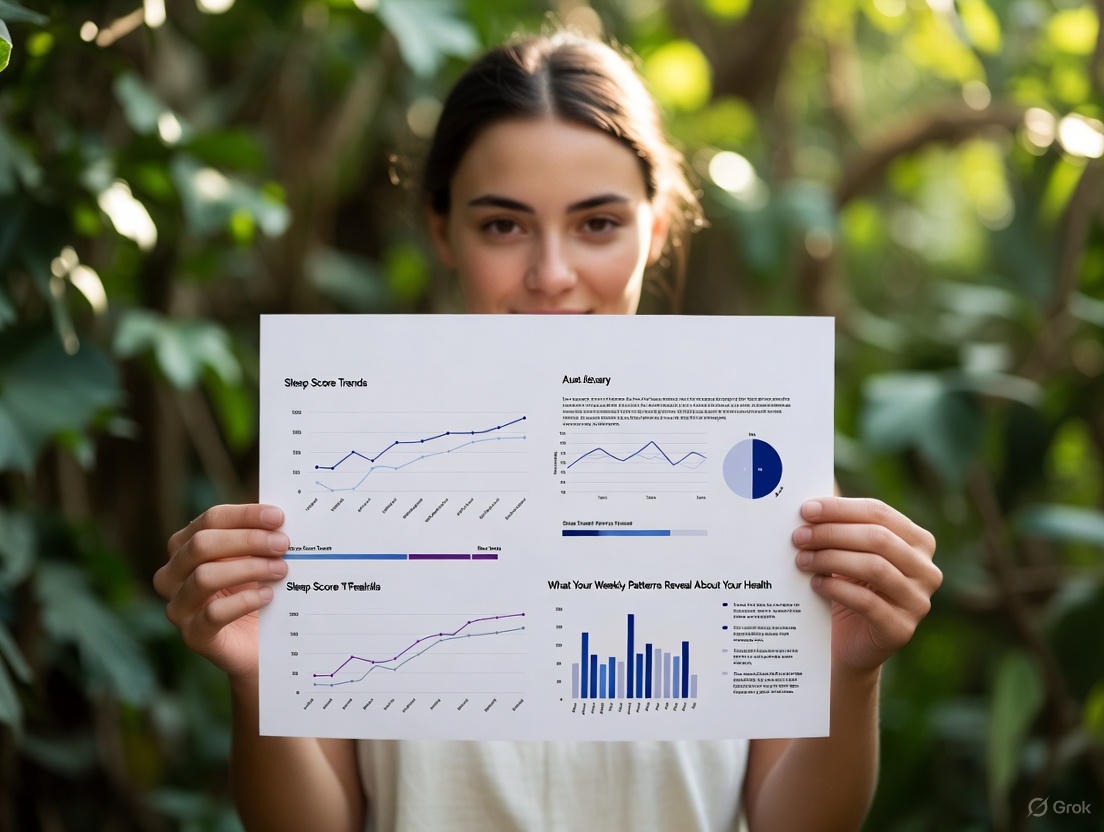
Daily HRV scores are the individual frames of a movie. While each frame is interesting, the true story—the plot, the character development, the climax—is only visible when you watch the entire film. This is the power of the longitudinal lens. By examining your HRV and contextual data over weeks and months, you move from managing daily states to mastering your long-term health narrative. This is where the most significant insights emerge, particularly in identifying the stealthy creep of overtraining, chronic stress, and burnout long before they manifest in obvious symptoms.
Burnout and overtraining syndrome are not events; they are processes. They develop through a relentless accumulation of stress that outpaces recovery. The early warning signs are subtle: a feeling of flatness, a nagging sense of dread about workouts, slightly more effort required for the same pace. Often, we dismiss these as a “bad week.” Context-aware longitudinal tracking, however, makes this process visible, quantifiable, and correctable.
Key Trends to Watch on Your Weekly/Monthly Charts:
Turning Trend Data into Proactive Prevention:
When you spot these patterns early, you have the power to intervene decisively:
By adopting this longitudinal view, you become the CEO of your own health, reviewing quarterly reports instead of daily stock ticks. You manage for sustainability and long-term gains, avoiding the boom-and-bust cycles that characterize poorly managed stress and training. This forward-looking, preventative approach is the ultimate safeguard against the physical and emotional crash of burnout. It also primes you to use your data in its most collaborative capacity: as a communication tool with healthcare professionals.
For generations, conversations about health with professionals have relied on subjective recall: “How have you been sleeping?” “Rate your stress from 1 to 10.” “How fatigued do you feel?” These answers are vulnerable to memory error, perception bias, and the difficulty of quantifying internal states. The context-rich longitudinal data from a smart ring introduces a new, powerful element into these dialogues: objective, shareable evidence. It transforms a subjective conversation into a collaborative data dialogue.
When used appropriately, this data can make you a more informed, empowered partner in your own care, whether you’re working with a fitness coach, a therapist, or a physician.
With Fitness Coaches and Trainers:
The old model often involved rigid, pre-written programs. The new model is adaptive and responsive.
With Mental Health Professionals and Therapists:
The mind and body are inextricably linked. HRV is a direct readout of nervous system state, which is central to conditions like anxiety and PTSD.
With Physicians and Healthcare Providers:
How to Prepare for a Data Dialogue:
This collaborative approach represents the future of participatory healthcare. You are no longer a passive patient reporting symptoms; you are an active contributor bringing a stream of personalized, physiological evidence to the table. This leads us to the final, and perhaps most exciting, frontier: where this technology is headed next.
We have explored how context-aware algorithms interpret the present and illuminate the past. The next evolutionary leap lies in their ability to anticipate the future. The frontier of this technology is moving from descriptive and diagnostic analytics to predictive and prescriptive analytics. By leveraging the vast, longitudinal datasets collected from thousands of users, combined with machine learning, the next generation of smart rings will not just tell you how you recovered from last night—they will forecast your readiness for tomorrow and nudge you towards optimal decisions today.
This future is built on several converging advancements:
1. Predictive Readiness and Illness Forecasting:
Algorithms will begin to identify subtle, precursory patterns that reliably precede a noticeable change in state. For example:
2. Hyper-Personalized Prescriptive Guidance:
Beyond suggesting “take a walk,” future systems will learn what specific interventions work best for you.
3. The Integrated Health Ecosystem:
The smart ring will cease to be a standalone device and become the central hub of your personal health ecosystem, seamlessly integrating with other data streams.
4. Advanced Biomarker Detection:
Research is ongoing into using the PPG signal from the finger to non-invasively estimate other parameters like blood pressure trends, arterial stiffness, and even certain blood biomarkers through spectroscopic analysis. While years away from consumer accuracy, this points to a future where a ring could provide an unprecedented, continuous health dashboard.
The Ethical and Human Considerations:
This powerful future requires robust ethical frameworks. Data privacy and security must be paramount. Users must have complete control over their data. Algorithms must be designed to avoid creating anxiety or a sense of medical authority they do not possess. The goal must always be augmented intelligence—using technology to enhance human intuition and professional care, not replace it.
The journey from a confusing HRV number to a predictive, hyper-personalized health companion is the story of technology finally catching up to the complexity of human biology. It promises a world where we are no longer guessing about our health, but are guided by a deep, continuous, and compassionate understanding of our own bodies. This is the ultimate promise of context-aware tracking: not just more data, but more clarity, more agency, and more freedom to live well.
Your Trusted Sleep Advocate (Sleep Foundation — https://www.sleepfoundation.org/)
Discover a digital archive of scholarly articles (NIH — https://www.ncbi.nlm.nih.gov/
39 million citations for biomedical literature (PubMed — https://pubmed.ncbi.nlm.nih.gov/)
experts at Harvard Health Publishing covering a variety of health topics — https://www.health.harvard.edu/blog/)
Every life deserves world class care (Cleveland Clinic -
https://my.clevelandclinic.org/health)
Wearable technology and the future of predictive health monitoring. (MIT Technology Review — https://www.technologyreview.com/)
Dedicated to the well-being of all people and guided by science (World Health Organization — https://www.who.int/news-room/)
Psychological science and knowledge to benefit society and improve lives. (APA — https://www.apa.org/monitor/)
Cutting-edge insights on human longevity and peak performance
(Lifespan Research — https://www.lifespan.io/)
Global authority on exercise physiology, sports performance, and human recovery
(American College of Sports Medicine — https://www.acsm.org/)
Neuroscience-driven guidance for better focus, sleep, and mental clarity
(Stanford Human Performance Lab — https://humanperformance.stanford.edu/)
Evidence-based psychology and mind–body wellness resources
(Mayo Clinic — https://www.mayoclinic.org/healthy-lifestyle/)
Data-backed research on emotional wellbeing, stress biology, and resilience
(American Institute of Stress — https://www.stress.org/)


