


How to Use Your Smart Ring to Track Healthy Movement Habit Formation
Shows how to use your ring to track the formation of new habits.
Shows how to use your ring to track the formation of new habits.
%402x.svg)
We live in a world obsessed with output, with crushing workouts, with hitting 10,000 steps at all costs. We push, we grind, we celebrate the monumental fitness feat. But what about the silent, steady work of building the foundation? The architecture of a healthy life isn'tt constructed in a single gym session; it’s laid brick by brick through daily, consistent, healthy movement habits. The irony is that these foundational habits—the morning stretch, the post-dinner walk, the choice to take the stairs—are often the ones that slip through the cracks of our awareness. We don’t track them. We don’t celebrate them. And without data, without feedback, they fail to become automatic.
Enter the smart ring, the unassuming architect of your daily rhythm. Sleek, always-on, and intimately connected to your body’s signals, this device transcends being a mere fitness tracker. It is a continuous biofeedback loop, a personal coach on your finger, and a meticulous historian of your body’s story. Unlike bulkier wrist-worn devices, its constant wearability means it captures your entire truth—not just your workout, but the quality of your rest, your stress load, and the subtle cadence of your daily activity.
This guide is not about using your ring to train for a marathon (though it can help with that). It is about something far more revolutionary: leveraging its profound, passive tracking and intelligent insights to systematically form and cement the healthy movement habits that become the backbone of a vibrant, energetic, and resilient life. We will move beyond simple step counts and into the realm of habit science, personalized data interpretation, and behavior design. We’ll explore how the data from your ring, like the Oxyzen ring you can discover at our main storefront, provides the objective mirror you need to see your current patterns, the motivator to make small, sustainable changes, and the validation system to lock those changes in for life. Let’s begin the journey of building not just a fitter you, but a fundamentally more active life.
We all know what we should do. Move more. Sit less. Take a walk. Yet, the chasm between knowing and doing is where New Year’s resolutions go to die. This gap exists because willpower is a finite resource, a muscle that fatigues. Relying on it alone for behavior change is a losing strategy. Lasting change operates on a different currency: habit.
At its core, a habit is a neurological loop. It consists of a Cue (a trigger that initiates the behavior), a Routine (the behavior itself), and a Reward (the positive reinforcement that tells your brain "do this again"). Over time, this loop becomes so automatic that the cue triggers the routine with little to no conscious thought. The reward is crucial—it’s the brain’s way of encoding the behavior as worthwhile.
This is where traditional self-monitoring often fails. When you decide to "walk more," the reward—feeling good, being healthier—is often too distant and abstract to reinforce the loop in the early, fragile stages of habit formation. Your brain asks, "Was that worth it?" and without an immediate, satisfying answer, the habit crumbles.
This is the fundamental power of smart ring tracking: it provides the missing, immediate, and data-driven REWARD.
Your ring transforms an abstract intention into a concrete, validated achievement. The act of completing a 10-minute movement break becomes more than just a feeling; it becomes a closed Activity Ring, a positive streak maintained, a visible bump in your daily heart rate variability (HRV) graph, or a notification celebrating your "most active afternoon this week." This digital validation acts as a potent, immediate psychological reward, flooding the habit loop with the dopamine hit your brain craves to lock in the behavior.
Furthermore, the ring provides objective feedback on the Cue. By correlating your activity data with other metrics (like sleep quality from your deep sleep tracking or stress levels), you can identify the ideal conditions for your healthy habits. Maybe you discover your post-lunch walks are more consistent and enjoyable on days you sleep well. The data helps you engineer better cues.
A 2022 study in the British Journal of Sports Medicine highlighted that digital tracking and feedback significantly increased physical activity adherence by providing this essential layer of accountability and tangible progress measurement. The smart ring automates this process, making you an active participant in designing your own habitual architecture, rather than just a hopeful bystander.
You cannot build a new structure on unstable ground without first surveying the land. The same is true for habit formation. Before you can strategically add healthy movement, you must understand your current, default movement patterns—the good, the bad, and the sedentary. This is where your smart ring shifts from a fancy piece of tech to a masterful baseline detective.
For the next 7-10 days, your only goal is to observe without judgment. Wear your ring consistently (this is non-negotiable) and live your normal life. No sudden attempts to "be good" for the data. The objective here is raw, honest intelligence gathering.
At the end of this audit period, dive into your companion app. Look beyond the headline "Activity Score." We're mining for patterns. Use these questions to guide your detective work:
The goal here is not to label your baseline as "bad." It is to map your unique movement terrain. You are identifying the predictable valleys (the 3 PM computer coma), the existing peaks (your dog’s evening walk), and the hidden connections (how movement affects your sleep architecture). This map becomes the foundational blueprint. You will build your new habits not by imposing a foreign regime, but by strategically modifying this existing landscape—filling a valley here, extending a peak there. Your ring has given you the eyes to see what was once invisible.
The fitness industry has long been held hostage by the step count. While a useful proxy, it’s a tragically incomplete picture of healthy movement. Ten thousand frantic, stressed steps in a noisy mall are physiologically different from ten thousand steps gathered through garden walking, stair climbing, and playing with kids. Your smart ring, with its suite of sensors, allows you to graduate from the tyranny of the step and embrace a multi-dimensional definition of healthy movement. Let’s break it down.
1. Non-Exercise Activity Thermogenesis (NEAT): This is the holy grail of habit-based movement. NEAT encompasses all the calories you burn outside of sleeping, eating, and formal exercise. It’s fidgeting, gardening, taking the stairs, pacing while on the phone, cooking, and standing. Research consistently shows that NEAT is a massive, variable component of daily energy expenditure and is crucial for metabolic health. Your ring excels at tracking NEAT through generalized movement and calorie burn data. Building habits that boost NEAT is often more sustainable and impactful for long-term health than relying solely on grueling workouts.
2. Active Minutes & Heart Rate Zones: Steps tell you quantity; heart rate tells you intensity. Your ring’s optical heart rate sensor helps categorize your movement. Were those 30 minutes spent in a gentle, restorative walk (light zone), a brisk, conversation-challenging pace (moderate zone), or a heart-pumping effort (vigorous zone)? The American Heart Association recommends at least 150 minutes of moderate-intensity or 75 minutes of vigorous-intensity activity per week. Your ring automates this tracking, showing you exactly how your daily movement contributes to these essential goals.
3. Movement Variety & Balance: The body thrives on variation. Pure walking neglects lateral movement, pushing, pulling, and mobility. While a ring can’t detect specific exercises like squats, it can infer variety through patterns in heart rate, movement signature, and recovery. A day with a brisk walk, some yard work, and a stretching session creates a different physiological signature than a day of just walking. Your goal is to see variety reflected in your data over a week.
4. The Recovery-Movement Link: True healthy movement is cyclical, not linear. It includes stress and recovery. Your ring’s recovery metrics (like HRV and resting heart rate) are critical feedback. A healthy movement habit should, over time, contribute to better recovery scores, not worse. If your increased activity is consistently driving your HRV down and your resting heart rate up, it’s a sign you’re missing the recovery component—perhaps by neglecting the crucial role of deep sleep in physical restoration.
By synthesizing data on NEAT, active minutes, intensity, and recovery, your smart ring helps you craft a personalized, holistic definition of healthy movement. It’s no longer just a number to hit, but a balanced, sustainable rhythm to cultivate—a rhythm you can learn more about through our detailed guides.

With a clear map of your baseline and a modern definition of healthy movement, the next step is strategic implementation. The biggest mistake is trying to build a dozen new habits at once. This scatters your focus and willpower, guaranteeing failure. The superior strategy is to identify and install a Keystone Habit.
A keystone habit is a single, foundational change that has a ripple effect, automatically triggering other positive changes and reorganizing your routines. It’s the first domino. For movement, a keystone habit is often small, specific, and incredibly consistent. It’s not "go to the gym 5 days a week." It’s something like: "Immediately after my morning coffee, I will put on my shoes and walk for 10 minutes."
Your smart ring data is instrumental in choosing the right keystone habit. Look back at your baseline audit:
The Rule of Tiny: The habit must be so small it feels almost trivial. Five minutes. Ten minutes. Two flights of stairs. The goal is consistency, not magnitude. You are wiring the neural loop—cue, routine, reward. The ring’s reward is key here. Every day you complete it, you get the satisfaction of closing that micro-goal in your app, maintaining a streak, and seeing the data point logged. This positive feedback fuels the loop.
This single, tiny keystone habit, tracked and validated by your ring, becomes your anchor. Once it’s automatic (typically after 30-60 days), you’ll likely find other positive shifts naturally occurring—you might drink more water, make better food choices, or feel motivated to add a second tiny habit. You’ve used data-driven precision to place the most critical domino, and now you can watch it fall.
Habits don’t exist in a vacuum. They are triggered by cues in our environment. While your smart ring provides the crucial internal feedback (the reward), we must also strategically design your external world to make the desired movement not just easy, but automatic. This is the concept of "choice architecture"—reducing the friction for good choices and increasing it for bad ones. Your movement data can inform this environmental engineering.
Step 1: Analyze Friction Points with Data.
Look at the "valleys" in your movement baseline. Why do they exist? Is your work desk a black hole of sedentariness? Is the remote control glued to the couch? Your ring has shown you the when; now, use observation to diagnose the why.
Step 2: Design Cues for Your Keystone Habit.
For the keystone habit you selected, make the cue obvious and unavoidable.
Step 3: Use Your Ring’s Alerts Proactively (But Wisely).
Most smart ring apps allow for inactivity alerts. Use these strategically, not punitively. Instead of a generic "You’ve been inactive for an hour" alert that you’ll ignore, tailor the strategy.
Step 4: Create Movement-Conducive Zones.
The goal is to make the healthy movement path the path of least resistance. When your environment is engineered to support your habits, and your ring provides the consistent, positive feedback, you’ve created a self-reinforcing system for change. This synergy between external design and internal data is where lasting transformation truly takes root. For inspiration on how others have designed their wellness journeys, you can read real customer testimonials.
As you begin implementing your keystone habit and environmental tweaks, the data on your app will start to shift. This is a critical phase. Raw data without interpretation is noise—and often, demotivating noise. You might not see your step count skyrocket immediately. That’s okay, and it’s expected. We need to look for the subtler, more meaningful signals of progress that indicate habit formation is taking root.
Shift Your Focus from Output to Input & Consistency:
Beware the Data Traps:
Your ring is a translator, converting the biological language of your body into a dashboard you can understand. Learning to read this dashboard for the story of habit formation—rather than just fitness gains—is the skill that turns a gadget into a lifelong partner in health. For deeper dives into data interpretation, our FAQ section offers valuable insights.
One of the most profound advantages of a 24/7 wearable like a smart ring is the ability to see the complete cycle of exertion and recovery. Movement does not exist in isolation; it is a stressor placed upon a system whose readiness is determined by last night’s sleep, current stress, and cumulative fatigue. Using your sleep and recovery data to time your movement habits is an advanced form of biohacking that maximizes benefit and minimizes risk of burnout or injury.
The Readiness Score as a Guide (Not a Gospel):
Many smart ring apps provide a daily "Readiness" or "Recovery" score, synthesizing data like sleep quality, HRV, RHR, and temperature. This number is a powerful cue for how to approach movement that day.
Sleep Data as a Predictive Tool:
Analyze how different types and timing of movement affect your sleep. You may discover through your ring that:
By letting your recovery data guide the dose and intensity of your daily movement habits, you move in harmony with your body’s natural rhythms. This prevents the common boom-and-bust cycle of fitness and builds sustainable, adaptable habits that respect your body’s need for both stress and rest. It turns your ring into a true conversation with your physiology.
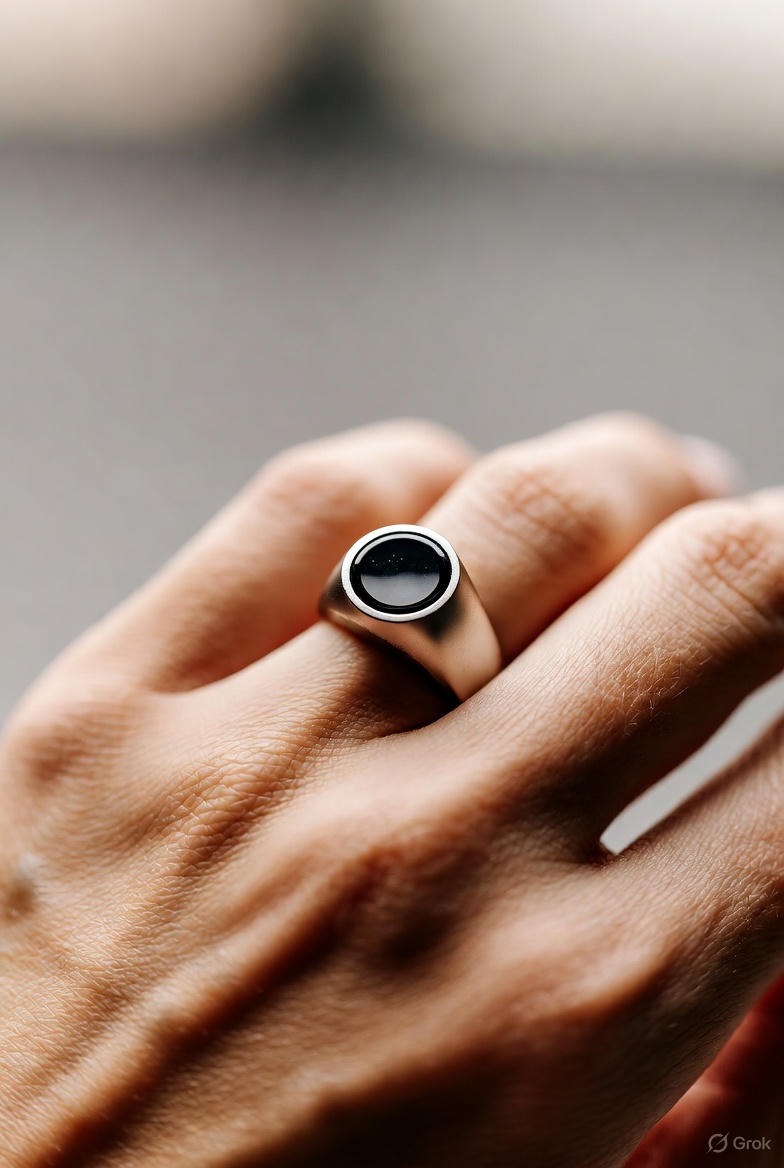
The journey of habit formation is a marathon of sprints. To maintain motivation over the weeks and months required for a habit to become automatic, we need frequent reinforcement. This is where the strategic use of micro-goals and the conscious celebration of data-driven wins becomes non-negotiable. Your smart ring provides an endless stream of potential micro-goals—the key is to choose them wisely and ritualize the celebration.
Creating Meaningful Micro-Goals:
Avoid vague goals like "be more active." Use your app’s features to set specific, time-bound, achievable targets that serve your larger habit-formation mission.
The Ritual of Celebration:
When you hit a micro-goal, PAUSE AND CELEBRATE. This act consciously attaches a positive emotional reward to the data point, supercharging the habit loop.
Your Ring as a Win Journal:
Over time, your app’s historical data becomes a powerful journal of your successes. On days when motivation is low, you can scroll back and see the tangible evidence of your progress—the longer streaks you’ve built, the months where your activity baseline permanently elevated, the weeks where your sleep and movement clearly synergized. This isn’t just data; it’s your proof of capability. It’s hard evidence that you can change, which builds self-efficacy—the belief in your own ability to succeed, which is the ultimate driver of lasting change.
This process of setting, achieving, and celebrating micro-wins transforms the often-arduous path of behavior change into a series of engaging, rewarding games. Your smart ring provides the playing field and the scoreboard. All you have to do is play, one tiny, celebrated victory at a time. For more strategies on building a resilient wellness routine, explore our curated blog content.
The narrative of successful habit change is often a smooth, upward trajectory. The reality, as your smart ring data will faithfully show you, is a jagged line of progress—peaks of consistency, followed by inevitable valleys of disruption. The vacation, the stressful work week, the common cold, the simple loss of initial novelty. These are not failures; they are data points in the experiment of you. The true test of a habit’s strength is not its flawless execution, but its resilience—its ability to survive these disruptions. This is where your ring transitions from a motivator to a compassionate, objective navigator.
Identifying the Plateau:
A plateau isn’t just a lack of progress; it’s a stagnation in the feedback loop. The habit has become routine, but the rewards—both the internal feeling and the data validation—have diminished. You’re doing the walk, but the buzz is gone. The data in your app looks the same, week after week. This is a critical signal. Your ring’s data can help diagnose the type of plateau:
Strategies Informed by Ring Data:
Your ring removes the moral judgment from plateaus and setbacks. It reframes them as physiological and psychological phenomena to be studied and managed. The data provides a calm, neutral space from which to plan your next move, ensuring that a temporary dip doesn’t become a permanent regression. It teaches you that resilience is a habit you can track, too.
For approximately half the population, a critical, internal rhythm dictates energy, recovery capacity, metabolism, and motivation: the infradian rhythm, most visibly manifested in the menstrual cycle. Traditional, linear fitness plans ignore this rhythm, often leading to frustration, injury, and burnout. A smart ring, with its continuous tracking of core body temperature (a key biomarker), resting heart rate, HRV, and sleep, becomes an indispensable tool for syncing movement habits with these powerful hormonal phases. This isn’t about doing less; it’s about doing what’s most supportive at the right time.
Phase 1: Menstruation (Days 1-~5) – The Reset & Restore Phase
Phase 2: Follicular Phase (Days ~6-~14) – The Energize & Build Phase
Phase 3: Ovulation (~Day 14) – The Peak Performance Window
Phase 4: Luteal Phase (Days ~15-~28) – The Sustain & Maintain Phase
By observing how your movement habits interact with your cycle data, you move from fighting your physiology to collaborating with it. Your ring provides the objective proof that your energy fluctuations are real and predictable, allowing you to design a flexible, compassionate, and highly effective movement plan that ebbs and flows with you, reducing injury risk and maximizing long-term adherence. It transforms the cycle from a hindrance into a strategic blueprint.

Humans are social creatures, and our behaviors are deeply influenced by those around us. While the smart ring provides intimate, personal data, integrating a social layer can exponentially increase the stickiness of your movement habits. This isn’t about public boasting; it’s about leveraging proven social forces—accountability, relatedness, and friendly competition—in a structured, positive way. Your ring data becomes the shared language of this community.
Forms of Social Connection:
The Ring as the Objective Referee:
A major benefit of using ring data in social accountability is that it removes subjectivity and excuses. You can’t argue with the graph showing a missed day or a completed activity ring. This objectivity keeps the focus on support and problem-solving rather than judgment. It also allows for celebrating process-based wins together—the very wins that build habits.
A Word of Caution – The Comparison Trap: Social features must be used with intention. Your data is your own. A friend’s 15,000 steps or sky-high HRV is irrelevant to your habit formation journey. The goal is mutual support in reaching personal consistency targets, not comparison of outputs. Let your ring keep you honest with yourself, and let the community provide the wind at your back.
This is the ultimate destination of successful habit formation: a shift in identity. You are no longer “someone trying to walk more.” You are “an active person.” This shift is the psychological magic that makes the behavior automatic and effortless. Your smart ring’s historical data is the most powerful tool you have to catalyze and cement this identity change.
The Evidence-Based Narrative:
Our self-image is a story we tell ourselves, often based on fragmented and subjective memories. We remember the days we skipped the gym more vividly than the 30 days we walked. Your ring’s data history provides an irrefutable, evidence-based counter-narrative to self-doubt.
When the old thought arises (“I’m just not someone who sticks with things”), you can open your app and scroll back through the months. The visual proof is there: a string of completed activity goals, a trend line showing reduced sedentary time, months of consistent sleep tracking that show the payoff of your evening wind-down routine. This data doesn’t lie. It allows you to say, “The story I’m telling myself is false. The data shows I am a person who prioritizes movement and recovery.”
Ritualizing the Identity Reinforcement:
Make a weekly or monthly ritual of reviewing your data not for optimization, but for affirmation.
The “Small Win” Cascade:
Each time you complete your tiny habit and see it logged, it’s a vote for your new identity. Ten votes don’t change much. But 100 votes? 300 votes? The cumulative weight of this evidence, stored conveniently on your finger and in your app, becomes overwhelming. The ring turns every micro-habit into a tangible, recorded vote for “being an active person.”
This identity shift, backed by data, is self-reinforcing. When you see yourself as an active person, choices align effortlessly. Taking the stairs isn’t a “should,” it’s “what people like me do.” The parking spot farther away isn’t a burden; it’s an opportunity to embody your identity. The ring’s initial role as a motivator and tracker quietly fades into the background, leaving behind its most important gift: the data-supported belief in who you have become.
Your smart ring is a powerhouse of biometric data, but its true potential is unlocked when it stops being a siloed device and starts communicating with the broader digital ecosystem that manages your life. This integration allows you to create automated, context-aware systems that support your movement habits passively, turning your entire environment into a habit-forming ally.
1. Automating Your Environment with IFTTT/Zapier:
Use automation platforms to let your ring’s data trigger actions in your smart home or other apps.
2. Syncing with Comprehensive Health Platforms (Apple Health, Google Fit, Samsung Health):
This is foundational. By pushing your ring’s data (heart rate, activity, sleep, HRV) into these central hubs, you create a unified health profile.
3. Informing Your Wearable AI & Digital Coaches:
Advanced fitness and coaching apps (like Whoop, Athlytic, or training platforms) can use the ring’s raw data as a primary input.
4. Data Visualization and Long-Term Analysis:
Export your ring’s data (most apps allow CSV exports) and import it into data visualization tools like Google Sheets, Airtable, or even simple graphing apps.
By integrating your ring, you move from passive tracking to active ecosystem management. Your movement habits become a seamlessly integrated part of a responsive, data-informed life. This reduces cognitive load—the system supports you automatically—and allows you to focus on the experience of moving, not the logistics of tracking.
The final, and perhaps most profound, application of your smart ring in movement habit formation is playing the long game. We’re not building habits for a 12-week challenge; we’re building them for a lifetime of health, vitality, and resilience—often referred to as “healthspan.” Your ring is the quiet, persistent scribe recording the story of your body over years and decades. This longitudinal data set is a personal health asset of incalculable value.
Establishing Your Personal Baselines:
After 6-12 months of consistent wear, you move beyond population averages. You now know your normal.
These personalized baselines are your most important diagnostic tool. A deviation from your norm is far more meaningful than a comparison to a generic “ideal.”
Early Detection of Deviations:
Long-term data allows you to spot subtle trends that may indicate creeping issues.
Informing Macro-Life Transitions:
Your multi-year data becomes a guide through life’s chapters.
This long-term view transforms your smart ring from a habit coach into a lifelong health guardian. The daily habits you form today—validated and reinforced by the ring—are the data points that will create a powerful, personal map for navigating your future health. It provides the ultimate motivation: the clarity that every small, consistent choice is an investment in a longer, more vibrant life, and you have the tools to see that investment compound.
We have laid a comprehensive foundation. You’ve moved from understanding the science of habit loops to using your ring as a detective, from defining true healthy movement to installing a keystone habit. You’ve learned to engineer your environment, interpret subtle data signals, and navigate the inevitable challenges with grace. You’ve explored how to sync with your body’s deeper rhythms, leverage community, and solidify a new, active identity.
Your smart ring is no longer just a tracker. It is your baseline map, your reward system, your objective navigator, your cycle sync partner, your identity-builder, and your long-term health scribe. The process of forming healthy movement habits has been demystified and equipped with technology that provides constant, compassionate feedback.
The journey now is one of application, patience, and curiosity. Start with the 7-day audit. Choose one tiny keystone habit. Engineer one cue in your environment. Celebrate your first streak. Observe the correlations. When you have questions about the data or need inspiration, remember that resources like our comprehensive FAQ and in-depth blog articles are there to support you.
This is the beginning of a fundamental shift—from sporadic effort to embedded lifestyle, from willpower to automated behavior, from guessing to knowing. Your ring is on your finger, a silent partner in this transformation. The data is waiting. The story of your movement, and your health, is yours to write, one consistent, data-validated habit at a time.
Discover the tools to begin your story at Oxyzen.
Up to this point, we’ve largely discussed movement as a physical output. But your smart ring reveals a profound truth: all movement exists within a psychological and physiological context of stress and recovery. Two of the most critical metrics for understanding this context are Heart Rate Variability (HRV) and stress scores (often derived from heart rate data and sometimes skin temperature or electrodermal activity). Learning to read these signals allows you to calibrate your movement habits not just to your schedule, but to your nervous system’s actual capacity, transforming your approach from prescriptive to responsive.
Understanding HRV: Your Body’s “Readiness to Perform” Signal
HRV is the measure of the subtle variation in time between each heartbeat. Contrary to intuition, a higher HRV (more variability) generally indicates a healthier, more resilient autonomic nervous system—one that can adapt swiftly to stress and recover effectively. A lower, less variable HRV often suggests your body is under strain, whether from physical fatigue, emotional stress, illness, or poor recovery.
How to Use HRV Data for Movement Habits:
Interpreting Stress Metrics: The “Real-Time” Load Gauge
While HRV looks at recovery, stress metrics often try to quantify your sympathetic nervous system (“fight or flight”) activation in real-time or throughout the day.
The Calibration Cycle:
This creates a sophisticated feedback loop:
This cycle moves you from blindly following a plan to having a dynamic conversation with your body. Your ring provides the translation. You learn that some days, the healthiest movement is a slow walk, and that’s not a failure—it’s the pinnacle of intelligent, data-informed self-care.

Movement habits and nutrition are inextricably linked. You cannot build a durable, active body without providing it the proper materials for repair and energy. While your smart ring is not a calorie tracker in the traditional sense, its data on activity, heart rate, and recovery provides powerful, often overlooked insights that can guide your nutritional choices to directly support your new active identity.
Moving Beyond "Calories Burned" to "Fueling Demand":
The "Active Calories" or "Total Daily Energy Expenditure (TDEE)" metric on your app is useful, but its real value lies in understanding patterns of demand, not just a number.
Using Sleep Data as a Nutritional Compass:
One of the most direct links between ring data and nutrition is sleep.
Hydration: The Invisible Performance Enhancer:
While most rings don’t track hydration directly, they track its effects. A sudden, unexplained elevation in resting heart rate or a drop in HRV can often be a sign of mild dehydration. If you see this pattern, especially on active days, let it be your cue to prioritize fluid intake. Your movement performance and recovery are directly hampered by poor hydration.
By letting your activity and recovery data inform your nutritional choices, you create a synergistic system. You eat to move well and recover better, and you move in a way that creates a healthy demand for nutritious food. Your ring provides the objective link between these two pillars, helping you break free from generic dietary rules and move toward a personalized fueling strategy that empowers your movement habits.
At its core, habit formation is about making a behavior automatic by reinforcing it. Gamification—applying game-design elements in non-game contexts—is one of the most powerful tools for providing that reinforcement. Your smart ring’s companion app is likely already using basic gamification (streaks, badges, rings to close). But you can take this much further, designing a personal “game” that makes building movement habits genuinely engaging and fun.
Level-Up Your App’s Built-In Features:
Create Your Own Advanced Games:
Social Gamification:
Join or create a small, private challenge group within your app or with friends. As discussed earlier, focus challenges on process, not outcome. A “Weekly Consistency Cup” for whoever logs the most days completing their personal keystone habit is more sustainable and habit-affirming than a “Most Steps” challenge.
The Key to Successful Gamification:
The rewards must be meaningful to you. The points, badges, and levels are only effective if they are tied to your intrinsic values—health, vitality, self-mastery. The game should feel like a playful layer on top of a meaningful journey, not a meaningless distraction. Your smart ring provides the undeniable, real-time scorekeeping that makes the game feel legitimate and rewarding.
In a culture obsessed with “more,” the concept of a rest day is often misunderstood as laziness or failure. For the individual building movement habits, however, strategic rest is not the opposite of progress; it is an essential component of it. It is when the body adapts and gets stronger. Your smart ring provides the objective data to transform rest from a guilty concession into a strategic, proactive tool—what we might call Active Recovery Engineering.
Why "Active" Recovery?
Complete inactivity can sometimes lead to stiffness and sluggishness. Active recovery involves very low-intensity movement that promotes blood flow, aids nutrient delivery to muscles, and can enhance mood without imposing significant new stress. The key is intensity—it must be low enough to support, not hinder, recovery.
Using Your Ring to Prescribe the Perfect Rest Day:
The Mental Component:
Your ring’s data gives you permission to rest without guilt. Seeing the objective numbers that indicate systemic stress allows you to frame the rest day as a smart, strategic investment in tomorrow’s performance and long-term habit sustainability. It reframes rest as a high-level skill in your wellness toolkit, not a failure of willpower.
By engineering your Active Recovery days with the same intention you apply to your active days, you create a virtuous cycle. Movement begets the need for quality recovery, and quality recovery begets the capacity for more quality movement. Your smart ring is the essential feedback mechanism that keeps this cycle balanced and productive.
As you deepen your reliance on smart ring data to guide your habit formation, you will inevitably encounter moments where the data seems “off.” Maybe your step count seems low after a long day, your heart rate reading spikes while you’re sitting still, or your sleep data doesn’t match your subjective feeling. These moments can breed distrust and disengagement. Understanding the “why” behind common discrepancies is crucial for maintaining a productive, trusting relationship with your device.
Common Issues and Their Likely Causes:
The Golden Rule: Trend Over Snapshot.
Your smart ring is a phenomenal tool for showing changes over time. A single data point is noise. A two-week trend is signal. When you encounter a discrepancy, zoom out. Look at the weekly or monthly view. This perspective builds trust, because you’ll see the data reliably reflecting your lifestyle changes: more activity on vacation, better sleep after implementing a wind-down routine, improved HRV after a period of consistent habits.
Maintaining this trust is essential. It allows you to stay engaged with the process, using the ring as a powerful ally in your habit-building journey, even when it occasionally presents a puzzle. The puzzle itself—the process of investigating and understanding the data—becomes part of the engaging, mindful practice of knowing yourself.
The smart ring on your finger today represents just the beginning of a biometric revolution. As sensor technology, battery life, and AI algorithms advance, the role of the smart ring in habit formation and holistic health will become even more profound, predictive, and personalized. Understanding this trajectory helps you appreciate your current device as a powerful first-generation tool and get excited for the even deeper insights to come.
Near-Future Advancements (1-3 Years):
Longer-Term Vision (3-10 Years):
Preparing for This Future Today:
The most important thing you can do now is build your longitudinal data set. The habits you form and track today create the baseline that future, more advanced AI will use to provide you with hyper-personalized insights. Every day of consistent wear is an investment in that future profile. By engaging deeply with your current device—understanding its metrics, forming habits based on its feedback—you are not just improving your health today; you are training yourself to be an adept user of the even more powerful tools that will guide wellness tomorrow.
Your journey with your smart ring is a partnership in constant evolution, much like the technology itself and the story of the brands pushing this frontier. Embrace it as a living tool, and let it guide you toward a future where healthy movement is not a conscious effort, but a seamlessly integrated, intelligently supported part of your life.
Your Trusted Sleep Advocate (Sleep Foundation — https://www.sleepfoundation.org/)
Discover a digital archive of scholarly articles (NIH — https://www.ncbi.nlm.nih.gov/
39 million citations for biomedical literature (PubMed — https://pubmed.ncbi.nlm.nih.gov/)
experts at Harvard Health Publishing covering a variety of health topics — https://www.health.harvard.edu/blog/)
Every life deserves world class care (Cleveland Clinic -
https://my.clevelandclinic.org/health)
Wearable technology and the future of predictive health monitoring. (MIT Technology Review — https://www.technologyreview.com/)
Dedicated to the well-being of all people and guided by science (World Health Organization — https://www.who.int/news-room/)
Psychological science and knowledge to benefit society and improve lives. (APA — https://www.apa.org/monitor/)
Cutting-edge insights on human longevity and peak performance
(Lifespan Research — https://www.lifespan.io/)
Global authority on exercise physiology, sports performance, and human recovery
(American College of Sports Medicine — https://www.acsm.org/)
Neuroscience-driven guidance for better focus, sleep, and mental clarity
(Stanford Human Performance Lab — https://humanperformance.stanford.edu/)
Evidence-based psychology and mind–body wellness resources
(Mayo Clinic — https://www.mayoclinic.org/healthy-lifestyle/)
Data-backed research on emotional wellbeing, stress biology, and resilience
(American Institute of Stress — https://www.stress.org/)


