


How Your Wellness Ring Makes Healthy Movement Habits Visible
The ring makes the benefits of your habits visible and tangible.
The ring makes the benefits of your habits visible and tangible.
%402x.svg)
In the quiet hum of modern life, our health is often a story told in whispers—a subtle ache here, a low-energy day there, a feeling that something is "off" but we can’t quite pinpoint why. For decades, understanding our body’s daily narrative required guesswork, intuition, or expensive, infrequent medical checkups. We made resolutions based on how we felt in a single moment, not on how we lived across thousands of moments. We were blind to our own patterns.
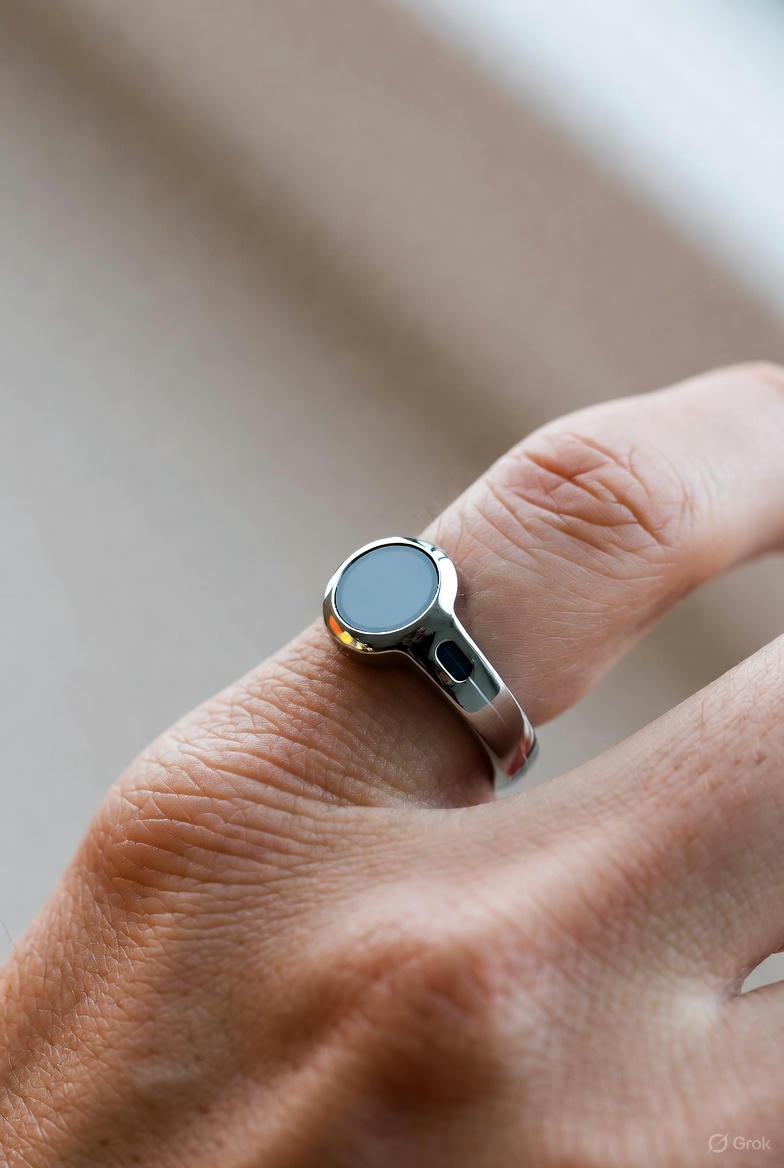
This is the profound shift ushered in by the wearable technology revolution, now elegantly condensed onto your finger. A modern wellness ring is not merely a gadget; it is a lens. It focuses the diffuse, invisible data of your existence—your movement, your rest, your physiological rhythms—into a clear, actionable picture. It makes the imperceptible, perceptible. It translates the subtle language of your body into a dashboard you can understand.
At its core, this technology solves a fundamental human problem: we cannot manage what we cannot measure. "Healthy movement" has long been a vague concept, often reduced to a daily step count or weekly gym sessions. But true, holistic movement health is fractal. It exists in the macro—your 30-minute run—and the micro—how you shift in your chair, your posture while you work, the gentle cadence of your daily chores, and the critical, often overlooked, balance between activity and recovery. This is the rich tapestry a wellness ring reveals.
By continuously tracking metrics like steps, active minutes, heart rate variability (HRV), resting heart rate, and even skin temperature, your ring weaves a comprehensive, 24/7 story of your physical being. It shows you not just when you’re exercising, but how your body responds to that exercise. It highlights the sedentary troughs in your day you’ve mentally edited out. It connects the quality of your movement to the quality of your sleep and your daytime stress levels, creating a holistic feedback loop.
This article is your deep dive into that visibility. We will explore exactly how your wellness ring illuminates the hidden dimensions of your movement habits, transforming abstract health goals into a visible, manageable journey. From the neuroscience of habit formation to the practical art of interpreting your data, we will uncover how this silent companion on your finger can become the most honest coach you’ve ever had. Welcome to a new era of self-awareness, where your healthy habits are no longer hidden in the dark, but brought clearly into the light.
We like to believe we have a fairly accurate accounting of our daily lives. We remember our morning workout, we know we sat at a desk for several hours, we recall taking the stairs once or twice. But this conscious recollection is a highlight reel—a heavily edited narrative subject to a host of cognitive biases. The vast, silent majority of our physical existence unfolds on autopilot, in a realm of unconscious habit and subtle physiological shifts that our brains, wisely designed for efficiency, simply filter out.
This is the invisible architecture of daily movement: the thousands of tiny postural adjustments, the fidgeting, the standing, the leisurely walks to the kitchen, the way we hold our shoulders while typing. Cumulatively, this "non-exercise activity thermogenesis" (NEAT) can be a massive contributor to our total daily energy expenditure, sometimes rivaling a dedicated workout. Yet, it is almost entirely imperceptible to our subjective awareness. Before the advent of precise wearable technology, this foundational layer of our physical health was a black box.
Furthermore, our perception of intentional exercise is often flawed. We might feel like we had an intense session, but was our heart rate in the intended zone for the duration we believed? We might think we’ve recovered fully from yesterday’s strain, but what is our resting heart rate and HRV whispering this morning? The gap between perception and physiological reality is where poor habits fester, plateaus form, and injuries brew. We push when we should pull back, and we rest when we should move, guided by unreliable feelings rather than data.
The consequence of this blindness is a cycle of frustration. We commit to "moving more," but without a map of our current terrain, we’re navigating in a fog. Goals become arbitrary ("10,000 steps!") rather than personalized. Progress feels intangible because the feedback is too delayed or too coarse. We lack the connective tissue between our actions and their direct, measurable impact on our body’s state. This disconnect is what makes habit formation so brittle.
Enter the sensing power of the modern wellness ring. Positioned on a finger rich with vascular pathways, it acts as a persistent, passive observer of this invisible architecture. It doesn’t rely on your memory or your mood. It quantifies the unquantifiable. It captures the micro-movements, the heart rate response to a stressful meeting (which is a physical movement of sorts, driven by adrenaline), the caloric burn of gardening, and the true metabolic cost of your day. For the first time, you can see the full spectrum of your movement, from the gentle baseline of NEAT to the peaks of exercise. This visibility is the indispensable first step. Before you can redesign the architecture of your habits, you must first have a blueprint of what currently stands. As you explore the data from your own device, you can always discover more about how this technology works to paint such a detailed picture.
Beyond Steps: The Multidimensional Data Your Ring Actually Tracks
If you believe a wellness ring is just a pedometer for your finger, prepare to have your mind expanded. The step count, while a familiar and useful metric, is merely the tip of the data iceberg. Today’s advanced rings, like those developed by innovative leaders in the space like Oxyzen, are sophisticated biosensing platforms that capture a symphony of physiological signals. Together, these signals create a multidimensional portrait of your movement health that steps alone could never reveal.
Let’s deconstruct the key metrics and understand what each one tells you about your movement habits:
1. Heart Rate (HR) & Heart Rate Zones:
This is your body’s real-time effort meter. During activity, your heart rate shows the intensity of your movement. Was that brisk walk truly "moderate" intensity? Your heart rate provides the objective answer. By tracking time spent in different zones (e.g., fat burn, cardio, peak), your ring evaluates not just that you moved, but how you moved. This allows for precision in training, ensuring you’re hitting the right intensities for your goals, whether it’s endurance building or high-intensity intervals.
2. Resting Heart Rate (RHR):
Measured typically during sleep or periods of deep calm, your RHR is a powerful indicator of cardiovascular fitness and overall recovery. A trend of lowering RHR over time often suggests improving fitness. Conversely, a sudden spike in your morning RHR can be an early warning sign of inadequate recovery, impending illness, or excessive stress—a clear signal that today might be a day for gentle movement rather than intense training.
3. Heart Rate Variability (HRV):
Arguably the crown jewel of autonomic nervous system insight, HRV measures the subtle variations in time between each heartbeat. A higher HRV generally indicates a more resilient, adaptable system and better recovery. For movement habits, HRV is a crucial guide. A high HRV score in the morning suggests your body is ready for a challenging workout. A low HRV score recommends restorative activities like walking, yoga, or even a rest day. It turns "listening to your body" from a vague concept into a precise data point.
4. Active Minutes & Metabolic Equivalents (METs):
This metric moves beyond simple step counting to measure the volume and intensity of your movement. It credits you for activities where steps aren’t the focus—like weightlifting, cycling, or yoga. By calculating METs (the ratio of your working metabolic rate to your resting rate), your ring quantifies the total energy cost of your day’s movement in a scientifically valid way.
5. Skin Temperature & Blood Oxygen (SpO2):
While crucial for understanding your sleep health, these metrics also provide movement context. A elevated baseline skin temperature can indicate inflammation from overtraining. Nocturnal SpO2 levels can reflect how well your cardiorespiratory system is recovering from the day’s demands. They complete the 24-hour story of strain and recovery.
By synthesizing this data, your wellness ring does something remarkable: it assesses the quality and impact of your movement, not just the quantity. It tells you if your movement habits are making you more resilient or running you down. It shows the connection between yesterday’s workout and tonight’s deep sleep quality. This multidimensional view is what transforms a simple activity tracker into a true wellness intelligence platform.
Our modern environment is a masterpiece of engineered stillness. We sit in cars, at desks, on couches. We can work, shop, socialize, and be entertained without ever rising to our feet. This pervasive sedentarism has been dubbed "the sitting disease," linked to increased risks for cardiovascular disease, diabetes, obesity, and even depression. Yet, because it’s the default background of our lives, we are astonishingly blind to its patterns.
You may know you have a desk job, but do you know exactly how many consecutive hours you sit without a break? Can you pinpoint the times of day you are most stagnant? Most of us dramatically underestimate our inactive time. This is the sedentary blind spot—a dangerous gap in our self-awareness that wellness rings are uniquely equipped to fill.
Unlike a wrist-worn device that can misclassify typing as steps, a ring on your finger provides a clearer signal for detecting true stillness. Advanced algorithms analyze accelerometer and heart rate data to identify periods of prolonged inactivity. The most valuable feature here is not the total sitting time, but the pattern of sitting.
This is where visibility becomes transformative. Your ring’s app might show you a daily timeline revealing:
Seeing this pattern visualized is often a shocking "aha!" moment. It moves sedentarism from an abstract health risk to a concrete, daily behavior you can address. The data provides specific, actionable targets: "Break up 3-hour sitting blocks" or "Add a 10-minute walk at 3 PM."
Many wellness rings now feature gentle vibration alerts to nudge you to move after a user-defined period of inactivity (e.g., 45 minutes). This real-time intervention leverages the power of immediate feedback, directly combating the blind spot. It’s a digital tap on the shoulder, reminding you that your body needs micro-bursts of movement for circulation, metabolic health, and mental focus.
By illuminating your inactivity patterns, the ring shifts your mindset. Movement is no longer just something you do in a scheduled block; it becomes a fluid element to be woven throughout the fabric of your day. It empowers you to combat the sedentary trap with intention, turning a blind spot into a highlighted area for positive change. For those curious about how this data interacts with other aspects of health, our FAQ section dives into many common questions on tracking and interpretation.
Knowledge alone is not power; it is only potential power. The true catalyst for change is the feedback loop—the mechanism that connects our actions to their consequences. This is where wearable technology, and particularly the always-on nature of a wellness ring, excels. It creates a closed-loop system of accountability that turns intention into sustained action.
Consider the classic New Year’s resolution: "I will work out more." Without feedback, this intention withers. You might go to the gym twice, but by week three, life gets busy. There’s no immediate consequence for skipping, only a vague, future sense of failure. The feedback is too delayed and too emotional to be effective.
Now, imagine that intention supported by your wellness ring. The dynamic changes completely:
1. Pre-Commitment Visibility: Before you even act, you see your baseline. The ring shows you your current activity levels, making your starting point objective and undeniable. This creates a tangible benchmark against which to measure "more."
2. Real-Time Nudging: As you go about your day, the ring provides micro-feedback. The inactivity alert vibrates, breaking your trance of stillness. You glance at your phone’s widget and see you’re only at 40% of your daily activity goal by noon, prompting a lunchtime walk. This feedback is immediate, context-aware, and non-judgmental—it’s simply data, inviting you to course-correct in the moment.
3. Post-Action Validation: After you move, the ring validates your effort. You finish a run and see your heart rate zone graph, active minutes logged, and calories burned. This positive reinforcement triggers a dopamine release—your brain rewards you for the completed activity. The action feels tangible and earned, strengthening the neural pathway associated with that behavior.
4. Trend-Based Accountability: On days when motivation is low, you’re not just letting down your future self; you’re breaking a visible chain. Most apps display weekly or monthly streaks. The desire to "keep the streak alive" leverages behavioral psychology, turning abstract health into a game you play for yourself. You start to feel accountable to the data, which is a reflection of your own commitment.
This constant, gentle feedback loop is the unsung hero of habit formation. It shrinks the gap between action and reward, making the benefits of healthy movement feel more immediate. It externalizes memory and willpower, offloading them onto a device that never forgets your goals. The ring becomes a silent partner, a coach that doesn’t yell but consistently points your attention back to your stated intentions. To see this principle in action with real people, you can explore powerful testimonials from users whose habits were transformed by this very feedback.
In a culture obsessed with hustle and output, we often frame movement health as a one-way street of expenditure: burn more, do more, push harder. This mindset is not only incomplete but counterproductive. True fitness and resilience are built in the balance between stress and recovery. If activity is the stressor that breaks your body down, recovery is the process that builds it back stronger. Ignoring recovery is like writing checks without ever depositing money in the bank—eventually, you face burnout or injury.
Your wellness ring is a powerful antidote to this imbalance because it gives equal visibility to recovery. It reframes movement health as a cycle, not a linear path. The data it provides makes the invisible process of recovery tangible, elevating it from an afterthought to a measurable, manageable component of your routine.
Key recovery metrics your ring illuminates:
This visibility fundamentally changes how you plan your movement. Instead of following a rigid calendar-based schedule (e.g., "I must run hard every Tuesday"), you adopt a responsive, body-based schedule. You learn that a poor recovery score doesn't mean "skip exercise," but rather "choose restorative movement." This might mean swapping a HIIT class for a walk in nature, a yoga session, or focused mobility work.
By honoring the recovery imperative, you train smarter, not just harder. You reduce injury risk, prevent burnout, and create sustainable progress. Your ring empowers you to see rest not as lost time for activity, but as the essential, productive phase where the benefits of your movement are fully realized. For athletes and active individuals, this approach is revolutionary, as detailed in our guide on deep sleep optimization for athletic recovery.
The era of one-size-fits-all health goals is over. The 10,000-step benchmark, while a useful public health slogan, is an arbitrary number that holds no specific meaning for your unique body, lifestyle, or physiology. A construction worker likely exceeds it without trying, while someone with a chronic condition may find it an impossible, demoralizing hurdle. Generic targets often lead to disengagement because they lack personal relevance.
Your wellness ring’s greatest gift is its ability to help you personalize. It provides the data necessary to move from generic targets to a bespoke movement blueprint that aligns with your biology and your life. This process is the heart of sustainable behavior change.
Step 1: Establish Your Personal Baseline.
Before setting any goal, you spend a week or two simply wearing the ring and living normally. This "observation phase" collects your true, unforced data: What is your average daily step count? How many sedentary hours do you truly log? What’s your typical resting heart rate? This baseline is your honest starting point, free from judgment. It’s the foundation upon which realistic goals are built.
Step 2: Set Process-Oriented, Data-Informed Goals.
Instead of a lofty, outcome-based goal like "lose 20 pounds," you set small, process-based goals derived from your data. For example:
Step 3: Leverage Your Body’s Signals.
Your physiological data guides the difficulty and type of your movement. On a high-recovery score day, your goal might be to spend 20 minutes in your peak heart rate zone. On a low-recovery day, your goal shifts to hitting 100% of your sleep target or completing 30 minutes of gentle stretching. This dynamic adjustment ensures you are always working with your body, not against it.
Step 4: Celebrate Micro-Wins in the Data.
Personalization makes progress visible in small increments. Did your HRV trend upward this week? That’s a win. Did you hit your active minute goal for 5 days straight? That’s a win. Did you see a correlation between an evening walk and a higher deep sleep percentage? That’s a profound, personalized insight. The ring’s app becomes a journal of these micro-wins, fueling motivation through tangible evidence of improvement.
This personalized approach fosters intrinsic motivation. You’re no longer chasing a number set by a marketer; you’re engaging in a self-directed experiment to improve your own well-being. The ring is your lab instrument, providing the feedback to see what works for you. To begin crafting your own blueprint, a great starting point is exploring the Oxyzen shop, where the journey to personalized data begins.

We intuitively know that a good walk can clear our head, and a rigorous workout can melt stress away. But the connection between movement and mental state is often framed as anecdotal or purely experiential. Your wellness ring makes this profound mind-body connection visible and quantifiable. It draws a direct, data-driven line between your physical activity and your psychological well-being, offering some of the most compelling insights for holistic health.
Stress Revealed as a Physical Metric: While we think of stress as emotional, it manifests physically through our autonomic nervous system. Two of your ring’s core metrics—Heart Rate (HR) and Heart Rate Variability (HRV)—are exceptional proxies for nervous system arousal. A sudden spike in heart rate during a non-physical task (like a tense work call) is a clear signal of acute stress. A suppressed HRV over days indicates a nervous system stuck in "fight or flight" mode, or chronic stress.
The powerful insight comes when you cross-reference this stress data with your activity log. You might discover:
Movement as a Mood Regulator: Beyond stress, the ring can reveal patterns linking activity to overall energy and mood. Many users report that on days they hit their movement targets, their subjective sense of energy and focus is higher. While the ring doesn’t track mood directly, you can manually log your feelings in most companion apps. Over time, you may see a data-backed pattern: higher activity days align with self-reported "good" or "energized" moods. This turns a vague sense of "exercise is good for me" into a personal, verified truth.
The Sleep-Movement-Stress Triangle: This is where the holistic view becomes indispensable. The ring shows you the continuous loop: Poor sleep → Higher resting heart rate & lower HRV (higher stress) → Less energy and motivation for movement → More sedentarism → Further degraded sleep quality. Conversely, it also illuminates the virtuous cycle: Intentional movement → Improved stress metrics → Deeper, more restorative sleep → Higher recovery score → More energy for movement.
By making this triangle visible, your wellness ring empowers you to intervene at any point. Feeling anxious? The data might show your HRV is low, suggesting a walk in nature over a high-intensity workout. Struggling with sleep? The data may reveal you’ve been inactive for three days straight, pointing to a gentle evening mobility routine as a solution.
This transforms your relationship with movement. It’s no longer just about fitness or aesthetics; it’s about managing your mental and emotional ecosystem. The ring provides the evidence that taking care of your body is one of the most effective forms of self-care for your mind. For a deeper look at one critical node in this triangle, consider reading about the brain-boosting connection between deep sleep and memory.
Understanding the science of habit formation is one thing; applying it is another. At its core, a habit is a neurological loop: Cue → Routine → Reward. The challenge is that the rewards for healthy movement are often delayed (weight loss, improved fitness) or subtle (a vague sense of well-being). This makes the habit loop fragile. Wellness rings supercharge habit formation by enhancing every single step of this loop with visibility and immediacy.
1. Enhancing the Cue: Cues can be external (time of day, an alarm) or internal (a feeling). Your ring creates new, powerful, data-driven cues. The morning recovery score is a cue. An inactivity alert is a cue. Seeing your activity circle only half-full by 2 PM is a visual cue. These cues are consistent, neutral, and impossible to ignore, making them far more reliable than fleeting motivation.
2. Supporting the Routine: This is the behavior itself—the walk, the workout, the stretch. The ring supports the routine by making it measurable and structured. Setting a goal of "12 hours of daily activity with at least 30 active minutes" transforms an amorphous intention ("be active") into a clear routine with a finish line. During the routine, real-time heart rate zone feedback can help you stay in the right intensity, making the routine more effective.
3. Amplifying the Reward: This is the ring’s masterstroke. It provides immediate, tangible rewards for completing the routine.
The Power of the Streak: Perhaps the most potent behavioral tool in these apps is the streak counter. The human brain is inherently loss-averse. The pain of breaking a 7-day streak often feels greater than the minor effort required to take a walk to maintain it. This leverages a cognitive bias for good, turning consistency into a game you play for yourself. The streak is a visual monument to your commitment, making the abstract concept of "consistency" vividly concrete.
By illuminating this entire process, the ring demystifies habit formation. It shows you, in real-time, that you are building something. Each day’s data is a brick in the edifice of your health. This visibility transforms willpower from a finite resource you must summon into a system you simply maintain. The habit becomes embedded not just in your mind, but in the very data stream of your life.
Raw data is overwhelming. A single day’s metrics—steps, heart rate, HRV, sleep stages—can be a confusing pile of numbers. The true magic happens not in daily snapshots, but in the longitudinal trends. Your wellness ring’s companion app is not just a data dump; it’s a trend-spotting engine designed to help you move from information to insight, and from insight to wisdom.
The Importance of the Weekly/Monthly View: Anyone can have an "off" day due to travel, illness, or a social event. The daily score can fluctuate. Wisdom lies in looking at the line graph, not the single dot. Is your average weekly HRV gently sloping upward? That’s a strong sign of improving resilience, even if yesterday’s score was low. Is your resting heart rate trend flat or decreasing? That suggests your cardiovascular fitness is holding or improving. The trend smooths out the noise and reveals the true signal of your health trajectory.
Connecting the Dots (Correlation is Key): The most powerful insights come from noticing correlations between different metrics. Your ring’s app often visualizes this, but you can also learn to see it yourself. For example:
These are not just observations; they are personalized cause-and-effect relationships. They empower you to make smarter choices: opting for a lighter dinner, prioritizing strength work, or using meditation on high-stress days to protect your sleep.
Listening to the Outliers: Sometimes, the most important data point is the one that screams an exception. A resting heart rate that’s 10 BPM higher than normal for two mornings in a row, despite good sleep, can be your body’s early warning of a brewing cold. A sudden, unexplained dip in HRV could indicate you’re not recovering from a new training load. Your ring gives you the sensitivity to hear these whispers from your body before they become shouts, allowing for proactive rest or a consult with a healthcare professional.
Making Smarter, Adaptive Choices: This interpretative process turns data into a decision-support system. It answers questions like:
The Integration Point: How Your Ring Fits Seamlessly Into a Holistic Health Ecosystem
The power of your wellness ring is not confined to the band on your finger or the app on your phone. Its true potential is unlocked when it becomes the central, integrating node in your personal health ecosystem. Modern wellness isn't a collection of isolated silos—sleep, nutrition, fitness, mental health—but a dynamic, interconnected system where each element influences the others. Your ring provides the common language and the continuous data stream that allows these elements to communicate, creating a holistic picture that is far greater than the sum of its parts.
Think of your ring as the hub of a wheel, with spokes connecting to other vital areas of your life:
This integration transforms your ring from a fitness tracker into a health intelligence platform. It stops asking, "How many steps did you take?" and starts asking, "How is your entire system functioning?" It allows you to run personalized experiments: If I improve my sleep hygiene this week, what happens to my workout performance? If I practice breathwork for stress, does it impact my deep sleep? The ring provides the before-and-after data, turning self-improvement into a science of one.
By serving as this integration point, the wellness ring finally delivers on the promise of personalized, preventive health. It moves you from reactive healthcare—treating problems after they arise—to proactive wellness, where you can see imbalances in your system early and adjust your habits accordingly to maintain equilibrium and vitality. To understand the philosophy behind creating technology that serves as such a hub, you can read more about Oxyzen's vision and mission.
Traditional fitness coaching often operates on a model of external pressure—pushing you to go harder, do more, beat your last record. This "no pain, no gain" ethos, while effective for short-term bursts, is a recipe for long-term burnout, injury, and disengagement. The psychology of your wellness ring is fundamentally different. It functions as a silent, data-driven coach whose primary goal is not to maximize output in a single session, but to optimize for consistency, sustainability, and overall system health over a lifetime.
This coaching philosophy is built on several key principles:
1. It Prompts, Doesn't Punish. The inactivity reminder is a gentle nudge, not a reprimand. The morning recovery score is information, not a grade. This neutral tone removes the emotional baggage of shame or failure that often derails fitness journeys. The data is presented as feedback, not judgment, allowing you to engage with it curiosity rather than dread.
2. It Advocates for Balance. A human coach paid for sessions might incentivize you to train hard every day. Your ring’s algorithms, looking objectively at HRV and sleep data, will often recommend rest or light activity. It teaches the critical lesson that optimal progress is non-linear and requires strategic recovery. This protects you from the common trap of overtraining, where more activity actually leads to declining performance and health.
3. It Celebrates Consistency Over Intensity. The most celebrated metrics are often streaks and weekly averages—markers of showing up. This reinforces that doing something moderately every day is more transformative for health than doing an extreme workout once a month. It builds identity: you become "someone who moves mindfully every day," not "someone who suffers through occasional brutal workouts."
4. It Provides Objective Evidence of Progress. On days when motivation is low and you feel like you've made no progress, your ring can show you the hard evidence: your resting heart rate is lower than it was 90 days ago; your sleep consistency has improved; your average daily step count has risen by 2,000. This data acts as an antidote to the "false plateau" and reminds you of how far you've come, rekindling motivation from within.
5. It Personalizes the Pace. The silent coach adapts to your life. It recognizes that a week with a busy work project and poor sleep is not the week to chase personal records. It guides you to modulate your efforts based on your body’s readiness, teaching you to be adaptable and resilient in the face of life's inevitable disruptions.
This approach fosters intrinsic motivation—the desire to act for the inherent satisfaction of the activity itself, rather than for an external reward or to avoid punishment. You move because you enjoy feeling better, sleeping better, and seeing your body become more resilient. The ring simply makes those benefits unmistakably visible, turning the slow, often invisible work of building health into a rewarding, self-perpetuating journey.

While the journey to better health is deeply personal, humans are inherently social creatures motivated by connection, shared experience, and friendly competition. The most advanced wellness platforms understand this and leverage the power of community to enhance accountability and enjoyment. Your ring’s data becomes a springboard for positive social interaction, moving your health journey from a solitary pursuit into a connected experience.
The Positive Power of Sharing: Opting into a friends list or community group within your ring’s app transforms your data from a private journal into a shared story. This isn't about comparison in a negative sense, but about:
Challenges and Team Goals: Many apps allow for step challenges, sleep consistency competitions, or weekly active minute showdowns. When framed as fun and inclusive, these features leverage our natural playfulness and team spirit. Working with a group to achieve a collective goal (e.g., "Our team walks 1 million steps this week") can motivate you to take that extra evening walk, knowing your contribution matters to others. This adds a layer of gentle, positive accountability that complements your internal motivation.
The Normalization of Health Talk: By sharing non-sensitive wellness data in a controlled environment, these social features help normalize conversations about health, recovery, and self-care. It moves these topics out of the realm of the medicalized or the extreme and into the everyday. You learn that others also struggle with sleep, have stressful weeks, and are working to build better habits. This reduces feelings of isolation and creates a sense of "we're in this together."
A Note on Healthy Boundaries: The key to positive social engagement is intentionality and boundary-setting. The best platforms allow you to share only what you want, with whom you want. The goal is never to foster anxiety or unhealthy competition, but to create a supportive network that reflects the same balanced, sustainable philosophy the ring itself promotes. It’s about connection, not comparison.
By integrating these social dimensions, your wellness ring taps into a fundamental human driver. It reminds us that while the work is individual, we thrive in community. The shared pursuit of well-being, supported by visible, objective data, can make the path more enjoyable, sustainable, and deeply rooted in our social nature. For a glimpse into how this community looks in practice, browsing real user testimonials and stories can be incredibly inspiring.
With great data comes great responsibility—and the potential for overwhelming confusion. It’s easy to fall into "analysis paralysis," obsessively checking every metric, worrying over minor fluctuations, and letting the pursuit of perfect data create anxiety that undermines the very wellness you seek. The goal of your ring is to empower, not enslave. Here are practical strategies for engaging with your data wisely and maintaining a healthy relationship with your digital coach.
1. Focus on Trends, Not Dots. This cannot be overstated. A single day’s low HRV or poor sleep score is meaningless noise. Your body has daily rhythms and is affected by countless minor variables. Make it a rule to never draw conclusions from a single data point. Only look for meaningful patterns over weeks and months. Use the weekly and monthly review functions in your app as your primary lens.
2. Choose 1-2 Key Metrics to Guide Your Focus. You don’t need to manage ten metrics at once. For a month, focus only on Sleep Consistency (going to bed/waking up at the same time) and Daily Movement. Once those feel habitual, shift focus to Recovery Score and how it relates to your workout intensity. By rotating your focus, you make incremental progress without being scattered. A great starting point is understanding what your deep sleep numbers should look like as a foundational metric.
3. Schedule Your Check-Ins, Don’t Obsess. Designate specific times to engage with your data. For example:
4. Embrace the "So What?" Test. For every piece of data you see, ask: "So what? What is one actionable thing I can do with this information?" If there isn't a clear, positive action, let it go. For instance: Low recovery score → Action: "I’ll choose a walk instead of a run today." High resting heart rate for two days → Action: "I’ll prioritize hydration and an early bedtime." No actionable insight? File it away as an observation.
5. Remember the Human Element. The data is a map, but you are the terrain. Your lived experience—how you feel, your energy, your mood—is the ultimate validation. If your data says you're "Ready" but you feel exhausted, honor your feeling. The data is a guide, not a gospel. Use it to inform your intuition, not replace it.
6. Take Data Vacations. Periodically, consider taking a weekend or even a full week where you wear the ring but don’t look at the app at all. This breaks any compulsive checking habits and reconnects you with your innate body awareness. You’ll often return to the data with a fresher, healthier perspective.
By implementing these practices, you harness the incredible insight of biometric tracking while avoiding the common pitfalls. You become the master of the technology, using it as a tool for liberation and self-knowledge, rather than allowing it to become a source of new anxiety. For more support on navigating your specific device, our comprehensive FAQ page addresses many common user questions about data interpretation and best practices.
The wellness ring you wear today represents just the beginning of this visibility revolution. Sensor technology, machine learning, and biometric research are advancing at a breathtaking pace, promising even deeper, more nuanced, and more predictive insights into our movement and overall health. Understanding where this field is headed helps us appreciate the foundation being built now and anticipate the even more powerful tools on the horizon.
1. Continuous, Non-Invasive Glucose Monitoring (cgGM): While currently the domain of separate wearable patches, the integration of optical sensors capable of estimating glucose trends is a major frontier. For movement health, this would be revolutionary. You could see in real-time how different types of exercise (HIIT vs. steady-state) impact your blood sugar stability, or how post-meal movement affects your metabolic response. This would provide unparalleled insight into the energy management of your body.
2. Advanced Stress Biomarkers: Beyond HRV, future sensors may measure cortisol levels (the primary stress hormone) through sweat or interstitial fluid, or track sympathetic nervous system arousal with even greater precision. This would allow your ring to distinguish between the "good" stress of a workout and the "bad" stress of psychological anxiety, offering even more tailored recovery recommendations.
3. Electrodermal Activity (EDA) for True Recovery Insight: Already in some devices, EDA measures tiny electrical changes on the skin linked to sweat gland activity, which is a direct indicator of autonomic nervous system arousal. This could provide a second, confirming signal for stress and recovery states, making the ring’s readiness scores even more robust and personalized.
4. Movement Quality & Form Analysis: Using advanced accelerometers and gyroscopes, future algorithms could analyze the quality of movement, not just the quantity. Imagine feedback on your running gait symmetry, your posture throughout the day, or your range of motion during a squat. This shifts the focus from "did you move?" to "how well did you move?", preventing injury and promoting longevity.
5. Predictive Health Analytics & AI Coaching: With enough longitudinal data, machine learning models will move from describing your current state to predicting future states. Your ring could alert you: "Based on your declining sleep efficiency and rising RHR, you have a 70% likelihood of catching a cold in the next 48 hours. Prioritize rest and hydration." The AI coach could then dynamically adjust your suggested workouts, meal timing, and even mindfulness prompts to help you navigate the predicted challenge.
6. Seamless Multi-Modal Sensing: The future is not one ring to rule them all, but an ecosystem of discreet, interconnected sensors—rings, earrings, patches, and smart fabrics—all feeding into a unified health model. Your ring might handle core vitals, while a knee sleeve analyzes joint load, and smart clothing monitors core temperature. This network would provide a breathtakingly complete picture of your physical state.
These advancements will further blur the line between wellness tracking and preventative healthcare. The goal remains the same: to make the invisible visible. But the resolution of that picture is moving from standard definition to ultra-high definition, empowering us with a level of self-knowledge and proactive control over our health that was once the stuff of science fiction. To stay updated on these evolving technologies and their applications, bookmarking the Oxyzen blog is an excellent way to stay informed.
We began this exploration by acknowledging the fundamental human dilemma: we cannot manage what we cannot measure. For generations, our movement habits, the delicate balance of exertion and recovery, and the deep connections between physical activity and mental well-being existed in a fog of subjective feeling and guesswork. We set goals in the dark and wondered why we so often stumbled.
The modern wellness ring is a beacon cutting through that fog. It is not a magic solution that will make you healthy without effort. Rather, it is the most powerful tool yet devised for turning the light of objective awareness onto the daily processes that constitute our health. It makes the architecture of our habits visible, providing the blueprint we need to redesign them intelligently.
We have seen how it moves far beyond simple step counting to track the multidimensional story of our physiology—through heart rate, HRV, and recovery metrics. We’ve explored how it illuminates our sedentary blind spots and creates a real-time feedback loop of accountability that bridges the gap between intention and action. Crucially, we’ve understood its role in championing the recovery imperative, teaching us that movement health is a cycle, not a linear grind.
This technology personalizes our journey, helping us build sustainable habits through the science of consistency and the power of community. It integrates our disparate health efforts into a coherent ecosystem and functions as a silent, wise coach focused on long-term sustainability over short-term burnout. And as we learn to navigate the data with wisdom—focusing on trends, taking actionable insights, and avoiding paralysis—we forge a healthier relationship with technology itself.
The path forward is now visible. It is a path paved with your own data, telling the unique story of your body. It is a path where you are empowered to make smarter choices, not based on generic advice, but on the specific, evolving language of your own biology. Your wellness ring is the lens that brings this path into focus, turning the lifelong journey of health from a daunting trek into an explorable, manageable, and deeply personal adventure. The next step, as always, is yours to take—but now, you can see exactly where to place your foot.
Ready to make your invisible health habits visible? The journey begins with the right tool. Explore the collection at Oxyzen to find the wellness ring that will become your guide to a more conscious, balanced, and vibrant life.
In the quiet hum of our data-rich lives, a subtle but significant shift is occurring. We are moving from being mere collectors of metrics to becoming authors of our own health narratives. Your wellness ring provides the raw vocabulary—the steps, the heartbeats, the sleep cycles. But the true magic, the transformative power, lies in your ability to assemble these words into sentences, these sentences into chapters, and these chapters into the ongoing story of you. This final portion of our exploration is about that act of authorship: learning to translate cold, hard numbers into a warm, coherent narrative that guides your choices and celebrates your progress.
This narrative-building process begins with a simple but profound reframe: stop asking "What is my number?" and start asking "What is my number telling me?"
The Chapter of Daily Rhythm: Each day’s data is a short story. A morning with a high recovery score and elevated HRV sets the scene for a protagonist ready for challenge. A midday spike in heart rate during a work call introduces a moment of conflict or stress. An evening walk that successfully lowers your stress metric and leads to a night of deep, restorative sleep provides a satisfying resolution. Reading your day as a story helps you identify the plot points—the triggers, the responses, the outcomes—that shape your well-being.
The Volume of Trends: Weekly and monthly views form the chapters and volumes of your larger story. Here, you look for themes. Perhaps the theme of "Sleep & Performance" reveals that every week you achieve three quality workouts, they are invariably preceded by nights with over 90 minutes of deep sleep. The theme of "Stress & Recovery" might show that your most creative, energetic weeks follow periods where you maintained a low-stress baseline, as evidenced by a stable, high HRV. These are the recurring motifs of your health narrative.
The Character Arc: This is the most powerful narrative of all: your long-term transformation over quarters and years. This is where you see the character development. The arc might show a resting heart rate that has descended from 68 bpm to 58 bpm over 18 months—a clear arc of improving cardiovascular fitness. It might show the gradual smoothing of sleep patterns, indicating mastery of your wind-down routine. It might reveal a positive shift in your baseline HRV, narrating a story of growing resilience and adaptability.
By consciously crafting this narrative, you accomplish several critical things:
Your wellness ring provides the documentary evidence. You are the editor, the author, and the protagonist. The data stops being a report card and becomes the source material for the most important story you will ever tell: the story of your own vitality. To gather more source material for chapters on restorative rest, delve into resources like our guide on how to increase your most restorative sleep.
The generic advice of "move more, sleep better, stress less" fails when it meets the complex, messy reality of individual lives. Your wellness ring’s superpower is its ability to help you generate a personalized prescription—a set of tailored actions based on your unique data—to solve specific, real-world challenges. This is applied visibility. Let’s explore how to use your ring as a diagnostic and solution-finding tool for common scenarios.
Challenge: "The Afternoon Energy Crash."
Challenge: "I Work Out but Don't See/Feel Results."
Challenge: "High Work Stress is Spilling Over Into My Health."
This process turns you into a scientist in the lab of your own life. You form a hypothesis ("If I do X, my metric Y will improve"), run the experiment, and use your ring’s data to evaluate the results. The solutions you discover are yours alone—powerfully effective because they are built on the evidence of your own body.
In a world of instant notifications and next-day delivery, the timeline of the human body can feel frustratingly slow. Physiological adaptation doesn’t happen in days; it unfolds over weeks, months, and years. One of the most critical, and most difficult, lessons your wellness ring teaches is the necessity of playing the long game. It trains you to cultivate patience and to trust the incremental process that leads to lasting change.
The Deception of Daily Fluctuations: Your daily scores will bounce around. This is normal biological noise, influenced by hormones, digestion, weather, minor stressors, and hydration. A common mistake is to celebrate a single "perfect" day or despair over a single "bad" one, reacting to the noise as if it were the signal. Your ring’s trend lines are the antidote to this myopia. They teach you to quiet the daily drama and focus on the gentle slope of the line over time. Progress is rarely a steep, straight climb; it’s a series of steps forward, plateaus, and occasional small steps back, all trending gradually upward.
Celebrating Process Wins, Not Just Outcome Wins: Our culture celebrates outcomes: lost pounds, race times, lifted weights. These are lagging indicators, slow to change. Your ring highlights process wins—the leading indicators that guarantee outcomes will follow. A process win is hitting your sleep goal 5 nights in a row. It’s maintaining a 7-day activity streak. It’s seeing your average weekly HRV nudge up by 2 points. These are the tiny, daily deposits into the bank of your health that compound into dramatic future results. By learning to celebrate these, you find motivation in the controllable actions of today, not just the distant outcomes of tomorrow.
Building Trust in Your Body's Signals: Initially, you may follow your ring’s recommendations skeptically. "Rest? But I feel fine!" Over time, as you see that honoring a "Recover" day leads to a PR on your next "Ready" day, you start to build trust—not just in the device, but in your body’s subtle communication. You learn that the low-energy feeling you used to ignore was a valid signal, now confirmed by low HRV data. This builds a profound body literacy that transcends the device itself. The ring becomes a training tool for your own intuition.
The Compound Interest of Consistency: The most powerful force in health is not the intensity of a single workout, but the relentless consistency of positive daily habits. Moving your body mindfully for 30 minutes a day, every day, creates a far greater adaptive effect over a year than crushing yourself for 2 hours twice a month. Your ring makes this compound interest visible. The weekly review shows you the interest earned from your daily deposits. The monthly review shows the growing balance. This visual proof is what makes patience sustainable.
Playing the long game is an act of faith in your future self, supported by the evidence of your present data. It is about tending the garden daily, trusting that with sunlight, water, and time, growth is inevitable—even if you can’t see it happening hour by hour. Your wellness ring is the gardener’s journal, showing you the cumulative effect of your care, season after season.
The data from your wellness ring is deeply personal, but its implications can extend outward, improving your interactions and understanding in both professional and personal spheres. When shared intentionally and contextually, this objective information can foster empathy, set clear boundaries, and facilitate better collaboration. It’s about using visibility for connection.
In the Workplace:
In Personal Relationships & Family:
Crucial Caveats: This sharing must be consensual, contextual, and boundaried. It is not about surveillance or creating new avenues for criticism. It’s about using objective information to foster communication, set respectful boundaries, and build supportive structures around our shared human need for balance and well-being. The goal is to use visibility to see each other more clearly, and thus, care for each other more effectively.

As we invite these devices deeper into our lives, entrusting them with our most intimate physiological data, critical questions of ethics, privacy, and ownership arise. The visibility your ring provides is a gift, but it comes with the responsibility of understanding where your data lives, who can access it, and how it might be used. Being an empowered user means being a vigilant guardian of your own digital health identity.
The Question of Data Ownership: When you use a wellness platform, you typically generate two types of value: the personal insight you gain, and the aggregated data you contribute to the company’s pool. It is essential to read the privacy policy. Who owns the raw data? What can the company do with it? Reputable companies will be transparent, stating that you own your personal data, and they require your explicit consent to use it for anything beyond providing you with service (e.g., for research or product improvement, often in anonymized, aggregated form).
Privacy and Security: Your biometric data is uniquely sensitive—it’s a key to your physical state. Ensure the company you choose employs strong encryption (both for data in transit and at rest) and has a clear, public history of responsible data stewardship. Does the company sell your personal data to third parties? This is a red line for most privacy-conscious consumers.
The Algorithmic "Black Box": Your readiness scores, sleep stage classifications, and activity labels are generated by proprietary algorithms. While you can see the inputs (heart rate, movement), the exact weighting and logic may not be transparent. It’s important to maintain a degree of healthy skepticism. Treat the algorithm’s output as a highly educated suggestion, not an absolute truth. If your lived experience consistently contradicts the data, trust yourself. You are the final authority.
Psychological Dependence and Orthosomnia: A potential ethical pitfall is the rise of "orthosomnia"—a preoccupation with achieving perfect sleep or fitness data, leading to increased anxiety and ironically, worse sleep. This is where the principles of avoiding analysis paralysis are crucial. The device should be a tool for self-care, not a source of performance anxiety. Companies have an ethical duty to design apps that encourage healthy engagement, not obsessive compulsion.
Your Action Plan for Sovereignty:
By engaging with these ethical considerations, you move from being a passive consumer of technology to an active participant in shaping a responsible digital health ecosystem. You ensure that the narrative of your health, built from your most personal data, remains unequivocally yours.
Adopting a wellness ring is not the conclusion of a search for better health; it is the beginning of a lifelong learning partnership. Your body is not a static machine to be tuned once and forgotten. It is a dynamic, adaptive system that changes with age, lifestyle, stress, and goals. The ring that guides you in your 30s will provide different, but equally vital, insights in your 50s and beyond. This journey is one of continuous curiosity, adaptation, and growth.
Embracing Lifelong Phases of Health: Your movement needs and recovery patterns will evolve. In your 20s and 30s, the focus might be on performance, building strength, and high-intensity training. Your ring helps you optimize for those peaks. In mid-life, the emphasis may shift to maintaining muscle mass, mobility, and metabolic health, with recovery becoming even more paramount. In later years, the focus might be on stability, consistency of gentle movement, and sleep quality. Your ring provides the visibility to navigate each phase intelligently, showing you how to get the most out of your body at every stage. For instance, understanding how age affects deep sleep and how to compensate becomes a crucial piece of knowledge.
The Ring as a Early-Warning System: Over years of wear, your ring establishes a profoundly detailed "normal" baseline for you. This makes it exquisitely sensitive to deviations. A sustained change in a core metric—like a creeping rise in resting heart rate or a gradual decline in activity not explained by lifestyle—can be an early prompt to have a conversation with your doctor. It shifts healthcare from a reactive model to a participatory, data-informed model, where you are the steward of your own longitudinal health record.
Continuous Feature Evolution: The software powering your ring will evolve. New metrics, better algorithms, and deeper integrations will emerge via firmware and app updates. Staying engaged with the platform’s blog and resources ensures you are always learning how to extract more value from your device. What begins as a step tracker may, in a few years, offer insights into new dimensions of health you haven’t yet considered.
The Ultimate Goal: Embodied Wisdom: The highest aspiration of this long-term partnership is that the ring, over time, works itself out of a job—not because you stop wearing it, but because its lessons become so internalized that you achieve a state of embodied wisdom. You begin to feel your HRV without checking it. You sense your need for recovery in your bones. You naturally rise after sitting too long. The external feedback loop strengthens your internal one. The ring becomes less of a coach and more of a confirming companion, a silent witness to the vibrant, aware life you have built using the visibility it first provided.
This journey ahead is one of the most rewarding relationships you can have with technology. It is a commitment to knowing yourself, not in a static sense, but as a flowing, changing, ever-fascinating story of adaptation and life. Your wellness ring is the tool that makes that story legible, chapter by chapter, year by year.
We began with a simple, powerful idea: that the path to better health is illuminated by awareness. For too long, the most important processes governing our vitality—our patterns of movement, rest, and recovery—unfolded in the dark, leaving us to navigate by guesswork and generic advice.
The modern wellness ring changes this paradigm. It is a beacon of objective awareness, casting light on the intricate, real-time dance between our actions and our physiology. We have journeyed through how it reveals the invisible architecture of our days, moves beyond simple steps to track multidimensional health, and shatters our sedentary blind spots. We’ve seen it create a transformative feedback loop of accountability, champion the non-negotiable role of recovery, and empower us to build personalized, sustainable habits.
This technology integrates our disparate health efforts into a coherent whole, functions as a silent coach focused on longevity, and connects us to communities of shared purpose. It challenges us to become wise interpreters of our own data, authors of our health narratives, and ethical guardians of our digital selves. It is a tool for solving life’s specific challenges and for cultivating the patience required for lifelong well-being.
But let us remember, the ring is a lens, a map, a translator. It is not the territory, the journey, or the story itself. The territory is your living, breathing body. The journey is your daily choices. The story is the life you create. The ring’s singular gift is visibility. It makes the consequences of our choices clear. It makes the progress of our consistency undeniable. It makes the connection between how we live and how we feel impossible to ignore.
The invitation, then, is not to become a slave to data, but to become a student of yourself. Use this visibility not to judge, but to understand. Not to obsess, but to optimize. Not to chase perfection, but to pursue consistency and balance.
The healthiest movement habit you will ever build is the habit of paying kind, informed attention to the one body you have, through all the phases of your life. Your wellness ring simply makes that attention possible, one visible, measurable, manageable day at a time.
The story of your health is waiting to be written, with data as your pen and daily life as your page. Begin your chapter today.
Your Trusted Sleep Advocate (Sleep Foundation — https://www.sleepfoundation.org/)
Discover a digital archive of scholarly articles (NIH — https://www.ncbi.nlm.nih.gov/
39 million citations for biomedical literature (PubMed — https://pubmed.ncbi.nlm.nih.gov/)
experts at Harvard Health Publishing covering a variety of health topics — https://www.health.harvard.edu/blog/)
Every life deserves world class care (Cleveland Clinic -
https://my.clevelandclinic.org/health)
Wearable technology and the future of predictive health monitoring. (MIT Technology Review — https://www.technologyreview.com/)
Dedicated to the well-being of all people and guided by science (World Health Organization — https://www.who.int/news-room/)
Psychological science and knowledge to benefit society and improve lives. (APA — https://www.apa.org/monitor/)
Cutting-edge insights on human longevity and peak performance
(Lifespan Research — https://www.lifespan.io/)
Global authority on exercise physiology, sports performance, and human recovery
(American College of Sports Medicine — https://www.acsm.org/)
Neuroscience-driven guidance for better focus, sleep, and mental clarity
(Stanford Human Performance Lab — https://humanperformance.stanford.edu/)
Evidence-based psychology and mind–body wellness resources
(Mayo Clinic — https://www.mayoclinic.org/healthy-lifestyle/)
Data-backed research on emotional wellbeing, stress biology, and resilience
(American Institute of Stress — https://www.stress.org/)


