


How to Maintain a Calm Mind During Crisis Situations
Maintain calm during a crisis by using grounding techniques, focusing on the next small step, and regulating your breath to prevent panic.
Maintain calm during a crisis by using grounding techniques, focusing on the next small step, and regulating your breath to prevent panic.
%402x.svg)
The college application process is often framed as a pivotal moment in a young person's life—a launching pad into adulthood, a test of merit, and a promise of future success. We talk endlessly about the stress it places on teenagers: the pressure-cooker of standardized tests, the anxiety of waiting for acceptance letters, and the emotional upheaval of leaving home. We create checklists for them: research schools, write essays, ask for recommendations, submit the FAFSA. We validate their fears and celebrate their victories. But in this well-intentioned focus on the student, we have inadvertently created a silent, unseen crisis—the quiet unraveling of the parents standing on the sidelines.
You, the parent of a college-bound student, are the architect of this transition. You are the one filling out the financial aid forms at 2 a.m., proofreading the twentieth draft of the personal statement, and pretending not to cry when you look at old baby photos. You are the project manager of a high-stakes, multi-year operation, and you have been doing this while simultaneously holding down a career, managing a household, and maintaining a facade of unshakable calm. The stress you are under is not just significant; it is physiologically profound, and it is happening in a vacuum of acknowledgment.
This guide is your acknowledgment. It is the first resource designed specifically for you, not as a parent, but as a person—a human being with a nervous system that is currently being asked to operate at maximum capacity for an extended duration. We are going to explore wellness not as a luxury or a reward for a job well done, but as the foundational operating system that allows you to show up for your family, your work, and your own life without sacrificing your health. We will move beyond the clichés of "self-care" (because who has time for a bath bomb right now?) and dive into practical, evidence-based strategies that fit into the margins of your chaotic schedule.
To do this effectively, we will leverage a powerful new tool in the wellness landscape: the smart ring. This tiny, unobtrusive piece of technology has revolutionized how we understand the human body. Unlike a smartwatch that demands attention and delivers distractions, a wellness ring like Oxyzen works silently in the background, tracking your biometrics 24/7. It provides a mirror to your physiology, offering objective data on your sleep quality, heart rate variability (HRV), body temperature, and recovery status. For a parent running on fumes, this data is not just interesting—it is critical. It transforms vague feelings of "being tired" into quantifiable metrics. It proves that your late-night planning sessions are costing you deep sleep. It validates that the stress of waiting for that admissions decision is impacting your heart health.
Throughout this extensive guide, we will explore how to use this data to build resilience. We will discuss how small, consistent adjustments—what we call evening wellness rituals—can dramatically improve your ability to cope with stress. For instance, understanding the circadian impact of your nightly laptop session is the first step to mitigating its damage. You can learn more about evening light exposure and how it affects your ability to fall asleep after a long day of college prep. This is not about adding more to your plate; it's about understanding the plate you already have and making subtle shifts that yield massive returns in energy, focus, and emotional stability.
We are about to embark on a comprehensive journey through the specific wellness challenges faced by parents of college-bound students. This is the first part of a deep dive that will ultimately cover over 20,000 words of actionable advice, data-driven insights, and real-world strategies. We will break down the chaos into manageable sections, from mastering your morning readiness to leveraging your data for sustainable change. The goal is not perfection; the goal is to equip you with the knowledge and tools to navigate this transitional period with your health and sanity intact. Let's begin by addressing the silent engine of your current state: the chronic, low-grade stress that has become your new normal.

When your child begins the journey toward college, your body begins a journey of its own—one that you likely haven't signed up for or even noticed. It’s not just the lack of sleep or the extra coffee; it’s a fundamental shift in your physiological state. You are operating in a prolonged stress response, and understanding the mechanics of that response is the first step to reclaiming your well-being.
Let’s look under the hood. The human stress response, often called the "fight-or-flight" mechanism, is orchestrated by the autonomic nervous system (ANS). The ANS has two primary branches: the sympathetic nervous system (SNS), which acts as the accelerator, and the parasympathetic nervous system (PNS), which acts as the brake. When you perceive a threat—like a looming application deadline or a disappointing SAT score—your SNS activates. It floods your body with cortisol and adrenaline. Your heart rate increases, your blood pressure rises, and your body diverts energy away from non-essential systems like digestion and immune function to focus on the immediate crisis.
This system is brilliant for short-term survival. It helps you slam on the brakes to avoid a car accident. It gives you the strength to lift a fallen piece of furniture. But the college application process is not a short-term crisis. It is a marathon that lasts months, and for some families, years. This transforms an acute stress response into a chronic one. Your SNS never gets the signal to stand down. It remains on high alert, keeping your foot on the accelerator even when there is no immediate danger.
This is where you differ from your college-bound student. While they experience acute spikes of stress—before a test, after receiving an email—your stress is ambient. It’s the background hum of worry about tuition costs, the nagging concern about them being far from home, the endless logistics of campus visits. This chronic activation leads to a state of "allostatic load," which is the wear and tear on the body from repeated exposure to stress. Your system is working overtime, and like any machine pushed beyond its limits, it begins to show signs of strain.
What does this strain look like in daily life? It’s not just feeling tired. It’s the brain fog that makes it hard to concentrate at work. It’s the irritability that flares up at your partner over something trivial. It’s the three colds you’ve had this season because your immune system is compromised. It’s the digestive issues you can’t quite explain. You might find yourself lying in bed at night, physically exhausted, but your mind is racing through checklists and worst-case scenarios. That’s your SNS refusing to hand the keys back to the PNS.
Your body is trying to send you signals, but the noise of the college process is drowning them out. You dismiss the fatigue as "just part of the job." You ignore the tension in your shoulders. You power through the after-lunch energy crash with another cup of coffee. But these are not signs of weakness or poor time management; they are the symptoms of a nervous system under sustained siege.
This is where objective data becomes your ally. You can't manage what you can't measure. A wellness ring offers a window into your ANS by tracking key metrics. Your resting heart rate (RHR) is a fundamental indicator. If you notice your RHR creeping up by a few beats per minute over several weeks, it’s a strong signal that your body is working harder than usual to maintain homeostasis—a classic sign of accumulating stress.
Even more revealing is your Heart Rate Variability (HRV). HRV measures the variation in time between each heartbeat. It might sound counterintuitive, but a healthy heart isn't a metronome; it’s more like a jazz drummer, with constant, subtle variations in rhythm. High HRV indicates a resilient, adaptable nervous system, one that can efficiently switch between the accelerator (SNS) and the brake (PNS). Low HRV suggests a system stuck in overdrive, with little variation—your body is in a state of high tension and low recovery. During the height of college application season, it is not uncommon for parents to see their HRV drop into a range that indicates they are functionally in a state of chronic stress, similar to an athlete who is overtraining without adequate rest.
Your body temperature, another metric tracked by advanced rings, also tells a story. A slight elevation in your nighttime skin temperature can be a sign of systemic inflammation or stress. It’s your body running hot, literally, from the internal pressure.
Recognizing these physiological changes is not meant to add another worry to your list. It’s meant to validate your experience. You are not imagining this. You are not weak for feeling overwhelmed. Your body is having a predictable, measurable reaction to an extraordinary situation. The path forward isn't to magically eliminate the stressor—your child is still going to college. The path is to enhance your body's capacity to handle the load. It’s about strengthening your PNS, your "brake system," so it can more effectively counterbalance the SNS. It’s about improving your recovery. The rest of this guide is dedicated to showing you how to do exactly that, using your own physiology as a guide. We will explore how your wellness ring validates the power of evening rituals to actively lower your stress and improve your resilience.
If you are like most parents in the thick of the college process, the very concept of "me-time" feels like a relic from a past life. It sounds nice in theory, like a beach vacation or a full night's sleep, but it’s utterly incompatible with your current reality. Between work, managing the household, and acting as your child's college admissions coach, the idea of carving out an hour for yourself is not just impractical; it feels almost selfish. Who has time to relax when there are essays to review and scholarship deadlines to track?
This is the mindset we need to dismantle. The problem isn't you; it's the definition of "me-time" we've been sold. We tend to think of it as a large, indulgent block of time—a spa day, a long bath, a solo hike. That is the "vacation" model of self-care, and it’s unsustainable. What you need is not a vacation from your life; you need a daily, sustainable practice that allows you to function within your life without being consumed by it. You need a reset button, not a pause button.
Enter the concept of the Evening Wellness Ritual. This is not "me-time" in the traditional sense. It’s not about indulgence or escape. It’s a practical, strategic, and non-negotiable physiological intervention. Think of it as your daily system reboot. Just as your smartphone needs to clear its cache and close background apps to run efficiently, your nervous system needs a dedicated period to downshift from the high-alert mode of the day and prepare for the restoration of sleep.
For a parent of a college-bound student, the evening is the most vulnerable time. The day's fires have (mostly) been put out. The distractions of work and errands fade. And in that quiet space, the anxiety rushes in. You replay conversations with your teen. You worry about their future. You mentally calculate tuition costs. Your brain, freed from external tasks, turns its considerable processing power inward, and it fixates on the biggest, most uncertain project on your plate: your child's future. This is the "anxiety witching hour," and if left unmanaged, it will directly hijack your sleep.
The purpose of an evening ritual is to create a structured buffer zone between the "doing" of the day and the "being" of the night. It is a deliberate and repeated sequence of actions that sends a powerful signal to your brain: The workday is over. The college prep is over. It is now time to be safe, to rest, and to recover. This signal helps to dampen the sympathetic nervous system (SNS) and engage the parasympathetic nervous system (PNS), your body's rest-and-digest mode.
The beauty of this approach is that it doesn't require hours. It requires intentionality. A ritual can be as short as 15 to 30 minutes. The key is consistency. When you perform the same sequence of calming activities each night, you create a powerful conditioned response. Your body begins to recognize the cues—the dimmer lights, the cup of herbal tea, the five minutes of journaling—and it starts to initiate the relaxation response before you even get into bed. This is the opposite of the common parental habit of collapsing into bed after a final scroll through emails or college forums, a practice that leaves your brain buzzing with stimulation.
The data from your wellness ring will become your greatest motivator in establishing this habit. It provides objective proof that these rituals are not just "nice to have" but are fundamentally improving your physiology. You will be able to see the direct impact of a structured evening on your key recovery metrics. For instance, a consistent routine demonstrably improves your sleep stages, particularly the deep sleep and REM cycles where physical repair and mental processing occur. You can explore evening wellness rituals that improve your wellness ring sleep stages to understand exactly how to structure your wind-down.
Your ring will show you that on nights when you follow your ritual, your heart rate begins to drop earlier, your HRV trends higher overnight, and you spend more time in restorative sleep. On nights when you skip it and work up until the moment you turn off the light, your data will likely show a higher resting heart rate, lower HRV, and more restlessness. This feedback loop transforms the ritual from a vague wellness suggestion into a high-impact, data-backed strategy for resilience. It moves it from the "optional" column directly into the "essential" column of your daily life. It’s not about stealing time from your family; it’s about investing time in your capacity to be a present, patient, and healthy parent for them.
In the modern era of college admissions, the work never truly stops, and much of it happens on a screen. You’re researching universities on your laptop, comparing costs on a tablet, and responding to emails from your child’s guidance counselor on your phone. You might be helping your teen polish their Common App essay late into the night, the glow of the monitor illuminating your face as you debate the merits of a single semicolon. This dedication is admirable, but it comes at a steep biological cost that most parents are completely unaware of: the systematic destruction of their circadian rhythm by blue light.
To understand why this is so damaging, we have to go back to basics. The human body operates on an internal clock, the circadian rhythm, which is primarily regulated by light. For millions of years, our ancestors woke with the sunrise, which flooded their eyes with bright, blue-enriched light. This light hit specialized cells in the retina and signaled to the brain's master clock, the suprachiasmatic nucleus (SCN), that it was time to be alert. It suppressed the production of melatonin, the hormone of darkness and sleep, and kicked our systems into gear.
As the sun set, the light shifted to warmer, redder tones. The absence of blue light was the signal for the SCN to flip the switch and begin flooding the body with melatonin, initiating a cascade of physiological changes that prepare us for sleep. Our body temperature begins to drop, our digestion slows, and our brain waves shift.
Now, consider your evening. You are sitting in a room lit by artificial overhead lights, staring at a screen that is specifically designed to emit high-intensity blue light directly into your eyes. To your ancient, hard-wired brain, this is not 10 p.m. on a Tuesday. This is high noon. The SCN receives the signal and slams the brakes on melatonin production. Your body is told, "It's daytime. Stay alert." Meanwhile, you are exhausted from your day and trying to wind down. You are fighting your own biology.
This conflict is the source of what we call "parental circadian disruption." You are asking your body to do two incompatible things: to be alert for the cognitive task of proofreading an essay, and to be relaxed enough to fall asleep an hour later. The result is a state of physiological confusion. You may feel "tired but wired"—your mind is fatigued, but your body is in a state of low-grade alertness. You lie in bed, and instead of drifting off, you replay the essay edits in your head. Your sleep, when it finally comes, is likely to be lighter and less restorative.
The consequences of this chronic disruption extend far beyond feeling groggy in the morning. A disrupted circadian rhythm is linked to a host of health issues, including impaired glucose metabolism (which can lead to weight gain), increased inflammation, mood disorders like anxiety and depression, and a weakened immune system. For a parent already under chronic stress, this is like pouring gasoline on a fire.
So, what is the solution? You can't simply abandon the evening college prep work. But you can fundamentally change the way you approach it by establishing what we call a "Digital Sunset." A Digital Sunset is a hard boundary in your evening, after which all screens are dimmed, shifted to warmer tones, or turned off entirely. It is a commitment to aligning your environment with your biology.
The first and most critical step is timing. Ideally, you want to begin your digital wind-down at least 60 to 90 minutes before your intended bedtime. This gives your body a crucial window of darkness to begin its natural melatonin surge. During this window, the blue-light-emitting devices need to go into a different mode. Most modern phones and computers have built-in "night mode" or "blue light filter" settings that shift the screen to an amber hue. While these are helpful, they are not a perfect solution. They reduce blue light but don't eliminate it. The gold standard is to switch to activities that don't involve screens at all.
This is where you get creative. That 90 minutes before bed can be reframed from "screen time" to "ritual time." It can include reading a physical book, listening to a podcast or an audiobook, having a conversation with your partner, doing some light stretching, or engaging in a hobby that doesn't involve a pixel. For the college prep tasks that truly can't be avoided, try to front-load them. If you must review something, do it immediately after dinner, keeping it as far from your bedtime as possible. If a late-night review is unavoidable, use an e-reader with a non-emissive screen (like the older Kindles) or a tablet with the blue light filter on max, and hold it farther from your face.
The proof of this strategy's effectiveness will show up immediately in your smart ring data. You will likely see your nightly average HRV increase and your resting heart rate decrease on nights when you successfully execute a Digital Sunset. You will see a shorter sleep onset latency—the time it takes you to actually fall asleep. Perhaps most importantly, you will see an improvement in your sleep consistency. To understand the full impact of this practice, you can read more about how your smart ring shows evening routine consistency compounds over time. The Digital Sunset is not about being a perfect parent who never works late; it's about being a smart parent who understands that protecting your biology is the ultimate act of service to your family.
One of the most relentless sources of anxiety for a parent managing the college process is the sheer volume of mental load. It’s not just the tasks you do; it’s the constant, background hum of remembering, organizing, and planning. It’s remembering to order the transcript, planning the discussion about the backup school, worrying about the tone of an email from the financial aid office. This cognitive burden doesn't clock out when you try to sleep. It follows you to bed, turning your mind into a chaotic to-do list that plays on an endless loop.
You’ve experienced it: you finally lie down, your body is tired, but your brain immediately kicks into high gear. Did we submit the CSS profile? I need to call the insurance company tomorrow. We haven't talked about the dorm deposit deadline. What if she doesn't get along with her roommate? This is your mind's attempt to assert control over an uncertain future by planning and worrying. The problem is that bedtime is the worst possible time for this activity. It activates the same prefrontal cortex and problem-solving circuits you use at work, jolting your brain back into a state of high alert just as you're trying to power it down.
The solution is not to try harder to "stop thinking." Telling a worried mind to be quiet is like telling a toddler to sit still—it often has the opposite effect. The solution is to externalize the mental load. You need to get the thoughts out of your head and onto a piece of paper (or a dedicated digital space) in a structured way. This is the purpose of the Pre-Sleep Audit, a powerful ritual that serves as a cognitive handoff, signaling to your brain that it is officially off duty until morning.
The Pre-Sleep Audit is a simple, 5-to-10-minute practice that should occur as part of your evening wind-down, ideally before you get into bed. It consists of two main parts: a Brain Dump and a Gratitude Pause.
Part 1: The Brain Dump
Take a notebook and pen—not your phone—and write down everything that is on your mind. This is not about creating a neat, prioritized to-do list. It’s about emptying the contents of your mental cache. Write down the tasks: Email coach about rec letter. Buy stamps for invitations. Check tuition payment portal. Write down the worries: Worried about his math grade. Nervous about the campus visit next month. Feeling guilty we can't afford that school. Write down the ideas: Maybe we should look at scholarships for left-handed students. Could ask Aunt Sue to write about family history for the essay.
The goal is catharsis, not organization. By putting these thoughts on paper, you are physically moving them from the vulnerable, looping space of your working memory into a permanent, external storage system. You are telling your brain, "I have captured this. It is safe. I do not need to hold onto it anymore." This act alone can significantly reduce the mental chatter that prevents sleep onset.
Part 2: The Mini-Plan
After the dump, take one minute to look at the tasks you've listed and identify the single most important thing you need to do tomorrow. It could be "call the financial aid office about the verification form" or "help Sarah outline her supplemental essays." Write it down as your "One Thing" for the next day. This simple act provides a sense of direction and control. It prevents you from waking up in a fog of anxiety, overwhelmed by an amorphous cloud of responsibilities. You wake up with a clear, manageable target.
Part 3: The Gratitude Pause
Finally, end the audit by writing down three specific things you are grateful for from that day. They don't have to be profound. They can be as simple as "the nice email from my son's teacher," "the hilarious text my daughter sent me," or "the quiet moment I had with my coffee this morning." This practice is not just fluffy positivity; it has a real physiological effect. It shifts your mental focus from the stress-inducing "scarcity" and "threat" mode (what's missing, what could go wrong) to a "safety" and "abundance" mode. This gentle cognitive shift helps to further engage the parasympathetic nervous system, lowering cortisol and paving the way for a more peaceful transition to sleep.
The impact of this simple audit is profound and trackable. When you consistently perform a Pre-Sleep Audit, you are actively managing the primary barrier to good sleep for stressed parents: a racing mind. This directly improves your sleep quality. Your wellness ring will reflect this by showing a higher HRV during the first half of the night, which is often when mental stress has its greatest impact. You'll likely see less time spent awake or restless during the night. Over time, this practice builds a powerful sense of agency. You are no longer a passive victim of your anxious thoughts; you are actively managing them. You can explore this concept further in our dedicated piece on the beginner-friendly guide to evening planning for better sleep, which delves deeper into how to structure this handoff effectively. The Pre-Sleep Audit transforms your bed from a battleground for anxious thoughts into a sanctuary for rest.
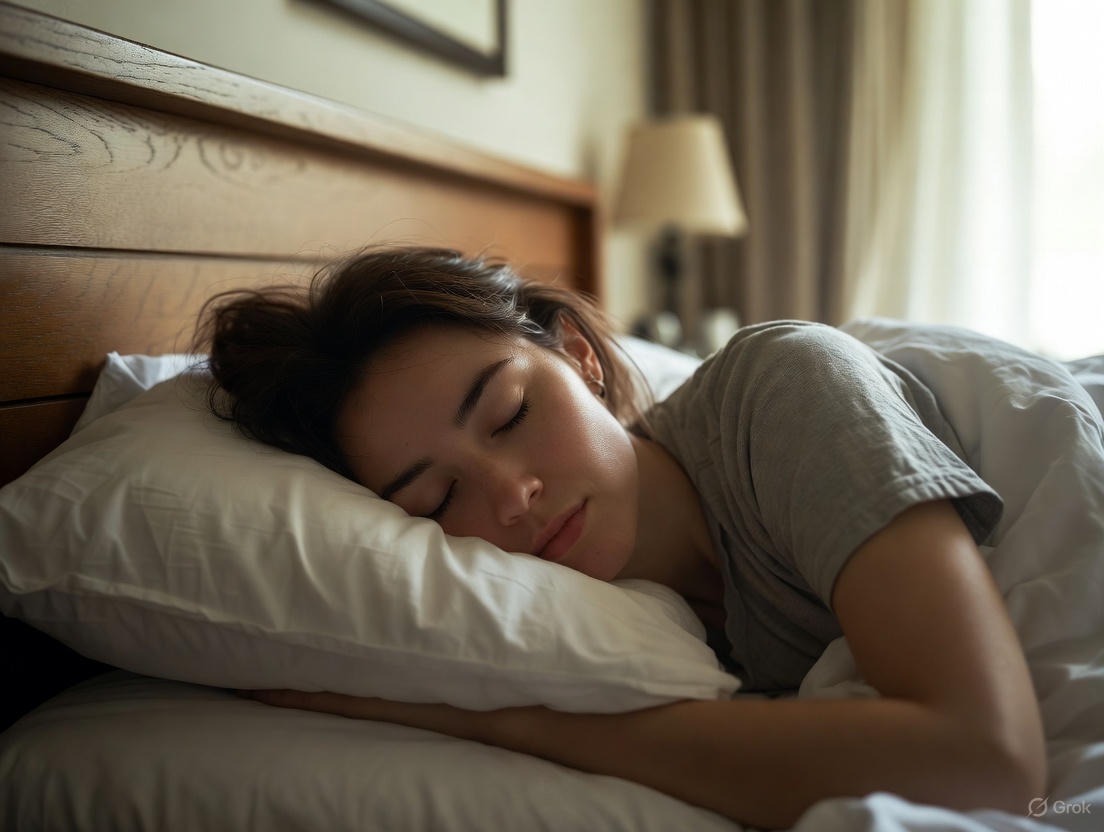
As you navigate the stress of your child's college transition, you may have noticed changes in your body temperature. Perhaps you feel warmer at night, or you find yourself kicking off the covers, only to wake up cold hours later. These fluctuations are not random; they are intricately tied to your circadian rhythm and your nervous system's state of arousal. Mastering your thermal environment is one of the most potent, yet underutilized, levers you can pull to improve your sleep quality and, by extension, your resilience.
To understand why temperature is so critical, we need to revisit the body's preparation for sleep. As part of the natural wind-down process, your core body temperature must drop by one to two degrees Fahrenheit. This drop is a primary physiological signal for sleep initiation. It is orchestrated by the same master clock, the SCN, that manages melatonin. As your core cools, blood vessels in your skin dilate, releasing heat to the environment. Your hands and feet become warmer as this process occurs. This internal cooling is not a side effect of sleep; it is a prerequisite for it.
Now, consider the state of a stressed parent. Chronic stress, with its constant activation of the sympathetic nervous system, keeps the body in a state of low-grade readiness. This often manifests as a slightly elevated core temperature, or a difficulty in achieving that natural nocturnal drop. Your system is running hot, literally. If you add to this the late-night screen time we discussed earlier, you are further suppressing melatonin and disrupting the body's ability to initiate this crucial cooling process. The result is that you go to bed with a core temperature that is simply too high for efficient, deep sleep. You may fall asleep eventually, but your sleep will be lighter, more fragmented, and less restorative. You'll spend less time in the slow-wave sleep that is essential for physical repair and immune function.
This is where "Temperature Tuning" becomes a game-changing strategy. You can actively assist your body in achieving that necessary temperature drop, creating the ideal internal environment for deep sleep. This goes beyond simply setting your thermostat to a lower temperature (though that is a great start). It involves a series of deliberate actions in the evening that signal to your body that it's time to release heat and power down.
The Cool Room
The most foundational step is optimizing your sleep environment. The ideal bedroom temperature for sleep is generally cited as between 65 and 68 degrees Fahrenheit (18-20 degrees Celsius). This is likely cooler than the average living room temperature. If you keep your house warm into the evening, you are working against your biology. Consider turning down the thermostat an hour or two before bed. If you don't have central control, opening a window for fresh, cool air can be remarkably effective, even in winter for a brief period.
The Hot Bath Paradox
One of the most effective and relaxing ways to lower your core temperature is to take a hot bath or shower 60 to 90 minutes before bed. This sounds counterintuitive, but the mechanism is brilliant. When you immerse yourself in hot water, your core temperature rises. In response, your body's thermoregulatory system kicks into high gear to cool you down. It sends a massive amount of blood to the surface of your skin (your hands, feet, and face) to radiate heat. When you step out of the bath and into the cooler air of your bathroom and bedroom, this heat loss continues rapidly. Your core temperature plummets, dropping below its baseline and creating the perfect condition for sleep onset. This is why a warm bath is so often associated with profound sleepiness. To optimize this, consider the timing and specifics. You can read more about the beginner-friendly guide to evening bathing timing for optimal ring scores to fine-tune this practice for your unique physiology.
Breathable Bedding
Your choice of sleepwear and bedding matters more than you think. Synthetic fabrics can trap heat and moisture, disrupting your body's ability to regulate temperature throughout the night. Opt for natural, breathable fibers like cotton, linen, or bamboo for your sheets and pajamas. These materials wick moisture away and allow for better air circulation, helping to maintain a stable thermal environment.
Your smart ring is an exceptional tool for validating the impact of your temperature-tuning efforts. It tracks your skin temperature throughout the night, providing a curve that shows how your body cools and warms during different sleep stages. By experimenting with these strategies—a cooler room, a pre-sleep warm bath, and breathable bedding—you can begin to observe the direct correlation with your sleep quality. You may notice that on nights when you successfully lower your core temperature, you spend more time in deep sleep, your HRV is higher, and your resting heart rate is lower. Conversely, a night where you felt too warm will likely show more restlessness and less restorative sleep. Mastering your thermal environment is a powerful way to take control of your sleep, transforming it from a passive hope into an active, engineered process. For a deeper dive into this specific technique, explore our guide on evening temperature cooling for ring-tracked sleep.
In the chaos of college prep, family dinner can become a casualty. Maybe you're eating later because of a campus tour, or grabbing fast food between activities. Perhaps you're so stressed that you're not hungry until late, or you're stress-snacking while reviewing financial aid documents. These disruptions to when and what you eat have a profound impact on your sleep and recovery, an impact that is often overlooked.
Your digestive system, like your sleep-wake cycle, operates on a circadian rhythm. Your body produces a specific suite of enzymes and hormones designed to process food efficiently during the daylight hours, when you are active and expecting to eat. As evening approaches and melatonin begins to rise, your digestive system essentially starts to power down. Gastric emptying slows, insulin sensitivity decreases, and the body shifts its focus from digestion and energy utilization to repair and restoration.
When you eat a large meal late at night, you are asking your gut to do a heavy, complex job during its scheduled maintenance window. This creates a state of internal conflict. Your body is trying to initiate the sleep process—lowering your core temperature, slowing your heart rate—but it is simultaneously diverting massive energy to the stomach and intestines to break down a large bolus of food. This can lead to a host of sleep disturbances: heartburn or acid reflux from lying down on a full stomach, restlessness as your body struggles to manage both digestion and sleep, and a higher core temperature due to the thermic effect of food (the energy required to digest it).
For the parent of a college-bound student, this is a critical area to optimize. You may not be able to control the stress, but you can control the timing and composition of your evening meal to set the stage for better sleep. This is the concept of "circadian eating."
Timing is Everything
The most powerful intervention is to establish a consistent "meal timing window." Aim to finish your last substantial meal of the day at least three hours before you plan to go to bed. If your bedtime is 10:30 p.m., that means finishing dinner by 7:30 p.m. This three-hour buffer gives your body a significant head start on the initial, energy-intensive phase of digestion before you lie down. By the time your head hits the pillow, the heavy lifting is done, and your body can more fully transition into sleep mode. This timing alone can dramatically reduce nighttime restlessness and improve your sleep architecture.
Meal Composition Matters
What you eat in that final meal is just as important as when you eat it. A heavy, high-fat, or overly spicy meal can sit in your stomach for hours, causing discomfort and raising your core temperature. Similarly, a meal high in refined carbohydrates and sugar can cause a rapid spike and subsequent crash in blood sugar, which can trigger the release of stress hormones like cortisol and adrenaline in the middle of the night, waking you up or disrupting your deep sleep.
For optimal sleep, focus on an evening meal that is balanced and sleep-supportive. This typically includes:
Hydration Balance
Hydration is crucial, but its timing is key. You want to be well-hydrated throughout the day, but you should start tapering your fluid intake in the hour or two before bed to minimize disruptive trips to the bathroom in the middle of the night. Sip water with dinner, but avoid chugging large glasses of water right before your evening ritual begins. Understanding evening hydration balance for ring-tracked sleep is a subtle but powerful way to ensure your sleep is continuous and restorative.
Your wellness ring will provide clear feedback on the success of your meal timing and composition. You can compare nights when you ate a heavy meal close to bedtime with nights when you followed the three-hour rule with a balanced meal. The difference in your data will likely be stark. On "good" meal-timing nights, you'll likely see a lower resting heart rate, fewer awakenings, and a higher HRV. This data turns the abstract concept of "eating well" into a tangible, performance-enhancing strategy. It’s not just about nutrition; it’s about giving your body the best possible chance to enter a deep, restorative state, so you can wake up ready to face the next challenge in your family's college journey. For a comprehensive overview, you can explore the complete guide to evening meal composition and timing.
We've talked about the physiology of stress, the importance of rituals, and the need to manage your environment. But what about the stress that is already coursing through your veins at 7 p.m.? You've just finished a day of work, managed a tense conversation with your teen about their application status, and navigated rush hour traffic. Your body is a tightly coiled spring. Simply sitting on the couch and hoping to relax is often ineffective. You need an active intervention—a way to physically and mentally unravel the tension.
This is where the concept of a "10-Minute Decompression" comes in. It's a short, sharp, and effective practice designed to trigger the relaxation response and shift your nervous system from sympathetic (fight-or-flight) to parasympathetic (rest-and-digest) dominance. The key is that it's active and intentional, not passive. It's a tool you can pull out on even the most chaotic evenings to hit the reset button before you begin your wind-down ritual.
Here are three highly effective, research-backed decompression techniques that require no special equipment and can be done in any quiet corner of your home.
Technique 1: Box Breathing (The Navy SEAL Reset)
This technique is used by elite athletes, first responders, and military personnel to calm the nervous system in high-stress situations. It is deceptively simple but profoundly effective. Find a comfortable seated position. Close your eyes. Then, follow this pattern:
Technique 2: Progressive Muscle Relaxation (The Body Scan)
Stress doesn't just live in your mind; it lives in your muscles. You carry tension in your shoulders, your jaw, your lower back, often without even realizing it. Progressive Muscle Relaxation (PMR) is a technique that involves systematically tensing and then releasing different muscle groups to create a deep state of physical relaxation. It helps you become aware of what tension feels like so you can recognize and release it more readily.
Lie down on your bed or a yoga mat. Start with your feet. Curl your toes tightly for 5 seconds, then release and notice the sensation of letting go. Move to your calves and thighs, tensing the muscles, holding, and releasing. Work your way up through your glutes, abdomen, chest, back, hands, arms, shoulders, neck, and face. Spend about 30-60 seconds on each muscle group. The entire practice takes about 10 minutes. By the time you reach your face, you will likely feel a wave of profound physical calm. This is an excellent practice to do right before getting into bed.
Technique 3: Guided Imagery (The Mental Vacation)
If your mind is racing with college to-do lists, trying to "think of nothing" is impossible. Guided imagery gives your brain a different, more calming task. It involves using your imagination to transport yourself to a peaceful, safe place. This can be a real place you love (a quiet beach, a favorite hiking trail) or an imaginary sanctuary.
Close your eyes and engage all your senses. If you're on a beach, what does the salt air smell like? What do the waves sound like? Can you feel the warm sand beneath your feet and the sun on your skin? The more detailed you make the scene, the more your brain will buy into it, shifting activity away from the worry centers of the brain (the amygdala) and toward the sensory and imaginative regions. There are countless free guided imagery recordings available on apps and streaming services, or you can simply create your own mental scene.
The impact of these techniques is not just a feeling; it is measurable. Your wellness ring is the perfect tool to validate their effectiveness. Perform a 10-minute box breathing session and watch your heart rate variability (HRV) trend upward in real-time (if your ring provides on-demand readings) or compare your pre-sleep HRV on nights when you did a decompression versus nights when you didn't. You will see the data confirm what you feel: these short practices have a profound impact on your physiological state. For a collection of methods you can explore, read about evening stress release techniques and find the ones that resonate most with you. This 10-minute investment is one of the highest-ROI activities you can add to your evening, directly counteracting the accumulated stress of the day.
In an era dominated by digital devices, the act of engaging with analog tools—paper, pens, and physical books—has become a radical act of rebellion against a stressed nervous system. For the parent of a college-bound student, whose life is saturated with screens, emails, and online portals, reintroducing analog practices into the evening ritual is not just nostalgic; it is a potent therapeutic intervention.
The fundamental difference between digital and analog engagement lies in how our brains process them. Digital media is designed to be stimulating. It offers hyperlinks, notifications, variable rewards (like the "like" button), and infinite scrolling. It activates the brain's reward pathways, releasing dopamine and keeping us in a state of heightened alertness and anticipation. This is the opposite of what we need before sleep. Even a "relaxing" activity like scrolling through social media or reading the news on a tablet keeps the brain in a state of high-frequency processing.
Analog activities, on the other hand, are linear, focused, and low-stimulation. They engage the brain in a different way, promoting a state of calm focus often referred to as "flow." They are inherently mono-tasking activities, which is a balm for a mind that has been fragmented by digital multitasking all day.
The Case for the Physical Book
Reading a physical book before bed is perhaps the quintessential evening ritual. It's a passive, engaging activity that requires focus but not high-alert reactivity. The tactile sensation of the paper, the weight of the book, the act of turning a page—these all ground you in the present moment. Crucially, a physical book emits no blue light, so it doesn't suppress your melatonin production. It allows your brain to follow a linear narrative, which can be a welcome escape from the chaotic, non-linear worries of your own life. Whether it's a novel, a biography, or a collection of essays, the act of reading a physical book is a powerful signal to your brain that the workday is over and it's time to transition. To maximize this benefit, explore what types of reading material are most conducive to sleep in our guide on what your smart ring prefers.
The Case for the Paper Journal
We've already discussed the Pre-Sleep Audit, but the benefits of journaling extend beyond mere task management. Keeping a paper journal for reflection, gratitude, or simply processing the day's emotions has a unique therapeutic power. The physical act of writing by hand engages different neural pathways than typing. It is slower and more deliberate, forcing you to organize your thoughts. It creates a tangible record of your journey. During the stressful college admissions process, a journal can be a safe space to vent frustrations you can't express to your child, to capture fleeting moments of joy, and to track your own emotional evolution. It becomes a conversation with yourself, a way to process the profound transition you are undergoing alongside your teenager.
The Case for Analog Hobbies
Perhaps you aren't a reader or a writer. The analog principle can extend to any hands-on, screen-free hobby. This could be:
Your wellness ring will register the shift from digital to analog. You may notice that on evenings when you spend 30 minutes reading a physical book instead of scrolling through your phone, your heart rate decelerates more quickly and your HRV begins its ascent into a healthier range earlier. The data will show a smoother, more effective transition into sleep. In a world that is constantly trying to pull your attention back to the screen, the deliberate choice of analog is an act of self-preservation. It is a way of telling your nervous system, "For this moment, I am safe, I am present, and I am enough." It's a small but profound victory in the battle for your own well-being.
When parents first encounter the idea of evening wellness rituals, a common reaction is, "That sounds great, but I'm too busy. I'll do it when things calm down." Or, "I had a perfect ritual last night, but tonight is a mess, so I'll just start again next week." This all-or-nothing thinking is the single greatest obstacle to building sustainable wellness. We have been conditioned to believe that change requires heroic effort and perfect execution. In reality, the most powerful force in human physiology and habit formation is not intensity; it is consistency.
Think of your wellness rituals like compounding interest. If you invest a small amount of money consistently over time, it grows into a substantial sum. The growth isn't linear; it accelerates. The same principle applies to your nervous system. The benefits of a 15-minute evening ritual are not just additive; they are multiplicative. Each night you perform your ritual, you are not only getting the immediate benefit of a slightly better night's sleep. You are also strengthening the neural pathways associated with that behavior, making it easier and more automatic to perform the next night. You are deepening the conditioned response, so your body begins to anticipate and prepare for sleep more efficiently. You are building a physiological foundation of resilience that compounds nightly.
The data from your wellness ring is the perfect illustration of this principle. It doesn't just care about what you did last night; it tracks your trends over weeks and months. This is where the magic happens. The parent who performs a mediocre 10-minute ritual every single night for a month will see far greater improvements in their long-term HRV trend, resting heart rate, and sleep consistency than the parent who has one "perfect" spa-like evening a week but does nothing on the other six nights.
Consider two hypothetical parents, both navigating the college application process with their kids.
After a month, whose overall wellness metrics will have improved more? Parent B, without a doubt. Their nervous system has learned to expect and prepare for rest at a certain time every day. Their body has had 30 opportunities to practice shifting into a parasympathetic state, strengthening that "brake" response. Parent A, despite one night of excellence, has spent the other 29 nights reinforcing the opposite pattern—keeping their nervous system on high alert. Their data will likely show high volatility and a poor overall trend.
This is the concept of the "Consistency Compound." It is the understanding that showing up imperfectly, but regularly, is the only path to deep, lasting change. It means letting go of the guilt when your ritual isn't "perfect." Maybe some nights you only have time for 5 minutes of deep breathing before you fall into bed. That 5 minutes is infinitely better than zero. It maintains the habit loop. It keeps the neural pathway open.
Your smart ring is your partner in this process. It provides the long-term view. It allows you to zoom out and see the trend line. You might have a bad night (or a bad week) of sleep, which is inevitable during a high-stress period like waiting for admissions decisions. But if you have been consistent with your rituals, your overall resilience is higher, and you will bounce back faster. The ring's data proves that small lifestyle improvements compound into significant, measurable gains. It validates the power of showing up, day after day. It transforms wellness from a series of disconnected events into an integrated, lifelong practice. For a parent facing the unpredictable journey of sending a child to college, this is the most important lesson of all: you don't need to be perfect. You just need to be consistent.

Among all the wellness tools available to a stressed parent, none is more accessible, portable, and powerfully effective than the breath. It is the one physiological process that operates both automatically and under conscious control. You cannot necessarily will your heart to slow down, but you can change your breathing pattern, and your heart will have no choice but to follow. This mind-body connection is the gateway to regulating your nervous system, and for parents drowning in the demands of college prep, mastering a few simple breathing techniques is like discovering a hidden superpower.
We've already touched on box breathing as a rapid decompression tool, but the role of breath in your evening wellness ritual deserves a deeper exploration because of its direct, measurable impact on Heart Rate Variability (HRV). As a reminder, HRV is the measure of the variation in time between your heartbeats. It is the primary metric by which your wellness ring assesses your nervous system's state. High HRV indicates a resilient system, capable of shifting effortlessly between stress and recovery. Low HRV indicates a system stuck in "fight-or-flight," under significant strain and unable to rest properly.
When you are stressed, your breathing becomes shallow, rapid, and irregular. This pattern signals to your brain that a threat is present, reinforcing the sympathetic nervous system's dominance. By consciously changing your breath—specifically by slowing it down and lengthening your exhalations—you send a direct, powerful signal to the vagus nerve. The vagus nerve is the primary highway of the parasympathetic nervous system, running from your brainstem down to your abdomen. It acts as the body's braking system. When you stimulate the vagus nerve through slow, rhythmic breathing, you activate the PNS. Your heart rate slows, blood pressure drops, and your body receives the all-clear to begin its restoration work. This is why breathwork is one of the most effective ways to improve your HRV, especially in the evening when you are trying to transition from the chaos of the day to the restoration of sleep.
For the parent who spends their days in a state of chronic, low-grade alertness, evening breathwork is not just a nice addition to a routine; it is a targeted therapeutic intervention. It directly counteracts the physiological damage of the day. The key is to understand a few different techniques so you can deploy the right one for your current state.
Technique 1: Extended Exhalation (The Vagal Brake)
This is the most fundamental and accessible technique for stimulating the parasympathetic nervous system. The principle is simple: your exhalation is the domain of the PNS. When you breathe out, your heart rate slows slightly. By deliberately lengthening your exhalation, you prolong and deepen this calming effect.
To practice, find a comfortable seated or lying position. Inhale through your nose for a count of four. Then, exhale slowly and completely through your nose or mouth for a count of six, seven, or eight. The key is to make the exhalation longer than the inhalation. Do not force the breath; simply let the air flow out gently, as if you are sighing. Practice this for five to ten minutes. You will likely notice an immediate sense of physical release, a dropping of tension in the shoulders and jaw. This technique is perfect for the very beginning of your evening ritual, as a way to signal to your system that the active part of the day is officially over.
Technique 2: Resonant Breathing (The HRV Optimizer)
Research has shown that breathing at a specific rate—typically around five to six breaths per minute—can create a state of "respiratory sinus arrhythmia," where your heart rate and breathing rate fall into a harmonious rhythm. This state is associated with peak HRV and optimal vagal tone. This is often called "resonant breathing" or "coherent breathing."
The classic pattern is an inhale for five seconds, followed by an exhale for five seconds. This creates a cycle of six breaths per minute. You can find countless free apps and online videos with timers that beep or pulse to guide you. Simply follow the pace, breathing in and out through your nose. Practicing resonant breathing for ten to twenty minutes in the evening is one of the most powerful ways to "train" your nervous system for higher resilience. Over time, your baseline HRV will begin to rise, meaning you are better equipped to handle stress during the day and recover more deeply at night.
Technique 3: Alternate Nostril Breathing (The Balancer)
This is a classic yoga breathing technique (Nadi Shodhana) believed to balance the two hemispheres of the brain and calm the mind. It is particularly effective for quieting mental chatter and anxiety, making it ideal for those nights when your mind is racing with college-related worries.
Use your right thumb to close your right nostril. Inhale slowly through your left nostril. At the top of the inhale, close your left nostril with your ring finger, release your thumb, and exhale slowly through your right nostril. Inhale through your right nostril, then close it, release your left, and exhale through the left. This completes one cycle. Continue for five to ten minutes. The physical act of alternating nostrils requires just enough focus to anchor your attention, pulling it away from anxious thoughts and anchoring it in the present moment.
The beauty of these techniques is that their efficacy is not just a feeling; it is objectively measurable by your wellness ring. As you practice, you can monitor your HRV in real-time (if your ring supports on-demand readings) or observe the trend in your overnight HRV. You will begin to see a clear correlation: evenings dedicated to breathwork are followed by nights of higher HRV, deeper sleep, and lower resting heart rate. This data transforms breathwork from a mystical practice into a hard-nosed, data-backed strategy for performance and recovery. For a comprehensive collection of methods, you can explore the complete beginner-friendly guide to evening breathing exercises and discover which technique resonates most with you. In a world where you have little control over application deadlines, acceptance rates, or your teenager's mood, your breath remains a constant, accessible lever for reclaiming your physiological equilibrium.
While breathing techniques work from the inside out, engaging your sense of smell works from the outside in, offering another powerful and pleasurable avenue for preparing your nervous system for rest. Aromatherapy, the therapeutic use of essential oils, is often dismissed as merely pleasant or vaguely "new age," but its effects are rooted in solid neuroscience. For the parent whose evenings are fraught with tension, strategically using scent can become a powerful anchor for relaxation and a direct line to the brain's emotional and memory centers.
The olfactory system—your sense of smell—is unique among the senses. Information from your eyes, ears, and skin is first routed through the thalamus, a kind of relay station in the brain, before being sent to the relevant processing areas. But scent signals bypass this relay. They travel directly from the olfactory bulbs to the amygdala and the hippocampus. The amygdala is the brain's emotional processing center, heavily involved in fear, anxiety, and memory consolidation. The hippocampus is critical for forming new memories and connecting them to emotions.
This direct neural pathway explains why a particular smell can instantly transport you back to a childhood memory or trigger a powerful emotional state. It also explains why scent is such an effective tool for influencing your mood and nervous system. When you inhale the molecules of a calming essential oil like lavender, they don't just smell nice; they are directly interacting with the parts of your brain that govern your stress response.
For your evening wellness ritual, you can leverage this connection by creating a consistent olfactory cue for relaxation. The goal is to pair a specific scent with your wind-down activities until the scent itself becomes a trigger for the parasympathetic nervous system. Over time, simply smelling that scent will begin to initiate the relaxation response, making your transition into sleep smoother and more automatic.
Choosing Your Scents
Not all essential oils are created equal, and some are better suited for evening relaxation than others. Here are some of the most research-backed options for sleep and stress reduction:
How to Use Them Safely and Effectively
There are several ways to incorporate essential oils into your evening ritual, but safety and quality are paramount. Always choose 100% pure, therapeutic-grade essential oils from reputable sources. Avoid synthetic fragrances, which do not offer the same therapeutic benefits and can contain irritants.
Your wellness ring can help you identify the most effective scents for your unique physiology. You might try using lavender for a week, then switch to a blend of bergamot and cedarwood the next, and compare your sleep metrics. You may find that one scent correlates with a higher HRV or more deep sleep than another. This personalized feedback loop turns aromatherapy from a guessing game into a targeted intervention. For a deeper exploration of this topic, you can read the complete beginner-friendly guide to evening aromatherapy and ring data. By engaging your sense of smell, you are adding another layer of sensory richness to your evening ritual, creating a multi-dimensional experience that deeply anchors the feeling of safety and relaxation your nervous system craves.

One of the most insidious sources of evening anxiety is the formless dread of the upcoming day. You lie in bed, and your mind begins to wander through the minefield of tomorrow's responsibilities: the early meeting, the difficult conversation with your teen, the deadline for a scholarship application. This anticipatory stress can be just as damaging as the stress of the day you just lived through. It keeps your nervous system on alert, preventing the full release into parasympathetic rest.
The solution is to transform this anticipatory anxiety into anticipatory calm through a targeted "Readiness Ritual." This is a short, focused practice, ideally done just after your decompression time or as the final step before you turn out the light, that is dedicated to setting yourself up for a successful tomorrow. It is the bridge between the restoration of sleep and the demands of the waking world. By proactively preparing for the next day, you effectively remove the unknown variables that your brain loves to fixate on, allowing it to power down completely.
This ritual is distinct from the Pre-Sleep Audit we discussed earlier. The audit was about emptying your mental cache of the day's residue. The Readiness Ritual is about proactively designing the framework for the day to come. It is an act of self-leadership, a declaration that you are in control of your schedule, rather than being controlled by it. For a parent juggling a career and a child's college transition, this sense of control is not a luxury; it is a necessity for mental health.
The Components of a Readiness Ritual
1. The 3-Minute Micro-Plan
Instead of an overwhelming to-do list, create a micro-plan focused on the essentials. On a small notepad or a dedicated section of your journal, write down the answers to these three questions:
2. The Physical Setup
Reduce your future self's cognitive load by handling small physical tasks now. This is sometimes called "decision hygiene"—removing the need for trivial decisions so you can save your mental energy for what matters.
3. The Technology Triage
Before you put your phone away for the night (ideally in another room), do a quick technology triage to prevent morning mayhem.
The Data-Driven Validation
This ritual is a potent tool for improving your sleep quality, and your wellness ring will bear this out. By reducing anticipatory anxiety, you lower your cognitive arousal at bedtime. This should translate into a shorter sleep onset latency (you fall asleep faster) and fewer nighttime awakenings related to anxious thoughts. You may also see an improvement in your HRV, particularly in the first half of the night, which is often when psychological stress has its greatest impact.
Furthermore, this ritual sets the stage for a more controlled morning. When you wake up after a night of better sleep, with a clear plan and your physical environment already prepared, you are less likely to enter a state of "reactive mode"—scrambling, rushing, and starting your day with a cortisol spike. Instead, you can ease into your morning with intention. This proactive approach to the day's start is directly linked to better overall stress management. To understand how this evening planning connects to your morning data, explore our guide on evening wellness rituals for better morning readiness. The Readiness Ritual is the final, crucial step in your evening routine, the one that closes the loop between today's restoration and tomorrow's success, ensuring you face the challenges of college prep not as a victim of circumstance, but as a calm, prepared, and resilient leader of your family.
We've discussed practical strategies for managing your environment, your breath, and your schedule. But there is another, more subtle layer to evening wellness that addresses the very lens through which you view your life. In the thick of the college admissions process, it is easy for your perspective to narrow. The focus becomes fixated on what is lacking, what is going wrong, and what still needs to be done. The scholarship that fell through. The essay that needs another rewrite. The tuition bill that looms. This "negativity bias" is a survival mechanism—our brains are wired to pay more attention to threats than to positive events. But in a prolonged stressful situation, this bias can become toxic, keeping your nervous system locked in a state of threat detection and preventing the deep relaxation required for recovery.
The practice of gratitude is a scientifically validated antidote to this bias. It is not about toxic positivity or ignoring real problems. It is about intentionally and systematically training your brain to scan the environment for positive elements as well, creating a more balanced and accurate picture of your reality. When you practice gratitude, you are actively engaging the brain's prefrontal cortex and dampening the activity of the amygdala, the fear center. This shifts your physiology from a state of scarcity and threat toward a state of abundance and safety, directly supporting the parasympathetic nervous system.
For the parent of a college-bound student, a short, daily Gratitude Pause as part of your evening ritual can be a transformative practice. It doesn't require hours of journaling or denying your very real stressors. It requires a few minutes of intentional focus.
The Science of the Pause
Research in the field of positive psychology, particularly the work of Dr. Robert Emmons and Dr. Michael McCullough, has shown that people who keep weekly gratitude journals exercise more regularly, report fewer physical symptoms, feel better about their lives as a whole, and are more optimistic about the upcoming week compared to those who record hassles or neutral life events. Neuroimaging studies have shown that gratitude activates regions of the brain associated with dopamine production, the "reward" neurotransmitter, and also influences the hypothalamus, which regulates stress.
When you consciously recall a moment of gratitude—your child's laugh, a supportive text from a friend, a beautiful sunset—your brain releases a cascade of feel-good chemicals: dopamine, serotonin, and oxytocin. This is the opposite of the cortisol-and-adrenaline cocktail of the stress response. By ending your day with this practice, you are essentially bathing your brain in a neurochemical environment conducive to calm and connection, rather than fear and isolation. This makes it easier to fall asleep and enter a restorative state.
How to Practice the Gratitude Pause
The beauty of this practice is its simplicity and flexibility. It can be done in under five minutes and can be integrated into your existing journaling or reflection time.
The Ring-Verified Impact
Your wellness ring will validate the power of this practice, though perhaps less directly than with breathing or temperature tuning. The impact of gratitude is cumulative. Over time, as you consistently shift your mental state toward positivity before bed, you should see a trend toward improved sleep consistency and a higher baseline HRV. You are essentially lowering the "idle speed" of your nervous system. On nights when you feel particularly anxious, forcing yourself through a Gratitude Pause can be the circuit-breaker that prevents a downward spiral into worry. It may not turn a terrible night into a perfect one, but it can prevent it from becoming even worse. For a deeper exploration of this practice, read our guide on evening gratitude practices and ring recovery. The Gratitude Pause is a reminder that even in the midst of chaos and uncertainty, there are still moments of grace, connection, and beauty. By acknowledging them, you are not ignoring your struggles; you are building the emotional and physiological strength to endure them.
Your Trusted Sleep Advocate: Sleep Foundation — https://www.sleepfoundation.org
Discover a digital archive of scholarly articles: NIH — https://www.ncbi.nlm.nih.gov/
39 million citations for biomedical literature :PubMed — https://pubmed.ncbi.nlm.nih.gov/
Experts at Harvard Health Publishing covering a variety of health topics — https://www.health.harvard.edu/blog/
Every life deserves world class care :Cleveland Clinic - https://my.clevelandclinic.org/health
Wearable technology and the future of predictive health monitoring :MIT Technology Review — https://www.technologyreview.com/
Dedicated to the well-being of all people and guided by science :World Health Organization — https://www.who.int/news-room/
Psychological science and knowledge to benefit society and improve lives. :APA — https://www.apa.org/monitor/
Cutting-edge insights on human longevity and peak performance:
Lifespan Research — https://www.lifespan.io/
Global authority on exercise physiology, sports performance, and human recovery:
American College of Sports Medicine — https://www.acsm.org/
Neuroscience-driven guidance for better focus, sleep, and mental clarity:
Stanford Human Performance Lab — https://humanperformance.stanford.edu/
Evidence-based psychology and mind–body wellness resources:
Mayo Clinic — https://www.mayoclinic.org/healthy-lifestyle/
Data-backed research on emotional wellbeing, stress biology, and resilience:
American Institute of Stress — https://www.stress.org/


