


Modern Health Monitoring Mastery: Understanding the Healthcare Revolution
A deep dive into understanding the major shift in healthcare driven by personal monitoring technology.
A deep dive into understanding the major shift in healthcare driven by personal monitoring technology.
%402x.svg)
For centuries, healthcare was a reactive endeavor. You felt a symptom—a pain, a fever, a persistent cough—and you sought a diagnosis. The entire medical paradigm was built on treating illness after it announced its presence. Today, we stand at the precipice of a fundamental shift: from reactive sick-care to proactive, predictive, and deeply personalized health mastery. This revolution isn't just happening in futuristic labs; it’s being woven into the fabric of our daily lives through the devices we wear, the data we generate, and a new philosophy of empowerment. Welcome to the era of modern health monitoring.
This revolution is powered by a confluence of technologies: miniaturized sensors, artificial intelligence, ubiquitous connectivity, and a growing cultural demand for wellness over mere absence of disease. At the forefront of this personal health evolution is a category of devices that epitomizes the seamless integration of technology into life: the smart ring. Unobtrusive, worn continuously, and focused on the most foundational metrics, these devices are turning passive existence into active, data-informed self-care.
But this is more than a story of gadgets. It’s about understanding the language of your own body. It’s about moving from guessing to knowing—knowing how your body truly recovers from stress, how deeply you sleep, how your nervous system responds to a challenging day or a calming evening ritual. This article is your comprehensive guide to mastering this new landscape. We will dissect the science, explore the key biometrics that matter, delve into the technology making it possible, and provide a roadmap for using this knowledge to transform your health from the inside out. The goal is no longer just to live longer, but to live better, with more vitality, resilience, and awareness every single day.

The traditional healthcare model is akin to waiting for the "check engine" light to flash on your car's dashboard before you pop the hood. By then, the problem has already developed, often requiring more intensive (and expensive) intervention. This model, while brilliant at acute care and lifesaving procedures, has proven ill-suited for the chronic disease epidemic that defines modern health—conditions like heart disease, type 2 diabetes, and hypertension, which develop silently over years.
The proactive model flips this script. Its cornerstone is prevention, enabled by continuous monitoring. Instead of a single data point from an annual physical, it leverages thousands of daily data points to establish a personalized baseline. Deviations from this baseline become the earliest warning signs, the faint whispers of the body long before they become screams.
This shift is driven by necessity and enabled by technology. Healthcare systems globally are buckling under cost and demand. Simultaneously, consumers, equipped with smartphones and a wealth of online information, are taking ownership of their health journeys. They are no longer passive patients but active participants, or "health consumers," seeking tools for optimization.
The financial and human impact is staggering. The Centers for Disease Control and Prevention states that chronic diseases, which are largely preventable, account for 90% of the nation's $4.1 trillion in annual healthcare expenditures. Proactive health monitoring aims to chip away at this statistic by empowering individuals with the knowledge to make lifestyle changes that prevent disease onset.
Furthermore, it personalizes the vague advice of "eat better and exercise." What "better" means for your unique physiology, and what type of exercise truly recovers your body, can now be informed by data. This is the essence of the revolution: hyper-personalized, data-driven wellness that moves at the speed of your own life.
To master modern health monitoring, you must first understand the language. Your body is constantly communicating through a symphony of physiological signals—biometrics. The most powerful insights come not from a single metric but from the interrelationship between them. Here are the core biomarkers that next-generation devices, like advanced smart rings, track to paint a holistic picture.
Heart Rate (HR): Far more than just a number during exercise, your resting heart rate (RHR) is a vital sign of cardiovascular fitness and autonomic nervous system balance. A lower RHR generally indicates stronger cardiac efficiency. More revealing is its trend over time; a creeping elevation can signal overtraining, illness onset, dehydration, or chronic stress.
Heart Rate Variability (HRV): This is the unsung hero of physiological insight. HRV measures the subtle variations in time between each heartbeat. Contrary to intuition, a higher HRV is better—it indicates a resilient, adaptable nervous system. Your heart doesn't tick like a metronome; it dances to the inputs of your sympathetic (fight-or-flight) and parasympathetic (rest-and-digest) systems. A low HRV suggests your body is under stress, fatigued, or fighting an infection. It’s one of the most sensitive metrics for tracking recovery, stress resilience, and overall autonomic health.
Sleep Architecture: Sleep is not a binary state of "on" or "off." It's a meticulously organized cycle of stages: Light Sleep, Deep Sleep (critical for physical restoration and immune function), and REM Sleep (essential for memory consolidation and mood regulation). Modern monitoring devices use accelerometers and heart rate data to estimate time spent in each stage. Understanding your sleep architecture—not just duration—is key to solving fatigue, brain fog, and recovery issues. For a deep dive into optimizing this critical process, our guide on the science-backed nighttime routine for better sleep explores how to structure your evening for perfect sleep cycles.
Body Temperature: Continuous basal body temperature tracking, especially from the wrist or finger (an excellent site for core temperature estimation), can reveal patterns related to menstrual cycles, ovulation, illness onset (like a fever spike), and even metabolic health. Nocturnal temperature drops are also intimately linked to the initiation and quality of sleep.
Blood Oxygen Saturation (SpO2): This measures the percentage of oxygen-carrying hemoglobin in your blood. While typically stable in healthy individuals, monitoring nocturnal SpO2 can reveal disturbances like sleep apnea, where breathing repeatedly stops and starts, leading to dangerous oxygen dips and fragmented sleep.
Activity and Metabolic Equivalents (METs): Beyond step counts, advanced monitoring tracks the volume and intensity of your movement throughout the day, often expressed in METs or active calories. This creates a complete picture of your daily energy expenditure, helping to balance activity with necessary recovery.
By learning to read these signals in concert, you move from seeing isolated numbers to understanding a narrative—the story of your body's daily struggle and triumph, its stress and its recovery.
The journey to today's sophisticated health monitors began with the simple pedometer, evolved through the wrist-worn fitness tracker boom, and has now reached a new pinnacle of elegance and insight with the smart ring. Each iteration has brought us closer to seamless, clinical-grade monitoring.
Early fitness trackers introduced the masses to step counts and basic sleep timing. They were motivational tools, gamifying movement. The next generation added optical heart rate sensors, enabling continuous HR monitoring and more nuanced activity tracking. However, the wrist location presents challenges: motion artifacts during exercise, fit inconsistencies, and the "watch tan line" that can make 24/7 wear less appealing.
Enter the smart ring. This form factor addresses several key limitations. The finger hosts a rich vascular bed, allowing for strong and consistent photoplethysmography (PPG) signal acquisition—the technology used to measure HR, HRV, and SpO2. It’s less prone to motion noise during many activities (like typing or walking). Most importantly, its discreet, jewelry-like design encourages constant wear, which is the absolute prerequisite for meaningful baseline establishment and trend analysis.
Modern smart rings are not mere activity trackers; they are health guardians. They silently collect data night and day, focusing on the most restorative period—sleep—where your body reveals its truest state of recovery and imbalance. This continuous data stream transforms the device from a workout accessory into a holistic health dashboard. It can prompt you to take a rest day when your HRV is low, warn you of a potential illness with a elevated nighttime heart rate and temperature, or confirm that your new minimal nighttime wellness routine of 5 essential steps is genuinely improving your deep sleep.
The evolution signifies a broader trend: wearable tech is maturing from reporting what you do (10,000 steps) to interpreting how you are (stressed, recovered, incubating a cold). This shift positions these devices as essential partners in the proactive health revolution.
If health were a hierarchy of needs, sleep would be the base. It is during sleep that the body undertakes its most critical repair work: clearing metabolic waste from the brain, consolidating memories, repairing tissues, rebalancing hormones, and strengthening the immune system. Poor or insufficient sleep is a primary driver of inflammation, impaired cognition, weight gain, mood disorders, and a weakened immune response.
Therefore, accurately measuring sleep is the cornerstone of effective health monitoring. As mentioned, duration is just the opening chapter. The quality and structure of your sleep—your sleep architecture—are the plot.
Deep Sleep (N3): This is the most physically restorative phase. Growth hormone is released, facilitating tissue repair and muscle growth. The brain's glymphatic system kicks into high gear, flushing out toxins like beta-amyloid, associated with Alzheimer's disease. Disruptions here leave you feeling physically exhausted and achy.
REM Sleep: The brain is highly active during REM, processing emotions, consolidating learning, and fostering creativity. Chronic REM deprivation is linked to anxiety, poor memory, and difficulty learning new skills.
A good night's sleep cycles through these stages multiple times. Modern sensors estimate these stages by analyzing heart rate, HRV, and movement. A high-resting heart rate and low HRV during the night typically correlate with lighter, less restorative sleep. A significant body temperature drop is also associated with sleep onset and deep sleep.
Monitoring reveals your personal sleep patterns. Do you get most of your deep sleep in the first half of the night? Does alcohol, though sedating, crush your REM sleep? Does a late meal raise your nocturnal heart rate and disrupt your cycles? The data provides clear answers.
Armed with this knowledge, you can move beyond "trying to sleep better" and implement targeted strategies. This is where science-backed routines become invaluable. For instance, learning how a nighttime routine transforms your sleep quality can provide the framework, while avoiding common nighttime routine mistakes that ruin your sleep helps you sidestep pitfalls. For those with busy schedules, finding realistic routines for busy professionals is the key to sustainable change.
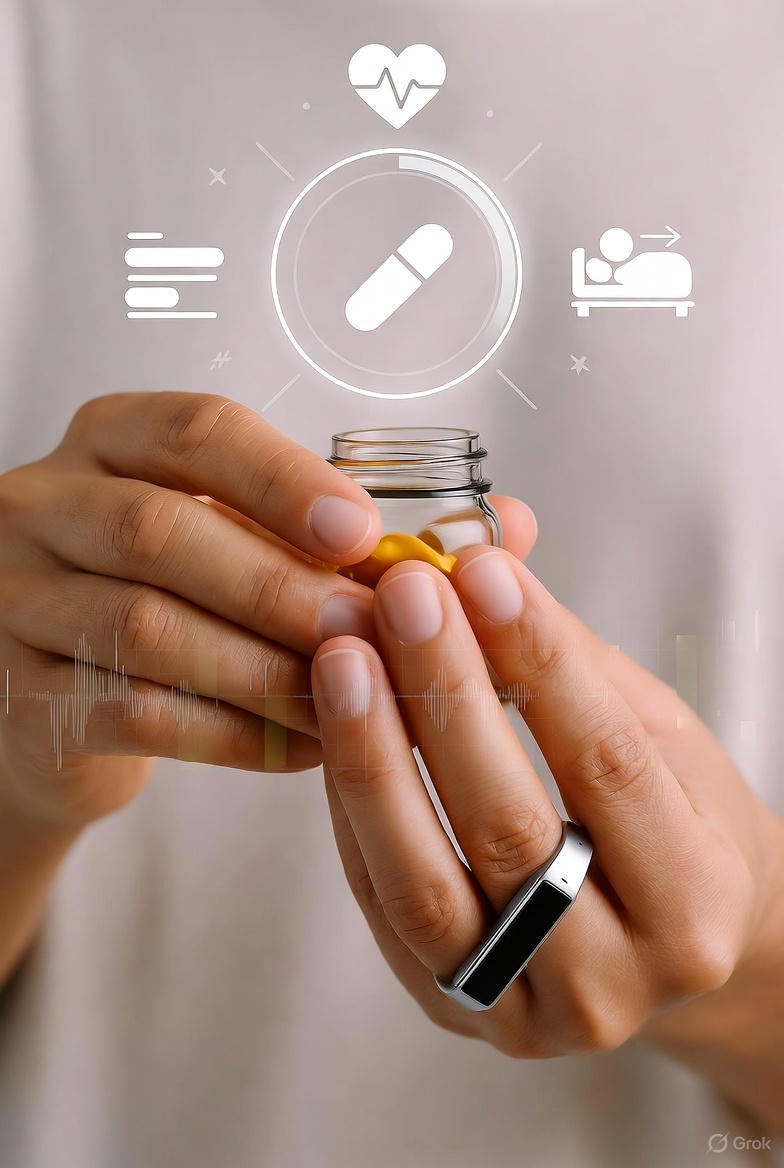
Life is stress. Exercise is a stressor. Work deadlines are stressors. An argument is a stressor. Even a passionate hobby can be a cognitive stressor. Stress itself is not the enemy; in fact, it’s essential for growth and adaptation (a concept known as hormesis). The enemy is a lack of recovery. Health is defined by your ability to navigate this stress-recovery cycle.
This is where Heart Rate Variability (HRV) becomes your most trusted guide. Think of HRV as your body's "readiness" score. A higher HRV suggests your parasympathetic nervous system is dominant, indicating a state of recovery, repair, and resilience. Your body is in a position to handle new stress effectively. A lower HRV indicates sympathetic dominance—your body is in a state of mobilization, fighting current battles with limited reserves.
By tracking HRV trends, you can:
Modern health monitoring devices calculate your HRV (often using a metric called rMSSD or SDNN) throughout the night, providing a clean, stable daily reading. The focus is not on the absolute number, which varies greatly from person to person, but on your personal baseline and deviations from it.
Managing this balance isn't just about physical rest. It's about intentional recovery practices that actively engage the parasympathetic system. This is the art of winding down, and it’s a skill that can be cultivated through deliberate practice, such as the techniques outlined in the nighttime wellness routine for anxious minds, which are designed to calm an overactive nervous system and promote the state conducive to high HRV.
The old adage of "10,000 steps a day" has been revealed as an oversimplification. While consistent movement is crucial, the modern understanding of activity is three-dimensional: volume, intensity, and context.
Volume is your total daily movement—steps, general non-exercise activity thermogenesis (NEAT), and dedicated exercise.
Intensity is how hard you work. This is where METs and heart rate zones come in. Did you get any vigorous activity that significantly challenged your cardiovascular system? Monitoring devices can now auto-detect activity type (walk, run, cycle, swim) and estimate calorie burn and cardiovascular load with surprising accuracy.
Context is the revolutionary component. This is where activity data is married to recovery metrics. Readiness Scores (or similarly named metrics) are composite algorithms that synthesize your sleep data, HRV, resting heart rate, and recent activity load to answer one simple question: "How prepared is my body to perform today?"
A high readiness score, buoyed by great sleep and high HRV, suggests you can confidently tackle a hard workout or a demanding day. A low readiness score, triggered by poor sleep, low HRV, and a high recent training load, is a recommendation to prioritize recovery—perhaps opting for a walk, yoga, or a complete rest day.
This intelligent feedback loop prevents the common pitfall of blindly following a rigid training schedule regardless of your body's signals. It respects the biological reality that you are not a machine. Some days you have a 100% to give, and some days you have 70%. Training at 100% on a 70% day is a recipe for injury, burnout, and stalled progress. This personalized, data-driven approach to movement is the essence of training smarter, not just harder.
In the age of social media and public leaderboards, it's tempting to compare our biometrics with others. This is a fundamental mistake that can lead to unnecessary anxiety. The most powerful insight from continuous monitoring is the establishment of your personal baseline.
Your normal is unique. Your friend may have a waking resting heart rate of 45 bpm because they're an endurance athlete, while your healthy, normal baseline is 58 bpm. Someone else's HRV might consistently be 120 ms, while yours hovers around 40 ms. These numbers are not good or bad in a vacuum; they are simply yours.
The magic happens when you watch for deviations from your own norm. If your baseline RHR is 58 and it suddenly trends up to 65 for three days, that is a statistically and physiologically significant red flag, regardless of what anyone else's numbers are. It could indicate dehydration, excessive stress, or an oncoming illness.
Similarly, if you implement a new intervention—like a consistent perfect nighttime wellness routine step-by-step guide—you won't see its value by comparing your sleep score to an Olympian's. You'll see it in the upward trend of your own deep sleep percentage and HRV over weeks and months.
This focus on the personal longitudinal dataset turns health monitoring into a personal science experiment. You become the principal investigator of your own well-being, testing hypotheses (e.g., "Does reading instead of scrolling before bed improve my sleep?"), collecting data, and drawing conclusions based on your unique physiology. This self-knowledge is the ultimate source of empowerment in the health revolution.
Data without action is merely trivia. The true mastery of modern health monitoring lies in closing the loop: translating the stream of insights into tangible, sustainable behaviors that enhance your life. This integration is a skill, and it's best approached systematically to avoid overwhelm.
Start with One Metric: Don't try to optimize everything at once. Begin with the pillar most relevant to your current goal. If you're perpetually tired, focus on sleep data. If you're burning out, focus on HRV and stress scores.
Look for Patterns, Not Dots: A single night of bad sleep is a data point. A pattern of poor sleep every Sunday night is an insight—perhaps linked to anxiety about the week ahead or a late weekend schedule. Use the journaling feature in many apps to correlate data with subjective notes (e.g., "dinner after 9 PM," "hard workout," "difficult conversation").
Create "If-Then" Rules: Build simple, personal protocols based on your data.
Use Data for Positive Reinforcement: Celebrate when the data reflects a good habit. Seeing your HRV climb after a month of consistent meditation or your sleep score improve after sticking to a routine provides powerful positive reinforcement, making the habit more likely to stick. In fact, understanding how to build a nighttime routine that actually sticks is often about creating these small wins and feedback loops.
The goal is not to become a slave to the data, but to use it as a mirror and a guide, eventually internalizing the rhythms of your body so that conscious decisions become intuitive habits.
The dashboard of a modern health monitoring app can be dazzling—and intimidating. Scores, graphs, percentages, and trends all vie for attention. The key to avoiding analysis paralysis is to adopt a strategic, tiered approach to interpretation.
Tier 1: The Morning Check-in (The 30-Second Scan)
This is your daily ritual. Upon waking, glance at three key metrics:
This scan should take seconds and set the tone for your day's decisions.
Tier 2: The Weekly Review (The 10-Minute Reflection)
Once a week, perhaps on a Sunday morning, take a deeper dive.
Tier 3: The Longitudinal Analysis (The Big Picture)
On a monthly or quarterly basis, zoom out. Look at the 90-day or 6-month trend lines. This is where you see the real impact of lifestyle changes. Has your average resting heart rate drifted downward since you started regular cardio? Has your average sleep duration increased since you prioritized your wind-down ritual? This big-picture view moves you from daily reactivity to long-term mastery.
Remember, the data is a tool for self-compassion, not self-judgment. A low score isn't a failure; it's a signal for care. By approaching your dashboard with curiosity rather than anxiety, you transform information into wisdom.
The current capabilities of devices like smart rings are just the opening act. The future of personal health monitoring lies in deeper integration, more advanced analytics, and a truly predictive ecosystem. This evolution will be driven by two forces: more sophisticated hardware and transformative artificial intelligence.
Hardware Evolution: Future wearables will incorporate multi-wavelength PPG sensors for more precise blood constituent analysis (e.g., glucose trends, hydration), continuous electrodermal activity (EDA) sensors for direct stress response measurement, and even non-invasive blood pressure monitoring. The ring form factor is ideal for integrating these sensors comfortably and unobtrusively.
The AI Health Coach: Raw data is a puzzle. AI is the solver. Advanced machine learning algorithms will move beyond describing what happened (you slept poorly) to diagnosing why it happened and prescribing what to do about it.
Imagine an AI that analyzes your year of data and says: *"Your data shows a 40% reduction in sleep disturbances when you finish dinner before 8 PM. Your HRV is consistently 15% higher on days you take a 20-minute afternoon walk. Furthermore, based on your current elevated skin temperature and resting heart rate trend, there's an 82% probability you will develop cold-like symptoms in 36 hours. Recommendation: Prioritize sleep, increase hydration, and consider reducing social commitments tomorrow to bolster immunity."*
This is hyper-personalized, predictive healthcare. It considers your unique biology, lifestyle, and real-time physiological state to offer actionable, preventative guidance. The AI becomes a 24/7 health partner, learning your patterns and helping you navigate life's demands while maintaining equilibrium.
This ecosystem will also break down data silos. Your ring data will seamlessly integrate with your electronic medical records (with your consent), giving your physician a rich, continuous dataset rather than a snapshot. It will connect with your nutrition app, your calendar, and even your smart home, perhaps triggering dim lights and calming music when it detects you are stressed. This is the seamless, ambient, and powerfully proactive future of health mastery.
The healthcare revolution is finally dismantling the artificial wall between mental and physical health. Chronic stress, anxiety, and depression have profound physiological correlates, and these are now becoming quantifiable. Modern health monitoring provides a tangible bridge between subjective feelings and objective biology.
We've already discussed how HRV is a direct window into autonomic nervous system balance—the physical manifestation of your stress response. But the insights go deeper.
This data empowers a more compassionate and effective approach to mental wellbeing. Instead of just "feeling anxious," you can see your body is in a state of sympathetic overdrive. This shifts the approach from purely psychological to a biopsychosocial one. You can then deploy targeted physical interventions—like the breathing exercises and rituals found in a nighttime routine designed for anxious minds—to directly influence your physiological state, thereby calming the mind.
Furthermore, tracking the impact of mindfulness or therapy on your biometrics provides powerful reinforcement. Seeing your HRV improve after a month of consistent meditation offers concrete proof that the practice is creating tangible, positive change in your nervous system. This closes the loop, making the intangible tangible and placing you firmly in the driver's seat of your holistic well-being.
Your body is not a static machine that runs at a constant pace 24 hours a day. It is a symphony of oscillating biological processes, governed by a master conductor known as your circadian rhythm. This roughly 24-hour internal clock, housed in the suprachiasmatic nucleus of your brain, regulates everything from hormone secretion (cortisol, melatonin) and body temperature to digestion, cell repair, and cognitive function. Modern health monitoring provides the first-ever personal toolset to see, respect, and optimize these rhythms—a practice known as chronobiology.
Disruption of circadian rhythms, often caused by irregular sleep schedules, nighttime light exposure, or inconsistent meal times, is linked to a staggering array of health issues: metabolic syndrome, cardiovascular disease, impaired immune function, and mood disorders. The blue light from your phone at night doesn't just "keep you awake"; it sends a false dawn signal to your brain, halting melatonin production and scrambling the entire circadian orchestra's schedule for the night.
Smart rings and advanced wearables are exceptional chronobiology tools because they track the primary outputs of your circadian clock:
By analyzing this data, you can move towards circadian alignment: the state where your external behaviors (sleep, meals, exercise, light exposure) are in harmony with your internal biology. This alignment is the bedrock of energy, metabolic health, and longevity. For instance, you might learn that your body temperature doesn't drop sufficiently until 90 minutes after you normally try to sleep, indicating you should build a nighttime routine that actually sticks and starts earlier. Or, you may see that your energy lags every afternoon at 3 PM—a normal circadian dip—and plan a walking meeting instead of a demanding cognitive task then.
Mastering your rhythms also means adapting to change. Our bodies have different needs in summer versus winter. A seasonal nighttime routine that adapts to your body's needs is a practical application of chronobiology, using your wearable data to guide adjustments for darker mornings or longer daylight hours.
The scale tells one story—and often a demoralizing one. Modern health monitoring tells a far richer, more actionable story about your metabolic health, which is the efficiency with which your body processes and uses energy. Poor metabolic health, characterized by insulin resistance, inflammation, and dyslipidemia, is the silent engine behind type 2 diabetes, heart disease, and obesity.
While wearables cannot directly measure blood glucose or insulin (yet), they provide powerful proxy metrics that illuminate your metabolic function:
Resting Heart Rate (RHR) Trends: A chronically elevated RHR can be associated with systemic inflammation and metabolic dysfunction. Improvements in diet and exercise that enhance metabolic flexibility often lead to a gradual, sustained lowering of RHR.
Heart Rate Variability (HRV) and Metabolism: Low HRV is strongly correlated with insulin resistance. A resilient, metabolically flexible system is also an adaptable nervous system. As you improve your metabolism through dietary changes (like reducing processed sugars) and building muscle, you will often see your HRV trend upward.
Sleep Quality as a Metabolic Lever: This is a critical connection. A single night of poor sleep (especially loss of deep sleep) can induce temporary insulin resistance the following day. Chronic sleep deprivation is a direct driver of weight gain and metabolic syndrome. By prioritizing sleep architecture—ensuring adequate deep sleep—you directly support healthy glucose metabolism. This makes a science-backed nighttime routine for better sleep a non-negotiable component of any metabolic health strategy.
Nocturnal Heart Rate & Recovery: A metabolically stressed body often shows a higher-than-normal heart rate during sleep and poor recovery scores. If you eat a large, sugary, or heavy meal too close to bedtime, your nighttime heart rate data will likely show a clear spike as your body works hard to digest it, disrupting restorative sleep and metabolic repair.
Body Temperature and Menstrual Cycle: For women, tracking the biphasic pattern of basal body temperature can confirm ovulation and map the distinct metabolic phases of the menstrual cycle. The post-ovulatory luteal phase often comes with a slight increase in basal metabolic rate and changes in recovery patterns, which data can help you anticipate and respect.
By focusing on these biomarkers, you shift from chasing weight loss to cultivating metabolic fitness. The data provides feedback on how specific foods, meal timings, and exercise types affect your system. You move from generic advice to personalized experimentation: "When I fast for 14 hours and sleep 8, my morning HRV is 15% higher." Or, "That late-night restaurant meal spiked my sleep heart rate by 8 bpm and crushed my deep sleep." This is empowerment through information.
Cardiovascular disease remains the leading cause of death globally, yet its progression is often silent for decades. The annual check-up provides a single, static snapshot of blood pressure and cholesterol. Modern wearables offer a dynamic, continuous movie of your heart's function and response to daily life, enabling unprecedented early awareness.
The cornerstone of cardiovascular monitoring via wearables is the combination of Heart Rate (HR) and Heart Rate Variability (HRV). Together, they provide a window into cardiac autonomic tone—the balance between the sympathetic accelerator and parasympathetic brake on your heart.
The Sleep-Heart Connection: Nighttime is a critical window for cardiovascular monitoring. Sleep is when your heart rate should drop significantly, and your blood pressure should undergo a "dipping" pattern. A lack of this nocturnal dip (non-dipping) is a risk factor for hypertension. Devices that track nocturnal heart rate and heart rate variability are effectively screening for this pattern. Furthermore, detecting potential nocturnal arrhythmias, like atrial fibrillation (AFib), is a burgeoning application. While not a medical diagnosis, some devices can flag episodes of irregular heart rhythm during sleep, prompting a user to seek a formal medical evaluation—a potentially life-saving intervention.
This continuous data transforms you from a passive recipient of cardiovascular risk scores to an active guardian of your heart health. You can see the direct, positive impact of a brisk daily walk on your resting heart rate trend. You can prove to yourself that a consistent nighttime routine for athletes maximizing recovery not only improves performance but also supports long-term cardiac recovery. It turns abstract concepts like "heart health" into daily, manageable practices.
One of the most immediately valuable applications of continuous health monitoring is its ability to act as an early warning system for illness. Often, you feel "off" before full-blown symptoms hit. Your wearable data can objectively confirm this feeling, sometimes 24-48 hours in advance, by detecting the subtle physiological shifts that occur as your body mounts an immune response.
When your immune system activates to fight a pathogen (like a virus or bacteria), it triggers a cascade of changes:
Advanced wearables and their algorithms synthesize these signals into illness probability scores or simply flag significant deviations. Seeing a "high nighttime temperature" alert paired with a "+12 bpm resting heart rate" notification is a clear signal to prioritize rest, hydration, and perhaps cancel intense plans.
This capability is transformative for several reasons:
This turns your health device into a guardian, constantly scanning your biometrics for the earliest signs of trouble. It empowers you to listen to—and act on—your body's whispers before they become cries for help. Ensuring your body is in its best state to fight illness starts with foundational habits, like a consistent family nighttime wellness routine for adults and kids that prioritizes sleep hygiene for the whole household.
For elite athletes, marginal gains are everything. Today, the most powerful tool for finding those gains is data. But performance optimization is no longer confined to the track or gym; it's equally critical for knowledge workers, creatives, and leaders whose "performance" is cognitive, emotional, and enduring. Modern health monitoring provides the blueprint for peak performance in any domain by rigorously quantifying the balance between stress (training/workload) and recovery.
For the Athlete:
The old model of prescribed training plans is giving way to autoregulated training, guided by daily readiness metrics.
For the Professional & Knowledge Worker:
Your brain is your primary performance organ, and it is inextricably linked to your physiology.
In both contexts, the principle is identical: performance is not about constantly pushing harder. It's about the precise, intelligent alternation of stress and recovery. The data provides the feedback loop to master this dance, turning potential into sustained, repeatable excellence.
Women's physiology is not linear; it is cyclical. For decades, health and fitness advice was based on a male, static model, leaving women to navigate their unique hormonal landscape with guesswork. Modern health monitoring, especially with 24/7 wearable devices, is revolutionizing women's health by providing objective, personalized data across the entire menstrual cycle.
The key lies in tracking the four primary phases—menstrual, follicular, ovulatory, and luteal—each characterized by distinct hormonal profiles (estrogen, progesterone, etc.) that profoundly influence energy, metabolism, recovery, and temperature.
Basal Body Temperature (BBT) Tracking, Perfected: The gold standard for at-home cycle tracking has been waking BBT with a oral thermometer. Smart rings automate this perfectly, taking thousands of temperature readings throughout the night to establish a supremely accurate basal temperature. The characteristic biphasic pattern—a sustained temperature rise of about 0.3-0.5°C after ovulation due to progesterone—is clearly visible, confirming ovulation and delineating cycle phases.
Cycle-Synced Biomarkers:
This data empowers cycle syncing: aligning your diet, exercise, work, and social commitments with your hormonal energy. In the high-energy, estrogen-dominant follicular phase, you might schedule important presentations and intense workouts. In the more inward-focused, progesterone-heavy luteal phase, you might prioritize restorative movement, creative brainstorming, and nighttime wellness rituals that take less than 30 minutes to support winding down.
Furthermore, this tracking can provide early clues to hormonal imbalances (like anovulatory cycles or thyroid issues, which can flatten the BBT curve) and offers rich, objective data to bring to healthcare providers. It transforms the often-mystifying female cycle from a source of frustration into a map of powerful, predictable rhythms to be harnessed for health and vitality.
The goal of the health revolution is not merely to extend lifespan, but to expand healthspan—the number of years we live in good health, free from chronic disease and disability. Longevity science is increasingly focused on identifying and influencing the hallmarks of aging at a cellular level. While we can't yet measure our telomere length at home, modern health monitoring provides access to several powerful proxy biomarkers of aging that reflect our systemic resilience and biological age.
These biomarkers, when optimized, are associated with slower biological aging and longer healthspans:
The philosophy of longevity monitoring is not to chase youth, but to cultivate resilience. It's about building a body that can withstand insults, repair damage efficiently, and maintain homeostasis. By tracking these biomarkers, you can see the impact of lifestyle choices on your systemic resilience in real-time.
Does a week of intermittent fasting improve your HRV? Does consistent strength training improve your deep sleep? Does managing chronic stress through meditation prevent the age-related decline in HRV? Your wearable data turns longevity from an abstract future hope into a series of daily, manageable experiments with clear, immediate feedback. It allows you to age not just slowly, but vibrantly.
As we embrace the incredible power of personal biometric data, we must simultaneously engage with its profound responsibilities. The data generated by a 24/7 health wearable is among the most sensitive information imaginable—a digital twin of your physiology. Navigating the privacy, security, and ethical landscape is a critical component of modern health mastery.
Key Concerns and Questions:
Principles for the Empowered User:
The ethical use of this technology requires a partnership between responsible companies and informed users. By wielding our data with awareness and demanding high standards, we can harness the revolution's benefits while safeguarding our most personal information. The future of health must be not only smart but also secure and ethical.

Understanding the science and the metrics is one thing. Assembling them into a coherent, actionable, and sustainable personal system is another. This is your Personal Health Operating System (PHOS)—a dynamic framework of habits, tools, and feedback loops tailored to your unique biology and life goals. Here’s how to build yours.
Step 1: Define Your "Why" and Set Phase-Based Goals.
Are you optimizing for athletic performance, managing a chronic condition, reducing stress, improving sleep, or extending healthspan? Your "why" determines which metrics are your North Stars. Start with one primary goal (e.g., "Improve Sleep to Boost Energy") for a 90-day "phase." Avoid trying to change everything at once.
Step 2: Establish Your Baselines (The Discovery Phase).
For 2-4 weeks, simply wear your device and live normally. Don't try to change anything. This period is critical to understand your unique starting point for sleep, RHR, HRV, and activity. Document subjective feelings in a journal alongside the data.
Step 3: Identify One Keystone Habit.
Based on your baseline and goal, choose one foundational habit to implement. If sleep is the goal, the keystone habit is a consistent nighttime routine. Don't just aim for "better sleep"; implement a specific, time-bound ritual. For example, you might commit to the 5 essential steps of a minimal nighttime routine for the next 30 days.
Step 4: Implement, Track, and Correlate.
Execute your keystone habit diligently. Use your weekly review to look for correlations. Did sticking to your routine increase your deep sleep percentage? Did it improve your morning readiness scores? Look for the objective link between action and result.
Step 5: Refine and Expand (The Iteration Phase).
After 30 days, evaluate. Did it work? If yes, solidify that habit and consider adding a complementary one (e.g., adding 10 minutes of morning sunlight exposure to reinforce circadian rhythm). If not, adjust. Perhaps you need to address common nighttime routine mistakes you're still making. The PHOS is not rigid; it's agile.
Step 6: Create Your Personal Protocols.
Based on your data patterns, write your own "If-Then" rules.
Step 7: Schedule Regular System Reviews.
Every quarter, conduct a longitudinal review. Look at 90-day trends. Is your average HRV slowly climbing? Is your resting heart rate drifting down? Celebrate these macro-wins. Use this review to set your goal for the next phase.
Your PHOS turns disconnected health tips into a cohesive, self-reinforcing strategy. It combines the objective power of data with the subjective wisdom of how you feel, creating a sustainable path to lifelong health mastery. It is the ultimate synthesis of the healthcare revolution, putting you firmly in control of your most valuable asset: your own well-being.
The rise of personal health monitoring has sparked a crucial conversation: what is the role of this consumer-generated data in the traditional clinical setting? The future is not one of replacement, but of integration. The most powerful healthcare model will be collaborative care, where continuous, real-world data from patients merges with the clinical expertise of providers to create a dynamic, holistic picture of health. This transforms the patient from a passive history-reporter into an active data-partner.
Bridging the Data Chasm:
Today, a doctor sees you for 15-20 minutes, relying on your recollection of symptoms, a few vital signs, and occasional lab work. This is a snapshot in a vast ocean of your daily life. Your wearable data provides the context of that snapshot—the tides, currents, and weather patterns that led to that moment. Presenting a 30-day trend of elevated nocturnal heart rate and poor sleep architecture is vastly more informative than saying, "I've been tired lately."
Practical Applications in the Clinic:
How to Prepare for a "Data-Visit":
This integration empowers better diagnostics, more personalized treatment plans, and a stronger therapeutic alliance. It shifts the paradigm from episodic, crisis-driven care to continuous, partnership-based health management. The data from your personal ecosystem—informed by habits like a science-backed nighttime routine for better sleep—becomes a vital sign of your life, not just your clinic visit.
We are currently in the descriptive phase of health tech: devices tell us what happened (sleep score: 82, HRV: 55ms). The imminent future is predictive and prescriptive. This leap will be powered by artificial intelligence and machine learning algorithms that analyze your unique longitudinal dataset to forecast health events and recommend personalized actions.
From Descriptive to Predictive:
Current algorithms identify simple patterns (e.g., "You're more stressed on Mondays"). Future AI will build complex, multi-factorial models of your health. By analyzing thousands of data points—sleep, HRV, RHR, temperature, activity, menstrual cycle, even calendar metadata—it will learn your personal "equilibrium" state and detect subtle, pre-symptomatic deviations.
Imagine these future alerts:
Truly Personalized Prescriptions:
Beyond alerts, AI will move into prescriptive wellness. It won't just say "you're stressed"; it will know which intervention works best for you.
This evolution requires vast, anonymized datasets to train algorithms, raising important privacy considerations, but the potential is staggering. It moves us from generalized wellness advice ("everyone should meditate") to hyper-personalized, dynamic health guidance that evolves with you. The device transitions from a monitor to an AI health coach, dedicated solely to optimizing your unique biology.
Humans are social creatures, and motivation is often contagious. While health is deeply personal, the journey need not be solitary. The next wave of health tech innovation is harnessing the power of community and thoughtful gamification to foster accountability, support, and shared learning—while navigating the delicate balance with privacy.
Positive Social Motivation:
The Nuances of Gamification:
Good gamification reinforces intrinsic motivation. Bad gamification can lead to unhealthy obsession.
The key is self-referential competition. The most advanced systems encourage you to compete against your own past performance. Did you improve your average sleep score this month compared to last? Did you increase your weekly deep sleep duration? This keeps the focus on personal progress, not external comparison. For families, this can be a bonding tool, like working together to implement a family nighttime wellness routine for adults and kids and tracking the positive impact on everyone's readiness scores.
The Privacy Imperative:
This social layer must be opt-in and granular. You should control exactly what you share (e.g., "share my step count but not my heart rate") and with whom. The ideal system fosters a sense of shared journey and support without exposing the most vulnerable details of your physiological self.
When done right, this social fabric transforms health from a private chore into a connected, even joyful, aspect of community life. It provides the encouragement needed to turn isolated data points into lasting, shared healthy habits.
Your health is not created in a vacuum. It is in constant dialogue with your environment: the light you see, the air you breathe, the temperature of your room, and the noise that surrounds you. The ultimate expression of the health revolution is the seamless integration of your biometric data with your living space—creating a responsive environment that actively supports your well-being.
The Biometric-Triggered Smart Home:
Imagine a world where your wearable talks to your home automation system.
Lifestyle Data Fusion:
Beyond the smart home, the future lies in fusing biometric data with other digital streams:
This creates a context-aware health ecosystem. Your devices no longer just monitor; they act as interpreters between your body and your world, orchestrating your environment to nudge you towards states of recovery, focus, and calm. It turns your entire life into a platform for well-being, where the line between technology and self-care dissolves into a harmonious, supportive flow.
Embracing health technology requires not just enthusiasm, but also critical thinking. No consumer device is a medical instrument, and understanding their limitations is key to using them effectively and safely. An empowered user is a discerning one.
Understanding Sensor Limitations:
Becoming a Critical Interpreter:
By approaching your device with this balanced perspective, you avoid the pitfalls of data anxiety and instead harness its true power: revealing personalized patterns and relationships that empower smarter lifestyle choices, like refining your nighttime routine to avoid common mistakes that the data might be revealing.
As we paint a futuristic picture of AI health coaches and smart home integration, we must confront a sobering reality: this revolution risks exacerbating existing health inequalities. The digital health divide refers to the gap between those who have access to and can effectively use these advanced tools and those who cannot. Ensuring this revolution leads to greater health equity, not less, is one of its greatest ethical challenges.
The Dimensions of the Divide:
Paths Toward Equitable Health Tech:
The goal must be to democratize health knowledge, not commodify it for the few. The true success of the health revolution will be measured not only by the sophistication of its technology but by its ability to lift the health of all communities, using data and insight as tools for universal empowerment, not exclusive advantage.
Data and theory come alive through human stories. Here are composite case studies illustrating how individuals have used modern health monitoring to solve real problems and transform their well-being. These stories highlight the practical application of the principles discussed throughout this article.
Case Study 1: The Burnt-Out Executive (Sarah, 42)
Case Study 2: The Frustrated Athlete (Marcus, 30)
Case Study 3: The Perimenopausal Woman (Elena, 48)
These stories underscore the core theme: personalized data turns confusion into clarity and helplessness into agency. It provides the map to navigate the unique terrain of one's own body and life.
We have journeyed from the broad paradigm shift in healthcare to the intricate details of circadian rhythms, metabolic feedback, and the ethical frontiers of data. This first portion of our exploration has laid a comprehensive foundation for understanding the modern health monitoring revolution. It is a revolution characterized by several core syntheses:
The Synthesis of Objectivity and Subjectivity: We are moving beyond the false dichotomy of "how I feel" vs. "what the doctor says." Now, "how I feel" is informed by "what my data shows," creating a powerful feedback loop where intuition and quantification validate and refine each other.
The Synthesis of Prevention and Performance: The same tools that can warn of a nascent illness can also guide an athlete to a personal best. The underlying principle is identical: optimizing the dynamic balance between stress and recovery, load and tolerance, exertion and renewal.
The Synthesis of the Personal and the Clinical: The wall between the quantified self and the medical establishment is beginning to erode, paving the way for a collaborative model where continuous life data enriches episodic clinical care, leading to more precise and personalized medicine.
The Synthesis of the Body and the Environment: Health is no longer seen as an internal state alone. Technology is beginning to weave our physiological signals into the fabric of our living spaces, creating environments that don't just house us, but actively care for us.
The tools of this revolution—epitomized by the elegant, continuous monitoring of the smart ring—are not about fostering a narcissistic obsession with the self. They are about cultivating a respectful, informed, and responsive relationship with the self. It is about moving from being a passenger in your own body to being its skilled pilot, navigator, and devoted steward.
The mastery of modern health monitoring is, therefore, not a technical skill alone. It is the development of biometric literacy—the ability to read the story your body is telling through its vital signals. It is the wisdom to use that story not to incite anxiety, but to inspire compassionate and effective action. It is the discipline to build routines that stick, informed by the clear feedback of what works for you, whether that's a minimal 5-step routine or a comprehensive science-backed protocol.
As we look ahead, the trajectory points towards ever-greater personalization, prediction, and seamless integration. The journey into true health mastery is just beginning. The following sections of this definitive guide will build upon this foundation, diving into the practicalities of device selection, advanced interpretation techniques, and the cutting-edge horizon of what this revolution promises for the future of human vitality and longevity.
Your Trusted Sleep Advocate: Sleep Foundation — https://www.sleepfoundation.org
Discover a digital archive of scholarly articles: NIH — https://www.ncbi.nlm.nih.gov/
39 million citations for biomedical literature :PubMed — https://pubmed.ncbi.nlm.nih.gov/
Experts at Harvard Health Publishing covering a variety of health topics — https://www.health.harvard.edu/blog/
Every life deserves world class care :Cleveland Clinic - https://my.clevelandclinic.org/health
Wearable technology and the future of predictive health monitoring :MIT Technology Review — https://www.technologyreview.com/
Dedicated to the well-being of all people and guided by science :World Health Organization — https://www.who.int/news-room/
Psychological science and knowledge to benefit society and improve lives. :APA — https://www.apa.org/monitor/
Cutting-edge insights on human longevity and peak performance:
Lifespan Research — https://www.lifespan.io/
Global authority on exercise physiology, sports performance, and human recovery:
American College of Sports Medicine — https://www.acsm.org/
Neuroscience-driven guidance for better focus, sleep, and mental clarity:
Stanford Human Performance Lab — https://humanperformance.stanford.edu/
Evidence-based psychology and mind–body wellness resources:
Mayo Clinic — https://www.mayoclinic.org/healthy-lifestyle/
Data-backed research on emotional wellbeing, stress biology, and resilience:
American Institute of Stress — https://www.stress.org/


