


Healthy Movement Habits Mastery: Building Your Movement Foundation
A guide to mastering the foundational habits for a lifetime of movement.
A guide to mastering the foundational habits for a lifetime of movement.
%402x.svg)
We are not statues. We are not designed for stillness. Yet, the modern world has sculpted a reality of chairs, screens, and stationary commutes that directly contradict our biological blueprints. The consequence is a silent, slow-motion health crisis—not of dramatic injury, but of insidious decay. Aching backs, stiff joints, low energy, foggy minds, and a creeping loss of vitality are too often accepted as inevitable byproducts of age and work. They are not. They are, in large part, the price of a movement-starved life.
This isn't about becoming an elite athlete. This is about reclaiming your birthright: fluid, pain-free, and joyful movement. It’s about building a foundation so strong and so intuitive that movement becomes woven into the fabric of your day, not a chore tacked on at the end. A foundation that supports everything—from playing with your grandchildren without stiffness to maintaining sharp focus in a long meeting, from enjoying a deep, restorative sleep to managing daily stress with resilience.
Welcome to Healthy Movement Habits Mastery. This journey begins not with a grueling workout plan, but with a paradigm shift. We are moving from exercise as a discrete, punishing event to movement as a nourishing, constant practice. This foundational phase is the most critical work you will do. It’s about listening to your body's signals, understanding its mechanics, and establishing the non-negotiable habits that make advanced fitness not only possible but sustainable and safe.
In this comprehensive guide, we will deconstruct the myths, apply the science, and provide the actionable framework to build your unshakable movement foundation. And because intention without feedback is merely a wish, we’ll explore how modern technology, like the advanced biometric tracking from Oxyzen smart rings, provides the objective data and personal insight needed to tailor this mastery to your unique physiology, transforming abstract principles into a lived, measurable reality.
Let’s begin.
We are living through a profound mismatch between our genetics and our environment. For 99% of human history, movement was not optional—it was survival. Hunting, gathering, building, migrating—our bodies evolved under a constant, varied load. Today, the average adult sits for 6 to 10 hours a day. This isn't just a lack of exercise; it's a sustained, aggressive posture of disuse that actively degrades our systems.
Dr. James Levine, who coined the term "sitting disease," famously stated, "Sitting is more dangerous than smoking, kills more people than HIV, and is more treacherous than parachuting. We are sitting ourselves to death." This is not hyperbole. Prolonged stillness triggers a cascade of physiological shutdowns:
The most insidious part? A 30-minute gym session after 10 hours of sitting does not erase these effects. It’s like smoking a pack of cigarettes all day and then eating a salad—the damage is cumulative and systemic. The solution is not just to exercise more, but to sit less and move more throughout the day. This is the cornerstone of our movement foundation: Non-Exercise Activity Thermogenesis (NEAT).
NEAT is the energy expended for everything we do that is not sleeping, eating, or sports-like exercise. It includes walking, typing, gardening, fidgeting, and standing. Research shows NEAT can vary by up to 2,000 calories a day between two similarly sized individuals, making it a critical factor in metabolic health and weight management.
Building your movement foundation starts by declaring war on prolonged stillness. It's about rediscovering the power of the micro-movement, the standing break, the walking meeting. It’s about making your environment work for you, not against you. As you cultivate this awareness, tools that provide gentle nudges and track your all-day activity, like those detailed in our resource on how a wellness ring tracks what matters, become invaluable allies in turning intention into consistent, daily action.
The 10,000-step goal is a cultural icon. It’s a simple, round number that originated from a 1960s Japanese pedometer marketing campaign, not clinical research. While aiming for 10,000 steps is a fantastic motivational tool that gets people walking—which is infinitely better than sitting—it presents an incomplete picture of true movement health.
A fixation on steps alone can lead to a narrow, and sometimes counterproductive, movement practice. You might pace your living room at night to hit a target while neglecting strength, mobility, and movement quality during the day. We need a more nuanced framework. True movement foundation is built on three interdependent pillars:
1. Movement Quantity: This is the volume of your movement. Steps, general daily activity, and overall calorie burn live here. It’s the "how much." Goals like standing up every 30 minutes, taking a 5-minute walk each hour, or accumulating a certain step count fall under this pillar. It’s the baseline fuel for your metabolism.
2. Movement Quality: This is the how of your movement. It encompasses posture, joint mobility, movement patterns, and stability. Can you hip-hinge (bend at the hips, not the back) to pick up a box? Can you perform a deep, controlled squat? Does your shoulder move freely without pain or crunching? Quality ensures that the quantity of movement you do is sustainable and pain-free. Neglecting quality for the sake of quantity is how people get injured.
3. Movement Variety: This is the diversity of your movement. The human body thrives on variation—different planes of motion, intensities, and loads. Are you only moving forward in a straight line (walking, running)? Your body needs lateral (side-to-side) and rotational movements. Do you only perform steady-state cardio? Your heart and metabolism benefit from varied intensity. Variety prevents overuse injuries, fights boredom, and ensures all muscle groups and neurological pathways are engaged.
A person who hits 10,000 steps a day but sits motionless for the other 14 hours, has poor posture, and never lifts anything heavier than a laptop is building a fragile foundation. Conversely, someone who does a brilliant 30-minute strength session but then remains utterly sedentary for the remaining 23.5 hours is also missing a critical piece.
Your goal is to integrate all three pillars daily. This could look like:
To track and balance these pillars, data is key. Understanding not just your step count, but your activity patterns, heart rate zones, and even how movement quality affects your recovery (measured through Heart Rate Variability or HRV) allows for intelligent adaptation. For a deeper dive into how data informs sustainable movement, explore our article on HRV monitoring for healthy aging goals.
Movement is not merely a mechanical process of levers and pulleys. Every motion is first born as an electrical signal in your brain. Your nervous system is the maestro, orchestrating which muscles fire, in what sequence, and with what intensity. Therefore, the first obstacle to healthy movement is often not a physical limitation, but a neurological one: a lack of proprioception and mind-muscle connection.
Proprioception is your body's internal GPS. It's the sense that tells you where your limbs are in space without you having to look. When you walk in the dark, proprioception guides you. This sense can become dulled by injury, pain, or chronic disuse. A stiff ankle, for instance, doesn't just hurt—it sends corrupted positional data to your brain, which then alters your walking pattern (your gait), potentially causing knee or hip pain elsewhere. You've developed a compensatory pattern.
Before you can strengthen a muscle, you must first be able to find it. Can you consciously activate your glutes when standing? Can you engage your deep core stabilizers without holding your breath? For many, the answer is no. We have "sleepy" muscles that have been offline for years, overshadowed by overactive, dominant ones.
This is where conscious movement practice comes in. It's the deliberate, slow, and focused work of re-establishing communication between your brain and your body.
This mindful approach transforms movement from a chore into a practice of self-awareness. It reduces injury risk, improves movement efficiency, and creates a profound sense of embodied presence. It’s the quiet, essential work that makes all the louder, more intense work possible and safe. For strategies on maintaining this mind-body connection as we age, our guide on movement strategies for every decade offers a valuable lifespan perspective.

Imagine trying to run sophisticated software on an outdated, buggy operating system. It will crash. Similarly, layering advanced fitness onto faulty fundamental movement patterns is a recipe for breakdown. There are seven primal movement patterns that form the basis of almost every human activity, from sport to daily life. Mastering these is akin to installing a clean, robust operating system for your body.
1. The Hip Hinge: This is the king of patterns for protecting your lower back. It’s the act of bending forward by pushing your hips back, keeping a neutral spine, and a soft bend in the knees. It’s how you should pick up a child, a grocery bag, or a weight off the floor. Practice: Stand with your back to a wall, a few inches away. Push your hips back to touch the wall, keeping your chest up. That’s the hinge.
2. The Squat: Humanity’s resting position. A deep, comfortable squat requires and builds ankle, knee, hip, and thoracic spine mobility. It’s the pattern for sitting down, getting up, and lifting from a low position. Practice: Hold onto a countertop or door frame for support, lower yourself as far as comfortably possible, keeping your heels down and chest up. Focus on depth and comfort, not reps.
3. The Lunge: This is a single-leg stability and strength pattern. It mimics walking, climbing stairs, and any uneven load. It’s critical for balance and resilience. Practice: Step one foot back and lower your back knee toward the floor, keeping your front knee aligned over your ankle. Find stability before adding movement.
4. The Push: Moving an object away from your body, or your body away from an object (like the floor in a push-up). It works the chest, shoulders, and triceps. Practice: Start with wall push-ups, then progress to incline push-ups on a countertop, focusing on full-body tension.
5. The Pull: Bringing an object toward your body (or your body toward an object, like a pull-up bar). This pattern is crucial for countering the forward-hunched posture of modern life. Practice: Use a resistance band anchored to a door. Perform seated rows, squeezing your shoulder blades together.
6. The Rotational Pattern: Life is not lived purely in the sagittal (forward-back) plane. Rotation is essential for throwing, swinging, changing direction, and even walking (your torso rotates opposite your pelvis). Practice: In a seated or standing position, hold your hands together and rotate your torso left and right, leading with your eyes.
7. The Gait Pattern: Walking and running. This is the integrated expression of all the other patterns in a cyclical, coordinated flow. Improving your gait starts with fixing the components above.
Your daily mission is to practice these patterns, not just perform them in a workout. Spend 10 minutes a day exploring a pattern. Work on your hip hinge while waiting for the kettle to boil. Do a few assisted squats after getting out of your chair. This constant, low-dose practice embeds the patterns into your nervous system, making them automatic for life. For those looking to preserve functional strength long-term, these patterns are the bedrock, as discussed in our piece on maintaining muscle mass after 60.
"Stand up straight!" It's a command most of us have heard, and it often leads to a forced, rigid, and unsustainable military-style posture. This old model is flawed. Healthy posture is not a fixed position you hold through sheer willpower; it is a dynamic state of readiness. It's your body's ability to efficiently manage loads—whether that load is gravity, a heavy backpack, or the emotional weight of stress—with minimal strain.
Think of your spine as a stack of resilient, shock-absorbing blocks (vertebrae) held in alignment by a complex system of guy-wires (muscles and fascia). Poor posture occurs when certain guy-wires become chronically tight (shortened) and others become chronically lax (lengthened and weak). The classic "tech neck" or upper cross syndrome is a perfect example: tight chest and upper neck muscles pull the shoulders forward and the head into a forward position, while the mid-back and deep neck flexors become overstretched and weak.
The cost of this misalignment is high:
Fixing posture isn't about brute force; it's about rebalancing. It requires:
Start with this simple "Postural Reset" drill every hour:
This 30-second reset fights the gravitational pull of your desk. For a deeper exploration of how holistic habits protect your long-term health, including postural resilience, our collection of 50 healthy aging tips provides a broader framework.
In the pursuit of a better body, we've been sold a dangerous mantra: "No pain, no gain." This mentality has led to countless injuries and burnout. To build a sustainable movement foundation, you must become a sophisticated interpreter of your body's signals. This means learning the crucial distinction between productive discomfort and destructive pain.
Productive Discomfort is a sensation of challenge, effort, and muscular fatigue. It is:
Destructive Pain is a warning signal that something is wrong. It is:
Here’s a simple rule: Never push through sharp, localized, or joint-related pain. If you feel it, stop, regress the movement, or find an alternative. Pushing through pain is not toughness; it’s ignoring the check-engine light until the engine seizes.
Developing this awareness requires interoception—the sense of the internal state of your body. It’s a skill honed through mindful practice. During movement, ask yourself:
Technology can serve as an objective second opinion. For instance, if you consistently see a marked drop in your overnight recovery score (via HRV and resting heart rate data) after a certain activity, it’s a data-driven sign that your body perceived that activity as a stressor it struggled to recover from, even if you didn't consciously feel "pain." This is the power of using a device like an Oxyzen ring to track your healthy aging progress over time, connecting subjective feeling with objective biometric feedback.
Willpower is a finite resource, easily depleted by decision fatigue. The most successful people don't rely on it; they design their surroundings to make the right action the easiest action. This is habit architecture. To build a lasting movement foundation, you must become the architect of your own environment.
Your mission is to reduce friction for healthy movement habits and increase friction for sedentary ones. Let's apply this:
1. Make Movement Automatic and Obvious:
2. Disrupt Sedentary Defaults:
3. Optimize for Micro-Movements:
4. Leverage Your Community:
Environment shapes behavior more powerfully than intention. By thoughtfully curating the spaces where you live and work, you engineer automatic success. For more on building sustainable daily systems, our blog features numerous articles, such as how sleep quality became a foundation for healthy aging, which delves into environmental design for better rest.
In our productivity-obsessed culture, rest is often viewed as lost time, a sign of weakness, or laziness. This could not be more backward. Recovery is not the opposite of training; it is the purpose of training. You do not get fitter, stronger, or more mobile during the workout itself. The workout is the stimulus—the strategic breakdown. You adapt and improve during the recovery period that follows, provided it is sufficient.
Neglecting recovery is like a builder working on a construction site 24/7, never allowing the concrete to cure. The structure will be weak and prone to collapse. Here are the non-negotiable pillars of a solid recovery foundation:
1. Sleep: The Non-Negiable Supercharger. During deep sleep, your body releases human growth hormone (HGH), essential for tissue repair and muscle growth. Your brain clears metabolic waste via the glymphatic system. Poor sleep sabotages hormone regulation (increasing cortisol and ghrelin, decreasing leptin), impairs glucose metabolism, and guarantees poor movement quality the next day. Prioritizing 7-9 hours of quality sleep is the single most effective recovery tool you have. To master this, understanding your personal sleep architecture through a tool that provides detailed sleep staging and validates effective healthy aging tips is transformative.
2. Nutrition: The Raw Materials for Repair. You can't rebuild a house without bricks. Post-movement, your body needs protein to repair muscle fibers and carbohydrates to replenish glycogen stores. Equally important is overall daily nutrition—a diet rich in anti-inflammatory foods (colorful vegetables, healthy fats, lean proteins) to support the repair process and combat the low-grade systemic inflammation that hinders recovery.
3. Hydration: The River of Life. Water is the medium for every metabolic process. Dehydration, even mild, reduces blood volume, forcing your heart to work harder, impairing nutrient delivery and waste removal. It also decreases joint lubrication and increases perceived effort.
4. Active Recovery and Parasympathetic Nervous System Dominance. Recovery isn't always total stillness. A gentle walk, light cycling, or mobility work increases blood flow without significant stress, aiding in the clearance of metabolic byproducts. More critically, engaging in activities that stimulate your "rest-and-digest" parasympathetic nervous system—like diaphragmatic breathing, meditation, or spending time in nature—lowers cortisol and creates the hormonal environment conducive to repair.
Trackable metrics like HRV (Heart Rate Variability) and resting heart rate are your direct windows into your recovery status. A downward trend in HRV or an elevated resting heart rate are clear biometric signs that your body is under-recovered and may need a lighter day. Learning to honor these signals is a master skill. For a comprehensive look at managing the stress-recovery balance, see our article on the connection between stress management and healthy aging.
In the quest for better health, we've moved from generic advice to personalized medicine. The same revolution is happening in movement. Your optimal movement foundation is as unique as your fingerprint, influenced by your genetics, lifestyle, stress, sleep, and age. This is where intelligent technology shifts from being a simple step-counter to an essential coaching partner.
A sophisticated wellness wearable, like a smart ring from Oxyzen, provides a continuous, passive stream of personalized biometric data. This data allows you to move from guessing to knowing. Here’s how it integrates with each pillar we've built:
The goal is not to become a slave to data, but to use it as a compassionate guide. It provides the objective truth that our subjective perceptions can sometimes obscure. It turns the art of movement into a science of the self. To explore real-world examples of this integration, you can read testimonials from users who have used data to transform their health habits.
You have now laid the essential groundwork. We've dismantled the myth of the static life, redefined movement beyond steps, rewired the mind-body connection, relearned our primal patterns, rebalanced our posture, learned to listen to our body's true language, engineered our environment for success, honored the necessity of recovery, and harnessed technology for personalization.
This foundation is not a passive platform to stand upon. It is a dynamic, living system—your personal movement operating system. It requires daily practice, gentle attention, and occasional recalibration. With this system in place, you are now impeccably prepared to build upon it. The next phase of mastery involves applying this robust foundation to construct a resilient, capable, and thriving physical life that adapts with you through every season and challenge. The journey from foundational competence to confident mastery continues.
To delve deeper into any of these concepts and continue your research, we invite you to explore the wealth of resources available on our blog.

Having established the non-negotiable pillars of your movement foundation—from combating sedentary physiology to mastering primal patterns and intelligent recovery—we now transition from theory to practice, from awareness to action. This next phase is about constructing the daily and weekly architecture that brings these principles to life. It’s where your personal “movement OS” gets its core programming, creating sustainable routines that adapt to your real-world life, not a mythical ideal.
We move now into the practical science of habit formation, the art of programming your week, and the strategic application of load to build a body that is not just free from pain, but resilient, capable, and energized for whatever life brings.
Understanding what to do is only half the battle. The real mastery lies in making it stick. Lasting change isn’t about monumental efforts of willpower; it’s about the subtle engineering of automatic behaviors—habits. A habit is a behavior that has become automatic through repetition, triggered by a specific cue and followed by a reward. To build a movement foundation that endures, you must work with your brain’s wiring, not against it.
The habit loop, popularized by Charles Duhigg, consists of three parts:
The key to building strong movement habits is to deliberately design each part of this loop.
Crafting Powerful Cues:
The most effective cues are specific and anchored to existing, non-negotiable parts of your day. This is habit stacking. Instead of the vague “I’ll do my mobility work sometime today,” you create: “After I brush my teeth in the morning, I will do my 7-minute foundation routine.” The existing habit (brushing teeth) becomes the reliable trigger for the new one. Other powerful cues include:
Designing the Routine for Success:
Start so small that success is guaranteed. This is the Two-Minute Rule from James Clear’s Atomic Habits. Want to build a daily yoga habit? Start with “do two minutes of yoga.” The goal is to master the habit of showing up. The routine will naturally expand once the habit is ingrained. Remove all friction: have your mat unrolled, your shoes by the door, your water bottle filled.
Engineering the Reward:
The reward must be immediate and satisfying. The long-term reward of “better health” is too distant to reinforce the loop. Create an immediate reward:
Remember, repetition in a consistent context is what forges the neural pathway. Don’t judge a day by its perfection; judge a month by its consistency. Miss a day? The system isn’t broken. Simply resume at the next cue. The goal is progress, not perfection.
Just as you need a variety of macronutrients (protein, fats, carbohydrates) and micronutrients (vitamins, minerals) for physical health, your body needs a variety of movement “nutrients” for functional health. A diet of only cardio is like eating only carbs—it creates imbalances and deficiencies. Your weekly movement plan should be a balanced “plate” of different movement types, each serving a distinct purpose.
Here is the framework for a nourishing Movement Week:
1. Strength (The Protein): The work of applying force against resistance. This builds and maintains muscle mass, the primary driver of metabolic rate and the guardian of your joints and bones. It’s foundational for preventing sarcopenia (age-related muscle loss). Weekly Dose: 2-3 sessions.
2. Cardio/Metabolic Conditioning (The Carbohydrates): The work of improving the efficiency of your heart, lungs, and circulatory system. It enhances endurance, improves mitochondrial health (your cellular energy factories), and supports cognitive function. Weekly Dose: 2-3 sessions.
3. Mobility & Flexibility (The Micronutrients): The work of maintaining and improving your joint range of motion and tissue elasticity. This is the “grease” for the machine, ensuring your strength and cardio work can be performed safely and fully. Weekly Dose: Daily practice, ideally.
4. Stability & Balance (The Healthy Fats): The work of maintaining control of your body in space. This is critical for fall prevention, joint integrity, and athletic performance. It trains your nervous system. Weekly Dose: 2-3 sessions, often integrated with strength work.
5. Rest & Recovery (The Water): The non-negotiable space for adaptation and repair. This includes complete rest days, active recovery (gentle walking, stretching), and sleep. Weekly Dose: 1-2 full rest days, with daily attention to sleep and parasympathetic activation.
Sample Foundation Week:
This framework is not rigid but fluid. Your personal “dose” depends on your recovery data, lifestyle stress, and goals. The aim is to move with purpose and variety throughout the week, not to conquer yourself daily. For a lifespan view of how this balance shifts, our article on healthy aging tips that start working at any age provides valuable perspective.
To build a stronger, more resilient body, you must gently and systematically ask it to do more than it’s accustomed to. This is the Principle of Progressive Overload. It is the fundamental driver of all physical adaptation. However, when applied incorrectly—too fast, too heavy, too soon—it is also the primary driver of injury. The art of foundation building is in applying this principle with patience and intelligence.
Progressive overload does not only mean adding more weight to the bar. Especially in the foundational phase, it’s about improving quality and control before increasing quantity. Here are the levers you can pull, in order of priority for a beginner:
1. Technical Mastery (The First Priority): Before you add any variable, your form must be flawless. Can you perform a bodyweight squat with perfect depth, knee alignment, and thoracic control? Mastery here is your first form of overload—your nervous system is learning and adapting.
2. Range of Motion (ROM): Can you perform the movement through a fuller, controlled range? For example, lowering yourself deeper into a squat or bringing your chest closer to the ground in a push-up. Increasing ROM increases time under tension and improves joint health.
3. Time Under Tension (TUT): Slowing down the movement. Try a 3-second lowering (eccentric) phase and a 1-second pause at the bottom of your squat. This dramatically increases muscular control and metabolic stress without adding weight.
4. Volume: The total amount of work (sets x reps). Start with 1-2 sets of an exercise. Once your form is solid, add a third set. This is a safe and effective way to progress.
5. Density: Performing the same amount of work in less time, or more work in the same time. Shortening your rest periods between sets (e.g., from 90 seconds to 60 seconds) increases the metabolic challenge.
6. Load: Finally, adding external resistance (bands, dumbbells, kettlebells). This should be the last lever you pull, only after the previous five have been optimized. When you do add load, increase it in very small increments (e.g., 2.5-5 lbs).
The Foundation Progression Rule: Only progress one variable at a time, and only when the current workout feels controlled and repeatable. If you had to grind out your last rep with poor form, you are not ready to progress. Instead, consolidate at that level for another week or two.
Your biometric data is a crucial governor here. If you increase your training load but see a sustained drop in your HRV and a spike in your resting heart rate, your body is telling you it’s struggling to recover from the new stress. This is a sign to pull back, consolidate, and ensure your recovery pillars (sleep, nutrition) are solid before progressing further. This data-informed approach is what separates sustainable growth from reckless overreaching. Learning to protect cognitive function through lifestyle includes managing physical stress intelligently, as the brain and body are inextricably linked.
The image of “flexibility” is often someone statically holding a stretch, like touching their toes. While static stretching has its place, an over-reliance on it can be misleading and even counterproductive for movement foundation. True functional readiness is about mobility—the ability to actively control your body through a range of motion.
The Key Difference:
You can be flexible but not mobile. Think of a gymnast who can do the splits passively but may lack the active strength to control that range in a dynamic lunge. Conversely, you can be mobile without extreme flexibility—having the controlled, usable range needed for life and sport.
For your movement foundation, mobility is the goal. Here’s how to build it:
1. Start with Foam Rolling & Self-Myofascial Release (SMR): Think of this as “ironing out the kinks” in your muscles’ connective tissue (fascia). Using a foam roller or lacrosse ball on tight areas (calves, glutes, lats) can temporarily reduce muscle tone and improve tissue quality, preparing it for movement. Spend 30-60 seconds per tight spot, breathing deeply.
2. Activate with Dynamic Stretching/Mobility Drills: This is the core of your movement preparation. These are controlled, moving exercises that take your joints through their full range.
3. Integrate with Loaded Mobility: This is the pinnacle of foundation mobility work. It involves placing a light load in a position that challenges your end-range control.
4. Use Static Stretching Strategically: The best time for longer-held static stretches (30-60 seconds) is after your workout or as part of a separate recovery session. When your muscles are warm and pumped with blood, static stretching can help improve tissue length and promote relaxation. It should not be the primary tool for “warming up.”
A daily 10-minute mobility routine, focused on your personal tight spots, will do more for your movement quality and pain prevention than any amount of haphazard stretching. For those navigating specific age-related changes, such as women navigating hormonal changes, a consistent mobility practice is essential for managing joint stiffness and maintaining resilience.
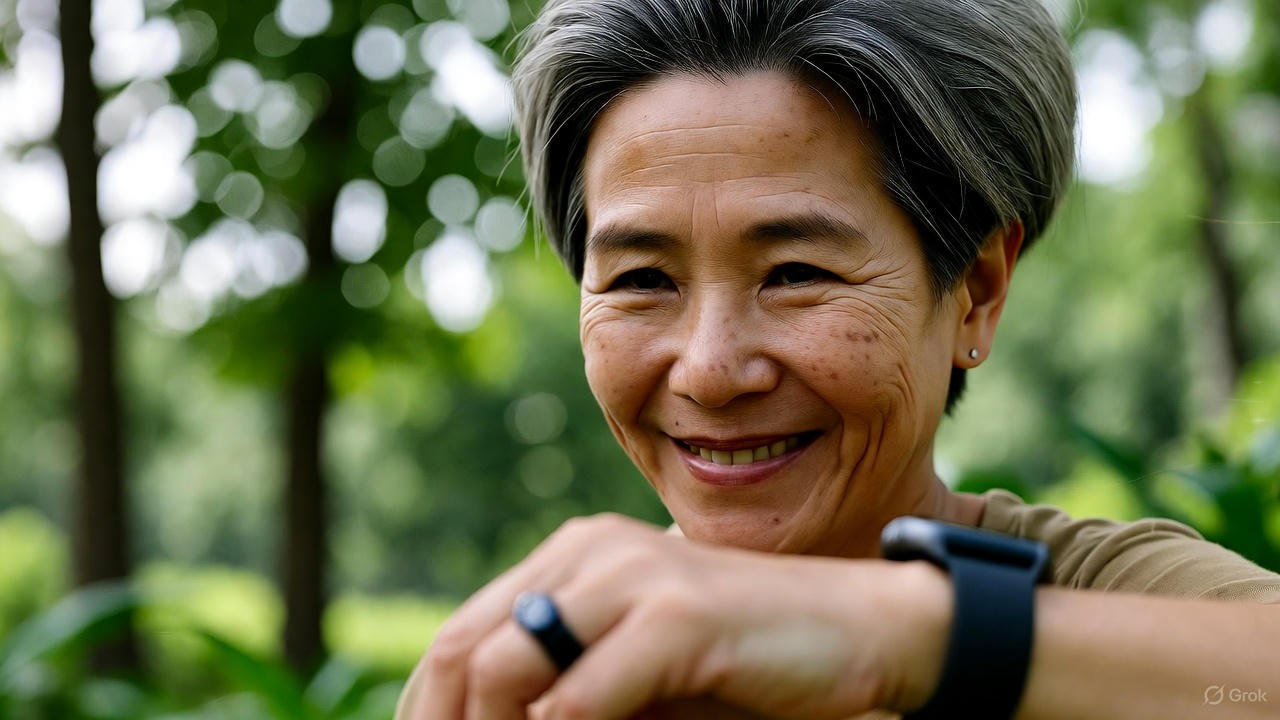
If you take only one thing from this entire guide, let it be this: Learn to breathe correctly. Breathing is the first movement pattern you ever performed, and it remains the most important. It is the remote control for your nervous system and the engine of your core stability. Poor breathing patterns—shallow, chest-centric, held—create a cascade of dysfunction: heightened stress (via sympathetic nervous system activation), neck and shoulder tension, and a weak, unstable core.
The Diaphragmatic Breath (Belly Breathing):
This is how we are designed to breathe. The diaphragm, a large dome-shaped muscle under your lungs, contracts downward, creating a vacuum that pulls air into the lungs. This downward pressure also gently pushes your abdominal contents out and down, stabilizing your lumbar spine. It’s a 360-degree expansion.
How to Practice (Lying Down):
Breathing for Core Stability:
Your core is not just your “six-pack” muscles (rectus abdominis). It’s a cylindrical canister: the diaphragm on top, the pelvic floor on the bottom, and the deep abdominal and back muscles (transverse abdominis, multifidi) wrapping around the sides. Proper breathing coordinates all of these.
The Bracing Breath (for lifting/movement):
This is not “sucking in.” It’s creating 360-degree intra-abdominal pressure.
Breathing for Nervous System Regulation:
When stressed, your breathing becomes rapid and shallow. You can reverse-engineer this to induce calm.
Making conscious breathing a part of your movement foundation—practicing it during your mobility work, your strength sets, and your rest periods—will fundamentally upgrade your performance, recovery, and stress resilience. This deep mind-body connection is a cornerstone of the science-backed healthy aging tips that form a holistic approach to longevity.
You start a new routine—perhaps a 30-day fitness challenge. For the first few weeks, you see fantastic progress: more energy, better sleep, maybe some weight loss. Then, around week 4 or 5, progress halts. You feel more fatigued, motivation wanes, and you might even regress. This is the inevitable plateau, and it’s caused by doing the same thing, at the same intensity, for too long. Your body is an adaptation machine; once it has adapted to a stress, that stress no longer prompts change.
The solution is periodization—the planned, systematic variation of your training variables over time to keep progress alive and prevent overtraining. For foundation builders, a simple form of periodization is all you need.
The “3 Weeks On, 1 Week Off” Foundation Model:
This is a sustainable, auto-regulatory cycle for your first year of consistent training.
Why the Deload Week Works:
Listening to Your Data:
Your wearable technology is perfect for guiding periodization. As you enter Week 3 of a build phase, you may see a downward trend in your HRV and an upward creep in your resting heart rate. This is a biological signal that fatigue is accumulating—a perfect cue that your planned deload week is timely. Conversely, if your recovery metrics are still strong, you might extend your build phase by a week. This creates a biometrically-informed periodization plan that is uniquely tailored to you.
Ignoring the need for planned rest is the single biggest mistake dedicated beginners make. It’s not lazy; it’s strategic. Embracing this cycle teaches you the rhythm of growth: stress, recover, adapt. This principle applies to all aspects of health, forming the basis for long-term strategies like those discussed in fighting cellular aging, where managing stress and recovery cycles is key.
Humans are social creatures. Our behaviors are profoundly influenced by the people around us and the cultures we create. Trying to build a movement foundation in a vacuum, surrounded by sedentary norms, is an uphill battle. One of the most powerful things you can do is to subtly shift your social and environmental landscape to support your new identity as a person who moves.
1. Curate Your Social Feed: Unfollow accounts that make you feel inadequate or that promote extreme, unsustainable fitness. Instead, follow educators, physiotherapists, and everyday people who focus on joyful movement, mobility, and sustainable health. Fill your digital space with positive cues.
2. The Power of the Accountability Partner: This isn’t about finding a drill sergeant. Find one friend, family member, or colleague who is also interested in building better habits. Your agreement can be simple: a daily or weekly text sharing what movement you did. The simple act of reporting to someone else increases commitment dramatically.
3. Create Movement-Based Social Rituals: Transform sedentary socializing into active socializing.
4. Advocate for Movement in Your Workplace: Be a catalyst for cultural change. Suggest standing or walking meetings. Organize a “lunchtime walking club.” If you have a wellness budget, propose a subscription to a group mobility or yoga app. A movement-friendly workplace benefits everyone’s productivity and health. The importance of this social connection factor for healthy aging cannot be overstated, and integrating movement amplifies its benefits.
5. Reframe Your Identity: This is the deepest level of change. Stop saying “I’m trying to work out more.” Start saying “I’m the kind of person who values a strong, mobile body. I move my body every day because it makes me feel alive and capable.” Your behaviors will begin to align with this new identity. Every time you choose the stairs, the walk, or the morning routine, you are voting for this identity.
Your environment and community should pull you toward your goals, not push you away. By intentionally shaping these layers, you embed your movement foundation into the very fabric of your life, making it resilient to fluctuations in motivation. For inspiration on how others have woven wellness into their lives, you can explore our story and the journeys of those in our community.
You have now moved from the philosophical and physiological underpinnings of movement into the practical, tactical realm of implementation. You possess the blueprint for habit formation, a template for a balanced movement week, the science of safe progression, modern tools for mobility and breathing, a strategy to avoid plateau, and the social tactics to make it all stick.
This portion of the guide has equipped you with the how. You are no longer just someone who wants to move better. You are now an architect, a scientist, and a practitioner of your own physical potential. You have the framework to build, grow, and sustain.
Armed with a deep understanding of why we move and a practical toolkit for how to build sustainable habits, we now arrive at the pinnacle of foundation work: integration, troubleshooting, and lifelong adaptation. This final segment is about moving from conscious practice to unconscious competence, from following a plan to becoming your own expert coach. It’s about applying your rock-solid foundation to the unpredictable reality of life—navigating pain, breaking through plateaus, adapting to different seasons, and ultimately, using movement as a tool for lifelong vitality and independence.
Here, we solidify your foundation so it can support not just fitness, but a full and vibrant life.
No journey is linear. Even with a perfect plan, you will encounter obstacles. The mark of mastery is not avoiding these obstacles, but knowing how to navigate them intelligently without abandoning your entire foundation.
1. Addressing Acute Pain (The “Something’s Wrong” Signal):
If you experience sharp, localized, or persistent pain during or after movement:
2. Breaking Through Performance Plateaus:
If progress in strength, endurance, or mobility has stalled for 3-4 weeks:
3. Managing Motivation Setbacks (The “Just Don’t Wanna” Phase):
This is normal. When motivation wanes, discipline—supported by systems—takes over.
Setbacks are data, not failure. They are feedback loops asking you to refine your approach. This resilient mindset is central to any long-term health strategy, as emphasized in resources on healthy aging tips that preserve independence longer.
Your movement foundation is not static; it must evolve with you. The core principles remain, but the emphasis shifts based on your age, life circumstances, and specific objectives.
The Family & Career Builder (30s-50s):
The Prehab & Longevity Focus (50s+):
The Performance-Oriented Individual (Any Age):
The Rebuilder (Coming Back from Injury or Long Inactivity):
Regardless of your phase, the goal is to maintain the Three Pillars (Quantity, Quality, Variety) in a balance that serves your current life. Your foundation allows you to pivot gracefully as your needs change. For a comprehensive look at adapting movement across the lifespan, our guide on movement strategies for every decade is an essential resource.
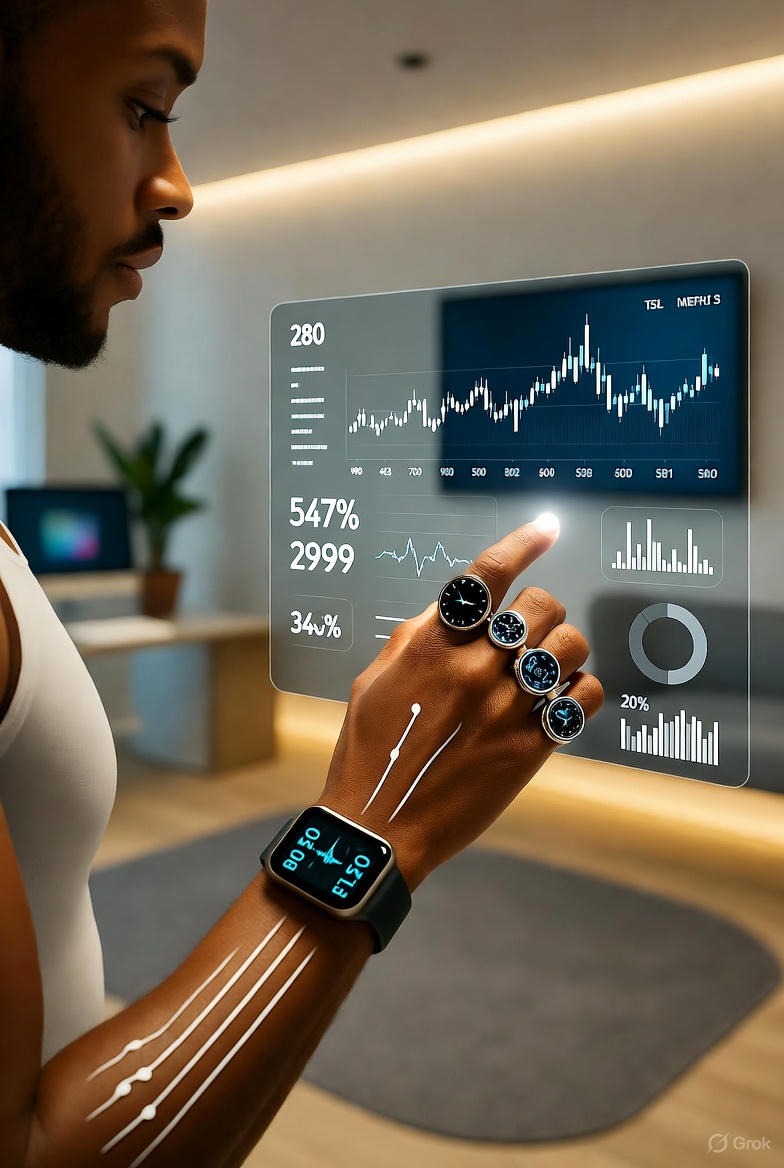
You do not need a gym membership to build a world-class movement foundation. With a few key, versatile pieces of equipment, you can create a highly effective home practice that lasts a lifetime.
Tier 1: The Non-Negotiables (Under $100)
Tier 2: The Game Changers
Tier 3: The Luxury Upgrades
Designing Your Space: Dedicate a corner, even if it’s small. Have your equipment organized and visible—not stuffed in a closet. This reduces friction and makes it easy to do a quick session. Your home environment should invite movement.
We’ve discussed using data for recovery and periodization. Now, let’s integrate it fully into your daily decision-making, creating a closed-loop system for self-optimization.
The Daily Check-In (5 Minutes):
Each morning, before checking email or social media, check in with your biometric dashboard. Ask three questions:
Making Decisions Based on the Data:
Using Data for Personalization:
Technology is the bridge between your subjective feeling and objective reality. It turns you from a passenger in your health journey into the pilot, with a full instrument panel. For those curious about the technology behind this, you can always learn more about Oxyzen and its approach.
Ultimately, building a movement foundation is not a project with an end date. It is the beginning of a lifelong practice—a relationship with your body that deepens with time. Mastery is not a destination but a direction: toward greater awareness, capability, and joy.
Cultivating Movement Joy:
As your foundation solidifies, allow space for play. Play is unstructured, exploratory movement done for its own sake. It could be:
Play reminds us that movement is a gift, not just a medicine. It sparks neuroplasticity, reduces stress, and connects us to a childlike sense of wonder.
Embracing the Process:
There will be days, weeks, even months where life intervenes. A busy season at work, a family obligation, an illness. A true master does not see this as “falling off the wagon.” They see it as part of the path. The foundation you’ve built is resilient. When you return, you don’t start over. You simply start again, from where you are, with compassion. The habit architecture, the knowledge, and the bodily awareness remain.
Becoming Your Own Coach:
You are now equipped with the principles. You understand stress and recovery. You know how to progress and when to pull back. You can listen to pain signals and interpret your body’s data. You are no longer dependent on external programs. You can design your own mini-cycles, adjust on the fly, and make intelligent choices that serve your long-term well-being. This self-efficacy is the ultimate goal.
Your Movement Foundation Legacy:
This work extends beyond you. By modeling joyful, consistent movement, you influence your family, your friends, your community. You demonstrate that health is not about punishment or aesthetics, but about building a body that allows you to fully participate in your own life. You build a legacy of vitality.
We began by confronting the crisis of the static life. We dismantled outdated notions of fitness and rebuilt a holistic, sustainable philosophy of movement rooted in biology, neuroscience, and self-compassion. You have walked through the process of building habit architecture, balancing your movement nutrition, applying the principle of progressive overload with wisdom, and integrating cutting-edge tools for personalized feedback.
You now possess the Healthy Movement Habits Mastery blueprint.
This is not merely a collection of tips. It is an operating system for a vibrant, capable, and resilient human life. Your chair is no longer a health risk; it’s a place you periodically rise from. Your body is no longer a source of mystery and ache; it’s a responsive, intelligent partner communicating with you through sensation and data.
The journey continues every time you choose to breathe deeply, to take the stairs, to spend five minutes mobilizing a stiff joint, to lift something with powerful, graceful form, or to simply play. Your foundation is built. Now, live boldly upon it.
For continued learning, support, and inspiration on this lifelong path, we invite you to explore the full range of resources, community stories, and supportive technology available. Visit our blog for deeper dives into related topics, or explore the main site to see how we are committed to supporting journeys like yours. Remember, the most important step is not the first one, but the next one. Keep building.
Your Trusted Sleep Advocate (Sleep Foundation — https://www.sleepfoundation.org/)
Discover a digital archive of scholarly articles (NIH — https://www.ncbi.nlm.nih.gov/
39 million citations for biomedical literature (PubMed — https://pubmed.ncbi.nlm.nih.gov/)
experts at Harvard Health Publishing covering a variety of health topics — https://www.health.harvard.edu/blog/)
Every life deserves world class care (Cleveland Clinic -
https://my.clevelandclinic.org/health)
Wearable technology and the future of predictive health monitoring. (MIT Technology Review — https://www.technologyreview.com/)
Dedicated to the well-being of all people and guided by science (World Health Organization — https://www.who.int/news-room/)
Psychological science and knowledge to benefit society and improve lives. (APA — https://www.apa.org/monitor/)
Cutting-edge insights on human longevity and peak performance
(Lifespan Research — https://www.lifespan.io/)
Global authority on exercise physiology, sports performance, and human recovery
(American College of Sports Medicine — https://www.acsm.org/)
Neuroscience-driven guidance for better focus, sleep, and mental clarity
(Stanford Human Performance Lab — https://humanperformance.stanford.edu/)
Evidence-based psychology and mind–body wellness resources
(Mayo Clinic — https://www.mayoclinic.org/healthy-lifestyle/)
Data-backed research on emotional wellbeing, stress biology, and resilience
(American Institute of Stress — https://www.stress.org/)


