


The Modern Health Monitoring Revolution in Mental Health Care
Explores how mood and stress tracking features are creating new avenues for mental health awareness.
Explores how mood and stress tracking features are creating new avenues for mental health awareness.
%402x.svg)
We are living on the precipice of a profound shift in healthcare—one that moves the locus of healing from the sterile clinic to the intimate spaces of our daily lives. For decades, mental health has been diagnosed and treated through episodic snapshots: a 50-minute therapy session, a questionnaire filled out in a waiting room, a patient’s subjective recollection of their last two weeks. These methods, while invaluable, are fundamentally limited. They capture how we feel in a moment of reflection, not how we live in the relentless, flowing stream of reality. What if our bodies could tell the story of our mental state, continuously and objectively, long before our conscious minds piece the narrative together?
This is the promise of the modern health monitoring revolution. It is not merely about counting steps or tracking sleep stages; it is about decoding the silent, biological language of wellbeing. At the heart of this revolution lies a simple, yet powerful premise: our mental and emotional states are inextricably woven into our physiology. Chronic stress whispers through an elevated resting heart rate. A looming period of burnout announces itself in disrupted sleep architecture and diminished heart rate variability (HRV). Anxiety can manifest in subtle, imperceptible changes in skin temperature and breathing patterns during the day.
Until recently, measuring these biomarkers required cumbersome lab equipment. Today, it’s on our wrists and, more elegantly, on our fingers. The advent of sophisticated, wearable technology—particularly the smart ring—has democratized access to this deep physiological data. These unassuming devices, worn 24/7, are becoming continuous guardians of our nervous system, offering a real-time, objective dashboard of our mental and physical health.
This article will explore how this revolution is transforming mental healthcare from a reactive model to a proactive, personalized, and precision-based science. We will journey from the foundational science that connects our physiology to our psychology, to the cutting-edge devices capturing this data, and into a future where care is guided by insights drawn from the very fabric of our being. This is more than a trend; it is a fundamental reimagining of what it means to be well, empowered by data that finally gives a voice to the body’s silent wisdom.

We often think of mental health as an entity separate from the physical self—a realm of thoughts, feelings, and perceptions housed within the brain. Neuroscience and psychophysiology reveal a far more intimate connection: the brain and body are in constant, bidirectional conversation through a complex network of nerves, hormones, and chemical messengers. Your mental state doesn't just influence your body; it actively sculpts its physiological processes. Conversely, the state of your body directly shapes your cognitive function and emotional landscape.
This dialogue is governed chiefly by the autonomic nervous system (ANS), the unconscious control center for vital functions like heart rate, digestion, and respiration. The ANS has two primary branches: the sympathetic ("fight-or-flight") and the parasympathetic ("rest-and-digest"). Mental distress, whether acute anxiety or chronic stress, tips this balance. It triggers a sympathetic surge, releasing cortisol and adrenaline. This is life-saving in a crisis, but when perpetually activated, it leaves a clear physiological signature.
Consider heart rate variability (HRV), a critical biomarker now easily measured by consumer wearables. HRV refers to the subtle variation in time between each heartbeat. It is not about how fast your heart beats, but how flexibly it can respond to stimuli. High HRV indicates a robust, resilient ANS that can efficiently switch between stress and recovery modes—a hallmark of good mental and physical health. Low HRV, however, signals a nervous system stuck in a state of high alert or exhaustion, a common correlate of anxiety disorders, depression, and chronic stress.
Sleep is another profound storyteller. Mental health struggles and poor sleep are locked in a vicious cycle. Anxiety can cause hyperarousal, preventing the descent into deep, restorative sleep stages. Depression is frequently linked to altered REM sleep. Crucially, you don't need a sleep lab to see this anymore. Modern wearable devices can track sleep duration, disturbances, and stages with remarkable accuracy, providing an objective log of sleep quality that is often more reliable than subjective memory. For someone struggling with their mood, seeing a weeks-long pattern of fragmented deep sleep can be the first tangible clue that their body is under siege.
These physiological signals—HRV, resting heart rate, sleep architecture, respiratory rate, and even skin temperature—form a biometric fingerprint of our mental wellbeing. They are objective, continuous, and difficult to manipulate through conscious thought. While you might tell a therapist you're "managing okay," your nighttime HRV trend over the last month may tell a different, more urgent story. This invisible link is the foundational science powering the health monitoring revolution, turning subjective experience into quantifiable, actionable data.
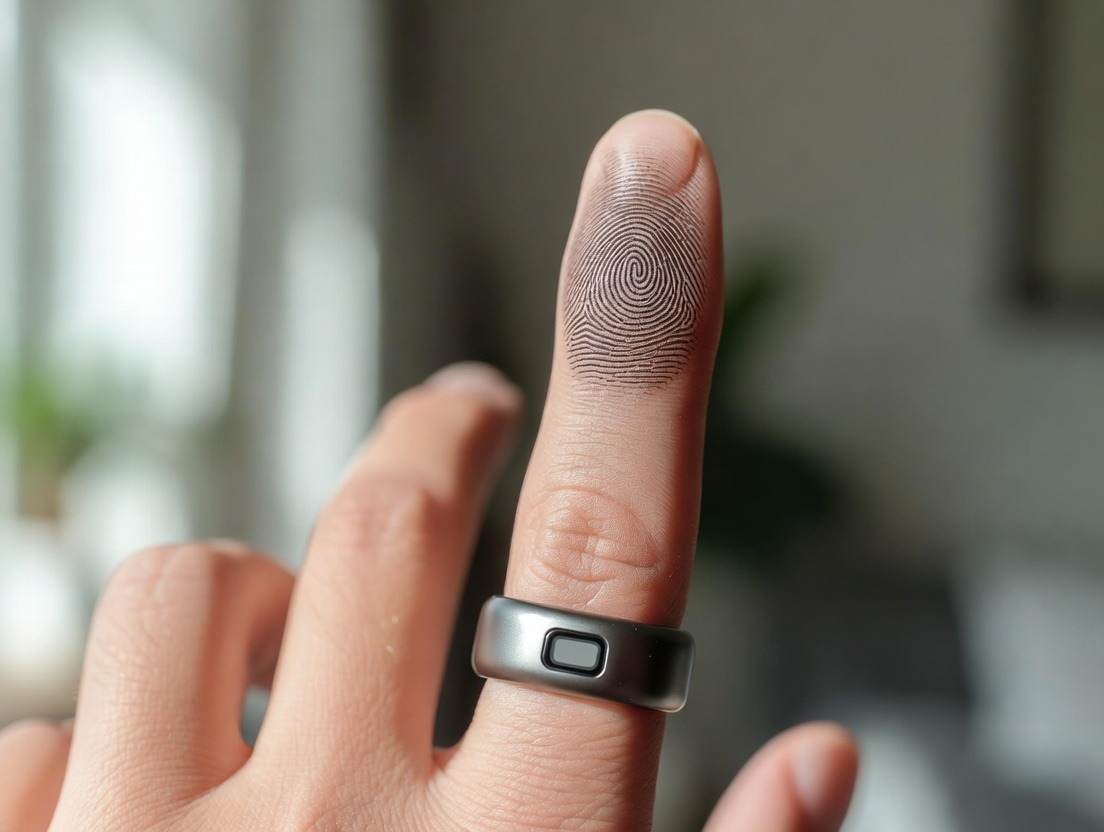
The journey to this continuous, intimate monitoring began with the pedometer, evolved through the fitness tracker, and matured with the smartwatch. Each iteration brought us closer to our bodies' data. Smartwatches, with their screens and notifications, positioned themselves as digital Swiss Army knives—communication hubs, fitness coaches, and payment terminals. Yet, for the purpose of profound, 24/7 health insight, they have inherent limitations.
Enter the smart ring. This represents a paradigm shift in wearable design philosophy. By moving from the wrist to the finger, it solves several critical problems inherent to wrist-based devices. First, and most importantly, is sensor fidelity. The vasculature at the base of the finger is richer and closer to the surface than at the wrist. This allows photoplethysmography (PPG) sensors—which use light to measure blood volume changes—to capture cleaner, more reliable signals for heart rate, HRV, and blood oxygen saturation. The result is medical-grade accuracy in a consumer device.
Second, the form factor enables true continuous wear. A ring is unobtrusive. You can sleep with it comfortably (a key time for health data collection), wear it during intense physical activity without bulk, and even shower with it. Its battery life, often exceeding a week, dwarfs the daily or bi-daily charge cycles of smartwatches, ensuring no gaps in your health timeline. There are no screens to create distraction or blue light exposure before bed, making it a more mindful tool for wellness. As we’ve explored in our guide on the perfect nighttime wellness routine, minimizing digital interference is crucial for sleep hygiene, and a smart ring supports this perfectly.
Third, the smart ring embraces a philosophy of passive, ambient monitoring. It works silently in the background, collecting data without requiring user interaction. You don't need to start a "sleep tracking" mode or a "meditation session." It simply observes, learns your unique baselines, and flags meaningful deviations. This passive collection is key for mental health monitoring, as it captures your unvarnished physiological state without the bias of you actively measuring yourself.
Companies like Oura, Circular, and Ultrahuman have pioneered this space, offering rings that track sleep, activity, temperature, and recovery metrics. The latest generations are moving beyond fitness into direct health and wellness insights, offering guided breathing sessions based on real-time stress metrics or providing longitudinal reports you can share with a healthcare provider. The smart ring is no longer a piece of tech jewelry; it is a dedicated biometric guardian, purpose-built for the subtle, continuous task of listening to your body’s story.
If the smart ring is the guardian, then the night is its most revealing watch. Sleep is the single most potent regenerative process for the human brain and nervous system. It is when we consolidate memories, clear metabolic waste, and—most relevant to mental health—reset our emotional and stress response systems. The data collected during these critical hours provides an unparalleled window into psychological resilience.
Each sleep stage plays a role. Deep sleep (slow-wave sleep) is crucial for physical restoration and cognitive recovery. A deficiency here is often linked to brain fog, poor concentration, and a lowered threshold for stress. REM sleep, the stage most associated with vivid dreaming, is integral to emotional processing and memory. Research suggests that during REM, the brain processes challenging emotional experiences, helping to lessen their visceral impact. Disruptions in REM are strongly correlated with mood disorders like depression and PTSD.
A smart ring doesn't just tell you how long you slept; it maps this architecture. It shows the proportion of light, deep, and REM sleep, your nightly restlessness, and your timing relative to your circadian rhythm. For someone dealing with anxiety, the data might show consistently delayed sleep onset and reduced deep sleep. For someone experiencing depression, the report might reveal early morning awakenings and fragmented REM cycles.
But the insights go deeper. By analyzing heart rate and HRV during sleep, we get the clearest possible picture of autonomic nervous system recovery, free from the noise of daily movement and conscious thought. A gradual decline in heart rate after bedtime is a sign of healthy "physiological decoupling" from the day's stress. A resting heart rate that remains elevated, or an HRV that stays depressed throughout the night, is a glaring red flag that your body is struggling to find its restorative state, no matter how many hours you spend in bed.
This objective data breaks through denial and guesswork. You can’t argue with a graph that shows your sleep has been shallow and agitated for two weeks straight, coinciding with a period of feeling overwhelmed. It provides a concrete starting point for intervention, whether that’s adjusting lifestyle factors, seeking professional help, or implementing targeted nighttime wellness rituals that take less than 30 minutes. By decoding the night, we gain the power to rebuild the foundation of our days.
While sleep provides the nightly reset, Heart Rate Variability (HRV) offers a continuous, beat-to-beat readout of your autonomic nervous system’s balance and your body’s readiness to handle stress. Think of HRV not as a single number, but as your nervous system’s language. A high, stable, or improving HRV trend generally speaks of resilience, adaptability, and recovery. A low or plummeting HRV trend is your body’s way of whispering—or shouting—that it is overstretched, fatigued, or unwell.
For mental health, HRV is a game-changing metric. Studies have consistently shown that individuals with anxiety, depression, and PTSD tend to have lower baseline HRV. More importantly, tracking your own HRV provides personal, early-warning signals. You may notice your HRV dips dramatically the day after a difficult conversation at work, or begins a steady decline during a prolonged period of personal demands. This is biofeedback of the highest order. It externalizes internal tension, making the intangible, tangible.
The true power of HRV monitoring lies in its trend analysis. A single day’s reading is less important than the direction over weeks and months. A smart ring excels here, capturing your HRV not just during a morning check, but throughout the day and night, establishing a true baseline. This allows the device to provide a "readiness" or "recovery" score—a synthesized metric that often heavily weights HRV to suggest whether your body needs a challenging day or a gentle, restorative one.
This empowers proactive mental health management. If your recovery score is low despite a good night’s sleep, it’s a signal that your nervous system is still taxed. This is the day to prioritize mindfulness, gentle movement, and saying no to extra commitments. It’s a chance to implement the minimal nighttime wellness routine of 5 essential steps to protect your next night. Conversely, a high score on a day you have an important presentation can give you confidence that your physiological resources are aligned with the challenge.
By learning to read your HRV report card, you move from being a passenger in your own health to becoming its informed pilot. You can start to connect lifestyle choices—a late meal, an intense workout, a meditation session, a stressful deadline—with their direct physiological impact. This fosters a deeper mind-body connection and provides a non-judgmental data point to guide decisions toward balance and resilience.
"We all experience stress" has become a modern truism, but it is a dangerously vague one. Stress is not a monolithic experience. There is the acute, motivating stress of a deadline (eustress), and there is the chronic, grinding stress of ongoing worry or life dissatisfaction (distress). The former can be performance-enhancing; the latter is a primary contributor to mental and physical illness. The problem is, in the fog of daily life, we often struggle to distinguish between them or accurately gauge our cumulative load. Our perception can be numb, biased, or simply inaccurate.
Modern health monitors cut through this fog with objective, physiological stress metrics. By analyzing a combination of data points—heart rate, HRV, skin temperature, and even electrodermal activity (a measure of subtle sweating) in some devices—algorithms can now estimate your stress levels in real-time. This isn't about labeling your emotions; it's about quantifying your body's sympathetic nervous system activation.
Imagine you're sitting at your desk, feeling "fine." Your smart ring, however, sends a gentle vibration or notification: "High stress detected. Consider a breathing exercise." You check the app and see that for the past 90 minutes, your stress graph has been spiking, likely triggered by a demanding task you've been hyper-focused on. You were so immersed you didn't notice your shoulders tensing and your breathing becoming shallow. This is the power of an objective, external observer.
This technology enables two critical shifts. First, it allows for intervention in the moment. Guided by the device, you can engage in a 2-minute breathing exercise to stimulate your parasympathetic nervous system and bring your physiology back to balance. You move from being unconsciously stressed to consciously regulating.
Second, it enables pattern recognition over time. Your weekly report might show that your stress peaks consistently between 3-5 PM, or that Mondays are physiologically your most demanding day. With this knowledge, you can proactively structure your life. You might schedule a walk at 2:30 PM, or ensure your Monday evenings are dedicated to a strict, calming science-backed nighttime routine for better sleep. You stop fighting invisible enemies and start managing identifiable patterns.
By moving the discussion from "I feel stressed" to "my body shows signs of sympathetic activation for X hours per day," we gain both precision and agency. It depersonalizes the issue, making it a systems problem to be optimized, rather than a personal failing. This data-driven approach is fundamental to the modern management of mental wellbeing.

The convergence of continuous biometric tracking, powerful algorithms, and user-friendly apps has given birth to the "Quantified Self" movement in the realm of mental health. This is the practice of systematically collecting data about one's own body and mind to gain self-knowledge and drive positive behavior change. It's a journey from raw data points to profound personal insight.
A smart ring or advanced wearable is the gateway. It provides the raw material: thousands of data points on sleep, stress, activity, and recovery. But the magic happens in the synthesis. Modern apps don't just present charts; they offer curated insights. "Your deep sleep was 15% higher after your yoga class." "Your resting heart rate tends to be lower on days you meditate." "Your readiness score drops significantly after nights with more than 2 alcoholic drinks." These are not generic health tips; they are hyper-personalized discoveries about your unique biology.
This process of experimentation and correlation is empowering. It turns you into a citizen scientist of your own wellbeing. You can test hypotheses: *Does my 10 PM screen ban actually improve sleep quality? Does a 20-minute afternoon walk reduce my evening stress levels?* The data provides clear, objective answers, reinforcing positive habits and helping you abandon ineffective ones. This is especially powerful for managing mental health, where cause and effect can feel nebulous.
For example, you might be trying to manage anxiety. Your therapist recommends regular exercise and consistent sleep. With a health monitor, you can see the direct, quantitative impact. You can observe how a week of consistent, 7.5-hour nights raises your baseline HRV. You can see how a brisk morning walk tempers your afternoon stress graph. This positive feedback loop is motivating. It transforms abstract advice into a compelling, data-driven narrative of improvement.
This self-knowledge also fosters self-compassion. On a day you feel low and unproductive, you might check your recovery metrics and see a poor sleep score and low HRV. Instead of berating yourself for laziness, you can understand, "My body is clearly in recovery mode. I need to honor that." It provides a physiological reason for psychological states, reducing shame and promoting a more holistic, kinder approach to self-care. To build this compassionate, data-informed approach into your life, our guide on how to build a nighttime routine that actually sticks can be an invaluable resource.
Perhaps the most transformative potential of this revolution lies not in self-help, but in enhancing professional care. The traditional therapeutic hour is a sacred but isolated container. The patient recounts their week, and the therapist works with that narrative. But what if the therapist could also see a physiological report of that week? This is the new frontier: integrating objective biometric data into the clinical dialogue.
Imagine a patient presenting with symptoms of generalized anxiety. They report feeling "constantly on edge." Alongside their subjective description, they share a report from their smart ring with their therapist. The data shows a resting heart rate consistently 10 bpm above population norms, virtually non-existent deep sleep, and a flat, low HRV trend. This objective evidence immediately validates the patient's experience, bypassing any minimization or doubt. It quantifies the severity in a new, powerful way.
More importantly, it transforms the therapy process. Now, interventions can be tracked with unprecedented precision. The therapist and patient can set data-informed goals: "Let's work on sleep hygiene and mindfulness for two weeks and see if we can increase your average deep sleep by 10% and raise your nightly HRV." Therapy becomes a collaborative experiment. Did the new cognitive-behavioral technique for nighttime rumination actually lower pre-sleep heart rate? The data holds the answer.
This data also helps identify triggers and patterns that might be missed. A patient might not consciously link a weekly meeting with their manager to a physiological cascade, but the data shows a stark spike in stress metrics every Wednesday afternoon and a correlated drop in sleep quality that night. This provides a concrete target for therapeutic work.
For the therapist, it’s like having a continuous assessment tool running in the background of the patient's life. It helps differentiate between psychological states that may present similarly. Is the patient's low energy a feature of depression or a result of chronic, data-verified sleep deprivation? The treatment paths for each are different. This bridge between subjective experience and objective biology enriches the therapeutic alliance, making it more targeted, effective, and accountable.
The ultimate goal of any healthcare system is to shift from reactive sickness care to proactive health preservation. In mental health, this means moving beyond treating acute episodes of depression or anxiety to preventing their onset altogether. Continuous biometric monitoring is the key that unlocks this preventative paradigm through the power of prediction.
Our bodies send distress signals long before our minds crystallize a problem into diagnosable symptoms. The data trends we've discussed—a creeping decline in HRV, a steady rise in resting heart rate, a breakdown in sleep consistency—are often the proverbial "canaries in the coal mine." By establishing a personal, multi-week baseline, smart algorithms can detect significant deviations from your norm. They aren't diagnosing a mental illness; they are flagging that your system is under unusual strain and your resilience is depleted.
This enables early, low-intensity intervention. A wellness app connected to your ring might notice a three-day trend of worsening recovery scores and suggest: "Your body is showing signs of accumulated stress. Consider a digital therapy session, a restorative yoga class, or prioritizing an extra hour of sleep this week." For someone with a history of burnout or anxiety, this nudge could be the prompt needed to take a step back, implement a deliberate nighttime routine for anxious minds, and avert a full-scale crisis.
On a broader scale, researchers are developing machine learning models that can analyze these longitudinal biometric datasets to identify patterns predictive of specific episodes. While this is an emerging field, the potential is staggering: personalized, pre-emptive alerts that empower individuals and their care teams to intervene during the vulnerable prodromal phase, using lifestyle adjustments, therapy, or other supports to maintain stability.
This shifts the very metaphor of mental health care. We are no longer waiting for a storm to hit and then deploying sandbags. We are monitoring the atmospheric pressure, wind patterns, and humidity, and taking action to gently steer the weather system in a healthier direction. It’s a future where technology gives us the foresight to protect our most valuable asset: our peace of mind.
As we embrace this data-rich future, we must navigate a complex ethical landscape with equal parts enthusiasm and caution. The information collected by a health monitor is deeply intimate. It’s a timeline of your vulnerabilities, your struggles, your nights of restlessness, and your days of stress. Who owns this data? How is it stored? Who has access to it? Could it be used by insurers, employers, or advertisers in ways that harm the individual?
These are not hypothetical concerns. They are central to the responsible adoption of this technology. The principle of informed consent is paramount. Users must clearly understand what data is being collected, how it is processed into insights, and with whom it might be shared. They should have granular control over their data sharing preferences, especially when integrating with third-party apps, electronic health records, or research studies.
Data security is non-negotiable. Biometric data is a high-value target for cybercriminals and must be protected with bank-level encryption, both in transit and at rest. Companies in this space must be transparent about their security protocols and breach notification policies.
Perhaps the most subtle ethical challenge is the risk of quantification anxiety. The very tool meant to reduce stress can become a source of it. Obsessively checking sleep scores, becoming distressed by a low HRV reading, or turning life into a relentless optimization project are real dangers. Health data should be a guide, not a gospel; a source of insight, not identity. It is crucial to maintain a holistic perspective, remembering that these numbers are proxies for a human experience that can never be fully captured.
The technology must be designed to mitigate this. Insights should be framed positively and educationally, not judgmentally. There should be built-in prompts to "take a break from the data" if obsessive patterns are detected in app usage. The focus must always return to the human goal: wellbeing, not a perfect score. As we integrate these tools, we must champion a balanced approach, using data to inform our intuition, not replace it. For those in high-pressure careers, finding this balance is key, which is why we’ve created resources like nighttime wellness for busy professionals: realistic routines.

We are currently in the era of discrete devices providing discrete insights. The future lies in integration. The next wave of the revolution will see your smart ring, or its successor, not as a standalone product, but as a node in a seamless, intelligent healthcare ecosystem.
This ecosystem will be powered by artificial intelligence acting as a synthesizing layer. AI will not just read your biometric data; it will cross-reference it with other digital breadcrumbs—with your permission—such as calendar density, weather patterns, social interaction frequency (inferred from phone use), and even voice tone analysis from smart speakers. It will build a multidimensional model of your wellbeing.
In this future, your ecosystem might detect a pattern: a week of back-to-back meetings, declining sleep scores, and increased stress metrics. It could then proactively orchestrate a response. It might:
Furthermore, this data will feed into large-scale, anonymized research, accelerating our understanding of the mind-body connection. We will move from population-level guidelines ("8 hours of sleep is good") to true personalization ("For your genotype, stress phenotype, and current life load, 7 hours and 20 minutes with a bedtime of 10:45 PM optimizes your neural recovery").
The era of one-size-fits-all mental health advice is waning. “Practice mindfulness,” “get more sleep,” and “exercise regularly” are well-intentioned directives, but they lack the specificity required to drive meaningful, sustainable change for an individual. Why does a 20-minute meditation leave one person feeling serene and another feeling agitated? Why does an 8-hour sleep window work for one but not another? The answer lies in our unique biological and psychological constitutions, and this is where biometric data becomes the ultimate personalization engine.
Health monitoring technology enables a shift from generic advice to tailored protocols. By analyzing your unique data patterns, a system can move beyond recommending “meditation” to suggesting the type, duration, and timing of meditation that will be most effective for you. For instance, if your data shows your stress peaks mid-afternoon and is correlated with a dip in HRV, your protocol might prescribe a 5-minute box-breathing exercise at 3:30 PM. If your sleep data indicates you struggle with sleep onset due to a racing mind, your protocol might include a body-scan meditation 30 minutes before bed, paired with a deliberate nighttime routine that reduces morning grogginess by ensuring more consistent deep sleep.
This personalization extends to all lifestyle pillars:
This creates a dynamic, living wellness plan. It’s not a static PDF you download; it’s an adaptive algorithm that learns from your body’s responses. Did the new bedtime ritual improve your deep sleep? If yes, it becomes reinforced. If not, the system might suggest a variation. This iterative, data-informed approach is the cornerstone of modern behavioral science applied to mental wellness. It treats you as a complex system to be understood, not a problem to be fixed with standard solutions.
Mental health is rarely an isolated phenomenon; it exists within a network, most intimately within the family unit. Stress, sleep patterns, and emotional climates are contagious. A parent's anxiety can elevate a child's cortisol levels. A partner's disrupted sleep can disturb the other's. The health monitoring revolution now offers a lens to view these interconnected dynamics, transforming personal insight into relational insight.
Imagine a family wellness dashboard—with appropriate privacy guards for each member—that shows not individual scores, but synchrony metrics. Parents can see how their own stressful work weeks correlate with their child's restless sleep patterns. Couples can observe if their bedtime routines are in harmony or conflict. This shared data depersonalizes blame and fosters a team-based approach to household wellbeing.
For example, data might reveal that on nights the family engages in a calm, shared activity like reading or a board game instead of scattered screen time, everyone's sleep onset latency decreases. This could motivate the implementation of a family nighttime wellness routine for adults and kids. The data provides objective evidence for a positive change that benefits all.
This has profound implications for parenting children and adolescents, particularly those showing signs of anxiety or mood dysregulation. A child may not have the vocabulary to express their internal state, but their wearable data can show a caregiver clear signs of physiological agitation at school or difficulty winding down at night. This isn't about surveillance; it's about empathy through data. It allows parents to intervene with support—like co-regulating breathing exercises or adjusting evening schedules—based on tangible signals, reducing guesswork and frustration on both sides.
In elder care, shared biometric monitoring can provide peace of mind for families and independence for aging relatives. Subtle changes in sleep or activity patterns can be early indicators of cognitive or physical decline, allowing for proactive medical consultation. By viewing the family as an interconnected bio-system, we can create healthier, more supportive, and more resilient home environments for all ages.
The burnout epidemic and the "Great Resignation" have forced a reckoning in the corporate world. Employee mental health is no longer a peripheral HR concern; it is a core business imperative linked to productivity, creativity, retention, and healthcare costs. Progressive organizations are now looking beyond generic wellness programs (like subsidized gym memberships) to data-informed strategies that genuinely support employee resilience.
Forward-thinking companies are beginning to integrate wearable technology into voluntary corporate wellness initiatives. The model is not about monitoring employees for productivity, but about empowering them with self-knowledge and providing the organization with anonymized, aggregate insights to shape a healthier work culture. Employees who opt-in might receive a smart ring or watch and access to a platform that helps them understand their stress and recovery rhythms.
The benefits are multi-layered. For the employee, it’s the personal insight we’ve discussed, now applied to their work context. They can see the direct physiological impact of a four-hour deep work block versus a day of fragmented meetings. They can learn which work patterns erode their sleep and which support it. They can be nudged to take a micro-break when their stress metrics spike, potentially preventing hours of depleted focus later.
For the organization, anonymized, aggregated data is a goldmine for cultural and structural change. Leadership might discover that company-wide stress metrics peak on Tuesday afternoons and that sleep scores plummet the night after major deadline days. This isn't about individual performance; it's about systemic stress loads. This data can drive evidence-based policy changes: instituting "no-meeting Wednesdays," discouraging after-hours communication, redesigning workloads, or offering targeted resilience training before known crunch periods.
This represents a new covenant between employer and employee—one built on shared investment in sustainable human performance. It moves the conversation from "managing stress" to "designing work for cognitive and physiological health." Companies that embrace this, ethically and transparently, will attract and retain talent by becoming true stewards of their workforce's holistic wellbeing, recognizing that a healthy nervous system is the most valuable asset in the knowledge economy.
The world of elite sports has long understood that peak physical performance is inseparable from mental and emotional states. Athletes use biometrics to fine-tune training, prevent injury, and maximize recovery. Now, this "athlete's mindset" is migrating to the realm of cognitive and emotional performance for everyone. Knowledge workers, creators, students, and caregivers are beginning to see themselves as performers whose key instrument is their mind, and whose fuel is a regulated nervous system.
For these "cognitive athletes," the metrics shift slightly. While physical recovery remains important, the focus expands to cognitive load management, emotional regulation, and creative readiness. Wearable data provides the training log. A writer might track which conditions produce their most fluent states: Is it after a night of high REM sleep? On days with a high, stable HRV? Following a morning walk? A student might find that their focus, as measured by stable heart rate during study sessions, is highest after 90 minutes of deep sleep the previous night.
The concept of periodization—cyclical planning of training intensity—applies directly. Just as a runner wouldn't do high-intensity sprints every day, a knowledge worker cannot operate in crisis mode or deep focus indefinitely. Biometric data allows for intelligent cognitive periodization. A high-recovery day is scheduled for deep, strategic thinking or important presentations. A lower-recovery day is reserved for administrative tasks, meetings that require less intensity, or skill-building.
This is especially critical for recovery, where the line between physical and mental rest blurs. The principles used by athletes in their nighttime routines for maximizing recovery are directly applicable to anyone seeking cognitive performance. Prioritizing sleep quality, managing evening light exposure, and using techniques to down-regulate the nervous system after a mentally taxing day are essential for "muscle memory" of the mind—consolidating learning and maintaining emotional agility.
By adopting this framework, we move beyond surviving our workloads to thriving within them. We learn to respect our mental and emotional bandwidth as a finite, renewable resource that must be measured, managed, and replenished with the same rigor an athlete applies to their body. The goal is sustainable excellence, not sporadic brilliance followed by burnout.
The path of the Quantified Self is not without its pitfalls. The very tools designed to illuminate can sometimes cast confusing shadows or create new anxieties. To harness the power of health data without being consumed by it, one must navigate several common traps.
1. Obsession Over Single Data Points: This is the most prevalent pitfall. Fixating on last night's sleep score of 72 instead of your usual 85, or a single low HRV reading, is counterproductive. These metrics are inherently variable. The true value is in the trend over time—the moving average, the direction of the line graph over weeks and months. A single bad night is noise; a two-week decline is a signal. Learning to ignore the daily fluctuations and focus on the broader narrative is a critical skill.
2. Misinterpretation and Self-Diagnosis: Wearable data provides insights, not diagnoses. A low HRV trend can indicate stress, but it could also signal an oncoming physical illness, dehydration, or overtraining. Jumping to the conclusion that you have an anxiety disorder based on biometric data alone is dangerous. Data should be a conversation starter with a healthcare professional, not a replacement for one.
3. The Perfectionism Trap: Chasing a perfect "Readiness" score of 100 or a flawless sleep graph every night is a recipe for stress. The body is not a machine that performs optimally at all times; it has rhythms, cycles, and necessary periods of less-than-optimal function. The goal is resilience and understanding, not perfection. It's about knowing why your score is 65 today and responding with kindness, not judgment.
4. Data Over Intuition: This technology should augment your internal wisdom, not override it. If you feel great but your ring says you're not recovered, listen to your body first. The device may be missing context, or its algorithm may not be perfectly calibrated for you. Use data as one input among many, including your own felt sense of energy, mood, and wellbeing.
5. Analysis Paralysis: Spending more time analyzing your charts than living your life defeats the purpose. Set specific times to check your data (e.g., once in the morning to plan your day, once a week for a review) rather than constantly refreshing the app. Let the passive alerts and weekly summaries do the work for you.
To build a healthy relationship with this data, it's helpful to anchor it in simple, consistent rituals. A stable foundation, like avoiding common nighttime routine mistakes that ruin your sleep, can provide more benefit than obsessing over complex data. The mantra should be: Data informs, but you decide. The numbers are there to serve your life, not define it.
The current capabilities of smart rings and watches are impressive, but they represent merely the first chapter. The next decade will see an explosion in sensor technology and non-invasive biomarkers that will deepen our understanding of mental states exponentially. The future wearable will be a multi-modal diagnostic platform.
1. Electroencephalography (EEG) & Neuromonitoring: Consumer-grade, comfortable headbands and even earbuds with dry EEG electrodes are already emerging. These devices can track brainwave patterns (alpha, beta, theta, delta) associated with focus, relaxation, and sleep stages with far more precision than movement-based sleep tracking. Imagine a device that not only knows you're stressed but can identify if it's anxious beta-wave activity or frustrated theta patterns, and suggest a specific neurofeedback exercise to counter it.
2. Electrodermal Activity (EDA) / Galvanic Skin Response (GSR): While present in some advanced wearables today, future iterations will be more sensitive and interpretable. EDA measures subtle changes in the skin's sweat gland activity, a direct indicator of sympathetic nervous system arousal. Continuous EDA could map our emotional responses throughout the day, identifying micro-stressors and moments of calm we're not consciously aware of.
3. Blood Biomarkers via Spectrometry: The holy grail of non-invasive monitoring is tracking blood chemistry. Research into optical sensors (like PPG but using different light wavelengths) aims to estimate levels of cortisol (the stress hormone), glucose, lactate, and even neurotransmitters like serotonin precursors. A ring that could track your daily cortisol rhythm would provide an undeniable biochemical map of your stress load.
4. Vocal & Speech Pattern Analysis: Your voice is a rich source of mental health data. Pitch, tone, speed, and cadence can indicate depression, anxiety, and fatigue. Future wearables or ambient home devices (with explicit consent) could analyze short speech samples to provide mood or energy level checks, offering support when a change in pattern is detected.
5. Digital Phenotyping: This is the synthesis of all passive data from your smartphone and wearables—typing speed, scrolling patterns, social media usage, location, call logs, and biometrics—to create a comprehensive "digital phenotype" of mental health. AI models can detect subtle shifts that precede a depressive episode or a period of hypomania with startling accuracy.
These technologies, converging in a single, unobtrusive device, will create a continuous, multi-layered portrait of our mental and physical state. The challenge and opportunity will lie in integrating this flood of data into coherent, actionable, and ethical insights that truly empower individuals without overwhelming them.
Understanding the revolution is one thing; participating in it is another. How does one start building a data-informed approach to mental wellness without getting lost in the tech? This practical guide outlines a step-by-step process.
Step 1: Choose Your Tool Wisely. Research is key. Decide between a smart ring (best for continuous, accurate biometrics and sleep) and an advanced smartwatch (best if you want a screen, calls, and broader app integration). Prioritize devices with proven accuracy in heart rate, HRV, and sleep staging. Read independent reviews and ensure the company has a strong privacy policy.
Step 2: Establish Your Baseline – The Observation Month. For the first 3-4 weeks, do not try to change anything. Simply wear the device consistently and live your normal life. The goal is to collect enough data to establish your personal baselines for sleep, resting heart rate, HRV, and stress. This period is crucial for removing judgment; you are simply gathering information.
Step 3: Identify One Lever. After your baseline period, review the trends. Don't try to fix everything at once. Choose one area where you see a clear opportunity. Is it highly variable sleep timing? Consistently low afternoon HRV? A rising resting heart rate trend? This becomes your first "lever" to pull.
Step 4: Design a Small, Targeted Experiment. Based on your chosen lever, implement one small change for two weeks. Examples:
Step 5: Analyze the Impact. After two weeks, look at the data. Did your average sleep score improve? Did the afternoon stress spike lessen? Look for a shift in the trend, not just daily numbers. Did you feel any different? Combine the objective data with your subjective experience.
Step 6: Iterate and Integrate. If the experiment worked, formalize that habit. If it didn't, adjust the experiment (change the timing, try a different activity) and test again. Then, choose a new lever to work on. This slow, methodical, data-informed approach leads to sustainable change, building your personalized wellness protocol one validated habit at a time.
Step 7: Know When to Seek a Guide. Your toolkit should include professional support. Use concerning data trends—like a persistent, unexplained decline in HRV or sleep—as a concrete talking point with a therapist or doctor. You become a more informed, active participant in your care, bringing hard evidence to the conversation.
A critical perspective in this data-driven revolution is the risk of reductionism—of viewing ourselves as merely a collection of biomcharts to be optimized. True wellness resides in the synthesis of quantitative data and qualitative experience, of modern technology and ancient wisdom. The most powerful approach marries the objective insights from our wearables with the timeless practices of mindfulness, somatic awareness, and community.
Data tells us the "what" and "when." It says, "Your nervous system is activated," or "Your recovery is low." Ancient wisdom provides the "how" and "why." It offers the tools—breathwork, meditation, yoga, contemplative prayer, time in nature—to address those states. It provides the philosophical framework to understand that suffering, stress, and low energy are part of the human condition, not just bugs to be fixed.
For example, your smart ring alerts you to a high-stress state. The data has done its job. You then have a choice: you can become anxious about the stress (adding a second layer of suffering), or you can turn to a wisdom practice. You might engage in a 4-7-8 breathing technique (a modern interpretation of pranayama), feeling the physiological shift as your heart rate drops on the screen and in your chest. The data validates the practice, and the practice gives meaning to the data.
This synthesis also protects us from the hubris of control. Biometric feedback can show us our limits, teaching us humility and the necessity of rest. It can illustrate the profound impact of connection—how a warm conversation with a friend can improve HRV, or how a day spent in the forest can reset sleep patterns. It quantifies the value of the qualitative.
Ultimately, the goal is informed intuition. You use the data to learn the unique language of your body. Over time, you may start to feel your HRV dropping before you check the app. You become attuned to the early physical sensations of stress or fatigue. The technology becomes a training wheel, helping you develop a deeper, more trusting relationship with your own somatic intelligence. You graduate from relying on the ring to knowing the state of your being from the inside out, using the data as a periodic check-in rather than a constant crutch. This is the balanced future of mental wellbeing: empowered by technology, but grounded in self-knowledge and timeless human wisdom.
The modern health monitoring revolution in mental healthcare is not about replacing therapists with algorithms or reducing human emotion to data points. It is about building bridges—bridges between the mind and body, between subjective feeling and objective measurement, between personal struggle and actionable insight, and between isolated suffering and connected, informed support.
We stand at the dawn of an era where mental health care can become more preventative, personalized, and powerful. The unassuming smart ring on a finger or wearable on a wrist is a symbol of this shift: a tool that listens to the whispers of our physiology so that we no longer have to wait for our psychology to scream.
This journey requires us to be thoughtful consumers, vigilant about ethics, and balanced in our approach. We must wield this data with self-compassion, using it to understand ourselves better, not to judge ourselves more harshly. We must integrate it with professional care, community, and the wisdom of practices that have sustained humans for millennia.
The revolution’s ultimate promise is a world where we have the knowledge and tools to navigate our inner landscape with more agency, grace, and resilience. It promises a future where we are not strangers to ourselves, but deeply informed custodians of our own mental and emotional wellbeing. The data is not the destination; it is the map. The journey—toward a life of balance, understanding, and vitality—remains, as always, uniquely and beautifully human.
To move from theory to tangible impact, let’s explore the journeys of three individuals whose relationship with their mental health was fundamentally transformed by integrating biometric data into their lives. These composite case studies, drawn from common real-world patterns, illustrate the practical application of this revolution.
Case Study 1: Elena – The High-Achieving Professional and Burnout
Elena, a 32-year-old project manager, was successful by all external metrics but felt a constant, draining undercurrent of anxiety and exhaustion. She described feeling "wired but tired." Her therapist suggested mindfulness, but Elena, analytically minded, struggled with the ambiguity of "just noticing her breath." She started wearing a smart ring.
The Data Revelation: Her baseline month revealed a critical pattern: her resting heart rate was progressively climbing each week, her HRV was in a steady decline, and despite being in bed for 8 hours, her deep sleep was minimal and fragmented, especially on Sunday nights. The data objectively confirmed her burnout trajectory.
The Targeted Intervention: Instead of a vague "be less stressed," Elena and her therapist used the data. They saw Sunday night’s poor sleep was anticipatory anxiety for the week. Her intervention became specific: a Sunday evening digital detox and planning ritual. She would plan her week at 4 PM Sunday, then put away all work devices. Her evening included a long walk and reading fiction. The data provided immediate feedback: her Sunday night deep sleep increased by 40%, and her Monday morning resting heart rate was lower. This positive feedback loop made the ritual stick. She later used her afternoon stress spikes to schedule "focus blocks" and walking meetings. For Elena, the data transformed self-care from a soft concept into a hard, manageable science, a principle echoed in routines designed for how successful people structure their nighttime routines—with intentionality and data-backed habits.
Case Study 2: David – Managing Recurrent Depression
David, 45, had a history of recurrent major depressive episodes. He often missed the early warning signs, only seeking help when he was already in a deep trough. He felt his illness controlled him. Upon his therapist’s suggestion, he began using a wearable to track his sleep and activity as an early-warning system.
The Data Revelation: After establishing a baseline during a stable period, David and his therapist identified his unique prodromal signature: a specific sequence of changes. It always began with a 2-3 day period of unusually high sleep duration (hypersomnia) but with poor sleep quality scores. This was followed by a sharp drop in his daily step count and a flattening of his HRV curve.
The Proactive Protocol: This signature became their alarm bell. David’s partner was also shown the pattern (with his consent). Now, if David’s data showed this signature for 72 hours, it triggered a pre-arranged action plan: David would contact his therapist for an urgent session, temporarily increase his light therapy lamp use, and his partner would gently encourage joint outdoor activities. On two occasions, this protocol allowed them to intervene with medication adjustments and behavioral activation so swiftly that a full-blown, months-long episode was averted. For David, the data provided a lifesaving early-detection system, giving him back a sense of agency over a condition that had felt utterly uncontrollable.
Case Study 3: Maya – The New Mother and Postpartum Anxiety
Maya, a 29-year-old new mother, was drowning in the fog of sleep deprivation and constant worry. Told "it's just the baby blues," she felt her intense anxiety was a personal failure. A sleep-tracking ring, initially bought to monitor the baby (using indirect methods), became her tool for survival.
The Data Revelation: The data told a stark story of physiological dysregulation. Her sleep was shattered into dozens of micro-awakenings, even when the baby slept. Her heart rate rarely dipped into true rest. Her HRV was persistently in the "low" zone. Seeing this objective proof validated her experience—this was not "just" tiredness; her nervous system was in a state of chronic hypervigilance.
The Compassionate Adjustment: The data helped Maya and her partner strategize with empathy, not guilt. They could see that a 4-hour uninterrupted sleep block for Maya was more restorative than 8 hours of fragmented sleep. They instituted shifts. The data also guided Maya’s own moments of self-care. She learned that a 20-minute nap when her HRV was lowest actually improved her mood more than scrolling her phone. She used brief, guided breathing exercises (validated by a quick drop in real-time heart rate) during nursing sessions to calm her system. The ring’s data helped her communicate her needs concretely to her partner and doctor, leading to a diagnosis of postpartum anxiety and appropriate support. For Maya, biometrics became a language to articulate the inarticulable strain of new motherhood, fostering self-compassion and effective co-parenting.
These stories underscore a common theme: data serves as a mirror, a translator, and an early-warning system. It externalizes internal states, making the invisible visible and the unmanageable, manageable.
For mental health professionals, this influx of client-generated health data (CGHD) represents both an unprecedented opportunity and a new competency to develop. Integrating biometrics requires an evolution in practice, creating a new, hybrid model of care.
1. The Intake & Assessment Phase: Biometric data can enrich the initial diagnostic picture. A client presenting with ADHD symptoms might show sleep patterns consistent with Delayed Sleep Phase Disorder. A client reporting anxiety might have a resting heart rate trend that confirms a state of physiological hyperarousal. This allows for a more nuanced, biopsychosocial formulation from the outset. Therapists can use platforms that allow clients to securely share wearable data reports, creating a shared objective foundation for the work ahead.
2. Treatment Planning & Goal Setting: Therapy becomes more collaborative and measurable. Goals can be framed as "We want to see your average weekly HRV increase by 5 ms" or "Let's work on reducing your sleep onset latency from 45 to 20 minutes." This appeals to clients who are motivated by concrete metrics and provides clear benchmarks for progress, combating the sometimes nebulous feeling of therapeutic work.
3. The Therapeutic Hour & Psychoeducation: Data becomes a powerful psychoeducational tool. A therapist can show a client how a week of practicing cognitive reframing correlated with a calmer stress graph, reinforcing the technique’s tangible benefit. They can explore triggers: "I see your stress spiked here on Tuesday. What was happening?" This can uncover subconscious stressors the client hadn’t thought to mention. It also helps differentiate between thoughts and bodily states, a core skill in therapies like Acceptance and Commitment Therapy (ACT) and somatic therapies.
4. Between-Session Tracking & Accountability: The traditional therapy hour is no longer an island. Therapists can assign "data homework." For example, a client with panic disorder might be asked to track their heart rate during moments of rising anxiety and practice a grounding technique, noting the physiological result. A client with depression might track the correlation between a 10-minute walk and their mood/energy score later that day. This extends therapeutic learning into real-time life, accelerating habituation and skill-building.
5. Challenges and Ethical Considerations for Clinicians:
For the forward-thinking clinician, biometric integration is the next step in evidence-based practice. It aligns with the movement toward measurement-based care, enhancing efficacy, client engagement, and the ability to demonstrate treatment outcomes. It represents a powerful fusion of the art of therapy with the science of the human body.
The explosive growth of telehealth, accelerated by necessity, laid the digital groundwork. Now, integrated biometric data is poised to create "Telehealth 2.0"—a model where the virtual session is informed by a continuous stream of contextual patient data, bridging the physical gap between visits with a bridge of information.
In this enhanced model, a patient’s pre-session questionnaire is supplemented by an automated "Physiological Week in Review" report. Before logging on, the therapist can see a summary of the client’s sleep stability, stress load, activity trends, and recovery scores. This transforms the opening question from "How have you been?" to "I see your sleep was really disrupted after your work presentation on Wednesday, and your recovery score has been low all week. How are you navigating that?"
This creates profound efficiencies and depths. Session time is no longer spent reconstructing the past week; it’s spent understanding and intervening in it. The therapist can pinpoint: "The data shows things really started to shift last Friday afternoon. What happened there?" This can lead directly to the core of an issue that might have taken weeks to uncover through narrative alone.
Furthermore, Telehealth 2.0 enables asynchronous care. A patient can send a secure message mid-week: "My stress alerts are going off constantly today, and I’m using the skills but it’s not helping. Here’s my current data." The therapist can review the trends and send back a voice memo with a tailored intervention or a adjustment to a coping strategy. This creates a supportive, responsive care net that catches patients before they fall, making therapy a more continuous support system rather than a weekly check-in.
For treatment of conditions like insomnia (CBT-I), this is particularly revolutionary. Sleep data from a wearable provides an objective sleep diary, removing recall bias. The therapist can track sleep restriction and stimulus control efficacy in real-time, making weekly adjustments with precision. This model, supported by consistent nighttime wellness rituals, makes highly effective treatment scalable and accessible beyond major urban centers.
Telehealth 2.0, powered by biometrics, promises to make remote care not just a convenient alternative, but a superior, more data-rich, and deeply personalized modality for many.
Humans are social creatures, and our wellness journeys are often shared. The health monitoring ecosystem has given rise to social features: sharing achievements, participating in group challenges, and comparing stats with friends. This social dimension holds both immense motivational power and significant psychological risk. Navigating it requires intention.
The Positive Potential: Motivation and Normalization. Sharing a "perfect sleep week" with a close friend or participating in a "stress resilience" challenge with coworkers can foster accountability and healthy competition. Seeing that others also struggle with sleep consistency or low HRV can be deeply normalizing, reducing feelings of isolation. Forums dedicated to specific wearables become hubs for shared learning, where users exchange tips on how they improved their deep sleep or managed travel jetlag, creating a collective intelligence.
The Pitfalls: Comparison and Gamification Anxiety. The dark side of social sharing is toxic comparison. Your friend’s HRV of 100 ms versus your 55 ms can trigger insecurity, not inspiration. Leaderboards can turn wellbeing into a performative game, where the goal shifts from feeling better to beating others. This can lead to unhealthy behaviors, like over-exercising to win a steps challenge at the expense of recovery.
Towards Healthy Benchmarking: The healthiest approach is to use social features judiciously and to cultivate an attitude of self-referenced benchmarking. Your only meaningful comparison is you. Did your own average HRV improve this month compared to last? Did your sleep become more consistent? Social sharing should be for celebration and support, not for ranking.
Platforms can encourage this by designing social features that emphasize personal progress over absolute scores—highlighting "most improved" rather than "highest score." Users must curate their social circles within these apps, connecting only with those who foster a supportive, non-judgmental environment.
Ultimately, the social dimension should amplify the core benefit: connection. A couple working together to improve their shared sleep environment, or a therapy group tracking a collective mindfulness challenge, uses data to foster unity and shared purpose. The data becomes a language of mutual care, not competition.
As biometric monitoring moves from the domain of early adopters to the mainstream, its ripple effects will fundamentally reshape larger systems: healthcare funding, scientific discovery, and population-level health strategy.
1. The Insurance Model: From Reimbursement to Prevention Incentives. Health and life insurers are already experimenting with wearable data. The future could see a shift from the traditional model (reimbursing for sickness) to a partnership model that incentivizes and rewards prevention. Imagine a health insurance plan that offers significantly lower premiums or deposits into a health savings account for members who voluntarily share wearable data demonstrating consistent healthy behaviors—high sleep scores, managed stress, regular activity. This isn't about punishing the sick; it's about creating a financial feedback loop that makes it easier for people to invest in their own wellness. The ethical safeguards must be robust—data cannot be used to deny coverage or increase costs for the sick—but the potential to align economic incentives with health outcomes is transformative.
2. Accelerating Mental Health Research. The field of mental health research has long been hampered by subjective self-reporting and small, infrequent data points. Continuous biometric data from thousands or millions of consenting users creates an unprecedented real-world evidence base. Researchers can now study:
3. Public Health and Policy. On a macro level, anonymized, aggregated wearable data could function as a continuous public health vital sign. Health departments could monitor community-level stress or sleep deprivation trends in real-time, identifying neighborhoods or demographics under disproportionate duress. This could guide targeted resource allocation—funding for mindfulness programs in high-stress schools, or sleep hygiene campaigns in communities with poor sleep scores. During a public crisis, this data could track the mental health fallout with precision, enabling a more responsive support system.
These systemic shifts point toward a future where healthcare is more proactive, research is more agile, and public policy is informed by the real-time physiological pulse of the population. The smart ring on an individual’s finger becomes a pixel in a vast, dynamic picture of global human wellbeing.
The most immediate, personal power of this technology lies in its ability to close the mind-body feedback loop in real-time. Biofeedback therapy, once confined to clinics with expensive equipment, is now democratized. We can learn to consciously influence our autonomic nervous system with the guidance of instant data.
How It Works: When you feel the first flutter of anxiety, you can open your wearable’s app and initiate a guided breathing exercise. As you breathe in sync with the pacer, you watch your real-time heart rate line graph dip. You see the physiological effect of your mental action. This creates a powerful associative learning: "My breath is a lever for my nervous system." Over time, this practice rewires the brain-body connection. You don’t need the app anymore; you develop the somatic awareness and skill to self-regulate.
Applications Beyond Acute Anxiety:
This real-time calibration turns passive suffering into active skill-building. It empowers the user with a sense of mastery over their internal state. The device becomes a coach, providing objective proof that our minds can, in fact, calm our bodies, and in doing so, break the cycle of anxiety and stress that feeds on itself.
The frontier of personalized mental healthcare lies at the convergence of three powerful streams: continuous biometrics, artificial intelligence, and genomics. This confluence will birth the next generation of hyper-personalized wellbeing.
1. The AI Synthesis Engine: Future AI will not just track data; it will become a predictive health companion. By synthesizing your biometrics, digital phenotyping (calendar, weather, social patterns), and even your personal journal entries (with consent), it will build a dynamic model of your wellbeing. It will learn that for you, a combination of a rainy day, a missed workout, and a meeting with "Person X" has an 80% probability of triggering a low mood and poor sleep. It will then proactively suggest a tailored intervention package: "Given today's factors, consider a lunchtime walk, a 10-minute meditation at 4 PM, and starting your wind-down routine an hour earlier tonight."
2. Integration with Genomics: Your genetic profile offers a blueprint of predispositions. Some people have genetic variants (e.g., in the COMT or BDNF genes) that influence their stress resilience, sleep architecture, or response to antidepressants. Imagine a platform that integrates your genetic data (from services like 23andMe, with explicit consent) with your continuous biometrics. It could provide insights like: "Your genetics suggest you are a slow caffeine metabolizer. Your data confirms afternoon coffee disrupts your sleep. Recommend switching to morning-only." Or, "Your genotype is associated with better response to mindfulness-based therapies for anxiety than to SSRIs. Your stress data shows significant improvement on days you meditate."
3. The Personalized Mental Health "Formula": The ultimate output of this convergence is not an app, but a dynamic, living formula. It would be a set of algorithms that output personalized prescriptions for sleep, diet, exercise, therapy type, and medication, all tailored to your unique biology, life context, and real-time state. Your psychiatrist could use this model to select medications with a higher probability of efficacy and fewer side effects for you. Your wellness coach could design a lifestyle protocol that aligns with your genetic and physiological strengths and vulnerabilities.
This future moves us from generalized best practices to truly individual best practices. It acknowledges that the path to mental wellness is as unique as a fingerprint, and it provides the tools to map that path with unprecedented clarity.
As we stand at this exciting juncture, it is imperative to advance with both enthusiasm and conscientious guardrails. The technology is a tool, and like all powerful tools, its impact depends on the wisdom with which we wield it.
We must advocate for:
The goal is not a transhumanist fantasy where we are optimized by machines. The goal is to use these tools to become more human—more attuned, more compassionate, more resilient, and more connected to the wisdom of our own bodies and to each other. The revolution is not in the ring; it is in the empowered, informed, and balanced life it helps us cultivate.
This concludes the second portion of our exploration. We have moved from foundational concepts into the practical realms of user journeys, clinical integration, systemic implications, and the converging future. The final portion will address remaining challenges, philosophical questions, and provide a comprehensive vision for a future where mental healthcare is truly holistic, proactive, and empowered by the silent, continuous language of the body.
Your Trusted Sleep Advocate: Sleep Foundation — https://www.sleepfoundation.org
Discover a digital archive of scholarly articles: NIH — https://www.ncbi.nlm.nih.gov/
39 million citations for biomedical literature :PubMed — https://pubmed.ncbi.nlm.nih.gov/
Experts at Harvard Health Publishing covering a variety of health topics — https://www.health.harvard.edu/blog/
Every life deserves world class care :Cleveland Clinic - https://my.clevelandclinic.org/health
Wearable technology and the future of predictive health monitoring :MIT Technology Review — https://www.technologyreview.com/
Dedicated to the well-being of all people and guided by science :World Health Organization — https://www.who.int/news-room/
Psychological science and knowledge to benefit society and improve lives. :APA — https://www.apa.org/monitor/
Cutting-edge insights on human longevity and peak performance:
Lifespan Research — https://www.lifespan.io/
Global authority on exercise physiology, sports performance, and human recovery:
American College of Sports Medicine — https://www.acsm.org/
Neuroscience-driven guidance for better focus, sleep, and mental clarity:
Stanford Human Performance Lab — https://humanperformance.stanford.edu/
Evidence-based psychology and mind–body wellness resources:
Mayo Clinic — https://www.mayoclinic.org/healthy-lifestyle/
Data-backed research on emotional wellbeing, stress biology, and resilience:
American Institute of Stress — https://www.stress.org/


