


The Smart Ring Approach to Preventing Activity-Related Injuries
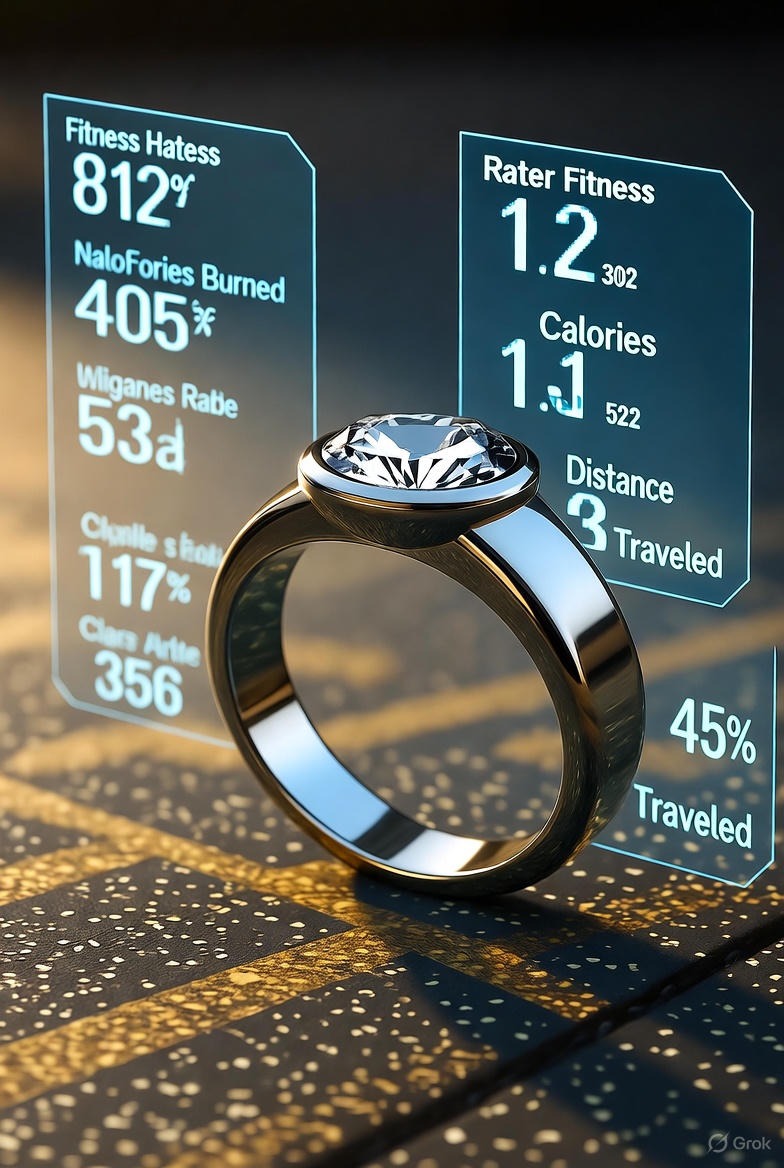
A ring-based approach to preventing activity-related injuries.
A ring-based approach to preventing activity-related injuries.
%402x.svg)
The modern pursuit of wellness is a paradox. We are inundated with technology that makes us more sedentary than any generation before us, yet we possess an unprecedented hunger for movement, performance, and pushing our physical limits. We download apps, join boutique fitness studios, invest in home gyms, and chase personal bests. But this explosion of activity culture has a dark twin: a silent epidemic of preventable injuries.
Every year, millions of fitness enthusiasts, weekend warriors, and dedicated athletes are sidelined by sprains, strains, stress fractures, and overuse injuries. The culprit is rarely a single moment of catastrophic failure, but a creeping accumulation of micro-stresses—a body whispering warnings that we, disconnected as we are from our own physiology, fail to hear until it screams. We train based on the calendar, not our capacity. We ignore fatigue, dismiss poor sleep, and push through discomfort, misinterpreting the language of our bodies. The result is a cycle of progress and setback that saps motivation and hinders long-term health.
What if the key to breaking this cycle wasn't just more willpower or a better training plan, but better, more intimate data? What if you could wear a device that didn't just count your efforts, but comprehended your body's readiness for them? Enter the smart ring: a minimalist piece of wearable technology that represents a fundamental shift in injury prevention. By moving from the wrist to the finger—a location rich with precise vascular data—and focusing on the foundational metrics of recovery and strain, smart rings like those pioneered by Oxyzen are transforming how we understand and interact with our body's limits. This is not about tracking more; it's about understanding better. This article explores how this discreet, powerful technology provides a continuous, personalized biofeedback loop, empowering you to move smarter, recover fully, and build a resilient, injury-proof body for life.
We are living in the age of the "active injured." Gyms are full, running trails are crowded, and fitness challenges proliferate on social media, yet physical therapists' offices have never been busier. The statistics paint a stark picture: according to a broad review of sports medicine data, overuse injuries constitute roughly half of all sports injuries in adults, with running, cycling, weight training, and high-intensity interval training (HIIT) being frequent contributors. The narrative of "no pain, no gain" has been dangerously misinterpreted, leading individuals to confuse constructive discomfort with destructive distress.
The root of this epidemic is a profound disconnection between our intentions and our internal state. Traditional training models operate on simplistic, external variables:
This external approach ignores the most important variable in the fitness equation: you. Your body is not a machine with consistent daily output. It is a dynamic, living system influenced by a symphony of internal factors: hormonal fluctuations, nervous system arousal, tissue repair status, and psychological stress. Ignoring these factors is like trying to drive a car while ignoring the fuel gauge, engine temperature, and tire pressure, solely focusing on the accelerator.
The cost of this ignorance is high. A minor ache in the knee from Monday's squat session, ignored in pursuit of Wednesday's planned run, can escalate to patellofemoral pain syndrome. Chronic under-recovery, masked by caffeine and adrenaline, can suppress immune function, leading to illness and derailing progress for weeks. This stop-start cycle is demoralizing and is a primary reason people fall off their wellness journey. As we explore in our article on movement strategies for every decade, listening to your body is not a sign of weakness but the cornerstone of sustainable, lifelong activity.
The quest for a solution has long been hampered by technology that was either too obtrusive (clinical-grade gear) or too superficial (wrist-based trackers that primarily count steps). We needed a tool that could bridge the gap—providing clinical-grade insight into recovery without disrupting daily life. This sets the stage for a new category of wearable that is as sophisticated as it is simple: the wellness ring.
The wearable tech revolution began on the wrist. For years, smartwatches and fitness bands have been our primary digital health companions, popularizing concepts like step counts and heart rate monitoring. However, for the nuanced task of injury prevention, the wrist presents significant limitations. It is a location prone to motion artifact (false signals from arm movement), less-than-ideal for optical heart rate accuracy due to bone and tendon density, and often features variable fit that can compromise sensor contact.
The finger, in contrast, is a biometric goldmine. It hosts a dense network of capillaries and peripheral blood vessels, allowing photoplethysmography (PPG) sensors in a smart ring to get a stronger, cleaner signal of your blood flow with less interference from motion. This is crucial for measuring two of the most critical metrics for understanding your body's readiness: Heart Rate (HR) and, more importantly, Heart Rate Variability (HRV).
Heart Rate Variability: The Window to Your Nervous System
HRV is not your heart rate. While your heart may beat 60 times per minute, the interval between each beat is not perfectly even; it has subtle, millisecond variations. This is HRV. A higher HRV generally indicates a more resilient, adaptable autonomic nervous system—meaning your body can smoothly transition between stress (sympathetic "fight or flight") and recovery (parasympathetic "rest and digest") modes. A lower HRV can signal that your body is under accumulated stress, whether from physical training, poor sleep, emotional anxiety, or illness.
For injury prevention, HRV is a prophetic metric. A consistently depressed HRV trend is one of the earliest and most reliable warnings that your body is struggling to recover. Pushing through a tough workout when your HRV is low significantly increases your risk of poor form, compromised decision-making, and, ultimately, injury. A smart ring, with its superior signal fidelity at the finger, provides a more accurate and consistent HRV reading than most wrist-based devices, especially during sleep—the optimal time for measurement.
The 24/7 Monitoring Paradigm
Unlike a watch you take off to charge or during certain activities, a smart ring is designed to be worn continuously. Its small, unobtrusive form factor makes it comfortable for sleep, weightlifting (where a wrist device can interfere), swimming (with a waterproof rating), and daily life. This continuous wear unlocks a complete picture of your physiological baseline. It tracks not just your active minutes but, more critically, your passive recovery.
It measures:
By consolidating these metrics, a smart ring like the one you can discover at Oxyzen moves beyond activity tracking to become a holistic readiness tracker. It answers the most important pre-workout question: "Is my body truly prepared for what I'm about to ask of it?"

With a powerful, always-on sensor in place, the next step is translation. What do these streams of data mean for your risk of a twisted ankle, a sore shoulder, or a stress fracture? Injury prevention is not about a single "danger" number, but about interpreting the interplay of several key biomarkers over time. A smart ring synthesizes this data into an actionable narrative about your internal state.
1. Recovery Score: Your Daily Green Light
This is typically a composite score (often 0-100%) that aggregates your nocturnal data: HRV, RHR, sleep duration, and sleep quality. Think of it as your body's "charge level" for the day ahead.
2. Sleep & Rest: The Non-Negotiable Repair Phase
Muscles aren't built in the gym; they are broken down there. They are rebuilt during sleep. Deep sleep (N3) is when human growth hormone (HGH) pulses, driving cellular repair and muscle growth. REM sleep is crucial for cognitive recovery and motor skill consolidation—essential for learning new, safe movement patterns.
A smart ring doesn't just tell you you slept 7 hours; it reveals if those hours were restorative. Consistently low deep sleep, even with adequate time in bed, is a major recovery deficit. Tracking this helps you connect lifestyle choices (evening screen time, caffeine, alcohol, meal timing) directly to your body's repair capacity. As validated in our analysis of how a wellness ring validates effective healthy aging tips, quality sleep is the most powerful recovery tool we have.
3. Activity Strain & Balance: Quantifying the Stress
While preventing overtraining is key, understanding productive strain is equally important. Advanced smart rings estimate the physiological cost of your activities, not just the calorie burn. They analyze heart rate data, movement, and sometimes temperature to assign a "strain" score to your day.
The magic is in the balance. The app dashboard shows the direct relationship between your Daily Strain and your Recovery Score. Over a week, you should see a rhythm: higher strain days followed by adequate recovery (shown by a maintained or slightly dampened score that then rebounds). A dangerous pattern is one of steadily accumulating strain with a corresponding plummet in recovery—a guaranteed path to breakdown. This visual feedback makes the abstract concept of "overtraining" concrete and personal.
4. Temperature Trends: The Subtle Early Warning
Some advanced rings include a peripheral temperature sensor. While not diagnostic, shifts in your baseline nighttime temperature can be an incredibly sensitive early warning sign. A slight elevation can precede feelings of illness, while a dip may correlate with metabolic slowdown or poor circulation. For athletes, an unexplained deviation can signal that the body is fighting something, altering its recovery priorities, and making it more vulnerable.
By learning this language of biomarkers, you transition from guessing to knowing. You stop asking "Should I work out today?" and start asking "What type of work is my body primed for today?" This is the core of the smart ring approach: personalized, data-driven autoregulation.
Armed with a clear, daily understanding of your recovery status, the entire philosophy of training transforms. You move from a rigid, prescriptive model to a flexible, responsive one. This is the Readiness Paradigm, and it is the most powerful injury-prevention strategy a modern athlete or fitness enthusiast can adopt.
In the old model, you might follow a 12-week marathon plan. Week 6, Day 3 calls for an 8-mile tempo run. You feel groggy, your legs are heavy from a poor night's sleep, but you run it anyway. You hit the paces through sheer grit, but your form deteriorates in the last two miles, placing abnormal stress on your IT band and hip. The seed of an injury is planted.
In the Readiness Paradigm, you wake up and check your ring's recovery score. It's at 45%. The data confirms what you feel: you are not recovered. Instead of the tempo run, you might:
The critical shift is that this is not "skipping" a workout; it is optimizing your training. You are placing the highest-intensity stress on your body only when it is best prepared to absorb that stress, adapt to it, and become stronger. This is the principle of supercompensation executed with precision.
Real-World Application: The Busy Professional
Consider Sarah, a 42-year-old project manager who loves weight training. Her goal is to build strength without joint pain. Her old routine was Monday-Wednesday-Friday heavy lifting, regardless of work stress or sleep.
With her smart ring, she observes that every Thursday, after her intense Wednesday night sessions, her recovery score is low, and her resting heart rate is elevated by 5-7 bpm. She realizes her body needs more than 48 hours to recover from those sessions. She adapts:
Within weeks, her chronic low-grade knee discomfort dissipates, and she starts hitting personal records because she's finally training with her body, not against it. This is the essence of training smarter, not just harder. For more on tailoring your approach as life's demands change, our guide on healthy aging tips that start working at any age offers valuable, data-informed strategies.
A critical insight that smart ring data makes undeniably clear is that what we often call "overtraining" is more accurately described as "under-recovery." The problem is rarely the single workout itself; it's the failure to provide the body with the necessary conditions (sleep, nutrition, stress management) to repair and adapt from the cumulative workload.
The ring's longitudinal data is exceptional at spotting the signature of under-recovery before it manifests as injury or illness. Here are the key trends to watch for:
This data allows you to intervene proactively. Instead of waiting for a torn muscle or a respiratory infection to force you to stop, you can act at the first sustained data signature:
By reframing the problem as under-recovery, the power shifts back to you. You can't always control your workload, but you can exert immense control over your recovery practices. The smart ring provides the accountability and proof to make those practices non-negotiable.
Injury prevention is a 24-hour endeavor. The hour you spend exercising is just the stimulus; the other 23 hours determine whether that stimulus leads to positive adaptation or breakdown. The smart ring shines a light on these foundational lifestyle pillars, showing how choices far from the gym floor directly impact your resilience.
Nutrition & Hydration as Recovery Engineering
You can't out-track a bad diet. While smart rings don't track calories directly, their data is acutely sensitive to nutritional and hydration status.
Stress: The Invisible Load
Your autonomic nervous system doesn't compartmentalize. A grueling deadline, a difficult conversation, or financial worry activates the same stress response as a heavy deadlift—elevating cortisol, spiking heart rate, and shifting you into a sympathetic state. Chronic life stress keeps your body in a catabolic (breaking-down) mode, stealing resources from repair and regeneration.
Your ring's HRV and sleep data become a dashboard for your mental well-being. A period of high work stress will reflect as a suppressed recovery trend. This isn't a judgment; it's information. It tells you that during stressful life phases, your training stress must be deliberately lowered to keep the total load manageable. It validates the need for meditation, breathwork, or a walk in nature—not as luxuries, but as essential recovery modalities. For a deeper look at managing this total load, consider the insights in our piece on how HRV monitoring supports healthy aging goals.
The Activity of Daily Living (ADL)
For many, formal exercise is just one part of a physically demanding life: chasing kids, manual labor, long hours on your feet. A smart ring captures this non-exercise activity thermogenesis (NEAT) as part of your total daily strain. This is crucial for a realistic picture. If you had a brutally busy day on your feet, your "rest day" from the gym might still be a moderate-strain day physiologically. The ring helps you honor that, preventing you from stacking a hard workout on top of an already fatigued system.
By connecting these dots, the smart ring fosters holistic self-awareness. It helps you see yourself as an integrated system, where sleep, food, stress, and movement are inextricably linked in the quest for a strong, supple, and injury-free body.
To see the smart ring approach in action, let's follow the journey of Michael, a 38-year-old recreational runner plagued by recurring shin splints and Achilles tightness. His goal was to break a 4-hour marathon, but every training block ended in pain and a forced 4-6 week layoff.
The Old Pattern: Michael followed a popular online plan. He ran through stiffness, took ibuprofen to manage inflammation, and interpreted pain as a necessary part of training. His sleep was irregular due to early morning runs, and he paid little attention to post-run recovery.
The Intervention: Michael began wearing a smart ring. For the first two weeks, he simply observed his data without changing his behavior. The insights were revealing:
The Data-Driven Transformation:
The Results: Over six months:
This story mirrors the experiences shared in our customer testimonials, where users transition from frustration to empowerment through data.
The elegance of a smart ring belies the sophisticated technology packed within its tiny form. Understanding the core components demystifies the process and builds trust in the data guiding your decisions.
1. The Sensor Suite: A Clinical-Grade Lab on Your Finger
At the heart of the ring is a set of miniaturized medical-grade sensors:
2. The Algorithmic Brain: From Raw Data to Personal Insight
The raw sensor data is just a stream of numbers. The real magic happens in the algorithms. Using machine learning models trained on vast physiological datasets, the ring's software:
3. Privacy & Security: Your Data, Owned by You
A legitimate concern with intimate health data is privacy. Reputable companies like Oxyzen build their systems with privacy-by-design. Data is typically anonymized and encrypted both in transit and at rest. Users should own their raw data, with the option to export it or share it with healthcare providers. It's crucial to choose a brand that is transparent about its data policy, placing user trust at the core of its mission, much like the values outlined in our story.
This fusion of hardware and intelligent software transforms the ring from a simple recorder into an intelligent health companion, providing insights that were once only available in a sleep lab or sports physiology clinic.

Adopting this new technology can feel overwhelming. The key is integration, not overhaul. The goal is to use the data to make smarter decisions within the framework of your existing fitness and wellness philosophy. Here is a step-by-step guide to weaving smart ring insights into your daily life.
Phase 1: The Observation Period (Weeks 1-2)
Phase 2: The Connection Phase (Weeks 3-4)
Phase 3: The Action Phase (Week 5+)
Overcoming Common Hurdles:
For ongoing support and answers to common questions, a great resource is the Oxyzen FAQ, which dives into practical usage, data interpretation, and getting the most from your device. This practical integration turns raw data into a seamless, intelligent layer over your existing pursuit of health, transforming your approach from one of hope to one of informed strategy.
The journey from a state of chronic vulnerability to one of resilient strength is paved with data-driven decisions. As we’ve established, the smart ring provides an unprecedented window into your body’s readiness, transforming injury prevention from a guessing game into a science. But the true power of this technology is unlocked when its insights are applied to the specific, dynamic stresses of real-world activity. This portion of our exploration delves deeper into the practical application of biometric intelligence, examining how it refines technique, personalizes recovery, and builds a fundamentally more durable human body across every discipline and decade of life.
Injury prevention isn't just about how much you do; it's fundamentally about how well you do it. Poor movement patterns—a subtle knee cave during a squat, an asymmetrical hip drop while running, a rounded back during a deadlift—place aberrant, repetitive stress on joints, ligaments, and tendons. Over hundreds or thousands of repetitions, these micro-errors accumulate into macro-injuries: IT band syndrome, patellar tendinitis, rotator cuff strains. While a smart ring isn’t a motion-capture camera, its physiological data provides powerful, indirect feedback on movement quality.
The Physiological Signature of Efficient Movement
Efficient, biomechanically sound movement is metabolically economical. It uses the correct muscle groups in the proper sequence, conserving energy and minimizing unnecessary strain on stabilizing structures. Inefficient movement is wasteful and stressful. Your smart ring detects this difference through key metrics:
Actionable Insights for Technique Improvement:
By treating your heart rate and strain data as a proxy for efficiency, you cultivate a deeper kinesthetic awareness. The ring becomes a coach on your finger, whispering, “You’re working harder than you should be for this output. Check your form.”
Recovery is not one-size-fits-all. The classic post-workout routine of static stretching and a protein shake is a good starting point, but optimal recovery is a personalized protocol. Your smart ring data reveals what your body specifically needs to rebound from different types of stress.
Different Stressors, Different Recovery Signatures:
Your body responds physiologically distinct ways to different activities. The ring data helps you tailor your recovery accordingly:
Using Nightly Data to Guide Next-Day Action:
Your morning recovery score and sleep breakdown are your daily recovery report card. They tell you what worked and what didn’t.
This level of personalization moves you beyond generic recovery advice into a truly optimized regimen. It’s the difference between throwing random supplements at a problem and using a precise, data-informed protocol. For more on building personalized, effective routines, our compilation of 50 healthy aging tips a smart ring helps implement daily offers a wealth of actionable ideas.
Traditional periodization—the planned manipulation of training variables (volume, intensity, frequency) over time—is a coach’s blueprint. It’s based on general principles and averages. Biometric-Guided Periodization is that blueprint brought to life with a real-time feedback system, allowing the plan to adapt to the individual athlete’s daily reality. The smart ring is the engine of this adaptation.
From Static Plan to Fluid Strategy:
Consider a classic 4-week mesocycle: 3 weeks of progressive overload, 1 deload week.
Identifying the Optimal Deload Window:
The greatest advance is in timing the deload. Instead of a arbitrary calendar deload every 4th week, you deload when your data says you need it. The signs:
Long-Term Fitness Trend Analysis:
Over months and years, the ring’s data becomes a longitudinal health record. You can observe:
This dynamic approach respects the fundamental truth that the body is not a machine. It’s an adaptive organism that responds best to a flexible, respectful dialogue between stress and rest. The smart ring provides the vocabulary for that dialogue.
The link between mental state and physical vulnerability is not mystical; it is physiological. Psychological stress directly increases injury risk through several mechanisms: it causes muscle tension, reduces focus (leading to technical errors), narrows peripheral vision (increasing trip/fall risk), and impairs recovery by keeping the nervous system in a sympathetic state. Your smart ring quantifies this connection, making the intangible, tangible.
HRV: The Bridge Metric
Heart Rate Variability is the premier objective measure of your mind-body state. It’s influenced equally by a hard workout and a hard day at the office. A consistently low HRV indicates your nervous system is "on edge," leaving your muscles tighter, your reaction times slower, and your tissues less perfused with healing blood flow. In this state, a simple misstep can become a sprain, and a routine workout can cause a strain.
Real-World Scenarios:
Using the Ring for Psychological Recovery:
The ring isn’t just for measuring the problem; it’s for validating the solution.
By acknowledging and tracking the psychological component of load, you adopt a truly holistic view of injury prevention. You learn that managing your mental landscape is as critical as managing your training log.
While the core principles of readiness, recovery, and load management are universal, different sports present unique injury risks. The smart ring’s data can be interpreted through a sport-specific lens for even more targeted prevention.
For the Climber/Yoga Practitioner (Preventing Pulley Injuries, Chronic Strains):
For the Team Sport Athlete (Preventing Non-Contact Injuries):
By applying the data through these disciplinary lenses, the smart ring transitions from a general health device to a specialized performance and longevity tool, helping you engage in your passion safely for decades.
The implications of biometric monitoring extend beyond the solo enthusiast. For coaches, trainers, and sports teams, aggregated smart ring data represents a revolution in athlete management, moving from a one-size-fits-all program to truly individualized care, dramatically reducing team-wide injury rates.
The Ethical, Empowering Framework:
The foundation must be athlete ownership and education. Athletes should own their data and be taught to interpret it for self-regulation. The role of the coach is to create an environment where using this data for recovery is encouraged, not seen as a sign of weakness. Transparency is key, as outlined in Oxyzen’s approach to user-centric design.
Practical Applications for Coaches:
Building a Culture of Resilience:
When a team normalizes the use of recovery data, it flips the culture. The “tough” athlete is no longer the one who hides pain and fatigue; the “smart” and “tough” athlete is the one who communicates their needs based on data to stay on the court. It fosters trust and a shared goal of longevity. This team-based, data-informed approach to wellness mirrors the community-focused strategies discussed in our blog’s resources on holistic health.
The future of sports is not just in training harder, but in recovering smarter. Smart ring data provides the common language for coaches and athletes to have that conversation, transforming teams from collections of individuals into optimized, resilient units.
The ultimate goal of injury prevention is not merely to avoid pain; it is to preserve the joy and capability of movement for a lifetime. An injury, especially a repetitive one, is not just a temporary setback. It can create compensatory movement patterns, foster a fear of activity, and accelerate the decline in muscle mass, bone density, and joint health associated with aging. The smart ring approach, therefore, is fundamentally a pro-aging strategy.
Building a Durable Body Over Decades:
Every time you use your readiness data to avoid training in a fatigued state, you are not just preventing a potential acute injury. You are:
The Data-Driven Aging Dashboard:
As you age, your biomarkers will naturally change. A smart ring provides an objective record of this graceful transition, allowing for intelligent adaptation rather than fearful decline.
A Legacy of Activity:
The smart ring empowers you to be the architect of your own healthspan. It provides the tools to make consistent, intelligent decisions that compound over years. The result is not just a lower injury count, but a higher quality of life—more energy, more independence, and more days doing the activities you love with the people you love. It turns fitness from a phase into a permanent, sustainable state of being.
This long-view perspective is what separates a trendy gadget from a transformative health tool. It’s about playing the long game, where the metric of success is decades of vibrant, active living. To see how continuous monitoring supports this journey, explore how a smart ring tracks healthy aging progress over time.
In the next and final portion of this comprehensive guide, we will explore the future horizons of this technology, answer critical questions about implementation and limitations, and provide a definitive roadmap for integrating the smart ring approach into your life, starting today.
The Smart Ring Approach to Preventing Activity-Related Injuries (Conclusion)
We have journeyed from understanding the modern injury epidemic to discovering a powerful, personalized solution. The smart ring, by providing a continuous stream of intimate physiological data, has redefined the paradigm from reactive pain management to proactive injury prevention. It teaches us to listen to the subtle language of our bodies—a language spoken through heart rate variability, sleep architecture, and recovery scores—before that language becomes a scream of pain. This final portion of our exploration addresses the practicalities, the future, and the holistic integration of this technology, empowering you to build not just a stronger body, but a more resilient and enduring relationship with movement itself.
With the smart ring market growing, selecting the right device is crucial. Not all rings are created equal, especially when your goal is precise, actionable data for injury prevention. Here’s a focused guide on what to look for, moving beyond mere features to true functional utility.
1. Sensor Accuracy & Biomarker Suite: The Non-Negotiable Core
2. The Algorithmic Intelligence: From Data to Insight
The hardware collects data; the software makes it meaningful. The platform should:
3. Form Factor & Usability: The 24/7 Promise
4. Privacy & Data Philosophy
Your biometric data is deeply personal. Choose a company that is transparent. Read their privacy policy. Do they sell aggregated, anonymized data? Can you download and own your raw data? A brand committed to user wellness, like the one behind Oxyzen, will prioritize data security and user ownership as core tenets of its mission.
Making the Choice:
Your perfect ring is the one you’ll wear consistently, whose data you trust, and whose insights you understand and act upon. It’s less about the longest feature list and more about the clarity and reliability of the core injury-prevention metrics: Recovery, Sleep, and Strain. Visit a trusted source like the Oxyzen shop to explore devices designed with this precise, health-focused philosophy in mind.

Adopting this new tool requires a methodical approach. Here is a step-by-step, 30-day plan to integrate smart ring data seamlessly and effectively into your life, transforming your relationship with activity.
Week 1: Establish Your Baseline (The Observation Phase)
Week 2: Discover Connections (The Detective Phase)
Week 3: Act on Insights (The Integration Phase)
Week 4: Optimize and Refine (The Mastery Phase)
By the end of 30 days, checking your data and making subtle adjustments will become second nature. You will have transitioned from being a passenger in your body to being an informed, responsive pilot. For ongoing support and community experiences during this journey, the stories shared in Oxyzen’s testimonials can provide valuable inspiration and reassurance.
While powerful, the smart ring is a tool, not a talisman. A responsible approach requires an honest assessment of its limitations and the ethical landscape it inhabits.
Technical and Physiological Limitations:
Psychological and Ethical Considerations:
The Balanced Mindset:
The smart ring is a powerful compass, but you are still the navigator. It provides objective information to balance your subjective feelings. The goal is a synergistic relationship: your intuition (“I feel run down”) is validated by the data (low HRV), giving you the confidence to make the smart choice (rest). It’s about augmenting self-awareness, not replacing it. For a balanced perspective on using data for wellness, our FAQ section addresses many common questions and concerns.
The smart ring is not the end point; it is a pivotal early chapter in the story of continuous, personalized health monitoring. The future horizon is one where this technology becomes even more predictive, integrated, and preventative.
Near-Future Advancements (2-5 Years):
Long-Term Vision (5-10+ Years):
The Paradigm Shift: From Sick-Care to True Health-Care
The ultimate promise of this technology is a systemic shift. By empowering individuals with deep, personal data, we move healthcare from a reactive model (treating disease after it manifests) to a proactive one (preventing disease by optimizing the underlying pillars of health: movement, recovery, nutrition, and sleep). The smart ring is a cornerstone of this personalized, preventative health revolution. To stay abreast of these evolving trends and the science behind them, a resource like the Oxyzen blog is invaluable.
The journey through the science and application of the smart ring approach brings us to a simple, powerful conclusion: The most sophisticated piece of fitness equipment you will ever own is your own body, and now you can finally understand its manual.
Injury prevention is no longer a matter of luck, brute force, or blindly following generic advice. It is a skill—a skill of listening, interpreting, and responding. The smart ring cultivates this skill. It turns down the volume of the noisy world of fitness fads and turns up the signal of your unique physiology.
This technology does not make you fragile by suggesting you rest; it makes you anti-fragile by teaching you how to stress and recover in the optimal rhythm for you. It replaces the cycle of breakdown with the flywheel of sustainable progress. It shifts the goal from peak performance for a season to lifelong participation and joy.
The call to action is not to buy a gadget, but to adopt a new philosophy: one of curiosity, respect, and partnership with your physical self. Whether you are a professional athlete, a weekend hiker, a parent chasing toddlers, or someone focused on healthy aging and preserving cognitive function, the principles are the same. Listen to the data, honor your recovery, train with mindful intention, and build your activity not as a series of isolated workouts, but as a continuous, intelligent dialogue with your body.
Start by observing. Then, connect. Finally, act. Let your data tell the story of a body that is not beaten into submission, but nurtured into strength—a body capable of more miles, more years, and more life, free from the preventable setbacks that once seemed an inevitable cost of being active.
Ready to begin your own journey toward smarter training and lasting resilience? Explore the technology designed for this purpose at Oxyzen and find a wealth of supporting knowledge and community stories on our blog to guide your way.
Your Trusted Sleep Advocate (Sleep Foundation — https://www.sleepfoundation.org/)
Discover a digital archive of scholarly articles (NIH — https://www.ncbi.nlm.nih.gov/
39 million citations for biomedical literature (PubMed — https://pubmed.ncbi.nlm.nih.gov/)
experts at Harvard Health Publishing covering a variety of health topics — https://www.health.harvard.edu/blog/)
Every life deserves world class care (Cleveland Clinic -
https://my.clevelandclinic.org/health)
Wearable technology and the future of predictive health monitoring. (MIT Technology Review — https://www.technologyreview.com/)
Dedicated to the well-being of all people and guided by science (World Health Organization — https://www.who.int/news-room/)
Psychological science and knowledge to benefit society and improve lives. (APA — https://www.apa.org/monitor/)
Cutting-edge insights on human longevity and peak performance
(Lifespan Research — https://www.lifespan.io/)
Global authority on exercise physiology, sports performance, and human recovery
(American College of Sports Medicine — https://www.acsm.org/)
Neuroscience-driven guidance for better focus, sleep, and mental clarity
(Stanford Human Performance Lab — https://humanperformance.stanford.edu/)
Evidence-based psychology and mind–body wellness resources
(Mayo Clinic — https://www.mayoclinic.org/healthy-lifestyle/)
Data-backed research on emotional wellbeing, stress biology, and resilience
(American Institute of Stress — https://www.stress.org/)


