


How Your Smart Ring Shows When Daily Wellness Habits Need Adjustment
Shows how your ring's data indicates when you need to adjust your daily habits for better results.
Shows how your ring's data indicates when you need to adjust your daily habits for better results.
%402x.svg)
You wake up feeling… off. Not exactly sick, but not truly rested either. It’s a foggy, sluggish sensation that coffee can't quite pierce. You went to bed on time, you think. You ate decently yesterday. Yet, your body is sending signals of subtle discord. For years, these signals were cryptic, easy to ignore or misattribute. You’d push through, assuming it was just a bad night or a stressful week. But what if you had a translator? A continuous, objective interpreter of your body’s most fundamental rhythms, whispering insights about the alignment—or misalignment—of your daily choices?
Enter the smart ring. This unassuming piece of wearable technology is revolutionizing personal wellness by moving beyond step counts and heart rate spot-checks. It provides an intimate, 24/7 biometric narrative, revealing the hidden connections between your daily habits and your physiological state. It doesn’t just track; it interprets. It shows you, with cold, hard data, the exact moments when your wellness habits are out of sync with your body’s needs. This is not about achieving perfection; it’s about cultivating awareness and making empowered, incremental adjustments. This article is your guide to decoding that narrative. We will explore precisely how the data from your smart ring acts as a diagnostic mirror, reflecting the impact of everything from your late-night snack to your afternoon caffeine habit, and illuminating the path back to equilibrium.

Before you can identify discord, you must first recognize the melody. Your body operates on a complex symphony of rhythms—circadian, sleep-wake, hormonal, and metabolic. A smart ring’s first and most crucial role is to help you establish your personal, unique baseline across these systems. This isn't a generic "normal" pulled from a population average; it’s your normal when things are humming along smoothly.
For the first few weeks of wearing a ring, the goal isn't to change anything. It's simply to observe and collect data. The ring quietly measures your resting heart rate (RHR), heart rate variability (HRV), respiratory rate, skin temperature, and sleep stages. Over time, patterns emerge. You learn your typical RHR range (often a powerful indicator of overall cardiovascular fitness and recovery), your average nightly HRV (a key marker of your autonomic nervous system's resilience), and your core body temperature cycle.
This baseline becomes your foundational wellness fingerprint. For instance, you might discover your personal optimal HRV is 55ms, your RHR sits naturally at 58 BPM, and your temperature reliably dips around 10 PM. Any significant, sustained deviation from this established baseline is your ring’s primary alarm bell. It’s the equivalent of a musician in an orchestra playing out of tune; the entire harmony is affected. When your HRV trends downward for several days while your RHR creeps up, it’s a clear, pre-symptomatic sign that your body is under some form of stress—physical, mental, or emotional—and your current habits are not supporting recovery. Learning to measure and understand your own baseline is the first step to taking control. For those starting this journey, our beginner’s guide to tracking sleep health is an essential companion to this process, helping you interpret the foundational data your ring provides.
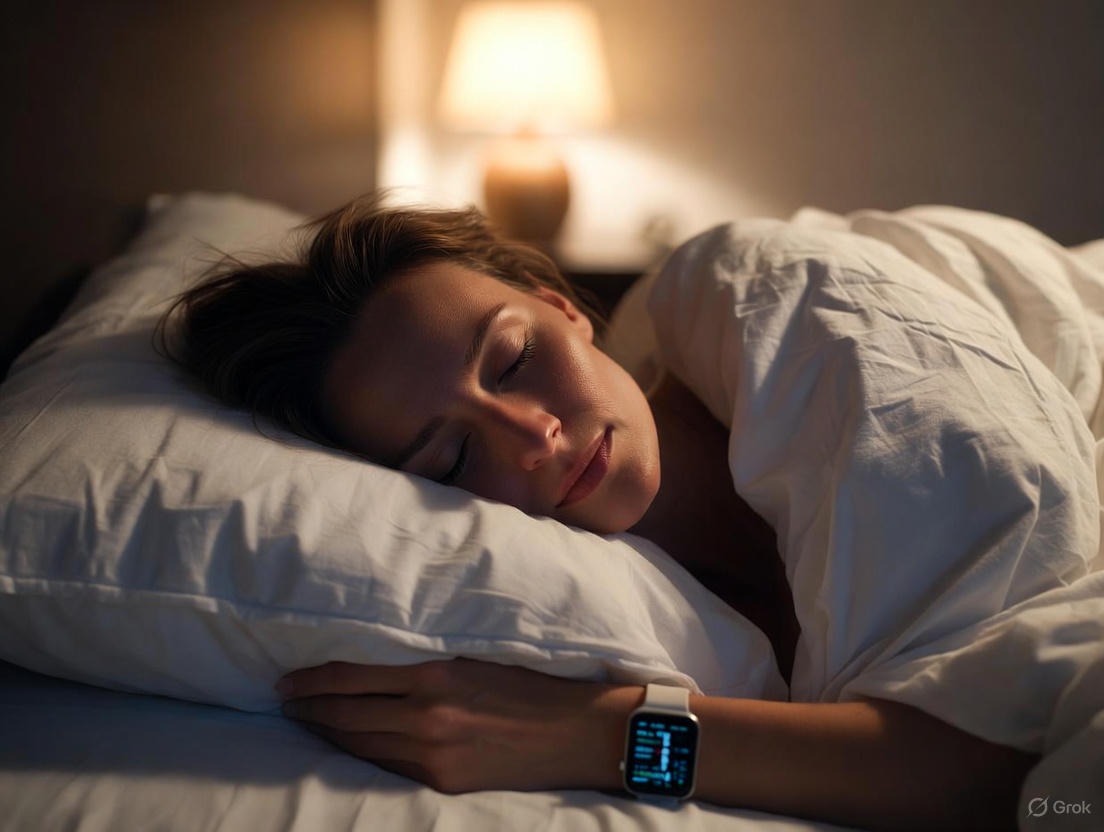
Sleep is the cornerstone of wellness, and smart rings are exceptionally adept at moving beyond simple duration metrics. They decode the architecture of your sleep, revealing whether your habits are building a solid structure or a fragile one. The ring tells a detailed story through sleep stages (light, deep, REM), restlessness, latency (time to fall asleep), and efficiency.
Let’s translate common disruptions. A pattern of consistently long sleep latency might point directly to an evening habit: scrolling through your phone in bed (blue light suppressing melatonin), consuming caffeine too late, or a pre-sleep mind racing with unfinished work. The ring provides the "what"—it takes you 45 minutes to fall asleep—and you connect the "why."
More subtly, a lack of deep sleep (slow-wave sleep) is often tied to habits around alcohol consumption or intense late-evening exercise. While alcohol might help you fall asleep faster, the ring’s data will starkly show the subsequent fragmentation and suppression of restorative deep sleep. Similarly, consistently low REM sleep, crucial for memory and emotional processing, can be linked to habits like inconsistent sleep schedules or certain medications.
Perhaps the most telling metric is sleep consistency. Your ring’s companion app often provides a score for how regular your bedtime and wake time are. A fluctuating schedule, even if you’re getting 8 hours, confuses your circadian rhythm, leading to poorer quality sleep. This data is a non-negotiable prompt: your habit of sleeping in wildly on weekends is actively undermining your weekday recovery. It’s a powerful feedback loop that makes the abstract cost of irregularity vividly concrete. The impact of this goes far beyond tiredness; the connection between sleep health and mental wellness is profound and bidirectional, with poor sleep being both a symptom and a cause of mental strain.
If you were to choose one metric as your body’s most honest, real-time feedback system, it would be Heart Rate Variability. HRV measures the millisecond variations between your heartbeats. A higher HRV generally indicates a resilient, adaptable autonomic nervous system—your body can easily switch between action (sympathetic “fight or flight”) and recovery (parasympathetic “rest and digest”). A lower HRV suggests your system is stuck in a state of stress, overload, or poor recovery.
Your smart ring tracks HRV continuously, but it is most telling when observed as a trend, particularly your nightly average or morning reading. This is your daily report card on how well your habits managed stress and supported recovery the day before.
A sustained downward trend in HRV is a flashing dashboard light. Your ring is saying, "Your current operational mode is unsustainable." Now, you become a detective. Was it the habit of working through lunch for five straight days? The habit of doomscrolling news before bed? The habit of skipping your usual walk? The ring won't name the culprit, but it will unequivocally state that a culprit exists.
Conversely, when you see your HRV climb and stabilize at a higher baseline, it confirms which habits are truly restorative. Maybe it was the week you committed to a 10-minute meditation each morning, or when you started leaving your phone outside the bedroom. The positive reinforcement is incredibly motivating. You’re not just hoping meditation helps; you have physiological proof that it’s improving your nervous system’s resilience. This is the essence of data-driven habit adjustment.

Your Resting Heart Rate is a beautifully simple yet profoundly informative metric. It’s the number of times your heart beats per minute while you are fully at rest. A lower RHR typically indicates better cardiovascular fitness and efficient heart function. But more importantly for daily habit adjustment, acute changes in your personal RHR are highly significant.
When your smart ring shows your RHR trending 5-10 BPM above your established baseline for several days, it’s a major red flag. Your body is working harder than normal just to maintain basic functions. This elevation can be triggered by a multitude of habit-related factors:
By observing RHR in tandem with HRV and sleep, you get a triangulated view of strain. For example, if your RHR is up and your HRV is down, but your sleep score is good, you might investigate habits around hydration or an impending cold. If all three are poor, the signal is clear: a comprehensive habit overhaul is needed. Learning to spot these red flags early is a superpower, and it’s something every beginner should cultivate; this guide on sleep health red flags beginners should watch for complements the RHR insights from your ring perfectly.
While less dynamic than heart metrics, your nocturnal skin temperature—measured continuously by your smart ring—holds subtle clues about your metabolic and circadian health. Your body temperature follows a daily rhythm, dipping to its lowest point during deep sleep and rising toward morning to help you wake.
Deviations from your personal temperature rhythm can be revealing. A consistently higher nighttime temperature can indicate that your body is working overtime—perhaps due to metabolic strain from a late, heavy meal or the inflammation from an intense workout too close to bedtime. It can also be an early sign of a hormonal shift or the onset of an infection.
For women, temperature tracking can vividly illustrate the impact of the menstrual cycle on recovery and readiness. A sustained temperature rise confirms ovulation and the shift into the luteal phase, a time when the body's metabolic rate is higher. Seeing this data, a woman might learn that her habit of intense workouts feels much harder in this phase, and her body would be better served with more strength-focused or restorative exercise. This empowers habit adjustment in sync with biology, not in conflict with it.
Furthermore, a lack of a clear temperature rhythm—a blunted dip at night—can signal a disrupted circadian clock. This directly points to habits that confuse your internal timing: irregular light exposure (not getting morning sunlight, too much blue light at night), erratic meal times, or inconsistent sleep schedules. The temperature curve is a gentle but persistent reminder that your body craves rhythmic, predictable habits.
Most wearables tell you to move more. A sophisticated smart ring tells you when, how, and if you should move more. This is embodied in the "Readiness" or "Recovery" score that many ring algorithms generate—a composite index based on your sleep, HRV, RHR, and temperature data.
This score is the ultimate habit-adjustment trigger. A high readiness score following a night of great sleep and high HRV is your body’s green light. The habit of a vigorous workout, a demanding workday, or a busy social calendar is likely well-supported. A low readiness score, however, is a directive to pivot. It suggests your body’s resources are depleted and need replenishment, not further expenditure.
Ignoring a low readiness score and sticking rigidly to a habit of intense daily training is a recipe for overtraining, injury, and burnout. The ring’s data gives you permission—no, instruction—to adjust. The healthy habit on a low-readiness day becomes active recovery: a gentle walk, yoga, stretching, or true rest. This fosters a habit of listening to your body rather than blindly following a calendar. It replaces the unhealthy habit of "pushing through" with the intelligent habit of "strategic recovery."
This dynamic interplay prevents the all-too-common cycle of overdoing it, crashing, and then starting over. It cultivates sustainability by making your activity habits responsive, not rigid. For anyone looking to build lasting wellness routines, understanding this balance is critical. Learning how to build sleep health habits that last provides a parallel framework for the consistency and adaptability needed in both movement and recovery.
Data in a vacuum is merely interesting. Data connected to context becomes transformative. This is where the habit of daily lifestyle logging within your ring’s app becomes indispensable. Manually logging habits like caffeine intake, alcohol consumption, meal times, stress levels, workout type/intensity, and even menstrual cycles creates a layer of qualitative context over your quantitative biometrics.
The magic happens in the weekly or monthly review. You can literally see the correlation. A log entry for "2 glasses of wine with dinner" is followed by a graph showing a steep drop in deep sleep and a spike in resting heart rate that night. An entry for "high-stress workday" correlates with a plummeting HRV score. A week of logging "8:00 PM dinners" might align with a trend of elevated nighttime skin temperature and poor sleep efficiency.
This process turns speculation into certainty. You no longer wonder if late coffee affects you; you see the line on your sleep latency graph jump every time you log an afternoon latte. You have irrefutable, personal evidence that your habit of a nightcap, while socially enjoyable, comes at a direct cost to your restoration. This personalized cause-and-effect mapping is the most powerful tool for conscious habit change. It moves you from generic advice ("avoid caffeine late") to personalized truth ("My sleep suffers when I have coffee after 2 PM").
Our most pervasive modern habits are digital, and your smart ring is a potent witness to their physiological toll. The habit of pre-sleep screen time is a prime antagonist in your biometric story. The data connection is remarkably clear for many users.
Engaging with stimulating content (work emails, social media, intense shows) in the hour before bed reliably triggers a sympathetic nervous system response—the very state you need to wind down from. Your ring’s data will often show elevated heart rate during this period, followed by increased sleep latency and reduced overall sleep quality. The blue light emitted suppresses melatonin production, directly interfering with your circadian rhythm’s cue to sleep.
But the ring can reveal more subtle digital habit impacts, too. The constant, all-day habit of phone-checking and multitasking contributes to cognitive fragmentation and low-grade stress, which can manifest as a suppressed HRV trend over time. Conversely, a digital detox habit—such as putting your phone in another room for an evening—often shows a positive biometric payoff: faster sleep onset, higher HRV, and a more stable RHR.
This turns an abstract wellness suggestion into a data-driven imperative. Seeing the direct line from your screen-time habit to your compromised recovery makes the choice to create a phone-free bedtime ritual feel less like a sacrifice and more like a strategic investment in your next day’s energy and focus. The relationship between our devices and our rest is complex, and exploring how technology both helps and hurts sleep health offers a deeper dive into this critical modern dilemma.

"You are what you eat" is a cliché, but your smart ring shows when and how you eat matters just as much. Nutrition leaves a distinct fingerprint on your nocturnal data, primarily through its effects on digestion, metabolism, and inflammation.
The habit of late-night eating is one of the easiest to spot. Consuming a large or heavy meal within 2-3 hours of bedtime forces your digestive system to work when it should be powering down. The ring’s data often reflects this as elevated nighttime skin temperature (from the thermic effect of food), increased restlessness, and reduced deep sleep. Your body is busy digesting, not restoring.
The content of your meals matters, too. Habits of consuming high-sugar or highly processed foods can lead to blood sugar spikes and crashes, which may manifest as nighttime awakenings or early morning restlessness captured in your sleep graph. Diets high in inflammatory foods might contribute to a higher baseline RHR and lower HRV over time, as the body manages a constant low-grade inflammatory response.
Conversely, the ring can validate positive nutritional habits. Staying well-hydrated supports a lower, healthier RHR. Eating consistent, balanced meals at regular times supports stable energy and a robust circadian rhythm, reflected in solid sleep scores and HRV. The data provides objective feedback, helping you shift from following dietary fads to cultivating eating habits that genuinely serve your unique physiology.
Wellness is not a solo endeavor; it is deeply social and emotional. Your smart ring, perhaps surprisingly, can become a barometer for the health of your connections and the management of your emotional world. Stress is stress, whether it comes from a treadmill or a tense conversation, and the body registers it similarly.
The habit of engaging in conflict or difficult conversations late in the evening is a classic disruptor. The emotional activation can send your heart rate soaring and keep your mind racing, leading to terrible sleep latency and poor sleep quality, all documented by your ring. Conversely, habits of positive social connection—a relaxing dinner with friends, a heartfelt conversation with a partner—can have a measurable calming effect, potentially improving that night’s HRV.
More broadly, a season of life characterized by loneliness or social isolation can manifest as a chronic, low-grade stress signature in your biometrics: a slightly elevated RHR, a depressed HRV trend, and more fragmented sleep. Seeing this data can be the nudge you need to prioritize the habit of reaching out, scheduling social activities, or investing in relationships. It quantifies the very real physiological cost of disconnection and the tangible benefit of community, turning "should connect more" into a non-negotiable pillar of holistic health.
Collecting insights is only the first half of the journey. The true transformation lies in building a responsive, personal protocol for habit adjustment. This is where you move from passive observation to active co-authorship of your wellness story.
Start by identifying one or two strong, recurring correlations in your data. Perhaps it’s the consistent HRV dip after poor sleep, or the RHR spike following late meals. Choose the one that feels most actionable. Your adjustment protocol is a simple "If-Then" statement based on your ring’s data.
The protocol makes adjustment deliberate, easy, and non-punitive. It’s not about failure; it’s about responsive, intelligent self-management. The smart ring provides the "if," and your growing self-awareness provides the "then." This iterative process—measure, interpret, adjust, observe the new result—is the core feedback loop of modern, data-informed wellness. For those seeking a straightforward starting point, the simple sleep health formula everyone can follow provides a foundational protocol that works seamlessly with the nuanced data from your ring.
The true power of a smart ring isn't realized in a single "aha" moment, but in the cultivation of a new mindset: one of continuous calibration. This is the shift from seeing the data as a report card to viewing it as a dynamic navigation system. The goal is not to achieve perfect, static scores, but to build a responsive relationship with your body where habit adjustment becomes as natural as checking the weather before choosing an outfit. This requires moving beyond reacting to single data points and instead observing the broader trends and learning your body's unique language of response.
Sustainability hinges on avoiding data obsession. The most effective users of this technology check their scores not with anxiety, but with curiosity—once in the morning to set the day's intention, and perhaps once in the evening to log context. They understand that a single low HRV reading is noise; a three-day declining trend is a signal. This long-term, trend-focused perspective prevents the whiplash of drastic overcorrections and fosters gentle, sustainable tweaks. It’s about building habits that are as adaptive as the data that informs them, recognizing that wellness is a lifelong journey of learning and fine-tuning, not a destination with a fixed set of rules.
The first minutes of your day are a powerful setting for the hours to come. For the smart ring user, this begins not with grabbing a phone for emails, but with a brief, intentional "Readiness Ritual." This ritual involves checking your composite readiness/recovery score and its underlying components (sleep, HRV, RHR) not as a judgment, but as a briefing.
A high readiness score is permission to engage fully. It suggests your body has recovered well and is primed for cognitive challenge, physical exertion, and social interaction. The habit adjustment here might be to capitalize on this state: schedule your most important work for the morning, plan that intense workout, or seize a networking opportunity.
A low or moderate score, however, is a directive for compassion and strategy. It’s your body requesting a gentler gear. The adaptive habit becomes one of pacing and support. This might mean:
This ritual transforms your day from a reactive scramble into a proactive, body-informed strategy. It turns generic "productivity hacks" into a personalized daily plan that respects your physiological reality. By aligning your daily ambitions with your body's actual capacity, you not only perform more sustainably but also train the habit of self-respect. For a deeper understanding of how this foundational readiness impacts every aspect of your life, consider how sleep health affects productivity and performance, drawing a direct line from your morning ring data to your daily output.
Just as the morning ritual sets the stage for the day, an intentional evening review prepares the body for restoration. This isn't about rigorous analysis, but about connecting the dots between your daytime habits and your body's readiness for sleep. About 60-90 minutes before bed, a quick review of the day's logged activities against your ongoing biometric trends can be illuminating.
Ask yourself: What does my body likely need tonight based on today's load? If your activity log shows a grueling workout and your RHR is still slightly elevated, the wind-down habit adjustment might include extra time with gentle stretching or foam rolling to aid circulation and signal safety to the nervous system. If your log notes high stress and your daytime heart rate data showed frequent spikes, the adjustment might prioritize a longer meditation, a calming herbal tea, or reading fiction instead of watching a suspenseful show.
This process also involves preparing your environment based on historical data. If your ring consistently shows your sleep starts well when your bedroom is cooler, make a habit of adjusting the thermostat earlier in the evening. If data shows you're sensitive to light, ensure blackout curtains are drawn and any LED indicators are covered. This evening analytics phase is about creating the precise external conditions your unique physiology needs to slide efficiently into restorative sleep, turning your bedtime routine from a rote process into a finely-tuned recovery protocol.
While daily check-ins are for tactical adjustments, the weekly review is for strategic insight. This is where you step back from the daily fluctuations and look at the seven-day story. Most ring apps provide excellent weekly summaries, graphing your key metrics over time. This is the goldmine for spotting the slow, creeping trends that are easy to miss day-to-day.
Habit inertia—the gradual, unnoticed slide into unhelpful patterns—is revealed here. You might notice that your average sleep duration has slowly decreased by 20 minutes over the past month, not because of one late night, but because of a creeping habit of starting a new TV series too late. You might see your resting heart rate's baseline has climbed 3 BPM, correlating with a period of increased work travel and inconsistent meal times.
The weekly review is also where you can celebrate positive trend confirmations. Seeing your HRV baseline climb steadily over a 6-week period after introducing a consistent mindfulness practice provides powerful, evidence-based motivation. It answers the question, "Is this new habit actually working?" with undeniable data.
This review should be a calm, curious session. The goal is to ask: "What is my body trying to tell me about the last week of my life?" Then, based on the trends, you can set one simple habit intention for the coming week. For example: "My deep sleep is consistently lower on weekends. This week, I will limit alcohol to one night and see how the data responds." This methodical, trend-based approach prevents overwhelm and fosters patient, lasting change. For those feeling inundated by data, the principle of focusing on one trend at a time is key, as discussed in this guide to avoiding sleep health information overload for beginners.
Stress is not a monolith, and your smart ring can help you identify your unique "stress signatures." Different types of stress—acute, chronic, emotional, physical—can leave slightly different imprints on your biometric tapestry. Learning to read these can guide you to the most effective habit adjustments.
Acute Stress Signature: A sudden, difficult event (a work crisis, an argument) often causes a dramatic, single-day spike in resting heart rate and a sharp dip in HRV, followed by poor sleep latency and efficiency that night. The recovery, however, can be swift if the stressor passes. The habit adjustment here is post-stress recovery: intentionally deploying relaxation techniques and protecting sleep the night after a major stressor.
Chronic Stress Signature: This is more insidious. It appears as a sustained suppression of your HRV baseline, a resting heart rate that won't quite return to its normal low, and sleep that is shallow and unrefreshing (low deep/REM sleep) over weeks. This signals systemic overload. The necessary habit adjustment is not a single tactic, but a lifestyle audit: where can you build more boundaries, more non-negotiable downtime, and more activities that genuinely replenish rather than deplete? This type of stress requires habit subtraction, not just addition.
Physical Overtraining Signature: Similar to chronic stress but with specific markers. You'll see elevated RHR and depressed HRV specifically in correlation with your workout logs, coupled with unusually high nighttime heart rate and restless sleep. The adjustment is clearly in your activity habits: more deload weeks, more active recovery, and prioritizing sleep and nutrition to support the training load.
By identifying which signature you're experiencing, you can move from a generic "I should relax more" to a targeted "My body is showing a chronic stress pattern; I need to institute a digital Sabbath on Sundays to create true mental separation from work."
Among all daily habits, hydration is one of the simplest to adjust and one of the most clearly reflected in your ring's data. Chronic, low-grade dehydration forces your cardiovascular system to work harder, as your blood volume decreases and your blood becomes more viscous. Your smart ring picks up on this extra workload with notable sensitivity.
The data signature of poor hydration habits often includes:
The beautiful part is the immediacy of the corrective feedback. Making a conscious habit adjustment to increase your water intake—say, by drinking a full glass upon waking and before each meal—can yield visible data improvements within 24-48 hours. You may see your RHR drop back toward baseline and your sleep become more consolidated. This creates a powerful positive feedback loop: a simple, actionable change leads to clear, objective validation from your body. It turns the vague advice to "drink more water" into a data-driven game where you can literally watch your physiology improve. It’s a foundational habit that supports all others, and its impact is a great reminder that not all adjustments need to be complex.
Two of the most culturally ingrained substances—caffeine and alcohol—have profoundly measurable effects on your biometrics. Your smart ring removes the guesswork from their impact, allowing you to make informed, personal trade-offs rather than following generic guidelines.
The Caffeine Timeline: For many, the data reveals that caffeine's half-life is longer than they feel. You might log a 3 PM latte and feel fine by bedtime, but your ring shows a 15-minute increase in sleep latency and a reduction in deep sleep percentage. By logging your caffeine intake times and correlating them with sleep data over weeks, you can pinpoint your personal "caffeine curfew." The habit adjustment becomes clear and personalized: "My data shows coffee after 2 PM disrupts my sleep, so I will switch to decaf in the afternoon." This is a powerful example of using data to align a daily habit (enjoying coffee) with a higher-order goal (quality sleep).
The Alcohol Paradox: Alcohol is a sedative, but not a sleep aid. The ring's data vividly illustrates this paradox. It will likely show you fall asleep faster after a drink (reduced sleep latency), but the rest of the night's story is one of disruption: elevated resting heart rate throughout the night, severely suppressed REM sleep in the second half of the night, increased restlessness, and often an earlier, unrefreshing wake-up. The temperature data may also show a spike. Seeing this graphically can be transformative. It quantifies the "why" behind feeling groggy after "just a couple drinks." The habit adjustment here is one of conscious choice: "I will enjoy wine with dinner on Friday, knowing it will impact my sleep, and then I will avoid alcohol on Saturday to ensure a night of true recovery before the week." It moves alcohol from an automatic habit to a deliberate, informed one.
The "no pain, no gain" mantra is antiquated and, according to smart ring data, often counterproductive. Your ring enables a shift from exercise as sheer discipline to exercise as strategic nourishment for your nervous system. It answers the critical question: What type of movement does my body need today?
On High-Readiness Days: When your scores are green, your body is signaling it has the resources to adapt to a challenge. This is the ideal time for the habit of high-intensity interval training (HIIT), heavy strength training, or long endurance sessions. The data post-workout should show a manageable stress response (a temporary rise in RHR, a dip in HRV) followed by a strong rebound within 24-48 hours. If you see your recovery metrics crashing for multiple days after intense workouts, it’s a sign your habit of intensity is outpacing your recovery habits.
On Low-Readiness Days: Pushing through a hard workout on a red or yellow recovery day is a prime way to induce strain, increase injury risk, and prolong recovery. The adaptive habit here is to switch your plan. Your ring is telling you your body needs support, not stress. This is the day for:
This responsive approach prevents the boom-and-bust cycle and leads to more consistent, sustainable progress. It fosters the habit of listening to your body’s signals with the help of objective data, making your fitness journey more intelligent and less ego-driven. It’s a perfect example of how technology can help us reconnect with our body’s innate wisdom, rather than override it.
Travel is a ultimate test of your habits and circadian resilience. Jet lag, unfamiliar environments, and disrupted routines wreak havoc on your physiology. Your smart ring becomes an essential co-pilot, helping you navigate the disruption and re-synchronize faster.
During the Disruption: The data will show the chaos clearly: your temperature rhythm will be out of sync with the local day/night cycle, your sleep will be fragmented, and your HRV will plummet as your nervous system struggles to adapt. The key is not to fight this data, but to use it to inform gentle adjustments. Seeing a low readiness score upon arrival is a directive to keep the first day's schedule light, prioritize exposure to natural light at the local morning time (to help reset your clock), and be extra strict about avoiding heavy meals and alcohol before local bedtime.
The Re-Synchronization Process: The ring provides a clear visual of your reintegration. You can track how many days it takes for your temperature minimum to shift to the new nighttime, and for your HRV to recover. This allows you to be patient and compassionate with yourself. You might learn that for you, east-coast to west-coast travel takes three full days for biometric normalization, so you can plan important meetings accordingly. The post-travel period is also crucial; your ring may show your system is still fragile for a few days after returning home, prompting you to guard your sleep and keep exercise gentle until your baseline metrics stabilize.
This turns the stressful experience of travel into a fascinating self-experiment in chronobiology. You learn your personal resilience factors and can build pre- and post-travel habit protocols (like strategic light exposure and meal timing) that are proven, by your own data, to help you adapt. It’s a powerful application of biometric feedback for the modern, mobile life. Understanding these rhythms is part of a larger picture, as discussed in sleep health for different age groups and what changes, highlighting how our adaptability to disruption itself shifts over time.
Perhaps the most profound adjustment your smart ring facilitates is not a daily habit, but an internal one: the shift from self-judgment to scientific curiosity. Without data, a bad night's sleep or a day of low energy can feel like a personal failing. With data, it becomes a puzzle to solve, a signal to interpret.
A low HRV score is not a "bad grade"; it's a clue that says, "My nervous system is under-resourced. Let's investigate." Poor sleep efficiency isn't a character flaw; it's a question: "What prevented my body from transitioning smoothly through sleep cycles last night?" This reframe is liberating. It depersonalizes the ups and downs of human physiology and makes the process of wellness an engaging, lifelong study of the self.
This curious mindset also protects against data anxiety. You learn that metrics are tools, not masters. They are inputs for your decision-making, not determinants of your self-worth. You become the scientist and the subject, experimenting with different habit "treatments" and observing the "outcomes" in your biometric data. This fosters resilience, patience, and a deeper, more compassionate understanding of your own body's complex, ever-changing needs. Cultivating this mindset is arguably the most important long-term benefit, creating a foundation for all other sustainable changes. This journey requires patience with oneself, a theme explored in the sleep health learning curve and why it's important to be patient with yourself.
With a plethora of data at your fingertips, the final step in mastering adjustment is creating your own simplified, personal dashboard. You don't need to monitor every metric with equal intensity. Based on your goals—whether optimizing athletic performance, managing stress, or improving sleep—you will learn which 2-3 biomarkers are your most sensitive leading indicators.
For the Stress Management Goal: Your primary dashboard might be HRV Trend (your resilience gauge) and Sleep Score (your recovery outcome). A dip in both is a clear signal to deploy stress-reduction habits.
For the Performance Goal: Your dashboard could be Resting Heart Rate (strain indicator) and Readiness Score (composite recovery). A rising RHR with a low readiness score tells you it's time for a deload week.
For the Sleep Quality Goal: Your dashboard is Sleep Latency + Deep/REM Sleep. If latency increases and deep sleep decreases, you audit your evening habits and environment.
The habit here is a weekly glance at your chosen dashboard trends. This focused view cuts through the noise and gives you actionable intelligence without paralysis by analysis. It’s about distilling the ocean of data into a simple, personalized dial that tells you, at a glance, whether you're in the green, yellow, or red zone for your personal priorities. This is the culmination of the learning process—knowing yourself and your data so well that you can efficiently monitor what matters most, and confidently adjust your habits in response. For anyone building their personal plan, the principles in this guide to creating your personal sleep health plan are directly applicable to building this personalized biomarker dashboard.
The ultimate promise of living with a smart ring is not perpetual data-checking, but the rewiring of your own intuition. After months or years of consistent monitoring, a fascinating shift occurs. You begin to feel what the data once had to tell you. You sense the slight, tense fatigue that correlates with a dipping HRV before you even check the app. You recognize the heavy-limbed sensation of incomplete recovery that mirrors a low readiness score. The external technology becomes an internal teacher, training you to listen to the subtle, somatic whispers you once ignored or misread.
This is the long game of habit adjustment: moving from external data-driven correction to informed internal guidance. You start making better choices instinctively because your body's signals are now louder, clearer, and more trustworthy. You might naturally opt for herbal tea over wine on a Tuesday because you feel the need for deep sleep, knowing from past data what supports it. You might end your workday an hour earlier because you sense the accumulating stress load, a lesson learned from seeing your HRV graph fall after weeks of overwork. The ring becomes less of a daily crutch and more of a periodic calibration tool—a check-in to ensure your honed intuition is still aligned with your physiology. This marks the evolution from being a passive patient of your habits to becoming an expert on your own wellness.
One of the most motivating revelations from smart ring data is seeing the interconnected, domino-like effect of a single positive habit change. The body is a system, and improving one lever often lifts several others. This systemic view provides powerful positive reinforcement that fuels further change.
Consider the habit adjustment of establishing a consistent 10:30 PM bedtime. The immediate impact is seen in Sleep Consistency and Sleep Latency. But the dominoes begin to fall:
Seeing this virtuous cycle charted in your data is incredibly empowering. It transforms wellness from a list of disconnected chores (sleep, eat, exercise, de-stress) into a unified, self-reinforcing system. It proves that nailing one keystone habit—often sleep—is the most efficient way to create widespread improvement. It encourages you to think in terms of leverage: "What one adjustment will create the biggest positive ripple through my entire system?" For those looking for efficient starting points, exploring sleep health quick wins: easy changes with a big impact can identify these high-leverage domino triggers.
Progress is rarely linear. After an initial period of noticeable improvement, it’s common to hit a plateau where your key metrics stabilize, seemingly resistant to further habit tweaks. This isn't failure; it's a new phase of learning. Your smart ring provides the objective evidence of the plateau, pushing you to refine your approach.
A plateau in, say, your HRV or sleep scores can mean several things:
Breaking a plateau requires a return to detective work. Use your lifestyle logs and trend graphs to hypothesize new adjustments: "What if I focus on pre-sleep protein for muscle recovery?" or "What if I replace one cardio session with sauna and cold plunge for nervous system stimulation?" The ring then becomes your lab instrument, measuring the effect of these new experiments.
Wellness is often relational, and the impact of our closest relationships shows up in our biometrics. Arguments, tensions, and even joyful connections leave a mark. Some forward-thinking couples or close-knit teammates are beginning to use smart ring data not privately, but as a shared, objective tool for relational wellness.
Seeing how a heated disagreement before bed utterly tanks both partners' sleep scores and HRV for the night provides a neutral, non-blaming reason to adjust communication habits. It creates a shared incentive to institute a "no difficult conversations after 8 PM" rule, because the data shows the tangible physiological cost to both individuals.
Conversely, data can reinforce positive relational habits. Seeing that a habit of a 20-minute evening walk together correlates with lower stress scores and better sleep for both partners turns that walk from a nice-to-have into a vital, shared wellness practice. It can also foster empathy: when one partner is going through a stressful period at work, the other can see the objective strain in their lowered readiness scores, fostering support rather than frustration.
This shared-data approach must be entered with consent and care, avoiding surveillance or judgment. Used wisely, it can transform relationship habits from assumptions and guesswork into a collaborative, data-informed partnership for mutual well-being. It externalizes the "we're in this together" feeling with concrete evidence.
Your smart ring is a mobile environmental sensor, constantly gauging how your surroundings affect your physiology. You can use it to conduct personal "environmental audits" on your home and workspace, making data-driven adjustments to your habitats.
The Bedroom Audit: This is the most critical. Over a week, note correlations between environmental factors you control and your sleep scores.
The Workspace Audit: How does your work environment impact your stress? You might notice that your heart rate variability is consistently lower on days you work in a noisy, open-plan office compared to days you work from a quiet room at home. This data can justify a habit of using noise-canceling headphones or advocating for a more flexible work-from-home policy. It turns subjective complaints about a draining environment into objective, personal biometric feedback.
One of the most valuable applications of a smart ring is as an early-warning system for illness and a guide through recovery. Because it establishes such a clear baseline, it can detect deviations that signal your body is fighting something long before you feel overt symptoms.
The Pre-Symptomatic Signature: Often, the first sign of an oncoming cold, flu, or even COVID-19 is a sustained elevation in Resting Heart Rate and/or a significant drop in Heart Rate Variability, accompanied by a rise in nocturnal skin temperature. You might notice this 24-48 hours before a sore throat or fatigue sets in. This early signal is a powerful prompt to adjust your habits immediately: cancel intense workouts, prioritize sleep, increase hydration, and load up on nutrients. This proactive response can sometimes mitigate the severity or duration of the illness.
The Recovery Map: During and after illness, your ring provides an objective map of your convalescence. Your readiness score will be in the basement, and your RHR/HRV will show the strain. The data tells you unequivocally that you are not recovered, even if you feel okay. This prevents the common habit of returning to full activity too soon, which often leads to relapse or prolonged recovery. You can use the data to guide a gradual return: first, wait for your RHR to return to baseline and your HRV to stabilize. Then, introduce gentle movement. Only when your readiness score consistently returns to green should you resume intense training. This turns recovery from a guessing game into a phased, data-informed protocol.
For all its power, a smart ring is a tool, not an oracle. Its data exists within important limits, and wise users recognize when to look beyond the numbers. The ring measures physiological outputs, but it cannot discern the nuanced psychological inputs or complex medical conditions that drive them.
A period of low HRV and poor sleep could be due to overtraining, but it could also be due to grieving a loss, existential anxiety, or the side effects of a new medication. The ring shows the "what" but not the deeper "why." This is where human insight—self-reflection, journaling, or conversation with a therapist or coach—becomes essential. The data prompts the question, but you must provide the context to find the true answer.
Furthermore, rings are not medical devices. While they can show trends suggestive of issues like sleep apnea (repeated oxygen dips, high resting heart rate, frequent awakenings) or atrial fibrillation (erratic heart rate patterns), they cannot diagnose. They are screening tools that should prompt a conversation with a healthcare professional, not replace one. The most effective habit adjustment sometimes is: "My data has shown a worrying pattern for weeks despite my best efforts. It's time to seek expert help."
Embracing these limits is a sign of sophistication. It means using the ring as one vital source of information in a broader ecosystem of self-knowledge that includes emotional awareness, medical guidance, and personal intuition. For a balanced approach to understanding your health, this guide on how to measure sleep health without fancy devices offers complementary, low-tech strategies that align perfectly with this holistic view.
The most advanced application of smart ring data is integrating it into your healthcare relationships. Imagine walking into your doctor's or therapist's office not just with subjective descriptions of "I'm tired" or "I'm stressed," but with a 30-day graph of your sleep architecture, HRV trend, and resting heart rate. This transforms the clinical dialogue.
With Your Physician: Presenting data can help differentiate between potential causes. For example, showing consistently poor sleep despite good sleep hygiene habits can quickly steer a conversation toward investigating physiological issues like sleep apnea or hormonal imbalances. Data on heart rate patterns can provide useful context for cardiological concerns. It makes you an engaged, informed partner in your own care.
With Your Therapist or Coach: Biometric data can provide objective evidence of emotional states. A client can show their therapist a graph where their HRV collapsed during a period of relational conflict, or how their sleep improved as they processed a trauma in therapy. This validates the therapeutic work on a physiological level and can help identify triggers and progress that are hard to articulate. For a coach, readiness data can help tailor training and recovery plans with unprecedented precision.
The key is to present the data as a story: "Here's what I observed in my data, here are the habit adjustments I tried, and here's how my body responded. What does this suggest to you?" This collaborative, data-informed approach represents the future of proactive, personalized healthcare. It empowers you to be the expert on your body's patterns, while leveraging professional expertise for interpretation and diagnosis.
We are on the cusp of the next evolution in this technology: moving from descriptive analytics (telling you what happened) to predictive and prescriptive analytics. Future algorithms will not just report that your sleep was poor last night; they will analyze your afternoon data and send a proactive nudge: *"Based on your elevated stress markers and heart rate, you are at high risk for poor sleep tonight. Consider starting your wind-down routine 30 minutes earlier and trying a 10-minute meditation."*
This predictive model uses your historical data to forecast outcomes based on current trends, allowing for pre-emptive habit adjustment. It could warn you that your current training load, if maintained, will likely lead to overtraining in 10 days, suggesting a deload week now. It could analyze your menstrual cycle data and temperature trends to predict a more stressful luteal phase, recommending specific nutritional or exercise adjustments in advance.
This shifts the paradigm from reactive recovery to proactive resilience management. The ring becomes less of a historian and more of a coach, using your unique data history to guide you around potential pitfalls before you fall into them. It embodies the ultimate goal of wellness technology: to give us back our time and energy by automating insight and making the healthiest choice the easiest, most obvious one.
The end goal of this entire journey with a smart ring is not to become dependent on a device, but to achieve a state of embodied freedom. The data, the adjustments, the reviews—they are all training wheels. The destination is a profound, unshakable connection to your own body, where you can trust its signals implicitly and navigate your habits with wisdom.
This wisdom is characterized by:
In this state, the smart ring finds its ideal role: a periodic check-in, a system diagnostic, and a safety net. It’s there when you need to investigate a mystery, fine-tune for a specific goal, or recover from a disruption. But it no longer runs the show. You do, guided by a hard-earned intuition that was built, piece by piece, from thousands of nights of data and days of mindful adjustment. This is the true promise of the technology: not to track your life, but to help you reclaim the deep, knowing agency over it. This journey towards holistic, self-directed wellness is supported by understanding how sleep health supports your bigger wellness goals, connecting these daily data points to your overarching life vision.
Your Trusted Sleep Advocate: Sleep Foundation — https://www.sleepfoundation.org
Discover a digital archive of scholarly articles: NIH — https://www.ncbi.nlm.nih.gov/
39 million citations for biomedical literature :PubMed — https://pubmed.ncbi.nlm.nih.gov/
Experts at Harvard Health Publishing covering a variety of health topics — https://www.health.harvard.edu/blog/
Every life deserves world class care :Cleveland Clinic - https://my.clevelandclinic.org/health
Wearable technology and the future of predictive health monitoring :MIT Technology Review — https://www.technologyreview.com/
Dedicated to the well-being of all people and guided by science :World Health Organization — https://www.who.int/news-room/
Psychological science and knowledge to benefit society and improve lives. :APA — https://www.apa.org/monitor/
Cutting-edge insights on human longevity and peak performance:
Lifespan Research — https://www.lifespan.io/
Global authority on exercise physiology, sports performance, and human recovery:
American College of Sports Medicine — https://www.acsm.org/
Neuroscience-driven guidance for better focus, sleep, and mental clarity:
Stanford Human Performance Lab — https://humanperformance.stanford.edu/
Evidence-based psychology and mind–body wellness resources:
Mayo Clinic — https://www.mayoclinic.org/healthy-lifestyle/
Data-backed research on emotional wellbeing, stress biology, and resilience:
American Institute of Stress — https://www.stress.org/


