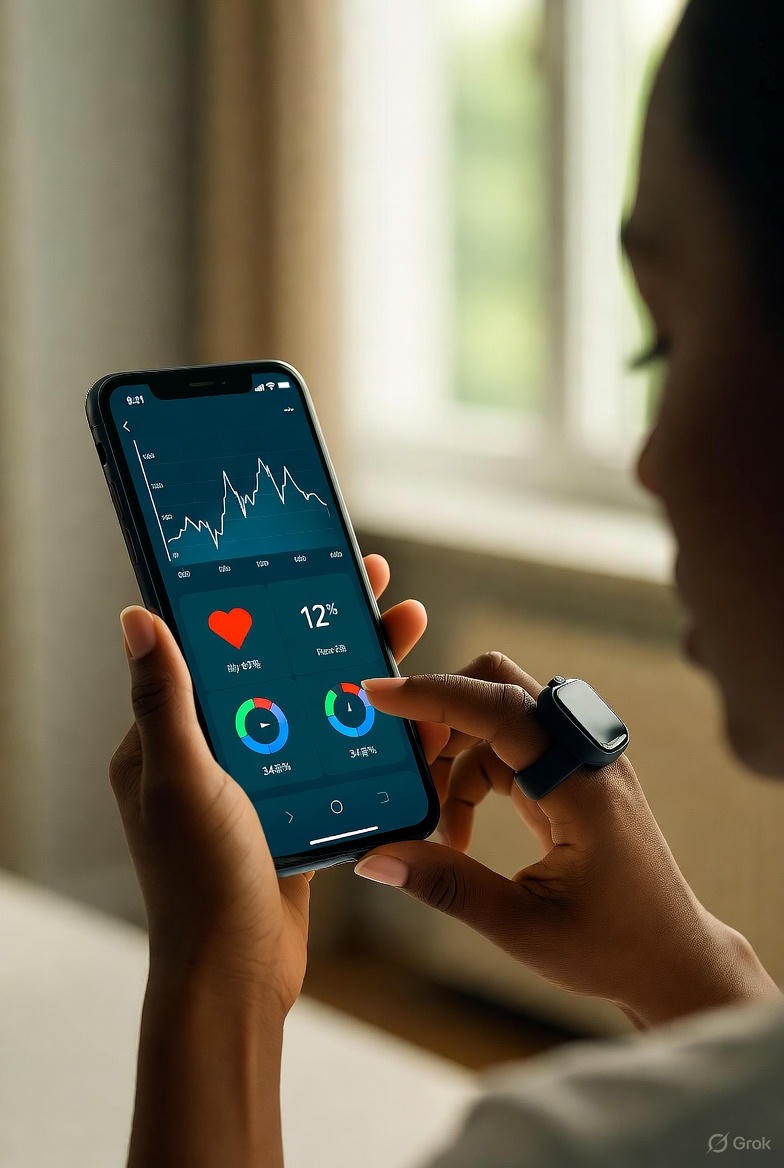
The Beginner-Friendly Guide to Runner Health: Smart Ring Marathon Training
A beginner's guide to runner health and marathon training with a ring.
The Beginner-Friendly Guide to Runner Health: Smart Ring Marathon Training
The marathon. It’s more than a race; it’s a profound journey of the human body and spirit. For the beginner runner, the path from that first hesitant mile to crossing the 26.2-mile finish line is paved with questions, doubts, and a deep desire to do things right. We obsess over training plans, nutrition, and perfect running form. Yet, for generations, a critical piece of the puzzle has been shrouded in mystery: the internal, physiological story of how our body is truly adapting, recovering, and preparing for the next grueling workout.
We’ve trained blind, using subjective feel—soreness, fatigue, motivation—as our only guides. But what if you had a personal, physiological whisperer on your journey? A tool that could translate your body’s hidden signals into clear, actionable data, telling you not just how far you ran, but how well you recovered from it? Not just your pace, but your body’s readiness to hit that pace again today.
Welcome to the era of data-driven running, powered by the smart ring. This discreet, wearable technology is revolutionizing runner health, transforming marathon training from a guessing game into a finely tuned science. By tracking biomarkers like Heart Rate Variability (HRV), resting heart rate, body temperature, and sleep architecture 24/7, a smart ring provides an unprecedented window into your autonomic nervous system—the very system governing your stress, recovery, and performance.
This guide is your companion to merging the timeless art of running with this cutting-edge science. We’ll move beyond generic plans to personalized preparation. You’ll learn how to interpret your body’s unique data language to prevent overtraining, optimize sleep for muscle repair, time your peak efforts perfectly, and ultimately, arrive at the start line not just physically trained, but physiologically primed. Let’s begin the journey to a smarter, healthier, and more successful marathon.
Why Every Runner Needs a Biofeedback Loop (And How a Smart Ring Creates It)
For decades, marathon training has followed a simple, brutal logic: stress + rest = adaptation. You apply a training load (stress), you allow your body to repair (rest), and it comes back stronger. The flaw in this model is its opacity. How much stress is productive stress versus destructive stress? Is your prescribed rest day truly enough, or is your body still frayed from two days ago? Without a direct line to your physiology, you’re flying the plane with no instruments.
This is where the concept of a biofeedback loop becomes a runner’s superpower. A biofeedback loop is a system where you can measure an internal state, interpret that information, and then make an adjustment to improve that state. In running, the ideal loop looks like this: Train → Measure Recovery → Adjust Next Session. Until recently, the "Measure" phase was guesswork.
A smart ring closes this loop. Worn continuously, it acts as your 24/7 physiological monitoring station, collecting data even while you sleep—the time when the most critical recovery occurs. It translates complex nervous system activity into simple, actionable scores.
The Core Metrics for the Runner’s Biofeedback Loop:
Heart Rate Variability (HRV): The North Star metric for runners. It measures the subtle variations in time between your heartbeats. A higher HRV generally indicates a relaxed, recovered state where your body is ready for stress. A downward trend suggests systemic fatigue, incomplete recovery, or impending illness. It’s your body’s most honest answer to the question, “Should I run hard today?”
Resting Heart Rate (RHR): Your heart’s baseline workload. A elevated RHR, especially upon waking, is a classic sign that your body is fighting something—be it training fatigue, dehydration, or the start of a cold.
Sleep Score & Architecture: It’s not just about duration. A smart ring analyzes how much time you spend in Light, Deep, and REM sleep. Deep sleep is crucial for physical repair and hormone release, while REM supports cognitive function and mental recovery. A poor sleep score is a red flag for your training plan.
Body Temperature: Subtle shifts in overnight temperature can indicate metabolic changes, the onset of illness, or hormonal fluctuations, providing context for other metrics.
Activity & Recovery Balance: Many rings provide a daily "Readiness" or "Recovery" score that synthesizes these metrics into a single, easy-to-understand number—a green, yellow, or red light for your training intensity.
By establishing your personal baselines for these metrics, you move from following a static, paper-based plan to executing a dynamic, living protocol. You learn to listen to what your body is demonstrating, not just what your training log dictates. This foundational knowledge is the first step toward sustainable high performance, ensuring your marathon build is a story of intelligent progression, not breakdown.
From Couch to Data: Setting Up Your Smart Ring for Running Success
You’ve unboxed your sleek new smart ring. Now what? The first two weeks are not about changing your training; they’re about establishing a conversation with your body. Think of this as a “physiological baseline” period. Your goal is to collect enough data so the ring can learn what normal looks like for you.
Step 1: The Baseline Period (14+ Days of Observation) Wear the ring consistently, especially at night. Continue your normal (or just-starting) running routine. During this phase, resist the urge to over-interpret daily fluctuations. A single low HRV score isn’t an alarm; it’s a data point. You’re looking for trends and personal averages. Key questions to answer:
What is my average nightly HRV?
What’s my typical Resting Heart Rate?
How many hours of sleep do I actually get, and what’s my quality score?
How do these numbers change after a rest day vs. a run day?
This period teaches you your body’s unique language. You might discover you’re chronically under-sleeping, or that your nervous system is more stressed than you realized—invaluable insights before ramping up mileage.
Step 2: Syncing with Your Running Ecosystem A smart ring isn’t meant to replace your running watch or favorite apps; it’s meant to augment them. Connect your ring’s app (like Oura, Circular, or Ultrahuman) to platforms like Strava, TrainingPeaks, or Apple Health. This creates a powerful unified dashboard:
The Run (on your watch/GPS): Distance, pace, elevation, heart rate during the effort.
The Cost & Recovery (from your ring): HRV impact, sleep disruption, next-day readiness score after the effort.
This integration lets you see the cause and effect clearly. That fantastic, fast-paced 10k you ran? Your ring data will show you exactly how much physiological stress it incurred and how long it took you to bounce back.
Step 3: Establishing Your Personal “Check-In” Ritual Create a simple morning routine. Before you check social media or the news, open your smart ring app. Review your Sleep Score and Recovery/Readiness Score. Look at your HRV and RHR. This 60-second ritual becomes your daily briefing from your chief physiological officer. It empowers you to make proactive decisions. A low readiness score doesn’t mean “don’t run.” It means “run wisely”—perhaps swapping a speed workout for a gentle recovery jog or a full rest day. This practice of daily awareness is the cornerstone of intelligent training and is a principle that extends far beyond running into work-life balance and daily energy management.
Decoding Your Body’s Signals: A Runner’s Guide to HRV, Sleep & Readiness Scores
Data is only as useful as your ability to understand it. Let’s translate the key metrics from scientific jargon into your running log’s most valuable entries.
Heart Rate Variability (HRV): Your Nervous System’s Mood Ring For runners, HRV is the ultimate guide to managing training load.
High or Rising HRV Trend: Your body is well-recovered and resilient. This is the green light to execute a challenging workout—tempo runs, intervals, long runs. Your system can handle the stress and adapt positively.
Low or Falling HRV Trend: This is a yellow or red flag. Your autonomic nervous system is tilted toward “fight or flight” (sympathetic dominance). It’s stressed, potentially from cumulative training fatigue, poor sleep, emotional stress, or diet. A sustained low HRV is a direct warning sign of overtraining and increased injury risk. Action: Prioritize rest, sleep, nutrition, and hydration. Swap hard efforts for easy runs or cross-training. This isn’t a setback; it’s smart injury prevention.
The Sleep Dashboard: Where the Real Recovery Happens Running breaks you down; sleep builds you back stronger. Your ring’s sleep analysis is non-negotiable intel.
Deep Sleep: The physical repair phase. Growth hormone is released, facilitating muscle repair and bone building. After a high-mileage or strength day, your deep sleep need increases. If your ring shows poor deep sleep, consider your pre-bed routine: are you eating too late, drinking alcohol, or scrolling in bed?
REM Sleep: The mental recovery phase. It processes emotions and consolidates motor skills—yes, including the complex skill of running efficiently. Lack of REM can leave you feeling mentally foggy and unmotivated.
Sleep Latency & Disturbances: How long it takes you to fall asleep and how restless you are. Consistent disturbances can point to caffeine timing, room temperature, or unresolved daily stress.
The Readiness/Recovery Score: Your Daily Prescription This composite score (often out of 100) is your executive summary. Use it as your primary guide:
High Score (e.g., 80-100): “Go day.” Your body is primed for quality work.
Medium Score (e.g., 50-79): “Proceed with caution.” Stick to moderate, steady-state runs. Listen closely to in-run feelings.
Low Score (Below 50): “Recovery day.” This is a mandatory instruction to prioritize rest, mobility, and nutrition. Forcing a hard workout here is the fastest route to burnout or injury. Learning to honor this score is a masterclass in the synergy between rest and performance.
Building Your Marathon Base: Using Data to Train Smarter, Not Just Harder
The base-building phase—those crucial weeks of gradually increasing easy mileage—is where champions are made and injuries are prevented. It’s also where a smart ring provides its most transformative value by teaching you the art of productive easy running.
The “Easy Day” Revelation Most beginner runners run their easy days too hard, blurring the line between recovery and stress. Your smart ring provides objective proof. A true, physiologically productive easy run should result in minimal disturbance to your nightly HRV and sleep scores. If you run “easy” but see a significant dip in HRV the next morning, that run was not easy for your system. It was another stressor. The ring trains you to slow down, to let your heart rate stay in the proper zone, ensuring these runs build aerobic capacity without adding undue neural fatigue.
Managing the Ramp Rate The leading cause of running injuries is doing too much, too soon. The 10% weekly mileage increase rule is a good start, but it’s generic. Your ring personalizes it.
Successful Adaptation: You increase mileage by 10%. Your sleep remains solid, HRV stays stable or slowly rises, and readiness scores are good. This indicates your body is accepting the new load.
Danger Zone Adaptation: You increase mileage, and within a few days, you see a persistent drop in HRV, a rise in RHR, and your sleep score suffers. This is a clear signal to pull back, hold your mileage steady, or even deload for a few days. Your body is saying, “This is too much, too fast.”
The Power of the Micro-Cycle Instead of blindly following a weekly schedule, use your readiness score to create 3-4 day micro-cycles.
Day 1 (High Readiness): Key Workout (Long Run, Intervals).
Day 2 (Lower Readiness): Mandatory Easy Run or Active Recovery.
Day 3 (Recovering Readiness): Easy Run or Cross-Training.
Day 4 (High Readiness Returns): Next Key Workout. This dynamic approach, dictated by your body’s feedback, is far more effective than a rigid Monday-intervals, Wednesday-tempo, Saturday-long-run schedule that may clash with your recovery state. It’s the essence of recovery-based planning applied to athletic pursuit.
Navigating Intensity: When to Push and When to Pull Back
Introducing speed work and tempo runs is essential for marathon success, but it’s also the riskiest part of training. These sessions place enormous stress on muscles, tendons, and the nervous system. Your smart ring acts as your pre-workout lie detector and post-workout impact assessor.
The Pre-Workout Gut Check You have intervals on the schedule. You feel okay, but not great. Should you go? Your readiness score provides clarity.
Scenario A (Readiness 75+): You’re cleared for takeoff. Your body has the resources to tackle the hard effort and recover well.
Scenario B (Readiness 50-74): Proceed with a modified plan. Consider shortening the interval session, extending rest periods, or converting it to a threshold tempo run instead of VO2 max intervals. The goal is stress, not destruction.
Scenario C (Readiness <50): This is a non-negotiable pivot. Attempting a hard workout here is physiologically reckless. Swap it for an easy run, a walk, or rest. The fitness you preserve by avoiding injury far outweighs the one workout you skip.
The Post-Workout Impact Assessment The real value of a hard workout isn’t in the doing; it’s in the adaptation that follows. Your ring measures the cost.
Ideal Response: You crush your workout. That night, you get great deep sleep. Your HRV might dip slightly but rebounds within 24-48 hours. This shows you absorbed the stress perfectly.
Concerning Response: You complete the workout. That night, your sleep is fragmented, your HRV plummets, and your RHR is elevated for two+ days. This indicates the workout was too taxing for your current state of recovery. The takeaway? You need more recovery time before the next hard effort, or your next similar workout should be slightly scaled back.
This ability to navigate intensity is what separates data-informed athletes from those who plateau or get hurt. It teaches the strategic discipline of matching effort to capacity, a skill that directly parallels optimizing work timing based on physiological metrics.
The Runner’s Secret Weapon: Optimizing Sleep for Maximum Repair
Elite coaches often say, “You don’t get faster on the run; you get faster while sleeping.” For the marathoner, sleep is not passive rest; it’s an active, potent performance-enhancing session. Your smart ring transforms sleep from a black box into an optimized recovery protocol.
Data-Driven Sleep Hygiene Your ring shows you exactly what helps or hurts your sleep. Use it to run experiments:
Experiment 1: Caffeine Cut-off. Move your last coffee from 4 pm to 2 pm. Did your sleep latency (time to fall asleep) decrease and deep sleep increase?
Experiment 2: The Evening Meal. Try a lighter, earlier dinner. Note the impact on overnight resting heart rate and sleep disturbances.
Experiment 3: The Digital Sunset. Implement a 60-minute screen-free buffer before bed. Observe changes in sleep consistency and REM duration.
Strategic Napping for the High-Mileage Runner During peak training weeks, a short nap can be a powerful tool to boost recovery. Your ring’s daytime HRV and body temperature data can help identify the ideal nap window—often during the early afternoon circadian dip. A 20-30 minute nap can provide a measurable boost in afternoon readiness without impacting nighttime sleep, helping you manage the cumulative fatigue of heavy training.
Aligning with Your Chronotype Are you a natural morning lark or night owl? Your ring’s circadian data (temperature rhythms, sleep/wake patterns) will reveal your type. Fighting your chronotype adds stress. A night owl forcing a 5 a.m. run may see worse recovery metrics than if they ran at 7 a.m. Use this data to schedule your runs and hard efforts at times when your biology is most aligned, leading to better performance and smoother recovery. Understanding this personal rhythm is key to all forms of performance optimization via ring data.
Fueling the Machine: How Recovery Data Informs Nutrition & Hydration
Nutrition for runners often focuses on carbs for fuel and protein for muscles. But when and what you eat for recovery should be influenced by how deeply you’ve dug into your physiological reserves. Your smart ring provides the clues.
The Post-Run Refuel Window (Seen Through Data) After a long run or hard workout, your body needs to replenish glycogen and repair muscle. A high readiness score the next morning suggests you refueled effectively. A low score, despite eating, prompts investigation:
Did you eat enough? A massive calorie deficit can spike stress hormones and wreck HRV.
Was your meal balanced? Lack of protein can impair muscle repair; lack of carbs can delay glycogen replenishment, prolonging fatigue.
Did you hydrate sufficiently? Dehydration is reflected in elevated RHR and lower HRV. Your ring can’t measure water intake, but its metrics show the consequences of neglecting it.
Macronutrient Timing Based on Training Stress Use your workout’s physiological impact (as shown by HRV/sleep response) to guide your nutrition focus:
High Glycogen-Depleting Workout (Long Run): Your ring will likely show significant fatigue. Prioritize a rapid intake of carbohydrates and protein post-run (e.g., a 3:1 or 4:1 carb-to-protein ratio) to aggressively replenish and signal repair.
High Neuromuscular Stress Workout (Hill Sprints, Heavy Strength): This may disturb sleep due to muscle inflammation. Emphasize anti-inflammatory foods (berries, fatty fish, turmeric) and ensure ample protein spread throughout the day to support ongoing repair.
Recovery Day (Low Readiness): Your body is in repair mode, not fuel-burning mode. Focus on high-quality, nutrient-dense whole foods, hydration, and perhaps slightly fewer calories if the activity level is very low. This supports the clear relationship between health and sustainable output.
Hydration Status: Reading Between the Lines Chronic under-hydration creates a low-grade stressor. Watch for a gradually creeping RHR and a suppressed HRV trend. Use your ring data as a motivator to prioritize consistent fluid intake throughout the day, not just around runs. The goal is to see your baseline RHR drift lower as your hydration status improves.
Tapering Perfected: Using Your Ring to Nail the Final Weeks
The taper—the 2-3 week period before the marathon where you drastically reduce mileage—is psychologically tricky but physiologically magical. Its purpose is to shed cumulative fatigue while preserving fitness. A smart ring removes the anxiety by proving the taper is working.
Watching Fitness Emerge from Fatigue As you reduce volume, you should witness a beautiful, data-confirmed unfolding:
HRV begins a sustained upward climb to your highest levels in months.
Resting Heart Rate trends downward to new lows.
Sleep scores improve as your nervous system finally gets the deep recovery it has been craving.
Readiness scores hit consistent highs.
This data is your confidence. When you feel “taper madness”—the fear that you’re losing fitness—look at your graphs. The numbers show your body is supercompensating, peaking perfectly. This concrete evidence helps you trust the process and avoid the classic mistake of squeezing in “one last hard workout.”
The Final Week Micro-Adjustments Your ring guides your final, delicate touches:
Sleep Optimization: With lower training stress, you have a prime opportunity to maximize sleep. Use your ring’s insights to perfect your pre-sleep routine, aiming for your best sleep scores of the entire training cycle.
Stress Management: Pre-race nerves can activate your sympathetic nervous system, hurting HRV. Seeing this in data allows you to proactively engage in calming practices (meditation, light walking, breathwork) to keep your physiology in the optimal, recovered state. Managing this pre-event stress is a direct application of principles for managing stress for better performance.
Nutrition & Hydration Fine-Tuning: As you carb-load, monitor how your body responds. Some runners experience slight HRV dips with huge carb intakes. If you see this, it may indicate a need to spread your loading more evenly or choose different carb sources.
Race Week Strategy: From Final Prep to the Starting Line
The final seven days are a precise protocol. Your smart ring transitions from a training advisor to a race-day readiness orchestrator.
The Night-Before-Night The sleep two nights before the race is arguably more important than the night before. Race-eve sleep is often disrupted by nerves. Your ring data from two nights out should show near-perfect recovery. If it doesn’t, don’t panic—focus on restful relaxation.
Race Morning Readiness Check On marathon morning, do your standard app check-in. Even with possible poor sleep, your readiness score will likely still be high due to the super-compensation of the taper. See this as a final confirmation. Your months of work are in the bank. Your body is ready. Let the data calm your mind.
The Post-Race Blueprint: Data-Driven Recovery Your work isn’t over at the finish line. The smart ring becomes crucial for navigating the post-marathon recovery canyon.
Immediate Aftermath: Expect to see the most dramatic physiological disturbance of your entire training cycle—a crashed HRV, a soaring RHR, and terrible sleep for several nights. This is normal and quantifiable. It shows the incredible magnitude of the feat you accomplished.
Guiding Your Return: The rule of thumb is one easy day of recovery for every mile raced. But your ring provides a personalized return-to-running guide. Don’t even consider easy jogging until your HRV has stabilized back to its normal range and your RHR has returned to baseline. Let the data, not your emotions, dictate your comeback. This disciplined approach to strategic rest is what enables long-term performance longevity.
Beyond the Finish Line: Your Smart Ring for Lifelong Running Health
Completing a marathon is a life-changing achievement. But the true goal is not one race; it’s a lifetime of healthy, joyful running. Your smart ring evolves from a marathon coach into a lifelong health guardian.
Injury Prevention Through Early Detection The most common running injuries (stress fractures, tendonitis) don’t appear suddenly. They brew. Often, they are preceded by a period of persistent, low-grade physiological stress—chronically lowered HRV, elevated RHR, and poor sleep as your body struggles with an unsustainable load. By monitoring these trends, you can identify a risk period before pain manifests. This allows for proactive deloading, addressing the root cause (e.g., too much pavement, weak hips) and preventing a sidelining injury.
Managing Life Stress as Training Stress Your body doesn’t differentiate between work deadline stress, family stress, and running stress—it’s all systemic stress. A demanding week at the office can lower your HRV just like a high-mileage week. With your ring, you can see this. This insight allows you to dynamically adjust your training when life gets hectic, preventing the classic burnout from stacking life stress on top of training stress. It teaches the holistic balance essential for all high-performing professionals.
Becoming Your Own Best Coach Over time, you’ll internalize the lessons. You’ll know what a truly recovered day feels like in your body, correlated with the data. You’ll learn your personal warning signs. The ring shifts from giving daily instructions to providing confirmatory insights, empowering you to make intuitive, informed decisions about your running health for years to come. You graduate from following a plan to understanding your unique physiology, achieving the self-knowledge that is the ultimate goal of any wellness technology. This journey from data dependence to intuitive mastery mirrors the path outlined in our guide to becoming your own performance coach.
Choosing Your Co-Pilot: A Runner’s Comparison of Leading Smart Ring Ecosystems
With the foundational principles established, the next logical question for the data-driven runner is: which smart ring is right for me? The market has evolved rapidly, with several strong contenders, each with unique strengths tailored to different athlete priorities. Unlike a watch that lives on your wrist during activity, your ring is a constant companion, so choosing the right ecosystem is key.
The Three Pillars of Evaluation for Runners: When comparing rings, focus on these critical areas:
Accuracy & Sensor Suite: The quality of the raw physiological data.
Athlete-Centric Software & Insights: How the app translates data into actionable guidance for training.
Integration & Ecosystem: How seamlessly it fits into your existing digital running life.
Deep Dive into Leading Contenders:
Oura Ring: The Recovery & Sleep Authority
Runner’s Edge: Oura has built its reputation on best-in-class sleep staging accuracy and a conservative, recovery-first philosophy. Its "Readiness Score" is a proven, reliable indicator of systemic stress. For runners prone to overtraining or those who prioritize sleep optimization above all, Oura provides exceptionally trustworthy recovery data.
Training Integration: It connects well with Strava and TrainingPeaks, allowing you to see the impact of your runs on your Oura scores. However, its activity tracking is less focused on live running metrics.
Best For: The runner who wants the most accurate recovery and sleep insights to govern their hard/easy decisions and needs robust data to enforce rest. Its approach strongly aligns with the philosophy of preventing burnout through physiological awareness.
Whoop: The Strain & Recovery Coach
Runner’s Edge: Whoop flips the model slightly. It calculates a daily "Strain" score based on cardiovascular load and recommends a "Recovery" score to dictate how much strain you should take on. This push-and-pull dynamic is highly engaging for athletes. Its journal feature lets you track dozens of behaviors (caffeine, meal timing, stretching) to see their correlation with your metrics.
Training Integration: Whoop integrates deeply with many platforms and can be worn with a bicep band for potentially higher accuracy during runs. Its Strain Coach can suggest specific workouts based on your recovery.
Best For: The data-obsessed runner who loves experimentation and wants a dynamic, daily prescription for effort. It’s for those who want to quantify not just the effect of running, but the effect of all lifestyle choices on running performance.
Ultrahuman Ring & Circular Ring: The Metabolic & Real-Time Challengers
Emerging Strengths: These newer entrants are pushing innovation. Ultrahuman places a strong emphasis on metabolic health (glucose trends via integration with CGMs) and features an "Arena" for workout-specific recovery insights. Circular Ring offers a unique "Smart Alarm" and on-demand readings, giving you real-time HRV snapshots.
Runner’s Consideration: They often offer competitive pricing and unique features. For runners also focused on nutrition-fueled performance, Ultrahuman’s metabolic angle is compelling. Circular’s on-demand data can be useful for pre-run readiness checks.
Best For: The early-adopter runner interested in the intersection of metabolism and performance, or someone who values real-time data access without waiting for a morning report.
Making Your Choice: Ultimately, the "best" ring is the one you’ll wear consistently and whose insights you’ll actually use. Consider your personality: Are you recovery-focused (Oura), strain-optimization driven (Whoop), or a metabolic health explorer (Ultrahuman)? All will provide the core HRV, RHR, and sleep data essential for smart marathon training. The choice lies in the coaching philosophy that best resonates with your mindset, a critical step in building a personalized system for sustainable achievement.
Strength & Mobility: The Non-Negotiables Your Ring Will Thank You For
Marathon training isn’t just about running. The most common reason runners fail to start or finish a training plan is injury. While your smart ring expertly manages systemic fatigue, it cannot directly measure muscular imbalances, weak glutes, or tight hip flexors—the prime suspects in running injuries. This is where a complementary strength and mobility routine becomes non-negotiable, and your ring provides the perfect feedback loop to prove its value and optimize its timing.
Why Your Ring Loves Strength Training: A consistent, runner-specific strength program (2x per week, 30-45 minutes) does more than prevent injury. It:
Improves Running Economy: Stronger muscles use less energy at a given pace.
Enhances Resilience: Better tendon and ligament strength handles impact forces.
Creates Positive Physiological Stress: Strength sessions create a different, beneficial stress signature. You’ll often see a different HRV response compared to a running stressor—sometimes a quicker rebound as it’s less cardiorespiratory and more neuromuscular.
Using Ring Data to Schedule and Recover from Strength Work:
The Scheduling Rule: Don’t place a hard lower-body strength session the day before a key running workout (long run, intervals). Your ring will likely show low readiness from muscular fatigue. Instead, pair it with an easy run day or a rest day. For example, do your strength session in the evening after an easy morning run.
The Recovery Signal: A well-executed strength session should not crater your readiness score for days. If it does, the volume or intensity may be too high for your current running load. Use your ring’s recovery metrics to find the right "dose" of strength work that supports, rather than sabotages, your running.
Mobility as Recovery: On days your ring shows low readiness, prioritize dynamic mobility, foam rolling, or yoga over intense strength work. This active recovery can actually improve blood flow and HRV, aiding the recovery process. This balanced approach is a physical manifestation of the health-productivity synergy athletes seek.
The "Prehab" Protocol: Build a short, 15-minute routine of key exercises (e.g., clamshells, single-leg glute bridges, planks, calf raises) to do 3-4 times per week. Track this consistency in your ring’s journal or notes. Over 4-6 weeks, look for a correlation between this consistency and more stable HRV trends or fewer "niggles." You’re using data to prove that injury prevention work pays off in consistent, uninterrupted training—the single biggest predictor of marathon success.
The Traveling Runner: Managing Jet Lag, Time Zones, and Disrupted Routines
Life doesn’t stop for marathon training. Business trips, vacations, or destination races can wreak havoc on a carefully built routine and physiology. Here, your smart ring transforms from a training guide into an essential navigational tool for managing circadian disruption.
Pre-Travel Preparation:
Baseline Check: Note your baseline HRV and RHR in the days before travel. This is your "home" reference point.
Gradual Shift (If Possible): If traveling across multiple time zones, gradually adjust your sleep/wake times by 30-60 minutes per day in the direction of your destination a few days before departure. Your ring will show you how well you’re adapting to these subtle shifts.
In-Transit & Arrival Strategy:
Hydration is Data-Protective: Air travel is dehydrating, which will spike your RHR and suppress HRV. Aggressively hydrate before, during, and after your flight. Use your ring’s elevated RHR as a motivator to drink more water.
Light is Your Lever: Upon arrival, use light exposure to reset your circadian clock. If you’ve traveled east, seek bright morning light. If you’ve traveled west, get afternoon/evening light. Your ring’s body temperature rhythm will show how quickly you’re adapting to the new light/dark cycle.
The First 48-Hour Rule: Do not attempt a hard workout in the first 48 hours after a significant time zone change. Your readiness score will likely be low. Instead, prioritize easy movement (walking, gentle jogging) in daylight to aid adjustment and sleep. This is a critical application of strategic rest for maximum output, where forcing output would be counterproductive.
Sleep Optimization in a New Environment: Use every tool your ring has taught you:
Pack for Sleep: Bring a sleep mask, earplugs, and perhaps a portable white noise machine.
Maintain Routine Elements: Perform your pre-sleep wind-down ritual even in a hotel room (e.g., reading, light stretching).
Monitor & Adapt: Your sleep data in the new location will be imperfect at first. Don’t stress. Use it to see your progress. Celebrate when your deep sleep starts to return to normal levels, indicating adaptation.
Returning Home: The readjustment back can be just as taxing. Apply the same principles in reverse, using your ring’s data to gently guide your training load back up as your physiology re-anchors to home base.
Case Studies in Data: Real Runner Breakthroughs & Lessons Learned
Theory and instruction come alive through story. Let’s examine anonymized, composite case studies of runners who used smart ring data to solve common marathon training dilemmas.
Problem: Stuck to her plan rigidly, running easy days too fast. By week 10 of an 18-week plan, she was chronically fatigued, irritable, and her times were plateauing. She felt she was "losing fitness."
Smart Ring Intervention: Her HRV showed a steady 3-week decline. Her RHR was elevated 8-10 bpm above baseline. Sleep scores were consistently poor despite being in bed for 8 hours.
Data-Driven Action: Based on persistently low readiness scores, she replaced a week of scheduled runs with easy walks, yoga, and a focus on sleep hygiene. She saw it not as "skipping" but as "prescribed recovery."
Breakthrough: After 7 days, her HRV soared to a new personal best. Her RHR dropped to a new low. She returned to training with a modified plan that respected her easy-day data. She not only finished her marathon but negative-split the second half, feeling strong. Lesson: The ring provided objective proof of overreaching, preventing burnout and allowing for a supercompensation peak.
Case Study 2: David – The Poor Sleeper
Profile: 42-year-old, busy executive, running before dawn.
Problem: Couldn’t break 4:30 in the marathon, always "hit the wall" at mile 18-20. Assumed it was a nutrition issue.
Smart Ring Intervention: His sleep data revealed a critical flaw: he was getting only 20-30 minutes of Deep Sleep per night, less than half the recommended amount for an endurance athlete in training. His body was never achieving full physical repair.
Data-Driven Action: He used his ring to experiment. He found that cutting off caffeine at 12 p.m., installing blackout curtains, and shifting his run to the evening twice a week (when work allowed) increased his Deep Sleep to 60+ minutes.
Breakthrough: With improved repair, his perceived effort on long runs decreased. His endurance improved dramatically. He smashed his PR with a 4:05, reporting he felt "like a new engine" was in place. Lesson: The wall wasn’t just about fuel; it was about structural repair. The ring identified the root cause. This mirrors the profound impact sleep has on next-day performance in any domain.
Case Study 3: Mia – The Stressed Athlete
Profile: 28-year-old graduate student balancing thesis writing with training.
Problem: Inconsistent performance. Some workout days she felt amazing; others, a planned easy run felt impossible for no apparent reason.
Smart Ring Intervention: She started logging "Thesis Work" and "Deadline Days" in her ring’s journal. A clear pattern emerged: her HRV would plummet and RHR would spike on high-mental-stress days, regardless of running load.
Data-Driven Action: She began using her morning readiness score as a "total stress" indicator. On low-readiness days following intense study periods, she would autonomously swap her run for a walk or a 30-minute easy spin on a stationary bike. She stopped fighting her body.
Breakthrough: Her training became more consistent because she stopped adding physical stress to high mental-stress days. She finished her marathon healthy and her thesis on time, learning a vital lesson in holistic stress management. Lesson: The ring revealed that all stress is cumulative. It enabled her to balance productivity and health during a high-pressure period.
Periodization for the Data-Driven Runner: Building Your Annual Plan
Marathon training isn’t an isolated 18-week block; it’s a chapter in your annual running story. Periodization—the planned variation of training stress over time—is the master framework for long-term progress and injury avoidance. Your smart ring provides the live feedback to execute periodization perfectly, moving from a generic calendar to a responsive, biological blueprint.
The Macrocycle: Viewing the Year Through a Physiological Lens A typical annual macrocycle for a runner includes:
Transition/Recovery (Post-Marathon): Guided purely by ring data until HRV/RHR/sleep return to true baseline.
Base Phase I (General Prep): Low-intensity, high-volume work. Ring goal: Stable or slowly improving HRV as aerobic base builds.
Base Phase II (Strength & Hill Focus): Introduction of hills and strength. Ring goal: Manage new stressor without crashing metrics.
Marathon-Specific Phase: Race-pace work and long runs peak. Ring goal: Careful monitoring for signs of cumulative fatigue, using data to fine-tune the taper.
Taper & Race: As previously detailed.
Using Trends to Guide Phase Transitions: The decision to move from Base Phase to Specific Phase shouldn’t be just a date on a calendar. It should be a physiological milestone. If you’ve scheduled to introduce intervals but your HRV trend is flat or declining, it’s a signal to extend your base phase for another week or two. Let your body’s adaptability, not the plan’s rigidity, dictate the pace of progression. This is the essence of performance cycles tracked through health data.
The Mesocycle (4-6 Week Blocks): Listening for Adaptation Signals Within each phase, you run 3 weeks of progressive load and 1 recovery week. Your ring validates this structure.
Progressive Weeks: You may see a slight downward drift in HRV by the end of week 3. This is expected functional overreaching.
Recovery Week: The reduced load should cause a "rebound" where HRV jumps to a new high. This is the proof of positive adaptation. If no rebound occurs, your recovery week may need to be longer or easier, or the previous block was too aggressive.
Creating Your Personalized "Green Light" Criteria: Establish rules for yourself based on your data history. For example:
"I will only start a new intensity block if my 7-day average HRV is above [Your Baseline] and trending neutral or up."
"If my readiness score is below 70 for 3 consecutive mornings, I will insert an unplanned rest day."
"I will not run a hard workout if my previous night's deep sleep was under 1 hour."
The Mental Marathon: Using Biomarkers to Build Resilience and Focus
The final frontier of marathon preparation isn’t physical; it’s mental. The infamous "wall" is as much a cognitive event as a metabolic one. Your smart ring, by quantifying stress and recovery, becomes a powerful tool for training not just your body, but your mind.
HRV as a Mindfulness Meter: Heart Rate Variability is intrinsically linked to your emotional state. Anxiety, worry, and frustration activate the sympathetic nervous system, lowering HRV. The practice of observing your HRV score each morning can, in itself, cultivate mindfulness. It’s a non-judgmental report card on your nervous system’s state. A low score invites you to ask, "What’s contributing to this tension?" rather than just "Why do I feel tired?"
Data-Backed Taper Confidence: As covered, the taper induces psychological unease. Watching your HRV climb and RHR drop during the taper is the ultimate antidote to "taper madness." This objective proof builds unshakable confidence. You can literally see your fitness emerging as fatigue dissipates. This turns anxiety into excited anticipation.
Pre-Race Nervous System Regulation: Race morning nerves are normal. You can use your ring’s real-time metrics (if available) or the memory of your excellent pre-race readiness scores to enact calming techniques. Practice box breathing (4-second inhale, 4-second hold, 6-second exhale) and watch how it can positively influence your live HRV reading on compatible devices. This biofeedback loop turns stress management into a tangible skill. Learning to regulate your physiology under pressure is the ultimate performance hack, directly applicable to high-stakes decision-making.
Reframing Setbacks with Data: When illness or life forces a missed workout, the mental blow can be severe. Data provides perspective. Looking at a low HRV score from being sick reinforces that running would have been harmful, reframing the rest as "productive compliance" rather than "failure." This builds mental resilience, teaching you to collaborate with your body’s needs rather than wage war against them.
By integrating this physiological awareness, you cultivate the mind of a mature athlete: patient, responsive, and trusting in the process. You learn that the marathon is not conquered by force of will alone, but through the intelligent partnership of mind, body, and data.
Advanced Recovery Protocols: Cold, Heat, and How Your Ring Measures Their Impact
Once the fundamentals of sleep and load management are mastered, the curious runner looks to advanced recovery modalities to gain an extra edge. Techniques like cold immersion and sauna use have exploded in popularity. But do they work for you? And how do you time them correctly within your training cycle? This is where subjective feel fails, and your smart ring’s objective data becomes indispensable for personalizing your recovery toolkit.
Cold Water Immersion (Cryotherapy): The Data-Driven Approach The theory is compelling: cold exposure reduces inflammation and muscle soreness post-exercise. But the reality is nuanced. While it can alleviate perceived soreness, some research suggests it may blunt the cellular adaptation signals from a hard workout—potentially making you feel better but slightly reducing the long-term fitness gain.
Using Your Ring to Personalize Cold Therapy:
For High Inflammation Sessions: After an exceptionally grueling long run or a race where damage control is the priority (and adaptation is secondary), cold immersion can be beneficial. Your ring will show you the effect: look for a quicker normalization of RHR and a less dramatic crash in HRV the following night compared to a similar workout without cold therapy.
When to Avoid It: After key, hard adaptation sessions like VO2 max intervals or critical tempo runs where you want the inflammatory signal to drive improvement, you might skip the deep freeze. Let your ring guide you. If you use cold after these sessions and see your readiness rebound too quickly without the typical fatigue signature, it might indicate a dampened adaptive response.
The "Readiness" Test: Use cold immersion on a rest day or after an easy run as a general recovery tool. Monitor your morning HRV. For many, a consistent cold exposure practice (even separate from workouts) can improve autonomic nervous system resilience, leading to a higher baseline HRV over time. This aligns with the principle of using controlled stressors to build resilience and enhance overall performance longevity.
Heat Exposure (Sauna & Hot Baths): The Adaptation Accelerator? Heat exposure acts as a hormetic stressor—a mild stress that triggers a protective, adaptive response. Post-exercise, it can increase blood flow and may upregulate heat shock proteins, aiding repair. Used separately from workouts, it can improve cardiovascular function and promote relaxation.
Using Your Ring to Optimize Heat Therapy:
Timing is Everything: An evening sauna session can promote profound relaxation and improve sleep onset for many, reflected in better sleep scores. However, too close to bedtime (and too hot) can raise core temperature and disrupt sleep for some. Experiment and let your deep sleep data be the judge.
The Adaptation Signal: Similar to exercise, a sauna session will create a physiological stress response. You might see a temporary dip in that night's HRV followed by a rebound. This is a normal adaptive signal. Track it. If you see a positive correlation between weekly sauna use and a gradual upward trend in your baseline recovery scores, you’ve found a powerful tool.
Hydration Correlation: Both heat and cold are dehydrating. Your ring is exceptionally good at showing the effects of dehydration via elevated RHR and lowered HRV. This makes it a critical reminder to hyper-hydrate before and after any thermal therapy. It turns a vague recommendation into a data-backed requirement.
Contrast Therapy (Hot/Cold Alternating): This method is theorized to pump inflammation out via vasoconstriction and vasodilation. It’s highly individualized. The only way to know if it’s effective for you is to test it protocol-by-protocol (e.g., 3 minutes hot/1 minute cold x 4 rounds) and compare your overnight recovery metrics and next-day muscle soreness to days you don’t use it. Your ring removes the guesswork, making you the scientist of your own recovery.
Nutrition Periodization: Aligning Your Fuel with Your Training and Recovery Phases
Marathon nutrition is often reduced to "carbo-loading." But the smart ring runner understands that nutrition is a daily lever for modulating inflammation, supporting repair, and fueling adaptation—and your biometrics provide real-time feedback on how well your fueling strategy is working.
Phase-Based Nutritional Priorities (Seen Through Data):
High-Volume Base Phase: The focus is on consistent energy availability and managing inflammation from increased mileage. Your ring helps identify if you’re under-fueling: a chronically suppressed HRV and elevated RHR, despite adequate sleep, can be a sign. Prioritize nutrient-dense carbohydrates (sweet potatoes, oats) and anti-inflammatory fats (avocado, olive oil, fatty fish). The goal is to support training without accumulating low-grade metabolic stress.
High-Intensity/Specific Phase: With the introduction of speed work, the need for rapid glycogen replenishment increases. Your post-hard-workout nutrition becomes critical. If you fail to refuel adequately, you’ll see it in your recovery metrics for the next 24-48 hours. Use your ring to test different post-workout meals or shakes. Does a 4:1 carb-to-protein ratio lead to a better readiness score the next morning than a 2:1 ratio? Let the data guide your personal formula.
Taper Phase: As volume drops, your calorie needs decrease slightly, but nutrient density remains paramount. This is a time to ensure vitamin and mineral levels are optimized. A common mistake is overeating due to nervous energy, which can lead to gastrointestinal discomfort and disrupted sleep (visible in your ring data). Use your stable or slightly lowered RHR as a sign you’re in energy balance.
Race Week & Carbo-Loading: The goal is to maximize glycogen stores without causing bloating or digestive distress. For some, a massive pasta dinner the night before causes a significant HRV dip due to digestive stress. A better strategy might be "front-loading"—increasing carbohydrate intake moderately starting 3 days out. Use your ring’s RHR and HRV data during your training cycle to test different loading strategies before your dress-rehearsal long runs.
The Inflammation Connection: Your diet directly influences systemic inflammation. Your ring’s HRV is a proxy for this. Experiment with eliminating or reducing known inflammatory triggers (e.g., processed foods, refined sugars, excessive alcohol) for 2-3 weeks. Observe the trend in your HRV and sleep quality. Many runners find a noticeable improvement, confirming that food is not just fuel, but information that either aids or hinders recovery. This holistic view is central to achieving elite performance through health optimization.
Gut Health & The Second Brain: Emerging research highlights the gut-brain axis and its influence on the nervous system. Poor gut health can contribute to elevated stress markers. If you struggle with unpredictable energy and recovery despite good training and sleep, consider tracking digestive comfort alongside your ring data. Improvements in gut health (through probiotics, fermented foods, fiber) often correlate with more stable and positive HRV trends, underscoring the deep connection between all facets of wellness.
The Aging Runner: Leveraging Data for Lifelong Performance and Injury Avoidance
Running is a lifelong sport, but the body’s capacity for recovery and adaptation evolves. For the runner over 40, 50, or beyond, the principles of smart training become not just beneficial but essential. A smart ring is the perfect companion for the aging athlete, providing the insights needed to train smarter, respect longer recovery timelines, and continue achieving personal bests—whether they be time-based or health-based.
How Biomarker Baselines Shift (And Why That’s Okay):
HRV: It’s natural for HRV to have a lower absolute baseline as we age. The key is not comparing your number to a 25-year-old’s, but tracking your trends and variability. A 10% drop from your personal baseline at 50 is the same meaningful warning sign as a 10% drop at 30.
Resting Heart Rate: RHR may creep up slightly, but consistent training can keep it impressively low. A sudden, sustained elevation remains a critical flag for overtraining or illness.
Sleep Architecture: The proportion of deep sleep often decreases with age. This makes the quality of the deep sleep you do get even more critical. Your ring helps you fight for every minute of deep sleep through optimized hygiene.
Data-Driven Adjustments for the Mature Athlete:
Extend Your Recovery Windows: The 48-hour recovery rule after a hard effort may become a 72-hour rule. Your ring provides the proof. If your readiness score is still low 48 hours post-long-run, honor it. Schedule your next quality session only when the data gives you the green light. This is the ultimate practice of listening to your body’s need for strategic rest.
Emphasize Strength Even More: Muscle mass and tendon resilience decline with age. Your ring data will likely show that neglecting strength work leads to more aches, pains, and longer systemic recovery from runs. Consistent strength training becomes non-negotiable for maintaining running economy and injury resistance. Correlate your strength training consistency with injury-free training blocks in your data log.
Prioritize Mobility as a Daily Metric: Don’t just track runs. Use your ring’s journal to note daily mobility sessions. Over time, you may see a correlation between consistent mobility work and better sleep scores (due to less stiffness) and more stable HRV (due to reduced musculoskeletal stress).
Heat Becomes a Powerful Ally: The vasodilation from regular sauna use can be particularly beneficial for cardiovascular health and flexibility as we age. Use your ring to find the ideal timing (not too close to bedtime) that improves your sleep and next-day readiness.
Redefining "Peak Performance": With age, the focus often gracefully shifts from pure speed to longevity, consistency, and joy. Your smart ring supports this beautifully. A "peak performance" week might be defined by perfect recovery scores, high sleep consistency, and completing all planned runs feeling strong—not just by a fast interval time. This shift to health-centric metrics ensures the sport remains sustainable and rewarding for decades, embodying the true spirit of sustainable high performance.
Building Your Data-Driven Running Community
The journey to a marathon can be solitary, but it doesn’t have to be lonely. One of the most powerful—and often overlooked—applications of smart ring technology is its ability to foster community, shared learning, and collective motivation.
From Solo Pursuit to Collective Intelligence: Imagine a running group where conversations move beyond pace and distance to shared insights on recovery: *"My HRV tanked after that hill workout, so I’m taking today super easy." "I finally got my deep sleep over 90 minutes by cutting out late-night screen time!"* This creates a culture that values rest and intelligent training as much as effort, reducing the pressure to always "push."
How to Cultivate a Data-Aware Running Community:
Start a "Biofeedback Running" Group: Within your local club or online, create a space for ring/WHOOP/Oura users. Share non-competitive insights. Discuss what you’re learning about your sleep, how travel affects you, or which recovery modalities seem to work.
Organize "Readiness-Adjusted" Group Runs: Instead of a fixed weekly tempo run, propose a structure: "We meet at 6 am. Check your readiness score. If it's green, we'll do the planned tempo. If it's yellow, we run steady. If it's red, we'll do an easy social run or a walk. No judgment." This removes ego and promotes health-first decision-making.
Troubleshoot Together: Struggling with poor sleep scores? Post your sleep graph (anonymized) and ask for suggestions. You’ll get advice on blackout curtains, magnesium supplements, or cooling strategies you hadn’t considered. The collective wisdom of a group experimenting with their own data is immense.
The Coach-Athlete Revolution: If you work with a coach, sharing your smart ring data can transform the relationship. Instead of weekly check-ins based on subjective feel ("I'm tired"), you provide objective data trends. This allows for truly personalized, dynamic programming. The coach becomes a data interpreter and strategist alongside you, leading to more effective and safer training. This collaborative model is the future of athletic development, mirroring the synergy between data and coaching in professional settings.
Ethical Considerations & Avoiding Comparisonitis: The key is to share for learning, not for comparison. HRV is highly individual. Someone else’s score of 100 means nothing next to your 50 if your baseline is 45 and theirs is 95. The community ethos must be centered on personal trends, self-discovery, and support, not on creating another leaderboard for anxiety. It’s about using data to be your best self, not to beat someone else.
The Future of Running: Where Biometric Technology is Headed
The smart ring is just the beginning. We are on the cusp of a revolution where continuous, non-invasive biometric monitoring will become seamlessly integrated into the fabric of endurance training. Understanding this trajectory helps us appreciate the current tools and anticipate the even more powerful insights to come.
Near-Term Evolution (The Next 1-3 Years):
Glucose Monitoring Integration: While continuous glucose monitors (CGMs) are currently separate devices, their integration with smart ring ecosystems (as seen with Ultrahuman) will become more widespread. For runners, this means understanding not just if you have energy, but the quality and stability of that energy. You’ll see how different foods affect your blood sugar stability during a long run or overnight recovery. This will move nutrition from macronutrient guesswork to personalized fuel mapping.
Hydration & Electrolyte Status: Future sensors may non-invasively estimate hydration status or electrolyte balance through sweat analysis or optical sensors. This could provide live alerts during long runs or explain unexpected spikes in resting heart rate.
More Advanced Sleep Staging & Apnea Detection: Algorithms will become even better at distinguishing sleep stages and identifying disturbances like sleep apnea or periodic limb movement, which can severely impact an athlete’s recovery without their knowledge.
Predictive Injury Analytics: By combining movement data from watches (stride analysis) with stress/recovery data from rings, AI may begin to identify patterns that precede common overuse injuries, giving runners a week’s notice to deload or address a weakness.
The Long-Term Vision (5+ Years):
Non-Invasive Core Temperature & Lactate: Imagine getting real-time core temperature data during a hot marathon or an estimate of blood lactate levels during a threshold run—all from a ring or earable. This would revolutionize pacing and hydration strategies.
Full Nervous System Mapping: Devices may move beyond HRV to provide a more detailed picture of sympathetic vs. parasympathetic activity, offering deeper insights into stress and recovery states.
The "Digital Twin" for Runners: AI will create a comprehensive model of you—integrating genetics, continuous biometrics, training history, and nutrition. You could simulate the outcome of different training blocks or race strategies before you even run a step, optimizing your entire plan virtually first.
Embracing the Human Element: As technology advances, the most important lesson from today’s smart rings will remain paramount: Data is a guide, not a gospel. The ultimate metric will always be how you feel—the joy of the run, the rhythm of your breath, the satisfaction of effort. The technology’s highest purpose is to remove guesswork and fear, to provide confidence, and to free you to experience the pure, mindful act of running. It helps you build the work-life balance you deserve by ensuring your passion for running enhances your life, rather than depleting it.
Your First Data-Driven Training Cycle: A Step-by-Step Launch Plan
You’re equipped with the knowledge. Now, let’s synthesize it into a concrete, actionable plan to launch your first marathon training cycle with your smart ring as your co-pilot.
Phase 0: Foundation (Weeks 1-2)
Action: Wear your ring constantly. Run normally. Do not change anything. Simply observe.
Goal: Establish your true baselines for HRV, RHR, and sleep. Note them down.
Phase 1: The Conscious Base (Weeks 3-8)
Action: Start your formal marathon plan. Each morning, check your readiness score before your run.
Rule 1: If readiness is LOW, swap the planned run for an easy jog, cross-training, or rest.
Rule 2: On all EASY run days, use your ring as a "pace police." Aim for a run that does not negatively impact your next morning's HRV.
Goal: Internalize the connection between easy effort and positive recovery data.
Phase 2: Introducing Intensity (Weeks 9-14)
Action: Introduce speed and tempo work. The day before a planned hard session, ensure your readiness is trending well.
Rule 3: Post-hard workout, analyze the cost. How far did your HRV dip? How long did it take to rebound? This defines your personal recovery window.
Rule 4: Use the journal feature to log factors like caffeine, alcohol, and meal timing. Look for correlations with sleep quality.
Goal: Learn your personal "stress signature" and recovery timeline for different workouts.
Phase 3: Specificity & Peak Load (Weeks 15-18)
Action: Execute your longest runs and race-pace work. Monitor for cumulative fatigue.
Rule 5: If your HRV shows a sustained downward trend for 5+ days, insert an unplanned recovery day or reduce the intensity of the next key session.
Goal: Survive the peak load phase without digging a hole, using data as your guardrail.
Phase 4: The Data-Backed Taper (Weeks 19-20)
Action: Reduce volume as planned. Watch your metrics improve.
Rule 6: Let the rising HRV and falling RHR build your confidence. Trust the numbers.
Goal: Arrive at the start line physically fresh and mentally confident, with data to prove it.
Phase 5: Race & Intelligent Recovery
Action: Race! Then, wear your ring religiously post-marathon.
Rule 7: Do not run again until your HRV and RHR have fully returned to your pre-race baselines. This may take 2-4 weeks.
Goal: Recover fully to set the stage for your next running chapter.
By following this framework, you transcend being someone who simply wears a tech gadget. You become a student of your own physiology, an architect of your own adaptation, and a truly intelligent runner. The marathon is your canvas, and your smart ring helps you paint your masterpiece—not with brute force, but with precision, awareness, and a deep partnership with the incredible machine that is your body.



%402x.svg)