


How Your Smart Ring Reveals the True Relationship Between Health and Output
Shows the objective relationship between your physical well-being (per your ring) and your work output.
Shows the objective relationship between your physical well-being (per your ring) and your work output.
%402x.svg)
For decades, we’ve lived with a fundamental disconnect between how we feel and what we achieve. We’ve been taught to push through fatigue, ignore the creeping brain fog, and equate long hours with high productivity. We’ve quantified output in emails sent, code written, and deals closed, while leaving the input—our very biology—as a vague, unmeasured mystery. We’ve been running a high-stakes race with no dashboard, blind to our fuel levels, engine temperature, and systemic wear and tear.
This era of guesswork is over. The advent of the smart ring, a sleek, always-on wearable, has quietly initiated a revolution in self-knowledge. Unlike its wrist-worn predecessors, the smart ring leverages the unique vascular access of the finger—a treasure trove of physiological data—to deliver an unprecedented, continuous stream of objective truth about your body’s inner state. It moves beyond counting steps and tracking sleep stages. It deciphers the subtle, foundational language of your autonomic nervous system: heart rate variability (HRV), resting heart rate (RHR), respiratory rate, and skin temperature.
This article is not another review of gadget features. It is a deep exploration into the profound paradigm shift this technology enables: the concrete, data-driven fusion of health metrics and output metrics. We will dissect how the biomarkers captured by your smart ring are not just health indicators; they are the ultimate predictors and drivers of your cognitive performance, creative capacity, emotional resilience, and physical energy. This is the story of how knowing your body’s numbers becomes the most powerful professional and personal optimization tool you will ever wield.
We are transitioning from the age of anecdote to the age of evidence. The data flowing from your finger reveals the hidden cost of that "productive" all-nighter, quantifies the tangible ROI of a recovery day, and pinpoints the precise biological conditions under which you do your best, most innovative work. It answers the critical questions: Is my hustle sustainable? What is the true physiological price of my output? And most importantly, how can I structure my life so that peak health and peak performance are not opposing forces, but synergistic allies?
Prepare to see yourself—and your potential—in a whole new light.

We navigate our days guided by a flawed and unreliable instrument: subjective feeling. “I’m tired.” “I feel sharp today.” “I’m just off my game.” These are the vague reports from a consciousness filtered through layers of expectation, caffeine, stress hormones, and sheer willpower. They are post-hoc interpretations of a biological reality that is far more precise and quantifiable. The fundamental power of the smart ring is its ability to bypass this subjective fog and deliver a clear, objective dashboard of your central operating system.
Before wearable technology, the only time we received detailed biological data was during an annual physical—a single, often stressful snapshot that says little about your body’s dynamic, daily rhythms. The smart ring provides a cinematic view instead of a photograph. It captures data 24/7, revealing patterns and trends invisible to the conscious mind.
Consider the core metrics that form this new dashboard:
The magic is in the synthesis. Alone, each data point is interesting. Together, correlated over time and against your own personal activities (logged manually or inferred), they form a coherent story. Your smart ring’s algorithm compiles these into readiness or recovery scores—a single, powerful number that answers the question: “Is my body primed for stress and output today, or does it fundamentally need rest and repair?”
This transforms decision-making from a guessing game into a strategic choice. That “ready to conquer the world” feeling on a morning when your recovery score is 45/100 is exposed as deceptive adrenaline, likely setting you up for a crash. Conversely, a score of 90/100 on a day you feel “meh” is a biological mandate to lean in, trusting that your underlying physiology is primed for high performance. The dashboard doesn’t tell you what to do; it gives you the truth about your operational capacity, allowing you to align your ambitions with your actual biological resources.
For a deeper dive into what these core numbers mean and how to interpret your personal patterns, our Sleep Pattern Assessment: Understanding Your Numbers is an essential resource.
If the smart ring dashboard has a North Star, a single metric that most elegantly captures the state of your inner universe, it is Heart Rate Variability. To understand HRV is to understand the fundamental currency of sustainable output. It is the biological bridge between health and performance.
Physiologically, HRV is the output of a timeless tug-of-war. Your sympathetic nervous system (the gas pedal) speeds up your heart to prepare for action. Your parasympathetic nervous system (the brake) slows it down to promote relaxation and digestion. A healthy, resilient system is not one that is perpetually calm; it is one that can respond vigorously to a challenge and then swiftly return to baseline. HRV measures this fluid dance. High HRV indicates a strong, dominant “brake”—your body can handle stress and then recover from it efficiently. Low HRV suggests your foot is consistently on the gas, leaving your system in a state of chronic stress with diminished capacity to restore itself.
Why does this matter for output? Because every cognitive, creative, or physical demand you place on yourself is a stressor. A deadline, a tough conversation, a hard workout—all are sympathetic challenges. Your ability to not only withstand these but to grow from them (a process called hormesis) depends entirely on your recovery capacity. High HRV is the hallmark of that capacity.
Let’s translate this to real-world output:
The smart ring makes tracking HRV effortless and continuous. You begin to see not just daily numbers, but weekly and monthly trends. You learn your personal baseline. You witness in clear data how certain behaviors are investments in your resilience capital (quality sleep, mindfulness, proper fueling) and which are costly withdrawals (poor sleep, excessive alcohol, emotional turmoil).
Perhaps most powerfully, HRV training moves you from being a passive observer of stress to an active manager of your nervous system. By using the ring’s feedback, you can experiment with and validate recovery techniques. Does a 10-minute meditation practice actually move my needle? Does a 20-minute walk in nature lower my stress load more effectively than 20 minutes on social media? The data provides the answer. This turns wellbeing from a set of vague prescriptions into a personalized, iterative science.
For strategies on building this resilience, especially through the foundational pillar of sleep, explore 20 Science-Backed Sleep Improvement Strategies That Work.
If HRV is the North Star, sleep is the very ground upon which the star shines. There is no more potent, high-leverage connection between health and output than sleep. Every piece of performance literature extols its virtues, yet in a culture of burnout, it remains the first sacrifice on the altar of productivity. The smart ring removes all ambiguity. It quantifies, in brutal and undeniable detail, the cost of that sacrifice.
Modern sleep tracking goes far beyond duration. A smart ring analyzes the architecture of your night:
The output implications are direct and severe. A night of deficient deep sleep means your body didn’t complete its repair work. You show up to your day with less physical energy and a weakened defense system. A night of poor REM sleep means yesterday’s learning wasn’t properly filed, your problem-solving skills are dulled, and your emotional reactivity is heightened.
Your smart ring provides the forensic evidence. You can see the exact impact of that 9 p.m. espresso, the late-night screen scroll, or the stressful conversation right before bed. You can correlate a night of poor sleep (low duration, low efficiency, disrupted stages) with the following day’s metrics: a suppressed HRV, an elevated resting heart rate, and a low readiness score. More tangibly, you feel it in your work: the struggle to focus, the lack of innovative ideas, the short fuse with colleagues.
This data transforms sleep from a passive state into an active performance strategy. You begin to engineer your environment and habits for sleep quality, because you can see the ROI. You learn your unique chronotype—are you wired to be more alert in the morning or evening?—and schedule your most demanding cognitive work accordingly. As explored in Sleep Patterns and Creativity: When Your Brain Works Best, aligning your output with your biological design is a game-changer.
Furthermore, the ring helps you navigate the complexities of modern life. Should you sleep in on the weekend to repay sleep debt, or will it wreck your Sunday night? Our analysis on The Weekend Sleep Pattern Strategy: To Shift or Not tackles this common dilemma with data-driven insights. The ring provides the personal evidence to build a sleep pattern that truly supports sustained high output, not just short-term exertion.
Stress is not an emotion; it is a physiological event. It is the cascade of hormones like cortisol and adrenaline that prepare your body for fight or flight. In acute doses, this is healthy and performance-enhancing. The problem of the modern world is the invisible, chronic, low-grade stress that simmers constantly—from overflowing inboxes, financial worries, social comparisons, and the 24/7 news cycle. This chronic stress keeps your foot subtly on the gas pedal, depleting your HRV and sabotaging your recovery.
The insidious nature of this stress is that we often normalize it. We say we’re “a little stressed” or “busy,” without recognizing the cumulative biological toll. The smart ring maps this invisible load. It doesn’t measure cortisol directly, but it measures the systemic fingerprints of stress:
By tracking these metrics, you can begin to see your stress not as a vague feeling, but as a quantifiable load. This is revolutionary. You can run experiments. Does a “quiet hour” with no devices after work lower your nighttime RHR? Does a contentious team meeting spike your stress biomarkers for hours afterward? Does your body register a relaxing vacation with a steady climb in HRV?
Recovery, then, becomes equally measurable. It’s not just “taking it easy.” True physiological recovery is observed in the data: a rising HRV trend, a lowering RHR, and improved sleep scores. This allows you to prioritize and personalize recovery tactics. For one person, recovery might be a social hike (low perceived stress, positive physiology). For another, it might be complete solitude. The data tells you what works for your system.
This understanding dismantles the toxic “grind” mentality. You see that non-stop output without intentional recovery is not a sustainable path to success; it is a direct path to burnout, illness, and declining performance. The smart ring makes the case for strategic rest as compelling as the case for strategic work. It shows that the most productive people are not those who never stop, but those who rhythmically cycle between intense stress and profound recovery, growing their capacity with each cycle. To build a personalized approach to this cycle, consider starting with a Sleep Improvement Plan: A Complete 90-Day Guide.
We’ve long understood that food is fuel and movement is medicine. But the relationship has been shrouded in generality. “Eat clean.” “Exercise regularly.” The smart ring introduces a powerful layer of personal specificity. It answers the critical questions: How is my body uniquely responding to this fuel? What is the true net impact of this activity on my system?
Nutrition’s Delayed Report Card
You may not feel the immediate effects of a poor meal choice, but your autonomic nervous system does. The smart ring captures this delayed feedback, often 12-36 hours later.
By logging meals or specific ingredients and observing the subsequent physiological trends, you move from following generic diets to creating a personalized nutrition plan for optimal energy and recovery. The goal isn’t perfection, but informed choices. The data allows you to decide: “Is the enjoyment of this meal worth the likely impact on my recovery score tomorrow, given my important morning presentation?”
The Double-Edged Sword of Activity
Exercise is a deliberate, beneficial stressor. But its benefit is contingent on your body’s ability to recover from it. The smart ring is the ultimate tool for balancing training load with recovery capacity.
This feedback loop enables truly intelligent training and energy management. It helps everyone from elite athletes to busy professionals who “work out to handle stress” ensure their activity is a net positive on their health and output, not an additional drain.

The most profound waste of human potential may be our collective ignorance of chronobiology—the natural, internal timekeeping system that governs our energy, focus, and hormone release. Forcing a night owl into a 5 a.m. productivity ritual or expecting deep analytical work from a morning person at 10 p.m. is like swimming against a powerful current. The smart ring helps you discover your current and map the tides, allowing you to sail with them.
Your core body temperature, cortisol, melatonin, and cognitive abilities all follow a predictable, personal 24-hour rhythm called your circadian rhythm. The smart ring tracks one of its strongest outputs: your sleep-wake pattern and its associated physiology. Over time, it reveals your natural tendencies.
Armed with this self-knowledge, you can design your day for maximum biological efficiency. This is called circadian alignment:
The ring also guards against circadian disruption, the arch-nemesis of both health and output. Jet lag, inconsistent sleep schedules, and excessive blue light at night all confuse your internal clock. The ring shows the fallout: fragmented sleep, depressed HRV, and poor readiness scores. It provides the motivation to defend your rhythm with darkness, consistency, and mindful light exposure.
Learning to honor this rhythm in a 9-to-5 world is a challenge, but it’s essential for sustainable performance. Our guide on How to Honor Your Sleep Pattern in a 9-to-5 World offers practical strategies for this alignment. When you work with your chronobiology, effort decreases while output and wellbeing increase.
We’ve now established how the smart ring measures the foundational layers: recovery (HRV), restoration (sleep), and load (stress). Now we ascend to the pinnacle of output: what happens in your brain. Your cognitive performance—your ability to focus, generate ideas, and make sound decisions—is not a static trait. It is a fluid state, directly and predictably influenced by the physiological metrics your ring is tracking.
The Physiology of Focus
Deep, sustained focus (often called “flow”) requires a specific neural environment. It needs a calm, yet alert, autonomic state. Chronically high stress (low HRV) floods the prefrontal cortex—the brain’s CEO—with cortisol, impairing executive function. You become distractible, impatient, and prone to errors. A smart ring detecting a low recovery score is, in effect, predicting a low-focus day. Conversely, a high HRV and excellent sleep signal a prefrontal cortex ready for deep work. You can trust this signal more than your initial morning mood.
The Biology of Creativity
Creativity is not about grinding harder; it’s about making novel connections between disparate ideas. This associative thinking thrives not under the harsh light of focused concentration, but in the diffused, relaxed state of the default mode network (DMN). The DMN is most active when we are daydreaming, walking, showering, or—critically—during high-quality REM sleep. Your smart ring’s measurement of deep and REM sleep is a proxy for your brain’s opportunity to do this behind-the-scenes connective work. A night rich in REM sleep sets the stage for “aha!” moments the next day. This link is so powerful that we dedicated an entire piece to Sleep Patterns and Creativity: When Your Brain Works Best.
Decision-Making Under Biological Fatigue
Poor sleep and high allostatic load (chronic stress) have a demonstrable effect on decision-making. They bias the brain toward:
A leader or knowledge worker making critical calls on a day their ring shows a “Pay Attention” recovery score is, according to the data, functionally impaired. The smart ring becomes an accountability partner, suggesting when to defer major decisions or to rely more heavily on structured, analytical frameworks to counteract biological bias.
By correlating your high-output cognitive days with your physiological data, you build a personal blueprint for genius. You learn the exact recipe of sleep, recovery, and timing that makes your brain hum. This turns cognitive performance from a mystery into a repeatable process.
Output is not limited to solo tasks on a screen. A massive portion of professional and personal success hinges on social output: leading a team, collaborating on a project, nurturing relationships, and managing conflict. This domain is governed by emotional resilience—the ability to manage your own emotional state and respond effectively to others. This, too, is written in your physiological data.
Your capacity for empathy, patience, and clear communication is not infinite. It is a resource drawn from the same well as your cognitive focus. When your nervous system is stressed (low HRV, high RHR), this resource depletes rapidly. You become:
The smart ring acts as an early-warning system for emotional bandwidth. A consistently low recovery score across several days is a prediction of shorter fuses and diminished social intelligence. This data empowers you to be proactive:
Furthermore, tracking can reveal how social obligations themselves impact your core health. The constant push and pull between our biological needs and social calendars is a modern stressor. For a nuanced look at this conflict, see How Social Obligations Conflict with Sleep Patterns. By understanding this, you can make more intentional, less guilt-driven choices about your social calendar, knowing that preserving your physiological recovery is not selfish—it’s essential for being present and effective for others in the long run.
Data without action is merely trivia. The true power of the smart ring lies in closing the loop: translating insight into a personalized, dynamic protocol for living that systematically elevates both health and output. This is not about rigidly following a generic plan, but about developing a responsive, iterative practice of self-experimentation. Your body, through the ring, becomes your primary consultant.
Step 1: Establish Your Baseline & Identify Levers
Spend the first month simply observing. Use the ring’s trend views to answer:
Step 2: Run Single-Variable Experiments
Now, test changes one at a time to see their measurable impact.
Step 3: Create Your Personal Rules of Thumb
Based on your experiments, formulate personal guidelines.
Step 4: Implement a Dynamic Decision Matrix
Your protocol isn’t static. It’s a decision matrix based on your morning data.
To begin structuring this journey, a Sleep Improvement Hierarchy: What to Fix First can provide a clear, prioritized starting point. The goal is to build a flexible system where your daily choices are informed by real-time biological feedback, leading to compound improvements in both wellbeing and achievement.
The pursuit of peak performance is meaningless if it leads to a crash. The final, and perhaps most significant, insight from smart ring data is the long-term narrative it weaves. The daily and weekly biomarkers—your HRV trends, sleep consistency, stress load—are not just predictors of tomorrow’s output. They are the leading indicators of your long-term health trajectory and your capacity for sustained output over decades, not quarters.
The Compounding Interest of Recovery
Each night of quality sleep, each period of managed stress, and each bout of proper recovery is a deposit into your “healthspan” account. This account compounds. High, stable HRV is associated with reduced risk of cardiovascular disease, anxiety, depression, and all-cause mortality. Consistent, restorative sleep is the bedrock of metabolic health, immune function, and neurological resilience. By optimizing these daily metrics, you are directly investing in your future cognitive sharpness, physical vitality, and emotional stability. The data makes the distant future feel immediate and actionable. For a compelling look at this lifelong impact, explore Sleep Patterns and Longevity: The Data-Driven Relationship.
Preventing the Crash: From Burnout to Balance
Burnout is not a sudden event. It is the inevitable conclusion of a long period of withdrawals exceeding deposits. The smart ring provides the quarterly financial statements for your body. A steadily declining HRV trend over six months is the equivalent of a draining bank account. Consistently elevated nighttime heart rate is a constant overhead cost. This data provides the early warning signs long before clinical symptoms of burnout (exhaustion, cynicism, inefficacy) become debilitating. It allows for course correction—a deliberate “season” of recovery, a reassessment of workloads, a reintroduction of joy and rest—to refill the reserves before a crisis hits.
Redefining Success
Ultimately, this long-view data fosters a fundamental redefinition of success. Success is no longer just the peak of the output curve. True success is the area under the curve—the total, valuable output delivered over a long, healthy, and engaged life. It is the ability to perform at a high level while also being present for family, enjoying hobbies, and maintaining physical health.
The smart ring becomes the tool for designing this life. It shifts the focus from maximizing single-day output to optimizing your lifelong output potential. It proves that the “soft” practices of sleep, recovery, and stress management are the “hard” skills of the 21st-century performer. The data doesn’t lie: caring for the machine is the most productive work you will ever do.
The modern workplace, for all its technological advancement, remains a bastion of biological ignorance. It operates on rigid, external schedules, values visible busyness over effective output, and often penalizes the very self-care practices that fuel sustainable performance. Your smart ring data is the key to a quiet revolution: the redesign of your professional life to work in harmony with, not against, your body’s innate rhythms. This is about moving from surviving your workday to architecting it for consistent, high-level contribution.
The first step is conducting a personal audit. Use your ring’s data over a typical work month to answer:
Armed with this audit, you can begin to redesign your work week with surgical precision.
Strategic Task Batching by Biological State:
The Data-Driven Meeting:
Meetings are a notorious source of professional drain. Use your insights to make them more efficient and less taxing.
Negotiating for Flexibility:
The ultimate application of this data is to advocate for a work structure that supports human performance. While you may not share your personal HRV graph with your manager, you can use the principles it reveals.
This isn’t about working less; it’s about working with profound intentionality. It transforms you from a passive schedule-follower into the conscious architect of your professional energy, ensuring your highest-value contributions are made when your biological systems are fully online.
While we’ve touched on activity, its role as the engine of physical output demands a deeper exploration. For the athlete, the trainer, or simply the person who wants to feel energetic and capable in their body, the smart ring is a groundbreaking training partner. It shifts fitness from external metrics (pace, weight, reps) to the internal, governing metric of readiness to perform.
Personalized Periodization for the Everyday Athlete:
Traditional training plans are built on averages. They assume a standard recovery rate. Your ring provides a daily, personalized answer to the most critical training question: “Am I recovered enough to benefit from today’s planned stress?”
The Subtle Art of Injury Prevention:
Injuries are rarely random events. They are the culmination of excessive load on under-recovered tissues. Your ring’s recovery metrics are a proxy for your connective tissue’s readiness.
Energy Management Beyond the Gym:
Physical output isn’t just about formal exercise. It’s about having the vitality to play with your kids, tackle a home project, or simply feel light on your feet all day.
By listening to the ring’s data, you learn to respect your body’s need for recovery as a fundamental component of fitness. You stop “working out” and start “training” with intelligence. This approach is championed by elite athletes and is now accessible to everyone. For dedicated strategies on optimizing sleep for physical performance, Sleep Improvement for Athletes: Performance Strategies offers targeted guidance.

The greatest barrier to integrating smart ring insights is not technological; it is psychological. We are culturally conditioned with mental models that are biologically toxic. The “hustle” mentality, the badge of honor for sleeplessness, the belief that willpower can indefinitely override physiology—these are recipes for long-term failure. Your smart ring’s persistent, quiet data challenges these models at their core and invites an upgrade to a more sophisticated, sustainable, and accurate framework.
Dismantling the "Tired = Productive" Fallacy:
We often misinterpret exhaustion for virtue. Feeling drained at the end of the day is seen as evidence of a day well-spent. The ring refutes this. It shows you the biological cost: the elevated cortisol, the suppressed immune function, the hijacked prefrontal cortex. It proves that the most valuable work—creative, strategic, empathetic—diminishes in quality as fatigue increases. The new model becomes: “Recovered = Effective.” Your sense of accomplishment should come from the quality and impact of your output, not from the depleted feeling you’re left with.
Embracing Cyclicality Over Linear Grinding:
Industrial-age thinking values linear, constant effort. Human biology is fundamentally cyclical. We have ultradian rhythms (90-120 minute cycles of focus and rest) within circadian rhythms (24-hour sleep/wake cycles) within infradian rhythms (e.g., monthly cycles). The smart ring data visualizes these cycles in your HRV, temperature, and sleep. The new mental model embraces this rhythm. Work becomes a series of intense sprints followed by intentional recovery. Success is measured over weeks and months, not in single, heroically brutal days. This aligns with natural systems—seasons, tides, breath—all of which have phases of exertion and renewal.
From Willpower Depletion to Capacity Management:
Roy Baumeister’s concept of “ego depletion” suggested willpower is a finite resource that drains through use. While debated, the physiological analogue is undeniable: your capacity for executive function and emotional regulation is tied to your metabolic and nervous system state. The ring makes this capacity visible. A low recovery score isn’t a moral failing or a lack of grit; it’s a simple statement of fact: your biological capacity for stressful, willpower-dependent tasks is low today. The new model asks: “How do I manage my capacity?” instead of “Why is my willpower failing?” This shifts you from self-flagellation to strategic resource allocation.
Valuing Prevention Over Cure:
Modern healthcare and work culture are reactive. We seek solutions after we break. The ring fosters a preventative, engineering mindset. Monitoring your HRV trend is like monitoring the pressure in a system. Letting sleep debt accumulate is like ignoring rust on a bridge. The data allows for small, continuous adjustments—an early night, a canceled workout, a meditation session—that prevent catastrophic failures (burnout, illness, injury). This requires valuing the invisible work of maintenance as highly as the visible work of production.
Adopting this new mental model is a journey. It requires consistently trusting the data over ingrained cultural narratives. The ring provides the evidence to make this trust possible, acting as a compass guiding you toward a way of working and living that is not only more productive but fundamentally more human. For those struggling to shift long-held habits, the Psychology of Sleep Improvement: Motivation and Habits delves into the mindset changes required for lasting transformation.
No life is a perfectly controlled experiment. Disruptions are inevitable: a cross-country flight, a nasty cold, a family crisis, a demanding project deadline. These events are the ultimate test of your new biological awareness. Previously, you might have just “powered through.” Now, with your smart ring, you can navigate them with intelligence, minimizing the damage and accelerating your recovery. This is where the technology moves from an optimization tool to a resilience asset.
The Physiology of Jet Lag and Travel Stress:
Travel is a perfect storm of circadian, physical, and immune stressors. Your ring documents the assault in real-time.
The Smart Ring as an Early Detection System for Illness:
Your immune system and your autonomic nervous system are in constant conversation. Often, your ring hears the whispers of this conversation days before you feel symptoms.
Managing Major Life Stressors:
A divorce, a job loss, or caring for a sick loved one creates profound psychological stress that manifests physiologically. During these times, the goal is not optimization; it is damage control and preservation.
In these disruptive seasons, the smart ring shifts from a performance coach to a compassionate witness. It quantifies the struggle, making it real and valid, and then guides the slow, deliberate journey back to baseline, teaching you profound lessons about your own resilience along the way. For a practical guide on improving sleep even when facing significant disruptions, Sleep Improvement for People Who’ve Tried Everything offers advanced, resilient strategies.
The true transformative potential of this technology scales beyond the individual. Imagine a team, a department, or an entire organization that understands and respects the biological fundamentals of human performance. This is not about mandatory wearables or invasive surveillance. It’s about adopting a new, evidence-based cultural framework that recognizes employees as human organisms, not just human resources.
The Biologically-Aware Leader:
A leader equipped with self-knowledge from their own smart ring data leads differently.
Designing Human-Centric Work Systems:
Organizations can use the principles revealed by this technology to design better systems, without ever looking at an employee’s personal data.
The Ethics of Biomarker Data:
This future must be approached with careful ethical guardrails. Personal biomarker data is profoundly intimate. In an organizational context, it must remain the sovereign property of the individual. The role of the company is not to monitor but to educate and empower. They can provide resources, workshops, and even subsidize devices, but the data and the insights belong to the employee. The goal is to create a culture of informed self-management, not one of external surveillance and coercion.
The organizations that grasp this—that move from exploiting human energy to cultivating it—will win the war for talent and sustainable innovation. They will have teams that are more engaged, more creative, more resilient, and less prone to turnover and costly burnout. They will have built a competitive advantage on the most fundamental level: the health and vitality of their people. To understand how flexible work structures can support this shift, read about The Sleep Pattern Revolution: Flexible Work for Better Rest.
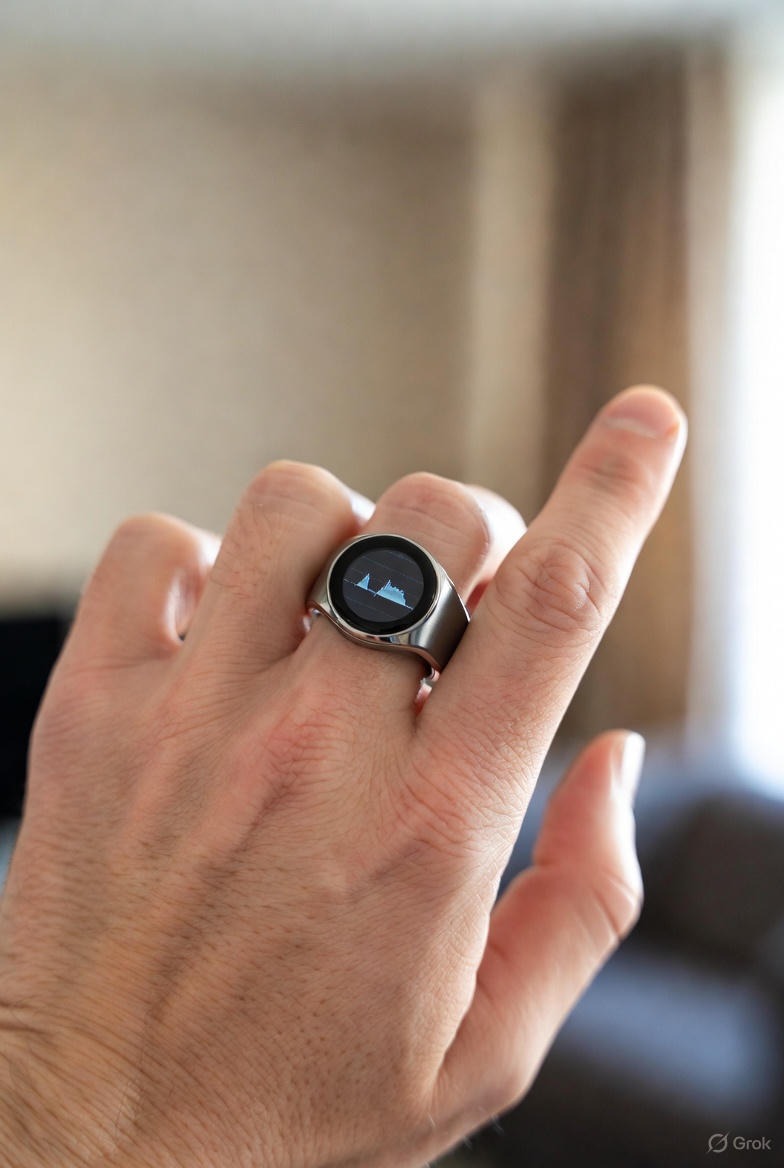
The current capabilities of smart rings are already revolutionary, but they represent just the first chapter. The convergence of sensor technology, artificial intelligence, and personalized medicine is accelerating, pointing toward a future where our wearables become true health and performance partners. Understanding this trajectory helps contextualize the power of the tools we have today and prepares us for the even more integrated future.
Next-Generation Sensing:
Future iterations will move beyond photoplectysmography (PPG—the optical heart rate sensor) to incorporate more clinical-grade data streams.
The AI Health Coach:
Raw data is meaningless without interpretation. The future lies in sophisticated AI that doesn’t just show graphs, but provides contextual, predictive, and prescriptive insights.
Ethical and Social Frontiers:
As this technology becomes more powerful, the questions will intensify.
The smart ring of today is the foundation for this future. It is teaching us to speak the language of our bodies, to see the profound connections between our daily habits and our lived experience. By engaging with this technology thoughtfully now, we prepare ourselves to be informed, empowered, and ethical participants in the bio-synergetic world to come. For a look at how to use current technology effectively, explore Technology Aids for Sleep Improvement: Choosing the Right Tools.
Concepts and data are powerful, but they come alive in practice. Let’s synthesize everything into a narrative—a day in the life of someone who uses their smart ring not as a gadget, but as a guide for living and working at their best. Meet Alex, a project manager and amateur triathlete.
6:45 AM – Waking with Insight:
Alex’s alarm goes off. Before even getting out of bed, they check their smart ring app. The readiness score is 88/100—a green zone day. Sleep analysis shows 7h 32m of sleep with excellent deep and REM sleep proportions. HRV is at the high end of their personal range, and RHR is a steady 48 bpm. The data confirms what they feel: rested and alert. The ring also notes a slight temperature dip consistent with a natural wake-up time. Alex knows today is a day to lean in.
7:30 AM – Strategic Fueling:
Based on past data correlations, Alex knows that a protein-rich breakfast with complex carbs stabilizes their energy for hours, preventing a mid-morning crash. They avoid caffeine immediately, knowing their cortisol is naturally peaking. They’ll have a coffee at 9:30 a.m. to extend the focus window.
9:00 AM – 12:00 PM – Peak Cognitive Sprint:
Alex blocks their calendar for “Deep Work.” This is their biological prime time, confirmed by months of data. They work on the most complex part of their project—system architecture and strategic planning. They work in 90-minute focused sprints, taking a 5-minute break between each to stand, stretch, and do some breathwork (a practice that their ring data shows improves their HRV).
1:00 PM – The Intentional Trough:
Post-lunch, Alex’s energy naturally dips. They use this time for administrative tasks: clearing emails, updating project trackers, and scheduling future meetings. They take a 15-minute walk outside, getting daylight to reinforce their circadian rhythm and combat the afternoon slump—a tactic validated by their consistent sleep improvement on days they do this.
3:00 PM – Creative Collaboration:
A secondary energy rise often occurs for Alex around this time. They schedule brainstorming sessions and collaborative workshops now. The social interaction and open-ended thinking align well with this diffuse-focus, higher-energy state.
5:30 PM – Physical Output Engine:
With work wrapped up, Alex heads to the pool for a swim session. Because their readiness score was high, they execute the planned moderate-intensity workout. They track the session with their ring, noting the cardiovascular strain. After the workout, they use the ring’s guided recovery breathwork feature for 5 minutes to help downshift their nervous system, a habit that has improved their post-exercise recovery metrics.
8:00 PM – Wind-Down Protocol:
Alex knows from painful data experiments that screens after 9 p.m. fragment their sleep. They start their wind-down: dim lights, no screens, reading a physical book. They have a light, early dinner, avoiding the alcohol that their data shows, without fail, suppresses their REM sleep.
10:30 PM – Sleep as a Priority:
Alex goes to bed, aiming for 7.5 hours of sleep before their natural wake window. The room is cool, dark, and quiet. They wear their ring, trusting it to guard the most important recovery process of all.
The Day After a Red Zone:
Contrast this with a day Alex wakes to a readiness score of 62. The data shows poor sleep and a low HRV, likely from a stressful family call the night before. Alex immediately adjusts. They clear their schedule of demanding cognitive work. They communicate to their team that they’ll be focusing on lighter tasks. They prioritize hydration, a calming walk at lunch, and an extra 30 minutes of sleep that night. They don’t fight their biology; they respect it, knowing that a forced “productive” day would only dig a deeper hole. By honoring the red zone, they’re back in the green within 48 hours.
This is the ultimate integration. The smart ring isn’t running Alex’s life; it’s informing Alex’s intelligent, responsive, and compassionate management of their own human system. The output—in work, fitness, and relationships—flows naturally from a foundation of understood and supported health.
We have journeyed from the fundamental metrics on a smart ring dashboard to the vision of a biologically-aligned life. We’ve seen how Heart Rate Variability is the currency of resilience, how sleep is the non-negotiable foundation of cognition, and how stress is a quantifiable load to be managed, not just a feeling to be endured. We’ve explored how this data refines our nutrition, optimizes our training, upgrades our mental models, and guides us through life’s inevitable disruptions.
This is not a story about a piece of technology. It is a story about a fundamental shift in human self-awareness. For the first time in history, we have continuous, objective access to the language of our autonomic nervous system—the very system that governs our energy, recovery, health, and ultimately, our capacity to contribute meaningfully to the world.
The smart ring reveals the true relationship between health and output by demolishing the artificial wall between them. It proves they are not a trade-off but a symbiotic loop: intelligent investments in health (sleep, recovery, managed stress) yield compounding returns in sustainable output (focus, creativity, resilience). And high output achieved without degrading health is the very definition of sustainable success.
This first portion of our exploration has laid the groundwork. We’ve understood the “what” and the “why.” The journey continues into deeper application: building unshakable daily habits, navigating social and familial dynamics, addressing specific health conditions, and ultimately, using this self-knowledge to craft a life that is not only productive but also deeply fulfilling and aligned with your unique biological design.
The data from your finger is more than numbers on a screen. It is a conversation with the deepest part of your being. It is an invitation to listen, to learn, and to partner with your own body in the great project of your one, precious life. The goal is not a perfect score every day, but a profound and compassionate dialogue—a relationship with yourself built on evidence, respect, and the pursuit of your highest potential.
Ready to continue the journey? In the next portion, we will dive into the practical systems for habit formation, explore the social dimensions of a data-informed life, and uncover how this knowledge empowers you to become the architect of your days and the author of your legacy. The path to peak performance, it turns out, begins with a single, simple truth: know thyself.
Your Trusted Sleep Advocate: Sleep Foundation — https://www.sleepfoundation.org
Discover a digital archive of scholarly articles: NIH — https://www.ncbi.nlm.nih.gov/
39 million citations for biomedical literature :PubMed — https://pubmed.ncbi.nlm.nih.gov/
Experts at Harvard Health Publishing covering a variety of health topics — https://www.health.harvard.edu/blog/
Every life deserves world class care :Cleveland Clinic - https://my.clevelandclinic.org/health
Wearable technology and the future of predictive health monitoring :MIT Technology Review — https://www.technologyreview.com/
Dedicated to the well-being of all people and guided by science :World Health Organization — https://www.who.int/news-room/
Psychological science and knowledge to benefit society and improve lives. :APA — https://www.apa.org/monitor/
Cutting-edge insights on human longevity and peak performance:
Lifespan Research — https://www.lifespan.io/
Global authority on exercise physiology, sports performance, and human recovery:
American College of Sports Medicine — https://www.acsm.org/
Neuroscience-driven guidance for better focus, sleep, and mental clarity:
Stanford Human Performance Lab — https://humanperformance.stanford.edu/
Evidence-based psychology and mind–body wellness resources:
Mayo Clinic — https://www.mayoclinic.org/healthy-lifestyle/
Data-backed research on emotional wellbeing, stress biology, and resilience:
American Institute of Stress — https://www.stress.org/


