


The Complete Beginner-Friendly Guide to Travel Wellness Tips for Digital Nomads
Travel wellness for digital nomads with a ring.
Travel wellness for digital nomads with a ring.
%402x.svg)
The allure of the digital nomad lifestyle is undeniable. Waking up to the sound of waves in Bali, answering emails from a sun-drenched café in Lisbon, and exploring a new city after your laptop closes for the day—it's a modern dream built on the promise of freedom, flexibility, and adventure. The world becomes your office, and the boundaries between work, travel, and life blur into one continuous, exciting journey.
Yet, anyone who has lived this lifestyle for more than a few months will tell you a secret that glossy Instagram photos rarely reveal: maintaining your wellness on the road is one of the biggest challenges you'll face. The very elements that make this life exhilarating—constant movement, new time zones, unfamiliar foods, and a lack of routine—are the same ones that can quietly erode your physical and mental health.
As a digital nomad, your body and mind are your primary tools for success. If you're running on empty, battling jet lag, or feeling the creeping weight of loneliness, your work suffers, and the adventure loses its luster. This is where a strategic approach to travel wellness becomes non-negotiable. It’s not just about squeezing in a workout when you can; it's about building a holistic system that keeps your energy high, your mind sharp, and your body resilient, no matter where in the world you happen to be.
This comprehensive guide is your beginner-friendly roadmap to achieving exactly that. We'll dive deep into the science and practical application of travel wellness, from anchoring your day with non-negotiables to using cutting-edge technology like a wellness ring to get real-time feedback on your body's state. We'll explore how to combat fatigue, optimize your sleep across time zones, fuel your body for cognitive performance, and protect your mental health from the unique stressors of a nomadic life.
By the end of this guide, you'll have a personalized toolkit to not just survive the digital nomad lifestyle, but to truly thrive within it. Let's begin by laying the foundation for unshakeable energy on the move.

When you're a traditional office worker, your environment is largely predictable. You wake up at the same time, commute the same route, eat lunch at the same spots, and sit at the same desk. This predictability, while boring, is surprisingly good for your baseline wellness. Your circadian rhythm is stable. Your meal times are consistent. Your social interactions are, for better or worse, predictable.
Now, imagine flipping that model on its head. As a digital nomad, you are voluntarily introducing a high degree of variability into every single one of those factors. This is the digital nomad's dilemma: the pursuit of freedom creates a state of constant physiological and psychological flux.
The Stress of Constant Adaptation
Every time you move to a new location, your body goes into a mild state of alarm. This isn't just about jet lag, though that's a major part of it. It's about sensory overload. Your brain has to process a flood of new information: navigating a foreign public transport system, deciphering a new language, figuring out local customs, and finding a reliable source of potable water. This constant micro-decision-making and adaptation draws heavily on your cognitive reserves, a phenomenon known as decision fatigue.
Simultaneously, your body is trying to anchor itself. It's looking for cues—light, temperature, meal times—to regulate its internal clock. When these cues are constantly shifting, your sleep architecture suffers. You might find yourself waking up at 3 a.m. full of energy or struggling to keep your eyes open at 4 p.m. This disruption directly impacts your fatigue prevention tips through circadian rhythm smart ring alignment, making it harder to maintain the energy you need for both work and exploration.
The "Always On" Mentality
For many digital nomads, the line between work and life doesn't just blur; it vanishes. Because your office is wherever you are, the guilt of not "working" can be pervasive. If you're at a beautiful beach, a part of your brain might nag you that you should be catching up on emails. If you're working from a café, you might feel you haven't truly "seen" the city you're in. This creates a paradox where you're never fully present, leading to a unique form of burnout where you feel both overworked and like you're not doing enough.
This mental tug-of-war depletes your energy faster than any 10-hour workday ever could. It's a chronic, low-grade stressor that elevates cortisol levels, disrupts digestion, and can lead to feelings of anxiety and inadequacy. The key to combating this isn't to work less or play more; it's to build robust systems that help you transition intentionally between modes, ensuring you have the energy to give your best to both your clients and your adventures. As we'll explore later, understanding how your wellness ring shows when you're heading toward fatigue can be a game-changer in recognizing this state before it becomes a full-blown crash.
The Illusion of the "Endless Vacation"
There's a common misconception among friends and family back home that your life is one long vacation. This social pressure can make you feel guilty for admitting that you're tired, stressed, or lonely. You might feel you have no right to complain because you're "living the dream." This can lead you to suppress your own needs, pushing through fatigue and ignoring the signals your body is sending you.
The truth is, the digital nomad lifestyle requires more intentional wellness practices, not fewer. You don't have the safety net of a stable routine, a familiar gym, your regular grocery store, or your long-time support network. You have to build these things from scratch, over and over again. This guide is designed to help you do just that, starting with the most fundamental principle of all: creating a portable routine that acts as your anchor in the storm of constant change.
When everything around you is in flux, a consistent morning ritual becomes your psychological anchor. It's a series of deliberate actions that signal to your brain and body, "You are home. You are safe. It's time to begin." This ritual doesn't have to be long or complicated, but it must be non-negotiable. It’s the foundation upon which you build a day of sustained energy and focus.
Think of your morning ritual as your personal pre-flight check. Before a pilot takes off, they run through a systematic checklist to ensure every system is functioning correctly. Your morning ritual does the same for you. It checks in with your hydration, your movement, your mindset, and your intention for the day, setting you up for a smooth flight rather than a turbulent one.
Step 1: Rehydrate Before You Caffeinate
After 7-9 hours of sleep, your body is mildly dehydrated. Upon waking, your first instinct might be to reach for coffee, but caffeine is a diuretic and can actually exacerbate dehydration. Instead, make it a rule to drink a large glass of water first thing. For an extra boost, add a pinch of sea salt and a squeeze of lemon. The sea salt provides essential electrolytes that help your cells absorb the water, while the lemon aids digestion and provides a small dose of vitamin C.
This simple act of hydration kickstarts your metabolism, flushes out toxins that accumulated overnight, and rehydrates your brain, leading to clearer thinking. It’s a foundational step in natural energy boosters through proper recovery ring-monitored rest, as it directly supports the recovery processes that happened while you slept. Your wellness ring data will often show a lower heart rate and improved HRV (Heart Rate Variability) when you're properly hydrated, proving the physiological impact of this simple habit.
Step 2: Mindful Movement, Not Intense Exercise
The goal of a morning ritual isn't to crush a PR or burn a certain number of calories. That kind of intense exertion can actually spike cortisol, the stress hormone, which is counterproductive to starting your day calmly. Instead, focus on mindful movement that awakens your body and gets the blood flowing.
This could be a 10-minute yoga flow, a series of sun salutations, a short Tai Chi session, or even just a gentle stretching routine. The key is to connect your breath with your movement. As you stretch, pay attention to areas that might be tight from a new bed or a long flight. This practice not only improves flexibility but also signals to your nervous system that it's time to shift from sleep mode to awake mode. For specific, targeted routines, you can explore the beginner-friendly guide to stretching as natural energy booster, which offers sequences designed to invigorate without overwhelming.
Step 3: Set an Intention, Not Just a To-Do List
Your to-do list is a list of demands; your intention is a guiding principle for how you want to show up. After hydrating and moving, take five minutes to sit quietly. This doesn't have to be a formal meditation if that's not your style. Simply sit with your cup of water or tea and think about the day ahead.
Ask yourself: How do I want to feel today? Focused? Creative? Patient? Compassionate? Then, set a single word or short phrase as your guiding light. For example, if you have a lot of client calls, your intention might be "presence." If you're exploring a new city after work, it might be "curiosity." This simple practice helps you move through your day with more purpose and less reactivity. When stress arises, you can gently bring yourself back to your intention, grounding yourself in the midst of chaos.
This anchor of a morning ritual is your secret weapon. It’s a piece of home that you carry with you, a constant in a world of variables. It prepares your mind and body to handle the challenges of nomadic life with grace and ensures you're starting each new adventure from a place of centered strength.
Jet lag is the arch-nemesis of the digital nomad. It’s not just feeling tired; it's a biological desynchronization. Your body's internal clock, or circadian rhythm, is out of sync with the external environment. This master clock, located in the brain, regulates everything from hormone release (like melatonin for sleep and cortisol for wakefulness) to body temperature and digestion. When you fly across multiple time zones, you're essentially forcing this clock to reset faster than it naturally can.
The result is the constellation of jet lag symptoms: daytime fatigue, nighttime insomnia, brain fog, digestive issues, and irritability. For a digital nomad who needs to be sharp for work and energetic for exploration, jet lag can derail the first few critical days in a new location. But with a strategic plan, you can dramatically reduce its impact and align your body with local time much faster.
The Power of Light: Your Master Reset Button
Light is the single most powerful cue for resetting your circadian rhythm. Specialized cells in your eyes (not involved in vision) detect a specific wavelength of blue light and send a signal to your brain's master clock, telling it, "It's daytime, stop producing melatonin."
Your wellness ring is an invaluable tool here. By tracking your body temperature, it can provide clues about your circadian phase. Your body temperature naturally drops slightly at night to initiate sleep and rises in the morning to promote wakefulness. By observing these patterns in a new time zone, you can see how misaligned your rhythm is and track your progress as you adjust. This is a prime example of how your wellness ring tracks natural energy boosters throughout your day, giving you objective data on your internal state.
Strategic Napping: A Double-Edged Sword
When jet lag hits, a nap can feel like a life raft. But if you're not strategic, it can also be the anchor that keeps you stuck in the wrong time zone. The rule of thumb for napping during jet lag recovery is to keep it short and time it right.
For more detailed strategies on this delicate balance, the complete beginner-friendly guide to power naps as natural energy booster is an excellent resource to understand how to leverage short rest without disrupting your long-term recovery.
Melatonin: The Signal, Not a Sedative
Melatonin is a hormone your body naturally produces to signal that it's time to sleep. As a supplement, it can be a powerful tool for resetting your clock, but it's widely misunderstood and misused. Melatonin is not a powerful sleeping pill that will knock you out. Think of it as a key that turns the ignition of your sleep drive.
For jet lag, the timing is everything. Taking it at the wrong time can actually make your jet lag worse by shifting your clock in the wrong direction.
Start with a low dose (0.5mg to 3mg), as higher doses can sometimes lead to vivid nightmares or grogginess the next day. It's always a good idea to consult with a healthcare professional before starting any new supplement regimen.
One of the biggest hidden health costs of the digital nomad lifestyle is the toll it takes on your physical body. Hunching over a laptop in a hostel common room, perching on a too-tall barstool in a café, or working from your bed can lead to a cascade of musculoskeletal issues: chronic back pain, "tech neck," carpal tunnel syndrome, and stiff hips. These aren't just minor annoyances; they are chronic pain conditions that can severely impact your quality of life and your ability to work.
The good news is that with a little knowledge and a few portable tools, you can create an ergonomic workspace anywhere in the world. The goal is to maintain the natural curves of your spine and keep your joints in a neutral, relaxed position.
The Non-Negotiable Trio: Eyes, Ears, and Wrists
Before you even think about furniture, focus on these three critical areas:
The Portable Ergo Kit
To achieve this perfect setup anywhere, consider assembling a small "ergo kit" that travels with you:
The 15-Minute Movement Break
No amount of perfect ergonomics can compensate for staying in the same position for hours on end. Our bodies are designed for movement. Sitting for prolonged periods slows circulation, tightens muscles, and compresses the spine.
Implement a strict rule: for every 45-60 minutes of focused work, get up and move for at least 5 minutes. This isn't just about physical health; it's about mental clarity. A short walk, some light stretching, or even just standing and looking out the window can reset your focus and prevent the afternoon slump. Simple stretches like neck rolls, shoulder shrugs, and standing hamstring stretches can counteract the effects of sitting. For guidance on incorporating more movement into your workday, the beginner-friendly guide to stretching as natural energy booster provides excellent, easy-to-follow routines that can be done anywhere, with no equipment required.
One of the greatest joys of the nomadic lifestyle is the opportunity to explore the world through its food. From savoring street tacos in Mexico City to indulging in fresh pasta in Rome, food is a gateway to culture. However, this culinary adventure presents a unique challenge: how do you enjoy local delicacies while also ensuring you're fueling your body for sustained cognitive performance?
The key is to shift your mindset from "dieting" to "strategic nourishment." It's not about restriction; it's about making informed choices that support your energy, focus, and gut health, which is profoundly impacted by travel.
The Nomad's Nutritional Triad
When you're in a new place and faced with unfamiliar menus, keep these three macronutrient principles in mind to build a balanced plate that will sustain your energy:
Gut Health: Your Second Brain on the Move
Travel is notoriously hard on your digestive system. Changes in water, food, and routine can disrupt the delicate balance of your gut microbiome—the trillions of bacteria that live in your digestive tract and play a crucial role in immunity, mood regulation, and energy production. This is why "traveler's tummy" is so common.
Supporting your gut health while traveling is non-negotiable for sustained wellness. Here’s how:
The Art of the Indulgence
Of course, you're going to indulge. You're in Italy; you have to eat the gelato. You're in Thailand; you can't skip the mango sticky rice. The key is to be intentional about it. Plan your indulgence. Savor it. Don't let it be a mindless addition to an already heavy meal. If you know you're going to have a decadent dessert at dinner, balance it by choosing a lighter, protein-and-veg-focused lunch. This isn't about punishment; it's about creating a sustainable equilibrium that allows you to fully experience the culture without sacrificing your energy and well-being.
In the hustle culture that often permeates the digital nomad world, rest is frequently viewed as the opposite of productivity. We wear our burnout like a badge of honor, equating long hours with success. But this mindset is fundamentally flawed. True, sustainable productivity isn't about the number of hours you work; it's about the quality of energy you bring to those hours. And that energy is entirely dependent on strategic rest and recovery.
Think of your energy like a battery. If you constantly drain it to zero before recharging, you'll damage its long-term capacity. Strategic rest is about topping up your battery throughout the day, ensuring you're always operating at a high level. This isn't just about sleep at night; it's about incorporating deliberate rest periods into your waking hours.
The Power Nap: A Performance Hack
We touched on napping for jet lag, but the power nap is a potent tool for everyday energy management, regardless of time zones. A well-timed nap can improve alertness, creativity, and cognitive function for hours afterward.
The key is in the duration. Sleep happens in cycles. If you nap for too long, you can drift into deep sleep (slow-wave sleep). Waking up from this stage leaves you feeling groggy and disoriented, a state known as sleep inertia, which can take 30 minutes or more to wear off. This is counterproductive.
To nap effectively, find a quiet, dark place. Set an alarm. And don't feel guilty about it. Consider it a strategic reboot for your most important asset: your brain. For more insights on mastering this skill, the complete beginner-friendly guide to power naps as natural energy booster is a must-read.
Active Recovery: Rest You Can Feel Good About
Recovery isn't always about lying down. Active recovery involves low-intensity movement that promotes blood flow, helps clear metabolic waste products from your muscles, and reduces stiffness. This is especially important for nomads who spend long hours sitting.
Active recovery can take many beautiful forms that align perfectly with the nomadic lifestyle:
The goal is to move your body in a way that feels good and restorative, not taxing. It's a celebration of what your body can do, not a punishment for what you ate. This type of movement is fantastic for both physical and mental recovery, clearing the mental fog and allowing you to return to work with fresh eyes.
The Importance of True Downtime
In our hyper-connected world, true downtime—where you are completely disengaged from work and screens—has become rare. We fill every spare moment with scrolling social media, checking news, or responding to "just one more" message. This constant state of partial attention prevents our brains from entering a true rest state.
Schedule periods of analog downtime. This could be reading a physical book, journaling, sitting in a park and people-watching, having a deep conversation with a fellow traveler, or practicing a hobby like sketching or knitting. This type of unstructured, screen-free time allows your brain's default mode network to activate, which is crucial for creativity, problem-solving, and processing emotions. It’s during these moments that you often have your best ideas and gain clarity on your goals.
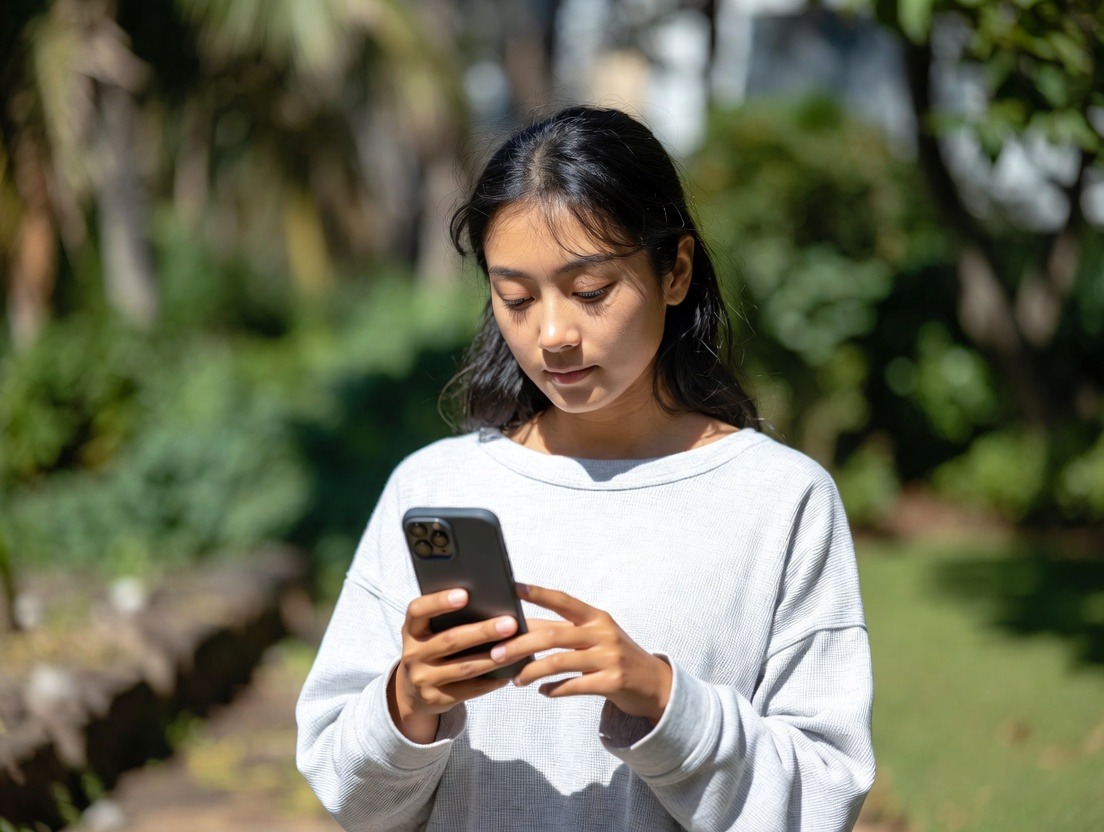
There's a reason why so many digital nomads are drawn to locations with beaches, mountains, and forests. It's not just for the Instagram photos. It's an innate, biological pull. We are hardwired to find restoration in nature. In the field of environmental psychology, this is known as biophilia—the innate human tendency to seek connections with nature.
For the digital nomad, whose life is often spent in front of screens in unfamiliar urban environments, nature exposure isn't just a nice-to-have; it's a critical component of mental and physical wellness. It's a powerful antidote to screen fatigue, sensory overload, and the low-grade stress of constant adaptation.
The Physiological Shift
When you step into a natural environment, something remarkable happens to your body. Your sympathetic nervous system (the "fight or flight" response) down-regulates, and your parasympathetic nervous system (the "rest and digest" response) takes over. This shift is measurable.
Nature as a Cognitive Reset
Beyond the physical benefits, nature is a powerful cognitive tool. Our directed attention—the kind we use for focused work like coding, writing, or analyzing data—is a finite resource. It gets fatigued after prolonged use. This is called Attention Restoration Theory (ART).
Nature, according to ART, is uniquely suited to rest our directed attention. It engages what's called "soft fascination"—things like the movement of leaves in the wind, the sound of a stream, or the patterns of clouds. These stimuli are interesting enough to hold our attention, but they do so effortlessly, allowing our directed attention system to take a break and replenish. After even a short time in nature, you can return to your work feeling more focused, creative, and less mentally fatigued.
Practical Ways to Integrate Nature into Your Nomadic Life
You don't need to live in a cabin in the woods to reap these benefits. Here are practical ways to weave nature into your daily routine, no matter where you are:
To fully appreciate the science behind this, we highly recommend reading the complete beginner-friendly guide to nature exposure for energy. It will transform how you view your time outdoors, from a leisure activity to a vital wellness practice.
When you're in a new environment, facing a looming deadline, or dealing with the frustration of unreliable Wi-Fi, your body's stress response can spike in an instant. Your heart races, your breathing becomes shallow and rapid, and your mind clouds over. In these moments, you don't have time for a yoga class or a long meditation. You need an immediate, portable tool to regulate your nervous system and bring you back to a state of calm focus. That tool is your breath.
Breathwork is the practice of consciously controlling your breathing pattern to influence your mental, emotional, and physical state. It's one of the most underutilized yet powerful wellness tools available, and it costs nothing and can be done anywhere.
The Physiology of the Breath-Stress Connection
Your breathing is unique in that it's both an automatic function (you don't have to think about it) and one you can consciously control. This makes it a direct gateway to your autonomic nervous system (ANS). The ANS has two main branches: the sympathetic (fight-or-flight) and the parasympathetic (rest-and-digest).
When you're stressed, your breathing becomes fast and shallow, originating from your chest. This signals to your brain that there is a threat, reinforcing the stress response. By consciously changing your breath—slowing it down, making it deeper, and moving it into your belly—you send a powerful signal back to your brain: "We are safe. It is okay to relax." This activates the vagus nerve, the primary nerve of the parasympathetic nervous system, which then lowers your heart rate and promotes a state of calm.
This is a real-time demonstration of how your wellness ring shows when you're heading toward fatigue and how you can intervene. You can literally watch your heart rate drop and your stress score improve as you engage in a few minutes of conscious breathing.
Three Portable Breathwork Techniques for Nomads
Here are three simple yet powerful techniques you can deploy in any situation:
Mindfulness for the Modern Nomad
Mindfulness is often misunderstood as having to clear your mind of all thoughts. In reality, it's the practice of paying attention to the present moment without judgment. It's about being fully engaged in whatever you're doing, whether that's working on a report or eating a bowl of pho.
For a digital nomad, whose mind is often scattered between past logistics and future plans, mindfulness is an anchor. You can practice it formally (sitting in meditation) or informally throughout your day. Informal mindfulness could be:
By weaving these small moments of presence into your day, you build mental resilience, reduce stress, and deepen your experience of the world around you.
The digital nomad life can be paradoxically lonely. You are constantly surrounded by new people, yet you lack the deep, stable social connections that are fundamental to human well-being. You might go days without a meaningful conversation that isn't work-related. This social isolation can be a major drain on your energy and mental health, leading to what's known as social fatigue—a state of emotional exhaustion from navigating new social environments without a supportive base.
Research consistently shows that strong social connections are one of the most significant predictors of happiness, health, and even longevity. For the nomad, building a community isn't just nice; it's a biological necessity. It requires intentionality and effort, but the payoff—a sense of belonging and a support network on the road—is immeasurable.
The Challenge of Transient Connections
Every time you make a friend on the road, there's an expiration date on the relationship. Someone is always leaving. This can make you hesitant to invest emotionally in new people, leading to a cycle of superficial connections that don't fulfill your deeper social needs. It can feel easier to stay in your hotel room and watch Netflix than to put yourself out there, only to say goodbye in a week.
This is a form of emotional self-preservation, but it ultimately leads to greater loneliness. The key is to shift your perspective. Instead of seeing the impermanence as a loss, see it as a gift. You get to have intense, meaningful friendships with fascinating people from all over the world, and you carry a piece of them with you forever. Learning to embrace the "hello" and the "goodbye" as part of the journey is a crucial skill.
Strategies for Intentional Community Building
Building a community on the road requires you to be proactive. Here’s how to do it:
Quality Over Quantity
In a transient lifestyle, a few deep connections are far more valuable than hundreds of superficial ones. Focus your energy on the people you genuinely click with. Make plans to travel together for a week. Schedule regular video calls after you part ways. These deeper bonds are what will sustain you through the inevitable challenges of the road. They become your portable family. Your wellness ring can even reflect the positive impact of these connections; a good, heart-to-heart talk with a friend can lower your stress and improve your HRV, a perfect example of fatigue prevention tips during high-stress periods: ring-tracked recovery.
We've touched on it throughout this guide, but it's time to bring it all together: your smart ring is not just a gadget; it's an essential piece of travel gear, a portable health lab that provides objective, real-time feedback on how your lifestyle choices are impacting your body. In the chaotic environment of a digital nomad, where your body's signals can be drowned out by sensory overload, your ring acts as a clear, calm voice of data.
It transforms wellness from a vague feeling ("I'm a bit tired") into a quantifiable metric ("My HRV is down 15 points and my sleep score was poor"). This data empowers you to make informed decisions and course-correct before small problems become big ones.
Your Ring as a Jet Lag and Recovery Coach
As we discussed, aligning your circadian rhythm is a top priority when you land. Your ring tracks the key biomarkers of your internal clock:
Validating Your Wellness Experiments
One of the most powerful features of a wellness ring is its ability to validate the things you're trying. As a digital nomad, you're constantly experimenting. You try a new morning routine, a new diet, a new type of exercise.
Your ring gives you the proof of what works for you. You might have read about the benefits of cold plunges. After trying one, you can look at your data. Did your HRV improve the next morning? Did your sleep score go up? You can test different natural energy boosters through proper recovery ring-monitored rest and see which ones yield the best results. You can compare how you feel after a day of exploring a city versus a day of working from a café, backed by data.
This process of experimentation and validation turns your wellness journey into a science, making it more engaging and effective. You stop guessing and start knowing.
Early Warning System for Burnout
Perhaps its most important function is as an early warning system for impending burnout or illness. The accumulation of travel stress, poor sleep, and irregular routines can push you toward a state of chronic fatigue. You might not feel it consciously until you crash.
Your ring, however, will show the trend. You might notice a consistent downward trend in your HRV over a week, or your resting heart rate creeping up day by day. These are classic signs that your body is under accumulating stress and not recovering adequately. This is your cue to intervene. It's a signal to prioritize fatigue prevention tips through strategic rest days: ring guidance. It might mean taking a full day off from work, sleeping in, eating a very clean, anti-inflammatory diet, and saying no to social plans to just rest.
By heeding these early warnings, you can prevent a full-blown burnout that could take weeks to recover from. You learn to listen to the data, which often speaks before your conscious mind understands the problem. Your ring helps you practice preventative wellness, ensuring that your nomadic journey is not a sprint to exhaustion, but a marathon of sustained health and adventure.

If there's one non-negotiable pillar of wellness that holds up all others, it's sleep. Sleep is when your body repairs muscle tissue, consolidates memories, clears metabolic waste from your brain, and regulates your emotions. For a digital nomad, whose days are filled with novel experiences and cognitive demands, high-quality sleep isn't a luxury—it's the very foundation of your ability to function, adapt, and thrive.
Yet, sleeping well on the road is notoriously difficult. You're constantly faced with new beds, different levels of ambient noise, unfamiliar levels of light pollution, and pillows that are either too flat or too fluffy. Your body's sleep architecture is sensitive to these changes. The good news is that by understanding the principles of sleep hygiene and creating a portable sleep system, you can command a great night's rest almost anywhere in the world.
The Four Pillars of Sleep Environment
When you check into a new place, you need to conduct a rapid assessment and modification of your sleep environment. Think of yourself as a sleep architect, tasked with building the perfect cave for rest, no matter the raw materials you're given.
The Pre-Sleep Ritual: Signaling Shutdown
Just as a morning ritual anchors your day, a pre-sleep ritual signals to your brain that it's time to power down. This is crucial for overriding the "always on" mentality that plagues many nomads. Your ritual should last 30-60 minutes and be screen-free as much as possible.
Your wellness ring will provide irrefutable proof of the power of this ritual. On nights when you follow it, you'll likely see a shorter time to fall asleep, fewer awakenings, and a higher overall sleep score. This data reinforces the habit, turning it from a chore into a non-negotiable part of your evening.
The Pre-Bed Meal
What and when you eat plays a significant role in sleep quality. Going to bed either too full or too hungry can disrupt your rest.
For deeper insights into optimizing your sleep based on your body's unique data, explore the beginner-friendly guide to sleep-based fatigue prevention: ring-optimized. It will show you how to use your ring's feedback to fine-tune your sleep environment and routine for maximum recovery.
We've all heard the advice to "drink more water," but for the digital nomad, hydration is a complex, dynamic challenge that changes with every new destination. It's not just about avoiding thirst; it's about maintaining cognitive function, energy levels, and physical resilience in the face of varying climates, altitudes, and activity levels. Dehydration by as little as 2% can impair your attention, memory, and executive function—the very tools you need to work effectively and navigate new environments.
The Dynamic Nature of Nomadic Hydration
Your water needs aren't static. They fluctuate based on several factors that are in constant flux when you're on the move:
The Reusable Bottle: Your Most Important Gear
The single most effective tool for mastering hydration on the road is a high-quality, durable, reusable water bottle. It's an investment in your health and the planet. Having it with you at all times serves as a constant visual reminder to drink.
But not all bottles are created equal for the nomadic lifestyle. Consider these features:
Hydration Beyond Water: Electrolytes
Water alone isn't always enough, especially when you're sweating a lot or dealing with digestive issues. Electrolytes are minerals like sodium, potassium, magnesium, and calcium that conduct electricity in your body and are essential for nerve function, muscle contraction, and fluid balance. When you sweat, you lose both water and electrolytes.
If you're only replacing the water, you can dilute the electrolyte concentration in your blood, which can actually lead to a condition called hyponatremia, whose symptoms—fatigue, headache, nausea—mimic dehydration.
Reading the Signs (and Your Ring)
Your body gives you clear signals of dehydration: dark urine, dry mouth, fatigue, headache, dizziness. But by the time you feel thirsty, you are already mildly dehydrated. This is where your wellness ring becomes a proactive tool.
By paying attention to these metrics, you can stay ahead of your hydration needs, ensuring your brain and body have the fluid they need to perform at their best. For more on how your body's markers reflect your internal state, how your wellness ring tracks natural energy boosters throughout your day offers a deeper dive into the interconnectedness of these data points.

For many, the thought of "working out" is tied to a gym membership—a familiar place with familiar machines. As a digital nomad, that luxury is often gone. But this absence is actually an opportunity to rediscover movement as a joyful, integrated part of your life, not a chore confined to four walls. The world becomes your gym, and movement becomes a way to explore, not just to exercise.
The key is to shift your mindset from structured workouts to embracing a lifestyle of constant, varied movement. This is far more sustainable and, frankly, more fun.
Exploratory Movement: The Nomad's Cardio
The most obvious form of nomadic movement is walking. When you're in a new city, walking isn't just transportation; it's the primary mode of exploration. You cover more ground, notice more details, and stumble upon hidden gems you'd miss entirely from a bus or taxi.
Bodyweight Training: Your Portable Gym
You don't need weights to build and maintain strength, mobility, and muscle tone. Your own body weight is a highly effective tool, and you can do a full-body workout anywhere—in your hotel room, in a park, or on a beach.
Here's a simple, effective, and portable bodyweight routine you can do in 15-20 minutes:
Making it a Habit
The best workout is the one you actually do. To make movement a consistent part of your nomadic life, you need to integrate it seamlessly.
Your Trusted Sleep Advocate: Sleep Foundation — https://www.sleepfoundation.org
Discover a digital archive of scholarly articles: NIH — https://www.ncbi.nlm.nih.gov/
39 million citations for biomedical literature :PubMed — https://pubmed.ncbi.nlm.nih.gov/
Experts at Harvard Health Publishing covering a variety of health topics — https://www.health.harvard.edu/blog/
Every life deserves world class care :Cleveland Clinic - https://my.clevelandclinic.org/health
Wearable technology and the future of predictive health monitoring :MIT Technology Review — https://www.technologyreview.com/
Dedicated to the well-being of all people and guided by science :World Health Organization — https://www.who.int/news-room/
Psychological science and knowledge to benefit society and improve lives. :APA — https://www.apa.org/monitor/
Cutting-edge insights on human longevity and peak performance:
Lifespan Research — https://www.lifespan.io/
Global authority on exercise physiology, sports performance, and human recovery:
American College of Sports Medicine — https://www.acsm.org/
Neuroscience-driven guidance for better focus, sleep, and mental clarity:
Stanford Human Performance Lab — https://humanperformance.stanford.edu/
Evidence-based psychology and mind–body wellness resources:
Mayo Clinic — https://www.mayoclinic.org/healthy-lifestyle/
Data-backed research on emotional wellbeing, stress biology, and resilience:
American Institute of Stress — https://www.stress.org/


