


Movement and Wellness: Why Incidental Activity Matters More Than You Think
Insights highlight why incidental, everyday activity matters more for health than most people realize.
Insights highlight why incidental, everyday activity matters more for health than most people realize.
%402x.svg)
In an era obsessed with quantified self-improvement, we’ve become masters of tracking our deliberate efforts. We log miles run, weights lifted, minutes spent in a Peloton saddle, and calories meticulously burned in a HIIT class. Wellness culture often paints a picture of health as something achieved in designated, sweaty, hour-long blocks, neatly packaged between a commute and a conference call. But what if the most powerful lever for our long-term vitality isn’t found in the gym, but hidden in plain sight throughout our entire day?
Welcome to the silent revolution of incidental activity—the unplanned, unstructured, and often unnoticed movements that weave through the fabric of our daily lives. It’s taking the stairs, pacing during a phone call, gardening, walking to a colleague's desk instead of emailing, cooking a meal from scratch, or even just fidgeting. This is the movement our bodies were built for, long before the concept of "exercise" was invented.
Modern life, however, has engineered this movement out of existence. We sit—in cars, at desks, on couches—for staggering portions of our waking hours. This sedentary epidemic, often called "sitting disease," has profound consequences, independent of whether we hit the gym for 45 minutes after work. Research now reveals that a single, intense workout cannot fully undo the metabolic, cardiovascular, and musculoskeletal toll of prolonged stillness.
This article is a deep dive into the underestimated world of non-exercise activity thermogenesis (NEAT)—the scientific term for incidental movement. We will dismantle the myth that only structured exercise counts, explore the startling physiological impacts of micro-movements, and provide a comprehensive blueprint for weaving more life into your daily rhythm. Furthermore, we'll examine how modern technology, specifically the discreet power of a smart ring like those from Oxyzen, is uniquely positioned to illuminate this hidden dimension of our health, offering insights that wrist-worn devices often miss.
The journey to true wellness isn’t just about optimizing your hour at the gym; it’s about reclaiming the other twenty-three.
To understand the critical importance of incidental activity, we must first confront the stark reality of how we live now. Humanity has undergone a seismic shift in physical behavior in less than a century. Our ancestors—even as recently as our great-grandparents—lived lives rich in mandatory movement. Work was physical: farming, building, manufacturing, and keeping a home required constant kinetic energy. Transportation meant walking, cycling, or horseback. Leisure wasn't passive scrolling; it was often social, communal, and involved being outdoors.
Today, the digital age and service-based economy have created a perfect storm of stillness. Consider a typical knowledge worker’s day: a seated commute, 8-10 hours at a desk, a seated lunch, a seated commute home, and an evening spent seated in front of a screen for entertainment. This pattern isn't limited to office jobs. With automation and convenience at our fingertips, daily tasks that once required effort—shopping, banking, socializing, even turning on lights—now demand little more than a tap or a voice command.
The data is alarming. Studies indicate that the average adult now sits for 9 to 11 hours per day. When you add the 7-8 hours of (hopefully) prone sleep, that leaves only a tiny window for any form of upright, dynamic movement. This has led researchers to coin terms like "active couch potato"—someone who meets the recommended 150 minutes of moderate weekly exercise but remains dangerously sedentary for the rest of their waking hours.
The physiological consequences of this trap are not mere inconveniences; they are systemic. Prolonged sitting slows your metabolism, impairs blood circulation, and leads to muscle degeneration, particularly in the lower body and core—the very muscles designed to stabilize us. It's linked to increased risks of heart disease, type 2 diabetes, certain cancers, and even mental health issues like depression and anxiety. The body, in essence, interprets extended stillness as a state of shutdown.
Breaking free from this trap requires more than just adding a workout. It demands a fundamental redesign of our daily habitats and habits to reintroduce the low-grade, continuous movement that is our biological birthright. It’s about making the active choice the default choice, one step at a time.
If deliberate exercise is the roaring, dramatic fire in your metabolic fireplace, then incidental activity is the steady, sustaining glow of the embers. That glow has a name in physiology: Non-Exercise Activity Thermogenesis (NEAT).
NEAT encompasses all the energy you expend for everything that is not sleeping, eating, or sports-like exercise. It includes the energy of walking, talking, typing, yard work, housework, fidgeting, and even maintaining posture. For most people, NEAT accounts for a staggering 15% to 30% of total daily energy expenditure. For a highly active individual with a physical job, it can be as high as 50%. This makes it the most variable component of human metabolism and a powerful, often overlooked, lever for health and weight management.
The science behind NEAT reveals its profound impact. A seminal study published in Science tracked the daily movements of a group of people and found vast differences in NEAT levels between lean and obese individuals—amounting to a difference of up to 350 calories burned per day, purely through unconscious movement and lifestyle structure. This isn't about genetics giving some people a "fast metabolism"; it's about the cumulative impact of hundreds of small choices that build a more active, energy-burning life.
NEAT operates through several powerful mechanisms:
Increasing your NEAT is arguably the most sustainable way to nudge your metabolism in a healthier direction. It requires no special equipment, no gym membership, and fits into the life you already have. It’s the science of living dynamically, and it turns every environment into a potential gym. For a deeper exploration of how body metrics like these can be tracked, our blog offers insights on related technologies, such as in our article how sleep trackers actually work.
The fitness industry has long sold us on the transformative power of the "hour of power." While structured exercise is undeniably crucial for building strength, endurance, and specific athletic skills, an exclusive focus on it creates a dangerous "check-the-box" mentality. You crush a spin class, feel virtuous, and then proceed to sit motionless for the next 10 hours, believing you've "done enough."
This is a metabolic fallacy. Emerging research in the field of inactivity physiology suggests that the benefits of exercise and the harms of sitting are not two sides of the same coin; they are independent risk factors. You cannot, in effect, "exercise off" a sedentary lifestyle.
Let's illustrate with data. A vigorous 60-minute run might burn 600-800 calories—a significant effort. However, the remaining 15 or 16 waking hours hold immense metabolic potential. If you replace just 2 hours of sitting with light activity (standing, walking, chores), you could burn an additional 200-300 calories without even breaking a sweat. Over a week, that incidental burn could rival or even surpass the calories burned in your dedicated workouts. More importantly, it keeps your biological systems "online" throughout the day.
The cardiovascular benefits are equally compelling. Studies show that frequent, brief bouts of standing and walking are more effective at improving blood sugar control and insulin sensitivity than a single, longer bout of exercise, especially after meals. Every time you stand and move, you help clear glucose and triglycerides from your bloodstream, reducing the metabolic strain of a sedentary day.
This isn't to devalue exercise. Strength training preserves muscle mass and bone density, which incidental activity alone cannot match. High-intensity intervals provide unique cardiovascular and hormonal benefits. The key is to view them as complementary, not competing, forces. Exercise builds a resilient body; incidental movement keeps it functioning optimally all day long. Think of your workout as building a high-performance engine, and your daily NEAT as the act of regularly driving it to prevent rust and seal failures.
Tracking this all-day activity is where most wearables fall short, focusing on dedicated exercise and broad step counts. This is an area where a comprehensive wellness device can provide a more nuanced picture, a topic we explore in resources like our FAQ on device capabilities.
The power of incidental activity lies not in grand, singular gestures, but in the relentless, compounding power of small actions repeated daily. This is the "compound effect" of movement, where seemingly insignificant choices, multiplied over time, yield extraordinary results for your physical and mental health.
Physically, the benefits are systemic:
Mentally and cognitively, the impact is just as profound:
Consider the story of two people: Person A works out hard for an hour but is largely sedentary otherwise. Person B has a moderate 30-minute workout but accumulates movement all day—walking meetings, evening strolls, active hobbies. Over months and years, Person B likely experiences fewer aches, more stable energy and mood, better metabolic markers, and a greater sense of daily vitality. The macro benefit isn't from one thing; it's from a thousand small things done consistently.
Understanding these micro-movements is key to holistic wellness, much like understanding the nuances of your sleep cycles. Just as you might delve into the science of deep sleep to optimize rest, understanding your movement patterns allows you to optimize your waking hours.
In our quest to quantify health, we've turned to fitness trackers and smartwatches. These devices have done wonders for raising awareness about steps, heart rate, and workout tracking. But when it comes to capturing the full spectrum of incidental activity and true sedentary behavior, they have significant blind spots.
Most wrist-worn devices are optimized for episodic, purposeful exercise. They excel at detecting a run, a swim, or a gym session because the arm movement patterns are distinct and rhythmic. However, the subtle, non-cyclic movements that constitute NEAT—standing up from your chair, washing dishes, shuffling through files, gardening—often go underreported or completely unnoticed by an accelerometer on your wrist. Your arm might be relatively still while you're actively on your feet, leading to a vast underestimation of your true activity burn.
Furthermore, their primary metric—the step count—is a crude and incomplete measure. Ten thousand steps accumulated through a day of integrated living (walking to transit, taking stairs, errands) has a different physiological context and NEAT contribution than ten thousand steps done in a single focused walk, with sitting before and after. The pattern matters just as much as the total.
Perhaps the biggest limitation is their inability to accurately measure posture. Knowing whether you've been sitting, standing, or lying down throughout the day is critical to understanding sedentary patterns. A watch can't reliably distinguish if you're sitting at a desk or standing at a counter if your arm is in a similar position. This leaves a gaping hole in the data needed to combat the "sitting disease."
This is where the form factor and sensor placement of a device become crucial. A smart ring, worn on the finger, offers a unique and often more sensitive vantage point. The fingers are in almost constant, subtle motion during daily tasks, even when the larger limbs are not. This position can potentially capture fine motor activity and posture changes more accurately. The mission at Oxyzen is rooted in creating technology that captures these nuanced, holistic health signals, moving beyond just workout tracking to a complete picture of your daily rhythm.
As we seek to track the invisible fabric of our daily movement, the evolution of wearable technology is pointing toward a more intuitive, always-on solution: the smart ring. This form factor isn't just a miniaturized watch; it represents a fundamental shift in philosophy—from tracking exercise to tracking existence.
The advantages of a ring for monitoring incidental activity are both practical and physiological:
1. Unobtrusive and Always-On Compliance: A ring is lightweight, lacks a screen to distract, and doesn't need to be removed for typing, washing hands, or many sports. This dramatically increases the likelihood of 24/7 wear, which is essential for capturing a true baseline of your activity and rest. You can’t manage what you don’t measure consistently.
2. Superior Location for Movement Detection: Your hands and fingers are involved in a vast majority of daily tasks. Whether you’re chopping vegetables, folding laundry, typing, gardening, or playing with children, the ring’s accelerometer picks up these micro-movements that a wrist device, sitting idle on the desk during typing, might miss. This can lead to a more accurate estimation of your NEAT.
3. Potential for Advanced Posture and Gesture Sensing: The placement on a finger, combined with advanced algorithms, can more reliably infer body position. The angle of your hand while sitting at a desk versus standing at a kitchen counter differs subtly. This data is gold for understanding and breaking up prolonged sitting bouts.
4. Integrated Health Sensing: Beyond movement, the finger is a rich site for photoplethysmography (PPG) sensors that measure heart rate, heart rate variability (HRV), and blood oxygen saturation. This allows the ring to correlate your activity with its direct impact on your autonomic nervous system. Did that 10-minute walk lower your stress? Your HRV data can show you.
This discreet form factor aligns with the philosophy that wellness isn't a separate activity to be performed and logged; it is the seamless integration of health-positive behaviors into your authentic life. A smart ring becomes a quiet partner in this journey, offering insights without intrusion. For those curious about how this technology translates into real-world benefits, browsing customer testimonials can provide valuable perspective on the user experience.
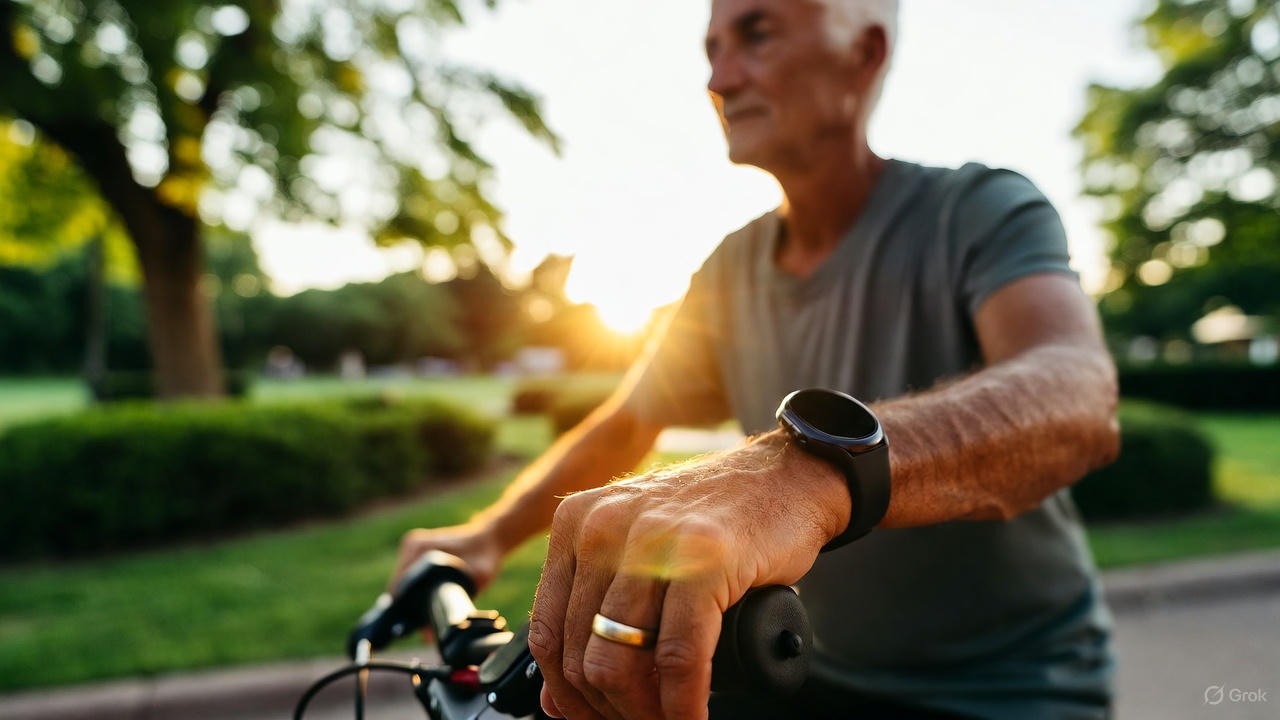
Understanding the "why" is useless without the "how." Here is a practical, room-by-room, habit-by-habit blueprint for injecting more incidental activity into your life. The goal is not to add more to your to-do list, but to creatively modify the list you already have.
The Home Environment:
The Workplace:
General Life Hacks:
The principle is simple: Look for every opportunity to transition from a passive state (sitting, lying) to an active state (standing, moving). These transitions are the building blocks of a high-NEAT life. For more structured strategies on building healthy daily habits, including those that impact rest, you can explore resources like our guide on how to get more deep sleep tonight.
A holistic view of wellness recognizes that activity and recovery are two sides of the same coin. You cannot sustainably increase your movement output without paying equal attention to the quality of your rest. This is where the synergy between tracking daily activity and monitoring sleep becomes powerfully evident.
Incidental activity, by promoting better circulation, regulating stress hormones, and physically tiring the body in a gentle way, can be a potent sleep aid. A day filled with natural movement helps to establish a strong circadian rhythm—the body's internal clock that governs sleep-wake cycles. Exposure to natural light during outdoor activity further reinforces this rhythm, telling your body it's daytime and priming it for melatonin production at night.
Conversely, poor sleep sabotages your movement goals. Sleep deprivation directly reduces pain tolerance, increases perceived effort, and saps the motivation and energy needed to choose the stairs over the elevator or to take that after-dinner walk. It creates a vicious cycle: sedentary behavior worsens sleep quality, and poor sleep promotes sedentary behavior.
Therefore, optimizing your incidental activity is incomplete without a parallel focus on sleep hygiene. Key strategies include:
Monitoring both sides of this equation—daily activity and sleep architecture—allows you to see the direct correlations. Did a more active day lead to more deep sleep, the most physically restorative phase? Did a night of poor sleep result in a sluggish, sedentary following day? This feedback loop is essential for making informed adjustments. For a comprehensive look at optimizing this critical recovery phase, our deep dive into the deep sleep formula explores the interplay of environment and behavior.
In the final analysis, the most sophisticated wellness plan is the one tailored to you. The goal of tracking isn't to enslave yourself to metrics or to foster anxiety over missed steps. It's to cultivate a deeper, more intuitive connection with your body, using data as a translator.
A device that tracks all-day activity and recovery provides a personalized dashboard of your unique physiology. The key is to move from simply collecting data to deriving actionable insight.
The journey towards a more dynamic life is iterative. You experiment, you observe the data and—more importantly—you listen to how you feel, and you adjust. The technology, like the Oxyzen smart ring, serves as a guide, offering objective feedback on the subjective experience of living in your body. It helps you find your personal sweet spot—the rhythm of movement and rest where you feel energized, resilient, and vitally alive.
To continue learning about the interconnected systems of wellness, from daily movement to nightly recovery, we invite you to explore the wealth of research and practical advice available on our blog. The path to enduring health is paved not with heroic, sporadic efforts, but with the gentle, persistent rhythm of a life fully lived in motion.
The human body is not a collection of isolated parts but a deeply interconnected symphony. Incidental movement acts as the conductor, ensuring each section—cardiovascular, muscular, endocrine, neurological—plays in harmony. Unlike the intense, focused demand of exercise, NEAT provides a gentle, continuous stimulus that maintains systemic equilibrium. Let’s explore this symphony section by section.
The Cardiovascular and Lymphatic Duet: Your heart is a powerful pump, but it relies on muscular assistance, especially in the lower body, to return blood and lymph against gravity. This is called the "muscle pump" or "skeletal muscle pump." Every time you contract your calf muscles by walking or shifting your weight, you squeeze the deep veins and lymphatic vessels, pushing fluids upward. Prolonged sitting halts this pump, leading to pooling, swelling in the ankles, increased venous pressure, and sluggish removal of metabolic waste. Regular, low-grade movement keeps this essential circulation flowing, reducing strain on the heart and supporting immune function. It’s a form of internal cleansing that happens with every step.
The Metabolic Orchestra: Your metabolism isn't a single instrument but an orchestra of hormones and enzymes. Incidental movement keeps this orchestra tuned. It improves insulin sensitivity by prompting muscles to continuously uptake glucose from the bloodstream in small amounts, preventing the sharp spikes and crashes associated with sedentary behavior. It also promotes the activity of enzymes like lipoprotein lipase, which helps clear fat from the blood. A study in Diabetes Care found that breaking up sitting time with light walking every 20-30 minutes significantly lowered post-meal glucose and insulin spikes compared to prolonged sitting. This constant, low-level metabolic activity fosters what’s known as metabolic flexibility—your body’s ability to efficiently switch between burning carbohydrates and fats for fuel.
The Musculoskeletal Framework: Muscles and joints thrive on dynamic loading and movement, not static load or complete absence of load. When you sit for hours, certain muscles (like the hip flexors and hamstrings) become chronically shortened and tight, while others (glutes, core stabilizers) become weak and inhibited. This imbalance is a primary recipe for chronic pain, particularly in the lower back. Incidental movement—standing, stretching, walking—provides varied, natural loads that maintain muscle tone, pump nutrients into spinal discs, and preserve the health of cartilage, which gets its nourishment from movement, not blood supply. It’s the antidote to the postural collapse of modern life.
The Neurological and Cognitive Harmony: The brain is an energy-hungry organ, consuming about 20% of the body’s resources. Its function is exquisitely tied to blood flow. Light physical activity increases cerebral blood flow, delivering oxygen and nutrients while clearing metabolic byproducts like beta-amyloid, which is associated with cognitive decline. Furthermore, movement stimulates the production of brain-derived neurotrophic factor (BDNF), a protein essential for the growth, survival, and plasticity of neurons. This is why a brief walk can clear brain fog and enhance focus. The act of coordinating movement itself—especially in varied, real-world environments unlike the predictable motion of a treadmill—provides rich sensory input that keeps neural pathways sharp.
This symphonic view reframes incidental activity from "burning a few extra calories" to being the essential maintenance protocol for the entire human system. It’s the difference between letting a fine-tuned engine idle until you decide to race it, and taking it for a gentle, regular drive to keep all systems operational. For a deeper look at how recovery, another key system, functions, our article on the brain-boosting connection between deep sleep and memory explores a similar theme of systemic harmony.

Understanding the profound health benefits of incidental activity is one thing. Actually doing it consistently is another. This is where motivation fails and systems succeed. Relying on willpower to "remember to move" is a losing strategy in a world designed for stillness. The solution lies in habit engineering—designing your environment and routines to make the active choice the default, effortless choice.
The Habit Loop (Cue, Routine, Reward): This classic framework, popularized by Charles Duhigg, is your blueprint for change.
Environmental Design: Your Invisible Architect: Your surroundings exert a powerful influence on your behavior. You can architect them for movement.
The Power of Implementation Intentions: This is a psychological strategy proven to increase follow-through. It moves you from a vague goal ("I should move more") to a specific plan. The formula is: "If [SITUATION], then I will [BEHAVIOR]." For example:
By tying new behaviors to concrete situations, you preempt the need for decision-making in the moment. The action becomes automatic. To support this kind of intentional living with data, a tool that provides gentle, continuous feedback can be invaluable. Learning more about how such technology integrates into daily life is available in our our story and vision for seamless wellness.
One of the most common, and seemingly valid, objections to increasing daily movement is, "I don't have time." The pervasive myth of "time poverty" makes us believe that health requires large, uncontested blocks of time we simply don't possess. This myth is what sells us on the idea that a 30-minute workout is the only feasible solution. But the science of NEAT and the reality of habit formation reveal a liberating truth: Health is built in the interstices of your day, in the micro-moments you already have.
The concept of "exercise snacks" or "movement snacks" is gaining robust scientific backing. These are bouts of activity as short as 1 to 5 minutes, dispersed throughout the day. A landmark study from McMaster University found that climbing three flights of stairs (about 60 seconds of vigorous effort) three times a day, three days a week, led to significant gains in cardiorespiratory fitness over six weeks. Another study showed that six 1-minute bouts of intense activity (like brisk walking) spread throughout the day improved blood sugar control more effectively than a single 30-minute continuous walk.
This dismantles the time barrier. You don't need 30 minutes; you need 60 seconds, repeated. Consider the micro-moments that already exist:
These are not interruptions to your health journey; they are the health journey. Accumulating 20-30 minutes of movement this way is often easier and more metabolically effective than finding one contiguous block. It reframes the challenge from "finding time" to "utilizing downtime."
The key is to decouple movement from the concept of "working out." You are not "exercising" while you pace during a brainstorming session; you are thinking. You are not "working out" when you do squats while loading the dishwasher; you are completing a chore. By integrating movement into the fabric of existing tasks, you reclaim time you didn't know you had. For those who track their health metrics, this approach can lead to noticeable improvements not just in activity data, but also in downstream metrics like sleep tracking accuracy as overall stress and metabolic health improve.
Movement has always been a social behavior. From communal farming and village dances to group sports and family walks, our physical activity has historically been intertwined with connection. The modern solitary workout—headphones on, isolated in a gym—is an anomaly. Reigniting the social dimension of incidental activity can be a powerful motivator and a source of profound wellness, addressing not just physical but social and emotional health.
The Contagion of Behavior: Habits are socially contagious. When you start taking walking meetings, colleagues may join. When your family sees you opting for an after-dinner stroll, they might come along. Creating a culture of movement in your micro-communities (home, office) creates a positive feedback loop where the social norm shifts from passive to active. This is far more sustainable than relying on individual willpower.
Activity as Social Glue: Incidental activity provides a low-pressure, accessible context for connection that doesn't revolve around food or screens.
Accountability and Shared Joy: Social connection provides built-in accountability. You’re less likely to skip an evening walk if your dog (or your partner) is eagerly waiting. The shared experience also transforms movement from a task into a source of joy and relationship-building. Laughter on a walk, a solved problem during a walking meeting, the quiet camaraderie of a shared hike—these are wellness benefits that no fitness tracker can quantify but that deeply enrich our lives.
This dimension reminds us that human wellness is inherently relational. Moving with others combats loneliness, reduces stress through social support, and reinforces healthy patterns. It returns movement to its roots: a natural, shared part of being human. For inspiration on how others have integrated wellness technology into their social and family lives, reading through real customer reviews can offer relatable examples.
In our data-driven pursuit of health, a critical pitfall looms: becoming a slave to the metrics, ignoring the living, breathing organism generating them. Technology, whether a smart ring, watch, or app, is a powerful guide, but it must not become an oracle. The ultimate goal is to use the data to refine your internal sense of body awareness—a skill known as interoception.
Interoception is your ability to perceive the internal state of your body. It’s feeling hunger, fullness, fatigue, tension, energy surges, and the need to move. A sedentary lifestyle and constant external distractions (screens, noise) can dull this sense. We ignore stiffness until it becomes pain, we override fatigue with caffeine, and we sit motionless for hours because no alarm told us to stand up.
Using Data to Recalibrate Your Internal Sensors: This is where thoughtful tracking shines. It provides an external check on your internal perceptions.
The Practice of Movement "Check-Ins": Several times a day, pause for a 30-second interoceptive scan.
Based on this scan, prescribe a micro-movement: a shoulder roll, a standing twist, three deep breaths, a walk to get water. This practice builds a dialogue between you and your body, with technology serving as a helpful translator, not the sole communicator. For those beginning this journey of data-informed awareness, starting with foundational knowledge is key, such as understanding sleep tracking for beginners.
The principles of incidental activity are universal, but their application is beautifully personal. Let’s see how a NEAT-focused approach transforms the daily reality of three different archetypes.
Case Study 1: The Remote Knowledge Worker (Sarah)
Case Study 2: The Busy Parent (David)
Case Study 3: The Active Retiree (Margaret)
These case studies illustrate that there is no one-size-fits-all approach, only the universal principle of weaving more movement into the unique tapestry of your own life. For more ideas and community inspiration, the Oxyzen blog is continually updated with practical, user-focused content.

The pursuit of fitness is often framed in short-term goals: shedding pounds for an event, training for a race, building muscle for the summer. These are worthy pursuits, but they can lead to a cycle of intensity and burnout. Incidental activity, in contrast, is the philosophy of the long game. It’s not about peak performance for a season; it’s about sustaining vitality, autonomy, and joy for decades.
This long-game perspective is supported by longitudinal studies. Research following populations over years consistently shows that daily walking habits and generally active lifestyles are stronger predictors of longevity and avoidance of chronic disease than sporadic, intense exercise regimens alone. The goal shifts from "How can I look better in 12 weeks?" to "How can I ensure I can play with my grandchildren, travel comfortably, and tend my garden at 85?"
Building a Resilient Foundation: High-intensity exercise places stress on the body (a beneficial stress, when applied correctly). That stress requires a robust foundation from which to recover. A body that is sedentary for 23 hours a day is a fragile foundation. It has poor circulation, stiff joints, and unstable blood sugar. Asking it to perform and recover from intense workouts is like asking a poorly maintained car to win a drag race. Incidental activity builds that resilient foundation. It ensures your "baseline" physiology is primed, making your dedicated workouts more effective and safer, and your recovery faster.
The Anti-Fragility of Varied Movement: Life throws unpredictable physical challenges at us—slipping on ice, catching a falling child, moving furniture, recovering from illness. A fitness regimen built only on repetitive, predictable motions (like running on a treadmill or following the same weight routine) does not prepare us for this chaos. Incidental activity, by its nature, is varied and unpredictable. It involves bending, twisting, reaching, balancing, carrying odd objects, and changing directions. This builds what author Nassim Taleb calls "anti-fragility"—the quality of gaining strength from disorder and stress. A body accustomed to varied, low-level daily movement is more adaptable and resilient to life's surprises.
Sustaining the Practice for Life: Perhaps the greatest strength of a NEAT-centric approach is its sustainability. It is not something you "start" and "stop." It is a gradual, gentle rewiring of your life. Because it’s integrated, not added, it doesn’t feel like a burden. It grows from a conscious practice into an unconscious identity—you become "a person who moves," not "a person who exercises." This identity is your greatest asset for lifelong health.
In the end, the cumulative minutes of life spent moving naturally may matter more than the sum of your workouts. They quietly build the physiological and behavioral bedrock upon which a long, healthy, independent life is built. It is the ultimate wellness investment, with compounding returns paid out in decades of vitality. For those ready to begin tracking this foundational aspect of their health, the journey starts with understanding the tools available, which you can explore at the Oxyzen homepage.
We stand on the cusp of a paradigm shift in how we understand and interact with our daily activity. The first wave was tracking—counting steps and recording workouts. The second, current wave is about contextual insight—understanding how activity patterns affect sleep, stress, and recovery. The emerging third wave is about prediction and personalized prescription. This future moves us from reactive observation to proactive, AI-powered guidance tailored to your unique biology and life circumstances.
Predictive Analytics and Personal Baselines: Future wellness technology won't just tell you what you did; it will forecast what you should do. By analyzing longitudinal data—your activity, sleep, heart rate variability (HRV), menstrual cycle, and even weather and schedule data—algorithms will establish your hyper-personalized baseline. It could then provide nuanced recommendations: "Based on your elevated resting heart rate and poor sleep efficiency last night, along with your big presentation today, your system is stressed. Prioritize gentle, rhythmic movement like a walk at lunch instead of high-intensity training." Or conversely: "Your recovery metrics are excellent today. It's an ideal day to challenge yourself with a harder workout or a longer walking goal."
Integrating Biometric Feedback Loops: The next generation of devices will move beyond simple movement detection to measuring the real-time physiological response to that movement. Imagine a device that not only tracks your post-lunch walk but also monitors how quickly that walk lowers your postprandial glucose spike (via non-invasive sensors in development) or how it improves your heart rate variability. This creates a closed-loop system: you take an action, you see its immediate biomarker impact, which reinforces or adjusts the behavior. This turns incidental activity from a vague "good thing to do" into a precise, bio-hacking tool.
The Role of Ambient and Environmental Sensors: True movement intelligence won't come from the wearable alone. It will integrate with your environment. Smart home sensors could detect prolonged sitting in a chair and prompt a gentle light change or a sound cue to move. Your calendar could automatically schedule walking breaks between back-to-back video calls. Your car could suggest parking farther away based on your daily activity goal completion. The line between the self-tracking device and the movement-encouraging environment will blur, creating what researchers call an "activity-promoting ecosystem."
This future is not about more data for data's sake; it's about smarter, more actionable insights that reduce cognitive load. The technology fades into the background, and the focus returns to living well, with gentle, intelligent guidance nudging us towards our healthiest rhythms. Companies at the forefront of this, like Oxyzen, are building towards this integrated future, a vision detailed in their commitment to holistic tracking on their about us page.
Incidental activity is a powerful pillar, but it achieves its fullest potential when synergistically combined with the other core pillars of wellness: nutrition, sleep, and stress management. These elements are not independent; they form a dynamic, interconnected system. Optimizing one amplifies the benefits of the others, creating a virtuous cycle of health.
Movement & Nutrition: The Metabolic Tandem: The timing and type of movement can dramatically influence how your body processes food. A 10-15 minute walk after a meal, for instance, is one of the most effective ways to blunt blood sugar spikes, leveraging muscle contraction to absorb glucose without a large insulin response. This simple habit can improve metabolic health more powerfully than a strenuous fasted morning workout for some individuals. Furthermore, being more active in general increases nutrient partitioning—directing the energy from food toward muscle repair and metabolism rather than fat storage. Understanding this tandem effect encourages viewing food as fuel for movement and movement as a tool for optimizing nutrition.
Movement & Sleep: The Daily Rhythm Duo: As previously explored, daytime movement is a primary driver of sleep quality, particularly for deepening slow-wave sleep. Conversely, quality sleep provides the energy and hormonal balance (like leptin and ghrelin regulation) that fuels the motivation to move the next day. Disrupt one, and you disrupt the other. A practical integration is using evening light activity (like a gentle walk) as part of a wind-down ritual to begin the transition to sleep, while avoiding intense exercise too close to bedtime. Tracking this relationship is key, as explored in articles like is sleep tracking worth it, to see your personal pattern.
Movement & Stress Management: The Kinetic Release: Movement is a direct antidote to the physiological state of stress. It burns off stress hormones like cortisol and adrenaline and stimulates the production of endorphins and endocannabinoids, the body's natural mood elevators. Crucially, the form matters. While intense exercise can sometimes be an additional stressor on a frazzled system, incidental movement and mindful movement (like walking in nature, gardening, or yoga) actively engage the parasympathetic "rest-and-digest" nervous system. This makes a midday movement break a potent stress-reset tool, not just a physical break but a neurological one.
The Holistic Dashboard: The ultimate goal is to see these pillars not as separate categories in an app, but as interacting dials on a single dashboard. Did a poor night's sleep lead to high stress markers, poor food choices, and low activity? Did a day rich in movement and whole foods lead to faster sleep onset and higher HRV? This integrated view, accessible through advanced wellness platforms, allows for holistic intervention. You don't just fix your sleep; you adjust your movement and stress patterns to support it. For resources on how to start connecting these dots, the Oxyzen blog offers a wealth of interconnected guides.
As you successfully integrate more incidental movement, your body adapts. The 5,000 steps that once felt challenging become easy. This is a success, but it can also lead to a plateau in benefits. Furthermore, increasing any physical activity—even low-grade movement—carries a minor risk of overuse or misstep if done without awareness. The path of sustainable, lifelong movement requires strategies for progressive overload and intelligent recovery, even within the realm of NEAT.
Progressive NEAT Overload: The principle of progressive overload—gradually increasing the stress on your musculoskeletal and cardiovascular systems to drive adaptation—applies here too, just more gently.
Listening to Pain vs. Discomfort: A fundamental skill is distinguishing between the "good hurt" of muscular fatigue and the "bad hurt" of potential injury. Sharp, stabbing, or joint-specific pain is a stop sign. Dull muscular ache from new use is often a yellow light—proceed with care. Incidental activity should not cause pain. If a new habit (like standing more) causes low back ache, it may indicate weak core muscles or poor posture—a sign to incorporate specific strengthening, not to abandon standing altogether.
The Non-Negotiable Role of Recovery: More movement demands more conscious recovery. This doesn't just mean sleep, though that is paramount (aiming for your deep sleep sweet spot). It also means:
Sustainability is the goal. By progressively challenging your body intelligently and honoring its need for recovery, you build a resilient system that thrives on movement for the long term, avoiding the burnout cycle common in fitness culture.

We have journeyed through the science, the psychology, the technology, and the future of incidental activity. Now, it's time to translate this knowledge into a concrete, personal plan. This is not about adding another item to your to-do list; it's about a philosophical shift—a movement-centric redesign of your daily life. Here is your step-by-step call to action.
Step 1: The Movement Audit (One Week).
Before you change anything, observe. For one week, wear your activity tracker diligently and note your patterns without judgment. Use an app or journal to answer: When are my longest sedentary blocks? What triggers me to sit for hours? When do I naturally feel like moving? What does my current NEAT baseline look like? This audit, similar to a food diary, creates awareness of your starting point.
Step 2: Identify Your "Big Three" Sedentary Blocks.
Look at your audit. Everyone has two or three primary daily activities that anchor their sedentary time. For most, it's: 1) Work/Desk Time, 2) Commute/Transport Time, 3) Evening Screen Time. These are your primary leverage points.
Step 3: Engineer One Tiny Change in Each Block.
Don't overhaul. Install one tiny "movement hack" in each of your Big Three blocks.
Step 4: Equip Your Environment.
Spend 30 minutes physically setting up your spaces for success. Put resistance bands on your desk hook. Place your water bottle across the room. Move the trash can farther from your desk. Set up a standing desk area. These small environmental tweaks make the right choice the easy choice.
Step 5: Enlist Technology as Your Ally.
Configure your devices to support you, not distract you. Set silent, non-intrusive movement reminders. Use a smart ring or tracker that focuses on all-day metrics, not just exercise. Spend time each week reviewing your trends, not just your daily score. Look for the correlation between your movement and your sleep or stress data on platforms like your wellness dashboard. If you have questions on maximizing your device, the Oxyzen FAQ is a great resource.
Step 6: Cultivate a Movement Identity.
This is the most important step. Begin to think of yourself not as someone who "has to exercise," but as "an active person." An active person naturally takes the stairs. An active person walks to talk. An active person fidgets and stretches. This identity shift, reinforced by your small wins, makes the behaviors automatic and authentic.
In a world that often shouts about extreme fitness and overnight transformations, the message of incidental activity is a quiet, steady, and profoundly powerful one. It reminds us that health is not a destination reached through sporadic heroic effort, but a landscape traversed through the gentle, consistent rhythm of a life lived in motion.
The goal is not to live in the gym, but to ensure the whole world becomes your gentle gym. It is to reclaim the thousands of micro-movements that are your biological heritage—the walking, stretching, carrying, gardening, playing, and puttering that keep the human machine humming. This approach democratizes wellness. It is accessible to anyone, at any age, in any circumstance. It requires no special equipment, only a shift in awareness and intention.
The data from a smart ring, the insights from science, and the wisdom of our own bodies all point to the same truth: The gap between sickness and health, between fatigue and vitality, between frailty and resilience, is often bridged not by the occasional leap of a workout, but by the daily, deliberate step.
It is in the sum of these steps—the steps to the mailbox, the steps around the office, the steps with a child, the steps under the open sky—that we build a truly healthy life. We invite you to take the first one today, and to explore tools and community that can support your journey at Oxyzen. Remember, the most important workout of your life is the one you're doing right now, simply by choosing to move through the world with awareness and grace.
Your Trusted Sleep Advocate (Sleep Foundation — https://www.sleepfoundation.org/)
Discover a digital archive of scholarly articles (NIH — https://www.ncbi.nlm.nih.gov/
39 million citations for biomedical literature (PubMed — https://pubmed.ncbi.nlm.nih.gov/)
experts at Harvard Health Publishing covering a variety of health topics — https://www.health.harvard.edu/blog/)
Every life deserves world class care (Cleveland Clinic -
https://my.clevelandclinic.org/health)
Wearable technology and the future of predictive health monitoring. (MIT Technology Review — https://www.technologyreview.com/)
Dedicated to the well-being of all people and guided by science (World Health Organization — https://www.who.int/news-room/)
Psychological science and knowledge to benefit society and improve lives. (APA — https://www.apa.org/monitor/)
Cutting-edge insights on human longevity and peak performance
(Lifespan Research — https://www.lifespan.io/)
Global authority on exercise physiology, sports performance, and human recovery
(American College of Sports Medicine — https://www.acsm.org/)
Neuroscience-driven guidance for better focus, sleep, and mental clarity
(Stanford Human Performance Lab — https://humanperformance.stanford.edu/)
Evidence-based psychology and mind–body wellness resources
(Mayo Clinic — https://www.mayoclinic.org/healthy-lifestyle/)
Data-backed research on emotional wellbeing, stress biology, and resilience
(American Institute of Stress — https://www.stress.org/)


