


The Psychological Benefits of Daily Recovery Tracking
Discover the psychological benefits of self-monitoring and data reflection.
Discover the psychological benefits of self-monitoring and data reflection.
%402x.svg)
In an age obsessed with optimization, we meticulously track our steps, monitor our heart rates, and log our calories. We push, we strive, we quantify our output. But what about the silent, often neglected counterpart to performance: Recovery? For decades, the narrative of health and fitness has been one of action. Yet, emerging science and ancient wisdom alike point to a profound truth: growth, resilience, and true vitality are forged not in the fire of effort alone, but in the quiet, restorative spaces in between.
Enter the era of intelligent recovery tracking. No longer a vague concept of "taking it easy," recovery is now something we can see, measure, and understand with remarkable precision, thanks to wearable technology like advanced smart rings. These sleek devices, worn comfortably day and night, go beyond counting what you do; they illuminate how you recover from what you do. They translate the subtle whispers of your nervous system—heart rate variability, skin temperature, sleep architecture—into a clear, daily recovery score.
But this journey is about far more than numbers on a screen. The real revolution is psychological. When we begin to track recovery, we initiate a fundamental shift in our relationship with ourselves. We move from a mindset of constant doing to one that honors being. We exchange guilt for grace, and burnout for balance. This consistent, data-informed practice of tuning into our body's need for rest cultivates a powerful form of inner intelligence, reducing anxiety, enhancing self-compassion, and building a more resilient mind.
This exploration delves into the profound psychological landscape shaped by daily recovery tracking. We will uncover how this simple habit can rewire thought patterns, heal our relationship with rest, and ultimately, unlock a more peaceful, empowered, and authentically healthy version of ourselves.
We live disconnected from our internal states. A pounding heart is often just background noise to a stressful workday; a night of fragmented sleep is brushed off with an extra coffee. Our bodies send constant, data-rich signals about their stress load and recovery status, but without translation, these signals are lost. This disconnect creates a psychological blind spot where we operate on assumptions—“I’m fine,” “I can push through”—rather than evidence.
Daily recovery tracking closes this loop. It acts as a mirror, reflecting an objective, physiological truth about your readiness state. This simple act of reflection—looking at a Readiness Score or a Stress Balance graph each morning—triggers a cascade of cognitive and emotional shifts.
First, it externalizes the internal. Anxiety and burnout often fester in the vague, unquantifiable feeling of being "worn out." By giving that feeling a number and a visual representation, the experience moves from being an overwhelming, emotional state to a manageable, factual one. You’re not just "tired"; your recovery score is 45% today due to elevated nighttime heart rate and low heart rate variability (HRV), likely linked to yesterday’s intense workout and late dinner. This transition from emotion to information is inherently empowering. It depersonalizes the low state—it’s not a personal failure, but a physiological condition with identifiable contributors.
Second, it fosters attentional awareness. Without tracking, we might overlook the gentle nudge from our body asking for a lighter day. With tracking, our attention is directed precisely to this need. The daily check-in becomes a ritual of self-inquiry: "What is my body capable of today?" This ritual cultivates mindfulness, pulling us out of autopilot and into a conscious relationship with our present-moment capacity. It’s the difference between mindlessly trudging through a scheduled high-intensity interval training (HIIT) session on low energy and mindfully opting for a walk or yoga because the data suggests your nervous system needs parasympathetic (rest-and-digest) activation.
“Data is not the opposite of intuition; it is its translator. When we see our recovery metrics, we are not ignoring our gut feeling—we are finally understanding its language.”
Finally, this feedback loop builds self-efficacy. Self-efficacy is the psychological belief in one’s ability to influence outcomes. When you see that taking a warm bath before bed correlates with a 15-point jump in your sleep score, or that a hard deadline at work visibly tanks your HRV, you receive direct, actionable feedback. You learn that your choices matter. The link between behavior (a calming evening routine) and outcome (improved recovery) becomes visible, reinforcing a sense of agency over your own wellbeing. This is a powerful antidote to the helplessness that often accompanies stress and poor health.
For those beginning this journey, understanding the basics of the technology that enables this insight is key. Devices like the Oxyzen smart ring provide this continuous, nuanced data seamlessly. To grasp how these insights are generated, you can explore the science behind modern health tracking technology, which details the sensors and biomarkers that paint a picture of your daily recovery.
In a culture that glorifies hustle, rest is often framed as a luxury, a sign of weakness, or worse—laziness. We internalize toxic mantras like "I’ll sleep when I’m dead" and wear burnout like a badge of honor. This creates a deep-seated psychological conflict: our biology demands rest for survival and optimal function, while our social and professional conditioning stigmatizes it. The result? A pervasive sense of guilt whenever we pause.
This is where quantitative recovery tracking performs a profound act of cognitive reframing. It rebrands rest from a guilty pleasure to a non-negotiable pillar of performance and health. The data provides an irrefutable, objective argument for downtime.
When your wearable shows a "Low Recovery" alert, it’s not a judgment; it’s a diagnostic. It’s your body’s vital signs indicating a need, much like a fuel gauge blinking "Empty." You wouldn’t feel guilty for stopping to refuel your car; the gauge provides the legitimate rationale. Similarly, a low recovery score legitimizes the need for rest. It externalizes the authority from your "lazy" inner critic to the impartial "doctor" of data. This shifts the internal dialogue from "I should be doing more" to "My system requires restoration to function properly."
This reframing cultivates self-compassion. Instead of berating yourself for feeling exhausted, you can respond with curiosity and care: "My body had a big day yesterday. How can I support it today?" This is the essence of grace—meeting yourself where you are, not where you think you should be. The metric becomes a permission slip to engage in restorative activities without apology: taking a nap, reading a book, or saying no to an extra commitment.
Consider the example of a high-performing executive, Maria. She used to power through midday slumps with caffeine, feeling guilty if she wasn’t constantly "on." After starting to track her recovery, she noticed a consistent dip in her afternoon focus that correlated with poor sleep quality scores. The data didn’t accuse her; it educated her. She began to block her calendar for a 20-minute post-lunch walk or meditation session on days her sleep score was subpar. Her guilt transformed into strategic self-management. Her performance didn’t suffer; it became more sustainable.
The grace extended by this data-driven approach also helps break the boom-and-bust cycle common in fitness and wellness pursuits. Without guidance, people often train hard when they feel motivated (often on already low recovery) and then crash completely, leading to guilt, all-or-nothing thinking, and abandonment of goals. Recovery tracking encourages consistency over intensity. A "medium" recovery score might prescribe a moderate, skill-focused session instead of a max-effort one, keeping momentum alive without triggering a crash. This fosters a kinder, more sustainable relationship with our goals and ourselves.
For those curious about how to start incorporating this kind of data into a holistic health plan, our guide on how wellness rings can help build healthy habits offers practical steps for this very transition.
Anxiety, at its core, is often a reaction to uncertainty and a perceived lack of control. The "what ifs" of health—"What if I’m overtraining?" "What if this fatigue is something serious?" "What if I never get a good night’s sleep again?"—can spin into debilitating cycles of worry. The amorphous nature of how we feel ("just run down") provides fertile ground for catastrophic thinking.
Daily recovery tracking acts as a powerful tool for uncertainty reduction. It replaces vague unease with specific, trend-based knowledge. You are no longer guessing about your state; you are observing it. This observational stance is a cornerstone of mindfulness and is inherently calming. Anxiety thrives in the unknown; data brings things into the known.
For instance, many people experience sleep anxiety—lying in bed worrying about not sleeping, which of course, inhibits sleep. By tracking sleep, you move from a place of subjective worry ("I think I slept terribly") to objective analysis ("I got 6.5 hours with 45 minutes of deep sleep, but my latency was high and I had three awakenings"). The problem shifts from a global, terrifying "I can’t sleep" to specific, addressable factors: perhaps latency is linked to late-day caffeine, and awakenings are correlated with room temperature. This transforms anxiety into problem-solving.
Furthermore, recovery data provides predictive insight. By understanding your personal patterns, you can anticipate low-recovery days. If you see your HRV trending downward for three days, you can predict that tomorrow might be a tougher day cognitively and physically. This prediction is not a source of dread, but of preparedness. You can proactively adjust your schedule, prioritize easier tasks, and practice more stress-management techniques. The anxiety of being blindsided by fatigue diminishes because you have a forecast. You regain a sense of agency.
This cultivates a form of biofeedback-informed calm. Seeing your real-time stress level (often measured through HRV or a direct stress score) can be a prompt for intervention. If you’re about to enter a stressful meeting and glance at your device to see your stress metric spiking, that awareness alone can initiate a calming breath. Over time, you begin to associate internal feelings of tension with the data, and you build a faster, more effective mind-body response system. You learn which activities (e.g., a few minutes of deep breathing, a walk in nature) most effectively lower your physiological stress markers, giving you a personalized toolkit for anxiety management.
The psychological relief is profound. The endless mental tracking of "How do I feel?" is offloaded to a device. The mind is freed from its vigilante monitoring role and can instead focus on living. The constant background hum of health worry quietens, replaced by the quiet confidence of informed self-awareness.
To understand the full potential of this predictive, personalized approach, consider how health tracking technology enables personalized wellness, moving beyond one-size-fits-all advice to truly individualized care.

Resilience is not the absence of stress or failure; it is the capacity to withstand, adapt, and grow from challenges. Traditionally, we think of building resilience through exposure to hardship—"what doesn’t kill you makes you stronger." While there is truth to stress adaptation, this model is incomplete without its critical second half: supercompensation. In physiology, muscles don’t grow during the weightlifting session; they grow during the recovery period afterward, provided it is adequate. The stressor breaks tissue down; recovery builds it back stronger. The same principle applies to our nervous system and psychological resilience.
Daily recovery tracking is the tool that ensures the "recovery" half of the equation is fulfilled. It builds resilience systematically by preventing the state of chronic allostatic load—where the body is constantly forced to adapt to stress without sufficient recovery, leading to breakdown (burnout, illness, depression). By prioritizing recovery, we create the necessary conditions for our system to not just bounce back, but to bounce forward.
Psychologically, this process builds resilience confidence. Each time you observe a low recovery score, heed its advice, take a restorative day, and then see your score rebound to "High" or "Peak," you experience a micro-lesson in resilience. You learn through direct evidence that:
This creates a deep, internalized trust in your own ability to handle life’s demands. You no longer fear stress or low energy because you have a proven, data-validated protocol for navigating it. This transforms your relationship with challenge. Setbacks become data points for adjustment, not existential threats.
The data also helps you identify your unique resilience thresholds. Everyone’s capacity is different and fluctuates. Tracking reveals your personal volume of stress (physical, emotional, cognitive) you can handle before your recovery metrics consistently suffer. This allows you to operate confidently within your optimal zone and recognize when you’re approaching your limit. Pushing boundaries becomes a conscious, strategic choice rather than a reckless gamble.
Moreover, this practice fosters emotional granularity—the ability to identify and label specific emotional states. "Feeling bad" can be differentiated into "physically depleted" (low recovery score), "mentally anxious" (elevated stress score), or "socially drained." This granularity is a key component of emotional intelligence and resilience, as you can apply a targeted solution (physical rest, meditation, or quiet time) instead of a blunt, often ineffective one.
Over months and years, this consistent rhythm of stress-and-recovery, guided by data, builds a psychological armor. It’s an armor not of rigidity, but of adaptive flexibility. You become like bamboo, able to bend with strong winds (stressors) because you have deep, strong roots (a recovery-based foundation) and the knowledge that you will straighten again.
For a deeper look at how this technology is shifting paradigms beyond the individual, you can read about how health tracking technology has changed preventive medicine, highlighting the macro-scale move towards resilience-building.
Modern life fosters a profound disconnection from our somatic selves. We are taught to prioritize intellectual knowledge over bodily wisdom, to override hunger cues with diet schedules, ignore fatigue with stimulants, and silence pain with medication. This disconnect is a root cause of poor health decisions and psychological distress. We stop trusting our bodies because we’ve stopped listening to them.
Daily recovery tracking is a masterclass in re-somatization—the process of bringing awareness back into the body. But it does so with a twist: it uses objective data to validate and refine subjective feeling, creating a powerful synergy between technology and intuition.
Initially, for many, the data seems foreign. "My ring says I’m stressed, but I feel fine." Or conversely, "I feel wrecked, but my recovery score is 85%." These apparent discrepancies are not failures of the technology; they are the starting point of a deep dialogue. Over time, as you cross-reference the data with your lived experience, you begin to decode your body’s unique language. You learn that for you, a certain elevated skin temperature at night is the first sign of impending illness, days before you feel symptoms. You discover that "feeling fine" but having a low HRV is actually a state of muted, chronic stress you’ve grown accustomed to. The data acts as a teacher, helping you distinguish between different types of "tired"—the satisfied fatigue of a good workout versus the drained exhaustion of emotional labor.
This process dramatically enhances interoceptive awareness—the sense of the internal state of the body. Your intuition, or "gut feeling," becomes educated. It moves from a vague whisper to a clear signal you can understand and act upon. You start to feel when your HRV is likely to be low. You develop a bodily sense of optimal sleep hygiene. This is the ultimate goal: for the external tracking to become so internalized that you rely less on the device and more on your own heightened awareness.
The psychological benefit of this deepened self-knowledge is authenticity and integrity. You begin to make choices that are truly aligned with your body’s needs, not external pressures or outdated rules. You might decline a late-night social event not out of antisocial feelings, but from the confident knowledge that it disrupts your sleep architecture, which you now value deeply. This alignment reduces internal conflict and fosters a sense of wholeness and self-respect.
Furthermore, this literacy dismantles comparative suffering. In a world of social media highlight reels, it’s easy to think everyone else is handling more stress on less sleep. Your personal data grounds you in your reality, not anyone else’s. You understand your baseline, your trends, and your needs. This is incredibly liberating, freeing you from unhealthy comparisons and allowing you to craft a lifestyle that works for your unique physiology.
To begin building this body literacy, starting with foundational metrics is key. Our resource on wellness ring basics for activity and movement tracking provides a primer on how these devices measure your output, which is the first half of the stress-recovery equation.
The Motivational Spark: How Micro-Wins in Recovery Fuel Macro Commitment
Motivation is a fickle resource. It often abandons us when we need it most—on cold mornings, during stressful times, or when results seem distant. Traditional motivation in wellness relies heavily on outcome-based goals (lose 10 pounds, run a marathon) which can feel far away and abstract. The journey to get there is often marked by a lack of immediate feedback, leading to demotivation and abandonment.
Daily recovery tracking ingeniously solves this by creating a system of continuous, process-based feedback and micro-wins. Your recovery score each morning is an immediate result of yesterday’s behaviors. This creates a tight, almost gamified feedback loop that is incredibly motivating.
Every morning’s check-in is a moment of consequence. If you prioritized sleep, managed stress well, and hydrated, you are often rewarded with a higher score. This positive reinforcement makes the "healthy" behavior feel immediately worthwhile. Conversely, a lower score provides neutral, non-shaming feedback to adjust. This loop taps into fundamental learning principles, making the process of caring for yourself engaging and dynamic.
These daily scores become your micro-wins. You’re not just working toward being "healthy" in some distant future; you won today by achieving 85% recovery. You can celebrate the fact that you navigated a stressful workday and still maintained a balanced nervous system. This constant drip of positive reinforcement builds momentum. String together a week of solid recovery scores, and you’ve built a streak—a powerful psychological motivator to keep going.
This system also reframes "rest" as an active achievement. In a productivity-obsessed culture, doing "nothing" can feel like a failure. But when that "nothing" is a deliberate recovery day that results in a soaring readiness score for tomorrow, it is transformed into a strategic, high-agency action. You are not resting from something; you are resting for something. This makes the rest itself motivating and goal-oriented.
Furthermore, tracking reveals non-linear progress, which is crucial for long-term motivation. Health is not a straight line upward. You will have low-score days due to life’s unpredictability. Seeing these dips within the context of a long-term trend graph teaches resilience and realistic expectations. You learn that one bad day doesn’t ruin a week, and a weekly average is more meaningful than a single data point. This protects against the all-or-nothing thinking that destroys motivation. You’re less likely to quit entirely after a bad day because the data shows you the bigger, positive picture.
This motivational structure is perfect for building new habits. For practical strategies on linking this data to behavior change, our article on how a wellness ring can help you implement healthy aging tips daily connects these micro-wins to long-term vitality.
Mindfulness—the practice of paying deliberate, non-judgmental attention to the present moment—is lauded for its benefits in reducing stress and improving mental clarity. However, cultivating a consistent mindfulness practice is challenging for many. The mind wanders, and the benefits can feel intangible. Daily recovery tracking offers a tangible, data-anchored gateway into this practice.
The simple ritual of checking your recovery data each morning is, in itself, a mindfulness anchor. It pulls you out of the stream of rushing thoughts about the day ahead and grounds you in the physical reality of your body right now. For those 30 seconds, you are not thinking about your first meeting; you are observing your physiological state. This is a direct exercise in present-moment awareness.
Beyond the ritual, the data itself promotes mindfulness throughout the day. Many advanced wearables offer on-demand readings or alerts. Receiving a "high stress" notification isn’t just information; it’s a mindfulness bell. It interrupts autopilot—perhaps you were lost in a tense train of thought or hunched over your computer with shallow breath. The alert brings you back. It invites you to pause, notice your body (tight shoulders, clenched jaw), and consciously choose a calming response. This turns a passive day into a series of conscious check-ins with yourself.
This practice also cultivates the non-judgmental observation central to mindfulness. A low recovery score is not "bad"; it’s a fact. It’s data. Learning to observe it with curiosity ("Hmm, what contributed to this?") rather than criticism ("Ugh, I failed again") trains the mind in the same detached observation used in meditation. You learn to witness your states—stress, fatigue, readiness—without immediately identifying with them or being swept away by the stories around them. You are not "an anxious person"; you are a person experiencing a period of elevated physiological stress.
Over time, this bridges the gap between the quantified data and the qualitative lived experience. You begin to notice the subtle bodily sensations that correspond to the metrics. You can feel when your heart rate variability is high (a sense of calm, adaptable energy) or low (a feeling of rigidity and tension). This sharpens your interoceptive sense and roots your mindfulness practice firmly in the physical vessel of your body, making it more accessible and concrete.
The psychological outcome is a calmer, more centered existence. You spend less time catastrophizing about the future or ruminating on the past, because you have a tool that continually calls you back to the present state of your organism. Life begins to be lived in the vibrant, responsive space of the present, guided by a compassionate awareness of your current capacity.
For a deeper understanding of how this technology supports a proactive, present-moment approach to health, our guide on how to enable preventive health monitoring with a wellness ring explores this forward-looking, mindful philosophy.
Sleep is the single most potent recovery tool we possess. It is the time when the brain cleanses metabolic waste, consolidates memories, processes emotions, and the body repairs tissues and regulates hormones. Poor sleep is a direct conduit to anxiety, depression, irritability, and poor cognitive function. Yet, for millions, sleep is a struggle—a source of frustration and worry rather than restoration.
Daily recovery tracking, with its sophisticated sleep stage analysis, transforms your relationship with sleep from a mysterious, often disappointing event into a measurable, improvable process. This has profound psychological repercussions.
First, it demystifies and depersonalizes sleep problems. People with insomnia often develop intense performance anxiety around sleep itself ("I have to fall asleep now!"). Tracking provides an objective report card that separates fact from feeling. You may feel like you were awake all night, but the data shows you got 5 hours of fragmented sleep with limited deep sleep. This factual breakdown removes the emotional charge of "another terrible night" and replaces it with specific, actionable insights: sleep latency is long, or REM sleep is lacking.
Second, it facilitates targeted behavioral experimentation. This is where the psychological empowerment truly shines. You become a scientist of your own sleep. The data provides hypotheses:
You test these changes and get direct, personal feedback within a day or two. This process is incredibly empowering. It shifts you from a passive victim of poor sleep to an active agent in optimizing it. Each small discovery—that alcohol, even one drink, truncates your REM sleep, or that a hot bath 90 minutes before bed increases slow-wave sleep—builds your personal sleep wisdom and reinforces positive habits.
The cascade of mental benefits from improved sleep hygiene, guided by data, is immense:
Ultimately, tracking turns sleep from a source of dread into a fascinating and rewarding pillar of health. The nightly routine becomes less about "trying to sleep" and more about "setting the conditions for recovery," a subtle but powerful psychological shift that reduces pressure and increases success.
For foundational knowledge on how these devices capture the nuances of your rest, wellness ring basics on continuous vs. periodic monitoring explains the technology behind 24/7 insights, including sleep.

The term "mind-muscle connection" is familiar in fitness circles, referring to the focused intention of feeling a specific muscle work during an exercise to improve its activation. Daily recovery tracking expands this concept exponentially, forging a mind-body-system connection for holistic health. It teaches you to feel and influence not just your biceps, but your autonomic nervous system, your circadian rhythm, and your inflammatory response.
This advanced connection moves you from general wellness advice to personalized embodiment. You learn the unique impact of different stressors and recovery modalities on your system. For example:
This granular awareness creates a holistic feedback loop where every action—physical, nutritional, social, emotional—is understood in terms of its physiological tax or tonic. You start to "feel" the impact of a processed meal on your overnight heart rate. You become aware of the energizing, recovery-boosting effect of a positive social connection.
Psychologically, this fosters integrated living. The artificial barriers between "fitness," "diet," "mental health," and "life" dissolve. You see them as interconnected inputs into one system: you. This holistic perspective reduces internal conflict and decision fatigue. Choices become clearer because you have a framework for understanding their likely impact on your overall state. Should you go out for drinks or have a quiet night in? The decision isn't just social; you know based on past data how alcohol affects your sleep and next-day recovery, allowing you to make a values-aligned choice with full awareness of the trade-offs.
This deep connection also enhances body respect. When you see the direct, measurable cost of overtraining, you learn to respect your limits. When you see the benefit of true rest, you learn to respect your need for it. This respect translates into kinder self-talk, better boundaries, and a more compassionate lifestyle. You stop fighting your body and start collaborating with it.
The journey to this level of connection is a progression, and many find it helpful to learn from the experiences of others who have walked the path. Reading real customer reviews and user experiences can provide relatable insights and inspiration for deepening your own mind-body-system connection through daily tracking.
Human beings are social creatures, and our wellness—or lack thereof—never exists in a vacuum. Stress, fatigue, and recovery are deeply influenced by our relationships, and conversely, our state of being profoundly affects how we interact with others. A common psychological burden of those dealing with chronic stress, unexplained fatigue, or sleep issues is a sense of relational isolation. It’s the feeling that no one else truly understands what you’re going through, leading to statements like "You just don’t get how tired I am," or withdrawing because explaining your low energy feels like too much effort.
Daily recovery tracking can act as a powerful bridge over this gap of misunderstanding, both within oneself and in relationships with others. It transforms a private, often incommunicable experience into something that can be shared and understood.
First, it provides a shared vocabulary. Instead of using vague, emotionally-loaded terms ("I'm exhausted," "I'm so stressed"), you can reference objective metrics. You can say to a partner, "My stress score has been in the 'high' zone all afternoon, I need some quiet time to bring it down," or "My recovery is only at 60% today, so let's keep our hike a bit lighter." This depersonalizes the request. It’s not about you being antisocial or lazy; it’s about your body's current, measurable state. This factual language reduces defensiveness in both the speaker and the listener and facilitates more supportive, less conflict-prone communication.
For couples and families, this can be revolutionary. Imagine both partners using recovery tracking. They can see how their rhythms interact—how one person’s restless night affects the other’s sleep score, or how a shared stressful event impacted both their nervous systems differently. This fosters empathy and teamwork. Planning a busy weekend? You might check each other’s readiness scores on Friday night to calibrate expectations and activities. It moves the dynamic from potential blame ("You’re always too tired to do anything!") to collaborative management ("Our data shows we’re both pretty depleted, let’s plan a restorative weekend so we can attack next week together").
This shared insight also reduces the loneliness of self-care. When you have to constantly opt out of social or family activities to prioritize recovery, it can feel alienating. But when you can point to the data as the "reason," it externalizes the need. It’s not you choosing to be difficult; it’s the data indicating a necessary recharge. Over time, your close circle learns to interpret your metrics as a signal of your capacity, making your needs predictable and understandable rather than mysterious and frustrating.
Furthermore, in professional settings, this data-literate self-awareness can improve boundary-setting. While you may not share your personal metrics with a manager, the clarity you gain from them empowers you to communicate more effectively. You learn from the data which types of work spikes your stress and for how long, allowing you to proactively schedule deep work blocks, negotiate deadlines, or request resources based on a clear understanding of your operational limits. This builds professional resilience and prevents the resentment that comes from silent overcommitment.
Ultimately, this facet of recovery tracking moves us from isolation in our suffering to connection through shared insight. It turns personal well-being from a solo journey into a navigable landscape that loved ones can understand and even help map, strengthening the social support network that is itself a critical psychological recovery tool.
For those looking to introduce this concept to a partner or integrate tracking into a shared wellness journey, exploring wellness ring basics for beginners can provide a gentle, joint starting point.
Perfectionism in wellness is a silent psychological plague. It manifests as the unrelenting pursuit of the "perfect" diet, the "perfect" workout routine, the "perfect" eight hours of unbroken sleep. This rigid mindset is brittle and punitive. Any deviation is seen as a failure, triggering guilt, shame, and often, complete abandonment of healthy habits—the classic "I already ate a cookie, so I might as well eat the whole box" mentality.
Daily recovery tracking, with its inherent display of natural fluctuation, is a potent antidote to this harmful pattern. The data teaches a vital, non-intuitive lesson: optimal health is not a straight, unwavering line of peak metrics. It is a dynamic, rhythmic wave.
Your recovery score will not be 90% every day. It shouldn’t be. A perfectly flatline in physiology is a sign of stagnation, not health. The dips are as meaningful as the peaks. A low score after a hard workout or a demanding project is not a failure; it is the expected and necessary cost of adaptation. A high score after a rest day is the successful payoff. The graph of your recovery over time is a story of stress and supercompensation, challenge and growth.
Watching this natural ebb and flow daily inoculates you against perfectionist thinking. It normalizes variability. You begin to see a 65% day not as a "bad" day to be judged, but as a "low" day to be understood and navigated. This cultivates a growth-oriented mindset instead of a fixed, performance-oriented one. The question shifts from "Am I perfect?" to "What is my data telling me I need today to support my growth?"
This acceptance of fluctuation also teaches strategical flexibility. The perfect wellness plan is the one you can adapt. If your readiness is low, the "perfect" workout is a gentle walk or mobility session, not the prescribed high-intensity workout you had on the calendar. The data gives you the confidence to deviate from a rigid plan in service of a larger, more intelligent goal: long-term sustainability and resilience. This flexibility reduces the anxiety of "missing" a workout or "cheating" on a plan. You are not cheating; you are optimizing based on superior information.
Psychologically, this leads to self-compassion and reduced all-or-nothing thinking. When you accept that your body’s needs change daily, you stop expecting constant, robotic performance from yourself. You learn to ride the wave of your own biology with skill and grace, not fight against it with brute force and self-criticism. The inner critic that demands perfection is gradually quieted by the consistent, neutral evidence that perfection is neither the norm nor the goal. The goal is intelligent response and adaptive balance.
Embracing this productive fluctuation is key to making any wellness technology a long-term partner, not a harsh judge. For a perspective on how this adaptive approach fits into the larger evolution of self-care, consider reading about the evolution of health tracking technology from manual logs to smart rings.
Breaking the Cycle of Presenteeism and Burnout in Professional Life
Burnout is not simply being tired. It is a state of emotional, physical, and mental exhaustion caused by prolonged or excessive stress, characterized by cynicism, detachment, and a sense of ineffectiveness. A key cultural driver of burnout is presenteeism—the belief that sheer hours logged and constant availability, regardless of output or personal cost, equate to value and success. This mindset severs the connection between sustainable performance and necessary recovery, pushing individuals to ignore their body’s warning signs until they crash.
Daily recovery tracking serves as an early-warning system and a behavioral circuit breaker for this destructive cycle. It provides objective, undeniable evidence that the "push through" culture has a literal, physiological cost that accumulates.
The professional psychological benefits are multifaceted. First, it validates subjective exhaustion. In high-pressure environments, admitting fatigue can be seen as weakness. This leads to cognitive dissonance: you feel drained, but you tell yourself and others you’re "fine." This internal conflict is itself a stressor. When your device shows a consistently depressed HRV trend or poor sleep quality across a demanding project quarter, it validates your lived experience. That validation is empowering. It affirms that your feelings are not a character flaw but a biological reality, giving you the psychological footing to make changes.
Second, it enables proactive energy management over reactive crisis management. Instead of waiting for a full-blown burnout episode (characterized by illness, deep depression, or a breakdown), you can manage your energy reserves like a strategic budget. You can see when your "balance" is running low from consecutive days of high stress output. This allows you to schedule deliberate recovery before a crisis—blocking out a "low-input" afternoon after a big launch, taking a true vacation when your long-term stress metrics indicate depletion, or delegating a task when your readiness is low. This shifts your professional identity from a "workhorse" to a "strategic performer," who understands that peak output requires planned troughs.
Furthermore, the data helps identify specific work-related stressors. Is it back-to-back video calls that spike your stress graph? Is it a particular type of task or a certain time of day? This granularity moves the problem from the amorphous "work is stressful" to the specific "the 4 PM cross-departmental sync derails my nervous system." With this knowledge, you can advocate for change—suggesting meeting reforms, adjusting your schedule for deep work during your personal peak times, or setting clearer communication boundaries.
On an organizational level, as this awareness grows, it can foster a culture of sustainable performance. While not everyone will share their personal data, the principles it teaches—that recovery is integral to output, that stress must be managed, that humans are not machines—can inform healthier team norms, meeting structures, and expectations around off-hours communication.
Ultimately, using recovery tracking in a professional context is an act of reclaiming agency. It arms you with the data to defend your human need for rest within systems that often disregard it. It transforms you from a passive resource to be depleted into an active manager of your most valuable professional asset: your sustained, creative, and resilient capacity.
For professionals looking to implement this boundary between work stress and personal recovery, understanding the technology's capability for integration with other health apps can help create a holistic dashboard for managing all facets of well-being.
Human psychology craves narrative. We make sense of our lives by weaving events into a coherent story with cause, effect, challenges, and growth. Without a narrative, experiences can feel random, confusing, and disempowering. Chronic health struggles, fluctuating energy, and the slow creep of aging often lack a clear narrative, leading to feelings of confusion and loss of control.
This is where long-term recovery tracking performs its most profound psychological magic: it authors a data-driven biography of your body. Over months and years, the aggregate data ceases to be just daily numbers and becomes a rich, longitudinal story. This narrative has immense psychological value.
It Provides Context for Life Events. That stressful period two years ago—was it just in your head? Pull up your historical data, and you’ll likely see the proof: a multi-month dip in HRV, elevated resting heart rate, and disrupted sleep scores. This isn’t about dwelling on the past; it’s about understanding your personal history. You can see not just that you went through a hard time, but how your body weathered it, and crucially, how it recovered. This turns a vague memory of suffering into a documented chapter of resilience, complete with evidence of your comeback.
It Reveals Your Unique Aging Process. Aging is often feared because its trajectory feels unknown and uniformly negative. Your long-term data personalizes this process. You can see what "aging" actually looks like for you. Perhaps your baseline resting heart rate has gently decreased with improved cardio fitness, even as your sleep needs have slightly increased. You see that while some metrics may shift, your ability to recover from stress—when managed well—can remain robust. This demystifies aging, replacing fear with informed awareness and proactive management. It allows you to differentiate between normal, gradual changes and sudden, concerning deviations that warrant medical attention.
It Creates a Legacy of Self-Care. Flipping through your yearly trends can be a powerful exercise in self-recognition. You can see the positive impact of habits you’ve built: the steady improvement in sleep scores after you instituted a digital curfew, the upward trend in recovery after you started a regular meditation practice. This visual proof reinforces your identity as someone who cares for and understands themselves. It builds a profound sense of self-trust. You have a history of listening to your body and responding effectively, documented in hard data. This trust becomes the foundation for future decisions.
It Facilitates Better Healthcare Partnerships. Walking into a doctor’s office with a year of personalized data is transformative. Instead of describing symptoms with "I’ve been tired for a while," you can say, "My nightly resting heart rate has been trending 8-10 BPM above my personal baseline for the past three months, coinciding with a decline in my HRV, despite stable sleep duration." This objective, longitudinal narrative makes you an informed partner in your care, leading to more precise diagnostics and treatment. It shifts the dynamic from passive patient to active collaborator, which is psychologically empowering.
This long-term narrative is the culmination of the daily practice. It’s where the psychology of recovery tracking matures from tactical stress management to strategic life insight. You are no longer just living day-to-day; you are curating a lifelong understanding of the one vessel you have for this journey.
To see how this long-term, narrative-building approach applies to a key area of life, our article on healthy aging tips a smart ring helps implement daily connects daily tracking to a empowering lifelong story.

Our modern wellness culture is often a marketplace of external authorities: celebrity diets, influencer workouts, magazine articles prescribing the "one best way" to live. This can create a psychological dependency where we outsource our health decisions, constantly seeking the next program, guru, or hack to fix us. This search is rooted in a lack of trust in our own internal signals—a condition sometimes called "body distrust."
The consistent practice of daily recovery tracking facilitates a monumental psychological shift: the journey from external validation to internal authority. It is a path of moving the locus of control from outside yourself to within.
Initially, the device itself is an external authority. You trust the ring’s score more than your own foggy feeling. This is a necessary first step—using technology as a "training wheel" for interoception. But as you continue, a remarkable inversion occurs. You begin to cross-reference the data with your lived experience so often that you start to predict it. You feel a certain kind of mental fatigue and know your HRV reading will be low. You wake up feeling refreshed and know your sleep score will be high. The external data becomes a confirmation of your internal knowing, not the sole source of it.
This process rebuilds self-trust. For years, you may have ignored tiredness to push through, only to crash later, teaching yourself that your body’s signals were unreliable. Tracking shows you they were reliable; you just weren’t interpreting them correctly. When you learn that the gentle ache after a good workout is different from the deep exhaustion of overtraining, and the data confirms this difference, you start to trust those subtle distinctions. You become the expert on you.
With this internal authority comes a reduction in health anxiety and noise. You no longer need to jump on every new wellness trend. You have a framework to test it: "If I try this intermittent fasting protocol, what does my recovery data say? Does it improve my energy metrics or harm my sleep?" You become a discerning scientist of your own life, immune to the blanket promises of fads. Your decision-making becomes calm and confident, based on your personal evidence base.
This autonomy is incredibly liberating. It quiets the frantic, comparison-driven chatter of the wellness world. Your path is your own, informed by your unique data. Your goals become internally referenced (e.g., "I want to improve my deep sleep consistency") rather than externally referenced (e.g., "I want to look like that fitness model"). This intrinsic motivation is far more sustainable and psychologically healthy.
Ultimately, the smart ring or tracker becomes less of a coach and more of a scribe. It documents the wisdom you are cultivating within yourself. The psychological endpoint of this journey is a state of embodied confidence—a quiet, unshakable trust in your ability to sense what you need and to act on it, guided by a compassionate dialogue between your felt experience and the insightful data that helps clarify it.
This journey to internal authority often begins with asking the right questions. For those starting out, our FAQ page addresses common uncertainties, and the blog is filled with resources to build your knowledge base, serving as supports on your path to becoming your own best authority.
The ultimate psychological benefit of any practice is its seamless integration into the fabric of your life—when it stops being something you "do" and becomes part of who you "are." The initial phase of recovery tracking is conscious and effortful: checking the app, learning the metrics, experimenting with behaviors. The integration phase is marked by a shift to unconscious competence and embodied wisdom.
In this phase, the daily check-in remains, but its function changes. It becomes less about directing your day and more about confirming your intuitive read. It’s a quick, grounding touchpoint, like glancing at a watch. The data has so thoroughly educated your intuition that your lifestyle naturally aligns with your rhythms. You instinctively crave a lighter meal in the evening after a mentally taxing day. You feel the urge to step outside for sunlight upon waking, knowing it supports your circadian rhythm. You schedule demanding tasks for your personal peak times without even consulting an app.
The psychological state here is one of flow and alignment. There is minimal internal conflict around wellness choices because your habits are in harmony with your physiological needs. The constant cognitive load of "Should I or shouldn’t I?" dissipates. Decision-making becomes effortless and authentic. This frees up significant mental energy that was previously spent on willpower, guilt, and planning, allowing it to be redirected towards creativity, relationships, and passions.
Furthermore, in this integrated state, you develop a tolerance for ambiguity. You understand that while the data is powerful, it is not omniscient. You don’t panic if one metric seems off without explanation. You trust the overall trend and your own felt sense. You can put the device away for a weekend without anxiety, because its teachings are now internalized. The technology has served its purpose as a teacher, and you have graduated to a more intuitive, yet informed, way of being.
This phase also brings a broader, systemic perspective. You see your recovery not just as a personal project, but as interconnected with your environment, your community, and your purpose. You might become more attuned to how societal stressors, seasonal changes, or the well-being of your loved ones impact your system. Your self-care becomes less self-centered and more about stewarding your capacity to contribute effectively to the world around you.
Reaching integration is the hallmark of a mature, psychologically healthy relationship with tracking technology. The device is no longer a crutch or a critic; it is a trusted companion on an ongoing journey of self-discovery. It ensures you remain connected to your body’s wisdom in a world full of distractions, acting as a gentle anchor back to yourself.
For a glimpse into the future of this integrated, seamless approach to health, you can explore our thoughts on the future of wearable health tech in 2025 and beyond.
Conclusion of this Portion: The Foundation for a Transformed Mindset
We have journeyed through the multifaceted psychological landscape shaped by the simple, consistent habit of daily recovery tracking. From the initial mind-body feedback loop that replaces vagueness with clarity, to the deep integration where wisdom becomes second nature, the transformation is profound.
We have seen how data can reframe rest from a source of guilt to an act of grace, how it reduces anxiety by replacing uncertainty with predictive insight, and how it systematically builds resilience by honoring the supercompensation principle. We've explored its role in enhancing self-knowledge, sparking motivation through micro-wins, and cultivating mindfulness. We've understood its power to improve social dynamics, crush perfectionism, and serve as a crucial defense against professional burnout. Finally, we've seen how it weaves a long-term narrative of self and guides us to the ultimate destination: becoming the trusted authority on our own well-being.
This practice is far more than biohacking. It is a form of psycho-biological literacy. It is a dialogue between the quantifiable and the qualitative, the technological and the deeply human. In a society that often values output over sustainability, this discipline of listening to and honoring our need for recovery is a radical act of psychological reclamation.
It teaches us that the path to peak performance, mental clarity, and emotional peace does not lie in relentless pushing, but in the intelligent, compassionate rhythm of exertion and ease. By tracking recovery, we are not just optimizing our physiology; we are cultivating a mindset of patience, self-compassion, and profound respect for the intricate, wise system that we inhabit. We are learning, one data point at a time, to truly partner with ourselves.
Understanding the profound psychological benefits of daily recovery tracking is one thing; consistently practicing it is another. The gap between intention and implementation is where many well-meaning efforts falter. The key to success lies not in sheer willpower, but in designing a system—a set of tiny habits, cues, and rituals—that makes the practice effortless and intrinsically rewarding. This section provides a practical blueprint for integrating recovery awareness into your daily life, transforming theory into lived transformation.
The Morning Ritual: Setting the Tone with Data-Informed Compassion
Your first interaction with your data sets the psychological tone for the day. This ritual should be non-judgmental and curious, not punitive.
The Daytime Check-Ins: Mindful Moments, Not Obsessive Monitoring
The goal is not to stare at your app all day, but to use it for strategic, mindful interventions.
The Evening Wind-Down: Curating Conditions for Recovery
Your evening routine is the most powerful lever you have for tomorrow’s recovery score. This is where you move from passive tracking to active recovery engineering.
Weekly and Monthly Reviews: From Data Points to Wisdom
The true psychological shift happens in the review, where patterns emerge and insights crystallize.
For those seeking the right tool to begin this implementation journey, the starting point is choosing a device that aligns with your life. Our main storefront at Oxyzen.shop is designed for product discovery, offering a brand-first impression of the technology that can enable this transformative practice.
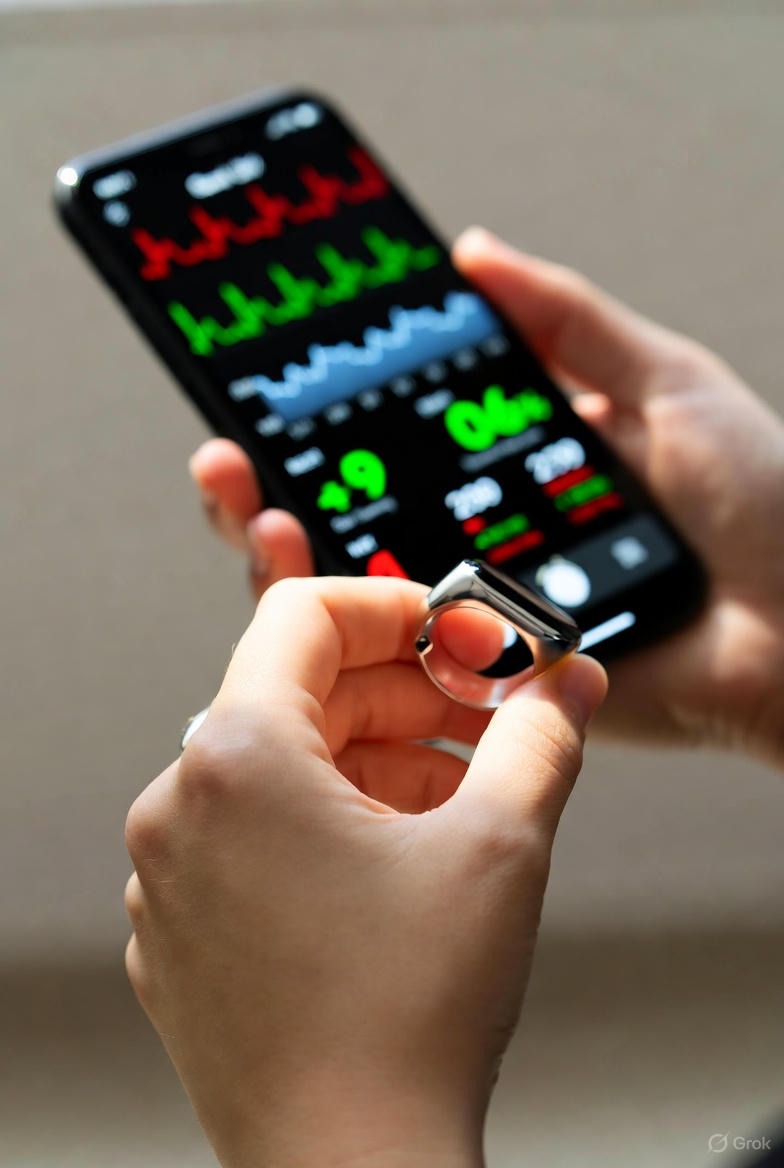
Even with the best intentions, psychological barriers can arise, turning a tool for empowerment into a source of new stress. Recognizing and navigating these barriers is crucial for maintaining a healthy, long-term relationship with recovery tracking.
1. Data Anxiety and Score Obsession:
2. Comparison and "Data FOMO":
3. Guilt-Driven Compliance:
4. Analysis Paralysis:
5. The "I Feel Fine" vs. "The Data Says Otherwise" Conflict:
For support in navigating these common hurdles, our comprehensive FAQ page addresses many user questions and concerns, providing clarity and reassurance for the journey.
While not a replacement for professional therapy or medication, daily recovery tracking can serve as a powerful adjunctive tool for managing common mental health conditions. It provides objective biomarkers that can demystify subjective experiences, create structure, and foster a sense of control.
For Anxiety Disorders:
Anxiety is physiologically rooted in a dominant sympathetic (fight-or-flight) nervous system. Tracking provides tangible evidence of this state.
For Depression:
Depression often involves disrupted circadian rhythms, low energy, and a loss of agency. Tracking can introduce gentle structure and evidence of cause-and-effect.
For ADHD:
The ADHD brain thrives on immediate feedback and struggles with interoception (noticing hunger, thirst, fatigue). Recovery tracking is uniquely suited to address these challenges.
Crucial Caveat: It is imperative that individuals with clinical mental health conditions use tracking under the guidance of a therapist or psychiatrist. Data should never be used to self-diagnose or replace treatment. The goal is empowerment and insight, not obsession. A therapist can help interpret the data within the context of the individual’s overall treatment plan.
For a deeper exploration of how this technology supports a holistic view of health that includes mental well-being, our article on how wellness rings can support different health goals touches on this integrative approach.
The psychological benefits of recovery tracking are amplified when shared within a supportive community. Moving from individual practice to a shared cultural value can transform personal habits into a powerful social norm that benefits everyone.
From "I" to "We": Shared Language in Relationships
As discussed earlier, data provides a neutral language for couples, families, and roommates. A "recovery-conscious" family might:
Workplace Wellness Reimagined
Forward-thinking organizations are beginning to understand that a burned-out employee is not a high-performing one. While individual employee data should always remain private, the principles of recovery can shape company culture.
Online Communities and Group Challenges
Online forums and groups centered around recovery tracking (not competition) can provide validation and shared learning. These spaces work best when they emphasize:
The psychological safety of a recovery-conscious community cannot be overstated. It counters the dominant cultural narrative of constant hustle and provides a refuge where prioritizing rest is not just accepted, but celebrated as intelligent and necessary. It tells the individual, "You are not broken for needing to recover; you are human, and we are all in this together."
To learn about the community and values behind one such tool, you can read our story and mission, which emphasizes a holistic, human-centric approach to wellness technology.
Daily recovery tracking with a wearable is a gateway, but the ultimate goal is to cultivate a recovery-centric mindset that permeates every aspect of life, even when the device is off your finger. This is the horizon of psychological integration—where the lessons learned from data become embodied principles for living.
Architecting a Recovery-Based Lifestyle
This involves designing your life to minimize unnecessary stress drains and maximize opportunities for restoration.
Recovery as a Foundational Value
In this future state, recovery is not something you do; it is a lens through which you see.
The Transcendence of Tracking
Paradoxically, the deepest sign of success with recovery tracking is the ability to sometimes not track. With the mindset fully internalized, you can take a weekend off from the device, go on vacation, or simply live by feel, confident that your ingrained habits and heightened body literacy will guide you. The technology served as the perfect teacher, and now you have graduated. You return to it not out of dependency, but for periodic check-ins, like a master revisiting a foundational text.
This future is not about a world obsessed with biometrics, but about a world that has rediscovered a fundamental truth: that rhythm, rest, and reflection are not impediments to a great life, but its very source. Daily recovery tracking is the modern tool that is helping us remember that ancient wisdom, one data point, one mindful breath, one night of good sleep at a time.
For a visionary look at how this personal revolution connects to larger technological trends, explore our insights on what's possible with health tracking technology in 2025 and beyond.
Your Trusted Sleep Advocate (Sleep Foundation — https://www.sleepfoundation.org/)
Discover a digital archive of scholarly articles (NIH — https://www.ncbi.nlm.nih.gov/
39 million citations for biomedical literature (PubMed — https://pubmed.ncbi.nlm.nih.gov/)
experts at Harvard Health Publishing covering a variety of health topics — https://www.health.harvard.edu/blog/)
Every life deserves world class care (Cleveland Clinic -
https://my.clevelandclinic.org/health)
Wearable technology and the future of predictive health monitoring. (MIT Technology Review — https://www.technologyreview.com/)
Dedicated to the well-being of all people and guided by science (World Health Organization — https://www.who.int/news-room/)
Psychological science and knowledge to benefit society and improve lives. (APA — https://www.apa.org/monitor/)
Cutting-edge insights on human longevity and peak performance
(Lifespan Research — https://www.lifespan.io/)
Global authority on exercise physiology, sports performance, and human recovery
(American College of Sports Medicine — https://www.acsm.org/)
Neuroscience-driven guidance for better focus, sleep, and mental clarity
(Stanford Human Performance Lab — https://humanperformance.stanford.edu/)
Evidence-based psychology and mind–body wellness resources
(Mayo Clinic — https://www.mayoclinic.org/healthy-lifestyle/)
Data-backed research on emotional wellbeing, stress biology, and resilience
(American Institute of Stress — https://www.stress.org/)


