


The Psychology of Active Living: Using Your Smart Ring for Motivation
Explores the psychology of motivation and how the ring can support it for active living.
Explores the psychology of motivation and how the ring can support it for active living.
%402x.svg)
We all know the feeling. The alarm buzzes for an early morning workout, but the bed is so warm. The sneakers sit by the door, yet the couch seems more inviting. The intention to be active is a flickering flame, constantly threatened by the winds of fatigue, busy schedules, and the ever-present allure of instant comfort. For decades, the pursuit of a healthier, more active life has been framed as a battle of willpower—a sheer force of character against our baser instincts. What if we’ve been thinking about it all wrong? What if the key to sustained motivation isn’t about gritting your teeth harder, but about listening more intelligently?
Welcome to the new frontier of active living, where psychology meets precision technology. This isn’t just about counting steps anymore; it’s about understanding the why behind your energy, the how of your habits, and the when of your body’s readiness. At the heart of this revolution is an unassuming piece of technology: the smart ring. Sleek, continuous, and loaded with sensors, it represents a fundamental shift from external tracking to intimate biofeedback.
This article delves deep into the psychology of active living and explores how a device like the Oxyzen smart ring can be far more than a fitness tracker—it can be a behavioral scientist, a personal coach, and a mirror to your physiological truth, all worn on your finger. We’ll move beyond simple metrics to uncover how real-time data on your sleep, heart rate variability (HRV), stress, and recovery can rewire your approach to motivation, turning fleeting inspiration into sustainable action. The journey to a more active you doesn't start with a louder alarm; it starts with deeper understanding. Discover how the seamless integration of biometric intelligence from a device like you can find at Oxyzen.shop can unlock a more motivated, energized, and psychologically resilient you.
For generations, the narrative of fitness and active living has been heroically simplistic: push harder, want it more, and never quit. This "willpower doctrine" paints motivation as a finite internal resource—a muscle to be flexed, often to the point of exhaustion. We glorify the 4 AM risers and the "no days off" mentality, framing lapses in activity as moral failures of character. But modern psychology and neuroscience reveal a far more complex, and ultimately more empowering, truth.
Willpower, or self-regulation, is not a timeless trait but a fluctuating state. It is profoundly influenced by a host of biological and environmental factors: blood glucose levels, sleep quality, chronic stress, emotional state, and even decision fatigue from a long day of choices. Roy Baumeister’s seminal research on "ego depletion" suggests that willpower is like a battery that drains with use. Trying to force a workout after a day of mentally draining tasks, on poor sleep, is like trying to start a car with a dead battery—the intention is there, but the physiological resources are not.
This is where the traditional fitness tracker falls short. It operates on the willpower model: it sets a goal (10,000 steps), shames you for missing it (a red "X" on your calendar), and offers a crude, one-size-fits-all nudge. It ignores the foundational context of why you missed your goal. Were you physically depleted? Was your body fighting an illness? Were you in a state of mental overwhelm that made exercise seem impossible? Without this context, the missed goal becomes a demotivating data point, another piece of evidence in the story of "I lack discipline."
A smart ring, by contrast, shifts the paradigm from blame to understanding. By continuously monitoring biomarkers like Heart Rate Variability (HRV)—a key indicator of your autonomic nervous system balance and recovery status—it provides a real-time readout of your "willpower battery." A low HRV score in the morning isn't a judgment; it's crucial information. It tells you your body is under stress, perhaps from poor sleep (which you can explore in our Sleep Tracking 101 guide), an intense previous workout, or emotional strain. Pushing for a high-intensity workout in this state isn't heroic; it's counterproductive, potentially leading to injury, burnout, and a deeper aversion to activity.
The psychological power here is immense. Instead of battling yourself, you begin to collaborate with your body. The data becomes a neutral third party, a source of objective feedback that depersonalizes the struggle. "I'm lazy" transforms into "My recovery score is 45% today; my body needs mindful movement or rest." This reframes activity from a binary pass/fail test into a spectrum of intelligent choices. It replaces the brittle, guilt-based motivation of the willpower model with a resilient, science-based motivation built on self-awareness and strategic action. It’s the difference between yelling at a faulty engine and using a diagnostic computer to understand what it truly needs.

If breaking free from the willpower myth is the first step, then cultivating a rich, internal awareness is the foundation of what comes next. For most of our lives, health and activity goals have been dictated from the outside: magazine cover bodies, arbitrary step counts, and generic workout plans. We chase these external benchmarks, often disconnected from our unique physiological reality. The result is a cycle of pushing, plateauing, and frustration.
Biofeedback—the process of gaining greater awareness of physiological functions using instruments that provide information on the activity of those systems—is the antidote to this external chasing. Historically, this required clinical machines and therapists. Today, it’s accessible 24/7 on your finger. A sophisticated smart ring like Oxyzen acts as a personal biofeedback device, translating the silent language of your nervous system into actionable insights.
Consider the simple act of breathing. When stressed, our breath becomes shallow and rapid, a signal from the sympathetic ("fight-or-flight") nervous system. The ring can detect the physiological cascade this triggers: a rising resting heart rate, a dipping HRV, and increased skin temperature variability. By consulting your Oxyzen data in a moment of overwhelm, you’re not just seeing numbers; you’re getting a mirror to your internal state. This awareness alone is powerful—a concept known as "interoceptive awareness," or the sense of the internal state of the body. Strengthening this awareness is linked to better emotional regulation and decision-making.
But the magic happens when you use this awareness to intervene. Seeing your stress score spike, you might decide to take five minutes for a guided breathing exercise offered through the companion app. As you breathe deeply, you can literally watch in real-time as your heart rate steadies and your HRV begins to climb. This creates a powerful positive feedback loop: Action (conscious breathing) → Immediate Data (improving metrics) → Reward (feeling of control and calm). This loop reinforces the behavior, making you more likely to use it again. It turns abstract "stress management" into a tangible, rewarding skill.
This principle scales to all aspects of active living:
By shifting focus from external validation ("I burned 500 calories") to internal harmony ("My body has moved from a state of stress to recovery"), you build a sustainable, intrinsically rewarding relationship with activity. You become the scientist and the subject, endlessly curious about what makes your unique system thrive. For a deeper dive into how this technology captures your body's signals, explore our article on how sleep trackers actually work.
Understanding your body is one thing; staying consistently motivated to care for it is another. Here, the smart ring transcends being a mere observer and becomes an architect of positive reinforcement, leveraging the very neuroscience of motivation itself. At the core of this process is dopamine, a neurotransmitter often mislabeled as the "pleasure chemical." It is more accurately the "seeking and anticipation" chemical. It’s released not when we achieve a goal, but when we take a step toward a reward, fueling our drive to continue.
Traditional goal-setting (lose 20 pounds, run a marathon) offers a distant, monolithic dopamine hit—if we ever reach it. The journey is often a dopamine desert, filled with grueling effort and minimal feedback. Smart ring data, however, creates a rich landscape of micro-goals and immediate feedback, turning the long road into a rewarding trail of breadcrumbs.
This is the concept of "gamification" rooted in behavioral psychology. By providing constant, specific feedback, the ring creates a powerful reinforcement schedule. Let’s break down how it fuels the motivation engine:
This cycle doesn’t just apply to sleep. It works for closing your Activity Ring, achieving a new resting heart rate low, hitting a stress management goal, or seeing a positive trend in your weekly HRV. Each small win is a brick in the foundation of your identity as an "active, healthy person." You’re no longer just performing activities; you are collecting evidence of your new identity with every data point.
Furthermore, this system helps navigate the inevitable setbacks. A poor recovery score isn't a failure; it's a puzzle. The app might ask, "Your recovery is lower today. Did you have alcohol, a late meal, or high stress yesterday?" This turns a demotivating event into a curious, problem-solving one—a mindset that is far more resilient and conducive to long-term change. To see this principle in action through real user experiences, browse the inspiring journeys shared in our customer testimonials.
You cannot out-train, out-supplement, or out-willpower bad sleep. This is the non-negotiable law of human performance and psychology. Sleep is the silent, nightly reboot for your brain and body—the master regulator of hormones, emotion, recovery, and cognitive function. A desire for an active life is born in the conscious, waking mind, but its fate is largely decided in the depths of your sleep cycles.
This is where the smart ring proves its immense value over wrist-based trackers. Worn on the finger, it can provide more accurate heart rate and movement data throughout the night due to the superior vascular access at the finger. This allows for a detailed analysis not just of sleep duration, but of sleep architecture—the cyclical journey through light, deep, and REM sleep stages. Each stage plays a unique role in preparing you for an active day:
A smart ring quantifies this foundation. Your morning "Readiness" or "Recovery" score is fundamentally a sleep quality report card. It synthesizes duration, consistency, timing, and stages into a single, understandable metric. The psychological impact is profound:
By honoring sleep as the bedrock of motivation, you stop trying to build an active life on quicksand. You give your body the repair time it needs and your brain the emotional reset it requires. The morning decision between snooze and sneakers becomes easier when you wake up with a high recovery score—your body is literally asking to move. For athletes or serious fitness enthusiasts, this optimization is non-negotiable; learn more about deep sleep optimization for athletic recovery.
In the psychology of active living, stress and recovery are not opposites; they are two sides of the same coin. Stress, in the right dose, is the stimulus for growth—the weight that strengthens the muscle, the challenge that sharpens the mind. Recovery is the essential process that allows adaptation to that stress. The problem in modern life is that we are flooded with non-physical, chronic stress (work, finances, digital overload) that hijacks the same physiological systems as a hard workout, leaving us in a perpetual state of "fight-or-flight" with no meaningful recovery.
This constant, low-grade alarm state depletes the very resources needed for physical activity. It’s like trying to drive a car with one foot perpetually on the gas and the other on the brake. You’ll burn out the engine quickly. A smart ring acts as your dashboard, giving you clear readouts of your body’s "traffic lights": when to go (green/ready), when to proceed with caution (yellow/stressed), and when to stop (red/exhausted).
The primary metric for this is Heart Rate Variability (HRV). Unlike resting heart rate, which is an average, HRV measures the subtle, millisecond variations in time between each heartbeat. A higher, more variable HRV generally indicates a resilient, responsive autonomic nervous system that can easily switch from stress (sympathetic) to recovery (parasympathetic) mode. A low, less variable HRV suggests a nervous system stuck in stress mode, unable to downshift into repair and restoration.
Here’s how this data transforms your relationship with activity:
This system cultivates psychological flexibility. Instead of being a slave to a rigid workout schedule, you become an adaptive athlete in the sport of your own life. You learn that skipping a workout because your data says "recover" is a higher form of discipline than blindly following a plan. It replaces the anxiety of "missing a day" with the confidence of "optimizing my adaptation." This reduces exercise-related anxiety and burnout, making your active lifestyle more joyful and sustainable. For those curious about what their ideal recovery metrics look like, our guide on deep sleep tracking and what your numbers should look like offers a great starting point.
In the age of social media, our benchmarks for success are often dangerously external. We compare our daily steps to our friends’ leaderboards, our physiques to filtered influencers, and our running pace to strangers in online forums. This comparison trap is a potent source of demotivation. Theodore Roosevelt’s adage, "Comparison is the thief of joy," is neurologically accurate: social comparison activates brain regions associated with pain and stress.
The smart ring offers a powerful escape from this trap by turning your focus inward, to the most meaningful competitor you will ever have: your past self. Your biometric data creates a completely personalized, objective timeline of your progress. This shifts the paradigm from "Am I good enough?" (a judgment) to "Am I improving?" (a curious inquiry).
This creates a powerful, positive form of competition that is entirely within your control:
These are milestones of genuine health that foster intrinsic motivation. The reward is the data point itself, a confirmation of your body's positive adaptation. This builds a growth mindset, where challenges and plateaus are seen not as failures but as information for the next experiment.
Furthermore, by focusing on your personal benchmark, you begin to understand your unique rhythms. You might discover you perform best in the afternoon, or that you need two full recovery days after leg day. This customization makes your active life feel like a perfect fit, not a one-size-fits-all uniform. It’s the ultimate expression of self-knowledge, empowering you to write your own rulebook for health, based on the irrefutable data from your own body. To understand the broader mission behind creating technology that enables this self-discovery, you can learn more about our story and values.

Consistency is the bedrock upon which all lasting change is built. It’s more powerful than intensity. Yet, maintaining consistency alone is one of the hardest human challenges. We make promises to ourselves that are too easy to break. This is where the concept of an accountability partner is so effective: someone to check in with, to report progress to, who expects you to show up. A smart ring, with its constant, passive monitoring, becomes the ideal, non-judgmental accountability partner.
Unlike a human partner who might forget, project their own goals onto you, or let you off the hook with an excuse, the ring is relentlessly objective and ever-present. It creates a gentle, persistent form of accountability that works through several psychological mechanisms:
This non-judgmental aspect is critical. Shame and guilt are terrible motivators; they lead to avoidance. The ring doesn't shame. It reports. A low score isn't presented as "You failed!" but as "Here is your body's current state." This allows you to engage with the data from a place of curiosity rather than defensiveness, fostering a healthier, more productive relationship with your own progress.
Ultimately, this 24/7 accountability partner helps bridge the infamous "intention-action gap." It provides the gentle, constant nudge that turns "I should go for a walk" into actually lacing up your shoes, because the reminder is on your finger and the satisfaction of closing your activity ring is just 30 minutes away. For common questions on how to maximize this partnership with your device, our comprehensive FAQ page is an excellent resource.
Raw data—numbers, graphs, percentages—can feel cold and clinical. For it to truly inspire lasting change, it must be translated into something the human brain understands and cares about deeply: a story. We are narrative creatures. We make sense of our lives, our identities, and our progress through the stories we tell ourselves. A smart ring’s greatest psychological power may be its ability to help you author a new, evidence-based narrative about your health and vitality.
Without data, our health narrative is often vague and emotional: "I'm always tired." "I have no willpower." "I'm just not a morning person." These stories feel like immutable truths, and they dictate our behavior. The ring provides the hard evidence to rewrite these scripts.
Here’s how data becomes narrative:
This narrative-building is actively supported by the best companion apps. They don't just show numbers; they provide commentary. "Your recovery is at its highest level this month!" "You’ve shown great consistency with sleep this week." "Your body is showing signs of strain; consider a rest day." These are lines in your story, written by an objective observer.
By weaving your data into a personal narrative, you move from tracking your life to understanding it. An active lifestyle stops being a chore on a to-do list and becomes a central, evolving theme in the story of "you"—a story where you have the data to prove you’re growing stronger, more resilient, and more in tune with yourself every day. To read stories of others who have embarked on this journey of rewriting their narratives, visit our blog for more inspiring accounts and research.
While the most profound relationship is the one you build with your own data, humans are inherently social beings. Our motivations are deeply influenced by our tribes. The psychology of active living doesn't have to be a solitary pursuit. When used thoughtfully, the data from your smart ring can foster connection, friendly competition, and profound social support, moving you from "me" to "we" in your wellness journey.
It’s crucial to navigate this carefully. The pitfalls of social comparison are real, as discussed earlier. However, the same principles that make internal benchmarking effective can be applied socially to create a positive, uplifting environment. The key is shifting the focus from comparing outcomes to sharing experiences and supporting processes.
Here’s how smart ring data can create healthy social synergy:
The psychological benefit is a sense of belonging and shared purpose. Your active lifestyle is witnessed and supported. Celebrating a friend's improved "Readiness" trend or receiving encouragement after a low-recovery week reinforces positive behaviors and provides the emotional fuel that pure data cannot. It reminds you that the journey, with all its ups and downs, is a human one.
This social layer, built on a foundation of solid self-knowledge, completes the ecosystem of motivation. You have the internal drive from understanding yourself, the consistent nudges from your "accountability partner" on your finger, and the external support and camaraderie of a community that "gets it." This multi-layered approach makes your commitment to active living resilient to the ups and downs of daily life. To discover how the Oxyzen brand envisions this holistic approach to wellness technology, you can learn more about us and our mission.
Tuning Into Your Chronobiology: Aligning Activity With Your Body’s Natural Clock
You are not the same person physiologically at 6 AM as you are at 6 PM. Your body temperature, hormone levels, reaction time, and muscle strength ebb and flow in a predictable 24-hour rhythm known as your circadian rhythm. Yet, many of us force our activity into culturally prescribed time slots—the brutal pre-dawn gym session, the lunchtime run—often fighting against our biological tide. This misalignment isn’t just inefficient; it’s demotivating. It makes exercise feel unnecessarily hard, reinforcing the belief that you “aren’t a morning person” or that you “lack evening energy.”
A smart ring, through continuous temperature and heart rate monitoring, can become a powerful tool for chronobiology—the study of your body’s natural timekeeping. By tracking your daily patterns, it helps you discover your personal performance prime times and recovery windows, allowing you to schedule activity in harmony with your biology, not in conflict with it.
The Core Rhythm: Body Temperature as a Guide
One of the most reliable markers of your circadian rhythm is your core body temperature, which the ring estimates through precise skin temperature sensing. It follows a clear wave:
This temperature curve has direct implications for motivation and performance:
Your smart ring data helps you personalize this map. You might discover your temperature peaks earlier or later than average. You’ll see concretely how a late workout impacts your sleep onset and quality—perhaps it’s fine for you, or perhaps it causes significant disruption. This knowledge empowers you to experiment and find your “Goldilocks Zone” for different types of activity.
Furthermore, the ring illuminates the critical role of light exposure in anchoring your rhythm. Morning light viewing, as tracked by its correlation with a strong, early temperature rise, reinforces a stable cycle, leading to more consistent energy throughout the day. By syncing your activity with your unique chronobiology, you stop wasting mental energy fighting your natural rhythms. Exercise becomes less of a battle and more of a synergistic partnership with your body’s innate wisdom, a key strategy for anyone looking to master their own deep sleep formula for optimal recovery.
Every long-term fitness journey encounters the plateau—a frustrating period where progress seems to halt despite consistent effort. Psychologically, this is a critical danger zone. It’s where motivation withers, doubt creeps in, and many people abandon their routines, believing they’ve reached their limit. The plateau, however, is not a wall; it’s a crossroads. It’s your body signaling that the current stimulus is no longer sufficient for adaptation. This is where the superficial data of a basic tracker fails you, and the deep biometrics of a smart ring become your strategic advisor.
A plateau isn’t just about the number on the scale or your bench press max stalling. It manifests in your physiology, and a smart ring can detect its early whispers:
When you hit a performance plateau, your ring data provides the diagnostic toolkit to choose the correct path forward, moving you from frustrated guessing to strategic problem-solving.
Path 1: The "More Is Not Better" Path – Prioritize Recovery.
Often, the plateau is a sign of under-recovery, not under-training. Your data will show the tale: poor sleep scores, low HRV, high stress. The solution isn’t to add more miles or heavier weights; it’s to strategically reduce stress on the system. This means:
Path 2: The "Change the Stimulus" Path – Introduce Novelty.
If your recovery metrics are strong but performance is flat, your body has adapted. The neural and muscular challenge is gone. Your data gives you the confidence to change things up because you know you’re recovered enough to handle a new stress. This could mean:
Path 3: The "Nutritional & Hydration Audit" Path – Fuel the Machine.
Performance plateaus can be fueled by nutritional insufficiencies. While the ring doesn’t track food, its data reflects the impact of your intake. You can conduct self-experiments:
By responding to a plateau with curious investigation guided by data, you transform it from a demotivating endpoint into an engaging puzzle. Each adjustment becomes an experiment, with your biometrics providing the results. This cultivates a mindset of mastery orientation—where the focus is on learning and optimizing the process—which is far more sustainable and resilient than an ego orientation focused solely on outcomes. You become the scientist of your own progress, and the plateau becomes just another data point in your long-term story of growth.
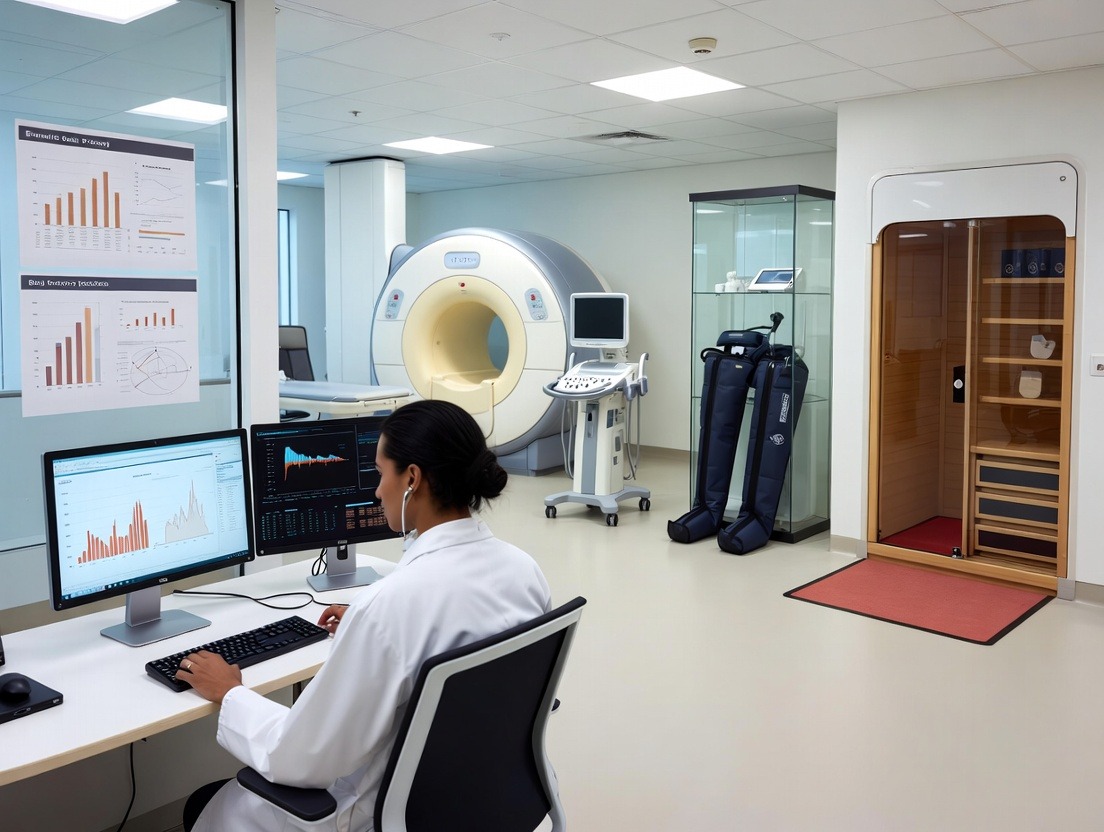
The connection between physical activity and mental health is well-established. Exercise reduces symptoms of anxiety and depression, boosts mood, and enhances cognitive function. But this relationship is often discussed as a one-way street: move your body, improve your mind. A smart ring reveals a much more dynamic, two-way street—a continuous feedback loop where physical biomarkers provide a real-time window into your mental state, and conscious mental interventions produce immediate, measurable physical changes. This integration builds profound mental resilience.
From Body to Mind: Using Physiology as an Early Warning System.
Your thoughts and emotions are not abstract; they have a physical signature. Anxiety might manifest as a sudden, unexplained spike in your resting heart rate and a dip in your HRV. Lingering frustration from a work conflict might keep your stress score elevated for hours, impacting your recovery readiness. The ring makes these invisible connections visible.
This allows for preemptive mental care. Instead of waiting until you feel overwhelmed, you can act on the early physiological signals:
This process trains interoceptive awareness—your sense of the internal state of your body. Over time, you start to notice the physical sensations of stress or anxiety earlier, even without the ring, and you have a practiced tool to address it. This breaks the cycle of rumination and physiological arousal that characterizes anxiety.
From Mind to Body: Validating the Impact of Mental Practices.
Conversely, the ring provides objective validation for mental and emotional work. This is powerful for motivation, as the benefits of practices like meditation or gratitude journaling are often subtle and long-term.
This mind-body feedback loop fosters a holistic view of health. You stop seeing “fitness” and “mental wellness” as separate categories. A hard workout is recognized as a potent stressor that requires mental calm for optimal recovery. A stressful day is seen as a physiological event that may necessitate a gentler form of movement. Your active living routine becomes an intelligent dance between exertion and restoration, effort and ease, all guided by the continuous conversation between your mind and the data on your finger. Understanding the brain-boosting connection between deep sleep and memory further underscores how this loop is essential for cognitive resilience as well.
The Long Game: Using Trends to Build a Lifetime of Activity
The most significant psychological challenge in wellness is not starting, but continuing. The initial burst of motivation that launches a new gym membership or running program is inherently fleeting. To build a lifetime of active living, you must transition from being motivated by a short-term goal (a wedding, a vacation) to being guided by a long-term identity and a system that supports it. This is where the historical trend data from your smart ring becomes an invaluable asset for perspective, patience, and identity reinforcement.
Short-term data is moody—it reacts to a bad night, a stressful day, a single indulgent meal. It can make you feel like you’re constantly taking one step forward and two steps back. Long-term trend data, however, tells the true story. It smooths out the noise and reveals the signal of your life.
The Power of the Quarterly Review
Looking at your data on a 90-day or 6-month scale provides transformative insights that daily check-ins cannot:
This long-view cultivates two essential psychological traits for sustainable activity:
The smart ring becomes the archive of your wellness journey. It’s the journal that doesn’t lie, the coach that remembers everything. This allows you to make peace with the inevitable off-days and weeks. They become tiny blips on a much larger, upward trajectory. You are no longer on a “fitness journey” with a destination; you are living an “active life,” and the data is your companion, helping you navigate its seasons and chapters with intelligence and grace. For a deeper look at how one foundational aspect—sleep—evolves over a lifetime, our article on how age affects deep sleep and how to compensate offers valuable perspective for long-term planning.
For decades, nutritional advice has been a barrage of conflicting, generalized rules. The psychology of eating for activity is often reduced to sheer discipline—resisting cravings, measuring portions, and following rigid plans. This approach ignores a fundamental truth: food is information for your unique biology, and your body provides constant feedback on how well it's processing that information. A smart ring cannot see what you eat, but it can measure with stunning clarity how what you eat affects you. This transforms nutrition from a game of willpower and guesswork into a personalized science of biofeedback, where your body's signals become your most trusted guide.
Beyond Calories: The Metabolic and Inflammatory Response
Two glasses of wine, a large salad, and a plate of pasta might have identical calorie counts for three different people, but their physiological impact will vary wildly. Your smart ring tracks the downstream effects of your meals through several key overnight and next-day metrics:
By conducting simple, mindful experiments, you can map your personal nutritional landscape:
The Experiment:
This process removes emotion and dogma from the equation. You’re not following a “good” or “bad” food list; you’re discovering what fuels your performance and recovery. You might learn that a carbohydrate-rich meal the night before a big workout actually supports your energy, or that a certain food you thought was harmless consistently wrecks your sleep.
Psychological Liberation and Empowered Choices
This biofeedback approach has profound psychological benefits:
Nutrition becomes less about restriction and more about strategic fueling for the active life you want to live. You start to see food as the precursor to your biometric scores, and those scores as the predictors of your next day’s motivation and energy. To explore specific foods that can positively influence your recovery, our guide on 10 foods that increase deep sleep naturally offers a great starting point for your own experiments.
The Flow State Facilitator: Using Data to Find Your Zone
“Flow state”—that magical zone of complete immersion in an activity where time distorts, self-consciousness vanishes, and performance feels effortless—is the holy grail for athletes, artists, and anyone seeking peak experience. It’s also a powerful psychological reward that can make activity intrinsically addictive. But flow is notoriously elusive; you can’t force it. However, you can create the optimal conditions for it to arise. Your smart ring data provides the blueprint for these conditions by ensuring your physiology is primed for focus and absorption, not fighting fatigue or distraction.
Flow, as defined by psychologist Mihaly Csikszentmihalyi, occurs when the challenge of a task slightly exceeds your perceived skill level, in a state of deep focus. Your physiology must support this delicate balance. If you’re under-recovered (low HRV, high stress), a moderate challenge will feel overwhelming, triggering anxiety, not flow. If you’re under-challenged, you’ll be bored.
The Pre-Flow Checklist: What Your Data Reveals
Before you even begin your activity, your ring can indicate your flow potential:
Tracking the Flow State Itself
While fully in flow, you’re not thinking about your ring. But post-activity data can provide fascinating confirmation and insight:
Using Data to Engineer More Flow
By reviewing post-flow session data, you can reverse-engineer the ideal conditions:
Over time, you build a personalized “Flow Profile.” You learn that for you, a 90-minute mountain bike ride after 8+ hours of sleep and with a morning HRV above your baseline is a high-probability flow trigger. This knowledge allows you to strategically schedule and prepare for deep, rewarding engagement with your chosen activities, making them something you crave not just for fitness, but for the profound psychological fulfillment they provide.
In this way, the smart ring moves beyond tracking exertion and becomes a tool for tracking experience. It helps you curate not just a healthier body, but a more engaged and fulfilling active life, where motivation is fueled by the pursuit of these peak states. Understanding the science of what happens to your body during deep sleep further highlights how foundational recovery is for achieving these optimal states of consciousness.

The most powerful form of motivation isn’t something you have to summon; it’s baked into your environment. Behavioral psychologists like B.J. Fogg and James Clear emphasize that designing your surroundings to make good choices easy and bad choices hard is far more effective than relying on willpower. Your smart ring provides the critical feedback to know which environmental tweaks actually work for you. It turns your home, schedule, and routines into a laboratory for behavioral design, where you test changes and measure their impact not by feeling, but by data.
The Data-Informed Environment: Three Key Areas
1. The Sleep Sanctuary:
You know sleep is important, but generic tips (cool, dark, quiet) only go so far. Your ring data lets you precision-tune your bedroom for your optimal recovery.
2. The Active Defaults:
Make movement the path of least resistance.
3. The Stress Buffer Zones:
Your environment isn’t just physical; it’s digital and temporal.
By using your biometric data to validate these environmental designs, you create a world that actively pulls you toward your goals. Success feels less like a struggle and more like the natural outcome of a well-designed system. You are not fighting against a lazy version of yourself; you are collaborating with a smarter version of your environment. For those looking to deepen their understanding of the technology enabling this self-awareness, a visit to Oxyzen.ai can provide comprehensive insights into the principles behind this approach.
Motivation falters in the face of specific, recurring psychological obstacles. “I’m too tired,” “I don’t have time,” “I’m not seeing results,” “I hate starting.” These aren’t character flaws; they are predictable cognitive patterns. A smart ring provides a unique, objective counter-narrative to these subjective feelings, offering a way to argue with your own limiting beliefs using evidence.
Barrier 1: “I’m Just Too Tired.”
Barrier 2: “I Don’t Have Time.”
Barrier 3: “I’m Not Seeing Any Results.”
Barrier 4: “I Dread Getting Started.” (The Activation Energy Problem)
By using your ring’s biometrics as an objective mediator in these internal debates, you depersonalize the struggle. It’s not “you vs. you”; it’s “your temporary feeling vs. the accumulated evidence of your physiology.” This builds psychological resilience and a more compassionate, strategic inner dialogue.
Your Trusted Sleep Advocate (Sleep Foundation — https://www.sleepfoundation.org/)
Discover a digital archive of scholarly articles (NIH — https://www.ncbi.nlm.nih.gov/
39 million citations for biomedical literature (PubMed — https://pubmed.ncbi.nlm.nih.gov/)
experts at Harvard Health Publishing covering a variety of health topics — https://www.health.harvard.edu/blog/)
Every life deserves world class care (Cleveland Clinic -
https://my.clevelandclinic.org/health)
Wearable technology and the future of predictive health monitoring. (MIT Technology Review — https://www.technologyreview.com/)
Dedicated to the well-being of all people and guided by science (World Health Organization — https://www.who.int/news-room/)
Psychological science and knowledge to benefit society and improve lives. (APA — https://www.apa.org/monitor/)
Cutting-edge insights on human longevity and peak performance
(Lifespan Research — https://www.lifespan.io/)
Global authority on exercise physiology, sports performance, and human recovery
(American College of Sports Medicine — https://www.acsm.org/)
Neuroscience-driven guidance for better focus, sleep, and mental clarity
(Stanford Human Performance Lab — https://humanperformance.stanford.edu/)
Evidence-based psychology and mind–body wellness resources
(Mayo Clinic — https://www.mayoclinic.org/healthy-lifestyle/)
Data-backed research on emotional wellbeing, stress biology, and resilience
(American Institute of Stress — https://www.stress.org/)


