


How Wearable Wellness 101 Motivates Long-Term Behavior Change
Explains how the feedback from a wearable can motivate lasting positive changes in behavior.
Explains how the feedback from a wearable can motivate lasting positive changes in behavior.
%402x.svg)
We stand at the precipice of a health revolution, but it’s not unfolding in sterile hospitals or gleaming labs. It’s happening on our wrists, our fingers, and in our daily routines. For years, the promise of "better health" has been a distant mantra, a goal perpetually set for a nebulous tomorrow. We know we should sleep more, move more, and stress less, but the gap between knowing and doing often feels unbridgeable. Why is sustained change so profoundly difficult?
Enter the era of wearable wellness. No longer just step counters or rudimentary heart rate monitors, today’s devices—led by the sophisticated, unobtrusive smart ring—offer a continuous, intimate dialogue with our own biology. They represent a fundamental shift from episodic, reactive healthcare to proactive, personalized well-being. This isn't about data for data's sake; it's about feedback for transformation's sake. The core promise of Wearable Wellness 101 is deceptively simple yet revolutionary: to leverage precise, personal data to close the intention-action gap for good, creating a self-reinforcing cycle of awareness, insight, and sustainable habit formation.
This article dives deep into the psychology, neuroscience, and practical mechanics of how modern wearable technology, particularly smart rings, functions as the ultimate catalyst for long-term behavior change. We will move beyond the gadgetry to explore the core principles that turn a piece of technology into a lifelong wellness companion. From the foundational science of biofeedback to the art of crafting a personalized action plan, we will unpack exactly how these devices move us from passive observers of our health to active, empowered architects of our own vitality.
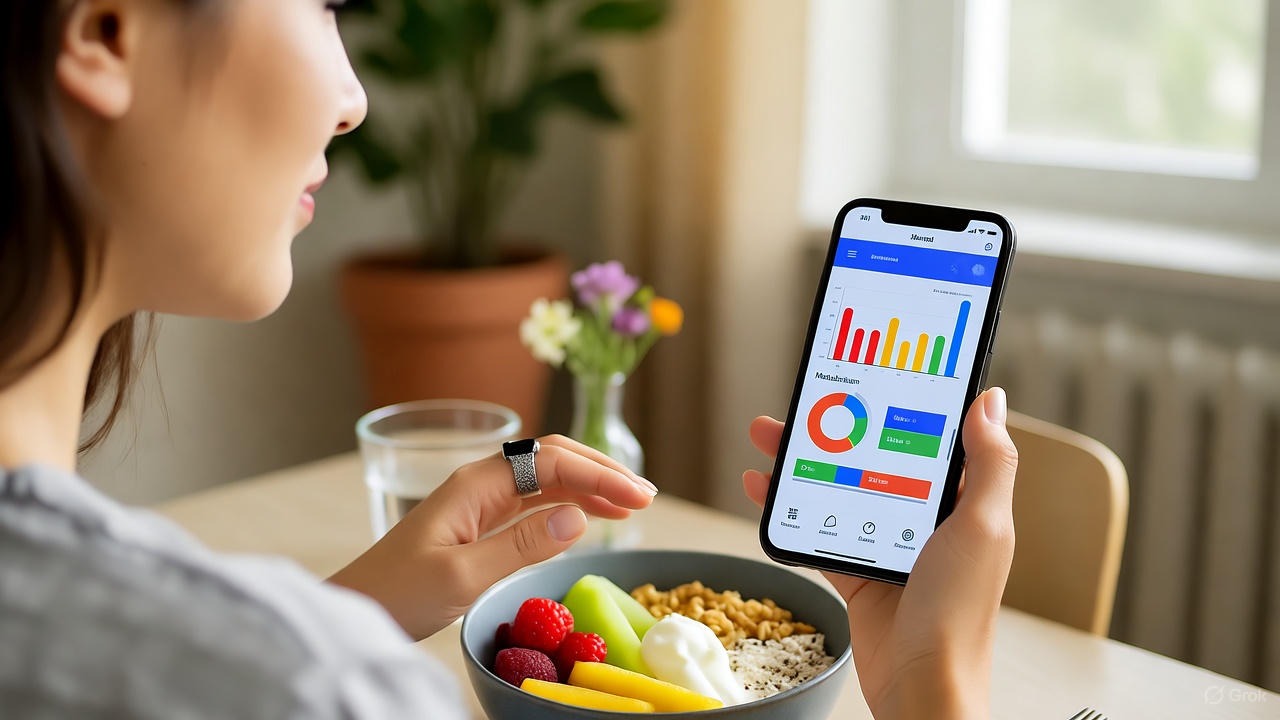
We’ve all been there. The New Year’s resolution to exercise daily, meticulously planned and filled with genuine enthusiasm. The decision to prioritize eight hours of sleep, made with firm conviction after a sluggish, coffee-fueled morning. The vow to manage stress through meditation, sworn during a moment of overwhelm. And yet, within weeks, days, or sometimes hours, the resolve crumbles. The gym bag gathers dust, the late-night Netflix binge wins again, and the meditation app sends a forlorn notification that goes ignored. This chasm between our healthy intentions and our actual behaviors is known as the intention-action gap, and it is the primary adversary of long-term wellness.
The failure isn’t a personal one of weak willpower. It’s a systemic failure of the traditional "set it and forget it" model of health advice. General guidelines—“get more sleep,” “reduce stress”—are meaningless without context. More sleep than what? How stressed am I actually, and what specifically triggers it? Without a clear, personalized baseline and real-time feedback, our brains lack the necessary information to course-correct. Motivation is a fleeting emotion, but sustainable change requires systems.
Wearable technology, especially devices that operate 24/7 like a smart ring, attacks the intention-action gap on three fronts:
The journey across the intention-action gap requires a bridge. That bridge is built from the planks of personalized data, consistent feedback, and contextual insights—materials that modern wearables are uniquely equipped to provide.
Data points on a screen are inert. Their power lies in their translation into personal insight, which triggers real neurological change. This process is rooted in the science of biofeedback—the technique of using electronic monitoring to convey information about physiological processes so they can be consciously influenced.
A smart ring is a continuous, passive biofeedback device. It measures autonomic nervous system (ANS) outputs like heart rate variability (HRV), skin temperature, and pulse rate. The ANS controls the involuntary functions of "fight-or-flight" (sympathetic) and "rest-and-digest" (parasympathetic) states. For most of human history, we’ve been blind to these subtle, internal shifts. Now, wearables make them visible.
Here’s how the neuroscience works: When you see a graphical representation of your stress (via elevated heart rate and low HRV) spike during your commute, that visual information travels to your brain's prefrontal cortex—the center for executive function and self-regulation. This awareness interrupts the automatic, unconscious stress response. You are now mindful of your state. With this awareness, you can consciously engage a regulatory technique, like diaphragmatic breathing.
As you breathe, you can watch the graph trend downward toward your baseline. This visual confirmation creates a powerful reward signal in the brain's limbic system, releasing dopamine. You learn, on a neurological level: "Action X (breathing) leads to Result Y (calm)." This operant conditioning strengthens the neural pathways for that positive behavior, making it easier and more automatic to access next time.
The magic isn't in the sensor; it's in this closed-loop system:
Measurement → Awareness → Conscious Intervention → Visible Result → Reinforcement.
This cycle transforms abstract health concepts into tangible, controllable experiences. You’re not just "trying to relax"; you’re actively lowering your physiological stress score and watching it happen. This tangible cause-and-effect is profoundly motivating and is the bedrock upon which lasting behavior change is built. For a deeper dive into how specific evening rituals can be optimized using this feedback, our science-backed nighttime routine guide explores the precise rituals that influence these biometrics.
A fundamental limitation of many wellness trackers is their disruptiveness. A wrist-based device can be uncomfortable to sleep in, may need frequent charging, and can be socially or professionally conspicuous. This leads to inconsistent wear—data gaps that cripple the insight engine. If the device is off your body, it can’t learn your patterns.
This is the singular, transformative advantage of the smart ring form factor: 24/7, unconscious wearability. A well-designed ring is always on, always tracking, and becomes a seamless part of you. This passive, continuous monitoring is non-negotiable for accurate health baselines and genuine insight. You cannot manage what you do not measure consistently.
Why is this so critical?
This always-on capability transforms the device from a fitness tracker into a genuine health guardian. It’s watching the vital signs of your daily life, compiling a longitudinal health record that is uniquely yours, and waiting to illuminate patterns the moment you’re ready to look.

In the architecture of wellness, sleep is the load-bearing wall. It is not merely a state of rest, but a non-negotiable period of intense biological activity: memory consolidation, metabolic regulation, hormonal rebalancing, immune system strengthening, and cellular repair. When sleep suffers, every other wellness goal becomes exponentially harder to achieve. You cannot out-exercise, out-supplement, or out-diet poor sleep.
This is why advanced wearables, particularly those with medical-grade sensors like those found in leading smart rings, place such immense emphasis on sleep analysis. They move far beyond simple duration tracking ("you slept 7 hours") to qualitative, stage-by-stage analysis. They measure:
Seeing a detailed sleep score—and understanding the factors behind it—makes sleep a priority in a way that generic advice never could. It answers the critical question: "What does good sleep look like for me?"
When you start optimizing for sleep, a beautiful domino effect occurs. Improved sleep leads to better hormonal balance (lower cortisol, optimized ghrelin/leptin), which naturally regulates appetite and reduces cravings. It enhances mitochondrial function, increasing energy availability for daytime exercise. It improves prefrontal cortex function, boosting willpower and emotional resilience to handle stress. By making sleep the primary, data-informed goal, you create a rising tide that lifts all other wellness boats. To start building this cornerstone habit, explore our guide on building a nighttime routine that actually sticks, which pairs perfectly with your sleep data.
Modern life is a constant negotiation between stress (the drain) and recovery (the recharge). Chronic, unmanaged stress—manifesting as elevated cortisol, high resting heart rate, and low HRV—is a silent epidemic that undermines health at a cellular level. But not all stress is bad; acute stress from a challenging workout is productive if followed by adequate recovery.
The pivotal challenge is that we are notoriously bad at objectively gauging our own stress and recovery states. We might feel "fine" while our nervous system is screaming, or feel tired when our body is actually primed for activity.
This is where 24/7 wearables become our personal interpreters. They translate the silent language of the autonomic nervous system into a clear dashboard:
Learning this language is transformative. Instead of following a rigid, pre-set workout schedule, you can adopt a responsive training model. A high recovery score suggests you’ll benefit from a high-intensity session. A low score is a clear signal to prioritize gentle movement, mobility, or complete rest—thereby preventing overtraining and injury.
Beyond exercise, this awareness creates mindfulness in daily life. You learn your personal stress triggers. Does your stress score consistently jump during long commutes, certain types of meetings, or after consuming specific foods? This awareness allows for pre-emptive action—listening to a calming podcast in traffic, preparing differently for a meeting, or adjusting your diet. You move from being a victim of stress to a manager of your nervous system. For those whose stress peaks in the evenings, a dedicated routine for anxious minds can provide targeted strategies to lower those biometrics before bed.
"Eat less, move more." "Get 8 hours of sleep." This one-size-fits-all health advice is not just ineffective; it can be demoralizing. It ignores individual genetics, lifestyle, chronotype, stress load, and underlying physiology. What works for a 25-year-old athlete will not work for a 50-year-old perimenopausal executive or a new parent.
Wearable wellness marks the end of the generic advice era and the dawn of hyper-personalization. The device is not telling you what you should do based on a population average; it’s revealing what is happening to you, and what has worked for you in the past.
This personalization manifests in several key ways:
This shift is empowering. It moves you from an externally-directed health follower to an internally-guided health scientist. You are no longer failing to meet an arbitrary standard; you are continuously learning and optimizing a system that has one subject: you. This sense of ownership and self-knowledge is a massively potent driver of long-term engagement and change.
Human brains are wired for play, achievement, and reward. Effective gamification taps into these innate drivers to make the process of behavior change more engaging and sustainable. However, not all gamification is created equal. Cheap gamification (pointless badges, leaderboards against strangers) leads to short-term engagement and eventual burnout. Meaningful gamification, rooted in personal progress and intrinsic reward, fosters long-term commitment.
Sophisticated wellness platforms leverage the latter. They gamify the process of understanding and improving your own biology. The "game" is mastering your well-being.
This thoughtful application of game mechanics transforms the daily grind of habit formation into a compelling journey of self-discovery and mastery. The reward is not a badge; it’s a deeper connection to, and improvement in, your own vitality.
Data without a translation manual is just noise. The ultimate goal of all this tracking is to inform a simple, sustainable, and personalized action plan. This is the bridge from insight to embodied habit.
A smart wellness system doesn’t just dump data on you; it helps you build this plan iteratively. The process looks like this:
This slow, data-informed, iterative approach is the antithesis of crash diets and extreme fitness challenges. It is the engineering of a resilient wellness lifestyle, one small, evidence-based brick at a time. The wearable provides the continuous feedback to keep the construction on track.
While health is deeply personal, we are social creatures motivated by connection, shared experience, and a sense of belonging. The journey of behavior change can feel isolating, especially when those around you aren't on the same path. This is where the community aspect of modern wellness platforms adds a profound layer of motivation.
This isn't about public leaderboards or shaming. It’s about curated, supportive connection:
This social layer transforms the pursuit from a solitary, data-driven task into a shared human experience. It provides the encouragement needed on days when intrinsic motivation is low and celebrates victories that others outside the journey might not understand. For families looking to embark on this journey together, creating a family nighttime wellness routine can align everyone’s habits and goals.

One of the most common pitfalls in any wellness journey is the tendency to overdo it—to turn health into another performance metric to be optimized into the ground. This "toxic wellness" mindset can lead to exercise addiction, orthorexia, and burnout. Ironically, the very devices meant to improve health can be weaponized in this pursuit if not used with the right mindset.
Herein lies a crucial paradigm shift that advanced wearables facilitate: they teach us to honor rest as diligently as we honor exertion. The data becomes a compassionate, objective voice that protects us from ourselves.
By listening to this biometric feedback, we learn a more sustainable, respectful relationship with our bodies. The goal shifts from "How hard can I push?" to "What does my body need today to thrive in the long run?" This prevents burnout and makes the entire wellness journey more humane and sustainable. This principle is especially critical for active individuals; athletes can learn how to maximize recovery with targeted nighttime protocols.
The final, and most significant, stage of motivation is the transition from pursuing acute, external goals to adopting a new, internal identity. This is where temporary change becomes permanent transformation.
Initially, you might start wearing a device to lose 10 pounds or train for a 5K. These are excellent catalyst goals. However, if motivation remains tied solely to that goal, what happens when you cross the finish line or hit the target weight? Often, backsliding occurs.
Wearable wellness, when engaged with deeply, facilitates a deeper shift. The constant feedback and self-experimentation slowly change how you see yourself. You are no longer a "dieter" or a "casual exerciser." You become:
The device is the mirror that reflects this new identity back to you. The data provides consistent evidence that "I am the kind of person who takes care of myself." This self-concept is the most powerful motivator of all. Your behaviors naturally align to confirm this identity. You don’t avoid late-night screens because a rule says so; you avoid them because that’s not what a person who values deep sleep does.
This is the culmination of Wearable Wellness 101: using technology not as a crutch, but as a catalyst to rediscover and rebuild your inherent connection to your own well-being, forging an identity where healthy living is simply who you are, not what you do.
The ancient Greek philosopher Socrates championed a method of teaching not through lecturing, but through asking probing questions that lead the student to discover the truth for themselves. In a profound sense, a sophisticated wellness wearable acts as a modern, biometric Socratic mentor. It does not command, "Thou shalt sleep eight hours." Instead, it presents you with a series of personalized, data-driven inquiries:
This shift from prescriptive authority to curious inquiry is psychologically transformative. When you are handed a command, your subconscious may rebel (reactance theory). But when you are led to discover a cause-and-effect relationship yourself, the insight becomes your own property. You own the conclusion. The wearable provides the evidence—the elevated graphs, the correlated tags, the trend lines—but you connect the dots.
This process builds what psychologists call internal locus of control—the belief that your actions directly influence your outcomes. A person with a strong internal locus of control believes, "My choices dictate my sleep quality." A person with an external locus believes, "I'm just a bad sleeper." Wearables are potent tools for fostering the former. By repeatedly showing you the tangible impact of your evening routine, your meal timing, or your workout intensity, they reinforce the empowering truth: You are in the driver's seat of your own physiology.
This Socratic dialogue culminates in the identity shift mentioned earlier. You stop seeing yourself as someone passively subject to poor sleep or high stress. You begin to see yourself as an active investigator and architect of your own state. The wearable is the lab notebook in this ongoing, lifelong experiment of living well. This curiosity-driven approach is vital for making habits stick; for more, see how to build a nighttime routine that actually sticks.
The first wave of wearables was about the "Quantified Self"—logging data for the sake of self-knowledge. We are now entering the era of the "Optimized Self," powered by predictive analytics and personalized nudges. This is where raw tracking evolves into proactive coaching.
Advanced algorithms in modern wellness platforms don't just look backward at what happened. They analyze your unique patterns to forecast what will happen and offer guidance to improve the outcome. This is a game-changer for pre-emptive behavior change.
Consider these potential predictive insights:
This predictive layer transforms the device from a historian to a strategist. It helps you make smarter decisions in the present to create a better future outcome, closing the feedback loop from days to hours or even minutes. It’s personalized, preventative healthcare at its most granular. To leverage these predictions, having an effective wind-down ritual is key; explore nighttime wellness rituals that take less than 30 minutes for efficient, high-impact practices.
The true power of a wearable is unlocked when it stops being an island of data and becomes the central nervous system for your wellness-oriented environment. Through APIs and smart home integrations, your biometric data can begin to subtly orchestrate the world around you to support your goals—a concept known as ambient intelligence.
Imagine these seamless integrations:
This environmental integration is the ultimate expression of reducing friction. The wearable doesn't just tell you what to do; it helps arrange the world to make the right action the easiest, most automatic one. It externalizes willpower, creating a "choice architecture" that is biased towards your well-being. This removes the constant mental negotiation and conserves your decision-making energy for the things that truly require it. For professionals juggling a demanding schedule, creating this supportive environment is crucial; realistic routines for busy professionals offer practical integration strategies.
No discussion of wearable-driven behavior change is complete without addressing its potential shadow: data obsession, or what some call "orthosomnia" (an unhealthy preoccupation with achieving perfect sleep data). The very precision that empowers can also ensnare. When the goal subtly shifts from "feeling better" to "optimizing a score," we risk replacing one form of anxiety with another.
This is not a flaw in the technology, but a challenge in the human relationship with it. Sustainable behavior change requires navigating this pitfall. The key is to adopt a mindful, utilitarian approach to your data:
By setting these boundaries, you harness the power of quantification without becoming its servant. The data remains a tool for self-understanding, not the purpose of existence itself.

As we journey with a wearable, our sources of motivation naturally evolve. Understanding this evolution is critical for transitioning from short-term adoption to long-term lifestyle integration.
Phase 1: Novelty & Extrinsic Motivation (Weeks 1-4)
This initial phase is driven by the excitement of the new gadget. Motivation is extrinsic: you want to explore features, get "good" scores, earn badges, and share新奇findings. This is a valid and useful launchpad, but it is not sustainable on its own.
Phase 2: Integrated Routine & Identified Motivation (Months 1-6)
The novelty wears off, and the device becomes part of your daily fabric. Motivation shifts to "identified regulation"—you recognize the personal value and importance of the behaviors. You check your sleep data not because it's fun, but because you identify as someone who needs good sleep to perform and feel well. The data provides the feedback to maintain this identity.
Phase 3: Mastery & Intrinsic Motivation (6 Months and Beyond)
In the final, sustainable phase, motivation becomes largely intrinsic. The wearable transitions to a background tool, like a watch. You are no longer motivated by the scores themselves, but by the intrinsic rewards of the behaviors they track: the feeling of waking up refreshed, the enjoyment of a stress-free afternoon, the satisfaction of a body that recovers well. You consult the data primarily for troubleshooting ("Why have I been feeling off this week?") or for periodic optimization, not for daily validation.
The wearable's role is to guide you efficiently through Phase 1 and into Phase 2, where its true value in cementing identity-based habits is realized. Its ultimate success is measured by how seamlessly it fades into the background of a life that is now inherently oriented towards sustainable well-being.
Health behaviors, like happiness, can be contagious. The famous Framingham Heart Study showed that obesity, smoking cessation, and even happiness spread through social networks. Wearable wellness platforms that include a thoughtful social layer can harness this powerful "social contagion" effect for positive behavior change.
When you share (with consent) a non-competitive wellness journey with close friends, family, or a dedicated group, you create a micro-culture of health. This network effect operates in several ways:
This transforms wellness from a solitary, private struggle into a collaborative, supportive endeavor. You are not just changing your own habits; you are contributing to a small ecosystem that makes healthy living the default social norm for your circle.
The potential of personal wearables extends far beyond the consumer wellness sphere; it is poised to create a fundamental bridge between daily life and professional healthcare, enabling a new model called continuous care.
Today, medicine is largely episodic: you visit a doctor when you feel sick, providing a snapshot of your health from that single moment. This is like a meteorologist trying to predict the weather based on one daily reading. Wearables provide the continuous, longitudinal dataset—the high-resolution weather map.
This doesn't replace the doctor; it empowers them with a richer, more complete story of your health. It also empowers you to be a more informed, data-literate partner in your own care. The wearable becomes a shared tool for dialogue, moving healthcare toward a collaborative, preventative, and deeply personalized future.
We have journeyed through the multifaceted landscape of how wearable wellness, particularly through the lens of the smart ring, motivates profound and lasting behavior change. We've seen it bridge the intention-action gap with hard data, translate the neuroscience of biofeedback into daily practice, and provide the 24/7 visibility needed to establish true baselines.
We've explored its role in prioritizing sleep as the foundational domino, in teaching us the unique language of our stress and recovery, and in banishing generic advice in favor of personal experimentation. We've witnessed how thoughtful gamification and social connection fuel the journey, and how predictive insights and environmental integration can make healthy choices the path of least resistance.
Ultimately, the most advanced wearable is not a map with a prescribed route to a fixed destination called "Perfect Health." Such a map does not exist. Instead, it is a sophisticated compass.
It provides a constant, reliable reading of your true north—your unique, optimal state of well-being, as defined by your own biological signals. The terrain of life is constantly changing: stress at work, changing seasons, travel, illness, celebration. The compass doesn't tell you exactly which rock to step on; it simply, persistently, shows you the direction.
Your job is not to obey it slavishly, but to learn its language, to use its feedback to navigate the terrain with more skill and awareness. Some days you may choose a path that temporarily veers off course, and that's part of a rich life. The compass is always there to help you find your way back.
The long-term behavior change fostered by Wearable Wellness 101 is not about robotic adherence to data. It is about cultivating a deep, informed, and responsive relationship with the one organism you are tasked with caring for your entire life: your own body. The wearable is the tool that makes this dialogue not just possible, but intuitive, empowering, and sustainable for the long journey ahead. It helps you write the story of your health, not with guesses and regrets, but with insight, intention, and the quiet confidence that comes from truly knowing yourself.
In the pursuit of better health, a paradox often emerges: the act of measuring can sometimes distort the very thing we’re trying to improve. This is where the philosophy of mindful measurement becomes critical. It’s the practice of engaging with your wellness data with intention, curiosity, and a non-judgmental awareness, ensuring that the process enhances your well-being rather than detracts from it.
Mindful measurement is the antidote to compulsive checking and score anxiety. It involves shifting your relationship with the data from one of evaluation to one of exploration. Instead of asking, "Was my score good enough?" you learn to ask, "What is this data telling me about my body’s experience yesterday?"
This practice has several core tenets:
By adopting mindful measurement, you ensure the technology remains in service to your subjective experience of life. The goal is for the objective data and the subjective feeling to converge, creating a holistic and trustworthy sense of your own well-being. This balanced approach is essential for overcoming common pitfalls; learn about nighttime routine mistakes that can ruin your sleep to ensure your data reflects true recovery, not accidental sabotage.
One of the most profound insights wearables provide is a personal map of your circadian rhythm—the roughly 24-hour internal clock governing nearly every physiological process, from hormone release and body temperature to sleep-wake cycles and cognitive performance. Fighting this rhythm is like swimming against a powerful current; aligning with it creates a effortless flow toward better health.
Advanced wearables track key circadian markers:
With this data, you can move from a generic schedule to a chrono-personalized one:
Aligning your life with your personal circadian biology, a practice known as circadian hygiene, reduces internal friction. It makes healthy behaviors feel more natural and effortless because you are cooperating with your body’s innate design, not overriding it. This alignment is a powerful, sustainable driver of behavior because it works with your nature, not against it.
While many are familiar with heart rate, Heart Rate Variability (HRV) is the more nuanced and informative metric for understanding internal state. HRV is the subtle variation in time between each heartbeat. Contrary to intuition, a higher HRV (more variability) generally indicates better health, resilience, and a balanced nervous system. It is a direct readout of the tug-of-war between your sympathetic ("fight or flight") and parasympathetic ("rest and digest") systems.
Your wearable turns this complex biomarker into your body’s primary communication channel. It’s not a daily score to maximize, but a dialogue to understand.
Learning to listen to your HRV is like learning a new language of self-care. It moves you from guessing to knowing. When your HRV is high and trending upward, it’s a green light to challenge yourself. When it’s low or dipping, it’s a compassionate, biological suggestion to prioritize rest, nourishment, and gentleness. Honoring these signals is the essence of sustainable, intelligent self-management. Cultivating a consistent nighttime routine is one of the most effective ways to positively influence HRV; discover how a nighttime routine transforms your sleep quality and, by extension, your nervous system resilience.
Nutrition has long been a realm of contradictory advice and one-size-fits-all diets. Wearables introduce a new paradigm: nutritional biofeedback. By correlating your dietary choices with subsequent physiological metrics, you can move beyond dogma to discover your personal "fuel map."
This isn’t about calorie counting. It’s about observing how different foods and eating patterns affect your energy, sleep, recovery, and stress levels. The process is simple but powerful:
This empirical approach removes morality from food ("good" vs. "bad") and replaces it with functionality ("supportive for my sleep" vs. "disruptive for my recovery"). It empowers you to make informed trade-offs. You might choose to enjoy that late meal on a Friday night knowing it will impact your sleep, but avoid it before a big Monday presentation when you need optimal recovery.
This direct line from plate to physiology is profoundly motivating. It turns nutrition from a confusing set of rules into a personal science experiment where you are both researcher and subject, with clear, immediate results guiding your long-term habits.
Fitness culture often glorifies structured, intense workouts. While these are important, wearable data consistently highlights a more subtle, yet massive, contributor to daily metabolic health and energy balance: Non-Exercise Activity Thermogenesis (NEAT)—the calories burned through all movement except sleeping, eating, and sports-like exercise. This includes walking, fidgeting, standing, and gardening.
Your wearable is a brilliant NEAT tracker. It shows you the stark difference between a sedentary day (e.g., 2,000 steps, low activity calorie burn) and an active living day (e.g., 8,000 steps from commuting, household chores, and walking meetings). The impact on daily energy expenditure can be greater than a 30-minute gym session.
This insight fosters a powerful behavior change: the integration of "movement snacks."
By validating the enormous impact of small, frequent movements, wearables make a truly active lifestyle feel achievable. You don’t need a 2-hour gym window; you need to disperse movement throughout the day. This reframe is liberating and sustainable, making fitness an integrated part of life, not a separate, daunting task to be scheduled and endured.
Just as our bodies have daily circadian rhythms, they are also influenced by longer, seasonal cycles. Light exposure, temperature, and even social rhythms change throughout the year. A rigid, year-round routine often fails because it ignores these macro-cycles. Wearable data provides the evidence you need to flow with the seasons.
You may notice clear seasonal patterns in your baseline data:
Armed with this knowledge, you can practice seasonal wellness: intentionally adapting your habits to support your body’s natural inclinations.
This flexible, observant approach, guided by your own data, prevents the frustration of trying to force a "summer body" or "perfect sleep" in the depth of winter. It aligns your behavior change with the natural world, creating a rhythm that feels harmonious and sustainable for life. For guidance on making these adjustments, our guide on seasonal nighttime routines offers practical steps.
In our success-oriented culture, we’re conditioned to chase positive outcomes and avoid failure. In the scientific method, however, a negative result—an experiment that doesn’t produce the expected outcome—is just as valuable. It eliminates a false hypothesis and narrows the path to truth.
Your wellness journey is a series of personal experiments. Therefore, so-called "bad" data—a low recovery score, a terrible night of sleep, a high-stress day—is not a failure. It is a high-value data point.
Shifting your perspective to see downturns as learning opportunities is crucial for long-term resilience. Ask these questions when faced with disappointing metrics:
This framework transforms disappointment into curiosity. A week of poor sleep scores during a work crunch isn’t a personal failing; it’s a quantified measure of the project’s physiological cost, which can inform how you plan recovery afterward. A failed experiment with a new supplement that tanked your HRV is a successful discovery of what doesn’t work for you.
By valuing negative results, you remove fear and shame from the process. The journey becomes a true exploration, where every data point, high or low, brings you closer to a genuine understanding of your unique operating manual. This scientific mindset is the bedrock of lasting, intelligent self-care.
We spend considerable focus on nighttime routines, but the quality of your night is largely determined by your day. Wearables illuminate this intimate connection, showing how daytime choices cascade into nighttime results. This creates a holistic, 24-hour approach to behavior change.
Key daytime levers that your data can help you optimize:
By tracking these correlations, you can build a pro-recovery daytime routine. Your goal throughout the day becomes not just productivity or fitness, but consciously taking actions that set the stage for a restorative night. The wearable provides the feedback loop, showing you in clear terms that the walk at 4 PM wasn't just a break, it was an investment in that night's deep sleep. This makes seemingly small daytime choices feel significantly more meaningful and connected to your overarching wellness goals. For those struggling with morning fatigue, this daytime focus is key; learn how nighttime routines reduce morning grogginess by ensuring your sleep is truly regenerative.
The wearable wellness journey is just beginning. The frontier lies in the expansion of non-invasive, continuous biomarkers and deeper algorithmic intelligence. The next generation of devices will move us further from inference and closer to a comprehensive, real-time health dashboard.
We can anticipate near-future integrations:
These advancements will make the feedback loop even tighter and more precise. The fundamental principle, however, will remain the same: transforming opaque internal processes into understandable information to empower better daily decisions. The wearable of the future will be less of a tracker and more of an integrated health partner, offering a holistic, multi-system view of the body in its environment. This will make personalized, preventative health not just a possibility, but an everyday reality. To stay ahead of these trends, building a flexible foundation is key; see how successful people structure their nighttime routines for adaptability and resilience.
This exploration has taken us through the mechanics and psychology of how wearable technology, epitomized by the always-on smart ring, fosters profound and lasting behavior change. We've seen it evolve from a passive tracker to a Socratic mentor, a predictive strategist, and the central hub of a wellness-oriented life.
We've delved into the importance of mindful measurement, circadian alignment, and understanding the language of HRV. We've explored nutritional biofeedback, the power of NEAT, and the wisdom of seasonal adaptation. We've reframed "bad" data as a teacher and highlighted the critical daytime routines that enable nightly recovery.
The throughline is dialogue. Wearable wellness at its best initiates and sustains a lifelong conversation between you and your body. It provides the vocabulary—HRV, sleep stages, readiness, recovery—for a dialogue that was previously conducted in vague feelings and symptoms.
This ongoing conversation is the engine of long-term change. It replaces ignorance with awareness, guesswork with strategy, and self-judgment with self-knowledge. The device is the medium, but the transformation belongs to you. It is the practice of tuning in, day after day, to the most fundamental relationship you will ever have, and using that connection to build a life of sustained vitality, resilience, and well-being. The journey doesn't end; it simply becomes a more informed, intentional, and empowered way of living.
Your Trusted Sleep Advocate: Sleep Foundation — https://www.sleepfoundation.org
Discover a digital archive of scholarly articles: NIH — https://www.ncbi.nlm.nih.gov/
39 million citations for biomedical literature :PubMed — https://pubmed.ncbi.nlm.nih.gov/
Experts at Harvard Health Publishing covering a variety of health topics — https://www.health.harvard.edu/blog/
Every life deserves world class care :Cleveland Clinic - https://my.clevelandclinic.org/health
Wearable technology and the future of predictive health monitoring :MIT Technology Review — https://www.technologyreview.com/
Dedicated to the well-being of all people and guided by science :World Health Organization — https://www.who.int/news-room/
Psychological science and knowledge to benefit society and improve lives. :APA — https://www.apa.org/monitor/
Cutting-edge insights on human longevity and peak performance:
Lifespan Research — https://www.lifespan.io/
Global authority on exercise physiology, sports performance, and human recovery:
American College of Sports Medicine — https://www.acsm.org/
Neuroscience-driven guidance for better focus, sleep, and mental clarity:
Stanford Human Performance Lab — https://humanperformance.stanford.edu/
Evidence-based psychology and mind–body wellness resources:
Mayo Clinic — https://www.mayoclinic.org/healthy-lifestyle/
Data-backed research on emotional wellbeing, stress biology, and resilience:
American Institute of Stress — https://www.stress.org/


