


Fitness Tracking Simplified: No Calibration, No Setup, Just Wear
Requires no calibration or complex setup—just wear it.
Requires no calibration or complex setup—just wear it.
%402x.svg)
Imagine this: You've just unboxed your new fitness tracker. It's sleek, promising, and brimming with potential. You open the companion app. A 45-minute setup wizard awaits. It asks for your height, weight, age, gender, activity level, step length for calibration, and your mother’s maiden name (just kidding, but it feels that invasive). Then, it asks you to walk 100 steps in a straight line to calibrate the accelerometer. You need to sync it with three other apps for a "complete picture." By the time you’re theoretically ready to get fit, you’re already exhausted and have wasted half your Saturday morning.
This has been the frustrating, fragmented standard for wearable technology. We’ve accepted that valuable insights must come at the cost of complex setup, constant calibration, and digital babysitting. But what if it didn’t? What if the most advanced tool simply disappeared into your life, working from the moment you put it on, with no configuration required? This is not a futuristic fantasy; it’s the new benchmark.
Welcome to the era of zero-friction wellness. The paradigm is shifting from devices you manage to technology that serves you—silently, accurately, and autonomously. At the forefront of this shift are next-generation smart rings, like those pioneered by Oxyzen, which embody the ultimate principle: No Calibration, No Setup, Just Wear. This is fitness tracking, simplified to its most elegant and powerful form.
This philosophy represents more than just convenience; it’s a fundamental rethinking of human-tech interaction. The goal is to remove every barrier between you and the insights that can transform your health. When technology adapts to you—not the other way around—it becomes a true partner in your wellness journey. You are freed from the tyranny of setup screens and battery anxiety, able to focus entirely on what matters: living your life, while an intelligent companion effortlessly maps your physiology in the background.
In this exploration, we will delve deep into why the "just wear" model is not merely a luxury, but a necessity for sustainable habit formation. We’ll unpack the sophisticated technology that makes "zero setup" possible, examine the comprehensive fitness and recovery insights you gain, and reveal how this seamless integration fosters a profound, intuitive connection with your own body. The journey to simplified fitness tracking starts here.
We begin with a harsh truth: most fitness trackers and smartwatches fail at their primary mission. They are not worn consistently. A study by Endeavour Partners found that over 30% of U.S. consumers who have owned a wearable device no longer use it, and approximately half of those who receive one as a gift stop using it within months. The graveyard of drawers filled with discarded wristbands is vast. Why does this happen? The answer lies in the burdensome initial experience and ongoing maintenance that these devices demand.
The traditional onboarding process is a masterclass in friction. It’s a multi-step gauntlet designed more for the device’s needs than the user’s.
The Calibration Conundrum: Step tracking is a common culprit. To estimate distance, your device needs your stride length. Since it can’t measure this directly, it either uses a generic formula (often inaccurate) or demands a calibration exercise. “Walk 100 meters at a normal pace,” it instructs. Do you have a track handy? A measuring tape? This immediate homework assignment creates frustration. Heart rate sensors often require you to sit still for a "resting heart rate" baseline. GPS watches need a clear sky signal lock before you can start your run. Each step is a tiny hurdle, a small "tax" on your motivation.
The App Syncing Spaghetti: Your new tracker isn’t an island; it’s supposed to be part of an ecosystem. So, you must now connect it to your phone’s health app, your favorite running app, your nutrition logger, and perhaps your smart scale. This involves navigating permissions, logging into multiple accounts, and troubleshooting why your run from App A isn’t showing the heart rate data from Device B in App C. The promise of a "unified dashboard" becomes a digital archaeology project.
The Notification Nightmare: Once connected, the device often defaults to a cacophony of alerts: every email, text, social media ping, and calendar reminder now buzzes on your wrist. The first time it interrupts a meaningful conversation or a moment of focus, you begin to resent it. The process of selectively disabling these notifications is yet another menu-deep dive.
Battery Anxiety & Charger Chores: The watch that needs charging every night is in direct competition with sleep tracking—one of its most valuable features. You must remember to take it off, find the proprietary charger (a tiny disc that inevitably rolls under the furniture), and plug it in. Forget one night, and you have a dead device by lunchtime tomorrow, creating a data gap and breaking your consistency streak. This chore becomes a daily decision point: "Do I want to track my sleep or have a charged device for my morning workout?"
This accumulated friction has a name in behavioral psychology: cognitive load. Every setup step, every calibration reminder, every charging decision consumes a small amount of mental energy. Over time, this load outweighs the perceived benefit. The device transitions from a helpful tool to a needy pet. The final straw is often a software update that requires re-pairing or resets your preferences. You take it off "just for a day" and never put it back on.
Contrast this with the elegance of a "just wear" device like the Oxyzen smart ring. There is no onboarding quiz. You don’t need to tell it how you sleep or how you move. You simply wear it. It observes, learns, and builds its model of you passively. It charges not daily, but weekly, often during a sedentary activity like a long shower or watching a movie, eliminating the daily dilemma. The tyranny of setup is overthrown by the principle of effortless service. This is the critical first step in creating a device that doesn’t just enter your life, but sustainably belongs there. As we’ll see, this seamless start is only possible because of a remarkable technological foundation working silently beneath the surface.
The "Just Wear" Philosophy: Technology That Adapts to You, Not the Other Way Around
The "Just Wear" mantra is more than a marketing slogan; it's a profound design philosophy rooted in human-centered principles. It asserts that the most powerful technology is the kind that disappears, integrating so seamlessly into your daily rituals that you forget it's there—until it delivers an insight that genuinely changes your perspective. This philosophy is built on three core pillars: Autonomy, Adaptation, and Anticipation.
Autonomy: The Self-Starting System
A truly autonomous device requires zero instruction to begin its core function. Think of your car’s tire pressure monitoring system. You don’t need to teach it what "35 PSI" means for your specific tires; it senses, compares to a standard, and alerts you. Similarly, a next-generation smart ring starts working the moment it senses skin contact. It doesn’t ask, "Are you sleeping or just lying down?" It uses a combination of advanced sensors (optical heart rate, skin temperature, accelerometer) to infer your state. It autonomously establishes baselines for your resting heart rate, heart rate variability, and typical activity patterns by simply observing over the first few days. This is a shift from user-configured tracking to self-configured intelligence. You can learn more about how this self-learning technology functions in our detailed guide, how sleep trackers actually work.
Adaptation: Your Personal Biometric Fingerprint
No two bodies are identical. A "one-size-fits-all" algorithm that uses population averages is why many trackers feel inaccurate. The "Just Wear" model relies on personalized baselining. Instead of asking for your age and gender to guess your maximum heart rate, the device observes your actual heart rate during periods of rest and inferred exertion. It learns what "high intensity" looks like for you. It notes how your skin temperature naturally fluctuates overnight, creating a personal template. This means the ring isn't judging you against a 25-year-old elite athlete; it's comparing your today to your own yesterday and last week. This personalized adaptation is key to accuracy. For instance, understanding your unique deep sleep patterns is only possible with a device that learns your personal norm, not a textbook average.
Anticipation: Proactive Insight Without the Prompt
The pinnacle of seamless technology is its ability to anticipate needs. A device that simply logs data is a diary. A device that interprets that data and offers timely insight is a coach. Because a "just wear" device collects data 24/7—without gaps from being taken off to charge—it builds a continuous, rich picture of your physiology. This allows it to move beyond reporting, "You slept 7 hours," to suggesting, "Your resting heart rate is 8% higher than your baseline and your sleep was restless. Your body may be fighting off illness. Consider a lighter workout today." It notices subtle trends, like a gradual increase in your nightly heart rate or a change in your heart rate variability, that could indicate overtraining or elevated stress, and can nudge you towards recovery before you consciously feel exhausted.
This philosophy extends to the physical form itself. A smart ring, by its very nature, is the ultimate "just wear" device. It’s lightweight, unobtrusive, and designed for constant wear. There’s no screen to light up and distract you, no constant buzz of notifications vying for attention. It is a pure biometric sensor, a silent guardian of your data. Its purpose is singular: to understand your body so you don't have to manually tell it everything. This represents a fundamental democratization of advanced health insight. It’s no longer reserved for the tech-savvy or the data-obsessed; it’s accessible to anyone who can put on a ring.
By embracing this philosophy, companies like Oxyzen are crafting tools that align with human behavior, rather than fighting against it. The result is a higher likelihood of long-term adoption and, consequently, a far richer dataset from which to draw life-changing insights. As we’ll explore next, the magic that powers this seamless experience is a symphony of miniaturized, intelligent technology.
The effortless "just wear" experience feels like magic, but it’s powered by a formidable and invisible engine of hardware and software working in concert. This is where the true technical brilliance lies: in making extreme sophistication appear simple. The key is sensor fusion and on-device AI, which transform raw data from multiple sensors into coherent, intelligent insights without ever needing user input.
Sensor Fusion: The Whole is Greater Than the Sum of Its Parts
A modern smart ring is a marvel of micro-engineering, packing a suite of clinical-grade sensors into a tiny, waterproof package:
Individually, each sensor tells a limited story. The accelerometer knows you're moving, but not how hard your heart is working. The PPG knows your heart is racing, but not if you're running or stressed in a meeting. Sensor fusion is the AI-powered process of combining these data streams in real-time to create a definitive picture of your state. By analyzing the correlation between a rising heart rate (PPG), specific motion patterns (accelerometer/gyro), and perhaps a slight elevation in skin temperature, the device can confidently label an event as "Moderate Intensity Running" versus "Stress Response." It does this automatically, learning your personal movement signatures over time.
On-Device AI & Edge Processing: Intelligence at the Source
The revolution of "no setup" is fueled by moving intelligence from the cloud to the device itself—a concept known as edge processing. Earlier wearables were "dumb" sensors that simply streamed all raw data to your phone or the cloud for analysis. This was battery-intensive and required constant connectivity.
Next-generation rings have a powerful, low-energy microprocessor capable of running sophisticated machine learning models directly on the ring. Here’s what this enables:
This invisible engine means the user is blissfully unaware of the computational heavy lifting. There are no settings to tweak for "sleep sensitivity" or "activity recognition level." The system is designed to be continuously self-optimizing. The first few days of wear are its learning period. It’s getting to know you. By day five, its insights are already highly personalized. By day thirty, it understands your body’s rhythms more objectively than you might yourself. This robust technological foundation is what finally makes frictionless, accurate, and meaningful health tracking a reality for everyone. To see this technology in action and understand the journey behind it, you can discover our story.

When fitness tracking is reduced to a step count on a wristband screen, we miss the vast, rich narrative of our body's daily performance and recovery. The "just wear" paradigm, enabled by continuous, multi-sensor data collection, shatters this limited view. It automatically assembles a comprehensive, 360-degree picture of your fitness that encompasses not just output, but input, recovery, and readiness. This holistic dashboard emerges without you ever asking for a report.
1. True Activity Recognition & Metabolic Effort
Gone are the days of manually logging "weights session" or "yoga." The fused sensor AI automatically detects and classifies a wide range of activities. More importantly, it moves beyond simple categorization to measure Active Metabolic Energy. This is an estimate of the calories you’re burning above your resting metabolic rate during an activity, based on your heart rate response, movement intensity, and personal metrics. It answers the real question: "How much did that workout actually cost my body in energy?" This is far more valuable than a generic step-based calorie burn.
2. Cardiovascular Fitness (Vo2 Max) & Recovery Metrics
Your cardio fitness level, often estimated as Vo2 Max, is a powerful predictor of long-term health. Instead of requiring a grueling, structured lab test or a specific 15-minute run with a GPS watch, the ring can provide a steady-state Vo2 Max estimate by analyzing your heart rate response to everyday sub-maximal efforts, like brisk walks or consistent runs. It tracks this over time, showing you if your fitness is improving.
Post-workout, it delivers automatic Recovery Metrics. It tracks how long it takes for your elevated heart rate to return to its baseline (Heart Rate Recovery, or HRR). A faster recovery is a sign of improving fitness. It also monitors your overnight Heart Rate Variability (HRV), which is one of the single best indicators of your autonomic nervous system's state and overall recovery status. A higher HRV generally indicates better recovery and readiness for strain.
3. Sleep as the Ultimate Recovery Tool
Fitness isn't built in the gym; it’s built during recovery, primarily sleep. A "just wear" device provides the most critical component: uninterrupted sleep tracking. Because you never take it off to charge, it captures every night in full. You get automatic scores and breakdowns of your sleep stages—light, deep, and REM—with detailed timelines. It shows you not just duration, but quality.
You’ll see your deep sleep, the physically restorative phase critical for muscle repair and growth hormone release. You can learn about its vital role in our article on the science of deep sleep. You’ll see your REM sleep, essential for cognitive recovery and memory consolidation. The ring tracks interruptions, restlessness, and your sleep latency (how long it takes to fall asleep) automatically. Over time, it correlates your daily activities (evening workouts, caffeine intake) with their impact on your sleep architecture, providing actionable feedback you never had to manually log.
4. Readiness & Body Battery: Your Daily Green Light
The pinnacle of this automated system is a Readiness or Body Battery Score. By synthesizing data from sleep quality, sleep duration, HRV, resting heart rate, skin temperature, and recent activity load, the algorithm produces a single, easy-to-understand number or gauge each morning. This score answers the fundamental question: "Is my body ready to perform today, or does it need more rest?"
A high score suggests you’re primed for a challenging workout. A low score is a clear signal from your body that you’re stressed, fatigued, or potentially fighting something off, guiding you towards active recovery, rest, or hydration. This turns reactive fitness (working out because it’s Tuesday) into responsive fitness (training in harmony with your body’s actual state). For athletes, this kind of data is gold; our blog details how deep sleep optimization can be a game-changer.
This 360-degree picture emerges daily, like a personalized newspaper about your physiology. You don’t compile it; you simply review it. It turns fragmented data points into a coherent story about your energy, resilience, and health. This holistic understanding is the first step towards making truly informed decisions about your day.
While we sleep, our body is not at rest—it is intensely at work. It’s repairing tissues, consolidating memories, regulating hormones, and rebalancing the nervous system. For decades, this critical third of our lives was a black box. Early fitness trackers forced us to manually press a "sleep mode" button, turning recovery into another task. The modern smart ring, worn continuously, transforms into a silent sleep analyst, delivering profound insights into this vital domain without a single click or configuration.
Automatic Sleep Detection & Staging
The moment you drift off, the ring’s sensor fusion engine knows. The cessation of significant movement, the characteristic dip in heart rate, the rise in HRV, and the onset of the skin temperature decline pattern collectively signal sleep onset. There’s no mode to activate. Throughout the night, its AI-powered algorithms perform automatic sleep staging. By analyzing the precise oscillations in your heart rate, the micro-movements picked up by the accelerometer, and shifts in HRV, it distinguishes between the four key stages:
By morning, you have a complete hypnogram—a graph of your sleep architecture—without having done anything but sleep. This data is fundamental, as the balance of these stages is more important than simply total hours in bed. You can read more about what these stages mean in our beginner's guide, sleep tracking 101.
Key Recovery Metrics Delivered Overnight
Beyond stages, the silent analyst computes several powerful metrics:
The Power of Correlation: From Data to Cause
The true magic happens over time. The ring’s continuous wear builds a historical database. It begins to perform automatic correlation analysis. Did your deep sleep percentage drop after nights you had alcohol after 8 PM? Did your sleep latency increase on days you had over 300mg of caffeine? Did your resting heart rate stay elevated after an unusually intense leg day?
These patterns surface in weekly or monthly reports. You move from knowing what your sleep was like to understanding why. It provides objective evidence for lifestyle tweaks. Perhaps that late-night scrolling you thought was harmless is consistently truncating your REM sleep. Maybe your 6 AM workouts are fantastic unless you get less than 7 hours of sleep, in which case they spike your next-day stress markers.
This silent, automatic analysis turns sleep from a passive state into an active, measurable pillar of fitness. It gives you an objective report card on your body’s most important recovery session, every single night. This empowers you to make informed adjustments, moving you closer to the holy grail of waking up feeling truly restored and ready. For a deeper dive into what your device can and cannot measure in this realm, our article on sleep tracking accuracy is an essential read.
This is where the "just wear" philosophy transcends technology and touches something deeply human: our innate connection to our own bodies. For generations, we've been taught to ignore bodily signals in favor of schedules, deadlines, and external demands. We push through fatigue, ignore subtle aches, and drink caffeine to override our natural energy rhythms. Continuous, effortless tracking performs a quiet but revolutionary act: it translates your body's analog language into digital data you can see and understand, thereby re-teaching you its dialect.
Bridging the Mind-Body Gap
Most of us possess a poor sense of our internal metrics. How rested are you really on a scale of 1-10? What does "stressed" feel like in your chest versus "tired"? We use vague, overlapping terms. A smart ring provides concrete, objective metrics for these subjective states.
Over weeks and months of seeing these correlations, a powerful shift occurs. You start to internalize the data. You begin to recognize the physical sensation that precedes a dip in your HRV. You become attuned to the feeling of a truly restorative night of sleep versus one that was merely long. The external data stream gradually builds an internal feedback system. You’re not just reading numbers; you’re learning the unique biometric signature of your own "best self" and the warning signs of depletion.
Informed Experimentation and Personalized Science
Armed with this growing intuition and continuous data, you become a scientist of your own life. The frictionless nature of the device is key here—because it requires no daily effort, your experimentation isn't burdened by extra logging tasks.
You can ask questions and let the ring provide the answers:
Because the data collection is passive and comprehensive, you can analyze the impact of any lifestyle change with a simple review of your trends. This moves you from guessing to knowing. It replaces generic health advice ("get 8 hours of sleep") with personalized, actionable intelligence ("I need 7 hours and 15 minutes with a deep sleep percentage above 20% to feel optimal, and I achieve that best when the bedroom is below 68°F and I stop eating 3 hours before bed").
From Compulsive Tracking to Conscious Living
This is the ultimate goal: to use the technology as a temporary scaffold to build a stronger, more intuitive structure of self-awareness. Initially, you may check the app daily, fascinated by the metrics. Over time, as the correlations become internalized, you may check it less frequently—only to investigate a specific feeling or to review weekly trends. The device fades into the background, but its lessons remain foregrounded in your consciousness.
You stop working out because the calendar says so, and start listening to your readiness score. You don't force yourself to stay up late; you respect the subtle dip in your skin temperature that signals your body's preparation for sleep. The ring hasn't made you dependent on data; it has made you more literate in the language of your own body. This cultivated intuition is perhaps the most valuable and lasting fitness tool of all—one that no wearable can provide, but that the right wearable can help you unlock. For stories of how others have achieved this, explore our collection of user testimonials.
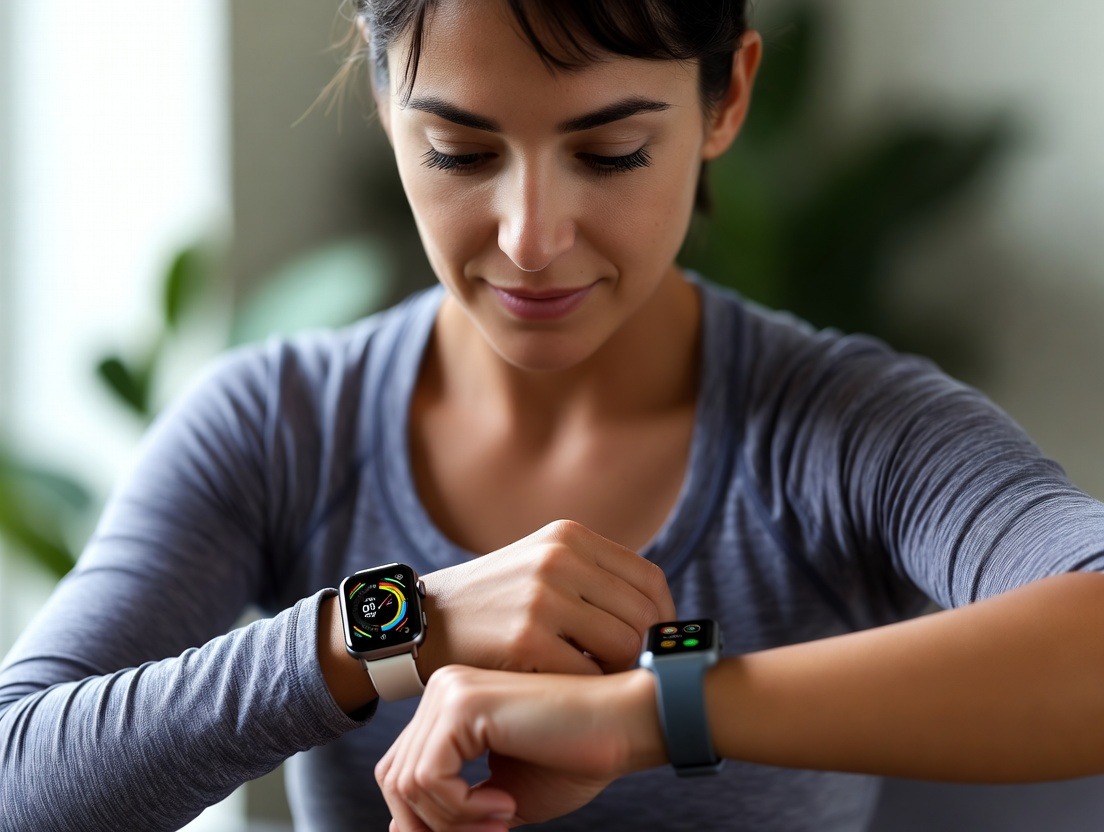
The pursuit of seamless, 24/7 biometric tracking has long been hampered by a fundamental conflict: the device itself. Wrist-worn trackers and smartwatches, while popular, introduce physical and psychological friction that can undermine their core purpose. The smart ring emerges not just as an alternative, but as the optimal solution for the "just wear" ethos. Its form factor is a revolution in wearability, directly enabling the continuous, unobtrusive data collection that powers true holistic insight.
Unobtrusive by Design: The Psychology of Forgetting
A watch or fitness band is a conspicuous object. It has a screen, a bulge of sensors on the underside, and a strap. You feel it when you type, it can clack against tables, and it can get caught on sleeves or gloves. It makes a statement. A well-designed smart ring, in contrast, approaches invisibility. It has no screen to light up and distract. Its profile is smooth and low. Once you're accustomed to wearing it (which for ring-wearers happens in minutes), you literally forget it's there. This psychological freedom is critical. The device is no longer a "thing you are using"; it becomes a part of you, like a wedding band or a favorite necklace. This dramatically increases compliance for 24/7 wear, which is non-negotiable for tracking sleep, recovery, and all-day stress patterns.
Sleep & Comfort: The Unbeatable Advantage
This is the ring's killer app for wearability. Sleeping with a watch is, for many, uncomfortable. It can press against the wrist bone, feel bulky, and cause sweating under the band. People routinely take watches off at night, creating the very data gap that ruins recovery analysis. A ring faces none of these issues. It doesn't impede movement, doesn't cause pressure points, and its open design allows skin to breathe. You can wear it night after night without a second thought, guaranteeing complete sleep data. This is essential for accurate deep sleep tracking and understanding your full circadian rhythm.
Durability and Simplicity for an Active Life
A ring is inherently more durable for daily life. It has no straps to degrade, stretch, or absorb sweat and odor. It's waterproof to significant depths (often 50-100 meters), meaning you never have to take it off for showers, swimming, or intense sweat sessions. You can wear it while washing hands, doing dishes, or training in the rain without a moment's worry. This "wear it and forget it" durability eliminates dozens of daily micro-decisions about when to remove your tracker, ensuring a pristine, unbroken data stream.
Battery Life: The Weekly, Not Daily, Ritual
The small screen-less design of a ring is a battery-life boon. The largest power drain in most wearables is the display. By eliminating it, smart rings can achieve battery life measured in days, not hours. Most premium models last 5-7 days on a single charge. This transforms the user experience. Charging becomes a brief, weekly ritual—perhaps during a Sunday afternoon shower or while you're sitting at your desk for a few hours. It never competes with sleep tracking. You're never caught with a dead device midday. This reliability is a cornerstone of the frictionless experience.
Social and Aesthetic Neutrality
A smart ring doesn't scream "tech gadget." It can be a simple, elegant band of titanium, ceramic, or gold-hued finish. It fits seamlessly into any context, from a boardroom to a black-tie event to the gym. There's no social faux pas of glancing at your wrist during a conversation, as there's no screen to light up. It’s discreet and socially silent, removing the potential for tech to intrude on human interaction.
In essence, the ring form factor is the physical manifestation of the "just wear" philosophy. It is designed to be worn, not operated. It prioritizes constant, comfortable contact over interactive features. By solving the wearability problem so completely, it allows the sophisticated sensor fusion and AI inside to do their most important work: building that continuous, 360-degree picture of you, without you ever having to think about the device itself. To see this elegant form factor and explore the options available, visit our main shop.
Technology is only as valuable as the change it facilitates. The proof of the "no calibration, no setup, just wear" model isn't in its specifications, but in the tangible improvements it brings to daily life. By removing friction and providing holistic, automatic insight, this approach solves real problems for real people. Here are a few archetypal stories that illustrate its transformative potential.
The Overtrained Athlete Who Learned to Rest
Meet Alex, a dedicated marathon runner. His training was rigorous, dictated by a strict spreadsheet. He wore a GPS watch that tracked every mile and heart rate zone. But he was constantly battling niggling injuries, feeling chronically fatigued, and seeing his performance plateau. His watch told him to "move" every hour and celebrated his 100-mile weeks, but it didn't tell him his body was breaking down.
Switching to a frictionless smart ring changed everything. He simply wore it. Within a week, the data told a new story. His resting heart rate was trending upward. His HRV was in a steady decline. His sleep scores were poor, with very little deep sleep despite being in bed for 8 hours. The ring’s readiness score was red-lining "Low" most mornings, but he’d been ignoring his body's whispers and following his plan's shouts.
The data gave him the objective permission to rest. He replaced two hard runs with gentle cycling on low-readiness days. He focused on sleep hygiene, using the ring’s feedback to optimize his bedtime routine. Within a month, his HRV trend reversed, his deep sleep increased, and his morning readiness scores began to climb. His next training cycle was his first injury-free one in years, and he set a new personal record. The ring didn't make him faster; it made him smarter by revealing the critical role of recovery. He now understands that fitness is not just the stress you apply, but how well you absorb it—a lesson detailed in our resource on recovery for athletes.
The Stressed Professional Who Found Balance
Meet Sam, a project manager and parent of two. Constantly juggling deadlines and family, Sam felt perpetually "on," relying on coffee to power through afternoons and wine to wind down at night. Sleep was fractured and energy was a daily crisis to manage. A fitness band felt like another demanding item on her to-do list—something else to charge, sync, and interpret.
The ring was different. She put it on and forgot it. The data revealed a pattern she couldn't see: her daytime stress (indicated by elevated heart rate during sedentary work) was spiking every afternoon. Her sleep, while often totaling 7 hours, was highly inefficient, with frequent awakenings correlated with her late-evening alcohol consumption.
With this automatic feedback, Sam made small, targeted changes. She instituted a "no screens after 9 PM" rule, seeing an immediate improvement in her sleep latency. She swapped her afternoon coffee for a walk, watching her stress metrics calm. She moved her glass of wine to earlier in the evening, which dramatically reduced nighttime wake-ups. The ring’s silent tracking provided the cause-and-effect evidence she needed to make sustainable changes. She now uses her HRV trend as a barometer for her overall stress load, learning to say "no" or delegate when she sees it dipping. Her energy is more stable, and she feels back in control. For anyone questioning whether this kind of tracking is worth the investment, our honest breakdown of the pros and cons of sleep tracking explores this very journey.
The Health-Conscious Individual Preventing Burnout
Meet Jordan, who is generally healthy but wanted to optimize. Jordan tried various health apps—logging food, water, meditation, workouts. It became a part-time job, and the data lived in silos. The effort was unsustainable, and Jordan burned out on self-tracking after a few months.
The "just wear" ring was a revelation. There was nothing to log. Jordan simply lived life. After a month, trends emerged. The data showed a strong correlation between poor sleep quality and days with high work stress. It highlighted that Jordan’s deep sleep was consistently lower on nights after intense evening workouts. It even flagged a subtle, steady elevation in skin temperature and resting heart rate that preceded a mild cold by two days—a warning Jordan now knows to heed by prioritizing rest and hydration.
Jordan now uses the holistic dashboard not to obsess, but to check in. It’s a weekly review, not a minute-by-minute fixation. It has provided a foundational education in how Jordan’s own body works, replacing scattered apps with a single source of truth. Jordan has moved from compulsive, active tracking to passive, insightful awareness, using data to support intuition rather than replace it. This journey from data to wisdom is at the heart of our company mission.
These stories underscore the core value: when tracking becomes effortless, it stops being a chore and starts being a genuinely useful lens on your life. It empowers proactive, personalized health management, turning abstract wellness goals into measurable, manageable daily realities.
The true power of a "just wear" device is not merely in the ring itself, but in the intelligent ecosystem it creates around you. This is a departure from the fragmented app landscapes of the past, where fitness data lived in one silo, sleep in another, and nutrition in a third, requiring manual exports and frustrating integrations. In a seamless ecosystem, all your biometric and lifestyle data is automatically synthesized into a single, coherent narrative. The system does the heavy lifting of connection and correlation, presenting you with insights that feel less like raw data and more like a conversation with a knowledgeable coach who knows your entire history.
The Unified Dashboard: Your Central Command, Automatically Populated
At the heart of this ecosystem is a unified app dashboard. Unlike the blank slate of a new fitness app, this dashboard begins populating itself from the moment you put on the ring. There are no empty modules begging for manual input. Instead, you see a dynamic, interconnected view of your wellness:
This dashboard becomes your one-stop location for understanding your holistic state. You're not piecing together clues from five different apps; the ecosystem's intelligence has already done that for you.
Smart Integrations: The Silent Data Exchange
The ecosystem extends its intelligence by forming silent, bidirectional partnerships with other key apps on your phone, but in a way that reduces your workload.
Proactive Nudges, Not Nagging Notifications
This is where the ecosystem transitions from a passive report to an active partner. Based on the continuous, synthesized data stream, it delivers contextual, intelligent nudges. These are the antithesis of the spammy "You've been sitting for 50 minutes!" alerts of old.
These nudges feel helpful, not intrusive, because they are born from a deep, multi-faceted understanding of your physiology, not a single, simplistic trigger. They are the product of the ecosystem "thinking" about all your data together. For more on how to interpret these signals, our FAQ page addresses many common questions about data and insights.
By creating this seamless, intelligent, and proactive environment, the "just wear" device transcends being a simple sensor. It becomes the central node in a personal health intelligence network. It works constantly in the background, weaving disparate threads of data into a tapestry of understanding, empowering you with a level of self-knowledge that was previously only accessible to elite athletes with a team of sports scientists. This is the infrastructure that makes personalized, responsive health truly accessible.

With a firehose of data now flowing effortlessly into your dashboard, the next critical step is understanding it. Jargon like HRV, SpO2, and sleep latency can be intimidating. But in a well-designed ecosystem, data is not presented as a confusing scientific readout; it is translated into actionable insights. Let's demystify the key metrics you'll encounter, framing them not as abstract numbers, but as clear messages from your body.
1. Heart Rate Variability (HRV): Your Body's Stress Buffer
2. Resting Heart Rate (RHR): Your Engine's Idle Speed
3. Respiratory Rate (RR): The Window to Your Nervous System
4. Blood Oxygen Saturation (SpO2): Your Cellular Fuel Gauge
5. Skin Temperature: The Subtle Messenger
6. Sleep Stages & Latency: The Architecture of Recovery
By presenting these metrics in context—with clear visuals, trend lines, and plain-English explanations—the ecosystem turns complex biometrics into a user-friendly guide to your own body. You’re not meant to become a cardiologist; you’re meant to become more literate in the fundamental language of your health, empowered to make better daily decisions with confidence. For further reading on any of these topics, a great next step is to explore our comprehensive blog.
The current state of "no calibration, no setup, just wear" technology is revolutionary, but it is merely the foundation. The trajectory points toward an even more integrated, predictive, and profoundly personalized future. As sensor technology miniaturizes further, AI models become more refined, and our understanding of human physiology deepens, the next wave of frictionless wellness will make today's devices look like early prototypes. Here’s a glimpse into the horizon.
1. Hyper-Personalized Predictive Insights
Today’s systems are excellent at reporting your current state and recent trends. The next leap is into confident prediction. By analyzing millions of data points across a vast anonymized population (while fiercely protecting individual privacy), AI will identify ultra-subtle, precursor patterns that human analysis would miss.
Imagine your device sending a gentle alert: "Based on your current HRV trend, skin temperature pattern, and slight increase in resting heart rate, there's an 85% probability you will feel symptomatic with a common cold in 48-72 hours. Suggested action: Increase hydration to 3L today, prioritize 8+ hours of sleep, and consider 500mg of Vitamin C." This moves healthcare from reactive to truly preventive. Similarly, for athletes, prediction could be: "Your muscle recovery model indicates high risk for a hamstring strain if you proceed with planned sprint intervals today. Suggested alternative: Tempo run with strides."
2. Non-Invasive Metabolic & Blood Biomarker Monitoring
The holy grail of wearables is non-invasive, continuous monitoring of key blood biomarkers. Research is advancing rapidly on using advanced optical sensors (like Raman spectroscopy) and bio-impedance to estimate metrics that currently require a pinprick or lab visit.
Future rings may provide insights into:
This would transform the ring from a fitness and recovery tool into a genuine personal health lab on your finger.
3. Deeper Integration with the "Quantified Environment"
The ecosystem will expand beyond your body to intelligently interact with your surroundings. Your frictionless device will communicate seamlessly with other smart systems in your life:
4. Invisible Form Factors and Extended Reality
The ring itself may evolve. Future iterations could be even thinner, lighter, and more jewelry-like, or be integrated into other always-worn items. Beyond that, the technology could migrate. Sensor-packed smart patches or fabrics, or even subdermal implants for extreme applications, could provide continuous data with zero wearability friction. Furthermore, your biometric data could integrate with Augmented Reality (AR) glasses, projecting your real-time stress level, hydration status, or navigation prompts directly into your field of view, contextually and without pulling out a phone.
5. Ethical AI and Proactive Mental Wellness
The most important frontier is the ethical and holistic application of this data. Future AI will be trained not just to optimize physical performance, but to guard against obsession and promote mental wellbeing. It might detect patterns of overtraining not just in your body, but in compulsive behavior around your data. It could nudge you with: "You've checked your stress score 12 times today. Consider a 24-hour data holiday to reconnect with how you feel, not just the numbers."
It will also get better at recognizing signs of mental strain—anxiety, depressive trends—through composite signatures in sleep, HRV, and daily activity patterns, and could offer compassionate, evidence-based resources or connections.
The future of "just wear" is a world where technology doesn't just track us, but understands and supports our holistic wellbeing in a deeply personalized, anticipatory, and unobtrusive way. It’s a future where the line between caring for our health and simply living our lives blissfully disappears. This is the direction in which pioneers in the space, like Oxyzen, are relentlessly pushing, driven by a vision where advanced health insight is a effortless, accessible right, not a complicated privilege. To follow this journey and see these innovations as they develop, the best place to start is our homepage.
Embarking on your journey with a true "just wear" device is refreshingly simple, but to harness its full potential, a slight shift in mindset is helpful. The first 30 days are less about "using" the device and more about observing, learning, and establishing a new rhythm of awareness. Here’s a practical guide to navigating this initial period for maximum benefit.
Week 1: The Silent Observation Period
Week 2: Noticing Patterns & Making Gentle Connections
Week 3: The First Informed Experiment
Week 4: Integrating Insight into Your Lifestyle
Pro-Tips for Your First Month:
By the end of your first 30 days, the "just wear" promise will have fully materialized. The initial setup will be a distant memory, replaced by a rich, intuitive understanding of your body's rhythms. You will have moved from a state of guesswork about your health to a state of empowered, evidence-based self-knowledge. This is the true beginning of a simplified, yet profoundly deeper, relationship with your own fitness and wellbeing. For any questions that arise during this process, remember that our support and FAQ section is always available.

The greatest failure of complex fitness technology isn't inaccurate data—it's user abandonment. The most sophisticated algorithm is worthless if the device is sitting in a drawer. The true, transformative power of the "no calibration, no setup, just wear" model is its unique ability to foster lifelong engagement. By eliminating friction, it aligns perfectly with the psychological principles of habit formation, turning sporadic tracking into a sustained practice that endures for years, not weeks.
The Psychology of Frictionless Habit Formation
Habits are built on a neurological loop: Cue, Routine, Reward. Complex trackers sabotage this loop at every stage.
The frictionless model rebuilds this loop for success:
This seamless loop dramatically reduces what behavioral scientists call "activation energy"—the mental and physical effort required to start a behavior. When the activation energy is near zero, the behavior becomes almost automatic. Wearing the ring and checking the app ceases to be a "health task" and becomes as natural as checking the weather.
From Extrinsic to Intrinsic Motivation
Early-stage fitness tracking is often driven by extrinsic motivation: hitting a step goal for a badge, competing on a leaderboard, or logging workouts for social validation. These motivators are powerful but brittle. They often lead to burnout ("step cheating" to win) or disengagement once the novelty fades.
Frictionless tracking, by providing deep, personal insight, cultivates intrinsic motivation. Your drive shifts from "I need to get my 10,000 steps" to "I'm curious how my body responded to that new meditation practice" or "I want to see if prioritizing sleep helps my afternoon energy." The reward is no longer a digital badge; it's self-knowledge, vitality, and agency. This type of motivation is self-sustaining and resilient. It transforms health from a game to be won into a journey of self-understanding.
Building a Longitudinal Health Record
The ultimate value emerges not from daily snapshots, but from longitudinal data—the story told over months and years. This is only possible with a device worn consistently over the long term. A frictionless tracker makes this possible.
Imagine having a searchable, multi-year record of:
This becomes your most valuable health asset: a biometric autobiography. It provides context no single doctor's visit ever could. You can walk into an appointment and say, "My resting heart rate has been trending up by 5 beats per minute over the last three months, and my deep sleep has decreased by 15%, despite no change in my routine. What should we investigate?" This shifts healthcare from reactive to collaborative and preventative. For a deeper look at how metrics like deep sleep change over a lifetime, our article on how age affects deep sleep explores this longitudinal view.
The Compound Interest of Wellness
Small, sustainable actions, repeated consistently over time, yield extraordinary results. This is the compound interest of wellness. Frictionless tracking is the engine of consistency. It doesn't demand you overhaul your life overnight. Instead, it empowers tiny, evidence-based tweaks:
Each of these insights, acted upon, compounds. Better sleep improves recovery. Better recovery improves workout quality. Improved fitness lowers resting heart rate and improves HRV. Higher resilience lowers stress. The virtuous cycle builds momentum. Because the system requires no maintenance, you stay in the cycle. You're not derailed by a dead battery or a confusing software update.
This is the long game: a tool so simple to use that it disappears, yet so insightful that it forever changes your relationship with your body. It moves you from a mindset of periodic "health kicks" to a state of continuous, graceful adjustment—a lifelong practice of listening and responding, supported by a silent stream of truth from your own physiology. This is the foundation upon which lasting health is built.
When fitness tracking is simplified to "just wear," its impact inevitably overflows the boundaries of workouts and sleep to touch every facet of your life. The continuous, holistic data stream provides a mirror not just for your physical state, but for your mental clarity, emotional resilience, and overall life balance. The ring becomes less of a fitness tracker and more of a life readiness indicator.
Stress Management and Emotional Resilience
Your autonomic nervous system doesn't distinguish between a hard workout, a tough conversation with your boss, or financial anxiety. It responds with a physiological stress signature: elevated heart rate, decreased HRV, and sometimes, a change in breathing rate. Passive tracking brings these invisible reactions to light.
Cognitive Performance and Focus
Your brain's ability to focus, solve problems, and think creatively is deeply tied to your physiological state. Poor sleep, high stress, or an overworked body directly impair cognitive function.
Relationship and Social Wellbeing
Our physiological state profoundly influences our social interactions. When we are stressed, fatigued, or under-recovered, we have shorter fuses, less empathy, and poorer communication skills.
Life Transitions and Proactive Health
Passive tracking provides a stable baseline against which to measure life’s inevitable changes.
In essence, a frictionless tracker becomes a holistic life dashboard. It moves far beyond counting steps to illuminating the intricate connections between your body, mind, and life. It provides the feedback loop necessary to live not just more fitly, but more wisely, resiliently, and fully. For a collection of real-world stories about this holistic impact, you can read through our customer testimonials.
As with any technological shift, the "no calibration, no setup, just wear" model can be met with skepticism. Myths and misconceptions arise from our past experiences with clunky technology. Let's address these head-on, separating fact from fiction to reveal why this new paradigm is not only convenient but also more accurate and empowering.
Myth 1: "No Setup Means It's Less Accurate. It Doesn't Know Me."
Myth 2: "If I'm Not Logging My Meals and Moods, the Data is Incomplete."
Myth 3: "It's Too Simple. I Want Control Over My Settings and Data."
Myth 4: "It Will Make Me Obsessive About Data and Numbers."
Myth 5: "A Ring Can't Be as Good as a Chest Strap or Medical Device."
By debunking these myths, we see that "zero-effort" tracking isn't a dumbing down of technology. It's a maturing of it. It represents a shift from technology that demands our labor to technology that earns its place through silent, intelligent service and profound, personalized insight. It is designed not for the data-obsessed quant, but for the human being seeking a wiser, healthier, more balanced life. For any other questions or concerns, our comprehensive FAQ page is always available.
As the "just wear" category grows, not all devices that claim simplicity deliver it fully. Marketing can obscure a reality of hidden friction. Making an informed choice requires looking beyond the surface promise to the underlying design and user experience. Here are the key criteria to evaluate when selecting a wearable that genuinely embodies the frictionless philosophy.
1. The "Out-of-Box to Insight" Test
The most telling experience is the first 15 minutes. A truly frictionless device should pass this test with flying colors.
2. The Charging Paradigm: Weekly vs. Daily
Battery life is the single greatest physical friction point. It directly competes with the goal of 24/7 wear, especially for sleep tracking.
3. Sensor Suite and Inferred Intelligence
Simplicity must be backed by sophisticated hardware and software. A simple device with poor sensors is just a bad tracker.
4. The Dashboard: Synthesized vs. Fragmented
The app experience is where insights are delivered. It should simplify, not overwhelm.
5. Company Philosophy and Long-Term Vision
A device is part of an ecosystem supported by a company. Their philosophy dictates your long-term experience.
6. Social Proof and Real-World Reviews
Finally, look beyond marketing to the experiences of long-term users.
Choosing a truly frictionless wearable is an investment in a long-term health partnership. By applying these criteria, you can select a device that will serve you silently and intelligently for years, becoming an indispensable part of your wellness journey rather than a short-lived gadget. The right choice is one that removes itself from your mind, so you can focus on what truly matters: living your healthiest, most vibrant life. To explore a device built on these very principles, you can begin your discovery at the Oxyzen shop.
Your Invitation to a Simpler, Smarter Health Journey
We have traveled a considerable distance together, from dissecting the tyranny of complex setup to envisioning a future of predictive, holistic wellness. The through line is clear: the greatest barrier to understanding and improving our health has often been the very tools designed to help us. They asked for too much, interrupted too often, and fit too clumsily into the flow of human life.
The promise of "Fitness Tracking Simplified: No Calibration, No Setup, Just Wear" is an invitation to close that gap. It is an invitation to experience health technology not as a manager, but as a mentor; not as a source of chore-like logging, but as a fountain of effortless insight. This is not about doing less for your health, but about allowing a powerful intelligence to do more of the heavy lifting for you, so your energy can be directed toward living.
The benefits of accepting this invitation are profound:
This journey begins with a single, simple act: putting on a ring. There is no test to take, no wizard to complete, no calibration to perform. There is only you, and a commitment to listen—supported by a stream of clarity that flows as easily as your own heartbeat.
The future of personal wellness is not more complex. It is more intelligent, more adaptive, and more gracefully integrated. It is a future where the line between caring for ourselves and simply living our lives becomes beautifully, effortlessly blurred. That future is not a distant promise; it is available now.
Are you ready to stop managing your tracker, and start being understood by it? The simplest step is the first one. Discover the difference for yourself.
Your Trusted Sleep Advocate (Sleep Foundation — https://www.sleepfoundation.org/)
Discover a digital archive of scholarly articles (NIH — https://www.ncbi.nlm.nih.gov/
39 million citations for biomedical literature (PubMed — https://pubmed.ncbi.nlm.nih.gov/)
experts at Harvard Health Publishing covering a variety of health topics — https://www.health.harvard.edu/blog/)
Every life deserves world class care (Cleveland Clinic -
https://my.clevelandclinic.org/health)
Wearable technology and the future of predictive health monitoring. (MIT Technology Review — https://www.technologyreview.com/)
Dedicated to the well-being of all people and guided by science (World Health Organization — https://www.who.int/news-room/)
Psychological science and knowledge to benefit society and improve lives. (APA — https://www.apa.org/monitor/)
Cutting-edge insights on human longevity and peak performance
(Lifespan Research — https://www.lifespan.io/)
Global authority on exercise physiology, sports performance, and human recovery
(American College of Sports Medicine — https://www.acsm.org/)
Neuroscience-driven guidance for better focus, sleep, and mental clarity
(Stanford Human Performance Lab — https://humanperformance.stanford.edu/)
Evidence-based psychology and mind–body wellness resources
(Mayo Clinic — https://www.mayoclinic.org/healthy-lifestyle/)
Data-backed research on emotional wellbeing, stress biology, and resilience
(American Institute of Stress — https://www.stress.org/)


