


Wellness Ring Basics: The Color and Style Options Available
Overview of the different aesthetic choices available, including colors, finishes, and styles.
Overview of the different aesthetic choices available, including colors, finishes, and styles.
%402x.svg)
In a world obsessed with quantification, where we track every step, heartbeat, and minute of slumber, a new category of wearable has elegantly emerged from the wrist. The wellness ring, a discreet band of intelligent metal, promises the profound insights of a health clinic with the subtlety of fine jewelry. No longer must technology shout its presence with bright screens and bulky straps. The future of personal biometrics is quiet, sophisticated, and designed to be worn 24/7, from the boardroom to the bedroom.
But here lies the beautiful paradox of the modern wellness ring. It is both a precision-engineered data hub and a deeply personal piece of adornment. Its purpose is twofold: to serve as an unblinking guardian of your inner health and an authentic expression of your outer style. Choosing one isn't just about sensor accuracy or battery life; it's a decision that sits at the intersection of technology and personal identity. This article is dedicated to the latter, often underexplored, facet of the smart ring revolution: the art of the aesthetic.
We will journey beyond the specs sheet to explore the universe of color, material, finish, and form that defines today's leading wellness rings. From the timeless appeal of brushed titanium to the warm glow of rose gold, from minimalist matte black bands to rings adorned with subtle texture, your choice communicates a story. It can whisper a preference for understated luxury, shout a commitment to rugged durability, or simply blend seamlessly into your life as a silent, supportive partner in wellness. Understanding these options is the first step in selecting a device that you’ll not only trust with your data but love to wear every single day. Let’s begin by unraveling the very essence of what makes this wearable so unique.
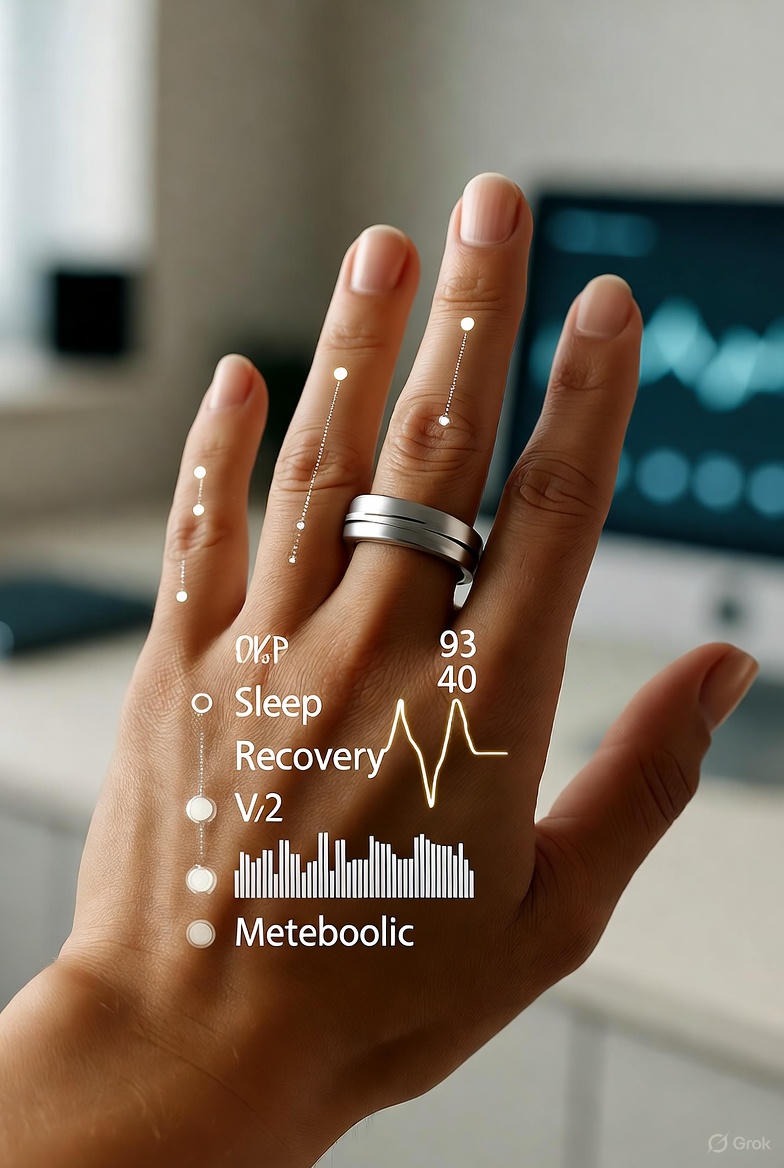
To appreciate the significance of color and style, one must first understand the fundamental shift the wellness ring represents. For over a decade, the smartwatch dominated the wearable landscape, a mini-computer strapped to our wrists. It was, and is, brilliant for notifications, calls, and apps. But its very nature—interruptive, screen-focused, and often obtrusive—works against the principles of holistic wellness it seeks to measure. Constant pings disrupt mindfulness. A bright screen glowing at night can inhibit the very sleep it's trying to analyze. The wellness ring, by contrast, is founded on a philosophy of passive, unobtrusive monitoring.
Its power lies in its simplicity and constancy. Placed on a finger with a strong capillary pulse (typically the index, ring, or middle finger), it employs a suite of miniature sensors—photoplethysmography (PPG) for heart rate and blood oxygen, a 3D accelerometer for movement, a skin temperature sensor, and often an electrodermal activity (EDA) sensor for stress—to gather data without requiring your active participation. It works while you work, sleep, play, and rest. This 24/7 data stream creates a rich, multidimensional picture of your physiological baseline, allowing for insights that sporadic checking cannot provide. You're not just getting a heart rate snapshot; you're seeing your heart rate variability (HRV) trend throughout the night, a key indicator of how your sleep score reflects total body recovery.
This shift from active to passive, from intrusive to invisible, is why style isn't a mere afterthought—it's a core functional requirement. If a device is meant to be worn always, through every activity and social occasion, it must transcend the "tech gadget" aesthetic. It must become you. The wellness ring answers this call by marrying clinical-grade sensing with jewelry-grade design. It doesn’t ask you to change your style to accommodate technology; it asks technology to conform to timeless human expressions of beauty and individuality. As we delve into the specific styles and colors available, remember this foundational truth: the ring's design excellence is what enables its wellness mission. By being something you forget you're wearing until you need its insights, it achieves its highest purpose: facilitating a more attuned, healthier, and ultimately, more restful living philosophy of less hustle and more health.
One might argue that in a tool designed for health, aesthetics are superficial. Neuroscience and behavioral psychology strongly disagree. The appearance of your wellness ring directly impacts three critical factors: psychological connection, long-term wearing compliance, and personal identity expression—all of which are essential for the device to be effective.
First, consider the psychological principle of enclothed cognition. This is the systematic influence that clothes have on the wearer's psychological processes. Wearing a lab coat described as a doctor's coat increases attentiveness, while the same coat described as a painter's does not. Similarly, the object you wear on your finger carries symbolic weight. A clunky, plastic ring that screams "gadget" may subconsciously frame health as a technical chore. A sleek, beautifully crafted ring that feels like a piece of fine jewelry frames health as an integral part of a cultivated, intentional life. It transforms the ring from a monitor into a talisman—a personal emblem of your commitment to self-care. This positive association increases the likelihood you’ll engage with the data meaningfully, turning insights into action.
Second, and most practically, is compliance. The most accurate sensor in the world is useless if it’s sitting in a drawer. Wearable studies consistently show that comfort and aesthetics are the primary drivers of long-term use. A ring that feels heavy, catches on clothing, or clashes with your everyday style will be removed. It might come off for a "special occasion" and never go back on. Each gap in data creates a blind spot in your health narrative. A ring chosen for its comfort, weight, and visual harmony with your wardrobe disappears into your daily routine. You wear it to the gym, to a wedding, to sleep, and to work. This seamless integration is the bedrock of consistent data collection, which is paramount for tracking trends over time, like observing the sleep score journey of tracking improvement over months.
Finally, your ring is a silent communicator of identity. In an era of personal branding, what we choose to wear is a non-verbal cue. A matte black, minimalist ring might communicate a love of modern design and tech efficiency. A rose gold band might suggest a preference for warmth and classic elegance. A textured, titanium ring could speak to an adventurous, durable spirit. This isn't about vanity; it's about authenticity. When your wellness tool aligns with your personal aesthetic, it ceases to be an external device and becomes an extension of self. This deep alignment is where technology truly integrates into the human experience, supporting not just physical health, but a cohesive sense of identity. It’s a small but powerful step toward designing a life that feels wholly your own, a principle at the heart of designing restful living spaces for calm and restoration.
Beneath every color and finish lies the foundational element: the core material. This choice dictates not only the ring's appearance but its fundamental character—its weight, strength, hypoallergenic properties, and even how it interacts with light. Today's leading wellness rings are crafted from advanced materials that bridge the aerospace industry and the jewelry studio.
Titanium (Grade 2 or Grade 5): The undisputed champion of the wellness ring world, and for good reason. Titanium is incredibly strong—having the highest strength-to-weight ratio of any metal—yet remarkably lightweight. Wearing a titanium ring feels almost like wearing nothing at all, a crucial factor for sleep comfort. It is naturally hypoallergenic and highly resistant to corrosion, making it ideal for those with sensitive skin or active lifestyles involving sweat and water. From a design perspective, titanium is a fantastic canvas. It takes anodized colors vibrantly and evenly, can be brushed to a soft matte sheen, or polished to a modern luster. Its cool, gunmetal-gray base color is inherently sleek and tech-forward, yet neutral enough to be versatile.
Stainless Steel (Surgical Grade): Often used as a more accessible entry point, surgical-grade stainless steel offers durability and a familiar heft. It provides a bright, silvery shine when polished and is highly resistant to tarnish. While slightly heavier than titanium and with a higher potential for nickel content (a concern for some with allergies), it is a robust and cost-effective material that yields a classic, timeless look.
Cobalt Chrome: This alloy is the unsung hero of durability and brilliance. It is significantly harder than titanium or stainless steel, making it exceptionally scratch-resistant—a key consideration for a ring worn daily. Cobalt chrome has a bright, white-metallic appearance that is often compared to platinum, and it maintains a brilliant polish over time. Its weight is substantial, giving it a feeling of luxury and permanence on the finger.
Precious Metals: Gold (Plated, Filled, or Solid): For those seeking the ultimate in jewelry-grade aesthetics, gold options are increasingly available. The implementation varies:
Ceramic (Black or White): Prized for its velvety matte texture and extreme scratch resistance. Black ceramic, in particular, delivers a profound, pure matte black that no painted metal can match. It is lightweight and hypoallergenic but can be more brittle against sharp, high-impact shocks compared to metals.
The choice of material sets the stage for everything that follows. Do you prioritize feather-light comfort (Titanium)? Unscratchable daily wear (Cobalt Chrome)? Or the warm, traditional luxury of gold? This decision is the first and most important step in defining your ring's personality and how it will physically feel on your hand, hour after hour, day after day.
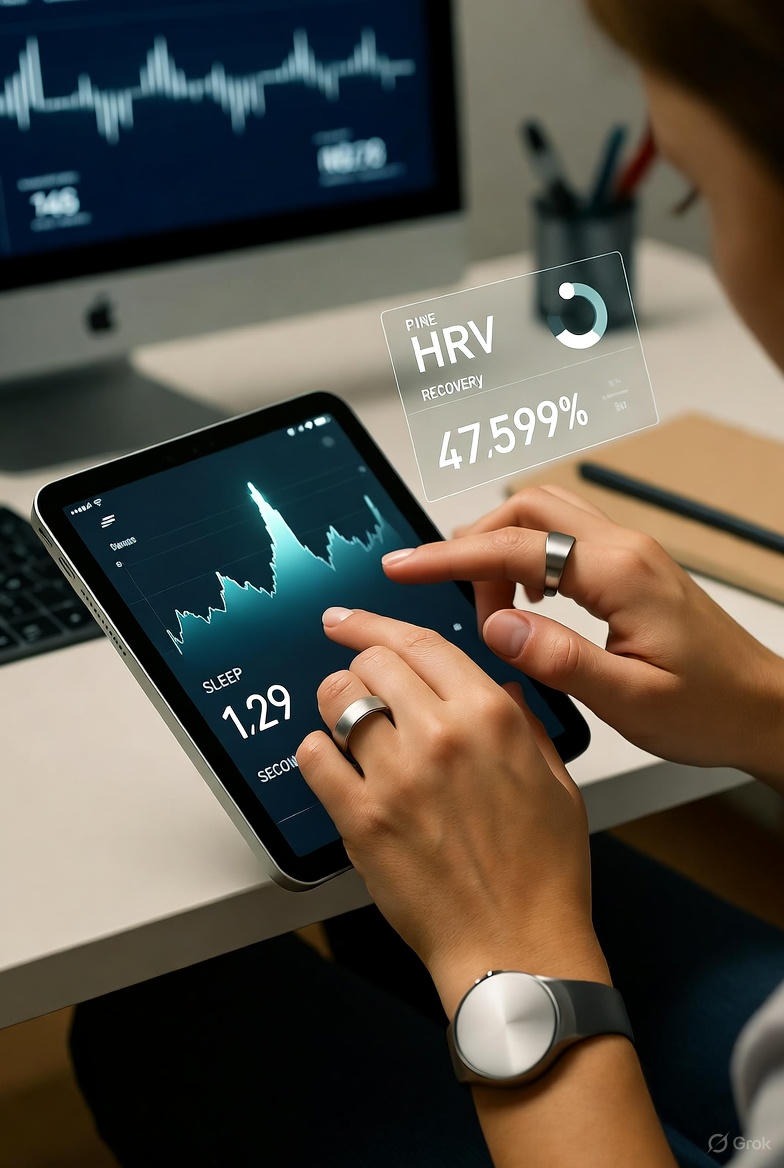
Color is not merely decorative; it is communicative. It evokes emotion, influences perception, and can even alter our own sense of being. In the context of a wellness ring—a device intimately connected to your personal health journey—the color you choose can subtly reinforce your intentions and how you relate to the data it provides.
Black (Matte or Gloss): The color of sophistication, authority, and modernity. A matte black ring speaks to efficiency, sleekness, and a no-nonsense approach. It’s the stealth option, disappearing against the skin and clothing, making the technology truly invisible. It communicates a focus on pure function and modern minimalism. A glossy black, while similarly sleek, adds a touch of reflective depth and formality. Black is versatile, gender-neutral, and pairs effortlessly with any wardrobe, from athletic wear to a tuxedo. It’s for the individual who wants the power of the technology without any aesthetic fuss.
Silver & Gray (Brushed Titanium, Polished Steel): Silver tones evoke clarity, precision, and innovation. The cool, neutral hue of brushed titanium feels futuristic yet organic, reminiscent of cutting-edge architecture and aerospace engineering. It communicates a trust in technology and a value for clean design. Polished stainless steel or chrome offers a brighter, more traditional silver that feels classic and professional. These colors are perceived as honest, balanced, and reliable—perfect metaphors for a device tasked with delivering unbiased health insights.
Gold (Rose, Yellow, Champagne): Gold is the color of warmth, value, and timelessness. Rose gold, with its pinkish copper hue, has become a contemporary icon. It feels softer, more approachable, and subtly luxurious. It often conveys a sense of creativity and compassion. Yellow gold is classic, bold, and unmistakably valuable. It speaks to tradition, optimism, and confidence. Champagne or satin gold offers a muted, sophisticated alternative. Gold tones, in general, connect the ring to centuries of jewelry tradition, framing wellness not as a new tech trend, but as an age-old pursuit of vitality, now enhanced by modern science. It’s a choice that says health is a precious, golden part of a well-lived life.
Bronze & Gunmetal: These are the earthier, more nuanced members of the metal family. Bronze carries a warmth reminiscent of antiquity and nature, suggesting stability, grounding, and a connection to something organic. Gunmetal, a darker gray with hints of blue or bronze, feels rugged, resilient, and tactical. It has a muted, professional edge that is less flashy than black but more distinctive than pure gray. These colors are for those who want their wearable to feel unique, grounded, and with a hint of understated, functional character.
Choosing a color is an act of personal branding. It asks: How do I want to feel when I look at this tool on my hand? Do I want it to energize me (Gold), ground me (Bronze), empower me with sleek efficiency (Black), or inspire trust in its precision (Silver)? This subconscious dialogue between color and psyche is a powerful, yet often overlooked, layer of the wellness ring experience. By aligning the ring’s hue with your internal state, you create a more harmonious and motivating partnership with your own health data, a principle that extends to creating a restful home environment room by room where every element supports your wellbeing.
If material is the canvas and color is the paint, then the finish is the brushstroke—the final surface quality that gives the ring its tactile personality and visual depth. The finish determines how light interacts with the ring, how it feels to the touch, and how it ages with daily wear. It’s the detail that transforms a simple band into an object of design interest.
High-Polish (Mirror Finish): This is the classic jewelry finish. A mirror-polished surface reflects light brightly and cleanly, creating a formal, luxurious, and eye-catching effect. It speaks to tradition and refinement. On stainless steel or cobalt chrome, it yields a brilliant silver shine; on gold, it provides that classic, radiant luster. The downside? It is a fingerprint magnet and will show fine hairline scratches (often called "patina" in jewelry) more readily than other finishes. This isn't necessarily a flaw; for some, it adds character, documenting the ring's journey with you.
Brushed (Satin Finish): Achieved by brushing the metal with fine abrasives in a linear direction, this finish has a soft, muted, silky sheen. It diffuses light instead of reflecting it directly, giving the ring a sophisticated, understated, and modern look. Brushed titanium is arguably the most popular finish in wellness rings for good reason: it hides fingerprints and minor scratches incredibly well, feels great to the touch, and has a technical, tool-like elegance that perfectly suits the device's purpose. It’s less formal than a high polish but more refined than a full matte.
Matte (Bead-Blasted): This finish goes a step further in light diffusion. Through a process like bead blasting, the surface is rendered completely non-reflective. A matte black or matte gray ring absorbs light, creating a profound, velvety, and monolithic appearance. It is the ultimate stealth finish, maximizing subtlety. Tactilely, it feels distinctive—slightly gritty or soft, like a fine stone. It is exceptionally effective at hiding all signs of wear, making it ideal for those who want a pristine, uniform look over time.
Textured & Engineered Finishes: This is where design truly innovates. Some rings incorporate intentional texture for both visual and functional reasons.
The finish you choose directly impacts daily interaction. A polished ring might feel sleek and cool; a brushed ring feels smooth and quiet; a matte ring feels distinctive and modern. This tactile experience is a constant, low-level reminder of the device's quality and your choice to integrate wellness seamlessly into your life's texture. It’s a small but significant contributor to the overall sense of restful living, finding peace even in the chaos by ensuring every object you interact with feels intentional and calming.
Beyond what the ring is made of and how its surface looks, its physical shape—its form and profile—dictates how it conforms to your finger, interacts with your other fingers, and ultimately, how it disappears during wear. This is the ergonomic heart of the design, where engineering meets anatomy to achieve the holy grail: forgettability.
The Minimalist Band: This is the most common and versatile profile. It is a uniform band of consistent thickness (or a gentle dome) that sits evenly around the finger. It’s clean, unobtrusive, and slides easily under gloves or alongside other rings. The focus here is on simplicity and low profile. A thin minimalist band (around 2-3mm wide) feels delicate and jewelry-like, often preferred for smaller hands or those wanting maximum discretion. A standard band (4-6mm) offers more surface area for sensors and battery, often feeling more substantial and present.
The Contoured (Ergonomic) Design: This profile is shaped to nestle into the natural form of the finger. The interior of the band may be slightly flattened where it rests against the sides of adjacent fingers, or the entire band may have a gentle, asymmetric curve that follows the hand's topography. The exterior might also be subtly tapered from the center (the crown, where sensors are often housed) toward the edges. This design maximizes comfort, especially during fist-making or hand movements, by reducing pressure points and minimizing contact with neighboring fingers. It signals a deep consideration for all-day, all-night wear.
The Crowned/Bezeled Profile: Some rings feature a distinct, slightly raised central section or "crown" that houses the sensor array. This can create a more tech-forward, instrument-like aesthetic. The raised portion is typically on the palm-side of the ring for optimal sensor contact. Visually, it breaks the line of the band, making a subtle statement about the ring's intelligent function. The key to a good crowned design is ensuring the transition to the thinner band is smooth and doesn't create uncomfortable edges.
Weight & "The Feel": This is a subjective but critical factor. Weight is a direct function of material density and ring volume (size x thickness). A featherlight titanium ring (2-4 grams) can truly be forgotten, an asset for sleep tracking and those new to ring-wearing. A substantial cobalt chrome or gold ring (6-10+ grams) has a palpable presence—a feeling of luxury, permanence, and quality. There’s no right answer, only personal preference. Some find comfort in the slight, reassuring weight; others crave absolute lightness. The only universal rule is that the weight should feel balanced on the finger, not top-heavy.
Choosing a form is about trying on a feeling. Do you want a ring that is a seamless, uniform circle? Or one shaped explicitly for the human hand? The profile determines not just comfort, but also how the ring visually sits on your finger—whether it looks like a traditional band or a purpose-built device. This commitment to ergonomic design mirrors the holistic approach of restful living for busy professionals, utilizing micro-recovery throughout the day, where small, intentional design choices in our tools and environment cumulatively create a significant impact on our wellbeing.
All the beautiful materials, colors, and forms in the world mean nothing if the ring doesn't fit perfectly. For a wellness ring, fit is not a suggestion; it is the primary determinant of data accuracy and wearing compliance. An ill-fitting ring is a failed device. Here, we move from aesthetics to the critical science of measurement and wearability.
The Goldilocks Principle: Not Too Tight, Not Too Loose. The ring must be snug enough to prevent rotation, ensuring the sensors (typically on the inner palm-side) maintain consistent contact with the skin. If the ring spins freely, the PPG sensor will lose its reading, and movement data will be inaccurate. However, it must be loose enough to allow for natural finger fluctuation. Fingers swell in heat, during exercise, after salt intake, and slightly in the morning. They shrink in cold, dry conditions, and later in the day. A ring that is too tight can become uncomfortable, cut off circulation, and even become difficult to remove.
Professional Sizing is Paramount. Never guess your size. Every reputable wellness ring company will provide a detailed sizing kit—a set of plastic or metal sample rings in half-sizes. The process is non-negotiable:
Considering Width & Knuckle Shape. A wider band (6mm+) will feel tighter than a narrow band (3mm) in the same internal diameter. If you have large knuckles compared to your finger base ("tapered fingers"), you may need to size up to get the ring over the knuckle, accepting that it will be slightly looser at the base. Some companies offer half-sizes or even quarter-sizes to accommodate this precisely.
The Long-Term Comfort Checklist:
A perfect fit is the silent enabler of everything else. It allows the technology to work flawlessly and lets you live your life without a second thought to the device on your finger. It is the ultimate design achievement: making advanced biometric sensing feel like a natural part of you. This relentless focus on seamless integration is what allows the ring to gather the consistent data needed to understand complex patterns, such as what research says are healthy sleep score standards.
The wellness ring market is no longer a monolith. Different brands have emerged with distinct design philosophies, catering to varied tastes and priorities. Understanding these brand identities can help you align your aesthetic and functional preferences with a product's core ethos.
Oura Ring: The pioneer that brought the category to mainstream attention. Oura’s design philosophy is Scandinavian minimalism meets wearable technology. Their rings are defined by a gently domed, uniform profile, a subtly textured exterior (with their signature "pill" pattern), and a understated, matte-grey brushed titanium finish as their hallmark. Colors are generally muted and natural (silver, black, stealth, gold). The design is intentionally non-gendered, lightweight, and focuses on being an unobtrusive wellness companion. It looks and feels like a modern piece of Nordic design first, a tech device second.
Circular Ring Slim: As the name suggests, Circular champions slimness. Their design philosophy is maximal data in a minimal form factor. The Ring Slim is one of the thinnest and lightest wellness rings on the market, appealing to those who find other rings too bulky or masculine. It has a flat, contemporary profile with a distinctive touch-sensitive "Smart Crown" on the top. Its aesthetic is sleek, fashion-forward, and prioritizes discreet wearability above all, often using colors and finishes that mimic delicate stacking rings.
Ultrahuman Ring Air: Ultrahuman takes a more assertive, cybernetic approach. Their Ring Air features a prominent, raised sensor housing (the "Metabolic Panel") on the palm side, creating a distinct, tech-instrument look. The exterior is smooth and often features bold, anodized colors (like a vibrant "Sunset Gold" or "Graphite"). Their philosophy is about making the intelligence of the ring visually apparent—it’s a "powered" device. It’s for the user who wants their wearable to look and feel like cutting-edge performance tech.
RingConn: RingConn’s design philosophy leans into classic jewelry sensibilities with a modern twist. Their ring has a flat, wide-band profile that feels substantial, with beautifully polished, rounded edges that catch the light. They offer a broader palette of classic jewelry colors, including a particularly warm and rich "Champagne Gold" and a deep "Classic Silver." The look is less "stealth tech" and more "modern heirloom"—a piece you’d choose for its aesthetic as much as its function.
Other Contenders: Brands like Movano (with its curved, contoured design aimed at women’s health) and Boogàlu (with interchangeable magnetic covers) introduce further diversity, focusing on specific ergonomics or personalization.
Choosing a brand is often choosing a design tribe. Do you align with the quiet, minimalist authority of Oura, the sleek slimness of Circular, the bold tech-aesthetic of Ultrahuman, or the jewelry-first approach of RingConn? Each philosophy manifests in a different physical object that will live on your hand, making this one of the most consequential style decisions in the process.
The early days of wearables were plagued by a binary, often gendered, approach: bulky, dark "sport" models and smaller, pastel "fashion" models. The wellness ring category, by its very nature as a finger-worn device, is breaking this mold and leading the charge in truly inclusive, gender-neutral design. This shift is not just progressive; it's smart, reflecting a broader cultural understanding of identity and personal expression.
Moving Beyond "Shrink It and Pink It": The most forward-thinking ring designs reject the notion that certain colors, sizes, or profiles are inherently masculine or feminine. Instead, they focus on universal principles of human anatomy, comfort, and aesthetic appeal. A brushed titanium finish, a matte black coating, or a rose gold plating is presented not as a "men's" or "women's" option, but as a personal color choice for any individual. The marketing imagery reflects this, showcasing a diverse range of hands, ages, and styles wearing the same core product.
The Foundation of Inclusive Design: A True Size Range. Inclusivity starts with physical fit. Leading brands offer an extensive size range, typically from US size 5 or 6 up to size 13 or higher, often in half-increments. This acknowledges the vast diversity of finger sizes across all populations. Furthermore, the move toward lighter materials like titanium and slimmer profiles inherently accommodates those with smaller hands or who prefer less bulk, without creating a separate "line" that carries gendered connotations.
Color Palettes for All: The modern wellness ring color palette is curated for versatility and personal meaning, not gender assignment. You’ll see:
The Power of the Band: The simple band form factor is itself a unifying design. Unlike a wristwatch, a plain band has centuries of history as a unisex adornment across cultures. By refining this universal shape with technology, wellness rings tap into a form that feels naturally inclusive.
This gender-neutral approach does more than just market to a wider audience; it empowers every user to choose a device based on what resonates with their personal sense of style and comfort, free from outdated societal labels. It reinforces the idea that the pursuit of health and data-driven self-knowledge is a universal human endeavor. This philosophy of inclusive, personalized design is a cornerstone of modern wellness, much like the approach of restful living on a budget with zero-cost wellness tips that are accessible to everyone, regardless of their resources.
For those who seek to move beyond catalog options, the frontier of wellness ring aesthetics lies in personalization. This is where a mass-produced device transforms into a singular, unique object tied to your identity or journey. While still an emerging area, customization is becoming a powerful differentiator.
Laser Engraving: The most accessible form of personalization. Many companies now offer the option to laser engrave a short word, initials, a significant date, or a small symbol on the inner band of the ring. This is a deeply personal touch—a secret message known only to the wearer. It could be a mantra ("Breathe," "Present"), a coordinate, or a loved one's initial. It transforms the ring from a generic health tool into a personally meaningful artifact, a modern-day sigil representing your commitment to yourself.
Limited Edition Colors & Collaborations: Brands periodically release special edition colorways or collaborate with designers and artists. These limited runs often feature unique anodized colors (e.g., a specific shade of blue, a gradient, a matte olive green) or special material treatments not available in the core lineup. For the style-conscious early adopter, these editions offer exclusivity and a way to own a piece of the brand's evolving design history. They act as collectibles that also happen to be powerful health monitors.
Interchangeable Elements (The Frontier): A few pioneers are experimenting with physical customization. Boogàlu’s concept involves a core sensor module that clicks into various external magnetic "shells" or "covers," allowing you to change the ring's color and texture in seconds. Imagine having a matte black shell for work, a polished gold shell for an evening out, and a colorful silicone shell for the gym—all sharing the same intelligent core. This approach decouples the tech from the style entirely, offering ultimate flexibility.
Future-Tech Finishes: On the horizon are advanced material sciences that could allow for dynamic personalization. Think of:
While these advanced concepts are still developing, the trend is clear: the future of wellness ring design is active, not passive. It will involve the user in the aesthetic expression of the device, making it a more dynamic and integrated part of their personal style ecosystem. This mirrors a broader shift in wellness itself—from passive consumption of data to active co-creation of a healthier lifestyle, a theme explored in the restful living mindset of shifting from doing to being.
With a comprehensive understanding of the materials, colors, finishes, and brand philosophies available, the final—and most personal—step is synthesis. How do you translate this knowledge into a choice that feels intuitively right for your life? This decision hinges on honestly assessing your daily reality, your personal style, and the symbolic role you want this device to play.
The Lifestyle Audit: From Desk to Wilderness
Begin by mapping your weekly activities. Your ring must gracefully traverse every environment you do.
The Wardrobe Harmony Test
Hold potential choices against your actual closet. What are your dominant colors? Is your palette cool (blacks, greys, blues) or warm (creams, browns, olives)? Do you favor matte textures or sleek, shiny fabrics?
The "Three-Year" Question
Fast forward. Will this design feel dated, or is it timeless? Tech gadgets become obsolete; fine jewelry endures. Choosing a ring with classic jewelry proportions and finishes (a simple band, a known metal) future-proofs its style, ensuring you’ll want to wear it long after the next sensor iteration is released. It becomes a lasting companion on your health journey, not a disposable gadget.
By conducting this honest self-audit, you move beyond trends and specs to a choice rooted in your authentic life. The right ring won't feel like an addition to your style; it will feel like a missing piece finally found, a tactile anchor for your commitment to wellbeing that looks and feels like it truly belongs on your hand.
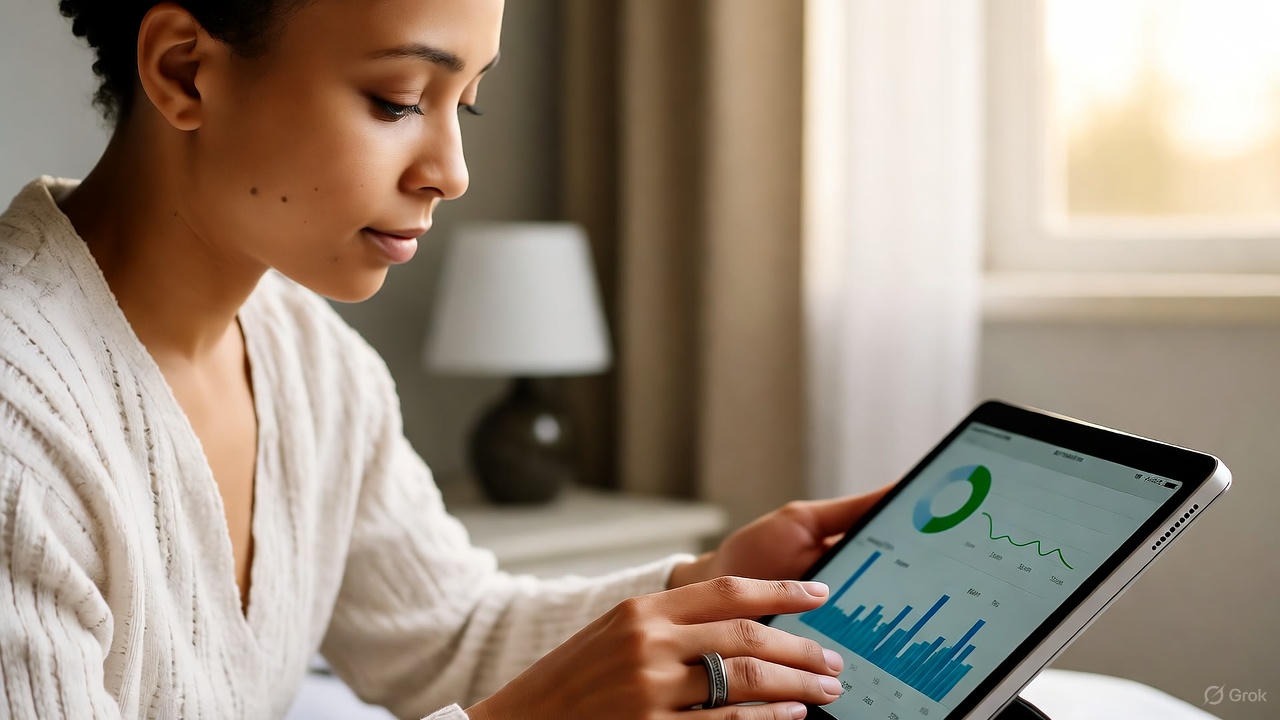
Your wellness ring is a sophisticated piece of equipment designed for constant wear, which inevitably subjects it to the rigors of daily life. While built to be durable, its appearance is not immune to the passage of time and experience. Proactive and proper care will ensure that your ring continues to look its best, preserving the aesthetic you chose with such care for years to come. Think of this not as maintenance, but as stewardship of a tool that supports your health.
Understanding the Enemies: What Causes Wear?
Knowing what can affect your ring helps you prevent damage.
Daily & Weekly Care Rituals
Incorporate these simple habits to maintain your ring’s luster.
What to Avoid: The Non-Negotiables
Managing Scratches & The Beauty of Patina
Accept that some wear is inevitable—it’s the story of your life written in micro-detail on your ring.
Long-Term Storage
If you need to take your ring off for an extended period (e.g., during surgery, or while switching devices), store it properly. Place it in the original protective box or a soft pouch, away from other jewelry that could scratch it. Ensure it’s fully dry and charged to around 50-80% to preserve battery health.
Caring for your ring’s aesthetic is a small, mindful practice that extends the life of your investment and keeps the object of your wellness journey looking dignified. It’s a tangible act of respect for the tool that helps you respect yourself, a micro-habit that supports the larger system of restful living habits that transform your energy.
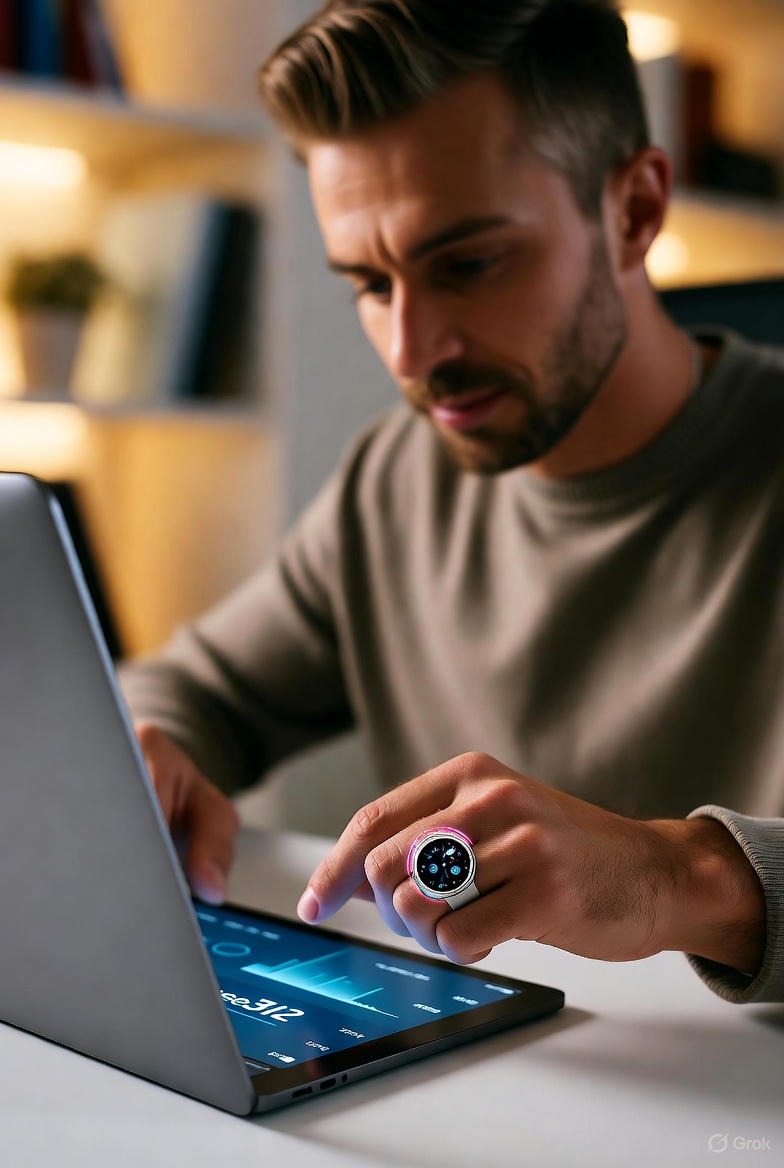
You've made your choice. The ring is on your finger—a perfect fit, a reflection of your style, a silent sentinel. The initial phase of admiring its form gives way to its primary function: unlocking the story of your inner physiology. This transition from aesthetic appreciation to data-driven understanding is where the true magic of the wellness ring begins. It’s time to log in.
The first sync is a moment of modern magic. Through a low-energy Bluetooth connection, a week’s worth of continuous biometric data flows from the discreet band on your finger to the companion app on your phone. What greets you is not a spreadsheet of numbers, but a thoughtfully designed dashboard—a visual translation of your body’s unseen rhythms. This interface is your mission control, your personal health observatory. Navigating it with curiosity, not anxiety, is the next critical skill.
Most leading wellness ring apps organize insights around three core pillars, often summarized by simple, powerful scores:
The Readiness Score (Or "Daytime" Score): This is your launch code for the day. It’s a composite metric, typically derived from last night’s sleep data, your previous day’s activity, and crucially, your autonomic nervous system balance as reflected in overnight Heart Rate Variability (HRV) and resting heart rate. A high readiness score suggests your body has recovered well and is primed for stress, challenge, and high output. A lower score is not a failure; it’s a vital signal. It’s your body whispering, “Today is for restoration.” It might recommend more restful living micro-recovery throughout the day, a lighter workout, or an earlier bedtime. Learning to honor this score is learning to dance with your natural cycles, not fight against them.
The Sleep Score: This is the deep dive into your nocturnal restoration. It goes far beyond simple duration. A sophisticated sleep score deconstructs your night into stages (light, deep, REM), measures efficiency (how little you tossed or woke), and assesses timing (alignment with your circadian rhythm). It considers restfulness and latency (how quickly you fell asleep). This score provides the narrative behind how you feel each morning. Are you getting enough deep sleep for physical repair? Enough REM for cognitive and emotional processing? This data is the cornerstone for understanding your baseline and tracking the impact of lifestyle changes, a process detailed in the sleep score journey of tracking improvement over months.
The Activity Score: This moves beyond simple step counts. It balances movement with sufficiency. The goal isn’t to maximize this score every single day, but to find a sustainable, personalized rhythm that supports your overall energy. Many rings use a concept of “activity goal” based on your personal baseline, encouraging consistency over intensity. It reminds you to move when you’ve been sedentary and acknowledges when you’ve done enough, preventing the all-too-common cycle of burnout from overtraining.
Beneath these headline scores lies the rich, raw data: continuous heart rate, heart rate variability (HRV) trends, respiratory rate, skin temperature deviations, and blood oxygen saturation (SpO2). At first, this dashboard can feel overwhelming. The key is to start not by diagnosing, but by observing. For the first week, simply look. Notice the patterns without judgment. This is the establishment of your personal baseline—the unique fingerprint of your body in its current state of life. This non-judgmental observation is the first step in a powerful partnership between you and your data.
To move beyond scores and into true understanding, we must demystify the core biomarkers your ring measures 24/7. These are not just numbers; they are the direct language of your autonomic nervous system (ANS)—the unconscious control center regulating everything from your heartbeat to your digestion. Learning this language is the key to self-knowledge.
Heart Rate (HR): The Pulse of Demand
While your instantaneous heart rate is familiar, the metric that matters most is your Resting Heart Rate (RHR)—measured during true rest, typically during sleep. A lower RHR generally indicates greater cardiovascular fitness and efficient heart function. More importantly, trends are key. A sustained elevation of your nightly RHR (5-10+ bpm above your baseline) is one of the clearest early warning signs your body can give. It often indicates that your system is under stress—fighting off illness, digesting a heavy meal, processing emotional tension, or recovering from overexertion. It’s your body saying it’s working harder than usual just to maintain equilibrium.
Heart Rate Variability (HRV): The Golden Metric of Resilience
If you learn one biomarker, let it be HRV. Contrary to intuition, a healthy heart does not beat with metronomic regularity. The tiny, millisecond variations in time between each heartbeat are what we call HRV. High HRV is good. It indicates a flexible, resilient autonomic nervous system. Your body can swiftly and appropriately respond to stress (with a sympathetic "fight or flight" increase in heart rate) and then gracefully recover back to a parasympathetic "rest and digest" state. Low HRV suggests a nervous system that is stuck—often in a state of chronic, low-grade stress where it has lost its adaptive capacity. Your ring tracks your nightly average HRV, which is the cleanest reading, free from the noise of daily movement and mental activity. Observing your HRV trend is like having a direct line to your nervous system’s recovery status. It is a foundational component of understanding how your sleep score reflects total body recovery.
Skin Temperature: The Subtle Shift
Your ring measures the temperature at the surface of your finger. The absolute value is less important than the deviation from your personal baseline. For women, a biphasic pattern (lower in the follicular phase, higher in the luteal phase) is a key sign of ovulatory cycles. For everyone, a sustained elevation in nightly skin temperature is a robust, early signal of immune system activation, often appearing 1-3 days before you feel symptoms of illness. A significant drop can sometimes indicate metabolic slowdown or circulatory issues. It’s a subtle but powerful trend to watch.
Respiratory Rate: The Breath of Life
The number of breaths you take per minute, measured during sleep. Like RHR, it’s remarkably stable in healthy adults (typically 12-20 breaths per minute). A sustained increase in your sleeping respiratory rate can be an indicator of respiratory distress, anxiety, or other underlying issues. It’s a vital sign that, when tracked continuously, provides a powerful baseline for detecting anomalies.
Blood Oxygen (SpO2): The Saturation Signal
This measures the percentage of oxygen-saturated hemoglobin in your blood. While finger-based SpO2 is not medical-grade, trend data is incredibly valuable. Consistently low overnight SpO2 averages or frequent, significant dips (desaturations) can be indicators of sleep-disordered breathing, like sleep apnea, or other cardiopulmonary issues. It turns your ring into a gentle, nightly screening tool for breathing quality during sleep.
Activity & Movement: The Context for Everything
The 3D accelerometer quantifies your movement. It distinguishes between steps, active minutes, and different intensities of exercise. But its most critical function is providing context. That elevated RHR or lowered HRV means something very different if it follows a day of intense exercise (a positive stressor, or eustress) versus a day of sedentary anxiety (a negative stressor, or distress). Movement data stitches the physiological story together.
By understanding what each biomarker represents, you graduate from passive score-watching to active body-listening. You begin to see the cause and effect in your own life: “That low HRV coincided with three nights of poor sleep.” “My skin temp spiked the night before I got a cold.” This is the empowerment of biometrics—transforming vague feelings of “being off” into clear, actionable data.
The single most important instruction upon receiving your wellness ring is this: Do not judge your data for the first two to four weeks. You are not establishing a report card; you are conducting a scientific survey. Your primary goal is to collect enough data to understand your unique, personal baseline. Without this baseline, all the scores and numbers are meaningless, because they have nothing to be compared against.
What is a Baseline?
Your baseline is your body’s normal operating range for each biomarker in your current life context. It is not a universal ideal. A runner’s RHR baseline might be 48 BPM. A new parent’s baseline might be 58 BPM with lower HRV. Both are “normal” for that individual at that time. Your baseline is influenced by your age, genetics, fitness level, stress load, and lifestyle. The ring’s algorithm learns this about you over time, making its insights increasingly personalized and relevant.
The Process of Baseline Establishment:
Interpreting Early Data:
You will likely see variability. This is healthy. A resilient system varies. The key is to identify what “normal variability” looks like for you. After 14-30 days, you’ll start to see:
When “Bad” Data is Good Data:
This period may reveal uncomfortable truths—perhaps your sleep is more fragmented than you thought, or your nervous system is showing signs of chronic stress. This is the ring’s first and greatest gift. It provides an objective, kind mirror. It’s not criticizing you; it’s informing you. This awareness is the indispensable first step toward positive change. It’s the catalyst for adopting a restful living philosophy of less hustle and more health.
Once your baseline is established, the real work begins. Now, you can run experiments. You can see, with clear data, what happens when you implement a new restful living evening ritual that prepares you for sleep, or when you skip it. The numbers transform from abstract metrics into a dynamic feedback loop for your life.
Armed with your baseline, the sleep dashboard transforms from a report card into a masterclass in nocturnal restoration. Sleep is the foundation upon which all other health metrics are built. Poor sleep degrades HRV, elevates RHR, hampers recovery, and clouds cognition. Therefore, optimizing sleep is the highest-leverage action you can take, and your ring is the ultimate guide.
Moving Beyond Duration: The Sleep Stage Audit
Your first focus should be on sleep consistency—going to bed and waking up at roughly the same time each day, even on weekends. This stabilizes your circadian rhythm, the master clock that governs sleep quality. Then, analyze your stages:
Creating a Data-Informed Wind-Down Routine
Your ring’s data allows you to empirically test what works for you. Structure a 60-90 minute wind-down and track the impact on your sleep score and latency (time to fall asleep).
Daytime Behaviors That Show Up at Night
Sleep optimization is a 24-hour endeavor. Your ring reveals these connections:
When to Dig Deeper: SpO2 and Breathing
Pay attention to your blood oxygen graph. Frequent, significant dips (say, below 92%) or a sawtooth pattern could indicate sleep apnea or other breathing issues. This data is a powerful reason to consult a sleep specialist, providing them with longitudinal evidence rather than a subjective complaint.
By treating your sleep data as a series of gentle experiments, you become the architect of your own restoration. Each small, positive change compounds, leading to more resilient days and truly recuperative nights. This is the science of how restful living improves sleep quality naturally, made visible and actionable through your ring.
Your morning Readiness (or Recovery) score is your daily directive. It answers the essential question: “What is my body capable of handling today?” Mastering this metric means learning to be both an ambitious achiever and a compassionate steward of your energy.
Deconstructing the Score:
Understand what feeds into it. Typically, it’s a weighted blend of:
The Three Archetypal Days:
The Pitfall of Score-Chasing:
Do not fall into the trap of trying to “hack” a high score every single day. This is counterproductive and misses the point. Life has natural cycles of stress and recovery, exertion and rest. A period of intense training or a demanding work project will logically produce lower readiness scores. That’s the appropriate physiological response. The wisdom lies in planning a deliberate recovery phase afterward, which your data will confirm is working as your scores rebound.
Using the Score for Periodization:
This is advanced wellness. You can use your readiness trend to structure your training, work sprints, and creative projects. Schedule demanding efforts during upswings in your recovery, and schedule deload weeks, administrative tasks, and vacation during natural downswings or after a planned push. This is the pinnacle of biofeedback—letting your body’s wisdom dictate the rhythm of your life, leading to sustainable high performance without burnout, embodying the true balance of productivity with restful living.
The Activity pillar in your wellness ring is designed to move you away from the tyranny of arbitrary step counts (like 10,000 steps) and toward the concept of personalized sufficiency. The goal is not to be perpetually in motion, but to move in a way that supports, rather than depletes, your overall energy and recovery.
How Rings Calculate “Enough”:
Most algorithms establish a daily movement goal based on your personal baseline. It’s not a fixed number, but one that adapts to your recent activity. If you’ve been sedentary, the goal might be modest to encourage you to get started. If you’re very active, the goal calibrates to ensure you’re also building in recovery. The focus is often on consistency—meeting a realistic goal most days is far better than wild swings between inactivity and overexertion.
Integrating Activity with Readiness:
This is where the system becomes intelligent. Your ring’s ecosystem is designed to have these pillars talk to each other.
The Role of “Non-Exercise” Activity (NEAT):
Your ring captures all movement, highlighting the immense importance of Non-Exercise Activity Thermogenesis—the calories you burn from fidgeting, walking to your car, doing chores, taking the stairs. For overall metabolic health and daily energy expenditure, NEAT is often more significant than a 30-minute workout. Use your ring’s inactivity alerts as a gentle reminder to get up and move for a few minutes every hour. This constant, low-grade movement is a pillar of metabolic health and supports restful living by balancing energy throughout the day.
Tracking Workouts & Understanding Impact:
When you log a workout, you create a crucial data link. You can see the direct impact of that session on your physiology: how long did it take your heart rate to return to baseline? How did it affect your sleep that night? Did it elevate your RHR or lower your HRV the next morning (a sign of positive stress and needed adaptation), or did it crater them (a potential sign of overtraining)? Over time, you learn which types of exercise are energizing for you and which are depleting, and you can adjust volume and intensity accordingly.
By navigating activity through the lens of your recovery data, you break the cycle of compulsive exercise and cultivate a respectful, responsive relationship with your body. Movement becomes a tool for vitality, not punishment or an obsessive metric. It becomes integrated into a holistic rhythm of exertion and rest.
While many rings don’t provide a singular “stress score,” they give you something far more powerful: a direct window into your autonomic nervous system (ANS) through Heart Rate Variability (HRV) and resting heart rate (RHR) trends. Learning to read this window is learning to manage your resilience in the face of modern life’s demands.
HRV as Your Resilience Dashboard:
Think of your HRV as the gauge of your biological “buffer zone.” A high, stable, or increasing HRV trend means you have a wide buffer. You can handle unexpected stressors—a work crisis, a tough workout, a poor night’s sleep—and bounce back quickly. A low or declining HRV trend means your buffer is thin. Even small stressors feel overwhelming, and your system struggles to recover. It’s the difference between a deep, flexible mattress that absorbs impact and a hard, wooden board.
Identifying Your Stress Signatures:
Your data will reveal your unique physiological response to different stressors.
Using Data for Proactive Stress Management:
This is where passive tracking becomes active intervention.
By becoming fluent in the language of your ANS, you move from being a victim of stress to an observer and manager of it. The ring doesn’t eliminate life’s pressures, but it gives you the feedback necessary to navigate them with grace and intelligence, ensuring your resilience bank account stays in the green.
Your Trusted Sleep Advocate: Sleep Foundation — https://www.sleepfoundation.org
Discover a digital archive of scholarly articles: NIH — https://www.ncbi.nlm.nih.gov/
39 million citations for biomedical literature :PubMed — https://pubmed.ncbi.nlm.nih.gov/
Experts at Harvard Health Publishing covering a variety of health topics — https://www.health.harvard.edu/blog/
Every life deserves world class care :Cleveland Clinic - https://my.clevelandclinic.org/health
Wearable technology and the future of predictive health monitoring :MIT Technology Review — https://www.technologyreview.com/
Dedicated to the well-being of all people and guided by science :World Health Organization — https://www.who.int/news-room/
Psychological science and knowledge to benefit society and improve lives. :APA — https://www.apa.org/monitor/
Cutting-edge insights on human longevity and peak performance:
Lifespan Research — https://www.lifespan.io/
Global authority on exercise physiology, sports performance, and human recovery:
American College of Sports Medicine — https://www.acsm.org/
Neuroscience-driven guidance for better focus, sleep, and mental clarity:
Stanford Human Performance Lab — https://humanperformance.stanford.edu/
Evidence-based psychology and mind–body wellness resources:
Mayo Clinic — https://www.mayoclinic.org/healthy-lifestyle/
Data-backed research on emotional wellbeing, stress biology, and resilience:
American Institute of Stress — https://www.stress.org/


