Your Health Data Explained: Why Context Matters More Than Single Numbers
Why the context around a single number is more important than the number itself.
Your Health Data Explained: Why Context Matters More Than Single Numbers
You wake up, grab your phone, and open your health app. A single number stares back at you: a resting heart rate of 58. Another notification: 7 hours and 15 minutes of sleep, 22% of it deep. Your readiness score is an 82. For a moment, you feel a flicker of satisfaction, or perhaps a pang of anxiety. Is 58 good or bad? Is 22% deep sleep enough? What does an 82 actually mean for my day?
Welcome to the modern wellness paradox. We have more personal health data at our fingertips than any generation in history, yet we are arguably more confused about what it signifies. We’ve become obsessed with the score, the single-digit metric, the green or red status dot, often to the detriment of genuine understanding. We treat our health data like a stock ticker, watching for daily ups and downs, forgetting that human physiology is not a trading floor but a complex, interconnected ecosystem.
This fixation on isolated numbers is a dangerous oversimplification. A heart rate of 58 could be a sign of superb cardiovascular fitness in a trained athlete, or it could be a symptom of bradycardia in a sedentary individual feeling dizzy. That 82 readiness score might suggest you’re primed for a hard workout, but it doesn’t know you had an emotionally draining argument last night that has left your nervous system frayed. Without context, data is just noise—and sometimes, it’s misleading noise that can drive unnecessary stress or cause us to miss subtle, critical signals.
This article is a manifesto against the tyranny of the singular metric. We will dive deep into the philosophy and science of contextual health intelligence, moving from a fragmented view of numbers to a holistic understanding of your body’s unique narrative. We’ll explore why your sleep data is meaningless without considering your stress, why your workout performance can’t be judged without your recovery metrics, and how the most advanced wearable technology, like modern smart rings, is shifting the paradigm from data reporting to data interpretation. This is not just about collecting more points; it’s about connecting the dots to paint a picture of you.
The Single-Number Fallacy: Why We Love (And Are Misled By) Simplified Scores
Our brains are wired for simplicity. In a world of overwhelming information, we crave clear, digestible answers. This cognitive shortcut, known as heuristics, is why a single score like a “Sleep Score” of 85 or a “Fitness Age” of 28 is so compelling. It provides a quick, seemingly objective assessment. It turns the messy, continuous spectrum of health into a discrete grade we can understand. App developers know this, which is why they design dashboards that prominently feature these composite scores—they boost engagement and give us that hit of dopamine when we see a “good” number.
But this simplification comes at a significant cost. It creates what psychologists call “reductionism”—the fallacy of believing that something as complex as human health can be reduced to a single value without losing essential meaning. Let’s take a ubiquitous example: the 10,000-step goal. Born from a Japanese pedometer marketing campaign in the 1960s, this number has become a global health mantra. Yet, research shows that the health benefits plateau well before 10,000 steps for many, and the intensity, pattern, and context of those steps matter far more than the total. For a senior citizen, 5,000 brisk, purposeful steps might be a monumental and highly beneficial achievement. For a marathon runner, 10,000 slow, sedentary steps on a rest day might indicate inadequate recovery. The number alone tells us almost nothing of value.
This fallacy extends to nearly every popular metric. A calorie count ignores the nutritional quality and hormonal impact of the food. A body weight measurement says nothing about body composition (muscle vs. fat), hydration status, or bone density. A blood pressure reading of 120/80 is a snapshot that doesn’t reveal your nocturnal blood pressure dip (a critical health indicator) or how your vascular system responds to stress.
The danger is twofold. First, it can lead to “health anxiety by dashboard,” where normal physiological fluctuations cause undue stress. A slightly elevated resting heart rate one morning might be due to dehydration, a hard previous workout, or even a vivid dream—not an impending heart condition. Second, and more perniciously, it can foster complacency. A person might see a “good” sleep duration number and ignore poor sleep quality, or see a “normal” blood oxygen saturation and miss the gradual trend indicating developing sleep apnea.
True health intelligence begins when we stop worshipping the singular metric and start asking the interrogative questions: “Compared to what?” “Under what conditions?” “In what trend?” It’s the difference between reading a single word and understanding the sentence, the paragraph, and the entire story. As we move forward, we’ll build the framework for becoming fluent in the rich language of your body’s data, not just memorizing a few isolated words. For a foundational understanding of what these individual metrics represent, our guide to understanding health metrics is an essential starting point.
The Symphony of Systems: Understanding Your Body’s Interconnected Data
If the single-number fallacy is the problem, then systems thinking is the solution. Your body is not a collection of independent dials and gauges; it is a symphony of interconnected, constantly communicating systems. The nervous system talks to the endocrine system, which influences the cardiovascular system, which impacts the musculoskeletal system, and so on. A change in one creates a ripple effect through all others. Isolated data points are like hearing a single violin note; contextual data is understanding how that note fits into the harmony of the entire orchestra.
Let’s visualize this with a central player in your wellness story: Heart Rate Variability (HRV). HRV is not your heart rate; it’s the subtle variation in the time interval between each heartbeat. A higher HRV generally indicates a more resilient, adaptable nervous system—your body is poised to respond effectively to stress. A lower HRV suggests your system is under strain, possibly from overtraining, illness, or psychological stress.
Now, HRV in isolation is a powerful metric. But its true genius is revealed in context. Consider these scenarios:
Scenario A: Your HRV is high. Your sleep score is also high, showing ample deep and REM sleep. Your resting heart rate is at your personal low. This confluence of data suggests your body is in a state of strong recovery and readiness. The symphony is playing a harmonious, relaxed melody.
Scenario B: Your HRV is high, but your resting heart rate is also unusually elevated. Your sleep data shows frequent awakenings and low deep sleep. This dissonance is a critical clue. A high HRV with other signs of stress could indicate your body is fighting something off, like the onset of an illness. Your nervous system is adaptable (high HRV), but it’s actively managing a threat (elevated heart rate, poor sleep). The orchestra is playing, but there’s tension in the music.
Scenario C: Your HRV is low. Your activity data shows you’ve been sedentary for days, and your sleep has been long but unrefreshing. This points to a different kind of stress—perhaps mental or emotional burnout, rather than physical overreach.
Without the context of sleep, resting heart rate, and activity, the HRV number is open to wild misinterpretation. This interconnected view applies universally:
Sleep & Stress: You can’t assess sleep quality without considering daytime stress levels (via HRV, skin temperature). High stress destroys sleep architecture, and poor sleep elevates stress hormones—a vicious cycle visible only in correlated data.
Activity & Recovery: A great workout is not defined by calories burned alone. It’s defined by how well your body was prepared for it (yesterday’s HRV, sleep) and how effectively you recover afterwards (tomorrow’s resting heart rate, HRV trend).
Nutrition & Energy: A glucose spike after a meal looks different if you just finished a workout versus if you’ve been sitting for eight hours. The body’s response is entirely contextual.
Modern wearable technology, especially devices designed for 24/7 wear like smart rings, is uniquely positioned to capture this symphony. By measuring from a vascular-rich location like the finger, they can continuously gather core signals—heart rate, HRV, skin temperature, blood oxygen—that form the baseline of this systemic conversation. The goal is to move from a dashboard of numbers to a narrative of your personal physiology. This holistic approach is particularly powerful for athletes, as explored in our resource on the best wearable tech for athletes and fitness enthusiasts.
Beyond the Night: How Daytime Context Defines True Sleep Quality
We’ve been conditioned to think of sleep as a separate event, a closed chapter of the day that can be summarized with a few metrics: duration, deep sleep, REM. But this is a profound misunderstanding. Sleep is not an island; it is the direct result and reflection of your waking life. The quality of your day determines the quality of your night, and vice-versa. To understand your sleep data, you must read it in the context of the 16 hours that preceded it.
Your sleep is essentially a long, regulated physiological process of detoxification, repair, and memory consolidation. How well that process unfolds depends on the raw materials and the environmental conditions you provided during the day.
The Daytime Inputs That Shape Your Night:
Light Exposure: Your circadian rhythm is set by light. Ample bright, blue-light-rich exposure in the morning strengthens your body’s master clock, promoting alertness by day and solid melatonin production at night. Conversely, excessive blue light from screens in the evening confuses this signal, delaying sleep onset and fragmenting sleep architecture. A good night’s sleep often starts with a sunny morning walk.
Physical Activity & Timing: Movement builds sleep pressure—the body’s homeostatic drive for rest. However, the timing and intensity matter immensely. Moderate daytime activity promotes deeper sleep. Intense exercise too close to bedtime, however, can raise core body temperature and stimulate the nervous system, making it harder to fall asleep. A wearable that tracks activity and sleep can show you this cause-and-effect relationship over time, helping you find your personal optimal cutoff time for vigorous exercise.
Nutrition & Hydration: What and when you eat plays a starring role. A large, heavy, or spicy meal too close to bedtime forces your digestive system to work overnight, elevating metabolism and body temperature, which can disrupt sleep. Alcohol, while sedating initially, is a notorious destroyer of REM sleep in the second half of the night. Evening hydration is a delicate balance—enough to prevent waking up parched, but not so much that it causes disruptive bathroom trips.
Psychological Stress: This is perhaps the most potent daytime input. Chronic stress keeps your sympathetic nervous system (“fight or flight”) activated, flooding your system with cortisol. If cortisol levels are still elevated at night, they directly antagonize melatonin, preventing the deep, restorative stages of sleep. This creates a signature often seen in wearable data: a high resting heart rate throughout the night, low HRV, and frequent micro-awakenings you might not even remember.
Reading the Nightly Report with Daytime Eyes: So, when you see a poor sleep score, don’t just look at the night. Look at the day.
Was your HRV low all afternoon after a stressful meeting?
Did you skip your usual lunchtime walk and sit for 10 hours straight?
Did you have that extra glass of wine with a late dinner?
The data from a comprehensive wearable weaves this story together. It can show you the correlation between an afternoon of high stress and a night of shallow sleep. It can reveal how a day with balanced activity leads to a higher percentage of deep sleep. This empowers you to make meaningful, contextual changes: not just “get more sleep,” but “manage my afternoon stress response” or “be stricter with my eating window.” For a focused look at how wearables decode this critical stress-sleep axis, our guide on stress and recovery monitoring provides a detailed analysis.
The Personal Baseline: Why Your "Normal" Is the Only Metric That Matters
In the quest for health, we are bombarded with population averages and generalized “healthy ranges.” A resting heart rate (RHR) of 60-100 beats per minute. A blood pressure under 120/80. 7-9 hours of sleep. These benchmarks serve an important public health function, but for the individual, they can be wildly misleading. The most important baseline in health tracking is not the population average; it’s your own personal, established normal. Deviations from your baseline are infinitely more meaningful than where you stand against a generic average.
Think of it this way: If the average ocean temperature is 20°C (68°F), that tells you nothing about whether a specific coral reef is experiencing dangerous warming. But if that reef’s own historical data shows a sustained increase of 2°C above its own long-term average, that’s a clear, critical alarm bell. Your physiology is that unique reef.
Establishing Your Unique Signature: A sophisticated wearable device, worn consistently, is the tool that builds this personal baseline. Over weeks and months, it learns your unique rhythms:
What is your true resting heart rate range? An athlete might have a personal baseline of 48. An active, healthy non-athlete might sit at 58. Both are “normal” for them.
What is your typical HRV? This metric is famously personal. One person’s “low” of 40 could be another person’s “high” of 100. Only by observing your own trends can you understand what high and low mean for you.
How does your body temperature fluctuate? Women will see the clear biphasic pattern of the menstrual cycle. But everyone has a unique circadian temperature rhythm, dipping at night and rising in the morning. A deviation from your personal pattern, like a sustained elevated nocturnal temperature, can be one of the earliest signs of illness or inflammation, long before you feel symptoms.
What is your sleep architecture? Maybe you naturally get 1.5 hours of deep sleep, while your partner gets 2.5. The key isn’t hitting a generic target; it’s maintaining the stability of your own pattern.
The Power of the Deviation: Once your personal baseline is established, the data comes alive with meaning. This is where context transforms monitoring into insight.
The Early Warning Signal: A sustained elevation in your resting heart rate and a drop in your HRV below your personal norm, coupled with a slight rise in skin temperature, is a classic signature of your body mounting an immune response. You might see this data 24-48 hours before you feel a scratchy throat or fatigue, allowing you to prioritize rest, hydration, and perhaps avoid that intense workout that could make you sicker.
Understanding Your Cycle: For women, the entire baseline shifts predictably across the menstrual cycle. Resting heart rate and basal body temperature rise in the luteal phase. Sleep quality may change. Performance capacity can vary. Viewing daily data through the lens of your cycle phase provides profound self-compassion and allows for cycle-aware training and scheduling, a topic we explore in depth in our article on wearables tracking women's health.
Assessing Lifestyle Experiments: Did that new supplement, earlier caffeine cutoff, or change in workout time actually help? The answer isn’t in one day’s sleep score. It’s in whether your core biomarkers (RHR, HRV, temperature) show a positive shift from your own baseline over a period of weeks.
This personalized framework turns health from a game of comparison into a journey of self-knowledge. It’s not about being better than average; it’s about understanding what optimal looks like for you, and noticing when your system is signaling that it’s moving away from that unique state of balance.
The Stress-Recovery Axis: Connecting Mental Load to Physical Readiness
We often compartmentalize “stress” as a mental phenomenon and “recovery” as a physical one. This is a false dichotomy. In your body, there is no separation. Psychological stress triggers the same cascade of physiological events—the release of cortisol and adrenaline, increased heart rate, diverted blood flow—as physical danger or exertion. Therefore, to truly understand your physical readiness and recovery, you must account for your total stress load, both mental and physical. This is the core of the stress-recovery axis, and it’s where contextual data shines.
Your autonomic nervous system (ANS) is the conductor of this axis. It has two main branches:
The Sympathetic Nervous System (SNS): "Fight or flight." It mobilizes energy, increases heart rate, and prepares you for action. It’s activated by deadlines, arguments, tough workouts, and caffeine.
The Parasympathetic Nervous System (PNS): "Rest and digest." It promotes recovery, digestion, growth, and immune function. It’s activated during relaxation, deep breathing, quality sleep, and social connection.
Health and resilience exist in the dynamic balance between these two systems—the ability to mount a strong SNS response when needed and then efficiently return to a calm PNS state. When the SNS is chronically activated (from perpetual busyness, anxiety, or overtraining), recovery is impaired, leading to burnout, fatigue, and illness.
How Wearables Quantify the Invisible: This is where raw data points become a story of nervous system balance. Two metrics are paramount:
Resting Heart Rate (RHR): A persistent elevation above your personal baseline is a classic sign of sustained SNS dominance. Your heart is working harder, even at rest.
Heart Rate Variability (HRV): This is the premier non-invasive window into ANS balance. A higher HRV indicates a strong, adaptable heart influenced by both SNS and PNS, with a healthy PNS influence promoting variability. A lower HRV trend suggests the SNS is dominating, leaving less room for the recovery-promoting PNS to operate.
Contextualizing the Stress Signature: Seeing a low HRV and high RHR is a clear signal. But the critical question is: Why? Context provides the answer.
Physical Overtraining: The data shows poor recovery (low HRV, high RHR) following consecutive days of high-intensity training recorded in your activity log. The context prescribes a physical rest day or active recovery.
Emotional/Mental Stress: The data shows the same poor recovery metrics, but your activity log is empty. However, your sleep data shows fragmentation, and you’ve manually logged a “high stress” day in your app. The context reveals an emotional load, prescribing mindfulness, a walk in nature, or a social connection, not physical rest alone.
Illness Onset: The data shows declining HRV and rising RHR, coupled with a rising skin temperature trend, despite normal activity and perceived low stress. The context points to a physiological fight, prescribing extra sleep, hydration, and reducing all forms of load.
By connecting the dots between your subjective feeling of stress, your physical activity, and these objective ANS biomarkers, you move from knowing you’re “tired” to understanding the nature of your fatigue. This empowers you to choose the right recovery tool for the job. Sometimes the best recovery is a nap; sometimes it’s therapy; sometimes it’s saying no to a social commitment. The data, in context, guides you to the most effective intervention for your total stress load.
Activity & Exercise: Why Performance Is Meaningless Without a Recovery Context
In fitness culture, we often glorify the output: the personal record (PR), the calories burned, the miles logged, the intensity of the workout. We leave the gym or finish the run with a sense of accomplishment based on these external metrics. However, this focus on performance in isolation is a one-sided view that can lead to overtraining, injury, and stagnation. True fitness intelligence lies in understanding that performance is not an independent event; it is the product of your body’s readiness, which is dictated by your recovery status.
You cannot divorce what you do in a workout from how well-prepared your body was to handle it and how effectively it can repair afterward. This creates a continuous loop: Recovery → Readiness → Performance → (Demand for) Recovery.
The Readiness Check: Using Data to Inform the Workout Before you ever lace up your shoes, your body is already communicating its readiness level. Contextual data from a wearable allows you to listen:
The Green Light: Your HRV is at or above your baseline. Your resting heart rate is at or below your baseline. You woke up feeling refreshed according to your sleep score, and your body temperature rhythm is normal. This confluence of data suggests your nervous system is balanced, inflammation is low, and you are physiologically primed for a challenging workout. This is the time to go for that PR.
The Yellow Light: Your HRV is moderately depressed. Your resting heart rate is slightly elevated. Your sleep was adequate but not great. This context suggests your system is under mild stress. The intelligent approach here is not to skip training, but to modify it. This might be the day for a technique-focused session, moderate steady-state cardio, or a deload workout at lower intensity/volume. You’re maintaining the habit without digging a deeper recovery hole.
The Red Light: Your HRV is significantly low, your RHR is high, and your sleep was poor. Perhaps your skin temperature is elevated. This is your body waving a clear flag. Pushing for a high-performance workout today is counterproductive. It risks injury, prolongs recovery, and could suppress your immune system. The prescribed action is genuine rest: light movement like walking, stretching, or complete recovery. This is where discipline shifts from pushing hard to resting smart.
The Performance Autopsy: Learning from the Data After the workout, the data story continues. A great performance on a “green light” day is expected. But sometimes, the data reveals a more interesting narrative:
Unexpectedly Poor Performance on a Green Light Day: You felt sluggish and weak despite good readiness scores. This could point to other factors like fueling (did you eat enough carbs?), hydration, or an unlogged psychological stressor. It teaches you that readiness is multi-faceted.
Surprisingly Strong Performance on a Yellow Light Day: You felt amazing despite mediocre readiness metrics. This could reveal your mental toughness, or it could be a warning sign of adrenaline masking fatigue—a state that often leads to a crash later. It prompts you to be extra vigilant about recovery in the following days.
This approach, often called “data-informed training,” moves you from a fixed, calendar-based schedule to a dynamic, adaptable practice that respects your body’s real-time condition. It prevents the boom-bust cycles common in motivated individuals and leads to more consistent, sustainable progress. For athletes looking to optimize this delicate balance, the insights in our comparison of why athletes choose smart rings are highly relevant, as the form factor enables consistent wear for uninterrupted recovery tracking.
Nutrition & Metabolism: Connecting the Dots Between Fuel, Energy, and Biomarkers
Nutrition has long been the domain of subjective guesswork and generic advice. “Eat less, move more.” “Carbs are bad.” “Fast for 16 hours.” The truth is that nutritional needs are deeply personal and highly dynamic, influenced by activity, stress, sleep, and your unique metabolism. Wearable data provides the objective, physiological feedback loop that has been missing, allowing you to see how your body actually responds to different foods and eating patterns, moving beyond dogma and into personalized insight.
While continuous glucose monitors (CGMs) provide the most direct data stream on metabolic response, advanced wearables can infer crucial metabolic states through proxy biomarkers, creating a powerful contextual picture.
The Metabolic Context Clues: Your body’s handling of fuel is reflected in several core metrics:
Resting Heart Rate (RHR) & Heart Rate Variability (HRV): A large, inflammatory meal or a significant glucose spike and crash can trigger a stress response, activating the sympathetic nervous system. This can manifest as a higher RHR and lower HRV for several hours after eating. Observing this pattern can help you identify foods that disrupt your metabolic and nervous system calm.
Skin Temperature: Digestion is a metabolically active process that generates heat (thermic effect of food). A noticeable rise in skin temperature after a meal is normal. However, a pronounced or prolonged rise might indicate an inflammatory response to certain foods. Similarly, a lower-than-normal daytime temperature could suggest a slowed metabolism, potentially from chronic calorie restriction.
Sleep Data: Your evening nutrition is written in the night’s sleep architecture. A late, heavy meal can lead to elevated nighttime heart rate and reduced deep sleep as your body works to digest instead of repair. Alcohol reliably suppresses REM sleep, often showing up as increased wakefulness in the second half of the night.
Heart Rate During Activity: How efficiently you fuel directly impacts performance. Under-fueling, especially with carbohydrates for high-intensity work, can cause your heart rate to spike higher than usual for a given pace or power output, as your cardiovascular system struggles to compensate for lack of available energy.
Personalized Nutrition Through N-of-1 Experimentation: This is where you become a scientist of your own body. The contextual data framework allows for powerful, personal experiments.
The Experiment: “What happens if I eat a high-carb breakfast versus a high-protein/fat breakfast?”
The Data Collection: You log the meal. You then observe the next 3-4 hours of data: Is your energy stable (via subjective log)? Does your HRV stay steady or dip? Does your heart rate remain calm or become elevated? Do you feel satiated or experience cravings quickly?
The Experiment: “How does a 14-hour fast affect my energy and biomarkers compared to my usual eating pattern?”
The Data Collection: You track your morning HRV and RHR. You note your mental clarity and energy levels. You observe your heart rate and perceived exertion during your morning workout.
Over time, patterns emerge that are true for you. You may discover that you perform better fasted, or that you need carbs to sleep well, or that dairy in the evening disrupts your sleep temperature. The data moves you from following rules to understanding responses. It also highlights the critical interplay between nutrition and other pillars: eating for recovery on high-stress days, fueling properly for performance, and timing meals to support, not hinder, sleep.
This metabolic self-awareness is a cornerstone of taking control of your energy and long-term health, moving nutrition from a confusing chore to an optimized, personalized strategy.
Environmental & Lifestyle Factors: The Invisible Forces Shaping Your Data
Your body does not exist in a vacuum. It is in constant conversation with its environment. The air you breathe, the light you see, the temperature around you, and the rhythm of your daily life all act as powerful inputs that directly modulate your physiology. Often, we overlook these contextual factors when puzzling over our health data, yet they can be the primary explanation for otherwise confusing metric shifts. Understanding these invisible forces is key to becoming a skilled interpreter of your own story.
Light: The Master Zeitgeber Light is the most potent environmental cue for your circadian rhythm. It’s not just about sleep; it’s about the timing of hormone release, metabolism, and cellular repair.
Data Impact: Poor or mistimed light exposure can manifest as low daytime HRV, elevated evening resting heart rate, difficulty falling asleep, reduced deep sleep, and irregular body temperature rhythms. If you travel across time zones, your wearable data will vividly display the dislocation of your internal clock—a state known as circadian misalignment—until it gradually re-synchronizes.
Contextual Action: Correlate days with ample morning outdoor light to your daytime energy scores and sleep data. Notice the effect of late-night screen use on your sleep onset time and resting heart rate. The data provides the incentive to manage light as deliberately as you manage nutrition.
Temperature & Thermoregulation Your body works hard to maintain a tight internal temperature range. External temperature challenges this system.
Data Impact: Sleeping in a room that’s too warm is one of the most common disruptors of deep sleep, as your body cannot lower its core temperature efficiently. This often shows up as increased restlessness, more awake time, and a higher average nighttime heart rate. Conversely, acute cold exposure (like a cold shower) can trigger a sympathetic nervous system spike (increased heart rate) followed by a potential rebound in PNS activity, visible in HRV fluctuations.
Contextual Action: Use your sleep and overnight skin temperature data to find your ideal bedroom temperature. Observe how seasonal changes affect your resting metrics.
Altitude & Hypoxia At higher altitudes, the reduced oxygen saturation in the air presents a direct physiological challenge.
Data Impact: This is one of the clearest examples of environmental impact. At altitude, your blood oxygen saturation (SpO2) readings will drop. Your resting heart rate will increase as your heart works harder to deliver oxygen. Your HRV may decrease due to the systemic stress. Your sleep will almost certainly be more fragmented as your body experiences periodic breathing. All of this is a normal adaptive response.
Contextual Action: Your wearable provides an objective log of your acclimatization process. You can watch your nighttime SpO2 and resting heart rate gradually improve over days as your body adapts. This tells you when you’re ready for more strenuous activity.
Social & Behavioral Rhythms Your daily routine—work schedule, social meals, weekend vs. weekday habits—creates a behavioral rhythm that reinforces or fights your biological one.
Data Impact: “Social jet lag”—the shift in sleep and eating times on weekends—is visible in disrupted sleep scores and metabolic markers every Monday morning. An unusually late social event with alcohol and rich food will write a signature in your data the next day: high RHR, low HRV, poor sleep.
Contextual Action: The data makes the cost of rhythm disruption visible. It can help you decide if a late night is “worth it” or encourage you to find ways to minimize the disruption (e.g., moderating intake, trying to maintain a semi-consistent wake time).
By learning to read your data through the lens of these environmental inputs, you gain the power to optimize your surroundings for your biology. It turns your wearable from a passive tracker into an active environmental audit tool, helping you craft a lifestyle that supports, rather than fights, your physiological needs.
The Long Game: Spotting Meaningful Trends vs. Daily Noise
In the age of instant feedback, we have become addicted to daily fluctuations. We celebrate a new low resting heart rate one morning and despair over a higher one the next, often without cause. This is the “daily noise” of human physiology—the normal, expected variations caused by a hundred minor factors: hydration, last night’s dream, a momentary stressor, a change in sleep position. The path to true wisdom in health data lies not in amplifying this noise, but in learning to see through it to the underlying signal: the long-term trend.
Separating signal from noise is the most critical skill in data literacy. The noise is the daily ups and downs. The signal is the direction and slope of the line connecting those points over weeks and months.
How to Identify a Meaningful Trend:
Look at the 7-Day Rolling Average: This is your most powerful tool. A rolling average smooths out daily spikes and dips, revealing the true trajectory. Is your 7-day average HRV gently sloping upward, indicating improving resilience? Is your 7-day average resting heart rate creeping up, suggesting accumulating stress?
Observe Correlated Trends: A single metric moving is interesting. Multiple metrics moving in a correlated direction is significant. A sustained trend of decreasing HRV, increasing RHR, and worsening sleep efficiency is a far stronger signal of systemic overload than any one of those metrics changing alone.
Use the Timeline View: Zoom out from the day view to the week, month, and quarter views in your app. This visual perspective immediately diminishes the importance of daily noise and highlights the broader patterns of your life: a stressful project at work, a successful training block, the positive impact of a vacation, the cyclical nature of hormonal cycles.
What Meaningful Trends Can Reveal:
Positive Adaptation: Over a 3-month training block, you see a gradual downward trend in your resting heart rate and an upward trend in your HRV, even as your fitness increases. This is the gold standard signal of positive adaptation—your body is becoming more efficient and resilient.
Chronic Stress Accumulation: Over 6 weeks, you see a slow but steady rise in your resting heart rate baseline and a fall in your HRV baseline, despite no change in exercise. This is a red flag for chronic stress accumulation, possibly from work or lifestyle, signaling an impending burnout or health issue if not addressed.
Effectiveness of an Intervention: You start a mindfulness practice. The daily data is messy, but after 8 weeks, the monthly trend line for your HRV shows a clear upward shift, and your nighttime resting heart rate trend shows a clear downward shift. This is objective, trend-based proof that the intervention is benefiting your nervous system.
Seasonal Variations: You may discover your HRV is highest in the summer and lowest in the deep winter, or that your sleep is consistently best in the fall. These are personal seasonal rhythms that help you plan your year—scheduling demanding projects or peak training during your robust seasons, and building in more recovery during your vulnerable ones.
Playing the long game requires patience and a shift in mindset. It means learning to observe a “bad” day of data with curiosity, not alarm, and to see a “good” day as part of a larger story, not a destination. The goal is not a perfect daily score, but a healthy, resilient trend line over the months and years of your life. This longitudinal view is where wearables transition from fitness gadgets to lifelong health companions, a concept central to our guide on how they personalize the wellness journey.
From Data to Wisdom: Building Your Personal Health Narrative
We have journeyed from the pitfalls of isolated numbers to the symphony of interconnected systems, through the influences of day on night, stress on recovery, and environment on physiology. We have established the supremacy of your personal baseline and the importance of long-term trends. Now, we arrive at the ultimate goal: synthesizing all this context into something greater than the sum of its parts. The goal is to transform fragmented data points into a coherent Personal Health Narrative—a living story of your body that grants you self-knowledge, agency, and predictive insight.
This narrative is not told by the device. It is co-authored by you and the data. The device provides the objective prose—the heart rates, the temperatures, the timestamps. You provide the subjective context—the emotions, the meals, the life events, the “why.” Together, they form a biography of your health over time.
How to Build Your Narrative, Chapter by Chapter:
Become a Consistent Observer: The narrative requires a continuous data stream. This is where the form factor of your wearable matters immensely. A device you can wear 24/7, like a smart ring, is more likely to capture your true baseline and uninterrupted sleep than one you must remove to charge daily or during activities. Consistency in wear is the first rule of good storytelling. For a deep dive on the importance of this factor, our comparison on comfort for 24/7 monitoring is highly relevant.
Log the Subjective Context: Use your app’s journaling features religiously. Tag days with notes like “big presentation today,” “drank alcohol,” “ate late,” “felt amazing,” “argued with partner,” “started new supplement.” This is the annotation that gives meaning to the objective data. When you see a spike in resting heart rate, you can look back and see it was the day of your presentation.
Conduct Weekly Reviews: Once a week, spend 10 minutes reviewing your data in trend view. Don’t focus on single days. Look at the week as a whole. Ask narrative-driven questions:
“What was the major theme of my week? Was it a recovery week or a stress week?”
“How did my body handle that heavy training block?”
“I felt off on Thursday—can I see why in the data from Wednesday?”
“My sleep was great all week—what did I do consistently that worked?”
Identify Your Unique Patterns & Triggers: Over months, your narrative will reveal your personal archetypes. You’ll learn your precise “overtraining signature” (e.g., HRV drops for two days before RHR rises). You’ll identify your “optimal performance precursor” (e.g., two nights of >90% sleep efficiency and HRV above baseline). You’ll discover your personal food triggers and your most effective recovery activities.
Use the Narrative for Future-Casting: This is the pinnacle of health wisdom. Your personal narrative allows you to move from reactive to predictive. You learn that a specific combination of data (e.g., rising temp, dropping HRV) reliably predicts a cold for you 48 hours later. You can then act preemptively. You learn that a week of high work stress plus poor sleep predicts a weekend migraine, so you proactively manage stress and hydration. Your body’s early warning signals become a language you understand.
This personal health narrative is your ultimate tool. It depowers generic advice and empowers self-knowledge. It reduces health anxiety by explaining the “why” behind the numbers. It turns you from a passive patient receiving data into an active author of your own well-being. The technology is the pen, but you are the writer. The story it helps you tell is the story of a life lived in deeper connection with the intelligent, communicative organism that is your body.
In the next portion of this comprehensive guide, we will delve into the practical application of this philosophy. We will explore how to choose the right technology to support this narrative-building, how to integrate these insights into a actionable daily routine, and how to communicate this rich contextual story with healthcare professionals to transform the patient-doctor relationship. The journey from data point to wisdom is ongoing, and the next chapters provide the roadmap to implementation.
The Technology Enabler: How Modern Wearables Capture Context (Not Just Numbers)
To build the rich, contextual health narrative we’ve described, you need a tool designed for the task. This is where the evolution of wearable technology from simple step-counters to sophisticated health biosensors becomes critical. Not all wearables are created equal in their ability to capture the symphony of your physiology. The most advanced devices, particularly those engineered for holistic insight, are built on foundational principles that prioritize context: continuous, comfortable wear; multi-sensor fusion; and intelligent, longitudinal analysis.
The Form Factor Revolution: The Case for Continuous Wear The single most important feature of a contextual health device is that you actually wear it—consistently, 24/7. Any gap in data creates a blind spot in your narrative. This is a significant limitation for devices that must be removed frequently, primarily for charging. If you take off your tracker to charge for 1-2 hours daily, you miss critical data about your afternoon stress response, your post-dinner metabolism, or your onset of sleep. A device that can be worn for a week or more on a single charge, and is comfortable enough to sleep in and wear during all activities, provides a seamless data stream.
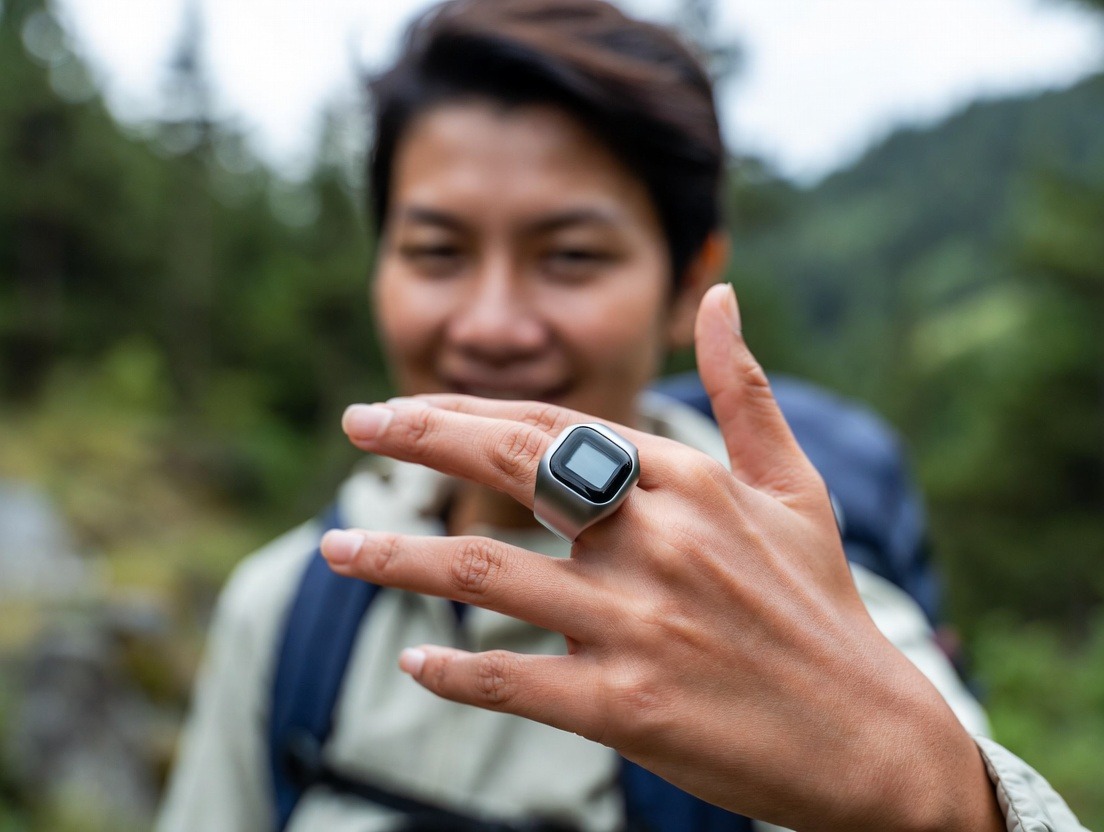
This is the core advantage of the smart ring form factor. Designed to be forgotten, it occupies a vascular-rich location (the finger) and faces minimal interference from wrist movements or accidental bumps. It doesn’t clash with professional attire or become a nuisance during sleep. This unobtrusive nature is not about fashion; it’s about fidelity of data. The best sensor is the one you never take off. For a detailed analysis of how this translates to accuracy and comfort, the ongoing ring vs. watch debate on accuracy and comfort provides a thorough examination.
Sensor Fusion: The Whole is Greater Than the Sum of Its Parts Capturing context requires measuring multiple physiological systems simultaneously. A single sensor gives a single number. Multiple sensors, whose data is fused algorithmically, reveal relationships. Modern health rings and watches employ a suite of sensors:
Photoplethysmography (PPG) Sensors: These green, red, and infrared LEDs measure blood flow beneath the skin. They are the workhorses for continuous heart rate, heart rate variability (HRV), and blood oxygen saturation (SpO2). Advanced PPG systems can even infer breathing rate.
Accelerometers & Gyroscopes: These measure movement and orientation. While used for step counting and sleep stage detection (movement), their contextual power is in correlating physical activity with physiological strain. Did your heart rate stay elevated long after that workout stopped? The accelerometer confirms the activity has ceased, so the prolonged elevation points to poor recovery or other stress.
Skin Temperature Sensors: A precision thermometer measuring the skin’s surface. Its value is not in absolute temperature, but in tracking changes from your personal baseline. A sustained elevation can signal the onset of illness, ovulation, or poor sleep environment; a drop can indicate reduced metabolic rate or circulatory changes.
Galvanic Skin Response (GSR) / Electrodermal Activity Sensors: These measure minute changes in the skin’s electrical conductivity, which increases with sweat. This is a direct, non-invasive proxy for sympathetic nervous system arousal, useful for detecting acute stress events.
The magic happens in the sensor fusion algorithm. For example, to determine sleep stages, the device doesn’t just look at movement. It combines movement data (accelerometer) with heart rate data (PPG showing drops during deep sleep), HRV data (showing autonomic shifts between REM and non-REM), and sometimes breathing rate. This multi-modal approach is far more accurate than any single metric. Similarly, a “stress” detection algorithm might fuse a sudden rise in heart rate (PPG) with an increase in skin conductance (GSR) while the accelerometer confirms you are physically still, strongly indicating a psychological stress event.
Longitudinal Algorithms and Personal Baselines Hardware captures raw signals; software transforms them into insight. The most sophisticated platforms do two things exceptionally well:
They Establish Your Baseline Dynamically: They don’t use population averages. Over an initial period (typically 1-2 weeks), they learn your normal ranges for HRV, RHR, temperature, and sleep. All future data is interpreted as a deviation from this personalized norm.
They Perform Trend Analysis and Correlation: They automatically identify the long-term trends we discussed, flagging significant deviations. More importantly, they look for correlations between different data streams. The app might surface an insight like: “On days when your daytime stress is high, your deep sleep decreases by an average of 15%,” or “Your resting heart trend is rising. This often precedes a dip in immune function. Consider prioritizing rest.”
This technological capability—continuous wear, multi-sensor fusion, and intelligent longitudinal analysis—is what makes the modern wearable not just a tracker, but a context engine. It provides the raw material and the initial processing needed for you to build your coherent health narrative. The difference between a basic fitness tracker and an advanced health biosensor is the difference between getting a weather report (it’s 72°) and having a personal climatologist who explains the pressure systems, seasonal trends, and microclimate effects that create your local weather.
Integrating Context into Your Daily Routine: A Practical Framework
Understanding the philosophy and technology is one thing; applying it daily is another. The goal is not to become a data analyst, but to weave contextual awareness into the fabric of your life in a way that feels effortless and empowering, not obsessive. Here is a practical, sustainable framework for making contextual health intelligence a habitual part of your day.
The Morning Check-In (3 Minutes): Reading Your Body’s Report Card Resist the urge to check your phone the second you wake up. Give yourself a few moments of quiet awareness. Then, open your health app not to seek validation, but to gather intelligence. Adopt a curious, non-judgmental mindset. You are a detective reviewing the clues from the night.
Look at the Triad: Quickly assess your three key overnight biomarkers—Sleep Score (the summary), Resting Heart Rate (compared to your baseline), and HRV (trending up or down?). Don’t fixate on exact numbers. Look for the story.
Green Flag: HRV at/above baseline, RHR at/below baseline, good sleep. Action: Proceed with your planned day. It’s a good day for challenge.
Yellow Flag: One metric is off (e.g., lower HRV but good sleep). Action: Proceed with caution. Consider it a “listen to your body” day. Maybe swap a high-intensity workout for a strength or mobility session.
Red Flag: Multiple metrics are significantly off (low HRV, high RHR, poor sleep). Action: This is a clear recovery signal. Prioritize rest, hydration, nutrition, and stress management. A hard workout today would be counterproductive.
Log a Quick Subjective Note: How do you feel? “Rested,” “Foggy,” “Anxious,” “Energetic.” This one-word log creates a powerful link between the objective data and your subjective experience over time.
The Daytime Awareness: Noticing Real-Time Signals Your wearable can provide real-time context if you use it intentionally, not compulsively.
Use Stress/Recovery Alerts Wisely: If your device has a stress or recovery notification feature, don’t let it become an annoyance. See it as a prompt for a “physiological pit stop.” When it alerts you to high stress while you’re sitting at your desk, it’s an invitation. Take it. Do 60 seconds of box breathing. Stand up and stretch. Get a glass of water. This is contextual data driving immediate, positive action.
Pre-Activity Gut Check: Before a workout, do a quick mental and physical scan. How do you feel in the context of your morning data? If your data suggested low readiness and you feel heavy, honor that. Modify the workout. This builds body trust.
The Evening Wind-Down: Setting the Context for Sleep Your evening routine is the most powerful lever you have for creating positive next-day data. It’s about consciously managing the inputs for your overnight recovery process.
Reflect on the Day’s Inputs: Think about your light (were you outside?), activity, nutrition, and stress. This reflection helps you connect actions to outcomes.
Use Data to Inform Rituals: If your data consistently shows poor sleep after late meals, let that harden your commitment to an earlier dinner. If you see elevated nighttime heart rate, use it as motivation to make your bedroom cooler and darker.
Charge Your Device Strategically: If you use a device that requires daily charging, establish a routine where you charge it during a predictable, low-data period—like during your morning shower and while getting ready. This minimizes data gaps.
The Weekly Review (15 Minutes): Connecting the Dots This is the most important practice for building your narrative. Schedule 15 minutes once a week, perhaps on a Sunday evening.
Zoom Out: Look at your weekly trend view for HRV, RHR, sleep, and activity.
Identify the Theme: Was it a high-stress work week? A recovery week? A heavy training week? Label it.
Spot Correlations: Did sleep suffer mid-week when work spiked? Did your HRV climb over the weekend when you spent time outdoors? Look for one or two clear cause-and-effect relationships.
Plan for the Next Week: Use this insight to plan. If you’re entering a known stressful period, pre-schedule recovery practices. If you’re starting a hard training block, be extra vigilant about sleep and nutrition.
This framework turns data from a distraction into a guide. It moves you from being reactive (“I’m tired, I guess I’ll skip the gym”) to being proactive and strategic (“My data shows I’m in a recovery phase, so I’ll focus on mobility and sleep to set myself up for a strong training block next week”). For more detailed strategies on making this integration seamless, our guide on integrating wearable tech into your daily routine offers extensive practical advice.
Communicating Your Narrative: Empowering Conversations with Healthcare Professionals
One of the most transformative applications of your contextual health narrative is in the doctor’s office. The traditional 15-minute appointment is often hampered by the “tyranny of the snapshot”—you must describe complex, fluctuating symptoms based on memory, and the clinician has only that moment’s blood pressure or heart rate to go on. This leads to misdiagnosis, overlooked patterns, and frustration on both sides. Your long-term, contextual data can revolutionize this dynamic, turning you from a passive patient into an informed partner in your care.
From Anecdote to Objective Log Instead of saying, “I’ve been feeling tired and my heart sometimes races,” you can present a data-supported narrative: “Over the past three months, my wearable data shows a consistent trend of my resting heart rate increasing from my baseline of 58 to an average of 68, and my heart rate variability has dropped by 25%. This correlates with a period of increased work stress I logged, and my sleep efficiency has declined by 10%. I’ve attached a summary graph of this trend.”
This is a powerful, objective starting point. It moves the conversation from vague symptoms to documented physiological shifts, complete with potential triggers and timeline.
Preparing for the Appointment: The Data Digest To be effective, you must present data thoughtfully, not overwhelm your clinician with 90 days of raw graphs.
Summarize, Don’t Dump: Use your app’s reporting features or create a simple one-page summary. Highlight key trends, not daily numbers.
Focus on Relevant Context: If you’re discussing fatigue, bring sleep and HRV trends. If discussing palpitations, bring heart rate charts from episodes you’ve logged, noting what you were doing (e.g., “HR spike to 120 while sitting at my desk, logged as ‘after stressful call’”). If discussing potential metabolic issues, share observations on how your RHR responds to different foods.
Frame it as a Collaborative Tool: Approach the conversation with, “I’ve been using this device to better understand my body, and I’ve noticed some trends I wanted to get your professional perspective on.” This establishes a partnership.
Specific Use Cases for Clinical Collaboration:
Hypertension & Cardiology: Nocturnal blood pressure dipping is a critical prognostic indicator. While wearables don’t measure blood pressure directly, elevated nighttime heart rate and low HRV can be surrogate markers of impaired cardiovascular recovery, prompting further investigation with 24-hour ambulatory blood pressure monitoring.
Endocrinology & Metabolism: For individuals with diabetes or prediabetes, continuous data (especially when combined with a CGM) can show how sleep, stress, and exercise impact glucose control in real-life settings, far beyond quarterly HbA1c tests.
Mental Health: Data showing chronic low HRV and sleep disruption provides biological validation of anxiety or depression, moving beyond purely subjective scales. It can also track the physiological impact of therapeutic interventions like meditation or medication.
Sleep Medicine: This is perhaps the most direct application. Instead of relying on subjective recall of sleep habits, you can present weeks of objective data on sleep latency, duration, awakenings, and blood oxygen levels (SpO2), which can be crucial for screening sleep apnea or insomnia. The detailed comparison in smart ring vs. smartwatch for sleep tracking highlights which form factors provide the most clinically relevant nocturnal data.
Chronic Disease Management: For conditions like POTS, Long COVID, or chronic fatigue syndrome, wearables can document the profound dysautonomia (autonomic nervous system dysfunction)—showing postural heart rate spikes, inability to recover from minimal exertion, and non-restorative sleep—providing tangible evidence of disability and tracking response to treatment.
The Future is Collaborative Forward-thinking clinicians are beginning to welcome this data. It provides a window into the patient’s life outside the clinic walls. It helps differentiate between physiological and psychological components of illness. It enables more personalized treatment plans and better monitoring of outcomes.
By bringing your contextual narrative to your healthcare team, you empower them with better information and empower yourself with greater agency. You transform the appointment from a transaction into a collaborative investigation, grounded in the continuous story of your health. This paradigm shift is at the heart of how technology can empower patient-doctor communication.
Navigating the Limitations: A Critical Eye on Data Accuracy and Privacy
Embracing contextual health intelligence requires a balanced perspective. While the potential is enormous, it is crucial to approach wearable data with a critical eye, understanding its limitations regarding accuracy, interpretation, and the profound responsibility of handling sensitive personal data. Informed use is empowered use.
The Accuracy Debate: Consumer Tech vs. Medical Grade It is paramount to remember: Consumer wearables are wellness and fitness devices, not medical diagnostic tools. They provide incredibly valuable trends and insights for health optimization and awareness, but they are not replacements for clinical tests and professional medical diagnosis.
Validation Varies: The accuracy of optical heart rate sensors, SpO2 readings, and sleep staging algorithms varies significantly between devices and under different conditions (e.g., skin tone, tattoo presence, motion). Reputable companies conduct and publish validation studies. Look for devices whose sensors and algorithms are developed in partnership with research institutions and have published data in peer-reviewed journals.
Understand the Margin of Error: A consumer SpO2 sensor might have a margin of error of +/- 2%. This is fine for observing trends (e.g., a gradual decline at altitude), but it is not precise enough to diagnose hypoxemia. A wearable’s sleep staging might be 80-90% accurate compared to polysomnography (the clinical gold standard), which is excellent for personal insight but means it will sometimes mislabel a sleep stage.
The Gold Standard Context: Use wearable data as a screening and trend-tracking tool. It’s excellent for asking “Is something changing?” and “Should I investigate further?” It is not for answering “What is my exact, clinical-grade diagnosis?” Any concerning or persistent trend should be discussed with a healthcare professional who can order validated medical tests. Our dedicated article on the accuracy debate between wearables and medical testing explores this distinction in necessary depth.
The Privacy Imperative: Who Owns Your Story? Your contextual health data is arguably the most intimate digital profile that exists. It’s a continuous log of your body’s inner state, correlated with your location, activities, and lifestyle. How this data is stored, processed, and shared is a non-negotiable consideration.
Data Ownership & Control: Before choosing a platform, scrutinize its privacy policy. Who owns the data? You should. What can the company do with aggregated, anonymized data? That may be acceptable for research. Can they sell individual, identified data? The answer must be no. Look for companies that are transparent about data use and give you clear controls over sharing and deletion.
Security Standards: Data should be encrypted both in transit (to/from the cloud) and at rest (on servers). Does the company use enterprise-grade security practices? Are they compliant with regulations like GDPR (EU) and HIPAA (US, for certain features)? A breach of this data is not like a leaked password; it’s a violation of your biological identity.
Third-Party Integrations: Be cautious when connecting your health data to other apps (e.g., fitness platforms, insurance wellness programs). Each connection creates another potential vulnerability and cedes some control. Only permit integrations you fully trust and understand. Our guide on third-party integrations and compatibility covers the benefits and risks in detail.
Avoiding Data Obsession and Anxiety The final, personal limitation to navigate is psychological. The goal is insight, not obsession.
Set Boundaries: Designate specific times to check your data (e.g., morning check-in, weekly review). Don’t refresh the app compulsively throughout the day.
Embrace the Fluctuation: Remember that daily noise is normal. A single low HRV reading is not a crisis; a two-week declining trend is meaningful. Focus on the direction, not the daily dot on the graph.
Trust Your Lived Experience: If you feel great but your “readiness score” is low, trust your body. If you feel terrible but all metrics are green, listen to that feeling. The data is one input, not the ultimate authority. It should augment your self-awareness, not replace it.
By approaching wearable technology with this critical, informed mindset—celebrating its power for contextual insight while respecting its limitations as a consumer tool, and vigilantly protecting your privacy—you harness its full potential as a partner in well-being without falling prey to its pitfalls. This balanced approach ensures that your journey into health data remains empowering, enlightening, and fundamentally human.
Making the Choice: Selecting a Device Designed for Contextual Insight
With the philosophy clear and the practical framework established, the next logical step is selecting the right tool. The market is saturated with options, from basic fitness bands to premium smartwatches and the emerging category of smart rings. Choosing a device that genuinely enables contextual health intelligence—rather than just providing more isolated numbers—requires looking beyond marketing specs to a set of core design principles. The ideal device functions not as a gadget, but as a seamless health biosensor.
The Foundational Criteria: What to Look For
Unobtrusive, 24/7 Wearability: This is the non-negotiable foundation. Context requires continuity. A device you remove for charging daily, for sleep, for certain workouts, or for professional settings creates data gaps that break the narrative. Prioritize devices with battery life measured in days, not hours, and a form factor you can forget you’re wearing. Comfort is not a luxury; it’s a data integrity requirement. As discussed in our comparison of form factors for 24/7 monitoring, this is where sleek, jewelry-like rings often have a distinct advantage over larger wrist-worn devices.
Multi-Sensor Array for Fusion: Check the sensor suite. At a minimum, look for:
A multi-LED PPG sensor (heart rate, HRV, SpO2).
A 3-axis accelerometer (movement, sleep staging).
A skin temperature sensor. Devices that also include GSR sensors for electrodermal activity or continuous bioimpedance for deeper body composition insights are pushing into more advanced territory. The key is not the longest list, but the integration of these sensors into a cohesive health model.
Longitudinal Analysis & Personal Baselines: The accompanying app is as important as the hardware. It must do more than show yesterday’s data. It should:
Establish a personal baseline automatically over 1-2 weeks.
Display clear trend lines (weekly, monthly) for all core metrics.
Provide meaningful insights that connect data points (e.g., “Your deep sleep decreases when daytime stress is high”).
Offer a readiness or recovery score that is a true composite of multiple metrics (HRV, RHR, sleep, temperature), not just sleep or activity.
Actionable Intelligence, Not Just Alerts: Avoid platforms that bombard you with pointless notifications (“You’ve been sitting for 50 minutes!”). Seek out those that provide contextual, actionable insights. A good system might suggest: “Your recovery is low today. Consider a lighter workout,” or “Your data suggests you may be getting sick. Prioritize rest and hydration.”
The Form Factor Decision: Smart Ring vs. Smartwatch
This is the central hardware choice for the context-focused user. Each has inherent strengths shaped by its design.
The Smart Ring Advantage (The Unobtrusive Biosensor):
Pros: Maximizes wearability and consistency. The finger provides a strong, stable PPG signal with less motion artifact than the wrist. It’s inherently sleep-friendly, socially discreet, and compatible with all attire and professions. It focuses almost exclusively on passive, continuous health monitoring.
Cons: Limited screen real estate means no onboard notifications, GPS, or music control. Interaction is minimal. Sizing is critical for accuracy and comfort.
Best For: The individual whose primary goal is uninterrupted, clinical-grade health and sleep data with zero lifestyle friction. It’s for the person who wants the deepest possible physiological narrative without a tech-centric device on their wrist.
The Smartwatch Advantage (The Connected Health Hub):
Pros: A powerful all-in-one device. Excellent for activity tracking with GPS, on-wrist workout guidance, receiving notifications, making payments, and other smart functions. Larger batteries can power more frequent sensor readings.
Cons: Can be bulky for sleep, may need daily charging, and wrist-based PPG can be less accurate during high-motion activities or for those with smaller wrists. The smart features can be distracting.
Best For: The individual who wants a multi-purpose tool and prioritizes fitness tracking, connected features, and a screen for real-time workout data alongside health insights.
The choice boils down to priority: Do you want a dedicated health biosensor that disappears into your life, or a versatile health-and-lifestyle hub on your wrist? For a comprehensive, point-by-point analysis to inform this decision, our ultimate wearable health tracker comparison for 2025 is an indispensable resource.
Beyond the Device: Evaluating the Ecosystem The device is just the entry point. Lock-in happens at the ecosystem level. Consider:
App Design and Usability: Is the app intuitive? Does it present contextual insights clearly, or is it a confusing dashboard of numbers?
Data Portability & Ownership: Can you export your raw data? Is there an open API for you to connect to other health platforms (like Apple Health, Google Fit, or Strava)? You should own and control your narrative.
Scientific Backing & Transparency: Does the company publish white papers or validation studies on their algorithms? Are they clear about what their metrics mean and their limitations?
Support and Community: Is there robust customer support? An engaged user community can be a wealth of practical knowledge on interpreting data in context.
Choosing the right tool is the first active step in committing to a contextual health journey. It’s an investment in a platform that will become your partner in self-discovery. By prioritizing continuous wear, sensor fusion, and intelligent software, you select a device designed not to give you more numbers to worry about, but to provide the coherent story you need to understand.



%402x.svg)