


Activity Level Optimization for Endurance Athletes: Smart Ring Training
Smart ring strategies for endurance athletes.
Smart ring strategies for endurance athletes.
%402x.svg)
For the endurance athlete, the quest for optimization is a sacred pursuit. It’s a meticulous dance on the knife’s edge between peak performance and overtraining, between a personal best and a season-ending injury. For decades, this dance was guided by intuition, rudimentary heart rate monitors, and training logs filled with subjective notes on perceived exertion. While valuable, this approach was akin to navigating a vast ocean with a compass but no detailed map of the currents beneath the surface.
Today, a quiet revolution is unfolding on the fingers of elite marathoners, ultrarunners, cyclists, and triathletes worldwide. The unassuming smart ring, a device that tracks biometrics 24/7, is providing that missing map. It’s shifting the paradigm from simply measuring activity to truly understanding readiness. This isn't about counting steps; it’s about decoding the complex physiological symphony of stress, recovery, and adaptation that dictates your capacity for work. It’s about moving from a one-dimensional view of "more miles" to a multidimensional model of "precise, sustainable adaptation."
The promise is profound: a future where your training plan dynamically adjusts to your body’s actual state, not a pre-written calendar. Where you can identify a brewing illness or overreaching phase before it derails your key workout. Where sleep is quantified not just for duration, but for its true restorative power. For the endurance athlete, this is the ultimate edge—not a shortcut, but a smarter, more informed path to the summit of their potential. This guide will explore how the fusion of continuous biometric data and intelligent analysis is redefining what it means to train for endurance, turning every workout into a targeted, data-informed mission.
The foundational principle of athletic improvement is deceptively simple: apply a stressor (training), allow for recovery and adaptation, and emerge stronger. This is the supercompensation cycle. For endurance athletes, however, this cycle is fiendishly complex to manage. The primary stressor—long-duration, sustained effort—places a unique burden on the cardiovascular, musculoskeletal, and central nervous systems. Unlike power athletes, whose recovery is often signaled by muscle soreness, the endurance athlete’s fatigue is systemic, subtle, and cumulative.
The classic dilemma is the "gray zone." This is the space between being optimally trained and overtrained, where performance stagnates or declines, motivation wanes, sleep becomes restless, and the risk of injury and illness skyrockets. Many athletes spend years oscillating in this gray zone, following rigid plans that ignore their body’s daily fluctuations in readiness. They push through planned high-intensity sessions on a body screaming for rest, or they take an easy day when their data would show they are primed for a breakthrough.
"I followed my plan to the letter, but I got slower." This common lament highlights the flaw in a calendar-driven approach. The plan cannot account for a poor night’s sleep due to travel, a stressful work project, a subclinical immune system battle, or the residual fatigue from a workout that hit you harder than expected. Without a window into your autonomic nervous system (ANS)—the control center for stress (sympathetic) and recovery (parasympathetic) responses—you are training blind.
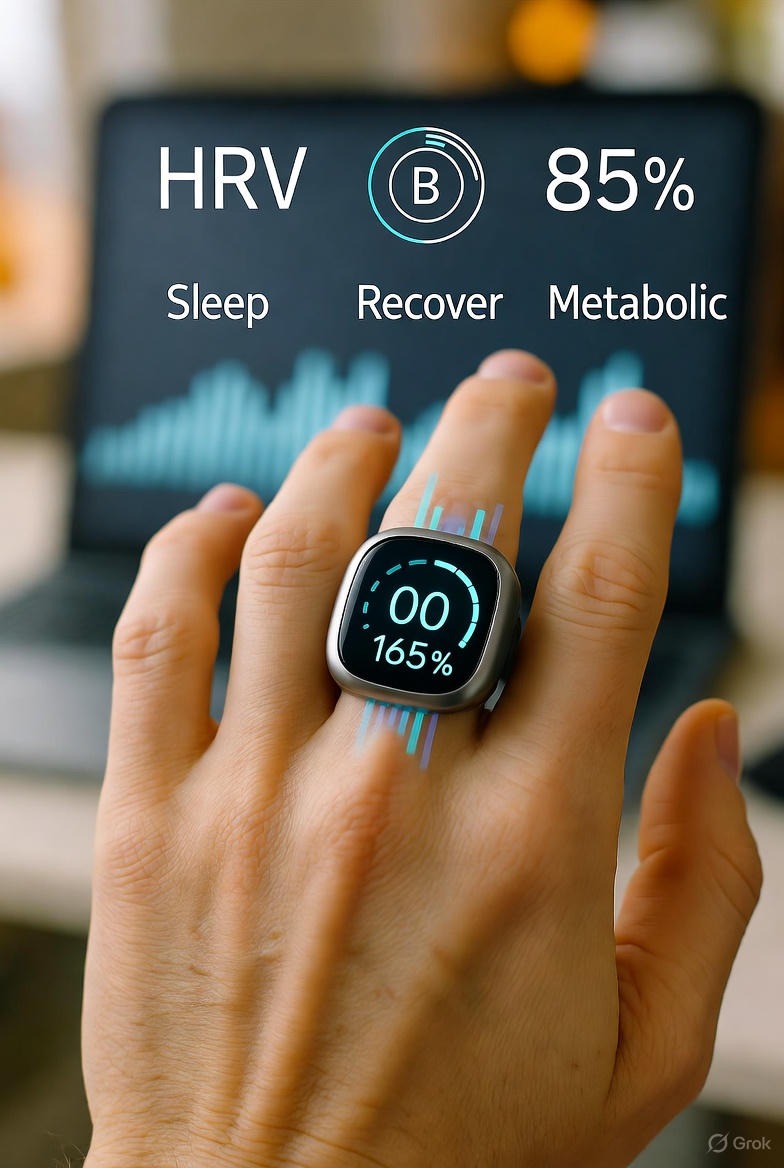
This is where the 24/7 monitoring capability of a device like the Oxyzen smart ring changes the game. By tracking key biomarkers like Heart Rate Variability (HRV), resting heart rate (RHR), respiratory rate, and skin temperature continuously, it provides an objective, quantifiable measure of your systemic stress load and recovery status. It moves the question from "What does my training plan say to do today?" to the far more powerful: "What is my body capable of today?" This shift is the cornerstone of activity level optimization. To see how this 24/7 data collection forms the bedrock of a modern wellness strategy, you can explore the philosophy behind continuous health monitoring and its impact.
The fitness tracker and smartwatch market is saturated. So why would a seasoned athlete look to a ring? The answer lies in form, function, and physiological fidelity.
Form Factor and Consistency: For endurance sports, especially running and cycling, a watch can be obtrusive. It can catch on clothing, interfere with wrist-based heart rate monitors (which are notoriously inaccurate during high-intensity or grip-dependent exercise), and is often removed for sleep—missing the most critical recovery data window. A smart ring is unobtrusive, lightweight, and worn 24/7. This guarantees consistent data collection across all life domains: training, sleep, work, and rest. You cannot optimize what you do not measure consistently.
Superior Sleep and Recovery Data: Sleep is the endurance athlete’s most potent performance enhancer. It’s when Human Growth Hormone is released, tissues are repaired, and memories (including muscle memory) are consolidated. A ring on your finger provides a more accurate picture of sleep architecture (light, deep, REM) than most wrist-based devices because it can better detect micro-movements and lacks the problematic "flipping" issue users experience in bed. Furthermore, by being worn all night, it captures your true physiological baseline each morning—your HRV, RHR, and temperature—which are the purest indicators of recovery.
Clinical-Grade Sensors in a Passive Package: Advanced smart rings house medical-grade sensors for photoplethysmography (PPG) to measure blood flow, a 3D accelerometer for movement, and a skin temperature sensor. Their placement on the finger’s palmar digital artery provides a strong, consistent signal. The passive, always-on nature of the device means it captures trends and anomalies—like a gradual rise in resting heart rate or a dip in HRV—that you would never feel subjectively until it was too late.
A Holistic Stress Score, Not Just Activity Score: Most fitness wearables are obsessed with output: calories burned, steps taken, floors climbed. For an endurance athlete, this is only half the equation. The smart ring’s primary value is quantifying input: how well your body is absorbing and recovering from all life stress. By synthesizing data into a daily Readiness or Recovery Score, it provides a single, actionable metric to guide training intensity. This holistic view aligns with a comprehensive approach to longevity and performance, much like the strategies discussed in our resource on science-backed healthy aging tips.
For athletes ready to embrace this new paradigm, the journey often begins at the Oxyzen.shop, where the fusion of elegant design and powerful analytics is on full display.
To harness the power of smart ring data, you must become fluent in its language. These are not just numbers; they are vital signs of your training adaptation. Let’s break down the core metrics and their profound implications for endurance.
Heart Rate Variability (HRV): The North Star Metric
HRV is the gold standard for measuring autonomic nervous system balance and physiological readiness. It measures the subtle variations in time between each heartbeat. A higher HRV (within your personal baseline range) generally indicates strong parasympathetic (rest-and-digest) tone and good recovery. A downward trend suggests accumulated stress—from training, life, or illness.
Resting Heart Rate (RHR): The Baseline Gauge
Your RHR upon waking is a fundamental indicator of cardiovascular fitness and fatigue. As you get fitter, RHR typically lowers. However, an elevated RHR (5-10+ bpm above your normal baseline) is a classic sign of incomplete recovery, dehydration, or the onset of illness.
Sleep Stages & Quality: The Foundation of Adaptation
Endurance training breaks you down; sleep builds you back stronger. Smart rings analyze sleep duration, efficiency, and time in each stage. Deep sleep is crucial for physical repair and hormone release, while REM sleep is vital for cognitive recovery and motor skill consolidation.
Respiratory Rate & Skin Temperature: The Early Warning System
These are often overlooked but incredibly sensitive metrics. Respiratory rate during sleep naturally fluctuates but can elevate with increased metabolic stress, illness, or altitude. Skin temperature trends can indicate inflammation, the start of a fever, or hormonal changes.
By learning to interpret this symphony of data, you move from being a passive executor of a plan to an active conductor of your own physiology. For a deeper dive into how these metrics interconnect to support long-term wellness goals, our blog offers extensive resources.
You cannot identify what is abnormal without first defining what is normal for you. HRV of 50 ms might be excellent for one athlete and low for another. This is why the initial baseline period is non-negotiable. The first month with a smart ring is not for making training decisions; it is for pure, passive observation.
The Process: Wear the ring consistently. Go about your regular training and life. The device’s algorithms need time to learn your unique patterns—your typical HRV range, your normal RHR, your sleep architecture. During this phase, avoid the temptation to over-analyze daily scores. Look instead for trends and correlations.
Key Insights to Uncover:
This baseline period transforms the data from abstract numbers into a personalized bio-feedback system. It’s the process of creating your own physiological fingerprint. The importance of establishing a personal baseline is a principle that applies equally to performance and longevity, as seen in strategies to preserve independence longer through data. For technical questions on this process, athletes often find answers in the comprehensive FAQ section.

With a solid baseline established, you can now implement autoregulation—letting your daily biometric data guide your training intensity. This is where activity level optimization becomes a practical reality. Throw out the rigid plan; adopt a flexible framework.
The Daily Check-In: Each morning, consult your smart ring’s Readiness/Recovery Score (a composite of HRV, RHR, sleep, etc.). This is your guiding light for the next 24 hours.
Weekly Planning with Intelligence: Use your trend data to plan your week dynamically. For example, if you know a big workout on Monday consistently leaves you in the yellow on Wednesday, plan Wednesday’s session to be inherently flexible—perhaps an easy swim instead of a hard run.
The Story of "The Missed Workout That Led to a PR": Consider the triathlete who woke up with a terrible recovery score before a planned crucial brick workout. Despite the urge to push, they trusted the data and took a rest day. The next day, their score was green. They executed the session flawlessly, with higher power outputs and better form than ever. By listening, they not only avoided potential injury but also maximized the quality of the session, leading to a personal best in their next race. This principle of listening to your body’s signals is universal, much like the approach needed for navigating hormonal changes with data.
Traditional periodization divides a season into distinct blocks: base, build, peak, taper. Smart ring data doesn’t replace this structure; it supercharges it with real-time feedback, making each block more effective and preventing the common pitfall of overreaching during a build phase.
Guiding the Build Phase: The build phase is where injury and illness risk peaks. By monitoring your HRV trend and RHR throughout this block, you can see if you are tolerating the increased load. A steadily declining HRV trend is a signal to insert a recovery microcycle before your planned one, ensuring you continue to adapt positively instead of spiraling into fatigue.
Optimizing the Taper: The taper is an art form. Too little rest and you’re fatigued; too much and you feel flat. Biometric data takes the guesswork out. As you reduce volume, you should see a corresponding rise in HRV and a drop in RHR, indicating supercompensation. If your numbers aren’t improving, your taper might need adjustment. The goal is to see your readiness score hit its peak on race morning.
Post-Race/Season Recovery: One of the hardest things for an endurance athlete is proper off-season recovery. Smart ring data provides objective proof of systemic fatigue that can last for weeks after a major event. It can guide a truly restorative break, ensuring you return to base training fully replenished, not just physically, but neurologically and hormonally. This long-view approach to recovery and sustainable training mirrors the lifelong strategies for maintaining muscle mass and function.
We’ve touched on sleep, but for the endurance athlete, it deserves its own command center. Smart ring data reveals sleep not as a monolithic block, but as a dynamic, quality-driven process critical for specific types of recovery.
Correlating Sleep with Workout Type:
Actionable Sleep Hygiene for Athletes:
Data is useless without action. If your ring shows poor sleep efficiency or fragmented deep sleep, you can experiment with interventions:
By treating sleep with the same analytical rigor as your workouts, you turn it into a active performance enhancer. The profound link between recovery sleep and long-term health is a central theme in resources like HRV monitoring for healthy aging goals.
While smart rings don’t directly track calories or macros, they provide indirect, high-fidelity feedback on how your fueling and hydration strategies affect your core physiology—feedback that is often more valuable than any food log.
Hydration Status: Chronic under-hydration increases plasma osmolality, which can lead to a higher resting heart rate and lower HRV as your cardiovascular system works harder. A sudden spike in morning RHR, without other stress factors, can be a clear signal to assess your fluid intake from the previous day.
Nutritional Periodization & Recovery: How does a high-carb meal post-long run affect your sleep and next-morning readiness compared to a mixed meal? Does a low-carb day during a recovery period improve your metabolic flexibility markers? By experimenting and observing the biometric consequences, you can tailor your nutrition to support not just energy, but recovery quality.
The Inflammation Signal: Poor nutritional choices—like excessive processed foods or sugars—can promote systemic inflammation. This may manifest as a elevated skin temperature trend or a suppressed HRV. Seeing this direct correlation can be a powerful motivator for choosing anti-inflammatory foods that support training adaptation.
This biofeedback loop turns your body into its own lab, allowing for truly personalized nutrition that goes beyond generic plans. Understanding the internal impact of lifestyle choices is a cornerstone of the philosophy at Oxyzen.ai, where data empowers personal wellness journeys.
An athlete is not just an athletic system. The stress of a demanding job, family obligations, financial worries, or travel imposes a very real "life stress load" that is processed by the same autonomic nervous system you are trying to balance for training. Ignoring this is the downfall of many dedicated athletes. The smart ring does not let you ignore it.
Quantifying Life Stress: You’ll see it unmistakably in the data: a brutally stressful day at work, even without a workout, can crater your HRV and wreck your sleep just as profoundly as a 20-mile run. This is the ring’s most humbling and valuable lesson: all stress is physiological stress.
Integrating Life Stress into Your Training Dashboard: Once you accept this, you can truly autoregulate. A high-readiness score on a quiet Sunday might mean you can handle a big workout. That same score on a Wednesday after back-to-back meetings and a missed lunch is a mirage; your body’s resources are already allocated. The intelligent approach is to downgrade the workout.
The Case for Stress Management as Cross-Training: This data validates mindfulness, meditation, and true rest as critical components of an endurance training program. If you see that a 10-minute meditation session before bed improves your deep sleep percentage, that becomes as important as a core workout. This holistic view of stress management is vital for sustained performance, a concept explored in the context of stress management and social connection.
By acknowledging and measuring the full spectrum of stress, the smart ring enables the endurance athlete to build resilience not just in their muscles, but in their entire being. This comprehensive, data-informed approach is what separates a sustainable, decades-long athletic journey from a short-lived, burnout-prone campaign. For those inspired by the stories of others who have integrated this technology into their lives, real-world experiences are shared in our testimonials section.
The Biometric Blueprint: Advanced Data Integration for Peak Performance
We have established the foundation: the smart ring as a 24/7 sentinel, decoding your body's readiness signals to move beyond rigid training calendars. But data in isolation is merely information. Its transformative power is unleashed when it becomes part of a holistic, integrated system—a Biometric Blueprint. This blueprint is your personalized model of stress and adaptation, where data from your ring converses with your workout metrics, nutrition logs, and subjective feelings to paint a complete, actionable picture. For the endurance athlete seeking not just to finish but to excel, mastering this integration is the next frontier.
Consider this scenario: Your morning readiness score is a solid 85/100. By the old paradigm, you'd proceed with your planned threshold run. But your smart ring app shows a subtle but steady three-day decline in your deep sleep percentage, and your resting heart rate, while within range, is 3 bpm above your weekly average. Simultaneously, your training platform shows your heart rate drift was unusually high on your last two easy runs—a sign of cardiovascular strain. Independently, each data point is manageable. Integrated, they form a clear pattern: you are accumulating fatigue. The Biometric Blueprint doesn't just tell you your score; it tells you the why behind the score, empowering you to adjust your threshold run to a steady-state effort before a true recovery day. This is advanced activity level optimization in action.
The modern athlete's data lives across multiple platforms: Garmin Connect or Strava for workouts, MyFitnessPal or Cronometer for nutrition, and now, your smart ring's companion app for 24/7 physiology. The magic happens when these silos communicate.
The Power of API Integration: Leading smart rings offer Application Programming Interface (API) connections or direct partnerships with major training platforms. This allows your daily readiness score and key metrics like HRV and sleep to be automatically imported into apps like TrainingPeaks, Today's Plan, or even Strava. Imagine opening your TrainingPeaks dashboard and seeing not only your planned workout but also a widget displaying, "Oxyzen Readiness: 72 - Consider reducing intensity by 10%." This contextualizes your workout plan in real-time.
Creating a Unified Dashboard: Even without formal integration, you can manually create your own dashboard. The practice of logging your morning readiness score, HRV, and RHR directly into the "comments" section of your daily training log is immensely powerful. Over weeks and months, you can scroll back and see precise correlations: "HRV dropped to 42ms here, note the poor sleep after a late flight," or "Set 10K PB on this day, readiness was 94 with 1.5 hours of deep sleep." This manual curation builds profound self-knowledge. To understand how this kind of proactive data tracking supports long-term goals beyond athletics, you can read about strategies to protect cognitive function through monitoring.
Actionable Workflow: Here is a simple, effective daily routine for ecosystem integration:
While the daily HRV number is useful, the trend line over weeks and months is where the deepest insights lie. It is the clearest objective measure of your body's long-term response to your training lifestyle.
Interpreting the Trend:
The "Supercompensation Wave": In a well-structured training cycle, you should see a predictable wave pattern. During a hard build week, HRV may dip slightly. During a planned recovery week, it should rebound and often exceed its starting point—this is supercompensation, the fitness gain. Your smart ring visually confirms this physiological principle is working. This nuanced understanding of your body's waves is key to longevity in sport, similar to how movement strategies must adapt every decade.
Case Study: The Overtraining Avert. A marathoner in a 12-week plan noticed her HRV trend had been slowly declining for 10 days, despite a "green" readiness score that morning. Her plan called for a 22-mile long run. Trusting the deeper trend over the single-day score, she reduced the run to 16 miles at an easier pace. The next week, after two easy days, her HRV trend rebounded sharply. She later wrote in her log, "The ring didn't just save that run; it saved my training cycle. I felt fresh and hit my key workouts perfectly the next two weeks, where I would have been buried." For those curious about the technology that enables such insights, the story behind Oxyzen details the journey to create this precise feedback tool.

The concept of "stress buckets" is vital. Imagine you have several buckets that fill with stress: a Training Bucket, a Work/Life Bucket, an Environmental Bucket (travel, heat, altitude), and an Immune Bucket. Your body doesn't differentiate the source; it only knows the total volume of water across all buckets. When they overflow, breakdown occurs.
Your smart ring measures the water level in the combined bucket.
Practical Application: Use your ring's data to "charge" your life stress. If you have a known high-stress life period coming up (tax season, finals, a big work project), proactively plan your training into a maintenance or recovery phase. Don't try to build fitness when your life bucket is already full. This holistic load management is the essence of sustainable performance and is a core principle in building a resilient physiology, as discussed in the context of fighting cellular aging.
Endurance athletes often train or compete in non-home environments. Travel disrupts circadian rhythms. Altitude requires physiological adaptation. Heat and humidity increase cardiovascular strain. Your smart ring provides an objective dashboard for navigating these challenges.
Travel Fatigue & Jet Lag Quantified: Flying across time zones wreaks havoc on sleep architecture and ANS balance. Your ring will show dramatically suppressed deep sleep, elevated RHR, and low HRV for days. This data:
Altitude Acclimation: Upon ascending to altitude, expect a immediate increase in resting heart rate and a decrease in HRV as your body works harder to oxygenate tissues. The recovery of these metrics toward your baseline over 7-14 days is a direct measure of your acclimatization. A smart ring allows you to track this process day-by-day. If your HRV is still critically low after a week, it's a sign you may be more susceptible to altitude sickness and should prioritize rest and hydration over intense training.
Heat Adaptation: Similarly, training in a hot climate increases plasma volume and cooling efficiency. This adaptive process is stressful. Your ring will show elevated nighttime heart rate and potentially higher skin temperature during the adaptation phase. Monitoring the normalization of these metrics confirms when you have adapted and can safely increase intensity.
This ability to objectively monitor your body's response to environmental stress is a game-changer for safely and effectively preparing for destination races. It turns guesswork into a guided scientific process. For athletes tackling new challenges at any age, this data-driven confidence is invaluable, echoing the themes in healthy aging tips that start working at any age.
The journey to optimized, multi-sport performance begins not with a drastic overhaul, but with curious observation and small, intelligent adjustments. Your first 30 days with a smart ring and this new philosophy are about establishing your personal baseline and learning the language of your unique physiology. Here is a step-by-step framework to begin.
Phase 1: The Observation Fortnight (Days 1-14) – Become a Detective
Phase 2: The Connection Week (Days 15-21) – Find the Patterns
Phase 3: The First Optimization Week (Days 22-30) – Take Intelligent Action
Key Mindset Tips for the First 30 Days:
By the end of this first month, you will have moved from being a passive exerciser to an active student of your own body. You'll have the foundational knowledge to begin the lifelong practice of Activity Level Optimization. For ongoing support and answers to common questions as you start, our comprehensive FAQ page is an invaluable resource.
We have journeyed from the flawed paradigms of the past to the precise, personalized future of athletic performance. Activity Level Optimization is not a fad or a gadget-driven hype cycle; it is the logical evolution of sports science, made personal and accessible through advanced biometric wearables like smart rings.
The core revelation is this: Your body is always communicating. For years, we lacked the tools to listen with clarity, relying on delayed and often misleading signals like soreness and general fatigue. Now, we can hear the nuanced language of the autonomic nervous system through HRV, understand the story of repair through sleep architecture, and gauge systemic stress through resting heart rate and temperature.
This first portion of our comprehensive guide has laid the philosophical and practical foundation:
The path forward is one of partnership—between your ambition and your body’s wisdom, between your training plan and the real-time data that validates or vetoes it. It is a path that leads not only to peak performances but to a lifetime of sustainable, joyful, and healthy activity.
This is just the beginning. In the next portion of this deep dive, we will build upon this foundation to explore advanced topics: deep dives into nutrition timing based on biomarker feedback, advanced recovery modality analysis (cryotherapy, PEMF, etc.), the role of genetic and blood biomarker testing in conjunction with wearables, and building a truly personalized, AI-assisted coaching system. We will also tackle sport-specific optimization blueprints for everything from marathon training to martial arts.
The era of guessing is over. The era of knowing, and optimizing based on that knowledge, is here. To continue your journey and explore the technology that makes this possible, visit the Oxyzen shop to discover our smart ring collections and begin listening to your body's most valuable feedback.
Most injuries are not sudden; they are the culmination of micro-stresses that manifest as pain only after the damage is significant. Before pain, there are often subtle biometric whispers. The smart ring, tracking systemic inflammation and nervous system imbalance, can help you hear them.
The Inflammation Signal (Skin Temperature): A localized, persistent increase in skin temperature on a limb (compared to the contralateral limb) can be a very early sign of inflammation from a budding overuse injury like tendonitis or a stress reaction. While not a diagnostic tool, this trend can prompt you to cross-train, ice, and get proactive treatment before you have to stop running entirely.
Sympathetic Overdrive and Poor Recovery: Chronic pain or a nagging injury places a constant low-grade stress on the nervous system, often keeping it in a sympathetic (fight-or-flight) state. This can manifest as a chronically depressed HRV and restless sleep, even on rest days. If you see this pattern without an obvious training cause, it's worth assessing your body for niggles you might be subconsciously compensating for.
The "Failed Recovery" Test: After a hard workout or long run, your body should show signs of recovery (increased deep sleep, rebounding HRV) within 1-2 days. If you complete a session and your biometrics continue to degrade for 3+ days—a "failed recovery" response—it's a strong indicator that the workout was too much for your current state. Repeated failed recoveries are a direct pipeline to injury. This proactive approach to listening to your body's signals aligns with the preventative mindset highlighted in tips for the critical decade of your 50s.
For female endurance athletes, the monthly hormonal cycle is a powerful, yet often ignored, variable in training adaptation. Estrogen and progesterone fluctuations impact core temperature, metabolism, ligament laxity, inflammation, and nervous system tone. A one-size-fits-all training plan disregards this fundamental biology. Smart ring data can illuminate these patterns and guide cycle-synced training.
Mapping Your Cycle to Your Metrics:
Empowered Autoregulation: By tracking their cycle alongside ring data for 3-4 months, female athletes can build a personalized map of how their physiology responds to each phase. They can then plan their training macrocycles around it, placing race days strategically and adjusting nutrition and hydration needs. This isn't about limitation; it's about precision. Honoring this cycle is a form of biohacking that can reduce injury risk and improve performance outcomes. For a deeper exploration of this topic, our blog features a dedicated guide on healthy aging tips for women navigating hormonal changes.
The Mind-Body Feedback Loop: Using Data to Enhance Psychological Resilience
Endurance sports are as mental as they are physical. Anxiety about performance, obsession over data, and the frustration of a missed workout can create a negative psychological stress loop that physically impairs recovery. Paradoxically, the smart ring's data, when used wisely, can break this loop and build psychological resilience.
Objective Validation vs. Subjective Dread: An athlete may wake up feeling "heavy" and dreading a workout, subjectively convinced they are tired. If their readiness score is high, the data provides objective permission to proceed with confidence, often transforming the mental experience. Conversely, feeling "great" but seeing a low score provides objective rationale for rest, mitigating the guilt of taking an unplanned day off.
Building Self-Efficacy: Successfully interpreting your body's signals and adjusting training accordingly—and then seeing positive results—builds tremendous athletic self-efficacy. You learn to trust your body and your judgment. This confidence is invaluable on race day when you need to make in-the-moment pacing or fueling decisions.
Avoiding Data Anxiety: The key is to avoid letting the data rule you. The score is a guide, not a god. It's crucial to practice occasionally training or resting based on feel alone, using the data retrospectively for learning. The goal is a collaborative partnership between intuition and information. For many, this balanced approach is a journey, and reading about how a wellness ring validates effective daily tips can provide perspective on integrating data without obsession.
The "Detachment" Benefit: For the type-A athlete, constantly wondering "am I recovered?" can be a stressor itself. The ring provides a definitive answer each morning, allowing you to mentally detach from the question and focus on executing the day's prescribed (and now informed) plan. This mental rest is itself a form of recovery.
Let's synthesize everything into a real-world narrative. Follow Elena, a 38-year-old competitive age-group triathlete targeting a 70.3 personal best.
Pre-Season (8 weeks out): Elena wears her Oxyzen ring for a full month to establish baselines. She discovers her average HRV is 68ms, her RHR is 48, and she needs at least 1:15 of deep sleep to feel recovered. She syncs her ring data with her TrainingPeaks account.
Base Phase (Months 1-2): She builds volume steadily. Her HRV trend gently oscillates but remains stable. She notes that heavy strength sessions temporarily suppress her HRV more than cycling sessions, so she schedules them before easy days.
Build Phase (Month 3): Intensity ramps up. Halfway through a hard 3-week block, she sees her HRV trend line begin a clear, 5-day descent. Her sleep quality is also dipping. Instead of pushing through the last week as planned, she communicates with her coach and they immediately insert a "reactivation week"—low volume, moderate intensity. Her HRV rebounds above its starting point by the week's end. Data prevented overreaching.
Taper (2 weeks out): As volume drops 60%, she watches her readiness score climb. Her deep sleep increases to over 90 minutes per night. However, three days out, a work crisis causes a stress spike, lowering her score. She uses guided meditation (seeing its positive impact on her overnight HRV) and prioritizes an extra hour of sleep. On race morning, her readiness is a 92—the highest of the season. She peaked perfectly.
Race Execution: The data has taught her to trust her body. She sticks to her nutrition plan, knowing how deviations affect her. She paces the bike conservatively, feeling the heat (remembering her heat adaptation data), knowing her run fitness is primed. She negative-splits the half marathon and sets a 12-minute personal best.
Post-Race: Her data shows severe fatigue for a full week. She uses this objective proof to fully rest and enjoy an off-season, resisting the urge to jump back in. She returns to base training with biometrics fully restored, ready for the next cycle.
Elena’s story isn't fantasy; it's the modern, optimized training journey made possible by continuous biometric intelligence. Her experience mirrors the transformative results shared by users in the Oxyzen testimonials.
Having constructed your Biometric Blueprint, you now possess a dynamic, living map of your physiology. But a map is only as valuable as the journey it enables. This next phase is about navigation—applying your deep self-knowledge to engineer precision in every aspect of your endurance pursuit. We move from understanding what your body is saying to mastering how to respond with exactitude in training philosophy, nutritional timing, and the high-stakes arena of race day itself. This is where activity level optimization evolves from a reactive tool into a proactive performance engine.
Imagine two athletes with identical fitness, standing at the same start line. One follows a generic plan. The other has spent six months in a dialogue with their physiology, guided by continuous data. They know their optimal pre-race sleep needs, their exact hydration response, the pacing strategy that keeps their nervous system balanced, and the subtle signs that demand a fueling adjustment. The difference isn't just physical; it's tactical, psychological, and profoundly personal. The data-informed athlete doesn't just race; they orchestrate their performance. This section provides the score for that orchestra.
Training methodologies provide the structural framework for fitness development. Your smart ring data provides the daily, real-time mortar to build that framework adaptively. Let’s examine how it interfaces with three dominant endurance philosophies.
Polarized Training (The 80/20 Rule): This model prescribes ~80% of training at low intensity (Zone 1-2) and ~20% at high intensity (Zone 4-5), minimizing the "gray zone" of moderate, highly fatiguing effort. Your smart ring is the perfect enforcer and optimizer of this model.
Block Periodization: This involves concentrated, sequential blocks focused on a single fitness attribute (e.g., strength, speed, endurance). The risk is overspecialization and burnout within a block.
Heart Rate Zone Training: While fundamental, wrist-based optical heart rate can be unreliable, especially during high-intensity or grip-dependent activities (like cycling). Your smart ring provides a crucial secondary check.
Nutrition is no longer just about calories in/out or generic macro splits. It's a dynamic tool for modulating inflammation, supporting repair, and fueling adaptation—and its application should change daily based on your biometric feedback.
The Readiness-Based Fueling Framework:
Data-Driven Experimentation: Use your ring to test nutritional interventions.
This turns your body into a biofeedback lab, creating a truly personalized nutrition plan. The principle of using data to validate what works for your unique body is central to all wellness optimization, as discussed in our piece on validating effective healthy aging tips.
The taper is the most psychologically challenging yet physiologically crucial part of a training cycle. Too little rest, and you're fatigued. Too much, and you feel flat. Smart ring data transforms this art into a precise science.
The Ideal Taper Biometric Signature: As you reduce volume (by 40-60%), you should observe a clear, positive trend in three key metrics:
The Data-Driven Taper Adjustment: If this positive trend isn't materializing, your taper needs adjustment.
The Final 48 Hours: Your ring becomes your chief advisor. It validates your hydration strategy (no unexplained RHR spikes), confirms your sleep is on track, and gives you the ultimate confidence booster: an objective, high readiness score on race morning. This eliminates pre-race doubt and allows you to trust your preparation fully.
Race day is the culmination. Your smart ring shouldn't be worn during most races (due to impact risk and rules), but its insights inform every strategic decision.
Pacing Strategy Informed by Baseline Physiology: Knowing your typical HRV and RHR relationship allows for smarter pacing.
In-Race Hydration and Fueling Cues: While you can't see live HRV, the principles stand.
Post-Race Recovery Initiation: The race ends, but the ring's role is critical. Put it on after finishing.
The recovery industry is full of gadgets and claims. Your smart ring cuts through the noise, providing objective evidence of what truly moves the needle for you.
Testing Modalities:
Sleep as the Ultimate Recovery Modality: Beyond duration, your ring helps you hack sleep quality.
By using your ring to validate these interventions, you build a personalized, highly effective recovery toolkit, eliminating guesswork and wasted effort. For a comprehensive look at sleep optimization, our resource on sleep as the foundation of health offers deeper insights.

The ultimate goal for the passionate endurance athlete is not one peak season, but a lifetime of joyful, healthy participation. Smart ring data is a powerful ally in this lifelong journey, helping you adapt your training to the natural processes of aging.
Tracking the Natural Evolution of Baselines: As you age, certain biometric baselines will naturally change. Your average HRV may slowly decline, and your RHR may creep up. This is normal. The key is to track this gradual shift so you can differentiate between a normal age-related change and an acute sign of overtraining or illness.
Adjusting Training Stress and Recovery Needs: The data will likely show that you require more recovery time after hard efforts as you get older. Where a 30-year-old might rebound in 24 hours, a 50-year-old might need 48. Your ring quantifies this, allowing you to gracefully adjust your training density (e.g., spacing hard sessions further apart) to sustain progress without injury.
Focusing on Metrics That Matter for Longevity: For the master's athlete, the ring shifts focus from pure performance metrics to resilience metrics:
This data-driven approach allows you to compete and train with wisdom, prioritizing healthspan alongside performance. It embodies the philosophy of healthy aging tips that work at any age, applied to an athletic context.
We are on the cusp of a revolution where the smart ring transitions from a monitoring tool to a predictive coaching partner. This is the final frontier of activity level optimization.
Predictive Analytics: Advanced algorithms are beginning to use your historical data (training load, HRV, sleep, life stress markers) to predict your readiness for future sessions and even your risk of illness or injury. Imagine an alert: "Based on your declining sleep efficiency and elevated respiratory rate, your model indicates a 65% probability of onset of upper respiratory infection within 48 hours. Recommended action: Rest."
AI-Driven Dynamic Planning: The future training plan won't be a PDF. It will be a dynamic AI model that adjusts daily. You'll complete a workout, and the plan for tomorrow will update overnight based on your biometric absorption of that workout, your sleep data, and your upcoming schedule. This is hyper-personalization.
Integration with Wearable Ecosystem: The ring will act as the central hub, seamlessly integrating data from smart shoes (measuring impact load), continuous glucose monitors (showing fuel utilization), and even sweat sensors (for electrolyte balance) to create a holistic, multi-system view of the athlete.
The Human Coach + AI Synergy: This technology doesn't replace the human coach; it empowers them. The coach receives distilled, actionable insights instead of raw data, allowing them to focus on strategy, motivation, and technique. The athlete receives more responsive, precise guidance. To see how this human-centric technology philosophy was born, you can explore our story and mission.
For the endurance athlete, this future means less guesswork, fewer wasted training days, and a higher probability of reaching their genetic potential, all while fostering a healthier, more sustainable relationship with their sport. The journey to that future begins with the foundational step: establishing your biometric baseline with a device designed for this purpose, available at the Oxyzen Shop.
Your Trusted Sleep Advocate (Sleep Foundation — https://www.sleepfoundation.org/)
Discover a digital archive of scholarly articles (NIH — https://www.ncbi.nlm.nih.gov/
39 million citations for biomedical literature (PubMed — https://pubmed.ncbi.nlm.nih.gov/)
experts at Harvard Health Publishing covering a variety of health topics — https://www.health.harvard.edu/blog/)
Every life deserves world class care (Cleveland Clinic -
https://my.clevelandclinic.org/health)
Wearable technology and the future of predictive health monitoring. (MIT Technology Review — https://www.technologyreview.com/)
Dedicated to the well-being of all people and guided by science (World Health Organization — https://www.who.int/news-room/)
Psychological science and knowledge to benefit society and improve lives. (APA — https://www.apa.org/monitor/)
Cutting-edge insights on human longevity and peak performance
(Lifespan Research — https://www.lifespan.io/)
Global authority on exercise physiology, sports performance, and human recovery
(American College of Sports Medicine — https://www.acsm.org/)
Neuroscience-driven guidance for better focus, sleep, and mental clarity
(Stanford Human Performance Lab — https://humanperformance.stanford.edu/)
Evidence-based psychology and mind–body wellness resources
(Mayo Clinic — https://www.mayoclinic.org/healthy-lifestyle/)
Data-backed research on emotional wellbeing, stress biology, and resilience
(American Institute of Stress — https://www.stress.org/)


