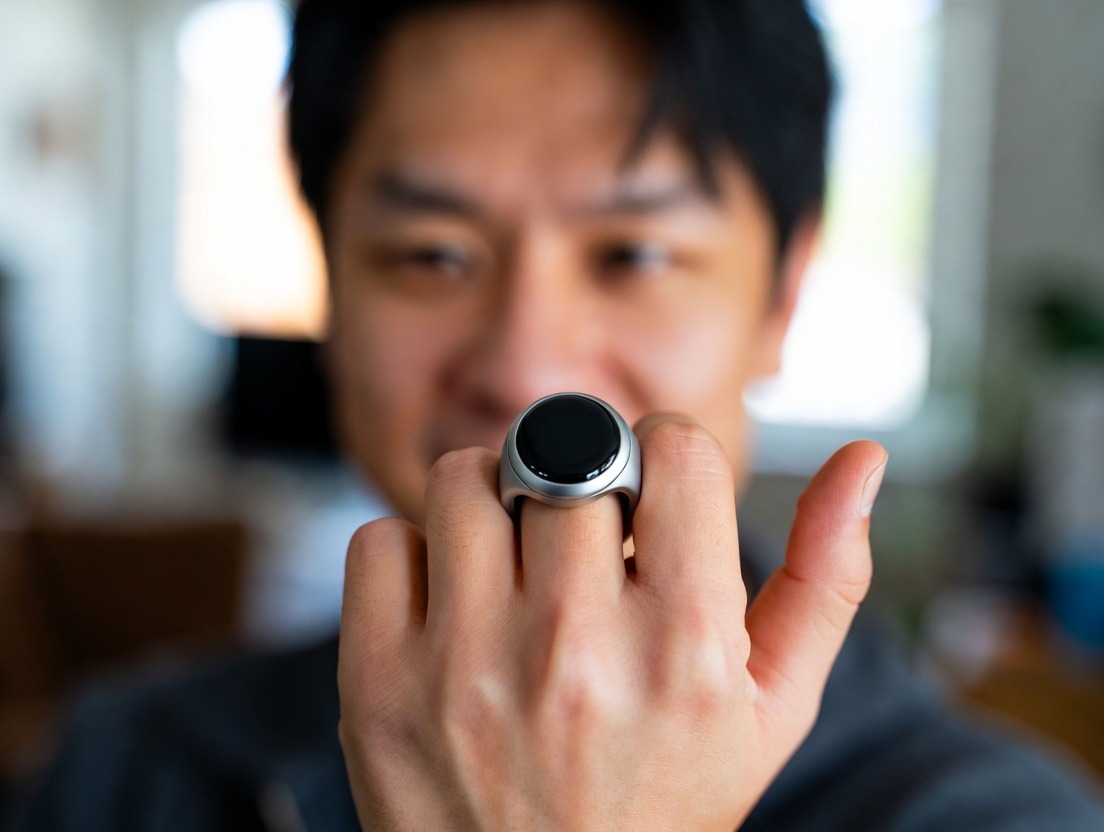
The Complete Beginner-Friendly Guide to Achieving Balance Using Ring Data
A complete beginner's guide to using the data from your ring to achieve a healthier balance.
The Complete Beginner-Friendly Guide to Achieving Balance Using Ring Data
In our relentless pursuit of health and productivity, we’ve become masters of compartmentalization. We track steps with one device, log calories in another app, monitor our heart rate during workouts, and then try to remember how we slept last night. We have mountains of data but lack a unifying insight. We have information, but not wisdom. The result? A fragmented view of our well-being that often leaves us feeling more out of balance than when we started.
Enter the modern smart ring—an unassuming piece of wearable technology that’s quietly revolutionizing personal wellness. Unlike flashy watches or intrusive chest straps, the ring’s power lies in its subtlety and continuity. Worn 24/7, it gathers a holistic, uninterrupted stream of physiological data from your body’s command center: your finger. This is where arteries run close to the surface, offering a direct window into your heart’s rhythm, your nervous system’s whispers, and your body’s nightly restoration processes.
This guide is not about adding another gadget to your life or drowning you in more graphs. It’s about synthesis. It’s about translating the silent language of your own body—spoken through heart rate variability, skin temperature, blood oxygen, and movement—into actionable knowledge. For the beginner, the sheer volume of data from a device like an Oura, Ultrahuman, or RingConn can be overwhelming. What does it all mean? And more importantly, how do you use it to actually feel better—to find that elusive equilibrium between energy and rest, stress and recovery, effort and ease?
Balance is not a static state you achieve and forget. It’s a dynamic, daily practice of listening and adjusting. Your ring data is the most personalized, honest feedback loop you’ve ever had. It tells you when you’re pushing too hard, when you’re recovering well, when an illness might be brewing, and when your lifestyle choices are genuinely serving you. This guide will be your translator and your roadmap. We will start from the very beginning, demystifying each metric, building your personal baseline, and then weaving these insights into a practical framework for daily living.
By the end of this journey, you will no longer look at your readiness score or sleep data as abstract numbers. You’ll see them as a conversation with your body. You’ll learn to navigate the natural rhythms of your life with more grace and intention, using objective data to support subjective well-being. Let’s begin the work of turning data into balance.
What Your Smart Ring Actually Measures (And Why It Matters)
Before you can achieve balance, you need to understand the instruments in your orchestra. Your smart ring is a sophisticated biotracker, but its magic isn’t in the hardware alone—it’s in the physiological signals it captures. Let’s break down the core metrics, moving beyond the jargon to what they truly represent about your inner state.
Heart Rate (HR) and Resting Heart Rate (RHR): This is the most fundamental rhythm of life. While your daytime heart rate fluctuates with activity, your Resting Heart Rate—measured during periods of true calm, like deep sleep—is a powerful indicator of cardiovascular fitness and overall stress load on the body. A lower RHR generally suggests more efficient heart function and better fitness. Your ring tracks this continuously, giving you a true resting value, not a single spot-check. Watch for trends: a sudden, sustained increase in your RHR can be one of the earliest signals from your ring that your body is fighting something, is overly stressed, or hasn’t recovered from training.
Heart Rate Variability (HRV): If there’s one metric that embodies the concept of balance, it’s HRV. Contrary to what the name implies, a higher HRV is generally better. It measures the subtle variations in time between each heartbeat. Think of it as your body’s flexibility score. A high HRV indicates a robust, resilient autonomic nervous system that can seamlessly switch between the "gas pedal" (sympathetic "fight or flight" mode) and the "brake pedal" (parasympathetic "rest and digest" mode). It signifies your body’s readiness to handle stress and recover from it. A low or dropping HRV trend suggests your nervous system is stuck in a tense, overwhelmed state. It’s your body’s way of saying, "Hey, I need a break." Tracking your HRV, particularly your nightly average, is like having a direct line to your nervous system’s capacity.
Sleep Stages (Light, Deep, REM): Your ring uses movement, heart rate, and HRV patterns to estimate your sleep architecture. Each stage has a vital purpose. Deep sleep is the physical restorative phase, crucial for tissue repair and immune function. REM sleep is the mental restorative phase, associated with memory consolidation, learning, and emotional processing. Light sleep acts as a bridge between these stages. Balance in sleep isn’t just about total hours; it’s about the right proportion of these stages. Your ring data shows you not just if you slept, but how you slept, revealing whether your body and mind are getting the specific restoration they need.
Body Temperature: Your ring tracks your distal body temperature (at your finger) with remarkable precision. Your core body temperature follows a circadian rhythm, dipping at night to initiate sleep and rising in the morning to promote wakefulness. More importantly, significant deviations from your personal baseline—especially a sustained elevated temperature—can be an early warning sign of illness, inflammation, or hormonal changes like ovulation. It’s a metric that requires observing your own trends over time, as your "normal" is unique to you.
Blood Oxygen (SpO2) and Breathing Rate: During sleep, your ring monitors the oxygen saturation in your blood and your breaths per minute. While small, normal fluctuations occur, consistent dips in SpO2 or an elevated breathing rate can be indicators of sleep-disordered breathing, like sleep apnea, or periods of intense physical recovery. For beginners, it’s less about daily micromanagement and more about establishing a baseline and noting significant, persistent changes.
Activity and Movement: This goes beyond counting steps. Your ring estimates your daily metabolic burn (calories) and tracks periods of inactivity and active time. Crucially, it links activity to recovery. Did that long run today lead to great deep sleep tonight, or did it trash your HRV? This connection is the key to balanced training.
Understanding these metrics individually is the first step. The real power, as we’ll explore next, emerges when you see how they interact, telling a cohesive story about your readiness for the day ahead and your need for recovery. This foundational knowledge is critical for anyone starting their journey. As you build your understanding, you might find it helpful to explore the science-backed foundations of sleep health, which underpin many of the recovery metrics your ring provides.
From Numbers to Knowledge: How to Read Your Daily Scores
Now that you know what’s being measured, the next challenge is interpretation. Smart ring apps synthesize all that raw data into simple, daily scores—typically for Sleep and Readiness (or Recovery). These scores are your dashboard, your at-a-glance status report. But to use them wisely, you must peek under the hood. Let’s decode what these scores are really telling you.
The Sleep Score: A Grade on Your Nightly Restoration Your sleep score isn’t just a judgment on how long you were in bed. It’s a weighted algorithm that considers multiple factors:
Total Sleep & Efficiency: Did you get enough time, and was that time spent mostly asleep (vs. tossing and turning)?
Restorative Sleep: This heavily weights the amount of deep and REM sleep you achieved.
Latency: How long it took you to fall asleep. A very short latency (under 5 minutes) can sometimes indicate severe exhaustion, while a very long one suggests difficulty unwinding.
Timing & Regularity: Going to bed and waking up at consistent times reinforces your circadian rhythm, and your score often rewards this.
Restfulness: How fragmented your sleep was with awakenings.
A beginner’s mindset shift: Don’t chase a perfect 90+ every single night. That’s neither realistic nor necessary. Instead, look for patterns. Is your score consistently lower on Sundays because of weekend late nights? Does it dip after evening alcohol? The score is a feedback mechanism, not a report card. Use it to connect cause and effect in your lifestyle. For a deeper look at what constitutes normal and when to be concerned, our guide on sleep health standards and what's normal is an excellent resource.
The Readiness/Recovery Score: Your Body’s Green Light (Or Red Flag) This is arguably the most actionable score for achieving balance. It answers the question: "Based on last night’s recovery and recent strain, how prepared is my body to take on stress today?" Its calculation is a fascinating synthesis:
Sleep Quality: The foundation. A poor night’s sleep lowers readiness.
HRV Balance: This is a star player. Your score compares your last night’s HRV to your personal long-term baseline. Being in your optimal range boosts the score.
RHR Balance: Similarly, your score considers if your resting heart rate was lower (good) or higher (potentially stressful) than your baseline.
Body Temperature: A significant deviation from your personal baseline will negatively impact the score, as it can indicate physiological strain.
Recent Activity & Recovery Balance: The algorithm looks at your activity from previous days. If you’ve had several high-activity days without sufficient recovery, your readiness score will drop, suggesting you need to ease up.
How to use your readiness score intelligently:
High Readiness (e.g., 80+): Your body is resilient. This is a day to be proactive—tackle that intense workout, handle high-stress work tasks, be socially engaged. It’s a day for purposeful stress.
Medium Readiness (e.g., 60-79): Proceed with balance. It’s a day for moderate activity, maintenance work, and mindful practices. Maybe choose a brisk walk over HIIT, or focus on focused work instead of back-to-back meetings.
Low Readiness (Below 60): Your body is asking for rest and repair. This is not a day to push through. It’s a day for genuine recovery: gentle movement like stretching or walking, prioritizing sleep, eating nourishing foods, and managing stress. Ignoring a low readiness score is the fastest way to burn out or get sick.
The ultimate goal is to let these scores guide your choices, not dictate them with anxiety. They are tools for self-awareness. On a low-readiness day, you’re not "failing"; you’re being given crucial information to prevent a larger setback. This process of listening and adjusting is a skill, and like any skill, it requires patience. Embracing the learning curve of sleep health is essential for developing a sustainable, long-term practice without frustration.
Establishing Your Personal Baseline: The 30-Day Discovery Phase
You have the metrics. You understand the scores. Now, before you make a single change, you must answer the most important question: What is normal for you? Your balance is not defined by a textbook or a friend’s ring data; it’s defined by your own unique physiology. This is why the first month with your ring is a sacred period of observation, not optimization.
Why Baselines Are Non-Negotiable Every algorithm your ring uses—whether for sleep staging, readiness, or HRV balance—relies on understanding your personal norms. A heart rate variability of 40 might be excellent for one person and low for another. Your body temperature baseline is uniquely yours. If you start trying to "hack" your scores before the ring has collected enough data to establish these baselines, you’re making decisions based on incomplete, often misleading information. You’re navigating without a map.
How to Conduct Your 30-Day Discovery:
Wear Consistently: Wear your ring every night and as much as possible during the day. Consistency is data gold.
Live Normally: This is the key instruction. Do not suddenly start going to bed at 9 PM, meditating for an hour, and cutting out coffee if that’s not your typical life. The goal is to capture an honest picture of your current reality—the good, the bad, and the sleepy.
Log Context Lightly: Use the app’s tagging feature not to judge, but to observe. Tag days with "alcohol," "late meal," "intense workout," "stressful day at work," "caffeine after 2 PM." Don’t tag everything; just the notable moments you suspect might influence your data.
Observe, Don’t Judge: Each morning, review your scores and simply note the connection. "Huh, my resting heart rate was 5 BPM higher and my deep sleep was lower on the night I had that glass of wine." Or, "My HRV tends to be highest on Saturdays after my restful Friday routine." This is detective work, not a trial.
What You’ll Discover After 30 Days:
Your HRV Baseline Range: You’ll see your typical range and learn what "high for you" and "low for you" actually look like.
Your Typical Sleep Architecture: How much deep and REM sleep do you actually get on an average night? This is your starting point.
Your RHR Pattern: What’s your normal resting heart rate when you’re not under unusual stress?
Your Body Temperature Rhythm: You’ll see your own circadian temperature curve take shape.
Preliminary Cause & Effect: You’ll start to see clear, data-backed connections between your lifestyle choices and your physiological outcomes.
This baseline phase transforms the ring from a generic tracker into your personal biographer. It shifts the focus from chasing abstract ideals to understanding your unique patterns. It’s the foundation upon which all intelligent change is built. For those eager to start making improvements, remember that sustainable change starts with awareness. Our guide on how to build sleep health habits that last provides a perfect framework for the next step, once your baseline is set.
The Pillars of Balance: Sleep, Stress, Activity, and Nutrition
Balance is not a single lever you pull. It’s the harmonious interaction of four fundamental pillars: Sleep, Stress Management, Activity, and Nutrition. Your smart ring provides direct feedback on the first three and indirect, powerful insights into the fourth. Think of these pillars as the primary dials on your personal wellness control panel. Let’s explore how your ring data illuminates each one.
1. Sleep: The Non-Negotiable Foundation Your ring provides the most accurate picture of your sleep outside a clinical lab. But balance here isn’t just about duration. It’s about consistency, timing, and architecture.
Data Connection: Watch your sleep consistency score. Going to bed and waking at wildly different times creates "social jetlag," confusing your circadian rhythm and degrading sleep quality, which your readiness score will reflect. Notice how late-night eating or screen time impacts your sleep latency and restfulness scores. Observe how your deep sleep increases after days of physical exertion, or how REM sleep might rebound after a period of sleep deprivation. This isn't just data; it's a guide to honoring your body's need for restoration. To troubleshoot common issues you might spot, our resource on how to troubleshoot common sleep health problems can be invaluable.
2. Stress & Recovery: The Two Sides of the Coin Stress is not your enemy; it’s a necessary stimulus for growth. The enemy is unmanaged stress without adequate recovery. Your ring, primarily through HRV and RHR, is your stress-recovery barometer.
Data Connection: A consistently low or dropping HRV trend is a clear signal of excessive allostatic load—your body’s stress burden is too high. An elevated RHR corroborates this. These metrics don’t differentiate between "good" stress (a hard workout) and "bad" stress (work anxiety); they simply report the total physiological cost. The magic is in the response. After a stressful event, does your data return to baseline quickly (showing resilience), or does it stay depressed for days (showing exhaustion)? Your readiness score synthesizes this, telling you when you’ve recovered enough to seek stress again. Understanding this intricate link is crucial; delve deeper into the connection between sleep health and mental wellness to see how recovery metrics directly impact your psychological state.
3. Activity: The Goldilocks Principle Too little activity leads to stagnation; too much leads to breakdown. The sweet spot is the right dose, at the right time, for your current state of recovery. This is where your ring shines.
Data Connection: This is the beautiful feedback loop. You do a hard workout (activity). The next morning, your ring shows the impact: maybe your HRV is lower, your RHR is higher, and your readiness score has dropped. This is normal and desirable—it’s called hormesis, a positive stress. The critical question is: Does your data return to or exceed baseline within a day or two? If yes, you’ve found a balanced load. If no, you’re overreaching. Conversely, on a high-readiness day, a challenging workout might lead to even better scores the next day, showing perfect adaptation. Your ring helps you practice dose-responsive training, moving you away from rigid schedules and towards responsive, intelligent movement.
4. Nutrition: The Indirect Influencer While rings don’t track calories or macros, they are exquisitely sensitive to the physiological effects of your dietary choices.
Data Connection: Tag an evening with a "late, large meal" and observe. You’ll likely see a higher nighttime heart rate, lower HRV, more restlessness, and less deep sleep as your body digests instead of rests. Note the impact of alcohol: it may help you fall asleep faster (shorten latency) but it devastates deep and REM sleep, spikes your heart rate, and crushes your HRV, leading to a deceptively poor recovery. Hydration status can also subtly influence your metrics. Your ring turns nutrition from a theoretical choice into a visceral, data-driven experience of how food fuels or hinders your recovery.
By viewing your data through the lens of these four pillars, you stop looking at isolated numbers and start seeing a dynamic system. You learn that a poor sleep score might be caused by nutrition (pillar 4) and lead to a low readiness score that advises against intense activity (pillar 3), making stress management (pillar 2) more crucial that day. This systemic view is the essence of using data for true balance.
Creating Your Daily Ritual: A Beginner’s Morning and Evening Routine
Knowledge is powerless without action. The most profound application of your ring data is using it to shape simple, sustainable daily rituals. These rituals create the structure within which balance can flourish. Let’s design a beginner-friendly morning and evening routine anchored in your data.
The Evening Wind-Down (Preparing for Balance) Your night begins in the evening. The goal of this ritual is to shift your nervous system from sympathetic dominance (alert) to parasympathetic dominance (calm), setting the stage for restorative sleep.
Check Your Readiness Score in the Late Afternoon: This is your planning tool. A low score is a directive to prioritize a gentler evening. Even with a high score, a wind-down is essential.
The 90-Minute Buffer: Begin your transition 90 minutes before your target bedtime.
Dim the Lights: Reduce exposure to bright, especially blue, light. Use lamps and screen dimmers. This supports your natural melatonin production, which your ring’s temperature metric reflects as your body begins to cool.
Digital Sunset: Put non-essential devices away. The mental stimulation and light are dual disruptors. If you must use a device, employ a severe red filter.
Embrace Calm Activation: Engage in low-stimulus activities that you enjoy: light reading (physical book), gentle stretching or yoga, a calming podcast, listening to music, or a gratitude journal. The key is that it should feel like a release of the day’s tension.
Mindful Consumption: Finish eating 2-3 hours before bed. Limit fluids an hour before bed to minimize disruptions. Be brutally honest with yourself about alcohol’s impact, using your data as proof.
The Consistent Cue: Aim to start this wind-down at roughly the same time each night. This consistency reinforces your circadian rhythm, which your sleep consistency score will thank you for.
The Morning Review (Planning for Balance) Your morning ritual is about insightful review and intentional planning, not frantic checking.
Don’t Grab Your Phone Immediately: Give yourself 5-10 minutes of quiet. Breathe, stretch, let light in. Let your body wake up naturally.
Review with Curiosity, Not Judgment: Open your app. Look at your Sleep Score and Readiness Score first. Then, dive into the key metrics:
HRV & RHR: Are they in your personal optimal zone? What direction are they trending?
Sleep Stages: Did you get sufficient deep and REM? Was your sleep fragmented?
Temperature: Any significant deviations?
Ask "Why?": Connect the dots from last night’s data to the previous day’s context. "My HRV is low. Did I have that hard meeting yesterday? Did I sleep poorly two nights ago?" This is not about blame, but about understanding patterns.
Let It Guide Your Day: This is the crucial step. Your Readiness Score is your guide.
High Readiness: Plan your challenging task, your intense workout, your social events.
Medium/Low Readiness: Schedule lighter work, choose restorative movement (walk, yoga), prioritize calming techniques, and double down on sleep hygiene tonight. This is practicing balance in real-time.
Set One Intentional Priority: Based on your data, set one wellness-focused intention for the day. "Today, because my recovery is low, my priority is to take a 20-minute walk in nature and be in bed by 10 PM."
This daily loop—evening wind-down to prepare, morning review to plan—creates a powerful feedback cycle. You’re no longer living on autopilot. You’re living in a responsive dialogue with your body, using objective data to make subjective days better. For those mornings when the data is confusing, it’s helpful to know how to measure sleep health without fancy devices to cross-reference your subjective feelings with the objective numbers.
Navigating Your First Data Insights: Common Patterns and What They Mean
As you settle into your daily ritual, patterns will emerge from the data. For a beginner, these patterns can be puzzling. Let’s translate some of the most common early insights into plain language and actionable understanding.
Pattern 1: "I sleep 8 hours but still have a low readiness score."
What it means: You’re likely experiencing the difference between sleep quantity and sleep quality. Your 8 hours might be fragmented with many micro-awakenings (high restlessness), deficient in critical deep or REM sleep, or misaligned with your circadian rhythm (e.g., sleeping 3 AM to 11 AM).
What to do: First, look at your sleep architecture graph. Is your deep sleep block solid or choppy? Check your restlessness percentage. Then, investigate your evening habits. Are you consuming caffeine/alcohol late? Is your room dark, cool, and quiet? Are you using screens until lights-out? Focus on wind-down quality, not just clocking time in bed.
Pattern 2: "My HRV is all over the place from night to night."
What it means: Some day-to-day variation is perfectly normal and even healthy—it shows your nervous system is responsive. However, wild, chaotic swings with no clear connection to your activity or stress may indicate you haven’t established a stable baseline yet (common in the first month), or your lifestyle is highly inconsistent.
What to do: Ensure you’re comparing your HRV to your own multi-week baseline, not an absolute number. Look for trends over 7-10 days, not daily jumps. Start tagging days with clear inputs (intense workout, travel, poor sleep, big meal) to find correlations. The goal isn’t a flat line, but a responsive wave that recovers. If you’re struggling with inconsistent data, our advice on avoiding information overload as a beginner can help you stay focused on the signal, not the noise.
Pattern 3: "My body temperature is always above my baseline."
What it means: A sustained elevation (even 0.5°C/1°F) over several days is one of your body’s most reliable early warnings. It can signal:
The onset of illness (your body raising its thermostat to fight pathogens).
An inflammatory response from overtraining, injury, or certain foods.
Hormonal changes (e.g., the rise in progesterone after ovulation).
What to do: Don’t panic. First, rule out environmental factors (a heavier blanket, a warmer room). If the elevation persists for 3+ days, treat it as a red flag. Prioritize rest, hydration, nourishing foods, and extra sleep. Consider scaling back intense activity. Listen to your body’s other signals (fatigue, sore throat). This is your ring helping you act preventatively.
Pattern 4: "I feel great, but my readiness score is low."
What it means: This is the fascinating disconnect between subjective feeling and objective physiology. Adrenaline and cortisol (stress hormones) can mask underlying fatigue, making you feel energetic while your autonomic nervous system is running on fumes. Your ring is measuring the hidden cost.
What to do: Trust the data. This is a critical moment to avoid the "push through" trap. That low score is a warning that your resilience bank account is low, even if you feel a temporary surge of motivation. Use it as a cue for a restorative day. You may prevent a crash, illness, or injury. This builds long-term resilience.
Pattern 5: "Alcohol helps me fall asleep, but my sleep score is terrible."
What it means: This is one of the most universal and educational insights. Alcohol is a sedative, not a sleep aid. It knocks you out (reduces sleep latency) but severely disrupts the architecture of the second half of your night. It suppresses REM sleep (vital for mental health) and often causes a rebound of wakefulness and restless sleep later, while also increasing heart rate and lowering HRV.
What to do: Let the data be your motivator. Try a "dry" experiment for 2-3 weeks. Compare your sleep scores, HRV, and RHR on alcohol-free nights versus nights with drinks. The objective evidence is often more persuasive than any article. For more on how modern habits intersect with rest, explore how technology helps and hurts sleep health, which covers similar cause-and-effect relationships.
Learning to interpret these patterns turns you from a passive data collector into an active self-scientist. It’s the process of becoming fluent in the language of your own body.
The Art of Productive Recovery: Why "Lazy" Days Are Essential
In a culture that glorifies hustle, the concept of deliberate, data-informed recovery is radical. Your smart ring provides the irrefutable evidence needed to legitimize rest. Productive recovery isn’t about doing nothing; it’s about engaging in activities that actively lower physiological stress and replenish your capacity, leading to greater performance and balance in the long run.
What Recovery Looks Like in Your Data True recovery manifests in several key metrics:
HRV Rising: A return to or above your personal baseline.
RHR Lowering: Your resting heart rate dipping to its optimal low.
Deep & REM Sleep Increasing: Your body prioritizing the most restorative sleep stages.
Readiness Score Climbing: The algorithm’s synthesis of all the above, giving you the "green light."
How to Engineer a Recovery Day (A "Low Readiness" Day Plan) When your data suggests you need it, here’s how to structure a day that truly recovers:
Movement, Not Exercise: Swap intensity for gentle, rhythmic movement. A 30-60 minute walk in nature, light stretching, restorative yoga, or easy cycling. This promotes blood flow and lymphatic drainage without adding metabolic stress. Notice how this type of movement often leads to a better sleep score than complete stagnation.
Nourish, Don’t Indulge: Focus on anti-inflammatory, nutrient-dense foods: plenty of colorful vegetables, quality protein, healthy fats, and complex carbs. Avoid processed foods, excess sugar, and heavy meals that demand significant digestive effort. Hydrate consistently with water and electrolytes.
Downgrade Cognitive Load: Give your brain a break. This could mean tackling administrative tasks instead of creative deep work, reading fiction instead of work emails, or listening to podcasts instead of preparing presentations. The goal is to reduce the secretion of cortisol associated with mental strain.
Prioritize Parasympathetic Activation: Intentionally engage your "rest and digest" system.
Breathwork: Practice slow, diaphragmatic breathing (e.g., 5-second inhale, 7-second exhale) for 5-10 minutes. This directly stimulates the vagus nerve, boosting HRV.
Meditation or Mindfulness: Even a short 10-minute guided session can lower physiological arousal.
Connection: Have a relaxed, positive social interaction—laughter and bonding are powerful recovery tools.
Double Down on Sleep Hygiene: Make your evening wind-down ritual non-negotiable. Go to bed 30 minutes earlier than usual. This is your chance to "bank" extra recovery sleep.
The Mindset Shift: From Guilt to Strategy The biggest hurdle for beginners is the guilt associated with taking a recovery day. Your ring data reframes this entirely. That low readiness score is not a mark of failure; it’s a strategic recommendation from your personal bio-engineer. It’s saying, "If you invest in recovery today, you will earn a higher capacity tomorrow and for the rest of the week." Ignoring it is like ignoring a "Check Engine" light—you might keep driving, but you risk a major breakdown.
By strategically scheduling recovery based on your data, you break the destructive cycle of chronic stress and under-recovery. You start to see rest not as the opposite of productivity, but as its essential partner. This balanced approach is what leads to sustained energy and prevents burnout. Understanding this cycle is fundamental to seeing how sleep health impacts weight, mood, and energy in a profound, systemic way.
Avoiding Analysis Paralysis: A Healthy Mindset for Data Tracking
The wealth of data from a smart ring is a double-edged sword. For the enthusiastic beginner, it’s easy to fall into the trap of obsessive checking, over-interpretation of single data points, and anxiety when scores dip. This is called "analysis paralysis" or "quantified-self anxiety," and it’s the antithesis of balance. Let’s establish a healthy mindset from the start.
1. Focus on Trends, Not Dots. A single night of poor sleep or a low HRV reading is meaningless noise. Biology is not a machine; it has daily fluctuations. The true signal is in the trend over time—the 7-day or 30-day average. Is your HRV generally sloping upward over the past month? That’s fantastic progress, even if yesterday was low. Is your sleep score consistently higher on weekdays than weekends? That’s a meaningful pattern to address. Use the app’s trend views liberally. Zoom out.
2. Use Data as a Guide, Not a God. Your subjective feeling—how you actually feel—is paramount. The data is a complementary advisor. If you feel energetic and optimistic but your readiness is a 72, don’t cancel your plans in a panic. Use the score as a gentle nudge to be mindful, not a definitive command. Conversely, if you feel terrible but your score is an 85, still listen to your body. The data provides one perspective; you are the final integrating authority.
3. Establish "Data Check-In" Times. Avoid the compulsive, all-day app refresh. It creates unnecessary neurosis. Formalize your interaction. The best practice is a morning review (as part of your ritual) and perhaps a late-afternoon check of your activity and readiness to plan your evening. Outside of these times, close the app. Live your life.
4. Ask "So What?" For every data point you notice, train yourself to ask this question. "My deep sleep was 10% lower last night. So what?" If you can’t connect it to a tangible feeling or outcome, or it’s not part of a worrying trend, let it go. If the answer is, "So, I feel foggy today and have a headache," then it’s useful information to connect cause and effect.
5. Embrace Imperfection. Chasing perfect scores is a fool’s errand that leads to frustration and disordered habits. Life is meant to be lived. There will be late nights with friends, celebratory drinks, stressful work weeks, and sick days. These are reflected in your data, and that’s okay. The goal of balance is resilience—the ability to enjoy life’s peaks, navigate its valleys, and have the tools to return to your center efficiently. Your data shows you how to do that, not that you must live on a flatline.
6. Take Periodic Breaks. If you find yourself becoming overly attached or anxious, give yourself permission to wear the ring but not look at the app for a few days. Reconnect with your intuitive sense of well-being. This can be a refreshing reset that reaffirms that the tool works for you, not the other way around.
Cultivating this balanced relationship with your data is perhaps the most important skill of all. It ensures that this powerful technology enhances your well-being without undermining it through stress. This journey is as much about mental habits as physical ones, which is why adopting the right sleep health mindset is critical for long-term success.
Beyond Sleep and Recovery: Unexpected Insights from Your Ring
While sleep and readiness are the headline features, your continuous wear opens a window into other fascinating aspects of your physiology and lifestyle. Exploring these can provide a more complete picture of your balance.
Circadian Rhythm Alignment: Your body temperature and resting heart rate follow a distinct 24-hour rhythm. By wearing your ring consistently, you can see if your lifestyle is in sync with this innate biology. Do you see a clear nighttime dip and morning rise in temperature? Is your daytime HRV pattern stable? Significant misalignment—caused by shift work, extreme late nights, or inconsistent sleep schedules—shows up as a blunted or chaotic rhythm. This insight alone can motivate you to prioritize consistent bedtimes, as your data visually demonstrates the cost of "social jetlag."
The Impact of Travel: Jet lag and even road trips are vividly documented. You’ll see your temperature rhythm struggle to adapt, your sleep become fragmented, and your HRV plummet. Tracking this isn’t just academic; it can guide your recovery. It shows you objectively why you feel terrible after travel and, more importantly, how many days it truly takes for your body to re-synchronize. You can use this to plan lighter work schedules after returning from a trip.
Women’s Health and Cycle Tracking: For women, the ring can be a powerful adjunct to cycle awareness. The subtle rise in basal body temperature after ovulation is clearly detectable, helping confirm the fertile window has passed. More broadly, you can observe how your physiology changes across your cycle. Many women notice a natural dip in HRV and a rise in RHR in the luteal phase (after ovulation), with a return to baseline at menstruation. Seeing this as a normal, predictable pattern can reduce anxiety about "low" scores during that time and encourage cycle-synced planning—scheduling demanding tasks and workouts in the follicular phase when resilience is often higher, and prioritizing recovery in the luteal phase. It’s a profound tool for understanding the unique rhythm of the female body, which changes across a lifetime. Learn more about how these needs evolve in our guide to sleep health for different age groups.
Stress Response Profiling: By tagging days with specific stressors (e.g., "big presentation," "family conflict," "heavy travel"), you can learn your unique stress signature. Does public speaking cause your daytime HRV to crash and your sleep to suffer? Does a conflict cause a sustained elevation in your RHR? This awareness allows you to proactively deploy recovery techniques after known stressors and to build resilience for them over time.
Long-Term Health Trends: Over months and years, your ring data becomes a longitudinal health diary. You can see the positive impact of a new fitness routine (a gradual lowering of RHR, a rise in HRV baseline). You can catch early signs of overtraining before you feel injured. You have documentation of how your sleep architecture changes with age or life stages. This big-picture view is invaluable for preventive healthcare and understanding your body’s journey.
These "bonus" insights reinforce that you are tracking a complex, integrated system. Every piece of data is a thread in the tapestry of your overall well-being. It empowers you to make connections you might have never considered, turning everyday life into a continuous learning experience about yourself. As you gather this long-term data, understanding the relationship between sleep health and chronic disease underscores the profound importance of these daily patterns for your lifelong health.
Simple Experiments: Using the Scientific Method on Yourself
This is where the journey from passive tracking to active empowerment truly accelerates. You are the subject, scientist, and beneficiary of your own personal experiments. By using the ring to test hypotheses, you move from guessing to knowing what works for you. The process is simple and profoundly enlightening.
The Framework for a Personal Experiment:
Ask a Question: Start with curiosity, not dogma. "Does drinking caffeine after 2 PM affect my sleep?" "Does a 20-minute evening meditation improve my HRV?" "Do I recover better from weight training or running?"
Form a Hypothesis: Make a prediction. "I hypothesize that skipping afternoon caffeine will increase my deep sleep by 10%."
Control Variables: Change only one thing at a time. If you’re testing meditation, try to keep your diet, exercise, and bedtime consistent during the experiment period. This isolates the variable.
Run the Trial: Commit to a reasonable period. For sleep-related experiments, 5-7 days per condition is a good start. (e.g., 7 days with meditation, 7 days without).
Collect & Analyze Data: Use your ring’s tagging feature religiously. Tag days with "Test: No Caffeine PM" or "Test: Evening Meditation." At the end of the trial, compare the averages of your key metrics (Sleep Score, Deep Sleep %, HRV, RHR) between the test period and your baseline or control period.
Draw a Conclusion: What does the data say? Did your hypothesis hold? Be prepared to be surprised. You might find that the thing you swore was helping actually hurts your data, or vice-versa.
Beginner-Friendly Experiments to Try:
The Caffeine Curfew: Test no caffeine after 12 PM vs. your usual habit for one week each.
The Digital Sunset: Test turning off all screens 90 minutes before bed vs. your normal routine.
The 15-Minute Walk: Test adding a daily 15-minute morning walk for a week and note its impact on your daytime HRV and subsequent sleep.
The Hydration Test: Consistently hit a water intake goal (e.g., 3 liters) for 5 days vs. drinking ad-lib.
The Bedtime Consistency Challenge: Go to bed and wake up within a 30-minute window for 7 straight days, even on weekends.
The Power of N=1 The results of these experiments are more powerful than any generic wellness article because they are specifically about YOU. When you see with your own data that a late Netflix binge sabotages your REM sleep, you’re more likely to change. When you see that a 10-minute breathing exercise before bed boosts your HRV, you feel motivated to do it. This turns wellness from a set of external "shoulds" into an internal, evidence-based "want to."
This self-experimentation mindset fosters agency and curiosity. It makes the process of finding balance engaging and personal. You become an expert on the one subject that matters most: your own well-being. To get started with effective, simple changes, our list of sleep health quick wins with big impact offers perfect ideas for your first few experiments.
Real-World Balance: Applying Your Data to Work, Social Life, and Travel
The theory of balance is simple. The practice is messy. Your ring’s true value is proven not when your life is perfectly calibrated, but when it’s not. Here’s how to use your data as a stabilizing force during life’s most common disruptions.
Work and Cognitive Demand: High-pressure work projects are inevitable stress tests. Your data helps you manage them strategically.
Preparation Phase: In the week leading up to a major deadline or launch, prioritize sleep and recovery even more than usual. Use high-readiness days to power through intensive creative or analytical work. On lower-readiness days, focus on administrative tasks, communication, and meetings. This “periodization” of cognitive effort prevents burnout at the critical moment.
During the Storm: When in the thick of it, your data is a check on your blind spots. If you see a multi-day plunge in HRV and a spike in RHR, it’s a non-negotiable signal to insert a recovery buffer, even if it’s small—a 20-minute walk outside instead of eating at your desk, a strict 10 PM shutdown, a 5-minute breathing exercise between meetings. These micro-recoveries can keep the system from tipping over.
The Recovery Phase: After the project concludes, look at your data, not just your calendar. You may feel a psychological release, but your physiology might still be in deficit. A planned “recovery week”—where you consciously dial back work intensity, social commitments, and workout intensity based on low readiness scores—allows for full physiological repair. This prevents the post-project crash and builds resilience for the next challenge. This strategic approach to energy management is a cornerstone of how sleep health affects productivity and performance, turning good recovery into professional fuel.
Social Life and Alcohol: Social connection is vital for well-being, but it often comes with late nights and alcohol, two of the biggest disruptors in your data.
The Strategic Plan: If you have a big social event, use your readiness score in the days prior. If you’re already in a recovery deficit, consider moderating your plans or making extra sleep a priority before and after.
The Data-Informed Choice: Use your past experiment data on alcohol’s impact. Knowing that one drink might cost you 10% of your deep sleep can empower you to choose a non-alcoholic alternative, or to limit consumption and hydrate diligently. Set a “last call” for yourself well before the end of the night.
The Sleep Deficit Bank: Think of your sleep need like a financial budget. If you’re going to “spend” late hours, “deposit” extra sleep beforehand (sleep extension for a few nights) or immediately after (next-day nap, earlier bedtime). Your ring shows you the balance in this bank via your readiness and HRV trends.
Communicate with Data: Struggling to explain your early departure or sober choice to friends? Sometimes, showing a simple graph of your crushed HRV after a night out can be a more effective and interesting explanation than a vague “I’m trying to be healthy.” Consider it a way to explain sleep health to friends and family using compelling, personal evidence.
Travel and Time Zone Changes: Travel is one of the greatest assaults on circadian rhythm, and your ring documents it with brutal honesty.
Pre-Travel Prep: In the days before an eastward trip, try to shift your bedtime and wake-up 15-30 minutes earlier each day. Use bright light in the morning to help cue your rhythm. Your ring’s temperature trend will show you how well you’re shifting.
During Travel:
Hydration is Data Gold: Flying is dehydrating, which can skew heart rate and HRV. Drink water aggressively.
Use Light Strategically: Upon arrival, get sunlight exposure at the local time’s “morning” to reset your clock. Avoid bright light when it’s nighttime at your destination.
Expect the Data Dip: Don’t panic when your scores are terrible for the first 1-3 days. This is normal. The goal is to minimize the depth and duration of the dip.
Schedule Grace: If possible, avoid critical meetings or intense workouts on your first full day. Use your low readiness score as justification for a light schedule.
Post-Travel Recovery: Track your metrics to see how long your body truly takes to recover. For some, it’s one day per time zone crossed; for others, longer. Let your readiness score guide your return to normal activity. Don’t schedule a personal record attempt at the gym the day after you get back.
By applying your ring data in these real-world contexts, you stop seeing lifestyle as the enemy of wellness and start seeing it as the playing field. The data gives you the tools to engage fully while protecting your core physiological balance.
The Synergy of Metrics: How Sleep, HRV, and Temperature Tell a Story Together
While we’ve examined metrics individually, their true prophetic power is unlocked in concert. A single metric can be a clue, but two or three moving together confirm a story. Learning to read these synergies is like learning to interpret a weather forecast—individual data points (humidity, pressure) are less useful than the pattern they create (impending storm).
Story 1: The "Fighting Something Off" Signature
The Pattern: Elevated Body Temperature (even slightly) + Elevated Resting Heart Rate + Lowered HRV.
The Narrative: Your body is mounting an immune response. The elevated temperature creates a less hospitable environment for pathogens. The higher heart rate delivers immune cells more rapidly. The lowered HRV indicates your nervous system is prioritizing the immune battle over flexibility. This trio often appears 24-48 hours before you feel obvious symptoms.
Actionable Insight: This is your clearest signal to go into proactive recovery mode. Cancel intense plans, prioritize sleep, hydrate, and nourish with broths and antioxidants. You may prevent a full-blown illness or shorten its duration dramatically.
Story 2: The "Digestive Overload or Inflammation" Signal
The Pattern: Poor Sleep Efficiency/Restlessness + Elevated Nighttime Heart Rate + Lowered HRV (with no temperature spike).
The Narrative: Your body is working hard to process something. This could be a late, large, or rich meal, alcohol, or a food you’re sensitive to. The energy directed to your gut diverts resources from restoration, leading to fragmented sleep, a higher metabolic rate (elevated HR), and nervous system strain (low HRV).
Actionable Insight: Connect it to your previous evening’s tag. This pattern confirms the physiological cost of that dietary choice more clearly than any single metric. It’s a powerful motivator for mindful eating, especially in the evening.
Story 3: The "Perfect Adaptation" Celebration
The Pattern: After a day of good physical or mental stress (a hard but not excessive workout, a successful challenging workday), you see: Increased Deep Sleep + HRV returning to or rising above baseline by the next morning + Stable or slightly lowered RHR.
The Narrative: You applied a stressor that was within your recovery capacity. Your body responded by supercharging physical repair (deep sleep) and demonstrating nervous system resilience (HRV rebound). This is the gold standard for productive stress.
Actionable Insight: This confirms you’ve found your optimal “dose” for that type of activity. It builds confidence in your training or work rhythm.
Story 4: The "Neurological and Emotional Processing" Wave
The Pattern: After a day of high emotional intensity or significant learning, you might see: Increased REM Sleep + possible slight dip in HRV that recovers quickly.
The Narrative: Your brain is working overtime to consolidate memories and process emotions. REM sleep is where this happens. The slight HRV dip can reflect the neurological effort, but a quick recovery shows healthy processing.
Actionable Insight: Don’t fear a slight HRV dip after an emotionally rich day or a heavy learning session if it’s coupled with good REM. It’s your brain doing its essential work. Protect your sleep after such days.
Learning to read these inter-metric stories transforms your morning check-in from reading a list of numbers to reading a brief about your body’s current state and priorities. It turns data into actionable narrative. For a foundational understanding of why these physiological processes are so crucial, reviewing the science-backed foundations of sleep health provides essential context for these synergistic patterns.
When the Data is Confusing: Troubleshooting Common Discrepancies
Even with a solid baseline, you’ll encounter days where the data seems to contradict itself or your lived experience. This isn’t a failure of the technology or your understanding; it’s an invitation to dig deeper. Here’s how to troubleshoot common confounding scenarios.
Scenario 1: "I feel exhausted, but my sleep data looks great."
Potential Causes & Investigations:
Subclinical Stress/Anxiety: Chronic, low-grade mental worry can be exhausting without dramatically disrupting sleep architecture. Check your daytime HRV trends—were they consistently suppressed yesterday? Your exhaustion may be neurological, not physical.
Nutritional Deficiencies or Blood Sugar Swings: Poor fuel quality can cause profound fatigue. Review your diet from the past 24-48 hours. Lack of iron, B12, or consistent energy from balanced meals can drain you independently of sleep.
Monotony or Lack of Stimulation: Mental and emotional fatigue from boredom or lack of engagement won’t show up in sleep metrics.
Illness Onset (Pre-Symptomatic): You might be catching something before it triggers a full immune response visible in temperature/RHR.
Action: Trust your subjective feeling. Use the “good” sleep data as a clue that the issue may be non-sleep related. Focus on stress management, nutrition, and gentle movement. If fatigue persists, consider a healthcare check-up.
Scenario 2: "I had a terrible night of sleep, but my readiness score is high."
Potential Causes & Investigations:
Exceptional Recovery Capacity: Your body might be so resilient that one bad night doesn’t sink your ship. Look at your previous week—were you in a strong recovery surplus? A high baseline can buffer a single poor night.
The Algorithm's Weighting: The readiness score heavily weights HRV and RHR balance. It’s possible you had fragmented sleep (low efficiency) but your nervous system (HRV) and cardiovascular strain (RHR) remained strong because the quality of the sleep you did get was very deep, or your overall stress load is low.
Misperception of Sleep: Sometimes we perceive sleep as worse than it objectively was. The data can offer a reassuring correction.
Action: Proceed with cautious optimism. Your body is giving you a green light, but with the known context of poor sleep. Plan a balanced day and prioritize an excellent wind-down to secure a great night’s sleep tonight. Don’t use the high score as permission to go all-out.
Scenario 3: "My HRV is high, but I feel anxious and jittery."
Potential Causes & Investigations:
The "Calm Before the Storm" Paradox: Sometimes, a sudden, sharp rise in HRV can precede a crash or illness, as the body makes a final robust response before succumbing to a stressor.
Manic or Hypomanic Energy: In states of high, nervous energy (not all anxiety is depressive), the body can be in a heightened, almost “wired” state that isn’t truly parasympathetic calm, even if HRV is technically high.
Context is King: What else does the data show? Is your RHR also elevated? That’s a sign of sympathetic activation despite high HRV.
Action: Look at the full picture. High HRV alone, especially if it’s an outlier, isn’t a definitive “all clear.” Pair it with your RHR, temperature, and subjective feeling. Engage in calming, grounding activities regardless of the HRV number.
Scenario 4: "The data shows no change, but I know I feel different since starting [new habit]."
Potential Causes & Investigations:
Timescale: Physiological changes often lag behind psychological ones. Give it 3-4 weeks of consistent practice for biomarkers like HRV to trend.
Wrong Metrics: The benefit may be in a domain your ring doesn’t measure directly—improved mood, better focus, reduced pain. These are valid outcomes!
Placebo/Expectation Effect: The positive feeling of taking control of your health is a real benefit, even if it’s not yet reflected in autonomic metrics.
Action: Celebrate the subjective win! Continue the habit. Use other measures of success—journaling, performance markers, subjective well-being scales. The ring is one tool, not the sole arbiter of truth. This is a great time to remember the importance of patience, as outlined in the sleep health learning curve.
When data and feeling conflict, the solution is never to dismiss one for the other. It’s to engage in deeper inquiry, using the discrepancy as a prompt to consider a wider range of factors influencing your health. For a systematic approach to solving these puzzles, our guide on troubleshooting common sleep health problems offers a useful framework.
Building Your Long-Term Balance Portfolio: From Days to Decades
The ultimate goal of this practice isn’t to optimize tomorrow’s score. It’s to build a foundation of resilience that pays dividends for years—a “balance portfolio” you invest in daily. Your ring is the quarterly statement, showing the growth (or decline) of your physiological capital. Let’s shift to a long-term perspective.
What is "Physiological Capital"? Think of it as your body’s resilience savings account. It comprises:
A High, Stable HRV Baseline: Your nervous system’s flexibility.
A Low, Stable RHR: Your cardiovascular efficiency.
Robust, Consistent Sleep Architecture: Your nightly restoration capacity.
A Strong, Predictable Circadian Rhythm: Your internal timekeeping stability.
Every good night’s sleep, every managed stress response, every balanced workout makes a deposit. Every night of poor sleep, period of chronic stress, or bout of illness makes a withdrawal.
How Your Ring Tracks Your Portfolio’s Health:
The 90-Day Trend View: This is your most important screen for long-term tracking. Is the line of your HRV baseline gently sloping upward over 90 days? That’s compound interest. Is your sleep consistency improving? That’s a reliable asset.
Recovery Speed: Over time, you should notice that after similar stressors (a hard workout, a busy travel week), your metrics return to baseline faster. This improved recovery velocity is a key sign of a growing portfolio.
Reduced Volatility: Your day-to-day scores may become less erratic as your system becomes more stable and resilient to minor perturbations.
Strategic "Investments" for Long-Term Gains:
Consistency Over Perfection: The single biggest depositor is daily, non-negotiable sleep and wake time consistency. It’s the bedrock.
Train Your Nervous System: Regular practices like meditation, breathwork, and mindfulness don’t just affect that day’s HRV; they gradually raise your baseline, increasing your capital.
Strength and Cardio Base: Building a foundation of aerobic fitness and muscular strength lowers your resting heart rate and improves metabolic health, making daily life less physiologically costly.
Social Connection and Purpose: Positive psychology and strong relationships are shock absorbers for stress. They help you weather withdrawals without crashing your portfolio.
Continuous Learning: Your self-experimentation habit ensures your strategies remain tailored and effective, maximizing your return on investment.
The "Withdrawals" to Manage: Life will demand withdrawals. The goal isn’t to avoid them—that’s impossible. The goal is to:
Anticipate Them: Know a busy season at work or family travel is coming.
Fortify Beforehand: Make extra deposits (sleep, nutrition, relaxation) in the weeks prior.
Minimize the Damage: Use your data during the stressful period to make the smartest choices possible.
Plan the Replenishment: Intentionally schedule a recovery phase afterward, using low readiness scores as your guide to rest.
Adopting this long-term, portfolio mindset liberates you from daily score anxiety. A low score today isn’t a loss; it’s a strategic withdrawal or a temporary market fluctuation. The 90-day trend is your true measure of success. This perspective is key to unlocking the long-term benefits of investing in sleep health, which extend far beyond feeling rested tomorrow.
Advanced Beginner Techniques: Tagging, Journaling, and Correlation Hunting
Once you’re comfortable with daily scores and trends, you can graduate to more sophisticated self-research. This involves proactive data collection (tagging) and analysis to uncover the hidden drivers of your balance.
Mastering the Tagging System: Tags are your independent variables. Be specific and consistent.
Good Tags: Alcohol: 2 drinks, Late Meal: 9pm, Work Stress: High, Workout: Heavy Legs, Meditation: 20min, Sick: Sore Throat, Travel: Flight +2hrs, Social: Late Night.
Vague Tags to Avoid: Stressful day, Ate bad, Tired.
The Power of Combination: Tag both the stimulus and your intentional response. E.g., Work Stress: High + Recovery: 30min Walk Nature.
The Art of the Correlation Hunt: After 4-6 weeks of consistent tagging, you can start hunting for correlations.
Filter by Tag: In your app, look for the feature that lets you view scores on days with a specific tag.
Ask Quantitative Questions: Don’t just say, “Alcohol hurts my sleep.” Ask, “On average, how much does my deep sleep percentage decrease on nights I have more than one drink?” “What is the average drop in my readiness score after a high-work-stress day?”
Look for Delayed Effects: Some impacts are lagged. Does a heavy workout affect sleep the same night, or the next night? Does a weekend of late nights depress your HRV most on Monday or Tuesday?
Integrating with a Digital Journal: For deeper insight, combine ring data with a few sentences in a notes app or dedicated journal.
The Evening Log (5 min): Briefly note: 1) Main stressor of the day. 2) Main joy/positive moment. 3) One thing you’re grateful for. This captures subjective emotional context.
The Morning Log (5 min): Note: 1) Energy level (1-10). 2) Mood (1-10). 3) Any aches/pains. 4) One intention for the day.
The Weekly Review (15 min): Once a week, look at your data trends alongside your journal entries. This is where magic happens. You might see: “Every time my journal mentions ‘frustration with project X,’ my HRV that night is below 40.” Or, “My energy level is consistently 8/10 on days following 90+ sleep scores, regardless of total hours.”
Creating Your Personal "Owner's Manual": The output of this work is not just better decisions; it’s a living document of what makes you thrive. Your manual might include:
Optimal Bedtime Window: Based on your best sleep scores.
Ideal Workout Timing: When does exercise boost, not harm, your sleep?
Your Personal Stress Signatures: What does “work stress” look like in your data vs. “relationship stress”?
Your Top 3 Recovery Levers: The things (e.g., 10-min meditation, 30-min walk, 15-min hot bath) that most reliably improve your next-night metrics.
This process of deep self-inquiry turns you from a consumer of health information into a generator of self-knowledge. It’s the pinnacle of the beginner’s journey, setting the stage for truly personalized, lifelong balance. This is, in essence, the process of creating your personal sleep health plan, supercharged by objective data.
The Limits of the Ring: What It Can't Tell You (And What To Use Instead)
A wise user understands the boundaries of their tools. A smart ring is a phenomenal biotracker, but it is not a medical device, a mind reader, or a complete picture of health. Respecting its limits prevents misuse and complements it with other vital practices.
What Your Ring Measures Poorly or Not At All:
Blood Pressure, Glucose, or Cholesterol: These are critical cardiovascular and metabolic markers that require specific medical devices for tracking.
Electrolyte Balance or Hydration Status: While dehydration can elevate heart rate, the ring cannot measure it directly.
Specific Nutritional Deficiencies: It can’t tell you if you’re low in Vitamin D, B12, or iron, though the symptoms of deficiency (fatigue, poor sleep) may appear in your data.
Mental Health Diagnoses: While low HRV correlates with conditions like depression and anxiety, the ring cannot diagnose them. It can only show a physiological pattern that warrants further, professional investigation.
Exact Calorie Expenditure: Its calorie burn estimates are just that—estimates based on movement and heart rate, not direct measurement. Don’t rely on them for precise dietary planning.
Emotional Content: It knows your nervous system is aroused, but not if you’re feeling ecstatic joy or terrified panic.
The Crucial Role of Subjective Check-Ins: This is why your morning “how do I feel?” question is non-negotiable. Pair your objective data with subjective scales:
Energy (1-10)
Mood (1-10)
Motivation (1-10)
Physical Sensations (note any pain, stiffness, digestion) Often, the subjective score tells you the quality of the objective number. A readiness score of 75 with an energy level of 8 feels very different than a 75 with an energy level of 4.
When to Consult a Professional, Not Your App: Your ring data is a fantastic conversation starter with healthcare providers. Use it to provide evidence, not self-diagnose.
Persistent, Unexplained Trends: Consistently elevated RHR or temperature, chronically low HRV despite good lifestyle habits, frequent significant blood oxygen dips during sleep.
Data That Aligns with Symptoms: You feel terrible and the data objectively shows a multi-system breakdown.
Preventive Planning: Bring your long-term trend data to a physical. Showing a gradual decline in HRV or increase in sleep fragmentation can help a doctor understand your risk profile.
Complementary Tools for a Holistic Picture:
Regular Blood Work: The ultimate internal snapshot. Get it done annually.
Food & Symptom Journal: For identifying food sensitivities or digestive issues.
Traditional Pen-and-Paper Journal: For processing emotions and stress, which influence but are not defined by physiology.
Strength and Fitness Metrics: Track your actual performance—weights lifted, running pace, how a movement feels—not just the heart rate during the activity.
By understanding the ring’s limits, you actually increase its value. You stop asking it to answer questions it can’t and start using its profound strengths—continuous, passive, physiological monitoring—to inform the larger, multi-faceted project of your well-being. It becomes a powerful piece of a larger puzzle. For a comprehensive look at the full wellness picture, consider how sleep health supports your bigger wellness goals, connecting these data points to your broader aspirations for fitness, mental clarity, and longevity.
Crafting Your Personal Balance Philosophy
The final stage of the beginner’s journey is synthesis. After months of observation, experimentation, and integration, the goal is to internalize the principles so that your relationship with the data becomes effortless and intuitive. This is about developing your personal philosophy of balance—a set of core beliefs that will guide you beyond the daily scores.
Core Tenets of a Balanced Ring Data Philosophy:
Data Serves Life, Not Vice Versa: The ring is a tool for enhancing your human experience—more energy for your passions, more patience for your loved ones, more resilience for your challenges. If checking the app causes more stress than it alleviates, you’ve lost the plot. The moment the tool undermines the goal, it’s time to step back.
Trends Trump Everything: A single data point is a weather report; a trend is the climate. Base your significant decisions and self-assessments on the direction of the lines over weeks and months, not the blips of a single day or night.
Your Body is Always Communicating; The Ring is Just the Translator: The sensations were always there—the tiredness, the wired feeling, the restorative sleep. The ring gives you a more precise vocabulary for what you were already feeling, building trust in your own intuition.
Balance is Dynamic, Not Static: It is not a finish line. It is the ongoing practice of noticing when you are leaning too far in one direction (stress, activity, late nights) and gently applying a counter-pressure (recovery, rest, early bedtime). It’s a dance, not a statue.
Prevention is the Highest Form of Optimization: The most powerful use of your ring is not squeezing out 2% more deep sleep, but seeing the elevated temperature and resting heart rate that allows you to rest and avoid getting sick before your big vacation. It shifts your focus from peak performance to sustainable resilience.
Putting It Into Practice: The Mature User’s Routine This philosophy manifests in a simpler, more confident daily practice:
Morning: Glance at readiness score. Note if it’s high, medium, or low. Feel into your body. Merge the two inputs to set the day’s tone. Dive into details only if there’s a glaring anomaly or you’re testing something specific.
Evening: Let your intuitive tiredness and your schedule guide your wind-down. Use the data from previous similar nights as a gentle guide (“I know a late meal usually fragments my sleep, so I’ll aim to finish earlier tonight”).
Weekly: Do a 10-minute review of your weekly trends. Note one thing that worked well and one thing to gently adjust for the coming week. Celebrate a positive trend, no matter how small.
Seasonally: Every 3-4 months, look at your 90-day trends. Reflect on your balance portfolio. Is it growing? What seasonal adjustments do you need to make (e.g., more sunlight in winter, different hydration in summer)?
This philosophical approach ensures that the technology remains in service to your humanity. It prevents obsessive tracking and fosters a respectful, collaborative relationship with your own body. It is the foundation for a lifelong practice of intelligent self-care, where the ring is a trusted advisor, not a demanding coach. This mindset is the ultimate key to navigating the journey without burnout, embracing the simple sleep health formula everyone can follow—a formula of consistency, awareness, and gentle course-correction.
Conclusion of This Phase: Your Journey From Beginner to Informed Practitioner
You began this guide with a device that produced a stream of mysterious numbers. You now possess the framework to transform that stream into a river of self-knowledge. You are no longer a beginner. You are an informed practitioner of your own well-being.
You have learned to:
Decode the core metrics and daily scores.
Establish your unique, personal baseline.
View your health through the four interdependent pillars.
Create daily rituals that prepare for and respond to your data.
Interpret common patterns and troubleshoot discrepancies.
Apply your insights to the messy reality of work, social life, and travel.
Read the synergistic stories told by your physiology.
Adopt a long-term, portfolio-based mindset.
Conduct personal experiments and hunt for correlations.
Understand the tool’s limits and complement it with subjective wisdom.
Begin to craft a personal philosophy of balance.
The path forward is one of refinement, not revolution. You will get to know your patterns more deeply. You will face new life stages and challenges, and your ring data will be there to help you navigate them with evidence and grace. You may go through periods of wearing it less as the habits become ingrained, and that’s a sign of success, not abandonment.
Remember, the goal was never a perfect score. The goal was balance—the dynamic, graceful capacity to engage fully with life while maintaining your center. Your smart ring has given you a mirror to see that center more clearly than ever before. Use that vision not to criticize, but to cultivate. Use the data not as a chain, but as a compass.
Continue your education, stay curious, and above all, be kind to the living system you are tracking. It is the only one you have, and it is speaking to you every minute of every day. You have now learned to listen.



%402x.svg)