


Healthy Movement Habits That Don't Feel Like Exercise
Suggests movement habits that don't feel like traditional exercise.
Suggests movement habits that don't feel like traditional exercise.
%402x.svg)
The word "exercise" has become burdened. It conjures images of fluorescent-lit gyms, relentless treadmill belts, and a feeling of obligation that can drain the joy from movement before you even begin. We've been conditioned to believe that to be "healthy," we must suffer through regimented, high-intensity, sweat-drenched sessions that leave us exhausted. This all-or-nothing mindset is why so many people start January strong and fade by February. The true enemy of a vibrant, active life isn't laziness—it's the belief that movement must be a scheduled punishment.
What if the secret to lifelong vitality isn't found on a gym schedule, but woven into the fabric of your daily life? What if getting healthier could feel less like a chore and more like simply living well?
Welcome to a new paradigm: the art of stealth health. This is the practice of integrating healthy movement so seamlessly into your day that it doesn't register as "exercise." It’s about reclaiming the innate human desire to move, play, and explore—not to burn calories, but to feel alive, energized, and connected. The benefits extend far beyond the physical. This approach reduces the mental friction of "getting motivated," lowers stress, improves creativity, and builds a sustainable foundation for wellbeing that doesn't crumble at the first sign of a busy week.
In this exploration, we’ll dismantle the rigid exercise mentality and rebuild a philosophy of organic movement. You'll learn how to transform your environment, mindset, and daily routines to make activity an unavoidable—and enjoyable—part of your existence. We'll leverage the power of modern technology, not as a drill sergeant, but as a gentle guide and insightful companion. Imagine a tool that quietly observes your natural rhythms, celebrates your everyday victories, and provides data-driven nudges—not guilt trips. That’s the promise of holistic wearables like the Oxyzen smart ring, designed to support this very journey by tracking the activity you’re already doing and revealing opportunities for more, all from your finger. To understand how this subtle technology integrates into your life, you can always discover how Oxyzen works.
Let’s begin by shifting your perspective from "working out" to simply "moving through life with more intention and joy."
Before we change our habits, we must change our definitions. The "Movement Mindset" is the foundational cognitive shift that turns the whole world into your playground and every day into an opportunity for vitality. It’s the antidote to the "exercise or nothing" binary.
The Problem with the "Exercise" Label
Neurologically, when we label an activity "exercise," we place it in a category associated with effort, strain, and often, inconvenience. This triggers what behavioral scientists call "aversive anticipation." Your brain, seeking to conserve energy and avoid discomfort, starts to manufacture excuses. The scheduled 6 PM gym session becomes a mental hurdle you have to overcome daily.
The Movement Mindset, conversely, decouples physical activity from punishment and re-couples it with purpose, pleasure, and practicality. It asks: How can I make my body feel good right now? How can I add more play to this task? How can I get from A to B in a way that enlivens me?
Principles of the Movement Mindset
How Technology Can Support (Not Dictate) This Mindset
This is where intuitive wellness tech shines. A device that only celebrates 10,000 steps or a 45-minute "workout" misses the point. True supportive technology should recognize and validate the entire spectrum of your movement.
Imagine a device that:
This supportive feedback loop reinforces the Movement Mindset. It shows you that all your efforts count, building confidence and momentum. For insights into how tracking can reveal these subtle patterns, consider reading our complete guide on sleep and activity synergy.
By adopting this mindset, you stop fighting your biology and start collaborating with it. You begin to see opportunities where you once saw obstacles. The following sections will provide the tangible, actionable habits to put this mindset into practice.
You have a powerful, untapped energy-burning system operating in the background of your life. It’s called Non-Exercise Activity Thermogenesis (NEAT), and it encompasses all the calories you burn doing everything except sleeping, eating, and structured exercise. This includes pacing while on the phone, fidgeting, gardening, cooking, and even maintaining your posture.
For most people, NEAT accounts for a staggering 15% to 30% of total daily calorie expenditure. For someone with a sedentary job, consciously increasing NEAT can be a more impactful lever for metabolic health than adding three gym sessions a week—and it requires no special equipment or clothes.
The Science of Sneaky Movement
Research has consistently shown that populations with high levels of incidental movement have significantly better health outcomes, independent of their formal exercise habits. NEAT helps regulate blood sugar, improves circulation, reduces back pain from sitting, and keeps your energy levels more stable throughout the day.
The modern desk-bound environment is a NEAT desert. We must become intentional about re-wilding it.
Actionable NEAT-Boosting Strategies
The Workday Oasis:
The Home Habitat:
Tracking Your NEAT Victory
This is where a minimalist tracker becomes invaluable. A device like a smart ring can quantify what your eyes miss. It can show you that your "lazy Sunday" of puttering in the garage and gardening actually resulted in a higher active calorie burn than your Tuesday desk day. This data is empowering—it validates your efforts and shows you the tangible impact of these tiny choices. Seeing a visual representation of your daily activity variance can be a powerful motivator. You can learn more about how this data is gathered in our article, how sleep and activity trackers actually work.
By mastering NEAT, you stop your metabolism from hitting the "pause button" during your waking hours. You become a gently burning furnace, not one that only flares up during scheduled bursts.
If NEAT is the background metabolism, "movement snacks" are the conscious, bite-sized movement breaks you deliberately sprinkle throughout your day. They are the antithesis of the marathon workout session. Lasting anywhere from 30 seconds to 5 minutes, their purpose is to reset your body and mind, break up sedentary patterns, and deliver a quick dose of physiological benefits.
Think of them as hitting the refresh button on your browser, but for your entire system.
Why Tiny Breaks Deliver Huge Returns
Prolonged sitting isn't just neutral; it's actively harmful. It slows circulation, stiffens joints, and dulls cognitive function. Short, frequent breaks completely reverse these effects.
A Menu of Movement Snacks
Keep this list handy and pick one whenever you feel a dip in energy or focus:
For Energy (60 seconds):
For Focus (2 minutes):
For Stress (3-5 minutes):
Making It Stick: The Cue-Routine-Reward Loop
The key is to attach these snacks to existing habits (a psychological strategy called "habit stacking").
Technology can serve as the perfect cue. A gentle, silent vibration from your wellness wearable reminding you to move after 50 minutes of inactivity isn't a scold—it's a helpful nudge back into your body. It's a partner in building this habit. For more on how these gentle reminders integrate into a holistic system, you can explore the Oxyzen approach on our main site.
Walking is humanity's fundamental movement. But in the era of step-count obsession, we've reduced it to a soulless number. Let's reclaim walking as a rich, multi-purpose practice that nourishes more than just your cardiovascular system.
Forget 10,000 steps as a one-size-fits-all mandate. The goal is to make your walks meaningful.
The Five Types of Purposeful Walks
Assigning a primary purpose transforms a walk from a task into an experience.
Optimizing Your Walk for Maximum Benefit
Tracking with Intention
A good wellness tracker should illuminate the quality of your walks, not just the quantity. Did your conversational walk also happen to be your most consistent, moderate-paced activity of the week? Did your exploration walk show a beautiful, steady heart rate pattern indicative of "zone 2" cardio? This data helps you connect the feeling (relaxed, connected) with the physiological benefit. It proves that a gentle, purposeful walk is a legitimate and valuable component of your fitness, not a consolation prize. For a deeper look at how different activities affect your body's signals, our analysis on sleep tracking accuracy and what devices can measure provides relevant insights.
Walking, reimagined, becomes a versatile tool for mental, social, and physical health. It’s the ultimate stealth health habit.

When was the last time you moved purely for the fun of it? Not for steps, not for heart rate zones, but for laughter, exploration, and the sheer delight of feeling your body in motion? Play isn't just for children; it's a fundamental human drive that we systematically neglect as adults, to our own detriment.
Playful movement reduces stress hormones, releases endorphins, improves coordination and brain function, and, most importantly, rebuilds a positive relationship with your physical self. It reminds you that your body is an instrument for joy, not just a project to be managed.
Why We Stop Playing and How to Start Again
As adults, we often feel self-conscious, silly, or like we don't have "time" for non-productive activity. The key is to give yourself permission. Frame it as "movement experimentation" or "coordination training" if you must. The goal is to find activities that are inherently rewarding—the fun is in the doing, not the outcome.
Catalysts for Playful Movement
Rediscover Childhood Favorites:
Embrace "Adult Playgrounds":
Incorporate Play into Daily Life:
The Role of Technology in Play
This is where tracking should take a back seat. The goal of play is intrinsic reward. However, after your playful session, it can be fascinating to see the data. Did your 20-minute living room dance party register as a fantastic cardio session? Did your heart rate variability (HRV) improve after an hour of laughing at a trampoline park? This retrospective insight can be a powerful motivator to prioritize play, showing you its concrete physiological benefits. It links joy directly to wellness metrics. For a deeper understanding of how recovery and play are connected, our article on deep sleep optimization for athletes touches on the importance of balancing activity with restoration.
By scheduling play, you're not being frivolous. You're engaging in a profound form of self-care that strengthens your body, mind, and spirit in an integrated, joyful way.
For many, the 8+ hour workday is the biggest obstacle to a moving life. We try to "compensate" with exercise before or after, but this does little to mitigate the acute harms of prolonged sitting. The solution is not just a standing desk—it's a dynamic workspace designed to make micro-movements and posture shifts a natural, unavoidable part of your workflow.
Your workspace should nudge you towards health, not force you to fight against it.
Principles of an Ergodynamic Workspace
"Ergodynamic" combines ergonomics (efficiency and comfort) with dynamic movement. The goal is to support your body while encouraging it to change position frequently.
1. The Foundation: Your Feet and Floor
2. The Movement-Encouraging Tools
3. The Environmental Cues
The 20-8-2 Rule (A Practical Framework)
A simple, evidence-based rule to follow: For every 30 minutes at your workstation, aim for:
This rhythm is far more sustainable and beneficial than standing for 4 hours straight (which can cause its own issues). Use a simple timer or a smart device's reminder function to prompt these shifts until they become habitual.
How Your Smart Ring Becomes Your Workspace Coach
A wearable like the Oxyzen smart ring is the perfect companion for this environment. Unlike a wrist-based device that can bang on your desk, a ring is unobtrusive. It can:
This turns your workspace into a biofeedback lab. You learn what works for your body. To see how others have integrated this kind of feedback into their daily routines, you can browse real customer reviews and experiences.
By engineering movement into your workspace, you stop relying on willpower. You make the healthy choice the easy, automatic, and even interesting choice.
Humans are social creatures. Our behaviors are profoundly influenced by the people around us. Harnessing this powerful force is one of the most effective ways to make movement a joyful, consistent part of your life. When activity is tied to connection, it stops feeling like a solo grind and starts feeling like a shared experience.
The accountability, encouragement, and shared joy of moving with others can override the voice in your head that says "maybe tomorrow."
The Science of Social Syncing
Moving in sync with others—walking in step, dancing together, practicing yoga in a group—can release endorphins and increase pain tolerance (a phenomenon known as "runner's high" is often amplified in groups). Social movement also fulfills our need for belonging, which is a deeper and more sustainable motivator than vanity or fear.
Strategies to Become a Social Mover
1. The Movement-Date:
Replace the standard "drinks or dinner" date with an active one. Propose:
2. Create a "Movement Pod":
Identify 2-3 friends, family members, or colleagues who are also interested in a less rigid approach to fitness. Form a pact. This is not a bootcamp; it's a support group. Your activities can include:
3. Join a Low-Pressure Community:
Seek out groups that emphasize participation over performance.
4. The Digital Movement Community:
Don't underestimate the power of online connection, especially for niche interests.
Navigating Social Dynamics
The key is to be the initiator, not the evangelist. Invite, don't pressure. Frame it as "I'd love your company while I..." rather than "You should really do this with me." Celebrate any participation, no matter how small. The goal is to build a reinforcing social circle where movement is a happy byproduct of connection.
Technology as the Social Glue
Shared tracking can be a fantastic social tool when used positively. Comparing "activity scores" or cheering each other on for completing a daily movement goal can be fun. The Oxyzen ecosystem, for instance, allows for a community-focused view of wellness, where the emphasis is on supporting each other's unique journeys, not competing. Seeing a friend's consistent "recovery score" improve after you started hiking together is a powerful shared victory. To learn more about the philosophy behind building a supportive wellness community, you can read about our story and mission.
By making movement social, you tap into our deepest human motivations. You're no longer just exercising; you're bonding, sharing, and creating memories—all while your body thanks you.
Your home is your sanctuary, but for many, it's also a nest of sedentariness. We move from bed, to chair, to couch, to bed. With intentional design, however, your home can become an environment that naturally elicits movement, strength, and flexibility. This isn't about installing a home gym; it's about creating "movement opportunities" in every room.
The principle is simple: make the healthy choice the path of least resistance, and the sedentary choice slightly more difficult.
Room-by-Room Movement Integration
The Living Room (The Play & Reset Hub):
The Kitchen (The NEAT Nutrition Center):
The Home Office (See Habit 5): Apply all dynamic workspace principles here.
The Bedroom (The Recovery Sanctuary):
Hallways & Transitions (The Movement Arteries):
The "Friction" Principle
Introduce beneficial friction to break autopilot sedentary behaviors.
How a Smart Ring Integrates with Your Smart Home
Imagine your environment responding to your body's needs. This is the future of wellness tech, and it starts with seamless biometric tracking. A device like the Oxyzen ring, working in concert with smart home systems, could theoretically:
Your home becomes an active partner in your wellness, responding to data you can't feel consciously. For more ideas on optimizing your entire day for recovery, our piece on the deep sleep formula involving temperature, timing, and habits offers great complementary strategies.
By designing a movement-enriched home, you ensure that even your quietest days are filled with natural, health-promoting activity. Your habitat itself becomes a tool for vitality.

What if the most mundane tasks—folding laundry, washing dishes, raking leaves—could become sources of calm, focus, and even physical awareness? This is the practice of mindfulness in motion: bringing full, non-judgmental attention to the movements of your daily life. It transforms obligatory chores into opportunities for moving meditation, blending mental wellbeing with physical activity seamlessly.
This habit is the ultimate fusion of the Movement Mindset and present-moment awareness.
The Philosophy: Process Over Product
We often rush through chores to get to the "important" stuff, treating our bodies as mere tools to complete a task. Mindfulness in motion asks you to value the experience of the task itself. Feel the warmth of the dishwater, the texture of the fabric, the rhythm of your breath as you sweep. The goal is not just a clean kitchen, but a clear and calm mind.
Practical Applications: Chores as Practice
1. Washing Dishes (Kinesthetic Meditation):
2. Folding Laundry (Focused Precision):
3. Gardening or Yard Work (Grounding & Strength):
4. Cooking (Creative Flow):
The Physiological Benefits of Movement Meditation
This practice does more than calm the mind. Moving with mindful awareness:
Syncing with Biometric Awareness
This is where silent, continuous biometric tracking can offer profound insights. After a session of mindful yard work, you could check your data and see not just the calories burned, but a marked decrease in your stress graph and a stabilization of your heart rate. It provides objective proof of the subjective calm you felt. You begin to see which types of mindful movement (repetitive vs. varied, indoor vs. outdoor) have the most significant impact on your nervous system.
This data validates the practice, encouraging you to seek out these moments of moving meditation more often. To understand the full spectrum of what your body communicates during rest and activity, our FAQ on wellness tracking and common questions can be a useful resource.
By imbuing daily chores with mindfulness, you reclaim hours of your week from the realm of resented obligation and transform them into opportunities for restoration, presence, and gentle, purposeful movement.
In our culture of constant optimization, we often forget that rest is not the absence of movement; it is its critical, complementary partner. Without intentional rest and recovery, movement becomes stress. Without reflection, we fail to learn from and enjoy our progress. This final habit ensures that your new, movement-rich life is sustainable and joyful, not just another form of relentless doing.
This habit focuses on two key components: Physical Restoration and Conscious Reflection.
Physical Restoration: Strategic Non-Movement
Rest is when the body adapts and gets stronger. It's when muscles repair, the nervous system calms, and energy stores are replenished. Ignoring rest leads to burnout, injury, and a regression to sedentariness.
Types of Restorative Practices to Integrate:
The Critical Link Between Movement and Sleep
This is a profound synergy. Daily movement, especially non-strenuous activity and time in natural light, significantly improves sleep quality and duration. In turn, high-quality sleep provides the energy and hormonal balance needed to move with joy and intention the next day. Poor sleep makes everything feel harder and reduces your willpower to choose movement. It’s a virtuous—or vicious—cycle.
Tracking this relationship is revolutionary. Seeing a direct correlation on your wellness dashboard—that on days you hit a gentle activity target, your deep sleep percentage increases, or that after a poor night's sleep, your readiness score plummets—makes the need for balance irrefutable. It moves rest from an abstract "good idea" to a data-supported pillar of your health. For a comprehensive look at this symbiotic relationship, our article on whether sleep tracking is worth it in 2025 delves into the tangible benefits.
Conscious Reflection: The Art of Noticing
Reflection is what turns a series of actions into a meaningful journey. It’s how you cultivate gratitude and internal motivation.
Simple Reflection Practices:
Technology as a Reflection Mirror, Not a Whip
The right technology serves this reflective process beautifully. A holistic dashboard should show you more than graphs; it should tell a story.
This empowers you to make informed, kind choices for your body. It turns data into self-knowledge. For those who want to dive deeper into interpreting these signals, our blog offers a wealth of resources, such as this guide on the science of deep sleep and what happens to your body.
By honoring rest and practicing reflection, you build a resilient system. You stop seeing movement as a drain on your energy and start seeing it—and its necessary partner, rest—as the primary source of your vitality. This is the foundation for a lifetime of healthy movement that feels not like exercise, but like living fully.
We live in an age of unprecedented self-quantification. From steps to heart rate variability, we can measure nearly every facet of our physical existence. Yet, this data river can drown us in numbers, leading to anxiety, obsession, and a phenomenon called "analysis paralysis"—where we become so fixated on the metrics that we forget the feeling they’re supposed to represent. The key to thriving in this environment is not to abandon data, but to learn to leverage it with intention. Your tech should be a compass, not a scorekeeper; an insightful ally, not a demanding critic.
This means shifting from a mindset of tracking to one of understanding. The goal is not to win the day’s data game, but to use the numbers to decode your body’s unique language, its patterns, and its responses.
From Obsession to Insight: Reframing Your Relationship with Data
Consider these two perspectives:
The second approach uses data to make a kinder, smarter choice. It synthesizes multiple data points (steps, historical averages, sleep, readiness) into a holistic narrative.
For a lifestyle focused on healthy habits that don’t feel like exercise, certain metrics are more valuable than others. Move beyond the vanity of steps and calories.
Practical Guide: A Weekly "Data Date"
Set aside 15 minutes once a week to review your data with curiosity, not judgment. Ask these questions:
This practice turns abstract numbers into a personal owner’s manual for your body.
Avoiding the Pitfalls: When to Ignore Your Tech
Intentional use also means knowing when to disengage.
Technology, like the discreet Oxyzen ring, is designed to fade into the background, collecting data without demanding your attention. Its value is unlocked in these moments of calm review, where you become the expert on you. For those curious about the boundaries of what such a device can reveal, our analysis on sleep tracking accuracy and its limits provides a honest look.
By mastering technology with intention, you harness its power without being enslaved by it. Your data becomes a story of your life in motion, a story you author with every playful, purposeful step.
The modern fitness industrial complex sells consistency: the same routine, year-round, in climate-controlled boxes. But this is deeply unnatural. Our ancestors moved with the seasons—planting, harvesting, preserving, resting. Our own bodies have innate cycles—daily (circadian), monthly (for many), and seasonal rhythms. Aligning your movement habits with these natural ebbs and flows reduces resistance and creates a more harmonious, sustainable practice.
This is the art of moving with nature, not against it.
Honoring the Seasons: A Movement Calendar
Spring (Renewal & Reawakening):
Summer (Peak & Expression):
Autumn (Harvest & Integration):
Winter (Rest & Reflection):
Syncing with Your Inner Cycles
For all individuals, the circadian rhythm dictates that we are primed for different types of movement at different times.
For those who menstruate, the hormonal cycle provides another powerful layer of guidance.
Technology as a Cycle Tracker
A sophisticated wearable becomes an essential tool for this practice. It can help you observe these cycles objectively.
By observing these patterns in your data, you move from fighting your body’s natural rhythms to collaborating with them. You grant yourself permission to ebb and flow, which is the ultimate act of sustainable health. To see how this personalized tracking approach fits into a larger vision, you can learn more about our mission and company philosophy.
When you sync your movement with the grand and personal cycles of life, you stop forcing. You begin to flow. This alignment brings a profound sense of ease and belonging to your active life.
We’ve covered the how—the tactics, habits, and environments. But the most potent fuel for lasting change is the why. When movement is tethered to a deeper, personal purpose that transcends appearance or obligation, it becomes unshakeable. On days when motivation wanes, when it’s raining, when you’re tired, it is your "why" that will gently pull you off the couch and into your life.
This is about moving from external motivations (I should do this) to internal, integrated motivations (I get to do this because it serves what I value).
Discovering Your Personal Movement "Why"
Your "why" is unique. It’s not a slogan; it’s a feeling, a value, a vision for your life. To find it, ask yourself:
Anchoring Habits to Your "Why"
Once you have a clearer "why," you can connect your small habits directly to it.
The Role of Community and Story in Sustaining Your "Why"
Our "why" is reinforced by the stories we tell and the communities we share them with.
How Data Validates Your "Why"
This is where quantitative tracking meets qualitative purpose. The data provides objective proof that your "why" is being served.
Your wearable becomes a purpose-tracking device. It doesn’t just show steps; it shows you building the resilient, energetic, capable life you envisioned. For stories of how others have connected their data to their personal journeys, our testimonials page shares real user experiences.
By connecting your daily movement to a deep, personal "why," you transform it from a task on a to-do list into an expression of your values and a direct investment in the life you want to live. This is the heart of sustainable change.
Gamification isn’t just for apps. It’s a powerful psychological toolkit you can apply to your physical environment and routines to make movement irresistibly engaging. By adding elements of challenge, points, discovery, and play to ordinary life, you tap into your brain’s innate love for games, turning mundane tasks into adventures and your neighborhood into a playground.
This habit is about creatively layering a "game" on top of reality to incentivize the healthy movement you already want to do.
Core Game Design Principles for Real Life
Real-World Game Ideas
The "Errand Adventure" Game:
The "Park-Bench Circuit" Game:
The "Alphabet Walk" Game (Great with Kids or Solo):
The "Silly Walk" Challenge (Inspired by Monty Python):
Using (But Not Depending On) Technology as a Game Layer
While the goal is to use your imagination, tech can enhance these games beautifully.
The crucial point is that the game should be in service of joyful movement, not a replacement for it. The moment the game feels like a chore, change the rules or invent a new one.
By gamifying your environment, you infuse the necessary and the ordinary with a spirit of play. You remind yourself that movement isn’t just about health; it can be about fun, curiosity, and seeing the world with the creative eyes of a player. This mindset ensures you never truly "exercise" again—you simply live in a more engaging, playful world.
Habit 14: Overcoming Invisible Barriers – The Mental Architecture of Movement
Even with the best habits, environments, and "whys," we all hit walls. These aren’t always physical walls of fatigue or time constraints; they are often invisible mental and emotional barriers. They sound like: "I don’t have the energy," "I’ll start tomorrow," "It won’t make a difference," or "I don’t deserve to feel good." These are the silent saboteurs of a movement-rich life. To build a truly resilient practice, we must learn to identify and dismantle these barriers.
This habit is about building psychological flexibility—the skill to acknowledge these thoughts and feelings without letting them dictate your actions.
Identifying Your Unique Barriers
Common invisible barriers include:
Cognitive Tools for Barrier Busting
1. The "Ten-Minute Rule" (Behavioral Activation):
2. Reframing "Failure" as Data:
3. The "Five-Why" Drill for Procrastination:
4. Identity Shifting Language:
The Role of the Body in Quieting the Mind
Sometimes, the best way to overcome a mental barrier is to move through it, not think your way out of it. A short, mindful movement practice can reset a frazzled nervous system.
How Biometric Data Provides an Objective Reality Check
Your mental state can lie to you. "I’m too tired to move" can sometimes be a true signal from a depleted body, but often it’s a story told by a reluctant mind. Your biometric data provides an objective check.
Conversely, seeing a strong readiness score on a day you feel mentally sluggish can be the nudge you need to trust your body’s capacity over your mind’s temporary narrative. It’s like having a wise, non-judgmental coach who says, "The data says you’re actually recovered. A short walk might be the best thing for that foggy feeling." For a deeper understanding of how your body communicates its true state, explore our article on the science of what happens during deep sleep and recovery.
By developing skills to navigate these invisible barriers, you build mental muscle alongside physical muscle. You become the compassionate, skillful pilot of your own behavior, able to course-correct through internal storms and return to the steady, joyful path of movement.
We’ve journeyed through mindset shifts, environmental hacks, social strategies, and psychological tools. Now, we arrive at the synthesis: creating your own unique, living, breathing Movement Blueprint. This is not a rigid, 12-week program. It’s a flexible, self-authored guide that reflects your values, your lifestyle, your preferences, and your goals. It’s the map you draw for yourself, and you are allowed to redraw it anytime.
Your blueprint ensures that all these habits coalesce into a coherent, sustainable way of living, not a scattered collection of tips.
The Pillars of Your Personal Blueprint
Pillar 1: My Non-Negotiable Daily Foundations (The Bedrock)
These are the 1-3 tiny habits you do nearly every day, no matter what. They are so small that skipping them feels stranger than doing them.
Pillar 2: My Weekly Rhythm & Variety (The Structure)
This is how you ensure balance and joy across the week. It’s your ideal weekly "movement menu."
Pillar 3: My Support Systems & Environment (The Scaffolding)
This is how you set up your world and your community for success.
Pillar 4: My Intentions & "Why" Statements (The Compass)
This is your guiding light, to be reviewed regularly.
The Quarterly Review & Evolution
A living blueprint must be reviewed and revised. Every three months, have a Blueprint Review:
This process honors that you are a changing human in a changing world. What works in spring may not work in winter. What works as a single person may shift with a family.
Integrating Technology as Your Blueprint Assistant
Your wearable is the perfect tool for executing and reviewing your blueprint.
This turns abstract planning into a tangible, data-informed practice. To see examples of how others have structured their wellness journey, explore additional resources and stories on our blog.
The Ultimate Goal: Fluidity, Not Rigidity
The final stage of mastery is knowing when to abandon the blueprint. If a friend spontaneously invites you kayaking on a day you planned rest, you go kayaking! If you’re sick, you throw the blueprint out the window and focus on recovery. The blueprint is your servant, not your master. It’s there to provide structure and confidence on the days you need it, so that on the days life offers spontaneous joy or necessary rest, you can flow with it freely, knowing your foundation is solid.
By crafting and tending to your personal Movement Blueprint, you become the architect of your own vitality. You move from following someone else’s program to listening to and designing a life of movement that is uniquely, sustainably, joyfully yours.
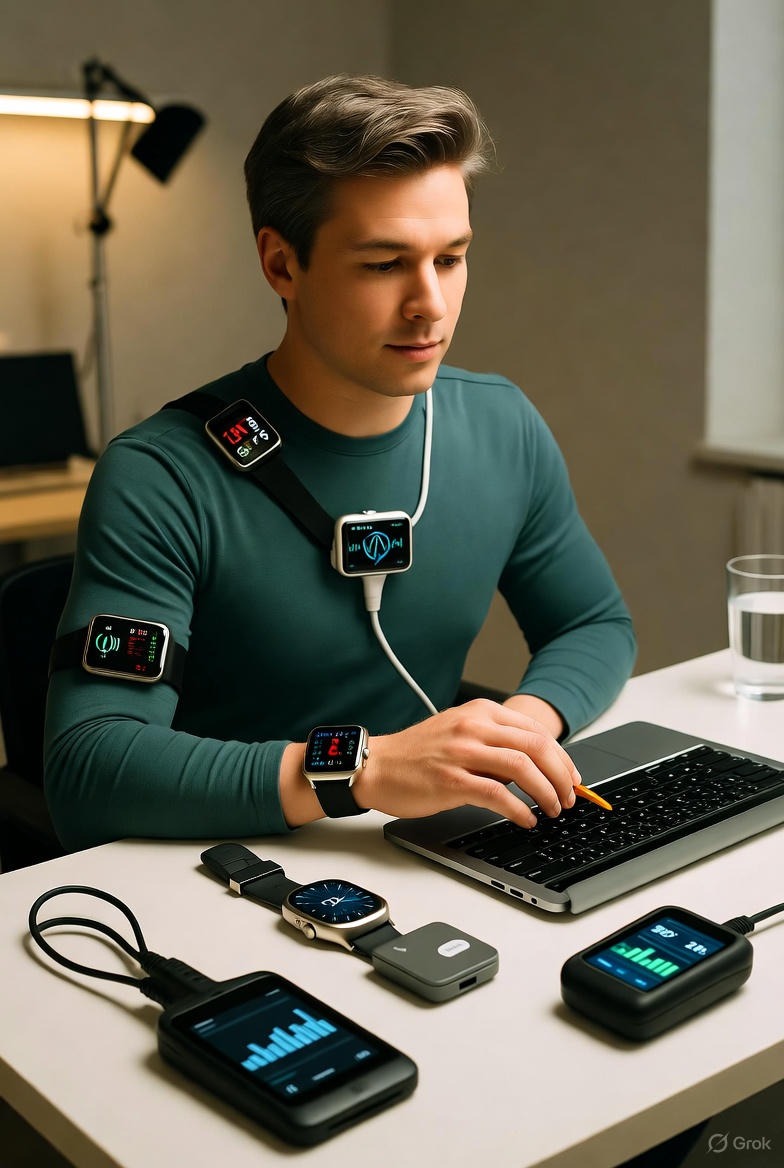
Thus far, we’ve treated movement as the star of the show. But for a truly vibrant life, it cannot perform in isolation. It exists in a delicate, powerful synergy with two other fundamental pillars: Nutrition and Sleep. Ignoring this interplay is like tuning only one instrument in an orchestra and expecting harmony. The goal is not perfection in any single domain, but a conscious alignment where each pillar supports and amplifies the others, creating a virtuous cycle of energy and well-being that makes healthy movement feel effortless.
This is about moving from a compartmentalized view of health to an integrated, systemic one.
The Triad of Vitality: How Each Pillar Influences the Others
Movement → Sleep: Daily physical activity, especially when it includes exposure to natural light, is one of the most powerful regulators of your circadian rhythm. It helps deepen sleep, increase the proportion of restorative deep sleep stages, and reduce the time it takes to fall asleep. However, timing matters; intense activity too close to bedtime can be overstimulating for some.
Sleep → Movement: Sleep is your body’s primary recovery tool. During deep sleep, human growth hormone is released, facilitating muscle repair and metabolic regulation. A night of poor sleep directly impairs coordination, reaction time, motivation, and perceived effort. Everything feels harder, making you far less likely to choose movement. Your "readiness" to move is fundamentally dictated by your sleep.
Nutrition → Movement: Food is fuel and building material. Consistent, balanced nutrition provides the steady energy for daily activity and the protein for muscle repair. Poor nutrition (highly processed foods, blood sugar spikes and crashes) leads to energy slumps, inflammation, and a lack of the raw materials needed to recover from and adapt to movement.
Movement → Nutrition: Regular movement improves insulin sensitivity, meaning your body manages blood sugar more effectively. This reduces cravings and stabilizes energy. It also creates a positive feedback loop: when you move, you naturally tend to crave more nourishing foods to fuel that feeling of vitality.
Sleep → Nutrition: Sleep deprivation dysregulates the hormones leptin and ghrelin, which control hunger and satiety. When you’re sleep-deprived, you crave more calorie-dense, sugary, and salty foods. It directly undermines willpower and healthy food choices.
Nutrition → Sleep: What you eat, and when, profoundly affects sleep quality. Heavy, rich meals before bed can disrupt sleep, while certain nutrients like magnesium, found in leafy greens and nuts, can promote relaxation. A balanced diet supports the production of sleep-regulating neurotransmitters like serotonin and melatonin.
Practical Integration: The Daily & Weekly Flow
Instead of managing three separate checklists, design a daily and weekly flow that honors this synergy.
The Daily Synergy Checklist:
The Weekly Synergy Rhythm:
The Role of Technology in Revealing Synergy
This is where a holistic tracking device transitions from a fitness tool to a vital systems monitor. By observing multiple data streams concurrently, you can see the synergy (or lack thereof) in real-time.
By viewing your data through this integrative lens, you stop asking, "Did I get enough steps?" and start asking, "Is my system in balance? Is my sleep supporting my activity? Is my fuel supporting my recovery?" For a comprehensive look at how to track these interconnected systems, our guide on what your sleep numbers should look like is an excellent starting point.
When movement, nutrition, and sleep are in harmony, you are no longer "finding energy" to be active. You are generating energy through the intelligent, self-reinforcing design of your daily life. This is the foundation of sustainable vitality.
We began by rewiring your brain with a "Movement Mindset." Now, we take the final, profound step: the transition from doing active things to being an active person. This is the shift from habit to identity. When movement becomes woven into your sense of self, it ceases to be a choice you debate and becomes a natural expression of who you are. You don’t "go for a run"; you are "a person who enjoys running." You don’t "force yourself to walk"; you are "someone who prefers to walk and talk."
This identity-level change is the ultimate protection against burnout and quitting. It’s resilient because it’s not tied to specific outcomes (weight, speed), but to a core part of your character.
James Clear, in Atomic Habits, articulates this powerfully: "Every action you take is a vote for the type of person you wish to become." The goal is to cast enough votes through small, consistent actions that your self-image changes. The process is a feedback loop:
Over time, the action (taking the stairs) is no longer a conscious decision based on a goal; it’s an automatic behavior that flows from your identity as an active person.
How to Cultivate an "Active Person" Identity
1. Use Identity-Based Language:
2. Adopt Rituals, Not Routines:
3. Curate Your Environment to Reflect Your Identity:
4. Connect with a Tribe That Shares the Identity:
Navigating Identity Shifts and Setbacks
Changing your identity is not a linear process. The old narrative ("I’m not athletic," "I’m lazy") will try to reassert itself, especially after a period of inactivity (like an illness or a hectic work week).
How Data Substantiates Your New Identity
Your biometric data becomes the objective, non-judgmental chronicle of your identity shift.
This data provides irrefutable evidence to counter the fleeting feelings of imposter syndrome. It’s the ledger of all the "votes" you’ve cast for your new self. To see how this journey of self-discovery through data is central to our brand, you can read about our story and vision.
When your movement habits become an expression of your identity, you have reached the pinnacle of sustainable practice. You are no longer "doing exercise." You are simply living, as the active, vital person you have chosen—and proven—yourself to be.
The impact of a life rich in organic, joyful movement extends far beyond your own biceps, resting heart rate, or sleep graph. It creates a positive ripple effect that touches your relationships, your work, your community, and even your perspective on the world. This habit is about recognizing and appreciating these broader impacts, which provide a deeper, more meaningful layer of motivation.
When you move, you aren’t just building a better body; you’re building a better life and contributing to a better environment around you.
The Personal Ripples: Mind, Emotion, and Spirit
The Interpersonal Ripples: Relationships and Community
The Professional Ripples: Work and Productivity
The Global Ripple: Environmental and Economic Impact
While your smart ring can’t directly track the smile on your child’s face when you race them to the park, it can track the physiological correlates of these ripple effects.
More importantly, the act of reviewing your data can become a ritual of gratitude. As you look at a week of stable energy and good sleep, you can reflect: "This data represents a week where I was patient with my partner, came up with a great idea at work, and felt truly connected to my life." For stories of how this holistic impact manifests for users, our testimonials page is filled with personal accounts.
By consciously acknowledging the ripple effect, you see your movement practice not as a self-centered endeavor, but as a contribution. Every step, every stretch, every moment of play sends out waves of positivity that improve your world in small but significant ways. This realization imbues even the smallest movement habit with profound purpose.
We began by dismantling a burdensome idea: that exercise must be a segregated, strenuous, and often joyless task. We’ve journeyed through a new landscape where movement is reintegrated into the very fabric of living—as play, as connection, as transportation, as mindfulness, and as a fundamental expression of a vital self.
This is not a 30-day challenge with a clear finish line. It is the beginning of a lifelong practice of movement as life. The finish line is not a weight on a scale or a time on a clock; it is the last day of a long, vibrant, autonomous life, where you moved with grace, joy, and intention until the very end.
The Core Truths to Carry Forward
This article is a map, but the territory is your one, precious life. The next step is not to try and implement all 18 habits at once. That is a recipe for overwhelm. The next step is curiosity.
Pick one thing that resonated most deeply. Perhaps it’s the idea of a movement snack when you feel an afternoon slump. Maybe it’s committing to a weekly walking date with a friend. It could be as simple as practicing the "Ten-Minute Rule" when resistance strikes.
Try it for one week. Observe not just what you do, but how you feel. Use your own awareness, or if you have one, use your wellness wearable to see if the data tells an interesting story. Did that week of post-dinner walks correlate with slightly calmer evenings? Did choosing playful movement on a high-energy day lead to a better night’s sleep?
This is your lifelong practice: a gentle cycle of experimentation, observation, and adjustment. Some seasons of life will be for exploration and play; others will be for gentle maintenance and rest. All are valid. All are part of the journey.
As you move forward, remember that the ultimate metric is not in an app. It’s in the quality of your days.
It’s in the feeling of vitality that lets you say "yes" to a spontaneous adventure.
It’s in the strength that allows you to lift a child, a suitcase, or your own spirit with ease.
It’s in the calm focus you bring to your work and your relationships.
It’s in the profound gratitude for a body that can feel the sun, climb a hill, dance in a kitchen, and rest deeply.
Technology, like the discreet engineering of a smart ring, serves this higher purpose. It is there to facilitate insight, to celebrate your everyday victories, and to remind you, when you forget, that you are a miraculous system designed for motion and rest, for effort and ease, for a lifetime of vibrant experience.
Your journey to a life of healthy movement that doesn’t feel like exercise starts not tomorrow, but in the very next moment. It starts with the decision to see the world as your playground, your body as your ally, and each day as a new opportunity to move, live, and thrive.
To continue exploring and refining your path, we invite you to discover more resources and stories on our blog, where the conversation about integrated, joyful wellness continues.
Your Trusted Sleep Advocate (Sleep Foundation — https://www.sleepfoundation.org/)
Discover a digital archive of scholarly articles (NIH — https://www.ncbi.nlm.nih.gov/
39 million citations for biomedical literature (PubMed — https://pubmed.ncbi.nlm.nih.gov/)
experts at Harvard Health Publishing covering a variety of health topics — https://www.health.harvard.edu/blog/)
Every life deserves world class care (Cleveland Clinic -
https://my.clevelandclinic.org/health)
Wearable technology and the future of predictive health monitoring. (MIT Technology Review — https://www.technologyreview.com/)
Dedicated to the well-being of all people and guided by science (World Health Organization — https://www.who.int/news-room/)
Psychological science and knowledge to benefit society and improve lives. (APA — https://www.apa.org/monitor/)
Cutting-edge insights on human longevity and peak performance
(Lifespan Research — https://www.lifespan.io/)
Global authority on exercise physiology, sports performance, and human recovery
(American College of Sports Medicine — https://www.acsm.org/)
Neuroscience-driven guidance for better focus, sleep, and mental clarity
(Stanford Human Performance Lab — https://humanperformance.stanford.edu/)
Evidence-based psychology and mind–body wellness resources
(Mayo Clinic — https://www.mayoclinic.org/healthy-lifestyle/)
Data-backed research on emotional wellbeing, stress biology, and resilience
(American Institute of Stress — https://www.stress.org/)


