


How Your Smart Ring Reinforces Healthy Movement Habits Daily
The ring provides daily reinforcement for your healthy movement habits.
The ring provides daily reinforcement for your healthy movement habits.
%402x.svg)
In the quiet hum of modern life, where wellness advice often shouts in contradictions, a silent revolution is happening on our fingers. The smart ring, once a niche gadget, has evolved into a sophisticated health companion. It’s not just counting steps; it’s becoming an architect of your daily movement patterns, a subtle guide that reinforces positive habits without the fanfare of constant notifications or the guilt of unmet goals. This isn't about tracking for tracking's sake. It's about creating a seamless, intuitive feedback loop that turns raw data into daily rituals, and intentions into sustainable action. Welcome to the frontier of behavior change, powered by technology you wear without a second thought.
For too long, the pursuit of "more movement" has been a game of abstract numbers—10,000 steps, 30 active minutes, 5 workouts a week. We chase these figures, often missing the forest for the trees. True, lasting health is woven into the fabric of our everyday lives: how we transition from sitting to standing, our incidental activity, our postural awareness, and the rhythm of our work and rest. This is where the smart ring shines. Its unobtrusive, 24/7 presence allows it to observe not just your exercise, but your movement ecology—the entire landscape of your physical day. By analyzing this rich, continuous data stream, it can deliver personalized, timely nudges that reshape your behavior from the ground up, reinforcing healthy movement habits until they become as automatic as breathing.
Before we dive into the how, we must understand the why of human behavior. Lasting change isn't forged in the fire of sheer willpower; it's constructed brick by brick through the science of habit formation. At its core, a habit is a neurological loop with three key components: the cue (a trigger), the routine (the behavior itself), and the reward (the benefit that reinforces the behavior). What makes smart rings, particularly advanced models like the OxyZen ring, such potent tools is their ability to masterfully integrate into this loop, transforming passive data collection into an active feedback engine.
The traditional fitness tracker often disrupts this loop. A loud buzz on your wrist demanding you "Move!" can feel like a scolding, an external demand that becomes easy to ignore or resent. The smart ring operates differently. By residing on your finger—a location rich in vascular data and less prone to disruptive motion artifacts—it gathers a more intimate and accurate physiological portrait. Its feedback is often subtler, delivered through gentle haptics or integrated into a companion app you check on your own terms. This transforms the experience from one of obedience to one of self-discovery. The ring provides the cue (a reminder you've been sedentary for an hour), supports the routine (suggests a specific 2-minute stretching sequence), and quantifies the reward (showing an immediate positive impact on your heart rate variability or stress levels).
This creates a powerful positive reinforcement cycle. When you see tangible, physiological proof that a small action—like taking the stairs—directly improves your body's metrics, the brain begins to link that action with a genuine, internal reward. It's no longer about earning an abstract badge; it's about feeling the direct benefits. Over time, the ring’s data becomes the cue itself. The desire to "see my readiness score improve" or "keep my activity bar full" becomes the motivation, internalizing the drive for movement. For a deep dive into how data translates to motivation, our exploration on what your sleep numbers should look like offers a parallel in the world of recovery.
The era of the step count as the sole metric of health is over. While steps provide a simple baseline, they tell a painfully limited story. 10,000 steps of shuffling with poor posture under high stress is not equivalent to 7,000 steps of brisk, upright walking with a calm nervous system. Modern smart rings are pioneering the shift from measuring movement quantity to assessing movement quality. This is a multidimensional analysis that builds a far richer picture of how your daily activity truly serves your body.
So, what constitutes "movement quality"? It's a symphony of data points played in harmony:
By focusing on quality, the smart ring shifts your goal from "I need to move more" to "I need to move better." It helps you understand that a day of high-quality, varied movement that respects your body's recovery needs is infinitely more valuable than a blindly high step count. This philosophy extends directly into recovery, as discussed in our resource on deep sleep optimization for athletes, where movement and rest are two sides of the same coin.

Let's address the elephant in the modern room: we sit too much. Research has famously dubbed prolonged sitting "the new smoking," linking it to increased risks of cardiovascular disease, diabetes, and musculoskeletal disorders. The greatest threat of sedentary behavior is its insidious nature; it's not the absence of exercise, but the prolonged periods of inactivity that pepper our days. This is where your smart ring transforms from a tracker into a sentinel.
Unlike a wrist device you might take off at a desk, the ring’s constant wear makes it a perfect monitor for sedentary bouts. Using sophisticated inertial sensors, it can accurately detect when you’ve been stationary for a dangerous length of time. But its genius lies not just in detection, but in intelligent intervention. Rather than a generic, annoying alert every 60 minutes, the most effective rings use contextual awareness.
This constant, gentle guardianship helps rewire your relationship with your chair. Over time, you begin to anticipate the nudge. You start to feel the stiffness before the ring buzzes. It cultivates a proprioceptive awareness—a felt sense of your body in space and time—making you an active partner in breaking the sitting cycle. To understand how these daily habits connect to nighttime recovery, our article on the deep sleep formula of temperature, timing, and habits explores the foundational routines that support whole-body health.
Your body is not a static machine; it's a dynamic organism governed by a 24-hour internal clock known as your circadian rhythm. This rhythm influences everything from hormone secretion and body temperature to cognitive performance and, crucially, your physical capacity. Exercising at the wrong time for your body can feel like swimming against a powerful current, while aligning movement with your natural peaks can make it feel effortless and more beneficial. Your smart ring is the key to unlocking this circadian movement principle.
By tracking core body temperature trends (a primary circadian marker), sleep/wake consistency, and daily performance metrics, the ring builds a personalized map of your energy landscape throughout the day.
This isn't about imposing a rigid schedule; it's about flowing with your biology. When your movement habits are in sync with your circadian rhythm, exercise feels more rewarding, recovery is faster, and the habit itself becomes more sustainable because it's working with your body, not against it. This synergy between daily activity and nightly recovery is a cornerstone of the OxyZen philosophy, which you can explore further on our main platform.
Movement isn't just about locomotion; it's about how you hold yourself when you're still. Poor posture—the forward head tilt, rounded shoulders, and slumped spine of desk life—is a silent contributor to chronic pain, reduced lung capacity, and low energy. Your smart ring, surprisingly, can become a vigilant posture protector.
While it can't see you like a camera can, it can infer postural trends through clever data synthesis. By analyzing the angle of your hand/wrist position during typing or phone use, correlating periods of sedentary behavior with specific heart rate and respiratory rate signatures (slouched breathing is shallower), and even noting times of day you report neck or back discomfort in a journaling feature, the ring builds a risk profile for poor posture.
This function transforms the ring from a fitness device into a holistic wellness tool, addressing the musculoskeletal consequences of modern life. It recognizes that healthy movement includes the spaces between the steps. For users curious about the full scope of what our technology can measure, our detailed guide on sleep tracking accuracy explains the principles of sensor inference and data interpretation.
In the old paradigm of fitness, movement was the active ingredient and recovery was the passive background. We now know this is a profound mistake. Recovery is an active, essential component of a healthy movement practice. Overtraining and under-recovering are primary reasons exercise habits fail, leading to burnout, injury, and abandonment. Your smart ring’s most sophisticated role may be as a recovery coach, teaching you to listen to and respect your body's signals.
The ring quantifies the subtle language of your nervous system through two key metrics:
When you sync your ring with its app, you're often presented with a "Readiness" or "Recovery" score—a composite index of HRV, RHR, sleep quality, and activity balance. This score is the cornerstone of a dynamic movement habit.
This feedback loop cultivates a profound shift from "I should work out today" to "What is my body ready for today?" It replaces rigid, often self-destructive, schedules with flexible, intuitive, and sustainable practices. It teaches that discipline isn't just about pushing; it's also about pulling back with wisdom. For a comprehensive look at how sleep fuels this recovery process, our article on the science of deep sleep and what happens to your body provides essential context.
Humans are social creatures, and our habits are profoundly influenced by our tribe. While the smart ring is a deeply personal device, its power is amplified when connected to a community. This social layer transforms private data points into shared experiences, adding a dimension of accountability, support, and friendly competition that can decisively reinforce movement habits.
Modern smart ring platforms are building this in innovative ways:
This community aspect addresses the motivation gap. On days when intrinsic motivation is low, knowing your walking buddies are counting on you for the team challenge can be the nudge that gets you out the door. Over time, this external accountability helps solidify the internal habit. It turns movement from a solitary chore into a connected part of your social identity. For stories of how this plays out in real life, browse the inspiring journeys in our customer testimonials section.
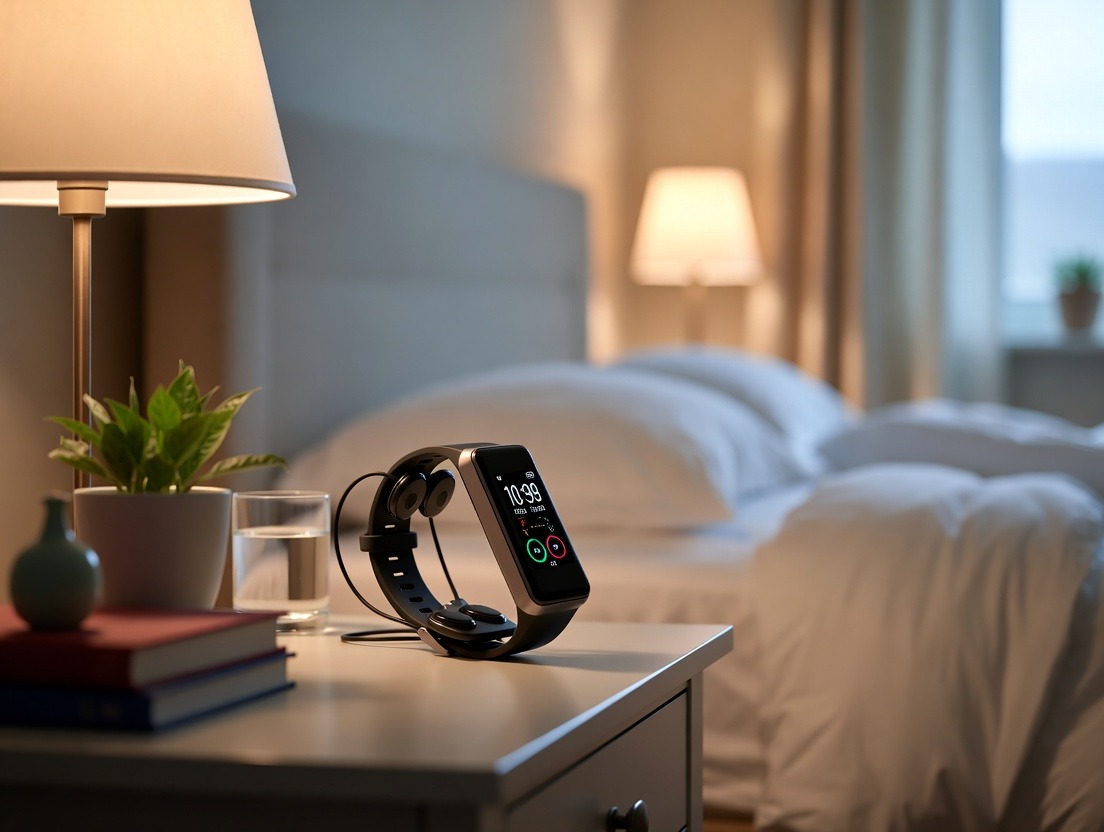
Raw data is intimidating. A graph of your heart rate variability over 30 days is meaningless if you don't know how to interpret it. The magic of an effective smart ring ecosystem lies in data storytelling—the art of translating complex biometrics into a coherent, actionable narrative about your day, your week, your life. This narrative is what finally bridges the gap between information and true behavior change.
Instead of presenting you with a dashboard of siloed metrics, advanced platforms synthesize the data into plain-English insights and thematic stories.
This narrative format does the heavy cognitive lifting for you. It answers the "so what?" It shows you the cause and effect between your movement habits and other aspects of your well-being (sleep, stress, energy). When you understand the story, you feel empowered to write the next chapter. You’re no longer a passive subject of measurement; you are the author of your health narrative, with the ring as your insightful editor. For more on building these insightful narratives from your data, our blog is a treasure trove of analysis and advice.
Building Your Personal Movement Blueprint: The Long Game
The culmination of all these features—habit psychology, quality metrics, circadian alignment, recovery intelligence, social support, and data storytelling—is the creation of a Personal Movement Blueprint. This isn't a generic, one-size-fits-all plan from a magazine. It's a living, breathing, adaptive strategy for moving through your life in a way that is uniquely sustainable and beneficial for you.
Your smart ring, through continuous learning, helps construct this blueprint over time. It identifies:
With this blueprint, the ring transitions from a coach that gives daily orders to a consultant that provides strategic guidance. It helps you plan your week, not just react to your day. It allows you to anticipate challenges (a busy work week, travel) and adapt your movement goals proactively to maintain momentum without burnout.
This is the essence of reinforcement: building a system so intuitive and personalized that healthy movement ceases to be a conscious struggle and becomes the default path of least resistance. It’s about using technology not to complicate life, but to simplify the path to a healthier one. To begin crafting your own blueprint and see the technology behind it, the journey starts at our shop.
A body in motion is a metabolic engine, and the fuel you provide it determines not just performance, but also how you feel during and after movement. One of the most powerful, yet often overlooked, ways a smart ring reinforces healthy habits is by illuminating the intimate dance between movement and metabolism. By tracking your body's responses—not just to exercise, but to food and its timing—the ring helps you create a symbiotic relationship between what you do and what you eat.
Your smart ring, particularly through continuous temperature sensing and heart rate data, can provide indirect but invaluable insights into your metabolic function.
This isn't about prescribing a diet. It’s about fostering metabolic awareness. The ring helps you become a scientist of your own body, running experiments: "If I eat a balanced breakfast before my morning walk, how does it affect my energy levels at 3 PM compared to skipping it?" By observing the biometric feedback, you learn which foods and meal timings make you feel—and perform—at your best, creating a self-reinforcing loop where healthy movement and mindful eating become mutually supportive pillars.
Every habit journey encounters plateaus. The initial excitement fades, progress stalls, and motivation wanes. This is the moment most New Year's resolutions die. Your smart ring, however, is engineered to be your ally against stagnation. It provides the objective data and fresh perspectives needed to break through these inevitable standstills, turning a period of frustration into one of strategic refinement.
When your movement habits feel stuck, the ring’s historical data is a goldmine for diagnosis and intervention.
By providing an objective, non-judgmental view of your plateau, the ring removes emotion and guesswork. It transforms "I'm not getting anywhere" into "My data shows I've adapted to my current routine. Here are three data-backed strategies to advance." This keeps the habit of movement intellectually engaging and strategically evolving.
The Gamification of Wellness: Turning Life into a Rewarding Game
At its heart, habit formation benefits from immediate, positive feedback. This is the core appeal of gamification—applying game-design elements to non-game contexts. Your smart ring’s app is often a masterclass in subtle, sophisticated gamification that makes cultivating healthy movement habits feel less like a duty and more like a engaging, rewarding journey.
Unlike crude step-count leaderboards, modern wellness gamification is personalized and meaningful.
This layer of gamification provides the short-term, frequent rewards that our brains crave to lock in long-term behaviors. It makes the process fun. Crucially, it ties rewards to healthy processes (showing up, listening to your body) rather than just outcomes (weight loss, a faster mile), which fosters a healthier, more resilient mindset. To see how gamification principles also apply to sleep improvement, explore our article on how to get more deep sleep tonight with 7 proven strategies.
We are on the cusp of the next evolution in wearable technology: the shift from deliberate coaching to ambient coaching. This is where your smart ring’s reinforcement of healthy movement becomes so seamless and integrated into your environment that you barely perceive it as guidance. It’s about creating a world where the healthy choice is the easiest, most intuitive one, facilitated by your biometric data.
This future is built on two key integrations:
Ambient coaching aims to reduce cognitive load. The decision fatigue of "what should I do for my health right now?" is alleviated by a system that knows your patterns, your physiology, and your goals. It reinforces habits not through conscious effort, but through intelligent design of your surroundings, making healthy movement an effortless byproduct of your day. This vision is core to the forward-thinking development at OxyZen, a glimpse of which can be found in our story.
The reinforcement of a habit is powerfully amplified when it transcends the individual and contributes to a collective purpose. Your smart ring’s data, when anonymized and aggregated, becomes part of a larger story about human health. This shift in perspective—from "my steps" to "our movement"—can add a profound layer of meaning to your daily actions, reinforcing them through a sense of shared progress and contribution.
We are seeing the emergence of this "collective wellness" model:
This narrative transforms the smart ring from a self-improvement tool into an instrument of connection and contribution. The habit of taking the stairs is no longer just about your heart health; it's also a few points for your team or a tiny fraction of a donation to a cause. This taps into our deep-seated need for purpose and community, providing a powerful, enduring reason to keep moving, day after day. To see how shared goals create real results, the experiences shared in our testimonials page often highlight this communal aspect.
Ultimately, the daily reinforcement of healthy movement habits is an investment with the highest possible dividend: healthspan. It's about adding not just years to your life, but life to your years. A smart ring uniquely positions you to take this long view, translating daily micro-habits into a macro-trajectory of resilience and vitality. It provides the evidence that the small choices of today are compounding into the wellness of tomorrow.
The ring shifts the focus from aesthetic short-term goals to biomarker long-term trends, which are the true predictors of longevity.
Wearing a smart ring is like having a personal biographer for your health. The long-term data log tells the story of your commitment. On a day you lack motivation, you can look back at the year-long trend chart showing your improving biomarkers—a visual testament to how far you've come. This reinforces the identity of being "someone who moves and takes care of their body," which is the most powerful habit reinforcement of all. For a nuanced look at how movement and recovery needs evolve, our article on how age affects deep sleep and how to compensate offers complementary insights.
In a sea of data, the final and perhaps most important habit your smart ring can teach is intuitive wisdom—the ability to listen to your body's signals in conjunction with, and sometimes even over, the numbers on the screen. The goal of all this technology is not to make you a slave to metrics, but to use those metrics to refine your internal senses, so you eventually need the device less. It's a tool for calibration, not crutches.
The most advanced ring ecosystems guide users toward this balance:
This process turns data into dialogue. The ring provides the facts; you provide the context of your life. Together, you make a decision. This cultivates a mindful, empowered relationship with your health technology. It ensures the ring remains a reinforcing guide in your pocket (or on your finger), not a dictating voice in your head. For common questions on finding this balance, our comprehensive FAQ addresses many user concerns about data interpretation and use.
Beyond calories burned and steps taken, the daily practice of engaging with your movement data teaches a broader, more philosophical curriculum. The habits reinforced by your smart ring often mirror the skills needed for a fulfilling, resilient life. This is the meta-habit—the transfer of lessons from the physical to the existential.
In this way, the simple act of checking your ring’s app and responding to its insights becomes a daily micro-practice in mindfulness, systems thinking, and compassionate self-management. You are not just building a habit of movement; you are practicing the art of living well.

The first hours of the day set the tone for everything that follows. Your smart ring, having monitored your sleep and overnight recovery, is uniquely positioned to architect a Morning Ritual Blueprint that transforms generic advice into a personalized launch sequence for sustained, healthy movement. This isn't about a brutal 5 AM workout; it's about using subtle, data-informed cues to gently align your body and mind with an active day.
Upon waking, your first interaction shouldn't be with social media, but with your ring's recovery insight. This single data point—your Readiness or Recovery Score—becomes the keystone of your morning decisions.
Beyond the score, the ring's temperature and HRV data can inform specific actions. A slightly elevated resting heart rate might cue you to prioritize hydration first thing. Seeing a poor deep sleep duration might encourage you to keep the morning workout light and focus on an earlier bedtime. This ritual builds the foundational habit of listening before doing, ensuring your movement is always in dialogue with your body's true state.
For millions, the daily commute represents a chunk of sedentary time. Your smart ring serves as a brilliant coach for micro-optimizing these transitional periods, turning lost minutes into cumulative gains for cardiovascular health, metabolic function, and mental clarity. This is habit reinforcement in the crucible of real life.
The ring’s context-aware alerts excel here. Based on your location (inferred from your phone) and movement data, it can provide genius-level nudges:
The reinforcement comes from the immediate feedback. After you follow the nudge and climb six flights of stairs, you can open the app and see the real-time spike in your heart rate, the active minutes logged, and the calories burned. This creates a powerful, instant reward loop. You feel the increased alertness from the movement and see the data confirming it, wiring your brain to associate these commute choices with a double reward. Over weeks, the new routing becomes automatic. You start looking for the far parking spot before the ring even buzzes.
The modern workday is a minefield of sedentary behavior. Countering it requires more than hourly stand-up alerts; it demands the creation of a personal movement ecosystem. Your smart ring is the central processor for this ecosystem, integrating data from your body to orchestrate a flow of postural changes, micro-breaks, and energy management throughout your day.
This goes beyond combating stillness to optimizing the quality of your work-time movement.
The ecosystem is completed by the ring’s stress tracking. If it detects a spike in stress (via HRV dip or elevated heart rate) during a work period, its suggested intervention might be movement-based: "Signs of stress. Try 1 minute of box breathing or a quick walk to the water cooler." This teaches you to use movement as a direct modulator of your nervous system state, a habit with profound implications for mental health and productivity. For understanding how daily stress impacts nightly recovery, our analysis of sleep tracking for beginners provides essential background.
Just as the morning ritual sets you up for an active day, the evening wind-down uses movement to prepare the body for restoration. This is a nuanced dance, as intense exercise too late can be counterproductive. Your smart ring acts as a savvy conductor for this transition, guiding you toward movements that promote parasympathetic nervous system activation and prime you for high-quality sleep.
The ring uses the day's accumulated data—activity load, stress metrics, and current physiological state—to prescribe an appropriate evening movement protocol.
Crucially, the ring provides the "why." After completing the suggested wind-down, you can track the direct impact: observing how your heart rate lowers, your heart rate variability begins to rise, and your body temperature starts its natural decline. This creates a powerful feedback loop, proving that these evening movement habits are not random but are directly optimizing your body for deep sleep. You go to bed knowing you've actively invested in your recovery.
In a multi-device world, confusion is inevitable. You might wear a smartwatch during workouts, have a smart scale, and your OxyZen ring on 24/7. Discrepancies in step counts, calorie burns, or heart rate readings can breed distrust and derail motivation. A key habit your ring helps build is data literacy and synthesis—the skill to resolve conflicts and build a coherent story.
The ring’s app can facilitate this by allowing manual data comparisons or even integrating other device data (like from Apple Health or Google Fit) to present a unified dashboard. Its role becomes the central truth-teller, synthesizing information to cut through the noise. This builds the critical habit of seeking understanding over simple metrics, making you an informed collaborator in your health journey.
Even the most sophisticated system encounters resistance. There will be days or weeks when the ring's nudges are ignored, when motivation plummets, and old, sedentary patterns reassert themselves. This isn't a system failure; it's a human reality. Your smart ring can actually help you troubleshoot these breakdowns in the habit loop with compassionate, data-driven insight.
This troubleshooting capability reinforces the most important meta-habit of all: self-compassionate persistence. It teaches that falling off track is data, not destiny. The ring provides the non-judgmental space and tools to analyze the lapse and engineer a smarter restart, building resilience in your habit-formation muscles themselves.
We are standing at the threshold of a revolution in personalized health. The next generation of smart ring reinforcement will move from being reactive and suggestive to being predictive and prescriptive, powered by advanced artificial intelligence that acts as a true health co-pilot.
Imagine a ring that doesn't just tell you what you did, but knows what you should do next with startling precision.
This future turns the smart ring into an always-on, deeply intuitive health guardian. The reinforcement becomes so personalized it feels clairvoyant, dramatically reducing the friction and guesswork in maintaining healthy habits for life. This is the ambitious vision guiding companies like OxyZen, a commitment you can learn about in our mission statement.
In the end, the gigabytes of data collected by your smart ring over years coalesce into something far more meaningful than graphs: they form the biometric narrative of your life. Every step logged, every heart rate peak during a joyful play session with kids, every calm HRV reading after a meditation, every deep sleep night following a well-paced day—these are the data points of a life lived in mindful motion.
This long-term narrative is the ultimate reinforcement. It provides perspective. A bad week is a blip in a year-long upward trend in cardiovascular efficiency. A month of low motivation is contextualized by the preceding six months of solid consistency. The ring becomes a digital scrapbook of your physical resilience, a testament to the compound interest of daily habits.
This perspective elevates the smart ring from a habit-tracking tool to a life-documenting companion. It helps you see that the daily reinforcement of healthy movement is not a chore, but the active weaving of a tapestry of vitality. Each conscious choice, each responsive nudge, adds a thread to a picture of health that is uniquely and beautifully yours.
Your smart ring is far more than a piece of jewelry with a battery. It is the silent conductor of your daily symphony of movement, recovery, and life. It listens to the subtle rhythms of your physiology—the percussion of your heart, the strings of your nervous system, the wind of your breath—and helps you compose a score that promotes harmony and resilience.
It reinforces healthy movement habits not through barked orders, but through enlightened conversation. It provides the cues you might miss, celebrates the routines you establish, and quantifies the rewards your body experiences. It turns abstract health goals into tangible, daily dialogues. It bridges the gap between intention and action, between knowledge and behavior, between your present self and your future self.
From combating the sitting disease to aligning with your circadian rhythm, from protecting your posture to optimizing your recovery, the ring integrates seamlessly into the fabric of your life, making the healthy choice the informed choice, and eventually, the automatic choice. It is a tool for building not just fitness, but movement literacy—the deep, intuitive understanding of how to care for your physical vessel through the myriad moments of your day.
The journey with a smart ring is one of partnership. You bring the lived experience, the goals, and the willingness to act. The ring brings the objective data, the timely reminders, and the insightful patterns. Together, you write a story of health that is dynamic, personalized, and sustainable. It is a story not of perfection, but of persistent, intelligent adaptation—a story where every day offers a new opportunity to move, recover, and thrive.
Ready to begin composing your own story of reinforced movement? The journey starts with understanding the technology designed to support it. Explore the full potential and discover how OxyZen can be your guide. And for continued learning on integrating all aspects of wellness, our blog remains your resource for deepening this lifelong practice.
Your Trusted Sleep Advocate (Sleep Foundation — https://www.sleepfoundation.org/)
Discover a digital archive of scholarly articles (NIH — https://www.ncbi.nlm.nih.gov/
39 million citations for biomedical literature (PubMed — https://pubmed.ncbi.nlm.nih.gov/)
experts at Harvard Health Publishing covering a variety of health topics — https://www.health.harvard.edu/blog/)
Every life deserves world class care (Cleveland Clinic -
https://my.clevelandclinic.org/health)
Wearable technology and the future of predictive health monitoring. (MIT Technology Review — https://www.technologyreview.com/)
Dedicated to the well-being of all people and guided by science (World Health Organization — https://www.who.int/news-room/)
Psychological science and knowledge to benefit society and improve lives. (APA — https://www.apa.org/monitor/)
Cutting-edge insights on human longevity and peak performance
(Lifespan Research — https://www.lifespan.io/)
Global authority on exercise physiology, sports performance, and human recovery
(American College of Sports Medicine — https://www.acsm.org/)
Neuroscience-driven guidance for better focus, sleep, and mental clarity
(Stanford Human Performance Lab — https://humanperformance.stanford.edu/)
Evidence-based psychology and mind–body wellness resources
(Mayo Clinic — https://www.mayoclinic.org/healthy-lifestyle/)
Data-backed research on emotional wellbeing, stress biology, and resilience
(American Institute of Stress — https://www.stress.org/)


