


How Your Smart Ring Tracks the Connection Between Vitality and Recovery
Your ring tracks the essential connection between vitality and recovery.
Your ring tracks the essential connection between vitality and recovery.
%402x.svg)
You wake up feeling energized, clear-headed, and ready to conquer the day. Your body hums with a quiet strength, your mind is sharp, and your mood is buoyant. This is vitality—the unmistakable feeling of being fully alive, resilient, and in flow. Another morning, you drag yourself out of bed feeling foggy, sluggish, and fragile, as if operating on a depleted battery. The difference between these two states is not random luck; it’s the direct outcome of the delicate, dynamic balance between the energy you expend and the recovery you achieve.
For centuries, we’ve had to guess at this balance, relying on subjective feelings like “being run down” or “feeling great.” We pushed through fatigue, mistook burnout for dedication, and often only recognized the need for rest when illness forced us to stop. But what if you could see the invisible mechanics of your own resilience? What if you had a personal biometrical translator, continuously decoding the subtle signals your body sends about its readiness, its stress, and its restorative power?
Enter the modern smart ring—a sleek, unassuming piece of wearable technology that is revolutionizing our understanding of personal wellness. Far more than a simple sleep tracker, this device is a 24/7 physiological observatory, capturing a symphony of data points that reveal the profound, intimate connection between your daily vitality and your body’s recovery processes. It moves us from guesswork to precision, from reactive health care to proactive health mastery. By quantifying the once-unquantifiable, it empowers us to make informed choices that directly fuel our energy, enhance our resilience, and optimize our long-term well-being. This journey into your own data is the first step toward not just living longer, but living with greater vitality for more of your life—a concept explored in depth in our guide on how to maximize your healthspan with lifelong strategies.
The evolution of wearable technology has been a rapid ascent from basic pedometers to wrist-bound computers. While smartwatches popularized the concept of tracking, they often prioritize notification ecosystems and fitness metrics centered on output: steps taken, calories burned, workouts logged. The smart ring, by its very form factor and philosophy, represents a paradigm shift. Worn on the finger—a location rich with capillary blood flow—and designed for constant, unobtrusive wear (even during sleep), its primary mandate is input: listening to the body’s autonomic nervous system.
Think of your autonomic nervous system (ANS) as your body’s background operating software. It regulates everything you don’t consciously control: heart rate, respiration, digestion, and the critical stress/recovery pendulum. It has two primary branches: the sympathetic (“fight or flight”) and the parasympathetic (“rest and digest”). Your daily vitality is a direct reflection of which branch is dominantly engaged. A smart ring acts as a passive listener to this system, using advanced photoplethysmography (PPG) sensors, temperature sensors, and accelerometers to capture its whispers and shouts.
The key metrics it tracks form the foundational language of vitality and recovery:
Unlike a watch you charge nightly, the smart ring’s design ensures it captures the most crucial recovery window: your sleep. This continuous, multi-parameter data stream creates a rich, personalized baseline. It tells you not just what you did, but how your body responded. This shift from tracking activity to monitoring physiological state is what transforms the ring from a gadget into a tool for genuine health insight. For a detailed breakdown of what each of these metrics means, you can read our complete guide to understanding wellness ring health metrics.
To understand the connection, we must first precisely define the two forces in play. In the context of biometric data, they are two sides of the same coin, engaged in a perpetual dance.
Vitality is your capacity for output. It’s the energy available to you for physical exertion, cognitive tasks, emotional engagement, and creative pursuits. It’s not merely the absence of fatigue; it’s the presence of buoyant energy. Biometrically, high vitality is associated with:
Recovery is the process of repair and replenishment. It’s the physiological work your body does when you are not expending energy to restore homeostasis, rebuild tissues, clear metabolic waste, and consolidate learning. It is both passive (sleep, relaxation) and active (nutrition, hydration, stress management). Biometrically, effective recovery is signaled by:
The critical, often-misunderstood relationship is this: Vitality is the interest earned on the principal of recovery. You cannot sustainably spend more vitality than you recover. Each day, you draw from your recovery reserves. Sleep, rest, and proper fueling are the deposits that replenish those reserves. A smart ring makes this bank statement visible. It shows you the nightly deposits (recovery metrics) and predicts your daily spending limit (readiness/vitality scores).
Chronic vitality deficit—where output consistently exceeds input—leads to a state of allostatic load, or cumulative stress. This is the precursor to burnout, injury, illness, and accelerated aging. The ring’s early warning system lies in its ability to detect this deficit forming long before you consciously feel "burned out." It might show a steadily declining HRV trend, a creeping rise in RHR, or increasingly fragmented sleep—all signs that your recovery principal is being eroded. Understanding these patterns is the first step in a proactive, lifelong health strategy enabled by wellness technology.
At the heart of most smart ring ecosystems is a singular, integrative metric: the Readiness Score (sometimes called a Recovery Score or Morning Report). This is not a raw measurement but a sophisticated algorithmic synthesis—a biometric weather forecast for your day. After a night of data collection, the ring’s software analyzes key recovery indicators and produces a score, typically on a scale of 1-100, that aims to answer the essential question: "How much physiological stress can my body handle today?"
This score is the clearest bridge between recovery and vitality. Let’s deconstruct what goes into it:
The magic of the Readiness Score is in the synthesis. You might have slept 8 hours (good), but if your HRV is very low and your RHR is high (bad), your score will be middling or low, telling you that despite the time in bed, your body is still in a stressed state. This stops you from blindly following a rigid schedule ("I must work out hard because it’s Tuesday") and instead encourages you to listen to your body’s actual state.
Acting on this score is where behavior changes. A high score is a green light for intense training, important meetings, or demanding projects—times to spend your vitality. A low score is a recommendation to prioritize rest, choose gentle movement like walking or yoga, manage stress deliberately, and focus on nutrition—a day to make deposits. This dynamic feedback loop turns intuition into intelligence. For those looking to integrate this into a long-term plan, learning to use your smart ring for multi-decade health planning can be transformative.
Sleep is the non-negotiable cornerstone of recovery, but not all sleep is created equal. The smart ring’s ability to approximate sleep staging is where it reveals the quality of your recovery. Think of your sleep as a therapeutic construction site with different crews working in shifts.
Deep Sleep (Slow-Wave Sleep): This is the physical restoration crew. During deep sleep:
A smart ring identifies deep sleep through characteristic patterns of very low heart rate, high heart rate variability, and minimal movement. Consistently low deep sleep, as shown on your ring’s dashboard, means your body isn’t getting its full repair shift, leaving you physically susceptible to aches, poor performance, and a weakened immune response.
REM (Rapid Eye Movement) Sleep: This is the mental and emotional restoration crew. During REM:
REM sleep is typically associated with faster, more variable heart rates and, of course, rapid eye movements (inferred from subtle motion patterns). Suppressed REM sleep can lead to brain fog, poor memory, emotional volatility, and low creative vitality.
Your smart ring provides a percentage breakdown of your night in these stages. The ideal ratio changes with age and individual needs, but the trend is what matters. Seeing a week where your deep sleep is consistently below your average gives you a clear, data-driven reason for feeling physically drained. It moves the conversation from "I'm tired" to "My deep sleep has been 15% below my baseline for five nights; I need to prioritize factors that promote it, like evening routine, temperature, and timing my last meal." This granular insight is part of a larger framework for mastering your wellness with a 50-year blueprint.
Recovery isn’t just about sleep. The stress you accumulate during waking hours—physical, mental, and emotional—directly depletes your vitality reserves and challenges your recovery systems. A smart ring provides a near real-time barometer for this strain through two primary lenses: acute stress detection and chronic stress trends.
Acute Stress Signatures: During a stressful event—a difficult conversation, a tight deadline, an intense workout—your sympathetic nervous system engages. Your smart ring can detect this through:
While it doesn’t label the source of stress, it highlights the physiological impact. Reviewing your day’s data, you might see a heart rate spike at 3 PM. Correlating that with your calendar, you realize it was during a specific meeting. This creates awareness of what activities truly tax your system, allowing you to develop better coping strategies or boundaries.
Chronic Stress & Allostatic Load: More importantly, the ring tracks the residual, lingering effects of stress. If you are under constant pressure, even during "downtime," your nervous system may fail to fully engage the parasympathetic "rest and digest" mode. This shows up as:
This is the state of being "tired but wired." You are exhausted, yet your body is still physiologically alert, inhibiting deep recovery. The ring makes this invisible state visible. By tracking these metrics, you can validate the effectiveness of stress-reduction techniques. Did that 10-minute meditation actually lower your heart rate and increase HRV? The data will show you. Seeing a positive change reinforces the habit, creating a powerful positive feedback loop for managing stress. To dive deeper into the numbers behind stress, our explainer on understanding HRV numbers simply is an excellent resource.
One of the most insightful yet under-discussed metrics is continuous body temperature. Your core body temperature follows a predictable 24-hour rhythm, controlled by your master circadian clock in the brain. This rhythm is a fundamental driver of vitality, dictating the timing of energy peaks, alertness, sleep propensity, and hormone release.
A healthy circadian rhythm shows:
Your smart ring’s skin temperature sensor tracks this rhythm. Deviations are highly informative:
By aligning your habits with your temperature rhythm, you can optimize vitality. The data might show that your temperature doesn’t start dropping until midnight, explaining why you can’t fall asleep at 11 PM. This could lead you to shift your evening routine, dim lights earlier, or adjust meal timing. Furthermore, research suggests that the timing of activities like exercise relative to your temperature curve can impact performance and recovery. The ring helps you find your personal sweet spot, turning a biological fact into a strategy for daily energy management. This is a key component in the broader science of how daily choices influence our long-term health through epigenetics.
A single night of poor sleep or a low HRV reading is not a crisis; it’s noise. The true power of the smart ring lies in its ability to reveal trends—the directional movement of your physiology over days, weeks, and months. This is the difference between data and wisdom, between reacting and understanding.
Similarly, a gradual, sustained increase in your average HRV or a decrease in your resting heart rate over months is concrete, rewarding evidence that your lifestyle changes—better sleep, consistent training, stress management—are improving your underlying physiology and resilience.
Your smart ring dashboard should be read like a stock chart for your health: ignore the daily volatility, watch the moving averages. This trend-centric thinking fosters patience and prevents obsessive, daily over-reaction. It teaches you to see your body as a complex system that responds to aggregated inputs, not single events. This longitudinal view is essential for anyone serious about creating a lasting family health legacy.
In our pursuit of vitality, we often fall into a counterproductive trap: believing that more exertion always leads to more strength. This is the overtraining paradox, where the relentless drive to spend vitality cripples the body’s ability to replenish it. For athletes and fitness enthusiasts, the smart ring is an indispensable early-warning system against this state, known formally as Overreaching (functional, short-term) and Overtraining Syndrome (non-functional, long-term).
Overtraining is not just being tired; it’s a state of systemic dysregulation where the body cannot recover adequately from training stress. The classic signs your ring will detect long before performance plummets or injury strikes include:
The ring quantifies the "strain" from a workout not just by duration or calories, but by its physiological cost: how much did it depress your HRV? How much did it elevate your RHR and for how long? This is often encapsulated in a "Training Load" or "Strain" score.
The intelligent user doesn't just push to hit arbitrary activity goals. They use the ring’s recovery metrics to answer: "Has my body absorbed and adapted to my last workout?" If readiness is low and HRV is suppressed, the smart choice is to swap a planned high-intensity interval training (HIIT) session for mobility work or complete rest. This is known as "autoregulation"—letting your physiology guide your training intensity. It prevents digging a recovery debt so deep it takes weeks or months to climb out of, thereby protecting your long-term vitality. Understanding the metrics that indicate overtraining and burnout is critical for sustainable progress.
You cannot out-recover a poor diet. Nutrition and hydration are the raw materials for the recovery process. While a smart ring doesn’t track macronutrients directly, its biometrics are highly sensitive to the quality and timing of your fuel. It provides indirect, yet powerful, feedback on your dietary habits.
The Impact of Evening Meals: A large, heavy, or high-sugar meal close to bedtime forces your body to prioritize digestion over deep restoration. This often shows up in your sleep data as:
Alcohol’s Deceptive Effect: Alcohol is a potent recovery disruptor. It may help with sleep onset but devastates sleep quality. Ring data after alcohol consumption typically reveals:
Hydration Status: Dehydration increases cardiovascular strain. Even mild dehydration can lead to:
Nutritional Quality & Timing: Over time, trends can emerge. A diet consistently lacking in nutrients essential for nervous system health (like magnesium, B vitamins) may manifest as a chronically suppressed HRV trend. Experimenting with meal timing—like moving your last meal earlier—and observing the corresponding improvements in deep sleep and readiness scores provides personal, empirical evidence for what works for your body.
In this way, the ring turns nutrition from a theoretical doctrine into a personal experiment. You can test how your body responds to different foods and eating windows, using objective recovery metrics as your success criteria. This empowers you to make dietary choices that genuinely fuel your vitality, not just follow generic rules. For a holistic view, this nutritional awareness complements strategies to prevent frailty and maintain strength into older age.
This is perhaps the most critical lesson in smart ring ownership: Your health data is only meaningful in the context of your personal baseline. There is no universally "good" HRV number or "ideal" resting heart rate. A 25-year-old elite athlete, a 45-year-old executive, and a 60-year-old retiree will have vastly different normal ranges.
The ring’s algorithms typically take 7-14 days of continuous wear to establish your unique baselines for:
Once established, all future data is interpreted as a deviation from your norm. This is where the device transitions from a generic tracker to a personal health mirror.
This personalization extends to lifestyle. Your ring learns how you respond to a hard workout, a late night, or a stressful period. It becomes a model of your unique physiology. This teaches self-compassion and focused awareness. Instead of striving for an arbitrary, external standard, you strive for what is optimally supportive for your own system. This foundational understanding is key to accurately reading your smart ring health metrics like a doctor would—with a focus on personal context and trends.
Data is inert without action. The final and most important step is closing the loop: translating the insights from your smart ring into tangible, sustainable behaviors that tip the balance in favor of recovery and vitality. This is not about achieving perfection but about making incremental, informed adjustments.
The Morning Ritual:
The Daytime Awareness:
The Evening Wind-Down:
The Weekly Review:
By integrating the ring’s feedback into these daily and weekly touchpoints, you create a responsive, self-correcting system for well-being. It fosters a collaborative relationship with your body, where you provide the inputs (sleep, nutrition, movement, rest) and it provides the feedback (data), guiding you toward a more vital, resilient, and recovered state. This process of integration is the essence of developing a balanced and flexible approach to lifelong health discipline.
The most profound power of continuous physiological monitoring may lie not in explaining yesterday, but in foretelling tomorrow. Your smart ring’s data stream can act as a silent, early-warning system, detecting subtle deviations that precede noticeable symptoms of illness, burnout, or systemic imbalance. This predictive capacity transforms the device from a wellness tool into a true health guardian.
The principle is simple: your body undergoes physiological stress long before you develop a sore throat, fatigue, or fever. This "prodromal" phase is marked by autonomic nervous system shifts that a smart ring is exquisitely sensitive to.
Key predictive patterns include:
The actionable insight here is to treat deviations from your baseline—particularly when multiple metrics shift in concert—as meaningful signals, not noise. A single low HRV reading is a blip; three consecutive nights of elevated RHR and low HRV is a conversation your body is trying to have with you. Learning this language enables a shift from reactive sick-care to proactive, defensive health maintenance.
Your capacity for vitality and the efficiency of your recovery processes are not static. They evolve dynamically across the decades. A smart ring provides a personalized lens to understand and gracefully adapt to these changes, allowing you to optimize your healthspan—the period of life spent in good health—at every age. The data helps you work with your biology, not against an outdated idea of it.
In Your 20s and 30s (The Resilience Phase):
In Your 40s and 50s (The Adaptation Phase):
In Your 60s and Beyond (The Optimization Phase):
By accepting and responding to these life-stage shifts, the smart ring helps you cultivate a sustainable, lifelong practice of vitality management, where success is measured by consistent energy and resilience, not by outperforming your younger self.
As powerful as biometric data is, it exists within the rich, messy context of a human life. The ultimate goal is not to become a slave to the numbers, but to use them to enhance your self-awareness and intuition. This requires a balanced, nuanced approach to the "Quantified Self."
Avoiding Data Anxiety (Orthosomnia):
A real phenomenon called "orthosomnia" describes the paradox of becoming so obsessed with perfect sleep data that the anxiety itself worsens sleep. Similarly, fretting over a daily HRV score can become a stressor. The antidote is to:
Integrating Subjective Experience:
Your ring measures physiological state, but it doesn’t capture meaning, joy, or connection. A night of slightly poorer sleep because you stayed up laughing with old friends is not a "recovery fail"; it’s a life win. The data might explain why you’re a bit tired the next day, but it shouldn’t make you regret the connection. Use the ring to plan and recover from life’s meaningful exertions, not to avoid them.
Using Data to Validate Intuition:
Often, the ring’s greatest gift is confirming what you already sense. That gut feeling of being "run down" is validated by a week of declining HRV. Your suspicion that evening coffee disrupts your sleep is confirmed by objective latency data. This validation strengthens your mind-body connection, making your intuition more reliable over time.
The smart ring is a tool for empowerment, not replacement. It provides an external, objective perspective to dialogue with your internal, subjective experience. The wisdom lies in the synthesis: letting the data inform your choices while ultimately using your human judgment to decide what’s best for your whole life—a balance beautifully explored in our discussion on finding the harmony between discipline and flexibility in health.
Our modern lives often conflict with our ancient biology. Jet lag, night shifts, and changing seasons disrupt our circadian rhythms, creating a direct clash between vitality and recovery. Here, the smart ring serves as both a compass and a logbook, helping you navigate and mitigate these disruptions.
Conquering Jet Lag:
Travel across time zones decouples your internal clock from the external light-dark cycle. The ring’s data vividly illustrates this internal desynchronization:
Managing Shift Work:
For shift workers, the challenge is chronic. The ring becomes essential for damage control and strategic recovery.
Adapting to Seasonal Shifts:
Seasonal Affective Disorder (SAD) and winter lethargy have physiological underpinnings. Your ring can track these seasonal variations.
In all these cases, the ring provides objective evidence of disruption and a means to measure the effectiveness of your countermeasures. It fosters self-compassion during challenging times by showing the clear physiological reason for your low vitality, and it empowers you to take targeted action to support recovery.
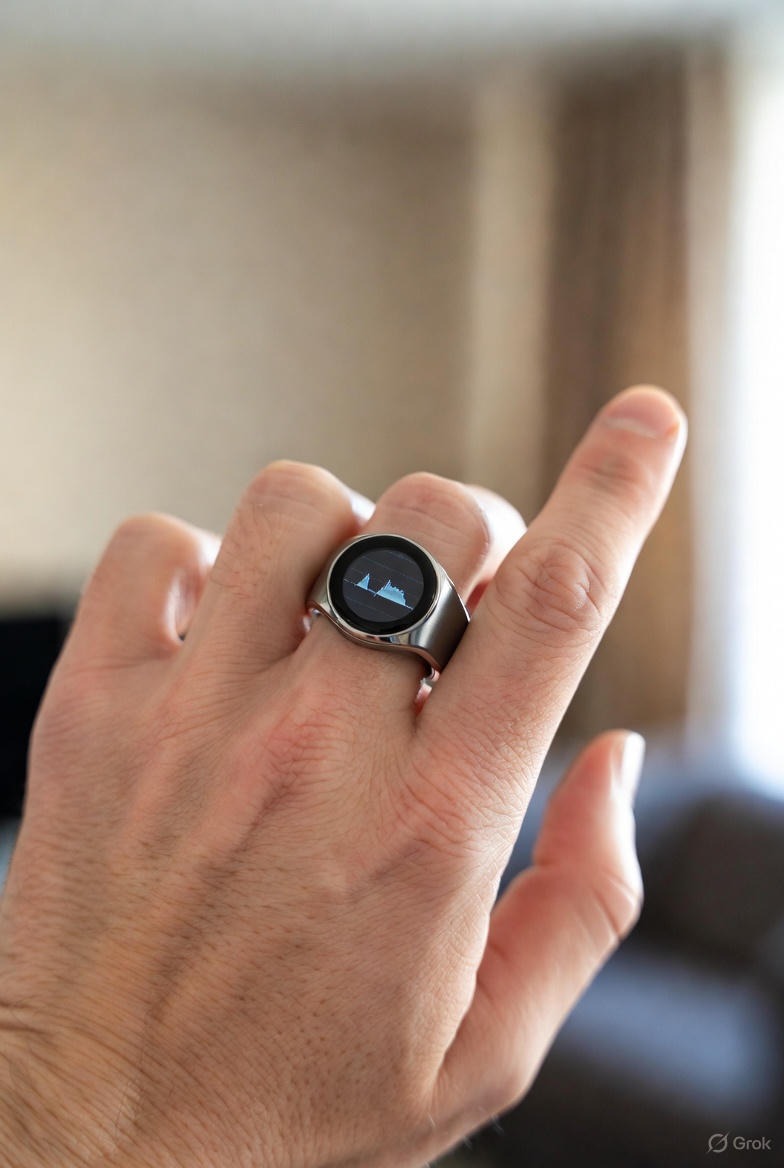
The smart ring is a powerful central node, but it shines brightest when integrated into a broader ecosystem of health and wellness tools. This holistic approach creates a multi-dimensional picture of your vitality and recovery.
Nutrition & Hydration Apps:
Fitness Platforms and Wearables:
Mindfulness and Meditation Apps:
Women’s Health and Cycle Tracking:
Electronic Health Records (EHRs):
By consciously building this ecosystem, you move from isolated data points to a coherent narrative about your health. The smart ring acts as the unifying interpreter, turning disparate inputs into a story of how your lifestyle choices collectively impact your fundamental capacity for vitality and recovery.
To move from theory to tangible understanding, let’s explore hypothetical but data-informed scenarios that illustrate the powerful cause-and-effect relationships a smart ring reveals.
Case Study 1: The Overtraining Executive (Mark, 42)
Case Study 2: The Stress-Linked Insomniac (Priya, 38)
Case Study 3: The Circadian Disruptor (Alex, 29)
These stories demonstrate that the ring doesn’t just show problems; it illuminates pathways to solutions grounded in your unique physiology.
The magic of the smart ring hinges on sophisticated sensor technology and complex signal processing. Understanding the "how" demystifies the data and builds trust in the insights.
The Core Technology: Photoplethysmography (PPG)
This is the ring’s primary tool. It works by shining green and/or red LED light onto the skin of your finger and measuring the amount of light reflected back by a photodetector.
The 3D Accelerometer & Gyroscope
This tiny motion sensor tracks movement and orientation.
The Skin Temperature Sensor
A precise thermistor measures the skin temperature at your finger 24/7. This spot is a reliable proxy for core body temperature rhythms because peripheral temperature fluctuates in sync with the circadian-driven blood flow changes from the core.
The Art of the Algorithm: From Raw Data to Insight
Raw sensor data is noisy. The true innovation lies in the proprietary algorithms that clean, analyze, and synthesize this data.
It’s crucial to remember that a smart ring provides consumer wellness metrics, not medical-grade diagnostics. Its SpO2 is an estimate, not a replacement for a hospital pulse oximeter. Its sleep staging is an educated approximation, not a clinical polysomnogram. However, for tracking trends, understanding personal baselines, and guiding lifestyle choices, the precision is remarkably high and profoundly useful. For a deeper dive into this process, explore how wellness ring algorithms calculate these complex health metrics.
The current capabilities of smart rings are impressive, but they represent just the beginning. Ongoing research and development point to a near future where these devices become even more integral to our health management.
Non-Invasive Blood Glucose Monitoring:
This is the holy grail for wearables. Several companies are developing PPG-based or other optical techniques to estimate glucose trends without a finger prick. For metabolic health, diabetes prevention, and optimizing energy levels, this would be a game-changer, allowing users to see how different foods affect their glucose response in real-time.
Blood Pressure Trends:
While achieving cuff-level accuracy from a ring is challenging, research into Pulse Transit Time (PTT)—the time it takes for the pulse wave to travel from the heart to the finger—shows promise for tracking relative changes in blood pressure over time. This could provide invaluable trend data for hypertension management.
Advanced Hydration & Electrolyte Status:
By analyzing the characteristics of the PPG signal, future sensors may infer information about blood viscosity and fluid volume, offering insights into hydration status—a key factor in performance and recovery.
Emotional State & Cognitive Load Inference:
Research is exploring how patterns in HRV, heart rate complexity, and even subtle micro-movements might correlate with emotional states like frustration, focus, or flow. This could lead to rings that help manage mental energy and emotional well-being with the same precision as physical energy.
Deeper Hormonal Cycle Insights:
For women’s health, continuous temperature and HRV data, combined with machine learning, could provide even more detailed predictions and insights into cycle phases, fertility windows, and perimenopausal transitions, moving beyond simple period tracking.
True Medical Device Integration:
The boundary between wellness and medical devices will blur. Future rings may incorporate sensors cleared for specific monitoring, such as for atrial fibrillation detection or sleep apnea screening, with pathways to share data directly with healthcare providers via telehealth platforms.
The trajectory is clear: the smart ring will become more accurate, more comprehensive, and more seamlessly integrated into both our daily lives and formal healthcare systems. Its role as the central hub for understanding the vitality-recovery connection will only deepen, empowering individuals with unprecedented knowledge about their own bodies. This evolution supports the ultimate goal of turning metrics into actionable, lifelong health strategies.
As we invite these devices into our lives, recording our most intimate biological rhythms, we must confront the ethical landscape they create. The power of a smart ring is inextricably linked to the sensitivity of the data it collects. Navigating this requires mindfulness about privacy, a clear sense of data ownership, and an awareness of the potential psychological impacts of constant self-quantification.
Data Privacy and Security: Your Physiology as a Data Stream
The data from your ring—your sleep patterns, stress responses, menstrual cycles, potential early illness signs—constitutes a profoundly personal health narrative. Key questions arise:
Psychological Impact and the "Optimization Trap"
The quest for perfect data can have a dark side. We've touched on orthosomnia, but the risk extends to a broader "optimization trap"—the belief that every life experience must be analyzed and improved. This can:
Data Ownership and Portability
You should have the right to your own data. Reputable companies provide ways to export your raw or processed data (often as CSV or JSON files). This ownership is crucial for:
Ultimately, using a smart ring ethically is a personal practice. It involves choosing vendors wisely, setting healthy boundaries with the technology, and remembering that the numbers are meant to illuminate your human experience, not replace it.
For the dedicated user, moving beyond single-metric observation to a holistic, cross-metric analysis unlocks the deepest insights. Your dashboard is a storyboard; each metric is a character. The plot is revealed in their interactions.
The Recovery Triad: HRV, RHR, and Sleep
Never view these in isolation. Their relationship tells the recovery story:
Temperature as the Context Setter
Use your temperature trend as the backdrop for everything else:
The Activity-Recovery Feedback Loop
This is the core of the vitality equation. Create your own feedback loop:
By consciously practicing this cross-analysis for a few weeks, you will start to see your unique patterns and predictive relationships. You’ll learn that for you, two consecutive days of high-intensity training always requires a day of active recovery, or that work deadlines manifest in a specific dip in REM sleep. This is the art of reading your smart ring health metrics like a doctor—synthesizing the full picture.
While your data is powerfully personal, in the aggregate—stripped of identifying details—it contributes to a revolutionary understanding of human health. The millions of data points collected by smart rings worldwide are forming a living, breathing map of human physiology in the real world, far beyond the sterile environment of a lab.
Revolutionizing Sleep Science:
Traditional sleep studies are expensive, invasive, and occur in unnatural settings. Continuous ring data from millions of people is revealing how sleep architecture truly varies by age, gender, geography, and lifestyle at a population scale. What is the global average for deep sleep? How does it change with latitude and seasons? This data is providing unprecedented insights.
Understanding Real-World Stress:
Researchers can now study physiological stress responses to real-world events—global pandemics, economic shifts, natural disasters—by observing anonymized trends in aggregate HRV and resting heart rate data across affected populations. This provides a biological measure of collective trauma and resilience.
Identifying Population Health Trends:
Anonymized, aggregated data can serve as an early-warning system for public health. For instance, if a city shows a sudden, synchronized uptick in resting heart rates and sleep disturbances, it could correlate with a flare-up of seasonal illness or a pervasive environmental stressor like a heatwave or poor air quality.
Personalizing Health Norms:
As data sets grow, algorithms can become more refined. Instead of comparing your HRV to a generic age-based chart, future systems might compare you to a cohort that matches your unique combination of age, sex, fitness level, and even genetic markers (with consent). This leads to hyper-personalized health baselines.
The Responsibility of Contribution:
When you opt-in to share anonymized data for research, you are contributing to this collective leap in understanding. You help answer big questions about human performance, resilience, and aging. This potential is a compelling reason to support companies that are transparent about using data for ethical research, advancing the science of vitality and recovery for everyone. This collective journey is part of building a smarter approach to proactive, lifelong health for individuals and families.
Armed with knowledge and data, the final step is construction: building a sustainable, responsive lifestyle protocol that maximizes your vitality through intelligent recovery. This is not a rigid prescription, but a dynamic framework.
Phase 1: Establish and Observe (Weeks 1-4)
Phase 2: Implement One Keystone Habit (Weeks 5-8)
Phase 3: Refine and Add (Ongoing)
The Protocol in Practice:
This framework turns the smart ring from a reporter into a coach. It facilitates a conversation where you propose a lifestyle change (an experiment), and your body provides the data-driven results (the outcome). This iterative process is the essence of precision wellness enabled by smart ring data.
Viewing the smart ring as a short-term fitness gadget misses its monumental potential. Its true value unfolds over years and decades, forming a lifelong partnership in your pursuit of healthspan.
The Decadal Diary:
Imagine a 30-year-old who starts wearing a ring today. By age 40, they have a decade of data showing how their physiology changed through career shifts, parenthood, and evolving fitness. By 50, they have an unparalleled view of their perimenopausal transition or andropause, informed by temperature, HRV, and sleep trends. By 60, they have a powerful tool to monitor and maintain resilience, spotting deviations that could indicate declining health long before a clinical event. This data becomes a personal health diary more detailed than any journal.
Navigating Major Life Transitions:
The ring provides stability and insight during life’s upheavals:
Legacy of Health Intelligence:
The habits and understanding you cultivate with your ring—listening to your body, balancing stress and recovery, prioritizing sleep—are perhaps the greatest legacy. This health intelligence can be passed down, not as data, but as a philosophy of self-care and awareness. It embodies the principles of creating a family health legacy built on daily, informed choices.
The ring is a companion that bears witness to your life’s rhythms, from the frantic to the peaceful. It doesn’t judge your late nights; it shows you their cost. It doesn’t force you to rest; it makes the need for rest undeniably clear. In this long-term partnership, the goal evolves from hitting targets to cultivating a deep, responsive, and compassionate relationship with the only body you will ever have.
We began with the fundamental duality of the human experience: the exhilarating output of vitality and the essential, quiet input of recovery. For too long, we have conducted this complex symphony in the dark, guessing at the tempo, unaware of the straining sections, hoping the melody holds.
The modern smart ring turns on the lights. It illuminates the orchestra of your autonomic nervous system, letting you see the heart strings (HRV), the percussion of your pulse (RHR), the wind section of your breath, and the thermal rhythms that set the room’s tone. It shows you, in real-time, how the music of your life—your workouts, your meals, your stresses, your joys—affects the harmony of the whole.
This is not about optimization for its own sake. It is about alignment—aligning your daily choices with your physiological reality to generate more days of sustained energy, resilient calm, and vibrant health. It is about moving from a paradigm of "pushing through" to one of "flowing with"—intelligently spending your vitality because you have confidence in your ability to recover it.
The connection between vitality and recovery is the central rhythm of a well-lived life. Your smart ring is the metronome, the tuner, and the attentive audience, all in one. It gives you the feedback needed to become the master conductor of your own well-being. The data it provides is the sheet music; your conscious choices are the performance. By learning to read this music and responding to its cues, you compose a life not just of longer duration, but of richer, more resilient, and more vital quality—a symphony played in the key of you.
Your Trusted Sleep Advocate: Sleep Foundation — https://www.sleepfoundation.org
Discover a digital archive of scholarly articles: NIH — https://www.ncbi.nlm.nih.gov/
39 million citations for biomedical literature :PubMed — https://pubmed.ncbi.nlm.nih.gov/
Experts at Harvard Health Publishing covering a variety of health topics — https://www.health.harvard.edu/blog/
Every life deserves world class care :Cleveland Clinic - https://my.clevelandclinic.org/health
Wearable technology and the future of predictive health monitoring :MIT Technology Review — https://www.technologyreview.com/
Dedicated to the well-being of all people and guided by science :World Health Organization — https://www.who.int/news-room/
Psychological science and knowledge to benefit society and improve lives. :APA — https://www.apa.org/monitor/
Cutting-edge insights on human longevity and peak performance:
Lifespan Research — https://www.lifespan.io/
Global authority on exercise physiology, sports performance, and human recovery:
American College of Sports Medicine — https://www.acsm.org/
Neuroscience-driven guidance for better focus, sleep, and mental clarity:
Stanford Human Performance Lab — https://humanperformance.stanford.edu/
Evidence-based psychology and mind–body wellness resources:
Mayo Clinic — https://www.mayoclinic.org/healthy-lifestyle/
Data-backed research on emotional wellbeing, stress biology, and resilience:
American Institute of Stress — https://www.stress.org/


