


How Your Smart Ring's Temperature Tracking Validates Evening Cooling Rituals
Evening cooling rituals are validated by your ring's temperature tracking.
Evening cooling rituals are validated by your ring's temperature tracking.
%402x.svg)
For centuries, the quest for perfect sleep was guided by intuition and anecdote. We’d feel restless on a hot summer night and crack a window, or pile on blankets in the winter, trusting our subjective sense of comfort. But in the age of biometrics, we no longer need to guess. A quiet revolution is happening on our fingers, where smart rings are translating the subtle language of our physiology into actionable data. Among the most profound and personal of these metrics is peripheral body temperature—a silent, rhythmic tide that ebbs and flows with our readiness for rest.
This isn't just about feeling cool or warm. Your core temperature follows a precise circadian rhythm, dropping by about 1-2 degrees Fahrenheit (0.5-1 degree Celsius) in the evening to initiate sleep. This drop signals the production of melatonin, the sleep hormone, and is a non-negotiable biological prerequisite for deep, restorative slumber. If your body can't cool efficiently, sleep fragments, and your health pays the price. This is where your smart ring becomes an invaluable scientific observer. While you’re winding down with a book or a meditation app, it’s meticulously recording the minute fluctuations in your skin temperature, creating a personalized map of your thermal journey toward sleep.
What if the age-old wisdom of a cool bedroom, a warm bath, or bare feet outside the covers wasn't just folk advice, but a precise biohack validated by continuous data? This article delves into the frontier where wearable technology meets primal physiology. We will explore how the simple act of tracking your temperature can transform vague "evening rituals" into a finely-tuned "evening cooling protocol"—a data-driven sequence that actively coaxes your body into its optimal state for restoration. From understanding the core science of thermoregulation to interpreting your ring's nightly graphs, we’ll equip you with the knowledge to not just sleep, but to engineer your sleep. Prepare to see your nightly wind-down in a whole new light, guided by the undeniable truth written in degrees.
Before we can interpret the data on our smart ring, we must first understand the maestro conducting the orchestra: your body's innate circadian clock. Located in the hypothalamus, the suprachiasmatic nucleus (SCN) is your biological pacemaker. It doesn't just dictate sleepiness and wakefulness; it is the prime conductor of your core body temperature (CBT) rhythm. This rhythm is a fundamental, evolutionarily conserved process critical for synchronizing nearly every physiological function, from hormone release to metabolic rate.
A healthy CBT rhythm resembles a gentle, predictable wave. It begins to rise in the early morning, helping to propel you from sleep into alertness. It peaks in the late afternoon, coinciding with peak physical performance and reaction time. Then, as evening approaches, the most crucial phase for sleep begins: the downward slope. Starting roughly 1-2 hours before your habitual bedtime, your body initiates a deliberate cooling process. This is achieved through a brilliant physiological maneuver: peripheral vasodilation. Blood vessels in your skin (especially in your hands and feet, where your smart ring resides) widen, shunting warm blood from your core to your extremities. This radiates heat away from your body's vital organs, lowering your core temperature. It’s the biological equivalent of opening the windows to cool down a stuffy house.
This cooling phase is not a passive byproduct of sleepiness; it is an active driver of sleep onset. The dropping temperature is a direct signal to the pineal gland to secrete melatonin. Think of melatonin as the chemical usher that shows your brain and body to their seats for the night's performance. Without the temperature drop, the usher never arrives, and the show—your sleep—is delayed or disrupted. Research consistently shows that the rate of this cooling, and the absolute temperature difference between daytime peak and nighttime nadir, are strongly correlated with sleep latency (how quickly you fall asleep) and sleep quality.
Your smart ring’s temperature sensor is positioned to capture this exact phenomenon. It measures peripheral skin temperature, a proxy that closely mirrors the crucial vasodilation process. When your ring shows a steady, gradual decline in the hours before bed, it’s capturing the silent symphony of your circadian clock executing its perfect plan. Conversely, a flat, erratic, or delayed cooling curve is a clear data point signaling discord. This understanding transforms your ring from a simple tracker into a diagnostic tool for one of sleep's most foundational pillars. By learning to read this rhythm, you gain the power to identify disruptions and, more importantly, to craft rituals that actively support this natural cooling process, setting the stage for the deep, healing sleep your body craves.
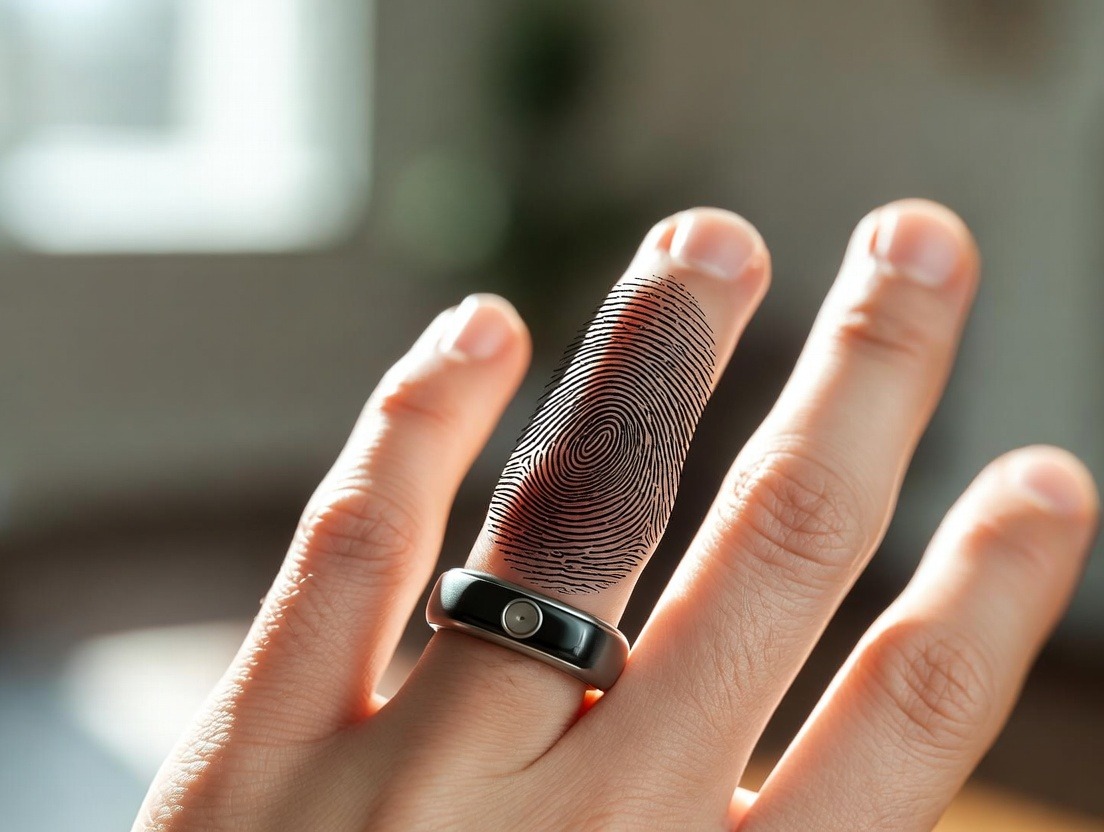
For decades, serious sleep and temperature tracking was confined to sleep labs, involving uncomfortable rectal probes or skin patches—hardly conducive to a natural night's rest. The advent of consumer wearables, and smart rings in particular, has democratized this intimate biological insight. But how does a device on your finger reliably tell you what's happening at your core? The answer lies in a sophisticated marriage of sensor technology, algorithmic intelligence, and physiological understanding.
At the heart of most advanced smart rings are Negative Temperature Coefficient (NTC) thermistors or infrared sensors. These aren't simple thermometers; they are high-sensitivity components designed to detect minute changes—often as precise as 0.1°C (0.18°F). They measure the skin temperature of your finger, a location rich with capillary beds. As your body initiates peripheral vasodilation for sleep, the increased blood flow to these areas causes a detectable rise in skin temperature followed by a drop as heat is radiated away. The ring captures this entire dynamic process.
However, raw skin temperature data is noisy. A cold room, a hand under a pillow, or even transient stress can create spikes and dips. This is where the magic of sensor fusion and advanced algorithms comes into play. Your smart ring doesn't work in isolation. It cross-references temperature data with other biometric streams it continuously collects:
The output on your app—a smoothed, contextualized graph showing your "temperature readiness for sleep" or "recovery temperature"—is the result of this complex data synthesis. It translates billions of data points into a clear narrative: "Your body began cooling 22 minutes later than usual last night, corresponding to a delayed sleep onset." This moves you far beyond guessing, "I felt warm and couldn't sleep." It provides objective, personalized evidence. You're no longer relying on a foggy morning recollection of your evening state; you're reviewing a physiological report card. This empirical feedback loop is what turns anecdotal rituals into validated biohacks, allowing you to experiment with precision and understand exactly how a cool shower or a heated argument impacts your body's fundamental preparation for rest.
Opening your wellness app to view your nightly temperature graph can feel like reading an esoteric financial chart at first. But once you understand the key patterns and what they signify, this chart becomes a direct line to your nervous system's diary. Let's break down the common thermal narratives your smart ring might be telling you.
The Ideal "Goldilocks" Curve: This is the pattern of optimal preparation. It shows a gentle, steady decline in peripheral temperature beginning 60-90 minutes before your recorded sleep onset. The descent is smooth, not jagged, indicating a regulated, unstressed transition. The temperature typically reaches its lowest point (nadir) in the middle of your sleep cycle, often during your deepest (slow-wave) sleep, before beginning a very gradual rise in the early morning hours pre-wake. This curve tells you your circadian rhythm is strong, your sleep environment is supportive, and your evening behaviors are in sync with your biology.
The "Flatline" or Blunted Curve: Instead of a clear decline, your temperature graph shows minimal change or a very shallow drop. This is a significant red flag. A blunted circadian temperature rhythm is scientifically linked to poor sleep quality, difficulty falling asleep, and even mood disturbances. It can indicate:
The "Spiky" or Erratic Curve: This graph looks turbulent, with sharp, unexplained peaks and valleys throughout the night. This pattern often points to sleep fragmentation. Your body is repeatedly being pulled out of deeper sleep stages, causing autonomic disturbances that manifest as temperature swings. Causes include:
The Delayed Descent: Here, the cooling curve is present but it starts too late, often just minutes before you try to sleep or even after you're in bed. This matches the experience of lying awake feeling "wired." It suggests your daytime habits or evening routine failed to properly cue your circadian system. Your SCN is behind schedule. This is a prime opportunity for intervention with targeted evening cooling rituals, which we will detail in subsequent sections.
By learning to interpret these patterns, you shift from a passive observer to an active participant in your sleep health. Your smart ring provides the "what," and with knowledge, you can begin to investigate the "why," using your own life as the laboratory. The next step is to use this insight not just for diagnosis, but for proactive, data-validated optimization.
One of the most counterintuitive, yet scientifically robust, principles in sleep hygiene is the "warm bath paradox." Your smart ring data can vividly prove it: a strategically timed increase in peripheral body temperature can accelerate the subsequent drop in core temperature, leading to faster sleep onset. This isn't a contradiction; it's a clever leveraging of your body's thermoregulatory mechanisms.
The process is elegantly straightforward. When you immerse yourself in a warm bath (ideally around 104°F or 40°C) for as little as 10-20 minutes about 1-2 hours before bed, you achieve a deliberate, controlled heating of your shell—your skin and extremities. This triggers a powerful and predictable physiological response: your body perceives a rise in core temperature (even though the bath is mostly heating your surface). To maintain homeostasis, it activates its primary cooling system: massive peripheral vasodilation and increased blood flow to the skin's surface to radiate that excess heat away.
When you step out of the bath, this cooling system is in full overdrive. You experience a rapid sensation of coolness as the water evaporates from your skin. More importantly, the enhanced blood flow continues to ferry heat from your core to your now-vastly-expanded surface area, where it dissipates into the cooler bedroom environment. The result is an accelerated and more pronounced drop in core body temperature than would occur naturally. It's like giving your body's cooling radiator a jump start.
Your smart ring serves as the perfect validation tool for this paradox. On nights you take a warm bath, you may observe a distinct pattern: a sharp rise in your peripheral temperature reading during the bath (as blood rushes to your finger, where the ring is), followed by a steeper, cleaner, and more decisive downward slope in the hour after you get out, leading directly into sleep. Compare this graph to a night without a bath, and the data-driven benefit becomes undeniable. You're not just feeling sleepier; you are measurably inducing the precise physiological state required for sleep.
This principle extends beyond baths. A warm foot bath, a sauna session earlier in the evening (learn about its deep physiological effects in our guide to heat therapy for stress relief), or even simply wearing socks to warm your feet (which, by promoting vasodilation, also helps shed core heat) can exploit this same mechanism. The key is the timing—the warming must be followed by a period of exposure to a cool environment to allow the heat dump to occur. Your smart ring transforms this folk remedy into a quantifiable biohack, allowing you to fine-tune the temperature, duration, and timing of your "passive heating" ritual for maximum cooling effect, perfectly tailored to your unique physiology.
Your body's nightly cooling journey doesn't happen in a vacuum; it is in a constant dialogue with its immediate surroundings. If your bedroom is working against your physiology, even the most robust circadian signal will struggle. This is where environmental engineering comes in—creating a "sleep sanctuary" explicitly designed to facilitate your body's natural heat dump. Your smart ring provides the feedback to prove which adjustments matter most.
The Goldilocks Zone for Ambient Temperature: Extensive research points to a relatively narrow range for optimal sleep temperature: between 60-67°F (15.5-19.5°C) for most adults. This is cool enough to accept the heat your body is trying to shed without causing shivering (which generates heat), but not so cold it triggers vasoconstriction. Your personal ideal within this range depends on factors like bedding and pajamas. Use your smart ring's temperature trend data as a guide. If your cooling curve is blunted, try lowering your thermostat by one-degree increments over successive nights and observe the effect on the steepness of your descent and your sleep depth scores.
Bedding as a Thermal Regulator: Your mattress, pillows, and blankets are your microenvironment. Memory foam, while comfortable, can trap heat. Consider natural, breathable materials like wool, cotton, or bamboo for mattress toppers and sheets. The rise of temperature-regulating bedding with phase-change materials or advanced moisture-wicking fabrics is a direct response to this biological need. Most critically, your smart ring can help you experiment with bedding layers. A common hack is to keep your core covered with a light blanket but leave feet exposed to facilitate heat loss from that key vasodilation zone.
The Strategic Use of Fans and Airflow: A fan does more than move cool air; it dramatically increases the rate of convective heat loss from your skin's surface. Even in an already cool room, a ceiling or oscillating fan can significantly improve the efficiency of your body's cooling process. The gentle airflow also provides consistent white noise, masking disruptive sounds. On your ring's data, good airflow might translate to a smoother cooling curve with fewer tiny upward spikes.
The Pre-Sleep "Chill" Ritual: Make it a non-negotiable habit to cool the bedroom 30-60 minutes before bedtime. This pre-conditions the environment so that when your body begins its vasodilation, it meets a ready and receptive "heat sink." In winter, this might mean cracking a window. The goal is to make the bedroom noticeably, but comfortably, cooler than the rest of the home.
The Digital Culprit: Electronics: Beyond their blue light, electronics—routers, computers, chargers—emit subtle heat. Removing them from the bedroom eliminates this source of thermal pollution and supports a cleaner electromagnetic environment for sleep.
By treating your bedroom as a controlled laboratory for heat exchange, you move from passive sleeping to active sleep facilitation. Every adjustment—the thermostat setting, the fan speed, the type of sheets—is an experiment. Your smart ring’s temperature and sleep quality scores provide the objective results. This data-driven approach removes guesswork and allows you to build an environment that doesn't just feel comfortable, but that is physiologically proven to support one of the most critical processes of your life: your nightly restoration.
What you consume in the hours before bed doesn't just sit in your stomach; it becomes fuel for metabolic processes that directly generate heat—a phenomenon called diet-induced thermogenesis (DIT). This internal furnace can either support or sabotage your body's meticulous cooling plan. Your smart ring’s temperature data can reveal the direct impact of your evening meal, turning dietary choices from guesses into informed strategies.
The Timing and Size of Your Last Meal: A large, heavy meal within 2-3 hours of bedtime forces your digestive system into high gear overnight. Digesting proteins and fats, in particular, requires significant energy and generates substantial metabolic heat. On your temperature graph, this often manifests as a delayed or "noisy" cooling curve, or even a secondary temperature rise in the first half of the night as digestion peaks. The body is distracted, trying to cool the core for sleep while simultaneously heating it for digestion. Aim to finish your last major meal at least 3 hours before bed, allowing the bulk of DIT to occur while you're still awake.
Macronutrient Composition:
Hydration: The Double-Edged Sword: Proper hydration is essential for all bodily functions, including efficient blood circulation and thermoregulation. However, timing is critical. Gulping large volumes of water right before bed guarantees disruptive trips to the bathroom, which fragment sleep and cause temperature fluctuations (getting up, walking to a cooler bathroom). Strive for consistent hydration throughout the day, tapering off your intake 60-90 minutes before bed.
Alcohol: The Deceptive Cool-Down: Alcohol is a vasodilator, which is why you might feel a initial flush of warmth. This can mimic the body's natural cooling signal, sometimes showing an initial sharp drop on your temperature graph. However, this is a pharmacological trick. As alcohol is metabolized, it fragments sleep architecture, suppresses REM sleep, and often causes a rebound effect in the second half of the night—increased heart rate, sympathetic nervous system activation, and a rise in core temperature. Your ring data may show this as a "U-shaped" curve: a quick drop at sleep onset, followed by a turbulent, elevated temperature profile later in the night.
Caffeine's Long Shadow: Caffeine's half-life is 5-6 hours. A late afternoon coffee can still be blocking adenosine (a sleep-pressure chemical) and stimulating metabolism and thermogenesis at bedtime. It can delay and blunt the entire cooling process.
Use your smart ring as a dietary biofeedback tool. Note the evenings you have a late, heavy, or spicy meal, or consume alcohol, and compare the subsequent temperature and sleep graphs to your "clean" baseline nights. The correlation is often startlingly clear. This empowers you to make not just generally "healthy" choices, but sleep-optimized choices that directly support your body's thermal journey into rest. For a deeper dive into how mindful consumption supports your nervous system, explore our resource on stress relief through mindful eating and nutrition.
Physical activity is one of the most powerful zeitgebers (time-givers) for your circadian rhythm and a proven promoter of sleep quality. Yet, its timing creates a complex interplay with your body's evening cooling process. The relationship between exercise and core temperature is biphasic and time-sensitive, and your smart ring is the perfect device to navigate this delicate dance.
Exercise as a Core Temperature Driver: During exercise, your core temperature can rise by 2-3°F (1-1.5°C) or more due to massive metabolic heat production. This acute rise is followed by a prolonged, compensatory cooling period as your body works to shed the excess heat. This post-exercise cooling phase can last for several hours. If timed correctly, this can be harnessed to reinforce your natural evening temperature drop.
The 3-Hour Rule (And Its Nuances): The classic sleep hygiene advice is to avoid vigorous exercise within 3 hours of bedtime. For most people, this is sound. Exercising too close to bed means the stimulating effects of cortisol and epinephrine, plus an elevated core temperature, are still peaking when you're trying to wind down. Your ring data will likely show a delayed, flatter cooling curve on such nights. However, the story isn't monolithic.
The Power of Evening "Cool-Down" Movements: While vigorous exercise has a cutoff time, deliberate, gentle movement in the evening can be a potent cooling catalyst. Think of these as "thermal priming" activities:
Your smart ring allows you to become an exercise physiologist for your own life. Tag your workouts in the app and observe the downstream effects on your thermal curve and sleep scores over time. You'll discover your personal "cutoff time" for vigorous activity and identify the types of evening movement that best prepare your body for thermal surrender. The goal is to use movement not just for fitness, but as a strategic tool to amplify your body's natural rhythm, ending the day in a state of calm, cool readiness.
Your body's temperature isn't just regulated by the circadian clock; it's intimately controlled by your autonomic nervous system (ANS). The ANS is the mind-body bridge, and its two branches—the sympathetic (SNS, "fight-or-flight") and parasympathetic (PNS, "rest-and-digest")—have direct, opposing effects on your peripheral blood vessels, and thus, on your ability to cool down for sleep. Your smart ring measures the downstream thermal consequence of your mental state.
Stress: The Hidden Heating Element: When the SNS is activated by stress, anxiety, or worry, it triggers peripheral vasoconstriction. Blood vessels in your skin and extremities narrow, shunting blood to your core and muscles. This is an evolutionary adaptation for survival, but at 10 PM, it's a disaster for sleep. It halts the heat-dump process in its tracks. Your core stays warm, your hands and feet may feel cold (a classic stress response), and the signal for melatonin release is blocked. On your temperature graph, acute evening stress can appear as:
Relaxation: Opening the Thermal Floodgates: Conversely, activating the PNS through deliberate relaxation techniques triggers peripheral vasodilation. It tells your body, "The coast is clear. It's safe to rest and repair." This is the exact same physiological pathway needed for sleep-initiated cooling. By practicing relaxation before your body is scheduled to cool, you are essentially pre-heating (or rather, pre-easing) the thermal channels, making the transition into sleep smoother and faster.
This is where your evening routine becomes a targeted nervous system intervention. Techniques proven to induce a PNS state and promote cooling include:
Your smart ring provides exquisite feedback on the efficacy of these practices. Try this experiment: For one week, engage in 20 minutes of a guided relaxation practice 90 minutes before bed. Note the shape of your cooling curve and your sleep latency. Compare it to a week of scrolling through stressful news or work emails in the same time slot. The difference in your thermal data will likely be dramatic, offering irrefutable proof that your evening thoughts and activities are not separate from your physiology—they are the dials on your mind-body thermostat. Learning to turn down the mental heat is the prerequisite for turning down the physical heat.
The universal advice to "cool down for sleep" misses a critical layer of personalization: not everyone's internal clock, or chronotype, is set to the same time. Are you a natural early riser (Lion), a late-night owl (Wolf), or somewhere in between (Bear or Dolphin)? Your chronotype dictates the precise timing of your core temperature rhythm. Your smart ring’s longitudinal data is one of the best tools for discovering and honoring your unique thermal blueprint.
A "Lion" chronotype typically experiences an earlier temperature peak in the afternoon and an earlier, steeper decline in the evening. Their optimal "cooling window" might be 8:00 PM to 10:00 PM. A "Wolf" chronotype, however, has a delayed rhythm; their temperature peak might occur in the early evening, with a descent not starting until 11:00 PM or midnight. Forcing a Wolf to begin cooling rituals at 8:00 PM is like trying to summer in December—it's out of sync with their internal season.
How Your Ring Reveals Your Chronotype: By tracking your temperature, movement, and sleep over weeks and months, patterns emerge that go beyond single nights.
Personalizing Rituals to Your Type:
The goal is not to label yourself, but to use data to find alignment. The most powerful evening cooling ritual is the one that is perfectly timed for your circadian phase. When you sync your behaviors with your internal thermal rhythm, you minimize the physiological friction of preparing for sleep. Your smart ring moves from giving generic feedback ("your temperature dropped") to giving personalized, actionable intelligence ("your temperature drop started 47 minutes later than your average last night because you missed your light exposure this afternoon"). This is the pinnacle of biohacking: using technology not to override your nature, but to collaborate with it for effortless, perfect sleep.

The foundation for a perfect evening cooling curve is laid hours—sometimes even from the moment you wake up. Your body's 24-hour thermal rhythm is a continuous loop; the quality of the rise dictates the quality of the fall. By optimizing your daytime habits, you ensure your circadian system has a strong, clear signal to follow, making the evening descent not a struggle, but an inevitable, smooth transition.
Morning Light: The Master Zeitgeber: Exposure to bright, natural light within 30-60 minutes of waking is the single most powerful action you can take to set your temperature rhythm. Light entering your eyes reaches the SCN, resynchronizing your master clock. This sharpens the entire circadian waveform, leading to a more robust daytime temperature rise and, consequently, a steeper, more decisive evening drop. Think of it as winding a clock spring tightly so it can unwind powerfully later. On overcast days or for early risers, a light therapy lamp (10,000 lux for 20-30 minutes) can serve as a reliable substitute.
Daytime Movement and Heat Exposure: Being active during the day, especially outdoors, serves a dual purpose. It reinforces the wakeful phase of your rhythm through movement, and it provides natural light. Furthermore, allowing yourself to experience natural warmth during the day (within reason) helps your body practice thermoregulation. It creates a clear contrast: warm/active day vs. cool/restful night. This contrast strengthens the circadian signal.
Caffeine and Meal Timing: Consuming caffeine early in the day (ideally before noon) ensures it is largely cleared by evening, preventing any disruption to the cooling process. Similarly, aligning your largest meal with the middle of the day (when your metabolism and temperature are higher) rather than the evening makes physiological sense. It provides fuel when you need it and avoids dumping a heat-generating digestive load on your system when it's trying to cool down.
Managing Daytime Stress: Chronic, unmanaged daytime stress keeps your SNS subtly activated, creating a kind of "background heat" in your nervous system. This makes the evening shift into a cooling PNS state much more difficult. Incorporating brief stress relief techniques for high-pressure professions or micro-practices of calm throughout the day prevents stress from accumulating. By dealing with the heat of stress in real-time, you prevent it from backing up into your evening, giving you a clean slate for your wind-down ritual. Developing a personalized toolkit for this is key, as outlined in our guide to building a personal stress relief toolkit.
Strategic Hydration: Drinking the majority of your water during the morning and afternoon supports all daytime functions and ensures you're not playing catch-up—and facing disruptive nocturia—in the evening.
Your smart ring can help you connect these daytime dots. Notice how a day with ample morning light, exercise, and managed stress correlates with a textbook-perfect cooling curve that night. Conversely, a day spent indoors under artificial light, sedentary and stressed, often precedes a poor thermal descent. This holistic view reinforces that sleep optimization is a 24-hour endeavor. The evening cooling ritual is the final, graceful act in a play that began at sunrise. By setting the stage correctly all day, you ensure the finale is a success, night after night.
Armed with the understanding of your personal chronotype and the science of thermoregulation, you can now move beyond isolated tips to construct a deliberate, sequential protocol. This is a "cooling cascade"—a series of timed actions that work synergistically to shepherd your body temperature down its ideal curve. Your smart ring provides the feedback to refine each step into a personalized, fail-safe routine.
Phase 1: The Digital Sunset & Sympathetic Wind-Down (90-120 minutes before bed)
Phase 2: Passive Heating & Parasympathetic Activation (60-90 minutes before bed)
Phase 3: Environmental Priming & Final Preparation (30-60 minutes before bed)
Phase 4: In-Bed Thermal Maintenance (Lights Out)
Iterating with Data: The power of this protocol lies in its flexibility. Use your ring’s Sleep Score and Temperature Deviation graphs as your lab results.
This sequence transforms abstract advice into a concrete, testable hypothesis: "If I execute this cooling cascade starting at 9 PM, my core temperature will drop efficiently, and I will fall asleep quickly and sleep deeply." Your smart ring provides the conclusive, objective data to prove it right—or to guide your intelligent adjustments.
Even with the best protocol, life happens. Your smart ring’s temperature data will inevitably show nights that deviate from the ideal curve. Rather than viewing these as failures, see them as diagnostic opportunities. Each anomaly tells a story. Here’s how to decode some of the most common thermal "glitches" and their likely culprits.
The "Midnight Spike" or "Second Peak": You see a classic cooling descent and good sleep onset, but then, between 1 AM and 4 AM, there’s a distinct, sharp rise in temperature that often correlates with a period of wakefulness or restless sleep.
The "Failed Launch" (No Descent): The graph is essentially flat in the hours before bed, with no discernible cooling trend. You likely felt "wired and tired."
The "Pre-Dawn Ascent" (Too-Early Rise): Your temperature begins its natural morning rise far too early, often at 3 or 4 AM, leading to premature awakening and an inability to fall back asleep.
The "Turbulent Descent" (Erratic/Jagged Curve): The overall direction is down, but the line is jagged with small, frequent ups and downs.
By becoming a detective of your own data, you move from frustration to empowerment. Each anomalous night becomes a clue. You learn that "two glasses of wine with dinner" has a very specific thermal signature, or that "an argument with my partner at 8 PM" completely flattens my curve. This level of self-knowledge is the true gift of biometric tracking—it turns the mysterious process of sleep into a logical, manageable system.
Temperature does not tell the story of your night in isolation. It is one vital thread in a richer tapestry of data. The most profound insights emerge when you learn to interpret your temperature curve in synergy with your other key metrics: Heart Rate (HR), Heart Rate Variability (HRV), and sleep stage architecture. This multi-metric analysis reveals the interconnected narrative of your nervous system and recovery.
The HRV-Temperature Partnership: HRV—the beat-to-beat variation in your heart rate—is a direct, non-invasive measure of autonomic nervous system balance. High HRV indicates strong parasympathetic (rest-and-digest) tone and resilience. The relationship with temperature is elegantly synchronized:
Heart Rate and the Thermal Journey: Your resting heart rate (RHR) should follow a similar trajectory to your core temperature, but inverted. As temperature drops for sleep, RHR should also drop to its nightly low.
Sleep Stages: The Thermal Architecture: Different sleep stages have distinct thermal profiles, which your ring can infer from the combination of temperature, HR, and movement.
Putting It All Together: A perfect recovery night on your dashboard shows:
When these metrics are in harmony, it’s a sign of high physiological coherence. Your circadian, autonomic, and sleep systems are working as one integrated unit. When they are discordant—for example, good sleep duration but poor HRV and a blunted temperature curve—it tells you that while you were asleep, you may not have been in a deeply restorative state. This holistic view pushes you beyond chasing sleep duration alone and toward optimizing sleep quality, with your temperature rhythm as a central, guiding metric.
Your nightly temperature curve is more than a sleep metric; it is a vital sign of your circadian health, and by extension, your systemic health. While night-to-night variations are normal, long-term trends in your smart ring's temperature data can serve as an early-warning system and a barometer of your overall well-being. A consistently robust circadian temperature rhythm is a marker of resilience, while a persistently blunted or erratic rhythm is often a downstream effect of deeper imbalances.
The Blunted Rhythm as a Biomarker: A flatter temperature profile over weeks or months (reduced amplitude between daytime and nighttime temps) is clinically associated with several conditions:
The Menopausal Transition: A Case Study in Thermal Disruption: For women, perimenopause offers a clear example of how hormonal shifts directly rewrite thermal regulation. Declining estrogen affects the hypothalamus's set-point, leading to the classic hot flashes and night sweats. A smart ring worn through this transition would show a dramatic increase in "turbulent" and "spiky" nighttime temperature graphs, providing objective confirmation of symptoms and a way to track the efficacy of interventions (like lifestyle changes, targeted stress relief, or HRT) in stabilizing the rhythm.
Aging and the Dampened Rhythm: As we age, the amplitude of our circadian rhythms naturally decreases. Older adults often have a shallower temperature drop and an earlier temperature rise. However, this decline can be accelerated by poor lifestyle or mitigated by strong circadian hygiene. Tracking your temperature trend over years allows you to distinguish between natural, graceful aging and a preventable deterioration of your biological clock. It empowers you to fight for every degree of amplitude.
Fitness Overtraining and Recovery: Athletes can use long-term temperature trends to spot overtraining syndrome (OTS). OTS is characterized by a state of systemic stress and maladaptation. One key sign is a persistently elevated resting temperature, especially in the morning, and a loss of the normal diurnal variation. Your ring would show higher baseline temperatures and a blunted nightly drop, signaling that your body is in a prolonged inflammatory state and cannot access deep recovery. This data is crucial for knowing when to rest, not push harder.
The Positive Feedback Loop of Improvement: The beautiful corollary is that as you improve your overall health—through better nutrition, managed stress, consistent exercise, and light exposure—your temperature rhythm often improves as a leading indicator. You may notice your nightly drop becomes steeper and your morning rise more vigorous before you feel dramatic subjective changes in energy. This positive feedback loop is deeply motivating: the data shows your lifestyle investments are paying off at a foundational physiological level. It underscores that cultivating a strong circadian rhythm through evening cooling rituals isn't just about sleep; it's a foundational practice for lifelong healthspan, helping you maintain emotional and physiological balance during life's changes.
Our circadian rhythms did not evolve in isolation. As social creatures, we have a profound capacity to synchronize our biological clocks with those around us—a process known as social synchrony. This has fascinating implications for couples, families, and even roommates. Your smart ring data can reveal not just your personal thermal rhythm, but how it harmonizes or clashes with the rhythms of your household, impacting collective sleep quality and relational dynamics.
The Couple's Conundrum: Mismatched Chronotypes: It's common for partners to have different chronotypes—a Lion married to a Wolf. This creates a fundamental mismatch in their thermal readiness for sleep. The Lion's body is cooling down at 9 PM, craving a dark, cool, quiet environment. The Wolf's body is still at its daytime peak, seeking stimulation and light. If the Lion tries to sleep while the Wolf is active (with lights, screens, or noise), the Lion's cooling process can be directly inhibited by the environmental disruption.
Social Jet Lag Within a Home: Even with similar chronotypes, differing work schedules can create "social jet lag" under the same roof. A shift worker trying to sleep during the day is fighting both the environmental cue of light and the thermal activity of a household running at normal daytime temperatures.
The Synchronizing Power of Shared Rituals: Conversely, couples who align their evening routines can experience positive synchronization. A shared, screen-free wind-down—such as a cup of caffeine-free tea, quiet conversation, or joint stretching—can help the later chronotype's nervous system begin to calm earlier, gently pulling their temperature descent forward. Shared relaxation practices like partner yoga or meditation can co-regulate both nervous systems toward a parasympathetic state.
Parent-Child Rhythms: Infants and young children have immature circadian systems. A parent's desperate attempt to sleep when the baby sleeps is often thwarted by their own adult rhythm being out of phase. Data can provide self-compassion here; a new mother seeing a chaotic, flat temperature graph understands it's a biological reality, not a personal failing. As children grow, establishing a consistent, cool, dark, screen-free family wind-down ritual benefits everyone's thermal regulation, teaching circadian hygiene from a young age.
The Data-Enabled Conversation: Sharing anonymized temperature and sleep trend data (e.g., "Look, on nights we watch an intense movie after 9, both our temperature graphs are flatter") can foster teamwork in creating a home environment conducive to rest for all. It shifts the focus from blame to collaborative problem-solving based on objective biology. In this way, the smart ring becomes a tool not just for personal optimization, but for harmonizing the shared biological rhythm of a household, recognizing that our thermal well-being is, to some extent, a collective endeavor.
The current generation of smart rings provides brilliant retrospective analysis: showing you what happened last night. The next frontier is predictive and prescriptive analytics—using your historical temperature data, combined with other inputs, to forecast your thermal readiness and guide your actions in real-time. We are moving from a dashboard that reports to an AI coach that prescribes.
Predictive Wind-Down Notifications: Imagine your ring's app analyzing your daytime data—light exposure, activity, stress levels (via HRV), and previous night's sleep—by late afternoon. It could then send a personalized notification: *"Based on your high stress load today and limited morning light, your body may struggle to cool tonight. We recommend starting your wind-down 25 minutes earlier and prioritizing a warm bath. Your optimal bedtime projection is 10:45 PM."* This shifts the intervention from reactive to proactive.
Dynamic Ritual Adjustment: An integrated AI system could learn from your manual journal entries (e.g., "had alcohol," "intense workout," "big fight") and your resulting temperature curves. Over time, it would build a hyper-personalized model of your unique triggers and mitigators. It might learn that for you, a yoga session at 7 PM improves your cooling curve by 22%, but a run at 8 PM degrades it by 15%. It could then adjust your daily wellness "to-do" list accordingly.
Integration with Smart Home Ecosystems: The true power unfolds when your ring's predictive thermal model talks to your smart home. A simple version exists now with thermostats that lower the temperature at a set time. The future is dynamic:
"Thermal Fingerprinting" for Health Screening: With user consent and robust privacy, aggregated, anonymized temperature rhythm data from millions of users could become a powerful public health tool. Researchers could identify population-level trends, such as how a heatwave disrupts sleep architecture across a city, or how the onset of seasonal affective disorder correlates with a dampening of circadian amplitude. On an individual level, a sudden, sustained deviation from your personal thermal fingerprint—unexplained by lifestyle logs—could be flagged as worthy of a discussion with your doctor, potentially catching metabolic or inflammatory issues early.
The Ethical Landscape: This future raises important questions about data ownership, privacy, and algorithmic bias. Who owns the predictive model of your body? Can insurance companies access this data? How do we ensure the AI recommendations don't become another source of performance anxiety? The development of these technologies must be accompanied by strong ethical frameworks that prioritize user agency, transparency, and the right to disconnect.
The trajectory is clear: temperature tracking will evolve from a passive metric to an active, intelligent partner in health. Your smart ring will transition from being a historian of your biology to a strategist for your well-being, using the timeless rhythm of your body's heat as its core language. This promises a future where our technology doesn't distract us from our natural rhythms but instead becomes a seamless interface for understanding and honoring them, guiding us back to the restorative sleep our biology was designed to have.
Your Trusted Sleep Advocate: Sleep Foundation — https://www.sleepfoundation.org
Discover a digital archive of scholarly articles: NIH — https://www.ncbi.nlm.nih.gov/
39 million citations for biomedical literature :PubMed — https://pubmed.ncbi.nlm.nih.gov/
Experts at Harvard Health Publishing covering a variety of health topics — https://www.health.harvard.edu/blog/
Every life deserves world class care :Cleveland Clinic - https://my.clevelandclinic.org/health
Wearable technology and the future of predictive health monitoring :MIT Technology Review — https://www.technologyreview.com/
Dedicated to the well-being of all people and guided by science :World Health Organization — https://www.who.int/news-room/
Psychological science and knowledge to benefit society and improve lives. :APA — https://www.apa.org/monitor/
Cutting-edge insights on human longevity and peak performance:
Lifespan Research — https://www.lifespan.io/
Global authority on exercise physiology, sports performance, and human recovery:
American College of Sports Medicine — https://www.acsm.org/
Neuroscience-driven guidance for better focus, sleep, and mental clarity:
Stanford Human Performance Lab — https://humanperformance.stanford.edu/
Evidence-based psychology and mind–body wellness resources:
Mayo Clinic — https://www.mayoclinic.org/healthy-lifestyle/
Data-backed research on emotional wellbeing, stress biology, and resilience:
American Institute of Stress — https://www.stress.org/


