


Rest and Recharge Guide for Parents of Young Children
A rest and recharge guide for parents who have very little free time.
A rest and recharge guide for parents who have very little free time.
%402x.svg)
If you’re reading this while bouncing a fussy baby, hiding in a pantry for three minutes of silence, or wrestling with the guilt of being utterly drained by the people you love most—breathe. This is not another article telling you to "sleep when the baby sleeps" or to practice generic self-care with a bubble bath you’ll never have time to take. This is a survival and revival manual for the modern parent, built on a revolutionary premise: rest is not a luxury you earn after your work is done; it is the foundational fuel that enables you to do the work of parenting at all.
The early years of parenting are a physiological marathon run on a sleep-deprived, snack-fueled, and emotionally chaotic sprint track. The data is stark: studies consistently show that parents of children under five experience significantly higher levels of stress, poorer sleep quality, and lower subjective well-being than non-parents or parents of older children. Your "tank" isn't just low; it’s often running on fumes, with the warning light blinking ignored for months or even years. But what if you could finally see that fuel gauge? What if you had a precise, personal, and proactive system to not just manage your energy, but rebuild it?
Welcome to a new paradigm of parental wellness, one that moves beyond guesswork and into the realm of quantified, intelligent recovery. This guide merges timeless wisdom on rest with cutting-edge technology, introducing tools like the advanced smart ring—a discreet, continuous biometric monitor that acts as your personal energy advisor. Imagine a device that doesn’t just count your steps, but tells you when your body is truly ready for exertion, tracks the quality of sleep you actually got between night wakings, and warns you when your stress reserves are dipping into the danger zone before you snap.
Over the course of this comprehensive guide, we will deconstruct the unique energy drains of parenting, rebuild a sustainable philosophy of rest, and provide you with a tactical, technology-enhanced playbook to recharge. We’ll explore everything from micro-restorations you can do in 60 seconds to overhauling your sleep architecture, all through the lens of real, exhausted parents just like you. This is the first step toward reclaiming your energy, your patience, and your joy. Let’s begin.
Before we can solve the problem of parental exhaustion, we must first map its true, sprawling landscape. For parents of young children, fatigue is more than just being tired. It is a multifaceted state of depletion that impacts you physically, mentally, and emotionally—a syndrome often termed "parental burnout." This isn't ordinary stress; it's a state of overwhelming exhaustion related to your role as a parent, leading to emotional distancing from your children and a sense of ineffectiveness.
The "invisible load" is the engine of this burnout. It’s the relentless, cognitive, and emotional labor that runs in the background of every day:
This load has a direct, measurable impact on your biology. It dysregulates your nervous system, keeping you in a frequent or constant state of "fight-or-flight" (sympathetic activation). This suppresses your "rest-and-digest" (parasympathetic) system, which is crucial for recovery. The result? Elevated resting heart rates, poor heart rate variability (HRV—a key metric of recovery and resilience), disrupted sleep cycles, and elevated cortisol levels. Your body is in a state of chronic stress, even during quiet moments.
This is where modern health tracking technology shifts from a nice-to-have to a revolutionary tool for parents. A sophisticated wellness device, like a smart ring worn 24/7, doesn’t just observe steps; it deciphers this biometric signature of burnout. By continuously monitoring metrics like:
With this data, you move from saying "I'm so tired" to understanding why and how your body is being taxed. It makes the invisible load visible. You can see the direct correlation between a day of high-stress parenting and a plummeting HRV score. You can prove that the "quiet" 4 AM wake-up you barely remember actually destroyed your crucial deep sleep phase. This objective feedback is the first, critical step toward targeted recovery—a concept we delve into in our article on how health tracking technology enables personalized wellness. It turns exhaustion from a vague, guilty feeling into a manageable set of inputs and outputs.
Recognizing your unique burnout signature is not about inducing more anxiety with data. It’s about empowerment. It’s the foundation for everything that follows: a personalized, evidence-based journey back to a state where you have energy not just for your children, but for yourself, your partner, and your passions once more.
Sleep When the Baby Sleeps? Redefining Rest for the Modern Parent
The most infamous piece of parenting advice—"sleep when the baby sleeps"—is also the most infuriatingly simplistic. It ignores the reality that when the baby sleeps, the dishwasher needs unloading, emails need answering, and maybe, just maybe, you need to stare at a wall in silence to remember your own name. This advice frames rest as a single, monolithic activity (sleep) that must be pursued in perfect, elusive alignment with your child’s schedule. It’s time to dismantle this myth and rebuild a functional, multifaceted definition of rest.
For a parent, rest is any activity or state that replenishes your physical, mental, or emotional energy reserves. It is not passive; it is active restoration. Crucially, it exists on a spectrum, from micro-moments of pause to deep, sustained recovery. Understanding and leveraging this spectrum is your key to sustainability.
1. Micro-Rest (Seconds to Minutes): These are the tiny pressure-release valves you can activate throughout the day. They prevent the stress tank from overflowing.
2. Mini-Rest (10-30 Minutes): These require a bit of planning but fit into nap times or independent play sessions.
3. Macro-Rest (Hours to a Full Day): This is the deep recovery we chronically neglect.
The revolutionary role of a smart ring here is as a rest accountability partner. It helps you identify which type of rest you actually need. For example, your device might show your stress levels spiking all morning. Instead of pushing through with caffeine, the data prompts you to take a 10-minute NSDR break (mini-rest). It can track the tangible impact of that meditation by showing your heart rate drop and HRV stabilize afterward, proving its value. It moves rest from a "should" to a data-driven "must."
Furthermore, by tracking your sleep architecture, it reframes "sleep when the baby sleeps." If your ring shows you got solid deep sleep in a 4-hour stretch, maybe that 30-minute catnap isn’t as critical, and a mini-rest involving quiet reading would be more rejuvenating. It personalizes the strategy. To see how this technology translates into daily habits, explore our guide on how a wellness ring helps build healthy habits.
Rest is no longer a binary state of asleep or awake. It’s a dynamic resource you can tap into throughout your day. By expanding your definition and using technology to guide your choices, you begin to weave resilience directly into the fabric of your chaotic, beautiful life.
Our culture often glorifies the "superparent"—the one who juggles it all with a smile, volunteers for the classroom party, prepares organic purees, and never seems to lose their cool. This myth is not just unrealistic; it’s a direct path to burnout. The pressure to meet this impossible standard creates a constant internal conflict where any moment of rest feels like failure, and any need for help feels like inadequacy. To truly recharge, we must first dismantle this myth and replace it with a framework of sustainable boundaries and humane expectations.
The Foundation: Self-Compassion as a Non-Negotiable
The first boundary to set is an internal one—against your own inner critic. Parenting is a learned skill, performed in a state of profound fatigue. You will lose your temper. You will serve chicken nuggets for the third time this week. The floor will be sticky. Self-compassion is the practice of treating yourself with the same kindness you would offer a struggling friend. Research shows self-compassion is strongly linked to greater emotional resilience, lower anxiety and depression, and healthier coping mechanisms—all essential for exhausted parents. It’s not about making excuses; it’s about changing your internal dialogue from "I'm failing" to "This is really hard right now, and I'm doing my best."
The Practical Shift: From "Doing It All" to "Strategic Neglect"
Sustainable parenting requires strategic neglect—the conscious decision to let certain things go in order to preserve your energy for what matters most. This isn't about laziness; it’s about ruthless prioritization.
The External Boundaries: Protecting Your Energy from Others
Here, technology like a smart ring provides objective advocacy. It’s hard to argue with data. When you see a week of poor sleep scores and high stress metrics, it’s tangible proof you need to offload tasks. You can show your partner the correlation between your night shifts and your recovery scores, fostering a data-informed conversation about sharing the load more effectively. It can also help you identify your personal limits. Does attending a loud, chaotic children’s birthday party tank your stress metrics for the next 24 hours? Maybe that’s a boundary—you drop off and pick up, but don’t stay for the sensory overload. The ring helps you listen to your body’s signals before they become screams.
Setting boundaries is an act of love—for yourself and your family. A depleted, resentful parent cannot be a present, joyful one. By challenging the superparent myth, you create the space for a more authentic, sustainable, and ultimately more fulfilling parenting experience. For more on aligning technology with your personal needs, read about how to personalize a wellness ring for your body and goals.
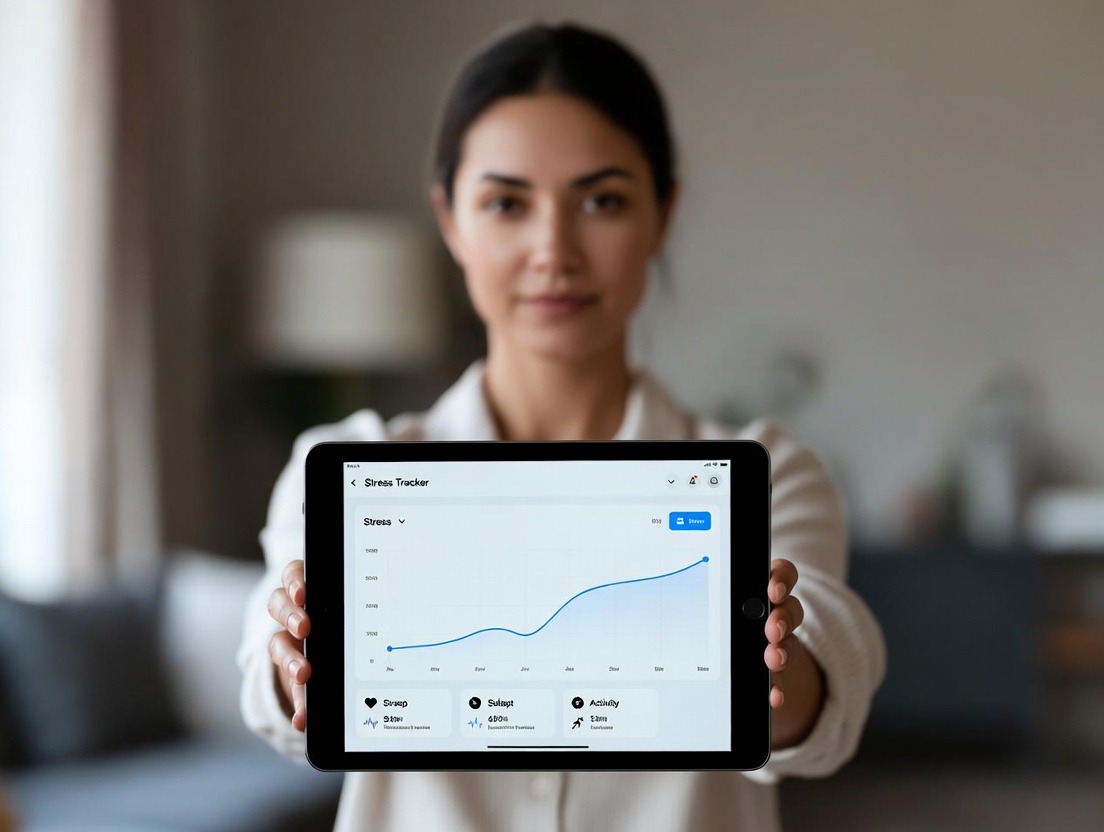
For generations, parents have navigated exhaustion on intuition alone—pushing until they crashed, guessing at what might help, and often misinterpreting their body’s signals. What if you had a personal dashboard, like in a car, showing your exact fuel level, engine stress, and maintenance needs in real-time? This is the power of continuous biometric monitoring through a device like a smart ring. It transforms recovery from a guessing game into a precise science.
Let’s decode the key metrics on your parental energy dashboard and what they mean for your daily life:
1. Heart Rate Variability (HRV): Your Resilience Score
2. Resting Heart Rate (RHR): Your Baseline Stress Gauge
3. Sleep Stages & Quality: The Architecture of Restoration
4. Body Temperature & Respiratory Rate: The Early Warning System
Creating Your Personal Recovery Protocol:
With this data, you move from reactive to proactive. For example:
This feedback loop is transformative. It turns self-care from an abstract concept into a series of validated, effective behaviors. To understand the technology behind this powerful feedback, delve into the science behind modern health tracking technology. By learning to read your body’s dashboard, you become the expert on your own recovery, making empowered decisions that directly fuel your capacity to be the parent you want to be.
The 20-Minute Night: Optimizing Sleep Amidst the Chaos
For parents of infants and toddlers, the dream of 8 hours of uninterrupted sleep is a distant fantasy. But what if the goal wasn’t an impossible stretch of silence, but optimized sleep quality within the constraints you have? The "20-Minute Night" is a concept that acknowledges the fragmentation but focuses on maximizing the restorative power of every sleep cycle you can get. Paired with technology, it’s a game-changer.
Understanding Sleep Cycles:
Sleep is not a monolithic state. We cycle through light, deep, and REM sleep roughly every 90 minutes. Deep sleep (occurring more in the first half of the night) is physically restorative. REM sleep (more prevalent in the second half) is mentally and emotionally restorative. The goal is to protect these cycles from interruption as much as possible.
1. Master the Art of the Power-Down Routine (For You):
Your nervous system needs a cue to shift into sleep mode, especially when you know you might be up in 3 hours.
2. Engineer Your Sleep Environment for Efficiency:
3. Strategic Tag-Teaming with a Partner:
If you have a partner, move from ad-hoc waking to a planned schedule.
4. Leverage Daytime Recovery (The Strategic Nap):
If your night is shattered, a daytime nap can be salvaged.
How a Smart Ring Becomes Your Sleep Coach:
This is where the technology shines. Your ring provides the post-game analysis for your sleep.
By focusing on sleep quality over just duration, you reclaim a sense of agency. You learn to work with the reality of your parental nights, using strategy and technology to extract every possible ounce of restoration from them. For a deeper look at the sensors that make this tracking possible, explore our explainer on health tracking technology sensors, algorithms, and AI. A better night’s sleep isn’t always about more hours; it’s about smarter, more intentional ones.
Mastering Flow: The State of Effortless Creation
You’ve likely experienced it: hours melting away as you become completely absorbed in your work. Your sense of self vanishes, your focus is laser-sharp, and ideas and actions seem to flow from you effortlessly. This is flow state, a concept pioneered by psychologist Mihaly Csikszentmihalyi. It’s the ultimate alignment of creative energy, where challenge perfectly matches skill, and the result is not just high productivity but profound enjoyment and a sense of timelessness. Flow isn’t a lucky accident; it’s a state you can learn to court intentionally.

Flow exists in a sweet spot between anxiety and boredom. If a task is too difficult for your current skills, you tip into anxiety. If it’s too easy, you sink into boredom. The path to flow requires navigating to that middle channel.
The Eight Characteristics of Flow:
Practical Triggers to Invite the Flow State
You can’t command flow, but you can create the conditions where it is most likely to arise.
The Role of Biofeedback in Recognizing Flow
Interestingly, the flow state has a physiological signature. While deeply immersed, your nervous system often exhibits a state of calm focus—a lower heart rate than during stressed work, coupled with steady, coherent brainwaves. While you shouldn’t be monitoring data during flow, reviewing it afterwards can be revealing.
Did your heart rate remain steady and low during that 90-minute writing sprint where you lost track of time? That’s a data-backed confirmation of flow. Over time, you can correlate the practices that preceded these physiological states. Did days with high morning HRV lead to more frequent or deeper flow states? This objective feedback helps you double down on what works. For a deeper understanding of how sensors and algorithms decode these states, explore our resource on health tracking technology sensors, algorithms, and AI explained.
Mastering the art of inviting flow transforms your work from a grind into a source of joy and peak performance. Yet, this deep, individual work must be balanced with another critical component of the creative ecosystem: connection.
The Social Synapse: Cultivating Creative Community and Protecting Solitude
Creativity often feels like a solitary pursuit, but it thrives within a dynamic tension between two poles: deep, uninterrupted solitude and meaningful, stimulating connection. Getting this balance wrong is a common source of energy drain. Too much isolation can lead to stagnation and self-doubt; too much socializing (especially of the shallow, draining kind) can scatter your focus and deplete your reserves.
A true creative community is not just a networking group. It’s a curated circle that provides specific forms of nourishment:
How to Cultivate Your Creative Ecosystem:
The Sacred Defense of Solitude
While community nourishes, solitude is where the seeds of ideas germinate and grow. It is the non-negotiable space for the deep work, flow, and incubation we’ve discussed. In our hyper-connected world, solitude must be fiercely protected.
Strategies for Defending Your Solitude:
Navigating Energy-Draining Social Dynamics
Not all social interaction is equal. Learn to identify and manage interactions that are net drains on your creative energy:
Balancing solitude and community is a lifelong practice. It requires regularly checking in with yourself: “Do I feel lonely and in need of inspiration?” or “Do I feel overstimulated and in need of quiet?” Your answers will guide your weekly schedule. For those building their wellness toolkit, understanding how to personalize your device for your unique body and goals, as outlined in our guide to personalizing your wellness ring for your body, is part of this same principle of tailored self-care. Next, we must prepare for the inevitable times when, despite our best systems, creativity still seems to vanish.
Even with the most perfect routines and systems, you will face periods where inspiration feels utterly absent. The ideas don’t come, every sentence feels clunky, and the spark is gone. These creative droughts are not failures; they are a natural part of the cycle. The key is to not panic and resort to frantic, energy-burning efforts that only dig the hole deeper. Instead, adopt the mindset of a gardener during a dry spell: you don’t yell at the plants to grow; you provide different, more fundamental care.
Step 1: Diagnose the Type of Drought
Not all creative blocks are the same. Your response should be tailored to the cause.
Step 2: Apply the Strategic Response
For the Fatigue Drought: Prioritize Radical Rest.
This is not lazy rest. It’s intentional restoration. Cancel non-essential commitments. Focus on the foundational trio: sleep, nutrition, and gentle movement. Consider a complete “creative shutdown” for 24-48 hours where you forbid yourself from working on the project. Let your biometrics guide you—watch for your HRV to recover and your sleep scores to improve. This is a time to leverage all the environmental and disconnection strategies discussed earlier.
For the Skill Gap Drought: Shift from Creation to Education.
The pressure to produce is causing anxiety. Release it. Dedicate your work time solely to learning. Take an online course, read a technical manual, deconstruct the work of a master you admire, or practice a specific micro-skill (e.g., color theory exercises, copywork for writers). You are filling your tank with new fuel. The goal is competence, not output. Often, the act of learning unlocks the block.
For the Emotional/Existential Drought: Engage in Meaning-Making.
Step away from the craft and reconnect with the “why.” Journal about what initially drew you to this work. Consume art, books, or documentaries that inspire you on a human level, not a technical one. Volunteer or help someone with their project. Sometimes, creating for pure service (making a gift, helping a friend solve a problem) without an audience or outcome can rekindle the intrinsic joy. Revisiting your personal story and values can also provide a helpful reset.
For the Saturation Drought: Implement a Creative Fast.
Stop consuming. No scrolling, no reading in your field, no research. Instead, switch to pure, low-stakes output or sensory experience. Output: Free-write for 10 minutes without stopping or editing. Doodle mindlessly. Sensory: Go for a walk and consciously notice sounds, smells, and textures. Cook a meal focusing on the tastes. This clears the cache of your mind and makes space for original thought to re-emerge.
When you’re running on empty, food often becomes either an afterthought or a source of quick, sugary fuel that leads to crashing energy and mood swings. For a parent, nutrition isn’t about aesthetics; it’s about stable energy, hormonal balance, and emotional regulation. You cannot pour from an empty cup, and you cannot craft a resilient nervous system from processed snacks and caffeine alone. Let’s build a practical, non-dogmatic approach to eating that supports sustained energy.
The Parental Energy Plate: A Simple Framework
Forget complicated diets. Aim to build most meals and snacks around three core pillars:
The "Emergency Snack" Stash:
Prepare for the 3 PM crash or the mid-morning slump with ready-to-eat options that won’t derail you.
Hydration: The Secret Weapon Against Fatigue
Dehydration is a primary cause of daytime fatigue, brain fog, and irritability. When you’re busy, it’s the first thing to neglect.
Meal Planning for the Truly Exhausted:
How Biometric Data Informs Your Nutrition:
Your smart ring provides fascinating insights into how your body responds to different fuels.
This turns nutrition into an experiment of one. You’re not following a rigid set of external rules; you’re learning how your unique body, under the unique stress of parenting, responds to different foods. It empowers you to make choices that directly support your energy and stability. For insights on how continuous monitoring supports these daily observations, read about continuous vs. periodic health monitoring. By feeding yourself with intention, you’re not just filling your stomach; you’re fortifying your resilience for the long day ahead.

The idea of "exercise" to an exhausted parent can feel like a cruel joke. The thought of dragging yourself to the gym for an hour-long boot camp is enough to induce a nap. But what if we reframed movement entirely? For parents in a state of chronic stress, the primary goal of movement is not calorie burn or fitness—it is nervous system regulation. The right kind of movement can be a powerful tool to discharge stress, improve mood, and paradoxically, increase energy.
The Physiology: How Movement Regulates a Stressed System
When you’re in "fight-or-flight" (sympathetic dominance), your body is flooded with cortisol and adrenaline. Vigorous, high-intensity exercise can sometimes perpetuate this stressed state. However, gentle to moderate movement can:
The Parent-Friendly Movement Menu:
Choose movement based on your energy level and time, always with the goal of feeling better afterward, not more drained.
1. The 10-Minute Reboot (For "I Have Nothing" Days):
2. The 30-Minute Regulator (For Days with a Nap Window):
3. Movement Weaving (Integrating Activity into Daily Life):
Using Your Smart Ring to Guide Your Movement:
This is where a biometric device becomes an essential coach, helping you align movement with your body’s true needs.
By shifting the goal from fitness performance to nervous system regulation, you remove the guilt and pressure. A 15-minute walk is a resounding success. Stretching while watching TV counts. This approach makes movement sustainable, enjoyable, and a direct contributor to your daily recharge. To see how activity tracking integrates into a holistic view of wellness, visit our guide on wellness ring basics for activity and movement tracking. You move not to punish your body, but to calm and strengthen it for the demands of parenting.
You don’t have an hour for meditation or a weekend spa retreat. What you do have are dozens of tiny margins throughout your day—the 90 seconds while the microwave runs, the 2 minutes parked in the carpool line, the 30 seconds of deep breathing while your child is momentarily engrossed in a toy. These micro-moments are your new sanctuary. The key to managing parental stress is not finding more time, but utilizing the time you already have with potent, mini-interventions that cumulatively reset your nervous system.
The Science of the Micro-Break:
Research shows that short, frequent breaks are more effective for maintaining focus and reducing cumulative stress than fewer, longer breaks. For a parent, these breaks prevent the stress response from becoming a sustained, toxic state. They are "pressure releases" that keep you functioning within your window of tolerance.
A Toolkit of 60-Second Resets:
Keep these in your mental back pocket and deploy them at the first sign of overwhelm (a rising voice, a clenched jaw, a feeling of panic).
Weaving Mindfulness into Parenting Tasks:
Transform mundane, often frustrating tasks into opportunities for presence.
How Technology Provides the "Nudge":
A smart ring with a stress monitoring feature takes this from a random practice to a timely, responsive one.
These practices are not about achieving zen-like calm while your toddler paints the wall. They are about interrupting the stress cascade. Each micro-moment is a vote for your nervous system’s regulation. Over the course of a day, these votes add up, creating a measurable shift in your resilience and capacity to respond, rather than react. For more on how technology supports this journey, see how a wellness ring can enable preventive health monitoring. Your sanctuary isn't somewhere else; it's in the next mindful breath you take.
The proverb "It takes a village to raise a child" is profound truth, but for many modern parents, the village feels nonexistent. We often parent in relative isolation, far from extended family, and hesitant to "burden" friends. Recharging as a parent is not a solo mission. It requires intentionally building your support ecosystem and leveraging tools—both human and technological—for accountability and shared effort.
Auditing and Activating Your Support Network:
Start by mapping your existing village. Who is in each ring?
Now, activate them strategically:
The Partner as Co-Captain, Not Helper:
True recharging requires partnership equity.
Technology as Your 24/7 Support Partner:
A smart ring or wellness tracker functions as a consistent, objective member of your support team. Its role is threefold: awareness, validation, and shared accountability.
Creating a Family Wellness Protocol:
Move from ad-hoc survival to a proactive family plan. This could include:
Your village, enhanced by intelligent technology, becomes a sustainable ecosystem. It ensures you're not the lone pillar holding everything up, but part of a resilient, interconnected structure. For a deeper look at how this technology integrates into the bigger picture of health, explore the evolution of health tracking technology from manual to smart rings.
By weaving together human connection and data-driven insight, you create a powerful support matrix. This network doesn't just catch you when you fall; it actively builds a floor of resilience beneath you, making the challenging journey of parenting a shared, sustainable, and ultimately more joyful endeavor.

In the age of parenting, your smartphone is a lifeline—a portal to pediatric advice, a source of adult connection, a digital pacifier during long feedings, and a repository of precious memories. Yet, this same device is also one of the greatest saboteurs of parental rest and presence. The blue light, the endless scrolling, the dopamine-driven interruptions directly conflict with the deep recharge your nervous system desperately needs. A strategic "digital detox" isn't about abandoning technology; it's about reclaiming it as a tool rather than allowing it to be a tyrant over your attention and recovery.
The Science of Screens vs. Sleep and Stress:
Creating Your Family Digital Hygiene Plan:
1. Establish Tech-Free Zones and Times:
2. Practice Intentional Consumption:
3. Replace Digital Habits with Analog Restoration:
When you feel the urge to reach for your phone out of boredom or stress, have a pre-planned alternative:
How Your Smart Ring Can Enforce Your Digital Boundaries:
Here, technology acts as the perfect enforcer of your tech-limits.
This isn't about adding more rules to your life; it's about removing a major barrier to your peace. By consciously managing your digital environment, you protect your most valuable resources: your focused attention for your children and your nervous system's capacity for deep, restorative rest. For insights on how wearable data privacy supports this mindful approach, read about wellness ring privacy settings and data security. The goal is to ensure your technology serves your family's wellness, not undermines it.
We’ve traversed the landscape of parental burnout, redefined rest, set boundaries, and explored the levers of sleep, nutrition, movement, stress management, and digital hygiene. Now, it’s time to synthesize this knowledge into your Personal Parental Recharge Plan (PPRP). This is not a rigid set of rules, but a dynamic, living document informed by your unique life, preferences, and—critically—your biometric data. It moves you from reactive survival to proactive thrival.
Step 1: The Baseline Assessment (Week 1 - Observe)
For one week, live normally but wear your smart ring consistently. At the end of the week, review the data without judgment. Look for:
Step 2: Identify One "Keystone" Habit
Don’t try to change everything at once. Based on your baseline, choose ONE keystone habit—a small change that will have a ripple effect. Use your data to choose wisely.
Step 3: Design Your Daily and Weekly Rhythm
Using the principles from previous sections, sketch an ideal daily and weekly template. Be realistic.
Step 4: Integrate Your Biometric Feedback Loop
This is where your plan becomes intelligent and adaptive.
Step 5: Build in Flexibility and Self-Compassion
Your PPRP is a map, not a prison. Some days will be derailed by illness, teething, or life. The goal is not perfection, but direction. When you have an "off" day, the protocol is simple:
An Example PPRP in Action:
By creating your PPRP, you become the architect of your own energy. You shift from being a passive victim of your circumstances to an active agent of your restoration. This plan, informed by both wisdom and data, is your sustainable path forward—not just to getting through the days, but to genuinely enjoying them with more energy, patience, and joy. For inspiration from others on a similar journey, explore real customer reviews and user experiences with integrating technology into wellness.
Your Trusted Sleep Advocate (Sleep Foundation — https://www.sleepfoundation.org/)
Discover a digital archive of scholarly articles (NIH — https://www.ncbi.nlm.nih.gov/
39 million citations for biomedical literature (PubMed — https://pubmed.ncbi.nlm.nih.gov/)
experts at Harvard Health Publishing covering a variety of health topics — https://www.health.harvard.edu/blog/)
Every life deserves world class care (Cleveland Clinic -
https://my.clevelandclinic.org/health)
Wearable technology and the future of predictive health monitoring. (MIT Technology Review — https://www.technologyreview.com/)
Dedicated to the well-being of all people and guided by science (World Health Organization — https://www.who.int/news-room/)
Psychological science and knowledge to benefit society and improve lives. (APA — https://www.apa.org/monitor/)
Cutting-edge insights on human longevity and peak performance
(Lifespan Research — https://www.lifespan.io/)
Global authority on exercise physiology, sports performance, and human recovery
(American College of Sports Medicine — https://www.acsm.org/)
Neuroscience-driven guidance for better focus, sleep, and mental clarity
(Stanford Human Performance Lab — https://humanperformance.stanford.edu/)
Evidence-based psychology and mind–body wellness resources
(Mayo Clinic — https://www.mayoclinic.org/healthy-lifestyle/)
Data-backed research on emotional wellbeing, stress biology, and resilience
(American Institute of Stress — https://www.stress.org/)


