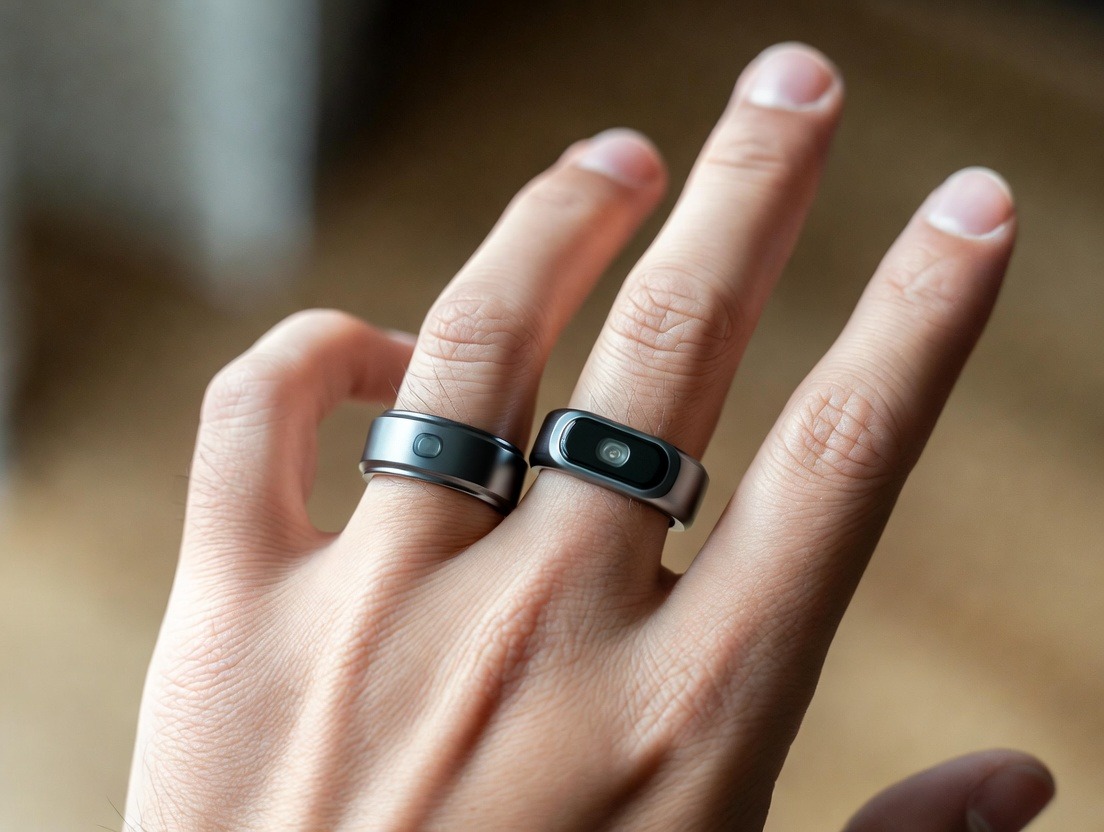
The Beginner-Friendly Guide to Training Load Management With Smart Ring Insights
A beginner's guide to managing training load with ring insights.
The Beginner-Friendly Guide to Training Load Management With Smart Ring Insights
You’ve decided to get fit. You’ve laced up your shoes, found a workout program, and are ready to push your limits. But then, a familiar story unfolds: you start strong, fueled by motivation, only to hit a wall of fatigue, nagging soreness, or even injury within weeks. You’re left wondering—was it not enough effort, or was it too much, too soon?
This frustrating cycle is the universal challenge of training load management. It’s the art and science of applying just the right amount of stress to your body to trigger adaptation and growth, without tipping over into breakdown. For decades, this has been a guessing game, relying on subjective feelings like “how tired you feel” or rigid, one-size-fits-all plans that ignore your body’s daily reality.
But what if you had a personal, 24/7 coach on your finger, whispering insights drawn from your own physiology? Enter the smart ring. This sleek, wearable device is revolutionizing how beginners and pros alike approach fitness. By continuously tracking biomarkers like Heart Rate Variability (HRV), resting heart rate, skin temperature, and sleep quality, it moves you from guessing to knowing.
This guide is your comprehensive roadmap to leveraging smart ring data for flawless training load management. We’ll demystify the key metrics, show you how to interpret them, and provide actionable strategies to align your workouts with your body’s readiness. No more overtraining, no more undertraining—just smart, sustainable progress. Let’s transform that ring on your finger into your most trusted fitness advisor.
What Is Training Load and Why Does Mismanagement Derail Every Beginner?
Training load is the total amount of stress placed on your body from physical activity. It’s calculated by considering both the volume (how much—duration, distance, reps) and the intensity (how hard—speed, weight, effort) of your workouts. Think of it as a scale: the right load stimulates positive adaptations like stronger muscles, better endurance, and improved metabolic health. The wrong load leads to stagnation, exhaustion, or injury.
For beginners, mismanagement is almost a rite of passage, primarily due to two opposing forces:
Enthusiasm Overload: The initial excitement of a new fitness journey often leads to doing too much, too fast. You might go from sedentary to running five days a week or lifting heavy every session. Your motivation is high, but your tendons, ligaments, and central nervous system aren’t ready for the sudden spike in load. This is a direct path to overuse injuries like shin splints, tendonitis, or stress fractures.
Inconsistency and Uncertainty: Conversely, a lack of clear feedback can lead to not doing enough. Without understanding how your body is responding, you might stick with the same light weights or slow pace for months, wondering why you’re not seeing results. This undermines motivation and halts progress.
The core problem is the feedback lag. Traditional signals of overload—lingering muscle soreness, fatigue, irritability, declining performance—often appear days after the damaging workout has occurred. By the time you feel “off,” you’re already in a hole of recovery debt.
This is where objective, physiological data from a smart ring becomes a game-changer. Instead of waiting to feel exhausted, you can see your body’s stress response unfolding in near real-time. Metrics like a suppressed HRV or an elevated resting heart rate are early-warning systems, telling you your system is overwhelmed before it manifests as pain or burnout. By learning to manage your training load intelligently, you replace boom-and-bust cycles with a smooth, upward trajectory of improvement. It’s the difference between forcing your body and guiding it.
The Smart Ring as Your 24/7 Recovery Monitor: Beyond Step Counting
Forget what you know about basic fitness trackers. A modern smart ring is a clinically-validated biometric laboratory worn on your finger. Its position on a finger artery provides a strong, consistent signal for optical sensors to capture precise physiological data throughout the day and night. While a wrist-worn device might tell you what you did (steps, active minutes), a smart ring tells you how it affected you.
This distinction is fundamental for training load management. The ring’s primary value lies in its passive, continuous monitoring of your autonomic nervous system (ANS)—the control center behind your stress and recovery. The ANS has two key branches:
The sympathetic nervous system (SNS): Your "gas pedal." It's activated by stress, exercise, and work, increasing heart rate, blood pressure, and alertness.
The parasympathetic nervous system (PNS): Your "brake pedal." It dominates during rest, recovery, and sleep, slowing the heart, promoting digestion, and facilitating repair.
Every workout you do presses the gas pedal. Growth happens when you take your foot off the gas and allow the brakes to engage fully. A smart ring gives you a dashboard for this entire system.
Its core metrics for athletes include:
Heart Rate Variability (HRV): The gold standard for measuring ANS balance and recovery status. It’s the subtle variation in time between each heartbeat. A higher HRV (relative to your baseline) suggests a strong, resilient nervous system primed for stress. A lower HRV indicates your SNS is dominant—you’re stressed, fatigued, or potentially fighting illness.
Resting Heart Rate (RHR): Your heart rate at complete rest. It typically lowers with improved fitness. An elevated RHR (especially upon waking) can be a sign of residual training stress, dehydration, or insufficient recovery.
Sleep Quality & Architecture: The ring tracks not just duration, but the stages of sleep (light, deep, REM). Deep sleep is crucial for physical repair and hormone release, while REM supports cognitive recovery. Poor sleep quality sabotages any training program.
Skin Temperature & Respiratory Rate: Subtle nocturnal shifts can signal that your body is fighting inflammation, an infection, or struggling to recover from excessive metabolic stress.
By synthesizing these data points, your smart ring generates a daily Readiness or Recovery Score. This single, easy-to-understand number is your starting point each morning. It answers the critical question: “Based on how my body recovered last night, how much stress can I handle today?” This transforms your decision from “Do I feel like working out?” to “Is my body biologically prepared for the workout I have planned?” For more on how small, daily habits directly influence this crucial score, explore our guide on 8 daily wellness habits to raise your wellness ring readiness score.
Decoding Your Morning Readiness Score: Your Daily Green, Yellow, or Red Light
Your morning routine just got a powerful new ritual: checking your readiness score. This score, typically on a scale of 1-100, is an algorithmically-derived summary of your overnight recovery data. It’s your body’s formal report card on how well it handled yesterday’s load. Learning to interpret and act on this score is the first practical step in smart load management.
Think of it as a traffic light system for your day:
Green Light (High Readiness Score, e.g., 70-100):
What it means: Your body has recovered well. Your nervous system is balanced (high HRV), your resting heart rate is at or below baseline, and you achieved quality sleep. You are physiologically primed to perform.
Action Plan: This is the day to tackle your most challenging workouts—high-intensity interval training (HIIT), heavy strength sessions, long endurance runs. Your body can handle significant stress and will likely adapt positively to it. It’s also a great day for learning new skills or taking on demanding cognitive tasks.
What it means: Your recovery is partial. Perhaps your HRV dipped slightly, your sleep was a bit restless, or your RHR crept up. Your body is signaling that resources are somewhat depleted. You’re not in danger, but you’re not at your peak.
Action Plan: This calls for discretion. It’s not a day to push for a personal record. Instead, opt for a moderate, steady-state workout, a technique-focused session with lighter weights, or active recovery like walking, yoga, or gentle mobility work. Listen closely to your body during the session. As you'll discover in our guide to scheduling based on your wellness ring readiness, aligning your workload with these scores is key to sustainable progress.
Red Light (Low Readiness Score, e.g., below 40):
What it means: Your body is waving a red flag. Recovery was poor. This could be due to an extremely hard prior workout, emotional stress, poor sleep, dehydration, or the onset of illness. Your system is in a stressed state and needs relief, not more stress.
Action Plan: Prioritize rest above all else. This means a true rest day—no formal exercise. Focus on hydration, gentle stretching, meditation, and nutrition that supports repair. Forcing a workout on a red light day significantly increases your risk of injury, illness, and prolonged fatigue. It’s a guaranteed step backward. This principle is central to our guide on taking rest days when your smart ring says stop.
Crucial Note: Your baseline is personal. A score of 65 might be a "green" day for you if your normal range is 50-80. The key is watching trends and deviations from your normal, not chasing an arbitrary high number. The ring teaches you what optimal recovery looks like for you.
HRV: The North Star Metric for Nervous System Fitness
If you only learn one metric from your smart ring, make it Heart Rate Variability (HRV). For training load management, HRV is your most sensitive and insightful guide. Contrary to intuition, a healthy heart is not a perfect metronome; the time between beats should vary slightly. This variability is a direct reflection of the tug-of-war between your sympathetic (stress) and parasympathetic (rest) nervous systems.
When you are well-rested, resilient, and recovered, your parasympathetic system has a strong influence, creating more variability between heartbeats—your HRV is higher. When you are physically fatigued, emotionally stressed, or unwell, your sympathetic system takes over, creating a more regular, rigid heartbeat pattern—your HRV is lower.
How to Use HRV for Load Management:
Establish Your Baseline: Use your smart ring to find your average HRV over a period of relative stability (e.g., 2-4 weeks without major travel or illness). This is your personal benchmark.
Track the Trend, Not the Absolute Number: Don’t panic over a single low reading. Look at the 7-day rolling average. A consistent downward trend is a clear signal that your cumulative training load (combined with other life stress) is too high and you need to incorporate more recovery. A stable or rising trend suggests you are managing load effectively.
Make Daily Decisions: A significant drop from your baseline (often 10-20% or more) upon waking is a direct recommendation to dial back your planned intensity for the day. That planned sprint session might be better swapped for a walk or a rest day.
Identify Non-Exercise Stressors: HRV is beautifully holistic. A drop may not be from your workout; it could be from a poor night’s sleep, a stressful work deadline, an argument, or even digesting a heavy meal. This teaches you that “training load” is total life load. Managing it requires looking at the whole picture, a concept explored in depth in our article on how smart rings’ stress metrics reveal work-life balance problems.
By respecting the messages of your HRV, you train your nervous system to become more resilient over time. You’re not just building muscle; you’re building a system that can handle stress and bounce back faster.
Resting Heart Rate & Sleep Data: The Essential Supporting Cast
While HRV is the star, Resting Heart Rate (RHR) and Sleep Data are its essential co-stars, providing context and confirming the story.
Resting Heart Rate (RHR): The Simplicity of Strain Your RHR is the minimum number of times your heart beats per minute while you are fully at rest, best measured first thing in the morning. As your cardiovascular fitness improves, your heart becomes more efficient, often leading to a lower RHR.
For load management, watch for acute elevations. If your morning RHR is 5-10+ beats per minute higher than your personal baseline, it’s a strong indicator that your body is under stress. This could be from:
Inadequate recovery from a prior workout
Dehydration
The onset of illness
Significant emotional stress
Poor sleep quality
An elevated RHR, especially when paired with a low HRV, is a reinforced message: “Today is not the day for max effort.” It’s a blunt, easy-to-understand metric that confirms what more subtle data might suggest.
Sleep: The Non-Negotiable Foundation of Recovery You cannot out-train poor sleep. Sleep is when the magic of adaptation happens: human growth hormone is released, muscles repair, memories consolidate, and the brain clears metabolic waste.
Smart rings track beyond just hours in bed. They analyze:
Sleep Stages: Did you get sufficient deep sleep (physical repair) and REM sleep (mental/emotional recovery)?
Sleep Latency: How long did it take you to fall asleep?
Restlessness & Awakenings: How fragmented was your sleep?
Sleep Efficiency: What percentage of your time in bed were you actually asleep?
A night of poor sleep, even if you “feel okay,” fundamentally reduces your body’s capacity to handle physical stress. Attempting a hard workout on a sleep deficit forces your system to work from a depleted reserve, increasing injury risk and sabotaging performance. Consistently poor sleep metrics, despite adequate time in bed, are a major red flag that your overall load—training, work, life—is unsustainable and needs adjustment. For a deep dive into habits that directly impact this critical pillar, read our complete beginner-friendly guide to pre-bed habits for better ring sleep scores.
How to Log and Correlate Your Training with Ring Data
Data in isolation is just a number. Its power is unleashed when you connect cause (your activities) with effect (your physiological response). This requires a simple but consistent logging practice.
Step 1: Choose a Central Log. This could be the notes app on your phone, a dedicated journal, or a fitness app that allows for notes. The key is to have one place where you record both your planned inputs and your observed outputs.
Step 2: Log Your Daily Inputs (The “Load”). Each day, briefly note:
Training: Type of workout (e.g., “5k run,” “Upper Body Strength”), perceived intensity (easy, moderate, hard), duration, and any notable metrics (pace, weight lifted, etc.).
Life Stress: Major work deadlines, emotional events, social engagements, travel.
Habits: Alcohol consumption, caffeine intake later in the day, large meals before bed, hydration levels.
Symptoms: How you felt (energetic, heavy, sore, “off”).
Step 3: Record Your Morning Outputs (The “Response”). Each morning, record your smart ring’s key metrics:
Readiness Score
HRV (and its trend)
Resting Heart Rate
Sleep Score and key sleep metrics (total, deep, REM)
Step 4: Look for Patterns (The “Correlation”). Once a week, review your log. Look for clear connections:
“After my Tuesday HIIT class, my Wednesday HRV dropped 15% and my RHR was up 8 bpm. It took two days to return to baseline.”
“When I had two glasses of wine, my deep sleep percentage plummeted, and my readiness score was low despite 8 hours in bed.”
This practice moves you from being a passive consumer of data to an active investigator of your own body. You’ll start to predict how different activities affect you, allowing you to plan your week more intelligently. You’ll learn, for example, that a heavy leg day might require two light days afterward, or that you need an extra hour of sleep before a key training session.
Building Your Personalized Baseline: What’s “Normal” for YOU
This is the most critical, and most personal, phase of the process. Population averages and your friend’s HRV numbers are irrelevant. You are building a profile of your unique physiology. Your baseline is your home base, the zone where your body operates when it’s not under unusual stress.
How to Establish a Meaningful Baseline:
Dedicate 2-4 Weeks: Wear your ring consistently for at least two weeks, ideally during a period without major life disruptions, travel, or illness. Aim for a relatively stable routine.
Calculate Averages: At the end of this period, calculate the average values for your key metrics:
Average Readiness Score
Average HRV (most apps will show a 7 or 30-day average)
Average Resting Heart Rate
Average Sleep Duration & Quality
Note Your Ranges: Also observe the natural, daily fluctuations. What’s the typical high and low? Understanding your range prevents you from overreacting to a single day’s variation that is still within your normal pattern.
Identify Your Personal Triggers: During this baseline period, you’ll also start to see what “good” looks like for you. What habits lead to your best scores? Is it early dinners, no screen time before bed, or a consistent wake-up time? Our article on wellness habits that make a smart ring investment worth it can help you identify these high-impact routines.
Your baseline is not static. As you get fitter, your HRV may gradually rise and your RHR may fall. Your baseline will also shift with age, lifestyle changes, and seasons. That’s why the ongoing logging practice is so valuable—it helps you continually update your understanding of your “normal.”
The Art of the Productive Deload: Using Data to Plan Easy Weeks
In traditional periodized training, a “deload” is a planned week of reduced volume and/or intensity scheduled every 4-8 weeks to allow for supercompensation—where the body rebuilds stronger after accumulated fatigue. For beginners, however, sticking to a rigid calendar deload can be misguided. What if you were sick in week 3 and already had extra rest? What if life stress was low and you’re feeling fantastic?
With smart ring data, you can practice responsive deloading. Instead of deloading because the calendar says so, you deload because your data tells you to.
Signs It’s Time for a Responsive Deload Week:
A consistent downward trend in your 7-day average HRV.
Your morning readiness score has been in the “yellow” or “red” for 3+ consecutive days without an obvious, temporary cause (like a single night of poor sleep).
Your resting heart rate is persistently elevated.
You feel persistent fatigue, heavy legs, or a lack of motivation that aligns with the data.
You’re experiencing nagging aches or pains that won’t go away.
How to Execute a Smart Deload Week:
Reduce Volume: Cut your total workout time, distance, or number of sets by 40-60%.
Maintain (or Reduce) Intensity: You can keep some intensity to maintain skill and neuromuscular pathways, but reduce the weight or speed. Alternatively, switch to purely low-intensity activities like walking, swimming, or cycling in zone 2 (where you can hold a conversation).
Focus on Mobility & Recovery: Spend extra time on foam rolling, dynamic stretching, yoga, or meditation.
Emphasize Sleep & Nutrition: Double down on sleep hygiene and nourishing foods.
After a responsive deload, you should see your metrics rebound—your HRV rising, RHR dropping, and readiness scores climbing back into the green. This signals you’ve successfully paid down your recovery debt and are ready to progress again. This proactive approach is far more effective than pushing until you’re forced to take weeks off due to injury or burnout. For a broader look at sustainable patterns, our guide to weekend wellness habits for recovery offers complementary strategies.
Avoiding Classic Beginner Pitfalls: Overtraining vs. Under-Recovering
Armed with data, you can now sidestep the two most common pitfalls that derail fitness journeys. It’s important to understand they are two sides of the same coin, but with different emphases.
Pitfall 1: Overtraining (Too Much Load) This is applying excessive physical stress that outpaces your body’s ability to adapt. It’s often driven by the “more is better” mentality.
Ring Data Signs: Chronically low HRV, elevated RHR, poor sleep scores despite exhaustion, and readiness scores that never seem to reach the green.
Physical Signs: Performance plateau or decline, persistent soreness, increased susceptibility to colds/injuries, chronic fatigue, irritability.
The Smart Ring Solution: The data provides the hard evidence to back off. It turns the vague feeling of “maybe I’m doing too much” into a clear, quantifiable reality. It guides you to insert rest days, reduce volume, and implement the responsive deloads discussed above.
Pitfall 2: Under-Recovering (Too Little Support) This is failing to provide your body with the resources it needs to adapt to a reasonable training load. You might be training appropriately, but your recovery habits are sabotaging you.
Ring Data Signs: The data looks similar to overtraining (low HRV, etc.), but the cause is traced to lifestyle factors outside the gym: consistently short or poor sleep, high work stress, poor nutrition, excessive alcohol, or dehydration.
Physical Signs: Same as overtraining—fatigue, poor performance.
The Smart Ring Solution: The ring acts as a lifestyle audit. It clearly shows the impact of that late-night work email, the second glass of wine, or the skipped meal. It shifts the focus from “train less” to “recover smarter.” You learn that managing training load isn’t just about the workout; it’s about protecting your sleep, managing life stress, and fueling properly. This holistic view is the cornerstone of achieving sustainable performance via ring tracking.
The beauty of the smart ring is that it diagnoses which pitfall you’re facing. Are your metrics poor because your workout was too hard (overtraining), or because you slept 5 hours after a stressful day (under-recovering)? The answer dictates the solution.
Creating Your First Data-Informed Weekly Training Template
Now, let’s put theory into practice. Here’s how a beginner can structure a week using smart ring insights as a guide. This template prioritizes flexibility over rigidity.
The Night Before/Morning Of:
Check your readiness score and key metrics (HRV, RHR).
Assign a “Light” (Green), “Moderate” (Yellow), or “Hard” (Red) designation to the day based on your data.
Sample Adaptive Week Structure:
Day 1 (Monday): Check Data. If Green/Yellow, perform a Moderate-Intensity Workout (e.g., Full-Body Strength at 70-80% effort, steady-state cardio). If Red, take a Rest Day (walk, stretch, focus on recovery habits).
Day 2 (Tuesday): Check Data. Likely a lighter day following Day 1’s stress. Opt for Active Recovery (light walk, yoga, mobility) or a Rest Day.
Day 3 (Wednesday): Check Data. If metrics have recovered (back to Green), this is a good day for a High-Intensity Workout (HIIT, Sprint Intervals, Heavy Lift). If still Yellow, repeat a Moderate workout.
Day 4 (Thursday): Check Data. Usually an Active Recovery or Low-Intensity Day (e.g., Zone 2 cardio—a brisk walk or easy cycle where you can talk comfortably).
Day 5 (Friday): Check Data. If feeling good, another Moderate-Intensity Workout. If showing fatigue, make it an Active Recovery day.
Day 6 (Saturday): Check Data. A good day for a Longer Duration, Lower-Intensity Activity (a long hike, bike ride, or recreational sports) if metrics support it.
Day 7 (Sunday): Mandatory Rest & Reflection Day. No formal exercise. Focus on sleep, nutrition, and reviewing your weekly log for patterns.
The Golden Rule: The planned workout is a suggestion. The morning readiness data is the instruction. Be willing to swap a “Hard” day for a “Moderate” or “Rest” day based on what your body reports. This flexible, responsive approach is the essence of intelligent load management and prevents the rigidity that leads to overtraining. For professionals juggling demanding schedules, this kind of adaptive planning is explored in daily wellness habits for professionals maintaining health despite work demands.
When to Ignore the Ring (and Listen to Pain)
Data is powerful, but it is not infallible, and it is not a substitute for common sense or medical advice. Your smart ring is an expert on your autonomic nervous system, but it cannot feel a sharp pain in your knee.
Critical Times to Override the Data:
Acute Pain: If you feel a sharp, sudden, or localized pain during movement STOP. Do not continue a workout because your readiness score is 90. Pain is a primary signal of potential tissue damage. Respect it.
Signs of Illness: If you have clear symptoms of illness (fever, sore throat, chest congestion, body aches), rest. Your body needs all its resources to fight the infection. Forcing a workout will prolong the illness and could lead to more serious complications like myocarditis.
Psychological Need: Sometimes, the mental benefit of a gentle, intuitive movement (like a walk in nature) outweighs a “red” score driven by a poor night’s sleep from a one-off event. The key is to keep it genuinely gentle and restorative, not performance-oriented.
Device Limitations: Smart rings can have occasional inaccurate readings due to poor fit, cold hands, or technical glitches. If the data seems wildly contradictory to how you feel (e.g., you feel amazing but the score is 10), check the ring’s fit, ensure it’s charged, and use your subjective judgment as a cross-check.
The goal is to create a partnership between objective data and subjective awareness. Your ring gives you the “why” behind the “how you feel.” Together, they form a complete picture. Use the data to make informed decisions, but never ignore the direct communication of pain or illness. This balanced approach is key to the long-term tracking of wellness habits for longevity.
How Progressive Overload Works in Harmony with Recovery Metrics
The fundamental principle of all fitness improvement is progressive overload—the gradual increase of stress placed upon the body to stimulate adaptation. You must lift slightly heavier weights, run slightly faster or longer, or perform more reps over time to get stronger, faster, or more enduring. However, this is where the classic mistake occurs: the relentless, linear pursuit of "more" without regard for the body's fluctuating capacity to adapt.
This is where smart ring insights create a paradigm shift. Instead of blindly adding weight or mileage each week according to a pre-written plan, you use your recovery metrics to gatekeep your progression. Your readiness score and HRV trend become the quality control managers for your training load.
The Adaptive Progressive Overload Model:
Plan Your Progression: Have a general plan for the week (e.g., "add 5 lbs to my squat," "add 0.5 miles to my run").
Check the Gatekeeper: Each morning, consult your readiness data. Is your body showing it has successfully recovered from and adapted to the previous stress?
Execute or Pause:
Gate is OPEN (Green/Yellow Readiness): Proceed with the planned progressive overload. Your body is signaling it's ready for a new challenge.
Gate is CLOSED (Red/Low Readiness): Pause the progression. Repeat the previous week's load, or even reduce it. The goal for this session is not to advance, but to consolidate and provide a stimulus your body can currently handle without digging a deeper recovery hole.
Re-evaluate: If the gate stays closed for multiple sessions, it's a sign your overall load (training + life) is too high. Implement a responsive deload week to resensitize your system.
This model respects the biological reality that adaptation is not linear. Some weeks you'll leap forward; other weeks you'll hold steady. By only progressing when your body gives you the green light, you ensure that every increase in load is built upon a solid foundation of full recovery. This dramatically reduces injury risk and prevents the frustrating plateaus caused by chronic, low-grade fatigue.
Zone 2 Training: The Low-Intensity Secret Your Ring Will Validate
In the world of endurance and metabolic health, Zone 2 training has emerged as a cornerstone practice. It refers to exercising at a moderate intensity where your body primarily uses fat for fuel, building a powerful aerobic base. It's defined as working at 60-70% of your maximum heart rate, or a pace where you can hold a conversation comfortably (the "talk test").
For beginners, hitting the correct Zone 2 intensity is surprisingly difficult. The natural tendency is to drift too high into Zone 3 (tempo), which is more stressful and yields different, less foundational adaptations. This is where your smart ring becomes an invaluable real-time coach.
How Your Ring Guides and Validates Zone 2:
Post-Session HRV Response: A true Zone 2 session should have a minimal negative impact on your HRV. If you finish a long walk or easy cycle and your HRV is crushed the next morning, you were likely going too hard, not factoring in heat/hydration, or you're already in a fatigued state. The ring provides the proof that your "easy" day was truly easy on your system.
Recovery Score Maintenance: Proper Zone 2 work should allow your readiness score to remain stable or even improve, as it promotes circulation and metabolic health without imposing heavy neurological or muscular stress. It’s active recovery that builds fitness.
Helping You "Feel" the Zone: By correlating your subjective feeling during a conversational-pace workout with a positive physiological response the next day, you train your internal sense of effort. Over time, you'll learn to trust that going slower is actually building a more resilient engine.
Smart ring data validates Zone 2 as the essential "grease" in your training machinery. It's the workload you can do frequently, even on "yellow" readiness days, to build fitness without compromising recovery. It fills the often-neglected low-intensity niche in a beginner's plan, ensuring you're not just alternating between hard days and complete rest, but actively building aerobic capacity on your moderate days. For a comprehensive look at structuring these foundational exercise habits, our complete beginner-friendly guide to exercise habits your ring optimizes delves deeper.
Navigating Life Stress: When Workload Isn't Just Physical
Your body does not compartmentalize stress. The physiological response to an intense argument, a demanding work deadline, or poor sleep is remarkably similar to the response from a hard workout—elevated cortisol, sympathetic nervous system activation, and a drain on your adaptive reserves. This is the most profound lesson a smart ring teaches: Training Load = Physical Load + Emotional Load + Cognitive Load.
Ignoring life stress is the single biggest reason beginners fail to manage training load effectively. You can be perfectly executing a beginner running program, but if you're in the middle of tax season, planning a wedding, or dealing with family strife, your capacity for physical stress is dramatically reduced.
How Your Ring Reveals Non-Exercise Stress:
The Unexplained Dip: You have a rest day or a very light workout, yet your morning HRV is low and your RHR is high. The ring is pointing its finger squarely at your non-physical life. Check your stress log—what happened yesterday?
Sleep Disruption as a Proxy: Life stress is the most common thief of deep sleep. If your ring shows increased sleep latency (trouble falling asleep) or reduced deep/REM sleep without a change in training, look to your waking hours for the culprit.
The Cumulative Readiness Drain: A week of high work pressure might not cause a single red day, but it can keep your readiness scores perpetually in the middling "yellow," stealing your capacity for high-quality workouts.
Actionable Strategies for Integrated Load Management:
Practice Stress Stacking: On days with high life stress (e.g., a big presentation), automatically downgrade your planned workout. Swap the HIIT class for a walk or gentle yoga. This is non-negotiable for sustainability.
Use the Ring for Boundary Setting: Show the data to a partner or yourself as evidence. "See how my recovery score tanks when I work past 8 PM? I need to protect my evening wind-down time." This turns a subjective complaint into objective necessity. This principle is powerfully explored in our guide on using your wellness ring as evidence for setting boundaries.
Schedule Hard Training During Life Lulls: Look at your calendar. If you know a busy project phase is coming, plan a deload or maintenance phase for that period. Schedule your peak training efforts for when life is relatively stable.
By acknowledging life stress as a core component of your total load, you stop fighting your physiology and start working with it. The ring becomes a holistic health monitor, ensuring your pursuit of fitness enhances your life rather than competing with it.
Hydration, Nutrition, and Their Direct Impact on Your Readiness Metrics
You can't out-recover a poor diet or chronic dehydration. The food and fluid you consume are the raw materials for repair and the medium in which every physiological process occurs. Your smart ring provides immediate, unfiltered feedback on how your nutritional habits support or sabotage your training.
Hydration: The First Signal Even mild dehydration (as little as 2% of body weight) can significantly impact performance and recovery. Dehydration increases heart rate, reduces blood volume, and makes the heart work harder.
Ring Correlation: A dehydrated state often manifests as an unexplained elevation in resting heart rate and a decrease in HRV. Your heart is straining to compensate. If you see a sudden spike in RHR without other clear causes, your first question should be: "Did I drink enough water yesterday?"
Actionable Insight: Use your ring to establish a hydration baseline. Consistently hit your water intake goal (e.g., half your body weight in ounces) for a week and note your average RHR and HRV. Then, observe what happens on a day you fall short. The data makes the importance of hydration viscerally clear.
Nutrition: Fueling Recovery, Not Just Workouts Nutrition's role in recovery is twofold: providing energy (calories) and providing building blocks (protein, micronutrients).
The Caloric Deficit Trap: Attempting to lose weight (caloric deficit) while increasing training load is a high-wire act. A significant deficit is a major stressor that will lower HRV and impair recovery. Your ring will show you if your deficit is too aggressive. Consistently low readiness during a cut is a sign to either reduce training stress or slightly increase calories.
Protein & Timing: Inadequate protein intake hampers muscle repair. While the ring can't measure protein synthesis directly, poor recovery metrics despite seemingly adequate training can point to nutritional gaps.
The Inflammatory Response: Heavy, processed meals, excessive alcohol, or foods you're sensitive to can cause systemic inflammation, disrupting sleep and elevating nervous system stress.
Ring Correlation: Note how your readiness and sleep scores respond after nights with alcohol, heavy late meals, or sugary snacks. Many users see a direct, negative correlation, with deep sleep percentages plummeting and morning HRV taking a hit. This feedback is invaluable for making informed dietary choices that support your goals. For instance, finding the right caffeine balance is a common challenge, which our beginner-friendly guide to caffeine habits using your ring can help you navigate.
By treating your nutrition and hydration as key variables in your recovery experiment, you move from generic advice to personalized, data-driven habits that directly improve your capacity to train effectively.
The Impact of Alcohol and Caffeine: Quantifying the Trade-Offs
Social and dietary substances like alcohol and caffeine are woven into daily life, yet their effects on recovery are profound and measurable. A smart ring removes the guesswork, showing you the exact physiological cost of that evening drink or afternoon coffee.
Alcohol: The Recovery Saboteur Alcohol is a potent nervous system depressant and a diuretic, but its impact on sleep architecture is its most damaging trait for athletes.
The Data Doesn't Lie: Even one or two drinks can severely suppress REM sleep—the critical phase for cognitive and emotional recovery. You may sleep for 8 hours, but your ring will show a night dominated by light sleep, with little deep or REM sleep. The consequence is a morning with a lower readiness score, higher RHR, and lower HRV.
The Smart Ring Strategy: This isn't about prohibition; it's about informed choice. Use your ring to conduct a personal audit. Have a drink on a Friday night and observe the data on Saturday morning. See the direct cost. This allows you to make conscious trade-offs: "Is this glass of wine worth a less productive, lower-energy Saturday workout?" Often, simply seeing the data encourages smarter timing (earlier in the evening, far from bedtime) and stricter moderation.
Caffeine: The Performance Tool with a Long Tail Caffeine is a powerful ergogenic aid, but its long half-life (5-6 hours) means your 3 PM latte can still be active at 9 PM.
Ring Correlation: Caffeine's stimulating effect can increase sleep latency (time to fall asleep) and reduce sleep quality, especially deep sleep. Your ring will show more restless sleep and a lower sleep efficiency score on days with late caffeine consumption.
Finding Your Personal Cut-Off: Use your ring to find your personal caffeine deadline. Try cutting off caffeine after 12 PM for a week. Note your sleep scores and readiness. Then, have a coffee at 3 PM and compare. The data will give you a clear, personalized rule to follow. For many, optimizing caffeine timing is one of the simplest and most effective ways to improve sleep-driven recovery.
By quantifying the impact of these substances, your smart ring empowers you to use them strategically rather than habitually. You learn that a pre-workout coffee can be a great tool, but a post-dinner espresso comes with a measurable recovery debt. It turns lifestyle choices from abstract "good" or "bad" decisions into calculated inputs for your fitness output.
Female Health & Training Load: Tracking Your Cycle for Optimal Performance
For women, hormonal fluctuations across the menstrual cycle are not a bug in the system; they are a fundamental feature that dramatically influences physiology, performance, and recovery capacity. Ignoring this cycle is like training with a blindfold on. A smart ring, when used in conjunction with cycle tracking, provides a powerful lens into these natural rhythms.
Phases of the Cycle and Recovery Implications:
Follicular Phase (Post-Period to Ovulation): Estrogen rises. This phase is often associated with higher energy, better insulin sensitivity, and greater resilience to stress. Many women find their readiness scores are higher and they can handle higher-intensity, strength-focused training more effectively.
Ovulation (Mid-Cycle): A brief peak in hormones. Some women feel a surge in energy, while others may notice a temporary dip in recovery metrics due to the hormonal shift.
Luteal Phase (Post-Ovulation to Period): Progesterone dominates. Basal body temperature rises (which your ring's skin temperature metric can track!). This phase increases metabolic rate, but can also increase perceived effort, fluid retention, and nervous system sensitivity. Recovery may be slower, HRV may trend lower, and the body may be better suited for moderate-intensity, endurance-focused work rather than peak strength efforts.
Menstruation: The onset of bleeding brings a drop in hormones. Energy can be low, and the body is in a state of inflammation and repair. This is a prime time for rest, gentle movement, and self-care.
How to Use Ring Data for Cycle-Aware Training:
Log Your Cycle: Use a dedicated app or note in your log the start of your period and expected phases.
Observe Trends: Over 3-4 cycles, look for patterns. Do you consistently see lower HRV and higher RHR in your luteal phase? Do your best strength performances cluster in your follicular phase?
Adapt Your Load: Plan your training mesocycles accordingly. Schedule your progressive overload phases, intense strength blocks, or personal record attempts for your follicular phase. Plan de-load weeks, focus on technique, Zone 2 work, and recovery for your luteal and menstrual phases.
Validate Your Experience: The ring data validates what many women feel intuitively but are often told to ignore. It provides objective proof that feeling "flat" during the luteal phase is a physiological reality, not a lack of grit. This empowers you to work with your biology, not against it.
For women in perimenopause or menopause, the ring is equally vital. The great hormonal shift creates a new physiological baseline. Tracking helps navigate symptoms like sleep disruption and hot flashes (seen in skin temperature spikes) and establish new, personalized guidelines for training load and recovery in this life stage.
The Mental Game: How Data Reduces Anxiety and Builds Confidence
Beginning a fitness journey is as much a psychological challenge as a physical one. Anxiety whispers: "Am I doing enough?" "Why am I so sore?" "Is this normal?" This mental noise can lead to erratic training—pushing too hard out of fear of inadequacy, or skipping sessions out of fear of pain.
Smart ring data acts as a powerful anxiety reducer and confidence builder. It externalizes the process, replacing emotional uncertainty with factual observation.
From Anxiety to Assurance:
"Am I Overtraining?" Instead of worrying, you check the trend. A stable or rising HRV trend is objective proof you are not overtraining. A declining trend is a clear, calm signal to pull back—not a reason for panic, but for a smart adjustment.
"Why Do I Feel Tired?" You move from frustrated speculation to investigation. The log shows you ran hard, slept poorly, and had a stressful work day. The data explains the feeling, normalizes it, and points to the solution (focus on sleep, reduce life stress).
"Is This Working?" Long-term trends provide the answer. After 3 months, you see your resting heart rate baseline has dropped by 5 beats per minute, and your average HRV has climbed. This is incontrovertible evidence of improved cardiovascular fitness and autonomic resilience, often seen before major changes in the mirror.
The ring becomes a trusted, neutral third party. It’s not influenced by your mood, your Instagram feed, or your impatient ego. It tells the truth about your body's state. This builds tremendous self-trust and patience. You learn that a low-readiness day isn't a "failure" or a sign of weakness; it's valuable information guiding you to a smarter choice. This transforms the journey from a stressful test of willpower into a curious, collaborative experiment with your own physiology. This mental shift is a cornerstone of building sustainable habits during high-stress periods.
Long-Term Trend Analysis: Seeing the Forest Beyond the Daily Trees
While daily readiness scores are crucial for immediate decisions, the true transformative power of a smart ring is revealed in long-term trend analysis. Zooming out to view 3, 6, or 12 months of data shows you the macro-story of your health and fitness, beyond the daily fluctuations.
What to Look For in Your Long-Term Trends:
The HRV Uptrend: The most encouraging sign of improved fitness and resilience. A gradual upward slope in your average HRV over months indicates your nervous system is becoming more robust, better able to handle stress and bounce back. This is a deeper metric of health than just weight loss or a faster mile time.
The Resting Heart Rate Downtrend: A gradual lowering of your average RHR is a classic sign of improved cardiovascular efficiency. Your heart muscle is getting stronger, pumping more blood per beat.
Seasonal Patterns: You may clearly see the impact of seasons—lower readiness and HRV in the dark winter months, improvements in the spring and summer. This helps you plan your training year realistically, not fighting your biology.
Lifestyle Change Validation: Started a new meditation habit 4 months ago? Check the HRV trend from that point. Committed to 8 hours of sleep? Observe the change in your sleep score average. The trends provide powerful positive reinforcement, showing the tangible return on your habit investments.
Identifying Stagnation: A flatlined HRV trend over many months, despite consistent training, could indicate your routine is no longer providing a novel stimulus (you've adapted) or that you're stuck in a chronic, low-level fatigue. It's a prompt to change your program or focus more intensely on recovery.
This long-view is incredibly motivating. It proves that the small, daily decisions—choosing the walk, prioritizing sleep, taking the rest day when the ring suggests it—compound into significant, measurable improvements in your physiological baseline. It’s the ultimate proof that you are managing your training load effectively for long-term health. For inspiration on which habits to track for these long-term gains, see 20 daily wellness habits successful smart ring users track consistently.
Integrating with Other Apps and Devices: Building a Complete Picture
Your smart ring is a powerhouse of autonomic nervous system data, but it’s not necessarily meant to be your only tool. Its insights become even more powerful when correlated with data from other sources. This creates a holistic, 360-degree view of your training load.
Key Integration Points:
Fitness Tracking & GPS Apps (Strava, Garmin, Apple Fitness): This is the most important integration. Your ring tells you the internal effect (how your body responded), while your fitness app tells you the external load (what you actually did). By comparing the two, you refine your understanding of cost vs. benefit.
Example: Your fitness app shows a 5k run at a 9-minute/mile pace. Your ring shows a 20% HRV drop the next morning. Conclusion: That pace, given your current recovery state, was highly stressful. Next time, you might target a 9:30 pace for a better adaptation.
Example: Your fitness app logs a heavy strength session. Your ring shows great recovery. Conclusion: Your body handled that load well. You're ready to progress weight or volume next session.
Nutrition Tracking Apps (MyFitnessPal, Cronometer): Correlate your caloric intake, macronutrient breakdown, and hydration logs with your readiness scores. Do high-carb days improve your sleep? Does low protein intake correlate with prolonged muscle soreness? This turns nutrition from guesswork into a targeted recovery strategy.
Sleep Environment Trackers (e.g., Withings Sleep Mat, Oura ring): While your ring tracks your physiological sleep, a pad under your mattress can track snoring, sleep apnea events, and room conditions (temperature, humidity). Combining data can help you optimize your sleep environment for even better recovery.
Manual Journaling for Subjective Feelings: No app can capture your subjective sense of joy, motivation, or mental clarity. A simple daily note like "felt explosive," "legs heavy," or "mentally foggy" alongside your ring data completes the picture. You might find that a moderate readiness score combined with high motivation is still a great workout day.
The goal is not data overload, but data synthesis. You are the conductor, using the ring's ANS data as the lead instrument, harmonizing it with other sources to compose the most effective and sustainable training program for your unique body. This integrated approach is what leads to truly personalized habit formation using smart ring science.
Troubleshooting Common Data Discrepancies and Questions
As you live with your smart ring, questions and occasional confusing readings will arise. Here’s how to troubleshoot the most common scenarios.
1. "I feel great, but my readiness score is low. Should I ignore it?"
First, investigate: Check the contributing metrics. Is it low due to one bad night of sleep from a known cause (e.g., a late night out)? Or is it a low HRV/RHR without an obvious reason? If it's a clear one-off, you might proceed cautiously with a lighter workout, listening intently to your body. However, if the low score is driven by a significant dip in HRV that you can't explain, your body is signaling internal stress (perhaps immune activation) you can't yet feel. Err on the side of caution. Take it as a pre-emptive rest day. Often, you'll feel the fatigue later.
2. "My readiness score is high, but I feel tired and sluggish."
Consider context: Are you mentally fatigued but physically recovered? The ring measures physiological recovery, not cognitive or emotional burnout. You may be physically capable of a hard run, but mentally you need a walk in nature. Also, consider hydration and nutrition—you may be under-fueled or dehydrated, which can cause fatigue without immediately crushing your HRV.
Action: Honor the feeling. Use the high readiness as permission to do something (movement is often good for mental fatigue), but choose an enjoyable, low-pressure activity. Don't force a brutal workout just because the score is green.
3. "My data is all over the place. I can't find a pattern."
Check consistency: Are you wearing the ring properly (snug but comfortable) all night? Is the battery charged? Poor fit is the #1 cause of erratic data.
Give it time: It takes 2-4 weeks to establish a baseline. Early data will look chaotic because you have no reference point. Be patient.
Simplify: Focus on just one or two metrics at first, like the daily readiness score and sleep duration. Look for obvious correlations (hard day -> low score) before diving into complex HRV analysis.
4. "Does the ring work for high-intensity, strength, or power sports?"
Absolutely. While it's exceptional for endurance, the physiological stress from heavy lifting, CrossFit, or sprinting is profound and deeply affects the autonomic nervous system. The ring will capture the recovery demand from neurological fatigue, muscle damage, and metabolic waste. It's exceptionally good at telling you when your central nervous system is fried from heavy lifting and needs extra recovery time, which is often longer than muscular soreness suggests.
By learning to troubleshoot, you become a savvy interpreter of your data, not a passive follower. This builds the expertise needed to use the technology to its full potential for a lifetime of intelligent training.
Protocol-Specific Guidance: Runners, Lifters, and Weekend Warriors
Training load management isn't one-size-fits-all. The stress of a marathon build-up differs from a strength block, which differs from staying fit with limited time. Your smart ring is adaptable to every modality. Here’s how to apply its insights to your specific sport.
For Runners: Balancing Mileage and Intensity Running is uniquely demanding on connective tissue and involves high-impact, repetitive stress. The risk of overuse injury is high.
The Ring's Role as a Mileage Gatekeeper: Your weekly plan says to add 10% mileage. Your ring says your readiness is in the yellow for two days after your long run. The ring wins. Do not increase mileage if your metrics haven't fully recovered from the current load. Use readiness scores to decide which runs to modify: Green = quality workout (intervals, tempo); Yellow = easy, conversational pace; Red = rest or cross-train.
HRV as a Race Readiness Indicator: Tapering for a race? Your ring provides objective proof it's working. A successful taper should see a steady rise in HRV and a drop in RHR in the final 10-14 days. If your numbers aren't improving, your taper might be too aggressive (too much volume reduction) or not aggressive enough. It also tells you if you've tapered too much (detraining), shown by a peak and then a slight decline in HRV before race day.
Surface and Sleep Correlation: Notice that your readiness takes a bigger hit after running on concrete versus a trail? Your ring quantifies the increased systemic stress of harder surfaces, guiding you to smarter route choices.
For Strength & Power Athletes: Measuring Neurological Fatigue The stress of lifting heavy isn't just muscular; it's profoundly neurological. Central Nervous System (CNS) fatigue can linger longer than soreness.
The Morning Readiness Check is Non-Negotiable: Lifting heavy on a "red" readiness day is asking for poor performance, compromised form, and injury. The ring's low score is often a sign of elevated sympathetic tone and depleted CNS resources—exactly what you don't want under a heavy bar.
HRV for Deload Timing: Strength athletes often struggle with planned deloads. Your HRV trend is the perfect guide. When your 7-day average HRV trends downward for 7-10 days despite good sleep, it's time for a deload week, regardless of where you are in your program.
Tracking Recovery Between Sets? Some advanced rings can provide live HRV or heart rate data post-set. A heart rate that takes excessively long to drop back down between sets can indicate high systemic fatigue, suggesting you need longer rest or to terminate the session.
For the Time-Crunched Weekend Warrior Your goal is to stay fit, healthy, and energized for life, not set records. Your risk is doing too much on the weekend to "make up" for a sedentary week, leading to Monday burnout.
The Friday Night Audit: Before planning a big Saturday hike or sport session, check your Friday morning readiness. Has the work week drained you? If you're in the yellow or red, scale back the weekend ambition. Opt for a moderate-length activity instead of an epic one.
The Sunday Night Recovery Focus: Your ring makes you accountable for Sunday recovery. If you have a big Sunday activity, your evening habits (hydration, early dinner, no alcohol, screen curfew) directly determine your Monday morning readiness score. Use the ring to prove to yourself that a disciplined Sunday evening sets up a productive Monday. This principle is central to achieving true weekend recovery using ring metrics.
"Minimum Effective Dose" Training: Use your ring to find the least amount of weekly training that maintains your readiness and fitness. Maybe it's two 30-minute strength sessions and one hike. The ring validates that this modest, consistent load keeps your physiology in a healthy, resilient state without imposing unsustainable stress on a busy life.
Regardless of your sport, the core principle remains: let your daily readiness inform the type and intensity of your session, and let your long-term trends inform the overall volume and progression of your training plan.
Case Study: From Overtrained to Optimized – A 90-Day Transformation
Meet Alex: A 32-year-old marketing manager and enthusiastic beginner runner. Initial goal: run a sub-25-minute 5k. His pre-ring routine: run 5 days a week, mixing slow jogs and all-out interval sessions based on feel. He was constantly sore, frequently got colds, and after 8 weeks, his 5k time had stalled.
The Intervention (Weeks 1-4): Establishing a Baseline and Shock Alex got a smart ring. For two weeks, he simply tracked while continuing his old routine. The data was illuminating:
Average Readiness: 58 (Perpetual Yellow)
HRV Trend: Consistently declining.
Sleep Score: Averaged 72, with low deep sleep. The ring clearly showed he was in a state of chronic, low-grade overreaching. The first change was psychological: seeing the data alleviated his guilt about feeling tired. It wasn't in his head.
The Pivot (Weeks 5-8): Implementing Responsive Training Alex adopted a simple rule: Readiness Score dictates the run.
Green (>70): Interval or tempo run.
Yellow (50-70): Easy, Zone 2 pace run only.
Red (<50): Rest or walk. Immediately, his weekly running frequency dropped from 5 days to 3-4. He had two "red" days in the first week alone. He used those days to focus on sleep, hydration, and meditation habits to improve HRV. By week 8, his average readiness score climbed to 65. His HRV trend flattened and began a slight uptick.
The Breakthrough (Weeks 9-12): Strategic Progression With his baseline now healthier, Alex could progress intelligently.
He only added mileage or intensity on "Green" days following at least two other "Green" recovery mornings.
He noticed alcohol destroyed his deep sleep, so he limited it to one night per weekend.
His sleep score average rose to 82. At the end of Week 12, his metrics showed a new normal:
Average Readiness: 74
HRV Trend: Clearly upward by 15%.
Resting Heart Rate: Down 6 bpm from baseline. He ran a 5k time trial. Result: 24:38. He hit his goal, not by pushing harder, but by recovering smarter. The ring provided the objective feedback to break his cycle of fatigue, proving that less (but smarter) training can yield more results. This story mirrors the lessons in our analysis of how a smart ring validates small daily habits over big occasional efforts.
Leveraging Community and Sharing Data for Motivation
The fitness journey can be lonely, and data can sometimes feel sterile. However, the modern ecosystem around devices like smart rings includes communities—both in-app and on platforms like Reddit, Discord, and Strava—that can transform data into powerful social motivation and learning.
How to Use Community Effectively:
Normalize Your Experience: Seeing others post about their "red recovery" day after a hard effort or their HRV dip during a stressful life event validates your own experience. You learn that fluctuations are normal, reducing anxiety.
Learn from Patterns, Not Comparison: The goal is not to compare your HRV of 45 to someone else's 80. Instead, look for patterns in how others interpret data. "Interesting, many people are seeing lower readiness during allergy season." Or, "Several lifters note that their HRV dips more from heavy deadlifts than from squats." This crowd-sourced wisdom helps you become a better interpreter of your own data.
Share for Accountability & Insight: Sharing a screenshot of a great readiness week alongside your training log can yield insightful feedback from more experienced users. They might point out correlations you missed. More importantly, knowing you might share your data can motivate you to make better lifestyle choices—to get to bed on time, to skip that extra drink—so you can post a "green week."
Participate in Community Challenges: Many platforms host challenges focused on sleep consistency, step goals, or recovery scores. These can provide a fun, short-term motivational boost focused on process (great recovery) rather than just outcome (weight loss).
A Word of Caution: Communities can sometimes foster unhealthy comparison. Always circle back to your personal baseline. Your journey is unique. Use the community for education and support, not as a benchmark for your self-worth. The ultimate validation comes from your own data showing improved resilience and performance in your own life, as discussed in our guide to smart rings proving you've achieved better balance.
The Future of Training: Predictive Analytics and AI Coaching
We are on the cusp of a revolution in personal fitness. The current model is reactive: your ring tells you how you recovered from yesterday. The near-future model is predictive and prescriptive: your ring, powered by sophisticated AI, will forecast your readiness and prescribe your exact workout.
What's Coming Next:
Predictive Readiness: Algorithms will analyze your multi-week trends, current load, sleep data, and even calendar events (e.g., "scheduled: big work meeting") to predict your readiness for tomorrow or the day after. You'll get a notification: "Based on your current stress load, your predicted readiness for Thursday's planned interval run is 42/100. Consider moving it to Friday."
Dynamic, AI-Generated Training Plans: Your training app will no longer be a static PDF. It will be a living document. You'll input a goal (e.g., "Run a half-marathon in 3 months"). The AI will generate a baseline plan. Each day, it will ingest your readiness score, sleep data, and workout completion data, and automatically adjust the next week's workouts—shifting a tempo run to an easy day, adding an extra rest day, or suggesting a deload week—all in real-time.
Integrated Life-Load Forecasting: The system will connect to your calendar (with permission) to see periods of high work travel or deadlines, and automatically schedule training blocks and deloads around them. It will truly unify physical and life stress management.
Personalized Nutritional & Supplemental Nudges: Based on your recovery metrics and workout type, you might receive a notification: "Your muscle glycogen replenishment may be suboptimal after yesterday's long run. Prioritize carb intake at your next meal." Or, "Your elevated resting heart rate suggests potential dehydration. Drink 500ml of water in the next hour."
This future turns the smart ring from a dashboard into an autonomous coach. It removes the final barrier—interpretation and decision fatigue—providing you with a clear, personalized command: "This is exactly what to do today for optimal results." Your role becomes one of execution and trust in a system built entirely on your unique biological feedback.
The Mindset Shift: From "No Pain, No Gain" to "Smart Strain, Real Gain"
Adopting smart ring-guided training requires a fundamental mindset shift. You must move away from the entrenched, often toxic, "no pain, no gain" mentality that equates suffering with progress. This mindset leads to celebrating fatigue as a badge of honor and ignoring the body's whispers until they become screams.
The new paradigm is "Smart Strain, Real Gain."
Smart Strain acknowledges that productive stress (the workout) must be intentional, measured, and followed by purposeful recovery. The "strain" is the stimulus, not the goal. The goal is the adaptation that happens after.
Real Gain is defined not by how wrecked you feel, but by tangible, positive outcomes: a higher HRV (resilience), a lower RHR (fitness), better sleep, consistent performance improvements, and a feeling of sustainable energy.
Your smart ring is the tool that enables this shift. It provides the language to have a new conversation with yourself:
Old Mindset: "I'm tired, but I have to do my workout. Push through!"
New Mindset: "I'm tired, and my readiness score is 45. My body is asking for recovery. Pushing through would be counterproductive. I will walk or rest today so I can perform tomorrow."
This shift cultivates patience, self-trust, and a long-term perspective. You start to see rest not as laziness, but as a skilled, active part of training. You understand that the fittest athlete isn't the one who trains hardest every day, but the one who trains most consistently over years, avoiding major setbacks. This is the essence of achieving career sustainability through ring tracking and all aspects of a high-performance life.
Creating Your Personal "Owner's Manual": A Living Document
By this point, you are no longer a passive user of technology. You are a biohacker, a student of your own physiology. The final, most powerful step is to synthesize everything you've learned into a Personal Owner's Manual.
This is a living document (a Google Doc, a note-taking app) where you codify your personal rules and insights. It's your playbook, written by you, for you.
What to Include in Your Owner's Manual:
Section 1: My Baselines (Updated Quarterly)
Average Readiness Score Range:
Average HRV & Trend Direction:
Average Resting Heart Rate:
Optimal Sleep Duration & Target Sleep Score:
Section 2: My Personal Triggers & Correlations
"Alcohol: Even one drink reduces my deep sleep by ~20% and lowers next-day readiness by ~15 points."
"Caffeine after 2 PM increases my sleep latency by 30+ minutes."
"Work stress >8 hour days for 3 days in a row drops my HRV by an average of 10%."
"A 45-minute Zone 2 run has negligible impact on readiness. A 30-minute HIIT session requires 48 hours of careful recovery."
Section 3: My Decision Tree
If Readiness is GREEN: Proceed with planned quality workout. Focus on progression.
If Readiness is YELLOW: Execute backup "moderate" plan (Zone 2, technique work, lighter weights). No progression.
If Readiness is RED: Mandatory rest day. Focus on hydration, nutrition, gentle mobility, and stress management.
Section 4: My Non-Negotiable Recovery Habits
Evening screen curfew: 9:30 PM
Minimum water intake: 3 liters
Post-workout nutrition window: within 45 minutes
Weekly stress-management non-negotiable: One 20-minute meditation session minimum.
Section 5: My Goals & Trend Review Schedule
Primary Goal (e.g., "Improve average HRV by 10% in 6 months")
I will review my long-term trends and update this manual every 4 weeks.
This document turns fleeting insights into permanent wisdom. It's what you reference when motivation wanes or when life gets chaotic. It is the ultimate outcome of your journey with a smart ring: not just better fitness, but profound self-knowledge. For a structured approach to building this self-knowledge across different phases of life, our guide to building habits for different life stages offers valuable complementary strategies.
Conclusion of the First Third: Your Journey to Intelligent Training Begins Now
You have journeyed from understanding the basic problem of load management to grasping the sophisticated, data-driven solution offered by smart ring technology. You've learned to decode your morning readiness score, respect the messages of your HRV, and integrate life stress into your total load calculation. You've seen how to apply this to your specific sport, troubleshoot discrepancies, and even glimpse the future of AI-powered coaching.
The overarching theme is one of partnership. You are not surrendering your intuition to a device; you are augmenting it with a superpower—the ability to see the invisible world of your autonomic nervous system. This partnership fosters a kinder, smarter, and more effective relationship with your body.
The "beginner-friendly" aspect of this guide isn't about simplifying complex physiology; it's about providing you with a clear, actionable framework to start this partnership today. You don't need to be an expert in heart rate variability. You just need to commit to one simple practice: Check your ring, respect the score, and adjust accordingly.
This consistent practice, over weeks and months, will teach you more about your body than any generic training plan ever could. You will learn your true capacity, your unique recovery patterns, and the lifestyle habits that make or break your progress. You will transition from a beginner following rules to an informed athlete making evidence-based decisions.
The path to sustainable, injury-free fitness and peak performance is no longer shrouded in mystery. It's illuminated by the gentle glow of biometric data from a ring on your finger. Your training is about to get a lot smarter. Your gains, a lot more real.



%402x.svg)