


The Smart Ring Solution: Continuous HRV Without Continuous Effort
How your wellness ring makes HRV tracking foolproof.
How your wellness ring makes HRV tracking foolproof.
%402x.svg)
The Unseen Metric That’s Defining Modern Wellness
Imagine the most sophisticated diagnostic tool you could possess—one that whispers invaluable insights about your resilience, recovery, and overall health not from a loud, disruptive lab test, but from the silent rhythm of your own heartbeat. This tool doesn't require you to stop your day, strap on a cumbersome chest band, or remember to take a measurement. It works in the background, as you work, sleep, and live, building a rich, continuous story of your body’s inner state. This is not a future fantasy. This is the revolutionary promise of Heart Rate Variability (HRV) tracking, made effortless by the latest generation of smart rings.
For decades, HRV was confined to the realms of clinical cardiology and elite athletic training. It measures the subtle, millisecond variations in the time intervals between consecutive heartbeats. Contrary to what you might assume, a healthy heart does not beat with the monotonous regularity of a metronome. It exhibits complex, dynamic variability—a sign of a robust, adaptable nervous system. High HRV generally indicates strong parasympathetic ("rest and digest") tone and resilience to stress, while low HRV can signal an overtaxed system, poor recovery, or underlying health issues. It is, in many ways, your body’s most honest and immediate report card.
Yet, for all its power, HRV has been hamstrung by a critical flaw: the effort required to measure it meaningfully. Traditional methods—like morning chest strap readings or finger sensors—are spot checks, single data points in a vast ocean of daily fluctuations. They are prone to user error, forgetfulness, and they completely miss the narrative that unfolds over 24 hours. How does your nervous system handle your morning coffee, that tense work meeting, your afternoon workout, and the process of winding down for sleep? A single reading cannot tell you that story. The result? A metric of profound importance remained inaccessible, impractical, and underutilized for the general wellness seeker.
This gap between insight and inconvenience is where the modern smart ring enters, not just as another wearable, but as a paradigm shift. By marrying medical-grade sensor technology with the most intuitive and unobtrusive form factor imaginable—a ring—devices like the Oxyzen smart ring are solving the core problem. They deliver continuous HRV without continuous effort. They provide the holy grail of biometrics: passive, longitudinal, and context-rich data. This article will explore how this silent revolution on your finger is transforming our understanding of personal health, turning HRV from a niche metric into a foundational pillar of everyday wellness, and empowering individuals with knowledge that was once only available in specialized labs.
Forget steps counted or calories burned. In the quest for true, quantified health, a deeper, more nuanced biomarker has risen to the forefront: Heart Rate Variability. To understand why HRV is causing such a revolution, we must first move beyond the simplistic notion that a steady, unchanging heartbeat is ideal. In reality, the interval between your heartbeats is in constant flux, influenced by a delicate tug-of-war between two branches of your autonomic nervous system (ANS).
Your sympathetic nervous system is the accelerator—the "fight or flight" response that prepares your body for action. It increases heart rate and reduces variability. Your parasympathetic nervous system is the brake—the "rest and digest" system that promotes recovery, digestion, and calm. It slows the heart rate and, crucially, increases variability. HRV is the output of this ongoing dialogue. A high HRV indicates a strong, responsive brake and a system that can smoothly transition between states of stress and recovery. It signifies resilience.
The applications are vast and deeply personal:
However, the traditional approach to capturing this data has been fundamentally broken. The standard protocol involves taking a reading first thing in the morning, while lying still, using a chest strap or dedicated sensor. This creates a fragile, high-friction routine. Did you remember to do it? Did you move too much? Did you wake up at a different time? This single data point becomes noisy and fails to capture the rich tapestry of your day. The revolution isn't just in understanding HRV's importance; it's in finally having a feasible, frictionless way to measure it continuously. This is the problem the smart ring form factor was born to solve.
The value of a biomarker is inextricably linked to the ease and reliability of its measurement. For HRV, the historical methods introduce so much friction that they often render the data useless or unsustainable for long-term use. Let's dissect the shortcomings of the old guard.
The Morning Reading Ritual (and Its Pitfalls):
The prescribed method—a seated or supine reading upon waking—aims for control but creates fragility. Your result can be skewed by a restless night, a late-night meal, alcohol consumption, or even the anxiety of remembering to take the measurement correctly. It becomes a task, another item on your wellness to-do list, vulnerable to being skipped. Furthermore, this snapshot tells you nothing about how your nervous system weathered your workday, your commute, or your evening relaxation.
Chest Straps: Accurate but Cumbersome:
Electrocardiogram (ECG) chest straps are considered the accuracy gold standard for heart rate data, as they measure the heart's electrical activity directly. For a dedicated athlete during a workout, they are excellent. For 24/7 wellness tracking, they are impractical. The strap is uncomfortable for prolonged wear, especially during sleep. The electrode contact requires moisture (sweat or gel), which isn't sustainable. It’s a tool for a specific moment, not a constant companion.
Smartwatches: The Convenience-Accuracy Trade-Off:
Wrist-based optical heart rate sensors on smartwatches brought continuous monitoring to the masses. However, the wrist is a suboptimal location for high-fidelity HRV measurement. The constant movement of the hand and wrist introduces "motion artifact"—noise that corrupts the subtle heartbeat interval data. While watches can provide a rough trend, they often lack the precision needed for actionable HRV insights, especially during activity. They also require nightly charging, creating a data gap during one of the most critical periods for HRV assessment: sleep.
The Data Gap Problem:
The most significant failure of all these methods is their inherent incompleteness. Health is not a series of disconnected moments; it is a continuous flow. Stress accumulates and dissipates throughout the day. Recovery happens in waves. By only capturing a fleeting moment, you miss the entire plot. You might see a low morning HRV but have no contextual data to understand why. Was it poor sleep? An argument the previous evening? An intense workout? Without continuous data, you’re left guessing.
This persistent friction and data fragmentation created a massive opportunity. The market needed a device that was:
The brilliance of the smart ring as a health-monitoring platform lies in its elegant marriage of biology and design. It is not a smaller smartwatch; it is a fundamentally different tool engineered for a specific purpose: continuous, passive, and precise physiological data collection.
Why the Finger? The Physiological Advantage.
The finger, specifically the base of the finger, hosts a dense network of capillaries very close to the skin's surface. This provides a strong, consistent signal for optical sensors (photoplethysmography or PPG) to read blood flow. Compared to the wrist, the finger experiences less dramatic and frequent positional changes during sleep and daily activities, resulting in significantly less motion noise. Furthermore, the ring form factor ensures consistent sensor contact with the skin without needing a tight, uncomfortable strap. This unique anatomical position allows a high-quality ring to capture heart rate and HRV data that rivals the accuracy of chest straps for resting and nocturnal measurements—the most important times for HRV assessment.
The Psychology of "Forgetability":
Perhaps the most underrated advantage is psychological. A well-designed smart ring becomes a part of you. Unlike a watch that you remove to charge daily, a smart ring like those featured on our main storefront is designed for extended wear. With a battery life often spanning multiple days, charging becomes a brief, planned interlude rather than a daily data-disrupting ritual. You wear it while you work, exercise, and, most importantly, sleep. You forget it’s there, and that’s the point. It collects data without asking for your attention, eliminating user error and forgetfulness from the equation. The device itself handles the "continuous effort," freeing you to simply live your life.
Beyond HRV: A Holistic Sensor Hub:
While HRV is the crown jewel, the smart ring's position and always-on nature make it a powerhouse for other key metrics:
By consolidating these metrics into a single, passive data stream, the smart ring creates a holistic health dashboard. The HRV data is no longer an isolated number; it’s interwoven with your sleep quality, activity strain, and temperature trends, providing the context that makes it truly actionable. This integrated approach is at the heart of the Oxyzen mission to deliver seamless, meaningful health insights.
The magic of extracting clinical-grade insights from a piece of jewelry is a feat of modern engineering. It’s not sorcery; it’s a sophisticated symphony of sensors, algorithms, and data science working in concert. Understanding how it works demystifies the results and builds trust in the data on your app.
The Core Sensor: Photoplethysmography (PPG) Explained:
At the heart of every smart ring is a tiny PPG sensor. It works by emitting a beam of green or red LED light (sometimes both) into the skin of your finger. Hemoglobin in your blood absorbs this light. As your heart beats, blood volume in the capillaries pulses. These tiny changes in blood volume affect how much light is absorbed versus reflected back to the ring's photodetector. By measuring these light fluctuations thousands of times per second, the ring can precisely detect each heartbeat and the intervals between them—the raw material for HRV.
From Light to Insight: The Algorithmic Engine:
Collecting the raw pulse wave is only step one. The real intelligence lies in the software. Powerful, proprietary algorithms perform a series of critical tasks:
Continuous vs. Spot-Check: A Data Density Revolution:
This is the paradigm shift. Instead of calculating one HRV value from a 2-minute morning reading, the ring's processor performs this analysis across thousands of data points collected over 24 hours. It can calculate your HRV during specific, physiologically distinct periods:
This density of data transforms HRV from a static number into a dynamic, contextual story. You can see, for example, that while your morning reading was "good," your sleep HRV was actually low, suggesting your recovery was poor despite a long sleep duration—a nuance explored in our resource on what your device can and can't measure.
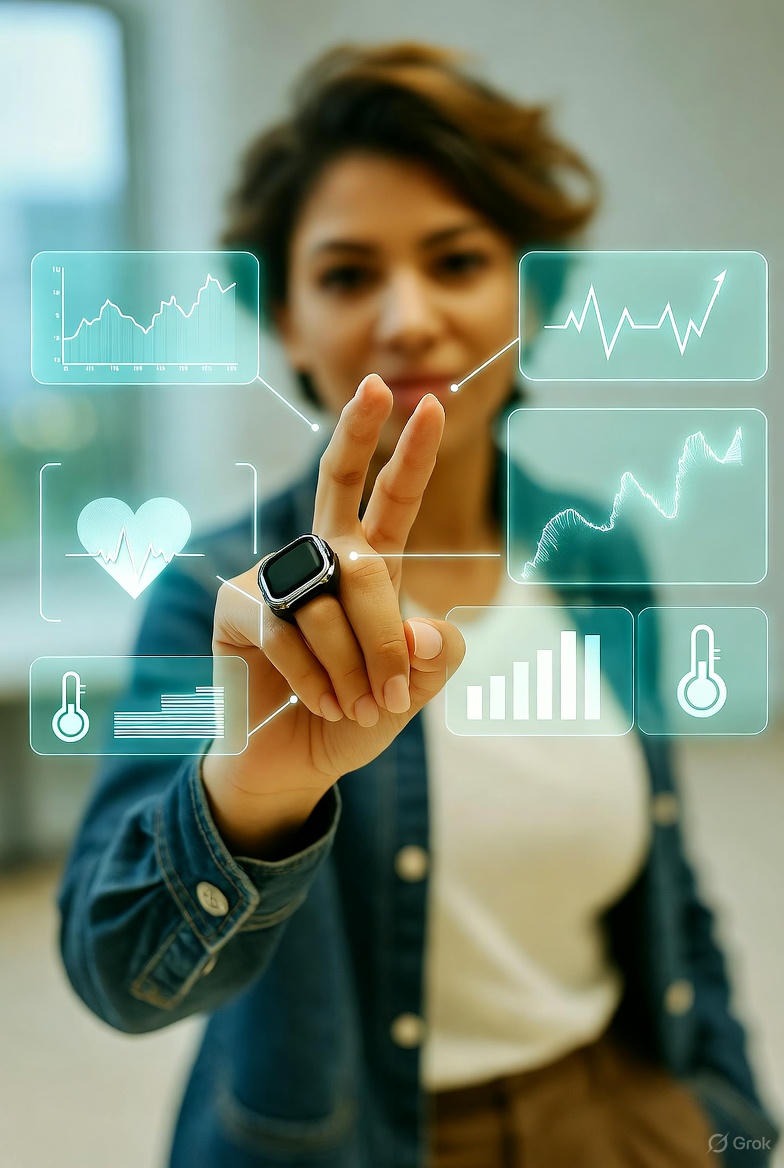
While daytime HRV fluctuates with your thoughts, movements, and environment, nighttime HRV is different. Once you fall asleep and your conscious mind quiets down, your autonomic nervous system takes center stage, speaking without inhibition. This makes the data collected during sleep—particularly during deep sleep—the most clinically valuable and stable HRV signal you can obtain.
Why Sleep is the Ideal Measurement Window:
During sleep, especially non-REM deep sleep, external stimuli are minimized, and physical movement is reduced. This creates a laboratory-like condition on your finger. The dominant parasympathetic nervous system lowers your heart rate and allows your HRV to reach its natural peak, reflecting your body’s true, unadulterated recovery capacity. A high, stable nocturnal HRV is a strong sign of a resilient system and effective recovery. Conversely, a suppressed or erratic sleep HRV is a red flag, often pointing to unresolved stress, impending illness, poor sleep quality, or other underlying physiological strain.
Deep Sleep: The HRV Sanctuary:
Deep sleep (N3 sleep) is the most restorative phase of the sleep cycle. It’s when growth hormone is released, tissues are repaired, and the brain clears metabolic waste. During this phase, parasympathetic dominance is at its maximum. Therefore, your HRV readings during deep sleep are the purest indicator of your recovery engine’s power. Tracking this specific metric can be more insightful than your overall sleep HRV average. For a deeper dive into why this phase is so critical, read our exploration of the science of deep sleep.
Actionable Insights from Your Nightly Report:
Your smart ring’s sleep HRV data moves beyond interesting trivia to become a practical guide for your next day.
This nightly feedback loop is transformative. Instead of waking up and guessing how you feel ("I'm a bit tired"), you have an objective metric that quantifies your physiological state. It empowers you to align your actions with your body’s actual needs, not just your perceived energy levels. For common questions on how to interpret this data, our FAQ page offers detailed support.
A continuous HRV stream is rich with information, but without proper interpretation, it can become overwhelming noise. The goal is not to obsess over every momentary dip but to learn the language of your own body—to distinguish meaningful trends from normal fluctuations. Here’s how to read your story.
Understanding Your Baseline and Trends:
The first rule of HRV is: Compare yourself to yourself. There is no universally "good" number, as individual baselines vary dramatically based on age, genetics, and fitness. Your first weeks with a smart ring are about establishing your personal baseline range. Once set, the focus shifts to the trend. Is your 7-day average moving up or down? A sustained upward trend is a positive sign of improving fitness and resilience. A sustained downward trend is a signal to investigate potential causes (overtraining, chronic stress, poor sleep, diet, or illness).
The "Why" Behind the Dip: Context is King:
A single low HRV reading is not a cause for alarm. The power of continuous data is in pairing the "what" with the "why." Modern apps allow you to tag your day with activities, notes, and subjective feelings. Did your HRV dip sharply the night after:
By logging these contextual markers, you begin to see clear cause-and-effect patterns. You move from knowing that your body is stressed to understanding what specifically stresses it. This is the foundation of true biofeedback.
The Readiness Score: Your Daily Guidance System:
To simplify this complex data, most platforms distill it into a single, actionable metric: a Readiness, Recovery, or Body Battery score. This score typically weighs your nocturnal HRV (heavily), sleep quality, resting heart rate, and sometimes temperature. It’s designed to answer one simple question: "How capable is my body of handling stress today?"
This score turns abstract data into a daily decision-making tool, helping you harmonize your lifestyle with your physiology. For real-world examples of how users apply these insights, browse our collection of user experiences and testimonials.
Data without action is merely trivia. The true value of effortless, continuous HRV tracking is its ability to inform and transform your daily choices, from your workout schedule to your bedtime routine. Here’s how to operationalize your insights.
Personalized Training & Avoiding Overtraining:
For anyone who exercises regularly, this is the most powerful application. Instead of following a rigid, pre-programmed training plan, you can let your HRV-based readiness score guide your intensity.
Stress Management & Mental Wellbeing:
Your HRV is a real-time biofeedback tool for your mental state. Use it to:
Sleep Hygiene Optimization:
Your nocturnal HRV is the ultimate judge of your sleep hygiene effectiveness. Experiment and let the data guide you:
Nutritional and Lifestyle Experiments:
Become a scientist of your own body. Introduce one change at a time and monitor the week-to-week trend in your sleep HRV and readiness scores.
By using your continuous HRV as an outcome measure, you can cut through the noise of wellness trends and discover what genuinely works for your unique biology. For more ideas on lifestyle tweaks, our blog is a repository of research-backed strategies.
The democratization of continuous, passive HRV monitoring via smart rings doesn't just change individual lives; it has the potential to ripple outwards, influencing workplace culture, clinical care, and our collective understanding of health.
Corporate Wellness & Burnout Prevention:
Imagine a workplace that respects biological data. With employee consent and strict privacy safeguards, aggregated and anonymized HRV trends could provide organizations with unparalleled insight into collective stress levels, team workload impacts, and the effectiveness of wellness initiatives. Instead of waiting for burnout surveys or turnover rates, companies could proactively identify systemic stressors and design healthier work rhythms, meeting structures, and break policies. It moves the conversation from "managing stress" to "designing for resilience."
Remote Patient Monitoring & Proactive Healthcare:
For clinicians managing patients with chronic conditions like hypertension, heart failure, anxiety disorders, or Long COVID, continuous HRV data is a game-changer. It provides a window into a patient's home life and daily fluctuations that is impossible to capture in a 15-minute clinic visit. A smart ring could alert a care team to early signs of autonomic dysfunction, medication side effects, or physiological decline, enabling timely, preventative interventions. It shifts the model from reactive sick-care to proactive, continuous health-care.
Personalized Medicine & Longevity Research:
As large populations begin to generate years of continuous HRV data paired with other biomarkers, we will enter a new era of health discovery. Researchers can analyze these massive datasets to find novel patterns, identify early risk markers for disease, and understand how lifestyle factors influence autonomic health over a lifetime. This could lead to highly personalized healthspan and longevity protocols, all informed by the simple, continuous metric of heart rate variability.
The Ethical Data Frontier:
This exciting future comes with significant responsibility. The data collected by a smart ring is deeply intimate. It can infer sleep patterns, stress levels, and potentially even illness. Therefore, user privacy, data ownership, and transparent security must be non-negotiable pillars of any reputable company in this space. Users must have full control over their data, with clear options for local processing and the ability to share or revoke access at any time. The promise of this technology hinges on trust. At Oxyzen, we believe this ethical foundation is critical, as outlined in our commitment within our story.

The smart ring market is growing rapidly, with new entrants offering a range of features, designs, and price points. Choosing the right one is crucial, as it will be a constant companion in your health journey. Here are the key factors to consider beyond just aesthetics.
Sensor Accuracy & Validation:
This is paramount. Look for rings that have undergone third-party validation studies comparing their HR and HRV data against medical-grade ECG devices, especially during sleep. Don't just take marketing claims at face value. Investigate the sensor configuration—multiple LEDs and photodetectors can help compensate for motion and ensure good skin contact. The quality of the raw data determines the quality of all derived insights.
Battery Life & Charging Solution:
The core value proposition is continuous data. A ring that needs daily charging creates the very data gaps we're trying to avoid. Aim for a device with a minimum of 4-5 days of battery life. Also, examine the charging solution. Is it a sleek, portable charging case? A simple puck? The ease and speed of charging affect long-term usability.
App Ecosystem & Data Interpretation:
The ring is a sensor; the app is the brain. A powerful, intuitive, and educational app is essential. Evaluate it on:
Comfort, Design & Durability:
You’ll wear this 24/7. It must be comfortable for sleep and daily activities. Consider the ring's width, thickness, and inner contour. The material matters too—titanium is strong, lightweight, and hypoallergenic; ceramic is scratch-resistant. Ensure it has a good water resistance rating (IPX8 or similar) for showers and swimming.
The Oxyzen Difference:
When evaluating options, consider what sets different brands apart. At Oxyzen.shop, the focus is on unifying medical-grade sensor fidelity with minimalist, everyday design. The philosophy is to provide not just data, but the contextual wisdom and actionable guidance to make that data meaningful, supporting a journey toward sustained balance rather than optimized frenzy. It’s about empowering your choices with clarity, not adding to your cognitive load.
Choosing your smart ring is the first step in a fascinating journey of self-discovery. It is the commitment to listening to the subtle, continuous language of your body, finally translated into a form you can see, understand, and act upon.
The arrival of your smart ring is exhilarating. For the first week, you’ll likely check your app constantly, fascinated by the new stream of insights about your sleep, your stress, your recovery. But the true transformation doesn’t happen in the first-week data dive; it happens in the months that follow, as this continuous feedback becomes seamlessly woven into the fabric of your life. The goal is not to become a slave to the numbers, but to use them as a gentle guide toward a more attuned, resilient, and balanced existence.
The First 30 Days: Observation, Not Obsession
Treat your first month as a pure discovery phase. Resist the urge to change everything at once. Instead, simply wear the ring consistently and observe. Notice your natural patterns:
This period establishes your personal biometric fingerprint. The data is not “good” or “bad”; it’s simply yours. The app’s algorithms are also learning your norms to personalize your readiness scores more accurately. During this time, make use of the extensive resources available on our blog to better understand the metrics you’re seeing, such as the difference between deep sleep and REM sleep.
Avoiding Analysis Paralysis: The 10,000-Foot View
With data available by the minute, it’s easy to fall into the trap of micromanaging every blip on your HRV graph. This is counterproductive and can itself become a source of stress. Adopt a broader perspective:
Building a Feedback Loop: Small Experiments, Big Insights
Once you know your baseline, you can begin intentional, controlled experiments. The key is to change one variable at a time and observe the effect over several days to a week.
Each experiment turns abstract wellness advice into personal, verified truth. You move from “I heard blue light is bad” to “When I avoid screens after 9:30 PM, my deep sleep increases by an average of 12 minutes, and I feel more alert in the morning.”
When to Ignore the Ring: Listening to Your Subjective Feelings
The data is powerful, but it is not infallible, nor is it your master. There will be days when your readiness score is high, but you feel emotionally drained. There will be days when the score is low, but you feel fantastic and set a personal record. Your subjective experience—how you feel—is the most important data point of all.
The ultimate sign of success with this technology is when you begin to internalize its feedback. You start to feel the signs of low HRV—the edginess, the poor concentration—before you even check the app. The ring trains your interoceptive awareness, your ability to sense your internal state. Eventually, its primary role may shift from a daily guide to a periodic check-in system, validating your own honed intuition. For common questions on balancing data with intuition, our FAQ page offers further guidance.
To leverage HRV fully, one must understand the biological processes it reflects. Recovery isn’t just the absence of work; it’s an active, physiological state of repair and adaptation. HRV serves as the central dashboard for this complex, multi-system operation.
The Autonomic Nervous System: The Master Conductor
As established, HRV is the output of the ANS. Recovery is fundamentally about parasympathetic reactivation. After a stressor—be it a hard workout, a mental challenge, or an emotional event—your body needs to shift from sympathetic dominance (catabolism: breaking down) to parasympathetic dominance (anabolism: building up). This shift is when repair happens: muscles rebuild, the immune system strengthens, neurotransmitters rebalance, and hormones return to baseline. A high or rising HRV is a direct indicator that this vital shift is occurring efficiently.
The Role of Sleep Architecture in Recovery Signaling
Sleep is not a monolithic block. It’s a series of cycles, each with a specific recovery function, and HRV fluctuates dramatically through them.
Inflammation, HRV, and Systemic Recovery
Chronic, low-grade inflammation is a silent saboteur of recovery and a powerful suppressor of HRV. Inflammatory cytokines can directly disrupt autonomic balance, biasing the system toward sympathetic activity. This creates a vicious cycle: poor recovery leads to inflammation, which lowers HRV, which further impedes recovery. Continuous HRV monitoring can act as an early warning system for this inflammatory state. A sustained, unexplained drop in HRV, especially when paired with a rising resting heart rate and perhaps a elevated temperature trend, can prompt you to investigate anti-inflammatory actions: optimizing sleep, adjusting diet (exploring foods that increase deep sleep naturally), managing stress, and considering targeted supplementation.
The 48-72 Hour Recovery Window
For moderate to intense physical training, the recovery and adaptation process spans 48-72 hours. This is why your readiness score the day after a hard workout is often low (acute fatigue), but it’s the trend on Day 2 and Day 3 that truly indicates your adaptation. Is your HRV and score rebounding robustly above baseline (supercompensation)? Or is it still languishing (incomplete recovery)? Continuous tracking allows you to see this multi-day arc, informing when you’re truly ready for your next intense stimulus. It turns guesswork into a precise timeline.
While everyone can benefit from understanding their nervous system, continuous HRV tracking holds particular, transformative potential for specific groups with unique demands and sensitivities.
For the Endurance Athlete: Balancing Load and Resilience
Endurance training is a careful dance of accumulating fatigue to drive adaptation without tipping into overtraining syndrome (OTS). Traditional metrics like pace and power are outputs; HRV is an input of systemic strain.
For the Strength & Power Athlete: Managing Neural Fatigue
High-intensity, heavy-load training places enormous demand on the central nervous system (CNS). This neural fatigue is powerfully reflected in HRV.
For High-Performance Professionals & Leaders
The boardroom, the operating theater, and the trading floor are modern-day athletic arenas for the mind. Cognitive performance, decision-making, and emotional regulation are paramount.
For Individuals Managing Chronic Stress or Anxiety
For those dealing with anxiety disorders, burnout, or PTSD, the body is often stuck in a sympathetic-dominant state. HRV biofeedback is a clinically validated tool for retraining the nervous system.
For the Aging Population: Monitoring Autonomic Health
HRV naturally declines with age, but the rate of decline is influenced by lifestyle. For older adults, maintaining a higher HRV is associated with better cognitive function, cardiovascular health, and longevity.
Your smart ring is a powerful, self-contained device, but its insights multiply when connected to the broader digital health landscape. Integration creates a unified, comprehensive view of your wellbeing.
Syncing with Apple Health & Google Fit
This is the first and most crucial integration. By granting permission, your ring automatically writes its core data—heart rate, HRV, respiratory rate, sleep stages, SpO2, body temperature, and activity—into your phone’s central health repository. This achieves two things:
Correlating with Nutrition & Mindfulness Apps
This is where patterns become profound. By having your HRV and readiness data in the same ecosystem as your food log (e.g., Cronometer) and meditation app (e.g., Calm), you can start to ask powerful questions:
The Future: Closed-Loop Systems and Predictive Analytics
We are on the cusp of a more automated, intelligent future. Imagine these scenarios powered by continuous ring data:
This is the promise of a holistic health ecosystem: technology that doesn’t just report on your state, but responsively adapts your environment to support it. At Oxyzen, our vision is to be at the center of this connected, intelligent approach to wellbeing, providing the foundational physiological layer that makes it all possible.
As with any transformative technology, legitimate questions and concerns arise. Addressing them head-on is key to building trust and ensuring a healthy relationship with your device.
"How Accurate is This Little Ring, Really?"
This is the most frequent and important question. The answer lies in context and validation.
Data Privacy and Security: Your Most Intimate Information
A device that knows your sleep, stress, and potential illness patterns holds your intimate biological story. Any reputable company must treat this with the utmost seriousness.
Avoiding Data Anxiety and Orthosomnia
“Orthosomnia” is a term coined by sleep researchers to describe the anxiety and fixation on perfect sleep data that can paradoxically worsen sleep. The same can happen with HRV.
The current generation of smart rings is groundbreaking, but this is only the beginning. The convergence of sensor miniaturization, advanced AI, and new biomarker research is paving the way for devices that will become even more insightful, predictive, and integrated into healthcare.
New Sensor Frontiers: Beyond PPG
Future rings will incorporate additional sensor modalities to paint a fuller picture:
AI-Powered Personal Health Forecasting
With years of continuous, multi-metric data from millions of users, AI models will move from description to prediction.
The Clinician’s Tool: From Wellness to Medicine
The path to becoming a true medical device involves rigorous clinical validation for specific use cases. We can expect:
Sustainability and Circular Design
As the market grows, environmental responsibility will become a key differentiator. Leading companies will focus on:
The smart ring is evolving from a fitness accessory into a lifelong health companion. Its unobtrusive, continuous nature positions it uniquely to be the central hub of our future digital health identity, a story we are passionate about contributing to, as detailed in our story of innovation and human-centric design.
In a world saturated with gadgets that promise optimization and relentless self-improvement, it’s easy to lose sight of a fundamental truth: we are not machines to be tuned for maximum output. We are rhythmic, dynamic organisms whose health is defined by our ability to cycle gracefully between states of stress and recovery, activity and rest, connection and solitude. The most profound power of a tool like a smart ring is not its ability to push us harder, but its capacity to help us listen more deeply—to restore our natural rhythm.
This philosophy stands in stark contrast to the dominant narrative of “biohacking.” While biohacking often focuses on aggressive intervention and control—stacking supplements, enforcing rigid protocols, chasing marginal gains—the approach embodied by a thoughtful device is one of bio-awareness. It’s not about overriding your body’s signals; it’s about understanding them so you can collaborate with your biology, not conquer it. The goal is sustainability, harmony, and resilience, not just peak performance.
The Tyranny of the Quantified Self vs. The Wisdom of the Qualified Self
The early “Quantified Self” movement championed the collection of any and all data. This led to a common pitfall: data overload without narrative. You could have a spreadsheet full of numbers but no clearer sense of how to live well. The modern smart ring, when paired with intelligent software, seeks to move us from the “Quantified Self” to the “Qualified Self.” It qualifies the data. It tells you not just what your HRV is, but what it likely means in the context of your sleep, activity, and stress, and what you might consider doing about it. It turns data points into a qualified story about your readiness, your recovery, and your needs.
The Ring as a Mirror, Not a Taskmaster
A well-designed device serves as a neutral, objective mirror. It reflects your current physiological state without judgment. It doesn’t say, “You failed to get enough deep sleep.” It shows, “Your deep sleep was 15% lower than your average last night, and your readiness score is adjusted accordingly.” This subtle shift in framing is everything. It places you back in the seat of agency. You are not being graded by the ring; you are being informed by it. The decision of how to respond—to push through or to pivot—remains firmly, empoweringly, in your hands. This user-centric ethos is core to who we are, as you can learn more about on our About Us page.
Finding Your Unique Cadence
There is no universal optimal HRV, perfect sleep schedule, or ideal daily routine. The journey with a smart ring is a journey of self-discovery to find your unique cadence. Perhaps you discover you are a person who thrives on nine hours of sleep with a late-morning start. Maybe your data reveals that you recover best with two full rest days after leg day, but only one after upper body. You might learn that social interactions, while joyful, are a significant physiological stressor for you, requiring planned downtime afterward.
This personalized cadence is your health fingerprint. Honoring it—rather than fighting against it to conform to external expectations—is the path to genuine, lasting vitality. The ring provides the evidence you need to defend your unique rhythm in a world that often demands uniformity.
Technology for Re-Enchantment
Paradoxically, this advanced technology can lead us back to a more intuitive, almost ancient relationship with our bodies. Before the noise of modern life, humans were more attuned to subtle signs of fatigue, hunger, and changing seasons. The smart ring can help re-sensitize us. By consistently showing you the concrete physiological impact of a walk in nature, an argument, a good meal, or a poor night’s sleep, it rebuilds the trust between your conscious mind and your corporeal self. You begin to feel the dip in HRV as a sense of edginess. You start to anticipate the need for rest. The technology, in its ultimate form, becomes a bridge back to your own innate biological wisdom.
The End Goal: Forget the Ring
The highest compliment you can pay to a health tool is to eventually need it less. The ideal outcome of living with a smart ring for a year or two is not permanent dependence, but education. It teaches you the language of your body. You internalize the patterns. You learn what true recovery feels like in your bones, not just on your screen. The ring becomes a periodic check-in—a tool you use during times of transition, high stress, or when experimenting with a new routine—rather than a daily crutch. It empowers you to become your own best expert, equipped with a deep, experiential understanding of your personal rhythm. For stories of how others have integrated this technology into their lives, our testimonials page shares these personal journeys.
To move from theory to tangible reality, let’s follow a hypothetical but data-rich case study of “Alex,” a 38-year-old knowledge worker and amateur triathlete, over a month of using a smart ring. This illustrates the iterative, insight-driven process of transformation.
Week 1: Baseline & A Shocking Revelation
Alex starts wearing the ring. He considers himself healthy: he trains 10-12 hours a week, eats clean, but often feels “wired but tired.” His baseline data reveals:
The biggest shock comes on a Tuesday after his usual 5:30 AM Masters swim session followed by a high-pressure workday. His sleep data that night shows a HRV of 28ms and almost no deep sleep. The ring’s note says: “Significant recovery deficit detected.” Alex realizes his “productive” early workout + stressful day combo is cratering his recovery, not fueling it.
Week 2: The First Intervention – Protecting the Wind-Down
Based on the data, Alex makes one change: he institutes a 9:30 PM digital curfew, replacing his last hour of TV and email with reading a novel and gentle stretching. He also starts using the ring’s guided breathing exercise for 5 minutes when he gets into bed.
Week 3: Experimenting with Training Timing
Encouraged, Alex runs a experiment. He switches his Wednesday high-intensity bike interval session from the morning to the late afternoon (4:30 PM), after his most demanding work meetings.
Week 4: Nutritional Correlation & The Power of Trends
Alex logs a celebratory weekend with friends, involving rich food and a few drinks. His data plummets for two nights. While he expected a dip, seeing the magnitude—and the two-day recovery time—is striking. More importantly, he looks at his 30-day trend line. Despite that weekend, the overall slope of his sleep HRV and readiness score is decisively upward. His average weekly readiness is now 79.
This iterative loop of Observe → Hypothesize → Experiment → Analyze is the engine of personalized health. The smart ring provides the objective feedback that makes this loop not just possible, but efficient and conclusive.

The journey of self-optimization is not a straight line upward. You will hit plateaus, see confusing data, and encounter periods where your scores stagnate or dip for no obvious reason. This is normal. Advanced interpretation involves learning to decode these complex signals.
The HRV Plateau: When Progress Flatlines
After an initial period of improvement, it’s common for HRV to plateau. This doesn’t mean the tool has stopped working; it means your body has adapted to your new baseline habits.
The Paradoxical Response: When “Good” Habits Cause Dips
Sometimes, starting a new healthy habit causes a temporary drop in HRV. This is often a sign of positive adaptation stress.
Disentangling Multiple Stressors: The Art of Triage
Life is messy. You might have a hard workout, a work deadline, and a family conflict all in the same 48 hours. Your HRV will tank. The challenge is not to panic, but to practice data triage.
When to Consult a Professional: Data as a Conversation Starter
Your smart ring data is a powerful tool for conversations with healthcare providers, but it is not a diagnostic device.
The ring makes you an informed partner in your health, providing objective evidence to guide deeper exploration with professionals.
While health is personal, it is not solitary. One of the most underrated benefits of adopting a technology like this is gaining access to a community of fellow explorers, all learning the language of their own bodies. This shared learning accelerates insight and provides crucial support.
From Isolation to Shared Journey
Before, if you felt inexplicably fatigued, you might suffer in silence, wondering if you were just “lazy.” Now, you can see a physiological reason. And within a community, you can share this: “My readiness has been low all week even though I’m sleeping—anyone else?” Often, you’ll find others experiencing similar patterns, leading to shared discoveries about seasonal allergies, local viruses, or even the collective stress of a news cycle. This normalizes the ebbs and flows of biology, reducing anxiety and shame.
Crowdsourced Insights and “N=Many” Discovery
Community forums and data-sharing (opt-in, anonymized) allow for powerful crowdsourced learning. Users might collectively discover that a particular supplement has no measurable effect for most, or that a specific breathing technique reliably boosts HRV by a certain percentage. While not a replacement for clinical research, this “N=Many” observation can generate valuable hypotheses and practical tips far faster than traditional science. Our blog often delves into topics born from these community curiosities, like the impact of deep sleep deprivation.
Accountability and Motivation
Sharing goals within a supportive community—not just weight loss goals, but goals like “maintain a 70+ readiness average this month” or “increase my deep sleep by 10%”—creates positive accountability. Celebrating each other’s data-backed wins, like a new personal best HRV after a recovery-focused week, reinforces healthy behaviors more effectively than any standalone app notification.
The Role of Brands in Fostering Community
A forward-thinking brand in this space doesn’t just sell hardware; it cultivates an ecosystem of learning. This means:
When a community forms around a shared mission of understanding rather than just achieving, the technology becomes a conduit for human connection and collective growth.
We live in an age of overwhelming, contradictory health noise. One day, intermittent fasting is the key; the next, it’s veganism. High-intensity training is evangelized, then vilified in favor of movement snacks. This cacophony leads to decision fatigue, confusion, and a loss of personal agency. We outsource our health authority to influencers, trends, and generic advice.
The smart ring, and the continuous HRV data it provides, represents a potent antidote to this noise. It is a tool for reclaiming agency. It shifts the authority from external, one-size-fits-all dogma to internal, personalized evidence.
Your Body, Your Data, Your Truth
The ring provides a feedback loop that is uniquely, inarguably yours. It doesn’t care what the latest podcast says. It tells you how your nervous system responds to your life. This data becomes your personal truth, a compass that guides you through the noise. It allows you to say with confidence, “That may work for some, but my data shows it doesn’t work for me,” or “This is what my body needs right now.”
From Passive Patient to Active Participant
This technology facilitates the most important shift in modern healthcare: from being a passive patient who receives instructions to being an active participant in your own wellbeing. You are no longer waiting for an annual check-up to get a snapshot of your health. You are engaged in a daily, observant partnership with your body, equipped with continuous insights. You bring informed questions and detailed trends to your doctor, making your clinical interactions more collaborative and productive.
The Long Game: Health as a Dynamic Balance
Finally, continuous HRV tracking redefines health not as a static destination or a perfect score, but as a dynamic balance. It visualizes health as the capacity to withstand stressors and return to equilibrium—the very definition of resilience. Some days the balance will be tipped (and your readiness score will be low). That’s not failure; it’s life. The power lies in recognizing the tilt early and knowing, from your own historical data, which levers to pull to restore balance efficiently.
This is the ultimate promise of the smart ring solution: to give you the clarity, confidence, and personal evidence you need to navigate your health journey with intention and wisdom. It’s not about tracking for tracking’s sake. It’s about using technology to become more human—more attuned, more resilient, and more in command of your one precious, rhythmic life.
Your journey toward continuous understanding begins with a single step of discovery. We invite you to explore the Oxyzen smart ring and see how effortless, insightful health tracking can be, or to delve deeper into the science and stories that inspire us on our main site. The data is waiting to tell your story.
Your Trusted Sleep Advocate (Sleep Foundation — https://www.sleepfoundation.org/)
Discover a digital archive of scholarly articles (NIH — https://www.ncbi.nlm.nih.gov/
39 million citations for biomedical literature (PubMed — https://pubmed.ncbi.nlm.nih.gov/)
experts at Harvard Health Publishing covering a variety of health topics — https://www.health.harvard.edu/blog/)
Every life deserves world class care (Cleveland Clinic -
https://my.clevelandclinic.org/health)
Wearable technology and the future of predictive health monitoring. (MIT Technology Review — https://www.technologyreview.com/)
Dedicated to the well-being of all people and guided by science (World Health Organization — https://www.who.int/news-room/)
Psychological science and knowledge to benefit society and improve lives. (APA — https://www.apa.org/monitor/)
Cutting-edge insights on human longevity and peak performance
(Lifespan Research — https://www.lifespan.io/)
Global authority on exercise physiology, sports performance, and human recovery
(American College of Sports Medicine — https://www.acsm.org/)
Neuroscience-driven guidance for better focus, sleep, and mental clarity
(Stanford Human Performance Lab — https://humanperformance.stanford.edu/)
Evidence-based psychology and mind–body wellness resources
(Mayo Clinic — https://www.mayoclinic.org/healthy-lifestyle/)
Data-backed research on emotional wellbeing, stress biology, and resilience
(American Institute of Stress — https://www.stress.org/)


